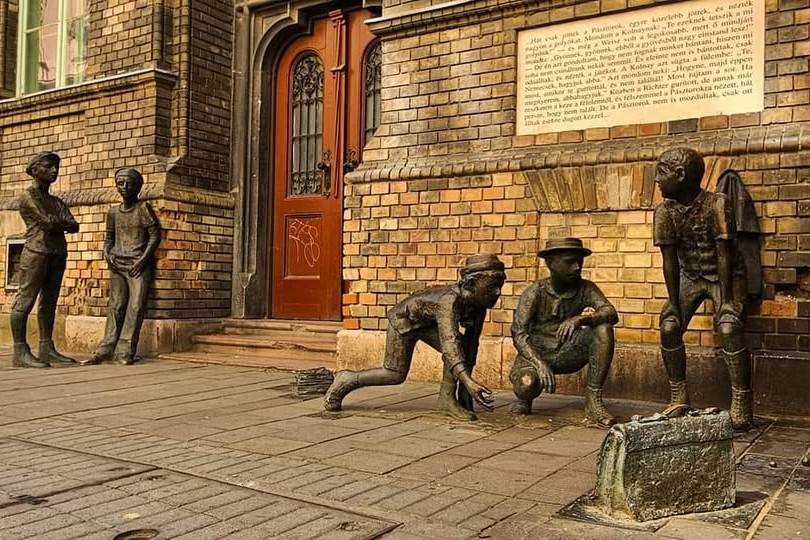
Ferenc Molnár’s classic Hungarian young adult novel of the early twentieth century provided an unexpected pleasure in May of 2026.
When a friend loaned me a classic young adult novel from her native Hungary earlier this year, I wasn’t sure I would find it of interest. Then the country’s extraordinary democratic overthrow at the ballot box of autocrat Viktor Orban exploded into the news on a Sunday in April. Suddenly I wanted to know more about the people who had the courage to take back their country. “’The only moment you can compare it to is 1989,’ when, just before the fall of the Berlin Wall, Hungary’s Communist dictatorship came to an end,” said a woman at a rally the day before the historic vote.
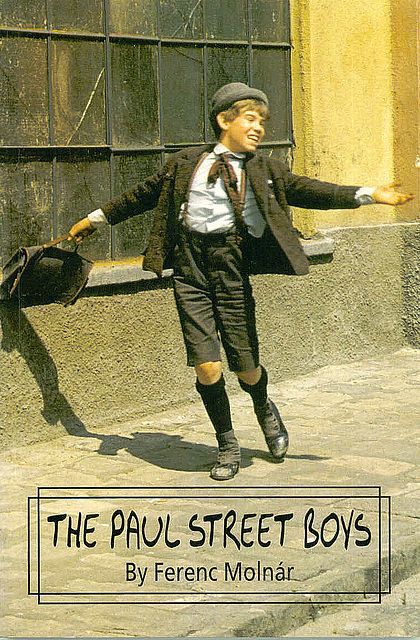
The Paul Street Boys (1907) by Ferenc Molnár is a captivating and surprisingly emotional novel that explores themes of loyalty, sacrifice, and the loss of innocence. Set in 1889 Budapest, the story centers around two rival street gangs: the Redshirts and the Paul Street Boys. The two are fighting over a vacant lot they call their grund or “Fatherland”—with the Paul Street Boys defending their territory against the Redshirts led by Feri Áts. The Paul Street Boys are led by János Boka, a wise and honorable student who befriends Ernő Nemecsek, the smallest of the group. After members of the Redshirts steal Nemecsek’s marbles—a scene memorably captured in the Péter Szanyi sculpture in Budapest—the two gangs move towards a confrontation.
Time and again Nemecsek demonstrates his bravery and loyalty to his friends as the conflict escalates. Boka and Nemecsek spy on the Redshirts in their Botanical Garden hideout, and then Nemecsek returns on his own to the rival gang’s island hideaway and endures a dunking in the cold lagoon. But by standing up to Feri Áts he earns the older boy’s respect. The entire confrontation between the gangs is carried out in military fashion, governed by strategy, honor, and camaraderie.
Located in the crowded Józsefváros neighborhood of Budapest, the grund offers the boys a “limitless” space for play, creativity, and adventure. It is also a place that belongs only to them, away from the strict rules of the adult world and the ever-watchful eyes of Professor Rácz. Throughout the book there are instances where little Nemecsek demonstrates that his bravery and loyalty surpass his size, none more important than at a critical moment in the battle when the Redshirts appear to be close to turning the tide. In a scene reminiscent of David the shepherd boy taking down the giant Goliath, Nemecsek surprises and subdues Feri Áts, the fierce leader of the Redshirts. The book ends in tragedy, however. Nemecsek dies of the pneumonia that he caught in the dunking. Boka also learns that a tenement building will soon be erected on the grund lot, meaning that the boys’ heroic struggle to defend it and Nemecsek’s sacrifice were in vain.
Molnár’s ending reflects this loss of innocence. János Boka sits and stares at a desk in front of him, his “simple and young soul” beginning to stir with the forebodings “of what life held in store.”
Life in Hungary has not been easy over the past century but the spirit of the people prevails. As Michelle Goldberg wrote in her New York Times column from the country immediately after the election that replaced Prime Minister Orban’s Fidesz party:
“Some admirers of Orban have argued that the fact that he lost proves he was never an autocrat to begin with. What it really demonstrates, however, is that opposition to Fidesz was so strong it was able to overwhelm all the structures Orban put in place to protect his rule: wildly distorted voting districts, a captured media, state-sponsored propaganda, local patronage networks, and widespread threats and intimidation.”
Honor, loyalty, forgiveness, reconciliation, patriotism, and bravery are all present in The Paul Street Boys. Loss, love of country, courage, perseverance, and loyalty all played out this past month in Eastern Europe. We saw little David taking down Goliath. Life is not a straight line, and what appears inevitable, such as the march towards autocracy, can change in what seems the blink of an eye by the actions of those—like a young boy or citizens who want their country back—whose power and agency is often dismissed.
More to come . . .
DJB
Photo of Péter Szanyi sculpture of Paul Street Boys in Budapest, 8. district, Práter street school, inspired after Ferenc Molnar’s novel (credit: Budapest Tours)


Pingback: Observations from . . . May 2026 | MORE TO COME...
Pingback: From the bookshelf: May 2026 | MORE TO COME...
Pingback: Reading challenges and independent bookshops: A mid-year update | MORE TO COME...
Pingback: One challenge down, two to go | MORE TO COME...
Pingback: Summer reading . . . check! | MORE TO COME...