Author: DJB

Cotton Fields

Telling the full story

For whatever reason, I’ve been plowing through books this fall.  Perhaps that is what a great deal of time on planes and trains does for one’s reading habits.  In any event, this has been my first chance to stop and reflect on these recent readings for the blog, so I’m seizing the moment. One of the two I’ve included here is a very important work, significantly moving the scholarship forward in its field.  The other is a small, family story that nonetheless captures the heart as it tells of a charming, privileged woman who struggled to live as a lesbian in the South of the jazz age.  Both, now a couple of years old, are recommended. Edward Baptist’s The Half Has Never Been Told:  Slavery and the Making of American Capitalism is a troubling and ultimately persuasive 2014 book by historian Edward E. Baptist.  In this ambitious work, Baptist sets out to to demonstrate, in great detail, that slavery was not the pre-modern institution on the verge of extinction with paternalistic slave-owners as claimed by …

History as an antidote to folly

Kurt Vonnegut has called him America’s greatest satirist, while others suggest he was born of Mark Twain and H.L. Mencken.  Lewis Lapham—editor emeritus of Harper’s Magazine, founding editor of Lapham’s Quarterly, and the object of those accolades—is a writer of great eloquence and “lethal wit.”  I was delighted to see that some of the best of Lapham’s essays from the past twenty-five years have now been collected into a new work, Age of Folly:  America Abandons Its Democracy. This is both a wonderful and important book. Lapham surveys the past twenty-five years to make the case that America’s imperial impulses have shaken our democratic principles.  You can agree or disagree with his premise, but his arguments are lucid, thoughtful, and often challenging. In the very first essay, from 1990, Lapham states his case succinctly and directly. “If the American system of government at present seems so patently at odds with its constitutional hopes and purposes, it is not because the practice of democracy no longer serves the interests of the presiding oligarchy (which it never …

Thanksgiving Pilgrims

Gratefulness and thankfulness

This is the time of year when we turn our thoughts to Thanksgiving.  I was taught from a very young age that it was very important to be thankful, as I often heard my grandmother admonish us to “always say ‘please’ and ‘thank you.’”  I won’t get into the “you’re welcome” vs. “no problem” debate, but you can probably guess, given my age, where I land on that topic! Some suggest we too often say “thank you” by rote. I find that to be true in my experience and began to wonder if we mistake other thoughts and emotions as thankfulness.  Fortunately, I came across a blog post that helped me sort through at least some of these thoughts.  The author, a Benedictine monk who holds retreats for groups from a variety of religious and non-religious traditions., makes the case that at least some of what we think of as thankfulness is actually gratefulness. He suggests it is important to understand the difference and then describes the two in this fashion: “Remember a night when …

We Shine a Light on the Past to Live more Abundantly Now

This week at the National Trust, we are preparing to host the 2017 PastForward national preservation conference in Chicago.  Long-time colleagues and new friends who care about the past and the places that bring that past into the present will gather from all across the country.  I suspect that we’ll share thoughts that challenge the conventional wisdom, offer support for a broader understanding of the American story, and come away with a new appreciation for the work that takes place by preservationists and by those who don’t (yet) identify as preservationists. Why do these people gathering this week in Chicago care about the past?  And what’s with that name, PastForward? In a recent conversation that included Pulitzer Prize-winning historian Annette Gordon-Reed, (The Hemingses of Monticello: An American Family), journalist and author Krista Tippett summed up the answer to those questions with her opening line:  “In life, in families, we shine a light on the past to live more abundantly now.” I think that’s a great summation of why so many of us will gather this …

Own Your Job

Progressive Insurance has been running a series of very funny ads about how we turn into our parents after buying our first home. The setting is a group therapy session, and each member has one or more Dad-isms to share with the group.  I don’t know if my favorite is “Who left the door open, are we trying to air condition the whole neighborhood?” or the woman who holds up a hideous baseball cap and says, “This hat was free.  What am I supposed to do, not wear it?”  Both are things my father said (multiple times) in the past, and I suspect that both have come out of my mouth as well. This intro is to give you fair warning:  in this post I may sound (a little) like a parent. New York Times reporter Adam Bryant recently wrapped up almost a decade of columns from the Corner Office, where he interviewed CEOs of all types, skills, and personalities.  While most of us won’t have the opportunity to be the CEO, there are lessons …

Complicity in a Shared Work of the Imagination

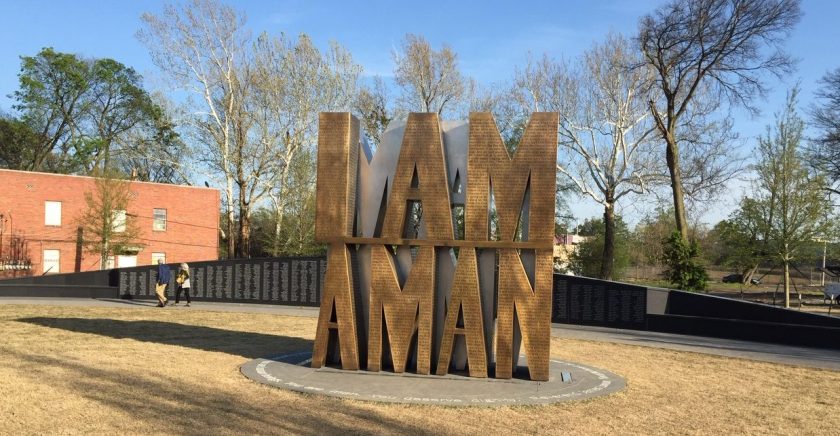
Last week I had the privilege of launching the National Trust’s National Treasure campaign for Clayborn Temple, a landmark in the history of the Civil Rights movement.  It was here where Memphis sanitation workers gathered in 1968 and decided to go on strike, marching with their “I Am a Man” signs that became a potent symbol for all that is at stake in the fight for equal justice.  Clayborn Temple was where the leadership of The Rev. Dr. Martin Luther King, Jr. transformed the strike from a local labor dispute into a national issue, effectively tying the sanitation workers’ cause with the national issues of economic justice and racism. It was to Memphis and Clayborn Temple that Dr. King was returning when he was struck down by an assassin’s bullet. To be in that sacred space with more than 150 Memphis residents, young African American poets and musicians, revered spiritual leaders who walked with the sanitation workers, preservationists of all ages, and current members of the workers’ union was an honor and a reminder of …

Observations from Home: The Silver Spring Day Off Edition

If you don’t read anything else in this post, go to the bottom and watch the last video.  Morgan James is beautiful and has a wonderful voice, but you won’t be able to take your eyes off the Tambourine Man.  He’ll bring you up, no matter how down you are.  And you’ll thank me for it. Now, on to the rest of the post. I seldom take a weekday off where I’m at home in Silver Spring.  Yet after working about 20 weekends in a row (perhaps I exaggerate), I decided to take today off and make it  a three-day weekend.  It was interesting to be around downtown Silver Spring and see the following: Bikes are sprouting up everywhere one looks. First it was the Capital Bikeshare stations that arrived in downtown.  But in the last month, we’ve been inundated with the new dockless bikes, and today was the first time I walked around town and had the sense that they are EVERYWHERE!  (At least if you walk around the condo/apartment heavy downtown.)  They look …

The Revenge of Analog: Real Things and Why They Matter

I recently finished David Sax’s new book The Revenge of Analog:  Real Things and Why They Matter.  Appropriately, I bought my hard-back copy in that most analog of places—Portland, Oregon’s Powell’s City of Books—the nation’s largest independent bookstore. Sax, a business journalist from Canada, posits that “while digital technology has certainly made life easier, the analog technologies of old can make life more rich and substantial.”  He argues that in today’s digital world, analog is making a surprising comeback.  What are those analog technologies?  Notebooks and paper.  Vinyl records.  Film.  Board games.  (Vintage Game Night at the Woodrow Wilson House, anyone?) He also looks at the comeback of analog “ideas” in areas such as printing, retailing, and education. Some of Sax’s examples strike me as first-world games of the highly educated. However, as I thought about the tactile nature of the pages as I read, I realized that he had an important point about the impact of real things in our lives. About two years ago I stopped purchasing e-books and have returned to buying …