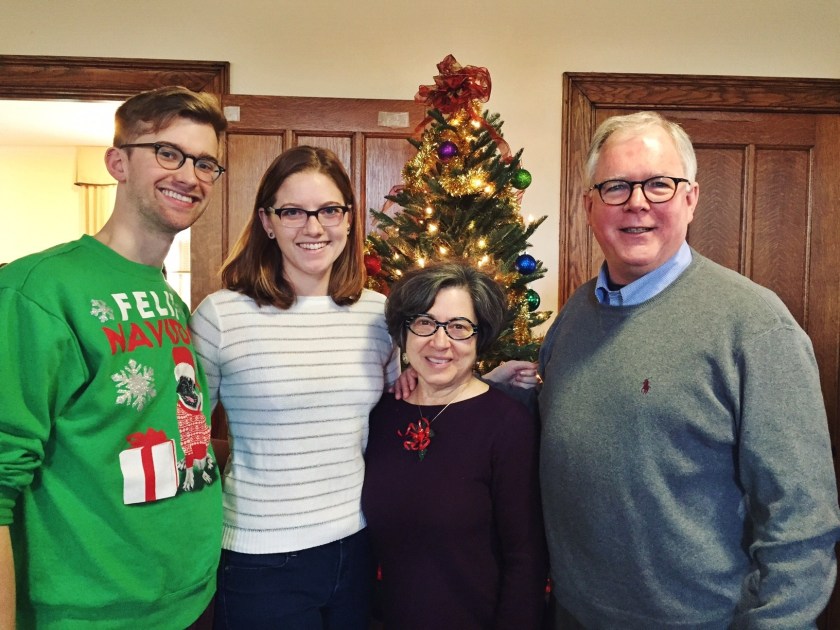
Our year in photos – 2017
Pictures of the family from across the world.
Pictures of the family from across the world.

This is the time of year when we turn our thoughts to Thanksgiving. I was taught from a very young age that it was very important to be thankful, as I often heard my grandmother admonish us to “always say ‘please’ and ‘thank you.’” I won’t get into the “you’re welcome” vs. “no problem” debate, but you can probably guess, given my age, where I land on that topic! Some suggest we too often say “thank you” by rote. I find that to be true in my experience and began to wonder if we mistake other thoughts and emotions as thankfulness. Fortunately, I came across a blog post that helped me sort through at least some of these thoughts. The author, a Benedictine monk who holds retreats for groups from a variety of religious and non-religious traditions., makes the case that at least some of what we think of as thankfulness is actually gratefulness. He suggests it is important to understand the difference and then describes the two in this fashion: “Remember a night when …
This week at the National Trust, we are preparing to host the 2017 PastForward national preservation conference in Chicago. Long-time colleagues and new friends who care about the past and the places that bring that past into the present will gather from all across the country. I suspect that we’ll share thoughts that challenge the conventional wisdom, offer support for a broader understanding of the American story, and come away with a new appreciation for the work that takes place by preservationists and by those who don’t (yet) identify as preservationists. Why do these people gathering this week in Chicago care about the past? And what’s with that name, PastForward? In a recent conversation that included Pulitzer Prize-winning historian Annette Gordon-Reed, (The Hemingses of Monticello: An American Family), journalist and author Krista Tippett summed up the answer to those questions with her opening line: “In life, in families, we shine a light on the past to live more abundantly now.” I think that’s a great summation of why so many of us will gather this …
Progressive Insurance has been running a series of very funny ads about how we turn into our parents after buying our first home. The setting is a group therapy session, and each member has one or more Dad-isms to share with the group. I don’t know if my favorite is “Who left the door open, are we trying to air condition the whole neighborhood?” or the woman who holds up a hideous baseball cap and says, “This hat was free. What am I supposed to do, not wear it?” Both are things my father said (multiple times) in the past, and I suspect that both have come out of my mouth as well. This intro is to give you fair warning: in this post I may sound (a little) like a parent. New York Times reporter Adam Bryant recently wrapped up almost a decade of columns from the Corner Office, where he interviewed CEOs of all types, skills, and personalities. While most of us won’t have the opportunity to be the CEO, there are lessons …
Last week I had the privilege of launching the National Trust’s National Treasure campaign for Clayborn Temple, a landmark in the history of the Civil Rights movement. It was here where Memphis sanitation workers gathered in 1968 and decided to go on strike, marching with their “I Am a Man” signs that became a potent symbol for all that is at stake in the fight for equal justice. Clayborn Temple was where the leadership of The Rev. Dr. Martin Luther King, Jr. transformed the strike from a local labor dispute into a national issue, effectively tying the sanitation workers’ cause with the national issues of economic justice and racism. It was to Memphis and Clayborn Temple that Dr. King was returning when he was struck down by an assassin’s bullet. To be in that sacred space with more than 150 Memphis residents, young African American poets and musicians, revered spiritual leaders who walked with the sanitation workers, preservationists of all ages, and current members of the workers’ union was an honor and a reminder of …
If you don’t read anything else in this post, go to the bottom and watch the last video. Morgan James is beautiful and has a wonderful voice, but you won’t be able to take your eyes off the Tambourine Man. He’ll bring you up, no matter how down you are. And you’ll thank me for it. Now, on to the rest of the post. I seldom take a weekday off where I’m at home in Silver Spring. Yet after working about 20 weekends in a row (perhaps I exaggerate), I decided to take today off and make it a three-day weekend. It was interesting to be around downtown Silver Spring and see the following: Bikes are sprouting up everywhere one looks. First it was the Capital Bikeshare stations that arrived in downtown. But in the last month, we’ve been inundated with the new dockless bikes, and today was the first time I walked around town and had the sense that they are EVERYWHERE! (At least if you walk around the condo/apartment heavy downtown.) They look …
I recently finished David Sax’s new book The Revenge of Analog: Real Things and Why They Matter. Appropriately, I bought my hard-back copy in that most analog of places—Portland, Oregon’s Powell’s City of Books—the nation’s largest independent bookstore. Sax, a business journalist from Canada, posits that “while digital technology has certainly made life easier, the analog technologies of old can make life more rich and substantial.” He argues that in today’s digital world, analog is making a surprising comeback. What are those analog technologies? Notebooks and paper. Vinyl records. Film. Board games. (Vintage Game Night at the Woodrow Wilson House, anyone?) He also looks at the comeback of analog “ideas” in areas such as printing, retailing, and education. Some of Sax’s examples strike me as first-world games of the highly educated. However, as I thought about the tactile nature of the pages as I read, I realized that he had an important point about the impact of real things in our lives. About two years ago I stopped purchasing e-books and have returned to buying …
I’ve had a few days to stew on the Nats Game 5 loss to the Cubs…enough to see the Cubs completely tank against the Dodgers, who are now headed to the World Series. All “Joe Maddon is a genius” comments have to be walked back a bit after some of the ways his team played in the NLCS. Nonetheless, the Cubs were there and the Nats weren’t. Let’s get to a few things about the Nats and that Game 5 loss, and then I’ll turn to thinking a bit about the games this week (and the games ahead). First, if you want to read sharp commentary on the Nationals, go to the blog Nationals Baseball. Harper regularly provides the best clear-eyed and unsentimental analysis of this ball club (so much better than the Washington Post crew), and the comments are first-rate (how often do you read that on the internet?). Read his Game 5 analysis at the link above when you get the chance. Much of what I’d say, especially about how bad Matt Wieters …
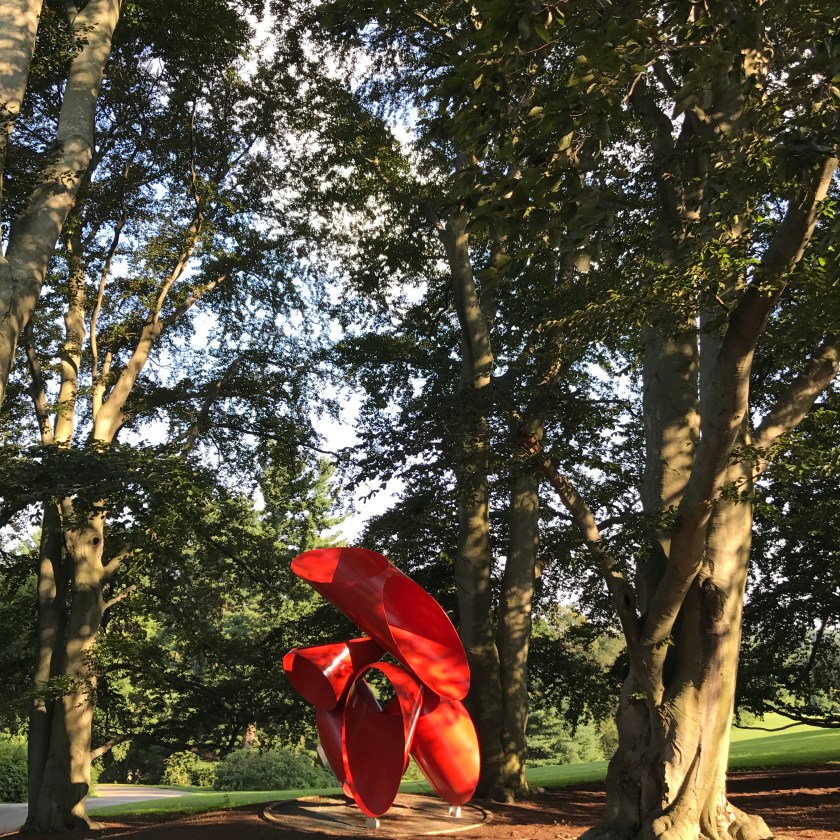
Each of us can help others catch an enthusiastic attitude about the things we love.
Well, that will leave a bruise. I’m at a board meeting for work, so will have to wait until later for a longer reflection on the Nats 2017 campaign, but oh my…the bad taste from that last game is going to linger for a while. I was sitting in the only television room in the place, watching the game alone until 1 o’clock in the morning. At least I resisted the temptation to pull out a beer or have a glass of wine to drown my sorrows. Gio does his Gio thing and melts down under pressure. Max and Wieters pick the worst possible time to play sandlot ball. Dusty’s loyalty bites us in the behind. Harp isn’t always Mr. Clutch. Instant replay can be correct and yet wrong for the game. Oh…and for those Chicago Cubs fans who are itching to tell you how your team blew it…you’ve now become just like the insufferable Red Sox and Yankees fans. Is that what you really want? Memo to self…if the Nats ever do win a …
 MORE TO COME...