When one is relatively new to a genre or subject, there is always a book that is unlike anything you’ve read so far. I just finished reading my latest encounter with clever mysteries, this one from Down Under.
Everyone on This Train is a Suspect (2024) by Benjamin Stevenson is a modern take on—or at least a big hat tip to—the classic Agatha Christie novel that is a (mostly) clever and always fun murder mystery. The set-up gives you a hint as to both the cleverness and devilishness that Stevenson has in mind: six authors are invited by the Australian Mystery Writers Society to their crime-writing festival aboard the Ghan, the famous train through the vast Australian desert. One of the six is murdered in this locked room (train) mystery, and the other five writers all turn into detectives. Because, as Ernest Cunningham—the debut writer and hero of the series—writes, “together we should know how to solve a crime. Or commit one.”
The program—as described by Cunningham—is a who’s who of crime writing royalty:
the debut writer (me!)
the forensic science writer
the blockbuster writer
the legal thriller writer
the literary writer
the psychological suspense writer
Readers who love mysteries and like to figure out the structure and intricacies of each book will probably find this fascinating. It certainly is unlike any murder mystery I’ve read. But to this relative novice in the field, I suspect that once is enough in this series. I enjoyed Stevenson’s writing, intelligence, and humor, but I don’t really need to read books about how everyone . . . in his family has killed someone (book #1), . . . this Christmas has a secret (book #3), and . . . in this bank is a thief (book #4).
Everyone on This Train is very clever, and the full outcome is in doubt to the very last pages, but it is best read as a spoof of the mystery genre with an understanding that some aspects will get a bit tiresome in the telling.
What do you do as a detective when it seems all the suspects appear to have air-tight alibis? That’s the dilemma in a recent English translation of a Japanese crime classic.
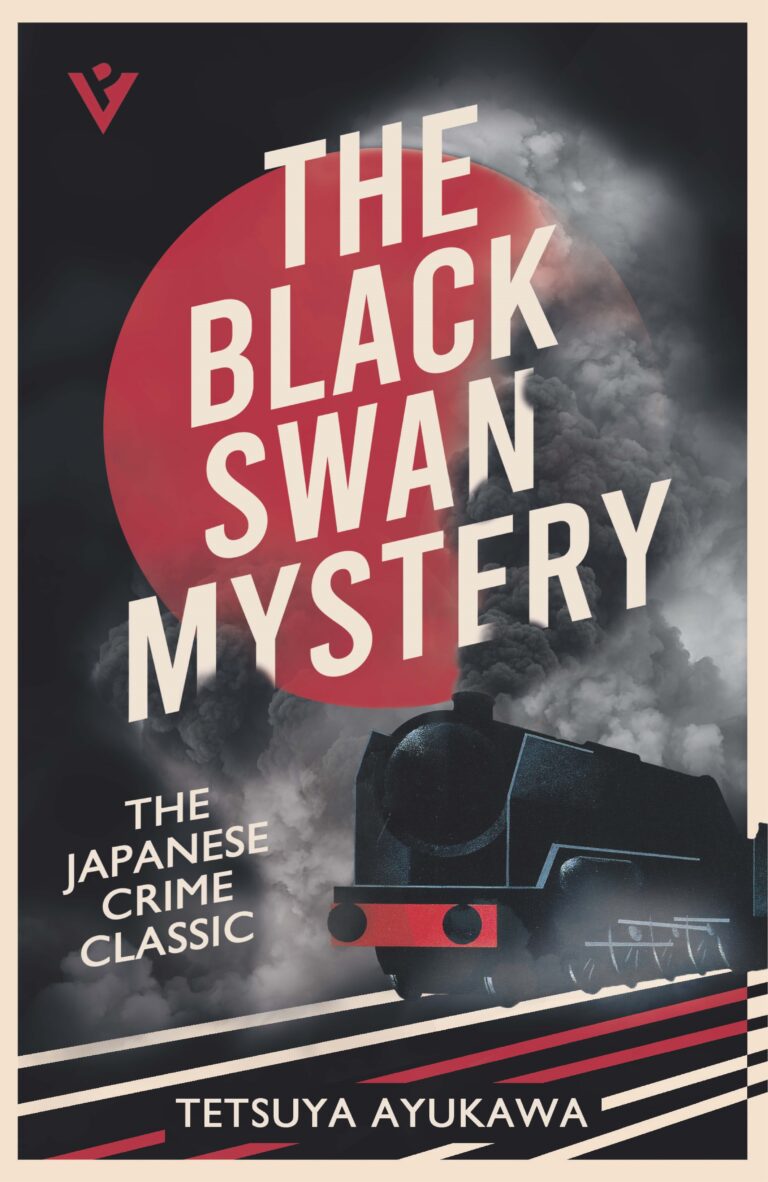
The Black Swan Mystery (1960; English translation 2024) by Tetsuya Ayukawa (the pen name of Toru Nakagawa) is an alibi-deconstruction mystery of the first order. One morning railway workers find the body of a well-dressed, middle aged man just outside of Kuki Station in Saitama Prefecture, shot dead. “Such an impressive mustache . . . what a waste,” one of them says. It turns out that the victim is the much-hated owner of a local mill who is involved in a labor dispute. Even before he is shot we are introduced to hidden secrets and blackmail schemes in the people who know him well. After the murder it seems that everyone in Gosuke Nishinohata’s orbit—including the labor union and a new religious sect—harbored ill feelings for the man, or worse. One union leader claims:
“I despised the man. But it wasn’t just me, you understand. Everybody did… He was devious, an egoist, had absolutely no morals whatsoever, was a terrible womanizer, and, to top it off, he was a paranoiac. How can you respect a man like that?”
The initial investigating team takes the simple way out but when they hit dead ends the decision is made to bring in an expert, Inspector Onitsura, who has a special skill at unraveling difficult schemes. Onitsura and his trusty assistant Tanna crisscross Japan, taking trains to track down leads and stay one step ahead of the killer, who strikes again and again.
Onitsura and Tanna work through boxes of evidence, but history and memory seem to be at play in ways that the original investigative team ignored. Set in post-war Japan, the conflict and its aftermath is present throughout Ayukawa’s story, as the inspector notices when he disembarks in Kyoto.
“Even as he stood on the central concourse, with all the stylish beauties of the old capital passing around him, he could still see the dark shadow of war beneath the crowded scene, as though he were looking at an X-ray.”
While a careful reader might surmise the identity of the killer before the final pages, few—I suspect—will have unraveled the alibi before Ayukawa and Onitsura are ready to reveal the past that cannot be hidden forever.
A first-rate addition to the railway mystery genre.
When it comes to algorithmic manipulation we do not have to be passive victims. We each have the power to do what our phones—a device historian of American political rhetoric Jennifer Merciecacalls a misery machine—won’t do on their own: lead us to hopeful news. Good news. We have the ability to choose differently. The algorithms will follow us wherever we lead them. We just have to decide where we want to go.
WHAT YOU READ CAN AFFECT HOW YOU PERCEIVE THE WORLD
My students tell me that they don’t sleep. They stay up all night endlessly scrolling their social media feeds. Their attention has been captured, but not by anything in particular, not really, they say. Like a lot of us, my students are chronic doomscrollers.
And, like a lot of us, they’re miserable as a result. Doomscrolling—which psychologists define as ‘the compulsive act of endlessly scrolling through negative or distressing news on social media, often leading to heightened anxiety or stress’—turns our phones into misery machines. And those misery machines are hard to turn off, by design.
I first heard of Mercieca’s work via Fix the News—a regular part of my newsfeed. Professor Mercieca had her students create social media accounts “devoted entirely to sharing solutions journalism, about problems being solved, diseases being eradicated, renewable energy advances,” that kind of thing. None of their posts went viral or got much engagement, “but what happened to the students themselves was remarkable.”
“‘Many of my students reported that the experience was both illuminating and healing,’ Mercieca notes. ‘Before our Hopescroll project,’ one wrote, ‘I really didn’t realize the amount of negative content I consume daily. I see scary news articles, I see people being mean to one another on social media, and I spend hours scrolling through posts that have no meaningful purpose.’ Some students even noticed that their social media algorithms began to change, as they started to see more positive content on their feeds instead of quite so much doom . . .
One student reported that shifting their attention away from ‘institutions that benefit from people’s fear’ and toward ‘those who aim to heal’ made them feel more resilient. Several students noted that they saw a shift in their moods that surprised them: ‘Honestly, I did not expect that much would change, however, after reading about communities working together for a large cause, individuals trying to make a difference in their own way, and new innovations being made in hopes of creating a better future, it readjusted my perspective that not all is bad and/or lost in the world.’”
SOLUTIONS JOURNALISM
Doomerism, writes Mercieca, is a media strategy. Left to their own devices (pun intended), tech firms and corporate media conglomerates will—as Cathy O’Neil wrote in Weapons of Math Destruction—take the path where “profits end up serving as a stand-in, or proxy, for truth.”
Solutions journalism—which does exist—makes us better critical thinkers about the media content we consume. It may also provide hope that solutions to our problems are possible.
No one is suggesting that we avoid what is happening in the world today. Mercieca and others are seeking a balance. To that end, solutions journalist Angus Hervey has a thoughtful and inspiring TED Talk about why he publishes Fix the News.
PRACTICES TO MITIGATE THE MISERY MACHINE
Mercieca ends her post with three great practices to mitigate the misery machine. You probably already know the first: be intentional. Go and read her post for the rest.
Who knows . . . you might become a problem solver, or a solutions influencer, yourself!
More to come . . .
DJB
NOTE: Instead of writing long personal pieces about the times we live in, I’m returning to the original idea of my “Weekly Reader” series to highlight a small handful of recent posts from my newsfeed where I feel the authors have important points to make. Most will include short links to posts I found interesting and want to share while others will dive deeper and will (hopefully) link together thematically.
I’ve long been a fan of the pithy proverb—a quote or bit of advice that contains truth in 20 words or less. The New York Times reports that “social media is an aphorism machine” but my love for the short and to-the-point adage is much more old school, coming from my Grandmother Brown who was known to say things such as “some folks are born in the objective mood.”
Grandmother and Granddaddy Brown
Grandmother did not have a lot of patience for complainers. She always had a positive outlook, an attitude toward people that she passed along to my father. I wonder what they would think of our current era and the never-ending online rage machines? (That’s a rhetorical question . . . I know the answer.)
Six years ago I began showcasing these pithy proverbs in a feature entitled More to Consider. After using the fifth year to highlight some personal favorites, I am returning to my regular habit of collecting new ones and posting them in summaries twice a year. * So, as one of my favorites instructs us . . .
“The simple rose, at each moment of its slow blossoming, is as open as it can be. The same is true of our lives.”
Mark Nepo
Newcomer wrote that “there is so much wisdom in the flower that grows day by day into its own becoming . . . On countless walks in the woods, my friend Suzanne and I have engaged in quiet conversations about about music and art and the current state of our spirits. I remember on one particular walk when I was wrestling mightily with a pattern in my life I was working hard to change. It was the first of many times she would smile and say, ‘Carrie, you’re right where you need to be.'”
“And so it is with our lives, we are plants still growing, and we right where we need to be. We are becoming and we are whole at every stage of the journey.”
The song Before and After is the one Carrie shared in her post, so I felt it was appropriate here. It appeared on Newcomer’s album Kindred Spiritsand she writes that “it isabout the power of the stories that change us, that are somehow pivotal personally, communally and archetypally.”
As we’re thinking about being in the right place now, a line from Emily Dickinson which I featured earlier this year also seems appropriate.
“Forever is composed of nows.”
Emily Dickinson
THE DARKEST HOUR IS JUST BEFORE DAWN
The troubles of our time have led me to look for guidance about the importance of working through difficulties. The quote from Martin Luther King, Jr. is a reminder that he not only had the energy of an activist, but he also possessed the soul and vision of a poet/preacher.
“I know, somehow, that only when it is dark enough, can you see the stars.”
The Rev. Dr. Martin Luther King, Jr.
One of our challenges as humans is—as Father Richard Rohr reminds us—that most of what we see is behind our eyes.
“Most of us do not see things as they are; we see things as we are.“
Richard Rohr
Historian and activist Rebecca Solnit speaks to me and my belief that memory and continuity are critical elements in shaping us into the people we are meant to be.
“The past equips us to face the future; continuity of memory tells us we are both descendants and ancestors.”
Rebecca Solnit
“To refuse to participate in the shaping of our future is to give it up.”
Rebecca Solnit
The Grammy-nominated 2020 album Ruthie Foster’s Big Band Live at the Parmount includes Woke Up This Morning, a freedom song created in 1961 from the old gospel favorite I woke up this morning with my mind stayed on Jesus. The song was written by The Rev. Robert Wesby of Aurora, Illinois, who sang it in the Hinds County, Mississippi, jail after his arrest and incarceration during the Freedom Rides. Foster takes us to church and to the streets with her powerful version, and it seems like an important time to let the lives of those who lived through troubles in the past show us the way to respond.
WALK TO BE TRANSFORMED
Pico Iyer has a quote that I’ve tried to internalize. We don’t travel just to move, we travel to be transformed.
“A person susceptible to wanderlust is not so much addicted to movement as committed to transformation.”
Pico Iyer
When we move about we are more likely to meet people who are not like us, and that is an opportunity for growth and transformation. On the other hand, when we stay in one place, we tend to lump people—in all their intricate, intriguing, and infuriating complexity—into categories.
“Categories too often become where thought goes to die.”
Rebecca Solnit
I’m also a believer in the power of myths—both good and bad. Writer David Maraniss has a good reminder of how myths are created.
“Myth becomes myth not in the living but in the retelling.”
David Maraniss
The wonderful singer/songwriter Nanci Griffith was joined by special guests, Tom Paxton and Carolyn Hester, to sing the Paxton classic I Can’t Help But Wonder Where I’m Bound. That seems an appropriate tune to pair with these quotes. And Kinky Friedman’s definition of an artist helps us remember what these talents give up to share their knowledge and vision with us.
“My definition of an artist is someone who is ahead of his time and behind on his rent.”
Kinky Friedman (1944-2024)
A LIFE WORTH LIVING
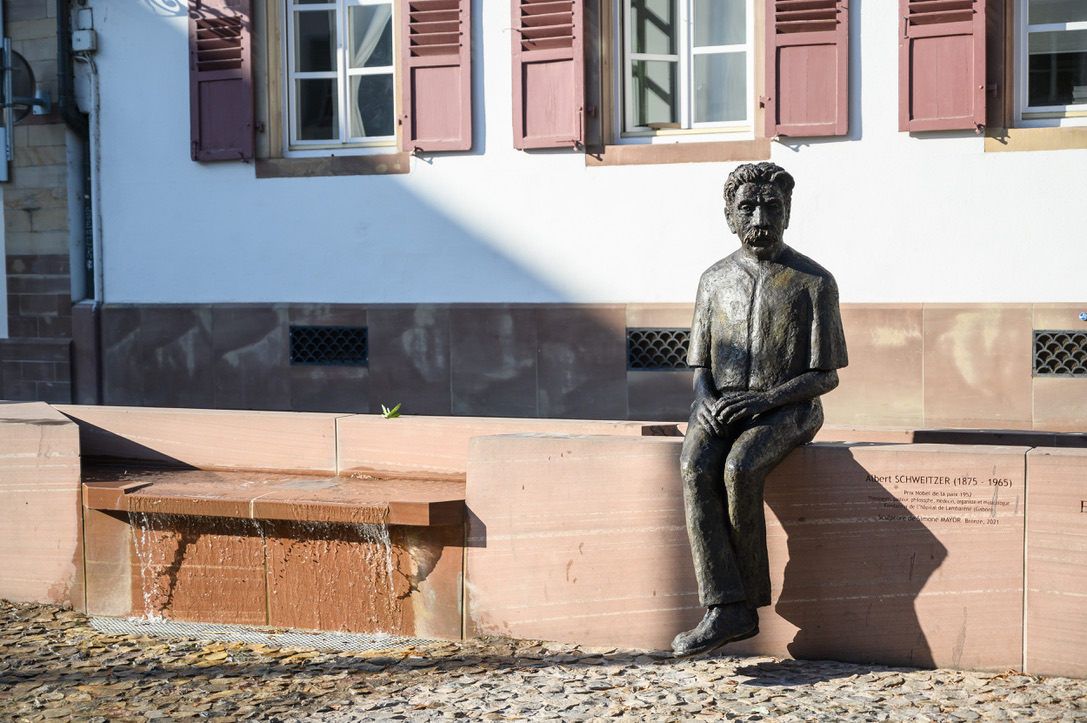
Having the opportunity to see this wonderful remembrance of Albert Schweitzer while visiting Strasbourg, France earlier this year led me to reflect on his life and legacy. I think grandmother would agree with the sentiments of the Nobel laureate.
“Life becomes harder for us when we live for others, but it also becomes richer and happier.”
My monthly intention is to read a minimum of five books on a variety of topics from different genres. I hope that you’ll enjoy seeing what I read in August of 2025. As always, if you click on the title, you’ll go to the longer post on MORE TO COME.
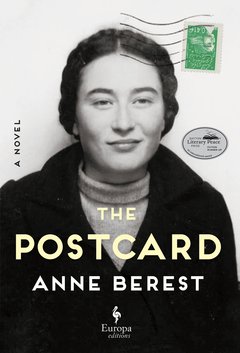
The Postcard (2021; translation from the French in 2023) by Anne Berest is a compelling and timeless work that is so necessary for our current moment. In January of 2003 an anonymous postcard is delivered to the Berest family home, arriving alongside the usual holiday mail. On the front, a photo of the Opéra Garnier in Paris. The back contains only the first names of Anne Berest’s maternal great-grandparents, Ephraïm and Emma, and their children, Noémie and Jacques. There were five members of the Rabinovitch family. These four were all killed at Auschwitz. The fifth—an older sister to Noémie and Jacques—is Myriam, Anne Berest’s grandmother, who never spoke about the loss of her family or acknowledged her Judaism. Although she had a harrowing escape from the Nazis and then worked for the Resistance, she was traumatized; filled with guilt and grieving. After the war Myriam assimilated into France. The quest to uncover who sent the postcard and why leads Anne and her chain-smoking mother Lélia Picabia on a multi-year journey of discovery. That journey is painful at a profound level and yet somehow resilient and inspiring.
Paris: A Short History (2024) by Jeremy Black, MBE is a succinct and incisive look at how the city, founded in the first century BCE, was shaped by cultural circumstances and then grew to have impacts across the country, Europe, and the world. Black is emeritus professor of history at the University of Exeter and the author or editor of over 100 books. He brings that deep experience and understanding to this look at Paris as he explores and explains how a small Gallic capital was transformed into a flourishing medieval city full of spectacular palaces and cathedrals. Black brings the illustrious reigns of Louis XIV and XV—a time when Paris became one of the most beautiful and cosmopolitan capitals in the world—to life. And his chapters on the Revolution, the reigns of Napoleon and Napoleon III, and the shifting fortunes of France during the 18th through the 20th centuries are among the strongest in what is already a vibrant book.
I Heard There Was a Secret Chord: Music as Medicine (2024) by Daniel J. Levitin explores the curative powers of music. A neuroscientist and award-winning musician, Levitin makes a fun and accessible case for the therapeutic force of music, describing ways in which it can be a beneficial part of recovery for patients. After an opening chapter on the neuroanatomy of music where he shows that music has the ability to calm our brains, hearts, and nerves, Levitin brings together the results of numerous studies on music and the brain. In doing so he demonstrates time and time again “how music can contribute to the treatment of a host of ailments, from neurodegenerative diseases such as Parkinson’s and Alzheimer’s, to cognitive injury, depression, and pain.”
Civic Architecture Across America: Extraordinary Views (2025) by Thomas R. Schiff provides unexpected perspectives on buildings and environments that are often familiar to the point of being overlooked. Produced to accompany a national tour in celebration of the 250th anniversary of the signing of the Declaration of Independence, this work forces a reassessment of what we think we know about America’s statehouses, city halls, county courthouses, monuments and more. Schiff’s use of a Hulcherama 360° panoramic camera provides a view that is at once in front, beside and behind the viewer. This striking and often stunning collection speaks to the importance, beauty, and—some might add—fragility of the buildings that both serve and represent our American experiment in democracy.
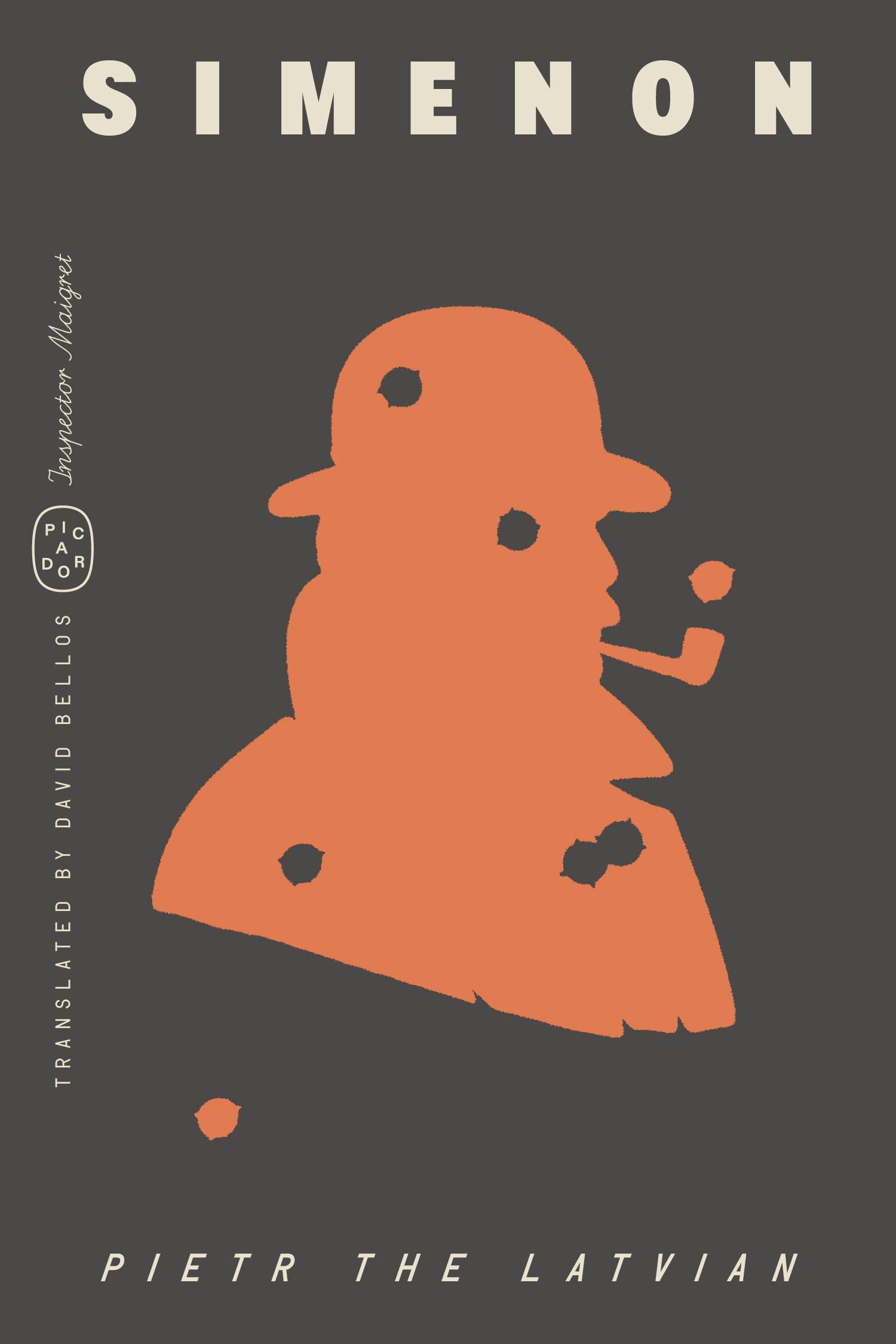
Pietr the Latvian (1930) by Georges Simenon is the first installment in the legendary Inspector Maigret series. As the book begins Detective Chief Inspector Maigret receives notice from Interpol that Pietr the Latvian, an infamous con man, is on his way to Paris. Maigret rushes to intercept him at the train station but is confounded to find two men there who fit the description of the wanted man. One is alive, the other dead. So begins a masterful book that requires the Detective Chief Inspector to work through cons, doubles, intrigue, and hidden crimes. It is a thrilling tale where Maigret not only has to solve the murder but he must also search for the true identity of the victim.
What’s on the nightstand for September (subject to change at the whims of the reader)
Writer and author Julia Rocchi had a recent essay that spoke to the challenge so many of us face in today’s world. “As social media has combusted over the years in its breadth and depth of outrage,” Julia wrote in What I Value, What I Believe, “I rarely say anything ‘out loud’ on those channels about where I stand on any given issue.” She gave several reasons for holding back:
“Social media doesn’t allow nuance or lend itself to civil discourse, rage burns me out, too many fresh crises occur daily to keep up, and my own ignorance around many issues feels so profound I’d rather say nothing than add to the fleeting, braying chorus.”
Julia’s frustrations seem both reasonable and defensible. Since I made a conscious choice not to be on social media, perhaps that stance is not surprising. But more than simply eschewing the race to the bottom of the rage machine, I also admire Julia’s thoughtful response. She wrote that as she continues to “ponder and explore” what exactly is her lane in this world, she recognizes that deeply held values guide her beliefs . . .
“and that articulating them to myself will further ground me in them. Further, the clearer and firmer I am in where I stand, the better I can model loving actions for my children.”
ARTICULATE WHAT YOU VALUE AND BELIEVE
Instead of trying to respond to every fresh horror, Julia captures—in her “own little corner of the internet”—the principles that animate her life. How will she know she’s succeeded in communicating them? “When I act in accordance with these values, none of you will be surprised.”
Everyone’s values and beliefs will differ, but I found Julia’s statement to be thoughtful, moving, and motivating. Her list of values is short: Creativity, Communication, Compassion, Generosity, Grace, Change, Relationship. She adds a “sampler platter” of beliefs, and I’ll simply highlight one that especially spoke to me and encourage you to read her entire essay to see the depth and grace of her convictions.
“I believe that every person is a child of God, made in God’s miraculous image. Full stop. No exceptions. A belief that extends to mean that God loves and cherishes each person as they are. Full stop. No exceptions. Which decisively proves I am not God, because living out this belief and treating each and every person with grace and dignity will be the hard work of my pitiful lifetime. Full stop. No exceptions.”
Once you’ve read this essay, I encourage you to revisit my 2023 Author’s Q&A with Julia after the publication of her book AMEN? Questions for a God I Hope Exists. We could all benefit by taking the time to think through and articulate what we value and believe.
“It is hard to move through the dark. You have to go slowly and, probably, horribly, rely on others. This is what I told friends who felt terrorized by what is happening—we go slowly, stick together, and do what Mother Teresa said—instead of great things, of which we are incapable, small acts of great love.”
Near the end of her essay, Lamott quotes Rebecca Solnit, a writer who is a hero to both of us.
“To me, the grounds for hope are simply that we don’t know what will happen next, and that the unlikely and the unimaginable transpire quite regularly.”
I agree with Solnit about hope. I also know that our history is different from that of Russia, or Germany, or Hungary. One of my beliefs is that we have a deeply rooted civil society and potent muscle memory of resisting authoritarianism. It may take us a long time to get there, but I want to keep reminding myself, as the late David McCullough said, that a sense of history “is an antidote to self-pity and self-importance…history is a lesson in proportions.”
“September offers signals of the shifting season. They can be subtle or striking. With these signs comes an important reminder: the nature of all things includes change. As we emerge from the sun-soaked embrace of summer to the cooling temperatures and fading light of fall, this month holds the truth and wisdom of change, a gift we might embrace this autumn with purpose and grace.”
More to come . . .
DJB
NOTE: Instead of writing long personal pieces about the times we live in, I’m returning to the original idea of my “Weekly Reader” series to highlight a small handful of recent posts from my newsfeed where I feel the authors have important points to make. Most will include short links to posts I found interesting and want to share. Others, like today’s post, will dive deeper and will (hopefully) link together thematically.
After a summer of singing opera in Santa Fe, our son—the tenor Andrew Bearden Brown—returns to the concert stage this fall. His travels take him to New England, California, Florida, and Washington, DC as he performs both solo and in ensemble settings.
Here’s a full listing of Andrew’s scheduled performances (ticket information available on his website):
The Four Elements (Ensemble Member)—“Ensemble Altera in its short history has already been identified as ‘a leading ensemble on the American choral scene'” (Scherzo Magazine). Performances September 12th, 13th, and 14th in Chestnut Hill, MA; Old Lyme, CT; and Westerly, RI.
Centuries of Sound (Ensemble Member)—Aeternum, California’s professional vocal ensemble, performs “a sweeping choral journey through nine centuries of music. From the serene beauty of Medieval chant to contemporary favorites, this program features masterworks and hidden gems by Byrd, Mendelssohn, Bruckner, Whitacre, and others.” Performances September 19th, 20th, and 21st in Belvedere, St. Helena, and Moraga, CA.
Cantata 300 (Soloist)—Washington Bach Consort‘s celebratory opening event for the Director’s Series “uniquely commemorates the 300th anniversary of four of Bach’s finest cantatas, highlighting the rarely performed Dramma per Musica, Zerreißet, zersprenget, zertrümmert.” Performance September 28th in Washington, DC.
The Cryes of London (Ensemble Member)—The superb vocalist of the Washington Bach Consort “will be joined by a viol consort in a program that offers the beauty of Orlando Gibbons’ finest works, led by Artistic Director Dana Marsh.” Performances November 14th and 15th in Washington, DC, and Alexandria, VA.
Messiah (Soloist)—Washington National Cathedral. Soloists Laura Choi Stuart, soprano; Zoie Reams, mezzo-soprano; Andrew Bearden Brown, tenor; and Kevin Deas, bass-baritone join conductor Dana Marsh, concertmaster Daniel Lee, and The Washington National Cathedral Choir & Baroque Orchestra in three performances of Handel’s masterpiece on December 5th, 6th, and 7th.
Andrew is excited about each of these performances, but the opportunity to be the tenor soloist for Messiah at the Washington National Cathedral has special meaning. He grew up singing as a treble and a tenor at the Cathedral, so he notes that this is “truly a full-circle moment.”
When he is not performing on the road, Andrew is a member of the professional choir at Christ Church, Georgetown, which has a rich musical tradition under the direction of Organist and Choirmaster Thomas P. Smith. In December, the Liturgical Choral Music schedule includes A Service of Lessons and Carols for Advent on December 1st and A Service of Nine Lessons and Carols for Christmas on December 15th.
To get you into the mood for the season, I’ll end with Andrew’s performance of “Comfort Ye” and “Every Valley” from Handel’s Messiah, performed in 2024 at Duke University Chapel with conductor Zebulon Highben.
UPDATE: In addition to the solo piece above, Andrew and I thought that you would enjoy hearing one of his ensembles. Caroline Shaw’s and the swallow is a contemporary piece that uses text from Psalm 84, performed here by Ensemble Altera.
Cynics. We’ve all encountered them. They make pronouncements with great certainty and take pride in not appearing foolish. Those who disagree with them are instantly branded, in the eyes of the cynic, as naïve.
Hope, on the other hand, demands things that despair does not.
“Hopefulness is risky, since it is after all a form of trust, trust in the unknown and the possible, even in discontinuity. To be hopeful is to take on a different persona, one that risks disappointment, betrayal . . .”
Rebecca Solnit: “False Hope and Easy Despair”
Three recent pieces that showed up in my newsfeed about very different topics—guns, greed, and tennis—all touch on this idea of cynicism vs. hope.
BAD FAITH
Brian Klaas, professor of Global Politics at University College London, writes about the gun violence in America in a post entitled Guns at Annunciation.
“I was baptized at the church where kids were murdered. It’s a canary in the coal mine for a dystopian America, where people blame everything but the real cause: a country awash with unlimited guns.”
Klass’s key insight: “There are three key factors that are relevant to understanding elevated levels of targeted, mass violence in the United States: social dysfunction, elite incitement, and above all, easy access to unlimited guns.”
Klaas’s bottom line: “Every other rich country has solved this problem.”
Klaas walks readers through all the facts and answers all the cynical myths used by politicians and influencers in this debate. He ends with the following:
“I grew up in the United States—I shot guns at summer camp as a kid—and I now live in the United Kingdom. In the UK, there’s a key difference: I never think about guns. I never think about mass shootings. Never. It’s just not part of life. It’s not a problem that exists.
Every other rich country has solved this problem. The United States can solve it too. But it’s going to take a lot of effort, a lot of persuasion, and a lot of hard-fought election victories.”
Hope requires action.
TAXES ARE THE PRICE WE PAY FOR CIVILIZATION
In poker and murder mysteries a “tell” is an unconscious action that is thought to betray an attempted deception. I’ve noticed a great deal of cynicism recently in actions that give away the grift that drives many of the moves made by those seeking to tear down our democracy.
Journalist and author Paul Waldman recently posted a good example in which he considers the actions of Jamie Dimon, the CEO of JPMorgan Chase and one of the movers and shakers on Wall Street.
Waldman’s key insight: Even though Dimon is now disparaging the Democratic Party, corporations and business leaders made a lot of money under President Joe Biden and the Democrats (as they did under presidents Clinton and Obama before him).
But here’s the thing: They made gobs of money when that nasty socialist Joe Biden was in office . . . the S&P was at 3851 when Biden took office and 5996 when he left, for a 56% gain in four years. Not too shabby!
And what about Dimon’s personal fortunes and that of the company he leads? Under Biden’s cruel hand, the price of JPMorgan Chase shares doubled. They made $54 billion in profits in 2024, a record for the firm. Dimon took home $39 million in compensation that year. It must have been horrible to endure.
Waldman’s bottom line: There’s not a rational reason for the response of those in Dimon’s position. It is emotional.
“Why is it that people like Jamie Dimon crap all over Democrats, whose policies promote strong economic performance, but bend over backward to excuse even the most capricious and foolhardy policies of the mad king in the White House? The answer, I believe, is the most banal thing you could imagine:
They don’t like paying taxes.“
“Republicans cut taxes for the rich, and they like that. Democrats raise taxes on the rich, and they hate that.” Pure cynicism. As Justice Oliver Wendell Holmes, Jr. phrased it, “Taxes are the price we pay for civilization.” Too many of the rich in America, as Waldman points out in this helpful essay, are not willing to pay for a civil society.
THE HOPE OF ARTHUR ASHE
In starting his countdown of the ten greatest sports books ever, Joe Posnanski—my favorite sportswriter—celebrated John McPhee’s Levels of the Game. The book is an account of a single tennis match between Arthur Ashe and Clark Graebner at Forest Hills in 1968. Posnanski’s short post is a wonderful read that explores McPhee’s exquisite writing, a repeat subject here on MTC.
Posnanski’s key insight: “Before I started (the book), I wanted to be one kind of writer. After I finished, I wanted to be a whole different kind of writer.”
McPhee opens Levels with the following paragraph:
“Arthur Ashe, his feet apart, his knees slightly bent, lifts a tennis ball in the air. The toss is high and forward. If the ball were allowed to drop, it would, in Ashe’s words, ‘make a parabola and drop to the grass three feet in front of the baseline.’ He has practiced tossing a tennis ball just so thousands of times. But he is going to hit this one.”
“So simple. So exact. So concise.” Joe also mentions an amazing section in the book about Clark Graebner’s temper and general rage on the court.
“Apparently he believes he can accurately assign blame outside himself for almost every shot he misses, every point he loses. He glowers at his wife. He mutters at other people in the crowd. Airplanes drive him crazy. Bad bounces are personal affronts. He glares at linesmen. He carps at linesmen. He intimidates ball boys. He throws his racquet from time to time, and now and then he takes hold of the fence around a court and shakes it violently, his lips curling. He seems to be caged.”
This paragraph, Joe suggests, is “utterly perfect. Every word in there, every one, you probably knew by the time you were in the sixth grade, if not earlier. And yet, the way McPhee arranges them, they turn into poetry.”
As Donald Jackson wrote in a review of the book when it was released:
“On the surface it is a joint profile of . . . Arthur Ashe and Clark Graebner, but underneath it is considerably more—namely, a highly original way of looking at human behavior . . . He proves his point with consummate skill and journalistic artistry. You are the way you play, he is saying. The court is life.”
Bottom line: Arthur Ashe didn’t succeed because of cynicism. He succeeded through hope, talent, and hard work in spite of the cynicism of others.
Cynicism vs. hope. You are the way you play.
More to come . . .
DJB
NOTE: Instead of writing long personal pieces about the times we live in, I’m returning to the original idea of my “Weekly Reader” series to highlight a small handful of recent posts from my newsfeed where I feel the authors have important points to make. Most will include short links to posts I found interesting and want to share while others will dive deeper and will (hopefully) link together thematically.
A priest, a minister, and a rabbi walk into a bar . . .*
Recently I’ve seen a bit of a twist on that old joke. In my version a priest, a recovering lawyer, and a professor are involved. They are not driving me to drink at the nearest pub . . . at least not yet.
However, three conversations—augmented by a book with “some instructions on writing and life”—have been spinning around in my brain in recent weeks.
The quality of my writing is generally a topic I hold close. Why go looking for trouble? But I initiated all three recent discussions to broach the subject with others. While I wasn’t looking for “benefactor moments” in these conversations, several nonetheless broke through.
The priest, whose writings are often read aloud, described the process he goes through in crafting a sermon. The recovering lawyer—a photographer and writer who explores the innate characteristics of a place—discussed our different journeys. The professor—a retired teacher and advocate for archivists—always expands my worldview in the most supportive and life-giving way. And the book included suggestions about a reason to write that I want to incorporate in some small way going forward.
HOLD IT TOGETHER
Wandering (credit: Think Jar Collective)
As a teacher of homiletics and someone recognized as one of the outstanding preachers in the Episcopal Church, I knew Frank Wade—a long-time friend and mentor—would provide honest and thoughtful advice.
It helped that Frank knew of my eclectic tastes. One minute I can be writing about history and heritage conservation while the next few posts may focus on baseball, family, current events, or murder mysteries. “Make sure each piece holds together on its own,” he suggested, followed with thoughts on how that can work out in practice.
Writing in a crisp, clean, clear style, Frank creates a circle with three stops along the way (as at 3, 6, and 9 on the face of a clock) to reset the theme. The goal is always to come back to the main point at the end.
As a preacher, Frank has to be sensitive to the way people listen and hear what he’s written. Attention spans wander. Two minutes in and all of a sudden one parishioner may be drifting off to focus on brunch. Another has gotten hung up on a phrase and is turning it over in their minds. A third—this would be me—is thinking about how much they dislike the writings of St. Paul. Preachers and writers, Frank suggested, need to bring their listeners and readers back—frequently and gently—to the topic at hand. Good writers hold it all together, even if their readers want to wander.
FIND MEANING IN THE WRITING
Acoma Pueblo Detail, photo by Claire Holsey Brown
My second conversation was with Chuck Wolfe, a recovering lawyer who now writes on how to explore the innate characteristics of a place. I first met Chuck over a decade ago, and we recently sat down over coffee while I was in Santa Fe, his new home. In a recounting of our conversation on his Resurgence: A Journey newsletter, Chuck notes: “In a Substack world full of news, politics, and policy, I keep wrestling with writing personal reflections that overlap with guidance on how to understand places and our relationships to them.” He alludes to living in the “messy middles” and to being a humble newbie. In writing about New Mexico, Chuck notes that “each day brings fresh discoveries in the Land of Enchantment, but with them comes the responsibility to approach them as a thoughtful participant in a continuing story.”
That could be a good prompt for any place we find ourselves.
“Disappearance reminds us to notice, transience to cherish, fragility to defend,” Kathryn Schulz writes. “We are here to keep watch, not to keep.”
At this stage of life my interests are much too wide to be bound by a single-focus newsletter. In his very kind and generous description of our discussion, Chuck called MORE TO COME a “wise, eclectic, and refreshing non-Substack” newsletter. He remarked that he saw that I derive “simple, enduring meaning” from observing and writing about my diverse interests.
Sometimes others see things in you and your writing that are not always obvious when putting pen to paper or fingers to keyboard.
“David remains engaged with many people and places, and our conversation resonated deeply. David’s quiet contentment—and his focus on a meaningful process of regular reflection rather than concern with measurable impact—was a necessary lesson in an era where we often feel pressured to find a single, easy answer for a complex life.”
Thank you, Chuck, for the reminder that writing—and the reflection that goes with it—brings resonance in people and places we may not even recognize.
ACCEPTANCE
George Farr—a longtime professor of literature and the retired Director of the Division of Preservation and Access at the National Endowment for the Humanities—joins me for lunch once a month at the French bistro La Piquette. The wait staff knows that nine times out of ten we’ll both order the Trout Meunière Arc-en-ciel cooked with capers, shallots, and butter, a dish that is heavenly in its simplicity.
Our conversations are wide-ranging but always include books and writing. Some time ago George wrote a blurb that readers often find at the top of my home page. It reads:
“Each week I look forward to more of MORE TO COME ― David Brown’s ‘Letter to the World’ ― and each week I marvel once again at the range and depth of his cultural interests and am grateful for his knowledge, his insight ― and his humanity.”
When we last met I mentioned the conversations with Frank and Chuck, and George was intrigued. He listened carefully but then made the gentle suggestion that essentially encouraged me to accept who I am and how I write. It was a reminder that it is okay that we’re not solving world peace here at MTC, but doing our best to observe the world around us from our own perspective—as all writers do—and tell others about it, to paraphrase Mary Oliver.
WRITE AS A PRESENT TO A FRIEND
While in Santa Fe, I not only met Chuck at the coffeehouse inside Collected Works Bookstore, but I also purchased several books. Among them was a classic on the writer’s world, which fit right into these conversations.
Bird by Bird: Some Instructions on Writing and Life (1994; Vintage Books Edition 2019) by Anne Lamott is worth reading even if you are not a professional or serious writer. If you’ve ever wanted to write, this funny, wise, at times cranky, and insightful work is full of wisdom that can support your journey. Lamott encourages her readers and students to get off their duffs, look around, explore, and then write about it. Good writing is about telling the truth, Lamott asserts, and this work is full of truth telling for the aspiring writer.
Her advice and asides alike will make you laugh out loud. Short assignments and sh*tty first drafts are the key to happiness. There will be people—other writers perhaps—to hate, although you can safely assume “you’ve created God in your own image when it turns out that God hates all the same people you do.” Even though most of the advice is geared for the writer of fiction there is much here for the writer of nonfiction as well (and Lamott writes very good nonfiction, as seen by her most recent column in the Los Angeles Times.) But the book is also a reminder that not all snarky humor ages well. Take the good with the not so good, as overall this work is worth it.
Near the end of Bird by Bird Lamott recommends other reasons to write besides the possibility of publication. She suggests that you write as a present to a friend.
That struck me as a great way to think about so much of what I do at MTC.
“Twice now I have written books that began as presents to people I loved who were going to die,” she states. Writing as a present risks freeing someone else, perhaps someone you love. It is a lovely chapter that stands out in what is already a provocative and helpful volume for writers.
“I got to write books about my father and my best friend, and they got to read them before they died. Can you imagine? I wrote for an audience of two whom I loved and respected, who loved and respected me. So I wrote for them as carefully and soulfully as I could—which is, needless to say, how I wish I could write all the time.”
As Frank might say, Amen.
I hope the recent gifts given to me by Frank, Chuck, and George can be returned in some small way as I continue this journey to unpack the roles memory, identity, and continuity in all their forms play in shaping our lives.
A summary of the August posts from the MORE TO COME newsletter.
Georges Simenon once told an interviewer that “writing is not a profession but a vocation of unhappiness.” In describing her writing process, Anne Berest said that “I write all day . . . I write until it’s time to pick up my children from school. My life is not exciting at all. I’m alone most of time.” Anne Lamott tells her writing students that . . .
“. . . the odds of their getting published and of it bringing them financial security, peace of mind, and even joy are probably not that great. Ruin, hysteria, bad skin, unsightly tics, ugly financial problems, maybe; but probably not peace of mind.”
Clearly there are challenges for those who want to write and do it well. I admire those who succeed in their craft.
In February of 2023 my dear friend, the writer Janet Hulstrand, agreed to a “chat” about her just released memoir. That kicked off a regular newsletter feature that I’ve titled Author Q&As. There are now 17 in the series, with the two newest arriving this month. And—as is often the case—those two were at the top of our reader favorites list for MTC.
READER FAVORITES
A history of the City of Light captured my conversation with Jeremy Black, MBE. The book and our discussion is full of broad observations and interesting vignettes. Among the latter is the story of Saint Denis, first bishop of Paris, who after he was allegedly beheaded, picked up his decapitated head and walked for some distance, preaching as he went.
A couple of weeks ago I posted Talking murder mysteries with Anna Scotti, the author of the brilliantly conceived set of stories involving the “librarian on the run.” Readers clearly enjoyed learning how, thanks to the influence of her parents, Anna became a mystery writer . . . and which writers influence her work today.
I have more Author Q&As in the queue. Robyn Ryle and I will be chatting next month about her terrific new book Sex of the Midwest; Rich Moran will join me to discuss The Accidental Vineyard; there will be a conversation in November with Dr. Amy-Jill (AJ) Levine on her new book A Child Is Born: A Beginner’s Guide to Nativity Stories; and I’m lining up another chat with Jeremy Black on his just published work on the American Civil War. If you scan the conversations in this series, you will find that we’ve covered memoirs, spirituality, histories, murder mysteries, slavery, freedom, architecture, photography, leadership, city planning, community revitalization, and libraries! Since these chats often top the reader favorite list, my brilliant readers clearly find these conversations—and the authors—as fascinating as I do.
There was a third post—painful at a profound level, and yet somehow resilient and inspiring—that was also a top choice of MTC readers.
The haunting, anonymous postcard that arrived at Anne Berest’s family home in January 2003
A stunning work of great pain and grace is an autobiographical novel about the genocidal treatment of the Jews during the Nazi-led holocaust; history that should never be forgotten much less repeated. When indifference arises this part of the past should always be there to inform and shape our individual and collective responses to evil. The Postcard is an important work that I simply cannot get out of my mind. I recommend it to you as a book you’ll never forget.
Now let’s see what else caught my fancy this month.
AN AUGUST TRILOGY
I ended up taking a dive into the current war on history, but I bookended it with two pieces to help me (and hopefully you) think about ways to respond to the challenges of our time.
Finally, when times are difficult we can let our emotions rule our lives. We can respond to criticisms with bitterness. We can look for others to scapegoat. We can seek out the voices of revenge and hatred. Or we can take a different path, as I write in Choosing gratitude in difficult times. Our daughter, Claire Holsey Brown, has been an important guide in helping me see the peace and balance that’s possible amidst life’s challenges, with something as simple as taking a loving pause when life feels overwhelming.
BOOKS, MUSIC . . . AND MORE
There were a range of books and musicians appearing in MTC this month.
Unexpected perspectives is an excerpt from an upcoming review of Thomas Schiff’s extraordinary Civic Architecture Across America.
After reading a random work in a mystery series, I often return to the beginning: this time with Inspector Maigret. A case of cons, doubles, and intrigue is my review of Georges Simenon’s classic Pietr the Latvian.
Music as a healing force is my review of Daniel J. Levitin’s I Heard There Was a Secret Chord: Music as Medicine, along with some thoughts on our son—the tenor Andrew Bearden Brown—and his time this summer with the Santa Fe Opera.
These cats are good! is my celebration of the International Bluegrass Music Association 2025 Award nominees.
In a short post, I alerted readers to Joe Posnanski’s thoughts about the commissioner of Major League Baseball in Rob Manfred Doesn’t Love Baseball (a repost). Joe and I agree. And in a blast from the past, my January post Rest in Peace, Mr. Baseball was trending this week as the Milwaukee Brewers honored the life of Bob Uecker.
COMMENTS I LOVED
Noémie RabinovichAuschwitz
In my review of The Postcard, I linked to an online post written by the translator, describing her work on Anne Berest’s autobiographical novel. So image my surprise when the first comment on my essay came from . . . the translator!
“David, translator Tina Kover here. I can’t thank you enough for this beautiful and deeply thoughtful review.”
I was so touched by Tina’s comment that I sent it, along with the original post, to brilliant reader Judy who had recommended the book in the first place. She quickly wrote back with the following:
“Thanks so much for pointing out the translator’s comments—loved reading them as I had wondered how anyone could actually do this translation so impeccably. Did I tell you that after I read the book in English, I re-read it in French—figuring I could decipher what I didn’t understand in French just by having read the English translation….and it worked! The same heart and soul throughout every beautifully written page!! The translator succeeded in inhabiting the emotions fully!”
I told you I have brilliant readers (and friends)!
DON’T POSTPONE JOY
Thanks, as always, for reading. Your friendship, support and feedback mean more than I can ever express.
As you travel life’s highways be open to love; thirst for wonder; undertake some mindful, transformative walking every day. Recognize the incredible privilege that most of us have and think about how to put that privilege to use for good. Women, people of color, LGBTQ+ individuals, immigrants, public servants, and others can feel especially vulnerable . . . because they are. Work hard for justice and democracy as the fight never ends.
But also keep some room in your heart for the unimaginable. Take time to dawdle and dream. Leave enough empty space to feel and experience life. Those gaps are where the magic begins. When times get rough, let your memories wander back to some wonderful place with remembrances of family and friends. But don’t be too hard on yourself if a few of the facts slip. Just get the poetry right.
Remember that “we are here to keep watch, not to keep.” Pay attention. Be astonished. Tell about it. And bash into some joy along the way.
You can subscribe to MORE TO COME by going to the small “Follow” box that is on the right-hand column of the site (on the desktop version) or at the bottom right on your mobile device. It is great to hear from readers, and if you like them feel free to share these posts on your own social media platforms.























 MORE TO COME...