Latest Posts

Duets: Things go better in pairs

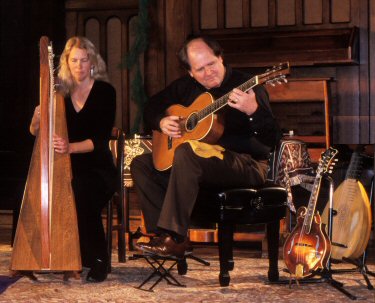
I love a good country or folk duet. When several surfaced yesterday on Pandora, my assumption was that God was sending a Saturday Soundtrack sign…and I decided to listen to her.

Living in Tennessee in the 1960s and 70s, it was easy to hear some of the classic country duet acts on the radio and see them on Nashville’s numerous country music television shows. George and Tammy singing Golden Ring was perfect, because it was a song that matched their tumultuous relationship. Dolly and Porter were big during those years, before Dolly left the partnership some forty-six years ago to become a force of nature all on her own. And of course, at the top of the heap was that duet of country royalty, Johnny Cash and June Carter Cash.

So let’s dive in, beginning with the Johnny Cash tune I Still Miss Someone which I’ve always enjoyed. It is a classic “I’m lonely and miss you” song that Emmylou Harris has recorded in both solo and duet versions. Emmylou can sing a duet with anyone and make them sound great, but when she has a terrific musician such as Elvis Costello as a partner, you get this wonderful live version.

Another exquisite duet singer is the inimitable Nanci Griffith. Her song Gulf Coast Highway, co-written with James Hooker, is a beautiful country duet, which they perform live in this version. Nanci also recorded John Prine’s Speed of the Sound of Loneliness for her Other Voices, Other Rooms album, and performed more than one live version with Prine.

Lyle Lovett is one of those singers who has a style that can’t be matched. He sings a funky version of the Willie Nelson tune, Funny How Time Slips Away with the Rev. Al Green and the inimitable Billy Preston on the Hammond B3 organ. I also recommend his duet with Marty Stuart on the Townes Van Zandt tune Pancho and Lefty. (I would also suggest you hunt down the Emmylou and Willie version, which I love.) Emmylou’s version of the Townes tune If I Needed You with Don Williams was one of the duets that originally sent me on this search.

Dolly Parton has always been the gold standard when it comes to country duets. She has had so many wonderful musical partners through the years, that I could make up an entire (and very long) Soundtrack of Dolly Duets. This haunting one on The Grass is Blue with Norah Jones hints at the broad range of her collaborators.

While we’re on Norah Jones, check out her version of (one of) the Tennessee state songs, Tennessee Waltz, with the one-and-only Bonnie Raitt. And before we leave Bonnie, I just love her take on John Prine’s Angel from Montgomery with Ruthie Foster.

Country duets have gone off in all directions. Chris Stapleton is one of the new crop of country singers I enjoy, and at the 2015 CMA awards, he teamed up with Memphis native Justin Timberlake to bring down the house on a couple of drinking songs.

For folk music, you can’t find a more authentic songwriter than Woody Guthrie. Nanci Griffith, also from the Other Voices, Other Rooms album, sings Guthrie’s Do Re Mi with another songwriter of power, Guy Clark. And while we’re in the folk mode, the duo Mandolin Orange, made up of singer-songwriter Andrew Marlin and multi-instrumentalist Emily Frantz, is an under-the-radar group for many people. Their version of Golden Embers shows why they deserve to be better known.

Clearly, I can go down this rabbit hole all day and all night. So I’m going to end with one of my favorite duets, with two of the most unique and idiosyncratic singers of all time: Johnny Cash and Bob Dylan, singing Dylan’s Girl from the North Country. This song was pivotal in one of my favorite movies of recent years, Silver Linings Playbook, so click on that link if you’d like to hear it while watching a trailer from the movie.

If you have a favorite duet you’d like to recommend, please add it to the comments.

Enjoy!

More to come…

DJB

Choose your leaders wisely

A poem appropriate for our time, by Octavia Butler.

Choose your leaders with wisdom and forethought.
To be led by a coward is to be controlled by all that the coward fears.
To be led by a fool is to be led by the opportunists who control the fool.
To be led by a thief is to offer up your most precious treasures to be stolen.
To be led by a liar is to ask to be told lies.
To be led by a tyrant is to sell yourself and those you love into slavery.

More to come…

DJB

Image by Mario Aranda from Pixabay

Rest in Peace, The Rev. John D. Lane

Our dear family friend, John Lane, passed away last Sunday, August 30th, after a courageous battle with lymphoma. We were blessed to know John for more than thirty years, and he will be sorely missed.

John Lane, with his wife Bizzy, daughter Mary, and grandson Will at Ragged, NH in August 2010

As noted in his obituary, John was a Peace Corps Volunteer in Nepal from 1966-1968, serving in the most remote post of that organization, a six day walk from any transportation. This was a life-changing experience that he drew upon in sermons and writings. John was also a proud graduate of Amherst College and General Theological Seminary. Our family came to know John in 1987, when he became rector of Trinity Episcopal Church in Staunton, Virginia. Known for his quick wit, sharp intellect, spiritual guidance, loving care, and thoughtful leadership, those were all qualities we had come to appreciate when we asked John to be our Andrew’s godfather. He gladly and enthusiastically accepted that role.

John Lane (4th from left, in the red vestments) with the other godparents and Andrew and Claire on their baptismal day, May 30, 1993

There was so much about John’s life and work to admire, but I want to focus on his humor and humanity. He showed me how to accept and even indulge the humor that is essential to faith. In sermons, lessons, writings, and conversation, John’s dry wit always came through as an essential part of who he was and what he believed. As someone who has more doubts than may be readily apparent, John gave me permission to look at my own set of beliefs and accept that some things are going to be skewed, off-center, and, perhaps, not understandable. And that’s okay.

John’s humor also came through to make a larger point about what’s important and what is trivial in life. He would enjoy posting articles on his Facebook page to bring that wit and wisdom right out front and in your face. Articles such as Christian: You Are Upset About the Wrong Things which begins with this quote used by sociologist Tony Campola when he spoke with Christian audiences:

“I have three things I’d like to say today. First, while you were sleeping last night, 30,000 kids died of starvation or diseases related to malnutrition. Second, most of you don’t give a shit. What’s worse is that you’re more upset with the fact I just said “shit” than you are that 30,000 kids died last night.”

That sense that the moral outrage of many people of faith is misdirected and focused on the wrong things — told with a bit of humor — was right up John’s alley.

John’s humanity is another part of his life I recall with appreciation and affection. Several of his sermons that were obviously about the illness of his son, Andrew, who passed away in 2007, still remain with me. In those sermons, John was willing to say he didn’t understand and maybe didn’t want to be tested to “be a better person.” John taught me it was okay to be vulnerable, and that part of his humanity, seen again during the past year when his cancer returned, was also something I’ve been thankful to experience.

In his last decade of life, John, along with his wife Bizzy, provided a great example in “how” to retire. Over the past ten years they had fun together, with family and with other couples, in places near and far. Like every other way he lived, this was all part of John’s broad understanding of humanity. The remembrances those friends have posted on John’s Facebook page show the wideness of the impact of that life well lived.

Candice and I were fortunate to see John and Bizzy on several occasions during the pandemic, as they came first to NIH in Washington and then to Baltimore for treatments. We would get together for socially distanced meals and good conversation whenever we could, most recently last month. In those moments, John let us just be his friend and show support, while accepting that love and support unconditionally. Watching John go through this challenge has encouraged me to let go of more.

My favorite picture of the Lane family: Andrew (front), Edward, Mary, John, and Bizzy (l-r)

The last time we spoke with John was on Facetime, the Monday before he passed away. He was entering Hospice care. Candice asked him if he was ready and John replied with his typical sense of humor. He said, “Well, I feel like Woody Allen: ‘I’m not afraid of death; I just don’t want to be there when it happens.'” That was John: helping others laugh, smile, and think until the end.

It isn’t easy getting close to parishioners when you’re the rector, but John was able to manage those types of relationships with a number of individuals. I so appreciated John’s wisdom and guidance to me, given not only as my priest but especially as my friend. Our family treasures the years we knew John, and with his passing our love goes out to Bizzy, Edward, Mary, and their families.

Rest in peace, good friend.

More to come…

DJB

Taking a summer break

Here in the heat of July, I’ve decided to give the staff at More to Come the rest of the summer off. Yep — all the writers, editors, photographers, graphic designers, and those amazing headline writers — every last one of them will get almost seven weeks off with pay. Wow! What a boss!*

Seriously, this seems like a good time for a break. I’m getting tired of considering all the draws being made on the U.S. Strategic Stupid Reserve, and there doesn’t seem to be any letup in sight. There will be plenty of material, unfortunately, on this topic after Labor Day. Also, there are some other projects calling for my focus, including that long-promised gap year book.

So this is it until the Tuesday after Labor Day (8 September for the international readers). Well, this is it unless the feds in the unmarked vehicles and camouflaged uniforms come and lock me up, then all bets are off.

Should you want to take this time and explore some of the things you might have missed on the blog, here are favorites from 2020 that I can recommend.

And then a couple of oldies-but-goodies that just seem appropriate in the middle of our COVID-19 dumpster fire:

  • Kindness — written after I announced my retirement and was reminded how good it feels to be on the receiving end of kindness (January 2019)
  • History as an antidote to folly — as we struggle to keep our democracy, thoughts on how we got to this point and what we can do to fight back (November 2017)

If these don’t interest you, perhaps you’ll like to see the top 10 posts from the blog in terms of reader views. Or simply feel free to rummage around in the archives. In any event, have a great rest of the summer.

See you in September.

More to come…

DJB

*If you are new to this blog and wonder what the heck all this is about, well there is no staff. Just DJB. And there’s no pay. I do it just for the joy of writing and sharing thoughts with a small community of readers.

Image of pier from Pixabay.

The long haul

Only a few weeks into the pandemic, Leonard Pitts, Jr. — a Pulitzer Prize-winning columnist with the Miami Herald — noticed a change in the behavior of certain segments of the country. In the response to COVID-19 and the question of when and how the nation’s economy should be reopened, he observed that as a country,

“(W)e seem to have tapped the U.S. Strategic Stupid Reserve. The result has been a truly awe-inspiring display of America’s matchless capacity for mental mediocrity.”

Leonard Pitts, Jr., Miami Herald, April 24, 2020

This is one strategic reserve where the well never appears to run dry. Heck, in April we were just beginning to draw down on the stupid. I don’t have enough patience to cover even 1% of the calls upon this reserve since then, but one recent examples will suffice. Who would have thought back in April that this administration was going to smear the director of the National Institute of Allergy and Infectious Diseases in the press while the president “was praising the public-health stylings of Chuck Woolery,* the former host of Love Connection, who logged on to Twitter to spout off some conspiratorial nonsense”?

That’s when the reality of our life today really hit me.

We are not coming out of this situation until a year from now at best. Eighteen months total of this COVID-19 dumpster fire is the best case scenario I can envision after reading the estimates of the real experts, our public health professionals. And it could easily be two years or later from the start of the pandemic, or March 2022, before we have enough confidence to live our lives with anything resembling our old normalcy. Of course, the doomsayers argue that we’ll never recover, but I’m not ready to sign on to that scenario. Yet.

Our death toll will likely be somewhere north of 200,000 by the election and many experts suggest it will be 300,000 by the end of the year. Consider that we lost 600,000 souls in the entire 1918 pandemic and you see where we are headed. We continue to lead the world in both cases and deaths from the coronavirus (and not because we test more — another example of the call on the Strategic Stupid Reserve). If we don’t change leadership in January, all bets are off. As Michelle Goldberg wrote in the July 13th New York Times,

“The country’s international humiliation is total; historians may argue about when the American century began, but I doubt they’ll disagree about when it ended.”

The realization that this will be a long haul led me to serious reflection.

I love our country and the democratic ideals on which it was founded but has never attained. In this crisis, we have to point toward those ideals and call out the political party and its leadership that refuses to stand up for the American people in the face of petulance, incompetence, and a stunning lack of empathy. And most of us need to recognize that we bear responsibility for, at the least, our complacency in defending democracy. Lewis Lapham says it best:

“If the American system of government at present seems so patently at odds with its constitutional hopes and purposes, it is…because the promise of democracy no longer inspires or exalts the citizenry lucky enough to have been born under its star.  It isn’t so much that liberty stands at bay but, rather, that it has fallen into disuse, regarded as insufficient by both its enemies and its nominal friends.  What is the use of free expression to people so frightened of the future that they prefer the comforts of the authoritative lie?”

Lewis Lapham from Age of Folly: America Abandons Its Democracy

As we defend our democracy in the midst of a pandemic, we will have to fight those who, for whatever reason, pretend the virus is not a threat or who try to use their will to make it disappear. (There’s another of those draws on the reserve.) They are just playing into the hands of the virus and contributing to the disaster. Michael Osterholm, director of the University of Minnesota’s Center for Infectious Diseases Research and Policy, says we need to learn to live with the virus.

“You have less chance of winning a policy debate against this virus than you do of … winning a debate against 2,000 angry 2-year-olds. People have to understand that. It’s like trying to defy gravity. Just because you want to doesn’t mean you can.”

We learn how to live with and ultimately defeat the virus by turning out the noise and listening to the experts. I recommend this early July online conversation between Dr. Anthony Fauci and Dr. Francis Collins, the Director of the National Institutes of Health.** I found the information there on the current state of COVID-19 clear, thoughtful, and based in science.

Finally, although I will be essentially sheltering in place for the next year or more, I will dedicate myself to ensuring that I come out the other side with a real sense of personal accomplishment and change. My situation is rather benign compared to others and many fellow citizens face much greater challenges, so that’s the least that I can do. The number of friends and family members who have had COVID-19 is approaching a dozen in my case. One had a fever for six straight weeks while another was on a ventilator and remains in the hospital. Others had milder cases. We have good family friends who are grappling with very serious cancer issues in the midst of this pandemic. Some friends and former colleagues have lost their jobs or seen relationships frazzle. Others may be losing their apartments or homes. The saddest part is that it did not have to be this way, if we’d cared enough about our democracy and country to elect and support competent and empathetic leadership.

Accepting reality is the first step to beating the coronavirus and beginning to recapture the ideals our country was founded upon. This past week, I began to face those realities seriously. We are on this road for the long haul, and in many ways — if we want to fix our country — that’s a good thing. As the late John Lewis said in his 2017 memoir,

“Freedom is not a state; it is an act. It is not some enchanted garden perched high on a distant plateau where we can finally sit down and rest. Freedom is the continuous action we all must take, and each generation must do its part to create an even more fair, more just society.”

John Lewis, From his 2017 memoir, “Across That Bridge: A Vision for Change and the Future of America”

Don’t stop caring.

More to come…

DJB
*In the “you can’t make this stuff up category,” Woolery’s son came down with COVID-19 just days after the former game show host tweeted that everyone was lying about the virus in order to impact the election. Woolery quickly took down his Twitter account.

**I was friends with Francis Collins’s parents and have watched his career for years, including his appointment to head NIH in 2009 by President Barack Obama and his reappointment to that position in 2017 by Donald Trump. Dr. Collins was also the 50th and most recent recipient of the prestigious Templeton Prize which celebrates scientific and spiritual curiosity. An evangelical Christian, he has long worked to bridge the gap between those faith communities who question science and the broader scientific field. Fletcher and Margaret Collins were both amazing people. I learned a great deal from them and I have a great deal of respect for their son.

Image by jplenio from Pixabay

Rest in Peace, John Lewis

America just lost one of its most clear-eyed, moral leaders. John Lewis — civil rights hero on the front lines from lunch-counter desegregation in Nashville to Freedom Rides through a hostile South, the last remaining speaker from the August 1963 March on Washington, U.S. Congressman for 34 years, an activist to the end, and conscience for a nation — passed away Friday night after a six-month battle with pancreatic cancer. Representative Lewis was a hero to many because in this age of nonstop blathering nonsense, he spoke plainly about the hope for an America that — as Langston Hughes wrote — is the America that the dreamers dreamed. And he not only spoke, but he walked the talk, most famously when his skull was cracked more than fifty years ago while trying to walk across an Alabama bridge working for justice. 

There are many wonderful tributes to John Lewis pouring in. I recommend the statement of President Obama, who — when given a ticket to his history-making inauguration as the nation’s first Black American president to autograph — wrote, “It’s because of you, John,” to Lewis on January 20, 2009.

In his statement, The Rev. Dr. William J. Barber II hits at the need to restore the Voting Rights Act, which was passed soon after Lewis spilled his blood on the Edmund Pettus Bridge. That law was eviscerated in a cynical decision by Chief Justice Roberts and the Supreme Court in 2013 in spite of 25 years of consistent and strong bi-partisan support for maintaining controls over attempts at voter suppression in states which had shown no inclination to allow the full flowering of democracy. Within hours of that Supreme Court decision, states in the South began restricting voter access and their efforts continue today.

I was privileged and honored to meet Congressman Lewis twice and to hear him speak on both occasions about how important history — and the telling of the full American story — is to our understanding of the present and to building hope for the future. When the National Trust conference was held in Nashville in 2009, Congressman Lewis — speaking in the historic sanctuary of the Downtown Presbyterian Church that was founded by one of my ancestors — challenged us to believe in the idea that,

“My house is your house. My story is your story. The history of my people is the history of all Americans not just African Americans.” 

John Lewis, Nashville, Tennessee, October 2009

Hearing, understanding, and honoring the full diversity of America’s story is a lifetime of work that helps provide the connective tissue between the me and the we, and leads us to care for something larger than ourselves. The Congressman’s long-time quest to see a museum to African American history on the National Mall in Washington was part of his work for civil rights.

In June of 2018, Lewis sent out the following message on his Twitter account:

“Do not get lost in a sea of despair. Be hopeful, be optimistic. Our struggle is not the struggle of a day, a week, a month, or a year, it is the struggle of a lifetime. Never, ever be afraid to make some noise and get in good trouble, necessary trouble.”

Representative John Lewis

Lewis knew — from more than five decades in the trenches — that despair creates apathy, and apathy destroys activism. One activist who was in Lewis’s training camps in Mississippi in 1964 noted that “Giving in to despair is lazy surrender.” John Lewis was never lazy, and he never got lost in that sea of despair.

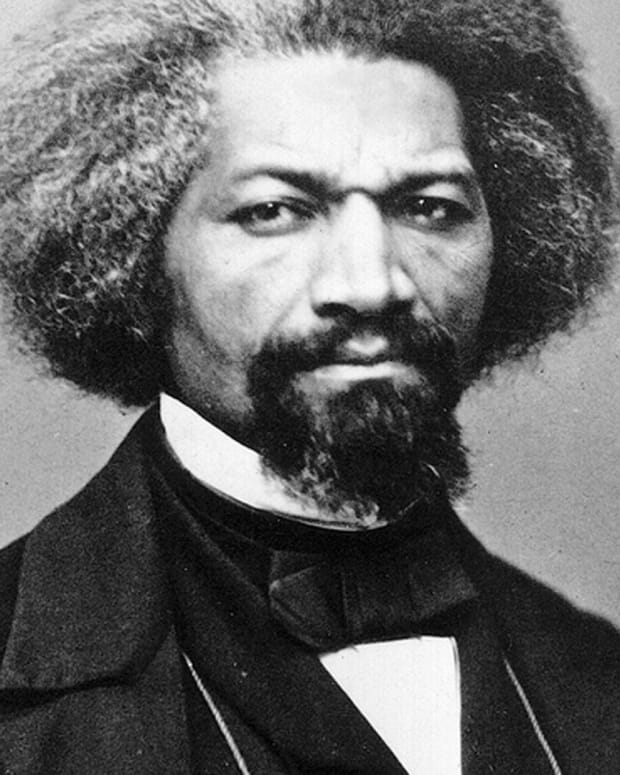
Finally, I encourage you to read the tribute of columnist Eugene Robinson, who wrote that Lewis lived, fought and triumphed by the words of Frederick Douglass: “Power concedes nothing without a demand. It never did and it never will.”

How, then, should we remember this great man? Not with fuzzy, feel-good encomiums but with a clear-eyed look at his monumental accomplishments and the work still left undone.

Eugene Robinson, Washington Post, July 18, 2020

That seems to be as good a place to start in how to remember John Lewis as any.

Rest in peace, John Lewis. For everyone else, we need to get back to work on what really matters.

More to come…

DJB

Image: John Lewis in 1964 (l) and in 2006 (r)

UPDATE: Former President Barack Obama gave a very moving eulogy on Thursday, July 30th, at the funeral for John Lewis, held at historic Ebenezer Baptist Church in Atlanta. It is long, but worth the effort.

Saturday Soundtrack: Songs for social distancing

I was listening to Oscar Peterson recently when he began the familiar Duke Ellington tune Don’t Get Around Much Anymore. I quipped, “Well, that could be my theme song for sheltering-in-place.”

Here we are, still pretty much stuck in our own bubbles for the foreseeable future, and not getting around much at all. While musing on our situation, the thought came to me that it could be fun — or at least distracting — to have a look here on Saturday Music at this testimonial to social distancing.

We’ll begin our exploration of this beautiful “I miss you” song with the version that put me on this quest — the Oscar Peterson arrangement, which I believe features Peterson on piano, the incomparable Ray Brown on bass, and Ed Thigpen on drums.* Then we’ll turn to Duke Ellington and Ella Fitzgerald — jazz royalty — for their take on the standard. This out-of-focus clip is from the NBC telecast the Ella Fitzgerald Show, from April 1968. According to some online commentators, in the same show they recorded “Oh, Lady Be Good” and “Lush Life”. Bass and drum are played by musicians from the Ella rhythm section: Keter Betts and Louie Bellson.

It isn’t just the jazz cats who can make this number swing. I was surprised to find the 1987 version of a middle-age Paul McCartney rocking away on the Ellington standard. And New Orleans’ own Dr. John also has a great version of this stay at home anthem.

To shift the mood a bit, is there anyone more soulful than Sam Cooke? (That’s a trick question.)

And finally, from a 1992 concert, here’s Natalie Cole singing the song that she “recorded” as a duet with her dad, Nat King Cole, on Unforgettable.

You know the song is great when a wide variety of artists can make it their own. Enjoy…and stay safe by wearing your mask and social distancing as you venture out into public.

More to come…

DJB

*The YouTube video doesn’t indicate which record this version came from, and I’m not sure the picture goes with the album in any event.

Image by Gretta Blankenship from Pixabay.

In praise of teachers

As we debate schools reopening in the midst of a pandemic, this seems like a perfect time to say a few words of praise for teachers who work in our public and private school systems across the country and around the world.

Teachers have been very important in my life. I am married to a retired teacher. One sister is a librarian (another form of teaching) as was my mother, and the other sister trained in education and used those skills in various ways with preschoolers. My sister-in-law is a retired teacher, and I have nieces who are currently public school teachers. In almost 20 years of formal education and 65 years of informal learning in the world, I’ve had many teachers — a number of which I remember very fondly and a few of which changed my life.

Every now and then I find a link that sends me to Twitter and today was one of those days. Connie Schultz is a Pulitzer Prize-winning columnist, author, and professor who lives in Cleveland, Ohio.* She recently had a feed that told why teachers matter. You can click on the link above to see her feed (and retweet it if you are on the platform), but I’ll lay it out here for those of us who prefer our thoughts in more than just a handful of characters at a time.

When I was 6 years old, right after first grade had ended, my teacher invited my mother & me to her home. Unthinkable! We wore Sunday clothes. I was so nervous & excited that I sat wedged next to Mom on Mrs. Behrendt’s sofa. I remember two things about what came next.

Mrs. Behrendt gave me this framed Award of Honor, signed by her and the principal — and the superintendent! Mom talked about that for weeks. It was displayed on our dining room wall for years.

As we were preparing to leave that day, Mom walked onto the front porch and Mrs. Behrendt pulled me back for a hug and whispered into my ear, “You are a very smart little girl. Let the grown-ups worry about grown-up problems.”

Her secret message is why this award still hangs in my home. My teacher knew me better than any other person in my life. I learned early why teachers matter. So many parents have learned firsthand during this pandemic how hard it is to teach. Now is the time to advocate.

Most teachers never come close to making what they earn, but they show up anyway, day after day. No teacher should be returning to classrooms in districts that refuse to protect them, and all the staff that keep schools running.

This is a grown-up problem, and it is ours to solve. Our teachers need us.

Connie Schultz

That says it all. Let’s work to support our teachers. Their lives, and the lives of our children, depend upon it.

More to come…

DJB

*I notice in her feed that Schultz grew up in Ashtabula, Ohio, which was the hometown of one of my most important mentors and teachers. Must have been something in the water.

Images by congerdesign and akshayapatra from Pixabay.

Tone deaf and tiresome

Daniel Snyder is — with apologies to Judith Viorst — the terrible, horrible, no-good, very bad owner of the Washington National Football League (NFL)  franchise.

As sports columnist Martin Fennelly chronicled back in 2018, there are many instances one can point to of Snyder’s terrible stewardship of what many foolishly consider to be a community asset. (Those who think this way definitely do not include NFL owners.) With so many to choose from, where does one start? Well, one of the worst examples could be when the team’s cheerleaders said they were used as escorts on a trip to Costa Rica where stadium suite owners and sponsors could “check out” those women topless. Then there is the sycophancy. Like other bosses who thrive on obsequious behavior from their staffs, Snyder hires sycophants in his operation and runs through coaches like — oh, I don’t know — White House chiefs of staff or press secretaries.

But many considered his most egregious behavior to be his defiant refusal to consider the impact of Washington’s stereotyped racial image on the larger community. That is, he defiantly refused until events overwhelmed him. In the midst of Black Lives Matter and a national racial reconsideration, Snyder’s corporate supporters (not to mention the NFL) apparently gave him an ultimatum: change the name or lose millions in our support.

So earlier today the team announced the “retirement” of the old name.

I was speaking with friends who had moved to the Washington area from Atlanta, and one asked about that name change. He assumed the team would talk with the community and get a great deal of input before making the change. I laughed. Snyder has been reported as “bunkered in” as he makes this decision. Hmmm…I think I’ve heard that phrase used recently with another embattled and tiresome “leader.” In any case, Snyder doesn’t really care what the larger community thinks. Daniel Snyder doesn’t listen to many people, but as he showed in giving in to pressure from sponsors like FedEx and to governments like the District of Columbia (where he hopes to locate a new, taxpayer-supported stadium), he does listen to money. From the statements coming out from team headquarters today, Daniel Snyder is clearly going through this process kicking and screaming.

Columnist Colbert I King noted that Snyder’s one consistent success was in leveraging the good of the community to the point where the team, at $3.1 billion, ranks as the NFL’s fourth-most valuable franchise. “The team’s brand equity has fallen, however,” Forbes magazine writes, “because the (insert old name here) have been a train wreck on the football field for much of Snyder’s tenure.” 

Does that record of stewardship sound like anyone else we know? Daniel “I will NEVER change the name of the franchise” Snyder and Donald “When the looting starts, the shooting starts” Trump sometimes appear to be twin brothers from different mothers. Both are tone deaf and petulant to a fault. In other words, just plain tiresome.

I no longer follow pro football, for a variety of reasons. But I do know that the Washington football team will soon get a new name. It may actually be a decent one. But — like our country — the team will never get out of the morass of its current state until it gets rid of the current tiresome leader who tries, without much success, to run the show by the old “my way or the highway” adage. At least for the country, we get to vote on our leadership this November. Washington football fans can only look at the actuarial tables to address their problem. Daniel Snyder is 55 years old. Good luck with that.

More to come…

DJB
UPDATE: And in the category of you can’t make up stuff about how bad Snyder runs his organization, the Washington Post had an exclusive saying 15 women were accusing former employees of the club of sexual harassment. The team had one full-time human resource staff person who also performed other administrative duties — for an organization of more than 200 employees — so it was difficult for the women to call on HR with their complaints. One quote from the story sums up Snyder’s approach to management:

“I have never been in a more hostile, manipulative, passive-aggressive environment … and I worked in politics,” said Julia Payne, former assistant press secretary in the Clinton administration who briefly served as vice president of communications for the team in 2003.

Image by Samuel Stone from Pixabay

A plethora of pithy proverbs

Late last year I showcased a series of pithy proverbs — those bursts of truth in 20 words or so — in a new blog feature entitled More to Consider.* Six months later, I’m back with the ones I’ve highlighted since that original post.

My love for the short and to-the-point adage comes from my Grandmother Brown, who was known to say things such as, “Some folks are born in the objective mood.” Grandmother did not have a lot of patience with folks who were always complaining and objecting to what others did.  Both my grandparents, as well as my father, always had a positive outlook and attitude toward people. I wonder what they would think of our president?

Well, let’s don’t go down that rabbit hole! Instead, here are the More to Consider proverbs, quotes, adages, and sayings from the last six months, beginning with the one that is on the blog at this moment, from African American poet Langston Hughes. In this time of reconsideration of our nation’s direction, it seemed especially appropriate for the July 4th holiday:

“Let America be the dream the dreamers dreamed— / Let it be that great strong land of love / Where never kings connive nor tyrants scheme / That any man be crushed by one above.”

Langston Hughes from “Let America Be America Again”

Dutch journalist and historian Rutger Bregman is having a moment these days, speaking truth to power. I chose a passage from his most recent book after reading several articles about his work.

“An old man says to his grandson: ‘There’s a fight going on inside me.  It’s a terrible fight between two wolves.  One is evil – angry, greedy, jealous, arrogant, and cowardly.  The other is good – peaceful, loving, modest, generous, honest, and trustworthy.  These two wolves are also fighting within you, and inside every other person too.’ After a moment, the boy asks, ‘Which wolf will win?’ The old man smiles. ‘The one you feed.'”

Rutger Bregman, “Humankind: A Hopeful History”

The quote from Buddhist monk Thich Nhat Hanh came to me when reading Barbara Brown Taylor’s most recent book, Holy Envy. I thought it was especially illustrative in helping us see how our view is only one small part of a much larger landscape.

“While living the life of a wave, the wave also lives the life of water. It would be sad if the wave did not know that it is water.”

Thich Nhat Hanh

Author James Baldwin’s life and work has never been more necessary than in this time of upheaval around social injustice and the racial profiling of African Americans by the police. In the book Biased, I came across this quote which struck me as helpful to remember as we each undertake our journeys in life:

“A journey is called that because you cannot know what you will…do with what you find, or what you find will do with you.”

James Baldwin

While undertaking some research for another post, I came across this gem from the running guru George Sheehan. It seemed a good reminder as we sit in our sheltered places in the midst of a pandemic, perhaps eating and drinking too much.

“Don’t be concerned if running or exercise will add years to your life, be concerned with adding life to your years.”

Dr. George Sheehan

Speaking of global pandemics — and our country’s absolutely idiotic response to a virus that doesn’t care about political ideology, re-election timelines, anti-science tomfoolery, or much else — I thought columnist Leonard Pitts, Jr. hit the nail on the head when he wrote in an April 24th column:

“(W)e seemed to have tapped the U.S. Strategic Stupid Reserve. The result has been a truly awe-inspiring display of America’s matchless capacity for mental mediocrity.”

Leonard Pitts, Jr.

One of the wonderful people we lost as a result of our nation’s horrific response to COVID-19 was the singer/songwriter John Prine. In April I used More to Consider to quote a favorite Prine song, which he sings with the incomparable Iris DeMent.

“In spite of ourselves, we’ll end up sitting on a rainbow / Against all odds, honey we’re the big door prize / We’re gonna spite our noses right off our faces / There won’t be nothing but big old hearts dancing in our eyes.”

John Prine from “In Spite of Ourselves”

One of the more thoughtful people I know is my friend Deborah Meister. As the full extent of the challenges we find ourselves in as a country came into (even) clearer view this spring, I thought her take on the subject was spot on. And I’m always looking for quotes from people — like Deborah — who have thought deeply about a variety of topics, which is why I decided to highlight two in March from economist Albert Hirschman and President Theodore Roosevelt:

“The good things in our nation did not come about by chance, and they will not be preserved by indifference.”

The Rev. Dr. Deborah Meister

“This is probably all one can ask of history, and the history of ideas in particular: not to resolve issues, but to raise the level of the debate.”

Albert O. Hirschman

“People don’t care how much you know until they know how much you care.”

Theodore Roosevelt

Before the pandemic slowed everything to a standstill and led to a reckoning with multiple crises at once, I was considering the question of potential in a rather simplistic fashion. Today, this Angela Duckworth line still rings true, but perhaps in a much deeper and broader way.

“Our potential is one thing, what we do with it is quite another.”

Angela Duckworth, from “Grit”

And to begin the year, I selected three quotes from three very different individuals: a relatively young American novelist, one of the 20th century’s most important African American voices, and a world-renowned theologian. In different ways, they were setting me up for the year that we’re in without even knowing it.

“When we accept diminished substitutes, we become diminished substitutes.”

Jonathan Safran Foer

“You think your pain and your heartbreak are unprecedented in the history of the world, but then you read. It was books that taught me that the things that tormented me most were the very things that connected me with all the people who were alive, or who had ever been alive.”

James Baldwin

“What power people always discover is that you cannot finally silence poets. They just keep coming at you in threatening and transformative ways.”

Walter Brueggermann

Listen to the poets, read widely and deeply, and strive for quality in our work and in our leaders. Those all seem like good thoughts to remember here in 2020. I hope you found something to make you stop and consider, if even for just a minute.

More to come…

DJB
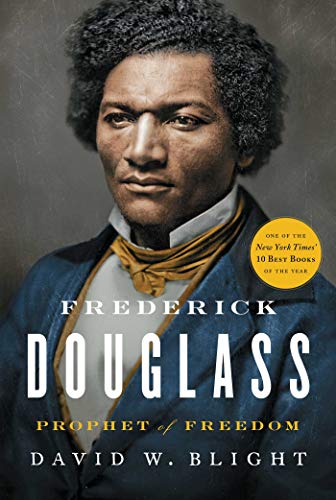
Image from Pixabay

*As a reminder, to capture some of my favorite sayings without having to write an entire blog post about them, I created a feature on More to Come that I labeled More to Consider. Every other week or so I update these quick bursts of truth. This section of the website is easiest to see on a laptop, where it resides near the top of the right hand column. But most people read my posts from their phones, where you have to scroll almost to the bottom before finding the saying for the week.