I’m live blogging game 1 of the National League Division Series between the Washington Nationals and (Claire’s) Los Angeles Dodgers.
Top of the second…
5:59 p.m. – Max is stalking!
6:03 p.m. – 10 pitches…that’s the way to bounce back, Max!
6:06 p.m. – These announcers on FOX never shut up. Leave a little “space” in the conversation, guys.
6:07 p.m. – And I’ll say it for F.P. “There goes the no hitter.” What’s a little 3-week layoff. Nothing for Murphy!
6:09 p.m. – Less than 10 minutes after talking about what a key Harper is for the Nationals, Harold Reynolds says Rendon and Zimmerman are the keys tonight. How many keys can one game have?
6:12 p.m. – Okay…let’s wear out Kershaw and get him to throw a lot of pitches. We’re going to be over 30 by the end of the second…assuming it takes Danny at least three to strike out. Prove me wrong, K-Street.
6:14 p.m. – But he doesn’t. Why, oh why, is Espinosa still playing?
6:15 p.m. – The Dodgers just found out that Severino is a lot faster than Ramos!
6:17 p.m. – We’re only in the second, and I’m already sick of Harold’s voice. Where are Bob and F.P. when you need them!
6:27 p.m. – Harold “doesn’t want to harp on a point”…and then proceeds to harp on it for another 30-45 seconds.
6:28 p.m. – Well, Max isn’t exactly shutting them down. 2-0 Dodgers. Harold seems to think that Max is missing Wilson. Hmmm… Thankfully, Kershaw doesn’t look like he’s totally invincible tonight.
6:31 p.m. – Damn. 2-run homer. 4-0 Dodgers. Ouch. Not sure Kershaw is that invincible.
6:33 p.m. – Okay, let’s get some of this back. We’ll start a new thread.
Okay. I’ve been much too serious in recent posts here on More to Come… So, to remedy that problem, let’s live blog Game 1 of the National League Division Series between our Washington Nationals and (Claire’s) Los Angeles Dodgers!
Go Nats!
I’ll be at tomorrow’s game in person, so it seemed appropriate to carry on a running conversation with readers online, just as if I were at the ballpark.
I’ll post several times during the game.
Thank God I missed 99% of FOX Sports 1 pre-game. The basket of deplorables on that show (Pete Rose! A-Rod!) is just too much to bear. But so FOX.
5:39 p.m. – First pitch strike from Max! And we quickly have a strikeout!
5:41 p.m. – Well giving up that home run to Corey Seager didn’t take long. (Only player who can give Trea Turner a run for his money on the “looks like he is 12 years old” scale.) Maybe Max got it out of his system early. The gopher ball has been his problem all year long. Don’t give up too many more, Max…we are facing Kershaw tonight.
5:45 p.m. – Nice double play to get out of any further trouble. On to the bottom of the first.
5:48 p.m. – Interesting…Harper is batting second in the order tonight. Maybe it will get him going.
5:50 p.m. – First battle of the rookies goes to Seager.
5:52 p.m. – For those wondering about which Clayton Kershaw might show up, take a look at this blog post from a regular Nats blogger that is generally worrisome for Nats fans.
5:56 p.m. – Well, it wasn’t efficient, but it was effective. Kershaw strikes out the side. I’ll wrap up this post and go on to #2 in the thread.
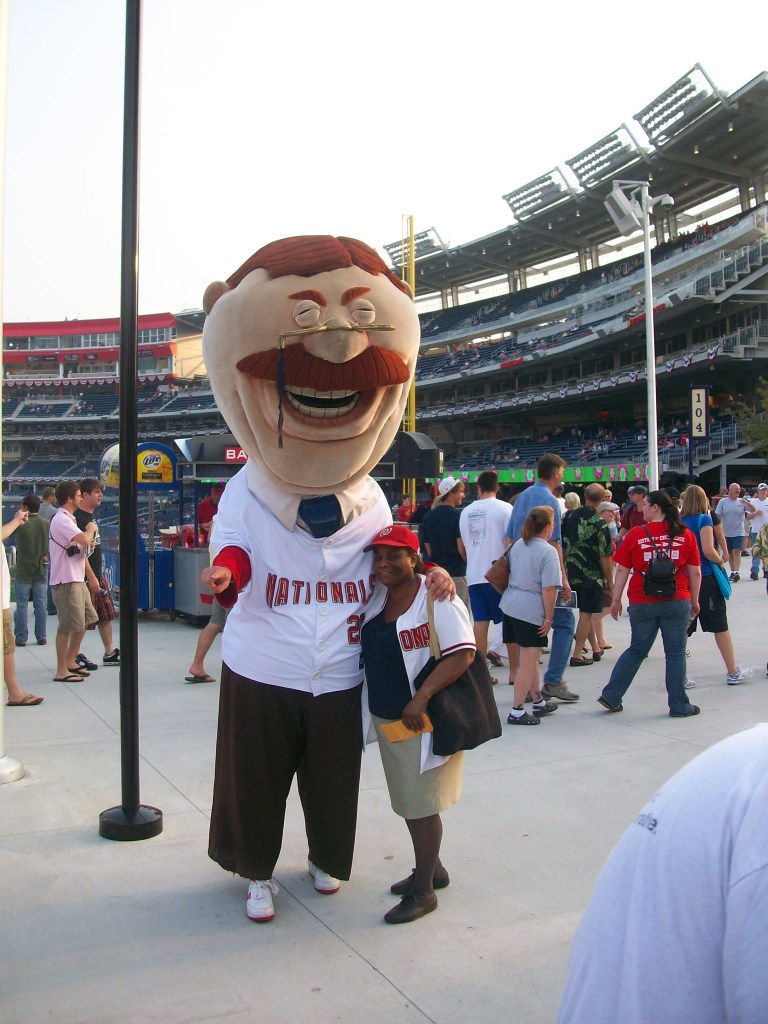
George, Tom, Abe, Teddy, Bill, and Cal…your Washington Nationals “Racing Presidents”
Tabula Plena: Forms of Urban Preservation, Edited by Bryony Roberts
A 2011 terrorist bombing in the national government quarter of Oslo damaged two central modernist buildings and set the Norwegian government on a path of demolition and replacement that raised questions of national remembrance, security, preservation, and democratic consensus. That incident provides the context for a new and expansive work about preservation, urbanism, and architecture edited by architectural designer and scholar Bryony Roberts, the 2016 Rome Prize winner in Historic Preservation.
Tabula Plena: Forms of Urban Preservation takes its title from a contrast to the familiar architectural and planning term, tabula rasa, the clean slate—a site that is cleared and thus provides the freedom for design without constraints. Preservationists in the United States know this situation all too well, from the urban renewal battles of the 1950s and 60s to today’s call for clearing urban blocks to allow new high-rise buildings that will provide more “density” in our rapidly growing cities.
Roberts and students from the Oslo School of Architecture and Design (AHO), working in collaboration with a team of students from the Columbia University Graduate School of Architecture, Planning and Preservation (GSAPP), prepared design and planning options for the damaged quarter that rejected the government’s call for demolition and instead offered strategies for combining the historic buildings with new construction. Tabula Plena grew out of that project and is composed of a series of essays, interviews, and case studies from a range of thoughtful contributors who offer guidance and perspectives for modifying and transforming contemporary urban sites with existing structures.
In the process a new vision for preservation is revealed. While the examples are largely European, the lessons for preservationists, architects, and urbanists around the globe are timely. Many of the perspectives align with ongoing discussions about preservation’s future here in the United States. Roberts’ helpful introduction notes how much we can—and should—change our perspective about the roles of various professions involved in the future of cities. She notes that:
“Collaborations among architects, preservationists, and urban planners have the potential to shift conceptions of both design authorship and architectural form. Processes of alteration and reuse necessarily challenge the concept of signature authorship. They prompt architects to work in response to previous architects’ decisions, as well as in collaboration with preservationists, planners, structural engineers, and community interests. Such collaborations also pull preservationists away from positions of seeming objectivity into roles with more explicit authorship, as they make choices about what to preserve and how to frame it for contemporary audiences. As a result, architects and preservationists both participate in a different form of design.”
The 20 essays and interviews in the book speak to the 21st-century challenges and opportunities of working with existing places in new ways. Eduardo Rojas, a visiting lecturer at the University of Pennsylvania who has worked around the globe in urban development, calls for new governance practices to encourage reuse and for flexible regulations to adjust the level of conservation of buildings and public spaces. Daniel M. Abramson, associate professor of art history and director of architectural studies at Tufts University, also touches on the need to treat the past flexibly, not reverentially, in his essay about obsolescence. Elizabeth Timme, co-founder and co-executive director of LA-Más, contributes a fascinating piece on cultural bias among designers and planners addressing community input and needs, as observed during her firm’s engagement in the Frogtown neighborhood of Los Angeles.
One of the more compelling arguments for a new path forward is that of AHO’s Erik Langdalen, author of an essay entitled “Utopia and Conservation.” Langdalen examines the utopian characteristics of conservation—as opposed to the typical perceptions of our work as conservative and retrospective—and makes the case that urban conservation is as much about the future as the past and is “undisputedly a creative act.”
A pedagogy roundtable between Roberts, Langdalen, Director of the GSAPP Historic Preservation Program Jorge Otero-Pailos, and Thordis Arrhenius of Linköping University is the capstone of Tabula Plena and returns to many of the topics covered throughout the work, including creativity. When Otero-Pailos mentions the need to talk about creativity within a preservation program, Arrhenius responds that:
“What is interesting about preservation is that it takes something existing and turns that into a gift. Something that is undervalued is given value. So it’s not just that preservationists deal with objects out there that are historically significant. Often they also identify things and turn them into historical, significant things.”
Bryony Roberts has led us into a useful and necessary conversation around the future of both preservation and architectural design. In his essay, “Nine Points Towards an Expanded Notion of Architectural Work,” Arrhenius sums up the opportunities available to us, asserting that, “The confrontation of established preservation methods with techniques of change and alteration offers methods to rethink the notions of permanence within preservation and to reframe the obsession with the new in architecture.” It is a conversation well worth the effort.
(Note: This book review originally appeared on the Preservation Forum blog of the National Trust for Historic Preservation.)
Growing up Baptist, I was schooled by my father of the dangers of having the government involved in religious life. A New Deal Democrat and a staunch supporter of the separation of church and state, Daddy was a proud “Roger Williams” Baptist. So when Andrew attended Brown University in Providence, Candice and I made sure to stop at the Roger Williams National Memorial – administered by the National Park Service – where I picked up a copy of John Barry‘s Roger Williams and The Creation of the American Souland sent it to my father.
We talked about both works before Daddy passed away, and I wrote a piece on this blog last year about how old places can help us understand the battles for religious freedom. When I brought both books home from his library earlier this year, I made the decision I wanted to read them back-to-back.
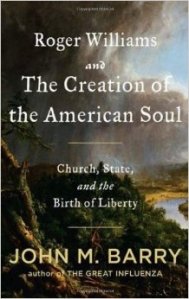
Roger Williams and the Creation of the American Soul by John M. Barry
I began with Barry’s 2012 study of Williams, one of the least understood of the founders of colonial America. The first portion of the book focuses on the religious turmoil in England, which shaped Williams as well as the Puritans who traveled to America for religious freedom. But as Barry makes clear, the religious freedom envisioned by the Puritans only included those who worshiped according to their dictates. Williams’ growing understanding of the need for liberty of conscience and the separation of church and state came about due to his close involvement with some of the leading post-Reformationist thinkers and leaders in England, as well as his first-hand observations from colonial America.
Barry’s book is full of surprises for those who have not studied this period of history in-depth. I had always assumed that Williams was a devout Baptist once he moved to what became Rhode Island, but Barry notes that he moved among religious groups and could more accurately be described as a seeker. Williams’ engagement with the Native Americans he found in the colonies was well ahead of his time (by several centuries), and led one reviewer to lament that Barry had not covered more of that story. The intrigue between Boston, Salem, Plymouth, Providence, and London – with Williams often in the center of controversy – is well documented by Barry, a talented writer who usually focuses on 20th century topics. (I especially enjoyed his Rising Tide about the great Mississippi flood of 1927.)
Barry’s Afterword sums up the remarkable man who was Roger Williams:
“Roger Williams was not a man out of time. He belonged to the seventeenth century, and to Puritans in that century. Yet he was also one of the most remarkable men of his century.
With absolute faith in the Bible, with absolute faith in his own interpretation of it, he nonetheless believed it “monstrous” to compel another person to believe what he or anyone else believed, or to compel conformity to his or anyone else’s belief. His enemies called him a “firebrand.”…They feared being challenged, and having their word, under challenge, disintegrate. They feared the chaos of freedom, and they feared the loneliness of it.
Williams embraced all that. Freedom, he believed, was worth it, worth his life and worth far more than his life…For of all the remarkable things he said, the most remarkable was this: ‘Having bought Truth deare, we must not sell it cheape, nor the least graine of it for the whole World, no not for the saving of Soules, through our owne most precious.’
For he knew that to believe in freedom and liberty required faith in the freedom of thought, of conscience. And that was soul liberty.”
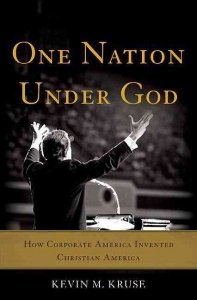
One Nation Under God by Kevin M. Kruse
I have often thought of the troubles we encounter in America when we try to compel others to believe as we do. Kevin Kruse’s One Nation Under God: How Corporate American Invented Christian America, is a recent piece of scholarship that looks into the obliteration of the separation of church and state – at, surprisingly, the hands of anti-New Deal corporate CEOs.
This is another book full of surprises, and although not as well received as Barry’s book, that may be due to the more controversial subject matter. Having lived through the culture and school prayer wars of the 1960s up until today, I was certainly aware of how the so-called “Christian right” worked to wrap itself in God and country. What was more of a revelation was the support for this work stretching back to the 1930s from a broad group of corporate executives out to wreck Franklin Roosevelt’s New Deal reforms. Eisenhower’s role in the shift in American public opinion towards a more public religion, was also something of a revelation.
Neither work is perfect, but both are worth reading, especially in light of the ongoing battles in 2016 over the nature of religious liberty and the separation of church and state. I suspect if he were alive and active today, Roger Williams would be able to discern the charlatans among our midst, and the perils we face in limiting the rights of those not like us.
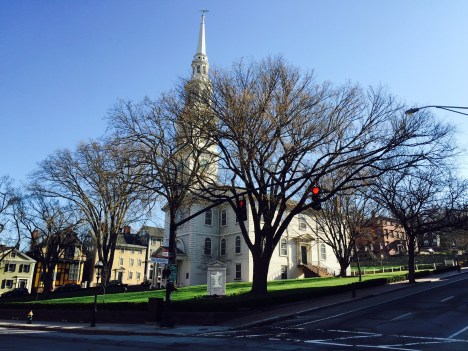
The First Baptist Church, Providence, RI
More to come…
DJB
Image: The First Baptist Church in America, in Providence, RI — where religious liberty and the separation of church and state was born (photo by DJB)
I’m not always a good listener. But I know how important it is to listen. So I felt a little better about my shortcomings when I heard David Isay, the founder of StoryCorps and the person who has said that “listening is an act of love,” confess that other than when interviewing people, he can be a really terrible listener. He’s impatient. (I can relate). Listening takes a lot of focus and energy, and all of us have our moments. In the interview, it was noted that listening is not something that we do all the time. It’s work. It’s a commitment. But we want to make room for listening. And as David Isay said, “It’s something you never regret.”
He also told a story that I want to pass along, in honor of Mother Theresa, who was recently named a saint by Pope Francis. Isay said,
“I don’t know if this is an apocryphal story or not, but there’s a story about Dan Rather interviewing Mother Theresa. And he asked her what she said during her prayers. And she said, ‘I listen.’ And, Rather then said, ‘Well, then, what does God say to you?’ And she said, ‘He listens.’”
If listening is good enough for Mother Theresa and God, then perhaps I need to work harder.
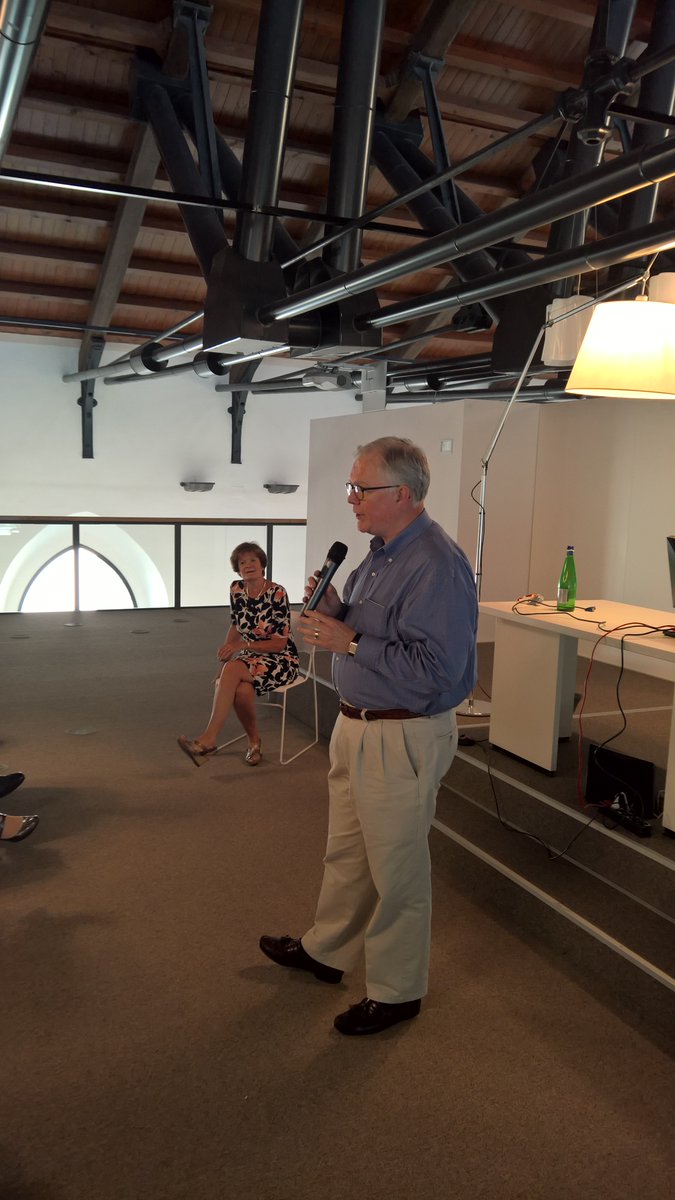
DJB – with INTO Chair Dame Fiona Reynolds looking on – speaking to the FAI (Italian National Trust) staff in Milan
I have returned to Italy for the second time this year for a short meeting of the executive committee of the International National Trusts Organisation (INTO). Our host for this year’s meeting is Fondo Ambiente Italiano (FAI) or the Italian National Trust, a remarkable INTO member which has saved 54 properties and protected 6 million square meters of historic landscape in Italy since 1975. Over the past two days we have been meeting with the FAI staff at their headquarters in Milan and have toured three wonderful – and unique – FAI properties. Along the way the 15 members of the INTO executive committee have learned more about the Italian model of preservation while we share our own experiences and shape strategy for the group for the year ahead.
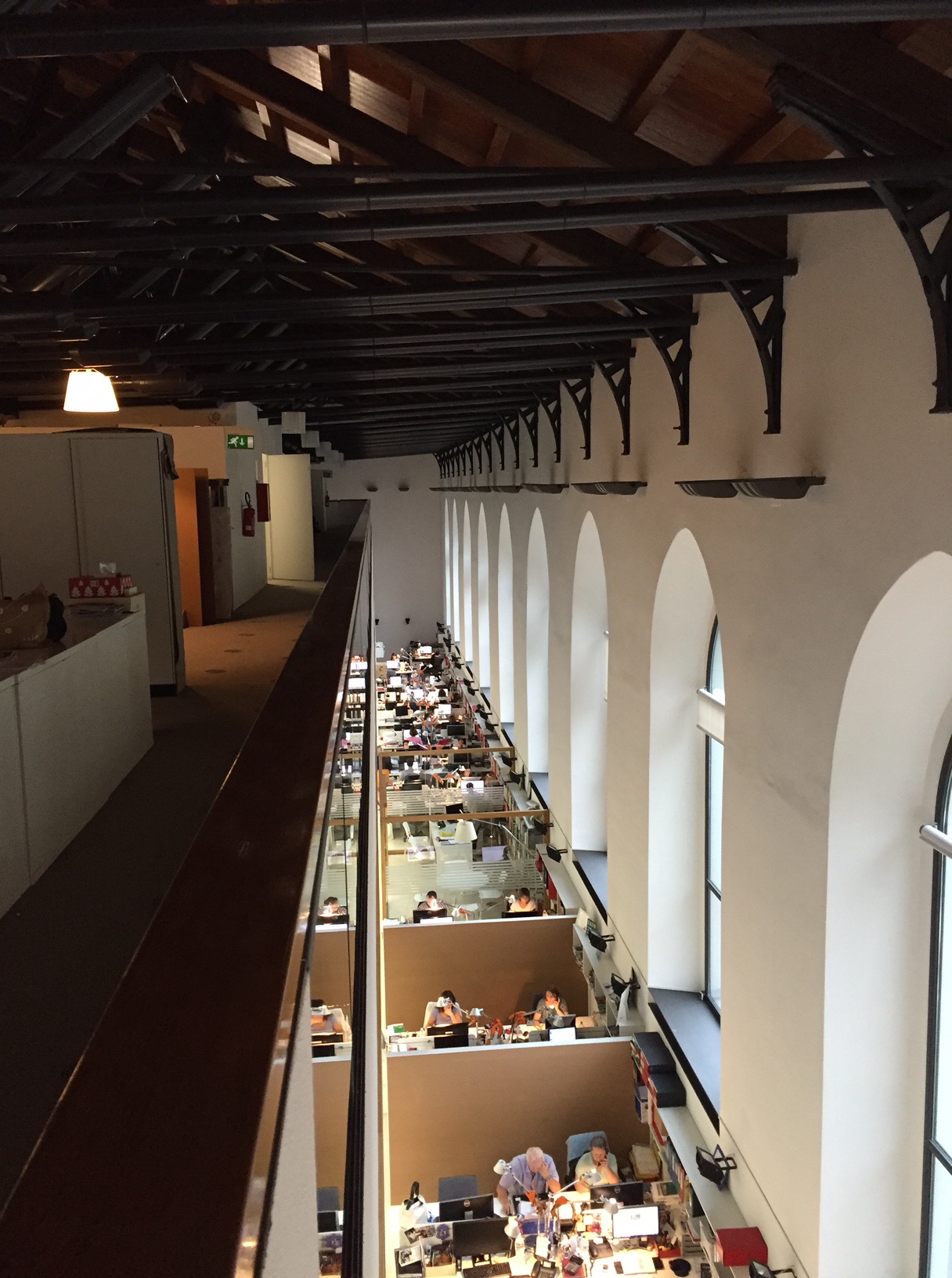
FAI’s headquarters in Milan is in a historic equestrian exercise rink that has been marvelously repurposed for 21st century office use. The space, desks, and equipment are all modern and set up for strong collaboration, yet the entire new three-floor interior addition could be removed without damaging the historic fabric of the walls and windows. Along with other members of the executive committee, I had the privilege of speaking to more than 100 staff of FAI, in my case telling them of NTHP’s work on the future of preservation and our ReUrbanism efforts launched just last week.
Headquarters of FAI – the Italian National Trust – in Milan
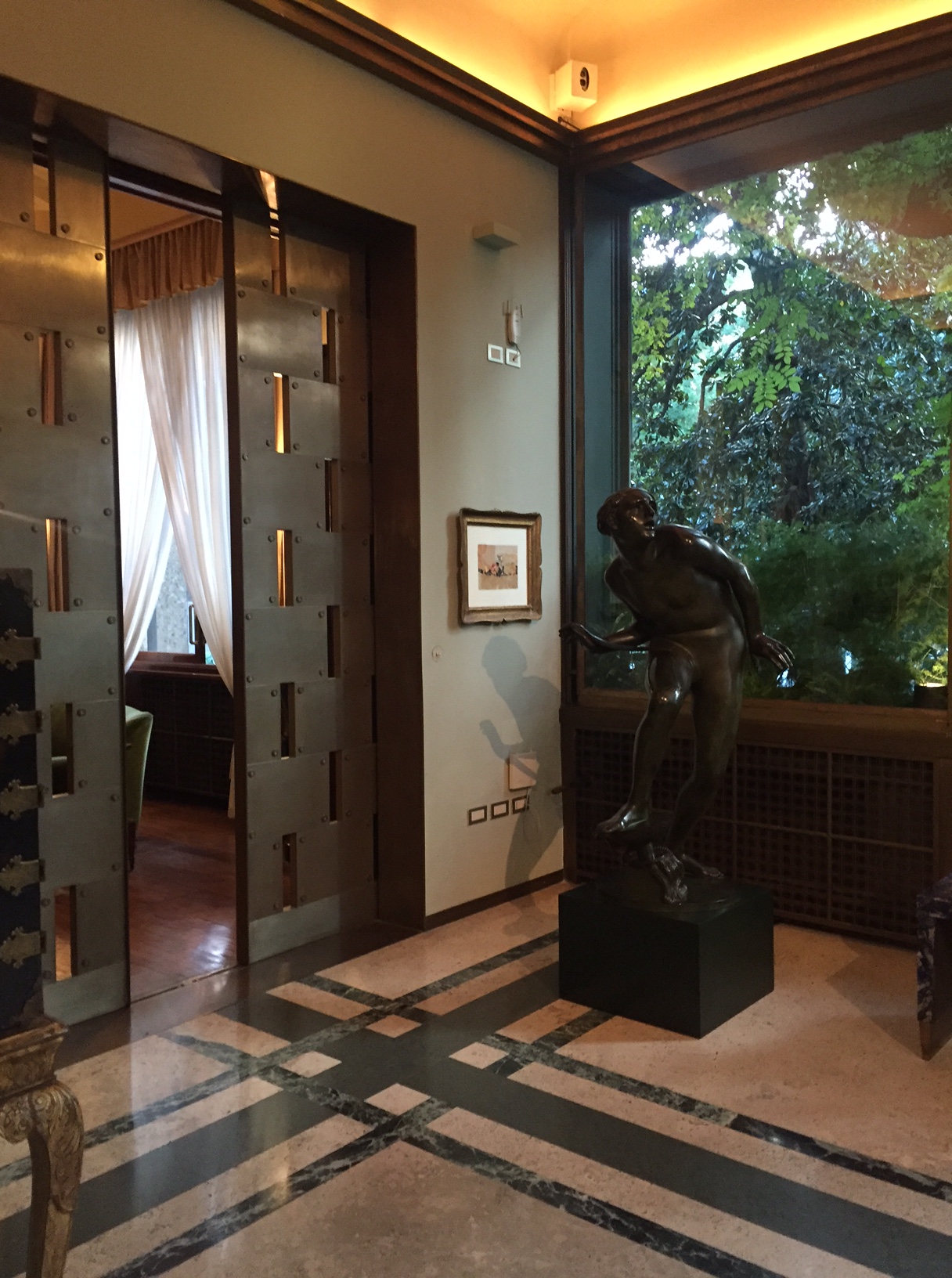
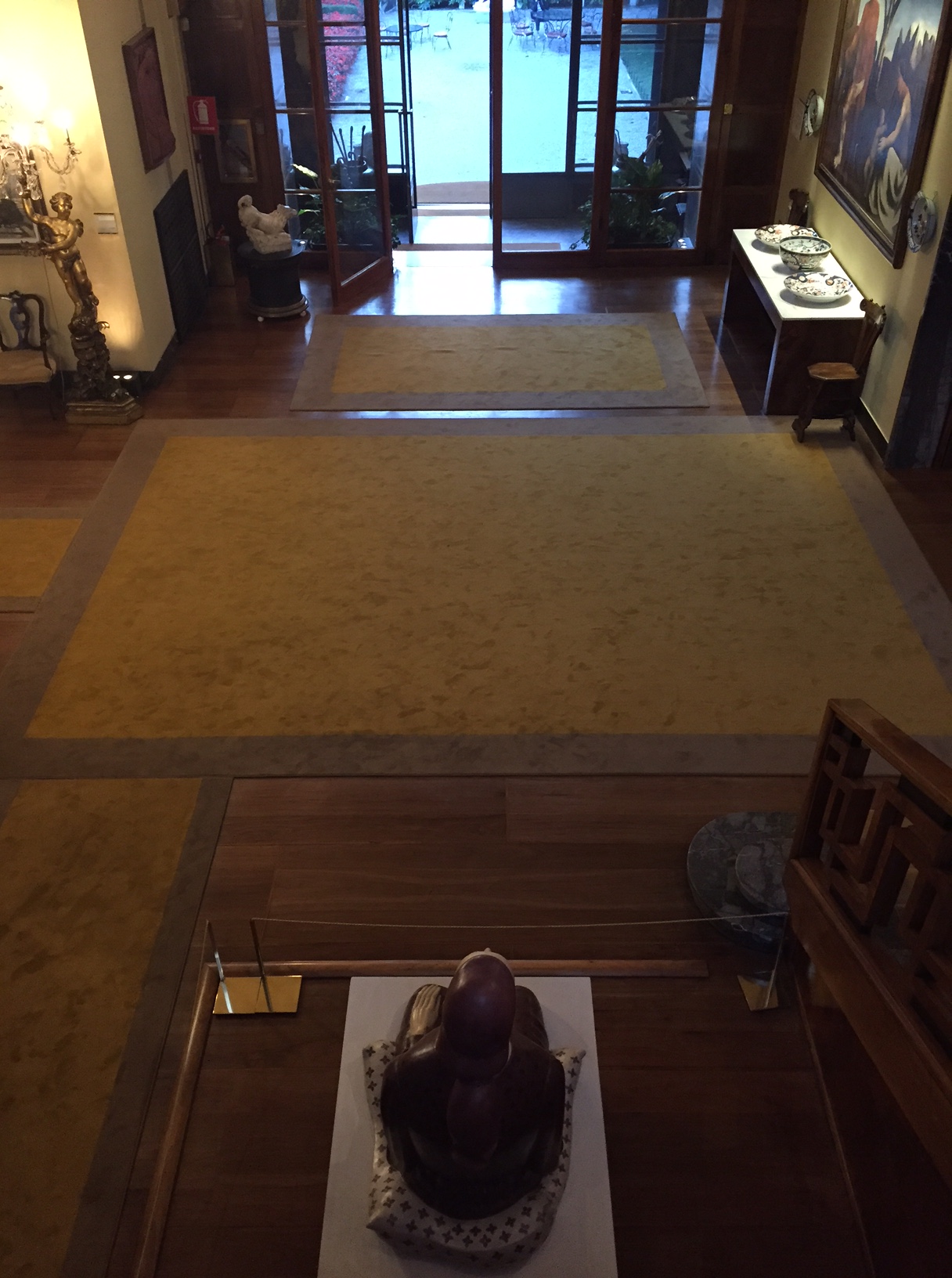
After a day of work at FAI headquarters, we traveled to Villa Necchi Campiglio – a 1930s villa in the heart of Milan – for a tour by FAI volunteers and dinner with the organization’s senior management.
Porch and sliding door at Villa Necchi Campiglio
Entrance hall to Villa Necchi Campiglio
This villa was designed by Piero Portaluppi and showcases the lifestyle of the Milanese upper-middle class in the period before WWII. It was a delightful evening, where connections were made for future work together.
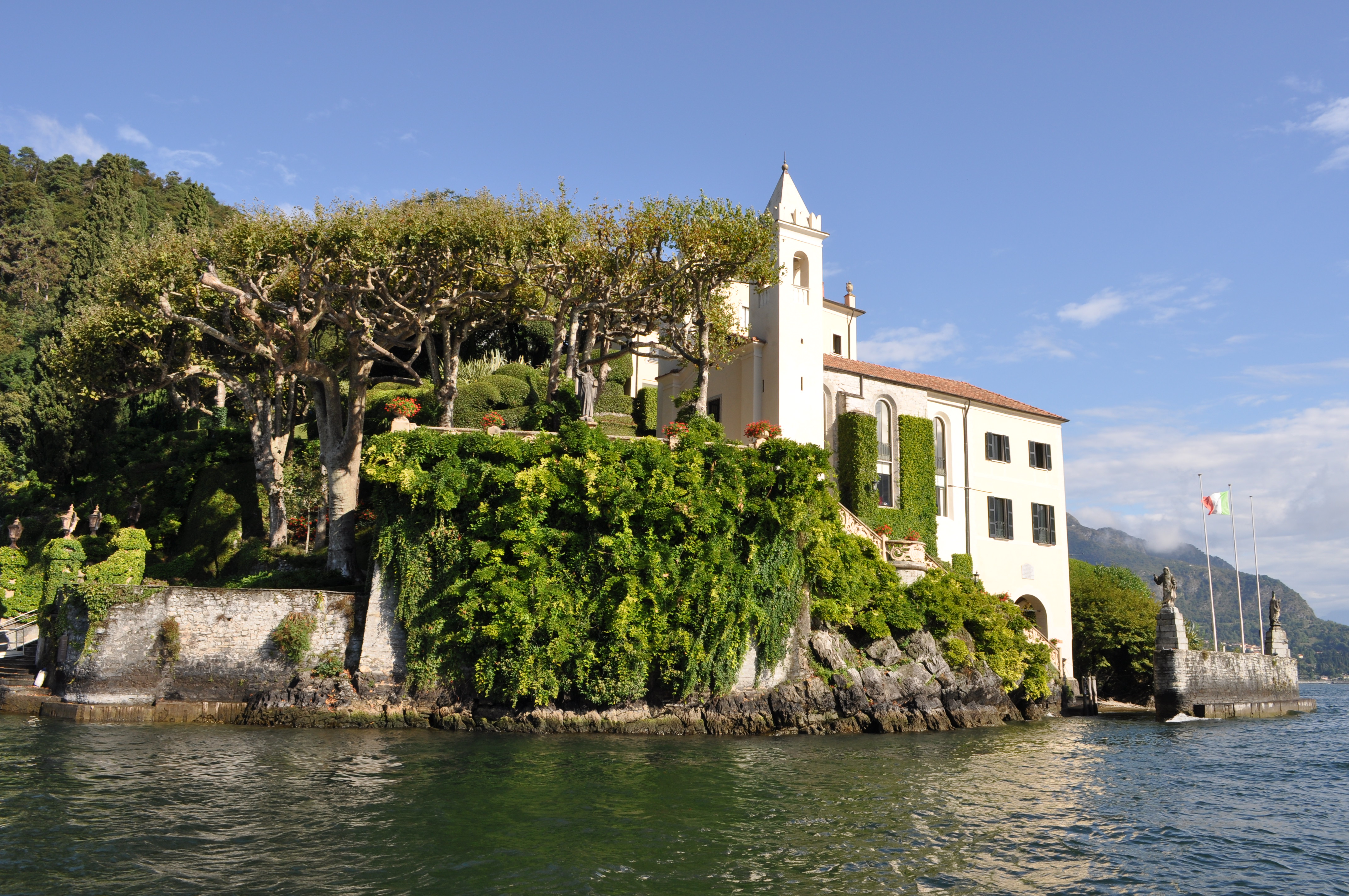
Friday began bright and early, as we headed to Lake Como to begin a day of touring of two extraordinary sites, including FAI’s most popular – and heavily visited – villa. I’ll end with a shot to whet the appetite, but due to the late hour here in Milan and the slowness of my wireless connection, I’ll post many more pictures later.
I heard the line “We learn to walk by falling down” recently and was reminded that we can’t do anything unless we’re willing to fail. In our work, in our lives, in our relationships with others, in everything we do we have to be willing to try, fall down, get back up, learn, and try again.
All of us want our work and lives to make a difference. Being willing to fall down and get up again is part and parcel of making a difference, and I believe that supporting others on this journey as we all “learn to walk” is at the heart of what we’re called to do.
Mary Dixie Bearden Brown and George Alma Brown – my grandparents and part of the memory that gives me hope
Last Saturday marked my 20th anniversary at the National Trust for Historic Preservation. For the past few days, I’ve been thinking about hope in the context of life’s milestones. Not a greeting card kind of hope or optimism, but “hope that’s kind of gritty…the kind,” as described by songwriter and author Carrie Newcomer, “that gets up every morning and chooses to try to make the world just a little kinder (or better) in your own way.”
The thought that “hope is grounded in memory” has influenced the work of another writer I admire, Rebecca Solnit. In a recent interview, she notes that “We think of hope as looking forward, but…(if) you study history deeply, you realize that, to quote Patti Smith, ‘people have the power’….(P)eople have often taken on things that seemed hopeless — freeing the slaves, getting women the vote — and achieved those things.” Knowing history gives me hope.
To be fair, hope is hard. Cynicism – where I have gone on occasion – is easy. But in thinking about 20 years of work at the National Trust, sharing experiences and losses and triumphs with some incredible colleagues, I have a hope that comes from our past and looks expectantly to the future. When the individuals came together 50 years ago to propose what became the National Historic Preservation Act, they were working against the very powerful forces of urban renewal. Forces that wanted to erase community, who said that the past didn’t matter. Now 50 years later, thousands of communities, in various ways, recognize the people who came before, and why their lives and work and places matter today and for the future. In thinking about where preservation goes in the next 50 years, we are facing different but equally powerful forces that again want to erase what came before. But my hope for the future comes from seeing what’s happened in the past 20, the past 50, the past 100 years.
I like the idea of hope being grounded in memory. Hope as a sense of uncertainty and coming to terms with the fact that we don’t know what will happen, but we have memories that show us that good things — powerful things — can happen.
But hope doesn’t always have to be grand work and gestures. It is a choice. A practice. To illustrate, let me end with a story.
I have a clock in my living room that is part of my earliest memories from childhood. The clock sat on the mantle in a bedroom in my grandparents’ home in Franklin, Tennessee, and when I visited I slept in that room. The first night I was frequently awakened by the ticking of the clock and the ringing of the chimes. Soon, however, they became comforting sounds that only registered in my subconscious. We’ve had the clock in our house now for more than a decade and it continues to provide accurate time and comforting rhythms to our lives.
I hadn’t thought much about my routine of winding the clock by hand each week until I recently read several thoughts from E.B. White about hope. White — the author of wonderful books for children such as Charlotte’s Web and countless New Yorker essays — knows that hope alone will not carry us forward. (Or as many consultants say, “Hope is not a strategy.”) We have to act as well. So White will “Get up on Sunday morning and wind the clock, as a contribution to order and steadfastness.”
As I reflect on this, winding my grandparents’ clock is a way of looking ahead expectantly. When I turn those cranks, I am reminding myself — through the memories of all my parents and grandparents accomplished — that there is another week ahead to do the good work we are asked to do. Or, as my grandmother would say, “To make yourself useful as well as ornamental.”
We live in a surprising world — which should give us hope. So follow E.B. White’s advice: “Hang onto your hat. Hang onto your hope. And wind the clock, for tomorrow is another day.”
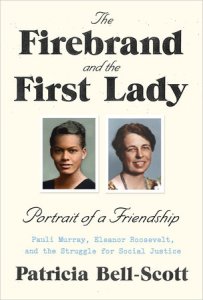
During August I took the time to read Patricia Bell-Scott’s recent book “The Firebrand and the First Lady”about the friendship between Pauli Murray and Eleanor Roosevelt. Both women were instrumental in the struggle for social justice in the 20th century. Eleanor Roosevelt’s life and impact is well documented. But Murray’s story – that of an African American member of the LGBTQ community, Civil Rights and Women’s Rights activist, the lawyer responsible for producing what Justice Thurgood Marshall called “the Bible of Civil Rights law,” a poet and writer, the first female African American Episcopal priest, and an Episcopal saint – has fascinated me ever since our colleague Karen Nickless brought Pauli Murray’s childhood home in Durham, North Carolina, to the attention of the National Trust. Early in 2015 we named the house a National Treasure, and are at work in support of its preservation and its listing as a National Historic Landmark.
The Firebrand and the First Lady by Patricia Bell-Scott
The release of this 2016 book was timely, as it raised the level of attention to the work and legacy of Murray while also showcasing the possibilities for using the place where she spent important parts of her childhood to further that work into the 21st century.
Bell-Scott’s work is rich in detail of the unlikely relationship built between Murray and ER (as the First Lady is referred to throughout the book). It is also an excellent read. Pauli Murray was a trailblazer, often taking steps that other – more celebrated – individuals took many years later. Bell-Scott notes that “Murray’s politics, temperament, and resolve to be herself frequently frustrated her family, friends, and people in organizations she admired, such as the National Association for the Advancement of Colored People and the Episcopal Church.” The author also suggests that “these difficulties also contributed to her marginalization, until recently, in the historical record.”
Irin Carmon, the co-author of The Notorious RBG: The Life and Times of Ruth Bader Ginsburg, points to Murray’s role as a “before her time” brilliant, yet individualistic, leader in a laudatory review of the book in the New York Times.
“You could say Pauli Murray was born too soon, and saying so captures the essential injustice of her life, but it would also rob her of credit for making her own time the best she could. “I’m really a submerged writer,” Murray once told her friends, “but the exigencies of the period have driven me into social action.” The granddaughter of a woman born into slavery and a mixed-race Union soldier, Murray was arrested for refusing to sit in the colored section of a bus 15 years before the Montgomery bus boycott and for participating in restaurant sit-ins in the early 1940s, long before the 1960 sit-ins at Woolworth’s lunch counter. She led a national campaign on behalf of a black sharecropper on death row.”
Seeing the modest house that is being restored for the Pauli Murray Center for History and Social Justice in Durham, North Carolina, and reading Bell-Scott’s book about the life that transformed – and continues to impact – so many other lives today, I am reminded of President Obama’s message when he named Pullman a National Monument: “That places that look ordinary are nothing but extraordinary. The places you live are extraordinary, which means you can be extraordinary.”
Pauli Murray House before restoration (2015) and after exterior work (2016) (Photo credit: Pauli Murray Project)
Pauli Murray certainly came from a place that looked very ordinary. But her life – as chronicled in The Firebrand and the First Lady – is nothing short of extraordinary.
Near the end of this compelling and highly recommended book, Bell-Scott quotes Murray’s comments at a 1982 conference on ER’s role as first lady – the first major conference on the subject following her death two decades earlier. Previously, Murray had been reluctant to talk publicly about her friendship, but she “hit her stride” when speaking at the conference of ER’s impact on her life.
“I learned by watching her in action over a period of three decades that each of us is culture-bound by the era in which we live, and that the greatest challenge to the individual is to try to move to the very boundaries of our historical limitations and to project ourselves toward future centuries. Mrs. Roosevelt, a product of late nineteenth century Victorianism, did just that, and she moved far beyond many of her contemporaries. I like to think that I am one of the young women of her time, touched by her spirit of commitment to the universal dignity of the human being created in the image of God (which we theologians call “imago dei”). Hopefully, we have picked up the candle that she lighted in the darkness and we are trying to carry it forward to the close of our own lives.”
This quote – and the whole book – speaks to how we can both challenge and support each other in our work toward social justice and human wholeness. There is much to consider in these few lines, especially in light of current events. I’m pleased that the National Trust is doing its part to ensure that the life and legacy of Pauli Murray – as seen through the place where she was nurtured – lives on, providing inspiration to today’s citizens and generations to come.
More to come…
DJB
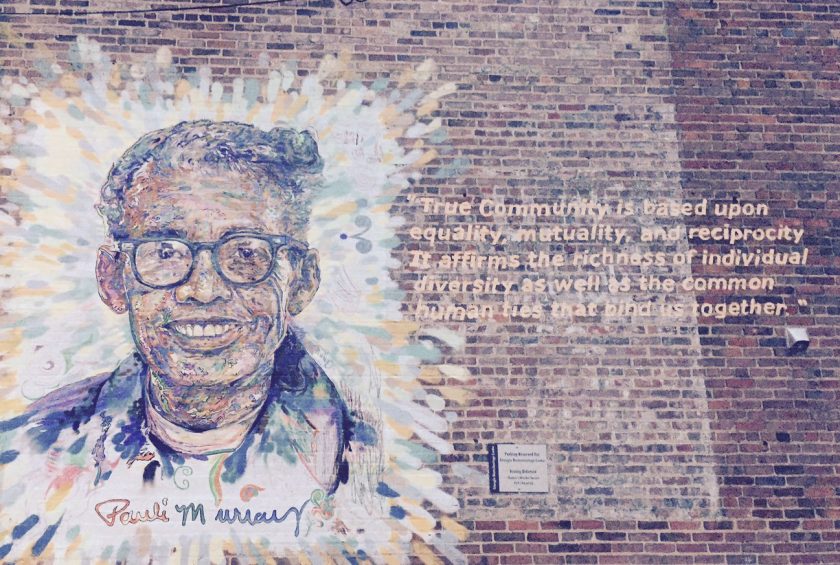
Image: Portrait of Pauli Murray, on a wall in downtown Durham, NC, photo by DJB
Max Scherzer Bobble Head celebrating last year’s No-Hitter #2
With travel and vacation, it has been a month since I was at Nationals Park for a baseball game. Last night I made it back and realized how much I’d missed.
When I left, the Nationals were pulling away to about an 8-game lead in the division over the Marlins and Mets. Last evening, the Nats went into the opener of a series against the Colorado Rockies leading the Marlins by 8 games and the Mets by 10. Even though they didn’t play outstanding ball in August, they played well enough to keep the margin in the division race.
But when we left in early August, Anthony Rendon was just showing signs of coming out of a year-long slump and Bryce was still scuffling, with no real sign of playing like BRYCE! And there was this youngster – Trea Turner – who was not playing everyday, but who was taking advantage of what playing time he got to make an impact.
Well, four weeks is a long time to take your eye off the game, but it was nice to see where the Nats were when I returned. Let’s begin with Rendon. He will hit if he is healthy, but the first half of the year it was clear he wasn’t in top-notch health, and his offensive stats reflected the problems. But since the All-Star break, he has played like the old “Tony.” Since game 82, his stats are .312 / .386 / .584. (Batting average, on-base percentage, slugging percentage) In honor of Rendon’s resurgence, I wore his #6 t-shirt last evening. Those quick hands are back and it is fun to see.
What’s up with Bryce? Well, since returning from a stiff neck 13 games ago, Bryce is on fire. He is hitting .400, has driven in 15 runs (more than one per game), and last evening had the longest drive for the Nats, although it hit the top of the fence at the 402′ sign and Bryce wound up with a triple.
Trea Turner – who still looks like he is 12-years old – has been the other revelation. When I was last in the park, he stole home in one of the most exciting plays of the year. He is now an every day player – and as of his first bat on Saturday afternoon’s game, he had 13 hits in his last 16 at bats. Friday night he had two singles that never left the infield (Jeez, is he fast) and he induced two Rockies’ errors. He has changed the Nats offense and made it significantly better.
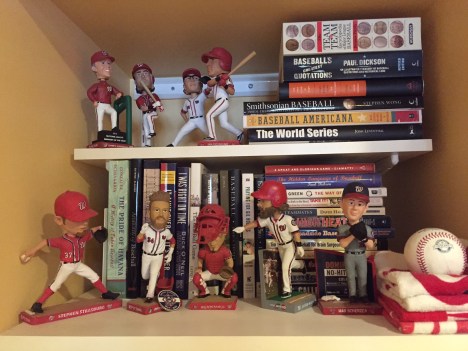
Max joins the Nats Bobble Head collection at home (NOTE: Presidents are at the office!)
On Friday evening – when fans received the Max Scherzer bobble head celebrating his second no-hitter in 2015 – we saw Gio Gonzalez win his 100th game, Daniel Murphy hit a solo home run and gather his 500th career RBI, and red-hot Jayson Werth homer and double. This remains a fun ball-club to watch.
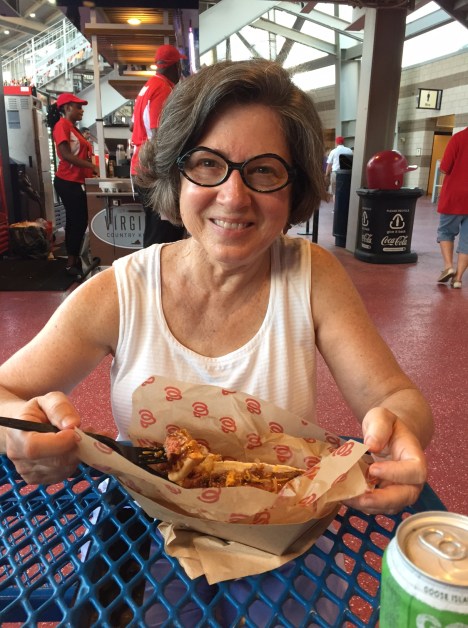
Candice with her “Half Smoke All the Way” at Nats Park – now THAT’s eating!
And we had our own bit of history…Candice had her very first “half smoke all the way” from Ben’s Chili Bowl. A long-time friend and retired colleague of mine decided that he would rather work at the ballpark than sit at home retired, so I try to stop by and see Louis when I get by the park. He fixed up Candice’s half smoke with a little special TLC, and when Andrew texted to ask how she liked it, she replied, “It was great – ate every bite!”
Chatting with friends. Chowing down a half smoke with a beer. Balls smashed around the ballpark by a revitalized offense. Players running wild on the bases. Keeping score (for another win…I think we’ve banished the jinx that old scorebook once held). Ah, the rhythms of the ballpark. You just can’t beat it.
 I’m live blogging game 1 of the National League Division Series between the Washington Nationals and (Claire’s) Los Angeles Dodgers.