Latest Posts

Seattle PiP Launch

Growing the National Trust movement

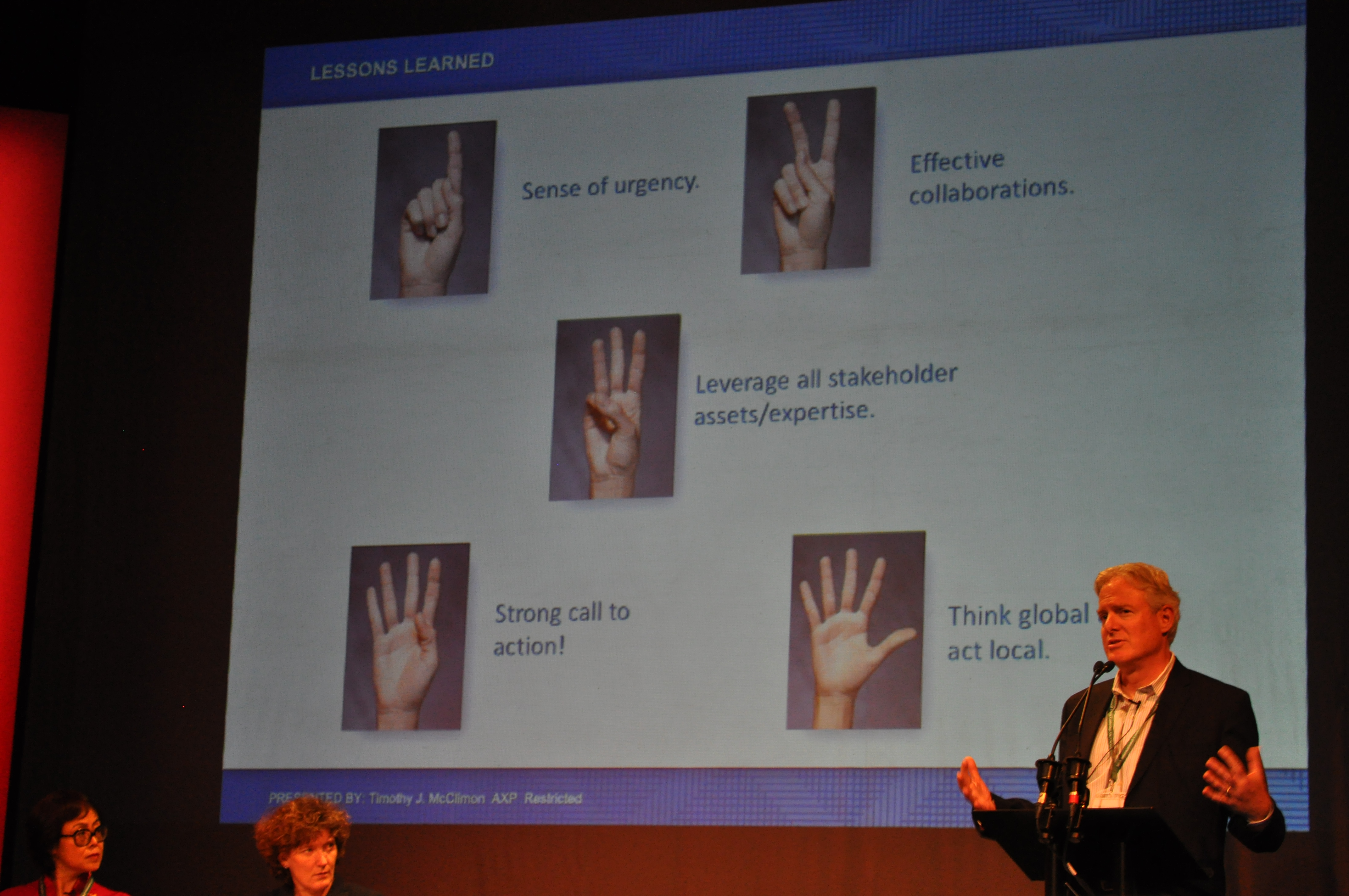
(The following is the text of a presentation I made on September 7, 2015 at the 16th International Conference of National Trusts in Cambridge, U.K. The session – Looking Ahead:  Contemporary Challenges and Opportunities – was chaired by Emily Drani, Executive Director of the Cross-Cultural Foundation of Uganda.  My fellow panelists were Shivranjani Rajye, Trustee, Mehrangarh Museum Trust, Jodhpur, India; and Professor Ruan Yisan, Director, National Research Center for Historic Cities, Tongji University, China.)

Thank you to INTO and to the National Trust for England, Wales, and Northern Ireland for the opportunity to focus on our efforts in the United States to build a growing and more inclusive historic preservation movement. Our goal is a movement that recognizes all the facets of our diverse history, enables all our citizens to see themselves in our collective story, and – as a result – become engaged in this work. I hope you will find elements that ring true with your work in your countries.

Our preservation movement (and I will use the terms historic preservation and heritage conservation interchangeably) has survived and thrived in large measure based on our ability to adapt to a host of changing circumstances.

For example, the creation story for preservation in the U.S. turns in the mid-twentieth century from a focus on high-style architectural landmarks to a grassroots and activist movement. Jane Jacobs in Greenwich Village, Barbara Capitman in Miami Beach, and others led tens of thousands of citizens across the country to fight the nature and pace of change in their neighborhoods. This instinct to shape the communities we want, instead of accepting what others conceive for us, remains. Unfortunately, many do not connect that instinct with preservation practice today.
To reach those who share our values, preservation should be inspired by that moment of fundamental change in its past

In reflecting on the future and the growth of our movement, I’ll begin with this idea of adaptation to change. Consider the thought that contrary to popular perception, change is constant and important to our work as preservationists and conservationists. Buildings, landscapes, and neighborhoods all change. Our job as preservationists is not to freeze time. Paul Goldberger, the award-winning architectural critic, says, “Successful preservation makes time a continuum.”

After addressing the importance of adaptation to change, I want to swiftly pivot to consider how the way we work, the tools we use, and the way we talk often inhibits our growth as a movement. This reflection grows out of my belief that preservation is a political movement, which means we have to convince people to join us in saving places that matter. Often the language used to describe historic preservation and heritage conservation looks backward. We need to look forward.

Pullman National Monument Designation
President Obama Designates Pullman as a National Monument

Any assessment of preservation in America finds that we have succeeded in our work, yet failed to fully capture the public’s heart. Let’s start with our success. America’s cities are magnets for the young, creative class, and these individuals are voting with their feet to live, work, and play in older and historic neighborhoods. The National Trust recently examined data from five major cities in the U.S. and found that up to 90 percent of the hip bars and restaurants in those communities were located in older buildings. In the past 35 years, the federal Historic Rehabilitation Tax Credits have been used to preserve more than 40,000 buildings, brought a private sector investment that exceeds $117 billion, and generates $1.27 in taxes for every $1 spent by the federal government. President Barack Obama has used his power under the Antiquities Act to designate as National Monuments some of the most important, yet underappreciated, sites that tell the broad story of America, places such as a World War II-era Japanese internment camp in Hawaii and Chicago’s Pullman neighborhood – the heart of the American Labor Movement. Studies have demonstrated that local historic districts provide strong economic value to communities. Jane Jacobs’ statement that “Cities need old buildings so badly it is probably impossible for vigorous streets and districts to grow without them” has never looked so prescient.

On the other hand, preservation is under assault. Economists such as Harvard’s Ed Glaeser travel the book and lecture circuit blaming historic preservation regulations for the lack of affordable housing in Manhattan. Surveys by the National Trust find some 15 million like-minded Americans who nonetheless do not identify as preservationists. Congress threatens to eliminate the Historic Rehabilitation Tax Credits. In almost eight years in office, the Obama administration has cut or eliminated funding for preservation and called for the weakening of one of the country’s most important preservation protections.

Peter Drucker has noted that, “People in any organization are always attached to the obsolete – the things that should have worked but did not, the things that once were productive and no longer are.” Could preservationists and conservationists be too attached to tools designed to fight the last war? Have we “won” and yet do not know how to build on our success?

Let’s focus on change.

Heritage conservation has proven to be highly adaptable. The National Trust in the U.S. – and many Trusts around the world – own sites that represent our movement’s initial focus on great architecture and museums.

But we’ve changed that focus over time. In a 2013 New York Times story, two 27-year-old Buffalo residents – working in the heart of America’s industrial rust belt – were lauded for their preservation skills as micro-developers, “rehabbing derelict properties to rent (or sell)…in an attempt to save houses from demolition….” One of them, Bernice Radle, gave a TED talk, holding up a heart-shaped poster that read “Preservation is Sexy” while explaining the “preservation as social activism” manifesto that drives her and her peers.

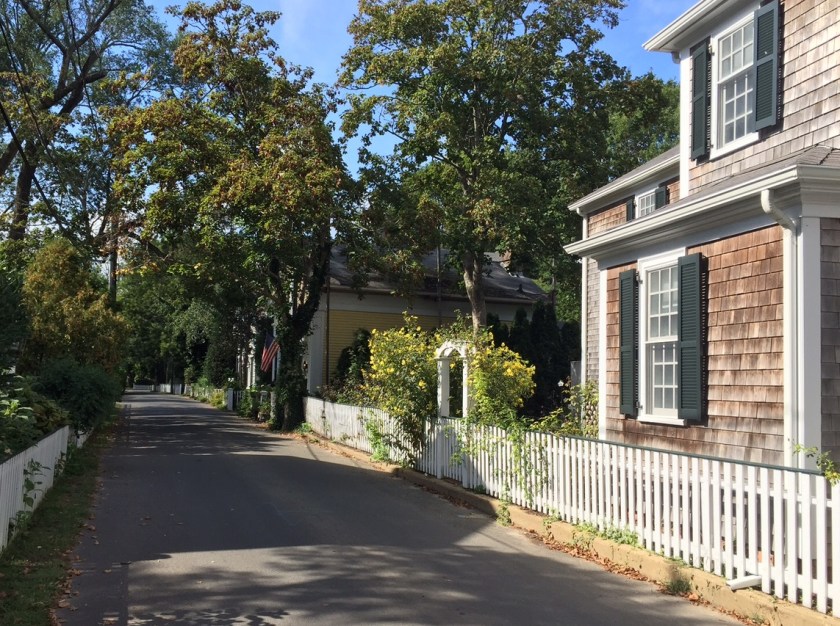
Rockland, ME
Main Street, Rockland, Maine

Preservation as social activism. In the 21st century, historic preservation and heritage conservation are definitely not one-size-fits-all propositions – not with Main Street revitalization, heritage tourism, social justice, the use of urban landscapes as public history, a growing back-to-the-city movement, protection of our natural heritage, public gardens, placemaking, historic site reinvention, a renewed focus on the civic commons, large landscape conservation, land use and transportation planning, and engagement on economic and environmental sustainability all part of our work.

This broadening of conservation has led to a change in our tools. Smart practitioners today are often moving beyond a reliance on ownership or regulation, knowing we cannot focus on saving every piece of material from our historic buildings or freezing our historic landscapes in a moment in time, as if that is what makes them important.

Herbert Muschamp, former architecture critic for the New York Times, said,

“A building does not have to be an important work of architecture to become a first-rate landmark. Landmarks are not created by architects. They are fashioned by those who encounter them after they are built. The essential feature of a landmark is not its design, but the place it holds in a city’s memory.”

Places – whether they be buildings, gardens, or landscapes – change as they are imbued with meaning, memory and stories. Looking at landmarks only through the lens of an architectural historian or landscape architect – without considering other equally important aspects of place – severely limits our understanding of what makes our older and historic buildings and their landscapes special. Daniel Solomon, writing in Bedside Essays for Lovers (of Cities), notes what the sustainable city must sustain…

“…is the culture of the city: the way people cook in New Orleans, the way they dress in Milan, dance in Havana, speak in London, wise-crack in New York, look cool in Tokyo.”

Intent on achieving the larger goal of creating and maintaining livable, sustainable, resilient communities for all our citizens, preservationists are realizing that local situations call for different tools to take us from the outside to the mainstream. The National Trust’s Preservation Green Lab helped the City of Seattle pass the nation’s first outcome-based energy code, focused on energy-saving outcomes instead of prescriptive actions. That code aligns with the inherent energy-saving qualities of older buildings.

As many of you are doing, the National Trust in the U.S. is leading efforts to move beyond the idea that a museum is the optimal outcome for a historic building or site. In an expanding partnership with a farm-to-table nonprofit organization, the National Trust is looking beyond the house museum at a new use for our historic site Woodlawn, setting up a 21st century use that relates directly to the site’s 19th century roots as a place for experimental agriculture. Sometimes embracing change entails going back to the future.

However, far too few people understand the changing nature of preservation. I believe this is because our reactionary language looks backward and is based on conservation doctrine. We’ve allowed ourselves to be defined by that language.

When the voters of Houston, Texas, narrowly defeated a referendum to save and rehabilitate the Astrodome, a local newspaper felt perfectly comfortable in saying that the voters had rejected nostalgia.

Nostalgia? We don’t work in nostalgia. The Astrodome – the 8th Wonder of the World, a modernist icon, and a symbol of the brashness, big vision, and can-do spirit of Texas with a bright future – isn’t nostalgia. Yet we’ve too often allowed ourselves to be framed by others.

When we think of language, we have to recognize that fundamentally, preservation is a political movement.

Writing on the influential planning blog Greater, Greater Washington, David Alpert brought this point home in a post about an especially difficult fight over the Brutalist-style Third Church of Christ Scientist in our nation’s capital.

If there’s ever an example of winning the battle and losing the war, (Alpert wrote) this church fight is it….I admire the strict preservationists’ fortitude in standing up for what they believe, but preservationists need to realize an important fact: preservation is a political movement.

For all the talk about how preservation retains even buildings that are unpopular (since tastes change), preservation got started saving buildings that were popular. Masses rose up unsuccessfully to save the old Penn Station, still New York City’s most deeply-felt loss. Our historic preservation laws came from the political force of many citizens dismayed at the changes happening around them.

Since then, the political climate has changed. (Alpert ends by noting) If I were a leader in the historic preservation movement, I’d be very worried that the movement is heading…toward irrelevance in pursuit of ideological purity.
Political movements succeed when they find issues where undecided people agree with their side. They also succeed when they work hard to educate the public about why things – such as modernist buildings and landscapes – can be important from an architectural, sustainability, and a (small “c”) conservative point of view. But we have to speak in language that resonates with the values that people care about. And we have to understand that we may be going up against deeply held beliefs by the public about what they like – and don’t like – in our communities.
A democratization of preservation suggests we must move the protection and reuse of older and historic environments from the purview of the few to work all our citizens can embrace. New tools have to be wide-ranging and accessible, compelling many more individuals to join us. Some of this work should focus on expanding our definition of preservation and heritage conservation.

To build a movement for all Americans, we are seeking to recognize that preservation in the U.S. takes many more forms – what the University of Pennsylvania’s Randall Mason describes as “small p” preservation – than the ones associated with our work today. Frankly, we need tools which give every person a voice in determining what is worth preserving in their community.

Conservation and reuse of historic buildings and neighborhoods is at the heart of much of the renewal of communities all over the world over the past 30 years. But preservation as nostalgia often gets pigeon-holed as a niche, a “nice-to-do” but not “critical-to-do” activity. Thankfully, a new generation is providing a sense of how to approach preservation holistically.

They are making the case – in path-creating, forward-thinking, active language – for preservation and what Daniel Solomon has called “The Continuous City.” In a recent series of essays, my colleague Tom Mayes explores the reasons that old places are good for people. He begins with what he considers the main reason—“that old places are important for people to define who they are through memory, continuity, and identity—a ‘sense of orientation.’ These fundamental reasons inform all of the other reasons that follow: commemoration, beauty, civic identity, community, and the reasons that are more pragmatic—preservation as a tool for community revitalization, the stabilization of property values, economic development, and sustainability.”

As Tom notes in his introductory essay, “The notion that old places matter is not primarily about the past. It is about why old places matter to people today and for the future.”

Our political movement must compel others to believe that saving historic and older buildings should be a priority for decision makers today. We must show that livable communities today – thriving, alive communities – are diverse. Wholesale demolition and new construction destroys the connectivity and the continuum that make places unique and desirable.

But if we speak in language of preservation and conservation doctrine – even if we are speaking of relevant issues such as environmental sustainability and urban “hipness” – we will still fail to reach the majority of citizens who share our interests and could be supporters.

Some of the most important work in this area is being undertaken by Dr. Jeremy Wells, a professor in the historic preservation program at Roger Williams University, where he specializes in the use of social science research methods to improve the ways in which the historic environment can be conserved.

In the Spring 2015 issue of the National Trust journal Forum, Dr. Wells makes the case for historic place conservation based on people’s values. He describes the disconnect between the way that professionals who work with old or historic buildings, places, and landscapes…

“…make an objective case for conserving historic places and the emotional way in which most people actually talk about places with cultural value. Each side tends to talk past each other, which may help to explain why most people support conserving old or historic places but don’t view themselves as historic preservationists, and therefore fail to support organizations that advocate for historic place conservation.”

“In other words,” Wells continues, “we aren’t communicating effectively with most stakeholders in their own language and its familiar meanings. We are operating as if we expect most people to adopt our language, perspective and objective descriptions, which is an improbable outcome.”

To be embraced, our work needs to be easy and personal.

According to Wells, laypeople believe that heritage can be found everywhere – not just in special districts – and that at heart everyone is a heritage expert. Natural and cultural heritage are intertwined in a continuum. People have a much more multidimensional view of significance than the preservation expert would often suspect, and people understand that significance lies in the present, not the past.

Old places matter to people for a variety of reasons, and these reasons often overlap.

“Making arguments to the public based on conservation doctrine is almost certainly doomed to failure,” according to Wells. “So how can we make a better case for historic place conservation? The answer is to make a better effort to understand how the public values, perceives and behaves in historic environments.”

We need to stop talking to ourselves and, as suggested by Tom Mayes, start listening to – and working with – everyday people, mayors, brewers, philosophers, housing advocates, historians, planners, developers, architects, shop-owners, politicians, environmentalists, sustainability experts, environmental psychologists, sociologists, neighborhood advocates, artists, writers, composers, and community organizers.

My vision of preservation’s future is one where we embrace change and employ a variety of locally-grown tools that make our historic buildings, landscapes, and development patterns the norm rather than the exception. Those tools would be developed and employed by, for, and of the people. And we would have a political movement that embraces our grass-roots origins.

Historic places matter to people today and to future generations because of the changes, stories, memories, and inspiration that are embedded in our landmarks, in our vernacular buildings, in our older neighborhoods, and in our historic landscapes. If we tell that story in language that speaks to the values people care about, and if we work side-by-side with the people living in our communities, we can have a future where we save and continue to use these places that tell our broad and rich stories.

Together, we have the opportunity to make our historic buildings, landscapes and neighborhoods relevant in shaping the future of our ever-changing communities. If we embrace change in where and how we work, we may find ourselves in the same situation as those who follow Mark Twain’s advice about always telling the truth: “It will amaze your friends and confound your enemies.”

Here’s to an amazing future.

More to come…

DJB

Salute to the Chairman

The Backs

View from the River Cam and the Back Lawn at King’s College, Cambridge

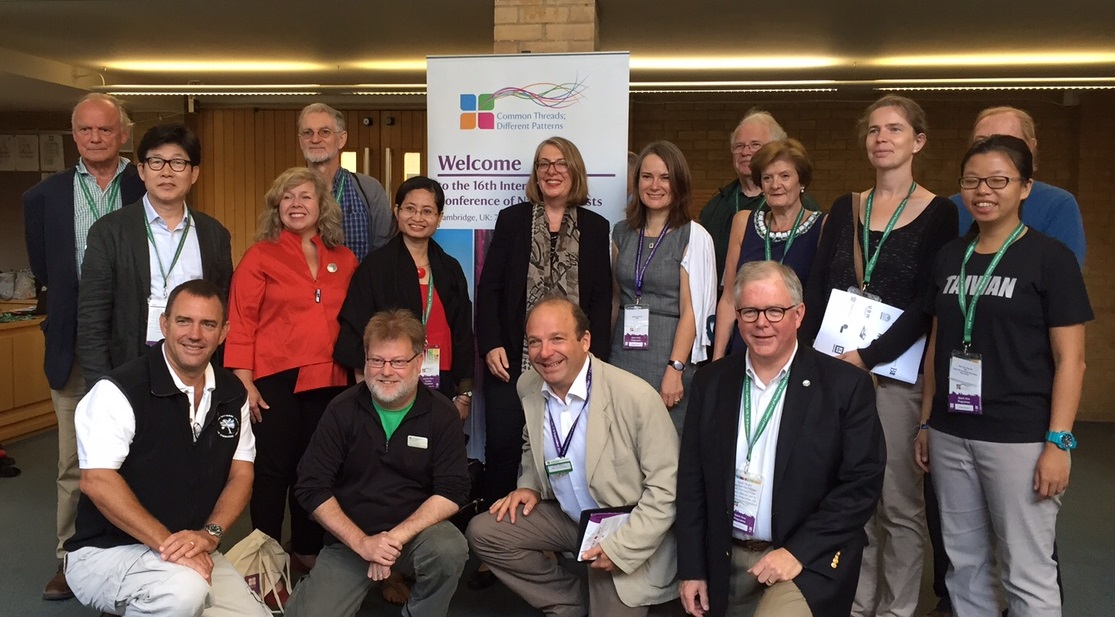
We arrived in Cambridge mid-day on Saturday for the 16th International Conference of National Trusts.  Even through our jet-lagged fog, we were charmed by this beautiful city as we met two friends and colleagues from the International National Trusts Organisation (INTO) for lunch in an English pub across from King’s College.

The meal and an afternoon nap were the refreshments we needed before heading out to dinner at the Polonia Club (who knew they had a Polish Club in Cambridge?).  The occasion was a delightful evening with the members of the INTO Executive Committee and Secretariat to toast our outgoing chairman, Simon Molesworth of Australia.  Simon has guided INTO for 10 years, first as head of the steering committee and then as the founding chairman, first elected to his post in New Delhi in 2007.

Simon Molesworth Dinner

Simon Molesworth (right) enjoying food, wine, and friends at the Polonia Club of Cambridge

Several of us spoke that evening about Simon’s service as the founding chairman of INTO, and his indefatigable work ethic through the years.  There was more than one mention of his joining our bi-monthly conference calls at midnight from Australia, so that those of us in North America and Europe could be on at more reasonable hours of the work day.  Others spoke of his vision for INTO, his ability to listen to all points of view, and his care for the world’s cultural heritage.  INTO Vice Chairman Bill Turner of Canada reminded us of Simon’s habit – while walking the Camino de Santiago last year in Spain – of handing out pens to local dignitaries along the way…and adding to the age of the eucalyptus tree from which they were made with each telling.

I spoke of Simon’s optimism, which will always be a trait I will associate with our founding chairman of INTO.  That outlook opened up new opportunities for the organization.  He is optimistic about the role young people will play in heritage conservation, as seen through the service of his own daughter as the volunteer head of INTO Farms.  Simon is optimistic that in the face of extensive world troubles, caring for our built and natural heritage is an important part of the way forward.

After ten years of service and investment of great personal time and resources, Simon turns over the reigns of INTO to Fiona Reynolds, the former Director-General of the National Trust in the U.K.  I am thankful for Simon’s work and for his unfailing commitment to the work of INTO to “promote the conservation and enhancement of the cultural and natural heritage of all nations for the benefit of the people of the world.”  Simon ensured that INTO – an international network of National Trusts and similar non-governmental organizations – was globally diverse but united in a shared commitment to work through cooperation, coordination and comradeship.

I join colleagues from around the world in saluting you, Mr. Chairman, and in thanking you for your invaluable service.

More to come…

DJB

Beach reading

Summer reading 2015

This has been a busy summer, full of travel, family changes, work, and good food!  During the past three months, I’ve also had a chance to read a few books – a couple just okay, one interesting, and one terrific.  So here’s a short summary, from mediocre to recommended.

The Language of Houses: How Buildings Speak to Us, by Alison Lurie.  I picked up this 2014 book – with its promise to highlight how buildings speak to us in ways simple and complex, formal and informal – with great anticipation.  Written by a Pulitzer Prize winning author, I expected great – or at least good – writing that would pull me along.  Unfortunately, I found it a simplistic and rather bland work that I had trouble finishing.  This is a topic that holds a great deal of promise.  Unfortunately, Lurie’s work doesn’t deliver.

The House with Sixteen Handmade Doors:  A Tale of Architectural Choice and Craftsmanship by Henry Petroski.  I bought  this quirky work in Seattle while on my cross-country trip with Claire in 2014.  However, I only picked it up to read this year.  Petroski, who has written a best-seller on The Pencil, has been called the poet laureate of engineering.  With The House with Sixteen Handmade Doors, Petroski explores the craftsmanship and decision-making that goes into a Maine retreat he has purchased with his wife, photographer Catherine Petroski. There were times when I thought the detail was a bit too much, but hey – being the son of an engineer – I understand the love of detail that comes with the engineering brain. This is a nice little book for those who care about how buildings are constructed, and for those who love picking things apart.

The Price of Civilization: Reawakening American Virtue and Prosperity by Jeffrey D. Sachs. When economist Jeffrey Sachs writes, “We are a technology-rich, advertising-fed, knowledge-poor society,” I wanted to stand up and cheer.  The first half of this book outlines – in clear and compelling fashion – what ails America today. “Corporatocracy” is his favorite word, as he notes again and again – in compelling fashion – how corporate abuse of our political system has led to deeper cynicism in the American public.  Unfortunately, the prescriptions – as laid out by Sachs in the last half of the book – are less compelling and often don’t account for the difficulties that would have to be overcome to be enacted.  There is a “this is what we have to do” tone to Sachs’ work that – while serious – comes across as naive.  There really isn’t a guide for how to pull together to enact necessary reforms – and that may not be the purpose of the book.  But I feel that it would have more impact if Sachs addressed those challenges.

Cliff Dwellings
Cliff dwellings near Cedar Mesa

House of Rain:  Tracking a Vanished Civilization Across the American Southwest by Craig Childs. When I was hiking in Southeast Utah with colleagues from work, I asked Amy Cole of our Denver office to recommend a good book that would help put what I had seen in context.  She immediately directed me to Craig Childs and House of Rain – and am I glad she did.

Childs – described as a naturalist and adventurer – is at heart a natural-born story-teller. In this page-turner of a book, he takes the reader through his travels from Chaco Canyon north to Chimney Rock and Mesa Verde, and then through Comb Ridge and Cedar Mesa, Monument Valley…and on and on until he ends up along the Sierra Madre in Northern Mexico.  The purpose of this extended walk?  To find out what happened to the Ancestral Puebloans who – according to long-held belief – simply “disappeared” from this landscape in the thirteenth century after building incredible dwellings and cities exemplified by Chaco and Mesa Verde.

Childs walks many of these landscapes and – calling on new scholarship and his own strong powers of observation – makes a case that these people did not disappear, but moved South – all the way into Northern Mexico – in a structured and planned migration.  He leads the reader on a journey that ends with “the story the Spanish conquistadors” told a hundred years before the Mayflower…a story of endless indigenous settlements, adobe pueblos, well-planned streets, elaborate markets.  In other words, a land widely populated with a highly ordered civilization.  Until recently, the story of the Jesuit missionaries, who entered the area in the seventeenth century and found a sparsely populated landscape leading them to dismiss the conquistadors’ claims, held sway.  But Childs makes a compelling case that European plagues accomplished what the conquistadors could not in wiping out a population that may have been as high as 90,000 living below the west slope of the northern Sierra Madre.

While standing on the Colorado/Utah border – about one-third of the way through the book – Childs gives the reader thoughts on what is to come.

The logic is simple.  If the Anasazi left, they had to go somewhere.  Their civilization did not end here, as is so often believed. Gone from the Four Corners by the end of the thirteenth century, they took many paths away from this place.  A diaspora spread into the rest of the Southwest along ancient migratory routes and lanes of trade. The Anasazi moved on like a spectacular road show, carrying with the foundations of their culture:  signature T shapes, dazzling pottery, lofty architecture, and a penchant for corn.  They did not disappear.  In fact, a larger future lay before them, and they left a trail to follow to get there….

Childs is compelling because he treats the Ancestral Puebloans as the real people they are, and he gives their story the dignity it deserves.

Highly recommended.

More to come…

DJB

Image: Summer reading is the best photo by Claire Brown

Observations from the Road: The “How to Lose Your Vacation Zen and Regain Your Perspective (All in 30 Minutes)” Edition

WWII Vets

WWII Veterans greeted at Dulles Airport by an appreciative welcoming crew

You know you travel a great deal when your first day back from vacation includes leaving on a 3-day trip to Denver. That’s the situation I found myself in yesterday.

I was determined to keep my vacation Zen (and motivation to exercise – but that’s another post) as I returned to work. Yet the travel gods were conspiring against me.

Southwest Airlines decided to reset the preferences in their customers’ accounts a few weeks ago.  The result:  things like Known Traveler Numbers (which put you into TSA Pre-Check) and other preferences which get you into the “A” check-in group (and assured of an aisle seat) were lost.  In setting up this trip, we didn’t realize those weren’t in place until it was too late.

Now you may be thinking, “David.  Suck it up.  Lots of folks go through the regular security lines.”  That’s true.  But if you do it 2-4 times a week, the thrill of taking off your shoes and belt, pulling out your laptop, and getting reprimanded because you don’t have your 3-oz. bottles in a little separate packet, among other things, gets old quickly.  All of that happened yesterday.  Plus, I am carrying a jar of Vaseline to help with the healing of some minor surgery on my leg…and that always gets pulled out in the regular line.  (Candice and I have decided that Vaseline is the duct tape of medicine.  The past three doctors I’ve seen have told me to “put some Vaseline on XXX and slap a band-aid on it.  Who knew?!)

So I was already losing my vacation Zen when I arrived at the gate and realized I had an hour before boarding.  To help recapture it, I decided for a quick 15-minute shoulder massage.  Of course, I would have the masseuse who would work me over hard AND spend the entire 15-minutes telling me how terrible her niece had been to her family during a recent wedding.  To say I came out of that without regaining my Zen would be an understatement.

Then I was snapped back into remembering what’s important.

Our plane arrived at the gate – and at the same time an “Honor Guard” crew joined those of us waiting to board to welcome a group of about 20 WWII veterans who had flown to Washington to see the WWII memorial.  This happens quite a bit in DC airports, but I really needed to see it yesterday.  We stood and cheered as these men – many in wheelchairs, and all about my father’s age of 90 or more – came off the plane.  There were smiles and tears all around.

And all of a sudden, the TSA pre-check, the Vaseline pat down, the grouchy masseuse – they were all forgotten.

These men were all willing to give the ultimate sacrifice.  They came from every class and all walks of life.  They set aside differences and prejudices to work, live, laugh, cry – and for many of them die – together.

Vets at Dulles

Another WWII Vet exits the plan to meet a welcoming “Ground Crew”

Thank you, each and every one.

More to come…

DJB

2015 Feels A Great Deal Like 2013

Nationals LogoJust when Washington Nationals fans thought August couldn’t get any worse, comes this news item about the revocation of the Jayson Werth walk-off bobblehead from the Nationals’ website:

Jayson Werth’s walk-off home run in Game 4 of the 2012 NLDS was one of the greatest moments in Washington Nationals history. While we tried to capture his jump into home plate and commemorate it with a bobblehead for our 10th Anniversary season, we were not satisfied with the final product. Therefore, we will be re-issuing a new bobblehead. The first 25,000 fans to enter Nationals Park on Sunday, August 30th for the 1:35 p.m. game against the Miami Marlins will receive a voucher redeemable for the new bobblehead. Fans will be able to pick up their new bobblehead on an offseason date at Nationals Park. In addition, you will receive a special gift for the inconvenience. More information will be available on the vouchers and on this site.

This is the August when the Mets never lose, and on the off day when they do finally drop a game (e.g., last evening), the Nats lose a completely winnable game and don’t gain any ground. Screwing up a bobblehead is par for the course. Perhaps the “establishment Republicans” who have had to live through the summer of Trump can empathize.  You think you have everything lined up in your favor, and then some brash New Yorker shows up and takes away all your glory.

This season for the Nationals feels very much like 2013.  Great expectations mixed with bombast.  A slow start, then some traction, only to see the wheels fall off.  Even a strong run in September – which is still possible – probably won’t be enough to get them into the playoffs.  The Mets would have to tank at about the same level as the 1964 Phillies for the Nats to sneak in…and I don’t think that’s about to happen.

There are so many things to dissect in this unimpressive year of Nationals baseball, and Thomas Boswell does as good a job as anyone. But here are three things that drive me crazy about this year (and two of three apply to 2013, for that matter):

  • BaseballCan we just stop all the talk about greatness until the Nats actually win at least a playoff series?  From Davey Johnson’s “World Series or Bust” marker that…well, fell well short of the mark…to Bryce Harper’s “Where’s My Ring?” quote after the signing of Max Scherzer this winter, this is a team that loves to talk about how good it is.  (An 11-11 Max Scherzer, I might add, after last night’s loss to the lowly Marlins.) Until this team wins at least one playoff series (yes, I attended two gut-wrenching losses in the 2012 and 2014 NLDS), just stop it.  And that goes for everyone from the General Manager on down.
  • BaseballThis is a team that needs a new training/medical staff, STAT.  The Nationals, over the past four years, have been the team where hamstrings go to be torn. I’ve spoken with two personal trainers over this period, and for the life of us no one can understand why this team has so many nagging injuries. Maybe it is time to hire away one of those guys who focus on flexibility, mobility, and stability – like the Seattle Seahawks – who were a last second interception away from winning two straight Super Bowls.  With Denard Span back (no pun intended) on the DL after two games, it appears that we’ll have all of two games this season when the eight position players in the projected starting line-up were all on the field at the same time.
  • BaseballWhat’s with all the crazy decisions? With all the injuries and players in their walk years having absolutely horrible years (Desmond, Zimmermann, Span, et. al.), it could be easy to give manager Matt Williams a pass…but I’m not going to. I realize that Williams knows a great deal more about baseball than I do, so I’m concerned when something appears obvious to me (and 10 million others) but not to Matt.  Like telling the hitter on your team who has hit into the most double plays to take a 3-0 pitch and perhaps work a walk to load the bases, so that the guy who hit a grand slam the night before (and has five in his career) can have another chance. Or not lining up your pitching staff during the All-Star break to have your top three pitchers ready for the team right behind you in the standings. Or not using your two best relievers in a critical series with those same New York Mets, and losing all three games. Or…or…oh, whatever.

The team is finally playing a little better ball, but the Mets are playing out of their heads right now and that brutal west coast road trip – following the debacle of the Mets series – probably put an end to all playoff hopes for 2015.  Let’s hope we can be like the Giants – who seem to win the World Series only in even-numbered years.  But don’t even begin to talk about what chances this team might have until they actually win something.

Until then, Andrew and I are off to pick up our vouchers tomorrow!  Par for the course for this August.

More to come…

DJB

The Tastes of Vacation: Wrapping Up DC Restaurant Week

Crostini at Fig & Olive

Crostini explosion at Fig & Olive DC

Our DC Restaurant Week extravaganza wrapped up on Sunday evening with our 7th restaurant in 7 days: the new Fig & Olive DC in the glamorous Foster + Partners and Shalom Baranes Associates-designed CityCenterDC complex (home to the 1% who want to live in a fashionable downtown apartment…but I digress.) Six of this week’s seven eateries were new to us, which was part of the allure, and we saved some of the best for last.

Friday evening, Candice and I visited Mintwood Place – a highly rated restaurant where we had sampled brunch in the past. We were excited about this dinner, as the restaurant is ranked #2 in Tom Sietsema’s 2014 Fall Dining Guide and is also a top-ten pick of Tom Kilman of Washingtonian magazine.

After our meal, I’m here to say I cannot understand these rankings.  The food was good, but not the best we had during the week (or even the weekend).  Mintwood did only serve off the Restaurant Week menu, so I understand that some of their outstanding regulars may not have been included, but I frankly expected more. The service was okay but not exceptional. And the restaurant is loud. Really loud. Did I say it is very loud.

The Burrata, kales, hazelnut, apple & tamarind first course offering was exceptional. I would eat kale every day if it was prepared this way.  (I know some of my friends are rolling their eyes, knowing my general feelings toward kale.)  My lightly smoked salmon with cream of corn, baby zucchini and sunflower shoots was good but not an entrée of the second best restaurant in the city. Candice’s rigatoni bolognese was very tasty but heavy (especially for a summer menu). Candice and I came away with three-star rankings. I think we’ll need to try Mintwood Place again when it is not restaurant week, and hope that the exceptional cooking is easier to find.

I’ve already reported on Saturday’s meal at Jackie’s in Silver Spring – which deserves a new look from all the restaurant critics who indicate it has lost its luster.

At Fig and Olive

DJB, Candice, and Andrew wrap up DC Restaurant Week at Fig & Olive

Which brings us to restaurant #7 of the week: the new Fig & Olive DC, which is part of an upscale, national eight-restaurant chain with locations in New York, Chicago, Los Angeles, and now Washington. What a way to end the week!

Everything about Fig & Olive was terrific, beginning with a large and airy dining room above a very sharp-looking bar. We decided to forgo the restaurant week selections and order off the main dinner menu, and we’re glad we did.  Even before we ordered, the wait staff brought out three different olive oils (one each from Spain, California, and Italy) for dipping. We began our two-hour feast with two wonderful appetizers: the Octopus a la Gallega (thinly sliced braised octopus, marinated bell pepper, heirloom potato, black olive, basil, arugula, pimenton lemon dressing with Cobrancosa Olive Oil) and Sea Scallops (seared scallops seasoned with l’orange spice, carrot olive oil tapenade, orange segment, micro greens, citrus dressing with Picual Olive Oil). Both melted in the mouth.

That was followed by six crostini (seen at the top of the post) which were as beautiful as they were tasty.  Our choices?

  • Burrata, Tomato, Pesto, Balsamic;
  • Pea, Asparagus, Ricotta Lemon Thyme;
  • Heirloom Carrot, Charmoula, Carrot Tapenade;
  • Prosciutto, Ricotta, Fig, Olive, Walnut (maybe the best of all!);
  • Crab, Heirloom Tomato, Zucchini Puree; and
  • Shrimp, Avocado, Cilantro, Tomato.

We carefully cut each one into three pieces, so everyone could have a small sample. What a treat!

Our main courses which followed were just as tasty.  Andrew became a big paella fan during his summer in Barcelona and Valencia, so he jumped on the Paella Del Mar with black tiger shrimp, sea scallop, calamari, mussels,saffron rice, green pea, red bell pepper, artichoke, saffron aioli, pimenton & oregano topped with Hojiblanca Olive Oil.  Candice wanted a lighter meal, so she ordered the Fig Gorgonzola Tartlet off the appetizer menu. It featured prosciutto, gorgonzola dolce, fig, walnut, arugula, scallion, tomato on thin puff pastry topped with Arbequina Olive Oil. I had read a review that called out the Rosemary Lamb Chops, so I went with this choice.  The lamb was “grilled, smoked à la minute with a bouquet of Herbs de Provence, goat cheese & chive gnocchi, braised eggplant with honey & thyme” and served with a wonderful rosemary garlic olive oil. In a word: Fabulous!

After all this food, I know you won’t believe that we discussed dessert…but I’m afraid it is true. However, Fig & Olive has something that every restaurant should adopt:  coffee or tea with a one bite-size side of dessert.  What a concept, as one bite is all you want!  We went all in, each of us ordering the Café Gourmand, with a side of crunchy praline and the one bite-sized version of the Chocolate Pot de Crème.  We left wonderfully satisfied (yet not stuffed) and with ratings between 4 and 4 1/2 stars. Yes, it was that good!

We’ve had a delightful week, and when I jumped on the scale this morning, I was able to keep my weight within one pound of the starting mark!  (Exercise every day certainly helps, and I’ve already been to the gym this morning!)

In our delightful Restaurant Week extravaganza, we found that the DC food scene continues to grow and mature – for individuals with all tastes.  After sampling the wide variety this week, we now have five new restaurants to add to our list of regular favorites (which in addition to Jackie’s range from Fiola to Cleveland Park’s Ripple to La Chat Noir to DISH + Drinks to Pacci’s Pizza and perhaps a dozen more).  We’ll certainly return to MXDC, New Heights, SEI, Mintwood Place and Fig & Olive in the weeks and months ahead.

Restaurant Week may be over, but that doesn’t mean the Browns won’t continue to venture out during our vacation.  This evening the three of us are going to another of our favorites – Iron Gate Restaurant in Dupont Circle – for their Agriturismo Menu on the patio, and later in the week Candice and I are going to test out a new Capitol Hill restaurant with one of my work colleagues.  But my days as a food critic are over for now.  It has been wonderful to share a bit of these meals with you, and I hope you’ve found something to enjoy.

More to come…

DJB

The Ambulance Survivor’s Club

Nancy and DJB

Nancy and DJB – the charter members of the Ambulance Survivor’s Club – toasting our good health at Jackie’s Restaurant in Silver Spring

If you know me, you know that I fractured my shoulder on March 3, 2015 – the night before my 60th birthday – after being hit by an ambulance.  Tonight, the two charter members of the Ambulance Survivor’s Club joined family and friends at Jackie’s Restaurant in Silver Spring to celebrate our recovery.

To take you down memory lane, here’s how I described it at the time:

Some people will do anything to avoid going to work on their birthday. My excuse? I was hit by an ambulance while helping a friend who had fallen on the ice. Yep, you read that right.

We made the local news. (A colleagues’ husband had seen it on one of those small screens they now have in cabs, so she wrote, “You’re famous in cabs!”)  A friend (Nancy) who was staying with us went out to dinner with a client, and she slipped and fell on the road behind our house when she returned. An angel of a neighbor found her and called us. We went out to help Nancy, and as she couldn’t get up we called 911. I was kneeling behind her as she sat where she had fallen, to keep her upright and to keep her alert. The ambulance arrived and couldn’t stop on the ice as it headed towards us. We couldn’t get out-of-the-way. I was hit first – my left shoulder against the front of the ambulance – and was tossed into a snow bank. Then the ambulance struck Nancy and pushed her down our hill. I could quickly tell I was okay except for shoulder pain but Nancy was obviously in a worse condition. They took her to the trauma unit at a local hospital and I was taken to ER at nearby Holy Cross.

To cut to the chase, I now have a fractured Humerus in my left shoulder. Nancy has some broken bones.

That was the story from More to Come… on March 6th.  But thanks to our wonderful families and friends – along with the medical professionals who have taken care of us over the past six months – Nancy and I are well on the way to full healing.   Because they took us to two separate hospitals after the accident, our good mutual friends Steve Campbell and Sarabeth Watson stayed with Nancy in Suburban Hospital and focused on her medical needs in those first hours and days while Candice was at Holy Cross Hospital with me.  All three of them then took great care of the two of us as we moved through the medical process.  Our recovery is going so well that Candice and I joined Nancy, Steve, and Sarabeth tonight for a celebratory dinner.

Pork tenderloin

The pork tenderloin at Jackie’s Restaurant

We spent the evening catching up, with Nancy and I comparing notes about physical therapy and the time it takes for bones to heal. All five of us told about what we remembered from that night and the first few days afterwards. We did all of this at Jackie’s, which is quickly regaining its reputation as the best restaurant in Silver Spring.

After working through a less-than-satisfactory chef or two, the kitchen has more than regained its footing since Adam Harvey’s arrival in May of 2013 and now regularly turns out meals that rate 4 stars in our book.  Tonight, Candice and I enjoyed the pork tenderloin, while Nancy raved about her Sweet Corn Risotto with grilled prawns, English peas and summer truffles. Steve was delighted with his Housemade Meatballs, and Sarabeth exclaimed over the pan roasted Arctic Char.

Putting the dinner aside, the important thing is that it was so good to see Nancy doing so well.  Six months ago, I’m not sure what I would have said had I been asked to speculate about our conditions in August.  But we have been blessed with loving support and care, and you can’t ask for much more in this life.

With (thankfully) more to come…

DJB

The Tastes of Vacation: The “We Are Still Eating (and Living to Tell the Tale)” Edition

Candice at New Heights

Candice gets ready to enjoy the Vegetarian Fettuccini Alla Bolognese at New Heights Restaurant during Restaurant Week DC

Four nights into DC Restaurant Week and the Browns are still eating (and living to tell the tale).  We last left you following Monday evening’s upscale Mexican dinner at MXDC. But we’ve continued our visitation to new (for us) restaurants in the Washington area.

How we’d missed the long-time Woodley Park favorite New Heights Restaurant is a mystery, but we found it on Tuesday evening and it won’t be our last visit. First, let’s begin with the setting: a lovely patio, downstairs “gin joint” and upstairs casual dining area with an Arts and Crafts decor – what’s not to like! Then the food and service were top-notch.  Andrew and I – being gin and tonic fans – tried two very different variations on this theme from the extensive offerings.  Both were superb. All three of us took advantage of the three-course Restaurant Week menu (which we have agreed we cannot do every night unless we want to add 15 pounds of weight by the end of vacation.)  We shared heirloom tomato salad, crab cake, fettuccini, wonderful scallops, and spaghettini aglio e olio, plus three delightful desserts: tiramisu, peach cobbler, and house made sorbet. All came away charmed by New Heights – giving it solid 3 1/2 stars across the board – and wondering how soon we could return.

DJB at SEI Restaurant

DJB gets ready for the duck at SEI…and I’m sure I didn’t notice that the woman behind me had her eyes (and mouth) focused on my plate!

Wednesday brought us to Penn Quarter and the modern Asian small plates restaurant SEI. The stark white and modern decor could not have been more different from New Heights. The crowd was younger, and our server was smart and a delight.  This time Candice went to the regular menu for Tuna Tartare sushi and Korean Kalbe tacos, with a refreshing Asian Pear sangria. I stepped off the wine and cocktail carousel for the evening, but did stay on the three-course restaurant week menu (as did Andrew).  Some of our favorites included a fabulous Braised Baby Octopus, Crispy Duck, and Honey Ginger Salmon.  The Orange Miso Bread Pudding with sea salt ice cream was a big hit.  Once again, we all gave SEI a very solid 3 1/2 stars and were still buzzing about it the next day.

Andrew has a standing commitment on Thursday evenings this summer, so Candice and I ventured out to DC Coast on our own. I had been to this K Street establishment for lunch in the past, but never for dinner.  The setting – in a rehabilitated bank lobby – is wonderful, and the service was terrific. If we were rating on those two items alone, we’d be right up there at the 3 to 3 1/2 stars.  However, the food was merely pedestrian, which was a disappointment. Perhaps we didn’t order very well – which is a possibility – but I didn’t see much on the menu that jumped out and excited me.  We split a very good Caesar salad, which – surprisingly – was the highlight.  Candice had the seafood gumbo while I had a soft shell crab tempura that was on the Chef’s selection menu for the evening.  Both were okay but much less flavorful than similar dishes from other area restaurants.  (I feel the seafood gumbo at the Tabard Inn is some of the best in the city, if you want a comparison.) The key lime pie was also “just okay.” We came away disappointed, with ratings in the 2 1/2 stars category.

Tonight we’re looking for a wonderful meal at Mintwood Place – which is rated among the better restaurants in the city – and then we have friends coming over to Silver Spring on Saturday for what we know will be an excellent evening at Jackie’s.  Sunday, we’re excited about our first visit to Fig & Olive.  And while DC Restaurant Week officially ends on Sunday, we’re plowing ahead into the next week…so look for more “tastes from vacation.”

See you at the gym!

More to come…

DJB

MXDC

The tastes of vacation at MXDC Cocina Mexicana

Our “DC Restaurant Week” vacation began in earnest on Monday evening, as we took the Metro downtown to sample  upscale Mexican food at MXDC. A short two-block walk from Metro Center, this three-level Todd English restaurant was new to all three of us, making for a promising beginning to our week.

All three agreed that Andrew’s Black Sea bass with Brussels sprouts was the top choice of the three entrees.  I had a very good Mole de Costilla (short ribs) while Candice went with the steak option.  I also had an Azul Guacamole with blue cheese, bacon, chipotle, and red onion that was wonderfully spicy.

We have six more of these lined up over the next week, so I have to pace myself in both writing and eating.  We all gave MXDC between 3-to-3 1/2 stars.  A good start!

More to come…

DJB

Image: Andrew gets ready to kick off Restaurant Week by digging into the Sea bass at MXDC

Forgiveness is the Result of a Long Journey

Paul Brewseter and Ruby Sales
Parishioner Paul Brewster speaks with Ruby Sales at St. Alban’s Parish

St. Alban’s Parish was blessed this morning with the presence and witness of Ruby Sales, a civil rights activist whose life was saved 50 years ago by the actions of Jonathan Daniels.  Michael Ruane, writing in the Washington Post, explains:

By all rights, Ruby Sales should have been killed on Friday, Aug. 20, 1965.

She should have been hit by the shotgun blast fired by the enraged white man on the porch of the general store in rural Alabama.

Her life should have ended at 17, an African American college student and civil rights worker, gunned down under a Coca-Cola sign in the fight for freedom and justice.

But there she was Sunday morning, age 67, in St. Alban’s Episcopal Church in Northwest Washington, given a half-century of life by a white seminarian named Jonathan Myrick Daniels who pushed her aside and died in her place.

She sat in an ornate wooden chair in the chancel of the church, the decades having taken a toll on her eyesight and her knees, and called herself “a remnant” of the great civil rights generation now passing from the stage.

Ruby Sales may see herself as a remnant, but her call for justice was strong and unequivocal. “I never imagined that there would be people working overtime to dismantle those changes,” she said. “I never imagined that . . . once again black people would be fighting for our lives.”

Speaking for thirty minutes from the chancel in St. Alban’s, Ruby Sales took the three lessons from today’s liturgy and spoke to them from her perspective as an African American woman who grew up under state sanctioned terrorism. From the lessons in Samuel, she saw King Solomon – with his riches and slaves – in a different light than the traditional perspective of wisdom in which Solomon is usually portrayed. And she contrasted the decisions Solomon made with those made by Jonathan Daniels.

“You have to understand the significance of Jonathan’s witness,” she said. “He had graduated from the Virginia Military Institute. A doctor’s son, he had studied at Harvard and at a traditionally white Episcopal divinity school. He walked away from the king’s table. He could have had any benefit he wanted, because he was young, white, brilliant and male.”

She then spoke at a later forum with the title “We’ve Been Here Before.”

In that forum, Ruby Sales spoke of the spiritual genius of her parents and grandparents, and suggested that we all become better acquainted with African American history. It was in that context that I asked her thoughts on the fact that the families of those slain at Emanuel A.M.E. Church in Charleston had been able to offer forgiveness, while families of others killed in recent mass murders seemed to have such different reactions.  This is a topic that has been on my mind, and that of many others, over the past two months. (See also here, and here.)

Ms Sales responded with grace and understanding. She said, “Forgiveness is the result of a long journey.  Forgiveness comes out of lamentations.” She said that her parents and their peers did not allow her to hate. “If you said you hated someone, that was a ‘sit down and think about it awhile’ offense.” The forgiveness, as she saw it, was God’s forgiveness and not an absolution of racism and white supremacy.  It was one more powerful witness on a Sunday full of them.

With gratefulness for the lives of both Jonathan Daniels and Ruby Sales.

More to come…

DJB