Since our last report on our quest to see the Best Picture, Candice and I have seen three more of this year’s nominees. So let’s get to it.
We walked to our “commercial” theatre (the Regal) in downtown Silver Spring earlier this week to see Selma. This movie has had its share of controversy, from the treatment of Lyndon Johnson in the film, to the snub from the Academy in terms of award nominations. David Oyelowo was excellent as Dr. Martin Luther King, Jr. in a performance certainly deserving of a Best Actor nomination. But the film was stilted at times, and uneven.
Selma is not the year’s Best Picture, but it is the most important film of the year. We forget too quickly how difficult it was to attain rights for all, and how much pressure there is, even today, to restrict or even take away those rights. I have members of my extended family who love to wave the Confederate flag, without any understanding of what that really means. I grew up in the South in the 1960s. I remember seeing these scenes on television. I saw first hand how blacks were treated then. It was terrible. In some ways, it is still terrible. We can do better.
Last evening, we returned to the AFI Silver Theatre to see Birdman. Though it took a bit for me to get into this film, once drawn in I very much enjoyed this story of a faded Hollywood actor’s attempt to make it on Broadway. The acting here is terrific, beginning with Michael Keaton as Riggan Thompson (the Birdman), Emma Stone as Riggan’s daughter Sam, and Edward Norton, Jr. as the acclaimed Broadway actor Mike Shiner. (Note: Ed Norton – Edward’s father – is a former colleague.) The chemistry between Stone and Norton is terrific. Naomi Watts as the actress Lesley (and Mike’s former girlfriend) and Zach Galifianakis as Riggan’s lawyer are also wonderful. The long single-camera takes are a great device, and the drumming in the soundtrack sets the tone for the story. While this isn’t my first choice, I could understand – and support – this as the Best Picture winner.
This afternoon, we visited the Union Market redevelopment area of Washington, north of Union Station, to see Boyhoodin the Angelika Pop-up Theatre. This is another excellent movie, but to me it was flawed by being about a half hour too long. Tighter editing would have helped. However, I enjoyed this coming of age story, and thought that the mother – played by Patricia Arquette – was especially good. Much has been made of the filming of this movie over a total of 12 years. I certainly enjoyed watching the characters age, and – with only a few exceptions – become more sympathetic.
We’ve now seen six of the eight nominees. We’re planning on catching Whiplash in a few days, and we’re not going to see American Sniper. (I’ll explain that choice in my next post.)
Here are my rankings of the six we’ve seen to date (and I’ve even changed my order from the last post):
1. The Imitation Game
2. Birdman
3. Grand Budapest Hotel
4. The Theory of Everything
5. Boyhood
6. Selma
And Candice has also weighed in as well. Her rankings are:
As we entered our empty nesting period, Candice and I took the plunge in 2012 and made a pledge to try and see all of the year’s films nominated in the Academy Awards’ “Best Picture” category. We (almost) succeeded – seeing eight of the nine 2012 nominees – and every year since we’ve taken on the same challenge. While we seldom get to all the films (we generally avoid the gratuitously violent ones such as 2013’s Django Unchained), we’ve seen the vast majority and have really enjoyed talking and – in my case – writing about them.
This year there are eight nominees, and as we enter the final month we now have three under our belt. The Grand Budapest Hotel is a wonderful, lush, and very funny film by Wes Anderson, which we saw in March when it was first released. The acting by Ralph Fiennes as the concierge, along with that of the rest of the ensemble, is delicious while the plot is convoluted and crazed. This is a very good film…but not the winner!
On Saturday, we walked to the historic AFI Silver Theatre in downtown Silver Spring to see The Imitation Game. The story of Alan Turing, who helped break the German code in WWII and pioneered the computer in the process, is simply terrific. There is so much to consider when watching this movie. It covers three periods of Turing’s life – his unhappy childhood, his work during the war, and his arrest after the war for his homosexuality. His physical and mental deterioration is such a sad ending for a unique talent. The line that spurs Turing in his youth, he then uses on fellow code-breaker Joan Clarke, and she ultimately uses to encourage him during his last year of life sums up the wonderful message of this movie: “Sometimes it is the people no one imagines anything of who do the things that no one can imagine.” Benedict Cumberbatch as Turing and Keira Knightley as Clarke are both remarkable. They turn in top-flight, Oscar-worthy performances. Highly recommended, and a great candidate for Best Picture.
Earlier today, we returned to the AFI Silver Theatre to watch The Theory of Everything, about the life of physicist Stephen Hawking and his first wife Jane Hawking. This was another excellent movie, with incredible performances by Eddie Redmayne as Stephen and Felicity Jones as Jane. Hawkings’ diagnosis of motor neuron disease, soon after he meets Jane, sets up the challenges of increasing fame and increasing physical deterioration that drive the movie forward. Both The Theory of Everything and The Imitation Game demonstrate that movies without animation and action – and focused on brilliant minds, no less – can still be gripping, powerful, and moving.
Candice didn’t have a favorite between the last two, but I feel that The Imitation Game has more depth and is ultimately more satisfying. So with three down, the completely untrained but joyfully opinionated DJB rankings for Best Picture stand as follows:
1. The Imitation Game
2. The Theory of Everything
3. The Grand Budapest Hotel
Come back next weekend, as we’ll have at least two others to add to the list.
Banks was playing in the “friendly confines of Wrigley Field” for the first major league baseball game I ever saw in person, against the eventual world-champion St. Louis Cardinals in 1963. The Cubs of my youth were awful. Heck, the Cubs of my entire life (and several other lifetimes) have been pretty much awful. But Banks was eternally optimistic about the club’s chances. As President Obama said when presenting Banks with the Presidential Medal of Freedom in 2013, Ernie’s cheer and optimism that the Cubs would go all the way was “… serious belief. That is something that even a White Sox fan like me can respect.”
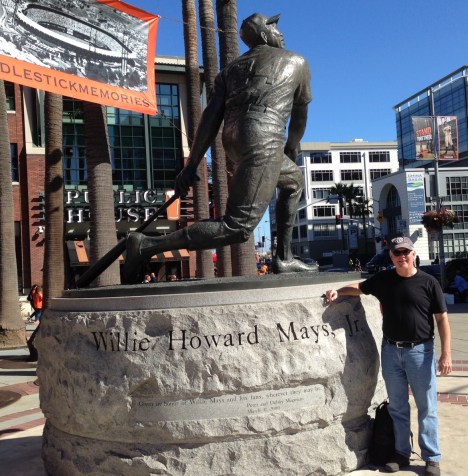
Banks was the original power-hitting shortstop and one of the first African-American stars in the major leagues. If ever there is a case to be made for asterisks in the record book, it is the fact that Banks held the record for most home runs in a season and a career by a shortstop, until they were “broken” (or stolen) by Alex Rodriquez.
I was a Willie Mays fan, but I always loved watching Banks play. Thanks for the memories, Ernie, and the reminder of how infectious optimism can be. Rest in peace, Mr. Cub.
More to come…
DJB
P.S. – The day after I originally posted this, Thomas Boswell had a very thoughtful column about Banks’ impact on his life. Recommended.
Last year I wrote a post saying I was through with the NFL. I even gave 10 reasons. (And yes, Daniel Snyder topped the list and he still holds the top spot after this year’s debacle.) I’ve pretty much kept to my promise.
But to find out today that my least-favorite teams – the Seattle Seahawks and the New England Patriots – will be in the Super Bowl is just perfect. We have the battle of the super-egos (and with these two teams, you can pick multiple candidates). After Seattle won today, I heard Russell Wilson gushing about how God had prepared him for a game like today. I’ve got news for Russell Wilson: God doesn’t give a damn about whether the Seahawks win or lose. Or the Patriots. Or the Nationals, for that matter. (Just to prove that I’m an equal opportunity atheist when it comes to God and sports.) She has much more important things to do.
I think I’ll be watching paint dry or something else more productive come Super Bowl Sunday.
I’ve often said I have one of the best jobs on earth. I work with amazing people to save some of the best places in the country. I get to see some amazing sites. I have the chance to explain why these places matter.
Last Monday was one of those days.
The National Trust designated Nashville’s Music Row as a National Treasure. Nashville is undergoing an amazing transformation, where growth is putting pressure on some of the most important places in the history of country music. When a threat arose last summer, Musician Ben Folds and several other Nashville insiders worked hard to save historic Studio A from demolition. We joined them in this fight and – in the process – expanded our reach to all of Music Row. Knowing of my Tennessee roots and my love for roots and country music, our team asked if I would help launch our campaign. It took me about 3 seconds to say yes.
As you can see above, we had a great turnout from the media and from friends in Nashville. It was a great day professionally and personally. Ben and Mike Kopp of the Music Industry Coalition were incredibly articulate spokesmen for the preservation of Studio A and Music Row – and two very nice guys. Sharon Corbitt-House – who runs Studio A for Ben and Mike – was ready to fight the bulldozers to save this treasure. Aubrey Preston – one of the huge heroes in this saga in that he bought the building at the 11th hour – was already a preservation hero of mine for his work to save the historic Franklin Theatre, where my father had been a projectionist in the 1930s. I had a chance to talk Doc Watson and Gallagher guitars with Congressman Jim Cooper. Heck, I was even in the “Picture of the Week” from the Nashville Business Journal laughing as Ben was taking a photo of the media taking pictures of him.
(Photo credit: Nathan Morgan – Nashville Business Journal)
So, it was another great week in my job. But the threat to Music Row is real – and it isn’t going away. There’s much to be done. I know that my colleagues and I will work hard to help the good folks in Nashville to save this special place. And I hope that my words last Monday will help. Here are my remarks from the press conference last Monday in Studio A after I was introduced by Ben Folds:
Ben Folds has been one of the heroes of the fight to save Studio A – telling the story of this place as persuasively as he tells stories in his music. And he fits into a great tradition.
Singers and songwriters in Nashville have been telling stories of life’s ups and downs for decades. Some of the stories I remember are Sunday Morning Coming Down. He Stopped Loving Her Today. I Fall to Pieces. Jolene – which was recorded in this very space.
Music Row has had its share of ups and downs. But like so many characters in a country song, it survives. It is time we ensure that we tell the story of the place that produced these classics. It is time we ensure that the buildings that made that story possible have a bright future.
So as a native Tennessean who grew up with a deep love for the music of this city, I’m pleased to be with you as we look toward a future for Music Row that fits Nashville’s role as the heart and soul of country music.
We have much to celebrate today – the designation of Music Row as a National Treasure….
The formation of the Music Industry Coalition to help secure a future for this landmark….
And, of course, the fact that we are gathered here in this historically significant studio which was saved from demolition just a few weeks ago.
Although it seemed Studio A was destined to be lost, we can see today the new partnerships that emerged along with the enthusiasm and commitment to plan a future for Music Row that honors its unparalleled place in America’s cultural life.
I am delighted to be here today to officially name Music Row as one the National Trust for Historic Preservation’s National Treasures.
The National Trust is the nation’s largest private organization dedicated to saving America’s historic places, with more than three-quarters of a million members and supporters.
While the Trust’s awareness of Music Row’s challenges began with the short-term “save the place” campaign for Studio A, the need to address the long-term sustainability of Music Row quickly became apparent.
The challenges for Music Row are different from those we frequently see in our preservation work across the country. In many places we are faced with economic distress and a lack of jobs.
In Nashville, the opposite is true. By 2035, the city will be 20% larger. More than 12 million visitors each year come to experience Music City.
We only have to walk out this door to see the result. Construction is everywhere. Development has begun pushing toward Music Row creating pressures to sell properties to make way for new apartments, condos and hotels.
As residents have watched what is happening, a citywide conversation has emerged: What is the future of Nashville and where is the place for our culture and heritage? Particularly important for all of us here today is the question: Do we want to imagine a Nashville without Music Row? I don’t. It’s the heart and soul of this great city and a national treasure.
In 1954 Owen and Harold Bradley opened the first music business in a Quonset hut on 16th Avenue. For the last 60 years music businesses have worked here in late 19th and early 20th century residences or larger commercial buildings. This eclectic mix of buildings and businesses has created a unique environment – the kind of cultural district that cities across the country are spending millions of dollars to create as part of a creative economy. We have it here in Nashville. Right now!
Through events and activities in the coming months, the National Trust and our partners will continue to increase awareness and appreciation for Music Row’s history, the impact it has on Nashville’s economy and the worldwide recognition Music Row brings for Nashville.
Music Row joins a diverse portfolio of more than 50 places around the country that are threatened and face an uncertain future. These National Treasures include historic buildings, neighborhoods, communities, landscapes, ships, and engineering landmarks.
Our National Treasures campaigns demonstrate the value of preservation by encouraging Americans to take direct action to save places and promote their history and significance. As the Presenting Partner of the National Treasures program, American Express has pledged $2 million to help promote and enable the preservation of these cultural and historic places. The National Trust is mobilizing its more than 60 years of expertise and resources to help protect this place.
Although we know the music came from here, until now the story of Music Row has not been fully told. Nashville’s visitors know the singers and the songs that were recorded here. It is “their” music as well.
All of which bring us back to this building and the studio which holds so much of Music Row’s history. We look forward to working with the Preservation Partners as exciting plans develop to celebrate Studio A’s 50th anniversary and to position the studio for another 50 years as an irreplaceable part of Music Row.
But we will not work alone.
I want to applaud the work that Mike Kopp and the board of The Music Industry Coalition have undertaken in the past six months, bringing together property and business owners, musicians, artists, songwriters and others who will work together to plan and advocate for Music Row.
Historic Nashville, Inc. – with special thanks to Melissa Wyllie and Robbie Jones – held its annual “Nashville Nine” announcement here last September, adding more voices of support to save the studio while they contributed funds to our first project of documenting the history of Music Row. Historic Nashville is the newest official local partner of the National Trust, and we look forward to working with them in the months and years ahead.
I want to thank Metro Nashville Historical Commission executive director Tim Walker for his leadership in raising funds for our historical research and documentation project, especially in his work to gain contributions from the newly formed Metro Historical Commission Foundation and our statewide preservation partner, the Tennessee Preservation Trust.
Our thanks also go to Terry Clements, vice president of government and community relations, and Butch Spyridon, president and CEO of the Nashville Convention and Visitors Corporation for their financial support of the historical research project.
To Gail Danner and the Danner Foundation – thank you for your financial support of our historical research project.
I’d like to recognize Congressman Jim Cooper who is here with us today. Congressman Cooper is a hero to the music industry – thanks to his work to enact new legislation that now allows musicians to carry their instruments onto planes as carry-on luggage. For any of us who have seen our guitars disappear into the bowels of an airplane, we say “thank you!”
Finally, there are four people I would like to recognize individually:
Thank you Mayor Dean for joining us today and for your support and encouragement these last few months as we have all worked together to organize and prepare for today and the work that will come in the months ahead.
Ben Folds for sounding the alarm and making all of us aware of the impending loss of this historically significant building and the importance of planning for Music Row’s future. As he has said, “He was the one with the flashlight” shining it on this special place.
Trey Bruce for organizing a “Save Studio A” campaign that quickly built a network that included over 13,000 Facebook friends and kept the media focus on the studio throughout the summer and early fall.
And especially we say thank you to preservation hero Aubrey Preston for his understanding that this building holds much of Nashville’s music history and for stepping in to save it. We are also excited about the newly formed “Preservation Partners” with Mike Curb and Chuck Elcan joining Aubrey to renovate and revitalize this building.
The National Trust’s designation of Music Row as a National Treasure brings our commitment to demonstrate the value of preservation of this place and to plan for its sustainable future. We have assembled a team with expertise in historic preservation, real estate development, heritage tourism, community engagement and public relations to work with our local partners. Many of you have already met and have been working with our National Trust team, but I will quickly introduce them – Carolyn Brackett, who lives here in Nashville, is our project leader and an indispensable part of this effort. In addition, I want to recognize and thank Alicia Leuba, Grant Stevens and Erica Stewart. You will be seeing a lot more of them.
Four years ago I wrote an op-ed for the Nashville Tennessean, in which I said, “It matters how we build our communities and how we preserve them. When we lose the places that matter to us, we lose more than buildings—we lose the sense of community and the sense of civic pride and responsibility that follows. Being thoughtful stewards of these places is hard work. But it’s a job worth doing. We’re not just hanging on to yesterday, we’re building tomorrow.”
Some of my favorite country music songs – like the ones I mentioned earlier – are tinged with sadness. But that will not be Music Row’s fate. We look forward to working with all of you in the coming months to help forge a happy ending for this national treasure, so its studios and musicians can keep moving us with their stories for decades to come.
As in the past, I’m taking to More to Come… to think about the year that is rapidly coming to a close, to be thankful for the wonder in my life, and to resolve to improve.
The national and international issues seem almost overwhelming. Many commentators have focused on all the bad things that happened in 2014, and there were no shortages of options for those who take that approach. Ferguson. Ebola. ISIS. I can’t breathe. Disappearing airplanes. Michael Brown. Eric Garner. Putin. Ukraine. Income inequality. Cynical politicians. Criminal politicians. Torture. Mid-term elections. Right wing fundamentalists posing as Christians. Robin Williams. Endless war in the Middle East. Those are just for starters.
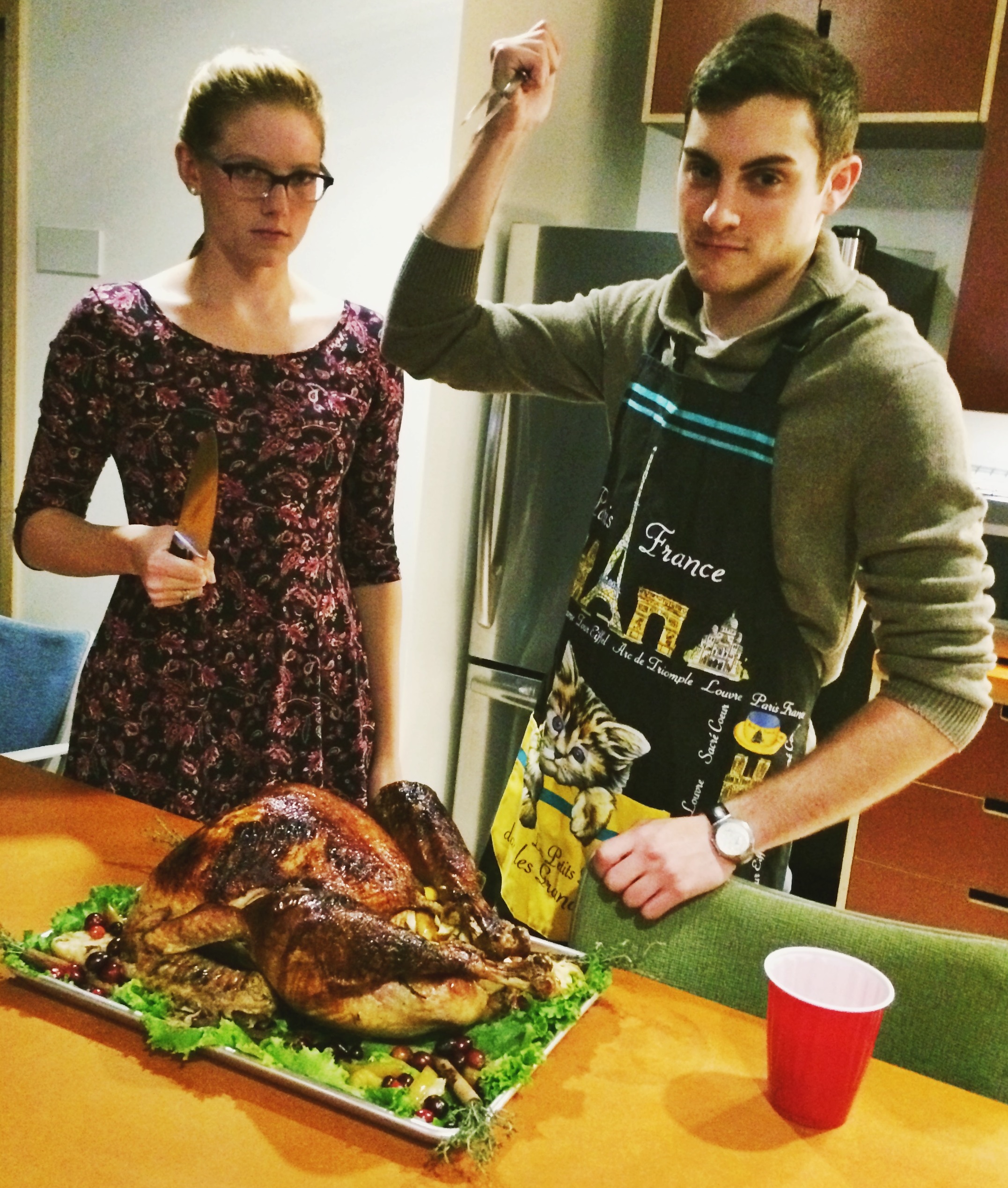
I was tempted to lead with this photo of Claire and her friend Jason, with the title 2014: It’s Done – Stick a Fork in this Turkey!
But then I recalled this picture I’ve used before in More to Come… and decided to follow this piece of advice.
Nationally, you won’t hear much from the media about the good things that have occurred in 2014. Such as the fact that 10 million+ Americans who were uninsured now have health insurance. Or, that the U.S. is finally ending a failed 50-year policy of sanctions against a tiny island nation with a total GNP that rivals what, Omaha? (Actually, since Omaha is home to Warren Buffett, perhaps I’m not giving enough credit to Omaha.) After strong government action averted what was shaping up as a second Great Depression in 2008, the U.S. has rebounded (albeit slowly) to a point where our economic growth and job creation are higher than during the first years of this century. Marriage equality had a great year in 2014, as the tipping point was reached and politicians got out-of-the-way of people who simply wanted to express their love for each other.
But national policies and politics are not my focus on this blog. I try and look to the personal.
2014 was a time when my perspective – thanks to an extensive personal and professional travel schedule – was widened. I have written about these experiences on More to Come… over the course of the year. I have much for which to be thankful. Like celebrating my 32nd anniversary with Candice in Copenhagen (shown at the top of the post). My father suffered a serious health scare earlier this month, but he’s recovered and I am fortunate to still have my father and my mother-in-law who are active into their 80s. After having spent the past two days on a personal family journey with Candice and the twins, I was reminded (for about the 365th time this year) as to how much I love and admire my wife and children. I have great colleagues and a job that challenges and inspires.
In my 2013 year-end post, I outlined seven rules for the next third of my life. All year, I’ve looked at them on my computer wallpaper as I’ve logged on in the morning. Colleagues have seen them and made comments. The family (and especially Candice) was supportive. So…how did I do the first year? Let’s reflect.
1. Exercise six days a week for the rest of your life. Well…I didn’t keep this rule consistently. No, let’s be truthful…I didn’t keep this rule. There were times when exercise was built into my schedule. I did maintain a weekly appointment with a personal trainer, but there were a few weeks when that was my only real exercise. The fall was an especially bad time. Late in the year I focused on finding more ways than just going to the gym to exercise, with a bit of success. I also bought a new Fitbit to replace the one I lost about 9 months ago, and that has helped as well. Year-end result: Yikes! Instead of being 15 pounds lighter than January 1, 2014, I am about 10 pounds heavier. First chance to use my new favorite family line: “Well, this is certainly a revolting development.” I need to remember the caption from a cartoon I saw this fall, where an overweight guy listens to his doctor say, “What fits your busy schedule better, exercising one hour a day or being dead 24 hours a day?”
2. Listen more than you talk. Since I’ve added this to my rules, I’ve been much more conscious of the need to allow for others to enter into my conversations. I’ve asked for assessments from a couple of folks who would know how well I’ve done and would be honest. Year-end result: So far, I’m making progress (but let me know if you see times where I can improve…if you can get a word in edgewise.)
3. Spend less than you make. This is one area where I’ve made a conscious effort and have seen good progress. Year-end result: Okay, but keep improving.
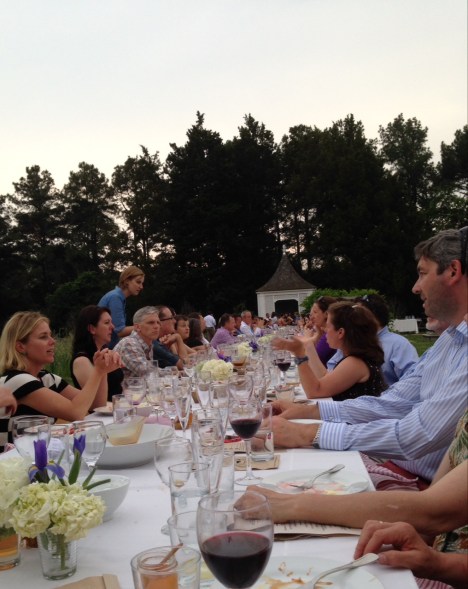
4. Quit eating crap! Eat less of everything else. Eleven months out of the year, I’ll follow this rule six days out of seven. Candice and I tend to find good options when we eat out – such as at the Arcadia Farm Field Dinner with Andrew last summer. When I fail, it is usually the french fries or ice cream that call out. Or the holidays for the entire month of December! I’m going to see a nutritionist early next year, who may have some strategies for staying out of the bad zone. Year-end result: Still work to do. I will repeat 50 times, “I do love brussels sprouts. I do love brussels sprouts.”
5. Play music. I am about on the same level of playing that I was a year ago. Given the hectic nature of 2014, that’s probably not too bad. Year-end result: I’m going to declare success…and work to find even more time to play and keep working on that alternating thumb pattern of picking.
6. Connect and commit. I’ve made serious efforts this year to keep this goal to reach beyond myself. Candice and I are seeing friends on a regular basis, and we’re getting ready to develop a monthly schedule for social outreach in 2015. Year-end result: Okay, but I can always improve, especially in helping those who are less fortunate.
7. Don’t be a Grumpy Old Man. Enjoy life! My boss laughed when she saw this one and promised to let me know if I was being a grumpy old man. She also said she saw no evidence of that so far! Anyone who has read More to Come… this year can see that I’ve had a lot of life to enjoy. Year-end result: Enjoyable!
As I said last year, feel free to call me when I come up short. Also, feel free to take one or more of these goals for your own and modify them as you wish. I’ll keep you posted…but let’s hope you start seeing more pictures of a smiling, slimmer DJB playing more music! Better yet, let’s hope you are with me, enjoying the food, music, wine, and company.
When posting while on travel, I’ll often string together several unrelated thoughts and title them Observations From the Road (see, for instance, the Jeez, Montana is a Big State edition from this summer.) So, I have two or three unrelated items that have been rattling around in my head while at home for the Christmas break, and have decided to title this post Observations from Home (The Year-End Edition).
Here are my observations – take ’em or leave ’em.
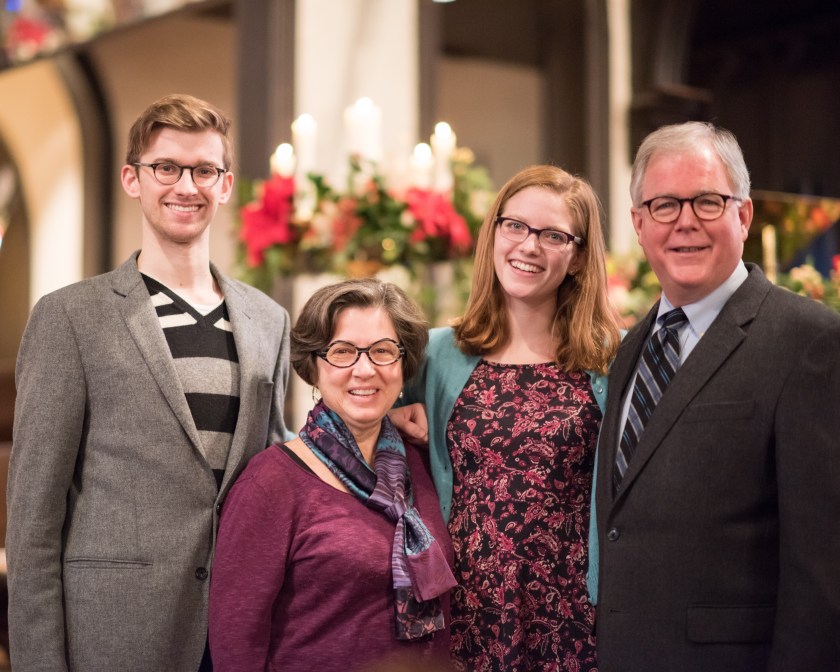
We would never have a family picture if it weren’t for John Thorne – When we were assembling our group of pictures for 2014, I commented to Candice that we didn’t have one that included all four of us. Then I realized that our friend John Thorne hadn’t been with us when he had his camera and all four of us were in the same room. Luckily (with three days to spare!) we now have our 2014 family photo. John came up to us at church this morning and asked if he could take a family photo. We quickly agreed. The best photos we’ve had of our family in recent years are due to John and his talent with the camera. You’ll see the results for 2014 at the top of the post.
John also took a great photo of the twins this morning, using his neat new filter to get those sparkling stars in the candles. I’ve noticed that John likes to try out his new toys, which I strongly support. (Keep buying those new lenses and cameras, John, we’ll be your willing subjects.) For our 2013 photo, it was the black and white look.
The first family photos John took for us…and the ones that made us hope he’d ask each year…were in 2012. Candice was bouncing back from her fall and concussion (not to mention a hip replacement) and we were thrilled to have a photo of the twins early in their college careers, with Candice on the road to recovery. Then we visited John and Sara at High Brewster in the fall of the year, and John captured two people who had been through a lot over the past twelve months…but were clearly pleased to be on the other side.
Thank you, John! What a gift you’ve given us during these past few years.
John’s photos also capture my weight gain, weight loss, weight gain… The careful observer will note that my weight ballooned up in 2012 (I used the stresses of being a serious care-giver as an excuse), then fell off in 2013, and then in 2014…well, you can see that I haven’t quite kept that New Year’s resolution from early this year. (More to come on that in a later post). I’m going to push for an odd year weight loss in 2015 – and one that I can maintain!
Candice is a pretty good photographer as well – On Christmas morning, the twins and I were just trying to stand upright and not spill our coffee. Candice, however, was on top of her game – including getting a photo of our stockings before we opened our gifts.
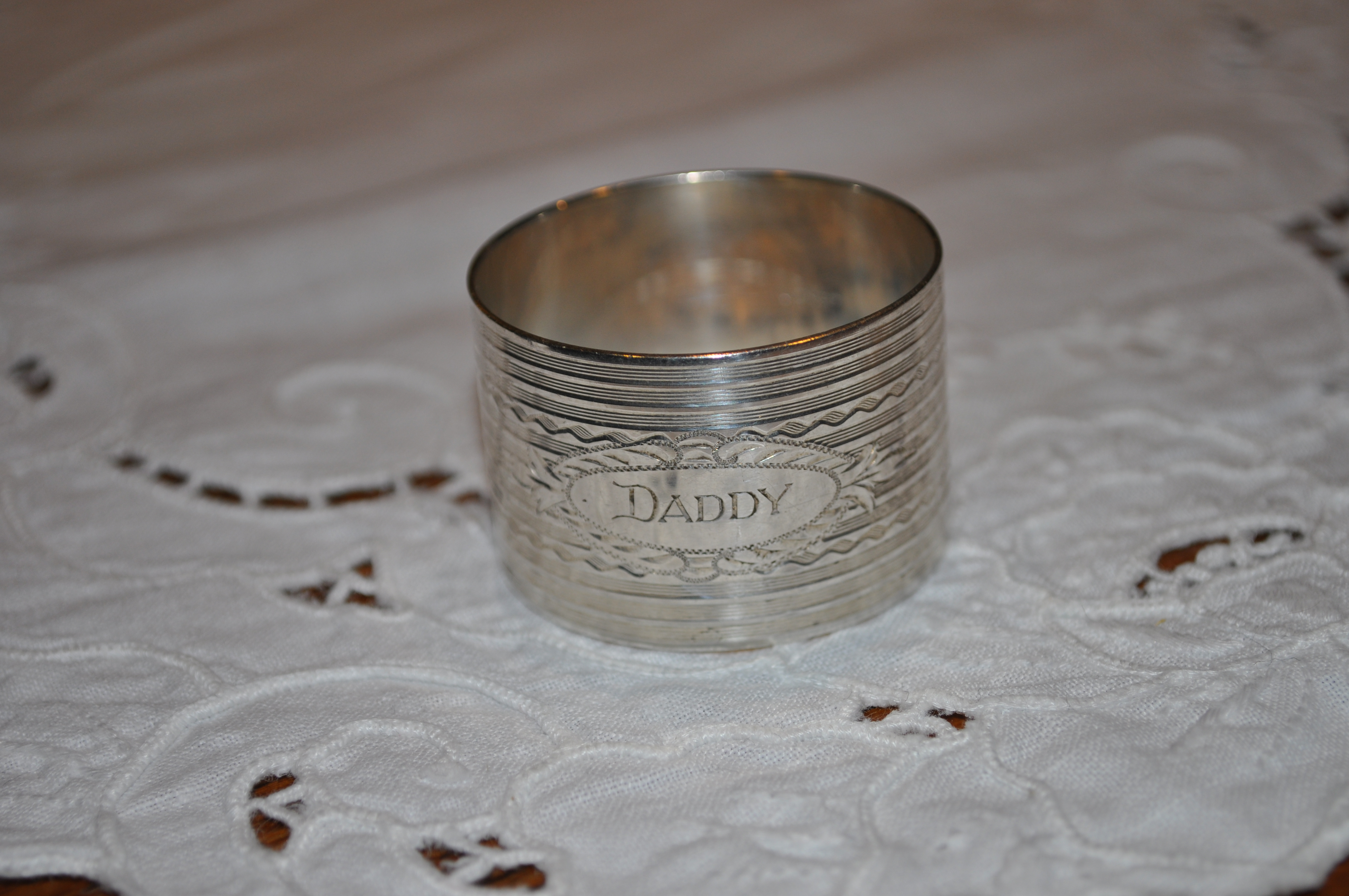
Best napkin ring ever – Candice started collecting antique silver napkin rings a few years ago, beginning with the one monogrammed I.A.H. that her mother took to school with her. (Hey, I have a modest collection of guitars, so she has a long way to go before we have to worry about the amount of money we have locked up in napkin rings!) Whenever a small box shows up via UPS, I don’t have to open it to know that she’s found a new treasure on e-Bay.
So I didn’t pay particular attention when I saw a new one around my napkin a few weeks ago. That is, I didn’t pay attention until Candice asked if I had looked at the inscription.
Oh my – the Daddy napkin ring. One that identifies the Paterfamilias! (Knowing that O Brother, Where Art Thou? is one of my two favorite movies, careful readers will know where the “I am the damn paterfamilias” quote comes from….others can watch the clip below, around the 2 minute mark.)
Early last week I received an email from a colleague that said, “Hi David. I wanted you to know that I am in your hometown of Murfreesboro tonight (for a work-related dinner)…What a wonderful place!”
She’s right about the last point. I’ve written about the wonders of growing up in Murfreesboro before on More to Come….
Rutherford County Courthouse in Murfreesboro, TN
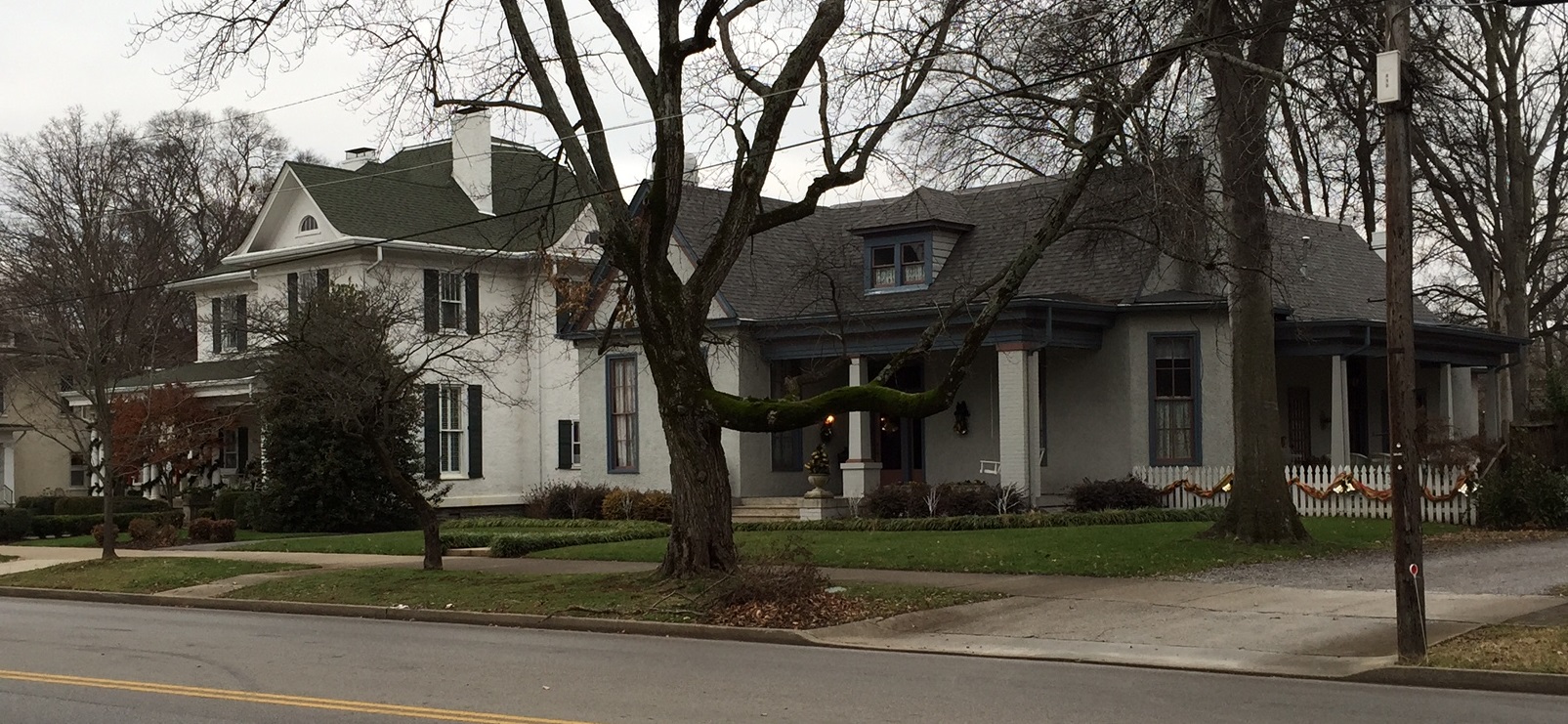
I suspect she had driven past the Rutherford County Courthouse all decked out for the Christmas holidays on the town square, and I suggested she drive by 407 E. Main Street to see “the old home place.” (Photo below – our old home is the one on the right.)
Little did I know that I’d be driving by those same sites in just a few days. But life has a way of intruding on the best-laid of plans. (So who cares if I haven’t bought the first Christmas present?)
On Thursday, my phone lit up at work as both my sister and brother called multiple times within about ten minutes and I feared something was wrong. I soon learned. My 89-year-old father was in the hospital after suffering shortness of breath – not something you want to hear about a loved one who had a heart attack three years ago in the same week that Candice had her hip replacement. He again had heart issues and anemia. I quickly made the call to fly to Tennessee for the weekend.
When I walked into St. Thomas Rutherford Hospital’s ICU unit, my father – surprised to see me – used a line that he told others who asked how he was doing.
“Well, this is certainly a revolting development!”
My sister Debbie posted that line on her Facebook page (the modern-day mother who keeps everyone up-to-date on the family goings-on). Various cousins responded that their parents or aunts or uncles had used the same language. Must be a hand-me-down through the Bearden-Brown family. I think I’ll use it myself in the future.
I’m glad I was able to come for multiple reasons. First, I’ve seen Daddy improve each day. The doctors say they will release him tomorrow and we’re making arrangements for his transition home. He did have some damage to his heart, but nothing that he can’t handle.
Secondly, my three siblings – Debbie, Carol, and Joe – were carrying the entire load of watching my father, being his advocate with the hospital, and trying to keep their own responsibilities during a very busy season. I was able to come and stay at the hospital for 12 hours on Saturday, and felt I was giving all these wonderful people a bit of a break. I don’t thank them – and my in-laws and nieces and nephews – enough for all they do for Daddy on a regular basis, much less when he has a health scare. This was a small way of saying thanks.
Then, I stayed at Dad’s house when I wasn’t at the hospital, which gave me some space to come down after hours at the hospital. While there, Candice sent a text asking me to “look around and see if you can find something he needs for Christmas.”
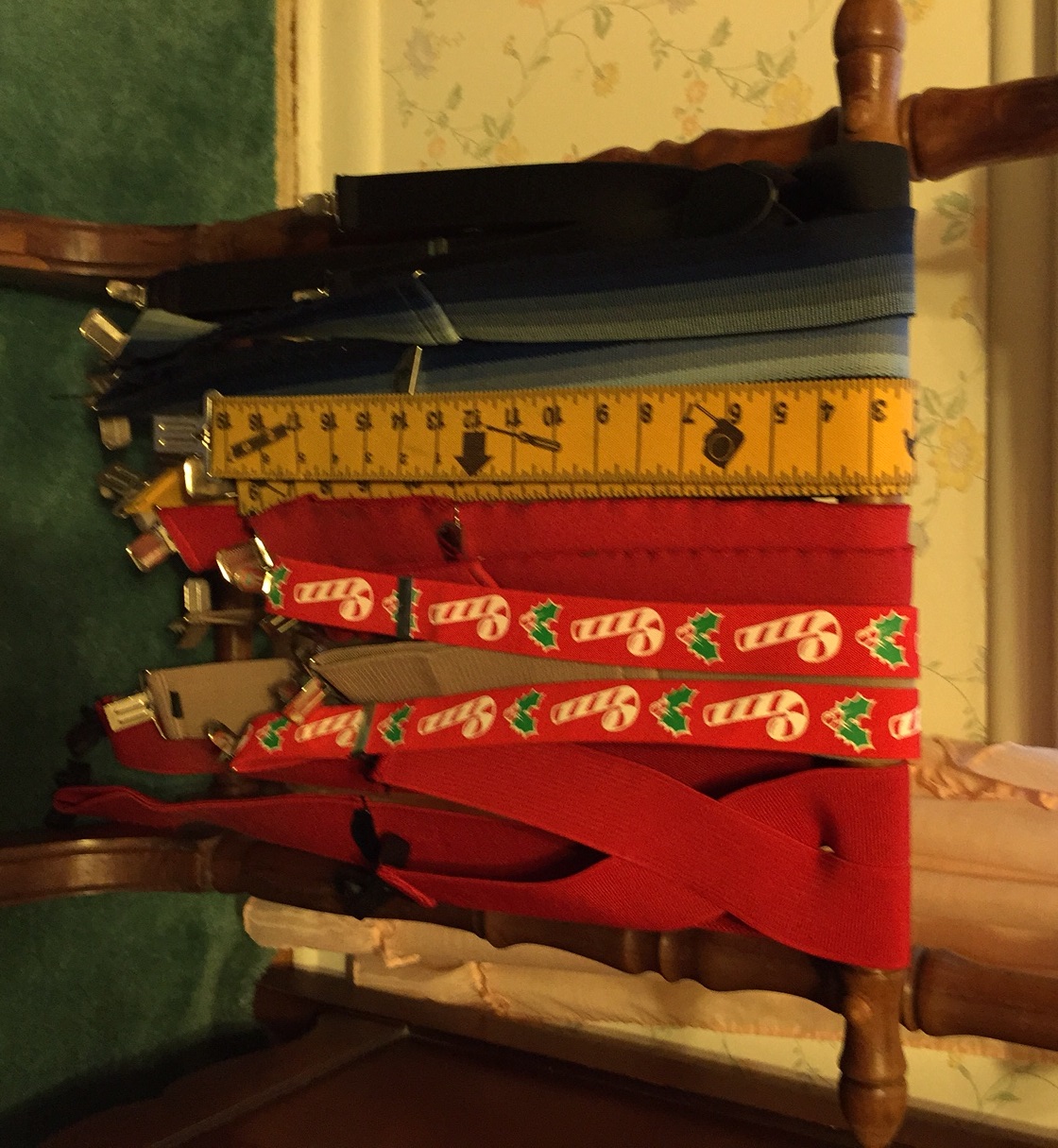
New suspenders? Nope.
Books? Well, maybe…he obviously enjoys them and he always reads what I send him. But this is just one room of books in his house. There are others.
I think we’ll have to keep working on that question.
Most importantly, I’m glad I came because I got to be with my father. He’s hard-of-hearing, so conversations tend to be short and loud, but this morning we pulled out our various newspapers and Daddy – the unreconstructed Southern liberal – came out.
We talked about the immigration debate after he read one of his favorite local columnists – Saritha Prabhu – in the Nashville Tennessean. He talked about how he was helping out a “working poor” family here in Murfreesboro, and we discussed the problems they are facing. When we talked about how corporations were driving so much of the agenda in America these days, he said, “I’d hate to be some of those people on the Judgment Day.”
Then we talked about my mother – the love of his life – in an unusual way. He was reading an article called Four Rules of Business You Can’t Afford to Forget, and he said, “This is Helen.” The rules?
Be on time, every time
Do what you say you will do
Finish what you start
Say, and mean, “Please” and “Thank You”
He said mother always pushed us to finish what we started. She wouldn’t let us drop something if we said we were going to do it. And she was adamant about saying “please” and “thank you.” In fact, when Daddy turned to Debbie yesterday and said to her, “Open this packet” I said, “Has ‘please’ dropped out of your vocabulary?” Debbie responded, “If mother was here he would certainly say ‘please’ more often!” At age 89 perhaps you get the occasional pass, but I was reminded of my rule “don’t be a grumpy old man.”
When the nurse came in this morning, she couldn’t remember the date to write on the board in his room. Daddy told her, “It is Pearl Harbor Day.” He then proceeded to tell us that he and his sister – my Aunt Mary Dixie – were at Peabody listening to a performance of Messiah. When they came out, they learned about the attack at Pearl Harbor and their lives were changed forever. Both were WWII veterans by the end of the decade.
I enjoyed sharing an article with Daddy that was in today’s New York Times as part of a series about why Giants and Jets fans should skip today’s football games (something I’ve done for the past year without missing a beat). Tom Coffey, a staff editor in the sports department, suggested that fans use the time to “remember.” I loved his last line:
Sunday afternoon seems like a good time to think about the sacrifices made by the men and women who died that day, and to reflect upon the wisdom of a statement that originated with Marv Levy, the longtime Buffalo Bills coach, that is still uttered in the sports world, albeit far too infrequently: No game is a must-win. World War II was a must-win.
While I never want my father to face additional heart issues and wind up in the hospital, there is so much for which to give thanks this weekend – especially for the supportive thoughts and prayers from family and friends.
More to come…
DJB
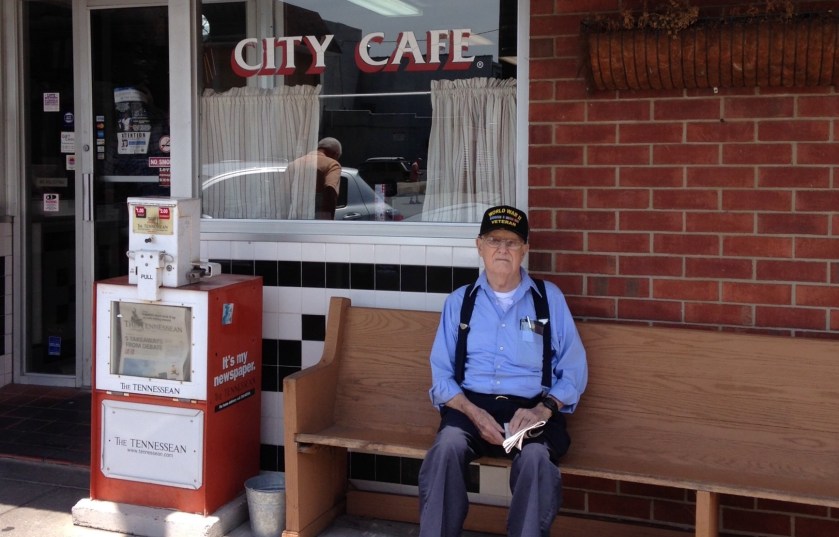
Image: Tom Brown in front of Murfreesboro’s City Cafe
Both Claire and Andrew studied abroad in 2014, so all four of us had the chance to travel to new places for new experiences. Candice and I celebrated our 32nd wedding anniversary (photo at the top of the post) while the family gathered in Copenhagen to visit Andrew during his studies abroad. We continued to enjoy good health and marvel that the two of us could remain so young and yet see the twins reach their 21st birthday! I’m not sure how that happened, but we loved celebrating with them last December as they came home for the Christmas break.
Andrew and Claire completed their junior years in college in 2014 and are now almost halfway through their senior year. We have visited both campuses this fall and hope to make it back one more time before their graduations in May. There is a lot to capture this year – from time with friends, to work and school activities, to family trips, and more. Because more and more folks are viewing this blog on smartphones, you can still see the captions by placing the cursor over the photos, but I’m adding some commentary along the way.
As regular readers know, I love to listen to live music. One of the many musicians I saw this year was a January show with the incredibly talented Claire Lynch at one of the Institute of Musical Traditions Monday night concerts. Candice captured the two of us during the break.
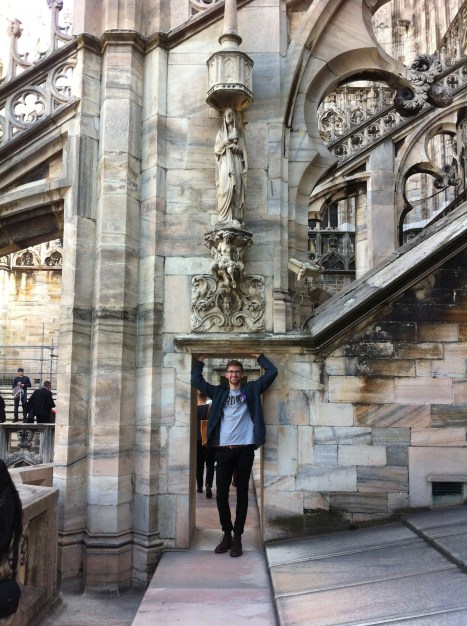
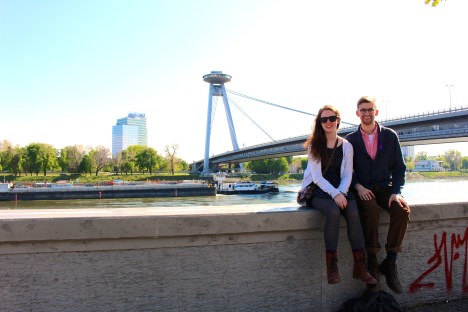
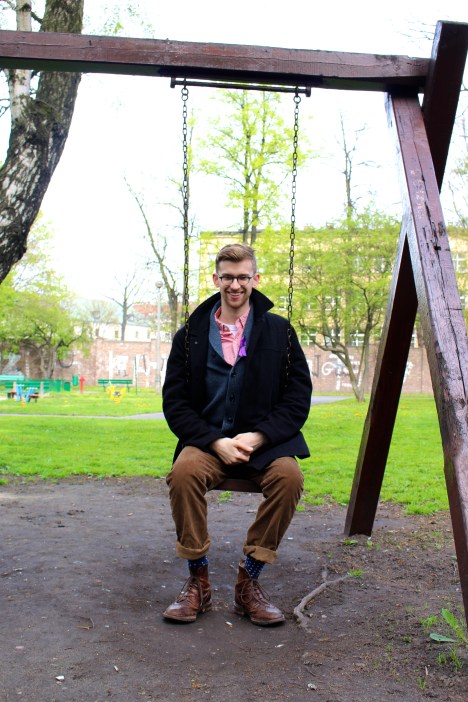
Andrew left in late January for his study abroad semester in Copenhagen. Over the course of the next few months, he visited a variety of European cities, including Milan, Bratislava, and Krakow, where he sent back lots of pictures of architecture, food, and good times with friends.
In March, Claire, Candice and I made our way to Copenhagen for a two-week Scandinavian adventure, taking advantage of Andrew’s time abroad to visit this fascinating place.
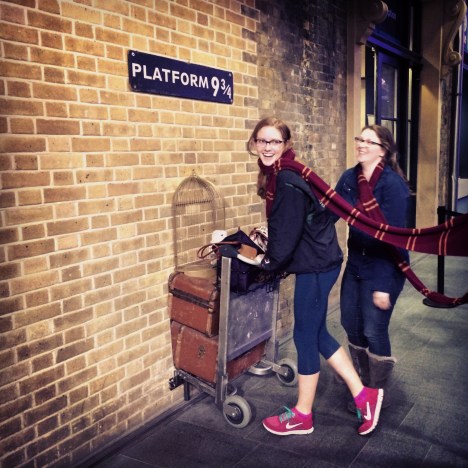
Claire stayed with us for the first week, but then took her first trip to England, where she saw the sites of London and more with college friends who were in the country.
While Claire and friends were exploring the English countryside, Andrew, Candice, and I made our way on to Stockholm, where we visited museums and cafes when not simply walking the streets of the old section of the city.
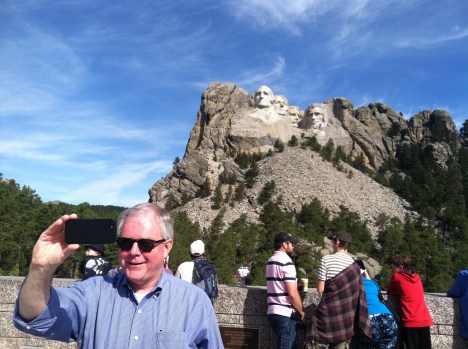
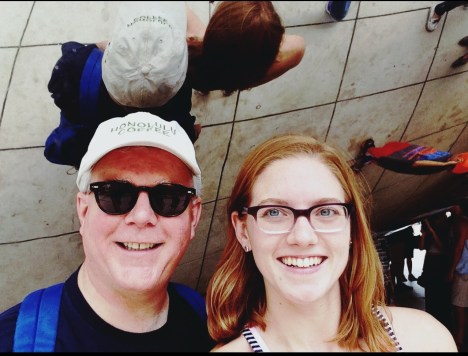
2014 wasn’t all travel and play! I am still working, but it just so happens that a great deal of what I do takes place on the road. I had a stretch in May when I found myself in Detroit, Texas, and Hawaii in the span of less than a week. In fact, from the middle of May to the middle of June I traveled to Detroit, Texas, Honolulu, Chicago and Plano (twice), Seattle, Louisville, New York City (twice), and Hot Springs, South Dakota. I am privileged to get to work on, and visit, incredible places. The opportunity to take a private tour of the U.S.S. Arizona Memorial in Pearl Harbor on Memorial Day Weekend was one of those once-in-a-lifetime moments. Of course, I occasionally do sillier things as well, such as take my first selfie at Mount Rushmore…which a colleague caught on camera.
In June, Claire left for six weeks study in Vienna. She had a wonderful time studying Psychology and German and exploring central Europe.
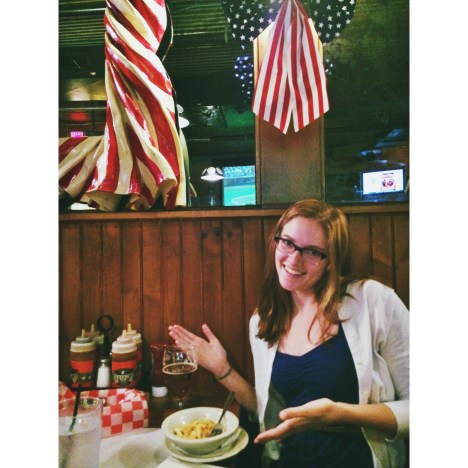
Claire returned home on July 4th, so we celebrated with an appropriate patriotic meal. Candice and I then headed to West Virginia to celebrate the 50th wedding anniversary of our dear friends, Katherine and Madison Brown, which also coincided with Madison’s 80th birthday. Katherine is Claire’s godmother, and it was great to be in Parkersburg to celebrate with them.
Claire’s summer on the road continued in July and August, as she first flew with Candice to Florida to see Grandmother Colando and the rest of Candice’s family. While there, they all enjoyed a Caribbean cruise.
Claire and Candice returned home just in time for Claire to pack for the cross-country car trip with me that we dubbed the Not All Who Wander Are Lost Tour.
While Claire and I were traveling cross-country, Candice and Andrew were exploring Washington on their bicycles, including a fun ride one day down to the Navy Yard to check out a new restaurant.
September, October, and November were months of baseball pennant races, more work travel for me (including a quick but enjoyable trip to Galicia, Spain), dinners with friends (and their dogs!) and trips to visit Andrew and Claire at college.
Claire won’t be with us this Thanksgiving, but you can see that she and her good friend Jason are in the…ahem…spirit.
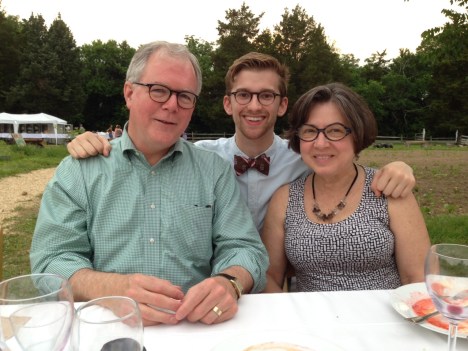
I can’t think of a nicer way to end our yearly review than with pictures of Candice and me with our two wonderful children from our recent campus visits – with Andrew at Providence’s WaterFire and with Claire during a night out with friends in the charming Claremont Village. We are so blessed.
As we enter this holiday season, Thanksgiving blessings to you and yours.
More to come…
DJB
Image: Candice and David celebrate their anniversary in Copenhagen.
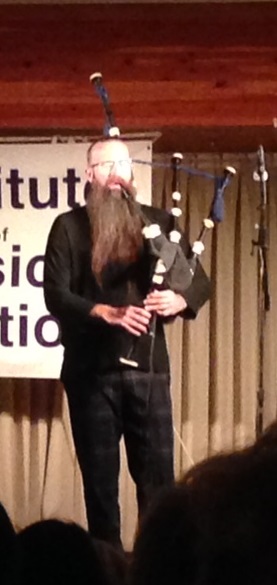
Monday evening’s Institute of Musical Traditions concert featured the Scottish folk music institution Battlefield Band playing to an enthusiastic full house. From the first notes from Mike Katz’s Highland pipes to the last notes of the encore, this thoroughly entertaining and professional group took the crowd on a delightful tour of traditional and contemporary Scottish folk music.
Battlefield Band has gone through a variety of personnel changes over the 40 years since the group was formed. Besides the bearded multi-instrumentalist Katz, the core of the current band features fiddler Alasdair White (who has been with the band since 2001, when he was 18 years old), and vocalist/guitarist Sean O’Donnell.
The band ripped through a strong first half which concluded with a “big set” of tunes featuring the pipes and twin fiddles. Then Katz came out solo to begin the second half, mesmerizing the crowd with the haunting sound of the pipes before being joined by his band mates.
Then, as O’Donnell began singing a song about bagpipes, everything went dark. As in, the power went out. No lights (except for the church hall’s emergency lighting), no sound system, nothing. And we soon learned that the power was out all along Old Georgetown Pike.
The band missed a beat for about 15 seconds, then Katz begin playing the pipes from the stage (he never used the sound system in any event), and the other members of the band began wandering through the crowd. Smartphone lights came on to provide lighting for the strolling musicians. And the magic began, as first a fiddle would pass by, then perhaps the guitar, then a tenor guitar, and back again. If you closed your eyes, you heard different lines rise and fall as the musicians walked past different sections of the hall.
This continued for at least 10 minutes, and then the lights returned. But the band stood at the front of the stage and played “acoustic music” for a while longer, perhaps captured by the magic they had just conjured up.
Live music is wonderful because of special, unexpected delights. This would have been a terrific concert without the power outage. With it, the evening became magical.
Enjoy Eight Men of Moidartfrom a recent Battlefield Band concert.
 Since our last report on our quest to see the Best Picture, Candice and I have seen three more of this year’s nominees. So let’s get to it.