Thomas W. Gilbert’s newest book examines the life and mysterious death of baseball’s first hero, a work I found at a cozy yet bustling independent bookshop in the heart of Bethesda.
Installment #5 in my series on the region’s independent bookshops.
As I was walking to the next stop in my 2026 quest to visit all 29 DC-area independent bookshops, I was pulled up short by a display in the store’s window. Although it was cold and gray in Washington the nation was celebrating Opening Day and the good folks at Wonderland Books had a large and enticing spread of baseball titles and paraphernalia to lure in this lifelong fan. It didn’t take much to draw me into this cozy bookshop in the heart of Bethesda where I found enough baseball books—both well-known and more obscure—alongside many other treasures to more than fill a summertime of reading.
The one I chose opened up baseball’s fascinating and often forgotten Amateur Era.
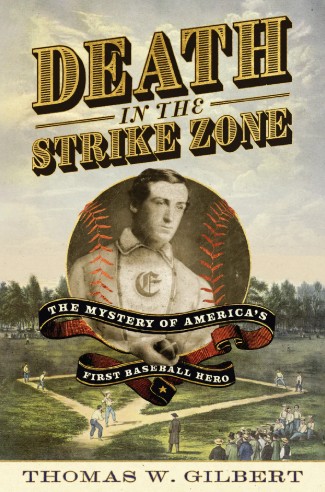
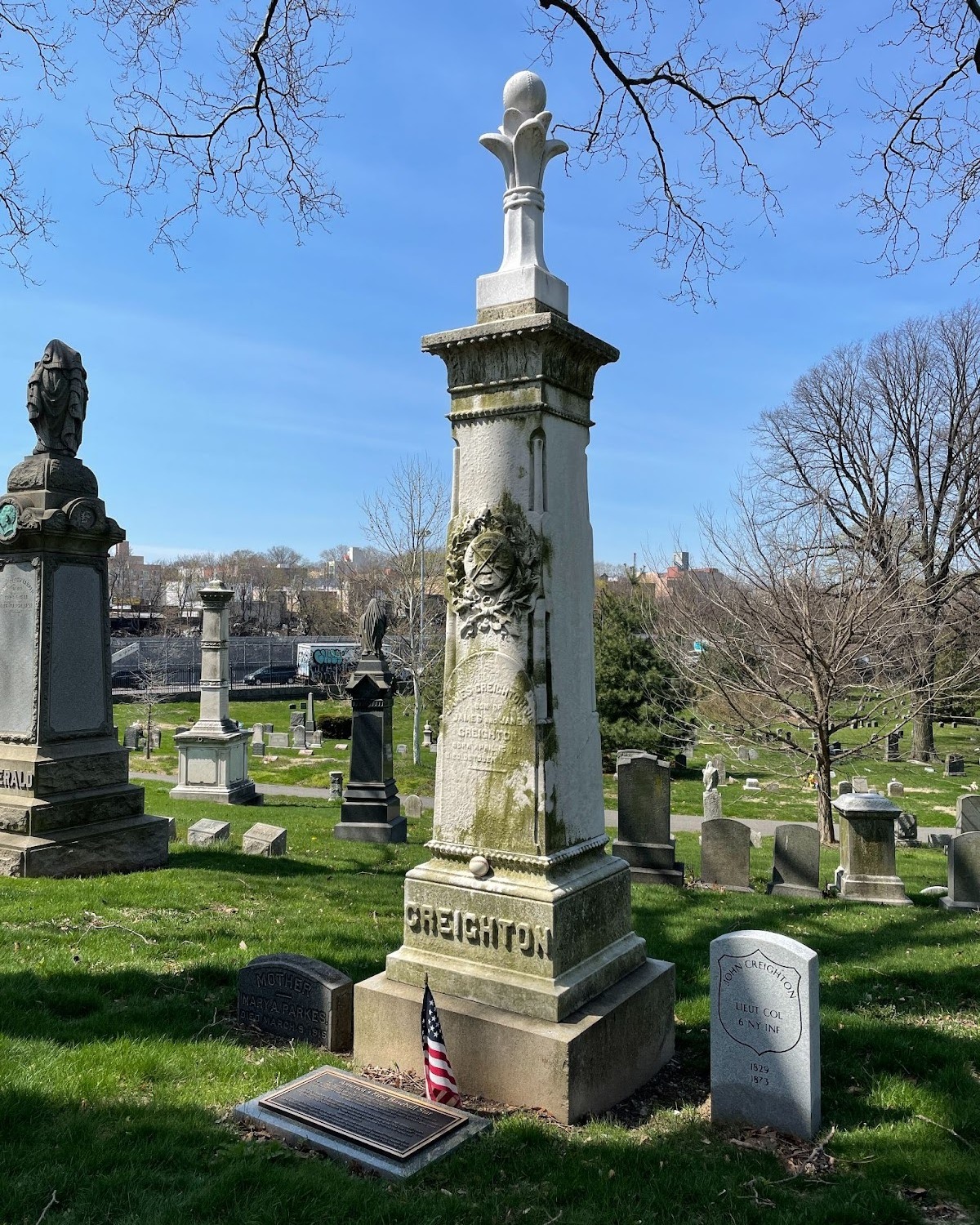
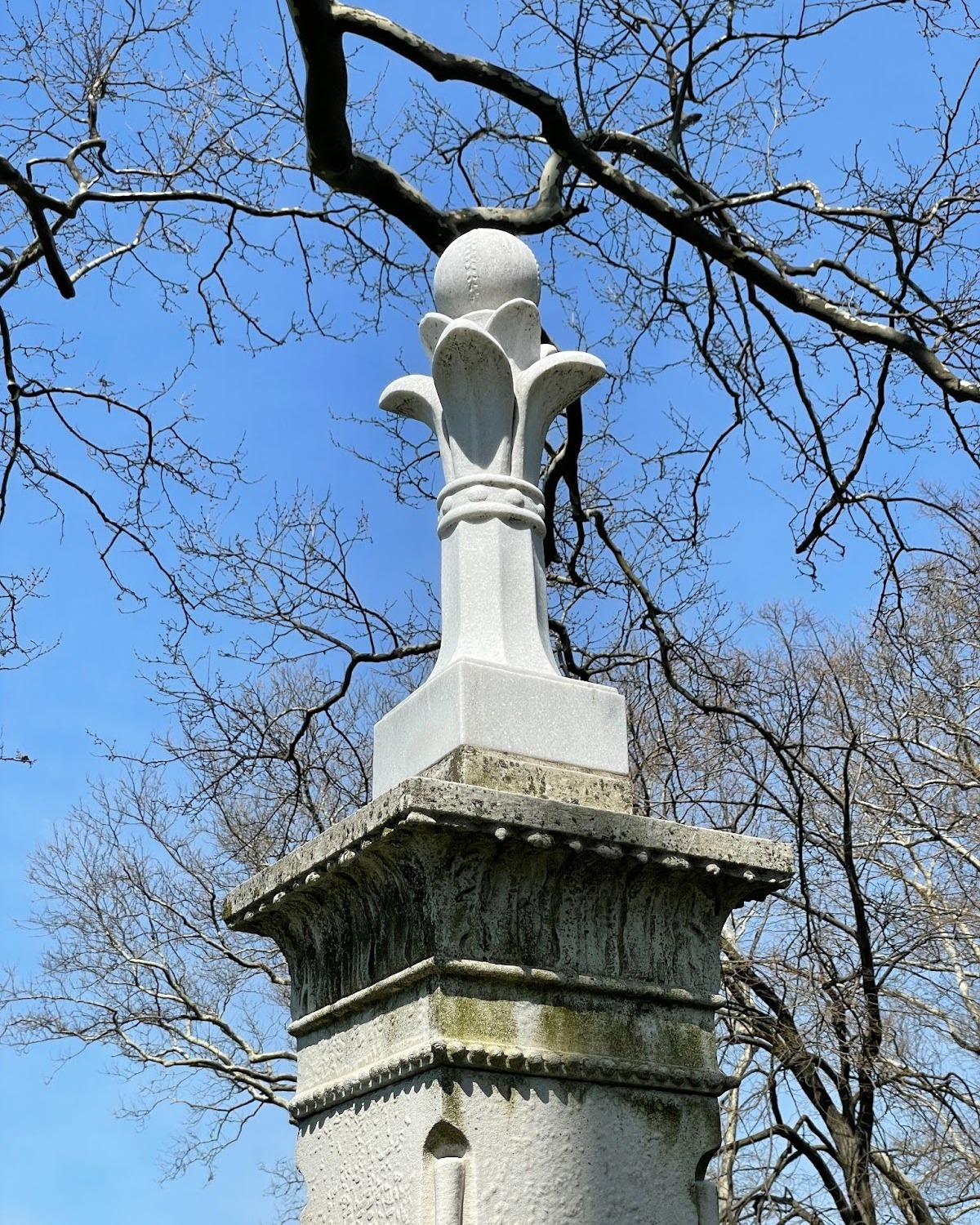
Death in the Strike Zone: The Mystery of America’s First Baseball Hero (2026) by Thomas W. Gilbert has been accurately described as “part biography, part detective story, and part time machine.” A baseball historian who has written extensively on the early years of the game, Gilbert brings to life the story of James Creighton, a young Brooklyn ballplayer who shot to prominence during the Amateur Era, forever changed how the game is played, and then mysteriously died at the young age of 21 after suffering an injury. The young phenom’s death shocked the sport and inspired the first grand baseball-themed monument, which can still be seen in Brooklyn’s Green-Wood Cemetery. Soon afterwards, however, the cause of death became shrouded in mystery and perhaps involved a cover-up by the era’s stewards of the game. As a result, Creighton’s singular role in changing the nation’s pastime was largely left out of baseball’s history.
In ten swiftly moving chapters Gilbert takes the reader through the origins of the game in the fields of New York and Brooklyn, establishment of Amateur Era clubs, the fluidity of rule changes, efforts to market baseball to the entire country, the effects of the Civil War on the game, and the move to the professionalism of the sport. Creighton, who invented something new for the game—modern pitching—played an oversized role in many of these events. He threw the first fastball and the first curve ball. Because of his prowess, baseball had to invent the strike zone. Gilbert argues convincingly that Creighton’s pitching style was entirely legal given the Amateur Era rules that required the “pitcher” of the day to throw the ball underhand to the batter without twisting the wrist. Yet his unorthodox style, which put significant pressure on an inguinal hernia or gap in the abdominal muscle wall, caused him to collapse in the middle of a contest and die just four days later. The story of how those who wanted to grow the game rushed to blame the death on cricket—which Creighton also played—and not baseball opens up an examination of the nativist roots of our national pastime.
Many Americans believe the myth that baseball was invented by Abner Doubleday in the rural fields of Cooperstown, New York. That was a story created by a commission established by American Nativists such as Albert Spalding to “prove” that the game was invented by Americans “and had no foreign origins.”
“Baseball the sport began as a reform movement. It shrewdly marketed itself to the Protestant middle classes, who disapproved of violence and gambling, as a clean alternative to the sleaziness of horseracing and boxing. Both to keep out corruption and to be seen as respectable, organized baseball originally felt it had to be amateur.”
But Creighton’s style of play was electrifying, bringing out large numbers of spectators, and turning the game from a participant sport to entertainment. Professionalism wasn’t far behind. “Less than a decade after the death of James Creighton, amateurs would no longer contend for national championships.”
Death in the Strike Zone is an enlightening read for fans and those who love history. And I can’t mention the book without a hat tip to the publisher, the Boston-based Godine Press. This is a beautiful, physically well-constructed book that shows the firm’s commitment to excellence. The chief buyer at one of Washington’s premier independent bookshops has written that “DRG continues to publish well made, often beautifully illustrated books every bookstore should be proud to carry on their shelves. Godine’s books are meant to last a lifetime.” It certainly was a fitting find in a small, independent bookshop that is also committed to a carefully curated selection of books tailored for the local community.


Wonderland Books was the fifth stop in my 2026 quest to visit all 29 DC-area independent bookstores. Wonderland is the creation of two women: a former award-winning journalist at The Washington Post and a lawyer and corporate communications strategist. Both have been lifelong readers who have written for decades about books and their authors. Those experiences come through in the choices of titles on the shelves and in the inviting setting for browsing and reading in the midst of Bethesda’s busy downtown.
The staff on the day of our visit was knowledgeable, eager to be of help, and attuned to their DC-based customers’ special interests. When I inquired about a new work that was just published, they noted it was on order and offered to hold a copy. They directed me to several areas when I asked about specific genres. And as I picked up this simple card with a request to Alexa, they laughed and said, “its our best seller!”

Of course I had to buy one!
I visited Wonderland with a friend who lives just a few minutes away. Yet like me Bob was discovering it for the first time. A retired television journalist, he also found a variety of selections to fit his taste at the shop. He has since exclaimed how much he enjoyed Kate Quinn’s historical novel The Huntress, which he picked up on our initial visit. I don’t think it will be his last.
More to come . . .
DJB
To read the first four installments describing my DC Independent Bookshop tour, visit:
- Bridge Street Books, Georgetown (see my review)
- Busboys and Poets, Multiple locations (see my review)
- People’s Book, Takoma Park (see my review)
- The Lantern, Georgetown (see my review)
Photos of James Creighton monument from Green-Wood Cemetery in Brooklyn. Wonderland Books exterior via Yelp.
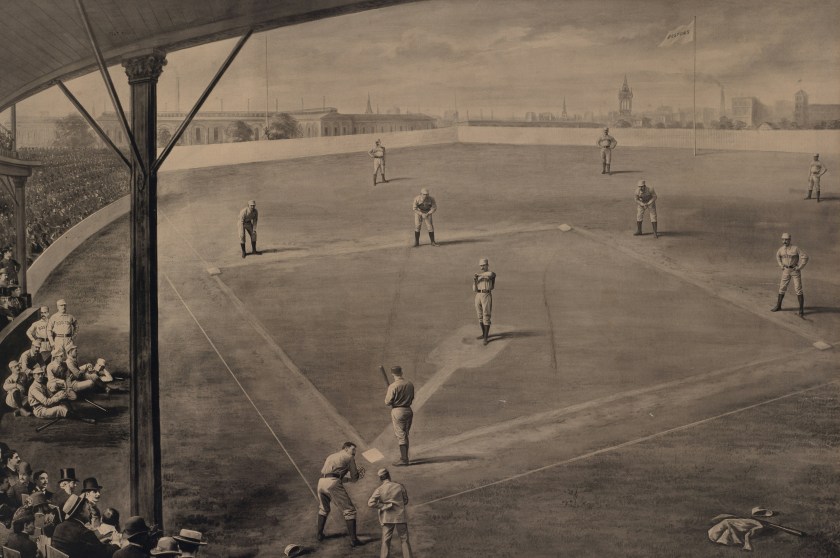
Depiction by George H. Hastings of an 1888 game at the South End Grounds between the Boston Nationals and the New York Giants. The artist used reproductions from original images to depict the players on the field, in foul ground, and some of the spectators. Photo by Boston Public Library on Unsplash.


Pingback: A celebration of independent bookstores | MORE TO COME...
Pingback: Observations from . . . April 2026 | MORE TO COME...
Pingback: From the bookshelf: April 2026 | MORE TO COME...
Pingback: The impossible sister | MORE TO COME...
Pingback: With one foot in fiction and the other in memoir | MORE TO COME...
Pingback: Reading challenges and independent bookshops: A mid-year update | MORE TO COME...
Pingback: One challenge down, two to go | MORE TO COME...
Pingback: Exploring DC’s independent bookshops: A Labor Day update | MORE TO COME...