…you are passing the peace during a Sunday service, and all of a sudden you find that two other parishioners around you also check the west coast baseball scores when they get up in the middle of a night for a bio break. (And no, I was not the person who started this conversation.)
…you curse the schedule makers who put so many of your team’s games on the west coast during a period when you’re trying to catch up on sleep.
…you turn to the sports pages (on your iPad, of course) to find the latest Tom Boswell column about – what else – pennant races.
…you want to call everyone you know to ask them if they saw Bryce Harper barely miss the “Hit it Here Cafe” target at Safeco Field on Sunday – a monster blast off the cafe windows.
…you curse the schedule makers who obviously gave the other team you are battling in your division (I’m looking at you, Atlanta) an easier September schedule just to make it tough on you.
…you are thrilled that because of extensive travel in the early part of the year, you have three home games in September in your season ticket group.
…you begin to wonder if you scheduled too much travel in October, not thinking about the consequences of your getting playoff game tickets as part of your season ticket group.
…you hope that the St. Louis Cardinals don’t make the playoffs. Then you wonder if the Nats have to go through St. Louis to exorcise their 2012 demons. Then you stop thinking.
…you fret about whether Ryan Zimmerman can return in time to get his timing back, and whether his insertion into the lineup will disrupt what has become a pretty efficient team.
…you actually begin to think you’d like the DH in the National League, so the Nats could put Zimmerman there most nights. (NO! Banish the thought! It isn’t real baseball.)
…you wake up thinking about which pitcher you would drop to get to a four-man rotation for the playoffs. (See previous note about Gio and you go back to sleep pretty quickly.)
…you worry that you’ll jinx your team by thinking about a four-man rotation for the playoffs, the St. Louis Cardinals, and other teams this early in September.
…basically, you worry about everything. As Boswell says today of the Nationals and Orioles:
…losing your mind, screaming and booing, sacrificing sleep to watch West Coast games, second-guessing managers and consulting oracles — all the manifestations of late-season baseball insanity as the Sept. 1 bell-lap arrives — that’s not a player’s task. That’s our job. So let’s get started.
Today I spent about two hours on an errand. In a car. After driving 4,590 miles in August, I’m not looking for more time behind the wheel. Plus, it was an errand that should not have been required. The fact that I had to take the time to do it was affecting my blood pressure.
Then, out of the blue, I found out why I was in that car today.
In driving down into Virginia by myself, I put my trusty playlist on the car system to become immersed in the music. Soon came a voice that I could listen to sing the phone book. But today his song was much more profound than the yellow pages.
Time is a river with no riverside Space a sea that has no tide I can’t get across, no it’s too wide If you have loved then you have cried
And then the second verse:
We are dust that was made in stars Now we roll off to work in cars When we were young we spilled our dreams in bars Now we clean up the mess
There I was…cleaning up the mess.
John Gorka is a wonderful writer with a beautiful and soulful baritone voice. He’s been on the folk circuit forever, it seems, but his following is still small (when you consider that Lady Gaga gets 79 million views on a video).
His tune Riverside is on the 2003 album Old Futures Gone, and by the time the song ended, my attitude had significantly adjusted.
A little bit of thought can make a lot of sense And every little day can make a difference Yes I’m speaking in the present tense Where my faults and seams wear through
And yes, sometimes it does take a lot to get through to me.
I can be more than, than a little dense You’re gonna get splinters if you ride that fence I do like the way the river bends When it flows back to you
We called it gravy, never called it sauce Better learn something if love gets lost How hard the hurt, how high the cost How all the smooth goes to rough
Time is a river with no riverside Space a sea that has no tide I can’t get across, no it’s too wide If you have loved then you have cried
We all make mistakes. We all have loved ones who have made mistakes. And while we may think we know what’s best, everyone has to make their personal choices. And yes, some of those will cause us to cry. I appreciate Gorka’s help in pointing that out to me today.
So that you can hear the voice as well as read the lyrics, I’ve embedded a video of Riverside. Enjoy the tune and enjoy the ride.
During August, I’ve seen four major league games in four different cities and was able to cheer four home teams to wins.
For the Nationals, they are on a ten game winning streak. Five of the last six have been by walk-offs.
Last evening those two streaks converged.
Candice and I had tickets for Thursday’s late-afternoon game between the Nationals and Arizona. The Nats came into the contest having won 9 in a row, including a terrific walk-off win the night before. We arrived early enough to pick up our Ian Desmond bobble-heads (Desmond is the one to the right of catcher Wilson Ramos in the photo at the top of the post) and with great anticipation for another magical evening.
But while picking up the Desmond bobble-head was easy enough, the Nats needed someone to pick up their offense. They hit well enough – until a runner touched second base. Then the Diamondback pitchers all turned into Cy Young. Twice the Nats left the bases loaded, for crying out loud.
With one out, Denard Span – who is finally playing like the complete baseball player we all hoped he would be after we sent Michael Morse to Seattle – got a solid single, keeping that .300 batting average on the rise. With Anthony Rendon at the plate – the guy who won the previous night’s game with a walk-off hit – Span stole second to get into scoring position. It was absolutely the right move at the right time, keeping the pressure on the Diamondbacks. And they crumbled under the pressure.
Rendon hit a sharp grounder to third baseman Jordan Pacheco, who threw the ball past first baseman Mark Trumbo, allowing Span to score the winning run.
As usual, Tom Boswell has the best advice for Nats fans:
Pay attention. This doesn’t happen every decade, even every generation. Wherever you sit during Washington Nationals games, on your favorite couch in front of the TV or in the bleachers on South Capitol Street, don’t change seats. Eat the same pregame meal. Lucky charms — don’t lose ’em. How far can this thing go?
Nothing in baseball is more pure summer fun, mixed with just enough tension to be deliciously fretful, than a long winning streak.
Nothing, indeed – unless it is mixing that streak with a bucket list road trip and seeing baseball in four wonderful stadiums (Cleveland, Minneapolis, San Francisco, and Washington) with your daughter and wife.
As the signs at AT&T Park in San Francisco demonstrate, baseball is a game for memories. And this has been a great month for making more baseball memories.
Tuesday, August 19th (and day #19) – is the last one of the cross-country Not All Who Wander Are Lost tour. Later this morning I’ll be flying home. I can’t wait to see Candice and Andrew (who leaves for his senior year in college on Friday morning).
But I also want to put a wrap on the wonderful two-and-a-half weeks Claire and I had on our exploration of this amazing country we live in. It has been an experience I’ll never forget.
I’ve had several parts of this series where I’ve thrown together random thoughts that I’ve entitled Observations from the Road. For those who want to see them in order, you can find them here as:
So this grouping of random thoughts wraps up the Observations From the Road posts as well as the series on our cross-country tour. I’ve entitled it The Thankfulness Edition, for we could not have driven 4,590 miles and passed through 13 states without the help of many friends, family members, work colleagues, college acquaintances of Claire’s, and strangers. I’ll miss some who should be thanked, but I hope to capture the vast majority. And I have book-ended this post with the first (above) and final picture taken on our trip.
The first person who made this all possible was Candice – When I mentioned several years ago I wanted to drive cross-country, Candice never made anything but supportive comments along the way. When I asked if she wanted to join us, she said, “I’ve driven cross-country before, and once was enough.” However, she could see the excitement building in Claire and me as we began to plan out our route and get closer to departure, and then she became our #1 cheerleader along the way. Since I’ve left Facebook, Candice regularly allows me to posts items I put on More to Come…. With this trip, she took on the responsibility of seeing that the posts were up as soon as possible after I wrote them, and she talked up our trip with friends at church, family members, and others she saw over the past couple of weeks.
The other thing that made this trip possible is that our family financial planner (again, that would be Candice) never once questioned the cost of the trip…even as the Visa bills kept coming in and a certain rental car company (Enterprise) didn’t honor their quoted rate for a one-way rental and drove us to another company that treated us fairly…but at a cost than was higher than my initial estimate. Early on she said, “This is a trip of a lifetime for you and Claire, and I don’t want you to worry about money.” This means a great deal to me, as I count on Candice to keep our family budget in line. She simply said, “We can do it” and that was the end of the conversation.
Thanks to those who made suggestions – Sometime about 2-3 months ago, I sent around a sketchy itinerary to some family, friends, and colleagues and asked them for thoughts on things we should see. And did they ever respond! So many of the great places we visited came about as a result of suggestions. Then, once we got into the trip, others emailed additional suggestions, and we took them up on a few of those as well. So – at the very real chance of leaving someone out – I want to thank these terrific itinerary planners: Kathleen and Herb Crowther (for the Cleveland area); Susan Morse (for her Chicago recommendations); Genell Scheurell, Janet Hustrand, and Oakley Pearson (for several thoughts in the Midwest and Great Plans – with Oakley getting special points for the “Ball of Twine” recommendation); Liz Welsh McGonagle (for the Minneapolis thoughts and for making the Twins game happen); Barb Pahl (for numerous route suggestions and individual place recommendations in the Great Plains and Mountain regions – with special points for pushing us to go way north and visit Glacier); Jeff Grip (who made our magical day at Taliesin possible); Mark Huppert, Kevin Daniels, and Anthony Veerkamp (for a host of suggestions in Seattle, San Francisco, and all along the west coast); Constance Beaumont (for the Portland tour and especially for the Astoria suggestion); Sheri Freemuth (for Idaho and eastern Washington thoughts); Jenny Buddenborg (who suggested – among other things – the fantastic University of Mary in Bismarck and then helped make arrangements for a tour); and Jackie Tran (who passed along suggestions in San Francisco). If I have forgotten others, please forgive me. Kyra Stone made great food suggestions in Madison (which led to an immediate weight gain of five pounds on my part). And – as I’ve mentioned numerous times – a big thank you to those who comment on Yelp! We couldn’t have eaten so well without you!
Thanks to our Hosts – Just when we thought we couldn’t take another hotel room, one of our friends or family members offered up a place to stay. We got three of them in photos – Kathleen Crowther (husband Herb was taking the photo) in Cleveland; Claire’s Aunt Susan and Cousin Zoe in Chicago; Bruce and Shari Shull in Gig Harbor, Washington; and Constance Beaumont in Portland, Oregon. Somehow, we were having so much fun with Constance that we forgot to get a picture! Nonetheless, thanks to all of these wonderful people. Claire and I loved seeing you and getting to know you better. It was a true highlight of our trip.
Thanks to the Readers of More to Come… – Every day I would hear through comments on the blog, emails I received, or from comments Candice and Claire were receiving on Facebook and Instagram, about how many people were reading – and apparently enjoying – these updates on our progress. Your kindness spurred me to try to capture the true wonder and fun of our adventure. A special thanks to Janet Hulstrand – who is a wonderful writer. Janet would send along comments and suggestions for places to visit, she encouraged her twitter followers to read the series, and she would simply “like” virtually every post that came up during the trip. Janet’s praise is high praise in my book. In addition to Janet (who has followed the blog for years), I had some 5 or more new bloggers begin following More to Come… after reading a post or two in this series. Finally, it was great today to have virtually everyone who came up to give Claire a hug on campus say something along the lines of “I’ve been following your road trip and it sounds amazing!” The fact that a couple of Claire’s friends even characterized the old man as “awesome” was just icing on the cake!
I’m thankful for this amazing country – I’ve written about the plains, mountains, valleys, coast lines, Great Lakes…you name it…so I won’t go into any of that again. But to look at our landscape day after day, as it changes going east to west and then north to south, is an incredible experience. I saw so many places and things I had never seen before. Every mountain range we crossed was unique and breathtaking. Our rivers, lakes, and oceans are incredible. And – unfortunately – we have destroyed much of what is wonderful about our landscapes through horrible development decisions, greed, commercialized farming (have you ever seen a commercial livestock feed lot – you’ll never eat McDonalds again), extraction of oil and gas, and the list goes on and on. I’m thankful I had a chance to see it in this condition, and I’m thankful that the mellennials of Claire and Andrew’s generation appear to be bent on trying to undo our destruction. Let’s hope they have enough time and political will to succeed.
I’m thankful for how taking things off a bucket list leads to new thoughts on adventures – Claire and I talked about bucket lists on several occasions. Claire decided that the 47 Things to Do While You are At Pomona would be a good start to a bucket list, and I agreed. Then, we started talking about all the states we had visited: 13 on this trip (11 of which were new to Claire). That got us to thinking about how many states in general we had visited, and the number was 48 for me and 34 for Claire. So guess what’s now on our respective bucket lists? And we decided while unpacking today that our next road trip would begin in Alaska – which is one of the two states I’m missing. (Nevada is the other.) I love a sense of exploration so early in life.
Finally, I am eternally grateful to Claire – I would be hard-pressed to come up with a better traveling companion. If you have to spend 18 days in a car with someone, it had better be someone who is intelligent, quick-witted, funny, thoughtful, inquisitive, curious, flexible, and loving…and I could throw in a dozen or more descriptors except that her face will already be turning red. It also helps that she’s a good driver and likes to try any local IPA that the bartender suggests! (Those two things do not happen at the same time.) We had some serious talks along the way, as Claire was dealing with a couple of issues that she’ll be facing her senior year in college. Not once did she speak ill of anyone or try to blame others for her situation. Instead, she always looks for the good, and then builds off that perspective. This doesn’t mean she is naive – far from it. But she has an inherently positive and expectant outlook on life. I wish I could capture a small piece of that perspective to use in my dealings with others, as I would be a far better person.
Claire is not one to judge. I know she wants to help me with my (over) eating and exercise, but her way of talking about it is only supportive and loving. When I think of how she made the decision in high school to only eat healthy food and to become physically fit, I marvel at her discipline. But she doesn’t push her way of living or point of view on her father, her family, or her friends.
Claire is open to what she can learn from others. We shared “playlist” time from our various iPhones during the majority of the trip, and not once – even after 10 bluegrass songs in a row – did she reach for her ear-buds. Imagine that – a 21-year old going 18 days in a car with her father without once tuning him out with the old ear-buds trick. It is my experience that this is almost earth-shattering in its precedence!
So I’ll end by quoting myself – in the Central Time edition of Observations from the Road:
Claire is a wonderful, sensitive, and thoughtful individual – which, of course, I knew in the Eastern time zone before I left on this trip. But I just wanted to say it again today. She is one in a million.
I know that every father thinks that about his daughter. I’m just glad that I had the past two-and-a-half weeks to confirm it – once again – about my daughter. I’ve loved every second with Claire and I’ll never forget these memories.
More to come…
DJB
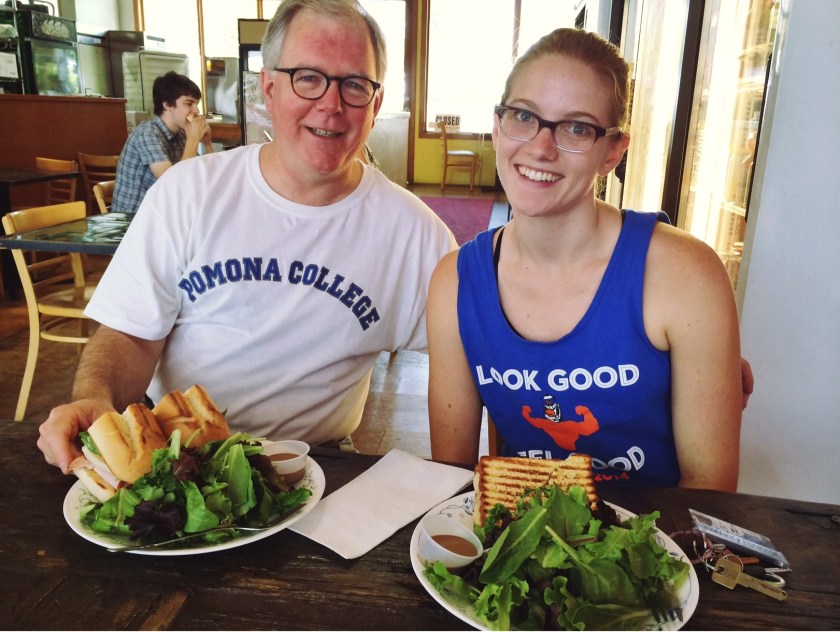
Image: Claire and DJB chowing down in Claremont at the end of our tour.
I have to admit – of all the planning I did for our cross-country tour, I had not given much thought to how emotional Day 18 of our Not All Who Wander Are Lost tour would be. But Candice seemed to know, when she sent a text this morning that indicated we should “guard our hearts as you step out of this special time together.” Claire, of course, just said, “Dad, you’re not going to cry are you?” Well, of course I am.
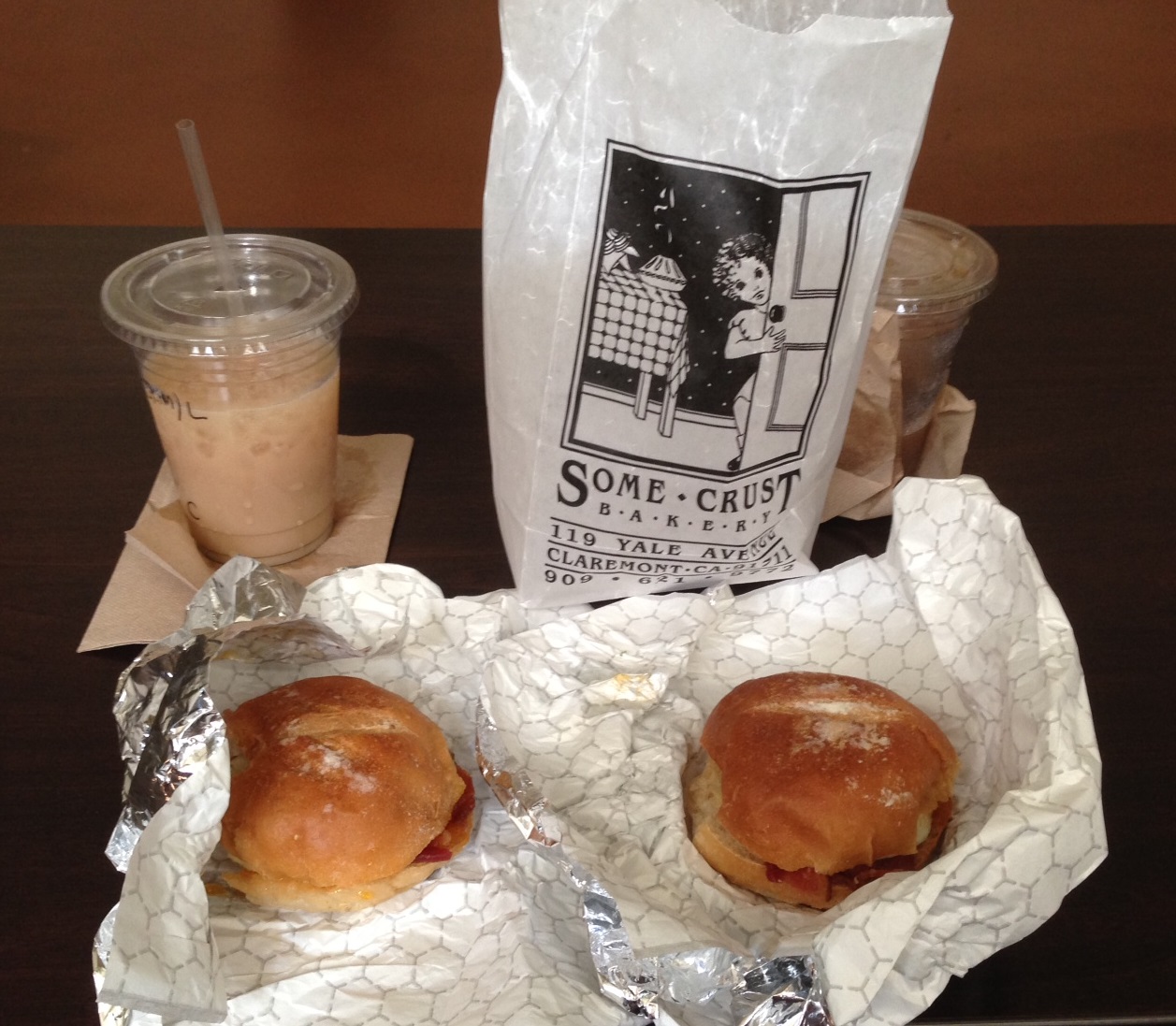
Claire said she felt she was “back home in Claremont” when we went to Eureka Burger last evening for dinner. I felt that way when we picked up our sliders at Some Crust Bakery for breakfast. I can’t tell folks on the east coast how wonderful Some Crust is…but you just have to take my word for it. And Claremont is one special little village. We fell in love with it the minute Claire visited Pomona, and we take every opportunity to come to this magical part of Southern California. Some Crust is one of about ten places our family visits on every trip to see Claire at college. Union on Yale, where I’m having dinner tonight, is another. When she graduates next spring, we’ll have to make up reasons to come back here.
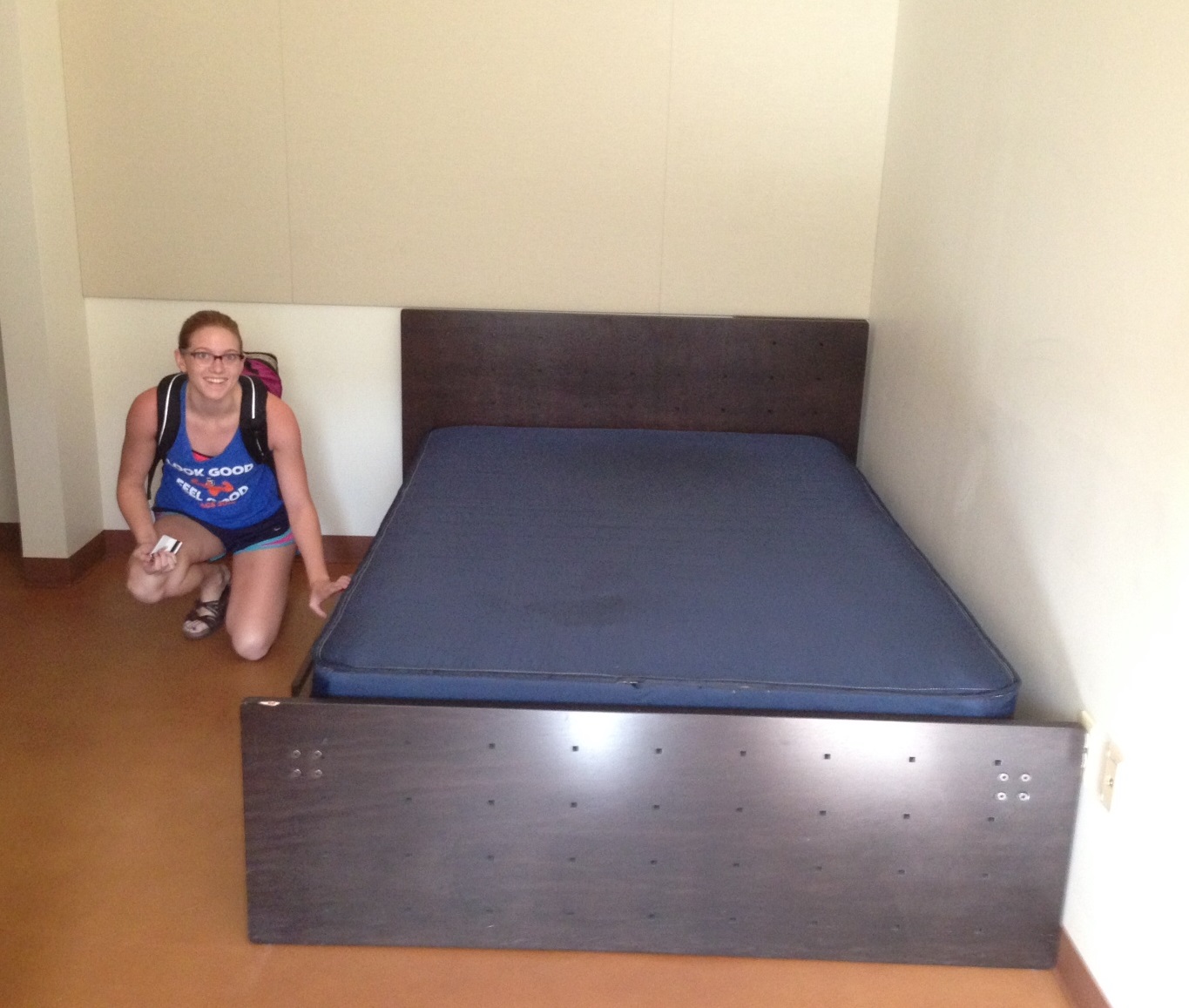
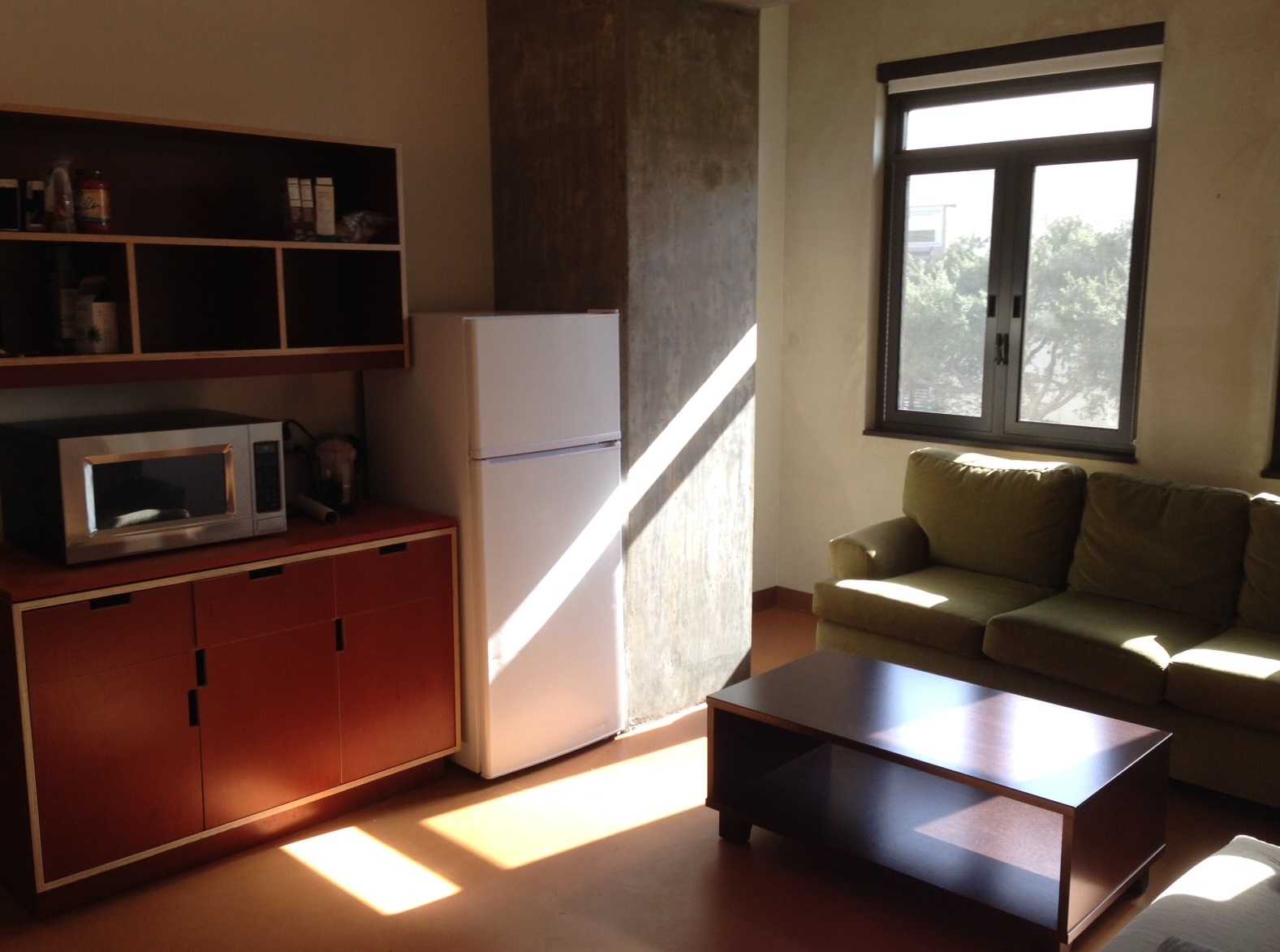
The morning was spent getting the key to Claire’s dorm room, checking out the new digs, and bringing up boxes from storage. The two photos above show her new bed (a double – finally!) and the common room in her four room suite. The senior dorms are only 4 years old, and they are fantastic. Back in the day (when we had to walk through a foot of snow to get to school) we certainly didn’t have anything this plush. I told Claire and a friend that they shouldn’t get use to this…it is probably the best housing they will have for the next ten years.
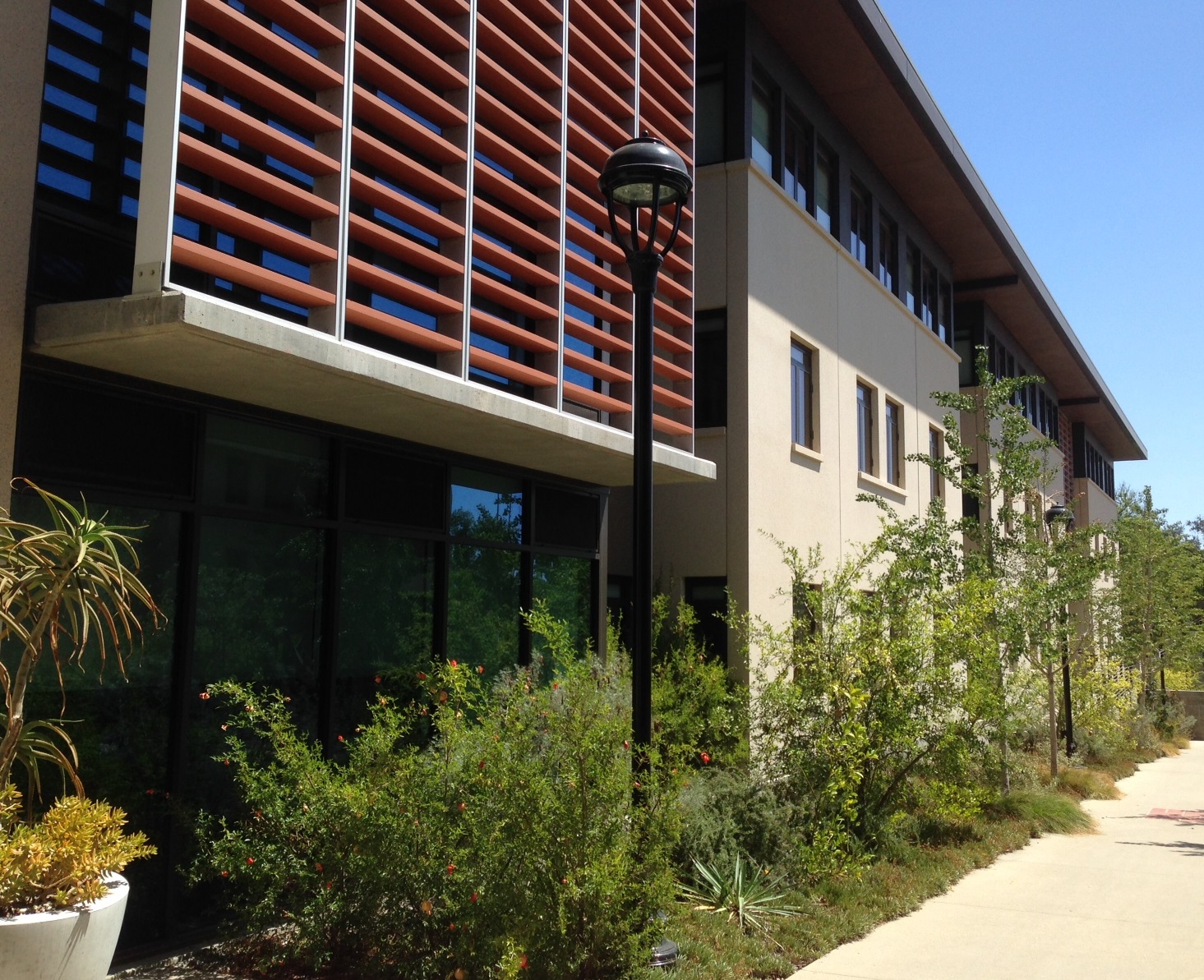
The exterior (above) is pretty terrific as well. This is a “green” dorm, full of environmentally sensitive elements. I think it is just about right for my Claire’s senior year at school!
The contrast with moving in three years ago couldn’t be wider. Then, all four of us were here feeling our way as freshmen parents (as well as freshmen twins). We were racing around buying this and that, trying to locate the key buildings on campus, and generally attempting not to act like we were completely clueless (at least in front of Claire). This time, Claire and I took the items we had brought cross-country up to her room (in about two trips) and then drove over to the storage bin to pick up a few other boxes, which we quickly dispatched into her new room as well. Then we stopped by to say hello to the swim team coach, we watched the football team running laps in 95 degree heat (waving to an ex-boyfriend in the process), picked up a friend to join us for lunch, and dropped off Claire’s bike for its yearly tune-up. At noon we were settled into Full of Life (another village favorite) for our sandwiches and a final tour lunch (which we captured in the photo at the top of the post). Afterwards, we helped another friend move some boxes (a car is a valuable commodity this time of year on campus), stopped by a local store to buy me a new pair of flip-flops (since my old ones blew out on this trip), and found some local craft beer for the fridge.
In the midst of all this, Claire made some progress on unpacking, and making her new dorm room a home.
Then came the time I’d been dreading. It was clear that I wasn’t needed at this point, and that Claire was ready to focus on getting her room together before her meeting tonight with the other orientation counselors. (They are called OA’s, but I can’t recall what the A stands for.) Our cross-country adventure really was ending. Yesterday, Rosanne Cash’s version of Miss the Mississippi and You came up as we neared Claremont, and I told Clare that I would miss her. She said, “Really?” (How can you not love someone who doesn’t even realize how wonderful she is?) I said, “Really. You wear well as a traveling companion.”
Today we hugged, laughed, I cried, and left.
It was fantastic, my love. Have a wonderful senior year. See you later this fall.
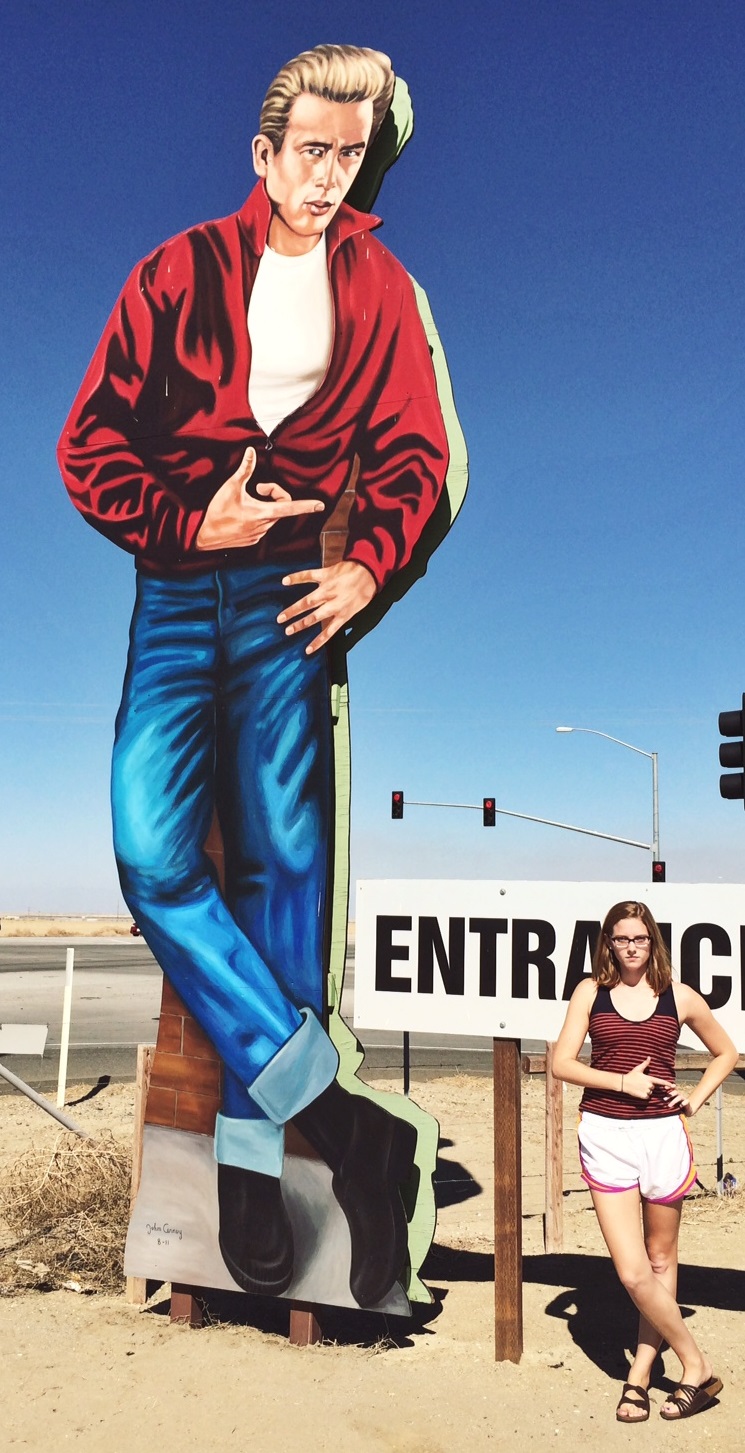
We made it! And unlike James Dean we didn’t have any Highway 46 crack-ups.
Claire and I completed the driving part of our cross-country tour (both the width and the length portions) on Sunday – the 17th day of our journey – when we pulled into Claremont around 7:30 local time. We’ve put approximately 4,500 miles on the rental car and have been through 13 states.
I’ll write more about this segment of our travels later, but I did want to capture one bit of Americana from Sunday’s drive. As we were tooling down California Highway 46 between Paso Robles and Lost Hills, we passed The James Dean Memorial Junction. Hmmm, I thought, I wonder if this is where James Dean died in his car crash. Sure enough, a couple of miles down the road we came to a store and gas station with a huge likeness of the famous 1950s actor pointing to the entrance.
The Atlas Obscura (who knew such a thing existed), provides this background for the junction:
The California junction of Highways 41 and 46 would be simply another remote road crossing had it not been for the 1955 accident which led to the death of Actor James Dean, idol to millions of moviegoers.
This junction was the epicenter for a shock that reverberated around the world when Dean and his personal mechanic Rolf Wutherich were involved in a head-on collision that killed both men. Given Dean’s astronomical fame at the time of the crash, the actor’s death became national news, a rare occurrence at the time for a single car crash. The tragedy even spurred California planners to reroute the junction so that the road was safer.
The new, safer junction is now called the “James Dean Memorial Junction” and bears a sign with the name. The sign still sees visitors from around the world who come to pay tribute to the young performer, often leaving ribbons or small tokens of remembrance.
And the gas station/store is a memorial to all things James Dean:
So Claire and I thought it would be great to picture her beside the Dean roadside figure, giving her best Rebel Without a Cause pose.
And what better way to celebrate a cross-country trip, than with another icon who came of age in the 1950s and made it out the other side – none other than Johnny Cash – singing his hit I’ve Been Everywhere, Man. (A tip of the hat to Andrew for the reminder about what a perfect song this is for today’s post.)
Believe it or not, we still have a day to go before I board my plane on Tuesday, so there will be…
On two picture-perfect summer days, Claire and I have had fun exploring the food, the museum life, and – yes – the unexpected treasure of a Giants baseball game – in this city by the bay.
We arrived mid-afternoon on Friday, the 15th day of our cross-country tour, and we stopped just short of the city to have a light lunch.
Cavallo Point is a former army base turned into National Park and luxury resort. Their website shows a stunning shot of the Golden Gate Bridge with the words A View With Rooms. Truer words were never spoken. I had visited this wonderful place with colleagues a few years ago to learn about the ways the park service was working with private interests to re-imagine and reconfigure former Army bases. I was taken with it then, and I wanted to show it to Claire as part of our trip.
We drove into Cavallo Point as the clouds cleared from the bridge, and while my shot from the porch of the hotel is not exceptional, we’ll both recall the view, and the tasty meal at Farley Bar.
We then drove in and found our hotel near Union Square, in the heart of downtown. After some time to rest our feet, we headed out to explore the city and to end the evening with some wonderful sushi at Sanraku. One of the things I most enjoy about this city is the multitude of tiny restaurants found seemingly on every block, serving up some of the best food in the country.
This morning we awoke early, as we wanted to be at the Exploratorium when it opened. But first we had other business.
Claire once again found a fantastic place for breakfast on Yelp! at the nearby Farm:Table. There were three items on the menu – the daily toast (at the top) and an egg on croissant sandwich being the two that we chose. Claire got the almond milk latte, and I had a regular latte. There is one relatively small (6 people) communal table inside, a couple of sidewalk tables for two, and two standing tables affixed to the front of the restaurant. And on the street side of the sidewalk is a Kickstarter-funded Public Parklet, where I sat for a while until the table became available.
I’m here to say that I’ve seldom had a better breakfast. The Daily Toast was incredible, and the coffee was superb. We loved being out on the street as people came and went, stopping to talk, pet a dog or two, and simply taking in life. If you are in the Nob Hill area, this is worth a visit.
We made it to the Exploratorium about 3 minutes before it opened. Claire’s good friend Jackie is in San Francisco this summer, and she encouraged us to visit this incredible museum. Jackie was in DC last summer and this is a young lady who explores the heck out of every place she visits, so I took her recommendations seriously. The Exploratorium was a home run. Here’s how the web site describe it:
“The Exploratorium is an eye-opening, playful place—in San Francisco and online—to explore how the world works. For 40-plus years, we’ve offered creative, thought-provoking exhibits, experiences, tools, and projects that ignite curiosity, encourage exploration, and lead to profound learning.“
That’s an understatement.
We spent two-and-a-half hours here, and we could have spent two-and-a-half days without seeing everything that calls out for your attention and to engage your brain. This is sometimes described as a museum for children, but that is wrong. 90-year-olds were just as engrossed as 4-year-olds in these incredible, interactive exhibits. In the photo above, Claire is looking in a mirror that puts her in all the panels. Next to this was a similar mirror where – standing in the same place – she could not see her image.
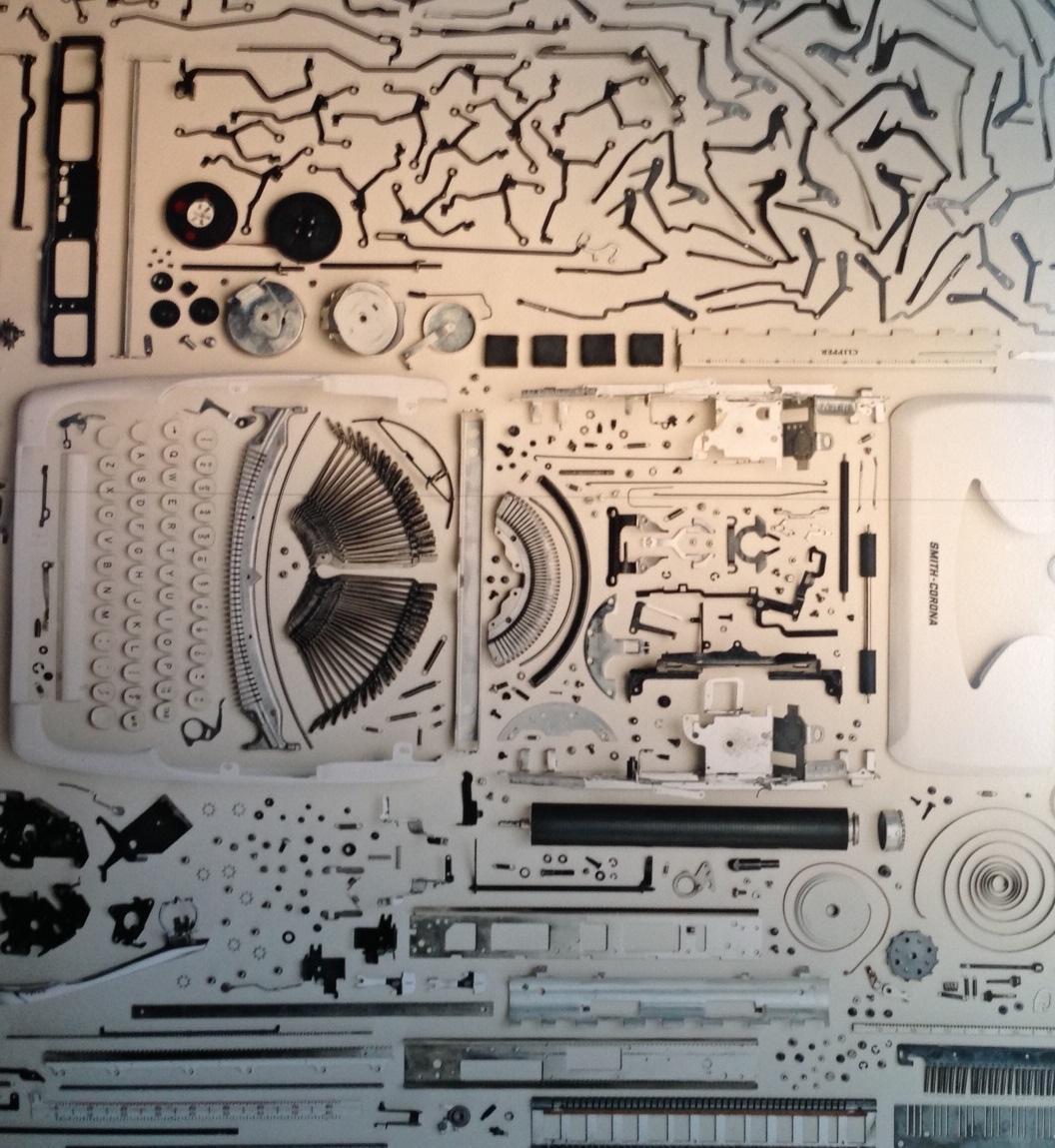
Whether it was an exhibit showing the skeletal, blood, and heart systems; the pieces of a typewriter; artifacts that pulled forward questions about how the concept of “normal” has changed in mental health circles; countless pendulums; or a thousand other things, the museum really engaged the mind and the imagination. Highly recommended for everyone with a brain and a pulse.
Last evening, I had casually mentioned that the Giants had an afternoon game on Saturday against the Phillies. I had not planned to attend, as this is one stadium I’ve already visited (twice) in my bucket list drive to get to all MLB stadiums. But Claire – God bless her heart – said, “I’d be up for going to a baseball game.” Really? I love you too, Claire!
After a search on Stub Hub, we had fantastic tickets (third base line, lower level, in the shade, with knowledgeable fans all around) and arrived at AT&T Park with about 10 minutes to spare before the first pitch. I’m here to say that this is the best stadium in baseball…and I’ve been to 18 of the 30. Why?
It is impossible to beat the setting. Coors Field comes close with the views of the Rockies, but the water – on a picture-perfect day like today – in the midst of a thriving, pulsing city, is too much to overcome. Please, don’t tell me about Wrigley or Fenway. I love them both, as they have the city setting, the L Train by Wrigley, lots of history…but not the water.
Every seat is good. I’ve tried 3 for full games, and I’ve walked all around this park on all levels. No matter where you sit or stand, you feel as if you are right on top of the action.
The scoreboard is great. They give you terrific information in a way that is easy to read. Plus, the video guys have a sense of humor.
The attendants are incredibly friendly. Example #1: When I was stumbling to get my new Stub Hub app to come up on my phone, the ticket taker said, “That’s all right, Hon. I’ve been waiting all day for you to arrive.” After she scanned our tickets, she saw my Nationals hat and added, “Have a great vacation.” Can you beat that?
The attendants are incredibly friendly. Example #2: Peter, who monitors the aisle in Section 126, greeted us, said, “You must know someone important” when he saw our terrific tickets, and continued to keep an eye out for us throughout the rest of the game. We chatted when we left, and I found out that he does this throughout the season (plus he does the 49ers games on Sundays in the fall). He was probably 70+ and retired, but loving his life.
The kayackers in McCovey Cove. First, who else has a body of water named after Willie “Stretch” McCovey, the most feared left-handed power hitter ever? Then, who has anything even remotely resembling the kayackers out waiting for a splash home run? (Nope, the folks in the street in Fenway don’t rate.)
AT&T Park has the best variety of food. Hands down.
Finally, AT&T Park has great statues. Of course, having Willie Mays (see top of post) puts you so far ahead of the other stadiums that it really isn’t a contest. Growing up, Mays was my favorite player, and as I’ve mentioned before I still have at least one grade school friend (and now preservation colleague) who will call me “Say Hey!” Was Mays any good? Well, let’s return to that ESPN bio I linked to at the top of the post:
“Voted into the Hall of Fame in 1979, he was the ninth player to be so honored in his first year of eligibility. But when 23 of 432 baseball writers failed to vote for Mays, Dick Young wrote, ‘If Jesus Christ were to show up with his old baseball glove, some guys wouldn’t vote for him. He dropped the cross three times, didn’t he?‘”
Say Hey! The best there is in my book, and as clear-cut a unanimous choice for the Hall of Fame as anyone before or since.
Now, to today’s game. Tim Hudson was on the mound, and he’s having a Strasburg-like year, with some great numbers but a so-so W-L record. Today showed why. He gave up 5 runs in less than 5 innings and wasn’t fooling the Phils. But the Giants bullpen came in and shut down Philadelphia for the rest of the game and got him off the hook.
The really bizarre inning was the bottom of the sixth. The Giants scored four runs in that frame while getting only one hit that was tagged (a double by Michael Morse, who was in Beast mode today), and with two balls that didn’t even leave the infield. One was a typical Phillies play this year, as a pop-up fell between the pitcher and the first and second basemen while all watched it land on the ground. In the eighth, the Giants took the lead and then held off the Phils in the 9th to secure the win. As Claire pointed out as we left the stadium, all three home teams won during our cross-country trip, so we expect some other teams to start plying us with free tickets!
We’re wrapping up our time tonight by – guess what – eating! Claire is meeting up with her friend Jackie and her family for dinner, and I’m off to hear some jazz at a near-by club. Sounds like a great ending to our time in the city.
And speaking of jazz, when it comes to music there’s only one Hall of Fame tune for many generations that captures San Francisco. It was one of my father-in-law’s favorite songs, and therefore it is one of my wife’s favorite songs. Candice, this is for you in memory of Pop-Pop, with love from Claire and David. I’ll see you Tuesday afternoon, my love.
Whatever mind came up with the idea of Dungeness Crab Tater Tots with Crème Fraiche…I like the way that mind works!
Careful readers will have noted that Claire and I are eating our way cross-country on the Not All Who Wander Are Lost tour. Heck, you don’t even have to be that careful…we’ve been all over the food. We’ve gone local with dollar hot dogs at Progressive Field in Cleveland. We carbo loaded in Chicago. Don’t even get me started on the cheese and cream in Wisconsin. One of the highest read posts of this series has been the You Want Nutrition…Eat Carrots! note from Madison. Once we made it to Seattle (how did we do that without exploding?!) we went vegan at Plum Bistro. Suffice it to say, we’ve eaten local and we’ve eaten well.
Last night, at the wonderful Chalkboard restaurant in Healdsburg (thank you again Yelp!) Claire and I thought to actually take pictures of each serving of the small plates we were splitting for dinner. The Crab Tater Tots were what lured us to the restaurant…but they weren’t the only treats.
So I’m posting these in the order they showed up on our table. It isn’t a coincidence that as we moved through the evening, we dived into the next offering before remembering to photograph the plate. So with apologies (I guess) to the chef on messing up the presentation, here goes our wonderful evening out.
After the Dungeness Crab Tater Tots (and don’t forget the Crème Fraiche), came our salads. First up: a cucumber and avocado salad with cherry tomatoes, radish, and toasted seeds….
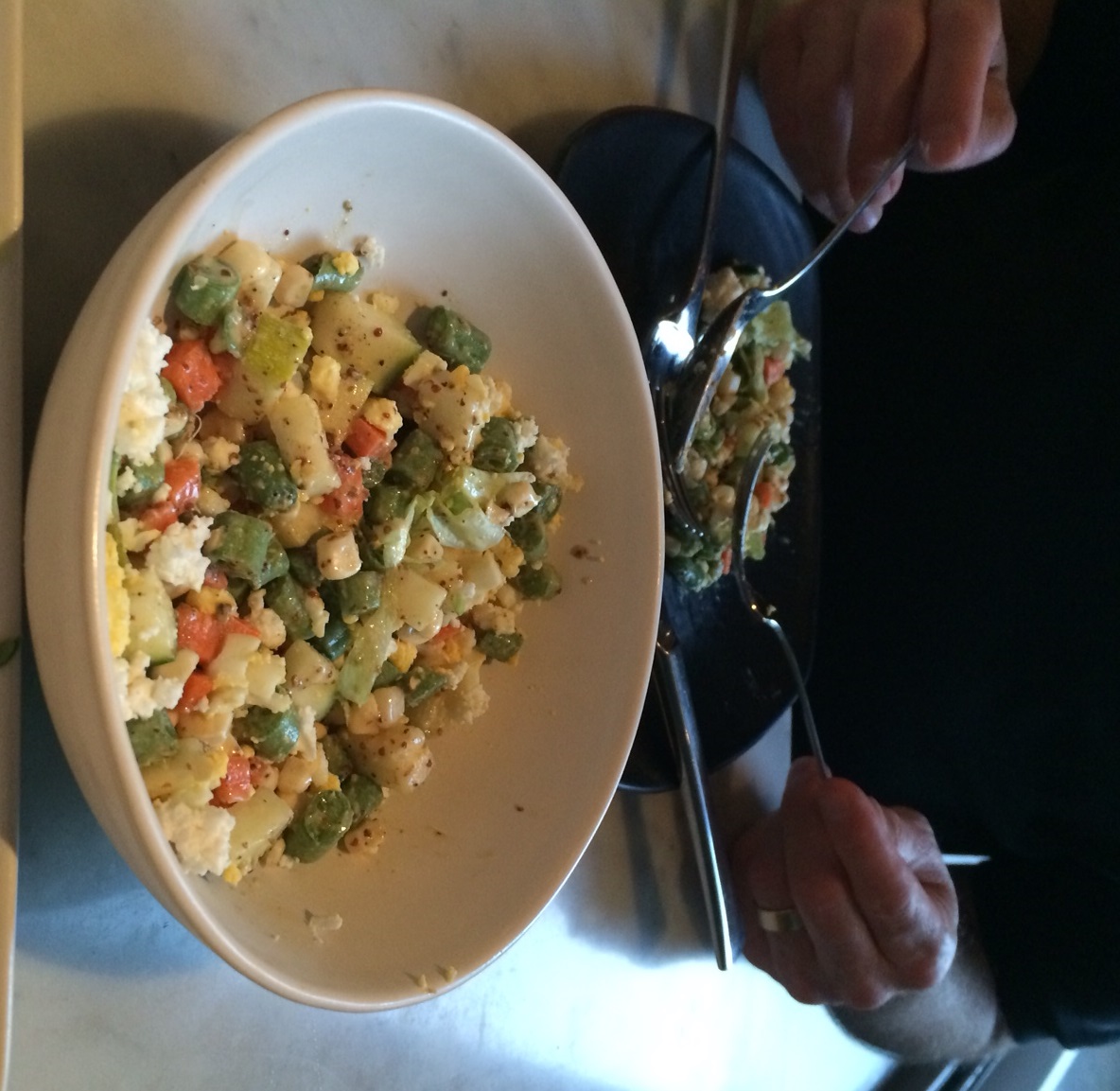
…followed by the delicious chopped salad.
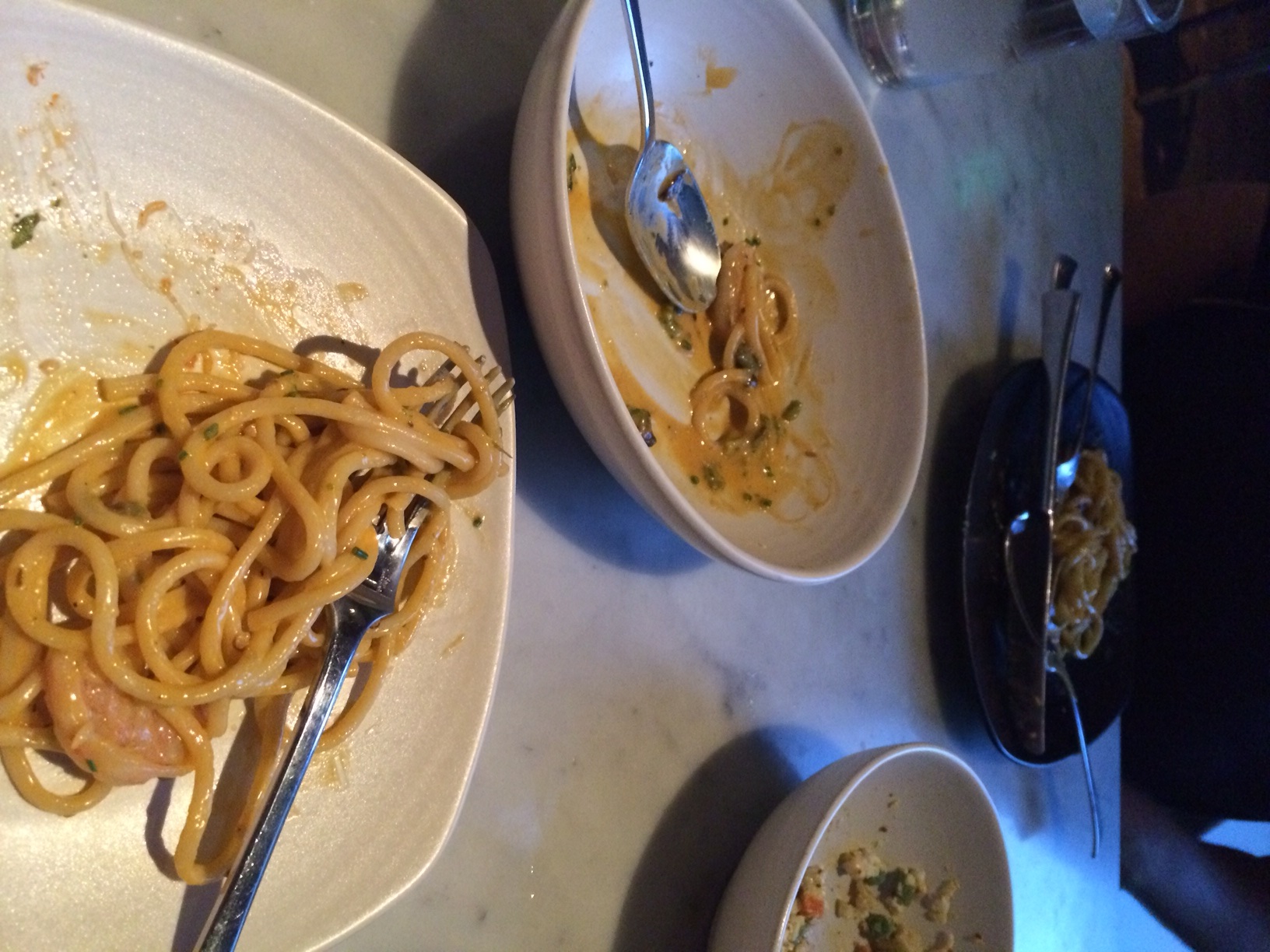
The salads were followed by a pasta, the Bucatini with gulf shrimp, peppers, roasted garlic, chive, and uni butter.
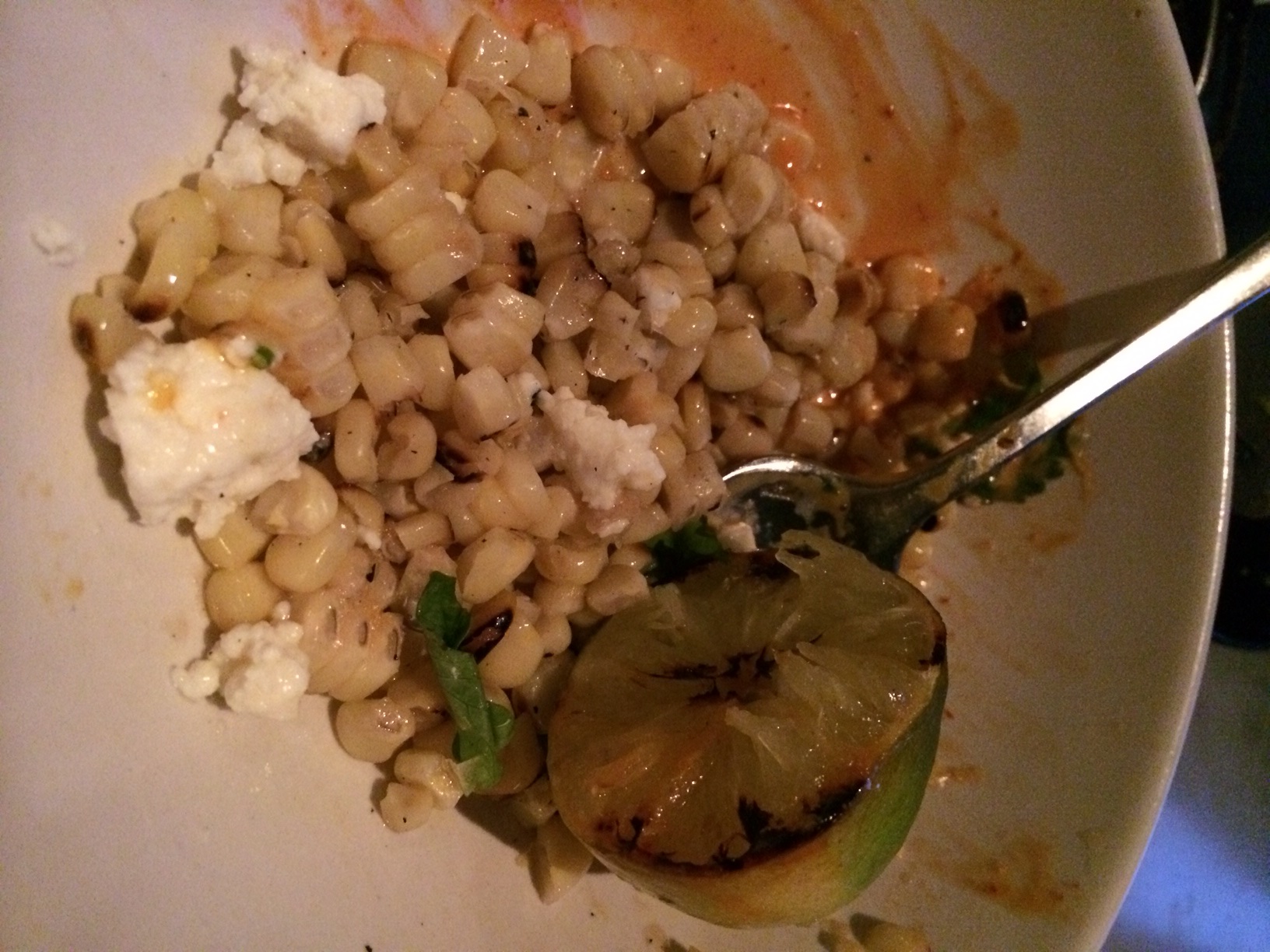
Whew…we barely remembered to photograph that course, as it was so delicious. Well, we followed that with Grilled Brentwood Corn topped with a delicious chipolte crema.
Did I mention that we enjoyed all of this with a glass of the Kinsella Zinfandel (me) and the Bear Republic IPA (Claire)? You would think that two people, having eaten this much food, would call it quits for the night. But then, you don’t know Claire and me when we are on a food journey. And, you wouldn’t know that Chalkboard serves donuts for dessert!
Oh my…this was the kiss of death. Claire and I decided that we wouldn’t eat for another 24 hours. That is, until we realized we had three good restaurant recommendations in Healdsburg and only two meals left in this town before heading to San Francisco – where we have about 8 food recommendations for a two-night stay!
I did go to the gym this morning, but I believe it may have been a case of too little, too late.
Just think of us as your cross-country food reporters taking one for the team.
Wednesday’s visit to see California’s redwoods and coastline turned out to be the appetizer. Beautiful as it was, it couldn’t hold a candle to today’s visits to forests, coasts, and wine country. Thursday – the 14th day of our cross-country tour – was the main course.
As is the case with much of the best cuisine of California, it did not disappoint.
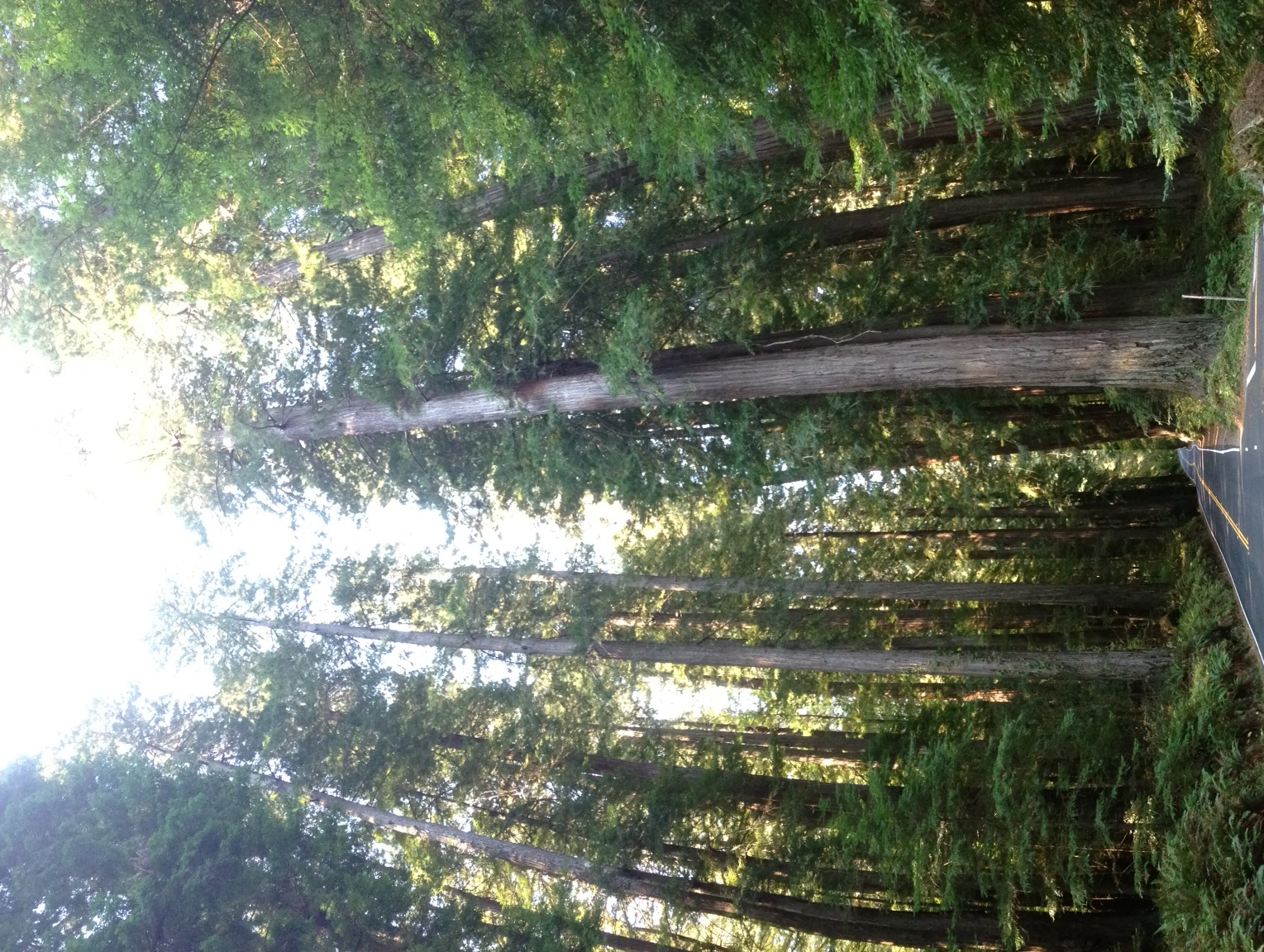
Claire and I left Eureka around 9 a.m. and headed south on Highway 101. About 45 minutes into the drive we stopped for gas, and as fate would have it the manager had come out to fix the printer on our gas pump. When he saw our license plates he struck up a conversation, and finding out we were traveling cross-country, he immediately said, “You have to drive the Avenue of the Giants route. This is the old road that criss-crosses 101, and in slightly more than 30 miles it has many of the huge redwoods in the region.”
Oh my…was he ever right. And are we ever glad we took his advice.
We drove slowly for the entire 30-mile route, taking in this cathedral of trees which is part of the Humboldt Redwoods State Park. This description from the auto tour does a good job of providing the basics about these giants:
Coast redwoods (Sequoia sempervirens) are taller than any other living thing. They can live over 2,000 years and withstand fires, floods and insects. As you drive along the Avenue some of the groves you see have never been logged. These are ancient, or old growth, coast redwoods. Their average ages are 400-600 years old.
This magical morning got us off to a very good start, and we had one wonderful experience after another.
After leaving the Avenue of Giants, we turned to go down California Highway 1 towards Mendocino, at the advice of my colleague Anthony Veerkamp. And are we glad we took his advice as well! I asked Claire if she would like to drive, and of course she said yes. Little did either one of us know that we had 22 miles of the most treacherous mountain road and hairpin curves I can recall seeing ahead of us. But Claire – in her first attempt at handling this type of road – drove it like a trooper. She generally acted like an old pro at this driving through big elevation changes and very tight roadways.
As we neared the end of the 22 miles she let out a yelp, “There’s the ocean.” And indeed, there is was.
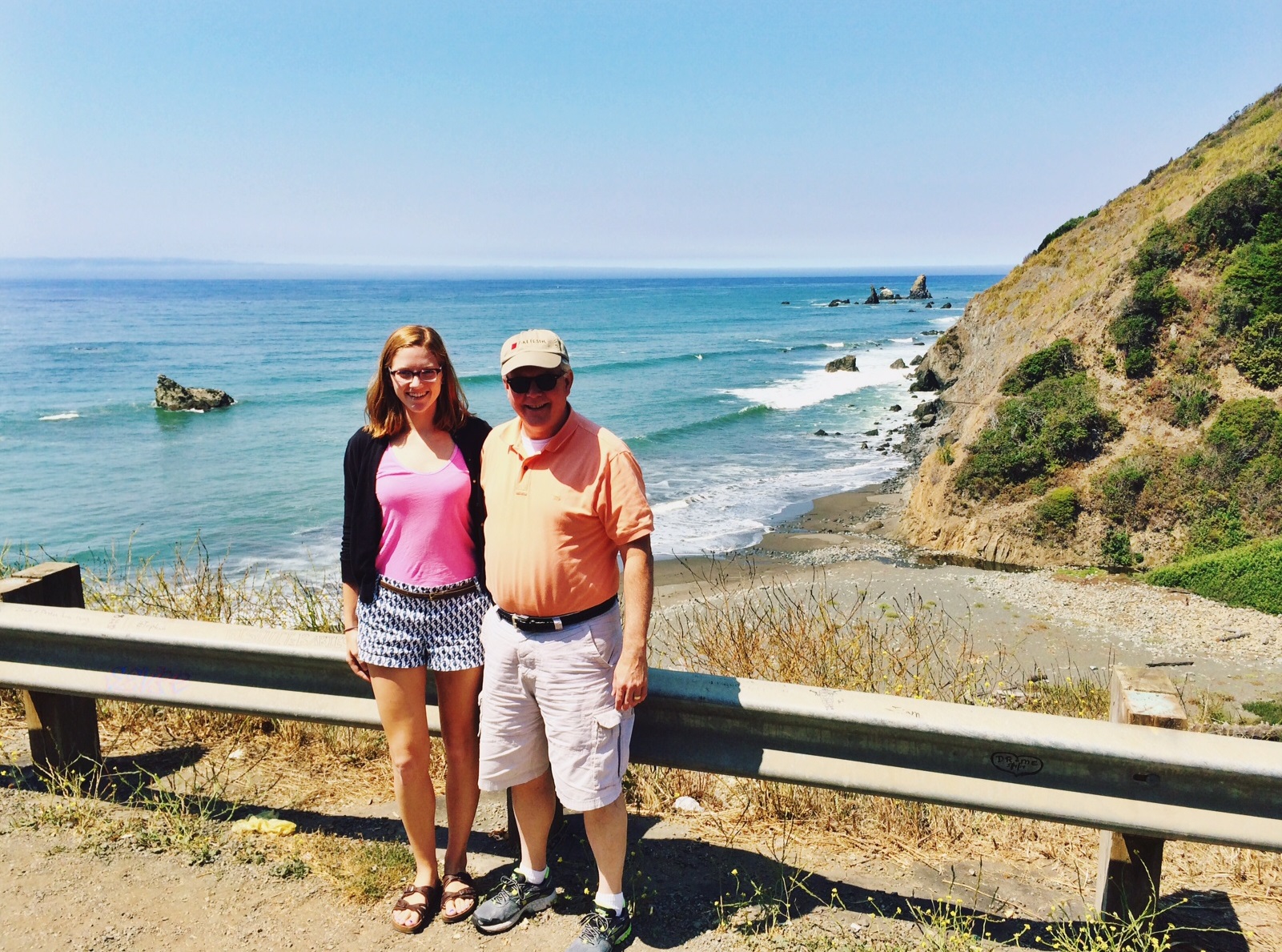
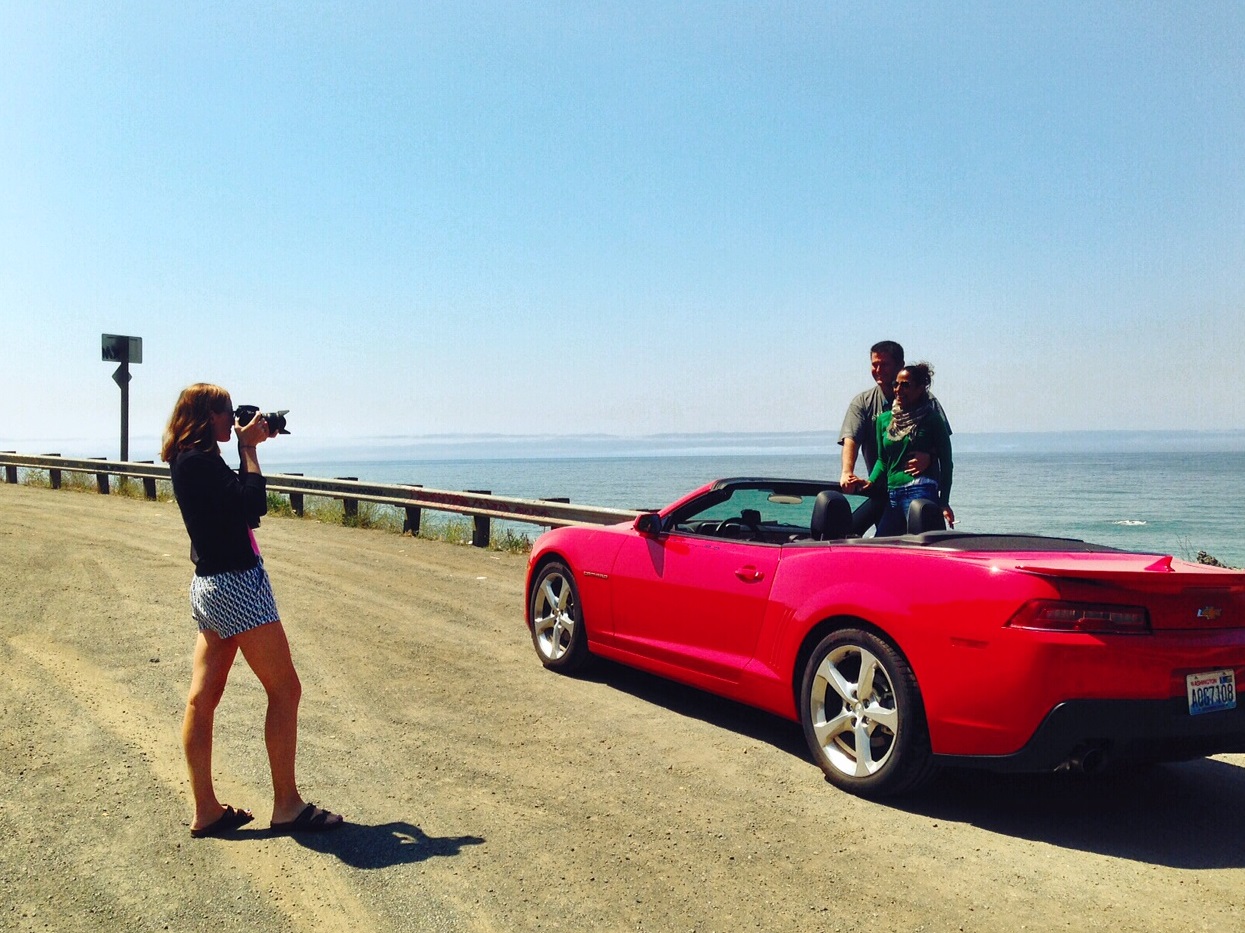
The ocean view at this point was a fantastic reward for taking Route 1 through the mountains. We weren’t the only ones stopping to gawk…the couple in the convertible had been just ahead of us. So after they offered to take a picture of the two of us (at the top of the post), Claire – our designated photographer – returned the favor.
The next 20+ miles to Mendocino were just one beautiful photo opp after another. Parts were cloudy, but we nonetheless saw some magnificent coastal views.
When we arrived in the charming little coastal town of Mendocino, we had the first of two wonderful meals for the day. Trillium Cafe had a terrific light lunch menu. Claire and I – hungry after our less-than-satisfying continental breakfast and the drive through the mountains – enjoyed every bite. We followed it up with a walk along Main Street, although the 20+ degree temperature drop had us both shivering and quickly heading back to the car.
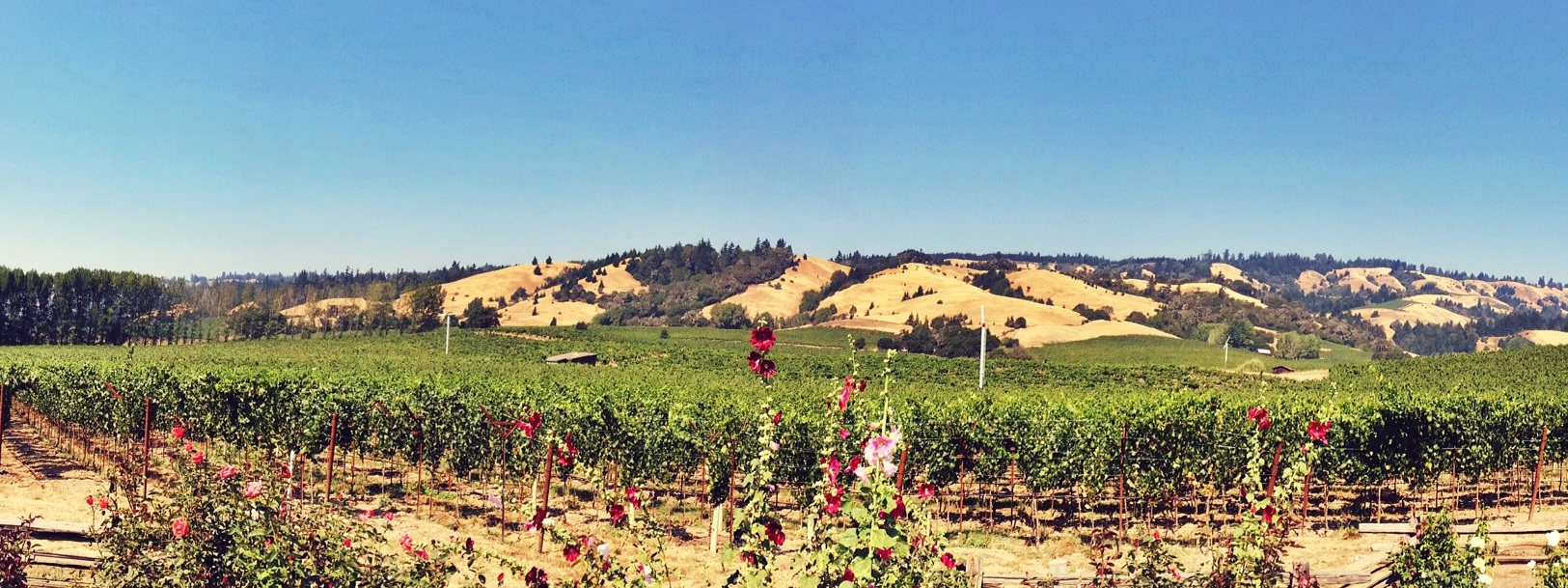
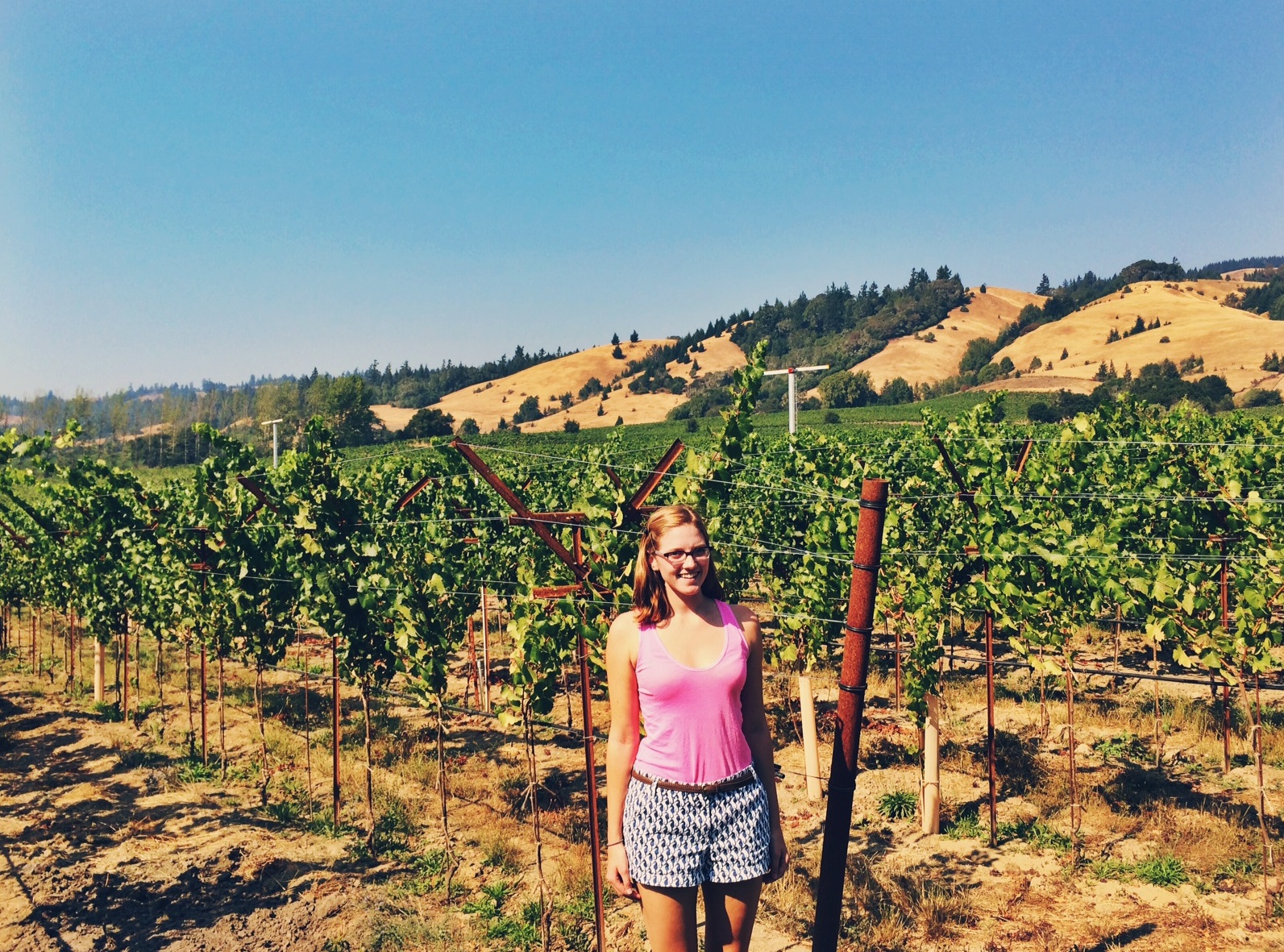
Anthony’s recommendations had been spot-on, so we followed his advice again and headed into Healdsburg, California via Route 128 and the Alexander Valley. He recommended a stop for some wine tasting at the Navarro Vineyards and Winery, and we followed that suggestion as well. On a picture perfect afternoon, we sampled a few of the offerings and then bought Claire bottles of Navarro’s Gewürztraminer and Edelzwicker. The former was recommended by Anthony, and when one of Claire’s college friends learned she was in the area, she also suggested the Gewürztraminer.
At the end of a long and very satisfying day, we turned in to Healdsburg for our evening of good food (more on that in a later post) and remembrances. We were both exhausted in all the right ways.
And in honor of Claire’s handling of the mountain roads of California, I’m posting a video of a song that came up while she was driving: Shawn Colvin‘s Shotgun Down the Avalanche. This is a beautiful version, with harmony help from Alison Krauss.
At times, Wednesday’s ride seemed as long as a California redwood is tall.
Claire and I were on Day 13 of the Not All Who Wander Are Lost tour (a.k.a., the “length of the country” portion), and perhaps it had to do with it being the 13th day, but there were some weird things happening along the way. We left Portland, Oregon at 8:30 a.m. and didn’t arrive in Eureka, California until around 6:30 p.m. for what was supposed to be a 7 hour trip. (Darn those Google maps algorithms.) The portions on the “straight and narrow” path of I-5 could give a guy and his daughter the blues. Rest areas that we really needed were closing up due to “bear activity.” Ah, but those crooked roads through the mountains, the redwoods, and along the beautiful California coast…now that’s when we felt we were alive and on the edge of the world.
We had to take I-5 down to Grants Pass. The Oregon landscape is changing and beautiful through this part of the country, but the drive on the interstate is still somewhat mind numbing. However, at Grants Pass, one gets on Highway 199 for a harrowing and curvy drive through the mountains that makes the Going to the Sun road in Glacier seem tame in comparison. Then we switched over to Highway 101 to go through the redwood forests and along the northern California coast.
That was magical.
So after an evening dinner of scallops (Claire) and grilled halibut (me) at the Cafe Waterfront, I sat down in our room in the historic Eureka Inn to begin to pull together thoughts from the day…only to fall asleep about 30 minutes later. So this is a Thursday morning post of a new group of Observations From the Road – this time the “On the Edge” edition.
The straight and narrow can give you the blues – I don’t know if it was the interstate, the rain that stayed with us much of the morning, or events outside the car, but Claire and I were both pretty quiet on the drive to Grants Pass. I happened to notice that a number of tunes came up on our various playlists that had to do with the theme of leaving or having the blues, including The Band Perry’s hit Chainsaw (another of those country songs dealing with tattoo-like hearts), Dolly Parton’s I’m Gone (a silly tune that just makes me laugh), some Ray Charles and Eric Clapton, and even David Bromberg’s crazy I’ll Take You Back (“when rattlesnakes have knees, and money grows on trees…”). Now there’s an eclectic collection of tunes for you! We did talk about depression in connection with Robin Williams’ death, and Claire helped me understand more about this illness. But I was glad to get to Grants Pass and get off the interstate.
Grants Pass has a way with signs – As we pulled into the historic Main Street of Grants Pass, Oregon, we were greeted with the “It’s the Climate” sign across the road. This is a throwback to signs that used to be located across the street back in the day. There were also a number of creative store signs (see above for a local wine bar), and there is a great one I didn’t catch as you leave town to head into the National Redwood Forest. The signs in Grants Pass helped lift our spirits (and no, we didn’t even have a beer at lunch today).
To paraphrase Mark Twain, reports of the demise of the rectangular hay bale have been greatly exaggerated – I wrote in theJeez, Montana is a Big State edition of Observations From the Road that the round hay bales had won the hay bale war. Well, I just hadn’t been to Oregon yet, where there were miles and miles of road with farms that still use the good, old-fashioned rectangular hay bales. I did notice that many were being stored in barns (and most barns are still rectangular or square, not round). And I also noticed that Oregon is one of only two states (New Jersey is the other) that still provides full service at the gas pump. Now, I’m not suggesting they are holding on to the past or anything…just saying…
When they say “Watch out for elk crossing the road” they mean it – Several times along the road yesterday, we saw “Elk crossing” signs. Yeah, right. Well, at one point we drove by a whole field of elk, and I slammed on the brakes so Claire could jump out and try and get a picture. It was tough, though, because the trees along the road were pretty full. She was unable capture a good picture of the ones with the big antlers (although she did report back on the smell…enough said). However, while I was pulled over on the side of the road and she was 50-75 steps behind me taking pictures, what walks out of the woods on the other side of the road but a single elk. Now, we had seen signs in the park saying “Stay away from the elk” so I yell to Claire, who doesn’t hear me, of course. Luckily, this lonely elk, separated from the rest, was just taking an easy stroll. Claire finally returns to the car…and then she wants to go around and get in for a closer shot! Jeez…does she want to give her father a heart attack! Nonetheless, we got our elk shot and Claire managed to get back to the car safely.
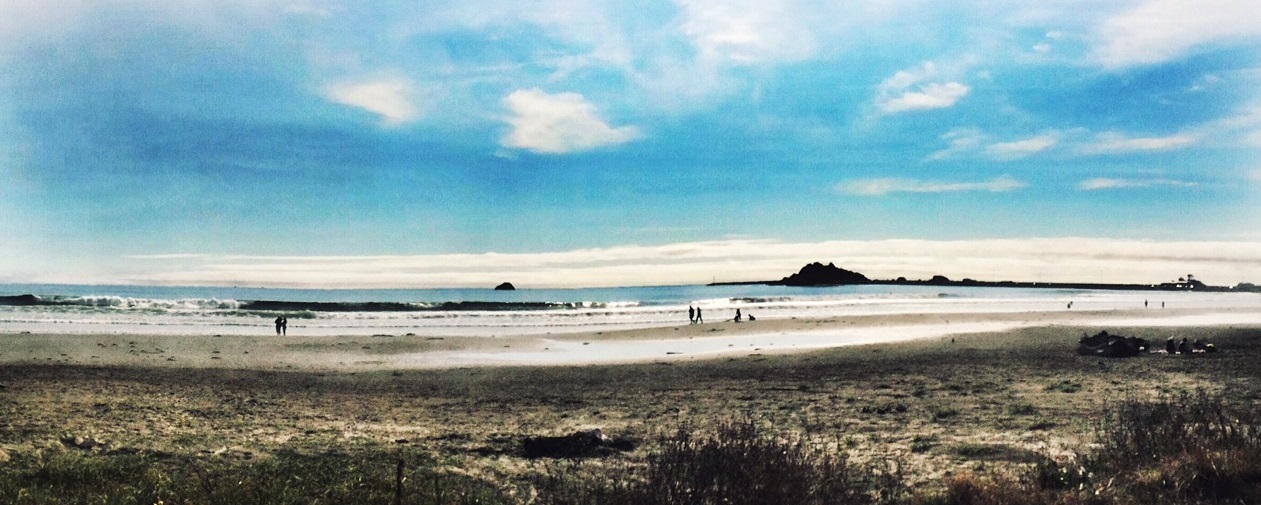
The reports of the beauty of the California coastline along the coastal highway are not exaggerated – Even with fog rolling in at inopportune moments, the coastline in this part of the country is pretty stunning. Claire was able to capture this picture, but there were many places where we could see but the cloud cover made it difficult to get a decent shot. You’ll just have to believe us!
So, on our 13th day of travel we felt we were “on the edge” in several ways. Our morning was spent a bit on the edge emotionally. Then we felt we were on the edge of the road, ready to tumble down at any moment, along Highway 199. Finally, the California coastline can give you the “edge of the world” sense. So when Lady Gaga’s On the Edge of Glory popped up on Claire’s playlist, I said to myself, “That’s today’s tune!” (And yes, I may be trying to reach a younger demographic than my normal readers with the Lady Gaga reference…this is especially for Andrew and Jason). Claire’s version was the full-band extravaganza, but I found two beautiful piano-only versions on video which take the song down to its essence (and also show what a wonderful singer Gaga is). She says that she wrote this with her grandfather in mind and talks about how we need to live our lives on the edge. That seemed to be a perfect fit for yesterday’s ride. Enjoy.
 You know you’re in a pennant race when…