Latest Posts

Summer Reading

An email from the husband of a friend who shall remain nameless showed up in my home email in-box recently with a list of books on his table ready for his summer reading.  There were a lot of very serious titles—some of which I’ve read and many of which I’ve missed—but the one that caught my eye was War is a Force That Gives Us Meaning by Chris Hedges.  Now I’ve read that book, and I don’t consider it light reading.  In fact, it is pretty depressing.  For while Hedges calls for humility, love, and compassion as the only chance for the human race, he writes of the addiction of war and its unifying force.  When you read this, our chances seem pretty slim.

But that’s NOT why I’m writing about Summer Reading Lists.  There are 9 other months of the year to read books like War is a Force…  Summer reading is different.  Here are three books (two on baseball; one only tangentially on architecture but really on love) I think are great for summer reading.

When I recently saw my friends the Quattlebaums in Andover (I met them a couple of years ago on the wonderful National Trust Black Sea cruise we took on the Sea Cloud), it reminded me of two books on baseball that I’d recommend to anyone.  The first is a new book in 2008—Anatomy of Baseball—a compilation of essays edited by Lee Gutkind and Andrew Blauner.  As a compilation, the writing here is uneven, but at its best it is great.  The single essay Oriole Magic by Elizabeth Bobrick—where a Ph.D. classics student in 1979 discovers that baseball writers are the best in the world and baseball is a sport that endlessly fascinates—is worth the price of the book alone.  Just a couple of examples will have to do.
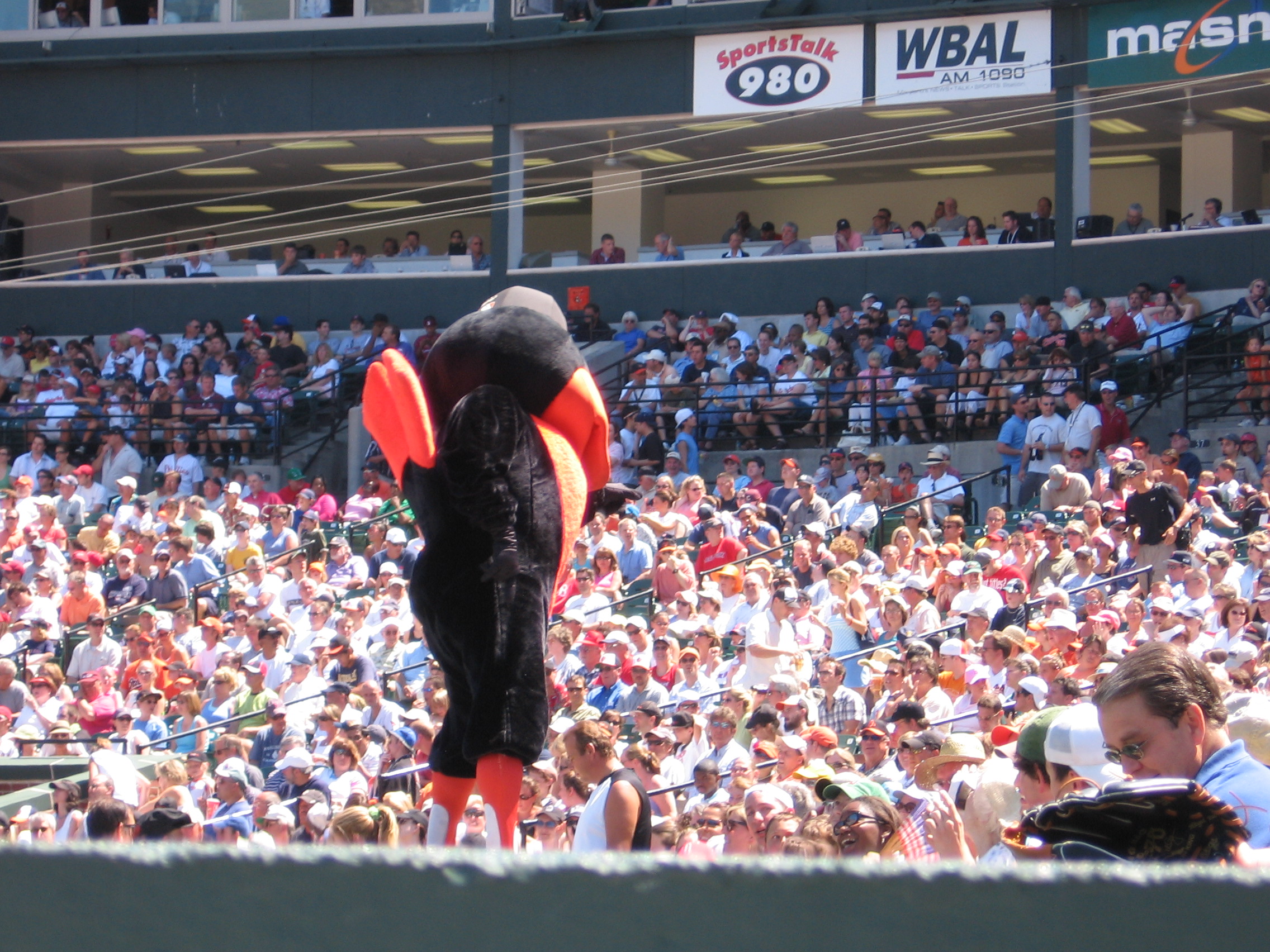
The Bird in Baltimore
The Orioles Bird at a game at Camden Yards

In her first ever foray into the Sports section of the Baltimore Evening Sun (to avoid studying), Bobrick stumbles across two articles by a writer named Terry Pluto and immediately thinks of the Greek god of wealth and the underworld.  She writes of his second article:

“A rainstorm had forced the game (in Cleveland) to be called, and a melee ensued, during which the home fans tore up the stadium while being chased through mud by the police.  Both constabulary and quarry slipped and fell a good deal.  Pluto said the scene, one ‘worthy of the Keystone Kops,’ played out against a dramatic backdrop:  ‘The sky was filled with lightning.  The rain came down in torrents and Noah could be heard in the background pounding the last few nails into his ark.’

I had never seen reporting like this:  a description of the weather apparently lifted from a Gothic novel followed by an allusion to the Book of Genesis, all in order to take a swipe at the Cleveland fans’ wild behavior and their police force’s ineptitude.  I admired the boldness of the mix, and the broad brushstroke delivery.”

Later in the essay, she quotes Tom Callahan of the Washington Star, whose “sentence structure reminded me of Cicero’s.”  With the O’s one game away from winning the series, Bobrick quotes Callahan and then adds her take on the sentence:

“‘Earl Weaver loudly says HE is to be the star of the Baltimore Orioles, a plain fact that amuses the players at the brink of the World Championship; which annoys them occasionally; which hurts their feelings frequently; which helped them to the brink of the championship undeniably.’  Behold, a one-sentence illustration of what adverbs can do when a professional strikes the keys.”

The book also has great essays on first gloves, a Frank Deford piece on baseball caps, and much more.

The second baseball book that my visit with the Quattlebaums brought to mind is Jim Collins’ wonderful The Last Best League about the Cape Cod Wooden Bat League.  I was reading this book on the Sea Cloud when I met them the first time, and it is simply one of the best baseball books ever.  So imagine my surprise when Ed Quattlebaum tells me that one of his sons is mentioned in the book—the player nicknamed “GQ” because he looks so preppy.  (These wonderful people do teach at Andover!)  And those of you who know me know of my love for our own college wooden bat league here in Maryland—the Cal Ripkin, Sr. Collegiate Baseball League.  I love our new Nationals stadium and it is great having MLB baseball back in Washington, but few things top the pleasure of sitting with 500-700 other fans right on top of the action on a beautiful summer night and cheering for the Bethesda Big Train or the Silver Spring Thunderbolts.  The season just ended, but it was another great one.  If you want to catch the flavor before 2009, read The Last Best League.

Now, for those of you who just can’t abide baseball, you might check out Loving Frank by Nancy Horan.  I’m not a big reader of fiction, but this historical novel based on the love affair between Frank Lloyd Wright and Mamah Borthwick (the wife of one of his clients in Oak Park) really surprises.  It is hard to put down…and that’s all I’ll say about it.

Now I don’t want you to think I’m being totally frivolous during the summer…I did read Barack Obama’s Audacity of Hope  and I’m halfway through Dreams From My Father…but really…there will be 9 months out of the year for serious reading.  But come to think of it, what can be more serious than when Elizabeth Bobrick writes that “none of the Birds impressed me so much as first baseman and switch-hitter Eddie Murray.  With the intuitive grasp of an idiot savant, I was drawn to this future Hall of Famer…who was later described as someone who ‘tossed around words like they were $100 bills.'”  In describing how baseball—and Murray—helped lift her from depression, she writes:

“After the ’83 Series, Eddie Murray had uttered a phrase of Roman simplicity and elegance:  ‘Our strength is just being ourselves.’  I taped that sentence over my desk.  I had succeeded in being myself, a self that no longer filled me with the despair I had felt in 1979.”

More to come…

DJB

Lovell Sisters at Strathmore Music Center

The Lovell Sisters Band at Strathmore Music Center

The Lovell Sisters Band at Strathmore Music Center

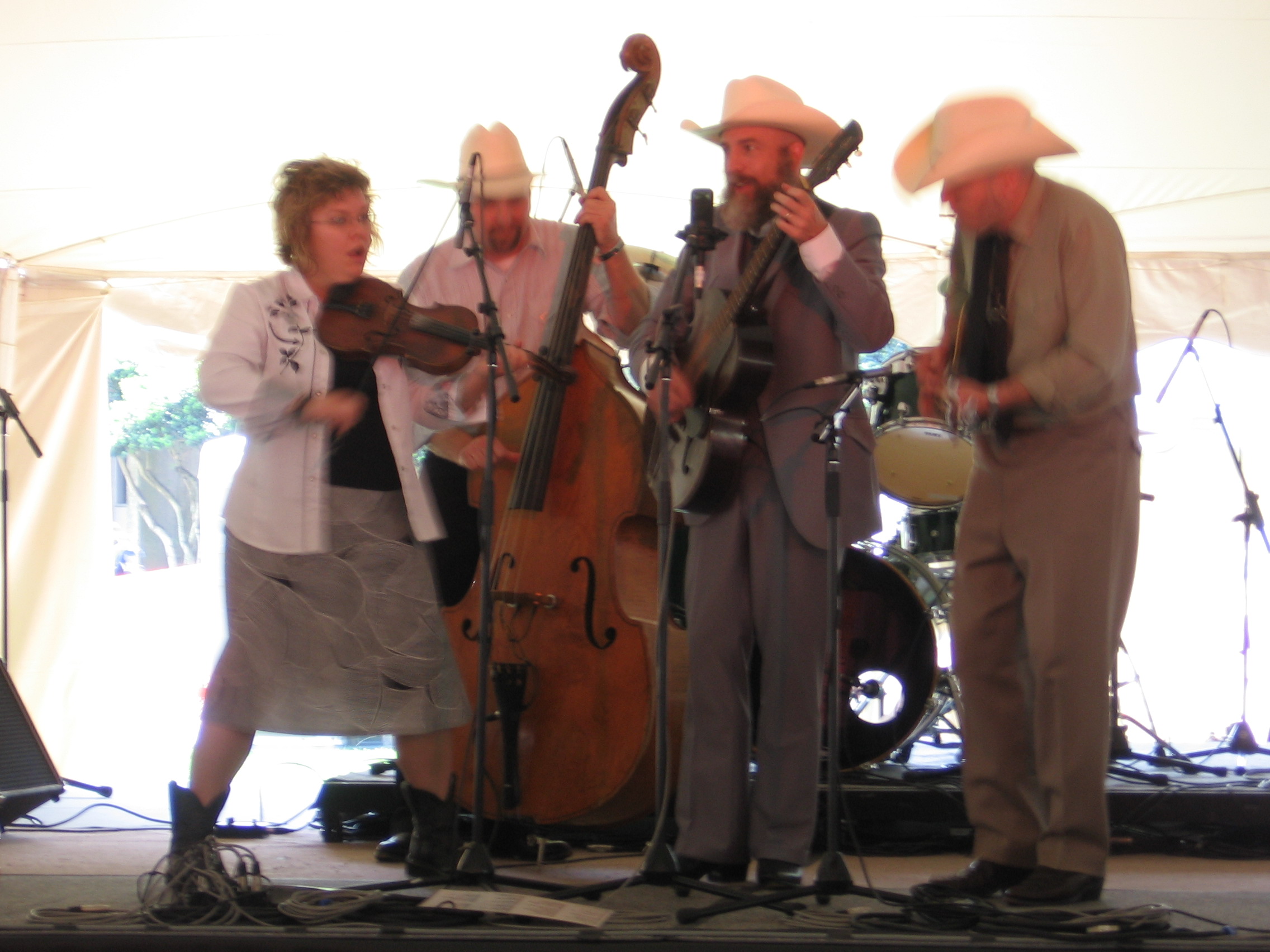
It was a beautiful evening in Bethesda, Maryland as a few hundred fans stretched out on the lawn in front of the Strathmore Mansion with picnics in hand to enjoy a free concert by the Lovell Sisters Band.  This band of three young sisters from Georgia played two spirited sets bringing together bluegrass and country classics with some very tasteful original music.  All three sisters – Jessica on fiddle, Megan on Dobro, and Rebecca on mandolin and guitar – are excellent instrumentalists and the harmony singing is as good as expected from three musical siblings.  While all three sisters had their moments, the standout for me was the youngest, Rebecca – the writer of much of the original material and the owner of a nice bluesy voice that will only get better as she matures.  She also played some spirited mandolin breaks, trading licks with guitarist Matt Wingate.  During the concert I turned to my wife and said “that guitarist is good,”  so I wasn’t surprised to find out later that he is a former Merlefest guitar champ.  The band was rounded out with strong bass work by Andy Nall, from the sisters’ hometown of Calhoun.

The Lovell Sisters played a variety of tunes but never flagged- even putting new energy into the old Johnny Cash chestnut Folsom Prison Blues.   And when they talked they sounded exactly like three teenage sisters (which is endearing to those of us with teenagers in the house).

A beautiful night and a fun evening of music.

DJB

MVYRadio – A Wonderful Source for Good Music

I discovered MVYRadio (Martha’s Vineyard Radio) when I was unable to attend the 2008 Merlefest Celebration in Wilkesboro, NC.  Remembering their advertisements at previous Merlefest events, I checked them out online and found they were streaming live from the festival and had a rich archives of performances from past years.  Check out the archives section and you’ll find performances from a number of great festivals.

Recommended!

DJB

Music at Merlefest

Music at Merlefest

Travels in India – Establishing the International National Trusts Organisation

This is the first view one has when visiting the Taj Mahal

This is the first view one has when visiting the Taj Mahal

This November I’ll head to Slovakia for the annual meeting of the Executive Committee of the International National Trusts Organisation (yes, we use the British spelling).  While there, I hope to post some comments and photos about both the work and the historic buildings we tour.  In preparation for that posting, I am linking to the posts made on the PreservationNation blog last December, when I was in India for the establishment of INTO.  It was an extraordinary trip which included an opportunity to share the stage with the Prime Minister of India, Dr. Manmohan Singh (who just last month survived a vote of no confidence in India).  Slovakia will be with a much smaller group, but we are looking forward to reviewing the progress we’ve made with INTO in the first six months.  More to come.

DJB

Skip Carey – RIP

I was saddened to hear this week of the passing of Skip Carey, the long-time announcer for the Atlanta Braves.  Carey wasn’t the baseball announcer of my childhood – that would have been Milo Hamilton (who was not a favorite of mine).  But I listened to Skip Carey all through my 20s and 30s and 40s…and, well, I’ve probably heard his voice more than just about anyone in my life with the exception of close family and friends.  I know, it has been a life misspent listening to Braves baseball, but you can blame that on my dear, late mother.

There was a nice obit in yesterday’s NY Times about Carey, where they ended with his call of the 1992 NL Championship Series, when plodding, old (to us) Sid Bream trundled around third and barely beat the throw at the plate to put the Braves in the World Series.  I was watching that game and I still remember that call (and remember jumping up and screaming in my living room.)  Although the Braves had made the Series in 1991, for those of us who sat through many a bad Braves season in the 70s and 80s, going back was like heaven.  And Skip got the call right.,,and the Times writer was great to include it.

Skip (you couldn’t call him anything else…hell, he was in your living room 5 nights a week), was sarcastic, funny, irreverent – and a real lover of baseball.  A friend of mine indicated that he enjoyed listening to Skip call Atlanta Hawks basketball games as well and told the story of how – at the Boston Gardens one night – Skip said “I hear improvements are coming.  They are tearing it down and putting a slum in its place.”  I don’t watch much professional basketball, but the story certainly rings true.

While TBS no longer carries the large number of Braves games they did back in their Superstation heyday, it was still good to catch him every now and then.  He will be missed.

The other day I was cleaning out files, and I found this wonderful article by Tom Boswell from the 1980s entitled Why Is Baseball So Much Better Than Football?  Let Me Count the Ways in which Boswell gives 99 reasons and promises “More after lunch.”  Some of my favorites that relate – at least in my mind – to Skip Carey are:

#24:  Marianne Moore loved Christy Mathewson.  No woman of quality has ever preferred football to baseball.  (My mother was testament to the truth of that statement – and sorry if I’ve offended any of my female readers, but giving offense was something Skip did on a regular basis.)

#26:  The best football announcer ever was Howard Cosell.

#27:  The worst baseball announcer ever was Howard Cosell.

#63:  The baseball Hall of Fame is in Cooperstown, N.Y., beside James Fenimore Cooper’s Lake Glimmerglass; the football Hall of Fame is in Canton, Ohio, beside the freeway.  (An aside:  this is true – I’ve seen both, but only stopped to visit Cooperstown).

#68:  Baseball enriches language and imagination at almost every point of contact.  As John Lardner put it, “Babe Herman did not triple into a triple play, but he did double into a double play, which is the next best thing.”

#81:  Football players, somewhere back in their phylogenic development, learned how to talk like football coaches.  (“Our goals this week were to contain Dickerson and control the line of scrimmage.”)  Baseball players say things like, “This pitchers so bad that when he comes in, the grounds crew drags the warning track.”  (Another aside:  Skip would have LOVED that line…and probably used it on some occasion. And only a great baseball writer like Tom Boswell would use a word like “phylogenic.”)

#82:  Football coaches walk across the field after a game and pretend to congratulate the opposing coach.  Baseball managers head right for the beer.  (Third aside:  Skip often indicated on the air that he loved to drink…which may have led to that liver problem mentioned in his obit.  But read the line in there about “the bases are loaded and I wish I was as well.”  Pure Skip.)

#86:  Baseball measures a gift for dailiness.

#88:  Football, because of its self-importance, minimizes a sense of humor.  Baseball cultivates one.  Knowing you’ll lose at least 60 games every season makes self-deprecation a survival tool.  As Casey Stengel said to his barber,” Don’t cut my throat.  I may want to do that myself later.”

#92:  Turning the car radio dial on a summer night.

Thanks for the memories, Skip.

More to come…

DJB