Each month my goal is to read a minimum of five books on a variety of topics from different genres. Here are the books I read in December 2023. If you click on the title, you’ll go to the longer post on More to Come. Enjoy.
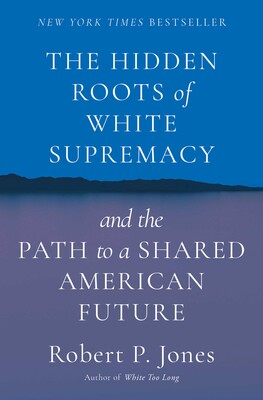
The Hidden Roots of White Supremacy and the Path to a Shared American Future (2023) by Robert P. Jones begins with several clear and powerful stories and ends with a question that, though difficult, must be answered if we are to illuminate the path forward. Jones has crafted a searing yet courageous look at contemporary issues around race set within the context of a 15th century church doctrine. “The spirit of the Doctrine of Discovery continues to haunt us today. We remain torn by two mutually incompatible visions of the country. Are we a pluralistic democracy where all, regardless of race or religion, are equal citizens? Or are we a divinely ordained promised land for European Christians?”
Church State Corporation: Construing Religion in US Law (2020) by Winnifred Fallers Sullivan takes a deep dive into several Supreme Court decisions to argue that “American law has shown that it cannot think religion without the church.” The Supreme Court — especially under Chief Justice John Roberts — has favored “the Church” over individuals with religious beliefs. This bias towards “the Church” is carried even further in that the decisions by the Roberts Court to preference corporations over individuals in a variety of areas of law extends to the corporations that are also churches. Sullivan makes the strong case that the Court “has misinterpreted the separation of church and state to mean that the state must cede sovereignty to any corporate body claiming exemption from generally applicable laws for reasons of faith.”
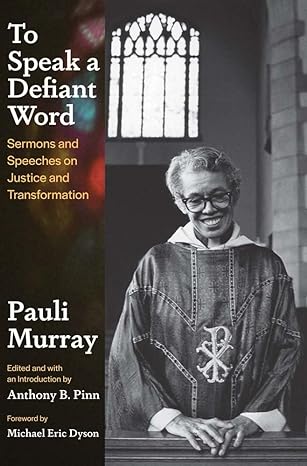
To Speak a Defiant Word: Sermons and Speeches on Justice and Transformation (2023) by Pauli Murray; edited by Anthony B. Pinn brings together the most important sermons, lectures, and speeches from 1960 through 1985 written by one of the most consequential and hopeful of 20th century Americans. Murray was a nonbinary African American member of the LGBTQ community, a civil rights and women’s rights activist, an author and poet, and a brilliant legal scholar who became the first female African American Episcopal priest in the United States, and a saint in the Episcopal Church. In this work one sees how Murray’s religious ideas and her sense of ministry evolved over a period that became one of the most tumultuous in American history, not unlike the one we are living in today. Yet through it all, she remained struck by a sense of wonder and hopefulness.
The Thursday Murder Club (2020) by Richard Osman takes us to Coopers Chase, a high-end and peaceful British retirement village on the grounds of a former convent where four residents meet weekly to discuss unsolved crimes. We soon discover that Coopers Chase was built with drug money by the “loathsome” Ian Ventham and maintained by his dangerous associate, Tony Curran. When first Curran and then Ventham are murdered, the septuagenarian sleuths have real-life cases to solve in this light, witty, and big-hearted mystery novel.
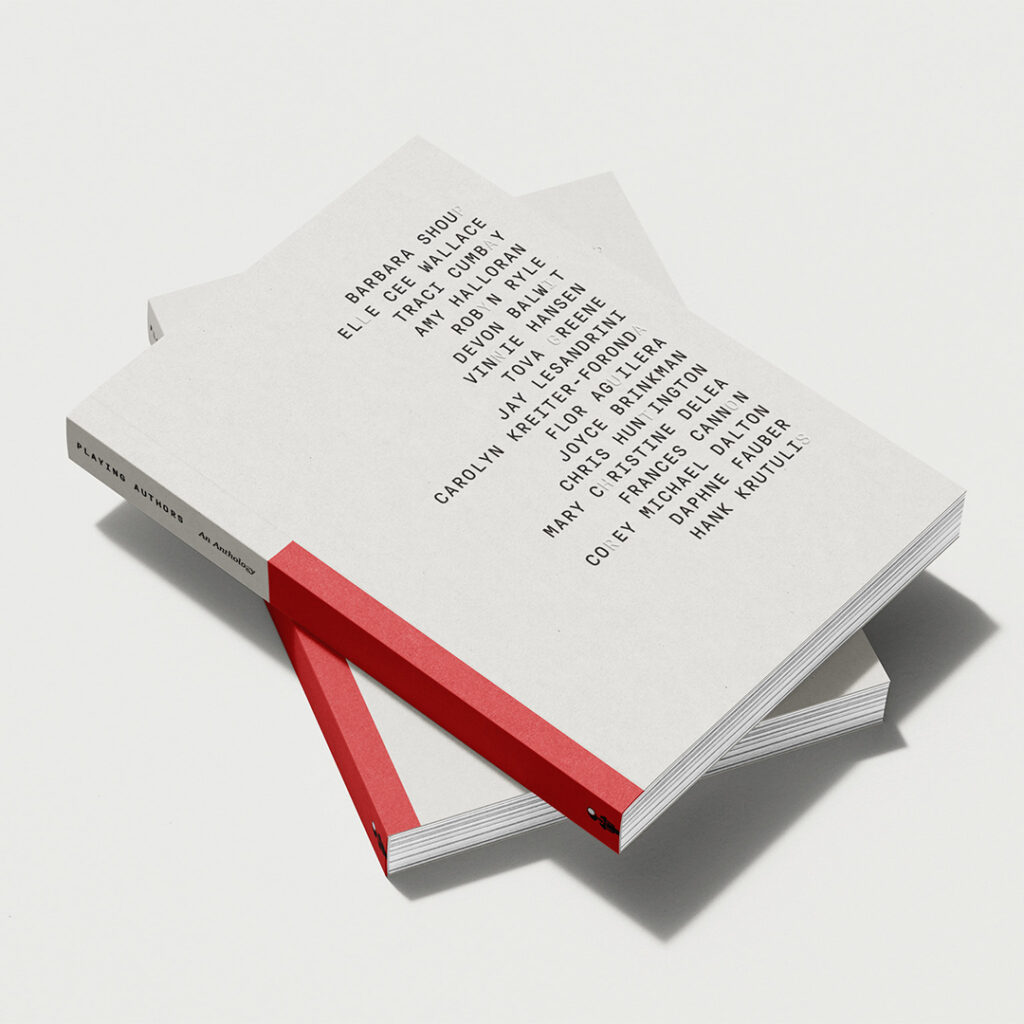
Playing Authors: An Anthology (2023) is a collection by 18 writers asked to consider the question of authorship. The creative act of writing in today’s world is at the heart of this newest release from Old Iron Press, a female-led, small independent press in Indianapolis. “Literary mashups, personal essays, alternative history, and other disobedient forms” are included in this work, which begins with the sad and insightful and laugh-out-loud funny “Hemingway Goes on Book Tour.” In this post, I chat with that story’s author, Robyn Ryle, about inspiration, the challenges of modern publishing, the need for more diverse voices, and imagining other famous authors in the rat race of today’s book tour.
The Four Loves (1960) by C.S. Lewis has been described as a “classic” of the British writer, scholar, lay theologian, broadcaster, Christian apologist, and bestselling author. In this work, Lewis takes the reader through a description of four different types of love: “affection, the most basic form; friendship, the rarest and perhaps most insightful; Eros, passionate love; charity, the greatest and least selfish.” Lewis reminds us that God is love, and that love is the divine energy. But because none of us has direct knowledge about the ultimate Being, we are forced to use analogies. “We cannot see light, though by light we see things.” So is it with love.
What’s on the nightstand for January (subject to change at the whims of the reader):
The New Year is a time when many begin thinking of resolutions, perhaps focused on personal ways to respond to our current reality. I have come to believe that our vision needs to grow. “Our human task” suggests poet and essayist Jane Hirshfield, is to acknowledge “the fullness of things.”
Writer Kathryn Schulz reminds us that “We live remarkable lives because life itself is remarkable.” She counts her days as exceptional even when they are ordinary. And in that spirit Mary Oliver‘s “paradoxical resolution” remains a timely reminder.
To live in this world you must be able to do three things: to love what is mortal; to hold it against your bones knowing your own life depends on it; and, when the time comes to let it go, to let it go.
“Here is the world,” Frederick Buechner wrote. “Beautiful and terrible things will happen. Don’t be afraid.”
Since 2013, I have taken a different route away from annual resolutions. That year I established several rules of how I want to live day-to-day. Essayist Maria Popovacalls her similar list “life learnings” and she begins her excellent choices with one that I’ve also discovered over time: “Allow yourself the uncomfortable luxury of changing your mind.“
Computer wallpaper with DJB’s life rules
Designed to help direct me during both good and difficult times, my rules came as the result of a more intentional focus on life’s journey rather than relying on a changing list of resolutions to respond to the challenges of the moment. These personal guidelines are not quite principles but rather serve as reminders of how I want to live over time.
As has been the case in recent years, I highlight each rule followed by a reference to a MORE TO COME essay providing context and examples for these personal rules. They are given to provide hope in the remarkable nature of life, even in the midst of trying, liminal times.
Rule #1. Be grateful. Be thankful. Be compassionate. Every day.
I came across an online post written by a fan of author acknowledgements. She encouraged others to read them in order to learn language that gifted writers use to thank others, to the benefit of our own gratitude practice. Turning gratitude into thankfulness (March 13th) spoke to the importance of thanking others and provided four tips to lead toward being “radically grateful.”
Rule #2. Exercise six days a week for the rest of your life.
Building movement into each day doesn’t mean we have to endure joyless stints at the gym. Walking as an act of citizenship (January 26, 2016) is a reminder that one of the best benefits for your health is also beneficial for your life in community. “Walking is only the beginning of citizenship,” writes Rebecca Solnit, “but through it the citizen knows his or her city and fellow citizens . . . Walking the streets is what links up reading the map with living one’s life.”
Don’t be this guy
Rule #3. Listen more than you talk.
I’ve mentioned before how much work remains for me in the context of this life goal. Nonetheless, I keep trying. Singer, songwriter, and poet Carrie Newcomer suggested a good way to get others to open up, so you can simply listen, which I recounted in Simple but not easy (November 11th).
An open-hearted question is a beautiful way to get to know another person. When I’m at a gathering and meeting new people I often like to ask opening questions that go beyond the usual “what do you do”. I often ask questions like “what gave you life this year” or “What were you grateful for this week”. People will sometimes look at me like I have seven heads, but then they will launch into the most wonderful stories. I always feel grateful for the story and feel I got to know the person much better than if I had asked the usual fare.
Rule #4. Spend less than you make.
In Margareta Magnusson’s witty look at how to age gracefully she encourages us to live within our means . . . always good advice no matter our stage along the journey. Magnusson’s book is full of great suggestions for a happier next third of life, which I explore in Living exuberantly (September 25th).
Rule #5. Quit eating crap! Eat less of everything else.
I thought a great deal about this rule, from both a health and values point of view, in 2023. Aligning the way we eat with our values (April 13th) speaks to the latter, as I preview a lecture around faith, food, and ethics.
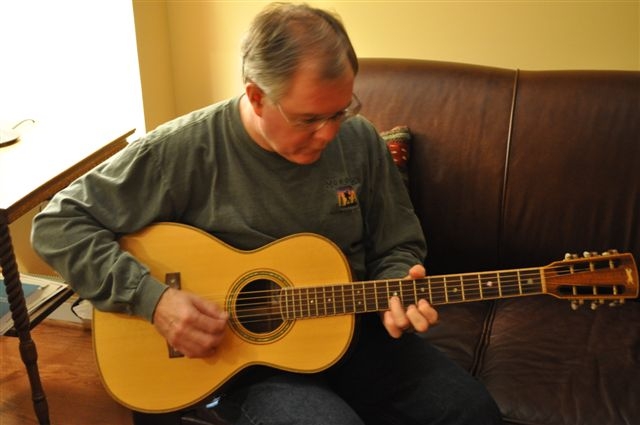
Playing one of my Running Dog guitars in 2010
Rule #6. Play music.
This fall I wrote of a song that I play at least once a week while practicing in our den/music room. For decades I played Sittin’ on Top of the World (November 25th) as a bluegrass tune, but over the past few years, I’ve pretty much turned to the bluesy finger-style version that I learned from Chris Smither. It gave me another perspective on the music.
Rule #7. Connect and commit.
In From certainty to mystery (March 4, 2023), I used the occasion of my birthday to consider a few things I still wanted to accomplish, two of which relate to this life rule. First, make sure that the people I love and care about know that without question. Second, be gratefully aware, not just every day but every hour in a way that leads to true thankfulness.
And that’s it! As you can see, I’m working to live into Kathryn Schulz’s admonition to treat each day as the exceptional experience it is while doing my best to bash into some joy along the way.
Best wishes for a wonder-filled and remarkable 2024. As you welcome the New Year, consider making gratefulness, thankfulness, and compassion an everyday practice. I can recommend the effort!
A summary of the December posts from the MORE TO COME newsletter.
Holiday greetings this Christmastide where today our family is celebrating the 5th day of Christmas! No golden rings are involved (especially since some historians believe that the “five golden rings” may actually be a reference to the rings around a pheasant’s neck), but all the Browns are home enjoying the season. We send our best wishes to you.
December’s MORE TO COMEofferings were a mixture of seasonal celebrations, “best-of” lists for the year, and my regular takes on books and music. Let’s dive in to see what tickled my fancy. Hopefully some will pique your interest as well.
TOP READER VIEWS: WHAT OUR BOOKS REVEAL ABOUT US
Eight totally subjective observations on what the 65 books I read in 2023 reveal about me topped the reader views this month.
Seeing myself in the books I readwas an especially big hit in the “Writers and Authors” group on LinkedIn. Check it out to see if any of these observations ring true with you.
Of course, the post was referencing the books I read this year, which you can find in The 2023 year-end reading list. Note: this post is long but is meant to be skimmed. I’ve encouraged readers and friends to tell me which books they most enjoyed in 2023, so feel free to add your thoughts in the comments.
I LOVE A GOOD “BEST OF” LIST
Long-time readers know that I’m a sucker for a good “best of” list this time of year. Here are three takes on these lists from the newsletter.
Best of the MTC newsletter: 2023highlights your choices for which posts grabbed your attention over the past twelve months. The top reader views spotlighted some excellent pieces: the photographs of Carol Highsmith as well as my Q&A with authors Janet Hulstrand, Joseph McGill, Julia Rocchi, and Lisa Ramsay. Essays on the liminal passages through birthdays, retirement, and death were also reader favorites. Finally, thoughts on the meaning of home topped the list, which is a good place to land this holiday season.
Some essays I especially enjoyed writing or that conveyed thoughts which I felt the readers of MTC would appreciate didn’t make the top reader-views lists. ICYMI: A few personal favorites from 2023highlights those choices.
The Saturday Soundtrack 2023 top tenfeatured the top reader views from this year’s posts on music. I’m not spilling the beans, but one of our family’s tenors (and it isn’t the author) rates a spot on the 2023 list.
WRITING ABOUT BOOKS
There was a lot to consider in the books I read during the month of December.
Fittingly, a bookstore (and coffee shop) does business inside the Storyteller Building in Thermopolis, Wyoming (credit: Carol Highsmith)
My review of one of the most important books I read in 2023 can be found in The search for hope in history. To understand the origins of modern America, author Robert P. Jones suggests we look at 1452 and the Doctrine of Discovery.
Writer Robyn Ryle goes on book tour with Ernest Hemingway in a new anthology on playing authors. Who gets to tell the stories? is my review of the book, plus a Q&A with Robyn about her sad, insightful, and laugh-out-loud funny story imagining the great Hemingway in the rat race that is the modern book tour world.
I’ve often said that I am the son of a “Roger Williams Baptist.” Concerns about the separation of church and state come easily to me. Corporate churches and freedom of religion was a deep dive into the study of American law, which has shown that it cannot think religion without the church. And that’s a problem.
As I write in Love as the divine energy, some things cannot be described, even by the most celebrated of writers. C.S. Lewis and his take on love didn’t do it for me. I’ll accept that the fault may be with the reader.
Talking with writers is a summary of my 2023 discussions with seven different authors about their most recent works.
A Christmas full of wonderment and awefeatures excerpts from a Christmas sermon by the Rev. Dr. Pauli Murray, a nonbinary African American member of the LGBTQ community, a civil rights and women’s rights activist, the brilliant legal scholar who influenced Ruth Bader Ginsberg and who is responsible for producing what Justice Thurgood Marshall called “the Bible of Civil Rights law,” a poet and writer, the first female African American Episcopal priest in the United States, and a saint in the Episcopal Church. As one of the most consequential and hopeful figures of the 20th century, her message still resonates today.
In addition to the yearly wrap-up noted above, this month I highlighted the work of Karen Ashbrook and Paul Oorts in A Celtic celebrationas well as traditional carols performed by several of my favorite vocal ensembles in the seasonal Yuletide musical gifts.
CONCLUSION
Thanks, as always, for reading. Your support and feedback mean more than I can ever express.
As you travel life’s highways be open to love, thirst for wonder, undertake some mindful walking every day, recognize the incredible privilege that most of us have, and think about how to put that privilege to use for good. Women, people of color, LGBTQ+ individuals, immigrants, and others can feel especially vulnerable . . . because they are. Work hard for justice and democracy as the fight never ends.
You can follow MORE TO COME by going to the small “Follow” box that is on the right-hand column of the site (on the desktop version) or at the bottom right on your mobile device. It is great to hear from readers, and if you like them feel free to share these posts on your own social media platforms.
NOTE: This post is long but is written to be skimmed. Scroll through and see what piques your interest.
With 2023 drawing to a close, I’m delighted to share the annual list of books I’ve (mostly) enjoyed over the past twelve months.* I’ve grouped these 65 books into broad categories, to help you find those of special interest.
The top reads (I’ll revisit these over the years)
Author interviews (talking with writers)
History and biography (and all that entails)
The places where we live (natural and man-made)
The times we live in(politics and civic life)
Memoir and story (tell me your story)
Murder mysteries (my year of reading dangerously)
Fiction (novels, short stories, poetry)
Theology and more (thinking about purpose and mindfulness)
Sports (really just baseball)
Outbursts of radical common sense and whatever else tickled my fancy (otherwise known as the miscellaneous section)
I hope you enjoy learning about the treasures I pulled from my reading shelf this past year. Clicking on the link under the book title will take you to my original review. And please feel free to use the comments to tell me which books most touched you in 2023.
Now, let’s jump in and see what was on the list.
The top reads (I’ll revisit these over the years). . . in alphabetical order by author
Four Thousand Weeks: Time Management for Mortals (2021) by Oliver Burkeman begins with the simple fact that we won’t live forever; 4,000 weeks, in fact, if we make it to 80. Burkeman, the self-described “recovering productivity geek,” reminds us of the truth behind the paradox of limitations: the more one confronts the facts of our limits — and works with them, rather than against them — the more productive, meaningful, and joyful life becomes.
The Sense of Wonder: A Celebration of Nature for Parents and Children (1965) by Rachel Carson begins as the famed naturalist takes her twenty-month-old nephew Roger down to the beach on a rainy night, where they laughed for pure joy. It was clearly, she notes, “a time and place where great and elemental things prevailed,” and it is in both their reactions that Carson draws the inspiration for her heartfelt call to contemplate the awe and beauty of nature.
Supreme Inequality: The Supreme Court’s Fifty-Year Battle for a More Unjust America (2020) by Adam Cohen is a devastating and damning argument against today’s extremist Supreme Court and the Republican party’s fifty-year plan to circumvent the constitution, overturn the gains of the New Deal and Civil Rights eras, and cement inequality into American law and life, all while pushing an agenda that most Americans don’t share.
The Cross and the Lynching Tree (2011) by James H. Cone invites us to see the world through the eyes of the marginalized and oppressed, taking us into this place through one of our most recognized religious symbols, the cross, and through one of America’s most terrible national sins, lynching. Both had the same purpose: to strike terror in the subject community. They both also reveal “a thirst for life that refuses to let the worst determine our final meaning and demonstrate that God can transform ugliness into beauty, into God’s liberating presence.”
The Hidden Roots of White Supremacy and the Path to a Shared American Future (2023) by Robert P. Jones is a searing yet courageous look at contemporary issues around race set within the context of a 15th century church doctrine. “We remain torn by two mutually incompatible visions of the country. Are we a pluralistic democracy where all, regardless of race or religion, are equal citizens? Or are we a divinely ordained promised land for European Christians?”
Upstream: Selected Essays (2016) by Mary Oliver is a beautiful and moving set of essays where the author describes how she discovered her life as a writer. Oliver writes in a way that suggests, but these are suggestions that compel the reader to go to the source of their own lives. Nature — and other writers — are both keys to Oliver’s self-discovery and she writes about them simply yet eloquently.
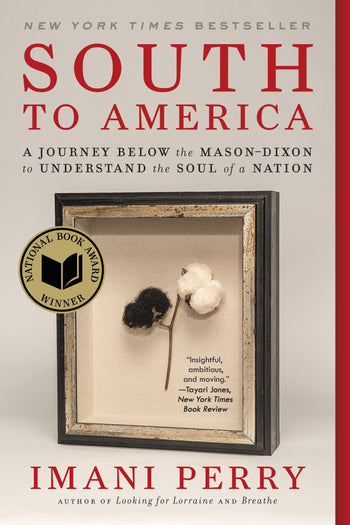
South to America: A Journey Below the Mason-Dixon to Understand the Soul of a Nation (2022) by Imani Perry is a revelatory journey by a Black daughter of the South that both recognizes and comes to grips with the complexity of the Southern experience, history, and culture. In South to America Perry is traveling home to “help the reader dig deep enough to discover the truth,” and to help us “gain a more honest rendering of the country.”
Why We Love Baseball: A History in 50 Moments (2023) by Joe Posnanski may not be the most important book you’ll read this year, but if you care at all about the game this will be the book you’ll cherish. This is a love letter of the best kind, bringing together the long history of the game with the uniqueness of the moment, all told with Posnanski’s “trademark wit, encyclopedic knowledge, and acute observations.”
Democracy Awakening: Notes on the State of America (2023) by Heather Cox Richardson is an accessible, engaging, and important work that tells how America got to this difficult moment in time. Richardson’s newest volume shows that there has always been a small group of wealthy people who have made war on American ideals, using language and false history as their tools of choice. But we also have a history of those on the margins — women, people of color, immigrants — who have fought equally hard to push America to live up to its ideals.
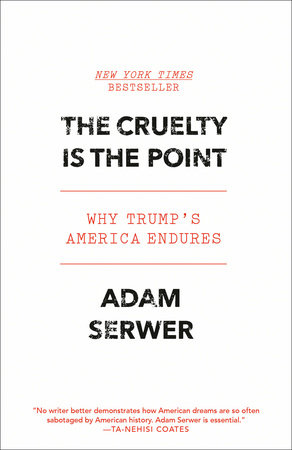
The Cruelty is the Point: Why Trump’s America Endures (2022) by journalist Adam Serwertakes the reader back through the unvarnished history that made Donald Trump and today’s cruelty possible. Serwer repeatedly shows how white Americans have professed a belief in racial equality while pointedly declining to put the necessary laws and policies in place to see it to fruition.
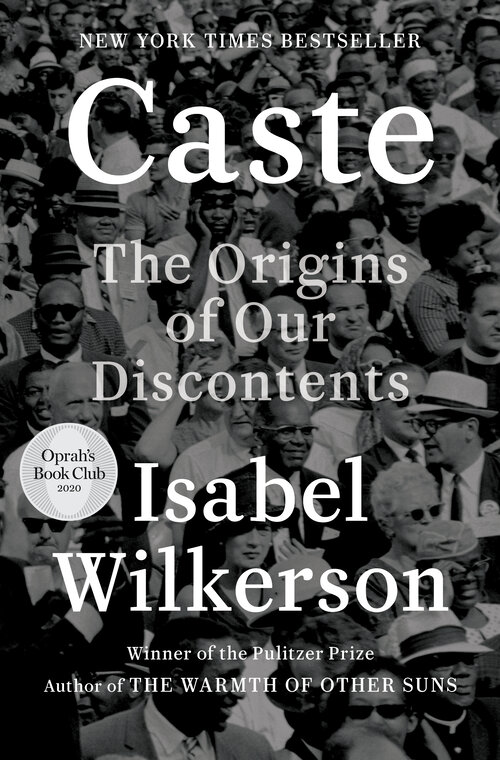
Caste: The Origins of our Discontent (2020) by Isabel Wilkerson is the latest work by a writer who takes stories we thought we knew and pushes us to look at them through a different lens. Wilkerson writes persuasively, clearly, and honestly about the American failure of character and our unwillingness to see that the hierarchy built only on skin color — the “infrastructure of our divisions” — has been in place since our founding as a nation.
Author interviews (talking with writers) . . . in alphabetical order by author
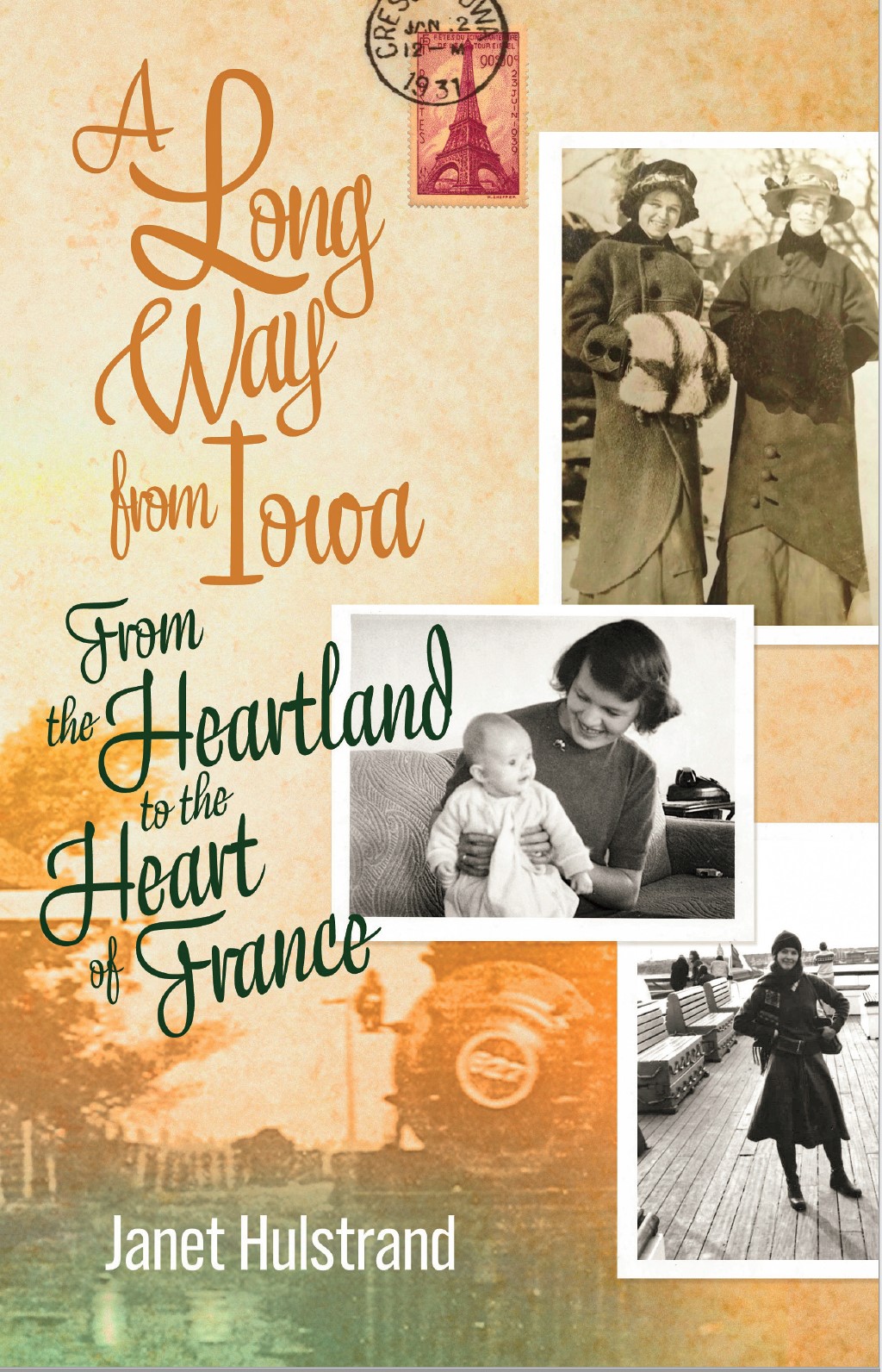
A Long Way from Iowa: From the Heartland to the Heart of France (2023) by Janet Hulstrand is a delightful memoir that takes the reader from a grandmother’s hometown in Iowa to the author’s home in the French countryside. Along the way we learn much about Janet’s journey, including the complicated relationship with the two women who fueled her love for learning, exploration, and writing.
Never Say Whatever: How Small Decisions Make a Big Difference (2023) by Dr. Richard A. Moran reveals how the W-word is a career — and life — killer. The choices we make, even the small ones, help us pivot toward the life and career we want. Rich shares insights he’s uncovered, including how it becomes much harder to find the life we want if we tend to rely on “whatever” as a substitute for decision-making.
Books and Our Town: The History of the Rutherford County Library System (2023) by Lisa R. Ramsay is a wonderful addition to the story of America’s love affair with public libraries. After a newspaper editorial encouraged the citizens of Murfreesboro, Tennessee, to create a public library, Henry T. Linebaugh answered the call. For its 75th anniversary, Ramsay has gathered a rich array of stories that tell how Linebaugh Library and its branches became essential parts of my hometown.
AMEN? Questions for a God I Hope Exists (2022) by Julia Rocchi is full of wisdom, vulnerability, and questions asked in an open and seeking spirit. Essays, quotations, poems, and prayers probe the mysteries that make up life in what one reviewer sees as, “a psalter for the post-modern, exhausted age.”
Playing Authors: An Anthology (2023) is a collection by 18 writers asked to consider the question of authorship. “Literary mashups, personal essays, alternative history, and other disobedient forms” are included in this work, beginning with the sad and insightful and laugh-out-loud funny “Hemingway Goes on Book Tour.” I chat with Robyn Ryle about inspiration, the challenges of modern publishing, and imagining other famous authors in the rat race of today’s book tour.
Your City is Sick (2023) by Jeff Siegler is a deep dive into how the various causes of community malaise have led to the dysfunction we see today. Like a blunt yet perceptive doctor, Jeff first helps us understand the disease and then — in straightforward, no-holds-barred language — he prescribes treatments to push his readers to transform their cities through relentless, incremental improvements.
History and biography (and all that entails)
A Fever in the Heartland: The Ku Klux Klan’s Plot to Take Over America, and the Woman Who Stopped Them (2023) by Timothy Egan is a page-turning true-life historical thriller of the rise and fall of the powerful Indiana chapter of Ku Klux Klan and D.C. Stephenson, the charismatic, ethically unmoored con man at its helm. “A man who didn’t care about shattering every convention, and then found new ways to vandalize the contract that allowed free people to govern themselves, could do unthinkable damage,” writes Egan. Sound familiar?
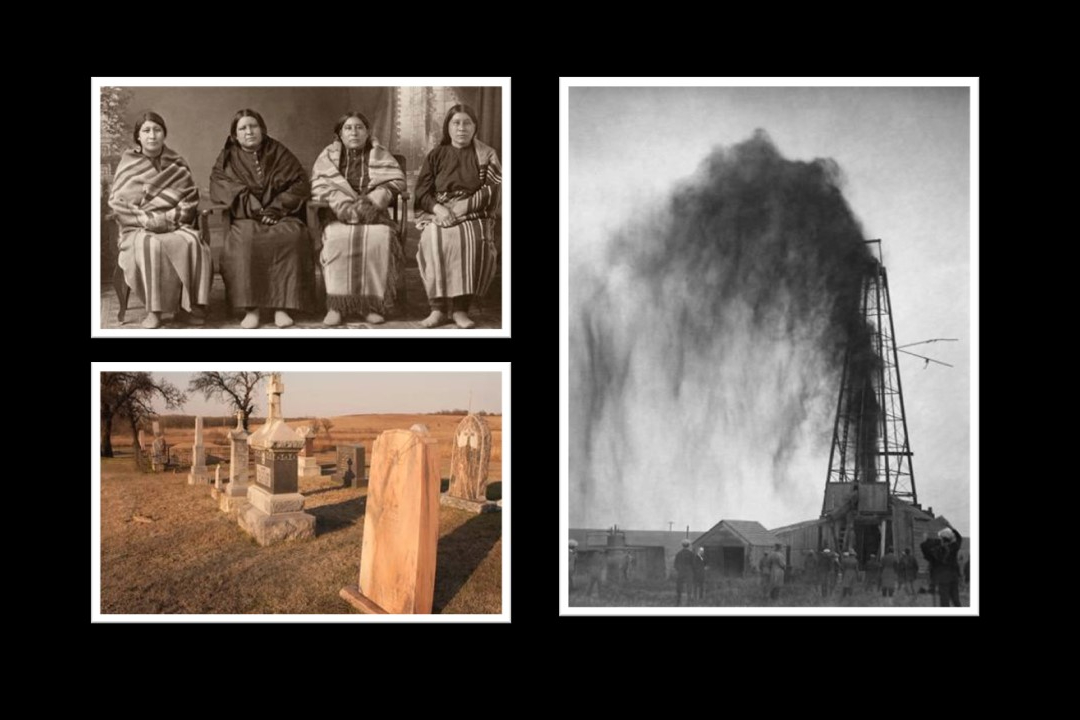
Killers of the Flower Moon: The Osage Murders and the Birth of the FBI (2017) by David Grann takes the reader through an evil crime spree arising from white settlers’ attempted dispossession of the Osage Indian’s Oklahoma lands and oil riches, exposing once again the dark and odious underbelly of race and greed in America.
The Alaska Native Reader: History, Culture, Politics (2009) edited by Maria Sháa Tláa Williams is a good place to seek understanding of the Indigenous history and perspective in our 49th state, as opposed to the Alaska history often told through the stories of “Russian fur hunters and American gold miners, of salmon canneries and oil pipelines.”
Life on the Mississippi: An Epic American Adventure (2022) by Rinker Buck tells of the author’s 2016 quest to take a flatboat from Pittsburgh to New Orleans, recreating the approximate route traveled by millions of Americans in the early 19th century and an adventure undertaken to set the history straight.
Beaverland: How One Weird Rodent Made America(2022) by Leila Philip is a fascinating look at the one animal, besides humans, that has an inordinate impact on their environment. A delightful storyteller, Philip came to her fascination with the weird rodent that scientists dub “ecosystem engineers” when she discovered a group of beavers in a pond near her home. When they disappeared, she was determined to find out more about these creatures.
Thinning Blood: A Memoir of Family, Myth, and Identity (2023) by Leah Myers is one young Native American’s fierce piece of personal history. Myers, who may be the last member of the Jamestown S’Klallam Tribe in her family line due to strict blood quantum laws, is searching for ways to ensure that her identity, her family’s story, and the tribe’s history in the Pacific Northwest’s Olympic Peninsula is not lost forever.
The Young Man (2022) by Annie Ernaux is an account by the 2022 winner of the Nobel Prize for Literature of her love affair with A., a man some 30 years younger, and Ernaux’s exploration of themes of the movement back and forth between youth and age, of memory and time, of misogyny and class, of life’s pitfalls and pleasures.
Bad Blood: Secrets and Lies in a Silicon Valley Startup (2018 with a 2020 afterword) by John Carreyrou is the story of the building of the myth and the ultimate disgrace of Elizabeth Holmes. The Theranos founder claimed to have invented technology that could accurately test for a range of conditions using just a few drops of blood, ultimately raising $945 million from a well-known list of investors. Yet her story began to unravel in 2015 after a Wall Street Journal investigation written by Carreyrou.
How to Resist Amazon and Why (2022) by Danny Caine makes the case for resisting what at times seems to be the takeover of the world by this corporate behemoth.
Murder mysteries (my year of reading dangerously)
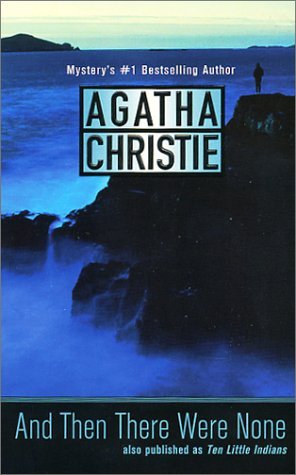
And Then There Were None (1939), the classic Agatha Christie mystery, is the book that made Christie the best-selling novelist of all time, and it is a fitting work to feature for my year of reading murder mysteries. The plot is a delicious puzzle as ten strangers arrive on an island only to be picked off one by one. Copies of an ominous nursery rhyme hanging in each room suggests the awful fates of those who are left. There is no one else on the island, so who, exactly, is the murderer?
The Murder on the Links (1923) by Agatha Christie begins with the famous Belgian detective Hercule Poirot finding his client stabbed to death, lying in a shallow grave on a golf course, wearing only an overcoat and his underwear. Poirot has a nagging suspicion that he’s seen this crime before.
Funerals are Fatal (1953) by Agatha Christie opens as the wealthy head of the family fortune dies suddenly in his Victorian mansion, followed quickly by the savage murder of his sister the next day in her home. Her remark at the funeral, suggesting her brother was murdered, suddenly takes on a chilling significance.
Dead Man’s Folly (1956) by Agatha Christie finds the famous crime writer, Ariadne Oliver organizing a mock murder for a party, and calling her old friend, the world-renowned detective Hercule Poirot, to join her because she feels something sinister is afoot.
Eight Perfect Murders (2020) by Peter Swanson begins as we learn that bookseller and mystery aficionado Malcolm Kershaw once wrote a blog post titled Eight Perfect Murders that listed the genre’s most unsolvable murders. An FBI agent has studied a number of unsolved crimes and has a hunch that someone is working their way through the list and leaving dead bodies in their wake.
Maigret and the Lazy Burglar (1961) by Georges Simenon finds detective chief inspector Jules Maigret investigating a woman and her son-in-law who were lovers, just as her husband and their daughter-in-law were lovers; a mother who doesn’t seem too concerned to be left without any means of support when her son is found dead; and a bar/brothel owner — the “lovely Rosalie” — who has an “obscenely picturesque way of expressing herself.”
The Fourth Man (2005) by K.O. Dahl is a smart, dark, complex, and ultimately very satisfying crime novel. Detective Inspector Frank Frølich of the Oslo Police falls in love with a woman who had inadvertently endangered both his police raid and her own life, only to discover that Elisabeth Faremo is the sister of a hardened and wanted member of a local crime gang.
Death in a Strange Country (1993) by Donna Leon is the second in what has become a 32-book series featuring the Venetian detective Guido Brunetti in a story where we fear that Brunetti’s great detective work will come to naught until a distraught and vengeful Sicilian mother provides some small sense of justice in this world of deceit and destruction of things beautiful and meaningful.
The Spy Who Came in From the Cold (1963) by John le Carré begins as Alec Leamas, the head of the West Berlin Station for British Intelligence, watches as his last undercover agent is shot down trying to cross the Berlin Wall by East German sentries. Leamas is recalled to London where he is given `a chance for revenge, but at the end of a number of twists and turns he has a choice to make, one where following his heart means certain death.
Whose Body? (1923) by Dorothy L. Sayers is a delightful period puzzle which opens as Lord Peter Wimsey receives a call from his mother asking for his assistance in helping clear her architect of suspicion of murder. It seems that overnight a body, clad only with a pair of fashionable pince-nez, has appeared in his bathtub.
The Thursday Murder Club (2020) by Richard Osman takes us to Coopers Chase, a high-end and peaceful British retirement village where four residents meet weekly to discuss unsolved crimes. When the developer and his lieutenant are murdered, the septuagenarian sleuths have real-life cases to solve in this light, witty, and big-hearted mystery novel.
Fiction (novels, short stories, poetry)
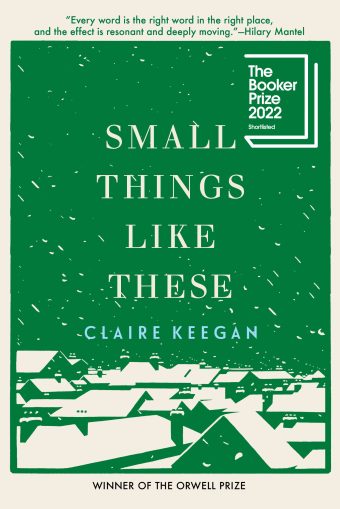
Small Things Like These (2021) by Claire Keegan is a short yet deeply moving novel set in small-town Ireland during the Christmas season of 1985. Bill Furlong is a coal and timber merchant who, while delivering a load to the local convent, makes a discovery that forces him to consider his past and the choices he must make. This little gem of a book brings us face-to-face, in a simple yet memorable story, with how we confront our past while also serving as a deeply moving story of “hope, quiet heroism, and empathy.”
Blue Iris: Poems and Essays (2004) by Mary Oliver is a collection of ten new poems at the time of publication, two dozen of her poems written over the prior two decades, and two previously unpublished essays on the beauty and wonder of plants.
Somebody Loves You, Mr. Hatch (1991) by Eileen Spinelli is — to put it simply — the best Valentine’s Day book ever. The lonely Mr. Hatch discovers that he has a secret admirer, and — as he learns who loves him — the answer is more wonderful than he ever imagined.
Theology and more (thinking about purpose and mindfulness)
To Speak a Defiant Word: Sermons and Speeches on Justice and Transformation(2023)by Pauli Murray; edited by Anthony B. Pinn brings together the most important sermons, lectures, and speeches from 1960 through 1985 written by one of the most consequential and hopeful of 20th century Americans. Murray was a nonbinary African American member of the LGBTQ community, a civil rights and women’s rights activist, an author and poet, and a brilliant legal scholar who became the first female African American Episcopal priest in the United States and a saint in the Episcopal Church. Murray’s religious ideas and her sense of ministry evolved over a period that became one of the most tumultuous in American history.
The Half Known Life: In Search of Paradise (2023) by Pico Iyer leads us on an external odyssey and an internal journey to paradise where Iyer shows us unimaginably beautiful landscapes that, in many instances, have also seen incalculable suffering.
The Four Loves (1960) by C.S. Lewis takes the reader through a description of four different types of love: “affection, the most basic form; friendship, the rarest and perhaps most insightful; Eros, passionate love; charity, the greatest and least selfish.”
Sports (really just baseball)
The Church of Baseball: The Making of Bull Durham (2022) by Ron Shelton is a gem of a book on multiple levels. Full disclosure: I love Bull Durham. Shelton, a former minor league baseball player turned writer and director, has a passion for this multi-faceted story that still shines through 35 years after the film was released. And the tale of how Shelton — along with Kevin Costner and Susan Sarandon — pursued every angle to make this film — in spite of great odds and with challenges arising around every corner — is worth knowing as well.
Outbursts of radical common sense and whatever else tickled my fancy (otherwise known as the miscellaneous section)
Masters of Tonewood: The Hidden Art of Fine Stringed-Instrument Making(2022) by poet and author Jeffrey Greene is dedicated to exploring how the mysterious personalities of fine stringed instrument are acquired. Greene takes us on a delightful tour of the seven key European “musical forests” where the conditions are such that the Norway spruce — a key tonewood used in instrument making — can thrive. He visits with musicians, luthiers, millers, and foresters in this pleasing and illuminating deep dive into a fascinating world.
Rethink: The Surprising History of New Ideas (2016) by Steven Poole is an insightful work around the story of how many of our new and seemingly innovative ideas are actually based on old ideas that were mocked or ignored for decades if not centuries.
Enjoy!
More to come…
DJB
*To check out previous lists, click here for the posts from
“One of the most precious gifts of life is a sense of wonderment, a sense of awe, a sense of the holy.”
These are the first words of a Christmas sermon delivered in Washington, D.C. by the Rev. Dr. Pauli Murray on December 25, 1977. Pauli Murray — born in Baltimore in 1910 and raised during the Jim Crow era in the segregated Southern community of Durham, North Carolina, with all that entails — was a nonbinary African American member of the LGBTQ community, a civil rights and women’s rights activist, the brilliant legal scholar who influenced Ruth Bader Ginsberg and who is responsible for producing what Justice Thurgood Marshall called “the Bible of Civil Rights law,” a poet and writer, the first female African American Episcopal priest in the United States, and a saint in the Episcopal Church. Murray offered communion for the first time in 1977 at Chapel of the Cross in Chapel Hill, North Carolina, where her grandmother had been baptized 123 years earlier as a slave.
To Speak a Defiant Word: Sermons and Speeches on Justice and Transformation (2023) by Pauli Murray; edited by Anthony B. Pinn brings together the most important sermons, lectures, and speeches from 1960 through 1985 written by one of the most consequential and hopeful of 20th century Americans. In this work one sees how Murray’s religious ideas and her sense of ministry evolved over a period that became one of the most tumultuous in American history, not unlike the one we are living in today. Yet through it all, she remained struck by a sense of wonder and hopefulness, which makes her Christmas message an appropriate one to hear again this year, on this Christmas Day. Here is an excerpt from that sermon.
One of the most precious gifts of life is a sense of wonderment, a sense of awe, a sense of the holy. Yet often we are so consumed by our own troubles or we become so conditioned to extravagance in modern living that we are in danger of losing this gift. We are assaulted by constant images, instant coverage by on-the-spot-television of today’s significant events, which are soon crowded out of memory by the next day’s news . . . As the historian Arthur Schlesinger, Jr. commented a few days ago . . . the insatiable consumption of novelty by our high-velocity age has enfeebled our capacity for wonder.” The wonder of Christmas is often overshadowed by the bustling preparations for the holiday season . . .
But if we take the time to listen to Luke’s beautiful Gospel narrative of the birth of Christ, we cannot help but be filled with wonderment — not so much because of an angelic host singing “Glory to God in the Highest” but because of the utter simplicity and unpretentiousness of that heavenly event in Bethlehem. As one biblical scholar has said, “God, who is the source and meaning of all life, reveals himself in a little child coming unnoticed in the stable of an unregarded town,” as if to say to us, “here in this lowly place in the most ordinary circumstances, I have come to dwell with you.”
For what could have been more ordinary — and yet more amazing — than the Prince of Peace being born among animals? What could be more astonishing by today’s standards than the fact that the universal Savior who came to demonstrate God’s great love for all human beings appeared among the poor and needy, his coming first announced to lowly shepherds out in the field?
And what is more remarkable in a commercialized society than the simple truth that the greatest gift of Christmas is the gift of oneself? . . .
The wonder of Christmas is that the greatest event in the history of humanity came silently in the night . . . The wonder of Christmas is that in the darkest hour of loneliness and despair, new hope is born if we have faith. . . .
The wonder of Christmas is that suffering and death are not the last word. Emmanuel — God — is with us in every human situation. The little unprotected baby in the manger and the desolate man on the cross revealed that where God is least expected, in the most unlikely times and places — whether at the beginning of life or in the emptiness of death — God is at hand! In every agony, every crisis we are not alone. The light of God’s eternal love shines in the darkness and we shall be safe.
Wishing you a Christmas season filled with wonderment, awe, holiness, and happiness.
With this Saturday Soundtrackfalling just before Christmas Eve, I am sending a gift to readers of some of my favorite vocal ensembles singing several well-loved Yuletide tunes.
We have been hearing O Come, O Come, Emmanuel throughout Advent. Here VOCES8 is joined by members of Apollo5 and The VOCES8 Foundation Choir and Orchestra to perform Taylor Scott Davis’s beautiful arrangement of the tune.
Jesus Christ the Apple Tree is another pre-Christmas Day piece, as Christ speaks from Mary’s womb in this well-loved and familiar tune. It is performed here by Ensemble Altera (including our son, Andrew Bearden Brown) from a 2020 pandemic-era recording (thus the spacing of the singers).
The text of this carol, ‘Jesus Christ the Apple Tree’ is a poem first published in 1784 New Hampshire in a collection prosaically titled ‘Divine Hymns, or Spiritual Songs: for the use of Religious Assemblies and Private Christians’, compiled by Baptist minister Joshua Smith. Whether its provenance is English or American is still the subject of debate, but the transcendentalist beauty of its narrator communing with the divine through nature is not. Elizabeth Poston sets the deeply personal text without affectation in a quiet, almost shape-note hymn style.
Hailed as the leading professional chamber choir in the United States, Ensemble Altera brings beautiful and thoughtful music to every performance. Earlier this month, the group presented a concert of seasonal music in Boston and Providence. Andrew so enjoyed singing this music, including the arresting Michael Garrepy arrangement of O Holy Night which the group just released as a video.
Kenneth Leighton’s The Christ-Child Lay on Mary’s Lap is beautifully performed in this 2016 recording by The Queen’s Six. Based at Windsor Castle, members of The Queen’s Six “make up part of the Lay Clerks of St George’s Chapel, whose homes lie within the Castle walls.”
The lyrics for this piece are from a poem by G.K. Chesterton.
The Christ-child lay on Mary’s lap, His hair was like a light. (O weary, weary were the world, But here is all aright.)
The Christ-child lay on Mary’s breast, His hair was like a star. (O stern and cunning are the kings, But here the true hearts are.)
The Christ-child lay on Mary’s heart, His hair was like a fire. (O weary, weary is the world, But here the world’s desire.)
The Christ-child stood at Mary’s knee, His hair was like a crown. And all the flowers looked up at Him, And all the stars looked down.
VOCES8 has a hauntingly beautiful take on the Ola Gjeilo’s arrangement of Gustav Holst’s In the Bleak Midwinter, based on the well-loved poem by Christina Rossetti.
I love this VOCES8 rendition of the Philip Stopford setting of the Coventry Carol, the traditional English tune dating from the 16th century. Stopford’s Lully, Lulla, Lullay — filmed by VOCES8 in St. Stephen’s Walbrook Church, London — is so haunting, and soprano Eleonore Cockerham’s soft, clear, yet ethereal voice is a treasure.
Finally, we’ll end with a 2021 recording by the sopranos, altos, and countertenors of Ensemble Altera as they sing the traditional English carol Tomorrow Shall Be My Dancing Day in an arrangement by John Rutter. While it first appeared in written form in 1833, the carol is undoubtedly older. “The verses of the hymn progress through the story of Jesus told in his own voice. An innovative feature of the telling is that Jesus’ life is repeatedly characterized as a dance.”
However you celebrate the season, Happy Yuletide to one and all!
December is when “Best of” and “Top Ten” lists spring up in all sorts of places, including More to Come.
This list is your selection of the top posts for the year. Because MTC is not your typical single-focus newsletter, I want to thank you once again for reading this eclectic mix of observations, recollections, and occasional bursts of radical common sense about places that matter, books worth reading, roots music to nourish the soul, the times we live in, and whatever else tickles my fancy. I am so grateful that readers keep checking in, providing feedback through their choices of what’s of interest.
Here’s a baker’s dozen of the top stories from the past year, as selected by the readers of More to Come. And yes you have to go all the way to the end to see what’s #1.
LIMINAL PASSAGES
Three top posts from this year explored passages in life, from birthdays, to retirement, to death.
From certainty to mystery is a perfect description for my life’s history. It is surprising just how much I’ve forgotten since I was sixteen and knew everything. On my sixty-eighth birthday I reflect on a few things I want to accomplish in whatever time is left — most especially to be gratefully aware, not just every day but every hour in a way that leads to true thankfulness.
No longer semi-retired, I have a new life description: Bashing into joy. I’m discovering new worlds while diving deeper into things I love. There is joy in sharing these personal and collective explorations through essays and lectures. Letting go in retirement, relationships, and with long-held expectations can involve disappearance along with a sense of transience and fragility. Disappearance, Kathryn Schulz writes, reminds us to notice, transience to cherish, fragility to defend. “We are here to keep watch, not to keep.”
Letting go of control is hard. Really hard. With all the anxiety and pressure in today’s world, the tendency is to gather all we think we must do and hold on tight. But the fact is that we don’t have that much control, as I learned once again at the funeral of a dear friend. When we open our eyes to how life really works — when we pay attention, in other words — we come to at least see, if not fully accept, the paradox of limitations.
AUTHORS TELL THEIR STORIES
In a series of questions & answers, seven authors graced More to Come this year with their presence. Four of those conversations were among this list of top reader views.
Janet Hulstrand has written a delightful memoir that takes us from her grandmother’s hometown in Iowa to her current home in the French countryside. Along the way we hear much about Janet’s journey. The best journeys are the long ones is the place where Janet and I discuss this testament to family and the writing life.
A 1942 editorial in the Rutherford Courier encouraged the citizens of my hometown to create a public library. Henry T. Linebaugh answered the call. For its 75th anniversary, Lisa Ramsay gathered a rich array of stories that tell how Murfreesboro’s library became an essential part of the community. Lisa and I discuss her work in the post Books for the people.
Sleeping With the Ancestors by Joseph McGill, Jr. and Herb Frazier is a compelling work about a crusading effort to draw attention to the preservation of dwellings where enslaved people lived, worked, and raised their families. A former National Trust colleague, Joe is Changing the narrative one slave dwelling at a time. Joe and I talked about his book and the work to broaden what began as a modest regional effort into a national force.
Julia Rocchi’s is a questioning faith, and in her new book she invites the reader to join in her journey. Essays, quotations, poems, and prayers probe the mysteries that make up life. I was delighted when Julia, a long-time friend, allowed me to ask questions that we explored in A questioning faith.
LIVING A WONDER-SMITTEN LIFE
Throughout the year, I wrote about living with a sense of wonder. Two of those posts rose to this list.
In a remarkable 43-year project, Carol Highsmith has visited all 50 states and photographed the people and places of this incredible country. Hundreds of thousands of these images will eventually be donated copyright free to the American people via the Library of Congress, a project I celebrated in A gift to America.
The New Year is a time when many begin thinking of resolutions. Ten years ago, I established several rules of how I want to live day-to-day. In We live remarkable lives, I review those rules through a summary of eight different posts from the previous year.
FAMILY
I’ve always included family stories as part of this newsletter. Three of those posts from 2023 made this list.
Journeys are often about finding either something we’ve lost or discovery of something we’ve never seen before. And when we’re lucky, a journey with a lifetime partner is one of extraordinary discovery. I’ve been very lucky, as I write on this post for our 41st anniversary.
Andrew was a finalist in the 10th annual Handel Aria Competition in Madison, Wisconsin. I posted videos and photos in A memorable evening of Handel.
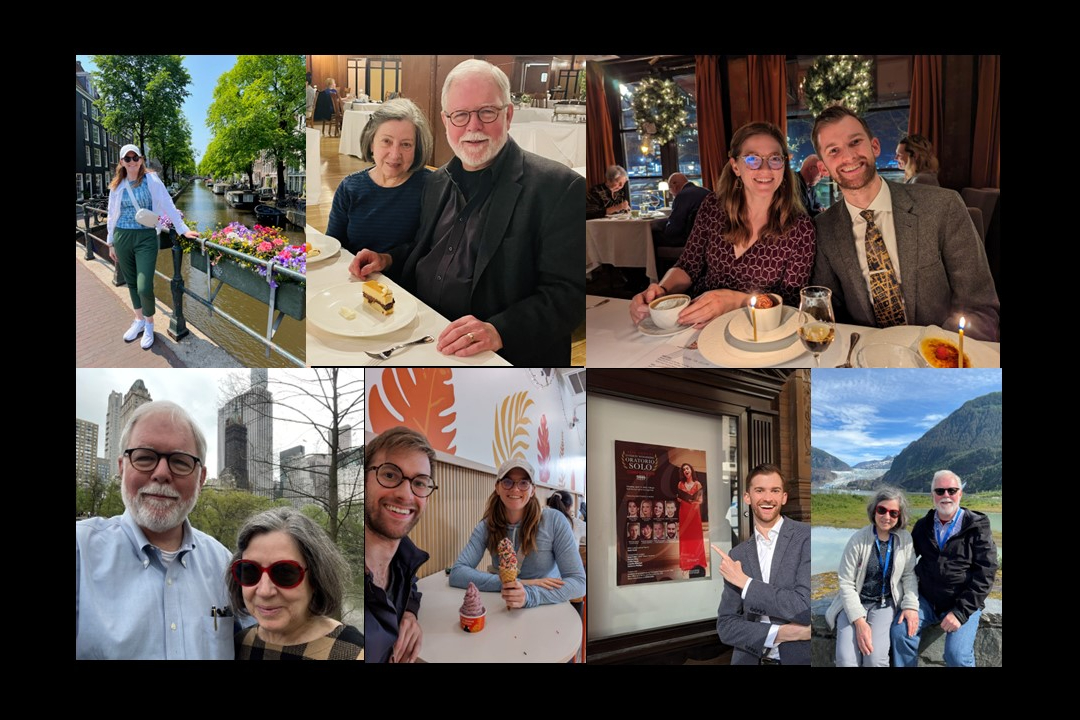
Our year in photos — 2023 is the latest in an annual collection of family photographs that began in 2008.
AND THE WINNER IS . . .
Everyone has someplace they call home. Which may be the reason that my thoughts on what home means to me — as found in the essay Home is . . . — resonated with so many of you.
A writer I follow on Substack posted an essay entitled What our books reveal about us. I was intrigued and — after reviewing the 65 books I read in 2023 — decided to answer that question for myself.
You’ll see the list of the 65 next Wednesday. In the meantime, here are eight totally subjective observations about what I discovered.
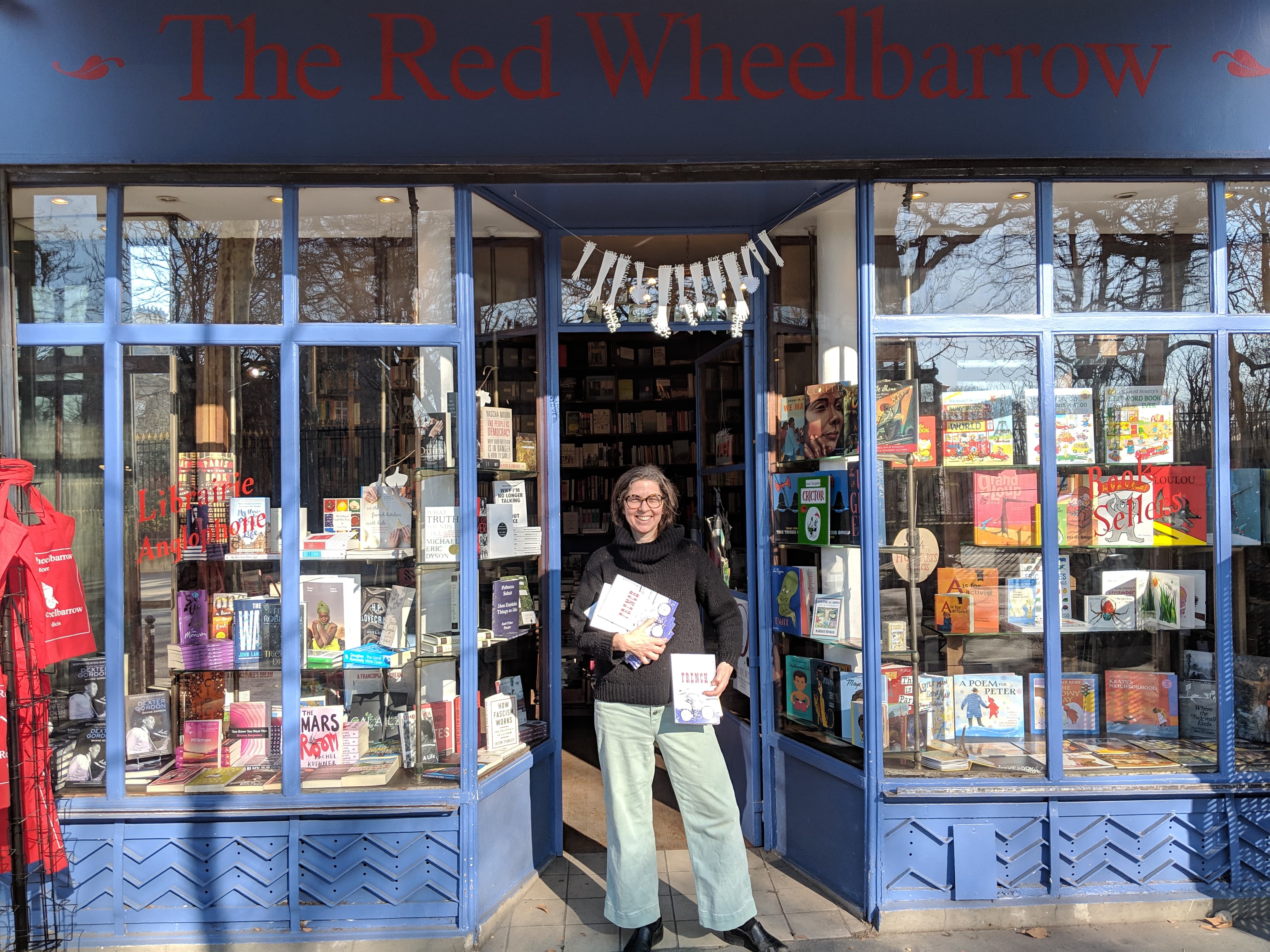
The Red Wheelbarrow bookstore in Paris (credit: Janet Hulstrand)
I may be a planner by training, but I don’t always follow the plan — I began the year with a six-month TBR list (and even had all the books in nice, neat stacks). However, more than one-third of the books I eventually read (24 of 65) were published in 2023 or late in 2022, meaning I bought them during the year at some wonderful independent bookstore.
I am open to suggestions — 32 of the 65 books — almost half — were recommended by friends and other readers. And many recommended by readers at the end of last year are still sitting in my TRB pile. I’ll get to them eventually!
I can disappear down rabbit holes — Late last year I read Kathryn Schulz’s beautiful memoir Lost & Found, setting me on a quest to think about wonder and awe. I’m well past ten books that touch on that topic and I know there’s more to come.
I am reading more spirituality and theology than I would have guessed — Perhaps it is because I’m now in my third stage in life, but I find myself drawn to writers who think about things bigger than each of us individually. I’m especially appreciative of those who consider the spiritual world from perspectives that differ from mine.
I am so proud of friends who publish books — Writing well is hard. Writing a good book is really hard. Publishing a book that others will read is even harder. At least seven people I know from different parts of my life published books in 2023. My Author Q&As were how I spread the word.
I believe that history can point the way forward — The late historian David McCullough was fond of saying that history “is an antidote to self-pity and self-importance…history is a lesson in proportions.” Abagail Adams wrote to her son — the future president John Quincy Adams — that “the habits of a vigorous mind are born in contending with difficulties.” In 2023, one-quarter of the books I read were histories, and almost all spoke to what the past can tell us about today’s sometimes trying and perplexing world.
Diversions were more fun than I suspected — By now anyone who reads this newsletter knows that I have been on a binge reading murder mysteries in 2023. I’ve enjoyed it much more than I feel is legal. You’ll have to figure out what that means.
I still need to broaden my perspective — I’ve made the intentional choice to read from a diverse group of authors writing about topics that may be outside my comfort zone. This past year, ten of the books I read came from ethnically diverse authors. That can improve, but I’m already seeing changes in my perspective.
Think about it: what do the books you’ve read reveal about you?
Our nation’s natural storytelling instincts crave simplicity and clarity. As a result, we often turn to uncomplicated national origin stories or discuss white supremacy and racism as a black/white binary. These issues, however, are more complex than what I learned in school.
Rather than beginning with the colonies declaring their independence in 1776 from the British throne or explaining our racism from the introduction of the first enslaved Africans on American shores in 1619, perhaps — to truly understand the origins of modern America — we need to go all the way back to 1452.
The Hidden Roots of White Supremacy and the Path to a Shared American Future (2023) by Robert P. Jones begins with several clear and powerful stories and ends with a question that, though difficult, must be answered if we are to illuminate the path forward. Jones has crafted a searing yet courageous look at contemporary issues around race set within the context of a 15th century church doctrine that haunts our lives, laws, and politics to this day.
On June 18, 1452, Pope Nicholas V issued the “Doctrine of Discovery” that “merged the interests of European imperialism, including the African slave trade, with Christian missionary zeal.” That particular papal doctrine granted the Portuguese king the following rights:
To invade, search out, capture, vanquish, and subdue all Saracens (Muslims) and pagans whatsoever, and other enemies of Christ wheresoever placed, and the kingdoms, dukedoms, principalities, dominions, possessions, and all movable and immovable goods whatsoever held and possessed by them and to reduce their persons to perpetual slavery.
When Columbus returns from his first voyage in 1493, Pope Alexander VI extends this papal bull to validate Spain’s ownership rights of “previously undiscovered” lands in the Americas. Once again, all non-Christians are “enemies” and thus not deserving of political or human rights. They can be placed in perpetual slavery and their land and possessions can be taken over by Christian nations and rulers. The Doctrine also establishes a process whereby the competing European nations could make claims and take treasure without undue bloodshed among themselves.
Jones shows how so much of our law, public policy, history, and present-day politics revolves around this 15th century license to pillage and loot land that was granted by the person western Christians considered “the Vicar of Christ on Earth.”
The Doctrine is expanded over time so that it is used by Europeans and Americans to stake claims on indigenous lands and to marginalize and/or enslave those who lived there. William Henry Powell’s dramatic painting of Hernando De Soto’s “discovery” of the Mississippi River and his “claiming” of this land for Spain was all based on the Doctrine of Discovery.
When President Thomas Jefferson agreed to the 1803 Louisiana Purchase for $15 million, the U.S. was not acquiring title to this land from France. “Rather, it codified a transfer from France to the United States,” based on the Doctrine of Discovery, “of the right to assert dominion over Native peoples in that area without interference or competition from other European powers.”
Think about how that differs from the history we were taught.
As recently as 2005 in Sherrill v. Oneida, Supreme Court Justice Ruth Bader Ginsburg’s first footnote in her 8-1 majority opinion declared, “Under the ‘doctrine of discovery’ . . . fee title to the lands occupied by Indians when the colonists arrived became vested in the sovereign — first the discovering European nation and later the original States and the United States.”
As Jones so eloquently asserts in this thoughtful and important work,
The spirit of the Doctrine of Discovery continues to haunt us today. We remain torn by two mutually incompatible visions of the country. Are we a pluralistic democracy where all, regardless of race or religion, are equal citizens? Or are we a divinely ordained promised land for European Christians?
After a powerful opening story juxtaposing emancipation from slavery with Dakota deportation, Jones has us visit three different communities with histories worth remembering.
Sumner, Mississippi
In the Mississippi Delta, the reader learns of the community’s work to address the history of the murder of Emmett Till in 1955. But Jones also reminds us of the eradication of native Americans in Southern states leading to the horrific Trail of Tears, all in order to create cotton plantations worked by enslaved Africans.
Painting by J. Thullen of the largest mass execution in U.S. history.
In Duluth, Jones recounts the actions of an enraged white mob of approximately ten thousand people lynching three black men in 1920. But he puts it in the context of the largest mass execution in U.S. history of 38 Dakota men in 1862 and the brutal deportation of the Dakota from land that was supposedly protected by treaty . . . until that became inconvenient.
Tulsa Race Massacre
And in Tulsa, Oklahoma, the Tulsa Race Massacre that killed hundreds and destroyed blocks of black-owned businesses in what was known as the “Black Wall Street” resulting in the destruction of generations of wealth was taking place at the same time that white Americans were conducting their “Reign of Terror” on the nearby Osage Indian nation to steal their oil and mineral rights.
Jones chose those communities for their entwined stories of white supremacy that go beyond the simple white/black binary, but also because each has taken steps to repair the damage and the relationships. That work becomes the basis for his final section on a path forward, searching for hope in history.
Robert P. Jones speaking at Takoma Park’s People’s Book
Jones, who was raised a Southern Baptist in Mississippi and holds a PhD in religion from Emory University and a MDiv from Southwestern Baptist Theological Seminary, writes with knowledge and empathy. Yet he also speaks bluntly about the question that must illuminate the path forward for us and for our children: How can we meaningfully respond to being beneficiaries of a crime so plain it cannot be denied and so large it can never be fully righted?
He doesn’t let his readers off the hook. “The paralysis that often cripples discussions of justice is a defense mechanism stemming from a lack of real motivation.”
While we are endlessly creative in fashioning novel ways to kill, disposses, and defraud others, we are hopelessly unimaginative in our efforts to balance the scales of justice. Greed spawns a million schemes, while repentance throws up its hands.
White Christians no longer represent the majority of Americans. But there are still more than enough to derail the future of democracy in America. In the authoritarianism of Donald Trump, we have seen which path millions have chosen. There is a better way forward.
I opine about all manner of things on MTC. In some instances, I even know what I’m talking about. An average of three postings per week is a great deal for anyone to follow. Some (he smiles) may have slipped through the cracks. So, in case you missed it* (or missed more than one), I’m here to help.
In a few days you will see a baker’s dozen of top 2023 posts as identified through reader views. What follows are twelve posts from the past year — one per month plus a bonus essay in place of a December entry — which did not make that list but that I especially enjoyed writing or that conveyed thoughts which I felt you, the readers, would appreciate. Personal favorites, if you will. I hope you enjoy them.
Winter
Image of Odesa’s Opera Theatre building taken by DJB in 2006
Protecting the pearl of the Black Sea (January 26) still resonates with me because of the personal connections made with Ukraine during a 2006 tour as well as the insightful commentary of historian Timothy Snyder on why the world needs a Ukranian victory. His analysis rings as true today as when he wrote it.
Things just take the time they take (February 15) begins with the simple fact that we won’t live forever. 4,000 weeks, to be exact, if we live to be 80 years old. We all know this intellectually, but we structure our lives and our priorities as if our time will stretch on indefinitely. The paradoxical reward for accepting reality’s constraints is that they no longer feel so constraining.
If your practice of gratitude is sporadic, Turning gratitude into thankfulness (March 13) has four tips to help you be “radically grateful.”
Spring
The William Strickland-designed Tennessee State Capitol in springtime
As with much of life, Tennessee is a paradox. The authoritarianism in my home state is not new. It builds on a past but is moving towards a new low. However, I write in A country that was built on a protest (April 10) of how resistance to authoritarianism, also a part of Tennessee’s rich heritage, is alive and well throughout the state today.
Somebody changed the locks (August 19) came amidst new (at the time) allegations of changed locks and deception at Mar-a-Lago. I know, you’re shocked. In a musical twist on the news I turn to Dr. John, who knew that when the locks are changed, “something is definitely going on wrong.”
As we hold the sunlight close during the change of seasons, views of wonder-filled sunrises and sunsets from my travels around the world filled At the break of day (September 7).
Fall
Rock Creek Park (credit: NPS)
In A brilliant love letter to baseball (October 2), I review Joe Posnanski’s loving look at 50 memories (and more) that explain why we love the game.
Moments of resonance (November 27) suggests that as humans we have learned how to fly but seem, in the process, to have lost the ability to dawdle. Hartmut Rosa writes that we should be focusing on “moments of resonance.” I love that phrase, because when things really touch us they resonate within us. Recognition of when we are happy is a first step. When things are going sweetly and peacefully, perhaps we should pause a moment, and then say out loud, “If this isn’t nice, what is?”
As I wrote in A love letter to readers (bonus read from January 3), anyone who writes — whether they do it for a living or just for the hell-of-it — appreciates those individuals who read their works. I’m always deeply touched by the positive feedback from friends and strangers alike who send comments or notes concerning something I’ve written. Plus this post has 35 recommendations for books to read, suggested by MTC readers. If this isn’t nice, what is?
I hope one or more of these posts catches your fancy today.



































 MORE TO COME...