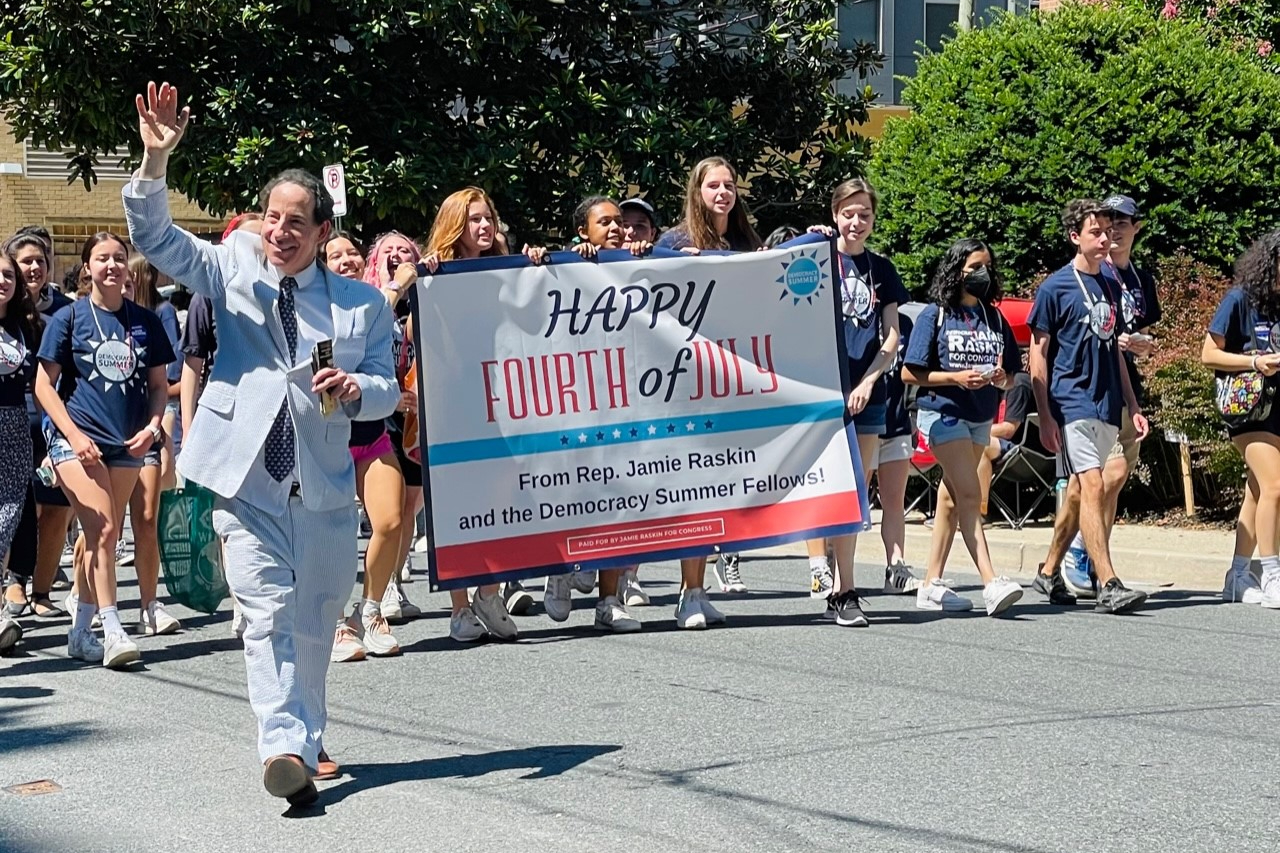
Holidays such as Independence Day are a good time to consider memories. We often plan and celebrate these days of remembrance based upon family traditions or past experiences. On Thursday, for instance, Candice and I will attend the annual Takoma Park Independence Day parade. I’ll take another picture of our congressman to add to my collection. Later, we’ll fire up the grill for dinner. That’s what we do.
My picture of Congressman Jamie Raskin from the 2022 Takoma Park July 4th parade that recently made the New York Times
Memory is an essential part of consciousness. While memory is the remembrance of things that have happened, it is not always about the past. The writer Richard Powers suggests that “Life has a way of talking to the future. It’s called memory.”
It is important, however, to remember Marie Howe‘s assertion that “memory is a poet, not a historian.” Memories fade with time and they change as others share the story of the same event. Points get lost—or found—in translation. What begins as metaphor ends up being repeated as fact. Memories are shaped and reshaped in thousands of ways we seldom recognize or acknowledge. Our memories are not infallible. All of which suggests that there will be differences in how we see places, whether in our hometown or halfway around the world.
These truths hit home recently as I was cleaning out the garage.
My mother kept amazing scrapbooks. I don’t know how she did it with five children, but I came across two of mine in our ongoing project of decluttering the house. They were full of photographs, mom’s notes, and . . . oh, yes . . . this little bit of history.
I’ve long reminded my siblings that I was the only one in the family to win a national award in a cutest baby contest. And here’s the proof!
But then I came face-to-face with the realization that at times my memory is more poetic than historic. I’ve often told the story that I went to my first major league baseball game at Wrigley Field during a 1964 family vacation to Chicago. I wax eloquently about how we saw the Cubs play the St. Louis Cardinals in the year the Cards were World Series Champions.
Except I had the wrong year. Mom’s notes in the scrapbook were clear: our Chicago vacation took place in 1963.
Now I’ll have to revise my stories. And my memories.
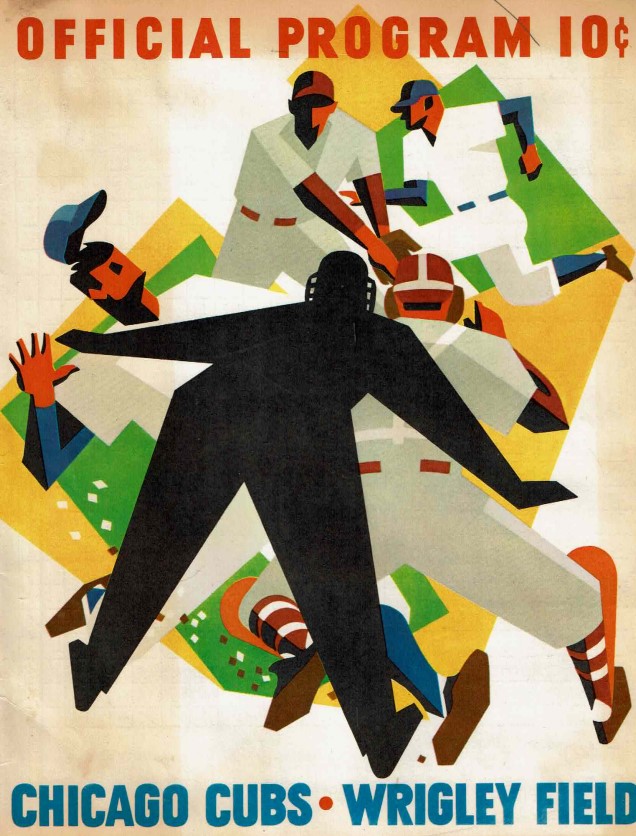
Mom helpfully pasted the program in my scrapbook, where it still reminds me of the famous names in both dugouts. Hall-of-Famers Stan “The Man” Musial and Bob Gibson were there that day, along with Curt Flood who should be in the Hall of Fame except for the fact that the owners blacklisted him for his role in gaining free agency for ballplayers. There were other excellent everyday players for the Cards such as Ken Boyer and Tim McCarver (who made the HOF as a broadcaster).
Not everyone was great, of course. Outfielder Charley James said the following about his most famous Cardinal teammate that year:
“Stan (Musial) and I get along very well. He goes his way and I go mine. Stan goes to the deposit window and I go to the credit department.”
The Cubbies weren’t as good, of course, but they still featured Hall-of-Famers Ernie “Let’s play two” Banks, Lou Brock (who had fine seasons with the Cubs before going over and completing his HOF career with the Cardinals), Ron Santo, and Billy Williams. Their pitchers were all forgettable.
The program was a treasure trove of information and memories.
Box seats for the Friday, July 26, 1963, game would set you back $3.00. I sat in that section a few years ago, with tickets that were a gift from a friend. If $3 was too rich for your wallet in 1963 you could sit in the grandstand for $1.51 (tax included) for adults and 60 cents for children. This is where I sat for that memorable game with my family. Then there were also the bleacher seats (where I’ve also watched a game) which would set you back 75 cents. I’m pretty sure I paid much more than that in 2012.
DJB (in full Nats gear) with former colleagues from the National Trust in the bleachers at Chicago’s Wrigley Field in 2012. Regular MTC reader John Hildreth stands at the end of the row.
Because baseball keeps such wonderful records (at least for the segregated white major leagues), I now know that the Cards won that 1963 game 4-1. Musial, in his last year, did not play. The two-time Cy Young Award winner (for best pitcher) and one-time league MVP Bob Gibson was the winning pitcher that day, going a full nine innings. Both Williams and Banks doubled off the tough righthander, while Boyer had the game’s only homerun for the Cardinals. Gibson—a great athlete and a ferocious competitor (his Wins Above Replacement was 89.2, in the top 50 in baseball history)—got an RBI that day. In 2024 we don’t even let the pitchers hit.
Played in front of 17,917 fans, including the Brown family, the game took a brisk 2:04.
Emotions run through places.
Let your memories take you back to some wonderful spot with family and friends this week. But don’t be too hard on yourself if a few of the facts slip. Just get the poetry right.
President Joe Biden had a bad debate. For normal people, bad days happen along with the good. Joe Biden is a normal person.
Donald Trump also had a bad debate, though you wouldn’t know it from the coverage. Because he can’t help himself and lies whenever he opens his mouth, Trump missed “a great opportunity to reset his candidacy and greatly strengthen his position.” Donald Trump is not a normal person.
Our national media, which is addicted to clickbait and the priorities of oligarch ownership failed the nation. On the CNN-sponsored “debate,” to give one of many egregious examples, Trump claimed that Democrats allow “after birth” abortion. The moderators’ only response was “thank you.” As Robert Reich wrote: “Memo to the media: Calling out Trump’s lies isn’t ‘biased.’ It’s your job.”
The guardrails that have been constructed over the years to protect democracy will not hold without a fight against a sustained and decades-long campaign to bring them down. A free press, free-and-fair elections, and an impartial judiciary all require support and hard work by every generation if they are to function as necessary to maintain a government by and for the people.
In the end, it’s up to us as citizens and voters to demand the type of government and institutions needed for all Americans—not just the wealthy and politically connected—to enjoy the benefits of that democracy.
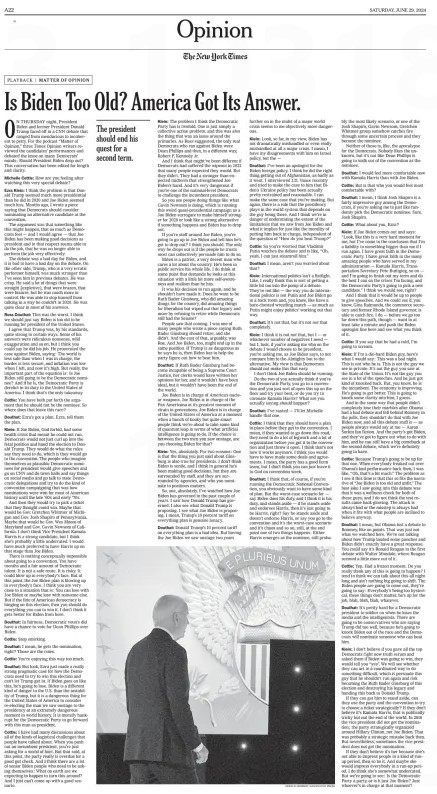
On Saturday morning I opened The New York Times and found a full-page onslaught by three Timesopinion columnists confident of their own righteousness with the clickbait title: “Is Biden Too Old? America Got Its Answer?” *
I think a better headline would be, “Is The New York Times a disgrace to journalism? America got its answer.” **
I think the problem is that Donald Trump seemed much more presidential than he did in 2020 and Joe Biden seemed much less.
Seriously.
NYT Full-page Opinion section on Saturday, June 29th
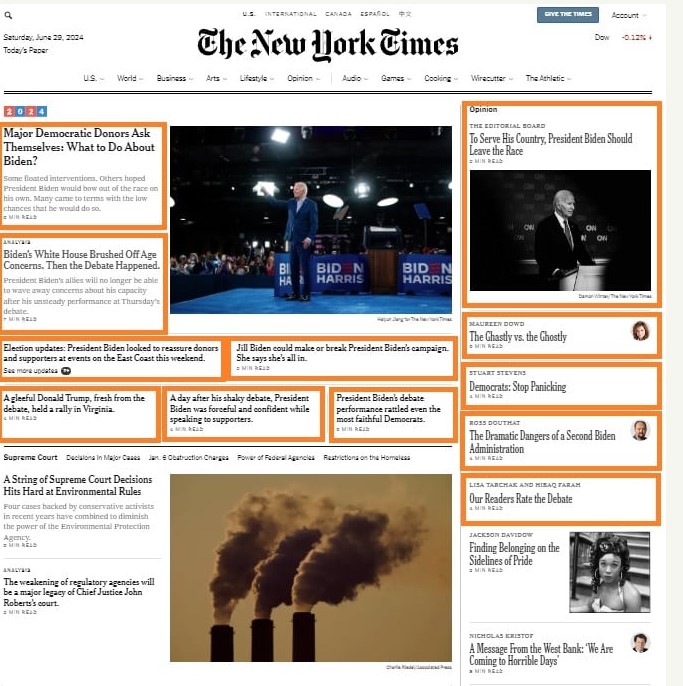
These opinion columnists weren’t outliers. No, the “news” division of the Times joined with the editorial page to hammer on Biden’s debate performance. It is the “but her e-mails” performance all over again.
Source: Emptywheel.net
Since when do appearances matter when it comes to choosing the leader of the free world? Abraham Lincoln and Franklin Roosevelt didn’t “look” presidential, but they both did a damn good job of saving the nation.
Let’s just remind ourselves who it is that the oh-so-smart Mr. Klein said seems “so much more presidential.” That would be the convicted felon and adjudicated sexual abuser who paid hush money to a sex worker, stole classified documents, and is on record believing veterans are suckers and losers. Virtually none of that came up in the “debate,” much less in the Times gusher of coverage against Biden as being “too old.”
The “presidential-appearing” presumed 2024 nominee of the Republican Party—who has promised government by the few and for the few—is a convicted felon. Thirty-four times over. A jury of his peers found that he falsified records to cover up a hush money payment to a sex worker in order to change the results of the 2016 election.
In addition, his business was found guilty of fraud and a jury held him liable for sexual abuse—rape, in other words—in a civil trial. And perhaps the worst charges against him as a former president—inciting a riot to overturn the will of the people in a free and fair election and stealing state secrets—are bogged down as judges and justices forget their oath of office and follow his bidding.
The Republicans seem intent on backing Donald Trump no matter what he says or does and no matter how much of the American public disagrees with its policies. And please send me the link if The New York Times has ever run a full-page editorial saying that Donald Trump should step down from seeking the nomination in 2024.
Oh, we’ve already seen their response. On the day after Trump’s conviction, the Times editorial board published an op-ed—Donald Trump, Felon—in which they made no call for Trump to step down as the GOP candidate.
Seriously.
For 90 minutes on Thursday, Mr. Trump (not Mr. President, as the CNN moderators insisted on calling him) “unleashed a virulent anti-American rant.” To gain a sense of equilibrium I suggest you consider:
Other voices on the Times opinion page who suggest that “it’s baffling that so many Democrats are failing to rally around a wildly successful president after one bad night.”
Historians, who remind us that Trump was using “a rhetorical technique in which someone throws out a fast string of lies, non-sequiturs, and specious arguments, so many that it is impossible to fact-check or rebut them in the amount of time it took to say them.”
And journalists who’ve been there, seen that, and understand the preposterous suggestions coming from the Times editorial board.
If you think that one debate four months before the election means anything, I’d like to introduce you to President Kerry, President Romney, and President Hillary Clinton who all “won” their first debates. As Stuart Stevens wrote, “Before Thursday’s debate, the presidential race was about the past versus the future. After the debate, it is about the past versus the future. And so it will be on Nov. 5.”
“My one plea to my new friends abandoning Mr. Biden is simple: Suck it up and fight. It’s not supposed to be easy.”
UPDATE: The editorial board of the Philadelphia Inquirer got it right in an opinion piece entitled To serve his country, Donald Trump should leave the race. THIS is what a responsible group of editors for a major metropolitan newspaper should write: “(T)he debate about the debate is misplaced. The only person who should withdraw from the race is Trump.” They noted that he is running for president to stay out of prison. And in a great answer to all the naysayers at tone-deaf papers like the Times and the Washington Post, they write: “Yes, Biden had a horrible night. He’s 81 and not as sharp as he used to be. But Biden on his worst day remains lightyears better than Trump on his best.”
*I’ve only focused on Klein’s writing here. I never read Ross Douthat who comes from a worldview that believes “the biggest danger to the United States is the cultural left.” And people I respect note that Michelle Cottel makes up facts to make the case for Trump.
A summary of the June posts from the MORE TO COME newsletter.
Summer solstice has come and gone. At the turning of the year, I find myself focused not only on the change of seasons but on changing perspectives. In the poem A Blessing for Presence, John O’Donohue writes about seeing things afresh:
May you receive great encouragement when new frontiers beckon. May you respond to the call of your gift And find the courage to follow its path.
Many of this month’s posts in MORE TO COME touched on this theme, including the top favorites of readers of the newsletter. I hope you’ll find something here to help you see things with new eyes.
TOP READER FAVORITES
Five posts topped all others in terms of reader views this month. Two were the newest additions to my series of author interviews while two others were new thoughts on passing milestones. The last one was an old favorite from two years ago. *
Let’s jump in and see what the readers found of interest.
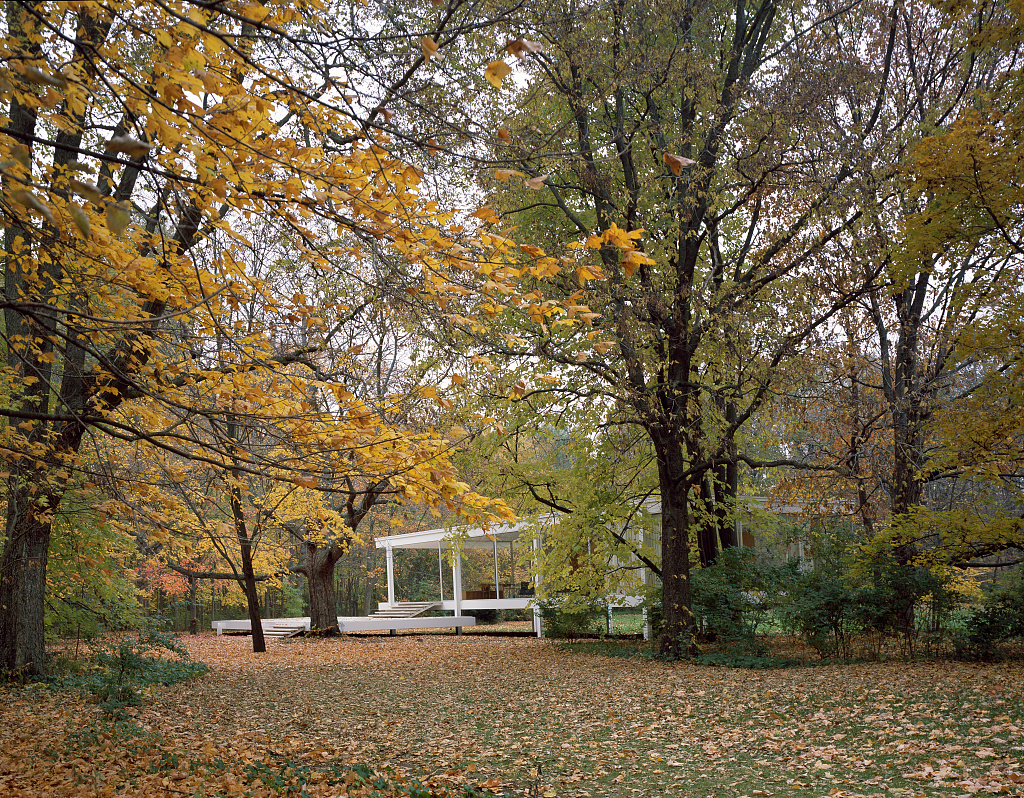
The Edith Farnsworth House (credit: Carol Highsmith)
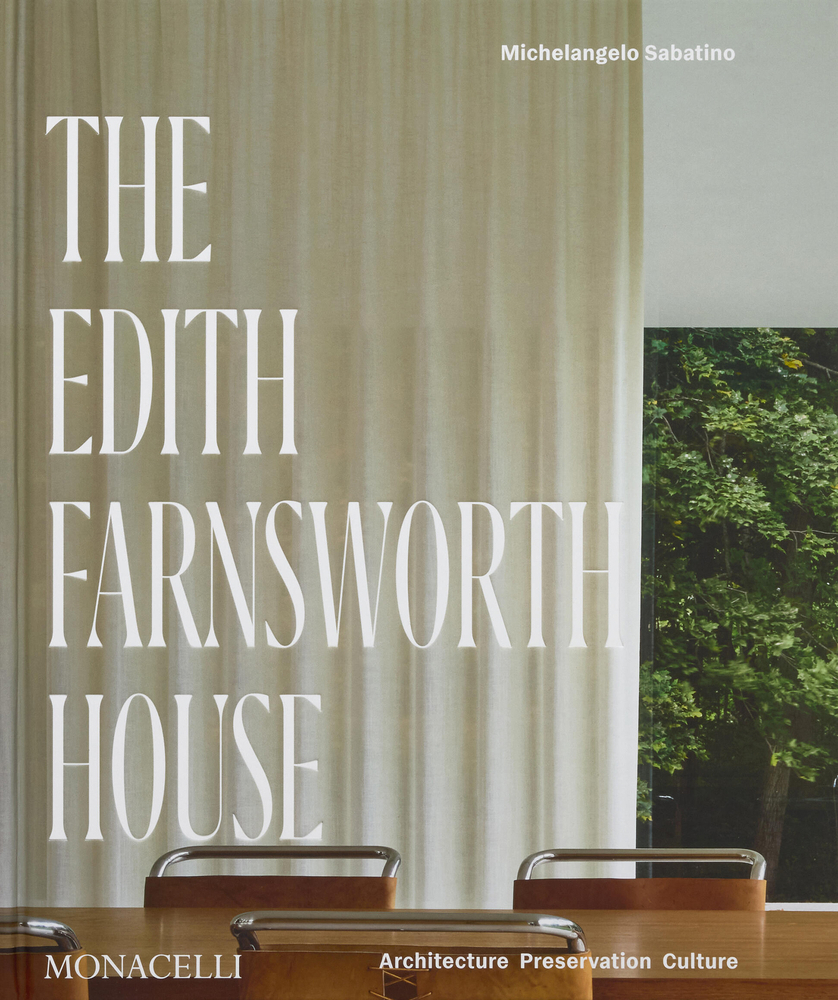
Michelangelo Sabatino and his co-authors have written a richly illustrated, deeply researched, and well-crafted source of unending pleasure for the eyes, mind, and soul in the new book The Edith Farnsworth House: Architecture, Preservation, Culture. In Undermining the conventional, Michelangelo answers my questions about this iconic house that changed the face of architecture.
Author Leah Rampy writes from an “intersection of spirituality, ecology and story,” inviting us to think, contemplate, live, and act differently. We discuss this perspective in the interview Discerning a path in a future beyond our knowing.
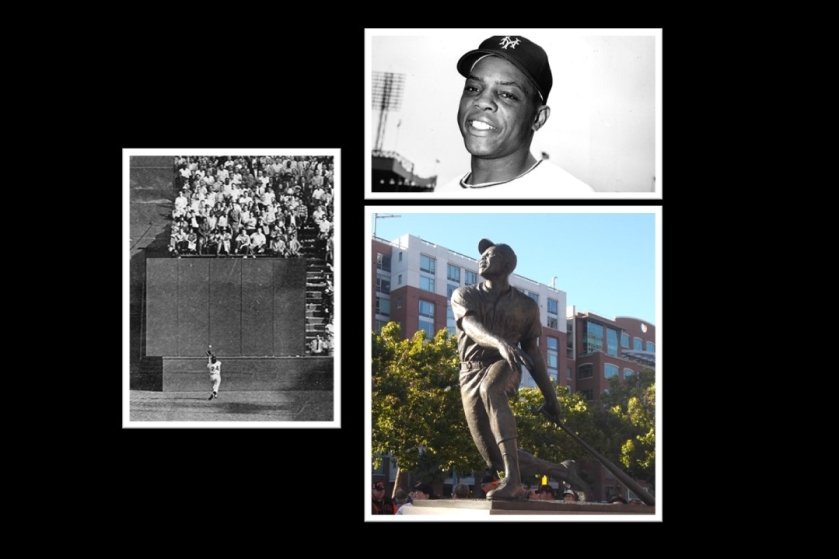
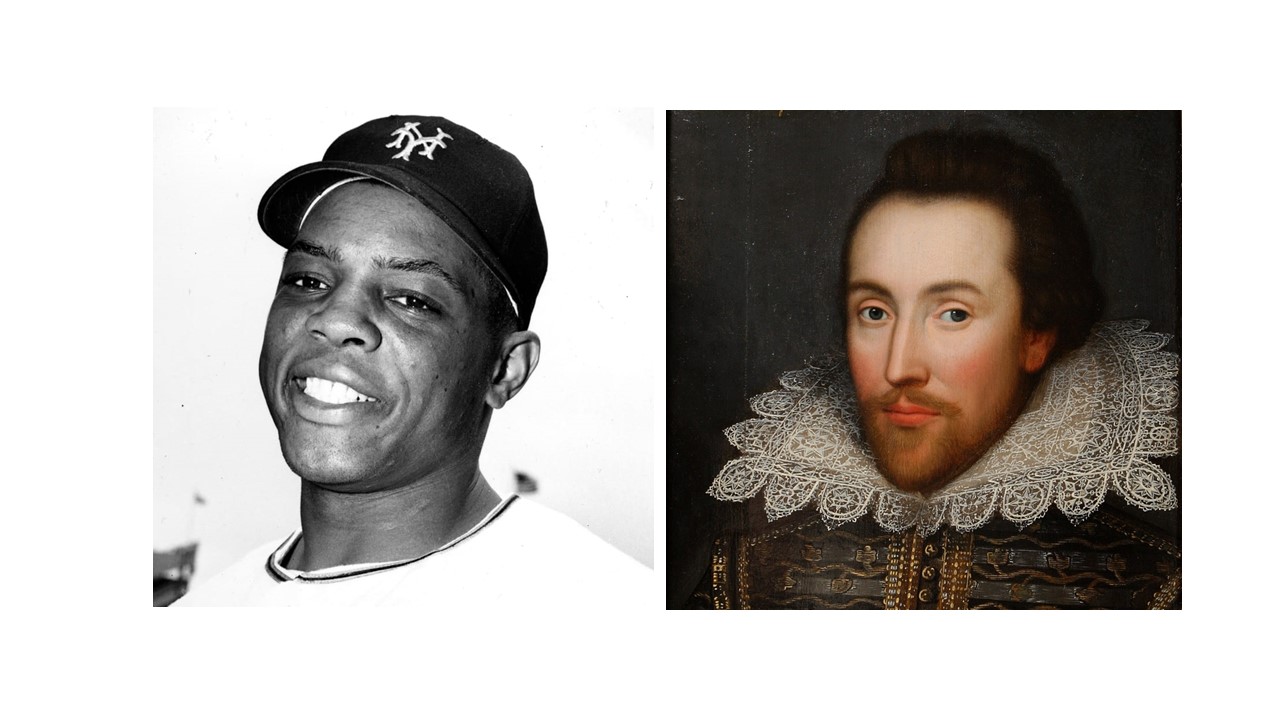
Willie Mays, R.I.P. is where I say goodbye to a childhood hero who changed the game of baseball. Don’t take my word for it; the actress Tallulah Bankhead said, “There have been only two geniuses in the world—Willie Mays and Willie Shakespeare.”
Nevada was the last stop on my 50-state bucket list, a milestone I celebrate in Checking off the big 5-0 (state, that is). Travel will definitely change your perspective.
THE TIMES WE LIVE IN
A couple of June posts addressed the challenges of our political division. **
In addition to the books above, I also read about communication (from two very different perspectives), and an unexpected take on a biography.
How we communicate and connect examines an important and helpful new book from Charles Duhigg—Supercommunicators—for those seeking to make better connections in life.
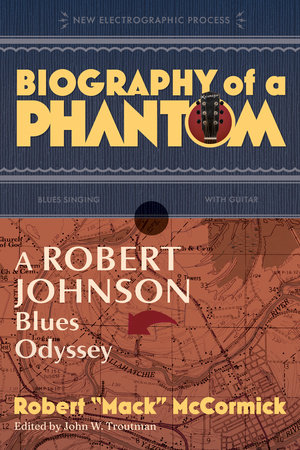
Late last year the Museum of American History released Biography of a Phantom: A Robert Johnson Blues Odyssey, a “new” biography fifty years in the making of the blues singer whose early death and limited musical output would seem to suggest obscurity rather than fame. Nonetheless, Johnson’s enigmatic life and powerful musical voice have captivated musicians, fans, writers, and musicologists for decades, as I discuss in Hellhounds and phantoms.
Blackbird is a look at both the history behind, and the interpretations of, one of Paul McCartney’s most famous tunes.
Here are two comments from readers this month, with encouragement to check out the stories that struck a chord with these MTC readers.
Dr. Irena Edwards, longtime friend and Chair of the Czech National Trust commented via LinkedIn on the post about visiting my 50th state. Irena wrote: “I like the idea of a bucket list very much. I never had one. At least not one in writing where I could tick things off. Perhaps because where I came from, one had to dream in secret and keep one’s plans close to one’s chest. But thank you for reminding me of my long-standing wish to have one.”
Friend, former colleague, and now the Elizabeth MacMillan Director at the Smithsonian’s Museum of American History Dr. Anthea Hartig dropped me a short note on LinkedIn in response to my post about the museum’s new biography of blues singer Robert Johnson. Anthea wrote, “I’m so proud of this work at your Smithsonian National Museum of American History—thank you so much, David!”
CONCLUSION
Thanks, as always, for reading. Your support and feedback mean more than I can ever express.
As you travel life’s highways be open to love, thirst for wonder, undertake some mindful walking every day, recognize the incredible privilege that most of us have, and think about how to put that privilege to use for good. Women, people of color, LGBTQ+ individuals, immigrants, and others can feel especially vulnerable . . . because they are. Work hard for justice and democracy as the fight never ends.
You can follow MORE TO COME by going to the small “Follow” box that is on the right-hand column of the site (on the desktop version) or at the bottom right on your mobile device. It is great to hear from readers, and if you like them feel free to share these posts on your own social media platforms.
The writings of Irish poet, philosopher, priest, and advocate John O’Donohue have touched millions around the world. A Blessing for Presence—published in 1998’s Eternal Echoes. Exploring our hunger to belong*—is an especially good way to begin a day.
May you awaken to the mystery of being here And enter the quiet immensity of your own presence. May you have joy and peace in the temple of your senses. May you receive great encouragement when new frontiers beckon. May you respond to the call of your gift And find the courage to follow its path. May the flame of anger free you from falsity. May warmth of heart keep your presence aflame and anxiety never linger about you. May your outer dignity mirror an inner dignity of soul. May you take time to celebrate the quiet miracles that seek no attention. May you be consoled in the secret symmetry of your soul. May you experience each day as a sacred gift, Woven around the heart of wonder.
The John O’Donohue Legacy Partnership website speaks of how the poet who spoke of his childhood home as “an ancient conversation between the land and sea” is remembered today.
“John’s legacy directs our search for intimacy to crucial thresholds: tradition and modernity, past and future, life and death, the visible and the invisible world. At the heart of John’s awakened beliefs was the premise that ancient wisdom could offer desperately needed nourishment for the spiritual hunger experienced in our modern world. John is fondly remembered by an international readership as one who could blend critical analytic thought with imaginative evocation, enabling people to release themselves from the false shelter of the familiar and repetitive to become agents of transformation and change.”
The Edith Farnsworth House, completed in 1951 as a country retreat, is one of two mid-century rectilinear glass houses (the other being Philip Johnson’s Glass House) that changed the face of architecture around the world. The fame for Farnsworth architect Ludwig Mies van der Rohe grew in spite of the fact that for many years the house was inaccessible to all but a small group of friends of the first two owners and to an equally small and determined group of design aficionados.
That began to change when Landmarks Illinois, the Friends of the Farnsworth House, and the National Trust for Historic Preservation (NTHP) purchased the property at auction in December of 2003 and subsequently opened it to the general public the following June. An expansive new book on the occasion of the 20th anniversary of that opening helps broaden our understanding of this iconic place.
The Edith Farnsworth House: Architecture, Preservation, Culture (2024) by Michelangelo Sabatino is a richly illustrated, deeply researched, and well-crafted source of unending pleasure for the eyes, mind, and soul. Sabatino—the Director of the PhD program in architecture at the Illinois Institute of Technology—and his fellow authors Ron Henderson, Hilary Lewis, Scott Mehaffey, and Dietrich Neumann, have produced a work that broadens our perspective while helping undermine the conventional view of the house as merely a formal object sitting on its site as conceived wholly out of the mind of Mies van der Rohe.
Undermining conventional views has been an integral component of the house since Edith and Mies met at a dinner party one fateful winter evening in 1945 and the doctor asked the architect if “some young man” in his office could design “a small studio weekend house” for her newly acquired property. The effect of his reply—“I would love to build any kind of house for you”—was, in her own words, “tremendous, like a storm, a flood or other act of God.”
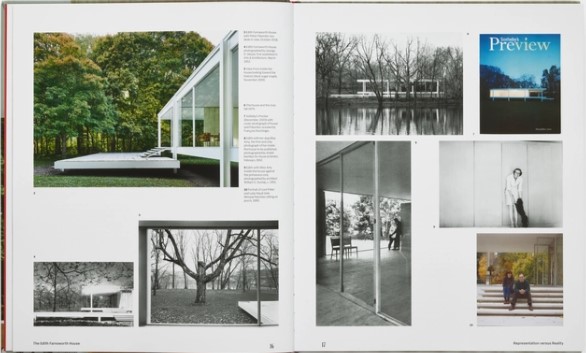
The authors intersperse insightful written essays with Sabatino’s long, carefully curated photographic interludes that take the reader from groundwork to construction to context and finally to preservation. As someone who was involved both tangentially and intimately in several aspects of the “third life” of the house from 2003 until 2019, I found this new book balanced, thoughtful, and satisfying in the depth it gives to the Edith Farnsworth House story. Other reviewers have also found this sweeping new work of great value.
The public’s understanding of preservation is often limited to the restoration process, but that doesn’t happen without financial support. Put simply, the Edith Farnsworth House would not have been saved and opened to the public without the untiring work of former Landmarks Illinois President David Bahlman, former Sara Lee Corporation CEO and renowned fundraiser and philanthropist John Bryan, and former National Trust President and CEO Richard Moe. It is a small quibble with an otherwise terrific new work, but I would have preferred to see more recognition given to their roles in pulling every string possible to raise the millions of dollars required to bring the site into the public realm. David, John, and Dick’s fundraising efforts—married with smart, strategic choices during the auction—were ultimately successful and made the preservation work of the past twenty years possible.
In the latest of my author interviews on MORE TO COME, Michelangelo graciously agreed to answer my questions about this important new book.
DJB: Beginning with Scott Mehaffey’s Foreword, the book puts Edith back into the story of the Farnsworth House. Why is that important, Michelangelo, and what have we learned from that effort?
MS: On November 17, 2021, the National Trust officially renamed “The Farnsworth House” to “The Edith Farnsworth House.”* From the early 1950s onwards, visitors and writers alike did not refer to the house and site with Edith’s first name; in so doing they failed to acknowledge Edith, the client/patron who first commissioned this pioneering modern weekend country house. At first glance the focus on Edith’s last name (Farnsworth) might not seem like an egregious omission especially considering that during those years houses typically were known with the last name of the client; recall for example Wright’s Robie House. However, even for this Prairie style masterpiece, Frederick C. Robie’s last name prevails over the wife’s last name (Lora Hieronymus). Although Edith was single and therefore the only client, not acknowledging her name or her title as medical doctor (she was one of only 3 women to graduate in 1938 from Northwestern University’s School of Medicine), led most to associate the house primarily with its renowned architect, Ludwig Mies van der Rohe. Only by expanding the focus beyond the architect to include the client/architect relationship can social and cultural history enrich architectural history.
You explore a treasure trove of photographs in the insightful introduction and through your curation of the photographic essays. Why were so many photographs taken through the years and what do they tell us about how the house has been viewed over time?
The relationship between the Edith Farnsworth House and the vast amount of photography over time that is partially shown in my book is hugely significant because the building became world famous even though it was not opened to the general public until 2004. Photography—first black and white and then color—served as a surrogate for the real-life experience especially since Edith’s country house is located approximately 60 miles away from Chicago and requires great determination (as well as time and resources) to reach, especially for out-of-town visitors.
Lord Peter Palumbo, the house’s second owner from the late 1960s until its sale in 2003, did welcome a select group of artists, architects, and cultural elite to the house. Additionally, starting in the late 1990s, he opened a visitor’s center with tours being occasionally offered to the general public. However, access under Palumbo’s ownership remained relatively limited. In addition to the general public and architectural professionals, in recent decades Mies’s architecture, including the Edith Farnsworth House, has generated considerable interest amongst artists. This interest has introduced his buildings to a group of art enthusiasts who may not have been aware or interested in architecture beforehand. Despite admiration for the house and the fact that it is open to the public most of the year, many individuals (including architectural professionals) continue to rely upon print and digital images instead of actually visiting the Edith Farnsworth House.
Unpublished memoirs, interviews, and oral histories are included in this work. What key insights do these perspectives bring to our understanding of the past, present, and future of the Edith Farnsworth House?
My new book features, for the first time ever, the complete transcription (with annotations) of the three chapters of Edith Farnsworth’s handwritten unpublished Memoirs containing her recollections of commissioning, building, and selling her famous house. Considering the strained relationship between Edith and Mies as the house was nearing completion that eventually led him to sue her (and her to countersue), granting the reader access to her side of the story is hugely significant. From the tone of her Memoirs (written during the last decade of her life after she sold her country house in Plano, left Chicago, and purchased a historic villa just outside of Florence) you understand why their relationship deteriorated over time.
Since the house witnesses three different eras (i.e. lives)—Edith/Mies era + Palumbo era + NTHP era—I believe it is important to acknowledge the history of the house through its different owners. During three decades of ownership before its sale at Sotheby’s New York, Lord Peter and Lady Hayat Palumbo cared deeply for the house; they ensured that it was given the utmost care with the expertise of Chicago-based Dirk Lohan, the only one of Mies’s grandchildren who became an architect. As the interview with Lohan attests, he was the one who informed Palumbo who was visiting Chicago at the time that the house was for sale and suggested they go see it together; this led Palumbo to immediately seize upon the opportunity of a lifetime and purchase it from Edith Farnsworth.
Opening Day, 2004 (credit: NTHP)
Chicago has had an important influence on the design of modern architecture. Where does the Edith Farnsworth House fit within that story?
My EFH book contains a chapter entitled “The Modern House in Chicago” in which the Edith Farnsworth House is situated within the broader context of modern houses in Chicago, the US, and beyond. This essay draws upon previous research published in Modern in the Middle: Chicago Houses, 1929-1975 (Monacelli, 2020), a book I co-authored with Susan Benjamin.
What is important to note is that Chicago became known as a laboratory of experimental residential architecture thanks to the contributions of two giants of “modern” architecture: Frank Lloyd Wright and Ludwig Mies van der Rohe. Even modern architects like Walter Gropius who one would associate with Mies understood Wright’s Robie House as a radical break with tradition in terms of plan and space. Although their designs were very different—one need only compare the Robie to the Farnsworth—what Wright and Mies shared in common was a deep respect for nature. This respect manifests itself in different ways. Wright tended to anchor his buildings into the site whereas Mies’s strategic use of glass and steel allowed nature to be present at all times without any “interference” from the building itself. For example, if you are inside looking outside of the Edith Farnsworth House, nature (in all of its seasonal variations) is the true protagonist, not the building itself. Here in Chicago for example, Paul Schweikher’s one-story Home and Studio in Schaumburg (1938 + additions in 1949) in Chicago common brick and unpainted old growth California redwood, owes as much to Wright’s approach to siting and materiality as it does to Miesian tectonics.
What is the importance of the landscape to the visions, realization, and restorations of the Edith Farnsworth House?
It is important to understand the role that the monumental Black Sugar Maple played in the original design of the Farnsworth House. Mies wrapped the house and its lower terrace around the tree so that it could provide shade on the South all-glass facade while anchoring the building to its site along the Fox River. Eventually the tree died and another one was replanted. It will take years before the tree will become the same monumental size as the one that inspired Edith and Mies’s design. Edith’s Memoirs recount the enthusiasm she felt for the wooded site along the Fox River that she purchased from Col. McCormick in December of 1945. Over time some photographers who have not spent enough time understanding the complex site have taken the country out of the country house by focusing excessively on the house while ignoring its relationship with its 60-acre site.
To really understand the Edith Farnsworth House one must visit and experience it during different seasons. Just as the travertine on the lower terrace was replaced along with most of the original floor-to-ceiling panes of glass, the landscape too requires constant oversight and care. Even though Mies designed the house five feet above the ground, over time, the house flooded several times. Even today, flooding remains the single most significant threat to the life of this remarkable National Trust for Historic Preservation property.
Thank you, and congratulations Michelangelo.
Thanks, David!
More to come . . .
DJB
*Fairbank Carpenter (1930-2023) son of Edith’s only sister Marion Farnsworth Carpenter, attended the renaming ceremony held at the EFH in Plano, Illinois.
Full disclosure: I was the Executive Vice President at the National Trust at the time the property was purchased and for the first 15 years of the Trust stewardship. From 2010-2019, I was also the organization’s initial Chief Preservation Officer with responsibility for the historic sites and other preservation programs. The National Trust is also the owner of Philip Johnson’s Glass House.
In addition, Dietrich Neumann, an author of one of the book’s essays, was a professor for my son Andrew who was an Urban Studies major at Brown University where Dietrich is the director.
Robert Johnson‘s early death in 1938 and limited musical output—he died at 27 and recorded only 29 songs—would seem to suggest obscurity rather than fame. Nonetheless, his enigmatic life and powerful musical voice have captivated musicians, fans, writers, and musicologists for decades, especially since the 1961 release of a compilation of his works entitled King of the Delta Blues Singers.
Among Johnson’s fans and biographers, none was more persistent, and more troubled, than Robert “Mack” McCormick.
Biography of a Phantom: A Robert Johnson Blues Odyssey (2023) by Robert “Mack” McCormick (and edited by Smithsonian curator John W. Troutman) is the musicologist’s long-awaited biography of Johnson that isn’t, in fact, a biography. As Troutman details in an extensive preface and afterword, this work is essentially McCormick’s first draft, written in the early 1970s after he had finished his fieldwork. It may not be the book one expects, but it is one well worth considering.
The myth around Johnson was powerful, so much so that Eddie S. Glaude, Jr. has defined it as a blues metaphor for our nation.
“You know, Robert Johnson found his sound at the crossroad when he made a deal with the devil. It seems to me that the country is at a crossroad, whether we are going to continue to invest and double down on the ugliness of our racist commitments, or [we’ll] finally leave this behind.”
There were already myth-busting books about Johnson on the market when the Smithsonian released this “new” fifty-year-old work in 2023. Why did this particular book take so long? As Troutman explains in what one reviewer likens to advisories wrapped around a carton of cigarettes, McCormick was among the “small group of white male enthusiasts” who “assumed an extraordinarily outsized impact on national, even global conversations about Black music.” He was also a painstaking researcher who suffered from depression, became increasingly paranoid and ultimately self-destructive, and took steps—some fraudulent and perhaps criminal—to keep Johnson’s music from being released to a broader public. He continually rewrote and revised the manuscript, but it was never published before his death in 2015.
In the end, this 1973 version is no doubt the best. McCormick said he wanted to write it as a kind of thriller about his search for the truth about Johnson’s life and death. If you are looking for a definitive picture, this is not the book for you.
However, McCormick is an excellent writer who tells the story of his odyssey with a fair amount of humility and sharp attention to detail. We see him in diners as he tries to draw out stories from older Black residents of the Mississippi Delta who are naturally skeptical of a white man with a strange obsession. We travel with him along dirt backroads and into cheap motels. While racism, greed, and white supremacy are part of the larger story, McCormick truly cares for Johnson’s music and is generally aware of how his position of privilege leads to enormous amounts of caution from those he is interviewing.
He begins in tiny Friars Point, Mississippi because Johnson mentions the hamlet in Traveling Riverside Blues and McCormick’s hoping to find connections. It starts out innocently enough, when Johnson sings to his woman to “come on back to Friars Point, mama, and barrelhouse all night long.”
And while Johnson has women in Vicksburg and in Tennessee, his “Friars Point rider, now, hops all over me.” McCormick, speaking to a group of older Black men, let’s them talk as he stood to the side, “letting my thoughts pick over the crumbs they tossed out.”
“Robert Johnson was known in Friars Point. He’d had a girl here. Young, dark, small . . . That song that mentioned Friars Point had been a toast to an erotic genius he’d found here; his voice took on a keening brilliance when he sang about her: ‘She’s got a mortgage on my body now, and a lien on my soul.'”
Some of the bawdier lyrics that follow are probably the reason the song wasn’t originally released in the 1930s.
“You can squeeze my lemon ’til the juice run down my leg (spoken) That’s what I’m talkin’ ’bout, now.”
As in most of his conversations, McCormick has difficulty finding the true Johnson story in Friars Point. However, that’s beside the point because it is in the description of the “biographer’s craft” that the work really shines. In his travels he discovers, for instance, that Johnson’s most popular song of the day is Terraplane Blues which is ostensibly about a car.
“And I feel so lonesome, you hear me when I moan When I feel so lonesome, you hear me when I moan Who been drivin’ my Terraplane, for you since I been gone.“
This is an odd discovery. As McCormick notes,
“‘Terraplane Blues’ has not been one of the songs that critics have praised. On the contrary, it’s often dismissed as a rather ordinary piece of double entendre, not particularly notable for either bawdiness or wit.
The assessment from the audience for whom it was intended, however, was quite different. It was, without question, Robert Johnson’s best-remembered song.”
Insightful analysis, if not exactly facts to fill in the biography.
The songs that did cement his reputation include Hell House on My Trail . . .
. . . I Believe I’ll Dust My Broom . . .
. . . and Cross Road Blues.
Elmore James brought the latter to the attention of blues fans in the 1950s. Many today know this tune from the Eric Clapton versions of the 1960s.
McCormick never truly discovers the facts around Johnson’s death in Greenwood—usually attributed to poisoning by a jealous husband—but he does in the end find a number of people in Robinsonville (where Johnson lived with his family) who knew him. Their memories are important in shaping a fuller picture.
Both Johnson’s story and McCormick’s book evoke a sadness in the reader. Johnson died before he could develop his musical voice. And McCormick was a gifted writer whose mental demons—hellhounds if you will—also stopped a full and creative career.
More to come . . .
DJB
Image: A map details the route that McCormick traveled in 1968 for his fieldwork from the Robert “Mack” McCormick Collection, NMAH
You see, I wasn’t alone in that hero worship. Not by a long shot.
Isn’t Willie Mays wonderful?
People—famous people—seemed to know their place in the pecking order when it came to Willie Mays.
Woody Allen, in the movie Manhattan, said Willie Mays was one of the things that made life worth living, right after Groucho Marx but before “those incredible apples and pears by Cezanne.” I don’t know that I’d put Groucho before Willie.
“If he could cook,” his first (and most beloved manager) Leo Durocher said, “I’d marry him.”
Sportswriter Bob Stevens penned a classic line after Mays hit a game-winning triple in the eighth inning of the 1959 All-Star Game, which went, “Harvey Kuenn gave it honest pursuit, but the only center fielder in baseball who could have caught it hit it.”
“Isn’t Willie Mays wonderful?” the first lady of American theater, Ethel Barrymore, asked.
Carl Hubbell, the “Meal Ticket” pitcher of the 1930s who famously struck out Babe Ruth, Lou Gehrig and three others consecutively in the 1934 All-Star Game, was at the Polo Grounds with New York Cubans owner Alex Pompez in 1950 to scout an 18-year-old Willie Mays. Hubbell watches amazing defensive plays throughout the day, sees Mays hit a home run with a bat that moves through the strike zone faster than any of the greats he played with, and is convinced. Years later, after Mays became a Giant, Hubbell would . . .
“. . . relive that day in the Polo Grounds when the Giants truly discovered the talent, the power, and the voice of Willie Mays. ‘Gentlemen,’ he’d say regally, ‘that was the day I saw the best goddamn baseball player I have ever seen in my life.’”
Everyone has a story
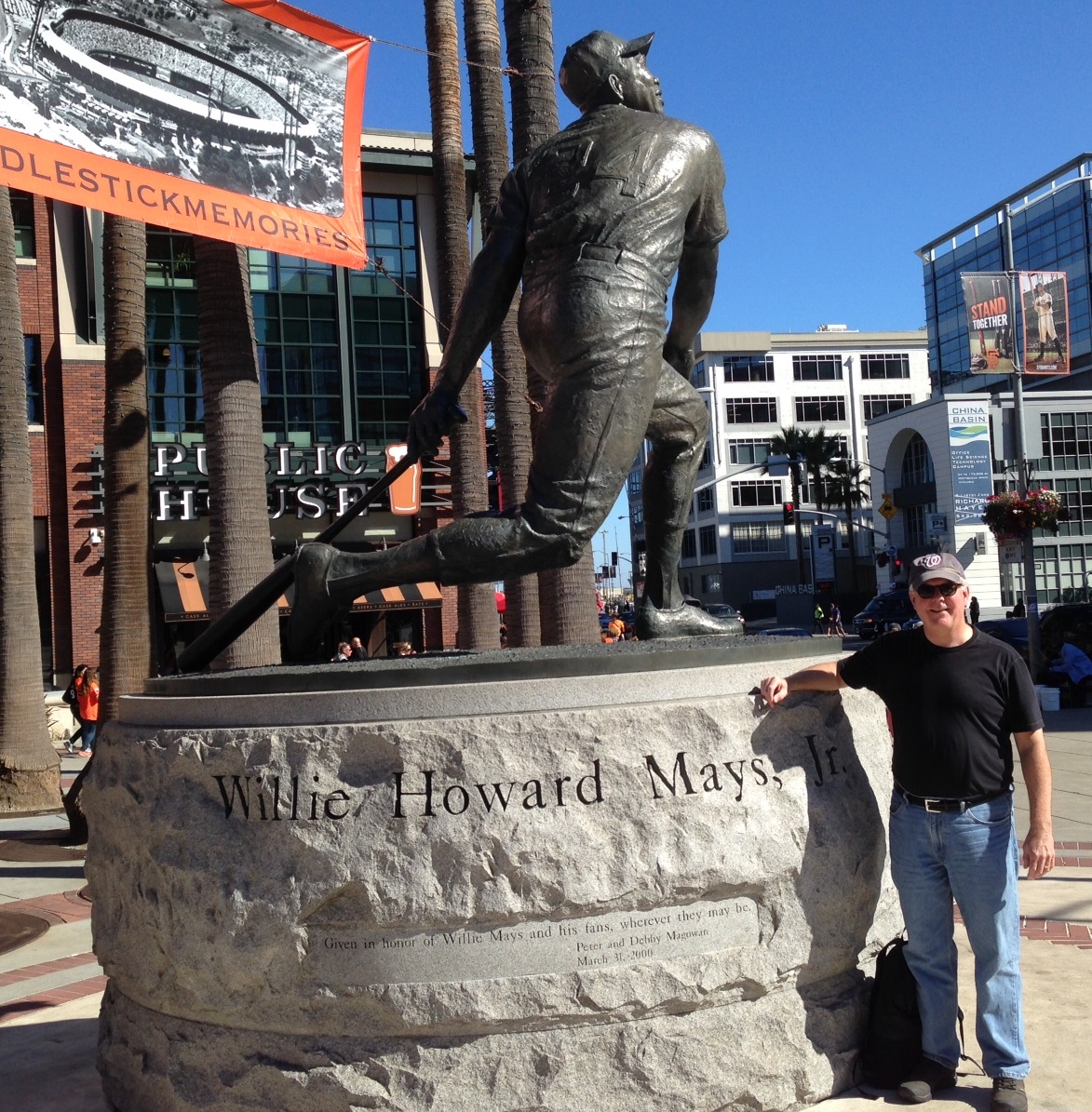
With my childhood hero, Willie Mays – the Say Hey Kid – outside Giants Park in 2014
The time Mays spent in the Negro Leagues and the celebration of the 100th anniversary of Birmingham’s historic Rickwood Field, America’s oldest professional baseball park, are themes in this post. The Alabama native got his start with the Birmingham Black Barons in 1948 and, as fate would have it, his death came the same week baseball came back to Rickwood Field.
Once I even had Mays lead off what became a very popular MTC post on retirement: Bashing into joy. I chose Willie as the lead on that subject because it was said of Mays that the only thing he could not do on a baseball diamond was stay young forever.
Willie, you see, played too long after his skills had declined and the joy was harder to find. Those last years were not kind.
We’re all the young Willie Mays early in life, believing we can chase down fly balls forever. Yet when one has to make a decision to let go of a place in the world there can be a big difference between understanding what’s necessary intellectually and owning that choice through emotional acceptance.
I’ve owned the fact that I’m getting older and that I’m now retired. I’m not quite ready, however, to see all my childhood heroes move on.
“The sky seems a little less bright today. The music sounds just a bit bluer. The stars feel farther away.
Willie Mays is gone.
He stopped playing baseball more than 50 years ago, and yet you can see him, even if you never actually saw him. He’s chasing a fly ball, and he will never get there in time. Sayers was effortless. Orr was effortless. Griffey was effortless. But Mays? He runs like he’s racing after a missed bus. He exerts every muscle, each limb seems to have a mind of its own, and he moves with such speed and abandon that his baseball cap holds on for dear life until it cannot hold on and goes flying off his head like a rodeo cowboy getting bucked off a bull.“
I never got to see Mays play live, but I watched him every chance I could get (which wasn’t enough in those days) on television.
“But, of course, it was never just about playing baseball. The 660 home runs and 1,326 extra base hits and 339 stolen bases and 12 Gold Gloves tell a fine story. But none of those numbers are records. None of those are singular in baseball history. None of those get to the heart of Willie Mays.
No, at the heart is something indescribable.
At the heart is joy. That’s what Willie Mays radiated, even on those off days when he wasn’t feeling especially joyful. Watch him turn his back and take off after Vic Wertz’s fly ball in ’54. Think of the time he sprinted after Rocky Nelson’s shot and, having run out of time, simply snagged the ball out of the air barehanded.
‘Did you see that?’ he squeaked at Durocher when he got back to the dugout.
‘No, Willie,’ Durocher said straight-faced. ‘Can you go out there and do it again?’“
It is hard to believe that Willie Mays is gone.
“Only, of course, he isn’t gone. Willie Mays will never be gone.“
Thanks for all the incredible memories. And for the joy. Rest in peace, Say Hey.
More to come . . .
DJB
Photos: The Catch, Willie Mays; statue outside Oracle Park
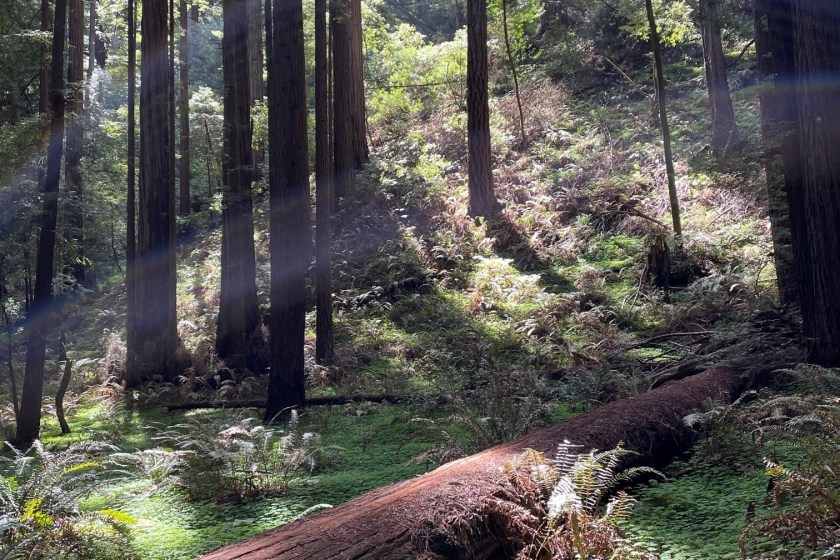
We can learn a great deal by listening to our children and our elders. The child in this particular case was my daughter, who had been pressing me to read a book that was unlike anything she had ever encountered, even loaning me her copy. The elders are the trees and forests that have been here long before we arrived and will survive long after humans end their time on this planet.
The Overstory: A Novel (2018) by Richard Powers is a work that—like all brilliant pieces of fiction—tells us more about reality than we often care to see. This majestic fable is actually an interlocking collection of nine human stories that, in the end, center trees as the main characters. It takes time to understand how these stories might be connected, but Powers begins to drop hints in the very first pages: we should be listening to the trees to truly understand connection. The Overstory changed the way I will see the world. One simply cannot ask more of a piece of literature.
With exceptional wordsmithing and storytelling skills, Powers lets us see that “there is a world alongside ours—vast, slow, interconnected, resourceful, magnificently inventive, and almost invisible to us. This is the story of a handful of people who learn how to see that world and who are drawn up into its unfolding catastrophe.”
To call The Overstory a work about activism and resistance doesn’t do it justice. Yes, activism and resistance against clearcutting logging practices in old growth forests is key to understanding the deeper truths Powers mines throughout this book. But as the Pulitzer Prize citation for fiction put it, this is “An ingeniously structured narrative that branches and canopies like the trees at the core of the story whose wonder and connectivity echo those of the humans living amongst them.”
Powers writes powerful prose, much of which comes from one of the book’s key characters, Dr. Patricia Westerford, a plant ecologist who was shamed out of the academy by conventional-thinking and threatened academicians only to have her work vindicated by later scientists. Early in The Overstory, her father—an agricultural extension agent in Ohio who takes his young daughter on his visits to the region’s farms—teaches her that most humans are “plant-blind.” He calls it “Adam’s curse. We only see things that look like us.”
The book Westerford eventually writes is entitled The Silent Forest, and it begins with this paragraph:
“You and the tree in your backyard come from a common ancestor. A billion and a half years ago, the two of you parted ways. But even now, after an immense journey in separate directions, that tree and you still share a quarter of your genes . . .”
Dr. Westerford “closely resembles, and is probably based upon, the scientist who first researched the way trees communicate, Dr. Suzanne Simard of the University of British Columbia.”
The fictional Dr. Westerford’s “immersion in her work is almost literal: She sees herself as part of the forest ecosystem.” And that vision leads her to observe that,
“No one sees trees. We see fruit, we see nuts, we see wood, we see shade. We see ornaments or pretty fall foliage. Obstacles blocking the road or wrecking the ski slope. Dark, threatening places that must be cleared. We see branches about to crush our roof. We see a cash crop. But trees—trees are invisible.”
The Overstory also builds upon the real-life work of Peter Wohlleben’s The Hidden Life of Trees. * “Forests are not first and foremost lumber factories and warehouses for raw material, and only secondarily complex habitats for thousands of species, which is the way modern forestry treats them,” Wohlleben writes. “Completely the opposite, in fact.” But in a fictional tale, Powers can take this understanding and expand it in ways that one dare not do in a non-fiction context.
Since this book won the Pulitzer Prize for Fiction in 2019, much has been written about it. The Earth Island Journal has an insightful review that summarizes the core plot as pivoting . . .
“. . . on five characters for whom the moniker ‘tree hugger’ would be an understatement. Their youthful endeavor to protect an old-growth forest from a clearcutting operation changes their lives irrevocably. But we also read about the quasi-spiritual journey of a reclusive coding genius, and the less-obviously relevant story of a married couple—workers in the legal profession by day, amateur actors by night—whose significance plays out (mostly symbolically) only at the end.“
Those eight all come into contact with Westerford’s book and are shaped by it. Near the end of this heart-wrenching, thrilling, poetic, and majestic work, we find that Westerford has written a sequel to her influential first book, where she reiterates the point that “This is not our world with trees in it. It’s a world of trees, where humans have just arrived.”
Powers has Westerford, now an old woman, giving a lecture at a Silicon Valley conference of scientists, futurists, engineers, artists, writers, and venture capitalists being gathered under the unlikely title of “Home Repair: Countering a Warming World.” She is unsure of the reception she will receive, but accepts the invitation so she can tell those in attendance that,
“Life has a way of talking to the future. It’s called memory. It’s called genes. To solve the future, we must save the past. My simple rule of thumb, then, is this: when you cut down a tree, what you make from it should be at least as miraculous as what you cut down.”
Trees are miraculous. Much of what we make from them comes nowhere close.
The resolution—after 500 pages—is somewhat hopeful without being unrealistically optimistic. Powers zooms out to the timeline of a tree and lets the reader consider our individual and collective next steps.
Barbara Kingsolver, writing in The New York Times Book Review, may have summarized this book most succinctly. It is, simply, “A gigantic fable of genuine truths.”
If I began a task, I like to complete it. I generally finish any book I start, even those that are less than compelling. When I told myself I wanted to learn how to play the piano again at age 40, I stayed with it until I could perform in a recital . . . before my fellow students, who were of the age 7-12 variety.
That same push to finish what I start is how I ended up in South Lake Tahoe, Nevada this past weekend.
“Statehood was rushed to help ensure three electoral votes for Abraham Lincoln’s reelection and add to the Republican congressional majorities. Nevada became the second of two states added during the Civil War (the first being West Virginia).“
Now 160 years later, I crossed the line from California into Nevada to make it the final stop on my bucket list quest to visit all 50 states. After traveling to Alaska last year, I’ve been itching to join the All Fifty Club.
DJB crossing the line to enter my 50th state
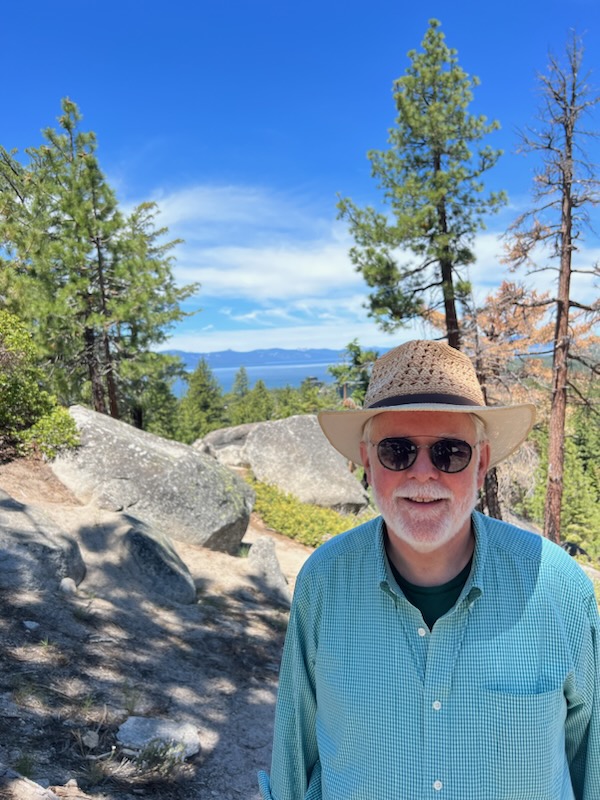
In Nevada, overlooking Lake Tahoe
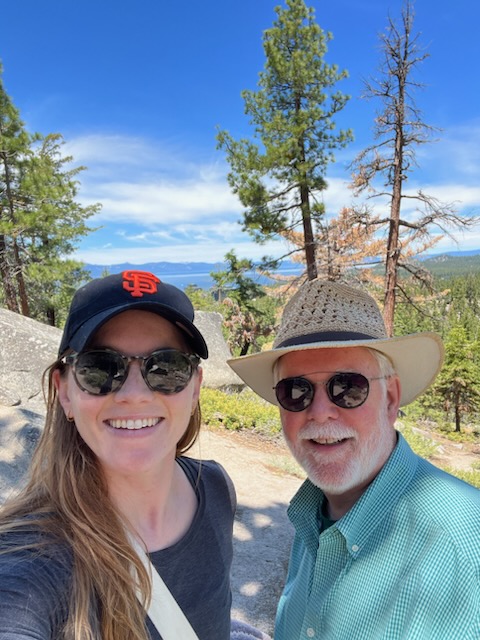
To complete this longtime journey, Candice, Claire, and I left Alameda on Saturday morning for the drive to Lake Tahoe. It was exciting to take in more of the beauty and grandeur of this amazing country.
Scene in the Sierra Nevada Mountains, near the Nevada side of Lake Tahoe. Photo by Carol Highsmith.
Of course, Nevada wasn’t always a part of the United States.
“Prior to European contact, Native Americans of the Paiute, Shoshone, and Washoe tribes inhabited the land comprising the modern state. The first Europeans to explore the region originated from Spain. They gave the region the name of Nevada (snowy) due to the snow which covered the mountains at winter.”
Present-day Nevada became Mexican territory in 1821 and was acquired by the US in 1848 following the Mexican-American War. The discovery of gold and the outbreak of the Civil War changed the state’s history.
Lodge at Nevada’s Edgewood Resort, where we stayed on our recent visit. Photo by Carol Highsmith.
Some tasks take longer than others and some—like this—are much more pleasurable than the average to-do list item. It took me almost 70 trips around the sun to reach this goal. The bucket list quest began, unofficially, in 1955 when I arrived in Tennessee. By high school I’d visited most of the Southern states plus Indiana and Illinois. My adventure picked up as I began attending National Trust conferences (the first was 1976 in Philadelphia), and it went into overdrive when I began to work for the Trust in 1996 and traveled all across America.
Displaying my 50th state certificate in Nevada, with Candice and Claire
And for Father’s Day, the family gave me the All 50 Club T-Shirt!
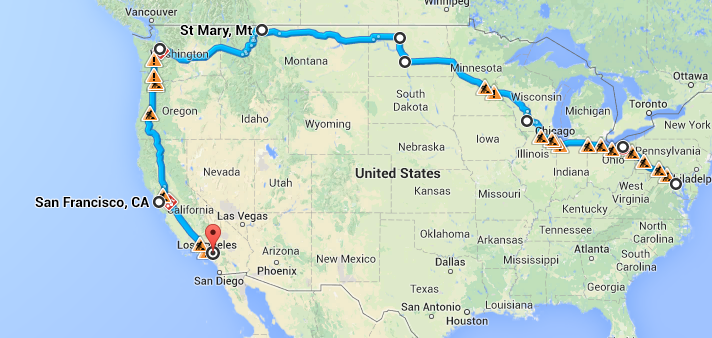
It was appropriate that Claire was with me when I reached this milestone. I’ve been to more states with my daughter than with any other member of the family, primarily because the two of us drove on a cross-country tour in 2014 (another bucket-list item for me) in a little less than three weeks. We pulled into our destination after visiting 13 states.
On a Father’s Day hike with Claire in Nevada
Our 2014 “Not All Who Wander Are Lost” Tour map
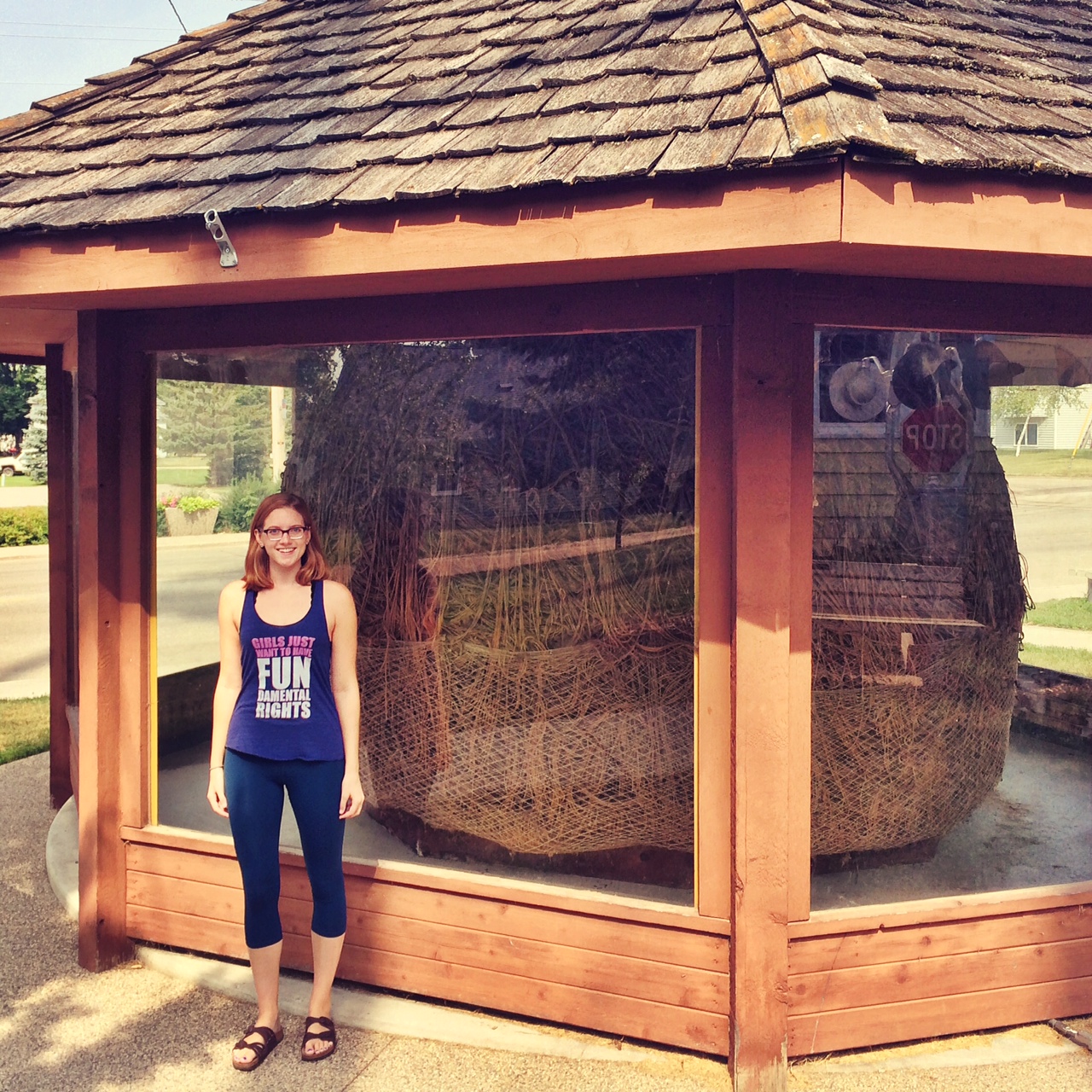
Claire at the World’s Biggest Ball of Twine! Is this a great country or what!?!
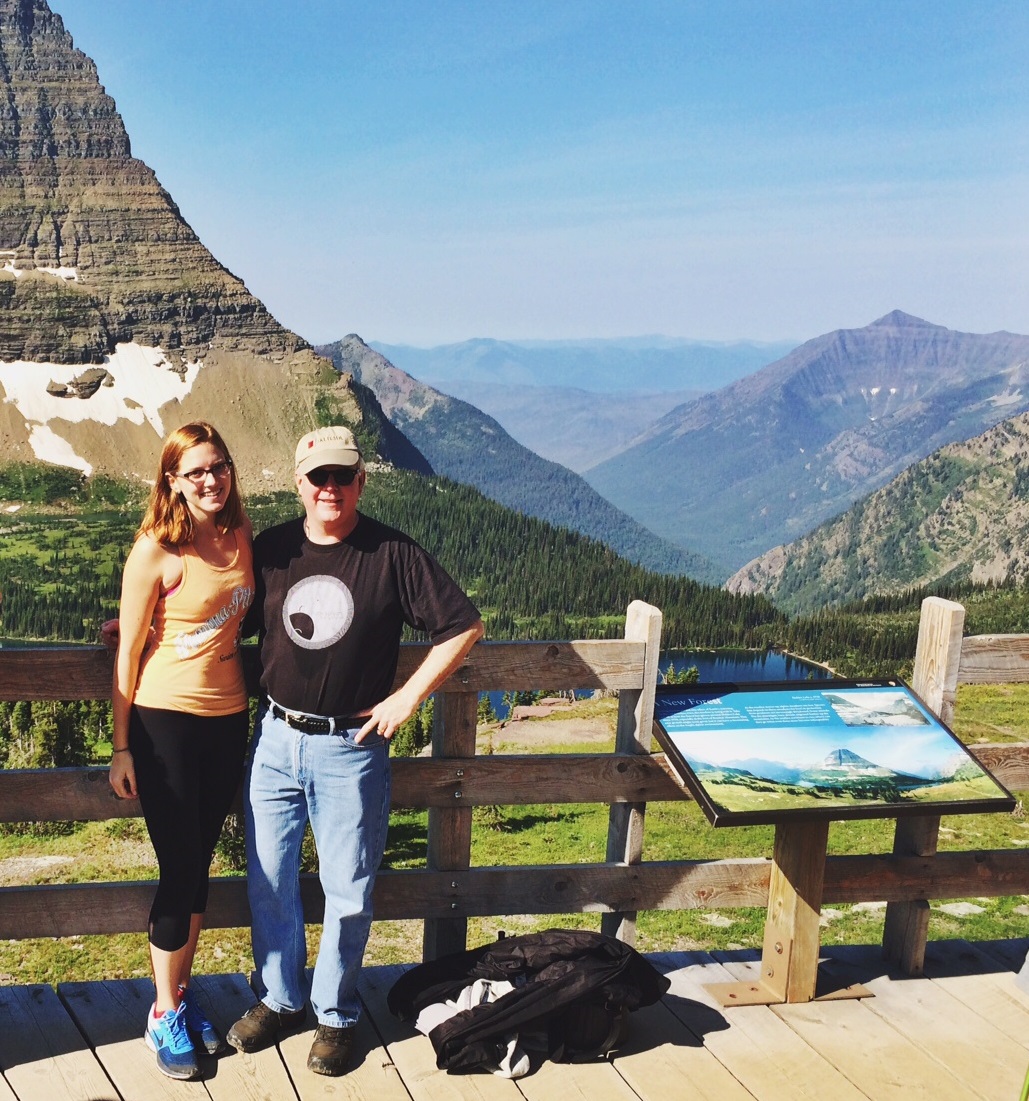
At Glacier National Park
With Claire in Wallace, Idaho
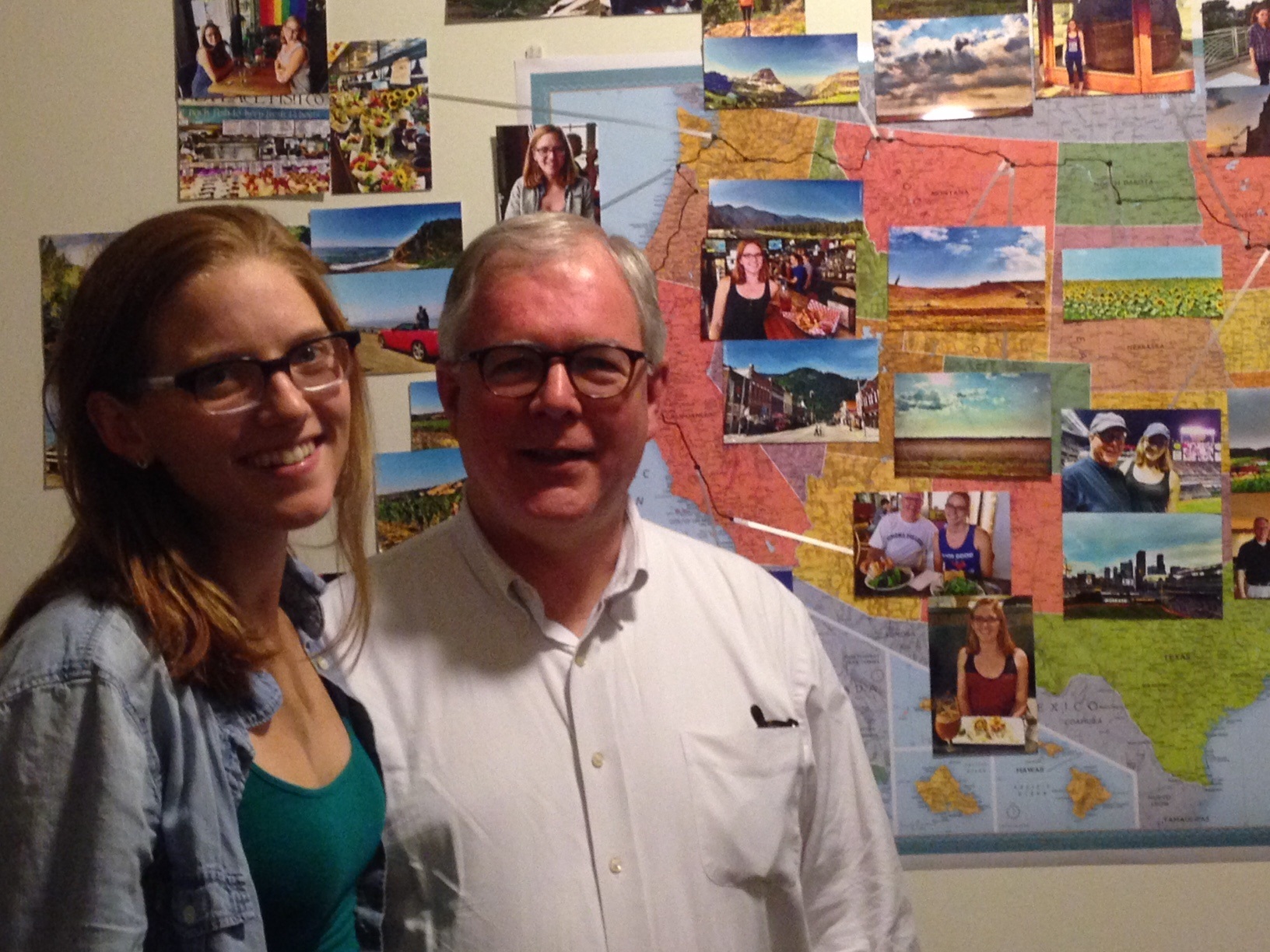
Claire and DJB admire her dorm room map with highlights of our 2014 cross-country trip
The trip to Nevada was not just about the joy of travel, but it also signaled that my bucket list—an inventory of things to do before you die (or “kick the bucket”)—was very much alive and well. The key is to have a list with things that you really want to accomplish and would love to do.
Credit: Daniel Byram from Pixabay
I was in my late 30s when I put together my first bucket list. I say first because they are, by nature, a work in progress. Some begin with very personal items that you are giving yourself permission to pursue, such as learning to play the piano again. Some morph into lists of ways to help others and make a difference. Expectations and situations will change.
Bucket lists are optimistic, by nature. I like the idea of turning from cynicism to optimism. Cynicism is easy, while hope is risky and hard. A bucket list says, “I’m going to be out in the world, I’m going to make a difference, and I’m going to love what I’m doing.” A bucket list should include things you can do in an afternoon and things that will take the rest of your life.
A friend recently asked how many countries I’d visited. That total is now nearing 20, and by the end of next year Candice and I should be able to add about a dozen more. I’ve now added visiting 40 foreign countries by the time I reach 80 to my bucket list. Even with this most recent milestone, my bags are still packed!
On the road
With that in mind, let’s enjoy Johnny Cash’s classic tribute to life on the road: I’ve Been Everywhere.
More to come . . .
DJB
View of Lake Tahoe from the Nevada side. Photo from the Carol Highsmith Collection, Library of Congress.
We are living in the midst of one of our all-too-common experiments to see if the idea of America as a nation “conceived in liberty, and dedicated to the proposition that all men are created equal”—in the famous words of Abraham Lincoln—can long endure.
However much it may surprise his detractors, President Joe Biden has worked hard to reclaim the promise of democracy.
“The American equation,” writes Lewis Lapham, “rests on the habit of holding our fellow citizens in thoughtful regard not because they are exceptional (or famous, or beautiful, or rich) but simply because they are our fellow citizens.”
“If the American system of government at present seems so patently at odds with its constitutional hopes and purposes, it is not because the practice of democracy no longer serves the interests of the presiding oligarchy (which it never did), but because the promise of democracy no longer inspires or exalts the citizenry lucky enough to have been born under its star. It isn’t so much that liberty stands at bay but, rather, that it has fallen into disuse, regarded as insufficient by both its enemies and its nominal friends. What is the use of free expression to people so frightened of the future that they prefer the comforts of the authoritative lie?”
As Lapham suggests, large numbers of billionaires and other oligarchs are not looking for democracy. Based on where they direct their political donations, it seems clear that what is wanted is someone who will lower their already low tax rate, cut business regulations, and fight for the rights of owners over those of workers. Someone who will, like another rising authoritarian 90 years ago, promise to crush labor unions and protect the interest of his donors.
They are seeking government by the few for the few.
President Biden’s work to reclaim our democracy is not recognized often enough by a media enthralled by horse-race reporting and performance politics. But that fact doesn’t make the president’s efforts to return to a government that works for ordinary people, instead of the nation’s wealthiest citizens, any less important and, yes, revolutionary.
Historian Heather Cox Richardson began a recent letter on the president’s efforts by noting the release of “another blockbuster jobs report.” The country added 272,000 jobs in May, far higher than the 180,000 jobs economists predicted. Wages are also up. Over the past year, average hourly earnings have grown 4.1%, higher than the rate of inflation, which was 3.4% over the same period.
While the news media generally doesn’t cover this news, Richardson goes into detail to explain how Biden’s incredible streak of economic growth happened.
The Biden administration has quite deliberately overturned the supply-side economics that came into ascendancy in 1981 when President Ronald Reagan took office . . . Adherents of that ideology rejected the idea that the government should invest in the “demand side” of the economy—workers and other ordinary Americans—to develop the economy, as it had done since 1933.
Instead, they maintained that the best way to nurture the economy was to support the “supply side”: those at the top. Cutting business regulations and slashing taxes would create prosperity, they said, by concentrating wealth in the hands of individuals who would invest in the economy more efficiently than they could if the government interfered in their choices.
But supply-side economics never worked. It did, however, “move money out of the hands of ordinary Americans into the hands of the very wealthy.” Between 1981 and 2021, more than $50 trillion dollars moved from the bottom 90% of Americans to the top 1%.
In the last few weeks we’ve seen repeated confirmation of the success of the Biden Presidency:
“Inflation is down;
food prices are down;
crime and murder rates are way down;
gas prices are down;
we’ve had the strongest economic recovery of any advanced economy in the world;
the best job market since the 1960s;
the deficit is trillions less;
the Dow has broken 40,000 and all three indices continue to hover in record territory;
domestic oil, gas and renewable production continue to be at all time highs leaving America more energy independent; and
consumer sentiment surged last month.”
“The Wall Street Journal called the American economy the ‘envy of the world,’ and the Economist just wrote about the unprecedented start up boom America is experiencing right now. Biden’s big three investment bills have dramatically accelerated the energy transition necessary to combat climate change and will be creating opportunities and jobs for our workers for decades to come.
By being focused on helping ordinary people, the US now has the lowest uninsured rate in its history. Signups for the Affordable Care Act coverage this past year were at the highest levels ever. The Biden Administration also erased more than $130 billion in student debt that had piled up due to past policies that favored loan and finance corporations over everyday people.
Another under-reported item is about how Joe Biden broke OPEC. “Domestic oil production set records in 2023, and we are setting records with renewable energy production too.”
MSNBC host Chris Hayes noted that
“The Organization of the Petroleum Exporting Countries, or OPEC, has had massive influence over American politics for six decades. President Biden’s ‘incredible’ oil market trading has broken this influence.
Some analysts believe that the current radicalization of the GOP is intimately linked to its repeated failure to handle the challenges of the post-Cold War era and its inability to govern in a time of rapid change.
Richardson is a student of Republican Party history. In order to keep a system in place that works for the few, today’s Republicans have “worked to make it extraordinarily difficult for Congress to pass laws making the government do anything, even when the vast majority of Americans wanted it to.” That helped them shift law-making power to the courts. And since the Reagan administration, Republicans have been packing our courts with “appointees who adhered to their small-government principles” at the expense of the people.
Joe Biden has been a good, even transformational president, who I believe has more than earned a second term. His administration has stood up against multiple challenges. Most important, under Joe Biden we are a government of the people, not of the wealthy few.
“’What joins the Americans one to another,’ Lapham writes, is ‘their complicity in a shared work of the imagination. My love of country follows from my love of its freedoms, not from my pride in its fleets or its armies or its gross national product. Construed as a means and not an end, the Constitution stands as the premise for a narrative rather than a plan for an invasion or a monument. The narrative was always plural—not one story but many stories.”