In 2022, the Grammy-nominated Allison Russell and Grammy Award-winning Brandi Carlile released a new song together, You’re Not Alone. A version of the song originally appeared on the acclaimed 2019 debut album by Our Native Daughters, a group that features Russell along with MacArthur Fellow Rhiannon Giddens, Leyla McCalla, and Amythyst Kiah.
Billboard wrote the following about Russell and Carlile’s performance when they played it at the 2022 Americana Music Association Awards.
One of the evening’s most orotund, soul-elevating moments was undoubtedly Russell and Carlile teaming for “You’re Not Alone,” supported by a group of ace musicians.
“Our circle is unbroken. Our circle is whole. None above, none below, all of us equal under the listening sky,” Russell said, a joyous summation of the love in the room that evening.
You’re Not Alone is one of five nominees in the 2023 “Song of the Year” category, so I thought it would be great to revisit that performance. You can watch the official music video, filmed at Red Rocks, here.
The winners will be announced during the Americana Honors & Awards on Wednesday, Sept. 20, 2023 at the historic Ryman Auditorium in Nashville. The celebrated program is the hallmark event of AMERICANAFEST, which returns for its 23nd year on Sept. 19-23, 2023.
Murder mysteries begin in any number of ways, but few set up the story and the atmosphere more effectively than the 4 a.m. phone call.
There was a noise not far from his head, and Maigret, reluctantly, almost fearfully, began to move, one of his arms beating in the air outside the sheets. He was aware he was in his bed, aware, too, of the presence of his wife, who, wider awake than he was, was waiting in the darkness without daring to say a word.
Maigret and the Lazy Burglar (1961) by Georges Simenon is one of 75 Maigret novels (he also wrote 28 Maigret short stories) that this well-known Belgian writer produced over a long career. It begins on a cold night in Paris when detective chief inspector Jules Maigret (who even his wife calls, simply, Maigret) receives a telephone call from inspector Fumel. One of the police from the “old order”, Fumel is on the line to tell Maigret about the discovery of a body. There is something oddly off, which leads Fumel to break the new rules of French law enforcement and call his old colleague before notifying the prosecutor. Both suspect that the prosecutor and his staff will dismiss this killing, as they ultimately do, as an unimportant gangland slaying that’s part of a so-called crime wave in the city. Maigret has been instructed by his superiors to focus on a series of hold-ups and when the prosecutor arrives he is none too happy to find Maigret at the scene. The prosecutor is part of the new order of law enforcement, “concerned only with preparing for exams in order to rise more quickly through the ranks.” These are gentlemen who show up to give “their opinions as if they had spent their lives discovering bodies and knew more about criminals than anyone else.”
As it happens, the body is that of Honoré Cuendot, an old burglar acquaintance of Maigret’s. Two bicycle officers find him during the night in the Bois de Boulogne with his skull cracked and face smashed. Yet, oddly, there is no blood at the scene, meaning that he was killed elsewhere and dumped here. The pockets of his clothes, the “type worn by civil servants or pensioners,” are also totally bare. As he examined the body before the arrival of the prosecutor, Maigret felt he knew the victim, a hunch that is confirmed when he checks later and finds that the body had a tattoo of a fish on the arm.
There’s a personal element to this case in that Maigret liked and respected Cuendot, a quiet criminal who only broke into houses when they were occupied. The novel finds Maigret inquiring into Cuendot’s life instead of concentrating on the bank robberies occupying the rest of his department. Along the way the detective not only is tied up in the bank robberies but he uses his investigative skills, knowledge of the city’s criminal class, and empathy to discover the true story of Cuendot’s demise. The story includes a woman and her son-in-law who were lovers, just as her husband and their daughter-in-law were lovers (this is France); a mother who doesn’t seem too concerned to be left without any means of support when her son — Cuendot — is found dead; and a bar/brothel owner — the “lovely Rosalie” — who has an “obscenely picturesque way of expressing herself.” Chafing at the humiliation of being questioned by someone as lowly as inspector Fumel, Rosalie screams at Maigret, “I could eat a man like him for breakfast!”
Simenon’s work is widely known and praised, the Times of London calling his books “gem-hard soul-probes.” This is work that explores the mystery of the human personality, as he has Maigret expose secrets and crimes “not by forensic wizardry, but by the melded powers of therapist, philosopher and confessor.”
On a recent trip to Boston I came across Maigret and the Lazy Burglar and a full shelf of more of the new Penguin reprints of Maigret’s novels in the expansive mystery section of the wonderful independent bookstore, Brookline Booksmith. Acting on the recommendation of one of their book sellers, I was introduced to this “stoic and practical Parisian policeman” and now will definitely dive into more of the series, perhaps beginning with Simenon’s first, Pietr the Latvian.
Like the good detective chief inspector searching for the truth, my year of reading mystery novels uncovers multiple avenues of exploration with each new read.
Enjoy!
More to come…
DJB
To see reviews of the other books in my year of reading mystery novels, click here for January, February, March, and April.
The Weekly Reader links to written works I’ve enjoyed. I hope you find something that makes you laugh, think, or cry.
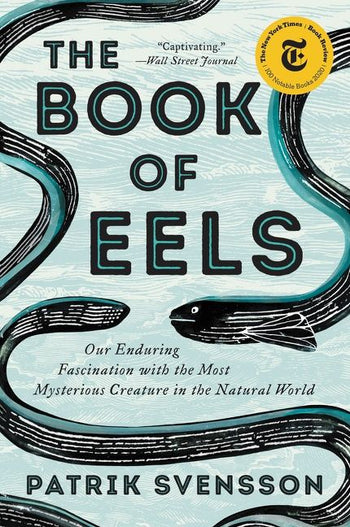
Over a recent breakfast, a friend and neighbor who has another home in his wife’s native Sweden asked what books I had read recently. Beaverland topped my list at the time and in response to my enthusiasm Alan quickly suggested a work about eels, written by a Swedish journalist.
At that very moment my mother turned over in her grave.
Eels are fish that look like snakes, and anything that was or even looked like a snake was immediately suspect in mother’s eyes. She had a deathly fear of reptiles, which was a bit weird since she was born in the country. The first house I remember from my childhood sat next to a large farm where Mr. Breeden occasionally stopped plowing with his mules to whack some unsuspecting snake in two with his hoe. Mother was happy, I believe, when we built a larger house “in town.”
Because Alan is a thoughtful, curious, and widely read friend, I took his recommendation seriously. Which is how I ended up reading about this odd and beguiling creature.
The Book of Eels: Our Enduring Fascination with the Most Mysterious Creature in the Natural World (2021) by Patrik Svensson is one man’s attempt to get to the bottom of what scientists and philosophers have for centuries dubbed as “the eel question.” Very little is actually known about the European or American eel, except that they are somehow mysteriously spawned in the Sargasso Sea, a constantly shifting part of the Atlantic Ocean bounded by four great ocean currents. I say mysterious because no one has actually ever seen eels mating or giving birth. The first glimpse we get of them is as tiny willow leaf-shaped larvae only a few centimeters in length floating along in the great ocean current until some — for some unknown reason — peel off to live in North America and others head to the Mediterranean, the coastal waters of Northern Europe, or Scandinavia. There they undergo their first metamorphosis transforming into the glass eel, followed rather quickly by another transformation into the yellow eel. We still don’t understand what drives them, after living for decades in freshwater, to change once again to a silver eel and swim great distances back to the ocean at the end of their lives. Even in an age of great scientific discovery they remain a mystery.
Which makes them utterly fascinating and a great subject for a writer who wants to explore what it means to live in a world full of questions we can’t always answer.
Svensson’s book has different attributes, much like its subject. Several times during a life that can easily last decades, the eel goes through a metamorphosis to adopt to new conditions or new stages of life. Eels can be on dry land for hours, look limp and dead, and yet revive in just a few minutes after being put back into water. And for their final act eels grow sexual organs only at their last stage of life when they prepare to return to the Sargasso Sea, presumably to mate deep in the ocean waters and die. Likewise, Svensson’s book is at times a work of natural history. Until it becomes a memoir about his childhood growing up catching eels with his father. Then it may become a study of literature and philosophy. At other times he considers how climate change is leading to the coming extinction of the eel as well as many other forms of life. And this professed unbeliever nonetheless sees something spiritual about the eel and our fascination with it.
All of which makes Svensson’s work engrossing and multi-dimensional. Just like his subject.
In some ways, Svensson has written a lament for the eel as well as for a childhood where his father — a road construction worker — taught him valuable lessons of life. He mourns the loss of both, as well as the loss of our planet as we destroy it through hyper industrialization. And he hears the land mourn in response.
Ecologist, writer, and Congregationalist pastor Andi Lloyd has written about the way the earth mourns. In the Hebrew Bible, she writes, “mourning is an expansive practice.”
The people mourn, of course, but so do the land, the pastures, and the deep springs. Even gates and walls lament. The Hebrew verb abal, translated here [in Hosea] as “mourn,” also carries the meaning “to dry up, to wither.” Where a widow might put ashes on her head, the land and pastures and springs mourn by withering and drying up—all ways of speaking aloud the truth of inward grief.
Therein lies the power of lament: to speak the truth that all is not well. Walter Brueggemann writes that grief, spoken aloud, is “the counter to denial.” Lament is prophetic speech. It bears faithful witness to all that is not right with the world and to all that is not right with ourselves.
Svensson’s capturing the lament of our planet through the story of the eel speaks to what Lloyd notes as a foundational ecological truth: when one part of creation goes awry, the whole suffers. “The land’s grief at what the people have done points to the fundamental reality of our interconnection.”
With the eel, we may not understand how this creature lives and dies, but in that mystery lies answers about our true understanding of the world. Philosophers and scientists from Aristotle to Rachel Carson have studied eels, and Carson captured her fascination in a letter to her publisher.
I know many people shudder at the sight of an eel. To me … to see an eel is something like meeting a person who has traveled to the most remote and wonderful places of the earth; in a flash I see a vivid picture of the strange places the eel has been — places which I, being merely human, can never visit.
Science has taught us much and has brought us never-before-seen comforts, but we should respect the mystery that the eel represents. There is something sacred there that can lead to greater understanding.
In 2022 I wrote the perfect note for Mother’s Day. Well, at least it was perfect for me. So rather than agonize over finding some thoughtful new perspective on the topic, I’m simply reposting this in a slightly edited form. *
Mother loved the old-fashioned iris. She had them in our garden patch and when I see them today my thoughts inevitably turn to her. As I passed near the Koiner Urban Farm on one of my recent walks I saw my first irises of the year. During what has been a tough time for anyone who cares about rights and democracy in America, my thoughts of Mom went to how she dealt with similar challenges.
Mom passed away on New Year’s Day in 1998, but her life and the lessons she taught me still provide a helping hand here in the 21st century. Lessons such as:
Women are to be respected and valued as people. Mom, the first woman elected as a deacon at First Baptist Church, was a quiet but effective leader who valued other women as leaders. She worked most of her career under a woman, Briley Adcock, our municipal library director. Helen Brown was no radical feminist, but she also did not buy any of the “woman’s place on a pedestal” nonsense. Two of the best bosses in my career were women, and I worked easily in that environment thanks to Mom’s example.
Books are meant to be read, not banned and burned. Mom was a lifelong reader and learner. She loved books and as both a mother and a librarian she loved teaching young children about books. I am appalled at the push by right-wing zealots to ban books today, as if we learned nothing from the fight against the fascists in World War II. Our country is filled with problems. Reading too many books isn’t one of them.
Vote in every election. Mom and Dad were informed citizens with a strong BS detector when it came to politicians. They also voted in every election. Being independent, I know of more than one occasion when they cancelled each other’s votes. I’ve followed Mom’s lead, voting in every election since 1976 when I supported Jimmy Carter for president.
Treat everyone with respect. And that means everyone. We simply were not permitted to be rude to others, no matter how different they were or how marginalized by society. As the country has become more intolerant, I frequently remind myself not to fall into that trap.
Be the person you are meant to be. Mom and Dad probably succeeded with this life principle beyond their wildest dreams. Even when it was tough, they stood by their belief that each child has to figure out what is in store for them in this world. I have tried, generally with success, to follow their example with our children.
You have no right to complain if you don’t do the service. Mom did not like cynics who complained without making a serious effort to work towards a solution. She took her turn as PTA president, even though it was the year our local schools were being desegregated following the Brown v. Board of Education Supreme Court decision. She did it because she felt it was the right thing to do. Mom was always “in the arena” as Teddy Roosevelt would say. **
When I see the patch of iris, I am reminded that Mom is still here, helping me see that we are facing another moment in America where we can change our narrative and our future for the better. It will not be easy, but we need to see everyone — even the marginalized — as humans of value with the same rights we have. We need to educate ourselves so we don’t blindly follow the tribe. We need to do our duty as citizens in a democracy.
It will not be easy, but we have to continue to try, for ourselves, and for our children and grandchildren. Our mothers are calling us.
**In his famous Citizenship in a Republic speech, Roosevelt railed against cynics who looked down at those who were trying to make the world a better place. “The poorest way to face life is to face it with a sneer,” he said. “A cynical habit of thought and speech, a readiness to criticize work which the critic himself never tries to perform, an intellectual aloofness which will not accept contact with life’s realities — all these are marks, not … of superiority but of weakness.” It is the person (man in Roosevelt’s day) who is actually in the arena, who comes up short but keeps striving, who counts.
The BBC “top of the news” reporter said “despite the regularity, people are still shocked” after the May 6th mass shooting at an outlet mall near Dallas, Texas. The observation is right in noting the regularity. But how can anyone still be shocked by this news. If the day has a “y” in it, chances are good that there’s been a mass shooting somewhere in our country.
Somewhat appropriately, the BBC report came on just before the regularly scheduled programming which featured a new report in Reveal entitled, No Retreat: The Dangers of Stand Your Ground. In a string of recent shootings, the report noted, young victims have been killed or seriously injured over innocent mistakes.
In her May 6th Letters from an American newsletter, historian Heather Cox Richardson, who has long focused on the history of the Republican Party in America, began with the following three paragraphs.
For years now, after one massacre or another, I have written some version of the same article, explaining that the nation’s current gun free-for-all is not traditional but, rather, is a symptom of the takeover of our nation by a radical extremist minority. The idea that massacres are “the price of freedom,” as right-wing personality Bill O’Reilly said in 2017 after the Mandalay Bay massacre in Las Vegas, in which a gunman killed 60 people and wounded 411 others, is new, and it is about politics, not our history.
The Second Amendment to the Constitution, on which modern-day arguments for widespread gun ownership rest, is one simple sentence: “A well regulated militia, being necessary for the security of a free state, the right of the people to keep and bear arms, shall not be infringed.” There’s not a lot to go on about what the Framers meant, although in their day, to “bear arms” meant to be part of an organized militia.
As the Tennessee Supreme Court wrote in 1840, “A man in the pursuit of deer, elk, and buffaloes might carry his rifle every day for forty years, and yet it would never be said of him that he had borne arms; much less could it be said that a private citizen bears arms because he has a dirk or pistol concealed under his clothes, or a spear in a cane.”
Where did today’s insistence that the Second Amendment gives individuals a broad right to own guns comes from? Richardson highlights two key origins:
“One is the establishment of the National Rifle Association in New York in 1871, in part to improve the marksmanship skills of American citizens who might be called on to fight in another war, and in part to promote in America the British sport of elite shooting, complete with hefty cash prizes in newly organized tournaments.”
But that changed in the mid-1970s when a faction in the NRA forced the organization away from sports and toward opposing “gun control.”
[T]he second thing that led us to where we are today: leaders of the NRA embraced the politics of Movement Conservatism, the political movement that rose to combat the business regulations and social welfare programs that both Democrats and Republicans embraced after World War II.
If you are not familiar with the term, Richardson defines “Movement Conservatives” as those who “embraced the myth of the American cowboy as a white man standing against the ‘socialism’ of the federal government as it sought to level the economic playing field between Black Americans and their white neighbors.”
Richardson lays out the history by noting that until 1959, “every single legal article on the Second Amendment concluded that it was not intended to guarantee individuals the right to own a gun.” However that changed in the 1970s, when “legal scholars funded by the NRA had begun to argue that the Second Amendment did exactly that.”
Awash with funds from gun and ammo manufacturers, the NRA by 2000 was one of the top three lobbying organizations in the country.
Historian of authoritarianism Ruth Ben-Ghiat has also weighed in recently about the unspoken and enormous economic cost of gun violence. If we want to end gun violence, she suggests, we need to let people know that “a different reality is desired by millions of Americans.” As an example she quotes a pitch by communications strategist Anat Shenker-Osorio: “Imagine sending your kid to school, and the biggest worry on their minds is, ‘Where did I put my homework?’ This is the future, and it’s ours for the taking…Losing too many of our loved ones to gun violence is a choice we don’t need to keep making.”
Historians provide important context to critical issues facing the nation today. I encourage you to read Richardson’s entire post, which ends with these two paragraphs:
The unfettered right to own and carry weapons has come to symbolize the Republican Party’s ideology of individual liberty. Lawmakers and activists have not been able to overcome Republican insistence on gun rights despite the mass shootings that have risen since their new emphasis on guns.
Tonight, I am, once again, posting yet another version of this article.
Even with a large majority of Americans supporting common-sense gun laws, the fight to hear their voices, the fight for democracy, never ends.
We’re hearing more today about those whoppers that belong in the Liars’ Hall of Fame.
We construct false narratives to shape the future toward a personal vision, to survive in a challenging world, or to accumulate power and wealth. If we want to combat the destructive power of lies, individuals, institutions, and countries need to be clear-eyed about what happens when we allow deceits, half-truths, and false narratives to take over our stories.
Let’s start with the lies used to build individual myths.
Personal brands are everywhere in today’s working world, and they can help raise the profile of people and communities who have been traditionally marginalized. Like it or not, nonprofit and for-profit institutions offer little or no job security. For those with a worldview focused on building community, the idea of always focusing on one’s personal brand may seem distasteful. But a changing work environment requires new approaches.
Unfortunately, the lure to create a compelling and engaging story can easily slide over into our very human tendency to build unsustainable myths.
As Amanda Marcotte wrote in Solon, perhaps we are finally beginning to see the negative impacts of such a corrupted belief system, getting the point that billionaires aren’t any smarter than other people and don’t deserve our praise. “Between Elon Musk, Sam Bankman-Fried, Donald Trump and Elizabeth Holmes,” she asks, “who still believes that money equals brains?”
Elizabeth Holmes remains in the news as she appeals her conviction on multiple charges of defrauding investors while begining a personal rebranding tour. * She is an especially timely reminder of the destructive power of deceit and the false narrative.
Bad Blood: Secrets and Lies in a Silicon Valley Startup (2018 with a 2020 afterword) by John Carreyrou is the story of the building of the myth and the ultimate disgrace of Elizabeth Holmes. The Theranos founder dropped out of Stanford while still in her teens to focus full-time on the health tech startup which claimed to have invented technology that could accurately test for a range of conditions using just a few drops of blood. Theranos raised $945 million from a well-known list of investors and was valued at $9 billion at its peak. Yet her story began to unravel after a Wall Street Journal investigation in 2015 written by Carreyrou reported that the company had only performed roughly a dozen of the hundreds of tests it offered using its proprietary technology, and even in those few cases the accuracy of the results was questioned. Theranos was relying on third-party manufactured devices from traditional blood testing companies rather than its own technology, as it claimed.
In Bad Blood, Carreyrou takes the reader through this sordid story of how the thirst for money, fame, and control — “Apple envy,” he names it, in honor of Holmes’s pursuit to become the next Steve Jobs — wrecked lives, endangered patients, led to a man’s suicide, and wasted almost a billion dollars of investment. Holmes, along with her COO and secret lover Ramesh “Sunny” Balwani, used lies, hubris, obfuscation, influential contacts, PR stunts, nepotism, fraud, bullying, and more to hide the simple fact that the empress had no clothes. Carreyrou is a riveting writer and detailed reporter, producing a book that reads like a crime thriller. It also resembles a fable with a clear moral about the downfall of those who traffic in deceit, lies, hubris, and unexamined blind spots in personal principles.
Cautionary tales about badly skewed moral compasses should lead to introspection, conclusions and responses. On the personal level, we need to understand the reasons why personal myth building can be dangerous. Guidelines for building personal brands usually stress authenticity, integrity, and trustworthiness. My experience in the nonprofit sector suggests it is all too easy for half-truths to creep into personal brand-building when describing fundraising prowess and program impact. Others will eventually discover that you’ve inflated the truth or taken credit for the work of others. It is more accurate and authentic to recognize those contributions. We all stand on the shoulders of giants. It is a lesson worth remembering.
Some observers believe the tables are turning, and that we are finally beginning to see a rise in transparency in America just as happened in the early twentieth century. At that time, reformers expressed concerns about the concentration of wealth and power at the top of American society. But those concerns were ignored until investigative journalists at McClure’s Magazine and elsewhere …
… began to explore the specifics of political corruption and its cost to ordinary Americans. … [Those journalists] helped to shift the weight of social value from keeping secrets to spilling them.
When that shift happened, the walls protecting the country’s entrenched leaders crumbled fast.
Too often we are asked by those in power to look at life with the singular consideration of how much money can be made by those who own our businesses. That worldview ignores the remarkable nature of life and the redemptive power that comes from books, music, art, nature, relationships, and much more. We have dislocated the joy that comes from these treasures and forgotten what really matters.
Stretching the truth in your personal story may never reach the level of Elizabeth Holmes, but her cautionary tale is a good one for all to remember.
More to come…
DJB
* As I was finishing this book, the New York Times (predictably) wrote a piece white-washing Holmes’s white collar crime entitled “Liz Holmes Wants You to Forget About Elizabeth.” The fabulous New York Times Pitchbot parody Twitter account was having none of it:
Chuck Manson Wants You to Forget About Charles
The scraggly beard is gone. So is the swastika tattoo . As the convicted cult leader awaits prison, he has adopted a new persona: devoted father.
— New York Times Pitchbot (@DougJBalloon) May 8, 2023
Why are authorities essentially taking Elizabeth Holmes' life away? It's not like she was panhandling on the F train.
— New York Times Pitchbot (@DougJBalloon) May 7, 2023
The Weekly Reader links to written works I’ve enjoyed. I hope you find something that makes you laugh, think, or cry.
Have you ever been tempted to type in the big shrug emoji in response to an email? Give an unenthusiastic “well, OK” to a colleague’s question? Darken your camera so you can doze off in a Zoom meeting? Scan the possibilities and then respond to a supervisor or spouse with “whatever”?
If you’ve ever experienced that “meh” attitude, stop! Kill that impulse!
Never Say Whatever: How Small Decisions Make a Big Difference (2023) by Dr. Richard A. Moran reveals how the W-word is a career — and life — killer. We have a chance to make a big impact in both, but to do so we have to make the numerous daily decisions that everyone faces. The choices we make, even the small ones, help us pivot toward the life and career we want. But that becomes much harder if we tend to rely on “whatever” as a substitute for decision-making. It is a word that “can be a whole sentence, an attitude, an ‘OK,’ or nothing at all.” It can also be habit forming, with disastrous long-term consequences.
An entrepreneur, author, radio host, and former college president, Rich draws on a lifetime of personal experience in this, his tenth book. But he also expands the perspective through interviews with a wide range of corporate decision makers. They all help us see that banishing apathy is a big key to success.
I’ve known Rich and his wife Carol for years. In Never Say Whatever, Rich writes with the honest and humorous style I’ve come to know and appreciate. I was pleased and honored when Rich agreed to share insights he’s uncovered with readers of More to Come.
DJB: Rich, why has the word “whatever” come to be such a toxic response in both our business and personal lives?
RM: The word “whatever” can be both a lazy response and a way to avoid a decision. Both are behaviors that are not going to live a better life or enhance your career. The small decisions are especially susceptible to a “whatever” but it’s all the millions of small decisions that make for a good life and a successful career. Think about your own reaction when you come across someone who says “whatever” all the time. It’s not good. In global surveys about the most annoying words we deal with, “whatever” is always near the top. The simple act of removing that word from your persona will make you a better person.
A way to think about curing “whatever” is to be intentional. If your intentions are clear, it is always easier to make decisions, especially the small ones. If you intend to lose weight, you act like you are on a diet and make decisions accordingly. Simple.
We’ve all heard that we shouldn’t worry about the small stuff. You disagree. Why are these small decisions so critical to success and happiness and is there a cost to avoiding them?
The research shows that we make about 35,000 decisions in a day. That is an incredible number. The same research found we make over 300 decisions in the act of going out to lunch. Think of lunch as a metaphor: where to sit? turkey? rye? sourdough? mustard? lettuce? You get the idea. Giving a “whatever” answer to any of those simple questions will likely result in a sandwich you don’t want. I think if you make decisions about the small stuff you won’t worry about it as much.
Many of your examples are for those working in the business sector, so how do the lessons you bring to light apply to the nonprofit world, and how might they differ between those two sectors?
The nonprofit world can fall victim to “whatever” too. I found that when people give up or feel that their efforts won’t make a difference, a “whatever” attitude can settle in to the organization and the individual. When the problems that the nonprofit are trying to solve are so big, the needle of success might not move every day. Think climate change or hunger. Breaking down missions into bite-size projects with bite-size decisions might be a better way to go. It’s important to recognize when a “whatever” attitude is creeping in and kill it before it can spread. I found no difference between any demographic or organization about how “whatever” can be toxic.
Rich Moran
Each chapter includes “Tools and Hacks” to help apply the lessons being shared as well as a perspective on “Whatever” from a range of successful leaders. Can you share a favorite of each that especially resonates with you?
Decision making need not be complicated. Too often the approach to decision making can get in the way of the actual decision. Spreadsheets and pivot tables are not always the answer. Everyone has their go-to tools including listing pros and cons or relying on the gut. My favorite tools that were mentioned was the “Magic 8 Ball”. Someone else asks SIRI on their iPhone about decisions. Successful leaders can process decisions quickly based on listening, data, examining the options and choosing one. All the leaders I spoke to sort of have the same approach. But remember, we are all leaders of something. At the most basic level we are the leader of our own life.
Finally, Rich, what is the successful business consultant and entrepreneur reading these days?
I tend to listen to wise advisors like you, David. You recommended Four Thousand Weeks by Oliver Burkeman and it changed my perspective about time. Another favorite is This is Happiness by Niall Williams. Recommendations come in all genres and I like them all. I tend to use reading as a time to learn about writing as well as the subject matter. The table next to my bed is full of books from my favorite recommenders. The latest additions are:
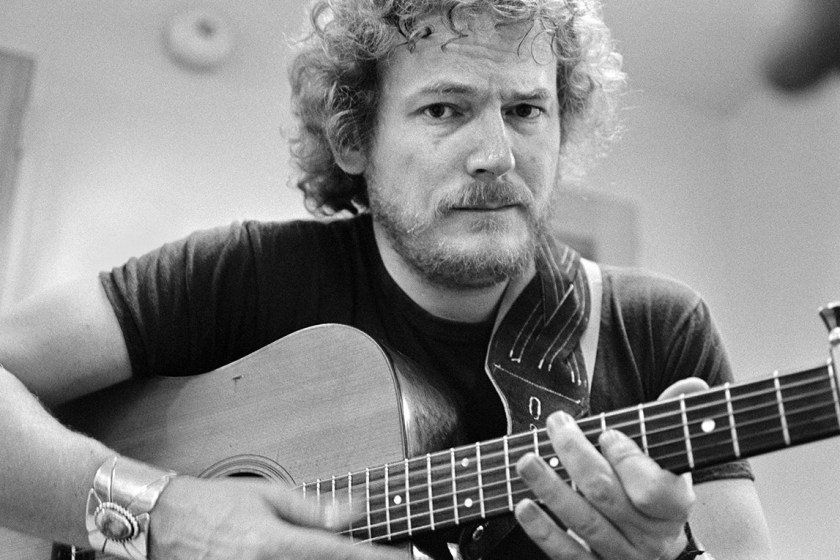
Canadian folksinger and songwriter Gordon Lightfoot — another voice from my 20s and 30s — passed away on May 1st. I first heard the news from Walter Tunis who writes The Musical Box, an informative and delightful WordPress newsletter with a decidedly personal perspective on music and musicians he has enjoyed through the years. Tunis’s opening paragraph following Lightfoot’s death is a good place to start this tribute.
He sang about hitchhikers and loners, railroads and highways, shipwrecks and heart strings. In a career than spanned over 60 years, Gordon Lightfoot gave voice to some of the most remarkable story-songs ever to hit America from the Great White North. While the subject matter of his compositions regularly shifted, his allegiance to the folk inspirations that took hold as a youth in his native Ontario was never broken. A Lightfoot song was as light as a feather but solid as oak.
Lightfoot had a warm baritone voice that welcomed the listener into the song. The subjects might change, but the sound stayed remarkable consistent: rich and mellow.
The singer described Early Morning Rain as his “first good song” and the one that got him started in the music business after it was recorded by Peter, Paul, and Mary. Not surprisingly, it also resonated with the editorial cartoonist for the Montreal Gazette.
If You Could Read My Mind showcases Lightfoot’s storytelling craft, beginning with those memorable first two lines:
If you could read my mind, love What a tale my thoughts could tell Just like an old time movie ‘Bout a ghost from a wishing well
Written to someone he once loved but is now losing, the song is one of Lightfoot’s most personal. It was written about his deteriorating marriage to his first wife Brita Ingegerd Olaisson, and he “moves from ruminating to his own reflections on the relationship to feelings of loneliness and grief.”
One of my favorite Lightfoot tunes is Song for a Winter’s Night. Here’s a great live version with an introduction that speaks to the inspiration for the story — a friend who lost his girlfriend and heads up to the chalet to drink away the winter night.
Steel Rail Blues, heard in the video below from a 1972 concert, was described as “the kind of song you write after you’ve been robbed, stepped on, and somebody’s done the rain dance all over your head.”
Well I been out here many a long day I haven’t found a place that I could call my own Not a two bit bed to lay my body on I been stood up I been shook down I been dragged into the sand And the big steel rail Gonna carry me home to the one I love
Another of his big hits was the aptly titled Beautiful, which is just that. Artists and reviewers from all different musical genres loved Gordon’s songs. That’s followed by another Lightfoot classic, That’s What You Get for Lovin’ Me.
Lightfoot’s music was accessible and beautifully crafted, and a wide range of musical artists covered his tunes. As Walter Tunis notes in his appreciation, these included “Elvis Presley, Jerry Lee Lewis, Johnny Cash, Bob Dylan, Judy Collins, Neil Young, Nanci Griffith, Eric Clapton, Alison Krauss, Paul Weller, The Replacements and the Grateful Dead.”
Bluegrass musicians also loved Gordon’s music, none more so than the late Tony Rice. Perhaps the earliest Lightfoot tune he recorded was Ten Degrees and Getting Colder during his years with J.D. Crowe and the New South.
Over the years, Rice would drop a Lightfoot tune or two into his solo projects, and in 1996, after he had lost his voice, Rounder released a compilation album entitled Tony Rice Sings Gordon Lightfoot. One of Tony’s signature tunes was Cold on the Shoulder, heard here with Sam Bush, Mark O’Connor, Jerry Douglas, Bela Fleck, and Mark Schatz in a classic Merlefest performance. That’s followed by the newer generation of newgrassers — Punch Brothers — playing The Wreck of the Edmund Fitzgerald. The line “Does anyone know where the love of God goes when the waves turn the minutes to hours?” is haunting.
Canadians loved having Lightfoot as one of their own. I cannot recall seeing editorial cartoons drawn for other folksingers upon their passing, much less tributes in the Canadian House of Commons and by the Toronto Maple Leaves, a hockey team, before their second round Stanley Cup game.
Tunis returned to Lightfoot later in the week on The Musical Box with his 10 Favorite Songs by Gordon Lightfoot. Everyone’s list will differ, but Walter has some excellent selections among his choices.
Carefree Highway, with images of highways and byways of western Canada, seems an appropriate tune on which to end this appreciation.
Rest in peace, Gordon Lightfoot. Your music will live on.
As noted on Opening Day, my expectations for baseball were modest this year. In fact, I didn’t make it to a live game until just a week ago. But the baseball I’ve seen over the last seven days is a great reminder of why I love baseball, no matter what the wealthy owners and the sports industrial complex do to undermine our trust and loyalty.
First, it helps to kick off your season with great seats behind home plate (thanks Gus!) with a warm and generous friend. While in Boston last week, Ed Quattlebaum and I conspired to catch the Red Sox at Fenway. As in all things at this historic park, it was special.
Nothing could be better than to watch a game at Fenway with my long-time friend Ed Quattlebaum
Catching up with Ed on a cool spring evening; being carded to get a beer (hey, Massachusetts has Puritanical liquor laws); seeing the Sox and the Guardians up close; watching as a dinger sailed over the Green Monster … priceless! Ed and I had a wonderful time in spite of the Red Sox loss.
Great seats to watch a game at historic Fenway Park
Then yesterday was the first game in my reduced six-game package for the Washington Nationals. For reasons mentioned elsewhere, our group took out a half-season plan for 2023. In response, the Nats shifted our seats a bit and, lo-and-behold, they are actually better. We’re now right behind home plate. Our new seats are literally two rows below the television camera at the press-box level that shows the full field action.
Our new Section 313 seats are even better than in previous years
My backdoor neighbor Mark and I enjoyed a delicious Jammin’ Island BBQ platter with rice and beans and cole slaw, topped by a delicious IPA. Patrick Corbin — who hadn’t pitched well since the 2019 World Series — surprised us all and pitched a helluva seven innings, allowing only one hit to the Cubs until Davy left him in too long and he gave up two more hits (and was saddled with two runs) in the eighth. When the Cubs came back to tie it 3-3, our entire section could feel a letdown coming.
And then this happened!
Before the bottom of the ninth, Mark said, “Well, let’s just hit a dinger and get it over with.” The words were barely out of his mouth when Alex Call did just that, swinging at the first pitch and getting his first career walk-off home run.
A walk off!
Oh, and the whole thing took a brisk one hour and 55 minutes. Did you recall that I said I love the pitch clock? The baseball of my youth has returned!
Each month my goal is to read five books on a variety of topics and from different genres. Here are the books I read in April 2023. If you click on the title, you’ll go to the longer post on More to Come. Enjoy.
The Songs of Trees: Stories from Nature’s Great Connectors (2017) by David George Haskell is a fascinating book in its subject matter, scope, and approach. Yes, this is a book of science, but it is also a book of contemplative studies. And philosophy. And modern cultural studies. And yes, even history. Haskell, in repeated visits to twelve individual trees in different settings all around the world, dives deeply into their biology and evolution. But some of the more intriguing perspectives shared by this lyrical writer are centered around the networks that trees depend on and provide to the wider world, including humans. The twelve trees that are the stars of Haskell’s book symbolize the key theme that comes through all his work: “life is about relationships [and} we can find salvation in this view of life as a community.”
The Cross and the Lynching Tree (2011) by James H. Cone invites us to see the world through the eyes of the world’s marginalized and oppressed. It takes us into this world through one of our most recognized religious symbols, the cross, and through one of America’s most terrible national sins, lynching. The cross and the lynching tree are separated by nearly 2,000 years, and though both are symbols of death, one represents a message of hope and salvation, while the other signifies the negation of that message by white supremacy. Both had the same purpose: to strike terror in the subject community. “The crucifixion was clearly a first-century lynching. Both are symbols of the death of the innocent, mob hysteria, humiliation, and terror. They both also reveal a thirst for life that refuses to let the worst determine our final meaning and demonstrate that God can transform ugliness into beauty, into God’s liberating presence.” This is a deep, penetrating exploration of these symbols and their “interconnection in the history and souls of black folk.”
The Wake of the Unseen Object: Travels Through Alaska’s Native Landscapes(1991; classic reprint edition 2020) by Tom Kizzia is one man’s exploration of Alaska’s ancestral landscapes and contemporary life in bush country. Kizzia, who wrote some 80 stories in the 1980s for the Anchorage Daily News that became the basis for this work, lets the native Alaskans tell their story. He went beyond the road system to visit villages and people who are working to maintain their balance and connections with the past while still living in the present. As Kizzia says in the new introduction to the University of Alaska’s classic reprint edition, “the great dramas of Alaska Native life revolve around efforts to adapt and resist, to preserve hunting and fishing and sharing traditions for future generations, to balance self-government and corporate capitalism, to overcome traumas that followed subjugation by colonial powers.”
Books and Our Town: The History of the Rutherford County Library System (2023) by Lisa R. Ramsay is a wonderful addition to the story of America’s love affair with public libraries. A 1942 editorial in the Rutherford Courier entitled Books and Our Town encouraged the citizens of Murfreesboro, Tennessee, to create a public library. Henry T. Linebaugh answered the call, although it took several years for the community to respond to his generosity and open its first public library, named after the benefactor’s mother. For its 75th anniversary, Ramsay has gathered a rich array of stories that tell how the library became an essential part of the community. She also tells of the very real people who make it all work, including the “much beloved Helen Brown” — my mother — and current Linebaugh Branch Librarian Carol Brown Ghattas, my sister. In the post, I have a Q&A with the author about civic engagement, strong female leadership, and New Deal bookmobiles.
Funerals are Fatal (1953) by Agatha Christie opens as Richard Abernethie, the wealthy head of the family fortune dies suddenly in his Victorian mansion. When a sister is savagely murdered with a hatchet the next day in her home, the extraordinary remark she made at her brother’s funeral, suggesting he was murdered, suddenly takes on a chilling significance. The family solicitor probes the mystery and uncovers a great deal that was unknown. Ultimately he turns to his old friend Hercule Poirot for help. Classic Agatha Christie themes are evident throughout the book: “a healthy inheritance casts suspicion on the family, but as ever, nothing is quite as it seems.”
This Weekly Reader features links to recent articles, blog posts, or books that grabbed my interest or tickled my fancy. I hope you find something that makes you laugh, think, or cry.

















 MORE TO COME...