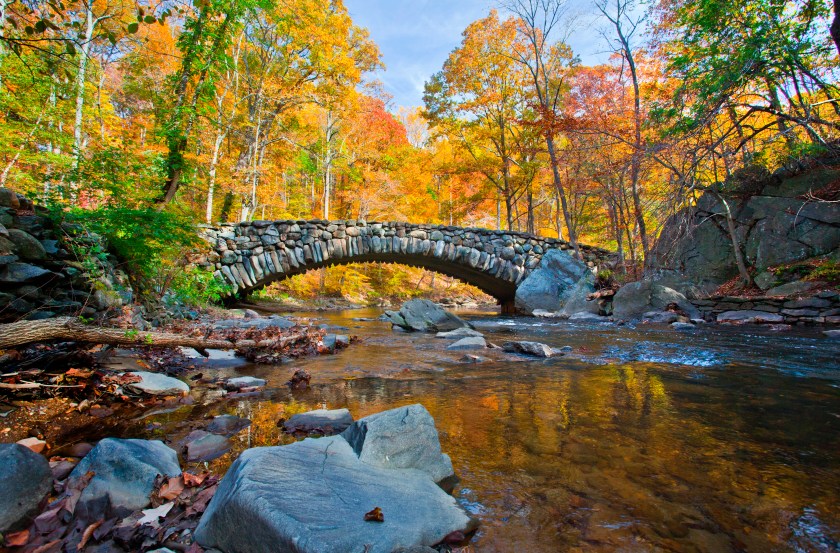
Washington is blessed with an abundant tree canopy which encloses 37% of the city. The nation’s capital is fourth among U.S. communities with the most tree coverage per capita. This fall we’ve seen those trees in all their glory. Well past the peak days of late October the region was ablaze with magnificent color.


Yet I noticed a tendency among some residents to hurry past this amazing display. Even Rock Creek Park, a veritable cathedral of nature, is not immune to our mental disappearance. Drivers rush through, barely noticing their surroundings. Elsewhere heads are buried in smartphones in the midst of some of the area’s most stunning displays, like the blanket the ginkgo tree lays upon the ground in the fall.

Essayist Maria Popova reminds us that “to live wonder-smitten with reality is the gladdest way to live.” But we have to take the time to recognize the wonder, the joyful, the fulfilling that sparks awe in humans. We find that wonder not just in nature but in leisurely lunches at a sidewalk cafe, in talks with a child as they explore the world around them, in simply finding a bench on which to sit and think.
Too few of us choose to order our hours and days this way. The ability to live wonder-smitten lives is often crushed by a culture that demands that we always hustle, striving to achieve more. It is the race that never ends. And as Brian Klaas writes, we are too often perplexed when we meet those who have stepped off the treadmill.
Racing to keep up, we tend to find it exotic and eccentric when people linger without a purpose, when one wanders aimlessly, or when we see a stranger sitting and thinking in public without a smartphone as a distraction. The solo diner without a book or phone is seen as a weirdo; the person who wanders alone for hours in nature deemed a loner. Constant hyper-activity hasn’t just defeated patient stillness and slow reflection — what Hannah Arendt called the vita contemplativa. Instead, the modern rat race has massacred it so much that many of us can’t even handle being forced to be alone, with nothing but our minds as company.
We have discovered modernity and, unfortunately, latched on to the parts that are unfulfilling for too many of us. We can fly, but at what cost? E.B. White once wrote, “The curse of flight is speed. Or, rather, the curse of flight is that no opportunity exists for dawdling.”
The difficulty of finding work/life balance in a fast-paced world is an oft-heard complaint. But the consequences of not finding the appropriate balance can be devastating. As I wrote on the occasion of our twins’ birthday, thirty years goes by in the blink of an eye. We have to slow down and learn to savor each moment that we can. Doing so is a recognition of the freedom that comes, as described by Franciscan Sister Ilia Delio, from spiritual maturation and a growth in consciousness.
“The first half of our lives is spent building an identity, establishing our security, defining our boundaries, creating a zone of safety, and having controllable order,” she writes. We are operating on lower levels of consciousness.
What creates a breakthrough in consciousness, whereby authentic growth shifts from attention to authority outside ourselves to the inner law of the heart, is not simply growing old but, rather, it is growing inward in freedom . . . Freedom requires a breakthrough into unitive consciousness, a radical surrender and complete letting go, trusting the spiritual impulses of life . . .
“Humanity is the only phenomenon in the known universe that contemplates its own existence,” Klaas writes. “It is one of the reasons, perhaps, why Aristotle and Plato emphasized the role of contemplation in an ideal life — and why the philosopher and guru Alan Watts remarked that ‘through our eyes, the universe is perceiving itself.’”
Hartmut Rosa writes about focusing on “moments of resonance.” I love that phrase, because when things really touch us they resonate within us. To Rosa, resonance refers to a relationship “between subject and world characterized by reciprocity and mutual transformation: the subject’s experience of some other calling upon it which requires understanding or answering, but that also has the ability to change the subject.”
We’ve all had these moments, whether walking in nature, viewing a work of art, in a deep conversation, or simply in thinking alone on a bench. But we have to be present in the experience.
“There is a creative purpose to wandering, daydreaming, even to boredom” writes Michael Corballis. Klaas agrees. “The good life has more aimless wandering, less frantic racing, more spontaneity, less scurrying. It comes with a slower pace that allows us to catch our breath, to soak up wonderful moments, to savor what we have. It gives us the space to do one of the most important things a human can do: to notice and relish the joyful, the fulfilling, or even the merely pleasant bits of life.” He then shared this gem of wisdom from the great writer Kurt Vonnegut:
One of the things [Uncle Alex] found objectionable about human beings was that they so rarely noticed it when they were happy. He himself did his best to acknowledge it when times were sweet. We could be drinking lemonade in the shade of an apple tree in the summertime, and Uncle Alex would interrupt the conversation to say, “If this isn’t nice, what is?”
So I hope that you will do the same for the rest of your lives. When things are going sweetly and peacefully, please pause a moment, and then say out loud, “If this isn’t nice, what is?”
Take your head out of your smartphone or computer screen. Look around. See if you don’t find yourself agreeing with Uncle Alex.
If this isn’t nice, what is?
More to come . . .
DJB
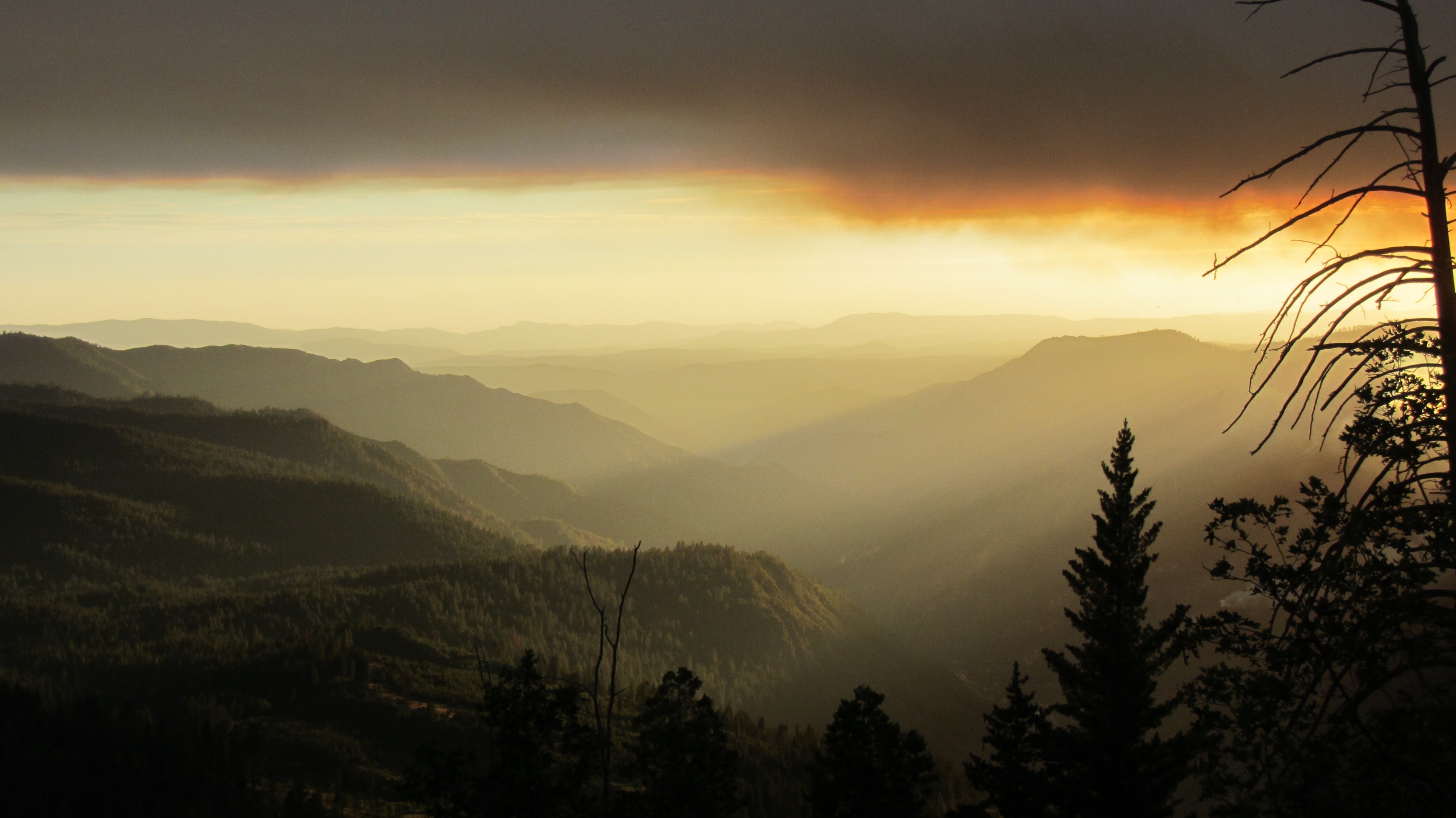
Photo of Rock Creek Park (credit NPS)