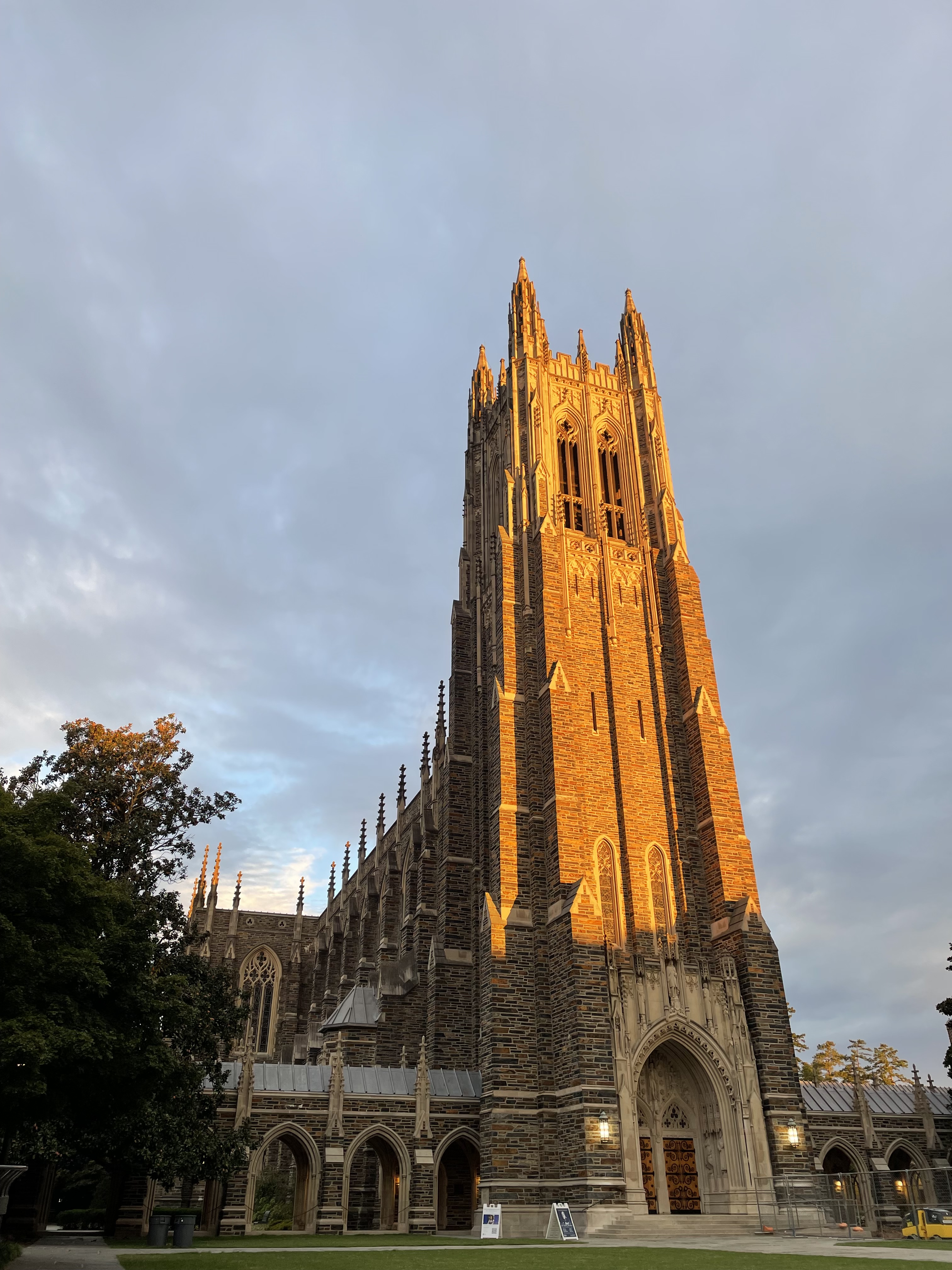
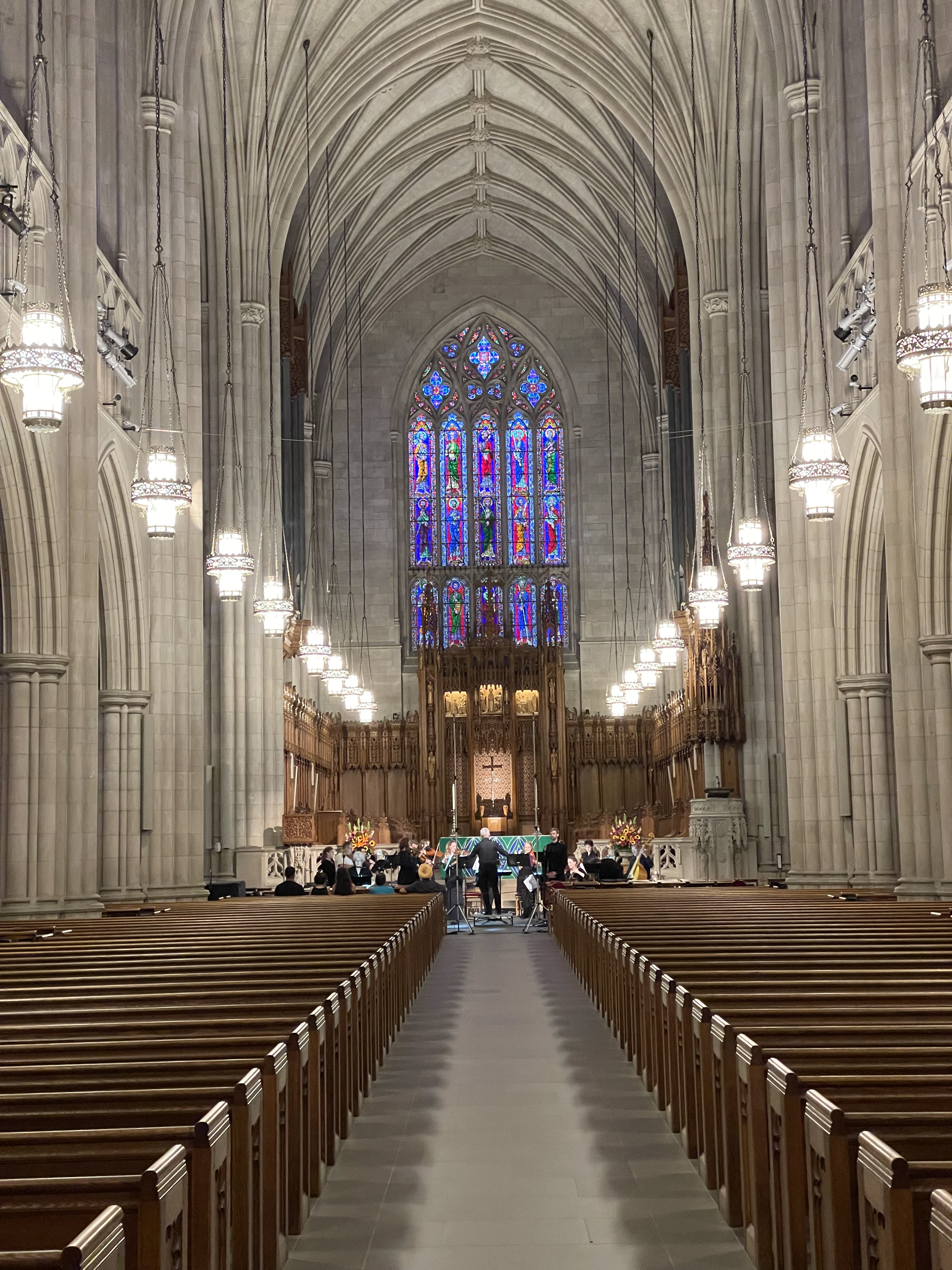
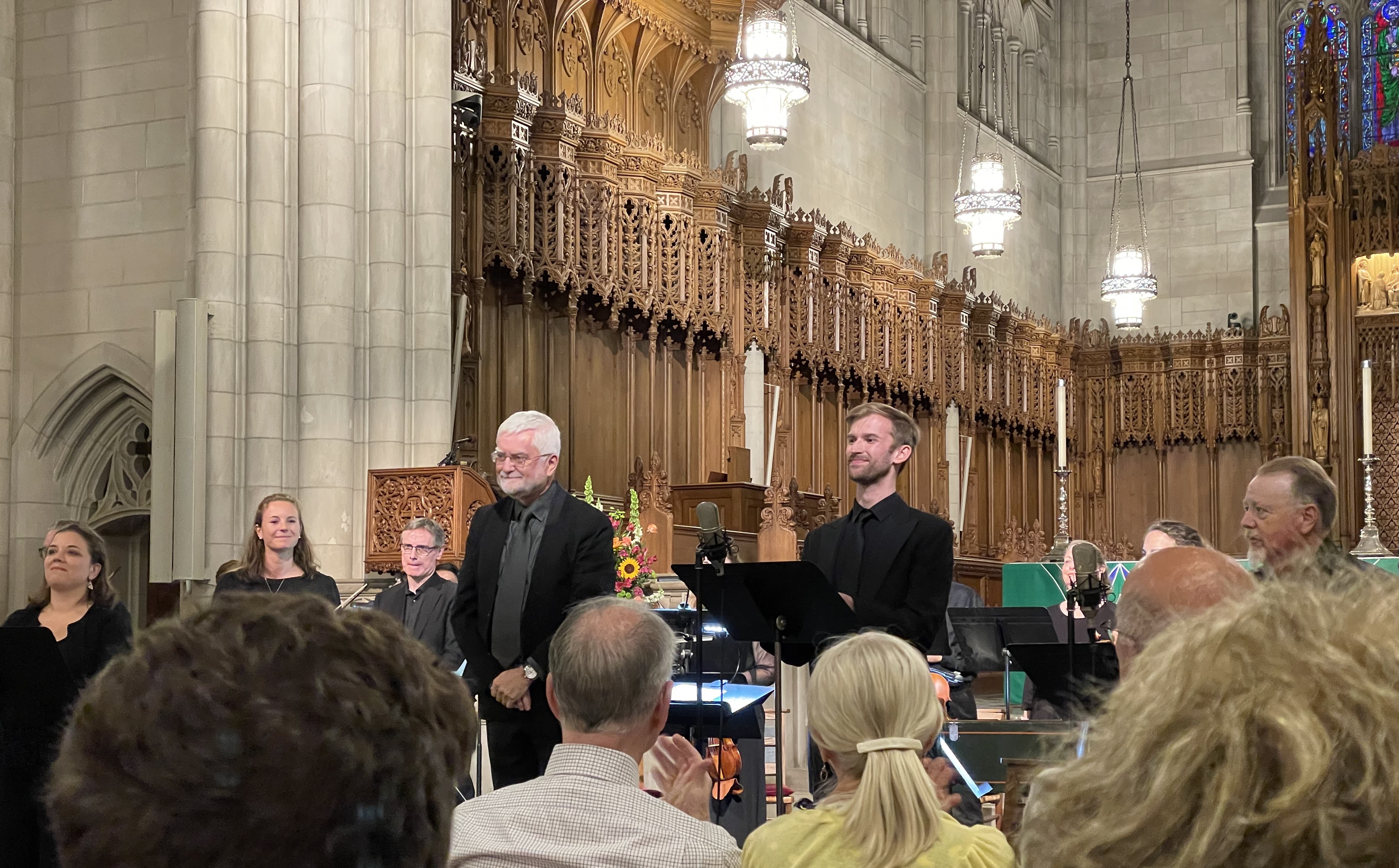
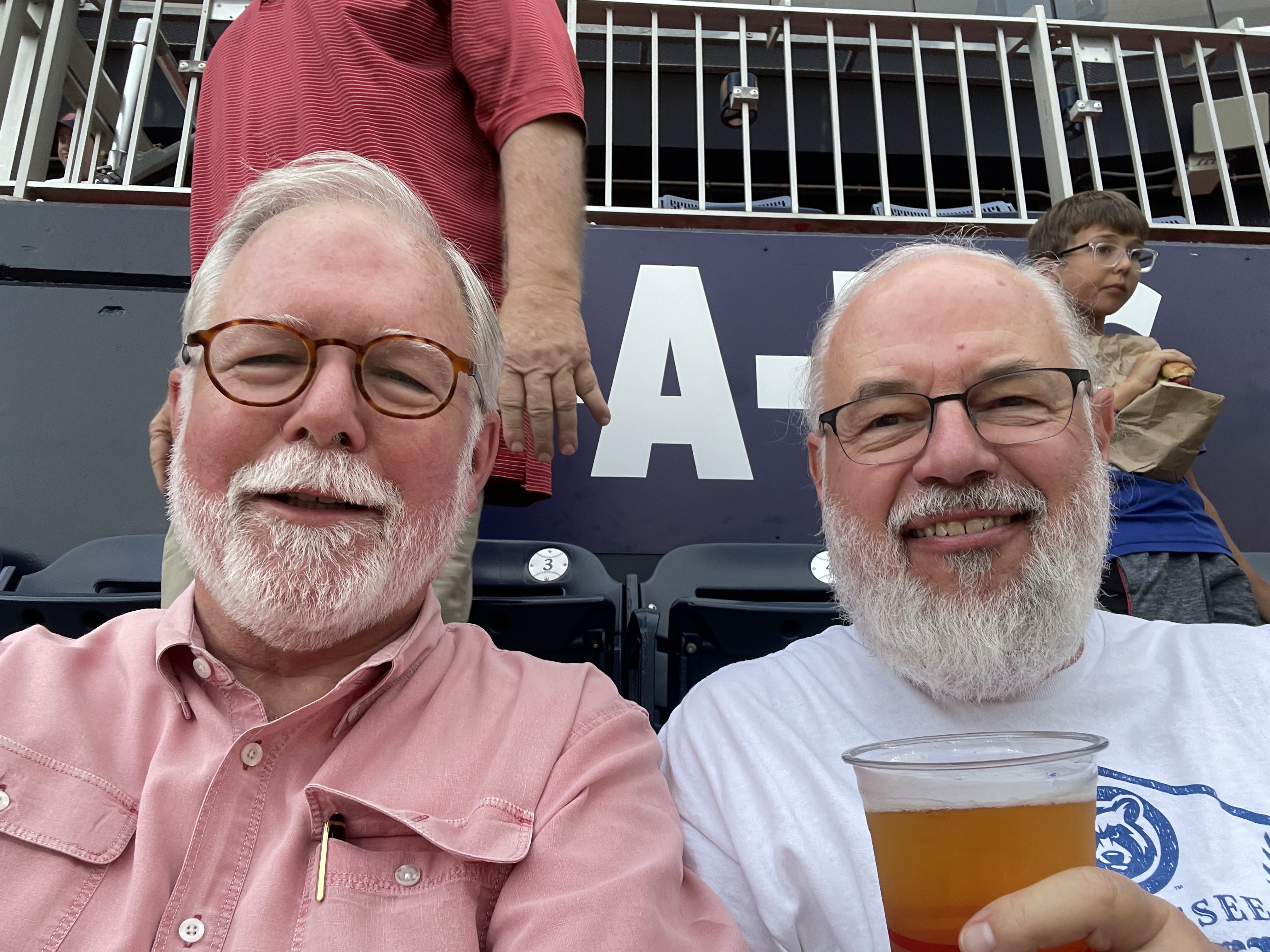
During these final days of summer the sunlight — both at the break and at the eve of the day — is something I hold close. My early morning walks are now coinciding with sunrise. Afternoon strolls take place a little earlier each day to avoid stumbling around in darkness.
The joy and wonder of memorable sunrises and sunsets are part of the experience of travel for me. I thought it would be fun to go back to old travel posts on More to Come and bring together some memories of sunlight I’ve treasured over the years. Almost all I’ve included here were captured with an iPhone (there are a few old 35mm digital camera photos mixed in), and all are mine, with the exception of the beautiful light at the Mohonk Mountain House (taken by Claire) and the sunset over the Tappen Zee Bridge in Tarrytown, NY (taken by Andrew).
These are not the exquisite quality of a Carol Highsmith photograph, but they do capture wonder-filled memories for me. I hope you’ll find one or two to enjoy.
Sunrise over the Blue Ridge Parkway outside Asheville, NC
O’Donovan Rossa Bridge (1816) in Dublin just after sunrise
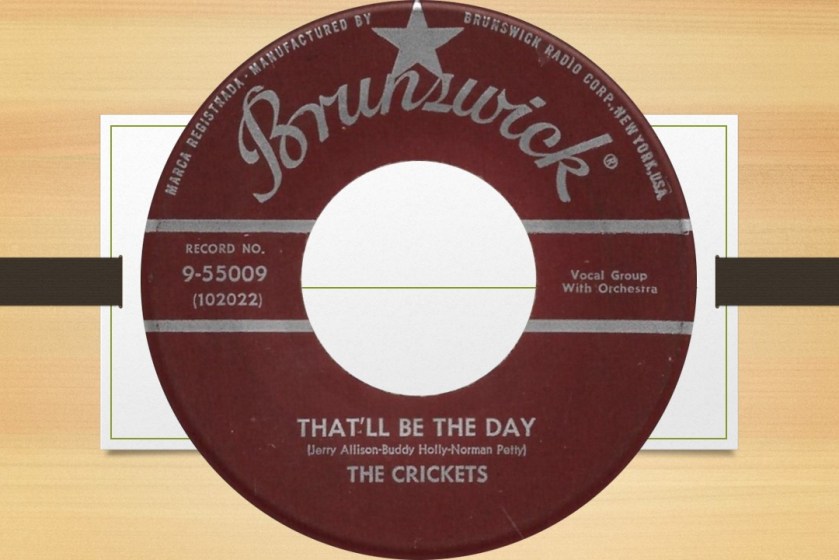
John Renbourn has a lovely solo acoustic guitar version of the old Irish tune which came to mind and inspired the title as I was gathering these photographs. Each verse ends with a variation of:
Be there at our waking, and give us, we pray, Your bliss in our hearts, Lord, at the break of the day.
And now, for some wonder-filled sunsets.
Sunset along the Inside Passage in Alaska
The sun sinks low over our river home in Cambodia
The Grand Canyon glows in the late afternoon sun
Late afternoon sunlight streams through the windows at the Washington National Cathedral
Afternoon light at the National Cathedral becomes part of the 2021 Les Colomes art installation.
Sun sinking over the Dutch Caribbean at Bonaire aboard the Sea Cloud II
A spectacular view of the Mario Cuomo (Tappen Zee) bridge in 2022 (credit: Andrew Bearden Brown)
Mohonk Mountain House (credit: Claire Holsey Brown)
Patuxent River sunset
Christ Church Cathedral, Dublin, at Sunset
Be there at our sleeping, and give us, we pray, Your peace in our hearts, Lord, at the end of the day.
More to come …
DJB
Header photo of a sunrise over the high temple mount of the late 9th century Phnom Bakheng Temple at Greater Angkor in Cambodia by DJB
Each month my goal is to read a minimum of five books on a variety of topics and from different genres. Here are the books I read in August 2023. If you click on the title, you’ll go to the longer post on More to Come. Enjoy.
South to America: A Journey Below the Mason-Dixon to Understand the Soul of a Nation (2022) by Imani Perry is a revelatory journey by a Black daughter of the South that both recognizes and comes to grips with the complexity of the Southern experience, history, and culture. A native of Birmingham, Alabama, Perry grew up the daughter of Southern freedom movement leaders of the Civil Rights era and now teaches at Princeton. In South to America Perry is traveling home to “help the reader dig deep enough to discover the truth.” By reframing our understanding of the South, “we gain a more honest rendering of the country.”
Myth America: Historians take on the biggest legends and lies about our past (2022) — edited by Kevin M. Kruse and Julian E. Zelizer — tackles many of the most dangerous myths about our nation’s past. There have always been lies in our public discourse but in the introduction the editors assert that “in the last few years the floodgates have opened wide.” Yet as many of these top historians demonstrate in a series of illuminating essays, the war against truth in America has been fought over a much longer period of time. Claims about what happened in the past can be “misleading and even malignant.” And yes, historians are influenced by their context and will sometimes disagree; however, “It is quite another thing to ignore the facts altogether.”
Hiroshima(1946) by John Hersey grew out of the only single-content edition of The New Yorker in the history of that publication. The initial report was serialized in some 70+ newspapers, turned into this book (never out-of-print), produced as a national radio reading, and became a touchstone for the nuclear non-proliferation movement. Hersey’s reporting was so powerful that it led the U.S. government to revise its narrative about why dropping the bomb was necessary. The author later said, “What has kept the world safe from the bomb since 1945 has not been deterrence, in the sense of fear of specific weapons, as much as it’s been memory. The memory of what happened at Hiroshima.”
Empress of the Nile: The Daredevil Archaeologist Who Saved Egypt’s Ancient Temples from Destruction (2023) by Lynne Olson is the true-life story of Christiane Desroches-Noblecourt, the remarkable French archaeologist, WWII resistance fighter, and Louvre Egyptologist who played a key role in saving the temples at Abu Simbel. After Egyptian President Nasser announced plans for the Aswan dam, Desroches-Noblecourt — the head of a UNESCO mission in Egypt — began a years-long effort to move them out of the path of the rising waters of Lake Nasser. She pulled strings, twisted arms, called in favors, and would not let the misogynistic men’s club of Egyptian archaeology stop her from achieving her goals. This one earned her the nickname “Umm Simbel” — Arabic for “Mother of Simbel.”
Pappyland: A Story of Family, Fine Bourbon, and the Things That Last (2020) by Wright Thompson is the story of how Julian Van Winkle III saved the bourbon business his grandfather had founded on the mission statement: “We make fine bourbon — at a profit if we can, at a loss if we must, but always fine bourbon.” That grandfather was the now famous Pappy Van Winkle. In tracing the story of a grandson’s determination to resurrect his grandfather’s dream, Thompson has written a beautiful and warm reflection that goes well beyond the basic story, blending together “biography, autobiography, philosophy, Kentucky history, the story of bourbon’s origins and an insider’s look at how the Van Winkle whiskey is made and marketed.”
The Spy Who Came in From the Cold (1963) by John le Carré has been described as “the greatest spy novel of all time” written by “the world’s greatest fictional spymaster.” The Cold War is heating up, and the Berlin Wall has just been erected. Alec Leamas, the head of the West Berlin Station for British Intelligence, watches as his last undercover agent is shot down trying to cross that divide by East German sentries. He is recalled to London where he is given `a chance for revenge: he can assume the guise of an embittered ex-agent in order to trap the deputy director of the East German Intelligence Service. At the end of a number of twists and turns Leamas has a choice to make, one where following his heart means certain death.
What’s on the nightstand for September (subject to change at the whims of the reader):
We are exactly six months away from March 4th, a significant date in U.S. history.
Until 1936, March 4th was when presidential inaugurations were held. Lawmakers chose that date because it was the one on which, in 1789, the Constitution went into effect.
Historian Heather Cox Richardson explains why March 4th may soon become historically significant for a new set of reasons:
After making it clear that she would run her courtroom in the interests of justice without reference to the 2024 presidential election, U.S. District Judge Tanya Chutkan has set March 4, 2024, as the start date for former president Trump’s trial on four criminal counts for his efforts to overturn the results of the 2020 presidential election.
“Overturn the results of the president election” equals “overthrow the Constitution.” The same Constitution that went into effect on March 4, 1789.
Let that sink in a bit. Irony is sometimes too wonderful for words.
Trump’s lawyers, of course, had asked for a very long lead time before the trial, setting their preferred date as April 2026. Judge Chutkan “wasn’t having any of Trump’s histrionics about the trial date,” notes former United States Attorney Joyce Vance. “And, she took his lawyer to task for inaccuracies in the arguments that were made in the pleadings,” including using one example misleadingly where SHE is overseeing the case.
Judge Chutkan was not misled, “one of the many virtues of putting experienced lawyers on the bench.”
With the trial of US vs. Donald J. Trump officially on the court’s docket, we all have time to read the indictment and educate ourselves so that we’re informed and can enter into conversations with the facts. And there will be plenty of misleading statements to sort through, including the prevalent one that the trial is about the former president’s First Amendment right to free speech. Richardson sets that straight.
Those charges are not about anything Trump said. The 45-page indictment acknowledges Trump’s right to speak about the election and even to lie that he had won, and the Department of Justice did not charge him with incitement. The indictment charges Trump with being part of three conspiracies: one to defraud the United States by “using dishonesty, fraud, and deceit” to stop the lawful government function of determining the results of a presidential election, a second conspiracy to obstruct the lawful January 6 congressional proceeding to count and certify the results of the presidential election, and a third conspiracy to take away from other Americans “a right and privilege secured to them by the Constitution and laws of the United States — that is, the right to vote and to have one’s vote counted.”
Trial docket for March 4, 2024
March 4th is also my birthday.
Next year promises to bring me a birthday like no other. Donald Trump, “who seemed to endlessly escape responsibility and accountability for even the worst misconduct while in office will face a jury of his peers on charges that he tried to steal the 2020 election.”
As someone who cares about the fragility of our democracy, I’ll take this show of strength by the rule of law as a birthday gift. Vance has added, “It’s fitting justice, even though it has taken a long time to get here.”
More to come …
DJB
UPDATE: A good friend told me that John F. Kennedy said that “March 4th is the only date that is also a command!” Another historical reference.And if you Google this on the internet, you’ll find a lot of posts like this which encourage us to use the day to do something you have always wanted to do or to do something that you know needs to be done.
“Gavel” by Andrew F.Scott is a 31 foot steel gavel and sound block located in the south reflecting pool outside the Supreme Court of Ohio. The sculpture is constructed entirely from stainless steel and it is the largest gavel in the world. Image by timokefoto from Pixabay.
A recent lunch with a friend brought an issue that has been rummaging around in the deep recesses of my mind for years to the top of the pile. George is an avid and intelligent reader, and he includes MORE TO COME in the rotation of works he reads. He’s the best type of reader in that he talks with me about his perspective on the books, authors, and issues I discuss here.
Over our trout* he asked me, “What do you call MORE TO COME? A blog?” We then proceeded to have a discussion about how the sound of that word — blog — is just so unpleasant to the ear. It is awkward, clunky, and unappealing. It also just sounds outdated. I’ve thought about this off and on for years, but never acted on it. Until now.
Blog came, of course, from a shortening of the word weblog: a term that was coined for “a website that contains a log or diary of information, specific topics or opinions.” MTC certainly fits that description. But we can do better.
I’ve noticed that other writers on the web have also moved away from the term. Never one to be a trendsetter, it was time to finally take some action … indecisive as it may have been.
So MORE TO COME is now my newsletter. That’s the term that many writers on Substack use, and I think it fits my purpose just fine. In practical terms, all I’ve done to banish “blog” is changed my email electronic signatures to reflect the new moniker. (See, not all old-fashioned terms are bad!) I’ll also go back and update some items on the site, such as the About DJB and MORE TO COME post.
You’ll see me refer to the MTCnewsletter going forward. I haven’t stopped writing and posting those thoughts online. Nothing has really changed. I’m just through with cringing when I hear the word blog!
More to come …
DJB
UPDATE: One of my regular editors saw this after it was posted. They said that while they agreed with dropping the name “blog” they weren’t sure that “newsletter” was the best new term to use. I encouraged them to give me alternative suggestions, and I’m doing the same to others if you have a perspective on this. Thanks!
*The Trout Meunière Arc-en-ciel at La Piquette is just sublime.Photo of the dining room from LaPiquette.com.
A summary of posts included on MORE TO COME in August 2023.
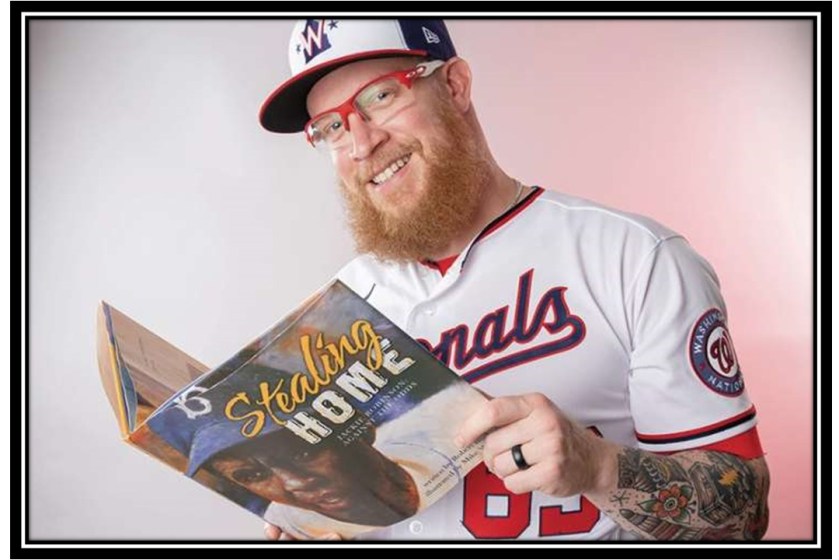
For those of us in the Washington region, August largely maintains the “everyone leaves town” vibe that it has had for decades. Yes, the Washington Nationals are still here and playing well above my expectations, which is delightful. Except for the tourists, the streets and restaurants are less crowded. This year the courts remain busy … but that’s a subject for another time.
There was still much to cover in this month’s MORE TO COMEnewsletter, however, so let’s jump in.
OPPENHEIMER BLEW UP THE SCREEN
The film Oppenheimer was one of two big summer blockbusters. My post Genius, hubris, tragedywas the MTC blockbuster as well, topping the reader-views list for the month. After watching the movie, I went back and read John Hersey seminal Hiroshima to be reminded of the tragedy that followed the creation of the world’s first atomic bomb.
On Sunday I posted A memorable evening of Handelwith two videos of our son ― the tenor Andrew Bearden Brown ― singing at the 10th annual Handel Aria Competition where he took second prize. We are so proud of his accomplishments. I think you’ll enjoy it.
RECOMMENDED READINGS
I ended up covering a lot of ground this month. Besides Hersey’s sobering work, I also dove into the following:
Imani Perry’s National Book Award-winning work South to America: A Journey Below the Mason Dixon to Understand the Soul of a Nation was one of the most important and moving books I tackled in August. A revelatory journey to find the nation’s soulexamines Perry’s meditation on the work to be done to gain a more honest rendering of the country.
Greece, Egypt, and Jordan are on my fall travel schedule for National Trust Tours. In preparation, I read Lynne Olson’s fascinating new book Empress of the Nile: The Daredevil Archaeologist Who Saved Egypt’s Ancient Temples from Destruction. My review of this true-life story of Christiane Desroches-Noblecourt can be found in Mother of Simbel. Added bonus: Olson includes a good bit of material about First Lady Jacqueline Kennedy’s role in building the historic preservation movement in the U.S.
The power of mythologyis a story about myth that involves brown water. Perhaps over ice. Sometimes with a twist. Wright Thompson’sPappyland: A Story of Family, Fine Bourbon, and the Things That Lastwas — like a fine bourbon — very satisfying.
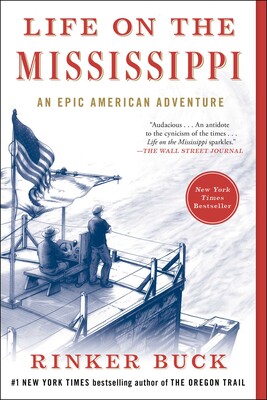
For the monthly entry into my “year of reading dangerously” (i.e., murder mysteries) I dove into The Spy Who Came in From the Cold by John le Carré. Yes, I am rather Late to the partyin reading “the greatest spy novel of all time.”
The book’s title says it all. Myth America: Historians Take On the Biggest Legends and Lies About our Pastwas something I just had to read. You can see my take in The long shelf life of legends and lies.
I had some fun with the Saturday Soundtracks in August.
As I read about how the former president and his loyal employees at Mar-a-Lago (aka indicted co-conspirators) were not being truthful about the locks and surveillance video in the stolen classified documents case, I was reminded of Somebody changed the locks. Dr. John knew about changed locks: “Somebody changed the lock on my door … And I know, something is definitely going on wrong.”
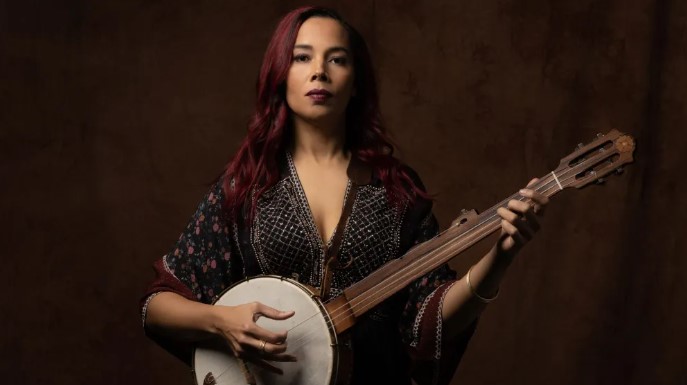
City of Goldcelebrates the terrific new album by one of my favorite young bluegrass artists, Molly Tuttle. Down Home Dispensary ― co-written by Tuttle and Old Crow Medicine Show’s Ketch Secor ― can be easily explained with this line directed at the Tennessee legislature: “Hello legislators the voters have spoken / there’s too much politicking and not enough tokin’”
Sam Bush pays tribute to his musical mentor and friend, John Hartford, on Radio John. Since this was a pandemic project, it’s probably appropriate to point out that Bush is playing virtually every instrument on this album — guitar, mandolin, fiddle, bass and banjo, as well as doing the vocals. Just wow!
And last evening we had the second full moon in the month of August, which brought to mind the singer-songwriter Nanci Griffith’s beautiful ode to love lost, Once in a Very Blue Moon.
CHRONICLING THESE DAYS
In the midst of a lazy summer, two issues in present-day America caught my attention on MTC.
Authoritarians fight against modern America is as old as our nation. In Fighting the future I look at how citizens are responding to these anti-democratic moves.
And apropos of nothing other than my desire to make you smile, It was a dark and stormy night highlights the 2023 winners of the Bulwer-Lytton Fiction Contest, where participants are challenged to write an atrocious opening sentence to the worst novel never written. You’ll groan, laugh, and perhaps cry.
CONCLUSION
Thanks, as always, for reading. As you travel life’s highways be open to love, undertake some mindful walking every day, recognize the incredible privilege that most of us have, and think about how to put that privilege to use for good. Women, people of color, LGBTQ+ individuals, immigrants, and others can feel especially vulnerable . . . because they are. Work hard for justice and democracy as the fight never ends.
You can follow MORE TO COME by going to the small “Follow” box that is on the right-hand column of the site (on the desktop version) or at the bottom right on your mobile device. It is great to hear from readers, and if you like them feel free to share these posts on your own social media platforms.
How often have you heard that America is exceptional? Would it surprise you to know that citizens of other countries also hear that their homeland possesses desirable qualities that others lack? French nationalists “tout the elegance and sophistication of their ‘civilization.'” Serbians “have traditionally considered themselves the shield of Christianity.” Haitians take pride in being “the first country whose people freed themselves from slavery.”
Protestants coming to America in the 1600s imagined themselves as creating a new Israel. But early colonists imagined themselves as Romans “at least as often as they saw themselves as Israelites.” The people of an “endless frontier” became popular in the nineteenth century. Madeleine Albright called the U.S. “the indispensable nation” in guaranteeing global security.
Historians don’t find much about British and Japanese exceptionalism in the literature, but that “may derive simply from the fact that scholars of both countries take the exceptional status of each so utterly for granted.”
The idea of “American exceptionalism,” in other words, falls squarely into an entirely common pattern. There is nothing exceptional about it.
American exceptionalism, like so many other myths, has warped our ability to understand the past in a constructive way. In today’s age of disinformation, the line between fact and fiction has become “increasingly blurred if not completely erased.”
Myth America: Historians take on the biggest legends and lies about our past (2022) — edited by Kevin M. Kruse and Julian E. Zelizer — tackles many of the most dangerous myths about our nation’s past. There have always been lies in our public discourse but in the introduction the editors assert that “in the last few years the floodgates have opened wide.” They cite the political campaigns and presidency of Donald Trump, the creation of the conservative media ecosystem, and the “devolution of the Republican Party’s commitment to truth” as the major causes. Yet as many of these top historians demonstrate in a series of illuminating essays, the war against truth in America has been fought over a much longer timeframe.
Claims about what happened in the past can be “misleading and even malignant.” Unfortunately for the country, the results can cause long and deep damage. Karen L. Cox writes that the evolution of the more than 150-year-old “Lost Cause” falsehood “offers proof that it was never tied to a factual history but was always about an alternate reality.”
Historians are influenced by their context and will sometimes disagree. “It is quite another thing to ignore the facts altogether.”
The historians take on myths including those around vanishing Indians, immigration, the border, family values, the impact of the New Deal, and voter fraud. Because there has been such a robust debate over “the role of slavery in America’s political development” especially out of the 1619 project, the editors turned their focus elsewhere.
While the twenty essays are not uniform in quality, all are insightful and enlightening. Several tackle myths that burrow deep into our subconscious.
Yale’s Akhil Reed Amar takes on the widely held belief that James Madison was the “father of the Constitution.” He argues that “The Convention that ensued (at Philadelphia) was Washington’s convention, not Madison’s; likewise, the proposed Constitution that emerged was emphatically Washington’s,” knocking down four other myths in the process, including the old chestnut that “a republic is not a democracy.”
Daniel Immerwahr breaks down the enduring myth that America is not an empire-building nation. Empires, of course, have territories. And as early as 1791, 45 percent of our land was composed of territories. Oklahoma (i.e., Indian Territory) was a U.S. territory for more than 100 years, longer than the French held Indochina or the Belgians held the Congo. Today we have five overseas territories, over 500 tribal nations within our boarders, hundreds of foreign bases, and the world’s largest military. Understanding that, it becomes hard to agree with those who put forward the myth that there is nothing imperial about our country.
Glenda Gilmore — the Peter V. & C. Vann Woodward Professor Emeritus of History at Yale — takes on another deeply held belief: while the right to protest is enshrined in the First Amendment, only a “good protest” is legal and effective. Based on the “passive resistance” of the civil rights movement that began with the Montgomery bus boycott and continued until Martin Luther King’s assassination, it suggests that if current-day supporters of issues such as Black Lives Matters do not conform to this myth of orderly marches in the face of violence, then they aren’t engaged in “good” protests. That false narrative rests on four misconceptions: “that the demonstrations from 1955 to 1968 were the first of their kind, that most Americans gave their support to the protests and their leaders, that they quickly exposed and vanquished hatred, and that they ended happily by bringing racial equality to America.” None of those are remotely true.
In considering the mythology around white backlashes, Lawrence Glickman notes that blaming the victims of racial discrimination for the “inevitable” response tracks a largely continuous thread across US history that ignores agency, responsibility, and causation. Backlashes are long-term political projects that should be seen as “counterrevolutions” to progress.
Naomi Oreskes and Erik M. Conway join to take down the myth of the unfettered marketplace as better governance. Millions of Americans believe the best way to solve problems is to leave them to the workings of the marketplace thanks to a decades-long effort led by business leaders in the 1930s to undermine government regulation and support unfettered capitalism. They argued that any compromises to business freedom threatened the fabric of American life. That’s not remotely true either.
These and other essays in Myth America encourage Americans to “see the past closely in order to understand where we stand now and where we might go in the future.” It is a helpful guide.
August 28th is the 60th anniversary of the March on Washington for Jobs and Freedom. The 1963 march is remembered today primarily because it was the occasion when the Reverend Dr. Martin Luther King Jr. stood on the steps of the Lincoln Memorial and delivered what became known as the “I Have a Dream” speech.
As I often do on these anniversaries, I turn to our historians for their perspective.
… we’re going to be treated to another round of comments from politicians and pundits who think that the entire event was encapsulated by the Only MLK Quote They Know™ and nothing else. I’ve already ranted about this before, on this site and elsewhere, but I’ll say one more time that all of those people need to read the rest of King’s speech, which laid out some stark criticisms of structural racism, police brutality, and endemic poverty, all issues we’re still grappling with today.
Michael Eric Dyson in his 2019 book Tears We Cannot Stop: A Sermon to White America, argues that America has “washed the grit from (King’s) rhetoric” in order to get to a place where he can be seen and admired by the country at large. Yet it was King who said that the country’s race problem “grows out of the … need that some people have to feel superior. A need that some people have to feel … that their white skin ordained them to be first.” Difficult words for many to hear, yet Dr. King “spoke the truth that we have yet to fully acknowledge.”
King, of course, wasn’t the only speaker at the event. Far from it. Here’s a more complete list.
A. Philip Randolph, socialist labor leader who organized the 1941 March on Washington Movement
Walter Reuther, president of the United Auto Workers
ArchbishopPatrick O’Doyle, of the Catholic archdiocese of Washington
Rev. Eugene Carson Blake, National Council of Churches
Rabbi Joachim Prinz, president of the American Jewish Congress
Floyd McKissick, on behalf of the Congress of Racial Equality (CORE), read a speech written by James Farmer, who was locked up in a Louisiana jail
Whitney Young, president of the National Urban League
Roy Wilkins, president of the NAACP
Josephine Baker, an American-born Parisian entertainer, civil rights activist, and former agent for the French Resistance
John Lewis, chair of the Student Nonviolent Coordinating Committee (SNCC)
Rev. Dr. Martin Luther King, Jr., president of the Southern Christian Leadership Conference
The presence of A. Philip Randolph, who had organized the 1941 March to force Franklin Roosevelt to take action against discrimination in defense industries, “was a reminder of the continuities of activists engaged in a long struggle for black equality.”
The 74-year-old labor leader said. “Look for the enemies of Medicare, of higher minimum wages, of Social Security, of federal aid to education and there you will find the enemy of the Negro, the coalition of Dixiecrats and reactionary Republicans that seek to dominate the Congress.”
Some things never change.
Those Dixiecrats became Republicans, and a large majority of Republicans in public office today are reactionary, still fighting against those programs and more.
Kruse notes that Dr. Prinz, who had been forced to flee Germany in 1937 due to his early opposition to the Nazis, pointed out parallels. “Under the Hitler regime, I learned many things,” he noted. “The most important thing that I learned under those tragic circumstances was that bigotry and hatred are not ‘the most urgent problem.’ The most urgent, the most disgraceful, the most shameful and the most tragic problem is silence. A great people which had created a great civilization had become a nation of silent onlookers. They remained silent in the face of hate, in the face of brutality and in the face of mass murder.”
The March on Washington had implications for many groups beyond Black Americans. Baker — who was called upon at the last minute to fill time while the organizers worked to edit John Lewis’s fiery speech — spoke for two minutes and had the longest speaking role of any woman.
Women were conspicuously absent from the formal program. Anna Arnold Hedgeman, the lone woman on the event’s administrative committee, wrote that women “were not yet adequately included in man’s journey toward humanity.” At an after-meeting of activists, lawyer Pauli Murray delivered remarks criticizing the exclusion of women from the Lincoln Memorial program. “The group reached a consensus that future activism needed to focus on both gender and racial equality, heightening momentum for the women’s empowerment movement to come.”
Rather than a concern about how individuals thought about race, the march focused on economic discrimination and the lack of decent jobs for Black Americans. Historian Heather Cox Richardson writes:
King acknowledged the economic focus of the march when he centered his speech around the idea that Black Americans had received “a promissory note” that had become “a bad check, a check which has come back marked insufficient funds.” “But,” he said, “we refuse to believe that the bank of justice is bankrupt.”
“It’s impossible,” Krause argues, “to take a complex event like the March on Washington, with multiple speeches from a varied lineup of speakers, and boil it down to one single sentence.”
“The message of the March, in the end,” Kruse asserts, “isn’t that we shouldn’t pay attention to race.”
No, the consistent message of the March was that in our present moment — in 1963, but 2023 too — all Americans needed to understand that their fates and fortunes are thoroughly intertwined with those of the most marginalized and powerless in the nation, that they had to work together in common cause and demand their representatives in Washington truly represent their needs and address them directly.
As the Reverend Dr. King’s son Martin Luther King III said on Saturday during a commemoration of the March, the message is about Americans. “It’s about creating a climate for America to fulfill its true promise for all of its citizens.”
More to come …
DJB
UPDATE: Distinguished historian Eric Foner had a timely and important article on the March at 60 in The Nation, which is worth your time.
Images of the March on Washington by Library of Congress from Unsplash.
Earlier this month our son — the tenor Andrew Bearden Brown — was a finalist in the 10th annual Handel Aria Competition held at historic Grace Episcopal Church on the capitol square in Madison, Wisconsin. The Handel Aria Competition is dedicated to promoting the performance of Handel’s extensive vocal repertoire. Established in 2013 by Dean and Carol “Orange” Schroeder, enthusiasts of the vocal repertoire of George Frideric Handel, the competition is to encourage emerging singers of all voice types to explore the repertoire of Handel. The finalists were selected out of 125 auditions from around the world.
This year’s prize winners were: Emily Donato, soprano, first prize; Andrew Bearden Brown (right) tenor, second prize; and Fran Daniel Laucerica, tenor, third prize.
For his two pieces, Andrew began with “Alla offesa…È un folle” from the opera Alcina.*
That was followed by “Comfort Ye…Ev’ry Valley” from Messiah.
All of the finalists sang beautifully in this wonderful historic setting. Needless to say, we are so proud of Andrew’s performance, and I just wanted to share it with the readers of More to Come.
*UPDATE: I thought it might be helpful to have a synopsis of the two pieces he’s singing.
Alcina Synopsis: Oronte struggles with his conflicting feelings around his lover, Morgana, who has rejected him for the dashing new arrival on their island. He concludes that it’s not her beauty, but rather his own madness that is to blame for his inner turmoil.
Messiah Synopsis: In this aria, the tenor soloist calls out to the listener and invites them to prepare for the coming of God, joyfully celebrating the peace and justice to come.
An incredibly rare event is often described as coming along “once in a Blue Moon.” On August 30/31 we’ll experience the second full moon within the span of one month, which has me thinking about blue moons and the beloved singer-songwriter Nanci Griffith.
As the website Space.com tells us, “There are two types of Blue Moons but unfortunately neither has anything to do with color.”
A seasonal Blue Moon is the traditional definition of a Blue Moon and refers to the third full moon in a season that has four full moons according to NASA. Whilst the second definition — borne out of a misunderstanding of the first — is a monthly Blue Moon which refers to the second full moon within a single calendar month. The monthly Blue Moon is nowadays considered the second definition of a Blue Moon rather than a mistake, according to Time and Date.
Not to get too deep into the science or the folklore, but the cycle of the phases of the moon lasts approximately one month. So we typically experience 12 full moons each year, and they often fall into one per month. (But not always … February which at best has 29 days, can go without a full moon. That’s known as a Black Moon.)
Many cultures have given distinct names to each month’s full moon. 12 months, 12 full moons, 12 names. Simple right?
Well, not quite. Here’s where the Blue Moon comes into the equation.
The moon phases actually take 29.5 days to complete which means it takes just 354 days to complete 12 lunar cycles. So every 2.5 years or so a 13th full moon is observed within a calendar year.
This 13th full moon doesn’t conform to the normal naming scheme and is referred to as the Blue Moon.
Okay, enough science.
I’ve always loved the simple tune by Nanci Griffith entitled Once in a Very Blue Moon that was the title track of an early album. It begins with the arrival of a letter:
I found your letter in my mailbox today You were just checkin’ if I was okay And if I still miss you Well you know what they say
Followed by the chorus:
Just once in a very blue moon … And I feel one comin’ on soon
After another verse and chorus, Griffith goes into the bridge:
There’s a blue moon shinin’ When I’m reminded Of all we’ve been through Such a blue moon shinin’ Does it ever shine down on you?
Shortly after her death in 2021, Texas Monthly wrote the following about Griffith’s work:
Best known for such Texas folk-country classics as “Last of the True Believers,” “Love at the Five and Dime,” and “Lone Star State of Mind,” as well as her near-definitive versions of Julie Gold’s “From a Distance,” Townes Van Zandt’s “Tecumseh Valley,” and John Prine’s “Speed at the Sound of Loneliness” (in a duet with Prine himself), Griffith’s music transcended genre, generations, and her home state. Seguin-born and Austin-raised, she may have had even more fans outside of Texas, whether in Nashville, Ireland, New York, or Australia … and she introduced those fans to other Texas artists.
I always felt that Griffith was best live. Here, from her 1985 Austin City Limits performance, Griffith sings Once in a Very Blue Moon. A young Lyle Lovett (also from Texas) joins on background vocals while a young Mark O’Connor plays violin.
And it ends with the haunting last verse of love lost where the feeling’s not shared:
You act as if it never hurt you at all And I’m the only one whose gettin’ up from a fall Don’t you remember Or can’t you recall
Just once in a very blue moon … And I feel one comin’ on soon
For those with love that’s been lost as well as for those who have found an incredibly rare love, enjoy the blue moon.
UPDATE: Unfortunately, we had a fair amount of cloud cover here in the DC region on the evening of August 30/31, so while we could see the supermoon, it wasn’t very distinct. Luckily, our nephew David Ghattas had a clear night to get a beautiful photo in Tennessee, with the moon peeking through the leaves of the trees.
And then Claire took two beautiful photos of the supermoon over the San Francisco Bay in Alameda.
First impressions — whether in meetings, personal encounters, books, dates, lectures, or reports — set the tone for what follows. Bad first impressions can be overcome, but in the vast majority of encounters we tend to make up our minds quickly and stick to our initial perceptions.
Yet some first impressions are so bad they are deserving of a prize. Which is why I was delighted to see the 2023 winners of the Bulwer-Lytton Fiction Contest (motto: Where “www” means “wretched writers welcome).
You’ve never heard of this prestigious competition? Well, let’s enlighten you. The Bulwer-Lytton Fiction Contest has been around since 1982, challenging participants to write an atrocious opening sentence to the worst novel never written. The “whimsical literary competition honors Sir Edward George Bulwer-Lytton, whose 1830 novel Paul Clifford begins with ‘It was a dark and stormy night.'”
When writing a paper about Sir Edward, Professor Scott Rice of San Jose State University came up with the idea of challenging writers to compose opening sentences to the worst of all possible novels. “Dark and Stormy” has its own category, but contestants can also enter lines for adventure, historical fiction, romance, and more.
And the 2023 Grand Prize winner is a doozy!
She was a beautiful woman; more specifically she was the kind of beautiful woman who had an hourlong skincare routine that made her look either ethereal or like a glazed donut, depending on how attracted to her you were.
Maya Pasic, New York, NY
I was also rather taken with the winner in the “Adventure” category.
The man squinted his eyes as the blistering cold winds battered his rugged face, his eyes darting about, desperately hoping, daring to dream that amidst the frozen wasteland, he would find the last Klondike Bar that he had hidden in his freezer.