
Struggling with separation
Where everything seems new, we learn and grow not only through considering our own experiences and what our senses are telling us, but by hearing from a wide variety of voices.
Where everything seems new, we learn and grow not only through considering our own experiences and what our senses are telling us, but by hearing from a wide variety of voices.
If you are of a certain age, you know Bill Withers and his soulful Lean On Me. This anthem of love, community, friendship, and support could be heard everywhere in the 1970s. “Sometimes in our lives we all have pain We all have sorrow But if we are wise We know that there’s always tomorrow Lean on me, when you’re not strong And I’ll be your friend I’ll help you carry on For it won’t be long ‘Til I’m gonna need Somebody to lean on” Here in 2020, the song has helped many people get through these first few weeks of the Coronavirus crisis. Just this morning, I received the monthly e-newsletter Culture School from Amira El-Gawly at Manifesta, where she brought the song back into my consciousness when she wrote: “Bill Withers knew what he was talking about… back in 1972. I’ve loved the song “Lean On Me” since I was a little girl — it spoke of something I had a sense for but didn’t fully understand as a child. And today it hit me. This is …

If you are already missing baseball, you have company. To help you through the gloom, I’ve gone back into the More to Come archives to gather my personal “Best Books about Baseball” list. Here you’ll find my top nine books — one for each inning — to help you through this spring. And there might even be some “free” extra-inning baseball at the end! (NOTE: I’ve linked to my reviews, but they may be buried in a longer post containing information on multiple books. Look carefully and you’ll find the book in question.) Okay, let’s play ball! For the 1st and 2nd innings, we’ll have the top hitters from each team coming to the plate. So I’ll begin with some of the best: two baseball books which I included in the 2014 post Twelve Influential Books (And a Few More Thrown in for Fun). How Life Imitates the World Series by Thomas Boswell – The longtime Washington Post sportswriter’s first book of baseball essays, published in 1982, is still his best. How can you not …

Historians are speaking up to help make sense of what we are facing today, and to provide hope for what can come.
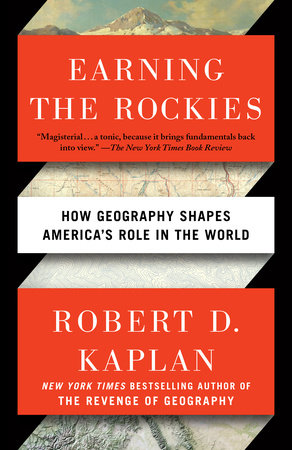
I picked up Robert D. Kaplan’s 2017 book Earning the Rockies: How Geography Shapes America’s Role in the World based on several high profile recommendations. In a short 178 pages, Kaplan — a card-carrying member of the East Coast elite that he proceeds to denigrate throughout the book —describes a cross-country trip taken in 2016 and mixes in his thoughts on how our geography led the U.S. to become a benevolent imperialist power. And calling on his impressive foreign policy experience and credentials, there are parts of this meditation on America’s rise and decline that are skillful and insightful. Kaplan argues that America became a great country not just because of our constitution and values, but because it occupies some of the best, most fertile land on the planet that is connected by a river system (running diagonally) that unites the heartland into a strong political unit. “America’s greatness,” in his words, “ultimately, is based on it being a nation, an empire, and a continent rolled into one.” And in taming the frontier, America — according to Kaplan’s analysis …
Today was to be Opening Day 2020 for the World Series Champion Washington Nationals. Alas, the Covid-19 virus had other plans for the world. But I have a suggestion for you. Last week the Washington Post asked their writers to name their top sports movies to watch during the coronavirus crisis. They really only needed to have included one. Watch Bull Durham. The best baseball movie ever. Its not even close. I’ve written many times — most recently earlier this month — about my personal spring training regimen of reading a baseball book and watching Bull Durham. I watched the movie again earlier this week, and it didn’t disappoint. Regular readers know how I feel. But don’t just take my word for it. I’ve recently been reading a number of columns about culture and politics by the Post opinion writer Alyssa Rosenberg. She’s smart and a very good writer. So no surprise to learn that she thinks Bull Durham is a great movie, and well deserving of the moniker of a film classic. As her Post colleague Tom Boswell once said a long time ago, “Marianne Moore …

The world wants to categorize and pigeonhole love. But coming from a place of abundance, where there is room for everyone, “There’s so much other work love has to do in the world.”

The study of history is an ongoing conversation between past and present from which we all have much to learn.

A crisis can be illuminating. It can also bring about a moment of reckoning.

What do the Houston Astros have to do with the state of our democracy? Let’s see. Baseball—rightly or wrongly—has long been compared to life, or vice-versa. Washington sportswriter Thomas Boswell’s first book was a 1982 collection of essays entitled How Life Imitates the World Series.* In the essay that gave the book its title, Boswell makes the observation that the pressures in baseball differ from those of other sports. It is a pressure that ebbs and flows, day-by-day, over the length of a long season played out every day as opposed to the once a week or twice a week rhythm of the games in football, basketball, or hockey. Yet baseball pressures are heightened at key tipping points, such as during a pennant race, when one’s true character and strength comes through. Just like in real life. What’s more pressure-packed than a World Series? Or an impeachment trial? Recently, it struck me that Boswell’s premise was perfect when the subject—as it often does these days—turns to the future of our democracy. To see how baseball and life …
 MORE TO COME...