All posts tagged: Heritage Travel

Remembering Their Sacrifice

  Our last day touring in Europe was the most emotional. If you don’t cry, you may not have a soul. We saw Normandy, and the place names from the U.S. that will resonate through history:  Utah Beach, Omaha Beach. We walked among row after row of headstones at the American cemetery.  Crosses and Star of Davids.  Most with names of men who gave the ultimate sacrifice.  Some whose names are known only to God. And it was made all the more personal because of a chance encounter last week.  When we were headed out the door to leave on this trip, we saw our 90-year-old next-door neighbor and told him we were going to Europe and would visit Normandy. “I’ve never been to Normandy,” he said, “but I was flying over it on D-Day, trying to take out a German gun placement.”  We can’t wait to show August the photos of the beaches and,  yes, the craters that remain from the bombs that fell on that day. Heroes all — and they even live …

Bilbao: The Cliff Notes Edition

  Wow! I had read the stories of how a gritty, shipbuilding city in Spain had reinvented itself as an arts and cultural center built around the signature Frank Gehry-designed Guggenheim Museum. I had seen the pictures. But I wasn’t ready for the reality. We spent Sunday in Bilbao, Spain — after a drive through the lovely heart of the Basque country — and Candice and I found the first city where we are set on finding a way to return as soon as possible. Bilbao in the 1980s saw the closing of an iconic shipyard and had the foresight to think creatively and boldly about a new future which blended new and old. It is the last part — the blending of new and old — that is often missed in the write-ups about Bilbao’s renaissance.  You get the impact of Gehry’s Guggenheim, along with the works of Calatrava, Norman Foster and other modern masters. But what is often missing is the context for these works: a walkable and vibrant historic city dating back …

Santiago de Compostela: Our visit to the final destination of the Camino de Santiago

Saturday of our European Coastal Civilizations tour took us to Santiago de Compostela, the famous destination of the medieval pilgrimage trail Camino de Santiago (Way of St. James) and now a UNESCO World Heritage Site. The morning began as we docked in La Corona, Spain, after sailing past the Tower of Hercules, the oldest Roman lighthouse in use today.  It makes for a dramatic entrance into the port city and set the stage for what was in store. After an hour-long bus drive, we arrived at Santiago de Compostela, with its cathedral of St. James.  The picture at the top of the post marks the official end of the Camino de Santiago, and we had a chance to talk with pilgrims who were arriving in a steady stream – many on very nice road bikes! The city’s importance came from a visit by the Apostle James to this outpost in Spain to convert people to Christianity.  Centuries later, in 813, a hermit saw a vision of a shining field, and from the Latin “Campus Stellae” …

Porto, Portugal – A great start to our tour of European coastal civilizations

Candice and I just completed the first day of our European Coastal Civilizations tour, spending a delightful day in Porto, Portugal.  After setting sail from Lisbon, our ship headed north overnight and docked on Friday morning at the Port of Leixoes which services the city of Porto. Quoting from the ship’s news, The city of Porto, built along the hillsides overlooking the mouth of the Douro river, is an outstanding urban landscape with a 2,000-year history. Its continuous growth is linked to the sea (the Romans gave it the name Portus, or port). It is the second largest city in Portugal, after Lisbon, and one of the major urban areas of Southern Europe. Porto’s history goes back to pre-Roman, Celtic times, and it was during the Middle Ages that it developed into one of Portugal’s most important trading cities.  It was in the 18th century that Porto became an important link between the Douro Valley wine producers and wine importing countries like England. The old city – a UNESCO World Heritage Site – is where …

A Refuge

Since I was young, I have been drawn to the 19th century utopian communities that seemed to spring up like wildfire across America.  Rugby, Tennessee, was a place that sparked the preservation interest which would lead to my career. The Shaker Village at Pleasant Hill, Kentucky, has been a community I’ve visited numerous times and have always found fascinating. So when the National Trust for Historic Preservation listed the Village of Zoar, Ohio, on its 2012 listing of America’s Most Endangered Historic Places and named it one of our National Treasures, I couldn’t wait to make a site visit. Yesterday I joined colleagues and partners in this small Ohio village founded in 1817 by a group of German religious dissenters.  The Zoar Separatists were persecuted in their native country for refusing to join the state-sanctioned Lutheran Church, and they immigrated to America with the help of English Quakers. Using funds borrowed from the Quakers, they purchased 5,500 acres on the Tuscarawas River (the mayor says you have to visit the town at least 3 times …

The World’s Longest Art Gallery

  Utah’s Nine Mile Canyon is one of the unique cultural  landscapes in the world. Earlier this week I was fortunate to tour portions of the canyon with some of the smart, passionate people who have helped save it through the years. As Jerry and Donna Spangler note in their guide Horned Snakes and Axle Grease, Nine Mile Canyon is…well, not nine miles in length. By its very name, Nine Mile Canyon is an enigma.  From its upper reaches on the west, the canyon twists and turns more than 50 miles to its confluence with the Green River on the east. And how the canyon got its incongruous name remains clouded with the passage of time. Despite the misleading name, Nine Mile Canyon is an amazing landscape filled with rock art – or as some prefer rock writing – from Native Americans about whom we know very little.  The miles of rock art has led many to call Nine Mile Canyon “The World’s Longest Art Gallery.” As the Spanglers note, “There is something undeniably magical …

Introducing Rugby (TN) to the next generation

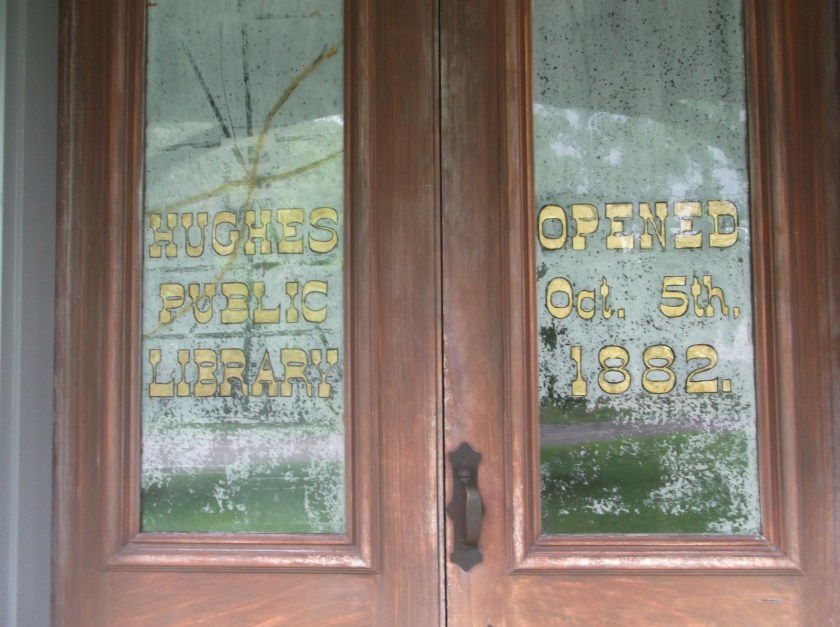
Rugby, Tennessee, is a unique community on the Cumberland Plateau, with an incredible story of perseverance. It is also a place that means a great deal to me, as it was where my preservation career began. Today I took the opportunity to introduce Claire, Andrew, and Candice to Rugby and to show them the places that inspired me. Here’s the official story from my last post: “Rugby was established in the 1880s by the successful Victorian-era author Thomas Hughes as a Utopian community for the second sons of English gentry.  Due to the system of primogeniture, these men would inherit little or no property and had very limited career opportunities.  Hughes established this colony in the beautiful but hard-scrabble Cumberland Plateau area of Tennessee.  After some initial success, the colony fell on hard times, ultimately failed and was largely forgotten.  In the mid-1960s, residents of the area began to restore the remaining historic buildings and over the course of five decades have saved this wonderful place and turned it into a thriving community and a …

Eating Local

With a great deal of travel on my schedule for June – November, I’m trying to focus on what’s wonderful about leaving home. So this will not be a post about the state of the airline industry in the U.S. Instead, I am thinking about food. Local food to be exact. Regular readers will know that I like to avoid chains and hotel restaurants when I travel, seeking instead the local landmark. I’m only two days into this week’s trip to the west coast and I’ve already hit my “go local” stride. Lunch on Tuesday came from a wonderful cheese and sandwich shop named Cheese Plus which features tasty sandwiches with locally themed names such as the Willie Brown Duck (named for former San Francisco Mayor Willie Brown), Crissy Field, and Castro’s Cubano.  I had the Happy Thanksgiving, which – along with the brisk city breeze and temperatures in the 60s – made me wish for the fall. After a drive to Sonoma County to view a site where we’re working, and especially after a …

A Day at Joshua Tree

National Parks are all unique.  They have different histories, different stories of how they were saved, different challenges in today’s world. I was fortunate today to be introduced to one of the most unusual:  the Joshua Tree National Park in California.  With a half-day to myself, I stuck my toe into the vast park where the Mojave and Colorado deserts converge and was fascinated with what I saw. What follows are photos from the northwestern edge of the park – from the village of Joshua Tree down to Key’s View, where one gets a remarkable panorama of the San Andreas Fault.  Here’s a bit from the park’s brochure about what one sees in this part of Joshua Tree: Amid the boulder stacks are pinyon pines, junipers, scrub oaks, Mojave yuccas, and Mojave prickly pear cacti….What tells you most you are truly in the Mojave Desert is the wild-armed Joshua tree.  It isn’t really a tree but a species of yucca….Joshua trees can grow over 40 feet tall – at the leisurely rate of an inch …