All posts tagged: Monday Musings

Each of Us is Needed

In his wonderful 1987 book Leadership is an Art, retired Herman Miller CEO Max DePree tells a story about diversity.  He notes that one of the key people in the 1920 furniture business founded by his father was the millwright, who oversaw the steam engine that powered the enterprise.  One day the millwright died. DePree’s father went to visit the family, and after some awkward conversation the widow asked if it would be all right if she read aloud some poetry. DePree continues with his story. “Naturally, he agreed.  She went into another room, came back with a bound book, and for many minutes read selected pieces of beautiful poetry.  When she finished, my father commented on how beautiful the poetry was and asked who wrote it.  She replied that her husband, the millwright, was the poet.  It is now sixty years since the millwright died, and my father and many of us at Herman Miller continue to wonder:  Was he a poet who did millwright’s work, or was he a millwright who wrote poetry?” …

The spirit of our institutions

When I was young, we did not celebrate the generic “Presidents Day.”  Instead, we attached the names of real men — flawed but great, each in his own ways — in celebrating first Lincoln’s Birthday on February 12th, followed shortly by Washington’s Birthday on February 22nd.  I am pretty sure — growing up in the South — that we were not given a day-off from school on the 12th, but we did generally receive the 22nd off…even if it was smack in the middle of the week. There is an interesting history to this holiday, beginning with its name and including the story of how it was moved to the third Monday in February.  According to the federal government, what we celebrate today is officially Washington’s Birthday.  But states actually decide which federal holidays to celebrate, and they can also rename them.  So in Maryland, where I live, we celebrate Presidents Day. I’m a bit old-fashioned and like my holidays well defined and not simply an occasion to get an extra-long weekend and a great …

The Power of Habit

Habits are not destiny

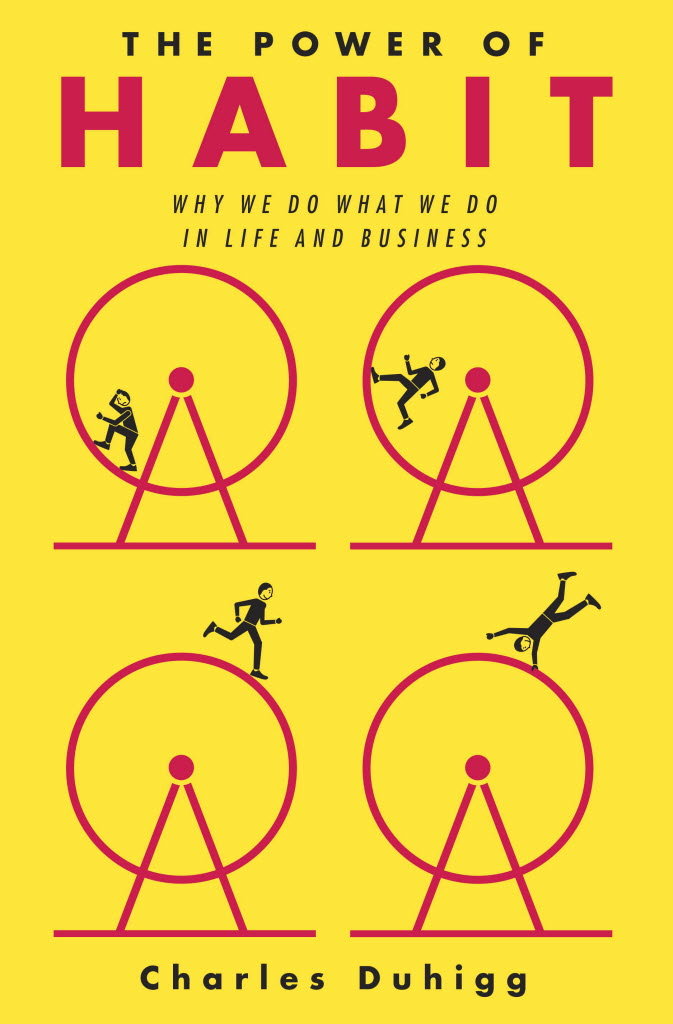
“Most of the choices we make each day may feel like the products of well-considered decision making, but they’re not.  They’re habits.”  That’s according to Charles Duhigg, author of The Power of Habit:  Why we Do What We Do in Life and Business. I got to thinking about the habits that we undertake while reflecting on the discussions from a recent management team retreat.  We were probing how and why we do certain things to see if there were routines – or habits – we wanted to break or establish. Scientists tell us that habits emerge because our brains are looking for ways to save effort.  We all can identify habits – both personal and professional – that impact our lives.  Just as we have good and bad personal habits, organizations have good and bad routines.  We want to avoid habits that turn important decision-making over to a process that occurs “without actually thinking,” but at the same time we want to build routines that support our goals and aspirations. Thankfully, habits and routines can …

He (or She) Who Hesitates is Not Always Lost

A couple were riding in their car recently when they approached an intersection and pulled into the right lane in order to make a turn.  Immediately in front of them was a car with the left blinker engaged.  The husband made the comment – with irritation in his voice – “Why does this guy think he can turn left from the right hand lane?”  A few seconds later he looked up, realized that the four-lane street dead-ended into another four-lane road, and that the overhead signage indicated that the right lane could indeed be used for either left or right turns. Turning to his wife, he pointed to the sign and said, “Never mind.” His wife, speaking with a tone of voice that reflected more than three decades of patiently waiting for him to observe the obvious, replied, “Several years ago I came to a realization that changed my life.  When I faced a situation where I thought someone was in the wrong,” she said, “I stopped myself from judging them and asked instead ‘What …

The Healing Powers of Connection

Several years ago Candice was recovering from a severe concussion and was home bound for several months. During that time a friend gave her a small book, thinking she might relate to Elisabeth Tova Bailey’s story of isolated recovery from a mysterious illness. We had not thought about that gift for a long time until I went looking for a short read to pack on a recent trip.  I happened upon Bailey’s The Sound of a Wild Snail Eating and was immediately captivated by this strange yet reassuring tale. To summarize the book might lead friends to question your reading choices. Bailey – an active and curious woman of 34 – contracts a mysterious disease while vacationing in Europe and finds herself bedridden and unsure that she will live.  A wild snail arrives in the bedroom where she is convalescing, brought in by a friend and placed in a pot of field violets. Over twelve months – and 178 pages – Bailey watches the snail explore its terrain, eat, sleep, eventually hatch 118 offspring, and …

Nothing Can be Changed Until it is Faced

Last week, President Obama named the A.G. Gaston Motel (a National Trust National Treasure), the 16th Street Baptist Church (site of a bomb attack in 1963 that killed four young girls), and other places near them as part of the new Birmingham Civil Rights National Monument.  Made on the eve of celebrating the Martin Luther King, Jr. holiday, the president’s designation was a good reminder of the importance of why we protect places that tell difficult stories from our past. A few weeks ago I finished reading a powerful book that harkened back to the work and writings of The Rev. Dr. Martin Luther King, Jr.  Michelle Alexander’s The New Jim Crow:  Mass Incarceration in the Age of Colorblindness is a work that demands a response from the reader and is not easily dismissed. In the book’s foreword, Cornel West alludes to the link between Alexander’s work and Dr. King’s core beliefs.  King called for us to be “lovestruck with each other, not colorblind toward each other. To be lovestruck is to care, to have …

Clarity

John Schuerholz was elected to baseball’s Hall of Fame a few weeks ago.  (For those who don’t care about baseball, stick with me…this really isn’t about baseball.)  Schuerholz, as general manager (GM) of both the Kansas City Royals and the Atlanta Braves, took both teams to World Series titles.  GMs are the puzzle-masters of baseball, hiring the talent both on and off the field while negotiating with the owner to build a successful franchise. Schuerholz began his career as a high school grammar, composition, and geography teacher. It was there – according to writer Joe Posnanski – that Schuerholz learned the importance of clarity. “This was the great gift of John Schuerholz, the commanding instinct that helped make him one of the most successful general managers in baseball history. He sought clarity. He demanded clarity.”  Posnanski notes that great teachers seek clarity.  “There is the well-reasoned answer and the chaotic flood of words meant to obscure the fact that the student didn’t do the work.” Last week I wrote about the wandering mind while today I’m …

Wandering (Think Jar Collective)

I was trying to daydream but my mind kept wandering*

New Years is the time when many of us make resolutions.  We promise ourselves to focus on losing weight, reading more books and watching less television, being mindful in the present.  One of my personal perennial chestnuts in recent years is to avoid becoming a grumpy old man. So with all this attention on focus, why was I so excited to find a book on the wandering mind to read over the winter holidays?  Because “It seems we are programmed to alternate between mind-wandering and paying attention, and our minds are designed to wander whether we like it or not.”  That sure rings true in my life experiences. Are you still with me? In The Wandering Mind:  What the Brain Does When You’re Not Looking, author Michael C. Corballis argues that “Mind wandering has many constructive and adaptive features – indeed, we probably couldn’t do without it.  It includes mental time travel – the wandering back and forth through time, not only to plan our futures based on past experience, but also to generate a …

Top Posts of 2016 (The “Whatever Else Tickles My Fancy” Edition)

As promised yesterday, I’m back with the top posts on More to Come… from 2016 that don’t relate to family and friends.  What I’m calling the “Whatever Else Tickles My Fancy” edition. In a year when I took my sabbatical in Rome and Maine, many of the top posts are from those trips. If my day job doesn’t work out, I may have a future as a travel writer! As was the case with yesterday’s top ten, I’ll list them in the order they appeared during the year. I left for Rome in early March, and Time Off was my post to set the stage for my sabbatical. I had a number of nice comments from friends and colleagues with well wishes.  I also got to showcase my cool “What Would DJB Do?” mug! My first post from the American Academy came on March 10th, and was entitled Looking Back, Looking Forward.  After that, I was posting 3-4 times per week for the remainder of the six weeks we were in Italy. Claire joined us …

No WiFi

Be civil, be urban

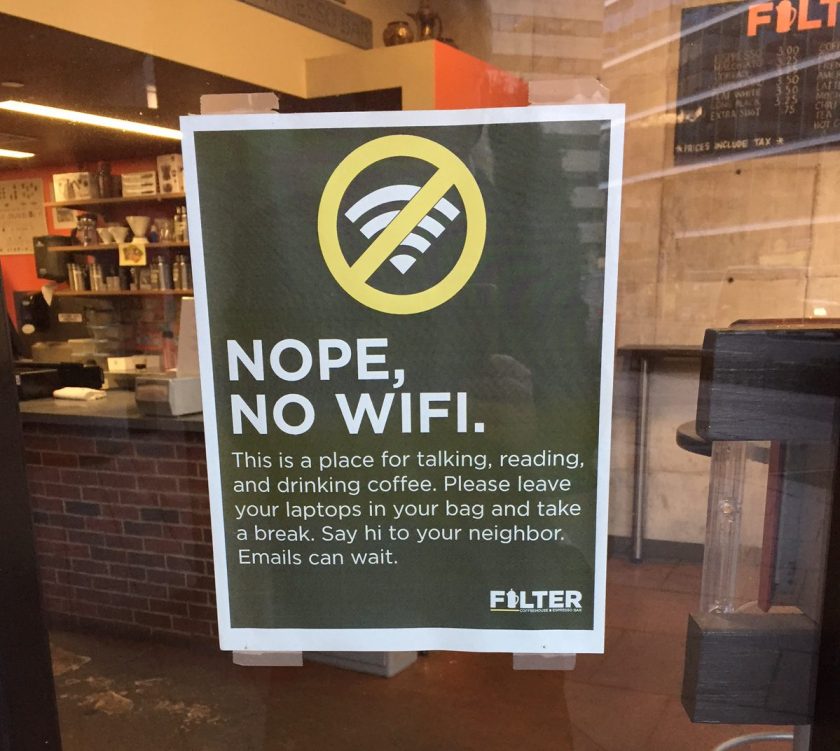
Each morning on my walk to our offices at the Watergate, I stop off at Filter coffeehouse for a coffee to begin the work day.  What first drew me to this particular coffee shop on I Street, NW between 19th and 20th (as opposed to the 15 others I pass in my 25 minute walk) is the sign on the door.  It reads, simply, “Be Civil, Be Urban.” I was intrigued.  My interest was really piqued when I stepped inside and found urban planning books and architectural models on the bookshelf, a prominent “Nope, No WiFi” sign, and a quote on the wall from architectural historian Spiro Kostof that reads, “Civilization, in this strict sense, is the art of living in towns.” Living and working in groups – in towns, cities, and organizations – led us to move toward a civilized society.  But civilization is not guaranteed. How we live and work together is a key to productivity, learning, growth, and happiness.  Civility is — unfortunately — in short supply in much of our national …