All posts tagged: National Trust for Historic Preservation

Community Pride—With Meaning

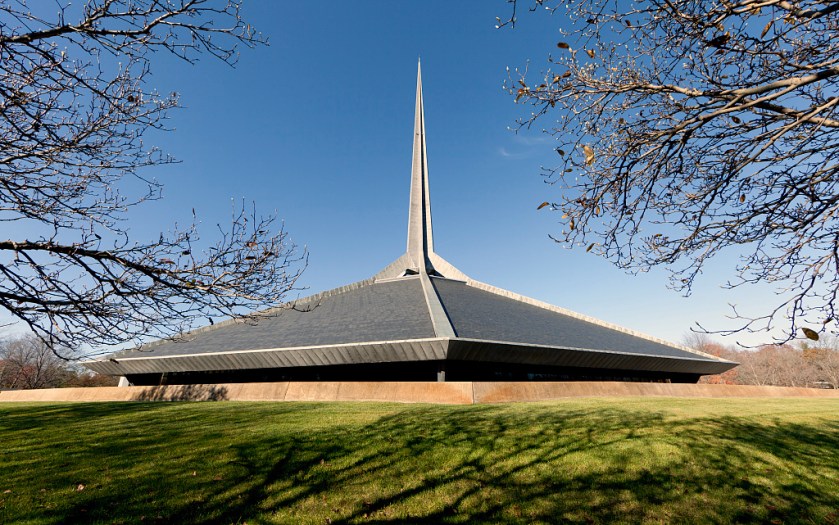
These are words you don’t often hear in today’s America: “We would like to see this community come to be not the cheapest in America, but the very best community of its size in the country.” Last week I was in Indiana for the National Preservation Conference – the National Trust’s annual gathering of preservationists from around the country. I’ve been in this field for quite some time, and this year marked my 37th conference.  I’ve seen and heard a great deal at these sessions . . . but I can’t recall how long it has been since I was as moved as I was by Will Miller’s closing remarks at last Saturday’s luncheon in Columbus, Indiana. The story of how industrialist J. Irwin Miller and the Cummins  Engine Foundation came to pay the architectural fees for public buildings designed by world-class architects has been told countless times.  Architecture buffs and cultural travelers now flock to Columbus by the millions annually to see some 70 modernist buildings along with a Victorian Main Street and historic …
In celebration of Elizabeth

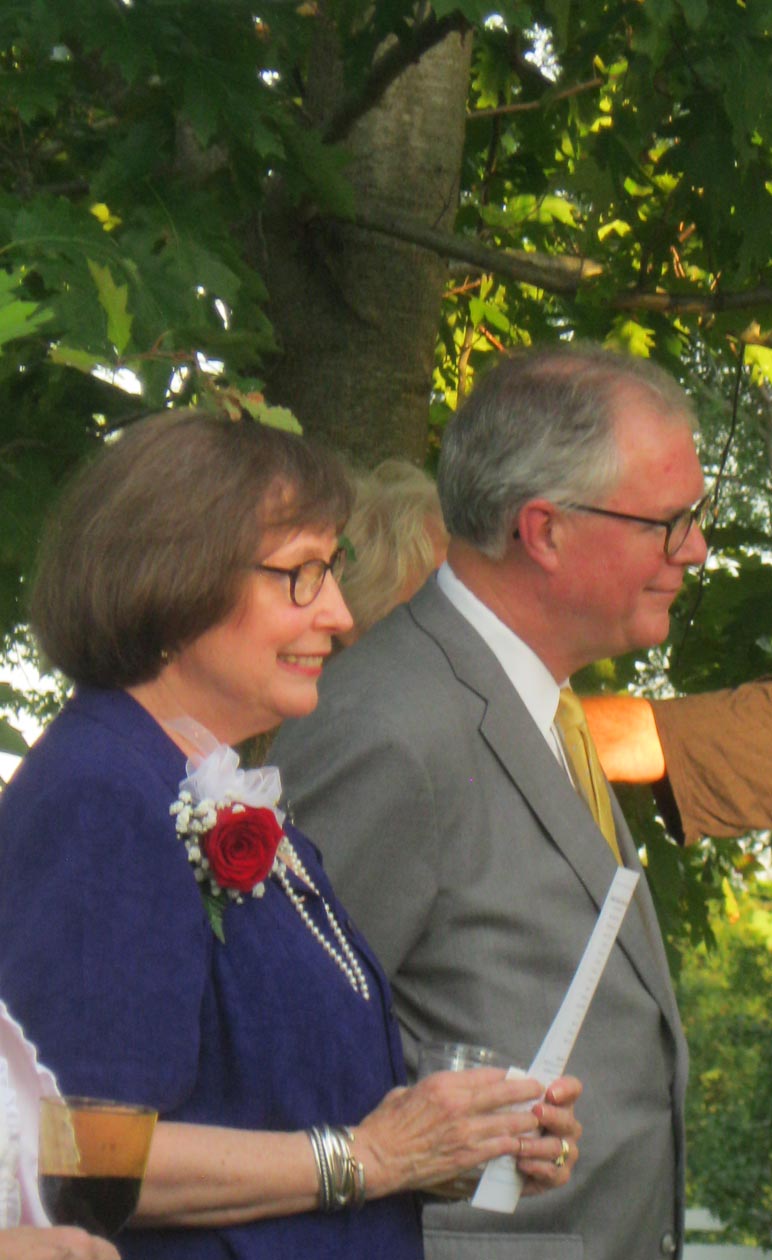
(I don’t often use More to Come… for work-related posts, but last Friday evening at the National Trust we celebrated the retirement of a dear friend — Elizabeth McClung — and I wanted to share my admiration for this stalwart of preservation.  I was privileged to speak at Elizabeth’s retirement celebration.  The following are my remarks.) Leadership comes in many forms.  We all know of the alpha male, Type A personalities who are celebrated as leaders on Wall Street and in the halls of Congress.  These are the types who bark out orders and expect others to follow. These are the “born leaders” — or so they say. But there is another type of leadership that is — to my mind — much more effective.  It generally comes from people who learn to be leaders, rather than assume they know it all from birth.  I put more stock in these types of leaders in part because I am reminded of the tale of a group of tourists visiting a picturesque village not unlike nearby Strasburg.  …

Maybe I Should Come to the Office More Often

I recently did the math. In one three month period this spring I am in the office less than one-third of the time.  True, I’ve been to some wonderful places, but if my two days in Washington this week are any indication, perhaps I should come to the office more often. When she was in fourth grade, my daughter told her class that her dad’s job was to “sign papers and go to meetings.” This hasn’t been one of those weeks. At the National Trust, we’ve been working hard to help Americans understand and protect the full story of our nation’s life together.  That  work was front and center yesterday and today. On Wednesday, our great friends at American Express announced a $1 million grant to the National Trust Historic Site Decatur House and our partners at the White House Historical Association.  The grant will help ensure that the site’s slave quarters – one of the few remaining urban examples of slave quarters – are preserved and used in the educational work at the site.  …

A Refuge

Since I was young, I have been drawn to the 19th century utopian communities that seemed to spring up like wildfire across America.  Rugby, Tennessee, was a place that sparked the preservation interest which would lead to my career. The Shaker Village at Pleasant Hill, Kentucky, has been a community I’ve visited numerous times and have always found fascinating. So when the National Trust for Historic Preservation listed the Village of Zoar, Ohio, on its 2012 listing of America’s Most Endangered Historic Places and named it one of our National Treasures, I couldn’t wait to make a site visit. Yesterday I joined colleagues and partners in this small Ohio village founded in 1817 by a group of German religious dissenters.  The Zoar Separatists were persecuted in their native country for refusing to join the state-sanctioned Lutheran Church, and they immigrated to America with the help of English Quakers. Using funds borrowed from the Quakers, they purchased 5,500 acres on the Tuscarawas River (the mayor says you have to visit the town at least 3 times …

Moving heaven and earth

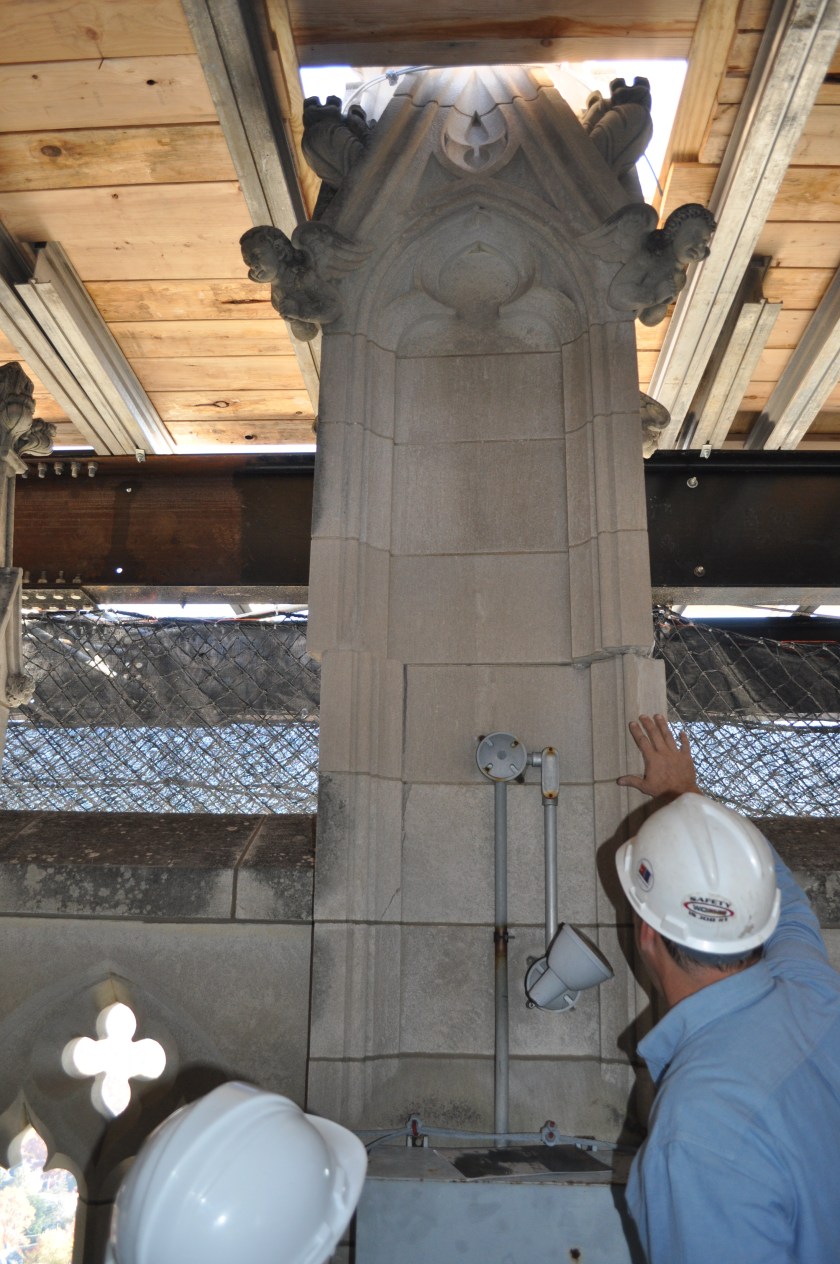
When she was in the fourth grade, my daughter Claire — in response to the question “What Does Your Father Do?” — told her class that I “signed papers and went to meetings.” Today was not that kind of day. With two colleagues from the National Trust for Historic Preservation, I joined officials from the Washington National Cathedral on a glorious fall morning to see first hand the extent of the damage from the August 23, 2011 earthquake that hit the east coast.  We were visiting the cathedral as part of ongoing conversations about the restoration and preservation needs of this national landmark. The cathedral’s website has a gallery of amazing photographs that document the damage — from just after the quake until the present.  I encourage you to view it and more importantly make a donation to help rebuild this unique place. On our tour, we viewed the damage from outside the building (including the cracks in the flying buttresses at the historic end of the cathedral), and then traveled up to the very …

Landmark alert: World’s best custard

Travel has its benefits. I was in Milwaukee yesterday for the announcement of the 2011 list of America’s 11 Most Endangered Historic Places.  We had a terrific event with our local partners, pointing out the threat to a real national treasure:  the National Soldiers Home Historic District.  One of three homes built for Civil War veterans after Abraham Lincoln authorized them as one of the last acts of his presidency, the Milwaukee Soldiers Home is the only one to maintain the context of the historic buildings and landscape.  One of the veterans who spoke at our event said that this place was critical to his recovery from PTSD, noting that the two words most associated with the site by veterans were “peace” and “serenity.”  To lose such a place of healing would  be a travesty. On this trip my colleague Genell introduced me to another national treasure (though not endangered):  Leon’s World Famous Frozen Custard.  My, my!  What a wonderful frozen custard.  It was great to watch the employees pour a large bucket of milk …

Theatre Rebirth

I knew that I had become my father when I found myself telling a friend a few years ago that “I paid more for my last car than I did for my first house.”  It was one of those lines that my father used when I was young – and here I was repeating it!  (Just to set the record straight, our now 10-year-old car wasn’t that expensive; it just happened that as newlyweds, we got a great deal on a 1910 townhouse that needed a lot of work.) Another story that I heard from my father when I was young was how he spent nights and weekends taking up tickets and serving as the back-up projectionist at the Franklin Theatre in his hometown of Franklin, Tennessee.  Daddy knew all about the movies and stars from that era, because he had a free seat. So it was no surprise to me that Tom Brown would be in Franklin last Saturday evening when the lights in the marquee of the historic Franklin Theatre were turned on …

Snapshots

Snapshots (visual and otherwise) from the road, including… #1 – We all laughed when we saw the bumper sticker pictured at the top of the post in Brattleboro, VT – that hot bed of liberalism – which reads, “Caution!  I don’t Brake for Right Wing Nut Jobs!” #2 – The best food in America is being served in small, independent cafes and restaurants.  Our two-week streak of not eating in a chain restaurant is intact! #3 – Just about the best turkey sandwich I’ve ever eaten was made at Amy’s Bakery Arts Cafe in Brattleboro.  The turkey was perfect, and the cranberry chutney and sourdough bread only made it better. #4 – After hearing about the wonderful Ragged Mountain Club in New Hampshire from our friends John and Bizzy Lane for decades, we finally made a visit and found out they were right on the money.  What a great place to spend a summer!  Andrew swam across the pond, making that the second body of water he’s crossed on this vacation (the first being Lake …

A Few (More) Observations from the Road

Two years ago today, I was blogging during a tour of the American Southwest and made a few short observations from the road.  This year we’re touring New England and I have a few more observations to share. Observation #1:  Our family tends to gravitate to the food choices in the book 1000 Places to See Before You Die. I wrote a few days ago that we visited Pepe’s Pizza in New Haven.  Today we found Lickety Split ice cream store in Williamstown, Massachusetts.  I’m not sure how long our waist-lines can stand this focus of our travel.  Luckily, I’ve also found the fitness room every day along the way. Observation #2:  The Porches Inn in North Adams (pictured above and also listed in 1000 Places) is just about the coolest property of the 200+ hotels that are members of Historic Hotels of America (HHA).   The twins and I stayed here about 2 1/2 years ago, and we couldn’t wait to get back and show it to Candice.  As the marketing materials describe it, …

Save ALL Of Ellis Island

Last week I was in New York and had the opportunity to tour the South Side of Ellis Island. It was my first trip to this evocative place where as many as 40% of Americans can trace their initial experience in this country.  From the Save Ellis Island website, here are the basic facts: The Ellis Island Immigration Station opened on Ellis Island in January of 1892. It served as the primary immigration center for the United States from 1892 until 1954 when it was closed. Facilities were built to house and feed immigrants while they waited for their identification papers to be processed. A state-of-the-art hospital complex treated and cured most sick immigrants in order for them to be permitted entry into the country. More than 12 million immigrants passed through Ellis Island between 1892 and 1954, reaching a peak of 1.25 million in 1907. It has been estimated that 40% of Americans today can trace at least one ancestor’s entry into the United States through Ellis Island. It is the early twentieth-century state-of-the-art …