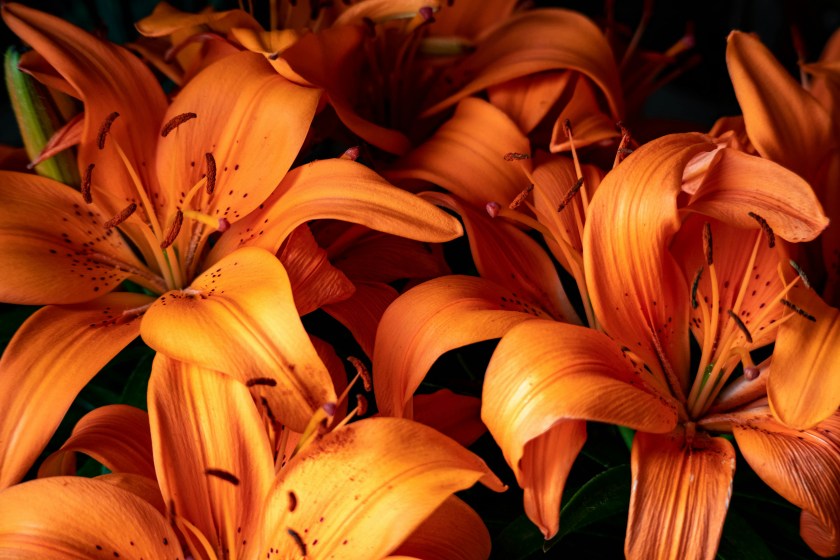
Judith Farr’s intimate study of Emily Dickinson as poet and gardener is a delight for scholars, admirers of Dickinson’s poetry, and garden lovers everywhere.
When Emily Dickinson died in 1886 at the age of 55, some of those who attended her funeral knew she had been a poet. All of them knew she had been a gardener. Her sister-in-law listed “love of flowers” as Emily’s first attribute in an unfulfilled plan for a memoir. During her lifetime her almost two thousand poems were privately published, often enclosed in letters pinned together by flowers or in bouquets that concealed the poem at the flowers’ center.
Emily Dickinson declared that “the only Commandment [she] ever obeyed was ‘Consider the lilies.'”
“Her witty allusion was to that passage in Matthew 6: 28-29 wherein a vehement Christ eloquently scorns worldliness and urges men and women to trust in God for material sustenance . . . Dickinson’s fondness for lilies was intense, and her adherence to this passage was probably won not by its promise of divine support but by its choice of botanical image.”
The fact that the lilies “neither toiled nor spun” was also endearing to the prolific nineteenth century poet whose original and enigmatic verses are now considered canonical. While she shared the household work, Dickinson “preferred the more aesthetic to the grosser task.” In a letter where she mentions that the house is being cleaned, the poet confides that “I prefer pestilence. That is more classic and less fell.”
It was at another funeral—this one in 2021—that I began to truly appreciate the depth of scholarship into Dickinson’s life and literary canon by the author, teacher, and poet Judith Farr. Admiration for the insights provided by her lifelong work and passion was clearly evident in the service’s eulogies and remembrances. The realization set me on a path to build what has become a life-enriching friendship with Judith’s beloved husband George and to return to a poet I had not considered in any seriousness since my high school English class.
It is yet another example of the incredible amount those who are flexible in mind and spirit can learn “between our birthday and our last day.” I asked George if he had one of Judith’s books I could read, and with his typical generosity he gifted me three. Since it was springtime, I quickly chose the one with a brilliant cover reminding me of the flowers that I was seeing on my daily walks.
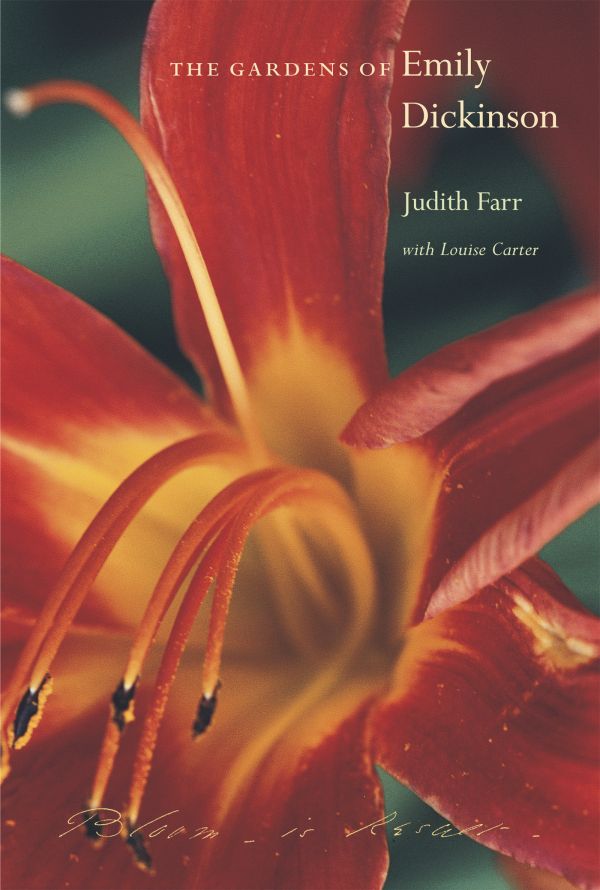
The Gardens of Emily Dickinson (2004) by Judith Farr joins “both poet and gardener in one creative personality.” Dickinson’s passion for gardening was intrinsic “both to her personality and to a much larger movement in American culture,” especially in nineteenth century literature and painting. In this deftly written and beautifully illustrated work, Farr takes the reader into the various “gardens” of Dickinson’s life: the wildflowers in the nearby woods, the blossoms from the cultivated plot at her father’s home, the exotic species from the conservatory that allowed her year round pleasure, and finally the gardens in her mind which served as “a summary synonym of life itself.” Dickinson said that her garden was her church. It was the place where she came to believe in eternal life and to “hazard belief” in the existence of God.
The poet called her poems “Blossoms of the Brain” and she regularly associated various flowers with friends, family, and lovers. Although Dickinson was famously reclusive—known in her time as the “Myth of Amherst”—she was also surprisingly sensual. Farr shows through various poems and letters that sexuality as a theme is frequently represented by the “sweet” intercourse between the bee and flower. A garden—especially in summer—is abloom with sexuality. Dickinson was a poet of the country as well as the mind and “she contemplated the sexual area of her garden daily” through the “careers” of the flowers and “the bee as their lover/propagator.” Farr also discusses Dickinson’s own loves, although that’s not the main focus of this work.
A thoughtful epilogue ties the book together as Judith examines “the gardener in her seasons.” In the nineteenth century she writes that these periods of the year classically describe the development of human life as well as nature’s. Winter is a time of replenishment of mind, soul, and soil. Spring reawakens the gardens she has tended, but she does worry in some poems that it might someday fail to arrive. “Her garden in spring made God manifest to her.”
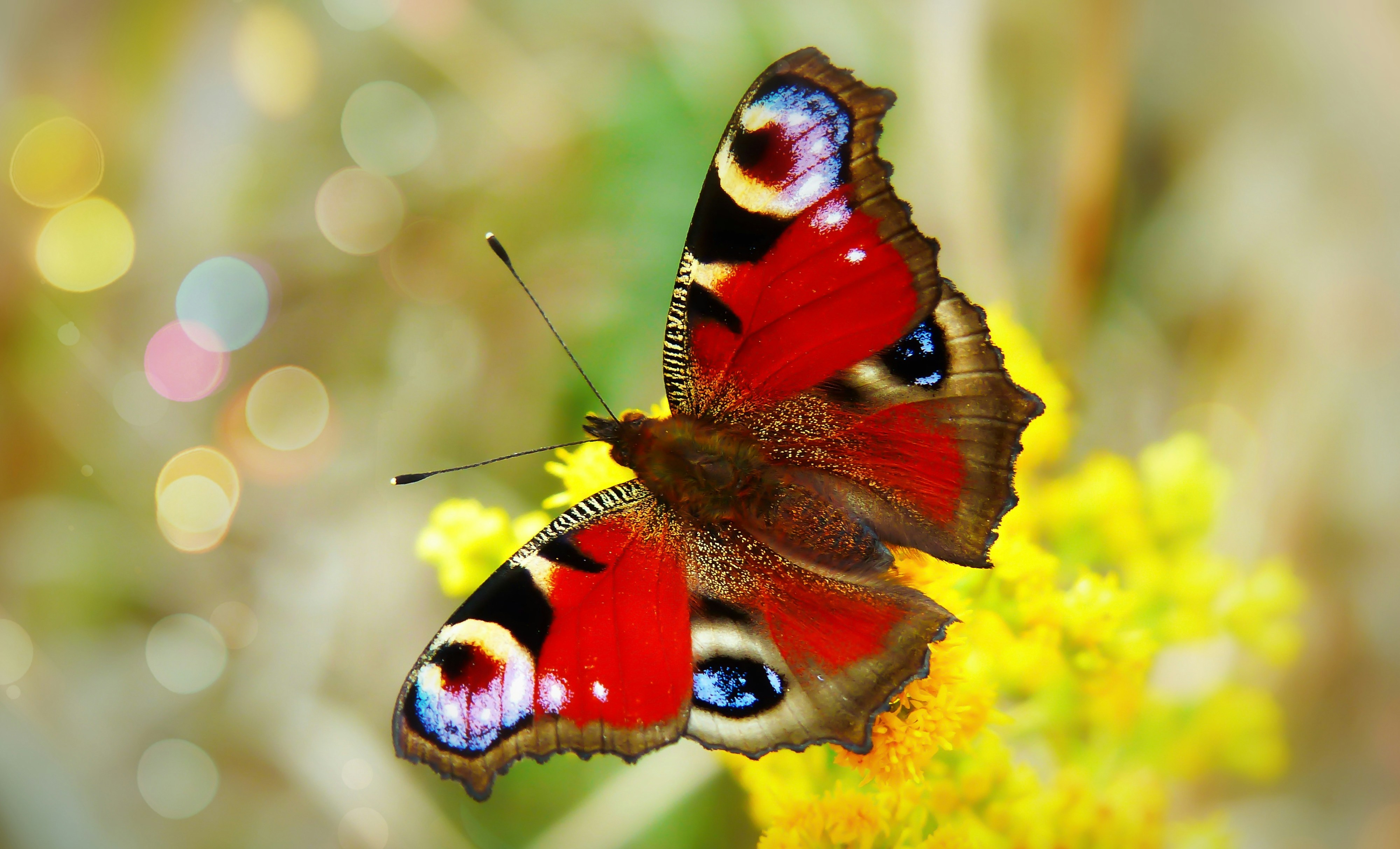
“In one of Dickinson’s most pictorial poems about summer, she describes ‘a Butterfly / As Lady from her Door’ emerging from a cocoon to carry itself like a colorful parasol above a hay field until sundown.”
Summer is different from the other seasons for Dickinson, in that it can mean “sensuous fulfillment, a release from the stern requirements of reason and analysis.”
“And yet it was not for summer’s ‘Consummated Bloom’ but for ‘the happy Sorrow of Autumn’ that Dickinson reserved her most wistful yet impassioned descriptions. . . It was perhaps the season most fascinating to her as a person and as an American artist.”
Farr concludes this loving and insightful book by noting that in medieval symbology, the garden was a metaphor of the soul. So it was for Emily Dickinson. In writing of the seasons, Dickinson “demonstrated both the complexity of her mind and its unique temper.” Her gardening—like writing poetry—was “the manifestation of profound and even occasionally rebellious desire.” As Susan Salter Reynolds wrote in a review in the Los Angeles Times, “So intertwined are Dickinson’s verses with her life in flowers that they seem to be the lens through which she saw the world.”
Judith Farr, with impressive scholarship but even greater love and affection, opens this world to those of us fortunate enough to discover this timeless work.
More to come . . .
DJB
Photo of day lilies by Kshiti Patel on Unsplash


Fabulous!!
It is a wonderful book, Jane, and it means so much more coming as a gift from George.
Pingback: Observations from . . . June 2026 | MORE TO COME...
Pingback: From the bookshelf: June 2026 | MORE TO COME...
Pingback: Summer reading . . . check! | MORE TO COME...