An interview with historian John Garrison Marks on understanding George Washington’s legacy of slavery.
When the hand-written will of the most famous person in America became public it was big news. Already mourning the loss of the one person many thought indispensable to the success of the new country, Americans quickly discovered that George Washington’s will freed the people he enslaved. As one of the largest slave holders in the new republic that decision had enormous consequences.
Set in the context of a country that had already begun shaping an emerging mythology about his life and significance, Washington’s will forced decisions about what to remember and what to forget that have lasted to our present day. After Maj. Gen. Henry Lee famously declared that he would forever be “first in war, first in peace, and first in the hearts of his countrymen,” how does one seriously grapple with a legacy of slavery?
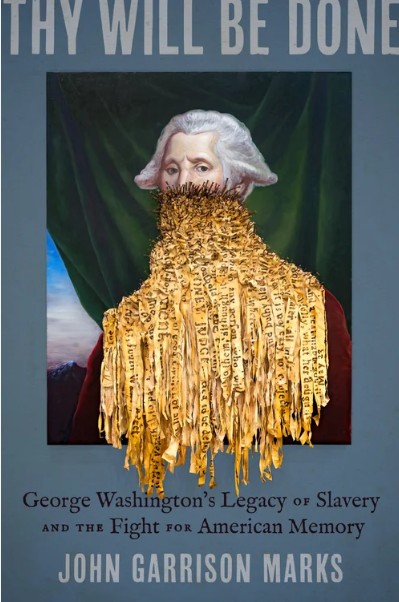
Thy Will Be Done: George Washington’s Legacy of Slavery and the Fight for American Memory (2026) by John Garrison Marks takes a deep and insightful look into how we as a country have wrestled with Washington’s conflicted status as one of the nation’s most prolific enslavers and the architect of one of its largest private emancipations. It is a debate that began days after his death in 1799 and continues to 2026. In the first two decades following his passing the American public created a myth of an infallible father and erased slavery’s centrality to Washington’s life. Marks takes us into the time leading up to the Civil War as the fight over slavery intensified, each side shaping Washington’s legacy to fit their broader worldview. Those individuals freed by Washington also grappled with their freedom in a country where slavery was still legal and growing.
The 1932 Washington Bicentennial—celebrated during an era of rapid and often unsettling change—was another milestone that brought the issue to a head. White and Black Americans engaged in this conversation from entirely different perspectives. Marks brings this thoughtful and revelatory work to a close by studying the way Washington and slavery were taught in the American classrooms of the 20th century and how the stewards of his home at Mount Vernon have moved, albeit slowly, to an effort to tell the story of slavery to the millions who are still called to visit this landmark of American history. In his conclusion, Marks writes that “commentary about Washington and slavery—denouncing his slave owning, praising his emancipation, or silencing the issue altogether—is always about much more” than a simple debate or conversation.
John Garrison Marks has given the nation an important gift on our 250th anniversary. He urges us to use this as an opportunity to ask “different questions” about Washington’s legacy and, more importantly, “to engage in deeper, more meaningful conversations about history, memory, and the values we wish to carry forward.” In doing so, we might come to understand what historian Edward L. Ayers calls the “messy complexity of our past.” And we may, as Marks asserts, “come to better understand ourselves.”
John graciously agreed to chat with me about Thy Will Be Done, his most recent book.
DJB: George Washington, as you make clear, was one of the nation’s most prolific enslavers and the architect of one of its largest private emancipations. What are the key elements that made―and continue to make―George Washington’s legacy of slavery such a contentious topic for Americans?

JGM: More than any other historical figure, Americans have always struggled to see George Washington as a human being. Instead, people have always lifted him up as something more, often treating him as a symbol of the nation itself. Because so many people have attached this symbolic importance to Washington, Americans have often used him over the past two and a half centuries to make broader points about the nature of American society, both for good and for ill. Washington’s enslavement of other people is always brought to bear on those conversations. For those who want to deny our history of slavery or the effect of racial oppression on contemporary injustices, writing slavery out of Washington’s history—and thus the nation’s—is essential. For others who want to emphasize the central nature of racism in American society, Washington’s involvement with slavery serves as a convenient way to highlight it. But among those for whom “American” is an important part of their identities, criticizing Washington’s slaveholding feels like criticizing America itself, and thus feels like it’s critizing them specifically. His symbolic power is also the reason it has long been a contentious subject.
Your chapter on Washington’s will is fascinating. We find out, for instance, that Americans wanted not only to read his will but to own a copy. Yet commentators from the period rarely mentioned slavery or emancipation. How do you interpret Washington’s intentions in drafting a will that freed his slaves (but not those owned by his wife), and how did whatever hope he had for a broader emancipation play out in real life in early 19th century America?
When Washington wrote his will, I think he clearly understood it would be read far beyond just the local courthouse. He didn’t begin the will stating he was a “resident of Fairfax County.” Instead, he began “I, George Washington, citizen of the United States.” Also, after decades of declining to speak publicly on the issue of slavery, the directions for how enslaved people should be dealt with constitutes the longest and most detailed portion of his will. It seems naive now, but I think Washington may have genuinely thought this example could influence others to do the same.
But that’s not what happened. When Washington died, many Americans worried it would doom the entire American project not long after it began. Recognizing that slavery was already a lightning rod in American politics, most white Americans declined to call much attention to the emancipation provisions of his will. By the 1820s and 1830s, the reticence and concern among revolutionary-era enslavers had mostly disappeared, and white southerners began justifying slavery as a “positive good,” both for American society and for enslaved people themselves.
What did you discover as you sought to determine what happened to each of the 123 formerly enslaved individuals Washington freed through his will?
First, I discovered how difficult it is to track these people in historical records. While there is basically a never-ending amount of information on Washington himself, finding information about specific people he enslaved and then emancipated required piecing together scraps from various sources—census lists, freedom registrations, tax records—to try to put together some kind of meaningful picture.
More to the point though, this research revealed both how challenging life was for many of these individuals, especially the decision to remain at Mount Vernon in the only life many of them had ever known, or to strike out on their own in a society still very much committed to slavery. Many of those who left founded churches, found work, built community, and crafted lives for themselves in freedom profound enough that evidence of it was still available for me to find two centuries later. Often, the lives in freedom established by this first generation allowed them to pass on the benefits of freedom to their children, who continued to build stable, meaningful lives.
While the historical interpretations at Mount Vernon began formally acknowledging slavery as early as the 1920s, why do you believe the stewards of Washington’s home took so long to fully explore the centrality of slavery in Washington’s life, and what led to that change? From your perspective, what work remains to be done?
Like most Americans, Mount Vernon has, historically, struggled to balance the desire to lift up Washington as an inspiring symbol and to reveal him for visitors with all of his faults. Trying to figure out whether we can have both at the same time has been a challenge for Americans for a very long time, and Mount Vernon has not been immune to those tensions. Several forces have moved Mount Vernon to address Washington’s history of slavery more forthrightly. Their own historical and archaeological research, along with that of decades of recent scholarship, has allowed them to tell the story with greater accuracy and specificity than was possible in earlier eras. The public also began expressing an expectation of a fuller story of history at historic sites generally and Mount Vernon specifically, which created more space for them to tell the story there. Perhaps most importantly, Mount Vernon has worked closely with descendants of those once enslaved at Mount Vernon, who have pushed the site to continue to do more.
The subtitle of the book speaks to the “fight for American memory.” Why is memory so important to the study of the past and what key points about how Americans approach, remember, and relate to history would you like for readers to take away from your work?
There’s often a wide gulf between how we remember things and what a closer inspection of the evidence reveals. This is particularly true for George Washington, a person to whom so many people feel such a deep connection. I hope the book helps people recognize that today’s debates about our history and how it should be presented have been a subject of contention for nearly our entire history as a nation. As people try to emphasize particular views in whatever cultural and political context they’re operating in, they often call history into the fray to make their points. But most of the time, history is messy, complicated, and ambiguous. It rarely offers clear answers. So I hope the book can help people grow more comfortable with ambiguity, more comfortable with the gaps between history and memory, and better able to engage in thoughtful conversation about difficult topics.
Thank you, John.
Thanks for the invitation.
More to come . . .
DJB
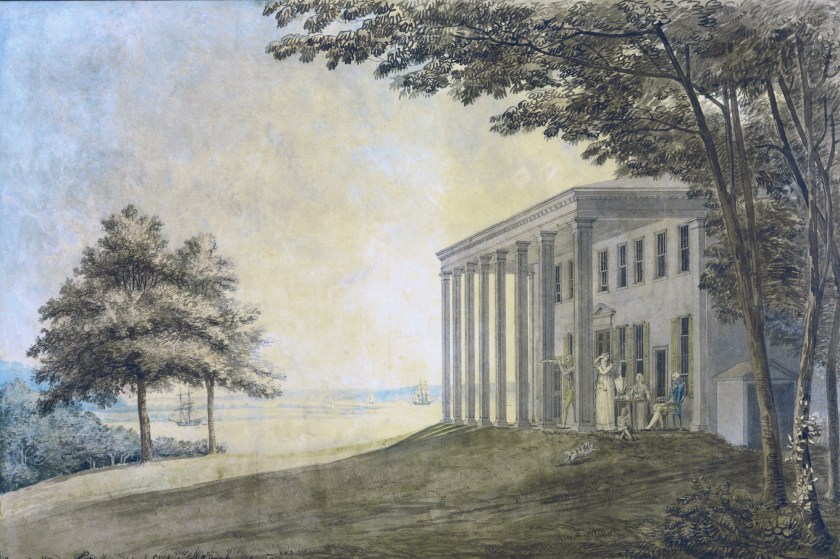
Top image: Mount Vernon with the Washington family on the terrace, a 1796 portrait by Benjamin Henry Latrobe from Wikimedia


Very interesting!
Kathy, it is a story and history well worth hearing. John is a good writer who lays out the perspectives and challenges in a compelling way.
Pingback: Observations from . . . June 2026 | MORE TO COME...
Pingback: From the bookshelf: June 2026 | MORE TO COME...
Pingback: Summer reading . . . check! | MORE TO COME...