The Milwaukee Brewers won the 2026 World Series because “they played the game the right way.” A recently re-published novel—well-written, dark, and ultimately tragic—suggests what can happen when our belief in games moves into obsession.
I loved watching the Milwaukee Brewers march their way through the playoffs to capture the 2026 World Series. The Brew Crew, which had clearly captured not only the vibe but the soul of Milwaukee, played baseball as many of us of an older generation fondly remember the game. The data geeks who now dominate baseball’s front offices look only for fireballing pitchers and batters who swing for the fences, resulting in lots of home runs and even more strikeouts. They’ve convinced themselves and the owners that this rather boring approach to the game is how one wins.
The folks who own and run the small-market Brewers beg to differ.
And so we saw an entire postseason of singles and doubles. Moving the runner over. Sacrifice bunts. Making every bat count. Fouling off pitch-after-pitch from the 100 mph flamethrowers on the other team until they both got the pitch they could hit and could run up the pitch-count on these star hurlers and get them out of the game.
It was glorious.
The Brewers had the best record in baseball this year, but that doesn’t always translate into postseason success. This year it did. In fact, the two teams with the best records in their leagues (hat tip to the Tampa Bay Rays) ended up in the World Series. It almost felt like the 1960s.
In the midst of the polarization and corruption driven by “the world’s most obnoxious person,” America was given a treat to enjoy. Two small market teams showed that you don’t have to spend a gazillion dollars to pull a community together, put a quality product on the field, and succeed. So what happens next? The owners—you remember that they only want to make money, right?—have pretty much promised a lock out in their bid to install a salary cap. Because that’s the only way they can survive financially. Right.
There’s a very good chance that spring training games, at a minimum, and possibly some of the 2027 season, will be lost to the lockout. Because the poor billionaires who own major league baseball teams are not able to bleed every penny out of a weary and stressed fan base. Like their friends in tech and health care and oil extraction and elsewhere, MLB owners make billionaire and wealth taxes look better and better every day.
Making the ultra rich pay their fair share won’t solve all our problems, but it would certainly be a step in the right direction.
So baseball fans are faced with the cold of winter and low odds of having spring baseball begin on schedule. It is time to watch Bull Durham, maybe play a few games on the old wooden baseball pinball toy, and pull out all those classic books about the game.
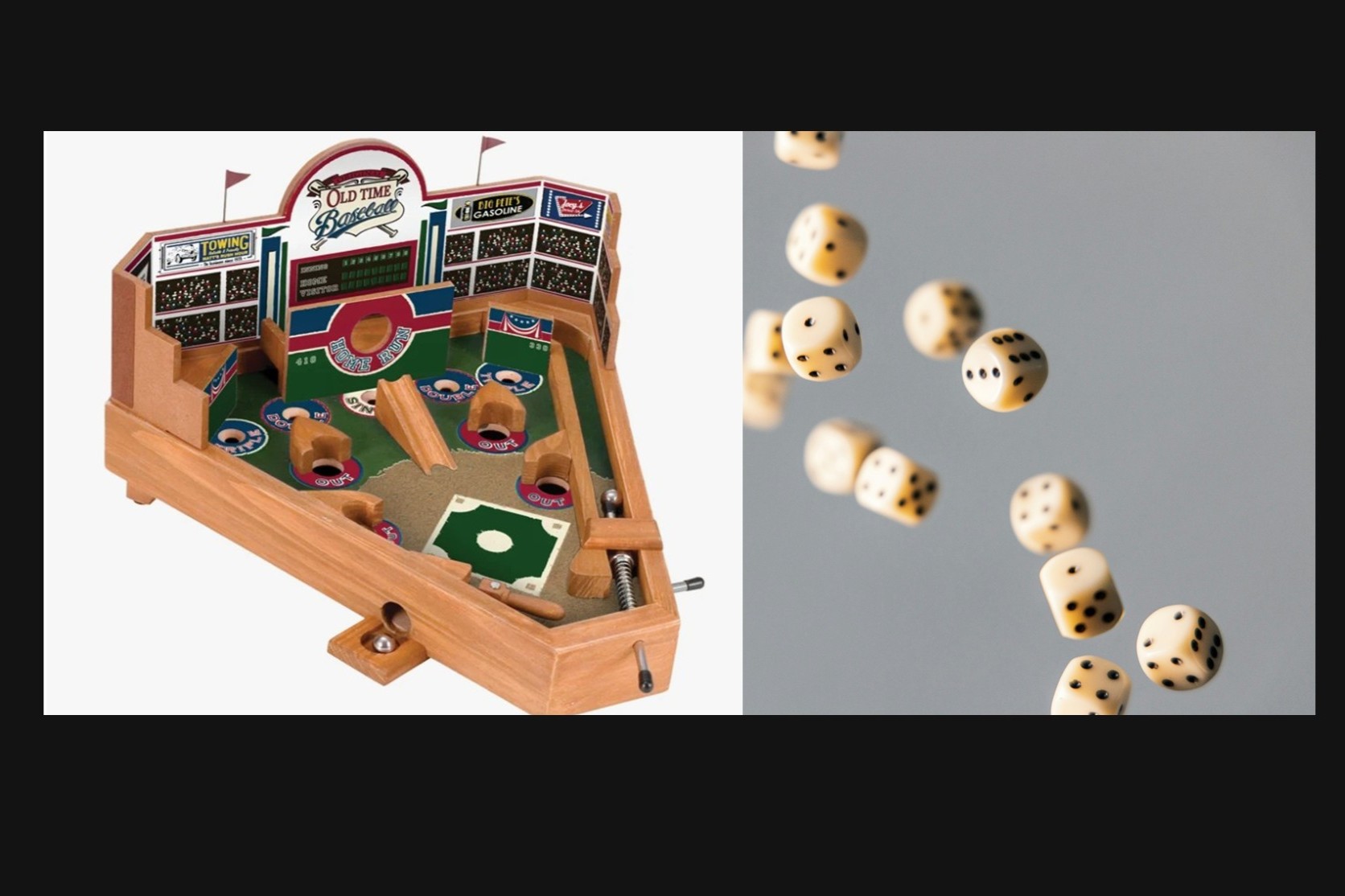
This year, one classic—with its own cautionary tale about obsession and reality—has been reprinted just in time for your off-season reading.
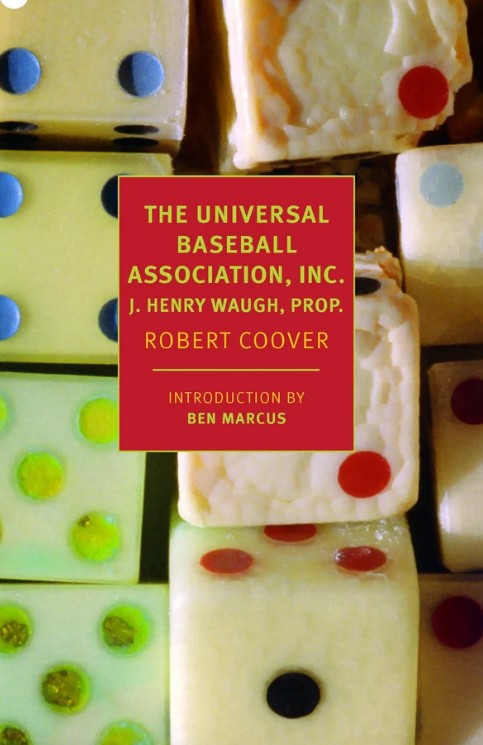
The Universal Baseball Association, Inc., J. Henry Waugh, Prop. (1968; reprinted by New York Review of Books in 2026) by Robert Coover is an original and challenging baseball novel that is about much more than the game. Henry Waugh is a “no-account accountant, barfly, and country music fan.” He hates his job and finds countless ways to avoid working. Henry annoys his boss, Horace Zifferblatt, who is looking for an excuse to fire him. The one thing Henry loves is baseball. “Not the actual game so much—to tell the truth, real baseball bored him—but rather the records, the statistics, the peculiar balances between individual and team, offense and defense, strategy and luck, accident and pattern, power and intelligence.” So taking the names of eight historical teams from baseball’s Civil War and Reconstruction eras, he has created a league that exists entirely in his head, except for the extensive scorecards, league standings, ongoing seasons, stat sheets, archives, and more. The games are played with dice following strict rules Henry has created.
When he rolls a certain combination Henry can immediately determine what has happened on his imaginary diamond, depending on the batter’s status: rookie, star, or just a regular player. Eating deli sandwiches and drinking copious amounts of beer, he will play multiple games each evening. This has gone on for years. When we join the action, the UBA is in its 56th season (or LVI as Henry likes to list it), and we come in during the seventh inning of a perfect game.
“Bottom half of the seventh, Brock’s boy had made it through another inning unscratched, one! two! three! Twenty-one down and just six outs to go!”
Brock is Brock Rutherford, retired star pitcher who came up to the league in season XIX, and Brock’s “boy” is his son, the rookie pitcher Damon Rutherford. Truth be told, the league has become a bit stale for Henry, but Damon’s performance revitalizes the game for its creator. After Damon completes his perfect game, Henry—who lives through each and every player, spectator, player’s wife, and manager—imagines the team going out to their favorite bar named Jake’s. There is no Jake’s, but when Henry sits in his local bar and calls out “Let’s go to Jake’s!” a prostitute named Hettie overhears him and asks, “Where?” Now, as Coover does more and more as the novel progresses, “we shift out of Henry’s reverie and back to real life.” But just as he has fun with the use of baseball jargon throughout the novel, Coover soon has Henry and Hettie in the heat of passion “whipping off” their uniforms. Henry becomes Damon, and together they “ran the bases, pounded into first, slid into second heels high, somersaulted over third, shot home standing up” only to step back in the box and do it all again.
The novel turns tragic as Henry, eager to see what his new star can do, pushes Damon to pitch the next game though he knows he should rest him between starts. Three consecutive rolls of triple snake eyes results in a freak death of the batter from a bean ball to the head. Damon Rutherford, Henry’s most cherished player, is the batter and his death haunts the imaginary game and Henry’s real (such as it is) life.
Henry is never overly attentive to his work and friends. But as the novel progresses, and especially after Damon’s death, he is consumed by the league. For the first time in 56 seasons he begins to manipulate the outcomes. He is pulled in deeper and deeper as his work and social life spin out of control. As the novel moves to its conclusion, the whole association is imperiled, “along with the sanity of its isolated creator.”
Coover has written a cautionary tale about fantasy, obsession, and control. Henry becomes less and less engaged with his co-workers as he stays up nights playing game after game. By the end of the book the association has continued even though Henry, apparently, has died. Written in the 1960s, Coover is well ahead of his time in anticipating fantasy baseball, yes, but more importantly, he is among the vanguard in considering the dystopian nature of artificial intelligence.
Unlike the recent World Series, a terrific one even with all its faults, Coover has created a world where things are perfect . . . until they are not.
More to come . . .
DJB
P.S. – Many thanks to my dear friend and Brilliant Reader George for gifting this book to me. He thought I would enjoy it and he, as usual, was right.
Photo by Rohit Choudhari on Unsplash

