I first became aware of The Steel Wheels somewhere around 2008. I had picked up a CD of the Shenandoah Valley-based band on one of our Thanksgiving trips to Staunton and was introduced to and intrigued by the unique voice and careful songcraft of lead singer and songwriter Trent Wagler.
But it was at Merlefest in 2012 that the band pushed their way into the front part of my brain, and, I suspect, the brains of thousands of other music fans as well. After one of the main acts wrapped up their show, as I wrote at the time, a number of attendees were exiting the main stage area on the first night of the festival. Suddenly, The Steel Wheels began singing their powerful Rain in the Valley on a small side stage. And like bees flowing to honey, those leaving stopped, turned around, and were glued to their seats through a spirited 30-minute set.
As expected, later TSW shows throughout the weekend were packed, as word spread fast. And just like that, they quickly jumped up into my consciousness.
The band is based out of Harrisonburg where several of them met during their college years. In addition to Wagler, who handles the lead vocals, banjo, and guitar, the band consists of Jay Lapp on mandolin, guitar, more recently electric guitar, and vocals; Brian Dickel on bass and vocals; fiddler and vocalist Eric Brubaker; and the most recent addition, Kevin Joaquin Garcia, on percussion and keyboards. The band is coming up on its 10th album, and has — since 2013 — curated and produced their own festival in Mount Solon, Virginia. I’ve attended their Red Wing Roots Music Festival several times since that inaugural year, and it is always a treat.
I’m posting some of my favorite TSW tunes for this Saturday Soundtrack in the hopes you’ll enjoy the selections. We’ll begin with some of their older material like the beautiful Halfway to Heaven, the funky Breakin’ Like the Sun, and the wistful The End of the World Again:
Here TSW take an extended instrumental jam on Long Way to Go.
Next we’ll move into some of the band’s later tunes, including the title cut from their album Wild As We Came Here, the tune Scrape Me Off the Ceiling, one of their newer cuts, Broken Mandolin, and a cover of The Shape I’m In from Vol. 2 of their live album set.
I’ll end this exploration with The Steel Wheels take on the great bluegrass/gospel tune Working on a Building.
The Steel Wheels always deliver an energetic and entertaining live show. Catch them when touring begins again. Until then, enjoy what you can find online or on your favorite music streaming platform.
More to come…
DJB
Image of The Steel Wheels at Red Wing Roots Music Festival by DJB
Folk songs often bring us to the intersection of place, history, and memory. In certain cases, digging into those songs gives us a chance to recover the true stories, long-hidden, from our past, bringing a reckoning with the history that did happen and a reimagining for our collective future.
Recently, The Bitter Southernerposted a thoughtful article which examines how the popular folk tune Swannanoa Tunnel was taken from the wrongfully convicted black community in Western North Carolina. Forced to build the railroad tunnel as convict labor during the Jim Crow era, those convicts originally wrote the tune in the “hammer song” tradition of John Henry.
“Beneath the popular folk song…and beneath the railroad tracks that run through Western North Carolina, is a story of blood, greed, and obfuscation. As our nation reckons with systematic racial violence, the story of this song points to the unmarked graves of the hundreds of wrongfully convicted Black people who died building the tunnel.”
Kevin Kehrberg and Jeffrey A. Keith, a musicologist and a historian, tell how the song’s original history has been recovered and the recordings repatriated with the descendants of the original artists.
For those who care about how recovered histories can help us understand and honor the full American story, Kehrberg and Keith demonstrate how something as simple as a folk song can lead to richer understandings of our past.
(NOTE: During October, I am writing articles on how history and the places where history happened can help us understand the issues we are facing as a country and a democracy. Besides this story of wrongful imprisonment and racial violence, you can find posts on the use of misinformation, religious liberty, voter suppression, and revealed history, in addition to a book review on how democracies die by clicking on the links.)
In following coverage of the fight over the Supreme Court*, don’t worry if you have become confused about the concept of religious liberty. Those making the most noise either do not understand — or do not want to understand — this fundamental First Amendment right enshrined in the Constitution. People who should know better often sow confusion around the history and meaning of “Congress shall make no law respecting an establishment of religion, or prohibiting the free exercise thereof.”
Before we go all 2020 and take a virtual road trip to visit the places that help us see why the religious persecution faced by earlier generations led to this all-important amendment, let’s begin with a quick summary of why religious liberty is on the radar screen today.
Recently two justices on the Supreme Court couldn’t pass up the chance to comment as they joined the court’s unanimous decision not to hear the appeal of Kim Davis, a Kentucky public official who refused to issue marriage licenses because of her personal religious views against same-sex unions. Justices Clarence Thomas and Samuel Alito sided with their colleagues in the decision, mind you, but Thomas used the occasion to write a four-page missive about his views of religious liberty, which I would cite as misguided at best. Alito signed on for good measure.
The decision not to hear the case was the right one. To put it simply, her religious beliefs were not the reason Davis was in court. She was in court because she refused to do her legal duty, as clerk of Rowan County, to issue lawful marriage licenses.
Thomas, however, has a history of confusion when it comes to religious liberty. In a case just last year, he suggested that state governments don’t necessarily have to honor the First Amendment’s religious liberty clauses at all. The implications are staggering** and, I would add even as a non-lawyer, un-American.
Thomas, in his thoughts on the Davis case, argues that religious liberties are somehow infringed upon when they are not privileged above civil law. And here is why that is a problem:
Justice Thomas, it seems, has one particular set of religious interests in mind: those ofconservative Christians.
If you happen to be aprogressive Christian or person of faith (like me) and you favor same-sex marriagebecause it aligns with your religious beliefs(as it does with mine), those concerns somehow are never raised by Clarence Thomas.
In a Washington Post op-ed, columnist David von Drehle helps clarify the challenge when he writes,
“As he did in 2015, Thomas notes that same-sex marriage is not mentioned in the Constitution; and once again, it is an empty feint toward originalism. Opposite-sex marriage is not mentioned there, either. At the time of the Constitutional Convention, certain devout Americans, called Shakers, condemned all marriage as “whoredom.” Originalism therefore appears to teach that protection of religious freedom (for example, the right of Shakers to condemn marriage) does not extend to imposing one’s beliefs on the unenumerated rights of other citizens.”(emphasis added)
That’s exactly what the originalism of the constitution teaches. Kim Davis doesn’t believe in same-sex marriages. That’s her right. But the constitution’s First Amendment is clear that her religious beliefs cannot be imposed on others taking permissible actions under civil law.
Thomas and Alito either fundamentally disagree with that position and/or are worried about some future case where those whose religious beliefs condemn same-sex relationships will be labeled “bigots.” But the Constitution doesn’t protect people who have different religious beliefs from criticism. If I want to criticize a conservative charismatic Catholic group for suggesting that women should be subordinate to their husbands, that’s my right. Likewise, if a conservative Catholic wants to criticize the Episcopal church’s support for same-sex marriage, that’s their right. What the Constitution does is to bar courts and governments from preferring one set of religious views over any other set — or over nonreligious views. And that is important to know because any serious study of religious life in America uncovers how quickly the persecuted become the persecutors in this country.
I come by my interest in this subject naturally as my father, that rare breed of liberal Southern evangelical Christian, worked tirelessly to tell his neighbors why Baptists — of all denominations — should understand and cherish the real meaning of religious liberty.
There are many times our historic places point us to the real story behind an issue and why it is important today. This is one of them.
Our virtual road trip will help us understand that history as we visit simple wooden buildings, elegant 18th century architectural masterpieces, and soaring western landscapes where we begin to see the tip of the iceberg of the true depth and breadth of our nation’s religious heritage, and why true religious liberty is such a precious gift.
One of the widely misunderstood stories in American history is the establishment of freedom of religion and the role of tiny Rhode Island in that struggle. In numerous trips to Providence and Newport through the years, I’ve often made the time to visit landmarks of the nation’s move to ensure that all had religious freedom, including the right not to worship.
The First Baptist Church, Providence, RI – one of the landmarks of religious freedom and America’s founding upon the principle of the separation of church and state
Providence is a city, as its name suggests, that celebrates its religious history. Few communities carry off having a “Steeple” street with the historical understanding that Providence brings to its houses of worship. And the most important of those sacred places in the country’s fight for religious freedom is The First Baptist Church, Providence, which was the very first Baptist church that was established in America. Along with the National Park Service’s Roger Williams National Memorial, The First Baptist Church, Providence tells an important colonial-era story of how a persecuted religious denomination led the fight for separation of church and state.
Before Williams and his views came to prominence in Rhode Island, the colonies used traditional approaches to religious tolerance. In other words, they were intolerant. The majority religions, all Christian and usually of the Anglican or Congregational denominations, persecuted those whose faith differed from the government-sanctioned variety.
The Puritans in Massachusetts, Williams first home, were no different. Having brought their antipathy to Catholicism and Paganism with them to America, the devout Puritans, among other injustices, launched the first war on Christmas. The Bible did not sanction the holiday, which in their eyes was both papist (invented by Catholics, they believed) and pagan (in that it co-opted the winter solstice festivities of pre-Christians). And “people tended to get excessively, well, merry…” notes religious scholar Steven Waldman. In 1659 the Puritans made Christmas illegal.***
That persecution and approach to tamping down religious dissent changed with Williams and his work with Baptists and others in Rhode Island. Roger Williams and his followers were convinced that religion was a matter of conscience between an individual and their God, and the founding documents for Providence indicate a clear division between the public, civil realm and the private world of belief. The phrase “only in civil things” used in the founding documents established the principal of religious liberty that was to become the First Amendment.
James Madison, the Father of the Constitution, was certainly influenced by Williams’ work. Madison also learned about religious freedom from personal interactions with Baptists in Virginia, near his home, Montpelier.
Virginia’s Baptists were very much persecuted by the ruling Anglican church. Instead of government favoring one denomination or belief, as under the Puritans/Congregationalists in New England or the Anglicans in Virginia, Madison argued that the state should neither “constrain nor coddle” religion. Madison suggested that the best way to promote religion was to leave it alone. That was then, and still remains today, a radical concept. In forging a new way for church and state to relate, Madison believed that religious liberty would arise from a “multiplicity of sects” with different denominations and religions all working to find converts and followers.
In other words, Madison wanted open competition. He also wanted rules so that the majority religions could not use their status to hold down the newer and smaller sects. The first place we see that in the colonies is in Rhode Island. It was Madison who helped make that vision part of our national values. The First Baptist Church, Providence, the Roger Williams National Memorial, and Montpelier give this history a grounding in place.
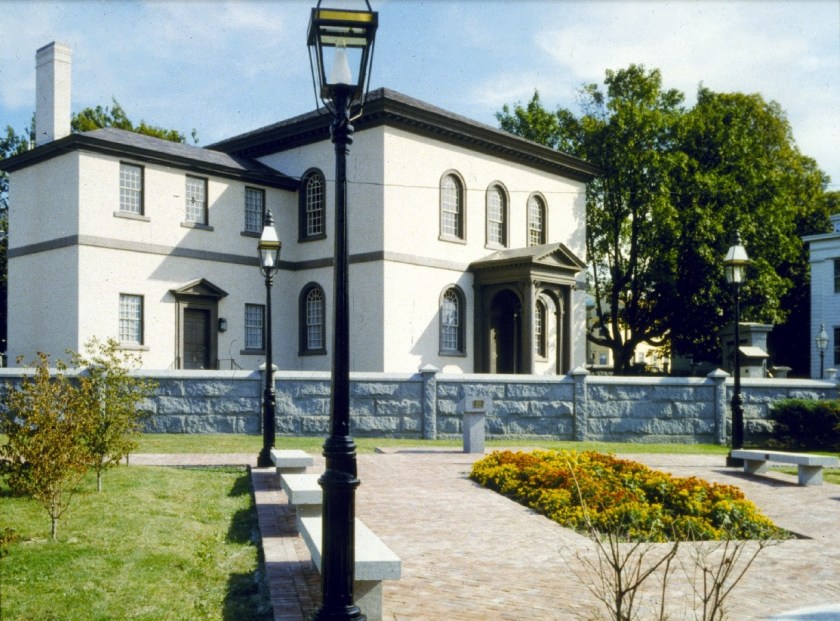
One of the important facets of religious liberty in America is how it covers all religions, plus those who do not practice any religion. So Newport, Rhode Island’s Touro Synagogue is another stop we should make on our road trip. Dedicated in 1763, Touro is the oldest synagogue building in the United States. It is a structure of “exquisite beauty and design, steeped in history and ideals.” And while it is among the most architecturally distinguished buildings of 18th century America, it stands alone as the most historically significant Jewish building in the United States.
The congregation was founded in 1658 by the descendants of Jewish families who had fled the Inquisitions in Spain and Portugal, to move to the Caribbean. Those same descendants then left the Caribbean seeking the greater religious tolerance that Rhode Island offered.
By the time those families came to Newport, the “lively experiment” that differentiated Rhode Island from the other colonies was already underway. Touro’s unique place in American history came about in 1790, after the founding of the republic. In response to a letter from its congregation, President George Washington eloquently defined the new nation’s standard for religious freedom and civil liberties. He declared that America would “give to bigotry no sanction, to persecution no assistance.”
Washington was building on Madison’s foundation. Yet, while Steven Waldman describes Madison’s work as the “ingenious, counterintuitive, and often-misunderstood blueprint for the religious liberty we enjoy today,” it is work that is very much unfinished and always in contention.
One of our challenges is that many Americans leave out large percentages of our fellow citizens because they consider religious freedom only from the Christian context. And the story of our country’s intolerance can be difficult to face in light of our professed belief in freedom of religion. In the history that actually happened, as opposed to the one we often tell ourselves, African spirituality and Islam were purged from the religious practices of the slaves, creating what one scholar calls a “spiritual holocaust.” At the time of the nation’s founding, Waldman notes, about 10% of the slaves, literally hundreds of thousands of people, were Muslims. There were probably more Muslims in America at the time than Jews or Catholics.
Native American spirituality, like the fight against the spirituality of the slaves, was purged primarily with violence. And it was that spirituality and history that brought me to New Mexico, Acoma Sky City, and Mount Taylor, a site threatened by uranium mining.
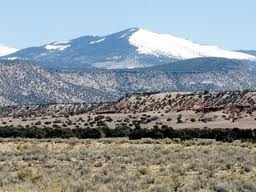
Mount Taylor in New Mexico, a site threatened with uranium mining. Visible from up to 100 miles away, it is a pilgrimage site for as many as 30 Native American tribes and it has special religious significance to the Acoma people.
Mount Taylor is a stunning landscape. Often covered with snow, it is visible from up to 100 miles away, including from the 357-foot mesa that houses the oldest continuously inhabited community in America. While it is a pilgrimage site for as many as 30 Native American tribes, Mount Taylor has special religious significance to the Acoma people.
Acoma Sky City — the historic home of the pueblo — sits on the top of a mesa that rises up like the tower on a cathedral from the New Mexico landscape. I first took my daughter to see the site as a young fifth grader. After reaching the top of the mesa, we spent the next hour and a half touring the historic Mission Church of San Estevan Rey, because this is a culture where Spanish, Catholic, and Native American spirituality comes together in a melting pot. On later visits I discovered more of the richness of that tradition, including the importance of Mount Taylor. When we consider the breadth of sacred places and religious beliefs in America, most of us have to expand our view.
To expand that view, consider the wealth of information that is available for those willing to learn more of the history concerning our religious heritage and freedom of religion.
Remember the Jehovah’s Witnesses and the dozens of important court cases they fought to gain their freedom.
Learn about the change that happened with the alignment of Jews and Christians during World War II.
The fight over prayer in public schools, where the Supreme Court ruled that the majority religion doesn’t get special privileges, is a misunderstood decision, long resisted by Protestants.
Stop and consider the impacts of the entry of millions of Muslims, Hindus, and Buddhists into our society in terms of religious freedom.
And many changes, such as the political alliance of conservative Catholics and Evangelicals after decades of fighting each other, have come in my lifetime.
I have also witnessed the religious right’s confusion of an individual’s practice of a religion and the push by corporations and others to discriminate against LGBTQ individuals because of the religious beliefs of the owners or managers. Those corporations operate in the business sector where we all live and work under a secular system of laws, public investment, and taxation. Recently the approach taken by the majority Christian religion to cast themselves as a persecuted minority has again raised its ugly head.
Any serious consideration of life in America realizes how quickly the persecuted become the persecutors in this country. Puritans, who fled religious harassment in Europe, quickly moved to hang Quakers. Evangelical Christians, who led the way for religious freedom early in our history, have seen many of their leaders turn against it in our own time. Conservative Catholics, long vilified in America, are now working through the courts to place their religious views on a majority who disagree with their theology.
The powerful effort to demonize, marginalize, and persecute others who are not Christians “represents a disintegration of the basic compact that sustains religious freedom for everyone,” Waldman maintains. The lines of attack today against Muslims are strikingly similar to those used in the past against Baptists, Mormons, Catholics, Jews, Jehovah’s Witnesses, and Native Americans.
James Madison decried the “unchristian timidity” of those Protestants who wanted government support to prop up their church. Christians, especially of the right-wing variety, convey an image of a petty faith and an insecure God, more focused on power than Christ-like politics.
Williams embraced freedom. We should do the same. Mount Taylor, rising above the rugged and beautiful New Mexico landscape; the First Baptist Church, Providence; and Newport’s Touro Synagogue all tell me that to believe in freedom requires, in historian John Barry’s words, “faith in the freedom of thought, of conscience.” These landmarks tell me we can do better, if we work to understand the true meaning of religious liberty.
*This isn’t a post about Amy Coney Barret’s confirmation process, but my take is that no judge is qualified who believes that a president who has yet to serve a full term should get five years’ worth of court picks in a four-year term. (Scalia and Ginsburg died four years and seven months apart.)
***Thankfully the war on Christmas soon went away until it was rejuvenated in another day and time by FOX News as a false political wedge issue. And as a FYI, the Puritans morphed into Congregationalists over the course of the 17th century.
Initial image: Touro Synagogue (credit National Trust for Historic Preservation)
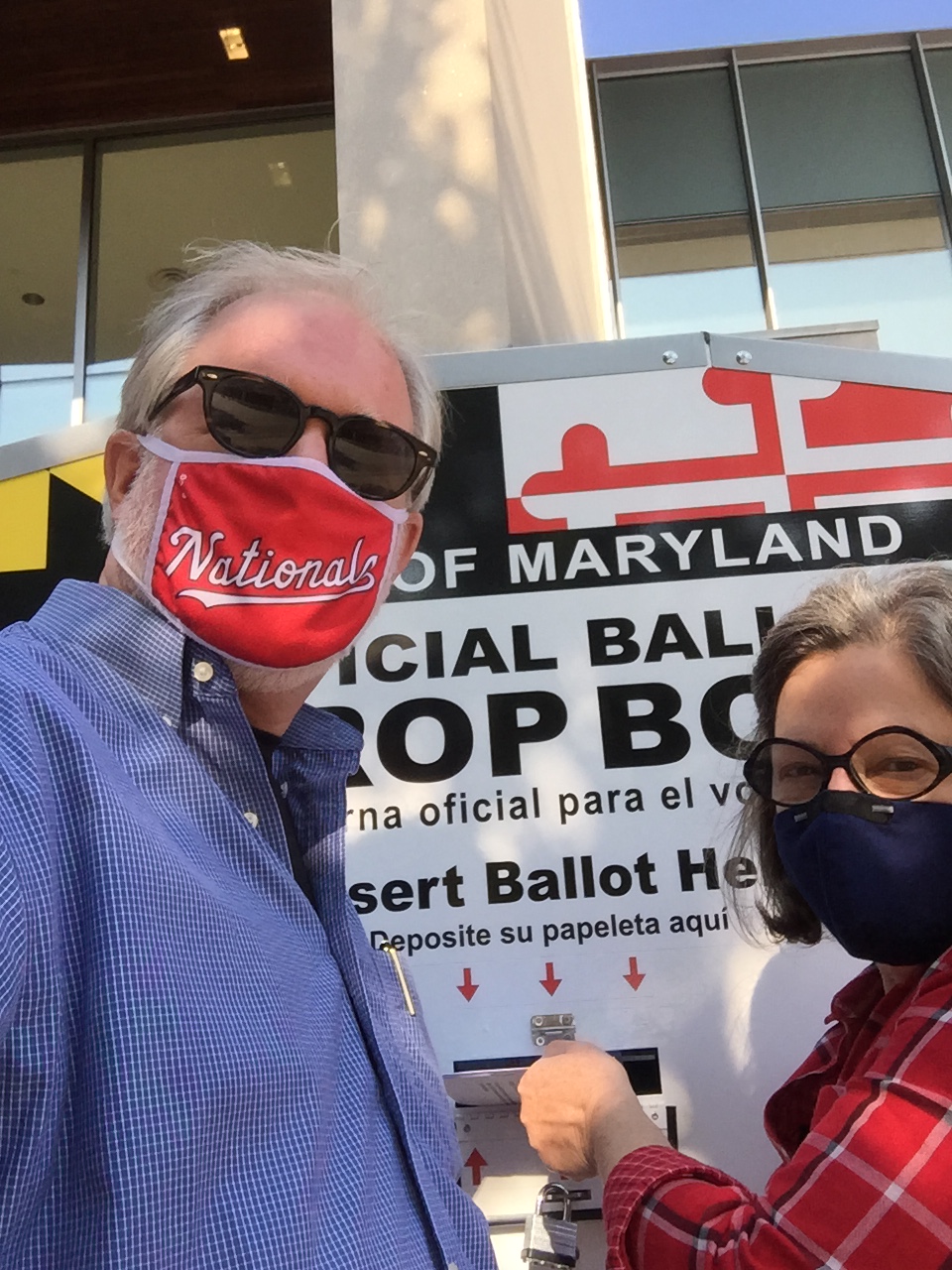
When I cast my vote last week, I placed it into the secure ballot box with hopes for a future where democracy, fairness, justice, and the right of all to be heard will flourish. I voted against a future at odds with that vision, a future captured in an idea that is currently running amuck in right wing circles:
“Democracy isn’t the objective; liberty, peace, and prosperity are. We want the human condition to flourish. Rank democracy can thwart that.”
Was I surprised by this statement? Only in the sense that Mike Lee said the quiet part out loud.
Lee, a Republican, tweeted his thoughts during the Vice Presidential debate. He was quickly supported by The National Review and others who, more often than not, pointed out that we are a republic, not a democracy. They look to 1787 and say America was never meant to be a democracy. If we only recognize those things in place in 1787 as valid, however, then Utah wouldn’t be a state, Mike Lee would not be a U.S. Senator, African Americans would be enslaved, and married women would be the property of their husbands. Progress, to most of us, has its benefits.
We could discuss in good faith the differences between a republic, a representative democracy (which is what we have), and a pure democracy like New England town meetings. We could but for the fact that the Republican party, in falling over itself to suppress voting in 2020, shows that it isn’t acting in good faith.
I am old enough to have voted for Republicans, responsible leaders such as Senator Howard Baker from my home state of Tennessee. And yes, understanding history I know that white Democrats suppressed voting for decades in the South during the Jim Crow era. Conservatives changed teams in the 1960s and 1970s, however. Different uniforms, same players.
You can play word games, but the fact of the matter is that the current leadership of the Republican party does not like it when too many people vote. Especially people in certain cities or in particular states. Why? Well, Donald Trump said the quiet part out loud, as is his habit: Republicans generally lose when voting turnout is high.
Rather than change to support more popular policies, the Republican leadership takes approaches to keep people from voting. Approaches which include:
Using social media ads to bombard voters with so-called “dark” advertising that might repulse people likely to elect Democrats, as they did four years ago. A recently uncovered database found 198 million Americans, potential Hillary Clinton voters, targeted with the single word “deterrence.” A disproportionately large number of these “deterrence” votes were African Americans.
Limiting the number of places voters can submit early ballots during a pandemic, especially in heavily Democratic areas. Until a federal court overturned his order late last week, Texas Governor Greg Abbott (R) ordered that ballot drop boxes be limited to one-per-county. Harris County, the state’s most populous county and a Democratic stronghold, would have had 12 drop-off locations reduced to one. Over 40% of Harris County residents are Latino and nearly 20% are Black.
Better yet, making ballot drop boxes unconstitutional. A federal judge in Pennsylvania denied the Trump campaign and Republican Party’s bid to make ballot drop boxes in Pennsylvania unconstitutional. The judge also refused to throw out other policies designed to suppress Democratic votes.
Claiming that mail-in balloting, which has been used safely and securely since the Civil War, is rife with fraud. And, for good measure, screw around with the U.S. Postal Service to suppress those votes and sow chaos. I don’t really think I need to go into this as everyone has been following it since the post office is one of those things that does date back to 1787 and it matters to all of us.
Gerrymandering and protecting minority rule. Kansas Senate President Susan Wagle (R) told donors that Republicans must maintain their Kansas State legislative supermajority so they can create gerrymandered state and federal districts to undermine the will of voters and ensure complete Republican control of the state.
And that’s just some of what was discovered this past week. To understand the range of ways the democratic will of the people is thwarted, read this list of 61 forms of voter suppression from the Voting Rights Alliance.
Building on work he has been studying for more than four years, New York magazine columnist Jonathan Chait recently suggested that Senator Lee isn’t playing word games but is, instead, articulating a conservative orthodoxy that does not believe in democracy; a view long in vogue on the American right, but which Republican politicians were generally hesitant to express openly.
“The premise is that liberty is a higher value than democracy, and they define liberty to mean a right to property that precludes redistribution. That is to say, the far right does not merely view progressive taxation, regulation and the welfare state as impediments to growth, but as fundamentally oppressive.
…Republicans believe that the political system must retain, and ideally expand, its counter-majoritarian features: restrictive ballot-access rules that restrict the franchise to the most “worthy” citizens, gerrymandered maps that allow the white rural minority to exercise control, a Senate that disproportionately represents white and Republican voters, and a Supreme Court that believes the Republican economic program is written into the Constitution.”
History would suggest that those who have spent the past 400 years in various forms of oppression — people of color, women, LGBTQ individuals — may not agree with the hierarchy of Senator Lee and the Republican leadership. They may have seen what happens when white men can grab whatever they want. Ziblatt and Levitsky, in How Democracies Die, say: “It is difficult to find examples of societies in which shrinking ethnic majorities gave up their dominant status without a fight.”
History shows the lengths such groups will go to maintain power, as they did in the case of Jonathan Myrick Daniels.
Hayneville is the county seat of Lowndes County, Alabama. With a population just under a thousand souls it looks like countless other small towns in the rural South. Fort Deposit, slightly larger, sits close to Interstate 65 but has the same small-town personality. I passed both communities on occasion while driving between Atlanta and Mobile in 1980 to see a friend. The relationship soon ended and I didn’t think about those communities again until I was sitting in Washington’s St. Alban’s Episcopal Church in 2015, listening to Ruby Sales tell her life story.
Ruby Sales should have died in Hayneville on August 20, 1965.
Sales was a 17-year-old African American woman, and one of 29 young people who were working to integrate stores and register black voters in the days following the passage of the Voting Rights Act. One of the other members of the group was Jonathan Daniels, a white Episcopal seminarian who had studied at the Virginia Military Institute and Harvard before heeding Dr. Martin Luther King’s call for clergy to go to Alabama in the summer of 1965.
While picketing in Fort Deposit, the group was arrested and taken in a garbage truck to the county seat of Hayneville. Most of them stayed in jail for six days until all were released, but without transportation back to Fort Deposit. Sales, Daniels, and three other young people went to Varner’s Cash Store, one of the few local establishments to serve non-whites, to buy sodas. Their way in was blocked, however, by Tom L. Coleman, an unpaid special sheriff’s deputy who was holding a shotgun. Coleman threatened the group and leveled his gun at Sales. Daniels pushed her down, caught the full blast of the shotgun, and died instantly. Instead of Sales’s life ending at 17, it was Jonathan Daniels who gave up his life in the fight for freedom, justice, and the right to vote. Coleman was acquitted by an all-white jury and lived in Hayneville until his death in 1997.
Fifty years later, Sales — then age 67 — called herself “a remnant” of the great civil rights generation. Ruby Sales may see herself as a remnant, but her call for justice that day was strong and unequivocal. “I never imagined that there would be people working overtime to dismantle those changes,” she said. “I never imagined that…once again black people would be fighting for our lives.”
Our nation is a work in progress. Works in progress take work. And works in progress must be protected against those who want to go backwards in time to a system where a few white men controlled all the levers of power. The American people rejected Mike Lee’s view that “Democracy isn’t the objective” when they ratified the 15th Amendment (giving blacks the right to vote), the 17th Amendment (ensuring that Senators are elected, not appointed), and the 19th Amendment (giving women the right to vote).
We can learn from the places where history was made. We can learn from the ordinary people in ordinary places who do extraordinary things, like Ruby Sales and Jonathan Daniels. We can respond with the tools of grace and love instead of hatred and violence, but we can also respond with a strong determination not to let those who have never wanted a democracy take ours away. We can follow the example of those who have walked this path before us and help bend the arc of history a little further toward justice.
Vote, if you need yet another reason, because so many have sacrificed to ensure that everyone has the right to vote.
UPDATE No. 1: The day after I posted this, U.S. Senator Sheldon Whitehouse gave a master class on dark money and the threats to democracy. It is a 30-minute class, but worth every second. As Whitehouse said to sum up his presentation, when you find hypocrisy in the daylight, look for the power in the shadows.
UPDATE No. 2: Yesterday I found this excellent piece on Vox that goes through an explanation of Chief Justice Roberts’ life-long crusade against voting rights. His evisceration of the Voting Rights Act in Shelby County vs. Holder (2013) — against the strong, bipartisan vote of Congress — led immediately to a new, disturbing round of voter suppression across a range of Republican-led states that many are just beginning to fully understand. It is one of several reasons that discussions of judicial reform, and changing the size of the Supreme Court, have to be on the table after this election.
After yet another major violation of the Hatch Act, where an illegal political event was held on White House grounds on Saturday and labeled — with no sense of irony — a “Law & Order” rally;
Soon after a right wing terrorist plot to kidnap the governor of Michigan was thwarted by FBI actions;
It took me less than a minute to find these four recent threats to our democracy: flagrant disregard for the law, violent threats against political opponents, attempts to lock-in minority rule, and overt racism. That was enough to lead me to highlight this sobering work yet again.
Levitsky and Ziblatt are two Harvard professors who have spent twenty years studying the decline of democracies all around the world. Their research shows that more often than not, it is the slow decline of institutions such as the judiciary and press that lead countries to move from democratic to authoritarian governments.
This accessible book is highly recommended, and perhaps should be required reading for the entire country at this point in time. If you have any doubts about the seriousness of the fight to save our democracy, this is as good a book as any to consult.
More to come…
DJB
NOTE #1: During October, I am writing articles on how history and the places where history happened can help us understand the issues we are facing as a country and a democracy. Besides this book review on how democracies die, you can find posts on racial violence, religious liberty, voter suppression and revealed history by clicking on the links.
NOTE #2: My initial review of this work was buried in the middle of a series of short reviews of books read over my summer break. I bring it out here in a short, separate review so I can highlight and reference it at this crucial time.
The 15th anniversary issue of Fretboard Journal* landed in my mailbox this week, just in time to reacquaint me with an old friend: Mark O’Connor.
It was a welcome reunion. First, because I discovered that O’Connor — one of the most inventive string musicians of this era — has returned to playing guitar, after a twenty year break that was required by the pain of bursitis and tendonitis. Then I also found his Improvising Toward Democracy solo fiddle pieces on the internet. As he tell his listeners,
“I am recording an improvisation on my violin each day, until our country is safe from the clutches of Trumpism, Cultism, Conspiratorialism, Racism and Authoritarianism. I will record a new violin improvisation each day as a form of a sincere musical prayer until Biden/Harris are voted in to the White House ensuring that Americans will retain our hard-fought democracy. I have been given a musical gift, so I will use this in service to my country and our Republic each day now. When I improvise in this manner on the violin, it is a spiritual devotion. The power of inspired music-making must be called upon now.”
We each have to do what we can to save our democracy. But I’m getting ahead of myself.
O’Connor, who will turn 60 next year, has been playing a wide array of roots, jazz, and classical music since his early teens. His first lessons came from American fiddling legend Benny Thomasson, and he quickly began studying the iconic French jazz violinist Stéphane Grappelli, with whom he toured as a teenager. At age thirteen, O’Connor became the youngest person to sign a recording contract with the roots music company Rounder Records and I first became aware of O’Connor’s music through his early Rounder offerings, such as Pickin’ In The Wind and the amazing guitar album Markology. Always a versatile virtuoso, he was winning fiddle, mandolin, and guitar competitions well before he was twenty.
As an 18-year-old, O’Connor took over the guitar chair in the seminal David Grisman Quintet from none other than Tony Rice, followed by a short stint as the violinist in another important instrumental group, The Dregs. A stint as a top-flight studio musician in Nashville was next, where in the early 1990s he headed up the house band on The Nashville Network’s American Music Shop show and signed with Warner Brothers records. The deal led to best-selling albums such as New Nashville Cats and Heroes, the latter a series of tunes cut with his fiddle heroes, ranging from Jean Luc-Ponty to Johnny Gimble, Carlie Daniels to Grappelli, Vassar Clements to Pinchas Zukerman (on a delicious twin fiddle version of Ashokan Farewell), and everybody in between. O’Connor is a composer, has been atop the classical charts with albums where he teams up with Yo-Yo Ma and Edgar Meyer, and…oh hell, he’s played everything with everybody. Go check them all out on his Wikipedia page if you’re interested. I just want to get into some music!
Much of his early fame came in the bluegrass/newgrass genre, so let’s jump right in the fire with this incendiary version of Bela Fleck’s Whitewater from a live Merlefest concert that features newgrass royalty: Fleck (banjo), Rice (guitar), Jerry Douglas (dobro), Sam Bush (mandolin), O’Connor (fiddle), and Mark Schatz (bass). O’Connor was not the fiddler on the recorded version of this song, but here he helps the band take the tune to new heights.
To give you a sense of the type of music played during the David Grisman Quintet days, I have two options for your listening pleasure. The first is from a 1980s Austin City Limits show with O’Connor on guitar, Grisman and Mike Marshall on mandolins, Darol Anger on fiddle, and the late Rob Wasserman on bass. For a period of 18 months from 1979—1980, this line up of DGQ toured the U.S. and released an album on Warner Bros. Records called Quintet 80.
O’Connor’s incredible musicianship as seen in the video may require some explanation:
Notice at 6:37, as O’Connor begins his guitar solo, his string snaps and one can hear this audibly. The high E string of the guitar came lose from the end pin and dropped all the way down to where it was flopping. You can see O’Connor attempting to figure out what to do as he continued his solo on national television. Beginning on the lower strings, he mutes some with his right hand, then gestured towards David Grisman as if he was going to give his solo back to him. Grisman does not respond and continues to play rhythm not really knowing what happened. Then O’Connor turns away from the mic and within a period of three seconds (from 7:01 to 7:04) the high E string is perfectly back in tune for the remainder of the solo. This very moment back in 1980 helped solidify O’Connor’s reputation as a young star whose ability as a great young musician was growing. These few seconds were the talk of the show to many guitar players watching at the time.“
The second video is a live version of the Dawg 90 album tune Pupville, featuring Grisman, O’Connor (on fiddle), Rice, and dobro master Jerry Douglas from the American Music Shop show. Check out Grisman’s eye rolls watching O’Connor’s solo about the 0:45 second mark.
Since we’re now into his Nashville days, let’s check out O’Connor playing Pick It Apart with the New Nashville Cats and then as one of the super pickers with Vince Gill, Ricky Skaggs and Steve Wariner on Restless.
O’Connor’s Heroes album is a treat for the ears and a place where one can find the many influences that have come together to make up his music. The first video is a compilation of some behind-the-scenes footage of the making of the album, while the second is the aforementioned Ashokan Farewell. Stay with it all the way to the end…those last notes are sublime.
Also in the 90s, O’Connor began writing and recording folk-inspired classical music. One of the best known is Appalachia Waltz, recorded with cellist Yo-Yo Ma and MacArthur genius grant recipient Edgar Meyer.
“What Bach did was, he took all these dances from all the known world around him and put them in suite form. Old dances, new dances, courtly dances, peasant dances. And what Mark did was, he took this piece that is somewhat based on the Norwegian fiddling style, with the drone and that, wrote it in Santa Fe, and called it `Appalachia Waltz.’ It’s just so moving. It’s traditional. It is new. It comes from many different places, but it’s authentic. So after a long Bach evening, rather than play more Bach, this is the perfect thing.”
Yo-Yo Ma
O’Connor’s Thirty Year Retrospective album, recorded live at Vanderbilt in 2003 with mandolinist Chris Thile (another MacArthur genius grant recipient), innovative guitar flatpicker Bryan Sutton, and bassist Byron House, was a new take on the wide ranging scope of the musician’s early work. In the liner notes, O’Connor wrote that Thile and Sutton were the two players who most captured his sound and spirit on their respective instruments, and by this time O’Connor had stopped playing both due to his wrist issues. Here’s the group’s wonderful version of Granny White Special. O’Connor, Sutton, and Thile set the woods on fire with this one.
For a five-year period beginning in 2000, O’Connor joined with jazz musicians Frank Vignola and Jon Burr for a trilogy of Hot Swing Trio albums dedicated to his mentor Stephane Grappelli. I heard this trio play a complete acoustic concert, with no microphones, in the beautiful Strathmore Music Hall just outside of D.C. and it was magical. To get a sense of how these cats swing, check out Limehouse Blues. The solos by all three are other-worldly.
The most recent project of this prolific musician may be his most personal: the Mark O’Connor Band. This is a family band with his wife Maggie O’Connor on fiddle, son Forrest O’Connor on mandolin and vocals, and daughter-in-law Kate Lee on fiddle and vocals. Rounding out the band is National Flatpick Guitar Champion Joe Smart.
The Fretboard Journal story was about Mark’s return to guitar after a 20-year hiatus, and it is so rewarding to see him playing the old six-string again in this setting. The next video is a mashup of two shows (with changes of clothes and sunlight) where the band plays his New Nashville Cats hit Restless. This one features some more of Mark’s guitar work, along with Darrell Scott playing some tasty electric guitar in the background. The final video of this set is of the Bill Monroe classic Jerusalem Ridge, which was featured on the Heroes album.
I want to end with the most recent meditation from his Improvising Toward Democracy solo violin series, this one No. 16 that was posted yesterday.
*Long-time readers will know that I have a deep love affair with Fretboard Journal, which chronicles musicians and the instruments they play in luscious detail. I generally refer to the magazine as guitar porn, but it is so much more to those of us deep into the music played on that most accessible yet difficult of instruments.
For some unknown reason (he smiles), I had the urge — following last evening’s debate of vice presidential candidates Kamala Harris and Mike Pence — to return and read two of my previous posts* on listening.
I had a special need to reconnect with my pleas for white men in power to stop talking and listen.
Of course, if you follow the news or watched any of the debate, you know why this subject needs addressing. Vice President Pence talked all over the two women on the stage: Senator Harris and the moderator Susan Page. News reports suggest that he interrupted Harris twice as much as she interrupted him, and he repeatedly went over his time limit, ignoring the pleas of the moderator. Yes, he was marginally more “polite” than President Trump was in last week’s debate. But I personally find the Vice President to be very passive aggressive — standing as both victim and condescending persecutor — and he used that persona last evening to act as if the rules didn’t apply to him. He refused to answer the moderator’s queries while he tried to get Harris to answer his own “gotcha” questions. From my perspective, it was another sad example of the lack of true, empathetic, and competent leadership in the current administration.
Mike Pence and Donald Trump come from an age where white men, through unearned privilege, had the entire stage to themselves. Both are very reluctant to give up that privilege.
I know the situation well because I have been in the same position, largely as a result of the accident of being born white and male. Yet because of the guidance provided by my parents and several female mentors in my life, I came to realize the imbalance of this power dynamic and the loss we all suffer when women are not allowed to speak.
I’ve written about this on several occasions as a reminder to be my better self. Yes, old habits can certainly be very hard to break, as seen in my difficulty in breaking out of the mold of being a stereotypical male. And I’m reminded of this far too often and in many different ways. One of the more consistent occurrences involves listening. Or, to be more accurate, not listening.
The stereotype is that men are encouraged, and even trained, to be the center of attention. It is a stereotype, in this case, because it is usually true. Studies show that boys are called on more in school, that boys grow up to become men who talk more in meetings, and that we interrupt women more than we interrupt men.
Most of the time I fall into this pattern of interruption because I’m not thinking. But a few times I do it knowingly and with the best of intentions. That was the case when I found myself last year talking over a friend to “help her” explain something that I thought might be difficult to articulate. Not because she isn’t a smart, articulate person, but because I perceived it could be an emotionally difficult subject.
Bad decision.
I interrupted her attempt to talk to me. Later, when I was home and reflecting on the conversation, I realized that I didn’t really know how she felt, because I had spoken over her and inserted my perceptions over hers. The next time we spoke I apologized. And then I asked if she would talk while I promised to be quiet and listen. But the moment had passed and she couldn’t remember, or didn’t want to return, to the topic.
So both my friend and I lost out by my decision to talk instead of listen.
Men Explain Things to Me by Rebecca Solnit
Regular readers know that I often refer back to a thoughtful collection of essays by the writer Rebecca Solnit. Titled after the first in the collection and her best-known essay — Men Explain Things to Me — these nine pieces written between 2008 and 2014 explore multiple topics including the gender wars and male privilege, the use of violence as a way of silencing speech, abuse of power, a new twist on marriage equality, and more. Through them all, Solnit pushes the reader to consider perspectives that are likely to be outside their comfort zone.
Men Explain Things to Me begins with the comic scene of a man explaining Solnit’s most recent book to her — even though he never read anything more of her work than the New York Times book review. Even after he is told that he is talking to the author, he doesn’t stop, but explains what her own book — which, again, he has never read — means.
Yes, it is a comic scene, but she ends this piece on a serious note, “because the ultimate problem is the silencing of women who have something to say, including those saying things like, ‘He’s trying to kill me!’” Each essay in this collection has something important to say and I strongly recommend them all. Solnit is a clear thinker and talented writer.
Listening is an act of love. However, as much as I try to act out of love for others, this is obviously a part of my practice in life that needs more work. Recognition is only part of the solution. Active, intentional listening requires more.
Men who are privileged (virtually all white males) and who have power often complain or push back about being made to feel uncomfortable. Solnit, in another set of essays, makes the point that,
“Comfort is often a code word for the right to be unaware, the right to have no twinges of one’s conscience, no reminders of suffering, the right to be a ‘we’ whose benefits are not limited by the needs and rights of any of ‘them.’”
Solnit suggests that, “The world is an uneven surface, with plenty to trip on and room to reinvent.” But she has this equal parts hopeful and challenging observation: “This country has room for everybody who believes that there’s room for everybody. For those who don’t — well, that’s why there’s a battle about whose story it is to tell.”
In thinking back, and then looking forward, to my conversations, I’m trying to listen with love. To push myself out of the need to feel comfortable. And, even, to reinvent my world to be a more inclusive place.
Now wouldn’t that be wonderful for everyone involved?
More to come…
DJB
*While I have sections from two different posts, you can read the one from 2016 and the second from 2019 by clicking on the links.
Fannie Lou Hamer, who was born on this date in 1917, was a voting, women’s, and civil rights advocate from Mississippi who shared more wisdom, in fewer words, than just about anyone I have ever studied. Her bio is full of leadership roles and “firsts”: co-founder and vice-chair of the Freedom Democratic Party, which she represented at the 1964 Democratic National Convention, organizer of the Mississippi Freedom Summer along with the Student Nonviolent Coordinating Committee (SNCC), and a co-founder of the National Women’s Political Caucus, an organization created to recruit, train, and support women of all races who wish to seek election to government office.
These are exceptional achievements for anyone, but Hamer had to overcome steep odds all her life. She was the 20th and last child of sharecroppers Lou Ella and James Townsend, growing up in poverty. At age six Hamer joined her family picking cotton; by age 12, she left school to work. She married Perry Hamer in 1944 and the couple worked on the Mississippi plantation owned by B.D. Marlowe until 1962. Because Hamer was the only worker who could read and write, she also served as plantation timekeeper.
“In 1961, Hamer received a hysterectomy by a white doctor without her consent while undergoing surgery to remove a uterine tumor. Such forced sterilization of Black women, as a way to reduce the Black population, was so widespread it was dubbed a ‘Mississippi appendectomy.’ Unable to have children of their own, the Hamers adopted two daughters.”
She began organizing voters after attending a SNCC workshop in the summer of 1961. The next year, after unsuccessfully attempting to register 17 volunteers to vote at the Indianola, Mississippi Courthouse due to an unfair literacy test, the group was “harassed on their way home, when police stopped their bus and fined them $100 for the trumped-up charge that the bus was too yellow.”
Hamer was someone who never gave up. As a result, the impact of her work is far-reaching. In perhaps the best known event from her life, she went to the Democratic National Convention in 1964 in an attempt to have the racially mixed Mississippi Freedom Democratic Party (MFDP) recognized as the official party for the state. She failed, but her work that year and beyond was so effective that by 1968 Hamer’s vision for racial parity in delegations had become a reality and she was a member of Mississippi’s first integrated delegation.
When I visited her grave site several years ago on a trip to the Mississippi Delta, I was reminded once again of the wisdom that came from her heart and soul. Hamer’s tombstone epitaph reads simply,
“I am sick and tired of being sick and tired.”
Throughout her life she had so many important and memorable things to say. Such as:
“Righteousness exalts a nation. Hate just makes people miserable.”
“Never to forget where we came from and always praise the bridges that carried us over.”
“That’s why I want to change Mississippi. You don’t run away from problems — you just face them.”
“With the people, for the people, by the people. I crack up when I hear it; I say, with the handful, for the handful, by the handful, cause that’s what really happens.”
And probably her best known quote, which rings as true in 2020 as it did the day she first uttered it:
“Nobody’s free until everybody’s free.”
With thanksgiving, on the anniversary of her birth, for the life and work of Fannie Lou Hamer.
I first stood at Jamestown as a history-enthralled 11-year-old. The picture of the 17th century ruin of the church tower, abutted to the 1907 Memorial Church, is seared in my mind. I also remember the water lapping at the nearby shore, serving as a reminder that the people at Jamestown had the most tenuous of toeholds on this continent in those early years.
While I didn’t know it at the time, the narratives of life in early 17th century Virginia — told by the guides, the plaques that lined the walls of the 1907 church, and the books I devoured — were incomplete and sometimes egregiously false. White Christian Europeans were the focus. If they were mentioned at all, Native Americans, along with the enslaved African Americans who began arriving against their will at Jamestown in 1619, were small, dependent actors; impediments, if you will, to the greater story of the colonists and settlers and the shaping of what it meant to be an “American.”
Those Europeans were not home. They were the outsiders. Yet we are still fighting over how to interpret their presence in what would become Virginia.
Fifty-four years after I visited Jamestown, the President of the United States stood in the National Archives Museum and called for a “restoration” of “patriotic education” in our schools. A project designed to reverse what some conservatives have seen as a growing emphasis in American public schools on themes of civil rights at the expense of more traditional historical narratives, mainly those revolving around white men. Patriotic education would fit right in with those 1966 interpretations.
Today, thanks to the scholarship of historians, works like the 1619 Project, the explorations of archaeologists, and the education efforts of groups like Preservation Virginia, the interpretations at Jamestown are more richly textured, recognizing the various layers that make up this iconic place in American history. Something worth understanding happened there in the early 17th century. There are stories worth telling and people worth remembering in part for the significance they bring to our lives today. But because history is not what happened, it is a story about what happened, we need to be thoughtful and as truthful as possible in how we craft our narratives of remembrance.
Our recollections need a reckoning and a reimagining. A reckoning with the history that did happen and a reimagining through recovered stories with hope for our collective future.
It may seem strange that someone who has spent more than four decades working to preserve the places and stories from our past finds strength in the belief that America is focused on the work of the imagination, a word that speaks not of past facts but to hope for the future. The writer and social critic Lewis Lapham captures my beliefs about the country’s soul when he writes,
“What joins the Americans one to another is not a common nationality, language, race, or ancestry (all of which testify to the burdens of the past) but rather their complicity in a shared work of the imagination.”
Stories about the past and the places of our lives always seem to be much more on our mind in my native South. Our celebrations and troubles often appear in starker relief. They are imbued in our writing and infused throughout our music. Some are even true. Yet Southerners are not alone in commemorating a past that never existed, while ignoring the one that did.
Marie Howe has said, “Memory is a poet, not a historian.” Neurologists have been saying the same thing now for decades, just not as eloquently. Psychologist and professor Michael C. Corballis notes that our memory…
“was clearly not designed by nature to be a faithful record of the past. Rather, it supplies us with information — some true, some false, and always incomplete — that we use to construct stories. We may well be what we remember, at least in part, but our memories, like clothes, can be selected and modified to create what we want to be, rather than what we actually are.”
In a recent conversation with distinguished Southern historian Edward Ayers, director of the New American History project, he suggested to me that history is not always what it looks like because part of what you are preserving is the memory of what has happened. Stories built on memory can be good, bad, accurate, or wildly false, as Corballis notes. I agree with Ed’s thesis, and with his suggestion that we need to learn how to preserve the “change” that is so much a part of our lives. Preservation at its best should not wallow in nostalgia. Instead, we should work to preserve and honor the stories from our individual and collective memories, seeking the truth through an understanding of how they connect over a continuum of time to help build our personal and national identities.
Many scholars, preservationists, and history lovers — individuals who also love America and its ideals — are working to better understand those stories and memories and tell the truth about our nation’s past. As Ayers considers the half-century of sustained right-wing assaults on historical scholarship, he writes that the charges concern and puzzle him.
“…because they suggest I have been obtuse and perhaps even deluded. As it turns out, I have practiced history for most of the half-century in which these wars over history have been waged — and I have yet to meet anyone who works to destroy the United States. It makes me wonder whether I have been going to the wrong conferences and reading the wrong books…
If this critique had merit, I should have been in the room when the plans were hatched. After all, I sought out the subjects often attacked as the nest of dangerous ideas. I have written books about crime and punishment in the South, about the rise of segregation and disfranchisement, about the Civil War and Reconstruction. Those topics deal with Black people, enslaved and free. They wrestle with lynching and chain gangs. They confront secession and the waging of war against the United States.”
Over a four-decade career in preservation, often facing difficult histories at places ranging from lovingly preserved plantations to the battlefields of great conflicts to formerly unrecognized slave markets, I have yet to find among those pushing for a fuller, deeper understanding of history someone who “hates America.”
We all face choices as to how we express love for one another and for our country. Some come to a point of view and steadfastly defend it, seeking support in those who share that worldview while condemning individuals on a different path.
Others choose to believe that seeking the truth and finding clarity about the events in our past takes work and requires deep listening to those who do not look like us, read the same books, attend the same schools, or share our life experiences.
Patriotism as I envision it involves a willingness to examine, rather than paper over, the troubles in our past. My stories of the places from my history — coming from my very privileged status in the South as a straight, white, Christian, male — celebrate both triumphs and difficulties. But I write them out of a spirit of hope. Hope that is grounded in memory. Hope that is a part of — when I am at my best — a never-ending education and ongoing effort to seek the truth.
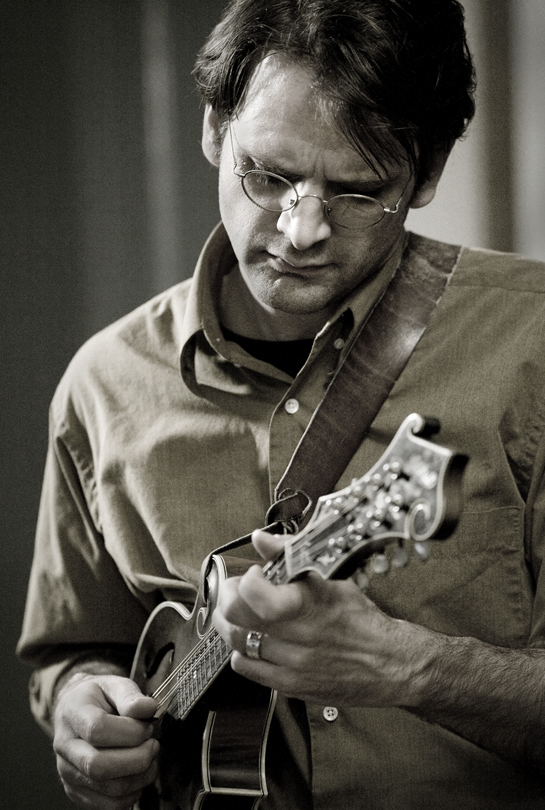
Matt Flinner is the top-shelf mandolinist and composer not enough people know. At least not in the way that music fans know that force of nature Chris Thile, or the Energizer Bunny clone Sam Bush, or the genre-bending trail-blazer David Grisman. But musicians have long been aware of this quiet master, who, in the words of the Associated Press, “blurs the lines between jazz and bluegrass, traditional and avant-garde” with the best of them.
Flinner’s website bio showcases just how in-demand he is as a musician.
“Multi-instrumentalist Matt Flinner has made a career out of playing acoustic music in new ways. Starting out as a banjo prodigy who was playing bluegrass festivals before he entered his teens, Flinner later took up the mandolin, won the National Banjo Contest at Winfield Kansas in 1990, and took the mandolin award there the following year. Since then, he has become recognized as one of the premiere mandolinists as well as one of the finest new acoustic/roots music composers today. He has toured and recorded with a wide variety of bluegrass, new acoustic, classical and jazz artists, including Tim O’Brien, Frank Vignola, Steve Martin, Darrell Scott, the Modern Mandolin Quartet, Dave Douglas, Leftover Salmon, Alison Brown, The Ying Quartet, Tony Trischka, Darol Anger, and the Nashville Chamber Orchestra. He has also recorded two Compass Records CDs and toured as part of Phillips, Grier and Flinner with bassist Todd Phillips and guitarist David Grier. His two solo CDs (also on Compass), “The View from Here” and “Latitude,” are now widely considered classics in the new acoustic/modern bluegrass style. His current group, the Matt Flinner Trio (with guitarist Ross Martin and bassist Eric Thorin), has forged new pathways in acoustic string band music with their two ground-breaking CDs, “Music du Jour” and “Winter Harvest”
Since he began in bluegrass, we’ll start our exploration there as well, with this tasteful version of Bill Monroe’s Tennessee Blues by Phillips, Grier and Flinner. Stick around for the second mandolin and guitar breaks because both are worth it. David Grier and Todd Phillips — long-recognized masters in the acoustic music world — are no slouches on the guitar and bass, respectively. And the entire band has beards which would make any Stanley Cup-chasing hockey team proud.
I first focused on Flinner’s music because of his Music du Jourproject and album. As the mandolinist explains in this short video, each member of the trio writes a song each day while the band is on tour. They then perform those tunes that evening. It made for quite the creative challenge, and some wonderful music.
Inferno Reel, which kicks off the Music du Jour album, is a pretty standard bluegrass romp (if you are a top-notch player). It is also great fun.
Stomp Hat, from the same session, heads off into more jazzy territory.
The tunes can come from anywhere and often reflect the mood of the composer on that particular day. In a blog post, Flinner noted that the inspiration for Raji’s Romp came from…
“an interception and touchdown run by B.J. Raji of the Green Bay Packers a couple of years ago, which helped the Packers go on to the Superbowl by defeating the Chicago Bears. I finally got around to writing my tune of the day after the game was over, and being a Packers fan, I was in a good mood.”
The tune was written on Jan 23, 2011, for a show at Avogadro’s Number in Ft. Collins, Colorado, and is featured on the Winter Harvest album.
Here’s a beautiful two-mandolin arrangement of Flinner’s tune A View From Here, with an extra dollop of St. Anne’s Reel thrown in for good measure. Performed by Matt and Flynn Cohen (of Low Lily) on December 18, 2019, this concert took place at The Parlour Room in Northampton, Massachusetts.
I have heard Flinner live at both Merlefest and Red Wing Roots Music Festival, often playing as a sideman. He’s quiet, so you might miss him unless you pay attention. Flinner is one of the innovative artists found on Compass Records. When live music returns, I recommend you take in a show if he’s in your area. Until then, take the time to get to know him and his adventuresome music.