Congressman John Lewis is a hero to many. A hero whose skull was cracked more than fifty years ago while working for justice. So in June when he sent out the following on his twitter account, it was a message worth hearing that day and every day:
“Do not get lost in a sea of despair. Be hopeful, be optimistic. Our struggle is not the struggle of a day, a week, a month, or a year, it is the struggle of a lifetime. Never, ever be afraid to make some noise and get in good trouble, necessary trouble.”
Lewis wasn’t calling for a “don’t worry, be happy” type of response to the issues of our times. Instead he knows—from more than five decades in the trenches—that despair creates apathy, and apathy destroys activism. One activist who was in Lewis’ training camps in Mississippi in 1964 notes that “Giving in to despair is lazy surrender.”
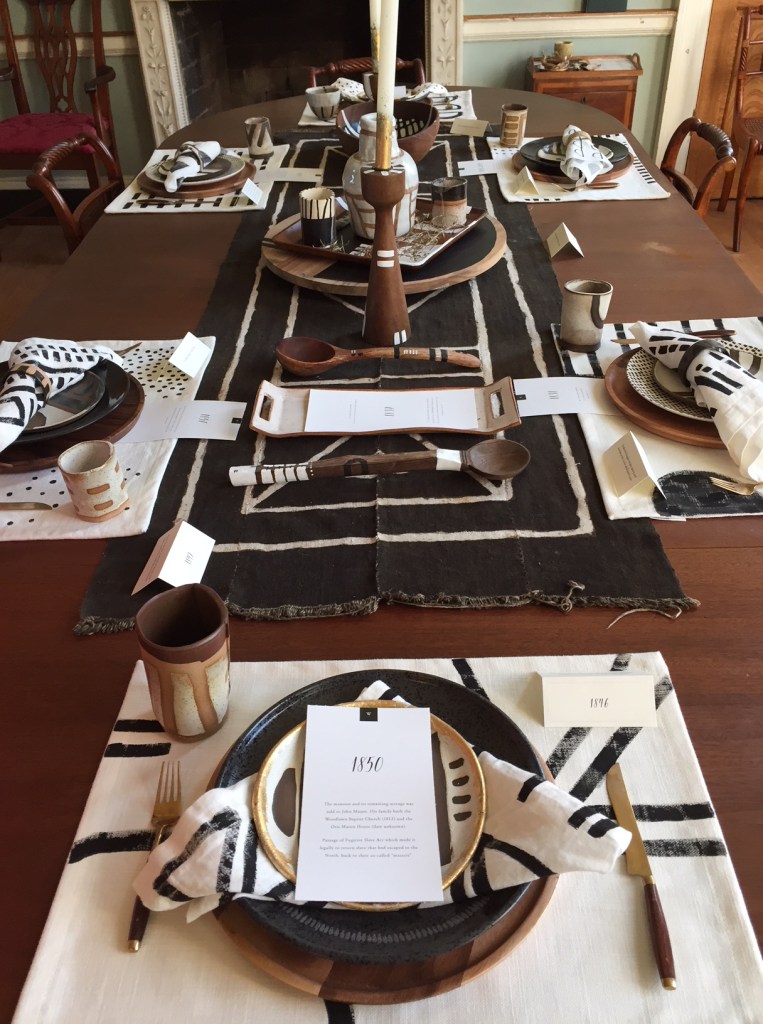
The dining room table at Woodlawn as envisioned by Hadiya Williams as part of the “Makers in the Mansion” exhibit
A few years ago, when the National Trust conference was held in Nashville, John Lewis challenged us to believe in the idea that “my house is your house. My story is your story. The history of my people is the history of all Americans not just African Americans.” Hearing, understanding, and honoring the full diversity of America’s story is a lifetime of work that helps provide the connective tissue between the me and the we, and leads us to care for something larger than ourselves. As American Express Foundation President Tim McClimon recently wrote in Forbes, “Historic preservation may not be the first thing that comes to mind when you think of activism, but it actually is one of the longest-running and most successful activist movements in the United States.”
Whatever your life’s work, whatever activism is triggered by your passion, it is likely that Lewis’ admonition fits. Few things worth doing take less than a lifetime, and it is easy at times to get lost in a sea of despair. But think about what “good trouble” would look like for you…and then don’t be afraid to go make some noise.
Tommy Emmanuel is one of the world’s best guitarists, yet he’s not widely known in a field that often places glitz above skill. As Emmanuel explains in the opening to a very entertaining TEDx talk, when he told a fellow traveler in business class that he made a living playing the guitar, he had to respond to the question “What band are you in?” with the fact that he played solo guitar. His seatmate looked at him as if Emmanuel had stumbled into the wrong section of the aircraft.
But as he thought about it, Emmanuel explained that he does, in fact, play in a band. A one man band. In his TEDx talk he showcases the amazing skills that have made him so in demand by demonstrating how he plays the bass line, the drummer’s riff, the fills from a rhythm section, and the melody line all at once. If you’re like me, your jaw will drop with the complexity of the music and you’ll laugh at the line “look at how much money I’m saving up here!”
This is clearly someone who has found how to blend his passion with his job. As Emmanuel describes it, he has a calling.
Angela Duckworth, the MacArthur Fellow recipient and author of Grit notes that,
“Fortunate indeed are those who have a top-level goal so consequential to the world that it imbues everything they do, no matter how small or tedious, with significance. Consider the parable of the bricklayers:
Three bricklayers are asked: ‘What are you doing?’
The first says, ‘I am laying bricks.’
The second says, ‘I am building a church.’
And the third says, ‘I am building the house of God.’
The first bricklayer has a job. The second has a career. The third has a calling.”
Emmanuel is fortunate in that he recognizes that his work impacts people in special ways. He knows that what’s important is not the critics’ take on his work, but the connections he makes with those who come to hear him play. Connection with others is not just a musician’s stock-in-trade but is a skill many of us—not fortunate enough to have killer guitar chops—find important in taking a job to a calling. To do work we are passionate about. Emmanuel also notes that none other than the great Chet Atkins called him “the most fearless guitar player he’d ever heard.” Emmanuel continues, “I think that being fearless is a huge part in breaking molds and in raising self-belief.”
Connecting with others. Fearlessness in what we do. Building self-belief. Remembering that you are the master of your own obituary. Or, as Tommy Emmanuel says it at the end of his talk: “Life is not a rehearsal, so you’d better get on with it.”
Have a good week.
More to come…
DJB
P.S. – For you Jason Isbell fans, in the video above you can hear Tommy play and Jason sing on a signature song by my first guitar hero, Doc Watson, from Tommy’s most recent album Accomplice One. Enjoy.
Virtually everyone I know in the working world believes there are too many emails and too many meetings. Yes, I know, this isn’t exactly breaking news.
I’m fascinated by our love/hate relationship with emails. We all get too many emails, and yet we inevitably send them out and contribute to the clogged up boxes of our colleagues. I’m exhibit A in that regard. While I fume at times about the quality (or lack of quality) and the volume of emails, I send out an email to my colleagues like clockwork on Monday morning.*
How can we use email more effectively to make our lives easier?
First, to state the obvious the only effective email is one that is read. Thankfully, the internet is full of great suggestions as to how to tailor your email messages to be effective. When I’m writing I try—but don’t always succeed—in getting to the point, in making good use of the subject line, and in trying not to overcommunicate. I think how we write is important.
But how we manage our email is just as important to keeping this communication tool in perspective. Here are a few thoughts on how I tackle email management that may be helpful to you:
If you are looking at your emails in the morning before you have your calendar and work prioritized, stop. Don’t waste your most valuable time looking at what others have thrown in your in-box. Be proactive. Be in charge of your life.
You may find that you work best on the weekend, or need that time to catch up. Fine. But don’t assume that your colleagues want to hear from you outside of the business week. Unless your job requires that you be accessible, work hard to honor your colleagues’ personal time. Learn how to delay delivery (under “Options” in Microsoft Outlook) so all those wonderful messages you’ve written over the weekend start showing up only after the start of the business week. Especially if you are in management, try and model good email behavior and etiquette. If you are sending the signal that personal time is not as valuable as work time, then those who work with and for you will follow your cues.
Understand the basic rules of email: 1) 99% of the time when you are listed in the copy (cc) line of an email, you don’t need to respond. You are not the recipient. This is just for your information. Resist the urge to jump into someone else’s conversation. 2) Learn the appropriate way to respond to emails. HINT: “Reply all” is often not the appropriate response. 3) Stay away from blind carbon copies (bcc’s) unless you will never be embarrassed when someone you blind copied responds to all the recipients. 4) There is an appropriate time to use bcc’s however. When you have a number of recipients (like the board or everyone in the division), consider putting them into the bcc line and just put your own name in the TO line. That way, if someone uses “reply all” they will only be responding to you.
Finally, I feel the need to say in this day and age of rude language and poor manners at the highest levels of our civic life, being polite goes a long way. I like receiving an email that begins with my name, or even “Dear David.” Closing out an email with “Regards” or “All the best” also shows that you are still thinking of your manners after writing your message. When I begin each email with a nice greeting, I find myself calming down even as I was preparing to fire off a hot salvo about some perceived slight or bad screw-up. This fits with direction I received from my grandmother, who told us to “always say please and thank you.”
As in many things in life, look around at the people you admire. Who is using email effectively? How can you emulate them? Digital communication is here to stay, but it will continue to evolve. Think of how you can evolve along with it.
Typewriter exhibition from the Exploratorium in San Francisco…as a reminder that communications evolve.
Have a good week.
More to come…
DJB
*I do, however, give staff permission to delete them without opening and without hurting my feelings.
For many years I’ve been fascinated by the prospect of fly fishing. Watching a perfect cast — with rod and line all moving in synchronized motion set in the midst of a swiftly moving river nestled among rugged mountains — encapsulates for me beauty, artfulness, peacefulness, and all that’s right with the world.
Trying my hand at fly fishing has long been on my bucket list and last month I finally had the opportunity. Were my casts perfect? Far from it. Did I catch any fish? Nope, even though I had a bite or two. Did I get to spend about 3 hours in one of the most beautiful settings I’ve ever seen, experiencing moments of utter wonder and peacefulness? Absolutely.
Given the importance I place on our work to save Nashville’s Music Row, you won’t be surprised that I know of a country song that has a take on what’s important about fishing. The first verse goes like this:
“The important part of fishin’ ain’t the fish, but the fishing.
The important part of lovin’ is the love.
The important part of doin’ most anything you’re doin’
Is doin’ it with all of your heart”
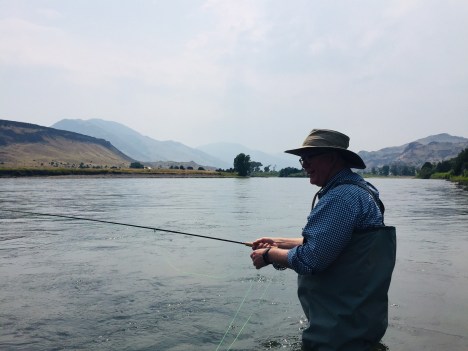
A fly fishing beginner learns to cast in the Yellowstone River
For some strange reason that song came into my mind when a colleague recently shared a Simon Sinek YouTube video about how great leaders inspire action. Sinek speaks of how most people and organizations sell “what” they do, but those who truly inspire begin with the “why” that drives their work and passion. As Sinek notes, Martin Luther King, Jr. gave an “I Have a Dream” — not an “I Have a Plan” — speech. The video has sparked several terrific discussions among colleagues from around the country, shifting our thinking from the what we were building to why anyone should care. My colleague Tom Mayes’ new book — Why Old Places Matter — is right in tune with Sinek’s call.
“Doin’ it with all your heart” is just a country songwriter’s way of saying that we need to begin our work with the passion. The why. The reason that gets us out of bed in the morning. When we tie that passion with perseverance, we can be a true force of nature.
I hope you can come to your work, your play, your life with the why you do what you do at the top of your mind. It makes the how and the what so much more meaningful.
NOTE: My op-ed for the National Trust for Historic Preservation on the future of Music Row ran in today’s Nashville Tennessean. You can see the original here.
Balance.
Harmony.
Character.
These are essential elements of any great song or musical composition. They are also essential to any great neighborhood. Unfortunately for Nashville, the Music Row neighborhood is out of balance right now. In the last five years alone, 43 historic buildings that housed music related businesses – the lifeblood of Music Row – have been demolished. Only one single threatened building – the venerable RCA Studio A – has been saved from demolition. And that “save” was achieved not by public policy or by city initiative, but solely through the efforts of private citizens intent on preserving irreplaceable heritage.
Forty-three to one is not balance. High-rise residential condominiums in a neighborhood of small-scale business is not harmony. Demolishing five more historic buildings in the heart of Music Row is not the way to protect neighborhood character. It is definitely not the way to celebrate the unique and extraordinary cultural heritage that still exists on Music Row, nor how to ensure that the neighborhood remains a thriving cultural campus filled with creative people, talented artists, striving songwriters, and myriad businesses that support, promote, and share their work with the world.
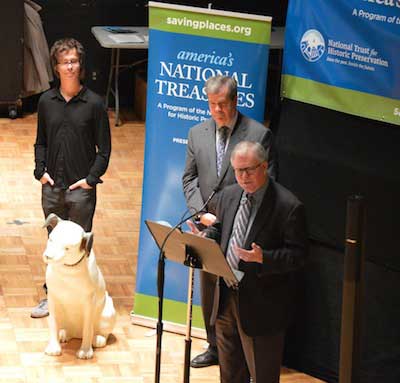
Music Row announcement as a National Treasure, with musician Ben Folds
Music Row’s past is deep, rich, and complex. It evolved into a singular ecosystem of musical production – a one-of-a-kind neighborhood that became the physical manifestation of the “business of making music.” It is the place where music emerges from the thoughts, dreams and experiences of songwriters, musicians and singers. It is the place of more than 200 recording studios, record labels, promoters, licensing agents, and a host of other small (and not so small) businesses dedicated to the singular and profound purpose of making our world a brighter, livelier, and more engaging place through music.
There is nowhere else like Music Row, period. The good news is there are solid strategies that Nashville can use to stem this current tide of demolition and keep the music on Music Row. We stand with Historic Nashville Inc., the hundreds of fans of Music Row who gathered at Bobby’s Idle Hour on July 24, and the many more who signed our petition in urging Mayor David Briley, the Metro Council and Metro Planning Commission to take immediate, specific steps to support and save Music Row:
Create a Music Row Cultural Industry District. This designation—the state’s first–would serve to strengthen, develop, and promote music related businesses in Music Row through the use of incentives, branding, promotion, historic preservation, infrastructure investment, and other tools.
End Specific Plan Exemptions. Currently Metro Planning Commission is approving Specific Plan exemptions for the Music Row geographic area. By consistently approving larger and taller buildings than allowed by current zoning, Metro is encouraging demolitions that destroy music-related buildings to make way for generic apartment buildings.
Develop Incentives to Support Music Row’s Music Industry. Although large companies are routinely awarded incentives to locate or operate in Nashville, no such benefits exist for the small music businesses. New incentives, including much-needed preservation tools, can help keep music businesses on Music Row and preserve the area’s historic buildings.
It is not too late. But the clock is ticking, and the song is growing ever more discordant. We call on city leaders to take immediate action before this unique cultural industry district is lost forever.
Labor Day is seen by many as the start of a new year. School begins for teachers and children. The summer break is over and schedules ramp up. Everywhere we look we’re called upon to pick up the pace.
In this day and age, work/life balance is a major theme of Harvard Business Review articles, TED Talks, HR seminars, and more. We may think this is a new phenomenon, arising from the astonishing leaps in technology which work 24/7 even if we aren’t capable—as humans—of keeping up. But the question has been around for a much longer period of time than just the 21st century. A colleague and I were discussing the need for her direct reports—who have major responsibilities and work very hard at their jobs—to take time off. She mentioned that one individual told her that he had not taken a vacation because “the place couldn’t run without me.” I smiled and suggested that she pass along the advice I heard from my grandmother, who liked to say, “The graveyard is full of people who thought the world couldn’t get along without them.” My grandmother, whose life spanned much of the 20th century, was speaking about unnecessary busyness and self-importance. Even earlier, in 1877, Robert Louis Stevenson wrote An Apology for Idlersin which he makes the following statement:
“Look at one of your industrious fellows for a moment, I beseech you. He sows hurry and reaps indigestion; he puts a vast deal of activity out to interest and receives a large measure of nervous derangement in return.”
I’ve made the case for finding the time to let your mind wander. To take time off to walk. Perhaps, even, to dawdle. When thinking of how to achieve a proper balance in life during this time of year, consider how you approach work as much as how to separate work and family life. If you find yourself always in a hurry to complete a task to move forward to the next one, consider Sara Cameron’s question in her TEDx Talk: “When are you going to stop being so busy?” Cameron—an Integrative Psychology and Relationship Coach—suggests we are engineering our busy schedules to avoid connecting with others. “It is easy being busy” but balance takes work. We have to stop multitasking in order to keep up with our busy schedules. (HINT: It doesn’t work anyway.) By taking time to be idle, walk, dawdle, be open to the serendipitous, we can be more productive and build more balance into our lives.
Cameron wraps up her talk by noting that balance isn’t an object, but a practice. We can’t pick it up at the store on the way home. We have to build a practice of balance into every day. Building white space into our lives—idling, if you will—gives us time to understand and integrate the experiences we have that all go together to make us the people we are. That white space can take the form of 15 minutes of blank space on your calendar, or a week or two away from the office.
Idling, dawdling, building in white space—whatever you want to call it—doesn’t mean you neglect your work. Stevenson had been at work on his article a year before its appearance, “which shows that his Apology for Idlers demanded from him anything but idling.” As one of his biographers put it, “there was hardly any time when the author of the Apology for Idlers ever really neglected the tasks of his true vocation.” We can do the same, focusing on what’s important and understanding that to connect, be balanced, and be productive, we have to give ourselves some time to idle.
Today is bittersweet, as our Andrew prepares to leave tonight for London and his graduate studies at conservatory. Over the past month, we’ve been savoring both his presence and his music.
When we were in California in August, we had the chance to attend the final concert in San Francisco’s 2018 American Bach Soloists’ Summer Bach Festival, the stirring Mass in B Minor. Andrew joined three other musicians for the Benedictus. This tenor aria comes near the end of the mass, and Andrew’s beautiful singing was supported by just a flute, cello, and double bass.
Andrew and flutist Dov Houle following the B Minor Mass
Then just this past weekend, Andrew had a call to sing the state funeral for U.S. Senator John McCain at the Washington National Cathedral. He had turned in his badge and music at the cathedral, where he most recently was one of the tenors in the men’s choir. But his replacement had not arrived from out-of-town so Andrew had the chance to sing his third state funeral (Reagan and Ford, while a boy chorister, were the others) to go along with a variety of Inauguration and memorial services through the years.
The cathedral has been such a part of all our lives since Andrew began there as a novice chorister in the 3rd grade. Andrew has sung solos there as a treble (Chichester Psalms and national Christmas Eve broadcast, to name a couple) and as an adult tenor. He’s heard—and been moved by—the words of everyone from the Dalai Lama to the Rev. William Barber over the years. We’ve all been touched by the musicianship that Canon Michael McCarthy has brought to the cathedral during Andrew’s time on the close.
For the past year, Andrew has been thinking about how to take that formative experience with him…and he chose a tattoo. Now, I’m not a tattoo type of person, but the elegance of the stone tracery of the rose window which is now a permanent part of his left arm, along with the very moving rationale he posted on Facebook for his decision, made it all seem right.
Andrew with his tattoo, along with the inspiration
Of course, Andrew is not only immersed in classical and sacred classical music. He listens to just about anything and shares some of his favorites with me. We both subscribe to the Duke Ellington theory of the types of music: good and bad.
We’ll miss having Andrew at home. He’s been such a joy to have here as he has worked through the decision to go to conservatory for a masters of vocal performance and built up the experience and contacts to make that possible. We’re fond of saying that Andrew is “good company.” We know we’ll see him soon (home for the holidays in December, and then perhaps with a late winter/early spring trip to the U.K. for us). However, the house will be a little quieter (if neater) and the dinner conversations will be a tad less lively without him around. And yes, we’ll have to finally break down and buy that step stool to reach the upper shelves in the kitchen, as we’ll miss that 6’2″ height!
Former President Obama’s recent summer reading list reminded me of how much I pick up fresh insights from seeing what books others recommend. When I finish several months’ worth of reading, I’ll pass along my takes on those works to anyone who cares to listen, simply because I believe in the power of the written word. Writer Cheryl Strayed said she was seven years old when she understood that, as Margaret Atwood wrote in her poem Spelling,
“a word after a word after a word is power.”
According to Strayed, the power of those words she read at age seven, “wasn’t the sort of power we associate with politics or world affairs . . . It wasn’t the kind of power we talk about when we talk about destruction or physical force. It wasn’t about defeat or domination or control. It was about a deeper, older, truer sort of power, one that calls upon the original meaning of the word, which is derived from the Latin posse. It means, quite simply, to be able. It’s a definition of power that’s about doing and creating, about writing word after word after word on the page.”
Earlier this year, the National Trust Council visited Oxford, Mississippi, where many of our members demonstrated the power of words by making a pilgrimage to Square Books — one of the country’s best-known independent bookstores. I love the quote from Rebecca Solnit’s The Faraway Nearby included on the store’s bookmarks, because it speaks to the special power of the written word:
“The object we call a book is not the real book, but its seed or potential, like a music score. It exists fully only in the act of being read; and its real home is inside the head of the reader, where the seed germinates, the symphony resounds. A book is a heart that only beats in the chest of another.”
We learn a great deal by what others tell us about a book, but you have to read it to understand the power, get it in your head, and have it beat in your chest. With our children on the west coast in August, we recently gathered on California’s Monterey Peninsula for a week’s vacation. Given that we were less than a mile from historic Cannery Row—and having heard good things about this book from others—I dove into John Steinbeck’s 1945 novel that helped make this street of old sardine factories and marine laboratories famous.
Cannery Row was a delightful read, especially since I walked daily among the buildings and places that inspired the characters of Doc, Mack and the boys, Dora Flood, and Lee Chong. The connection between story and place took that book into my head and helped it beat in my chest. The book focuses on life as it is and celebrates community, while also acknowledging the loneliness of the individual. Steinbeck’s descriptive language and imagery — “What can it profit a man to gain the whole world and to come to his property with a gastric ulcer, a blown prostate, and bifocals?” — are as sharp and inspired as one would expect from a winner of both the Nobel and Pulitzer prizes. Key to much of this book, as well as his classic The Grapes of Wrath, is this strong sense of place.
Steinbeck Monument on Cannery Row
Places that we save and celebrate are full of stories, both real and inspired, that tell much about us as a country and as individuals.
If you’re reading anything that has gotten into your head, is beating in your chest, or is powerful to you, please share it with someone. James Baldwin said in a 1963 interview with Life magazine, “You think your pain and your heartbreak are unprecedented in the history of the world, but then you read. It was books that taught me that the things that tormented me most were the very things that connected me with all the people who were alive, or who had ever been alive.”
Sharing is fundamental to connecting with others. Connecting with others is fundamental to a balanced and productive life. Share the power of words.
Summer reading lists can be fun. I’ve enjoyed compiling my annual list since I started this blog ten years ago. I also enjoy reading lists developed by others, as you often get insights into both great new books and the thoughts of the individual who passes along recommendations. My criteria for good summer reading lists include: they must be focused on a short period of time when the compiler is away (e.g., for an August vacation), and the reading can’t be too heavy, as there are 10 other months to read tomes about how the world is going to hell in a handbasket.
What follows is not a summer reading list.
I’ve fallen so far behind in updating readers about the books I’ve found interesting, challenging, refreshing, and—yes—troublesome that I’ve decided to take a Twitter-like approach and provide two-four sentence summaries of everything I’ve read between Memorial Day and Labor Day this year. Since I can’t remember the order in which I read them, I’m listing them in alphabetical order (by author). Let me know if you find one or more books that pique your interest this fall.
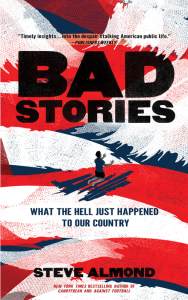
Bad Stories: What the Hell Just Happened to Our Country by Steve Almond
Bad Stories: What the Hell Just Happened to Our Country by Steve Almond. I began the summer with this work by the co-host of the Dear Sugars podcast and found it a coherent look at our current moment in history in America. It was recommended by our former rector and Andrew’s godfather. Almond makes the strong case—using examples from Moby Dick and other classics of literature—that we’ve made bad decisions as a country because we’ve told ourselves bad stories for a long time…and “bad stories arise from an unwillingness to take reality seriously.” Highly recommended.
Evicted: Poverty and Profit in the American City by Matthew Desmond. This very impressive study by MacArthur Fellow Matthew Desmond is an important new work about poverty in 21st century America and the role of corporate America (both major financial institutions and small mom-and-pop rental firms) in driving housing policies that put profit first and people last. Desmond’s research—coupled with real-life stories based on his years of living among the individuals he profiles—demonstrates vividly that evictions from homes often lead to a cascading of events that can trap people for years. The National Building Museum in Washington has a companion exhibit that runs through May 2019. Highly recommended, especially for those interested in social justice issues in America.
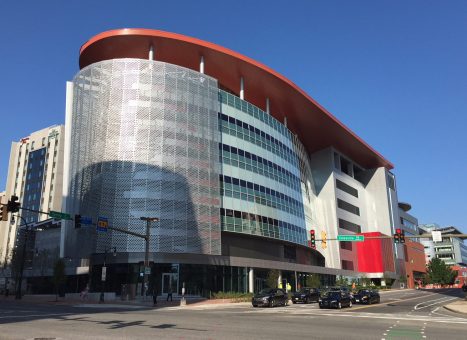
United Therapeutics Corporation’s Silver Spring Headquarters
Evolving Ourselves: Redesigning the Future of Humanity—One Gene at a Time by Juan Enriquez and Steve Gullans. Juan Enriquez was the keynote speaker at a conference I attended in July, and you can watch his TEDx Talk for a general summary of the key themes of Evolving Ourselves. This wide-ranging look at how humans are changing the course of evolution for all species challenges one’s thinking on multiple levels. The authors begin with a reminder of the scene in The Graduate where Dustin Hoffman’s character is told the future is “Plastics” and then move forward to make the case that a similar scene today would use two words: Life Code. While I may have understood one-half or less of this book (should have paid more attention in those science classes) this is still highly recommended, unless you believe the earth is only 10,000 years old (because in that case this book would make your head explode).*
How Democracies Die by Steven Levitsky and Daniel Ziblatt. These two Harvard professors have spent twenty years studying the decline of democracies all around the world. Their research shows that more often than not, it is the slow decline of institutions such as the judiciary and press that lead countries to move from democratic to authoritarian governments. This accessible book is highly recommended, and perhaps should be required reading for the entire country at this point in time.
Hero of the Empire: The Boer War, A Daring Escape, and the Making of Winston Churchill and The River of Doubt: Theodore Roosevelt’s Darkest Journey by Candice Millard. I read and enjoyed both of these short, fast-paced books by best-selling author and story-teller extraordinaire Candice Millard. The Churchill book starts slowly and doesn’t show the future prime minister in a flattering light, but it soon becomes a page-turner about a period of history that isn’t that familiar to me. The Roosevelt story is amazing, especially when one thinks of the likelihood of any of our recent president going through such an arduous journey of exploration (i.e., highly unlikely). Recommended.
Longitude by Dava Sobel. Now some 20+ years old, I came across this small book at a conference on geographic information systems and thought it was an intriguing topic: a lone genius bucks the scientific establishment of the 18th century and figures out the “longitude problem” by building a clock that worked at sea. John Harrison’s story, as told by Sobel, is part of a series of books I’ve read over the past year or two about the scientific advances that helped shape the modern world. Once Harrison’s marine chronometer helped sailors determine exactly where they were at sea, everything changed. If you like to see how earlier eras addressed complex problems, and you enjoyed books such as The Invention of Natureand The Age of Wonder, this is a book for you. Recommended.
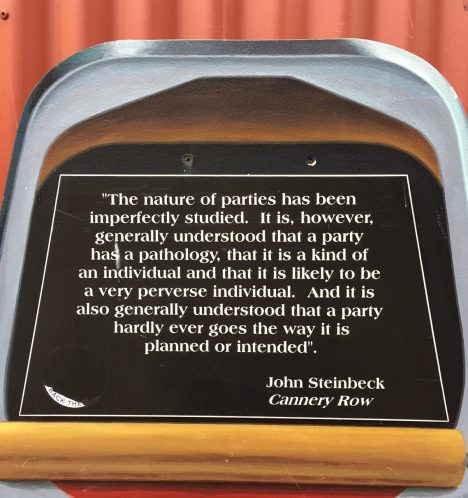
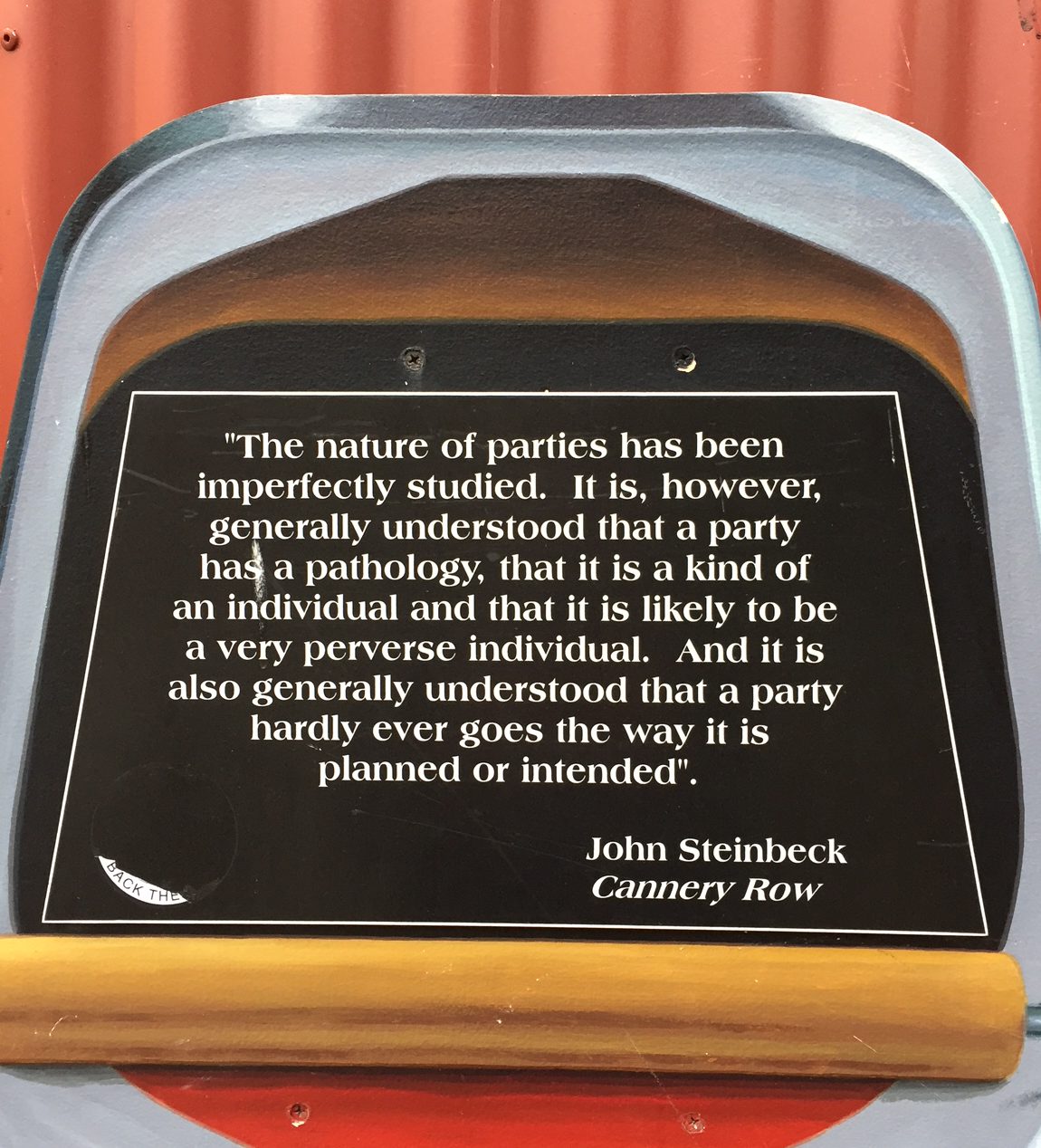
The Nature of Parties from Cannery Row
Cannery Row by John Steinbeck. I read this short novel for the first time in August during a week on the Monterey Peninsula, and found it delightful. Steinbeck’s language is superb, focusing on life as it is and celebrating community while acknowledging the loneliness of the individual. I keep returning to the line, “What can it profit a man to gain the whole world and to come to his property with a gastric ulcer, a blown prostate, and bifocals?” Recommended.
The Grapes of Wrath
The Grapes of Wrath by John Steinbeck. This seemed to be a good year to re-read this American classic about the collision of the Haves and the Have-Nots during the Dust Bowl and Great Depression. The author Ursula K. Le Guin said it best when she wrote, “So now, if somebody asked me what book would tell them the most about what is good and what is bad in America, what is the most truly American book, what is the great American novel . . . a year ago I would have said—for all its faults—Huckleberry Finn. But now—for all its faults—I’d say The Grapes of Wrath.” Highly recommended as a stark reminder of what we can be—both good and bad—as a country.
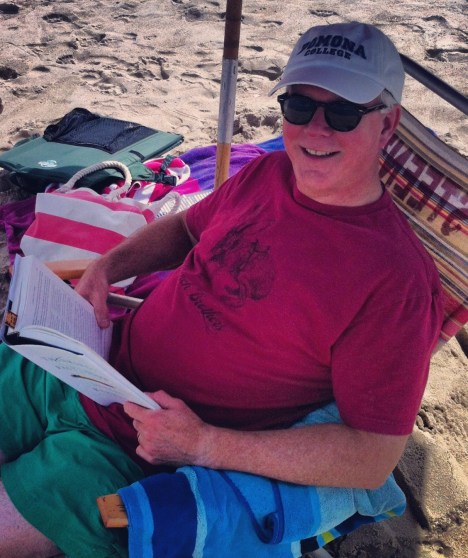
Beach Reading
Now I’m caught up. Happy reading in what’s left of the summer.
More to come…
DJB
*I also wanted to read this book to see if I could understand the work of one of our neighbors here in Silver Spring: United Therapeutics Corporation. The authors mention that UTC—at the time of the book’s publication—used technology developed by Synthetic Genomics, Inc. to “begin humanizing pig lungs—a project that could eventually help save the 200,000 people who die every year waiting for an organ that never comes.” I love the fact that UTC has developed a big corporate campus, with fun and innovative architectural design (seen above), right in the heart of downtown Silver Spring.
For several years I’ve regularly traveled for work to Monterey, California, a small coastal city some two hours south of San Francisco. So when we went looking for a west coast destination for this year’s family vacation, I suggested we check out the Monterey Peninsula. Now that we’ve wrapped up a week-long visit to Pacific Grove—next-door neighbor to the city of Monterey—we’re just coming to realize how much we’ve seen and explored in this new (to us) part of the world.
Let’s begin with the coastline, the attraction to visitors for thousands of years. I awoke every day shortly after 6 a.m. and went for walks of as much as two hours along the well-used (and well-loved) Monterey Bay Coastal Trail. Pacific Grove’s portion of this 18-mile trail, which follows the path of the old Southern Pacific Railroad train tracks, hews close to the water and rock-strewn coastline, while Monterey’s comes inland a bit to incorporate Cannery Row, the Monterey Bay Aquarium, and Fisherman’s Wharf. My walk often began before sunrise and was shrouded in fog. Thankfully, Carmel Coffee Roasters in downtown Pacific Grove opens at 6 a.m. seven days a week, so I was well fortified with java.
Harbor Seals at Pacific Grove
Coastline along Pacific Grove (photo credit: Claire Brown)
Monterey’s submarine canyon is in such close proximity to the shore that the bay has deep, cold, nutrient-rich water all year. This brings all types of marine mammals and sea birds close to the shore. I enjoyed watching the harbor seals lounge on the rocks and along the beach at the Stanford Marine Institute, listening to the sea lions bark from their perch along the rocks in Monterey, and tracing the flight of a wide array of birds out for their morning breakfast. I would stop and read along the way and found that Pacific Grove and Monterey have done a good job of capturing the stories and people from their diverse histories. It was on one of these markers that I learned that Pacific Grove developed an Episcopal camp-meeting history in the 1880s and that Monterey had a very diverse workforce in the commercial fishing and canning industries. That led one wag to suggest that you could tell Carmel-by-the-Sea, Monterey-by-the-Smell, and Pacific Grove-by-God.
Pacific Grove Panorama (photo credit: Claire Brown)
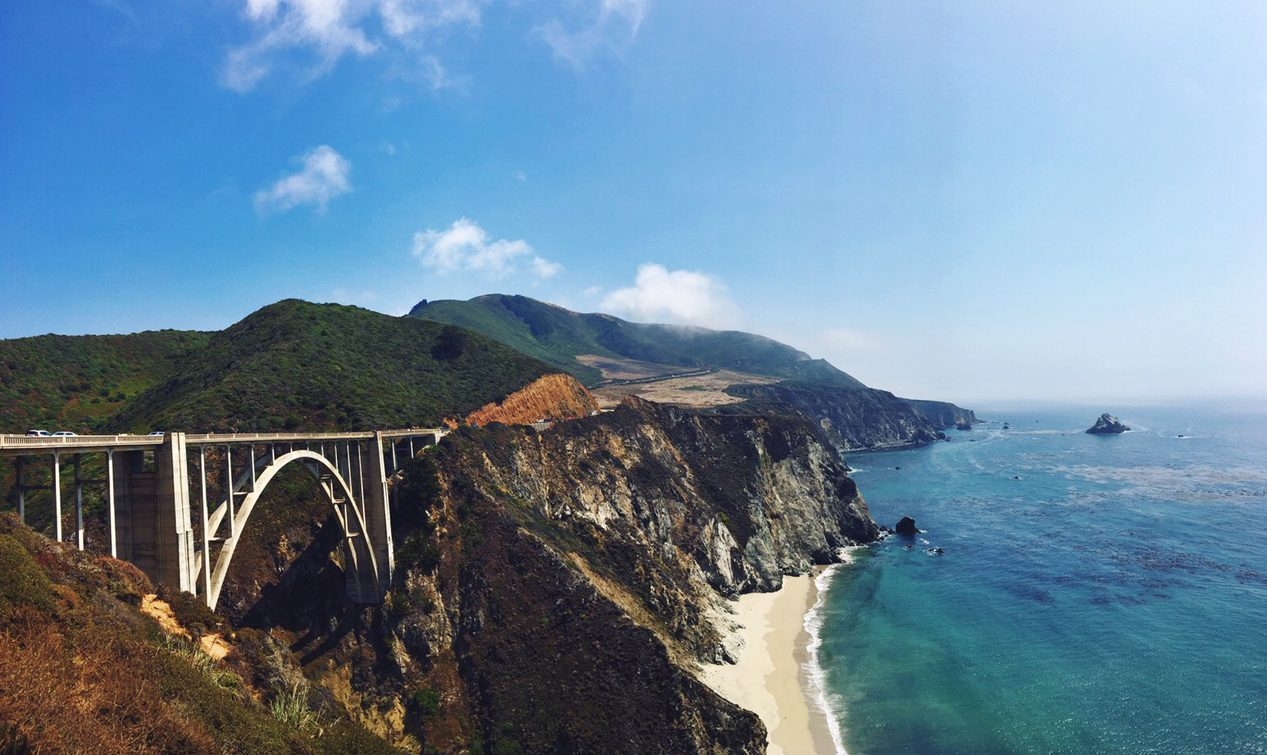
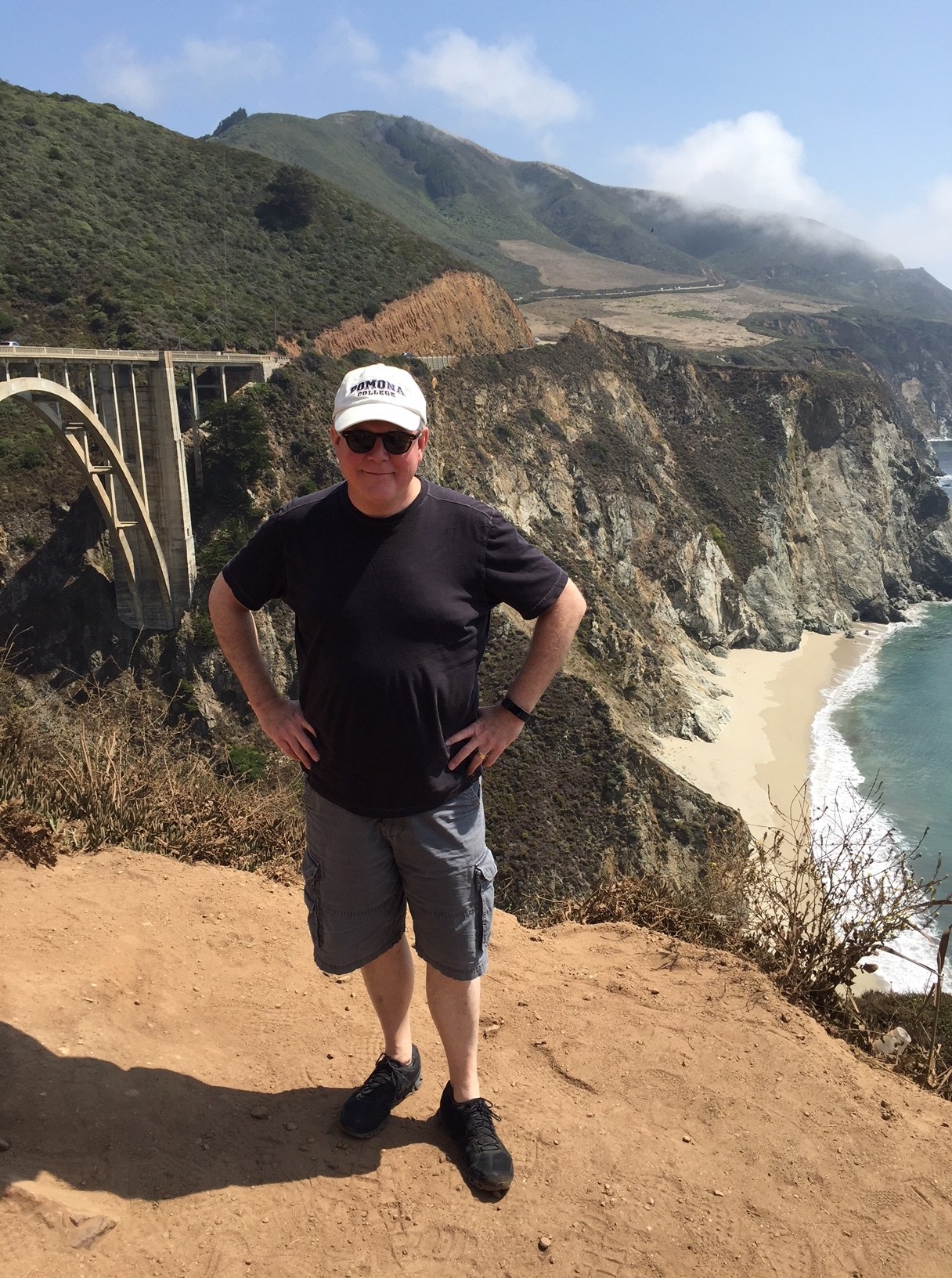
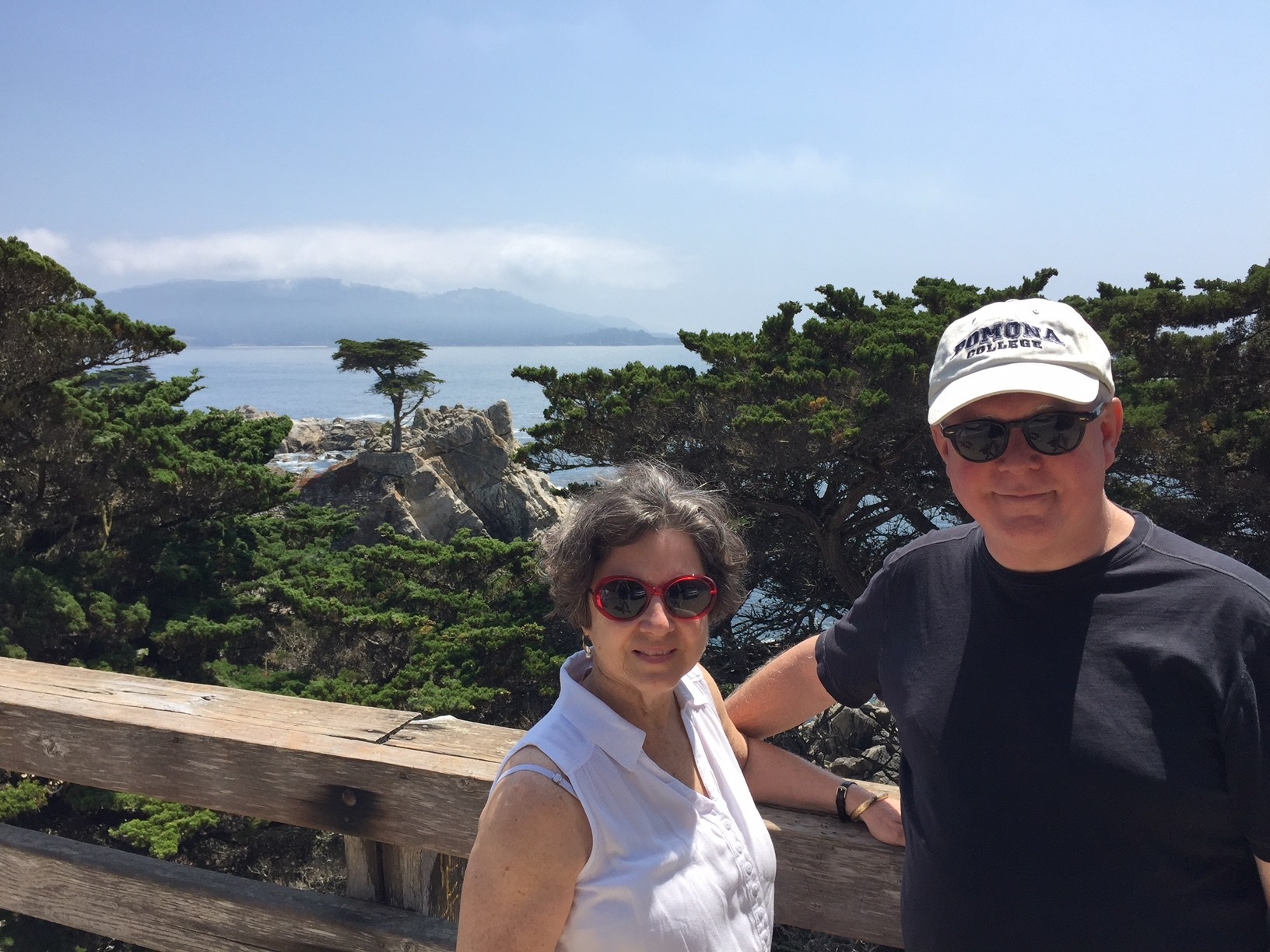
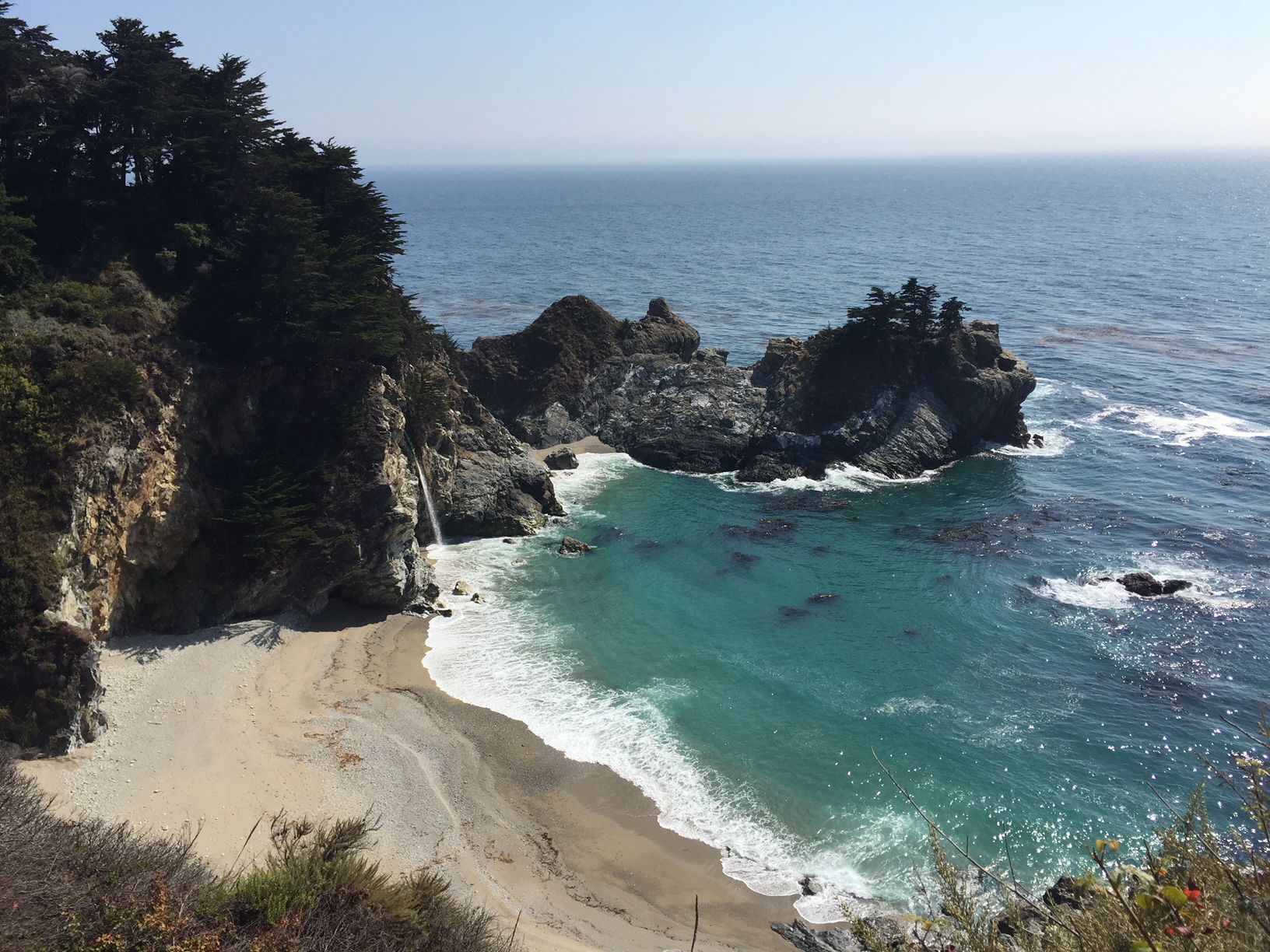
We also took advantage of the coastline for a day trip down to Big Sur along California Highway 1. This coastal road—famous for its stunning views—did not disappoint. Along the way we stopped to take in the Lone Cypress (technically on the 17-mile road at Pebble Beach), the famous Bixby Bridge, and McWay Falls, a beautiful waterfall that fell into the ocean at Big Sur. We happened to go on a simply glorious day, with no clouds or fog and a California-perfect 80 degrees.
Bixby Bridge (photo credit: Claire Brown)
DJB at the famous Bixby Bridge
Candice and DJB at the Lone Cypress in Pebble Beach
McWay Falls
The Monterey Bay Aquarium is the major tourist attraction in the area and after a visit it is easy to see why. They have crowd-pleasers (how can you resist the feeding of otters and penguins) mixed in with educational exhibits (don’t miss the live-narrated films) and secluded tanks where one can sit and marvel at the amazing creatures found under the surface of the Bay. We spent an entire day at the aquarium and felt we’d only seen a glimpse.
School of Fish at the Aquarium (photo credit: Claire Brown)
Jellyfish at Monterey Bay Aquarium
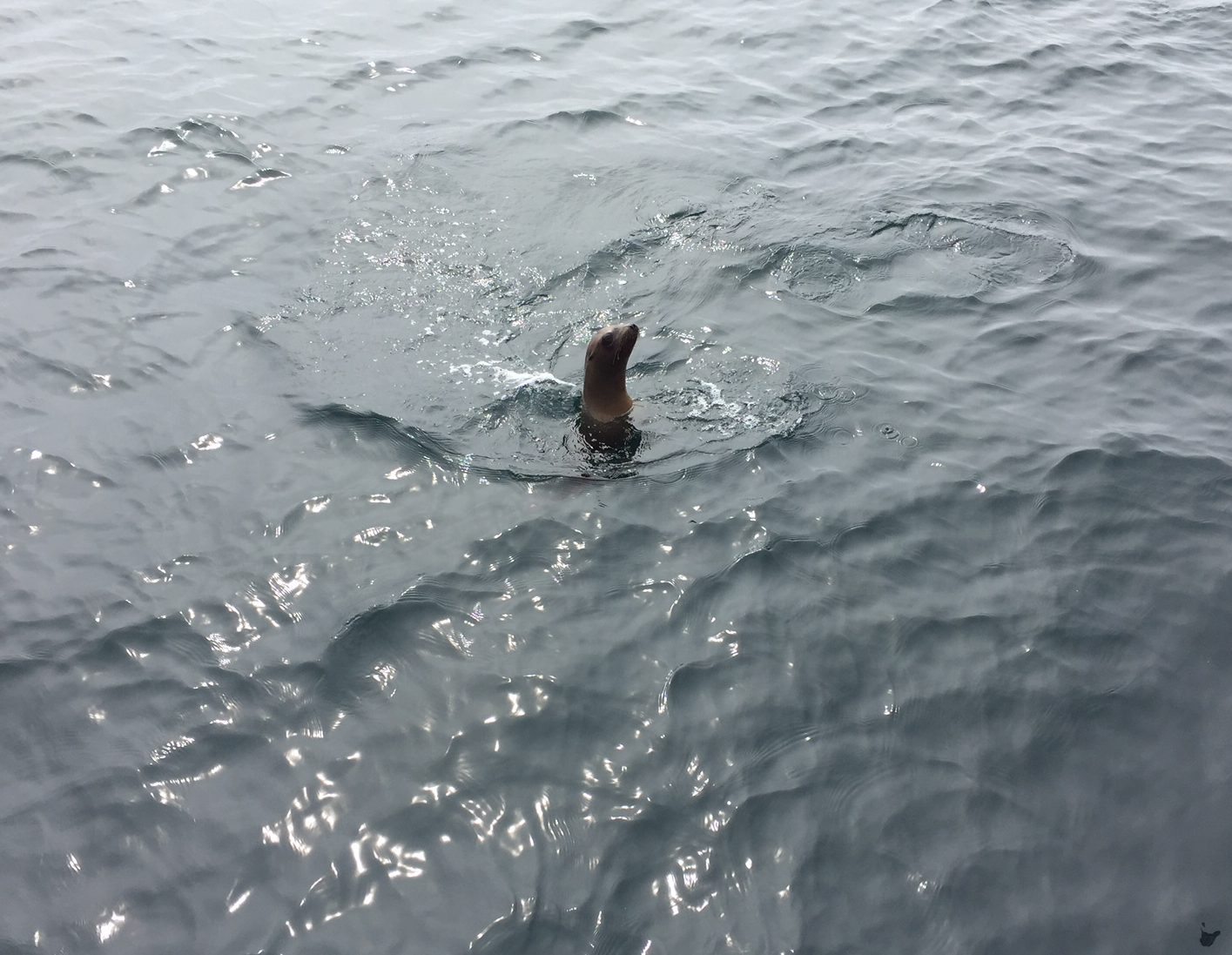
As we were leaving Pacific Grove on Saturday morning, Claire and I took in a Whale Watching tour on the Bay. It was a wonderful three hours, where we saw a humpback whale breach the water in a way that takes one’s breath away, countless dolphins looking so playful as they swam by, sea lions that came up to give our boat a close look, and sea birds too numerous to capture in a blog post. Very memorable.
Sea Lion comes in to inspect the Whale Watchers
Dolphins seen on our Whale Watching tour
A Humpback Whale Dives into the Monterey Bay
I couldn’t resist the opportunity to take the family over for a behind-the-scenes tour of our National Trust site, the Cooper-Molera Adobe, which will reopen in about a month after three years’ work to reimagine this hub of Monterey history, commerce, and agriculture. The Barns at Cooper-Molera are already busy hosting special events, and the new bakery and restaurant, along with the re-interpreted historic adobes, will soon be ready to greet the public.
Of course, this couldn’t be a Brown vacation without great food. Two Pacific Grove restaurants became favorites, as we visited both twice over the course of seven days: Passionfish and Jeninni Kitchen + Wine Bar. And after taking Claire back home to Oakland on Saturday, we had a culinary feast at Alice Waters’ Chez Panisse restaurant in Berkeley, this time in the downstairs restaurant. (Our first visit a year ago had been to the upstairs cafe.) Here’s a description of what is intended for the restaurant, from the Chez Panisse website:
“From the beginning, Alice and her partners tried to do things the way they wanted them done at a dinner party at home, with generosity and attention to detail. The Restaurant, located downstairs, is open for dinner Monday through Saturday, by reservation only. The fixed menu consists of three to four courses and changes nightly, each designed to be appropriate to the season and composed to feature the finest sustainably sourced, organic, peak-of-their-season ingredients, including meat, fish, and poultry.”
We found it to be one of the most thoughtful menus—and meals—we’d ever encountered. It was delightful, and we were pleased to share it with Claire and her friend Blair, who joined us for parts of the vacation.
Steinbeck Monument on Cannery Row
Finally, I went on something of a John Steinbeck kick while in Pacific Grove. I’d begun to read The Grapes of Wrath on the plane ride out to California, as I’d decided this was a good time in our history to revisit this classic tale of the best and worst of America. But while in Pacific Grove, we stopped in a wonderful independent bookstore and I picked up a Steinbeck Centennial Edition of Cannery Row, the short novel/poem on accepting life as it is and putting the highest value on “the intangibles—human warmth, camaraderie, and love.” Or, as Steinbeck writes early in the novel, “What can it profit a man to gain the whole world and to come to his property with a gastric ulcer, a blown prostate, and bifocals?”
“The Nature of Parties” by John Steinbeck from “Cannery Row”
Reading Cannery Row proved to be an unexpected joy in a vacation full of joy and thoughtfulness. I’ll let Doc’s last words in the book close out this remembrance: