Gallagher Guitars have been in my consciousness – if not my life – since first putting the landmark Will the Circle Be Unbroken album on the turntable in 1972 and hearing the most famous words ever uttered about a Gallagher:
Merle Travis: That guitar, by the way, rings like a bell.
Doc Watson: It’s a pretty good little box — a Mr. Gallagher down in Wartrace, Tennessee made it.
So I was thrilled to open the most recent issue of The Fretboard Journaland see a story and photo essay on Gallagher Guitars. Regular readers know that I eagerly await the sight of The Fretboard Journal in my mailbox.
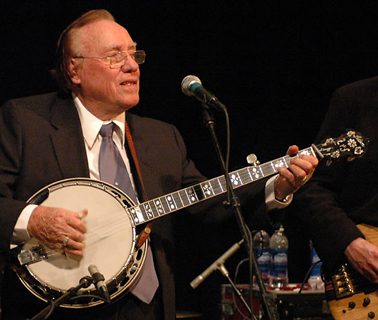
The Circle album gave me the flat-picking/bluegrass bug, and I began thinking about a new guitar. The first Gallagher I played for any length of time belonged to my long-time friend and clawhammer banjo player John Balch, who still plays his 1975 G-50 on a regular basis. It was a beautiful sounding guitar which whetted my appetite for one of my own. The first picture below is from about 1976 where I’m on John’s Gallagher while he plays banjo during a parking-lot picking session at the Athens Fiddler Contest in Alabama.
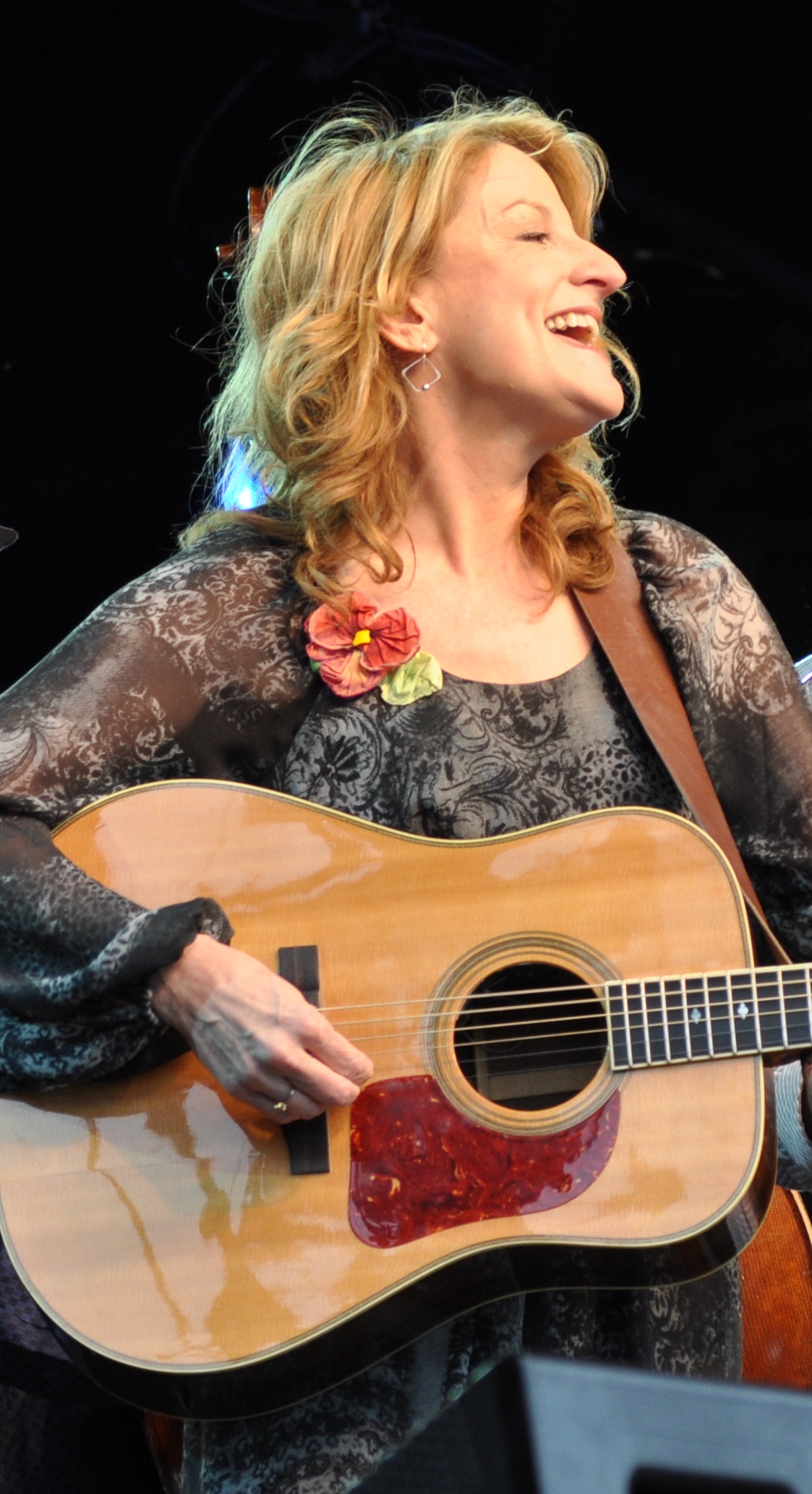
Two years later (Gallagher makes less than 100 guitars each year) I had my own G-50 – serial number 954 and the guitar pictured at the top of the post. I’ve loved that guitar’s tone since I opened the case, and still do 35 years later. The G-50 got its name because J.W. Gallagher made the first one when he was 50 years old. Just for fun, I pulled the original invoice, dated November 21, 1977. G-50 #954 cost me $540! The hard shell case was another $100. Throw in the tax and I took home this beauty for $676.30. Today’s retail for a G-50: $3,199.
A few years later my brother Joe bought a Doc Watson model Gallagher, to keep the tradition in the family. You’ll see a couple of photos below of the Gallaghers going through their paces during family music sessions.
I thought I knew a great deal about Gallagher Guitars, having written an article on J.W. and Don Gallagher for The Tennessee Folklore Society Bulletin in 1978 that was included in the 2009 UT Press edition of A Tennessee Folklore Sampler. But as usual, The Fretboard Journal included new tidbits for guitar lovers, with more information about J.W.’s early work designing and building Shelby guitars for Slingerland, a great picture of the template for the bracing pattern, and the fact that the old-English “G” in the distinctive headstock came from the G in the Shelbyville Times-Gazette newspaper logo.
Through the years I’ve added to my instrument collection, with special additions of a 1921 Gibson A-4 mandolin and a beautiful 2001 Running Dog parlor guitar picked up during the college visitation tour with my twins. But there’s a special place in my heart for my first real guitar: that work-horse G-50.
So enjoy the photos of the Gallagher Guitars below, and then you can hear my brother Joe’s Doc Watson model on the video we recorded during the National Preservation Conference in Nashville back in 2009.
More to come…
DJB

UPDATE: Since this post was written, Gallagher Guitars changed ownership. The company relocated to my hometown of Murfreesboro. The story of the transfer is told on the new website and in the excerpt below:
J.W. retired in 1976 and Don assumed the responsibility of operating the shop. Don was instrumental in developing the longevity of the business and in bringing traditional guitar making into the 21st century. In 2015, Don’s son, Stephen, became the owner of the storied brand.
David Mathis lived in nearby Murfreesboro: “I learned my first guitar chords on a Gallagher from a man who had a 1967 Gallagher G-50. When I heard the company had closed its doors, I started thinking about what could be done to keep it going.” David Mathis approached Stephen and this eventually led to acquiring Gallagher Guitar Co. with the support of Don and Stephen by the end of September 2019. The transfer of assets includes all the original Gallagher patterns, molds, and machines. In short, these are the same tools responsible for the finest acoustic guitars made over the last 55 years. On top of that, they are still in use today. In fact, some of the jigs and equipment pieces still used today were originally made by J.W. Gallagher.“
When last we visited, dear readers, Candice and I were on a quest to see all the nominees for Best Picture.
Tonight, I think we saw the winner. Or at the very least, my choice.
I know, we still have four movies to go (who in the world came up with NINE nominations?!), but Hugo is such a wonderful story, told in a loving way, with that terrific 3D look…well, I’m ready to place my bets.
(Column interruption: I really don’t bet. Every monetary bet I’ve ever made in my life, I’ve lost. My good friend John Lane said it best: “I have the same chance of winning the lottery whether I buy a ticket or not.” Now back to the regularly scheduled blog post.)
It doesn’t mean the other movies aren’t worth seeing. I’ve thoroughly enjoyed all five. I went to see The Artistwith minimal expectations, but found it enchanting. It didn’t hurt that we caught that movie in the restored AFI Silver Theatre here in Silver Spring – a perfect place to see a silent movie!
Seeing all nine movies before the awards show will be tough. But we’ll keep trying. To date, I’ve seen five of the nominees and Candice has seen four. And our current rankings from top to bottom?
Candice:
Hugo
The Artist
War Horse
Moneyball
David:
Hugo
The Artist
The Descendants
War Horse
Moneyball
I don’t really think The Descendants is that much better than War Horse, but I have to say that in the case of War Horse I always end up comparing the movie with the play…and that doesn’t help the movie.
But what do I know? We have one more to see in the theatre, then we’ll have to scramble to find the others on DVD. Plan B? Catch three movies with Best Actor or Best Actress nominees. I could always go see a movie about Marilyn Monroe!
Never in a single one of my 56 (almost 57) years have I seen all the films nominated for the Academy Awards Best Picture category. Heck, most years I’m lucky to have seen one!
This year will be different.
What’s the use of having an empty nest if you don’t do things differently now that the kids are away, right?
When the Academy announced its nominees for 2011 earlier this week, a light went off in my head. Heck, I’d already seen two of the films: War Horse and The Descendants. How difficult could it be to see the others before the Academy Awards show late in February? How many do they nominate anyway, five?
So I shot an email off to Candice and suggested we try to catch all the nominees before the show. Candice – who would say my major failing as a human being is the fact that I seldom (read almost never) go to the movies – eagerly accepted. Okay, we’re on! So let’s go to the Oscar website and make a plan to see the 3-4 movies still on my list. No problem, right?
Wrong.
Nine? Nine nominations? Since when did they nominate NINE films for Best Picture. Heck, what doesn’t get in? I fully expect one of those slasher movies they are always advertising on ESPN to testosterone-fueled 18-to-25-year-old males to be on the list.
Oh well, a deal is a deal, and now that we’ve started I’m stoked!
We were going to see The Artistand Hugothis weekend, but I put a post on my Facebook page about our quest and noted that I was worried about finding a theatre that was still showing Moneyball. A colleague (and baseball fan) quickly noted it was at the historic Avalon Theatre, and after finding out they had a “bargain” showing this afternoon at 1:45 we put it first on the list.
I loved Moneyball (I read Michael Lewis’ book when in first came out), and thought Brad Pitt and especially Jonah Hill were terrific. I doubt the film – or War Horse or The Descendants – are of a quality to win Best Picture. But what do I know…I still have six pictures to see!
So tomorrow, we’ll be at the historic AFI Silver Theatre in Silver Spring to watch The Artist. And if you call us in the next few weeks and we don’t answer, chances are we’ll be “At the Movies!”
The following are excerpts from my keynote address at the 40th anniversary of Historic Staunton Foundation, delivered on Sunday, January 22, 2012.
Anniversaries are great times to reflect, celebrate, and resolve. I’d like to do all three with you this afternoon.
Let’s begin with some reflection. I’ve always enjoyed the movie It’s a Wonderful Life – for the dramatic (some might say cheesy) way it showed the impact people have on others and on their community.
And while I’m no Clarence Odbody, the guardian angel who showed Jimmy Stewart’s George Bailey the transformation of Bedford Falls to Pottersville as if George had never lived, I would like for all of us to reflect on how Staunton might have developed if HSF were not formed 40 years ago.
Let’s begin down at the Wharf – where generations of visitors initially saw Staunton as they stepped off a train.
The first thing you would notice is that there isn’t any Wharf…for the buildings that make up that unique historic district were demolished in the 1970s for a four lane thoroughfare through Staunton.
Yes, the Virginia Department of Transportation thought it was important to allow drivers coming in from the west along Middlebrook Avenue to be able to drive uninterrupted so they could get to…Richmond Avenue and Commerce Road…without having to slow down for a pesky little thing like a town.
Of course, you wouldn’t see the farmers market either, because that highway runs through the landscaped Johnson Street parking area that was among the first streetscape improvements supported by HSF.
The reality is that one of the first things a band of volunteers called Historic Staunton Foundation did as an organization was fight the state’s wrong-headed transportation plan….and today the shops, restaurants, coffee and wine stores that make the Wharf such a nice place to linger are ours to enjoy because of the foresight of HSF.
But while we’re pretending to look around the Wharf without the benefit of the work of HSF, I guess I should mention that the train station is gone as well.
If it hadn’t been taken out by the thoroughfare, it faced other threats through the years. You may not remember, but back in the 1980s there was a fire in the baggage room set by some homeless men looking to stay warm. Without HSF, there was no push to keep the beautiful T.J. Collins-designed station and so the city quickly had it demolished so it wouldn’t be a hazard. I can just picture a small double-wide that serves as the Amtrak station today.
Oh, and does anyone remember that T.J. Collins fellow anyway? He once designed or remodeled over 200 buildings in Staunton, but more than half are now demolished and his archives were thrown in the dump when the office closed.
Of course, the reality is that Historic Staunton worked hard to save the train station after that fire. A decade of work with the city staff paid off, when building inspector Bill Botkin and the city’s fire chief Andy Shaver gave preservationists enough time to find a solution without calling for a quick demolition.
And while Historic Staunton was fighting with the railroad’s real estate division to try and find a way to acquire the building, Lee Cochran – that force of nature – mentioned that she sat on a board with the chairman of CSX which owned the station. Just like that, we had leap-frogged the bureaucrats in real estate and were working out a deal to keep that gem of the Wharf Historic District.
And T.J. Collins? His legacy is alive and well, and HSF has the archives of his drawings that remain living and breathing documents in the work to shape Staunton’s future.
Yes, just like the transformation of Bedford Falls to Pottersville, the Wharf would be a very different place without Historic Staunton Foundation.
So, as Clarence Odbody, I want to take you to downtown Staunton to look at Beverley Street over the past 40 years without Historic Staunton.
The four blocks between Lewis and Market streets look pretty shabby – just like hundreds of downtowns in small communities throughout the country that decided to forget about people and turn their towns over to cars.
There are only about two-thirds of the buildings left – because shop owners could buy the building next door and tear them down to create parking for their business. There was no organization – or historic district zoning ordinance – to stop them.
And we love our CVS drugstore that sits where the Marquis Building once sat, don’t we? You remember the Marquis Building don’t you: the Romanesque Revival beauty on the corner of Beverley and Augusta where T.J. Collins had his office? In the early 21st century, giant drugstore chains began building suburban-style drugstores – with suburban style parking lots – on the “corner of Main and Main” in towns across America. There was no more prominent corner in Staunton, so CVS purchased the historic building and a few surrounding ones as well, tore them down, and put their drugstore smack in the middle of town.
Without HSF, there is no coherent streetscape design and the building owners continue in their attempts to capture the newest fad in hopes of revitalizing their fading businesses.
I could reflect like this for hours. Staunton’s historic districts wouldn’t be valuable places to live or own property without the work of HSF. The city would have less tax revenue, as seen in a 1995 study that demonstrated that buildings in every one of Staunton’s historic districts appreciated at a faster rate of growth – sometimes very substantially – when compared with similar properties outside the historic districts.
And what was most interesting about that analysis was the breadth of housing stock that was affected, dispelling the myth that historic houses are only mansions for the rich. Staunton’s historic districts – supported by 40 years of work by Historic Staunton Foundation – not only provide quality housing for people of more modest means, but reward them with faster rates of appreciation as well.
But I want to end my reflection by talking about Staunton’s spirit. Without HSF, the community would feel very different.
I know – from personal experience – that HSF gave us a place where old and new came together…where natives welcomed and embraced newcomers and their ideas and where new citizens learned about the traditions of the town. HSF provided the context where everyone now thinks about historic buildings, neighborhoods, and landscapes as tools for the future of the city.
Staunton without HSF may not be as bad as Bedford Falls’ transformation to Pottersville without George Bailey…but I think Staunton would be much worse than the wonderful community we know and love today.
Now, let’s celebrate!
This is going to be personal…as each of our celebrations of the work of HSF should be.
I want to celebrate the four presidents I worked under in the 1980s when I was at Historic Staunton Foundation.
Tom Bell welcomed me to Staunton, taught me how to pronounce the city’s name like a native, and introduced me to countless numbers of the leading citizens in town. He was an amazing leader who helped HSF move from transformational founding directors to the sustained excellence that’s been the hallmark of the organization.
Doug Roller was both my boss as president – and later my employee, as the FIP Coordinator – at HSF. He had an abiding love for architecture and for this city which translated into doing whatever it took.
The late Bob Holsinger served – if my memory is correct – two terms as president while I was in Staunton. Bob supported staff in ways that I still admire and try to emulate. Like clockwork, I could count on my phone ringing at 8:15 every morning, with Bob on the other end to check our temperature and to make sure he knew what he could do to support HSF. I miss Bob and his old-fashioned sense of civic duty dearly.
And finally, one of the toughest things I’ve ever had to do was give Mary Timberlake my resignation and tell her I was taking a job leading the Preservation Alliance of Virginia – a group that had no money and no office, but only the promise of making preservation more prominent throughout the Commonwealth. Among the many things we did as a team, Mary and I painted one of the offices in the HSF building on South Augusta Street together to get it ready for a new tenant, because that’s what you did when you had more volunteer hours than money.
And there are so many others to celebrate:
The Cochran family been consistently generous with gifts, in the Board leadership provided by Emily and Stuart, and in the opening of the Stuart House for special tours and events. I use to love to go on tours that Justice Cochran gave at the Stuart House because he had this funny story he told. He pointed to a portrait of an ancestor on the wall and told a tour group that this particular ancestor held a judicial position in colonial Virginia that was very similar to his current position as a Justice on Virginia’s Supreme Court. One of the members of the tour group – obviously unimpressed – said in a loud whisper, “Well the family hasn’t advanced very much in five generations, have they?” That willingness to not take oneself too seriously has made the family both beloved and admired for generations.
Frank and GiGi Pancake: I want to know how little Staunton, Virginia, attracted so many people you could describe as a “force of nature.” Frank certainly fell in that category. His leadership was amazing when he was active, and HSF’s Endangered Properties fund was renamed in the family’s honor as the Pancake Preservation Fund. Frank and GiGi were key to so much of the success of the early years of HSF.
Doris and Jake Smith were instrumental in so many things in Staunton…and that was true in their support of HSF – especially when the organization needed funding to take a major step forward. HSF has had a number of funders – or people willing to help raise funds – through the years.
One of the great things about HSF is that everyone can contribute in ways that best fits their personal situation. Edwina Goodloe was such a force for ensuring that Historic Staunton became integrated with the leadership of the community in the early days. Linda Hanna – another board member from my time – has always been a key link to the merchants along Beverley Street. Henley and Mary Carter, Liz McCue – who served as my first assistant director, Karen Hudson, Eleanor Patrick, Ann McPherson, Roller and Jeri Shipplett, Arch Sproul…the list could go on and on and I’m only embarrassed because I know I’ve left out so many who have contributed so much.
I want to end my personal celebration with two couples:
Wick and Betty Vellines to my mind have always exemplified the fun in historic preservation. Betty is, of course, the very serious current president of Historic Staunton Foundation and is doing a magnificent job. But I like to remember Wick and Betty sitting around a table down at the Oaks – with Margaret and Fletcher Collins and other friends – telling tales and enjoying life to the fullest. It is what living in community is all about and HSF is nothing if it isn’t a community.
Finally, we all wouldn’t be here tonight if it weren’t for Bill and Kathy Frazier. I don’t know if you realize how lucky you are as a community to have landed someone like Bill early in his preservation career, who had a special blend of professional knowledge, tenacity, love for place, and vision to see what this little sleepy Shenandoah Valley town could be. Then he had the amazing good sense to hire – and then marry – Kathy, who brings such a wonderful design sense to this community as she has done to Main Streets all across the country.
I have to admit that when I came to Staunton to follow Bill and Kathy, I was scared. They were living legends then…and they hadn’t even established Frazier Associates, undertaken the signage and streetscape improvements that we now take for granted, and helped create the Smith Center. There have been several of us who have been privileged to serve as Executive Directors of Historic Staunton Foundation, but there’s been only one first family of HSF: Bill and Kathy, we celebrate all you have done for this wonderful community.
So we’ve reflected and celebrated. I think anniversaries are also times to look ahead and resolve to make a brighter future.
It is important to remember that preservation isn’t something that’s “finished.” Staunton is a living, breathing community that faces hundreds of decisions each year that will affect the future.
You can make those decisions in a vacuum – and end up like “Anyplace U.S.A.” Or Staunton can build on the incredible 40-year work of Historic Staunton Foundation and determine to keep your heritage, your buildings, your community unique and at the forefront of plans for the years ahead.
First, HSF has had an amazing blend of professional and volunteer leadership that works well together and looks for the good in the community first.
Second, the ethic of preservation has been integrated throughout the community as a whole – and especially in city government. This is a place where a consultant can come to work – like Bill Hamilton did more than 20 years ago – fall in love with the place, and become an integral part of the preservation effort through his post in economic development.
Finally, Staunton recognizes the value that everyone brings to the conversation about preservation. This isn’t some attempt to “keep things as they are” – which is how preservation is perceived in some communities – but rather new ideas and traditions are blended in a way that points to a rich future for all.
These elements have contributed to Staunton’s success, but they aren’t automatic and they can deteriorate unless we nurture them. I want to end with some thoughts about each of these three elements.
Professionals are important to the growth of historic preservation, but all of us in the preservation movement can find even more success with greater engagement of a broader set of volunteers.
We just completed market research at the National Trust that I find both astounding and encouraging. The Trust has just under 150,000 members, but our market research found there are 15 million Americans who share our values as preservationists. That’s 7% of the population of America – an astounding number if preservation organizations today can begin to reach those individuals.
We call these individuals “Local Preservationists” because they are already taking actions that you and I would describe as preservation-based. Our research shows they aren’t members of the National Trust…and chances are that most of them here in Staunton aren’t members of Historic Staunton Foundation either. Who are these people? Their…
Average age is 35
61% are male
33% are non-white
60% have < 4-year degree
19% make > $100,000/yr
They are likely to volunteer and fundraise, and
They are active in social media
Preservation may not be their number 1 cause…in fact, it is likely to be their #4 or #5 cause. But we have the opportunity to reach them, give them meaningful work to do in saving historic places, and move preservation up to their top cause. If we do, we can become a mighty force for the future of this country.
Next, how do we continue to engage the city, county, and state governments in protecting Staunton’s future?
Government officials, commentators, planners, architects, and others are focused more than ever on how we build and maintain cities and towns that provide jobs and opportunities for our citizens, safe schools for our children, places to meet together in community, while lessening our impact on the environment. In other words – economically and environmentally sustainable communities.
Often, when politicians talk about economic sustainability, they focus on big ticket items or on new, out of state investments. But we have found here in Staunton that it is the incremental work that brings more sustained growth – and that’s where preservation can play such an important role.
The Center for Urban Policy Research at Rutgers University released the first independent study of the economic impacts of preservation, and they found that investment in historic rehabilitation produces significantly better economic impact in terms of jobs, income, and state-and-local taxes than a similar amount of investment in new construction, building highways, machinery manufacturing, or agriculture.
That’s an amazing fact. Rehabbing old buildings has more impact on the economy than the same size investment in the construction of new buildings. There’s more “bang for the buck” in rehabilitation than in laying miles of asphalt for new highways.
Rutgers found that historic rehabilitation creates tens of thousands of local, high-paying, high-skilled jobs every year all across the country. As an added benefit, the vast majority of the investment stays in the local community.
And to wrap up the argument for preservation as sustainability, the National Trust is releasing a study on Tuesday that will show it can take up to 80 years for a new energy efficient building to overcome, through efficient operations, the climate change impacts created by its construction. In other words, keeping and rehabbing what we have is more environmentally sustainable.
Historic Staunton’s job is to keep making the case – year in and year out – for preservation as the sustainable future for the people of this community.
Finally, Staunton has done a better job than most in bringing together different groups to consider the future of the community. But we can always do better.
In a very real way, the preservation movement is keeping the American story alive, in all its richness and diversity. We all share a piece of that story. Yet too many people don’t know or understand what it means to protect it. They see preservation as something removed from their daily lives or not reflective of their cultural heritage. Or they get shut out by the sometimes complicated and expensive process of securing protection for a historic building or landscape.
Preservation is often seen as “the movement of no” — what you can’t do. We need to make preservation more accessible — or a “movement of yes” — if we want to continue to grow and succeed.
Historic Staunton Foundation has so much of which to be proud over the past 40 years. That’s a testament to the work that all of you, and people like you, have done to get us to the point where we are today.
Our challenge is to continue to grow the preservation ethic here in Staunton. Let’s ensure that all elements of the community are engaged in our work.
One of my great joys in life was the 15 years that Candice and I lived in this wonderful community. Our children were born while we lived in Staunton, and we have many lifelong friends that we cherish deeply.
At a key point in It’s a Wonderful Life, Clarence says to George Bailey,
“Strange, isn’t it? Each man’s life touches so many other lives. When he isn’t around he leaves an awful hole, doesn’t he?”
Staunton would have an awful hole without the 40-year life of Historic Staunton Foundation. Thanks for what you have done – and what you will do in the future – to make Staunton a better place in which to live. Good night.
At one point in Monday night’s thoroughly satisfying concert by The Claire Lynch Band at the Institute of Musical Traditions, the band leader mentioned that she started in the music business 33 years ago. It doesn’t seem that long ago when I heard her play at the Shenandoah Valley’s Oak Grove Music Festival, but in fact it may have been two decades since I saw her with the Front Porch String Band.
Thirty-three years is a long time to be on the road, but Lynch and her band of hot young phenoms supported by veteran bass man Mark Schatz, had the energy and sound to more than satisfy the sold-out IMT crowd.
Lynch has been an impressive band leader, prolific songwriter (truth-in-advertising: some co-penned in the past with my musical cousin, Hershey Reeves), and all-around pioneer in the acoustic music world…but she’s still most impressive as a singer. She showed us all time and again on Monday evening why she won the 2010 IBMA Female Singer of the Year award.
Standouts from a wealth of good tunes in the two-hour set included Hummingbird, which Lynch sang with banjoist Alison Brown on the Fair WeatherCD; a haunting Dear Sister, about a Civil War soldier writing his sister on the eve of the battle of Stones River; and the old-time inspired Widow’s Weeds, with Schatz on clawhammer banjo. Schatz, as usual, also livened up the evening with his hambone dancing and solid play on the bass. Guitarist Matt Wingate showcased impressive chops throughout, as he’s taken big strides in his music since I last saw him with the Lovell Sisters (and he was pretty doggone good at that point). And the newest member – fiddler Bryan McDowell – didn’t miss a beat on his second night out with the band.
After closing with a spirited Wabash Cannonball, where everyone stretches out musically, Lynch and the band came back on stage for an encore – and played my cousin’s Hershey’s composition Your Presence is My Favorite Gift. This simple and beautiful gospel number was a perfect ending to an evening with a wonderful songbird. Enjoy the video below of Claire singing Your Presence at a 2008 concert (with the song beginning about 55 seconds in). Thanks to the good folks at IMT for making it all possible.
I’ve always enjoyed Mark O’Connor’s 1992 album Heroes – a series of fiddle duets that O’Connor plays with his musical idols and mentors. There’s great music on the album – from jazz to bluegrass, western swing to world music – and listeners can easily see the range of O’Connor’s interest and his amazing ability to play comfortably in any idiom.
The players are – to put it simply – amazing. Ponty, Grappelli, Clements, Zukerman, Gimble and more.
So I was thrilled to stumble across this clip on YouTube of behind the scenes footage of the recording of this album.
Take ten minutes, sit back, and soak up the amazing musicianship of a dozen top fiddlers of their day. Then if you don’t know the album, find it on iTunes and download it. You won’t be disappointed.
The WordPress.com stats helper monkeys prepared a 2011 annual report for this blog.
Here’s an excerpt:
The concert hall at the Syndey Opera House holds 2,700 people. This blog was viewed about 18,000 times in 2011. If it were a concert at Sydney Opera House, it would take about 7 sold-out performances for that many people to see it.
In 2011, there were 35 new posts, growing the total archive of this blog to 365 posts. There were 109 pictures uploaded. That’s about 2 pictures per week.
The busiest day of the year was June 11th with 130 views. The most popular post that day was Celebrating Andrew.
Three seconds may be the amount of time it takes to bite into one of those juicy pears you received from Harry & David this holiday season. The amount of time to pour a glass of wine.
However, every three seconds someone in the world dies from factors related to extreme poverty.
Perhaps three seconds could be the amount of time to decide to make a difference.
Every Three Secondsis the name of a documentary film project by award-winning film director Daniel Karslake. Candice and I met Dan at the home of our friends Tim Boggs and James Schwartz. There we learned about his new film which…
…profiles a number of individuals of different generations whose quest to feed their own hunger for fulfillment has inspired them to help meet the fundamental needs of others. Each has come to recognize that by giving, their hunger is satisfied in a way no amount of material reward could.
Karslake is a gifted story-teller. We were introduced to his work through the award-winning documentary For the Bible Tells Me So. That film explores, in a thoughtful and understanding fashion, how insightful people of faith handle the realization of having a gay child.
In this new project, Karslake will look at how people of different generations have made personal decisions to combat poverty and hunger. In our case, we’ve supported Partners in Health and the work of Dr. Paul Farmer as a response to the problems of poverty, but we’ve also decided to contribute to Every Three Seconds so these amazing stories can reach many more people who can help.
Fifteen minutes and six seconds. That’s how long it will take for you to listen to Dan Karslake’s Ted Talk on his film project. If you don’t want to watch the entire video, skip over to the seven minute mark and listen to Dan tell the story of Charlie Simpson. Charlie is a seven year old boy who decided to make a difference.
Then finally, we’re back to three seconds. That’s how long it will take to click on the link to Arts Action, Inc. and begin to make a tax-deductible contribution to support Every Three Seconds. Think of the lives you can impact.
For a holiday filled with so many traditions, each year’s celebration of Christmas is different. Some years the celebration revolves around visits with family. In fact, so much of what I remember about Christmas from my childhood involves “visiting Mamaw and Papaw’s house” with a passel full of cousins and the accompanying aunts and uncles.
But there are also years where other considerations over-shadow the holiday. In 1997, mom was one week away from dying (she passed away on New Year’s day in 1998), while Candice’s father passed away on December 26, 2008. In both instances we were able to be with our parents over the holiday season, but the focus was understandably elsewhere.
This has been a quiet Christmas. And that’s been fine.
The quiet holiday can have its own special joys. Some of the things I’ll recall from Christmas 2011 include:
The joy of early gifts. About 10 days ago, we visited the neurologist for a four-month check-up after Candice’s fall and the resulting seizures and severe concussion in late August. To hear that the EEG was clear and that the MRI “looked like a different brain” from the one the neurologist had seen in the August MRI was music to our ears. Candice still has eight months left for a complete recovery, but this was the best gift of the season.
The joy of seeing children grow into adults before your eyes. In August, we dropped Andrew and Claire off at college. We’ve seen them briefly in the ensuing four months, but we’re now a week into the winter break and the changes – and independence – that come with the college experience are on full display. As empty nesters, we’ve had more than one conversation about how best to respond to these new adults in our midst.
The joy of listening to Andrew’s music. Since he was a young Cathedral Chorister, Andrew has worked hard to develop his musical talent. This season we’ve enjoyed his singing – in a 12-person ensemble at the beautiful Strathmore Music Hall with the Cathedral Choral Society’s A Dickens’ Christmasand on Christmas Eve at our parish, where he sang solos and joined with the choir during the choral prelude for the Christmas Eve service.
The joy of seeing Claire’s passions grow and mature. We’ve always called Claire our “outdoors girl.” She’s loved nature, science, swimming, and people in equal measure. California, with the opportunities for exploring a new environment, has been a great choice for her to learn more about the world in which we live. She’s taking a couple of wonderful classes to explore where she may want to focus her scientific bent. I loved our father/daughter lunch at the Tabard Inn where we talked about the different fields that piqued her interest. In her first semester she’s taken on a new commitment to swimming that has moved her fitness to new levels. And she continues to teach us all lessons about ways to make and nurture friendships.
The joy of a well-crafted Christmas sermon. We’re still getting to know our new rector at St. Alban’s, but Deborah’s sermon on Christmas Eve – where she spoke as if giving a remembrance by one of the shepherds – was one more in a series of well crafted, challenging, and meaningful sermons that she seems to produce every time she steps into the pulpit. When Andrew and Claire announced that they were “fans” of the sermon, and Candice and I agreed, it was clear Deborah’s made a big impression. Christmas sermons can be dreadful. This was anything but.
The joy of good food. Following her fall and recovery, Candice is back in charge of our kitchen. And that’s a VERY good thing. It doesn’t matter if we are eating a simple soup at lunch or a lavish holiday dinner – I am one lucky man.
The joy of reflection. Taking time off to be with family and friends allows time for reflection. I was fortunate enough this year to have two weeks off, and the change of pace has been welcomed. (Candice would say necessary.)
The joy of friends. At holiday parties, Lessons & Carols, dinner with another family that has been battling brain injuries of their own, lunch in an Irish pub, at the back of church…all of these places and more are where we’ve connected with friends old and new and fed our spirits.
The joy of giving. Finally, the old saying that it is more blessed to give than to receive is easier to recognize during a quiet Christmas season. I’ve found that true this year time and again.
I know there will be Christmas holidays in the future full of cousins, babies, aunts and uncles…and they will be great fun. But I’m thankful for our quiet 2011 Christmas. In whatever way you have celebrated Christmas – or Hanukkah, or Kwanzaa, or the Winter Solstice – I hope it has fed your soul. From our family to yours, Merry Christmas.
On the eve of Thanksgiving, I’ve continued my tradition of the past few years and posted family photos from throughout 2011 on More to Come…
In this year of transitions, where the children graduated from high school and began their college careers, we have so much to be thankful for as a family. We all enjoyed the wrap-up of their senior years in high school and family and friends joined us to help celebrate their accomplishments. Andrew and Claire have both found colleges that fit their personalities and goals. We’ve had health issues this year, but approach 2012 with a great deal of optimism for the future.
These pictures give a glimpse of what we’ve experienced in 2011. To read the caption, simply place your cursor over the picture and it will magically appear. At the top of the post is a photo of the four of us following Andrew’s graduation from high school.
Thanksgiving blessings to you. I hope you enjoy the photographs.
More to come…
DJB
Image: Photo of the four of us following Andrew’s graduation from high school in front of the Washington National Cathedral.