“Fear of immigrants. Fear of people of color. Fear of equality for women and LGBT people. Fear of religions other than Christianity. Fear of non-existent conspiracies. Fear of the media. Fear of social progress.”
But life is more than despair. We can see light and we can be the light. Waging Nonviolence is marking the many ways that Americans are pushing back against fascism and authoritarianism. Resistance is alive. Politicians are carrying the fight forward, noting that “when real constituents feel real pain and voice their anger, [Congressional] Republicans [will] need to decide how far they’re willing to go for Trump while stiffing constituents.” As Franklin D. Roosevelt said, “We have nothing to fear but fear itself.”
With both despair and wonder in this world, we should remind ourselves of the many places we can find the wonder and light. The context of the passage “Light shines in the darkness, and the darkness does not overcome it” is, of course, Biblical (John 1, verse 5). Handel captured the spirit of this verse in Messiah, when he wrote out of pain and imperfection to create his musical monument to hope . . .
. . . even when rage among peoples and nations has always been with us.
“What we are called to give up in Lent is control itself . . . Lent is about the freedom that is gained only through exposure to the truth.”
A good laugh is good medicine
During the craziness of the past six weeks, I’ve intentionally tried to spend time each day focused on finding light in the world. It is part of the cure mentioned in that old Irish saying. I look for things that will bring a smile or lead me to laugh out loud. It is necessary because, as one pundit noted, we are caught in a regime led by “the unfunniest person alive.”
“He has zero sense of humor. His funny gene was arrested at about age 9 (which is roughly four years later than his empathy gene).”
Lord knows we’re not going to get any laughs out of that bunch. Since Al Franken (a professional comedian) stepped down from the Senate, we haven’t really had any comedy stars on the Democratic side although Tim Walz shows some promise. Satirist Andy Borowitz suggests that “laughter is better than crying. And mockery trumps tyranny.”
I like to think of laughter as a form of self-improvement.
For some time I’ve been lucky to find humor in bumper stickers.
Several of these are old gems and others I’ve only seen around town in the past few weeks. One of our townhouse neighbors has a relatively new one that asks the existential questions: about driving, engines, and pain in the world.
A neighbor in Takoma, DC, is letting us know that they bought the car before they knew Elon was crazy.
Bumper stickers often tell you exactly where the car owner stands . . .
. . . and how you can respond.
Surprisingly, I saw this final one in deep-red Florida last fall. While it may not be funny, it is true, and I found it somewhat encouraging that it would show up in a place that often seems to have lost its capacity to think.
Good music also brings a smile
Here’s a musical break for the week of St. Patrick’s Day with the great Irish band Solas playing Laurel’s Reel / Dougie McDonald’s / Dick Gossip’s. That’s followed by two of my favorite Irish musicians, Mick McAuley and John Doyle, with the spirited Silver Spear Set.
The Irish have another saying that reminds us of the blessings we have:
“Do not resent growing old; many are denied the privilege.”
Spring has arrived
This week also brought the start of Spring and the Cherry Blossom Festival here in Washington. That will bring a smile at any time, but these beautiful trees with their flowery branches will be especially welcomed this year.
Other things that tickled my fancy
We’ll end with a couple of unrelated items designed to bring a smile. First is an old Soviet joke that seems relevant for our times.
And while it isn’t an Irish tune, Jon Batiste’s Freedom is simply wonderful. If you don’t smile at this, well . . .
So pay attention out there. Smile. Seek the truth. Push back against fear. Work for justice (despite what this bumper sticker implies). And use your turn signal!
In my year of reading dangerously, I discovered that mysteries come in all flavors. Some seem to delight in a complex Rubik’s cube-style case where only a Mensa International member can solve the puzzle. Others dwell on the sordidness of the crime. A few are even light, witty, and big-hearted.
For fans of the writer Donna Leon, the mystery usually plays second fiddle to the characters and relationships. The setting in Vencie draws many of us in. The decent, erudite Venetian detectives are clearly crime solvers the reader can actually like. Having last returned to read the origin story of Venetian detective Guido Brunetti, I was delighted when a good friend gifted me the most recent in the Commissario Brunetti series—#33—and I jumped right back in.
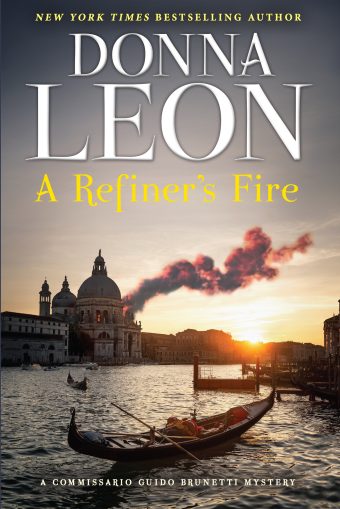
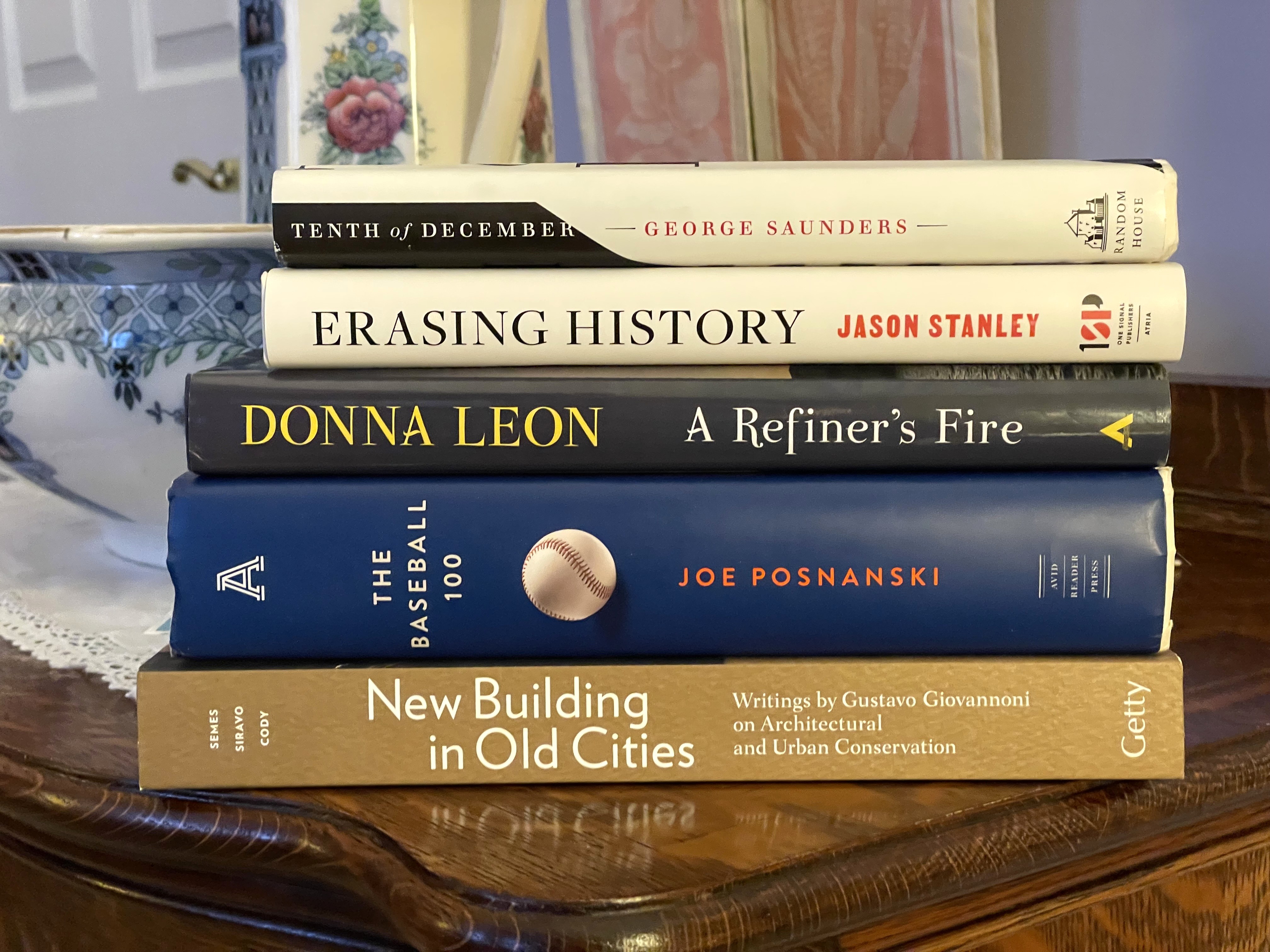
A Refiner’s Fire: A Commissario Guido Brunetti Mystery (2024) by Donna Leon begins early on a spring morning when two teenage gangs are arrested after a violent fight in one of Venice’s squares. Brunetti’s closest colleague, Commissario Claudia Griffoni, offers to accompany 15-year-old Orlando home when his father doesn’t come to the station to gain his release. Her innocent gestures, including lending Orlando her scarf to wear on an especially cold night, come back to haunt her as she and Brunetti learn more about Orlando’s father and his troubled past. As is her style, Leon brings together contemporary issues with past ghosts of deceit and acts of official wrongdoing to infuse this satisfying work with social and moral messages worth pondering. A final fiery and violent clash puts Brunetti in danger while offering others a chance for redemption.
Leon brings her characters to life in ways that continue to satisfy. Brunetti and Griffoni demonstrate a trusting teamwork that sees the corruption yet still strives for the truth. Brunetti’s pompous superior, Vice-Questore Giuseppe Patta, is surprisingly supportive of Brunetti’s work on this case, yet can’t conceal his vanity. The ever-resourceful secretary Signorina Elettra—a woman of “endless and instinctive deceit”—plays a key role in this newest book, as she helps Brunetti and Griffoni dig through layer-after-layer of coverups and lies. Brunetti’s wife Paola—a university lecturer in English Literature—plays a smaller role here but continues as a delightful and loving foil for her husband.
I read Leon’s latest story in the midst of our own very true-to-life setting of ill-gained, publicly flaunted, ostentatious wealth; corrupt politicians clinging to power and money through acts of sordid hypocrisy; a working class left behind with their abandoned factories and smoldering anger; and faithful public servants using all of their considerable abilities to bring a measure of justice to an unjust world. This book, just like the others I’ve read in the Commissario Brunetti series, rings true to life and continues to call us to strive for what is right, even in the midst of “the ambiguity between moral and legal justice.”
Virtually every spring since 2016 I’ve written about a ritual that I call “my personal spring training.” Baseball’s regular season, of a sort, starts tomorrow with the March 18–19 two-game series in Tokyo between the Los Angeles Dodgers and Chicago Cubs. The rest of the regular season begins on March 27. I’m just under the wire.
What is a personal spring training, you ask? Well, mine consists of reading a baseball book and re-watching Bull Durham. It is tough duty but sometimes a player’s got to do what they’ve got to do to get in shape for the long season ahead.
I’ve written about my love for the movie Bull Durham multiple times at MORE TO COME. On what was to be Opening Day in 2020, when the Washington Nationals were to celebrate their 2019 World Series Championship, I wrote a post entitled No Baseball Today. I quoted extensively from a smart piece by Washington Post writer Alyssa Rosenberg where she writes about“one of the greatest movies ever made about baseball, a brilliant romantic comedy and a film that stands as a rebuke to many of the false choices the entertainment industry now seems to take for granted.” She got most of that right, but Bull Durham is simply the best baseball movie ever. Here’s her synopsis:
“’Bull Durham’ takes place over a single summer, or more precisely, over a season for the Durham Bulls minor league baseball team. It concerns a love triangle among the team’s biggest fan and part-time English professor Annie Savoy (Susan Sarandon), rookie pitcher Ebby Calvin LaLoosh (Tim Robbins) and aging catcher Crash Davis (Kevin Costner), assigned to prepare LaLoosh for the majors. Annie, who takes a new player as a lover each summer, identifies the two as ‘the most promising prospects of the season so far.’ And though she ends up with LaLoosh, whom she nicknames ‘Nuke,’ when Crash explains that ‘after 12 years in the minor leagues, I don’t try out,’ she can’t get the older man out of her head—not least because he sees baseball the same way she does: as the encapsulation of a certain American idea and a particular approach to life.”
Rosenberg also provides this analysis:
“One of the central insights of ‘Bull Durham’ is that baseball and sex and romance are of equal interest to men and women. This is not a movie where a woman blithely wanders into a male realm she knows nothing about and finds love, nor one where a hard-bitten professional man finds himself distracted by a woman who reminds him that domestic life has its charms. Instead, Annie and Crash are both deeply knowledgeable about baseball history and the technical aspects of the game, even if they disagree about the best way to improve Nuke’s performance. ‘Bull Durham’ is a love triangle, with Nuke and Crash competing for Annie’s attention, but it’s also a triangle built around mentorship, with Crash and Annie jostling for preeminence in Nuke’s journey to the big leagues.”
I wrote again in 2023 when I reviewed filmmaker Ron Shelton’s gem of a book The Church of Baseball: The Making of Bull Durham. Shelton, a former minor league baseball player turned writer and director, has a passion for this multi-faceted story that still shines through. And the tale of how Shelton—along with Kevin Costner and Susan Sarandon—pursued every angle to make this film in spite of great odds is worth knowing as well.
Here are two great clips, the first being “the road of excess leads to the palace of wisdom” scene.
And then there is the mound visit that the studio “suits” wanted to cut. It became so iconic—with Larry’s “candlesticks always make a nice gift” line—that it made Joe Posnanski’s Why We Love Baseball.
Bringing up Posnanski takes me to the book I read for this year’s personal spring training. I went back to what was an instant classic, an intimate and very personal look at baseball history through the lives of the 100 greatest players of all time.
The Baseball 100 (2021) by Joe Posnanski—the self-described “writer of sports and other nonsense”—is characterized by the publisher as “a magnum opus…an audacious, singular, and masterly book that took a lifetime to write.” It is pure baseball bliss. Posnanski originally wrote this over a 100-day stretch for the web pages of The Athletic. But the compendium is much more satisfying. First, the rankings are important—and instantly give the reader a chance to argue with Joe, which he encourages. But they serve the larger purpose of providing this talented writer and lifelong fan with a chance to explore baseball’s rich, deep, diverse, and at times challenging history. A history that—like all history—is under construction.
For the past couple of months I’ve been re-reading chapters off and on before heading to bed. Truth in advertising, I did not go back and read every one of the 827 pages on what is, in some instances, my third pass through this work. But I did read enough to get my juices up for the coming season, and I finished it off by reading the chapters on each of his top 15 players.
15. Josh Gibson—the great Negro League catcher and slugger
14. Lou Gehrig—the Yankee ironman
13. Roger Clemons—the “son” part of one of many poignant father and son stories Joe includes in the book
12. Honus Wagner—the greatest and most beloved player of his day
11. Mickey Mantle—just the name is enough
10. Satchel Paige—the Negro League and MLB great who could put the ball wherever he wanted because “home plate don’t move”
9. Stan Musial—Stan the Man
8. Ty Cobb—the most dominant player of the Deadball era
7. Walter Johnson—the Big Train
6. Ted Williams—the greatest hitter ever, and the Ella Fitzgerald of profanity (you’ll have to read the book)
4. Henry Aaron—Hammerin’ Hank, and to many the true home run king of baseball
3. Barry Bonds—the only player who got two profiles in the book, one for fans and one for critics, because “that’s just the deal” with Barry Lamar Bonds
2. Babe Ruth—the Babe will never die . . . nobody would ever argue that any other 1920s athlete is still the greatest ever
And #1—in Joe’s book and mine—is Willie Mays. “The greatest baseball player is the one who lifts you higher and makes you feel exactly like you did when you fell in love with this crazy game in the first place. Rest in Peace, the Say Hey Kid.
Remembering John Feinstein
John Feinstein
Finally, I want to take a couple of paragraphs to remember the great Washington sportswriter John Feinstein, who died on March 13th at the age of 69.
“Feinstein started his career in the 1970s at The Washington Post as a night police reporter before covering sports. He also contributed to NPR, ESPN, the Golf Channel and Sirius XM, and wrote more than 40 books on a variety of sports, in addition to novels for young readers. Most famously, Feinstein followed Indiana University’s basketball team for a season for his renowned 1986 book ‘A Season on the Brink.’”
Feinstein was not always great as a writer, but he was always certain about his opinions. He graced the pages of MORE TO COME on several occasions, most recently when I quoted his column about the egregious trade of Juan Soto by the tightwad owners of the Washington Nationals. He was spot on in calling out their love of money and disdain for the fans.
Feinstein’s father was the director of the Washington Opera, and I wrote about that part of his life in a 2021 piece on false patriotism. And in 2016 I reviewed his book Where Nobody Knows Your Name about minor league baseball.
But other sportswriters have the best vantage point to comment on Feinstein’s life and legacy. Posnanski, of course, has a great take in his appreciation.
“John did not perform his magic with flashy prose or poetic verve. He just reported the hell out of stuff. Over the years, he wrote about everything in sports — ‘A Good Walk Spoiled’ about golf, ‘Where Nobody Knows Your Name’ about minor league baseball, ‘A Civil War’ about the Army-Navy Game, ‘Forever’s Team’ about 1978 Duke basketball.
Oh how John loved his Duke basketball.
He was centerstage of his generation of sportswriters, the generation I idolized, those sportswriters who wrote about every sport and knew everybody and, yes, just reported the hell out of things.”
My good friend Ed Quattlebaum sent me part of Dan Shaughnessy’s tribute from the Boston Globe. It is classic Feinstein.
“Feinstein was a ferocious Washington Post reporter who authored more than 40 books, 23 of which became New York Times bestsellers, including the groundbreaking ‘A Season on the Brink,’ the story of the 1985-86 season with Bobby Knight’s Indiana Hoosiers. Knight was unhappy with Feinstein’s No. 1 bestseller and called Feinstein ‘a whore and a pimp.’ Never one to back down, Feinstein said, ‘I wish he’d make up his mind so I’d know how to dress.’”
There’s an old Irish saying that goes: “May your home always be too small to hold all your friends.” With St. Patrick’s Day around the corner, I’ve been reminded this month just how beautiful a blessing that is.
As my 70th birthday approached I knew that we would be gathering a few friends for an intimate dinner. But Candice and the twins also sent an email out to friends and family with a request to help with the celebration:
“Our hope is that David can have 70 cards to open as he nears March 4th. This could be a card, a note, a memory shared of your time with him. How do you see David? What are your favorite things about him? What are your wishes for him for the next decade?
Will you help us reach this goal? We’d love for David to hear from so many of the people he’s loved through the years as this milestone approaches.”
This was all happening behind my back, so I didn’t see (at first) the replies that Candice received, such as the one from a friend we met in 2016 at the American Academy in Rome. Alice immediately replied to Candice’s email with the following (including the picture):
“What a lovely idea (particularly before DOGE eliminates what’s left of DeJoy’s postal services).
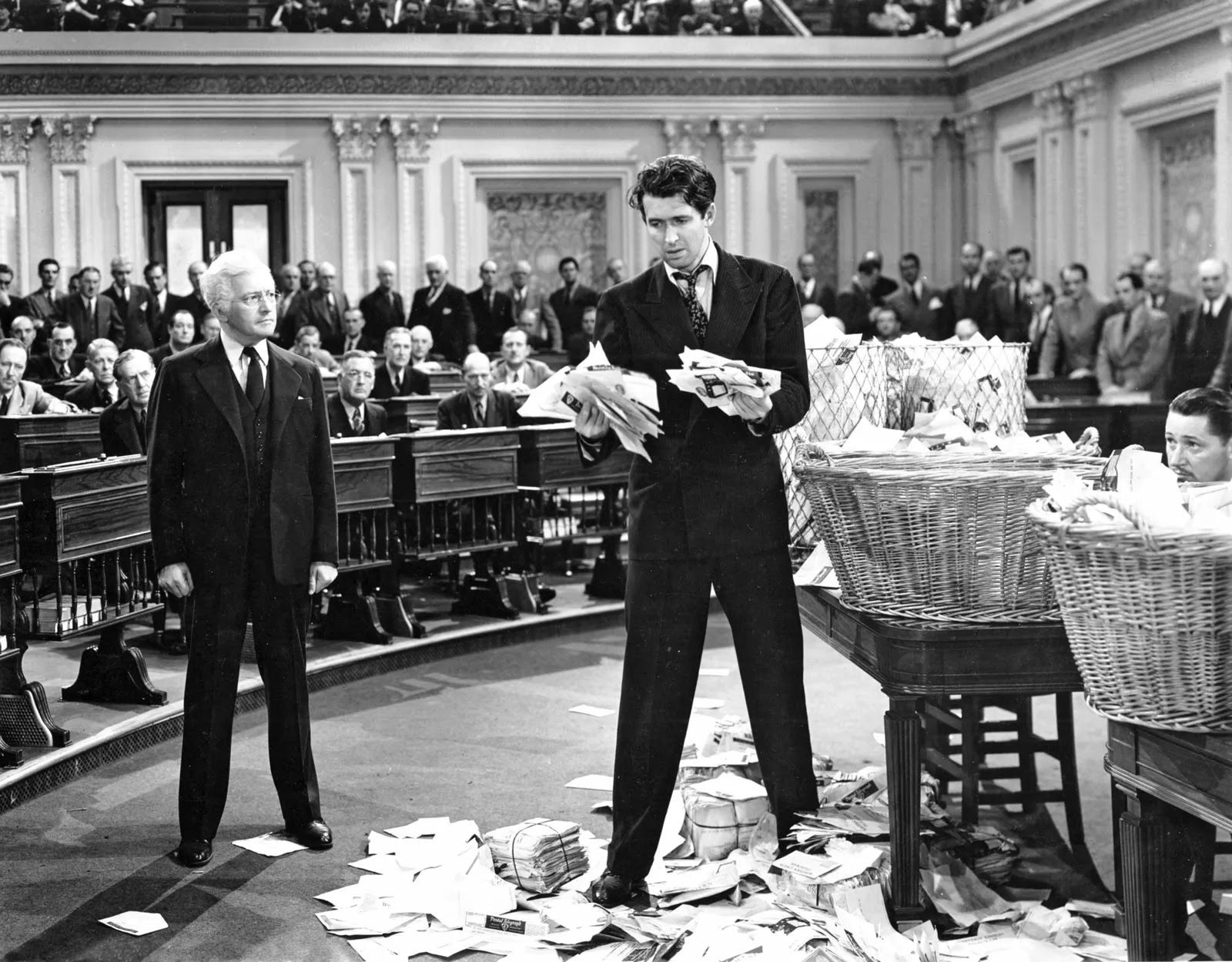
I picture the famous scene of Jimmy Stewart/Mr. Smith dumping stacks and stacks of mail in support of THE RIGHT THING!!
I’m honored to be asked to contribute! Will do.”
This won’t be the last reference to Jimmy Stewart.
Thinking of joy can be tough when the country is under attack by cretinous, cruel, and often criminal men who are troubled and delusional. One is an infamous right-wing provocateur who talks about “flooding the zone with s#*t.”
Wouldn’t life be better if we flooded the zone with love, instead? This is a post that shows what can happen when we overwhelm our little part of the world with kindness and love.
Checking the daily mail with great anticipation
About a week before my birthday, I went out to pick up the mail and saw a card from a dear friend in North Carolina. Now Martha and I worked together back in the 1980s and we’d always shared holiday cards and greetings, but it struck me as odd that she had sent a beautiful birthday card with a nice note. How did she even know?
All was soon revealed. There were four or five cards in the next day’s mail, and from the breadth of responses I knew something was up. Candice and Andrew admitted to their little caper and shared the note along with the email responses received.
It has been a long time since I checked the daily mail with such anticipation.
Much like when announcing my retirement, I was once again struck by the overwhelming kindnessof the remarks. It truly caught me off guard.
Loving the opportunity to get older
An early sampling of the almost 80 cards (to date) that showed up in my mailbox
“Aging is such a privilege” wrote a friend I’ve known since my college days (when I knew her parents). My memories with Becky stretch over good times and really difficult times. “I truly celebrate birthdays and the opportunity to get older,” she wrote in a most gracious note that wasn’t the last time I had tears in my eyes. I couldn’t agree more.
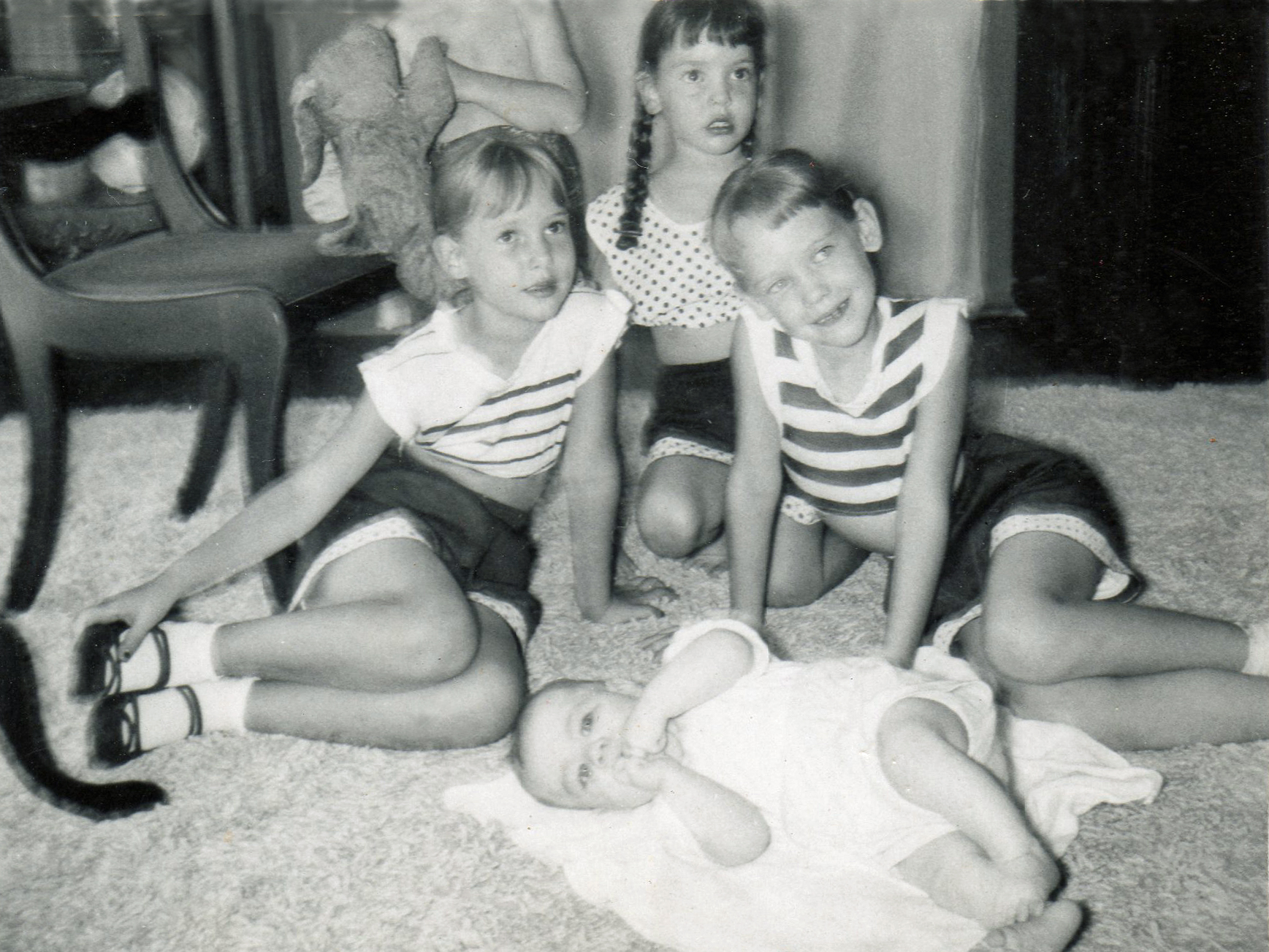
A favorite cousin sent along a card with a picture showing me with her and two of her sisters some 70 years ago. Her card mentioned that her memories are of my blue eyes while her sister Jane remembers my long eyelashes. While my eyes may not have always worked the best in terms of sight, I’ve been told on more than one occasion (most often by my wife) that they look good to the beholder. I’ll take that tradeoff.
DJB with his Reeves cousins Jane, Nancy, and JoAnn in 1955
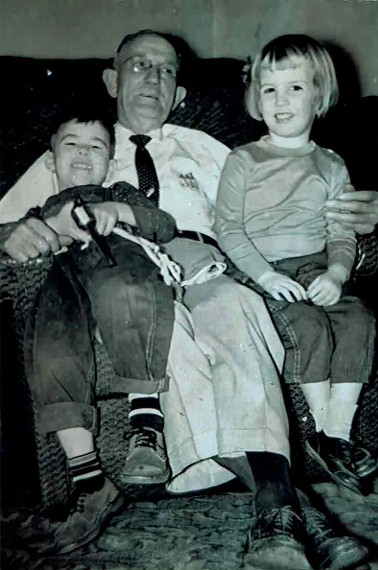
My sister Debbie—who is just 18 months younger than me—sent along a note that suggested that I had made her school days easier. “All I had to do was say ‘I’m David Brown’s sister’ and I was in!” I used the same tactic when I followed in my older brother Steve’s wake. Debbie also enclosed pictures of the two of us from the 1950s. I loved them all but, like her, I felt the last one, where we are sitting with our Granddaddy Brown in 1959, is a treasure.
“I don’t have much remembrance of him as he died on February 4, 1961, when I was only 4 years old,” Debbie wrote. “Love that classic pocket protector he filled with pens just as his son did in his day!”
Christmas 1957With Granddaddy Brown 1959
Colleagues help make work joyful
Speaking from the pulpit at the Ryman Auditorium: The Mother Church of Country Music
I heard from a number of former colleagues from days at the Georgia State Historic Preservation Office (the 1980s), Historic Staunton Foundation (1983-1988), the Preservation Alliance of Virginia (1988-1996), and the National Trust (1996-2019) which includes time working with the International National Trusts Organisation. One sent a dozen mini bundt cakes to arrive at our door, sweet treats we enjoyed throughout the week. Each colleague who reached out had special memories of our work together, and I was moved by the times these friends talked about how our relationship made a difference in their lives. As one wrote, “So many good things have come about” because of that work. The feeling is mutual.
A dear friend who lives across the pond wrote to say that I had always been her Colonel Pickering, always seeing her as more than a “flower girl.” That description was certainly a first, and her card brought back many wonderful memories, including the time we visited their home in the U.K. where I had the opportunity to help her daughter with her “States of America” homework. (If memory serves me correctly, I think I gave Connie some hot tips about Wisconsin!)
Mentors encourage the best in you
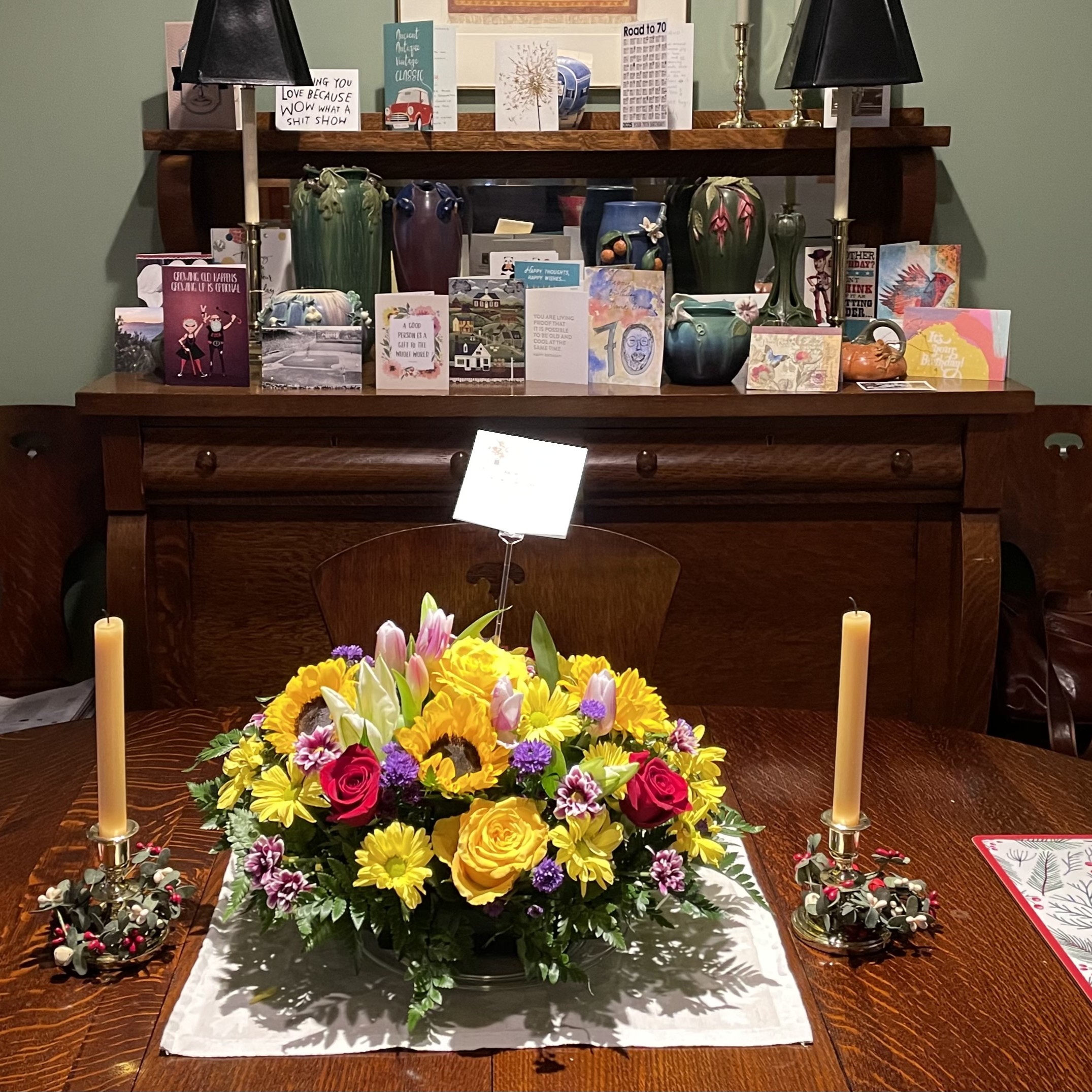
Every available space around our living and dining room has been filled with cards.
I have been fortunate to learn from so many exceptional people during my 70 years. Several wrote to wish me a happy birthday. One, who guided me through a difficult, challenging, and ultimately fulfilling professional period, highlighted skills she admired that I would have been quick to use in describing her life. Good mentors find ways to encourage the best in you, and Nancy’s note that we remained “treasured colleagues” certainly touched me.
Another mentor wrote to say, “If God, like a parent, takes delight in seeing their child enjoy a gift, then God must be absolutely delighted with the way you enjoy your life as a gift from God.” I was simply bowled over by that note, especially coming from such a wise and loving priest.
A third, a psychologist who has been so helpful in the life of our family, wrote a loving note and then followed up with a face-to-face conversation. When I mentioned the kindness shown in these cards, Robin said that small acts are like the San Andreas Fault: a slight shift can result in the toppling of a mountain miles away. We never know how those acts and words will affect others.
A thoughtfully chosen card speaks volumes
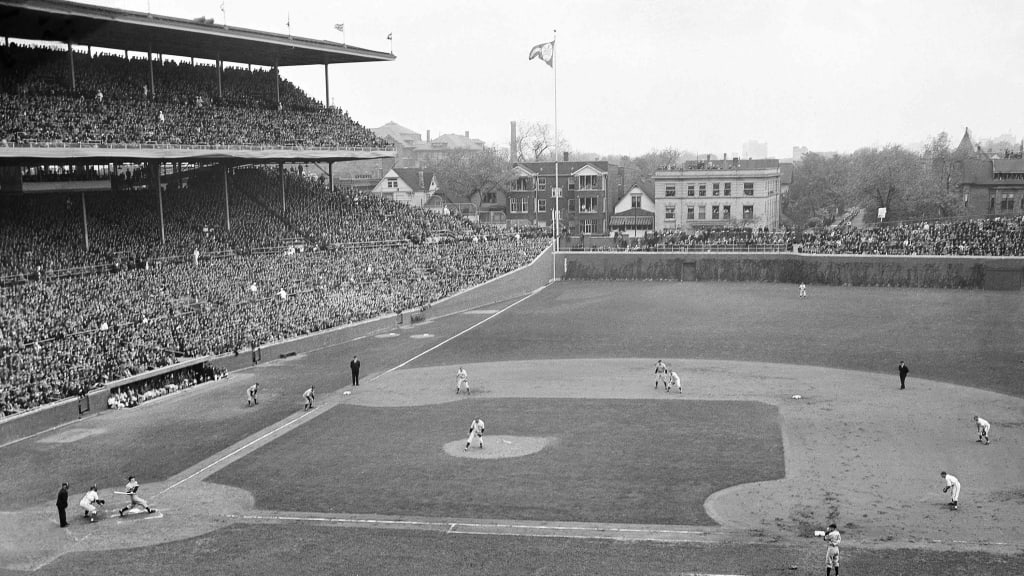
October 5, 1938 World Series game at Wrigley Field
Many of those who wrote went out of their way to find (or create) cards that were just right for the moment and/or our relationship, such as a set of beautiful postcards from Rome. A very dear friend and fellow baseball enthusiast sent a postcard showing the October 5, 1938 World Series game at Wrigley Field. Ed wrote, “I am older than you; still, rumors that I was at this game are UNFOUNDED!”
I also loved the card that suggested,
“You are living proof that it is possible to be old and cool at the same time.”
I’m going to believe that this is actually true.
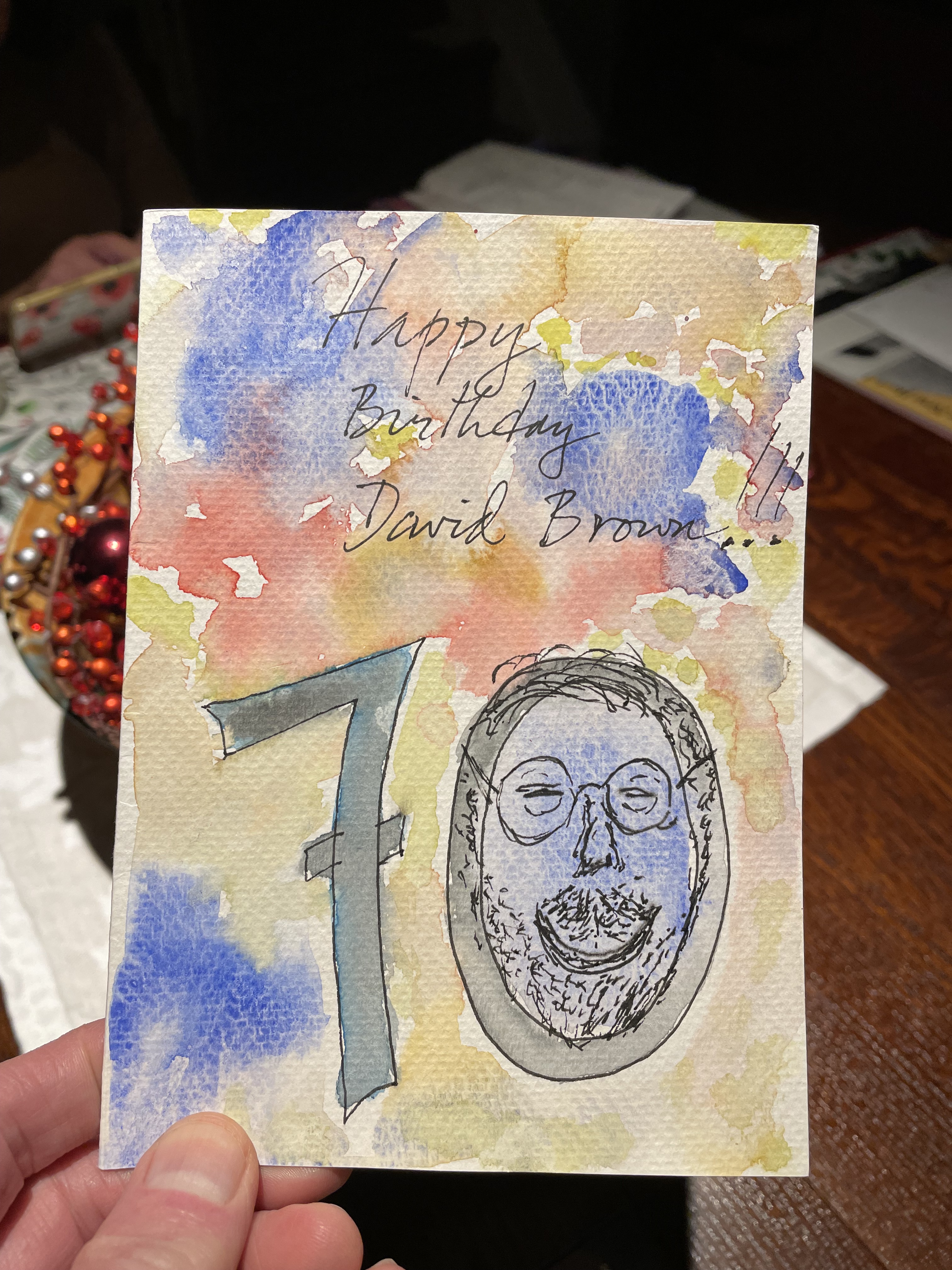
Another friend I first met at the American Academy in Rome sent a hand-painted card(!) along with some bullet points to describe our life together:
You squeeze the juice out of life (and share it with others)
You know when to bunt (and when to swing away)
Your life’s “song” has been harmonious and loving, and . . . (there’s MORE TO COME!)
Finding just the right words
The richest man in town
A good friend who now lives in Alabama wrote a note that included this wonderful gem:
“Cheers to one of the richest people I know (in a George Bailey kind of way.)”
One of the great things about the movie It’s a Wonderful Life is that George Bailey (played by Jimmy Stewart) spends his entire life helping people yet doesn’t realize how many friends he has until he is in trouble. At the end of the movie the community turns a plea to save George from financial ruin into a celebration. If you don’t cry at that scene, well . . .
Rabbi Evan Krame has written that the experience of giving should be a cause for joy and not consternation. I certainly see that in the gifts of kindness shown to me over the past couple of weeks, not to mention over the past 70 years. Having been the recipient of extraordinary kindnesses of all types, I know the positive effect the giving of kind words and gestures can have on an individual.
Flood the zone with love
My first ever flowers! A beautiful gift from a loving cousin-in-law (if there is such a thing).
There are a few things I want to accomplish in whatever time is left. I want to enjoy more drinks and meals with friends. To be more generous with my time and talents. To work where I’m effective to support democracy, equality, and justice. To read more books. To smile more often. To continue to travel as long as I’m physically able. To walk more, and to walk more in nature. To listen more. To talk less. To make sure that the people I love and care about know that without question. To be gratefully aware, not just every day but every hour in a way that leads to true thankfulness. To be a friend.
Especially through these difficult days, I want to try to be nice, but always to be kind.
With an abundance of gratitude. More to come . . .
The Christian season of Lent is a time of self-examination and repentance. But when economic forces work overtime to endlessly distract us and evil rises up amid lies and anger to destroy what is good, where and how should we focus our reflection, attention, and energy?
“To pay attention, this is our endless and proper work.”
Mary Oliver
There are tens of millions of men, women, and children facing devastation in their lives—lost jobs, lost homes, cuts to health care, lack of access to food, families torn apart, crippled social services, deportation—because of the capricious, cruel, and often criminal decisions made by troubled and delusional men.
There is so much to do. Where then, should we focus our attention?
First, be intentional
Desert Rains & Where We Focus Our Attention by writer and poet Carrie Newcomer begins in an Arizona desert that has experienced an endless drought. “Even the desert has its limits and water was sorely needed, plants that had perfectly evolved over thousands of years to conserve and endure a harsh environment were showing serious signs of stress.” But rain arrives, providing Newcomer with the setting for a beautiful meditation.
“Just like a seed that requires all the energy it gathers beneath the February snow to push up through the surface in the spring, I cannot hope to grow with real clarity and purpose unless I also gather and expend my energy with intention. Just like the desert plants who needed to give full focus to what was life-giving during a threatening drought, I cannot hope to weather my own personal tragedies and challenges or faithfully respond to the collective environmental and political crisis we currently face without guarding my attention and being deliberate about my energies.”
We cannot do everything. We can do something.
Gathering to march to the State Department in Washington, DC last Friday as part of the “Stand Up for Science” nationwide protests.
People Get Ready by historian and writer Rebecca Solnit begins with an admission of horror at the moral ugliness of what the Trumpists are doing. But the fear is balanced by exhilaration at “what a whole lot of the rest of us are doing, and the moral beauty of it. The horror and the wonder can coexist, just as the worst and best of us do.”
One way evil affects us is by isolating the mind and killing the heart. “Isolated minds disregard the essential value of others . . . when evil kills the heart it takes away love, compassion, understanding, forgiveness, and gentleness.” To combat that in your own life, remember the wonder amidst the horror. And consider a means of activism that works for you.
“. . . just speaking up and not letting the truth get buried under lies matters. A huge percent—ultimately all of us—in this country are impacted by the destruction of a functional federal government and the attack on a whole lot of stuff we love and need, from reliable weather reports to public health to science research to sane international relations. In a way, Trump and Musk may be building the broadest coalitions this country has ever seen, or at least giving us the basis for such coalitions by injuring and outraging almost everyone.”
It is up to us
We’re seeing the beginnings of mass noncompliance by Daniel Hunter “describes how first ordinary federal workers and then Trump cabinet members and heads of departments refused to comply with Musk’s insanely demeaning ‘list five things you did this week’ email directive.”
“This is how noncompliance works. It’s a chain reaction of smaller to bigger dominoes—the smaller ones knock down the bigger ones and on and on until the bigger dominoes fall. What we just saw is the largest mass noncompliance with Elon Musk (so far)…. This is the general direction we need to go. Musk says ‘jump’—and we all say ‘nope’ . . .”
Don’t let them bury the truth
For those who feel more comfortable writing or speaking with neighbors about what is happening to our country, consider reading Anand Giridharadas piece from a few years ago on The Myth of the Good Billionaire in the New York Times.
“. . . our problem isn’t the virtue level of billionaires. It’s a set of social arrangements that make it possible for anyone to gain and guard and keep so much wealth, even as millions of others lack for food, work, housing, health, connectivity, education, dignity and the occasion to pursue their happiness.”
Multibillion-dollar fortunes are not only excessive and decadent, notes Michael Tomasky, but they are also anti-democratic. These fortunes are literally destroying our democracy. We need to make and reinforce that point again and again.
We can also be ready to respond to outright lies. The Economic Excuse Industry is Booming by Paul Krugman is helpful in understanding the coming tsunami of falsehoods around the completely understandable disappointing economic performance under the new administration.
The response to Donald Trump’s speech to Congress by Senator Elissa Slotkin also provides simple yet powerful words to help us all understand the issues and frame our conversations.
“President Trump is trying to deliver an unprecedented giveaway to his billionaire friends. He’s on the hunt to find trillions of dollars to pass along to the wealthiest in America. And to do that, he’s going to make you pay in every part of your life.”
Senator Slotkin calls us to continue to use our minds and hearts. Democracy is at risk, she notes, “when the President pits Americans against each other, when he demonizes those who are different, and tells certain people they shouldn’t be included.”
“Because America is not just a patch of land between two oceans. We are more than that. Generations have fought and died to secure the fundamental rights that define us. Those rights and the fight for them make us who we are.”
Oh, and bring some humor to your conversations. Even though these are serious times, don’t be over-cautious and over-earnest in how you talk about everything. Humor is important to any political movement, but especially in the anti-Trump resistance.
“Our goal in life is not to become more spiritual, but to become human” writes Franciscan priest Richard Rohr. When we easily slip into judgement about the worth of others, either individually or as groups, we diminish our own humanity. As a mentor reminds me, the job of God is already taken. This type of judgement isn’t ours to make. Reuniting our minds and hearts can set us on the path of becoming our true selves.
Don’t feel bad if you cannot sort through all the moral ugliness of the moment. To have all the answers might be proof that you aren’t asking the right questions. Be intentional about guarding your energies and focusing your attention.
Paradise on earth is a paradox. Life is and. There will be good and bad. Uncertainty and mystery are perhaps where all of us need to make our home.
More to come . . .
DJB
UPDATES:
Just a quick note to say that Dan Froomkin had an excellent summation on his Heads Up News this morning about the range of reactions we’re seeing across the country to the Trump regime.
Books are one way to fight back against the multi-billion-dollar industries that have based their fortunes on acquiring and keeping our attention and energy. The shift into an “attention economy” has come “blindingly fast and it absolutely and deliberately pings parts of our brains that are innate and unconscious,” notes poet and songwriter Carrie Newcomer. We have to make a very conscious decision where we choose to place our attention and energy.
Each month my intention is to read a minimum of five books on a variety of topics from different genres. Here are the books I read in February 2025. If you click on the title, you’ll go to the longer post on MORE TO COME. Enjoy.
Every Valley: The Desperate Lives and Troubled Times that Made Handel’s Messiah (2024) by Charles King is a masterful work worthy of the subject. Rather than look at the birth of this masterpiece through a narrow musical lens, King takes the reader on a compelling and vividly written journey through the lives of a set of characters living in the turbulent times of the early-to-mid 18th century. This is a historian who writes with “verve and authority,” ensuring that you will never listen to George Frideric Handel’s epic Messiah the same way again. King shows how a “universe of pain” coupled with the lives of imperfect humans could come together “to make a musical monument to hope.”
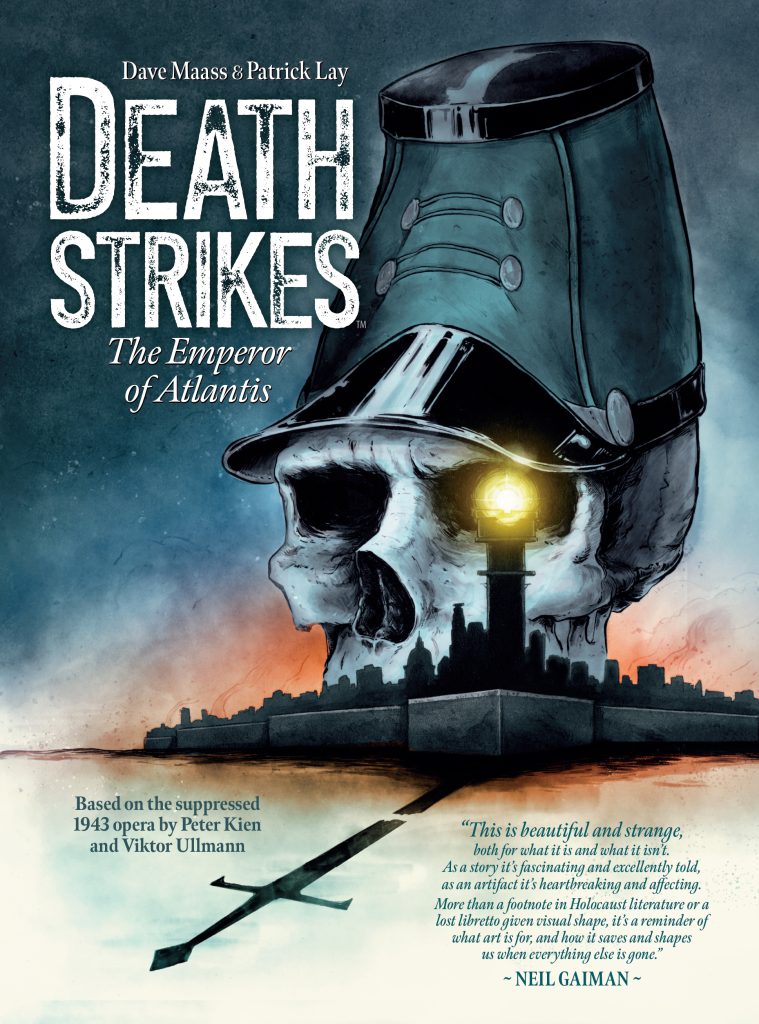
Death Strikes: The Emperor of Atlantis (2024) by Dave Maass and Patrick Lay, inspired by the Viktor Ullmann opera Der Kaiser von Atlantis, is a new graphic novel that mixes “dystopian sci-fi, mythic fantasy, and zombie horror.” Atlantis did not sink in this alternative universe but instead became a technologically advanced tyranny. The “power-mad buffoonish Emperor declares all-out war—everyone against everyone.” Death, however, has other plans and goes on a labor strike, “creating a hellscape where everyone fights, but no one dies.” The novel’s illustrations are powerful and biting and the book also includes drawings of Peter Kien’s designs from the original opera, historical essays, photographs from the prison camp, and more.
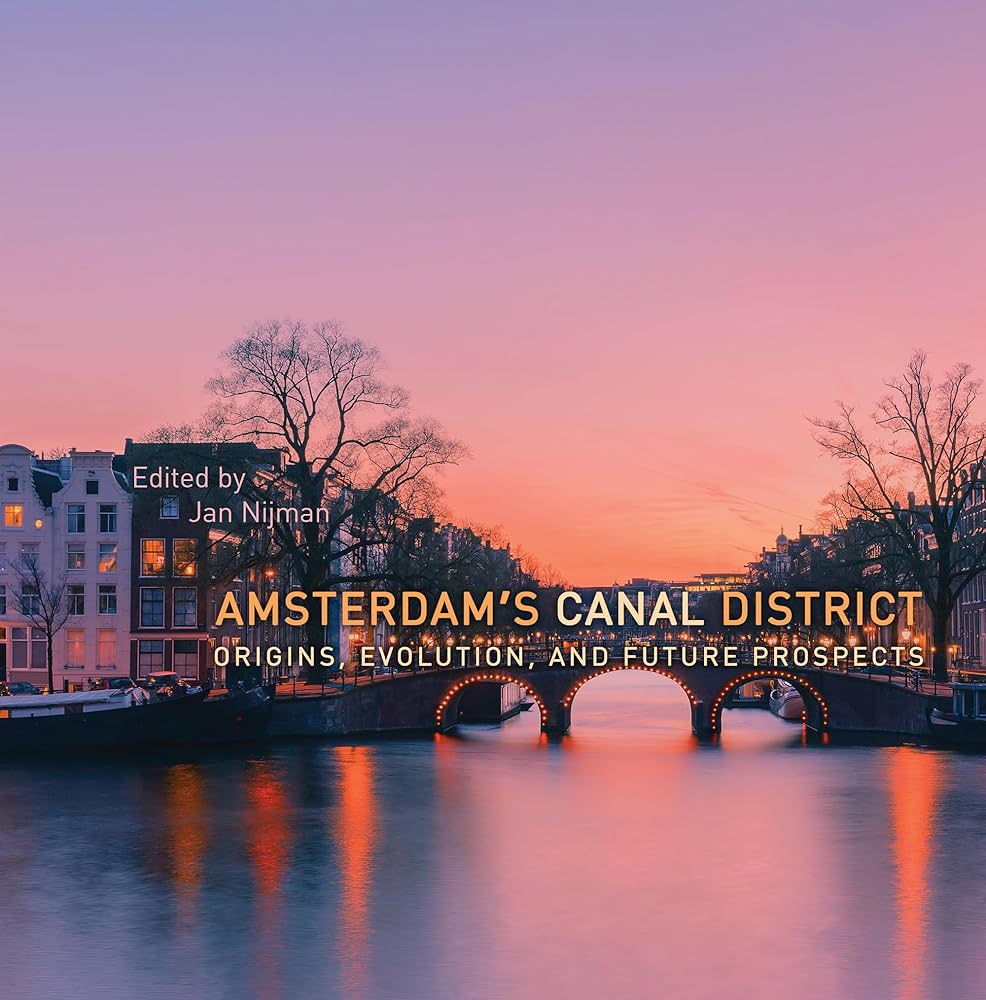
Amsterdam’s Canal District: Origins, Evolution, and Future Prospects (2020) edited by Jan Nijman moves beyond the typical focus on the iconic district’s creation in the country’s 17th century Golden Age to bring together an impressive list of scholars to highlight lessons learned from the district’s evolution. Working from a variety of disciplines, these scholars also bring varied perspectives to the study of contemporary debates facing this world class city. There is no interest among these writers in seeing the city become a memorial to a lost culture. Instead, this work is a call for “the outward appearance of its architecture to be linked with the identity of the people who created, used, and maintained it, and still inhabit it.” People are at the heart of this important work.
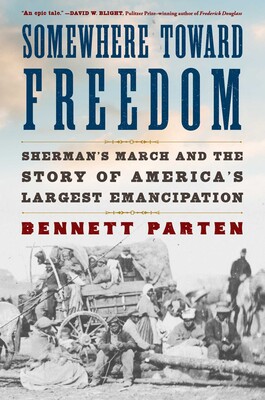
Somewhere Toward Freedom: Sherman’s March and the Story of America’s Largest Emancipation (2025) by Bennett Parten makes the compelling case that this seminal event in the Civil War—when Sherman’s army cut a path through Georgia from Atlanta to Savannah—was a turning point in the history of American freedom. When as many as 20,000 formerly enslaved men, women, and children followed the army as war refugees, it was the largest emancipation event in our history. Because of its wide impact and long-lasting aftereffects, we can now see Sherman’s March not only as one of the last campaigns of the Civil War, but also an early battle of Reconstruction. It is important because we continue, here in the 21st century, to live with the consequences of this march toward freedom. In this post, author Ben Parten graciously agreed to chat with me about his new work.
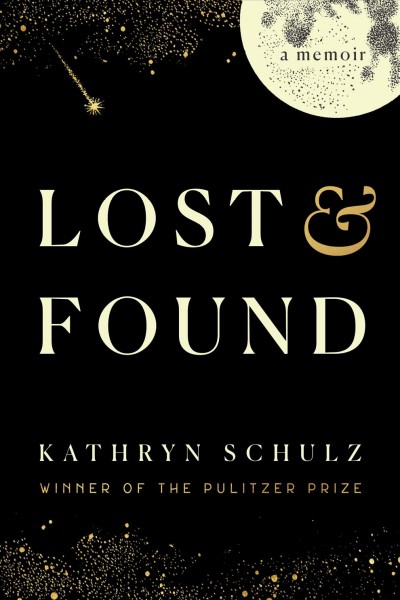
Lost & Found: A Memoir (2022) by Kathryn Schulz is a tender, searching meditation on love and loss and what it means to be human that I returned to read during these troubled times. Schulz, an exquisite writer, knows that there is both a wonder and fragility to life. While many feel small and powerless in the face of that reality, it is also easy to feel amazed and fortunate to be here. Schulz is clearheaded in her exploration of the mixed experiences and motives we encounter. As she moves through life, Schulz notes that her days are exceptional even when they are ordinary. “We live remarkable lives,” she writes, “because life itself is remarkable.”
What’s on the nightstand for March (subject to change at the whims of the reader)
Pulling back the curtain on the creation of a universally beloved work of art can be a daunting task. The backstory has the potential to lessen the final product or diminish the impact when we once again encounter the work.
But when you have a first-rate storyteller producing what one reviewer describes as a delicious history of music, power, love, genius, royalty and adventure, then that creation story can be illuminating in expanding—if such a thing is possible—the sublimity of the work itself. At the very least, after reading a new work by a historian who writes with “verve and authority,” you will never listen to George Frideric Handel’s epic Messiah the same way again.
Every Valley: The Desperate Lives and Troubled Times that Made Handel’s Messiah (2024) by Charles King is a masterful work worthy of the subject. Rather than look at the birth of this masterpiece through a narrow musical lens, King takes the reader on a compelling and vividly written journey through the lives of a set of characters living in the turbulent times of the early-to-mid 18th century. In doing so, King shows how a “universe of pain” coupled with the lives of imperfect humans could come together “to make a musical monument to hope.”
Many of us know the traditional story of the creation of Messiah. Handel had immigrated to London from Germany, and by the 1720s and ’30s his popular Italian-style operas “had made him a musical megastar.” By the time he reaches his 50s, however, he is writing oratorios and his popularity was waning. He receives the text that would become Messiah and composes the music somewhere between three and four weeks in August and September 1741, an astounding period of productivity. It debuted in April of 1742 in Dublin and then later in London.
But there is so much more to the story than the work of a singular musical genius. King provides the context of the troubled times, a period when wars were everyday occurrences, Britain was still in formation as a nation, parliamentary government was in its infancy, and the threat of regime change—at this point from the restoration of the Stuart line and the invasion of Bonnie Prince Charlie—was everywhere. Huge fortunes were being made in the trafficking of other humans through the trans-Atlantic slave trade. Men had complete control over their wives, to the point that they could give their spouse to another man for sexual pleasure in exchange for money and then feel justified in taking them to court when the liaison became more than a business transaction. Orphans roamed the streets of London, and almost 75% of all children died before the age of five. Pain was everywhere.
Add to these times of fear the desperation of a handful of people who each contributed to the creation of this monument to hope. A country squire and political dissident, Charles Jennens was emotionally tormented and found “solace in the elevating power of awe.” He would have the original idea for Messiah and gather the texts together which are now so familiar.
Susannah Cibber was a talented actor of the day who had the misfortune to be plagued by an abusive husband. Her name became synonymous with scandal when she was taken to court by that husband because she fell in love with the man her husband had given her to for sexual favors in exchange for money and backing. The tabloids of the period had a field day with the testimony. She would make the risky choice of singing the mezzo role in the Dublin debut which includes the dramatic “He was despised” text that she made her own and that contributed to her redemption as an artist and as a person.
The famous Irish cleric and satirist Jonathan Swift also played a role, almost wrecking the entire enterprise before it got off the ground in Dublin, only to relent by granting Handel the use of his cathedral chorus for the debut. And while the work debuted to acclaim in Dublin and enjoyed some modest success, Messiah would only become the recognized and beloved masterpiece over a decade later when it was performed to overflowing audiences in a church. That sacred space represented the life’s labors of Thomas Coram, an Atlantic sea captain and “penniless philanthropist” whose mission in life became helping other people’s children.
Finally, Handel himself was at something of a personal and popular crossroads when he receives this unconventional text from Charles Jennens and decides to try and make something of it. As one reviewer notes, “You can imagine him thinking, ‘Hmpf, what am I gonna do with these? I got a bunch of Bible verses in the wrong order that I’m supposed to set to Italian opera music?’ But he does it.”
King’s book describes the final product as “weird.” And the author laughingly doubles down on that assessment in a CBS interview. “It is weird. It’s the strangest thing that Handel ever composed.”
But out of this universal pain and the very flawed individuals who all played important roles along the way, Handel also composes one monumental musical testament to hope.
“Messiah matters not just as an epic piece of music but also as a record of a way of thinking, an archive in song handed down from a period of profound anxiety about improving the world whose deepest message is that one nevertheless had to try.”
King captures all of this in an illuminating and fast-moving story that pulls the reader along to the very satisfying conclusion. He ends this beautiful work with the exact words that open Handel’s masterpiece.
“Comfort ye.”
To remind yourself of the power of Messiah, I have included this version, performed on December 6-8, 2024 at the Duke Chapel in Durham, North Carolina. The performers include:
Set aside a couple of hours to bask, once again, in the power of hope, where every valley is exalted, mountains are made low, and crooked paths are made straight.
5. Focus on what you can control. Epictetus described this as our “chief task in life.” I can’t control the weather or how the president acts but I can control my attitude, emotions, desires and response to external events and challenges. Anne Lamott helpfully reminds us: “Expectations are resentments under construction.”
“Cheers to one of the richest people I know (in the George Bailey kind of way)!”
Note from a friend that reflects my feelings at the moment. This birthday card was one of several dozen received this past week after Candice asked family and friends to help in the celebration of my 70 years. There are three other tables and bookcases filled with cards around our dining room table.
8. Connect and commit. When someone needs a word, a card, a lift, a meal, a changed tire, try to be there for them. I’ve been on the giving and receiving end of each of these things, and they mean so much to both giver and receiver.
9. Work hard for justice and democracy as the fight never ends. “If you are neutral in situations of injustice, you have chosen the side of the oppressor.” (Desmund Tutu)
My father at age 90 in 2015
10. It is true that as we age we can very easily become our parents. I have become my father. I repeat many of the same stories. (Did you know that I paid more for my last car than for my first house?) I am a dyed-in-the-wool Southern liberal. At age 70 I still have good-looking legs. Until I had my recent cataract surgery, I couldn’t see worth a damn without my glasses and—if you ask Candice—my hearing still remains suspect. I love to read and tell others about the books I’m reading. Body and Soul and the St. Louis Blues are still among my top 10 favorite songs of all time. It was a special blessing to have a father who lived to be almost 91—especially when that father was Tom Brown.
11. I will cry at the movies, at weddings and funerals, over lunch with a friend who has just lost their job, and while reading books. Unlike ties, which I seldom wear these days, a handkerchief is an essential part of my wardrobe.
12. Take the time to figure out a few “rules for the road of life,” reminders of how you want to live over time.
13. Prioritize stillness. In a noisy world, a couple of hours each day without chatter (or a phone screen) where we can simply think (or not think) is essential.
14. Any day is a good one to consider lifestyle changes, but milestones are especially appropriate. My father stopped smoking 70 years ago today, joking (I think) that he couldn’t afford two expensive habits.
“Like snow blown before a lighted window, we pass in and out of light and shadow on the journey between now and forever. ‘It all happened so quickly,’ we say and yet there were hundreds of eternities that opened in the eye-blink of days of the year just past. In my end is my beginning—the perpetual paradox of becoming.”
Marv and Nany Hiles from An Almanac for the Soul
15. It’s possible to not have an opinion. You don’t have to let something upset you and you don’t have to think something about everything.
16. Entertain the possibility that you might be wrong. Ten years ago I was adamantly opposed to a pitch clock in baseball. Then I began attending games that moved with a delightfully quick pace. I was wrong, and I’m sure there are (many) other instances where I hold strong opinions that are absolutely and positively incorrect. But then, I could be wrong about that.
17. “Cowardice is easy. Courage is hard.” (Ron Johnson, Missouri Highway Patrol, after his work in Ferguson) “Courage is the most important of all the virtues because without courage, you can’t practice any other virtue consistently.” (Maya Angelou)
My birthday often falls during or near the season of Lent
“[T]his time of year, like every year, calls for deep reflection on the state of our being in the world . . . How we react to the events of the world are dependent upon where we are situated in our spiritual lives. Lent, that 40-day season of deep reflection, fasting, and prayer can serve as a healing balm to the fractures of society . . . [C]arve out time during this 40-day period to center on yourself and your place in this world. The end result, in my experience, is a deepened contentment with life.”
19. Much that is wrong in America today is that the language of wanting, winning, or simply taking—the language of self—has supplanted the language of community, sharing, fairness, and riding politely alongside our fellow citizens. Libertarians have politicized the protests of children who scream through tears, “You’re not the boss of me.” Krista Tippett calls instead for “adventurous civility” that honors the difficulty of what we face and the complexity of what it means to be human.
20. Never give up on anyone, never hate anyone, and act with love whenever you can.
21. Education, experiences, and travel trump “things” hands down. When you have a limited amount of money, go for the things that feed the soul and widen your perspective.
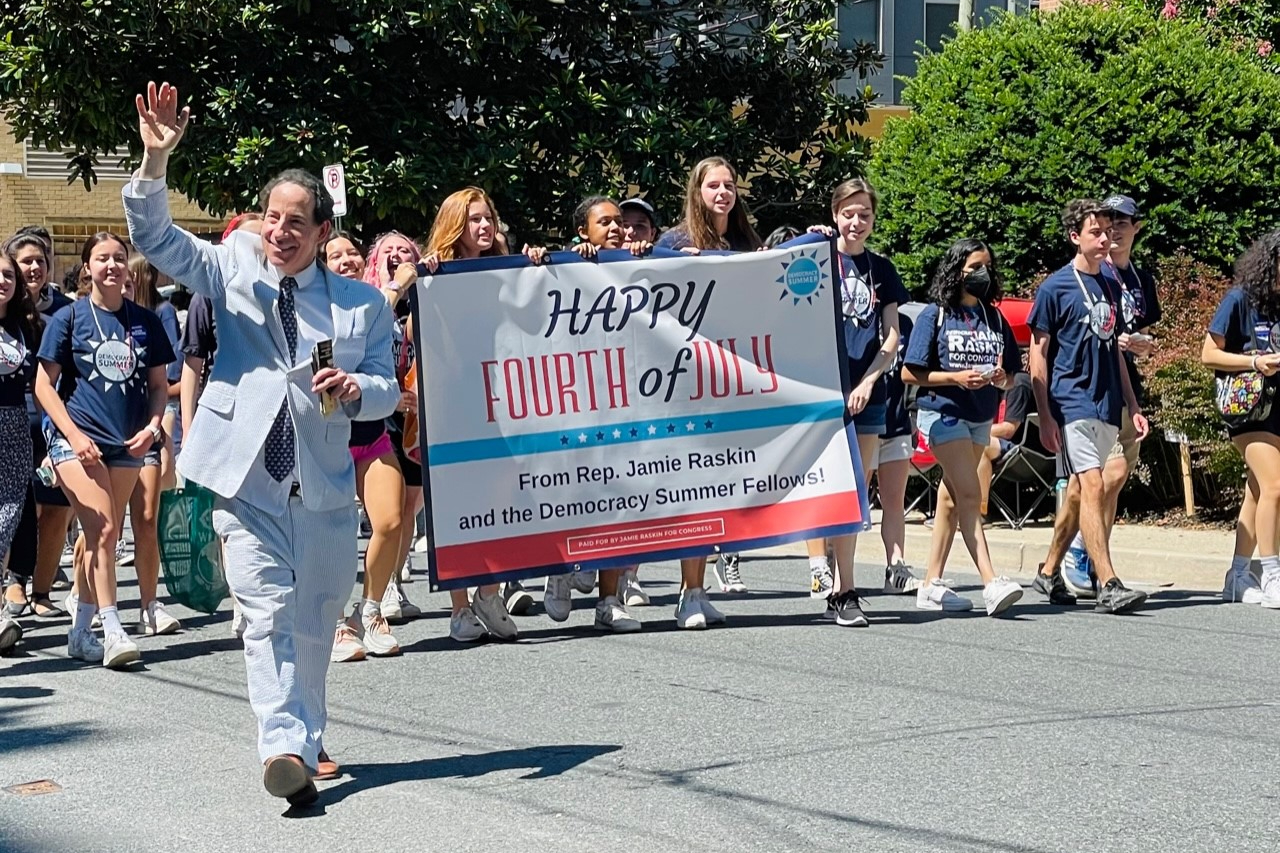
A picture of Congressman Jamie Raskin that I took at the Takoma Park July 4th parade in 2022. It ended up in the New York Times.
22. You never know how your life and actions will affect your children, who look to us in ways we barely understand. When I was growing up, Al Gore, Jr. was my congressman. Now that I’m retired, Jamie Raskin is my representative. Both of those giants—Gore and Raskin—learned about life and leadership from their fathers. In a moving eulogy, his son said the most astounding sign of Marcus Raskin’s “genius for affection” was seen not with respect to his father’s treatment of his friends and family but with respect to his treatment of adversaries and the people he didn’t know.
23. Take the train whenever possible. It is civilized and, short of walking and riding a bike, it is the most environmentally friendly way to travel.
24. The world has a lot of problems. Reading too many books isn’t one of them.
25. Even if you have a good head of hair, chances are it ain’t gonna last forever.
26. Try to see yourself as others see you. I worked with executive assistants who saw me in a variety of situations and understood me in ways that few people do. One of the best I had the privilege of working with wrote what I took to calling a “Users Guide to DJB” when she left. It was rather eye-opening to read.
27. Wash your hands. A lot.
28. Spend less than you make. When shopping for something that will last a while, buy the best quality (not necessarily quantity) you can afford without overextending your budget. That lesson helped us decide to raise two children in a house of about 1800 square feet. We also keep our car for a decade or more.
29. Those who accept life and their own limitations are likely to find more in life.
Visiting my 50th state and checking off a bucket list goal
30. Get yourself a bucket list. Bucket lists are optimistic by nature. A bucket list says, “I’m going to be out in the world, I’m going to make a difference, and I’m going to love what I’m doing.” A bucket list should include things you can do in an afternoon and things that will take the rest of your life.
32. “Most of what we see is behind our eyes.” Forcing the world into our preconceptions means that we miss a lot of what’s right in front of us.
Historic postcard of Staunton, VA
33. “Cities need old buildings so badly it is probably impossible for vigorous streets and districts to grow without them.” (Jane Jacobs) I love old buildings. I grew up in an early 20th century house and as a child I loved visiting my Grandmother’s Victorian-era home. Candice and I renovated two old houses when we were first married. Old houses are especially nice for putting you in a physical and spiritual continuum.
“The unpredictability is how I learn. The uncontrollability is how my heart is stretched open. Not dodging things means I end up bashing into joy.”
34. Now that I’m retired I have a new life description: I am bashing into joy. I’m discovering new worlds while also diving deeper into things I love.
35. Be humble. Listen more than you talk.
36. You have to be tough to get old. It helps if you exercise six days a week for the rest of your life.
Mary Dixie Bearden Brown and George Alma Brown – my grandparents
37. “Make yourself useful, as well as ornamental” is good advice I learned from my grandmother. Mary Dixie Bearden Brown worked hard her entire life, but as you can see in the picture above my grandmother was very pretty as a young bride. Naturally, I inherited my big ears from the Brown side of the family.
38. Good things can come from bad situations, if you’ll stop wallowing in your sorrow and seek out the good.
39. Quit eating crap! Eat less of everything else.
40. Fear isn’t a solid foundation for any healthy relationship. So why is so much right-wing fundamentalism based on a fear of God’s wrath? In my experience, She cares for all her children, not just the ones who have drunk the Kool-Aid. Kris Kristofferson hit the nail on the head about hatred of things we don’t understand in Jesus Was a Capricorn. Truer words than “Reckon we’d just nail him up if he came down again” were never spoken. Thanks to Darrell Scott for resurrecting this song (pun intended) on his wonderful Modern Hymns CD.
41. I’ve forgotten a whole helluva lot since I was sixteen and knew everything.
42. “We are here to keep watch, not to keep.” Letting go in retirement, relationships, and with long-held expectations can involve disappearance along with a sense of transience and fragility. Disappearance, Kathryn Schulz writes, reminds us to notice, transience to cherish, fragility to defend.
43. Most of the time everything you need you already have. The rest of the time it usually doesn’t matter.
44. I think Wondrous Love is just about the best hymn ever, in either version (traditional as heard below from Blue Highway or reworked for the Episcopal hymnal). When I’ve passed on, I want it sung at any service in my memory. And remember to sing the last verse (in the Episcopal hymnal) a cappella. “And when from death I’m free, I’ll sing on” sounds incredible when unaccompanied.
45. Wear the damn mask and get a shot.
46. Women who seek to be equal to men lack ambition.
(Photo Credit: The Adventures of Sarah and Derrick)
47. The intelligent mind is able to live with paradox. Such as the paradox of why I’m proud to be a Southerner. Yes, we have this awful racial history that continues to this day, which I wish our region could overcome. And yes, we have bourbon.
48. “I believe that ignorance is the root of all evil. And that no one knows the truth.” (Molly Ivins)
Ephesus, taken by DJB while lecturing on a National Trust Tour
“A sense of history is an antidote to self-pity and self-importance.”
David McCullough
49. “Life is and.” (Philip Roth) Recognizing that we have the potential to live and respond with opposites—contemplation and action—helps us navigate the paradox at the heart of life. That recognition helps us respond to times which—like all the days of our lives—contain both strife and harmony. Concern and contentment. Fragility and wonder. Suffering and beauty. Darkness and light. Shock and amazement. Cruelty and braveness. Tears and laughter. Grief and gratitude. Loss and love. Death and life.
50. The Christian Right is neither.
51. Keep good company. Drop the complainers and drainers from your life.
Honeymooning at Prospect Hill32nd anniversary in Copenhagen34th anniversary at Ditirambo in Rome35th anniversary at a snowy Mohonk Mountain House40th anniversary at Giverny 42nd wedding anniversary at Bistro Lepic
52. I definitely “married up.” Candice is very intentional about our life as a couple and as a family. I would probably miss half of life’s wonders, but she has helped me see the little grace notes along the way. It has been a wonderful (almost) forty-three years. Here’s wishing for many more.
53. Gratitude goes a long way. Be grateful, thankful and compassionate. Every day.
By the Willie Mays statue at Giants Park in 2012
54. Don’t be a grumpy old man . . . live exuberantly! For instance, I am gleefully visiting all the MLB stadiums, a worthy bucket list goal, and I’m proud to say I only have seven left.
55. Life is too damn short to not enjoy the stuff you love. Some time ago I decided that I would play music, read, and write every day because I enjoy all three and they feed my soul.
56. “Bad trades are part of baseball—now who can forget Frank Robinson for Milt Pappas, for God’s sake?” You should watch the movie Bull Durham twice a year—in February/March, to get your juices going, and in November, to put the season you’ve just lived through in perspective. (And yes, “Candlesticks always make a nice gift.”) Best. Baseball. Movie. Ever. As the film so richly demonstrates, the lowliest man on a World Series-winning baseball team can give better quotes than the Super Bowl-winning coach. Baseball players and managers speak with eloquence and intelligence (even if it is Yogi Berra-type eloquence). Football players and coaches either talk gibberish (“We used the cover 2 and flex”) or just grunt.
57. I have long subscribed to Maya Angelou’s dictum that “when someone shows you who they are believe them the first time.” When a person tells us (and shows us) again and again that he is a deeply immoral con man and criminal, I believe him. I also believe that for those politicians and the ultra-wealthy who are abetting his work of destruction, this is a feature, not a bug.
58. I enjoy a wide variety of music. I’ve been privileged to play bluegrass and to sing Josquin des Prez…and lots of things in-between. I subscribe to the words of the immortal Duke Ellington: “There are two kinds of music. Good music and the other kind.”
59. I still miss my mother every day.
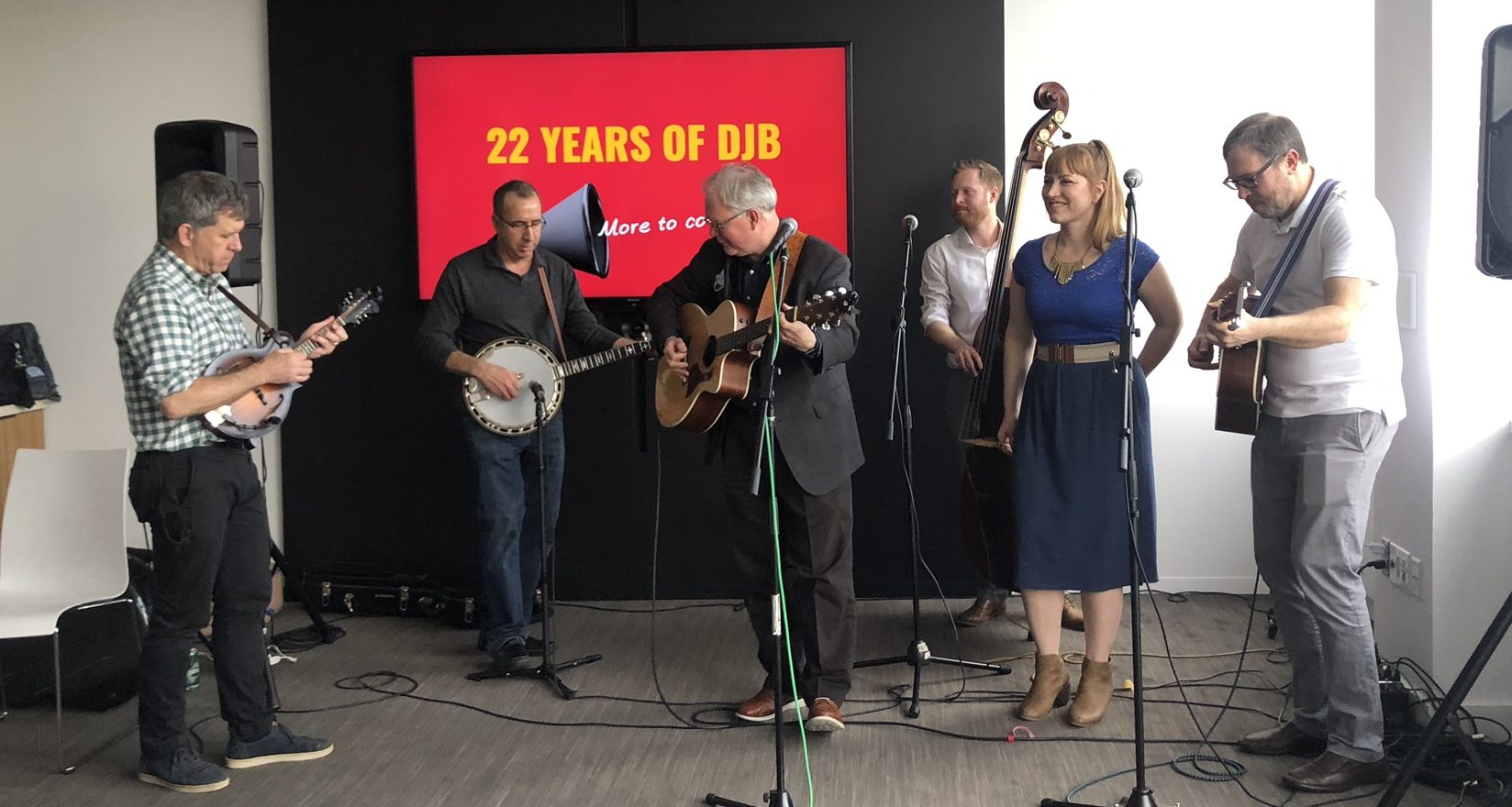
Playing Bluegrass with the By-and-By Band at my NTHP “Barbeque, Bluegrass, and Bourbon” farewell party. DJB is the one in the jacket!
60. Barbecue is a gift from the gods. When I need to scratch this itch, I visit Rocklands, the restaurant my colleagues turned to in catering my “Barbeque, Bluegrass, and Bourbon” retirement party in 2019.
61. We have an “almost unlimited ability to ignore our ignorance.” (Daniel Kahneman)
62. At this point in time it is embarrassing to be a white male. I am tired of the whining of the privileged who believe their race and gender trumps everything else. These are people who were born on third base and wake up believing they hit a triple. Please, guys, stop embarrassing yourself!
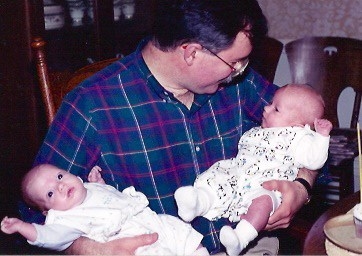
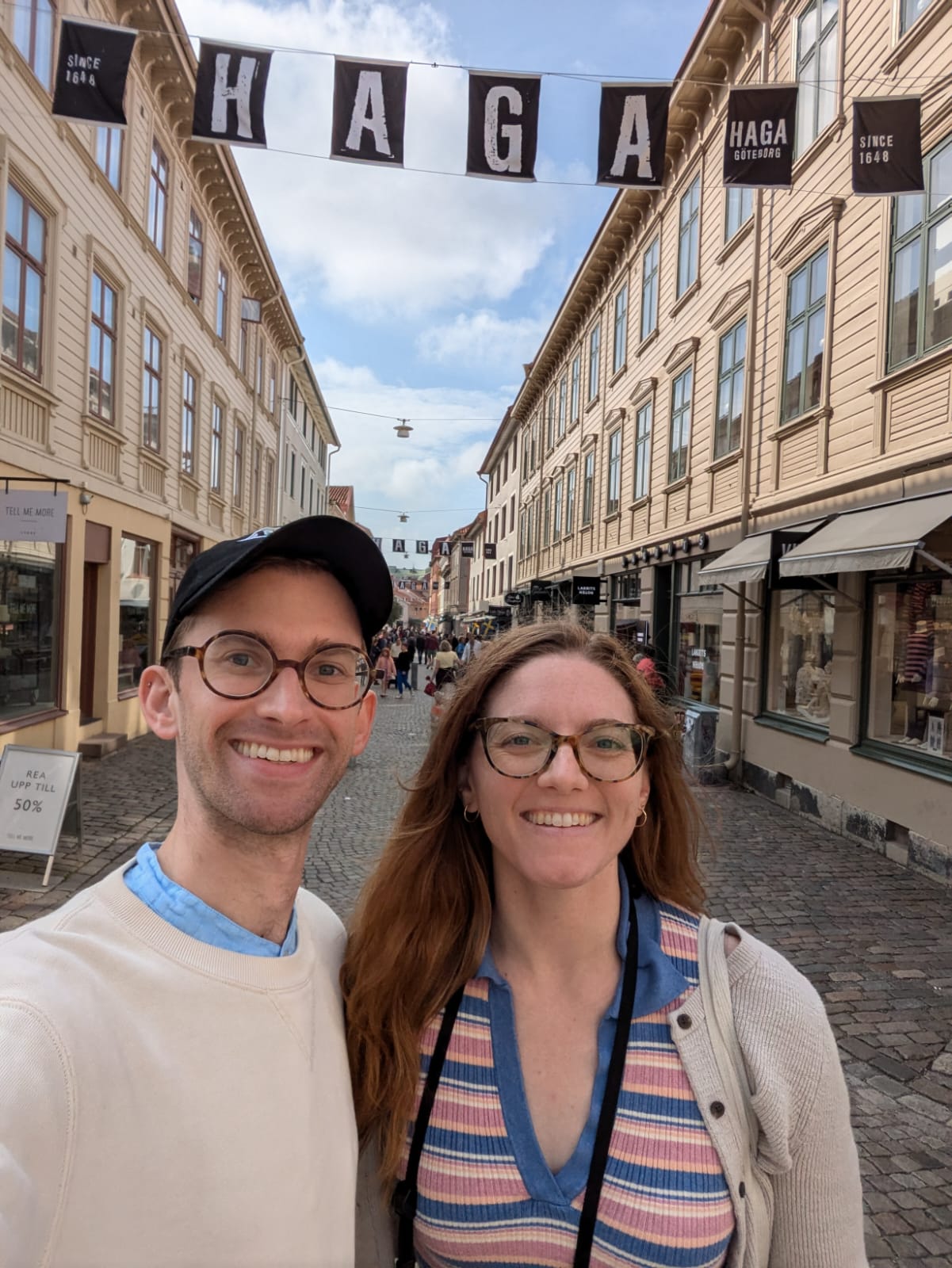
Favorite baby pictureTwins are a handfulVisiting the beachAt FLW’s Fallingwater with MomClarity is a pair of new glasses: Andrew and Claire, December 2016A birthday dinner at CharlestonWith my two favorite baseball fansOur world travelers in Gothenburg in 2024 . . . just a month after Candice and I visited the city
63. One thing I have not figured out in life is how I happened to have such wonderful, talented, and thoughtful children. It is a mystery. Andrew and Claire have taught me so much in their now 32 years, and I continue to learn life lessons from them. I feel blessed and humbled every day.
64. There are many things said in churches that I find hard to believe. What I do believe is that love is more important than doctrine.
65. It is wonderful when your children take up your interests. I was thrilled when Claire showed a real skill in photography and Andrew likewise showed a talent for music. We do our job as parents when we open up the world’s possibilities to our children. A friend who I first met in high school noted that “Parenting is a rare and wonderful experience and your children tell you (show you? sing to you? picture you?) when you have done it well.” I simply count myself lucky that among Andrew and Claire’s many talents are two that I can understand and appreciate.
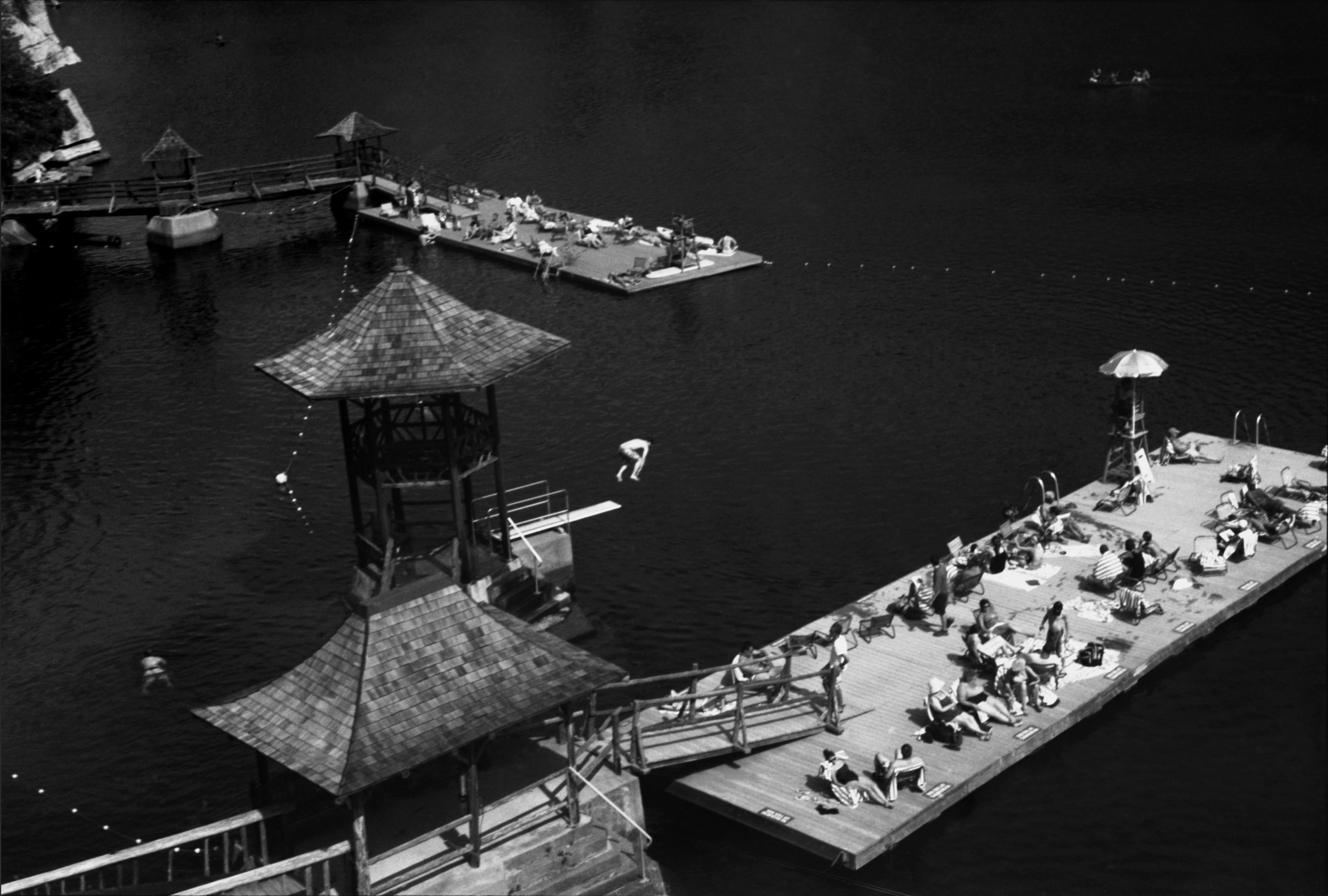
Taking the plunge off the high board at the lake at Mohonk Mountain House (photo credit: Claire Brown)
66. “There is no substitute for excellence—not even success.” (Thomas Boswell)
67. There have been times when I did not get something I thought I really wanted. But in most cases, I found something better. (Or, in the immortal words of Mick Jagger and Keith Richards, “You can’t always get what you want…but you just might find, you get what you need.”)
68. “I distrust those people who know so well what God wants them to do because I notice it always coincides with their own desires.” (Susan B. Anthony)
69. Try to be nice. Always be kind. A few years ago I became intentional about saying “thank you” to someone every day. It is one of the smartest things I ever did. Thank you.
I love poet Mary Oliver’s “Instructions for life.” — Pay attention. Be astonished. Tell about it.
(With hopefully much) more to come . . .
DJB
*For several years now I’ve been thinking about the sixty things I learned over sixty years (published on—you guessed it—my 60th birthday) and how that list has grown and changed as I age. Some continue to guide my life, while others have become less important. The only constant in life is change.
UPDATE: If you’ve gotten this far, you might want to check out a post on the birthday greetings and blessings I received this year. I wrote about that in Rich (in a George Bailey kind of way).
A summary of the February posts from the MORE TO COME newsletter.
Stories are at the heart of life. The stories we tell, and the ones we absorb, “are what allow us to pluck meaning from the rush of experience.”
Given their importance, author Steve Almond asks what happens when some of the stories we tell ourselves are bad or fraudulent . . . or when we ignore those too frightening to confront . . . or when we fall “under the sway of stories intended to sow discord, to blunt our moral imaginations, to warp our fears into loathing and our mercy into vengeance?”
“Bad stories arise from an unwillingness to take reality seriously. If bad stories become pervasive enough they create a new and darker reality.”
We are now seeing what happens after too many of us come to accept fraudulent stories as true. If bad stories helped get us into today’s morass, then new stories are part of what is needed to lead us out.
Three posts in February focused on our need to keep telling better stories, in ways that reach across divides. Our real work quotes Wendell Barry who said, “It may be that when we no longer know what to do we have come to our real work.” Rebecca Solnit’s writings are the focus of The work remains the work, as she suggests “[t]he job isn’t to be happy, sad, angry, unfeeling, or anything else; it’s to do the work to oppose this destruction. But taking care of yourself so you don’t fall apart or wear out or aggravate you allies too much is how you stay capable of doing it.” And please don’t say this is all unprecedented. The next four years will be filled with upheaval and uncertainty . . . just look at our history reminds us we’ve seen this before.
Let’s jump in and see what else caught my eye in February.
TOP READER FAVORITE
Peter Kien, watercolor of Terezin concentration camp, 1944
Imagine a ruthless dictator who kills so many people that the Grim Reaper gets fed up and goes on strike. That scenario is the basis of a remarkable opera as well as a new graphic novel which opens the story to new audiences and new generations. The post that topped MTC reader views in February—When Death goes on strike—tells the story of composer Viktor Ullmann and poet/painter Peter Kien who worked together to produce Der Kaiser von Atlantis while imprisoned in a Nazi concentration camp. Both the opera and the graphic novel it inspired are profound meditations on death.
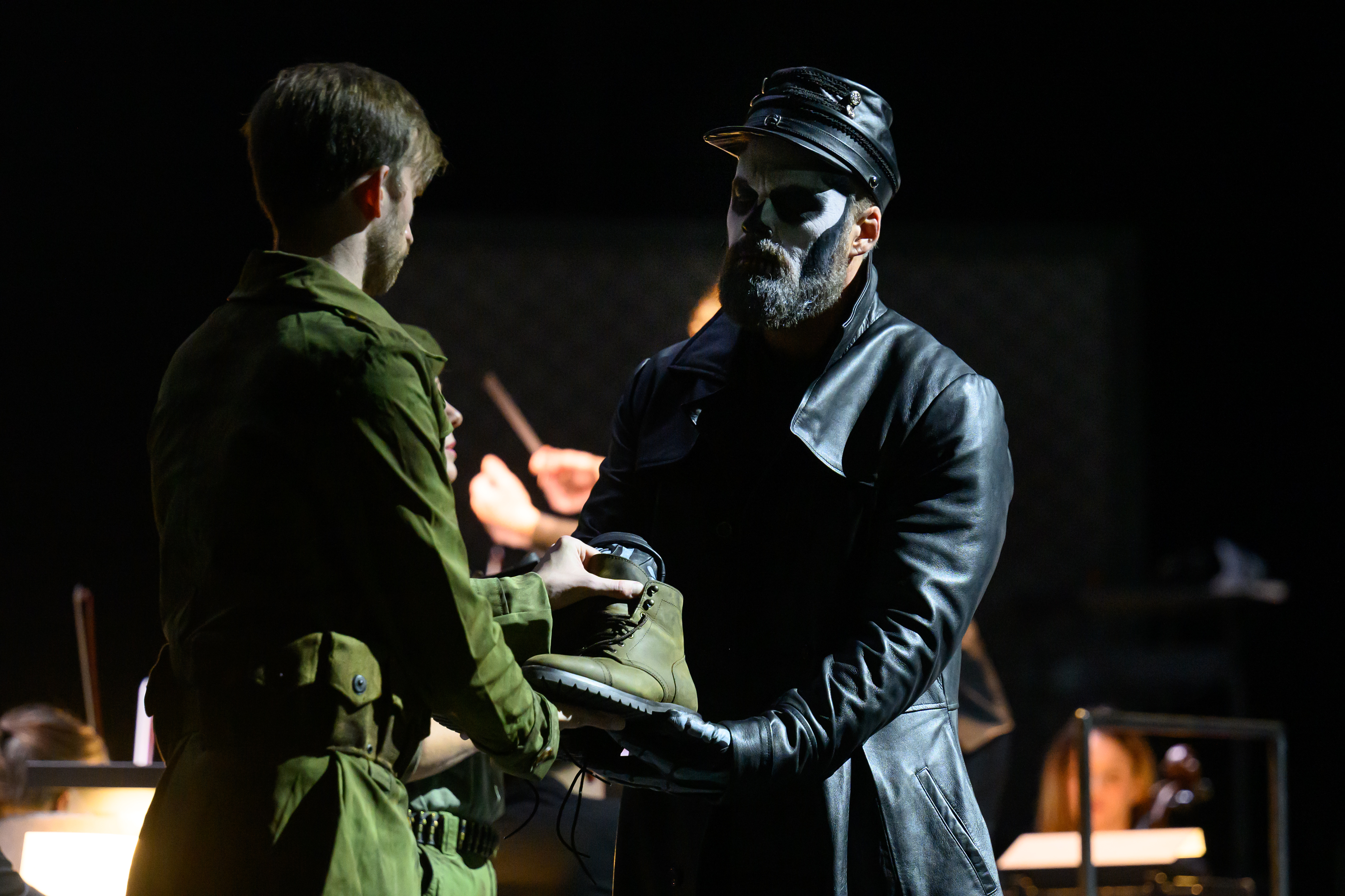
Death (Ryan McKinny) comes for The Soldier (Andrew Bearden Brown) and takes his shoes in the Louisville Orchestra production of Der Kaiser von Atlantis. Photo credit O’Neil Arnold.
HISTORY HELPS US NAVIGATE AND UNDERSTAND OUR STORIES
Sherman’s March to the Sea
Several books and musical soundtracks in February looked back at history to help us navigate what’s ahead.
Reimagining a freedom movement is my conversation with historian Bennett Parten in MTC‘s most recent Author Q&A. As many as 20,000 formerly enslaved men, women, and children followed Sherman’s Army during its March to the Sea as war refugees, making it the largest emancipation event in our history. Parten makes the compelling case that this was a turning point with wide impact and long-lasting aftereffects. Sherman’s March was not only one of the last campaigns of the Civil War, but it was also an early battle of Reconstruction, one that continues to have repercussions today.
The historic canal district of Amsterdam is A marvel of design, function, and livability. A thoughtfully written and beautifully illustrated book highlights the district’s evolution while also providing a study of contemporary debates facing this world class city.
What seems impossible can be possible is an appreciation for the man who was the first African American Episcopal Bishop of Washington, The Right Reverend John T. Walker, on the commemoration of the 100th anniversary of his birth.
OTHER THINGS THAT TICKLED MY FANCY
Here’s a grab bag of what else I jumped into on MTC during February:
As attacks on history ramp up and many on the right threaten a bishop who dared to speak truth to power, it seemed appropriate to note that mixing religion and politics has a very long history. Let my people go . . . speaking truth to power was that reminder. Brilliant Reader Alice, who I first met at the American Academy in Rome, simply replied “THANK YOU” three times, in all caps. Another Brilliant Reader—with a long history of free speech protests—added “Excellent reminder!”
CONCLUSION
Thanks, as always, for reading. Your support and feedback mean more than I can ever express.
As you travel life’s highways be open to love; thirst for wonder; undertake some mindful, transformative walking every day. Recognize the incredible privilege that most of us have and think about how to put that privilege to use for good. Women, people of color, LGBTQ+ individuals, immigrants, public servants, and others can feel especially vulnerable . . . because they are. Work hard for justice and democracy as the fight never ends.
When times get rough, let your memories wander back to some wonderful place with remembrances of family and friends. But don’t be too hard on yourself if a few of the facts slip. Just get the poetry right.
Remember that “we are here to keep watch, not to keep.” Pay attention. Be astonished. Tell about it. And bash into some joy along the way.
You can subscribe to MORE TO COME by going to the small “Follow” box that is on the right-hand column of the site (on the desktop version) or at the bottom right on your mobile device. It is great to hear from readers, and if you like them feel free to share these posts on your own social media platforms.
Narratives help us understand our lives and our history. Some narratives become so ingrained in our national story that it is difficult to dislodge them, especially when they are used to justify a perspective or long-held prejudice. The Chinese saying that “much of what we see is behind our eyes” speaks to the truth that we often work so hard to force events into our preconceptions that we miss what is right in front of us.
Sherman’s famous March to the Sea in 1864 continues to be framed, as it was for much of the twentieth century, as an early instance of total war. As hard as Sherman wanted to make the war, he never targeted civilians outright and his March was never as horrific as the bombing of Dresden or the Rape of Nanjing. For scholars the issue is mostly settled, even if the question persists in the minds of many Americans. That’s why a new book that works to understand Sherman’s March is so valuable. It reimagines the March’s history “by seeing it for what it truly was: a veritable freedom movement.”
Somewhere Toward Freedom: Sherman’s March and the Story of America’s Largest Emancipation (2025) by Bennett Parten makes the compelling case that this seminal event in the Civil War—when Sherman’s army cut a path through Georgia from Atlanta to Savannah—was a turning point in the history of American freedom. When as many as 20,000 formerly enslaved men, women, and children followed the army as war refugees, it was the largest emancipation event in our history. Because of its wide impact and long-lasting aftereffects, we can now see Sherman’s March not only as one of the last campaigns of the Civil War, but also an early battle of Reconstruction. It is important because we continue, here in the 21st century, to live with the consequences of this march toward freedom.
Author Ben Parten graciously agreed to chat with me about his new work.
DJB: Ben, “Somewhere Toward Freedom” challenges many of the traditional military and political frames for the history of Sherman’s March to the Sea. What first drew you to study this period in America’s story and when did you begin to recognize the hidden history of the March?
Bennett Parten
BP: I think there are two things that drew me to the Civil War Era. First and foremost, I grew up in Georgia, where much of the war happened here in my own backyard, so to speak. As you know, I’m sure, it is hard to drive around Atlanta and Georgia more broadly without seeing traces of the Civil War.
Secondly, when I was younger, one of the first books I can remember reading was a wonderful book on the Civil War called Rifles for Watie by Harold Keith. It was a children’s novel about a U.S. soldier from Kansas, who fights in the west and falls in love with a Cherokee woman from Oklahoma. It was one of the first novels I can remember reading from cover to cover and even wanting to read again and again. As a kid, that was all it took. I was hooked after that.
And that is actually a pretty good segue into how I came to write this book. I was struck while reading E.L. Doctorow’s The March by one of the characters in the story—a freed woman named Wilma Jones, who follows Sherman’s army to Savannah. I immediately began to question how we could tell the story of folks like Wilma Jones from a historical perspective rather than historical fiction—and that is truly how this book was born. Only afterwards did I discover that there were close to 20,000 Wilma Jones, an enormous number, and that’s when I knew I had a bigger story here, that there was this “hidden history” of the March, as you put it, that we could uncover if we shifted our focus to enslaved people.
You’ve asked your readers to reimagine the history of Sherman’s March as a “veritable freedom movement” as well as “the first battle of reconstruction.” What are the most important lessons we learn when we see the history of this seminal event through these lenses?
First and foremost, we are able to see that the desire for freedom on the part of enslaved people pervades the campaign. It is quite clear just based on their actions that they viewed this as a march of liberation, which only underscores the central meaning of emancipation when it comes to understanding the Civil War. This is something we can sometimes take for granted—or something that gets lost in other Civil War histories. But it is very evident in this story of the March.
Another thing we are able to see is just how important enslaved people were to the overall success of the campaign. They weren’t onlookers; rather, they were participants. For example, they served as scouts, intelligence agents, cooks, roadbuilders, guides, and more. The soldiers knew it, too. The majority of them recognized that they had powerful allies in the enslaved people of Georgia and recognized, as one recent podcast host put it, that enslaved people acted as Sherman’s “fifth column” when marching through Georgia.
But there is also a large story to be told about Reconstruction. The fact is that the size of this emancipation event would go on to have an extraordinary influence on the early shape of Reconstruction. So much of Reconstruction’s early designs all have storylines that point back to the March, but we can only see this connection if we first recognize the campaign for what it was—a freedom movement.
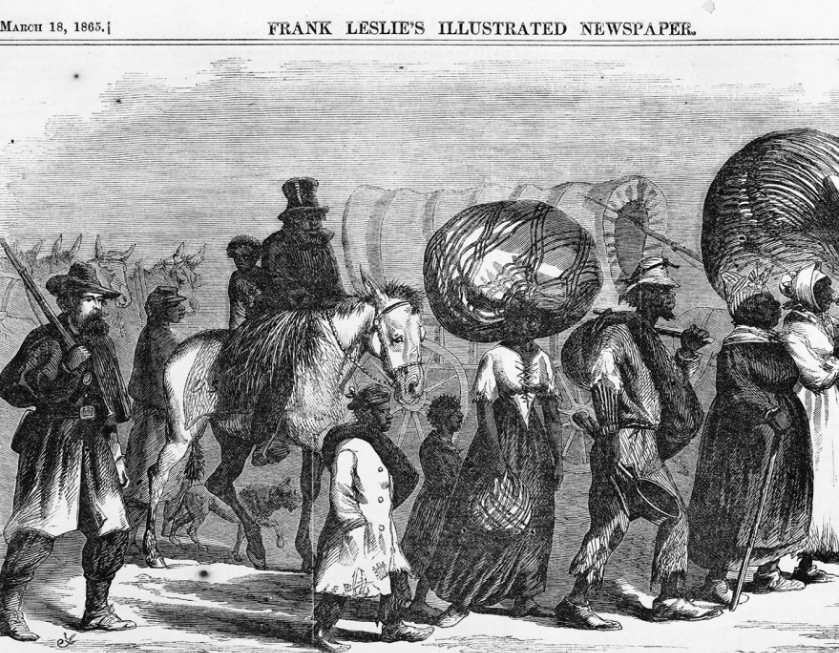
“Contrabands accompanying the line of Sherman’s march through Georgia from a sketch by our special artist.” – An illustration in: Frank Leslie’s illustrated newspaper, 1865 March 18.
You write of how the ages-old idea of Jubilee became an overarching metaphor for our Civil War, creating a redefinition of American freedom largely led and articulated by people who had been enslaved. Why was the March both a great watershed and also a missed opportunity? How do we continue to grapple with the consequences of the unresolved story?
I describe it as a watershed because, again, the size and scale of this movement was one that couldn’t be bottled back up again. That combined with Sherman’s Special Field Orders 15, which initiates land reform on the coast, uncorks the possibility of a wider and more meaningful Reconstruction. In other words, because of this moment and because of the movement of refugees, what freedom could look like after the Civil War suddenly become more expansive. Yet while a window has clearly opened, the window of opportunity closes rather quickly, and I think it demonstrates quite clearly for us the somewhat unfulfilled legacy of both Reconstruction but also the Civil War.
General Sherman was not always a willing participant in the part of the story involving the March as a magnet drawing tens of thousands of formerly enslaved individuals toward freedom. How would you describe his impact on what, in the end, becomes a narrow redefinition of freedom?
This is a great question, and one that I really struggled with while writing this book. The reality is that he is a reluctant liberator. All along he has never seen emancipation as being crucial to the war, has never done much to advance emancipation. That has changed ever so slightly by 1864. He now sees slavery as an institution to be targeted in an effort to advance the U.S.’s war aims—and is slightly more open to following through on emancipation.
But on the whole he still sees it as of secondary importance to the overall success of his campaign and generally does little to encourage the refugees, help them, or prioritize emancipation at all. He simply would rather ignore the issue—in part because he fundamentally didn’t see it as the army’s job to intervene in what he always thought of as a social or political issue. So his inaction here in some ways tamps down on how wide of an emancipation event this could be.
Ben Parten at a book reading at People’s Books in Takoma Park, MD
Tell us how your scholarship brings new light and meaning to what historians, preservationists, and others know as the “Port Royal Experiment”?
Well, first of all, I hope that the book sheds some light at all on Port Royal. It is an incredibly important story in the war that too few people know about—at least that’s the sense I have gotten in talking with folks about the book. But the Port Royal Experiment—essentially, a freedman’s colony on the South Carolina coast—has always been portrayed as a somewhat independent story, as being an isolated “experiment” taking part in a fairly isolated corner of the war. But what the books shows is that its future was entirely connected to Sherman’s March because Sherman’s decision to send the refugees there is the variable that completely changed this so-called “experiment.” It’s a decision that will almost overnight turn Port Royal into the site of one of the largest refugee crises of the Civil War.
The classic work on the Port Royal Experiment is a book called Rehearsal for Reconstruction by Willie Lee Rose, a title that tells you all you need to know about why the Port Royal Experiment was so important.
What other books or authors would you recommend to flesh out the story you tell in “Somewhere Toward Freedom”?
Noah Andre Trudeau’s Southern Storm
Steve Hahn’s A Nation Under Our Feet
Thavolia Glymph’s Out of the House of Bondage
Chandra Manning’s Trouble Refugee
David Blight’s Slave No More
Thank you, Ben.
Thanks for the invitation.
More to come . . .
DJB
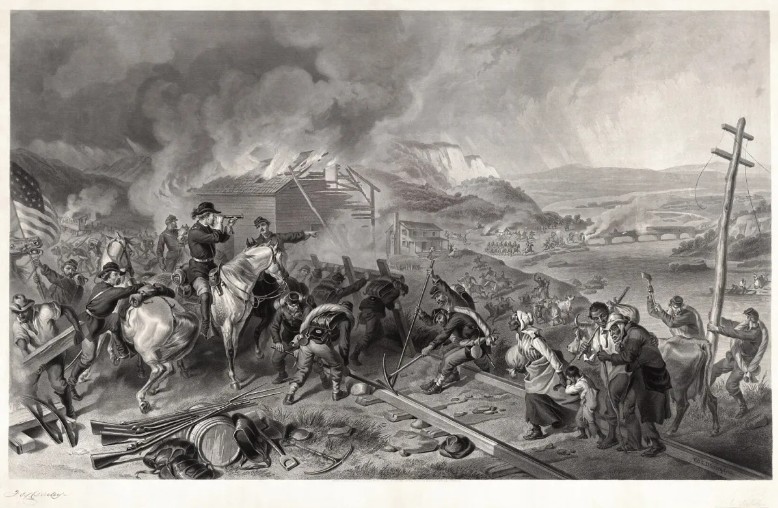
Engraving depicting Sherman’s march to the sea. By F.O.C. Darley and Alexander Hay Ritchie. Credit: Wikimedia / Library of Congress Print and Photographs Division







































 MORE TO COME...