Latest Posts

Images in Black and White

I’ve always loved black-and-white photography.

In college I learned my way around a dark room and can still remember the thrill of seeing a photo appear on a blank piece of paper submerged in a tray of chemicals.

So naturally, I was overjoyed when our daughter Claire – then a freshman in high school – expressed interest in learning old-style black-and-white photography.

Over the course of the past three years, she’s produced some wonderful pictures.  She has a great eye and has become more adventuresome each year.

Now as she wraps up her work in high school, she’s put together a small gallery of 12 photos from her class.  Click on the link and you’ll see what she’s posted.

And I’ll end below with a photo of Claire’s that’s now on prominent display in her school’s gallery.  This is a picture she took this summer at Mohonk Mountain House which looks like a time piece out of the 1940s. Can you tell…I think she’s great!

More to come…

DJB

Ave Verum Corpus – Music Made for a Cathedral

Yesterday Andrew and Claire were confirmed in a magnificent service on a beautiful fall day at the National Cathedral.

There’s so much I could cover:  The pageantry.  The three bishops.   The time spent with godparents and their families.  The wonderful discernment process that our Assistant Rector, The Rev. Jered Weber-Johnson, led the twins through over the past two years.  The personal thoughts that ranged from a baptismal service with two infants some 17 years ago to confirmation with two beautiful and talented young adults whom I admire for their thoughtfulness and integrity.

Instead (no surprise) I want to talk about the music.

The Cathedral Singers – comprised of women sopranos and gentlemen in the counter tenor, tenor, and bass roles – were in residence for yesterday’s service.  Their work was beautiful throughout.

But when they sang William Byrd’s Ave Verum Corpus, I just closed my eyes and listened to the wonderful melodies that come together in that magnificent piece reverberate around in the acoustics.  When they finished, I turned to Claire’s godfather and said, “There’s no better music for a cathedral.”

So today, Andrew and I were catching a bite to eat and he said, “I’m so glad they sang Ave Verum at the service yesterday.”  I laughed at how our thoughts converged, and then we launched into a five-minute discussion of how we were both singing along with the choir (I had the tenor line covered, while Andrew was channeling his old chorister days and was handling the soprano.)  Andrew said, “that piece has the BEST alto lines” and right in the middle of Montgomery Mall we began singing the alto line we both loved.

Just so you, dear reader, can also hear this wonderful music, I’ve posted a video of the Tallis Scholars’ version of Ave Verum Corpus following the picture of Claire, Andrew, Bishop Eastman, two of Claire’s godparents, Candice and me taken after yesterday’s service.  Enjoy.

More to come…

DJB
Bush, O’Brien and Froggy Bottom

Two of my favorite musicians – plus one of this era’s best guitar builders – are all featured in the Fall 2010 issue of The Fretboard Journal which landed in my mailbox last week.  Let’s begin with those musicians.

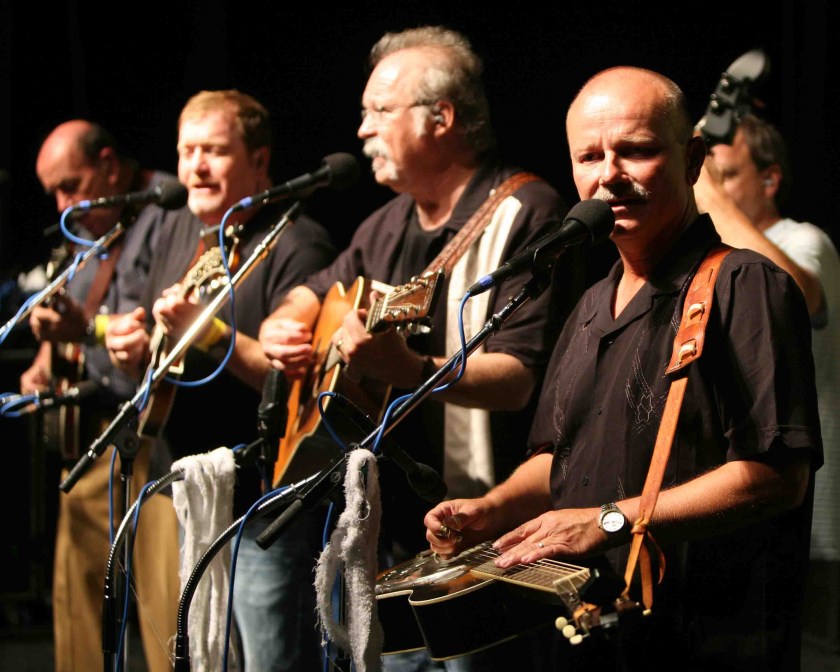
I’ve been listening to New Grass Revival founder Sam Bush (on the right in the picture by Thomas Petillo at the top) since about 1973.  A few years later I began to hear Hot Rize member Tim O’Brien in a number of venues.  Both are multi-instrumentalists who have stretched the boundaries of bluegrass since coming on the scene.

The Fretboard Journal has a laid back yet informative “conversation” between Bush and O’Brien as the cover story of the most recent issue.  The topics are wide-ranging, from playing with jazz pianist Bill Evans at the Blue Note to the night when Bush and Mark O’Connor joined the Hot Rize alter ego band Red Knuckles and the Trailblazers for a set.

When the conversation turned to hearing someone for the first time, my mind went back to the first time I saw Bush and the New Grass Revival.  It was probably around ’72 or ’73 at Nashville’s old Exit/In (which has gone in and out of business numerous times and is now a rock club).  NGR was playing with Vassar Clements that night and I still remember a 20-minute version of Lonesome Fiddle Blues when Sam and Vassar were smokin’ on twin fiddles and strings were breaking right and left.  I thought, “these guys are playing rock music on bluegrass instruments” and that’s pretty much what NGR was about at that time.  The Exit/In was like that.  In a two-three year period while I was in college I saw Doc Watson (for the first time), NGR (two or three times), Buddy Rich (my brother Steve was a big jazz fan), Barefoot Jerry (for a New Year’s Eve show), and Steve Martin twice…and that’s just what I can remember from visits to the Exit/In.

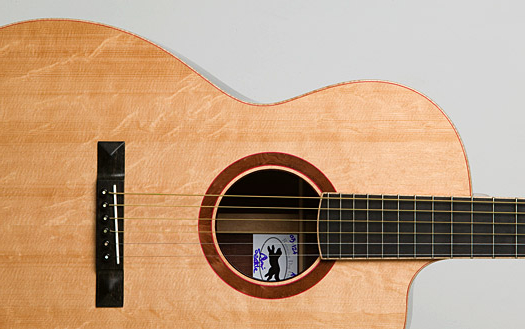
The guitar builder is Michael Millard, who is celebrating 40 years of building Froggy Bottom guitars.  My friend Oakley Pearson has a beautiful Froggy Bottom that he bought several years ago, and I have always loved playing that guitar when we visit Margaret and Oakley over Thanksgiving.

Quite simply, it is a beautifully balanced and easy to play gem!  When Peter Ostroushko visited the Shenandoah Valley to play the Oak Grove Folk Music Festival one year, he borrowed Oakley’s Froggy Bottom and played it for the entire weekend.  In the hands of a master, it sounded sublime…but it sounds very good even when Oakley and I play it!

There’s more to read in this issue of The Fretboard Journal which is par for the course. Check out the web site or – better yet – go to your local bookstore and buy a copy.  Nineteen issues into this magazine, the editors still get it right just about every time.

More to come…

DJB
Bluegrass in the Barn

There are many great places to hear bluegrass – heck, just about any place will do.  But Candice and I have found a spot that’s become a favorite:  the barn at Evensong Farm.

Which is how we came to listen to live bluegrass on 10.10.10.

Evensong is a farm we support at the Silver Spring farmers market.  Here’s how owner Julie Stinar  describes their work:

Heritage. Health. Harmony. These are the chords of Evensong Farm in historic Sharpsburg, Maryland, growing natural foods that sustain our land, our neighbors and our souls. Healthful, heritage foods cultivated at nature’s pace without synthetic fertilizers, pesticides or genetically modified inputs. Heirloom vegetables and herbs, pasture-fresh eggs, grass-raised poultry, pork and beef – healthful food grown to the rhythms of the seasons, to the patient melody of time.

We’re just glad that part of the rhythms of the season includes hearing great bluegrass by Darren Beachley and Legends of the Potomac on the Columbus Day weekend in Evensong’s historic wooden barn.

Beachley is a fine tenor singer who has played with Doyle Lawson.  Banjo player Mark Delaney was with the Country Gentlemen.  Mandolinist and natural comedian Norman Wright was also a Country Gentleman as well as a member of the Bluegrass Cardinals.  But the two gentlemen who really make the “legends” name ring true are two founding members of the Seldom Scene:  bassist Tom Gray and dobroist Mike Auldridge.

The Legends of the Potomac played a great two-hour show this afternoon on a beautiful fall day.  Strong instrumental chops were on display throughout.  One of the treats was an impromptu mandolin/banjo duet to fill the time while Beachely replaced a string.  The set closed with classic Auldridge:  Walk Don’t Run. Our friends Tom and Paul marveled at the musicianship with us on the ride home.

I took a number of photos, and I’ve posted some here.  The Legends don’t have very good video up on YouTube (although this should change soon, as they videotaped today’s concert).  I’m using that as an excuse to post an old Seldom Scene video of John Duffey and his remarkable (crazed?!) version of After Midnight. It is classic Duffey as he mugs for the crowd, but it also shows the remarkable musicianship of Gray and Auldridge (at a much younger age).

Thanks to Julie (Tom Gray’s daughter) and Evensong for hosting this wonderful afternoon.  A great way to enjoy bluegrass in a great venue.

This photo says it all.  Check out the sign:  Grass is Good!

Enjoy the Seldom Scene, and two of the legends in their younger days.

More to come…

DJB

London 2010

After a day of work on Wednesday, I took an overnight flight to London and plunged into two full days of meetings with the Executive Committee of the International National Trusts Organisation (or INTO).  The days were full, including a lecture on Thursday night at the small and wonderful Garden Museum by my INTO colleague and friend Jeanine Perryck of The Gelderland Trust in The Netherlands.  I was running on adrenaline (because it sure wasn’t sleep), but the trip was very useful (from a business standpoint) and it had the added benefit of being in one of the world’s great cities.

Thursday was an off and on day weather-wise (typical London), but Friday was a glorious fall day.  I went out on our lunch break, crossed the street from the English National Trust and INTO London headquarters on Queen Anne’s Gate, and strolled through St. James Park.  I’ll share a few pictures of that beautiful day.

Before leaving for home on Saturday, I took a two hour walk in the more typical overcast morning.  I had been to Westminster Abby for an Evensong service on September 11, 2003 (so very moving), but I wanted to take it in again, and see Westminster Cathedral and the Houses of Parliament along the way.

So, here are a few photos from my whirlwind trip to London, as I prepare to depart.  I’ll begin with the Queen Victoria Memorial in St. James’s Park.

Here are some gate details, first from Buckingham Palace and then from St. James’s Park:

The flowers in St. James’s Park were beautiful.

I loved this wonderful little stairway off of Queen Anne’s Gate, which led to our host’s offices at 32 Queen Anne’s Gate.

And I’ll end with a nice fall shot from the Dean’s Yard at Westminster Abby.

More to come…

DJB
War Horse

I saw my first London theatre production this evening.  Wow!  I picked a great one to start.

A colleague on the Executive Committee of the International National Trusts Organisation (INTO) pulled together a group of six of us to see the New London Theatre’s production of War Horse, at the end of two days of meetings at the National Trust’s London headquarters.   After a late afternoon tour of the Foreign and Commonwealth Office (motto:  it is amazing what you can build when you have the world’s treasures at your disposal), we walked past St. Martin’s in the Field, the National Gallery, and into the theatre district.  London is a great place at night!

War Horse is an incredibly moving story of horses conscripted to fight in World War I, told in a remarkable way with life-sized puppets.  The trailer that I’ve attached to the end of the post gives an idea of the realism these actors and puppeteers achieve, but seeing it live tops any video.  As one of my colleagues said, “I knew I was going to cry at the end of the show, but I didn’t know whether the story would turn out well or sad.”

I won’t tell, just in case you get the chance to see it.  If you do, please treat yourself.  It is, quite simply, one of the best shows I’ve seen in live theatre in a decade or more.

I’ll give other updates from London later, but wanted to post this while the euphoria from the evening was still strong.  The Sunday Times got it right, when they called the show “Stunning.”

More to come…

DJB

The Immortal Life of Henrietta Lacks

My daughter Claire goes to a wonderfully creative and nurturing school, where the administration and faculty are especially thoughtful as they work to bring important issues before the students and their families.

Which is how I came to read The Immortal Life of Henrietta Lacks.

At the beginning of the summer, the Head of School sent out a letter to the entire school family – faculty, rising freshmen, and high school students – and asked everyone (faculty, students, and parents) to read The Immortal Life of Henrietta Lacks by Rebecca Skloot.  This is not the type of book I would normally read.  As a former history major I generally run from books about science.  (I still remember my high school biology teacher grabbing my ears in class one day to demonstrate to my classmates how ear lobes differ from individual to individual.  I wasn’t in favor of involuntary testing on human beings then and I’m still not!)

But I’m so pleased we were “required” to read The Immortal Life of Henrietta Lacks because this is a wonderful work of biography, history, science, and ethics all rolled up into a page-turning book.  The short synopsis:  In the 1950s a poor Southern tobacco farmer named Henrietta Lacks died of cancer after being treated at Johns Hopkins Hospital in Baltimore.  Cells were taken from her body without her knowledge or consent and now – some 60 years later – those cells (known as HeLa for the first two letters of her first and last name) are still alive and being used for research around the world.  In fact, the cells have been grown so frequently that if you could pile all HeLa cells onto a scale they would weigh more than 50 million metric tons – as much as a hundred Empire State Buildings.  Henrietta Lacks’ family didn’t find out about the existence of the cells until 20 years after the fact, and the knowledge had a life-changing impact on them.  Skloot weaves the story of HeLa, Henrietta Lacks, the Lacks family, and her own search into a well-told and well-crafted book.

Although I didn’t know it when I opened the book this fall (I have to admit, I didn’t meet the school’s September deadline), this is a work of history.  It is the story of the HeLa cells – and the flesh and blood people behind them.  Skloot spent a decade on the research and writing, and the complicated nature of the story shows why it took her 10 years to sort through the facts and the science and to weave a tale worth telling.

In mid September, Claire’s school held a round table discussion on the book with Michele Norris of NPR’s All Things Considered, Deputy Assistant Secretary of Health at HHS Bruce Gellin, and molecular biologist Jonathan Brody.  All had ties to the school.  There was an engaging 90 minutes of discussion between the panelists and the members of the school community.  You find when you read the book of the multimillion dollar industries that have been built around HeLa, and yet the family is so poor they can’t afford the health care that Henrietta’s cells made possible.  The question of Skloot’s profiting off the Lacks family was even raised in the discussion, and I was glad to hear that she’d established the Henrietta Lacks Foundation to provide scholarships to the descendents of Henrietta Lacks.

The discussion raised all the issues that the book explores:  the use of human tissue for research, informed consent, racial prejudice, scientific responsibility.  A New York Times review captured the success Skloot achieves:

In “The Immortal Life of Henrietta Lacks,” Rebecca Skloot introduces us to the “real live woman,” the children who survived her, and the interplay of race, poverty, science and one of the most important medical discoveries of the last 100 years. Skloot narrates the science lucidly, tracks the racial politics of medicine thoughtfully and tells the Lacks family’s often painful history with grace. She also confronts the spookiness of the cells themselves, intrepidly crossing into the spiritual plane on which the family has come to understand their mother’s continued presence in the world. Science writing is often just about “the facts.” ­Skloot’s book, her first, is far deeper, braver and more wonderful.

The reviewer hits it on the head.  This is a deep, brave, and wonderful book.  It is worth your time.

More to come…

DJB

Sign Adam Dunn

I returned home last evening from the last “Back to School” night of my parenting career in time to catch the last half of a swiftly and beautifully played game between the Philadelphia Phillies, Champions of the National League East, and our home-standing Washington Nationals.

There was great pitching between Roy Oswalt and Jason Marquis.  Rookie Danny Espinosa showed once again why he’s becoming a regular in the web gems highlights with a great pick and throw at second base.

But the best was saved for last.  On a night when fans received a “Mr. Walk Off” T-Shirt with Ryan Zimmerman’s name down the arm (it was long-sleeved), Adam Dunn did the honors, with a blast as the first batter in the bottom of the ninth to break a 1-1 tie and send everybody home happy.

Please tell me why it has taken the Nationals so long to figure out that Adam Dunn can be a great part of their future for the next 3 or more years?  He’s only second in home runs, has over 100 RBI, and – while a defensive liability at first base – he has three other terrific young infielders in Zimmerman, Desmond, and now Espinosa to take up the slack.  You can find defensive players, but pure power hitters who are as consistent as Dunn are hard to come by.

Plus, how can you not want a guy on your team who, when asked by Debbie Taylor in the post-game interview what it is like to play with certain Hall-of-Famer Pudge Rodriguez (who was mugging beside the camera) replies dead-pan, “Yeah, I’m glad he gets to play with me.”  Priceless!

Come on, Nats.  Sign Adam Dunn!

More to come…

DJB
Three Days in the Tetons

I’m trying to remember the beauty of Grand Teton National Park as I face a two-hour layover in the Denver airport.

With Sunday NFL Countdown and FIBA basketball competing on the airport television screens, it isn’t easy…but pictures always help.

We just spent three terrific days in the park, studying the work to save both natural and cultural resources.  As a first time visitor, I couldn’t have asked for a better introduction.  The National Trust for Historic Preservation’s work with the National Park Service to save the White Grass Dude Ranch demonstrates how the country can achieve a  proper balance in saving and reusing its historic legacy in a place of stunning beauty and critical environmental preservation issues.  The dude ranches were instrumental in proving that this land could be attractive to tourists visiting from the east.  The places that remain in telling that story deserve to be preserved.

So take a look at a few of the hundreds of photos I took at Grand Teton National Park – beginning with the Snake River shot below – and enjoy.

Here’s a view from Mormon Row.  A colleague says this is the most photographed barn in the entire National Park system!

The following are several shots of the restoration work underway at White Grass Dude Ranch.

A view of the valley floor from the top of the mountain above Teton Village.

More to come…

DJB

Hiking to Phelps Lake

I was fortunate to spend today in some of the most beautiful country America has to offer:  The Grand Tetons.

And within Grand Teton National Park, the Laurance S. Rockefeller Preserve is a special place, with its sagebrush meadows, cool forests, life-giving wetlands, and the beautiful Phelps Lake.  I hiked there today with friends and two wonderful National Park Service rangers.

It was a wet day.  We hiked in rain, sleet, and some mixture of the two.  However, it seemed the sun would come out at just the right time.  All that didn’t really matter.  We accepted the weather and enjoyed the Preserve as we found it.

Along the way I took pictures of trees with bear claws, the stream that runs from the lake all the way to the Pacific Ocean, and – of course – the Teton range.  The mountains were topped with snow that fell just last evening.

It is one of America’s special places.

Enjoy the photos.

More to come…

DJB