Last year’s post about St. Nicholas Day generated a number of favorable comments from friends and family. Several friends especially remembered the Madeleine L’Engle comment that we are always every age we’ve ever been.
So on St. Nicholas Day 2009, when Andrew got a new Calatrava-inspired tie from the Milwaukee Museum of Art and Claire received a beautiful scarf in her favorite color of purple, I will link back to that original post for those who missed the first time or for those who’d like to see it again.
I have never been one to rush out to the local mall on the so-called “Black Friday” after Thanksgiving. With a day off, and the opportunity to connect with friends, food, and football, what’s the point?
But for the past several years we’ve returned to the beautiful Shenandoah Valley town of Staunton, Virginia, where we lived for 15 years in the 1980s and 1990s, to spend the holiday with good friends. We make all those connections above (except for the football – our friends don’t have cable) but we add in lots of live music so it makes for a terrific respite.
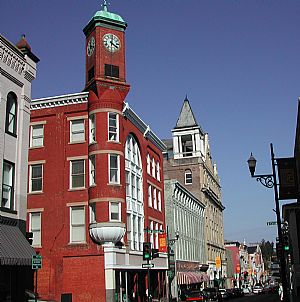
And we’ve taken to spending a good part of Friday in downtown Staunton. I know this part of town intimately, having worked with the local merchants, property owners, residents and city officials to preserve it for 13 years. My office was in the Wharf Historic District and our home was only 4 blocks away in the New Town Historic District. Downtown Staunton is a National Trust Great American Main Street Award winner as well as a 2001 National Trust Dozen Distinctive Destination. And I’m here to say that even in the midst of the worst economic recession since the Great Depression, this Main Street is hanging in there and even thriving.
So with the family and Oakley, our host, we took off for a wonderful day on the town, buying locally (we still think of Staunton as one of our homes) as we visited with old friends and neighbors. Our first stop, of course, was Fretwell Bass Shop, where Oakley and I got to salivate over 20 or more acoustic basses and play some beautiful Huss & Dalton guitars (top-of-the line guitars made – you guessed it – right here in Staunton). The rest of the family left us to our bliss, while they took off to see the parts of downtown they cared about. After we’d played a variety of instruments, Oakley and I caught up with the family. Over the course of the next four hours we checked out the Roots Music offerings for the weekend at Mockingbird, then stopped in to visit and do a little shopping with Dana Flanders at Crown Jewelers. (Our friend Dana was featured in a great Thanksgiving Day piece in the local paper about cooking locally – with all her ingredients coming from within a 100-mile radius of Staunton.) We saw the annual Arts for Gifts show (yes, with gifts made by local artisans) in the beautifully restored R.R. Smith Center for History & Arts, had a great lunch at the tasty Shenandoah Pizza (where the owner is a big Allman Brothers fan), shopped at the very busy Sunspots Studio while Andrew & Claire watched the glass blowers, did a little shopping with Dana’s sister-in-law Kelly at Byers Street Housewares, picked up a coffee next door at Blue Mountain Coffee in the Wharf, bought a couple of bottles of wine from the Wine Cellar down the street, and ended up shopping at Pufferbellies Toy Store while Susan Blanton, the store’s owner, swooned over how much Andrew & Claire had grown since she read to them at Children’s Hour in the Staunton Public Library some 15 years ago.
It was a fun day with family and friends. But it was also an important day for downtown Staunton. Because the Browns, like hundreds of other families in Staunton yesterday, decided to buy locally. Why is this important, you ask? Well, the Staunton Downtown Development Association has the answer for you:
HOW IMPORTANT IS IT TO SPEND YOUR DOLLAR LOCALLY?
60 cents out of every dollar you spend comes back into our community ~ That’s $60 out of every $100!
Strengthens the local economy through taxes ~Downtown restaurants generate 60% of the City meals tax! Downtown hotels generate 48% of the City lodging tax!
Creates jobs ~ Over 1800 people work downtown
Circulates your dollars throughout the business community ~ Independents support each other by purchasing services and products for their businesses; 80% goes back into the community!
Promotes freedom of choice ~ Merchandise buying decisions based on the wants and needs of local customers, adding diversity to shopping options!
Protects our own unique Staunton culture and history ~ Preserves & recycles existing architecture for future generations!
Supports local non–profits ~ Independents donate 350% more to non–profits than national chains!
So this holiday season, buy locally. You’ll have a great time, you’ll avoid the crush of the malls, and you’ll do something for your friends and neighbors.
Two recent releases by Sam Bush and Ricky Skaggs — two superstars of Americana, roots, and bluegrass music — show both artists coming home in ways that bring them full circle with their own artistic travels.
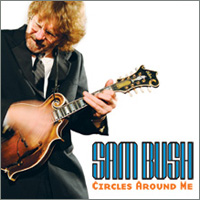
Bush’s Circles Around Me is a return to the bluegrass and early progressive newgrass of his youth in Bowling Green, Kentucky. The album opens with the title track, a tune that celebrates “being thankful that you’re here” according to Bush. His terrific road band — Byron House on bass, Chris Brown on drums, the amazing Scott Vestal on banjo and Stephen Mougin on guitar — plays on the majority of the 14 tracks, stretching out their musical chops on tunes such as the instrumental Blue Mountain and the old New Grass Revival song Souvenir Bottles. This latter tune, along with Whisper My Name written by original NGR bassist Ebo Walker and featured on their very first album, brings Bush back to the band where he made his name and helped shape a whole new genre of music — Newgrass.
But there’s also a strong traditional bluegrass strain on the album, especially on the tunes where Del McCoury joins in on vocals. Roll on Buddy, Roll On is a fine piece of straight-ahead grass. Songwriter extraordinaire Guy Clark, Bush and Verlon Thompson co-wrote the haunting Ballad of Stringbean and Estelle about the real-life tragedy of the murder of old-time country music star David “Stringbean” Akeman and his wife Estelle. Midnight on the Stormy Deep and Out on the Ocean are solid bluegrass tunes where Bush keeps his newgrass tendencies in check. In addition to McCoury, guests artists include Dobro wizard Jerry Douglas, McArthur genius and bassist Edgar Meyer and his family, and (posthumously) original NGR banjoist Courtney Johnson on the sweet fiddle/banjo duet Apple Blossom.
Sam Bush has put together a thoughtful yet entertaining album that should keep his fans happy while finding some converts among the traditionalists who are not as attracted to his recent solo work.
Ricky Skaggs has been moving in a more traditional direction for a good many years since his dip into mainstream country stardom in the 1980s and 90s. His band Kentucky Thunder is arguably the best band in bluegrass, with Skaggs showcasing some of the music’s best young talent much as his mentor, Bill Monroe, did through the years with the Bluegrass Boys.
But on his most recent album, Songs My Dad Loved, Skaggs goes solo. That doesn’t mean you’ll just hear Ricky and a guitar or mandolin, because he plays and overdubs a dizzying array of instruments: acoustic guitars, resonator guitar, round hole and f hole mandolins, mandocello, octave mandolin, steel string banjo, gut string fretless banjo, fiddle, piano, bass, Danelectro electric baritone guitar and percussion.
Songs My Dad Loved is an obvious labor of love for Skaggs. There are old-time fiddle/banjo duets (Colonel Prentiss), Roy Acuff and Fred Rose-penned old country tunes (Foggy River), gospel (City That Lies Foursquare) and mountain bluegrass (Little Maggie) among the selections. Songs My Dad Loved is dialed back from the breakneck bluegrass that Skaggs and Kentucky Thunder are known for. But it is a little gem of an album, reminding me — as one other reviewer noted — of the classic Skaggs and Rice duet album.
Two great Americana musicians, circling back to their roots. When you reach your 50s and have been playing professionally since you could hold an instrument, this isn’t a bad place to be.
And to give you a taste of the music, there’s a nice video of Sam and his band recording Circles Around Me with commentary by Sam interspersed. Enjoy.
As we approach Thanksgiving 2009, the Browns are taking the time to give thanks for a year full of joy, sorrow, good friends, good health and visits to wonderful places.
Last year’s photos posted at Thanksgiving were a hit for family and friends, so I’ve again placed a number of photographs from throughout the year on More to Come…. They include places we’ve been, time with family and friends, and special events in our lives. If you put your cursor over the photo, the caption will magically appear.
At the top of the post you’ll see our lovely children, Andrew and Claire, on the night we were headed to the Kennedy Center for the Cappies. Andrew was part of a musical quartet in his high school’s production of The Music Man that was nominated for a Cappie Award (the high school equivalent of the Tony Awards). You’ll find more photos of all the Browns below.
We had a blessed year and hope you’ll enjoy the photos.
More to come…
DJB
Image: Andrew and Claire at the Cappies (held at the Kennedy Center)
New York City is not the place where you’d expect to hear great country music, but on a Tuesday night in Gotham, in the middle of Times Square, B.B. King’s was filled with the music and wisdom of Jimmie Dale Gilmore, Joe Ely, and Butch Hancock: The Flatlanders.
A business colleague, her college friend and I ventured out on a beautiful night in the city to catch the Zen Cowboy and his companions play a rollicking set of Texas country music. The tunes were great with all three stars taking turns showcasing their work. As they neared the end of the show, The Flatlanders worked in Gilmore’s Dallas – a wonderful song – and then rocked it out with the Townes Van Zandt tune White Freightliner before closing the show with Pay the Alligator.
The Fretboard Journal just posted this wonderful video on their Facebook page. It features mandolin phenom Chris Thile playing the Bach E Major Prelude on his Dudenbostel mandolin. I found the video compelling not only for the beautiful music but also because of the way it highlights Thile’s amazing right hand pick techniques.
If you have had it up to here with screaming right-wing talk show hosts or pontificating left-wing bloggers or just three days of rain, I have the perfect antidote: the Vintage Roadside 2009 Road Trip Slide Show.
Each year Jeff and Kelly from Vintage Roadside travel the back roads from Portland, Oregon to the host city of the National Preservation Conference and take pictures and blog about the experience. (Vintage Roadside makes great t-shirts that honor the wonderful mom-and-pop roadside attractions, motor courts, motels, tiki lounges, drive-in restaurants, bowling alleys and roller-skating rinks found along America’s back roads.) This year the trip took them to Nashville, Tennessee. You will laugh out loud, you will be amazed at the quirky attractions that still remain on America’s roadsides, and you’ll marvel at what a diverse country we live in. So take my recommendation – visit their slide show and spend a few minutes with this great country.
Thanks Jeff and Kelly. It was wonderful to spend a bit of time with you in Nashville. Thanks for what you do to support the National Trust for Historic Preservation. I’ll see you in March in Portland and next October in Austin.
I’m reading Paul Goldberger’s new book Why Architecture Matters. As you would expect from Paul, it is a smart, well-written work that is designed to help the reader interested in buildings “come to grips with how things feel to us when we stand before them, with how architecture affects us emotionally as well as intellectually.”
I’ve already come across numerous passages and examples that resonate, but last evening I was reading his take on I.M. Pei and Henry Cobb’s John Hancock Tower on Copley Square in Boston and was reminded of my last impression of that building when Andrew, Claire and I were visiting the city in March 2008.
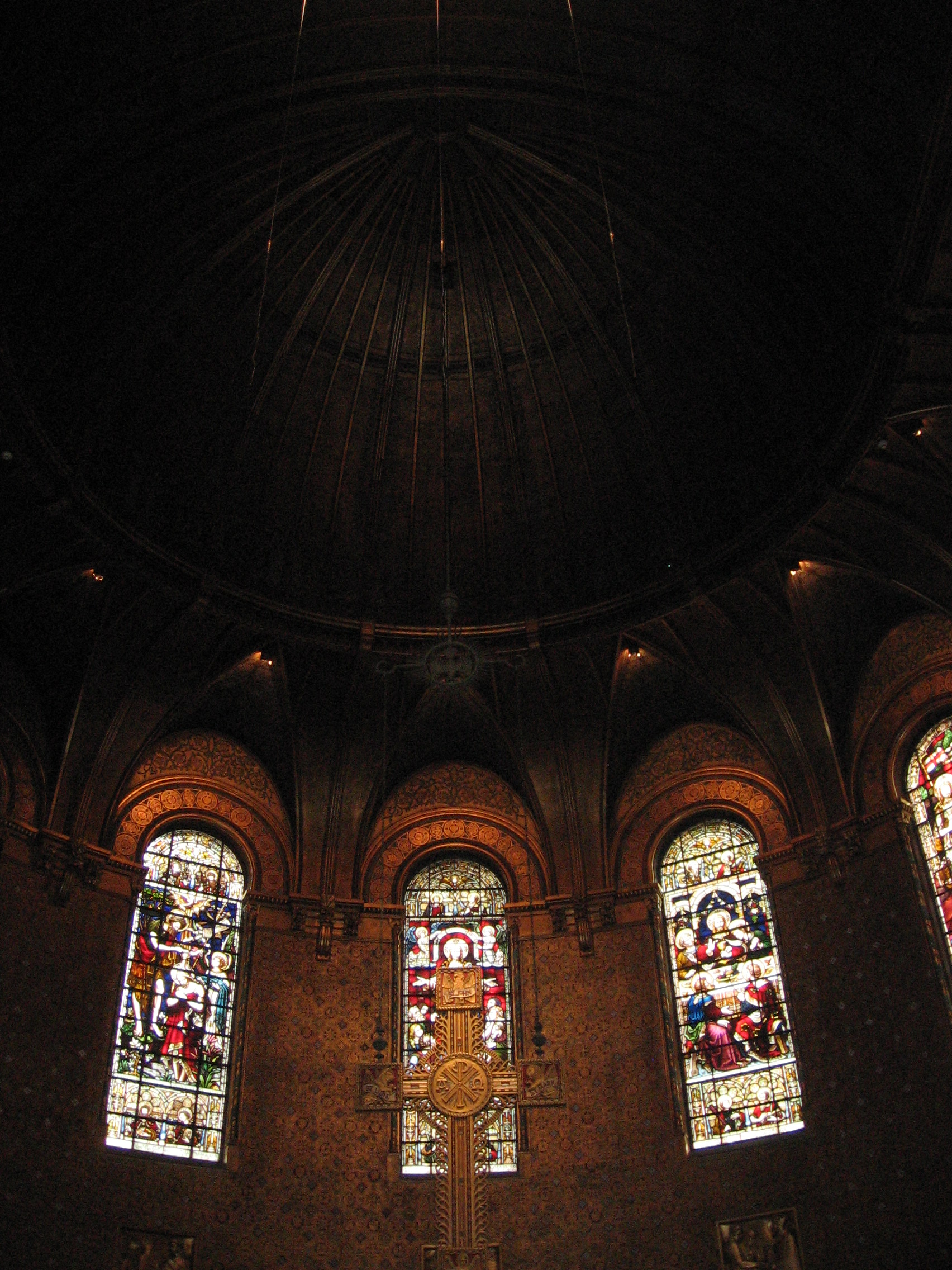
It was great fun to introduce Claire and Andrew to Copley Square when we visited Boston in 2008. We toured the great H.H. Richardson-designed Trinity Church, of course, and took numerous photographs – both color and black & white for Claire’s photography class. We wandered Copley Square to talk about the buildings, spaces and people. And we marveled at the Hancock Tower and talked about how it fit within that historic yet dynamic space.
Paul describes that fit within the context of Copley Square in his inimitable way, so I’ll quote from him liberally and then add a photo or two from our visit.
“This tower has an unusual shape, a slab sliced on the diagonal so that from some angles it appears like a thin wafer and from others, almost like a flat surface with nothing behind it at all. It is like a piece of abstract sculpture, beautiful but mute…The idea here is to minimize procession and to think of the building as an elegant, sculptural object set within the complex composition of Copley Square….
Once the new glass was put in, you could finally see that Hancock was designed to look as if it had been conceived as a pure abstraction, a cool, elegant piece of modern sculpture. It appears almost weightless, despite its size….
When you look at the Seagram Building or the General Motors Building or the Hancock Tower, you see not only an object but also a certain vision of the world. Architecture, among other things, seeks to establish order. Mies’ order (at the Seagram Building) is easy to see – subtle and understated, but powerful and self-assured….If the Seagram Building has a Zen simplicity to it, the General Motors Building suggests a more garish view of the world, one in which a few eye-grabbing gestures, like the white marble and the bay windows, are expected to create an aesthetic experience and to hide the fact that the building is, at the end of the day, a dressed-up box….
The vision Pei and Cobb suggest with the Hancock Tower is a more difficult and complex one – full of movement and lines of tension. They did not want to compete head-on with Mies van der Rohe in the category of boxlike high-rises, and they chose to make their skyscraper in another shape altogether, a shape that in its very sleekness suggests that it is pushing the art of skyscraper design forward….The General Motors Building has little to do with its surroundings, an indifference that its original, little-mourned sunken plaza made far worse than it is today, while the Seagram Building, despite being a structure of glass on a street that, at least in the 1950s, was made entirely of masonry buildings, was carefully aligned on a symmetrical axis opposite its classical neighbor, the Racquet and Tennis Club by McKim, Mead and White across Park Avenue….As for the Hancock Tower, paradoxically, even though its reflective glass would appear to signify the ultimate diffidence and aloofness – you can’t see in, and there is no sign of human activity from the outside – the reflected images of surrounding buildings, not to mention the general sense of energy of its crisp shape, make you feel a connection between the tower and its urban surroundings. The building feels right for its place, almost in spite of itself.“
Just what I would have said…if I had Paul’s depth of knowledge about architecture.
On this Veteran’s Day 2009, we honor those who have served and continue to serve in our armed forces. In my immediate family, that includes my father, a World War II Navy veteran, and my brother Joe, who served in the Navy on a helicopter carrier during the 1980s. I am always proud of their service, but don’t always remember to tell them so except on special days of honor such as this.
Both survived their time of service. But men and women join the military knowing that they may have to make the ultimate sacrifice. Most expect that if that happens, it will occur on a foreign battlefield. None expect it to happen on a United States military installation on U.S. soil.
This is a time of war. Yet these Americans did not die on a foreign field of battle. They were killed here, on American soil, in the heart of this great state and the heart of this great American community. This is the fact that makes the tragedy even more painful, even more incomprehensible.
For those families who have lost a loved one, no words can fill the void that’s been left. We knew these men and women as soldiers and caregivers. You knew them as mothers and fathers; sons and daughters; sisters and brothers.
But here is what you must also know: Your loved ones endure through the life of our nation. Their memory will be honored in the places they lived and by the people they touched. Their life’s work is our security, and the freedom that we all too often take for granted. Every evening that the sun sets on a tranquil town; every dawn that a flag is unfurled; every moment that an American enjoys life, liberty and the pursuit of happiness — that is their legacy.
Thank you Daddy. Thank you Joe. And thanks to all the men and women who have served to protect our freedom.
 Last year’s post about St. Nicholas Day generated a number of favorable comments from friends and family. Several friends especially remembered the Madeleine L’Engle comment that we are always every age we’ve ever been.














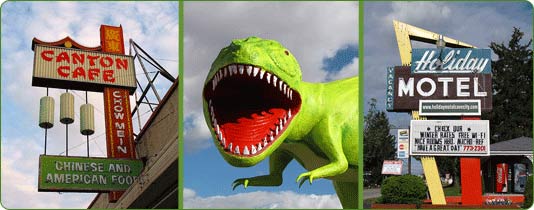 If you have had it up to here with screaming right-wing talk show hosts or pontificating left-wing bloggers or just three days of rain, I have the perfect antidote: the