In his Washington Post column, Tom Boswell has a wonderful piece on how this has turned into an “Old School Series.” How right he is. And he nails the landing:
Once back in New York, Matsui and Posada will be back in the lineup. Pettitte will be set to pitch a game that might be Exhibit A on his Hall of Fame résumé someday. Utley will take aim at Reggie-Reggie-Reggie. A-Rod has a chance to be MVP and own New York for decades. Girardi won’t sleep for the next 48 hours. Martínez has a chance to reverse the “Daddy” chants for a day and bring baseball a Game 7 that would raise the hair on heads from coast to coast.
I am in Minneapolis/St. Paul for two days of meetings on saving Modernist and Recent Past places. Minnesota and the Great Lakes region has a strong collection of buildings and landscapes from the Modernist period, so we’re in town to work with and learn from our local partners.
Last evening’s opening session was held in a beautiful space: the Eliel Saarinen designed Christ Church Lutheran sanctuary. His son Eero designed the adjoining educational wing. This supreme example of the Modernist movement is Minnesota’s only National Historic Landmark listed for its architectural importance rather than as a site of historic significance.
The church – now working with a newly formed Friends of Christ Church Lutheran group – has done a wonderful job of preservation and stewardship of this place. I spent a great deal of time last evening with Pastor Kristine Carlson, who opened with a moving testimony as to why this place matters. As I said in my opening remarks, preservation generally happens when people – not necessarily professional preservationists – see the connection between place and life. No where is the connection between place, mission, and spirit more real than at Christ Church Lutheran.
I didn’t have my camera with me, but that’s okay, because the church’s website has a wonderful album of photographs by Pete Sieger. I recommend you visit the site and just enjoy his wonderful take on this special place. And if you are lucky enough to visit the church, make sure you see Sieger’s collection of photos taken of the altar every ten minutes from 10 a.m. until 2 p.m. It is a treasure trove of the interplay of light and space.
An American treasure – Dr. Ralph Stanley – has just released a memoir entitled Man of Constant Sorrow: My Life and Times. Many people came to know Stanley through his haunting rendition of O Death in the movie O Brother, Where Art Thou?. But longtime bluegrass and old-time music fans know of Stanley from his days with his late brother Carter when they performed some of the most moving music ever heard from the mountains of Virginia.
Mother Jones online has a good review of the book. Here’s an excerpt of Stanley talking about his childhood:
“There were no books I can recall, save for the family Bible,” he says of the home place. “There wasn’t much in the way of toys and playthings like children have today. My parents wouldn’t allow even a deck of playing cards in the house, because it could lead to gambling and all kinds of trouble. For Christmas, we’d get an orange, one for Carter and one for me, and a handful of rock candy. Maybe a cap-gun, too. It wasn’t ’til years later that I got a bicycle of my own and I had to trade a dog to get that bike.”
We’re into fall here in the Washington region and that means that the acoustic music scene is busy pointing toward those holiday concerts. But before December arrives, there are a few highlights for lovers of bluegrass, Americana, and roots music in the District of Columbia.
This Monday, the Blue Moon Cowgirls and flatpicking champion Orrin Star are featured at the Institute of Musical Traditions concert in Rockville. I’ve heard Star before, and he’s a treat for those who like the old flat top.
Country singer extraordinaire Patty Loveless will be at the Birchmere on November 1st. She’ll no doubt be featuring tunes from her new album, Mountain Soul II. The original Mountain Soul was a terrific album, and the follow-up begins with a great version of that old country classic, Busted. (Well the bills are all due and the babies need shoes, we’re busted…) Sure to be a great show.
For those who don’t mind a bit of a drive, folksinger John Gorka is playing on November 20th at the historic Avalon Theatre in beautiful Easton Maryland. Gorka has one of the most distinctive voices in folk music and I believe I could listen to him sing the phone book. (There’s also a nice Historic Hotel of America – the Tidewater Inn – in Easton for those who would like to make a weekend of it.)
The next evening, Saturday November 21st, the Del McCoury Band – just about the best traditional bluegrass band on the circuit today – will be at the Birchmere. They also have a new album, entitled Family Circle, out later this month. Del and the boys never disappoint.
Finally, Monday, December 7th, will pose a real dilemma, as both IMT and the Birchmere have top-notch Christmas shows. I’ve attended the IMT Celtic Christmasshow featuring guitarist Robin Bullock and husband/wife duo Al Petteway and Amy White for a number of years. With Bullock and Petteway, you have two terrific guitarists and this show is always a treat. But the same night, the Birchmere has booked my long-time favorite Jerry Douglas along with Irish singer and song interpreter Maura O’Connell for their own “Very Jerry Christmas.” Few people can interpret a song the way O’Connell can and her newest CD is a collection of acappella duets entitled Naked With Friends. (Click on the link and read the great review at Fiddlefreak.) The friends include Dolly Parton, Alison Krauss, Mary Black, Kate Rusby and more. I love hearing O’Connell live, so I expect I’ll be at the Birchmere on the 7th for that show.
To give you a hint of what you might hear on the 7th, I’ve included a video of Maura O’Connell in a duet with Nanci Griffith and with Jerry Douglas on Dobro playing the Griffith tune Trouble in the Field. Simply sublime.
Thankfully we’re in luck, as today’s Washington Post contained a Boswell gem entitled Phillies Thrive on the Quirky Wisdom of Charlie Manuel.
There’s a lot to savor in this column:
“Many have been amazed at the Phils’ gift for clutch play in this postseason, including late heroics by Werth and Ryan Howard that were topped here Monday night when Jimmy Rollins, the 5-foot-8 shortstop who is the core of the clubhouse, turned around a 99-mph fastball from 290-pound Jonathan Broxton and became the fifth man in postseason history to turn a defeat into victory when he represented the last out of the game.
But Manuel isn’t surprised at all by the Phillies’ comeback knack and their ability to shake off blown saves all season by their dubious bullpen. He and others in the front office, like Pat Gillick and Ruben Amaro, believe you can identify players who are at their best under pressure because they are both energized and focused by the spotlight, not paralyzed or distracted by it.
Charlie Manuel quotes an old Boswell book, The Heart of the Order, and a key Boswell precept: “There is no substitute for excellence — not even success.”
“You’ve got to be totally relaxed, you’ve got to stay focused and it gets back to the [idea of] excellence over success,” said Manuel. “If you strive to be the best, then success will be there.”
Charlie boiled it down to: “Don’t get hung up on success and what people think of you; focus on excellence, play the game the right way, enjoy the moment and don’t be scared of it.”
It is nice to see the Phillies — and their quirky manager who fundamentally understands the game — in the World Series again.
As you saw in earlier posts, I spent some time playing a little old-time and bluegrass music with friends and colleagues. At one venue, the playing was captured on video.
So click below to see yours truly playing a couple of fiddle tunes. We picked the key for ease of playing, so the singing’s a little low. These tunes were performed at the Patrons’ Dinner for the conference sponsors and all seemed to have a good time.
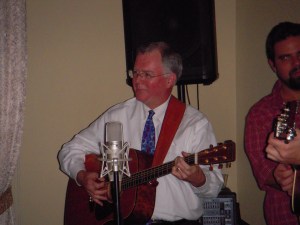
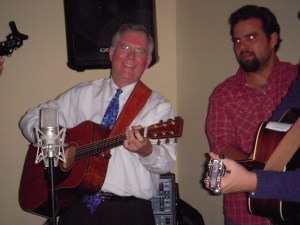
Earlier this week, fellow preservationist and bluegrass lover David Price came up at the National Preservation Conference and invited me to sit in with his band, Off the Wagon, when they played the Southern Regional Reception on Thursday evening.
I jumped on the wagon!
Off the Wagon is a good young bluegrass band in Nashville (the next night they were playing at the world-famous Station Inn). So as you can see from the photos, I enjoyed the chance to sing and play Sitting On Top of the World.
Twas in the spring, one sunny day, My good gal left me, Lord, she went away,
And now she’s gone, but I don’t worry, “Cause I’m sitting on top of the world.
The band helped cover my mistakes (and my lapses in memory) and I had a great time. Lots of friends and colleagues from our Southern Regional Office and beyond had a chance to enjoy it as well.
I’ve inserted a video of Off the Wagon – without the interloper – playing New Camptown Races. Enjoy.
Even for a guy who gets to work with some amazing people and visit some of the country’s most wonderful historic places, yesterday was an extraordinary day. (And not just because I passed 10,000 visitors to More to Come…the DJB Blog – thank you readers.)
For a bluegrass loving preservationist to have a chance to speak from the place where Earl Scruggs came onstage some 60 years ago with Bill Monroe to play White House Blues and give birth to bluegrass music was an honor. To be able to tell 2,000 conference attendees why this place matters was a thrill. To be able to hear the bluegrass I’d chosen over the Ryman’s speakers for the 30 minutes before we kicked off the conference was just a rush. I knew it was going to be a great evening when the Laurie Lewis tune Who Will Watch the Home Place? – with its haunting acappella chorus at the end – was the last song played just before I stepped on stage. What a perfect bluegrass sentiment for people who work to save – and watch – home places all across the world.
I also had a little fun later in the evening, when I joined my brother Joe (on bass) and my colleague at the National Trust Brian Turner (on banjo) to play a couple of old-time tunes (Over the Waterfall and Angelina Baker) for the patrons of the conference. We played at Union Station in a beautiful room with live acoustics. It was the perfect cap to the afternoon and evening.
At the end of a busy first day at the National Preservation Conference in Nashville, I took off to the Grand Ole Opry House with about 20 close friends for the taping of a PBS special celebrating 40 Years of Rounder Records. (Look for the show on March 10, 2010.) While it started late and ended even later, it was an amazing evening of music.
Here’s just a few highlights:
Nathan and the Zydeco Cha Chas playing that great accordion-driven dance music from Louisiana, where the “crawfish got soul and the alligators got the blues.” My accordion-playing friend Jim Harrington would have loved it. As my colleague and seatmate Caroline Barker said, “If I could move my feet like Nathan and the Zydeco Cha Chas I’d be a dancer instead of a preservationist (perhaps).”
Bela Fleck and Abigail Washburn singing and playing Keys to the Kingdom. I heard them do the tune at Merlefest, but it was even better in the controlled setting of the Opry House. Then Bela and Jerry Douglas played a duet just to prove they are two of the best musicians on the planet.
Mary Chapin Carpenter, a relative newcomer to Rounder, singing a great song, Grand Central Station, written just after 9/11. As my friend and colleague Dolores said, she’s a preservationist.
Alison Krauss + Union Station Featuring Jerry Douglas (longest band name ever) were just perfect. Perfect. The harmony between Alison and Dan Tyminski is a wonderful thing to hear, and then Jerry Douglas just adds another voice with that heavenly Dobro. Alison also has the wackiest stage humor ever, which was egged on last night by hostess Minnie Driver.
I knew all those performers and had seen all by Nathan Williams live. The singer I didn’t know was New Orleans soul queen Irma Thomas. What a set of pipes! What a stage presence! What a band! If you don’t believe me, just take a listen to the video below where she sings her first big hit (which closed out her show last night) You Can Take My Husband, But Please Don’t Mess With My Man.
 I mentioned a week ago that singer/songwriter John Gorka was playing at the historic Avalon Theater in Easton, Maryland on November 20th.
 Game Five of the World Series was what we’ve been waiting for and, as a result, there’s more baseball to be played.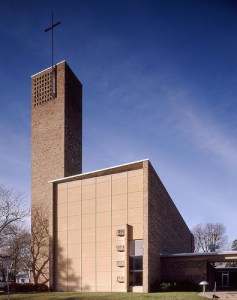
 An American treasure – Dr. Ralph Stanley – has just released a memoir entitled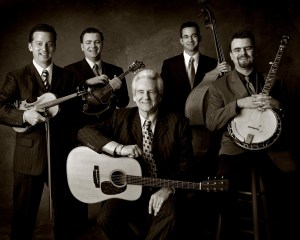

 We’re back to reality following the
  Earlier this week, fellow preservationist and bluegrass lover David Price came up at the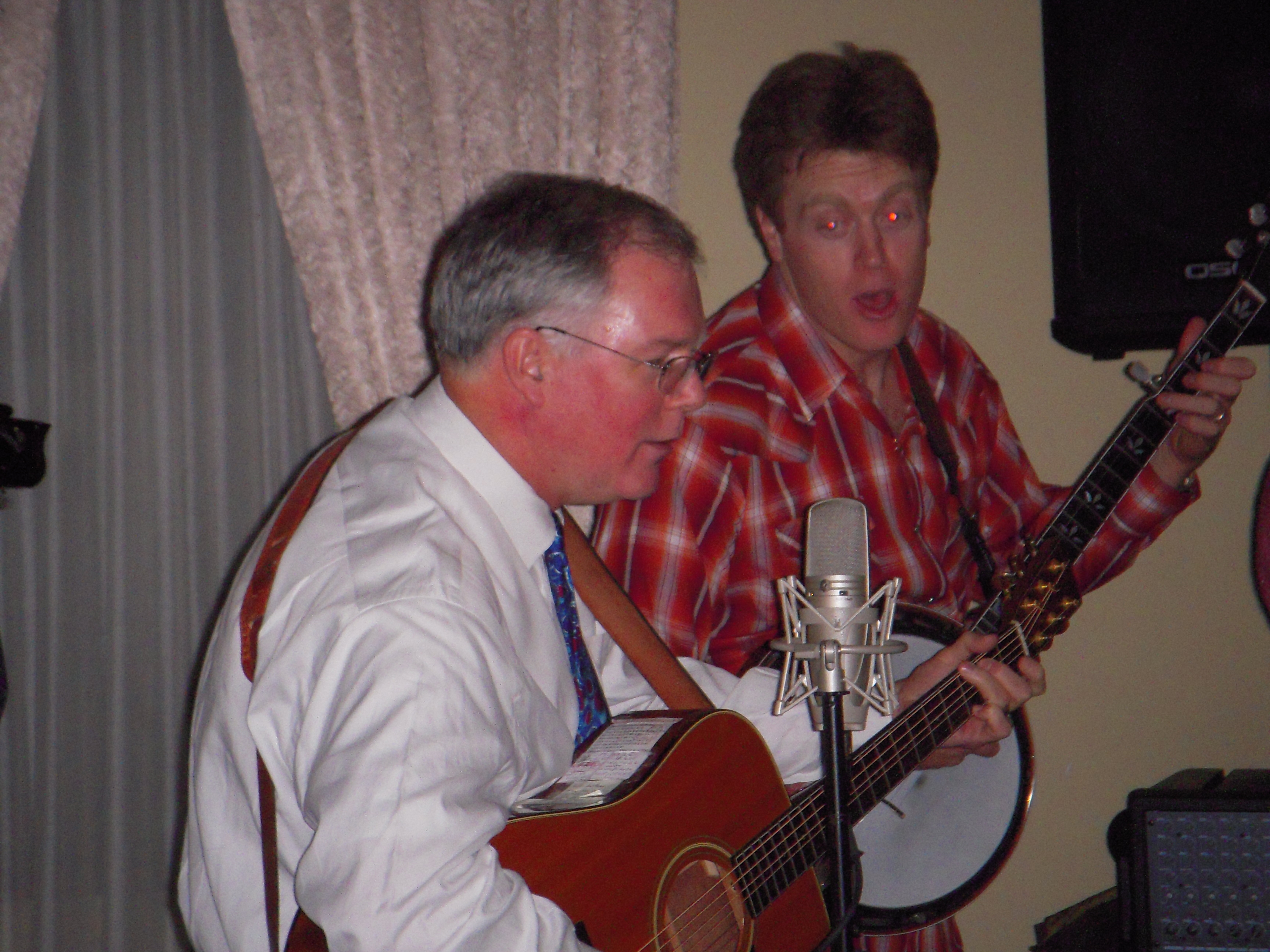
 I also had a little fun later in the evening, when I joined my brother Joe (on bass) and my colleague at the National Trust Brian Turner (on banjo) to play a couple of old-time tunes (Over the Waterfall and Angelina Baker) for the patrons of the conference. We played at Union Station in a beautiful room with live acoustics. It was the perfect cap to the afternoon and evening.
 At the end of a busy first day at the
