Latest Posts

Santiago Calatrava’s Dublin Bridges (And More) By Dawn’s Early Light

Samuel Beckett Bridge 2010 DublinI am blessed with two talented children who teach me so much every day.  Claire has an imaginative and artistic eye that she uses to great effect in her photography of buildings and landscapes.  Andrew has been fascinated by architecture since he was a toddler and stood in our hall to carefully run his hand over the curved beaded siding on our wall.  As a preservationist and father, I love talking with them about their passions.

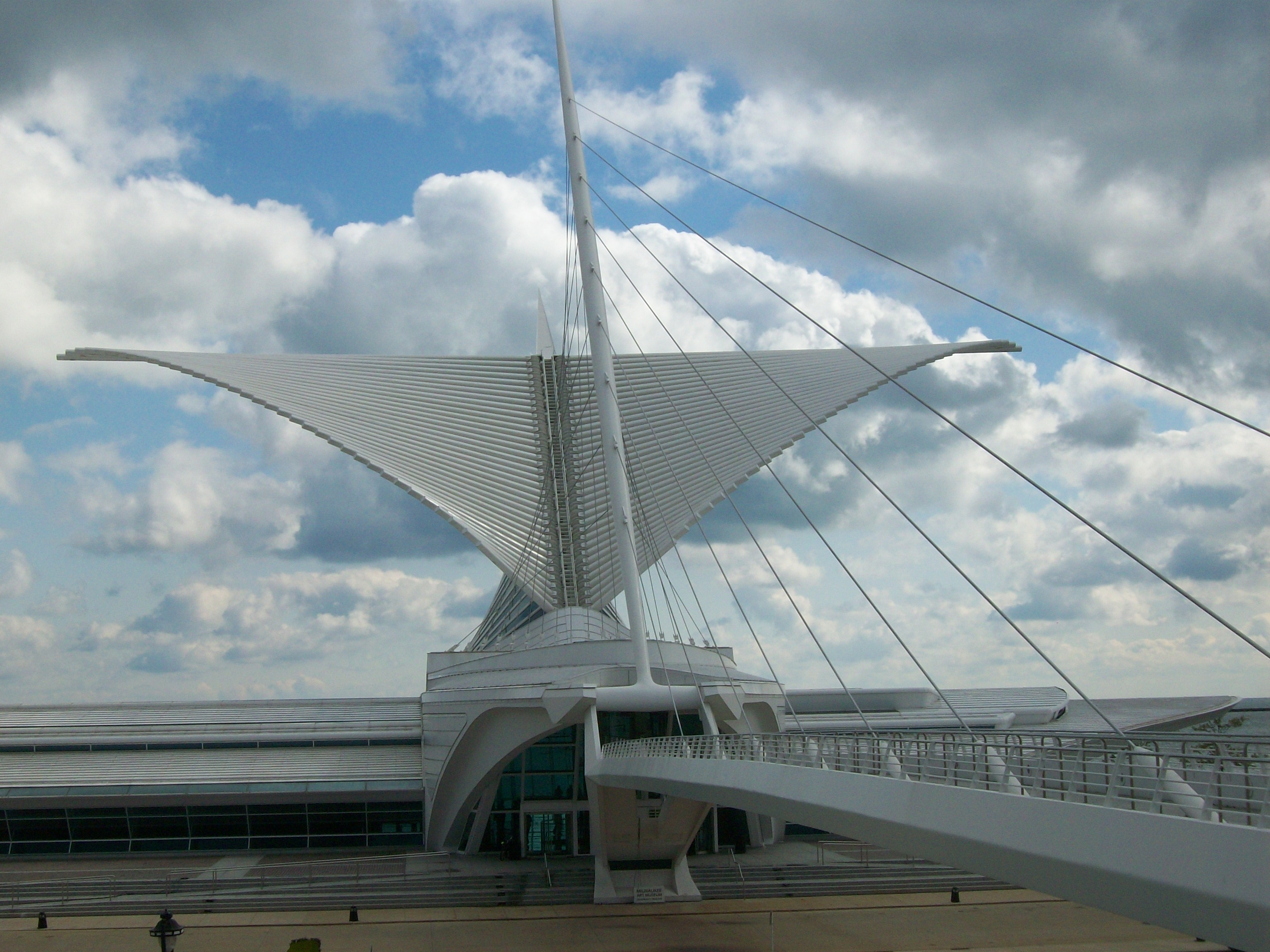
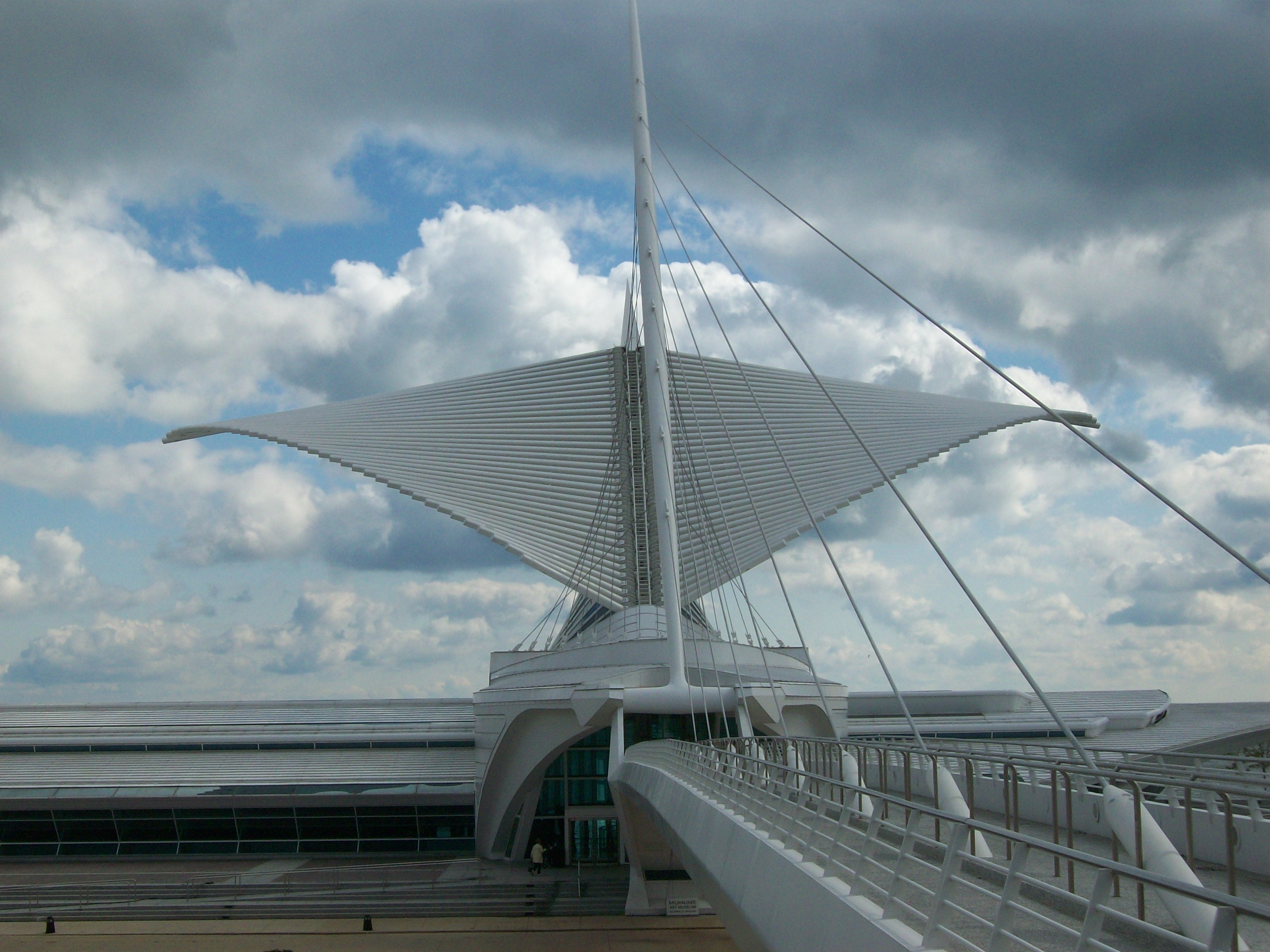
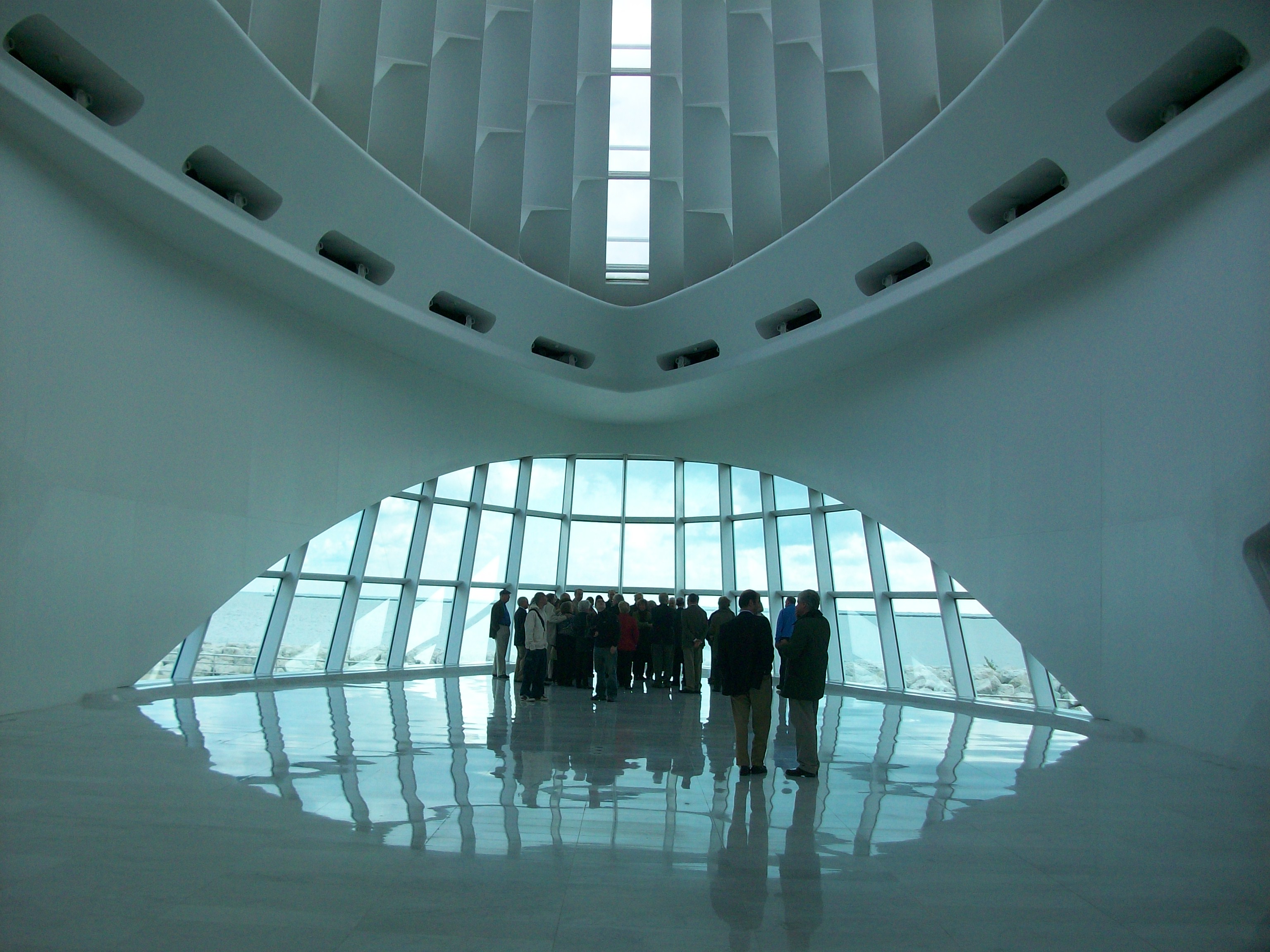
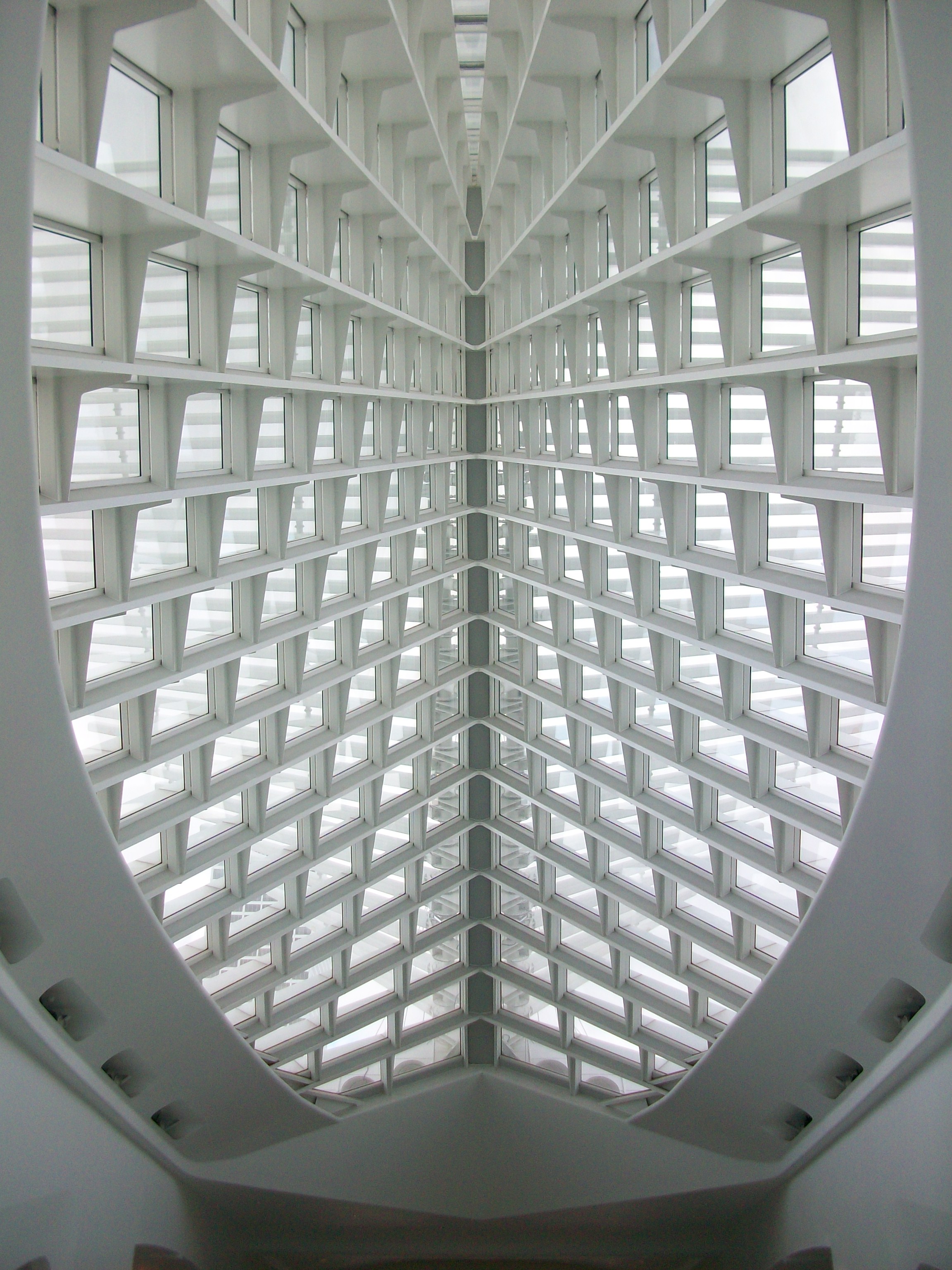
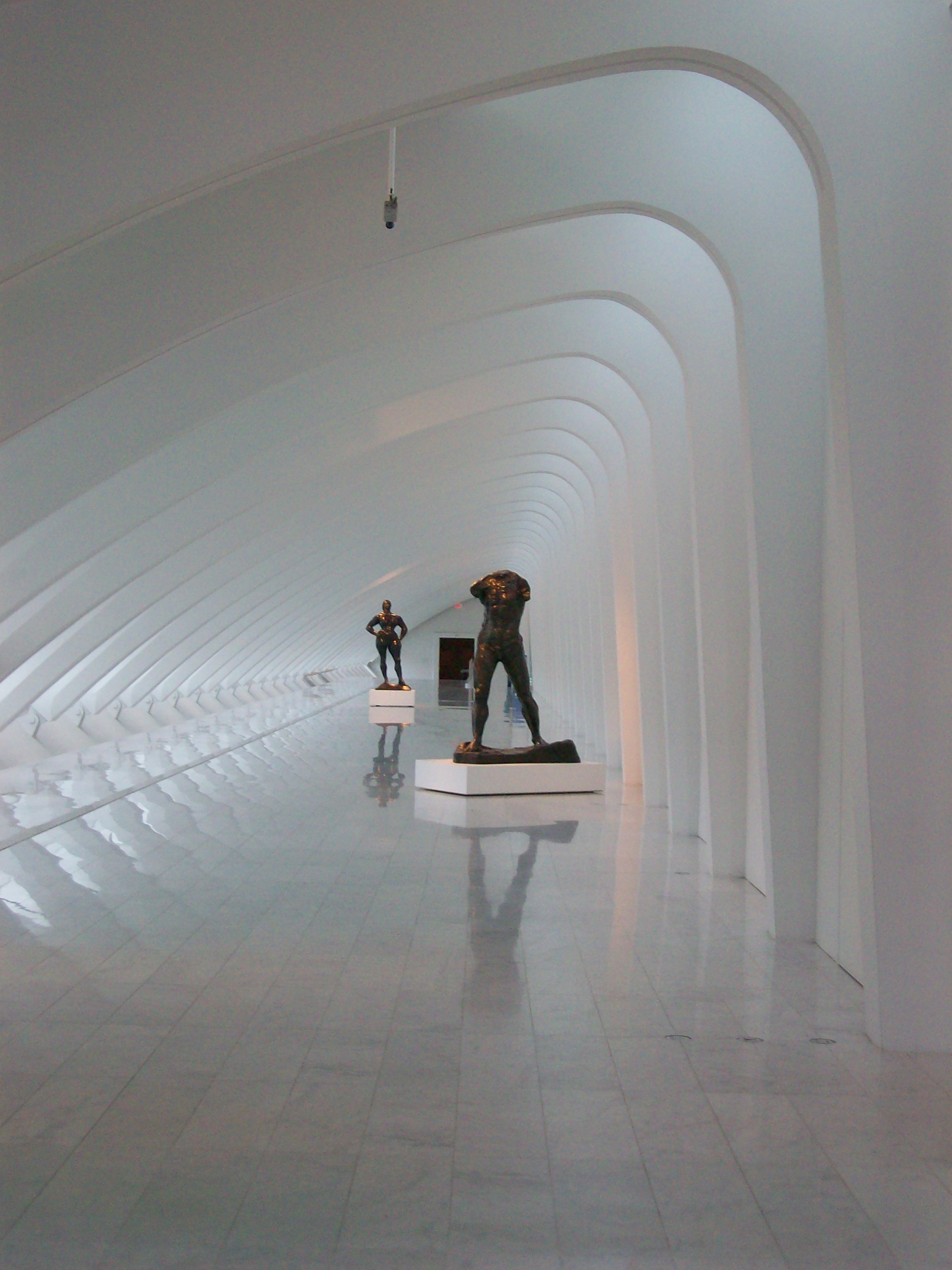
So when Andrew texted me on Friday morning to say, “Dad, there are two Santiago Calatrava-designed bridges in Dublin,” I knew they must be special.  I wanted to see them not only based on Andrew’s message, but because I had seen the Spanish-born Calatrava’s Milwaukee Art Museum (a building I’ll be in again in a few weeks) and was intrigued as to  how he handled his designs in this city of bridges.

To make a long story short, I left in dawn’s early light this morning and went on a 1 1/2 hour walk, beginning at Calatrava’s James Joyce Bridge (2003) and ending at his still-to-be-completed Samuel Beckett Bridge (2010 – in the photo above).  In between I took photos of each of the bridges on Dublin’s River Liffey.  (Warning:  I’m not as good a photographer as Claire.)  Enjoy this look at Dublin’s River Liffey bridges – in their order on the river and in the dawn’s early light.  (If you put your cursor over the picture you should see the name and date of the bridge.  And keep looking, as the best – the Irish harp shaped Beckett bridge – is saved until last.)

More to come…

DJB

James Joyce Bridge Dublin

James Joyce Bridge Dublin

James Joyce Bridge Dublin

Liam Mellowes Bridge 1768 Dublin

Fr. Mathew Bridge 1818 Dublin

O'Donovan Rossa Bridge 1816 Dublin

Grattan Bridge 1875 Dublin 091309

Millennium Footbridge 1999 Dublin

Liffey (Ha' Penny) Bridge 1816 Dublin

O'Connell Bridge 1880 Dublin

Butt Bridge 1932 Dublin

Talbot Memorial Bridge 1978 Dublin

Sean O'Casey Bridge 2005 Dublin

Samuel Beckett Bridge 2010 Dublin

Dublin, By Day and Night

Christ Church Cathedral at Sunset During last evening’s three-hour ringing of the bells at Christ Church Cathedral here in Dublin (apparently, a Friday evening tradition), I looked out the window to focus on the music and noticed the beautiful sunset.  I raced out of the hotel and took a few pictures to capture in my mind the wonderful juxtaposition of the bell ringing and the Irish sunset on the medieval portion of the city.

Today was all business, but we had a chance to conduct it in wonderful space.  An Taisce, the National Trust for Ireland, is our host this week and our INTO meeting today was in their headquarters – the old Tailors Hall.  I took a few pictures, including the view out the window from my seat.  I will talk more about the meetings in follow-up posts, but wanted to include the photos of the Hall as a post for today.Tailors Hall Entrance

Enjoy the photographs.

More to come…

DJB

Tailors Hall Gate View from Tailors Hall

An Afternoon of Dublin Cathedrals

Christ Church Cathedral DublinI arrived in downtown Dublin mid-morning local time with the better part of the day free before my meetings began for the International National Trusts Organisation (INTO).  We’re here because An Taisce, the National Trust for Ireland, is hosting the 13th International Conference of National Trusts.

So with the city’s two cathedrals located just steps from my hotel, I awoke from a short nap and headed out to explore these great historic landmarks.  (And as I’m writing this, my connection with the cathedrals continue, as I’m listening to the late afternoon peal of 19 bells from the Christ Church bell tower.)

Christ Church Cathedral (pictured at the top of the post) was my first stop.  This is the Anglican-Episcopalian cathedral of the Church of Ireland and it dates from 1030, when Viking Dublin’s first cathedral was built on the site.  The current building took its present shape in 1180, and was extensively remodeled in the 1870s.Christ Church Cathedral Pulpit Detail

It is a beautiful fall day in Dublin, so the light was streaming into the building through the stained glass windows.  The building is an interesting mix of periods and architectural styles, with the entire south transept dating from the 12th century.  The large 11th century crypt had recently been restored and reopened and was fascinating to visit.  I always find the choice of artifacts in these types of museums to be a fascinating study in and of itself.  In the crypt one can see a beautiful silver service given by King William (of William and Mary fame) in thanksgiving for his victory in Ireland during the War of the Three Kings.  Nearby, one finds the not quite as beautiful mummified remains of a cat and a rat which were trapped in the organ pipes in the mid-1800s.  Something for everyone!

Both Christ Church and St. Patrick’s (my next stop) are knownChrist Church Cathedral Organ for their music programs, so I was delighted to see both the historic tracker action organ and a beautiful new modern three-manual tracker built in 1984 by Kenneth Jones of Bray, Co Wicklow.  Unfortunately, I was unable to get a very clear picture, due to the lighting (or, more likely, the skill of the photographer), but I’m posting this anyway for my good friends John and George at Taylor and Boody.

Christ Church Cathedral NaveI could go on, but like my schedule today I have to keep moving.  A neighborhood pub provided lunch, and then I was off two blocks to see St. Patrick’s Cathedral.

One of the first things I saw as I came around the corner was a sign on the side of the building which read, “St. Patrick's Cathedral Dublin St. Patrick’s Cathedral Choir School, Founded 1432 A. D.”  I had to laugh, because two days ago I was at Andrew’s school – also founded as a school for choir boys – as they celebrated their 100th anniversary.  It was a great reminder of the tradition our son has been privileged to continue.

From a beautiful park, one moves inside the cathedral, which is chock-a-block full of memorials, plaques, and the like.  Jonathan Swift was the dean here and there are panels Turlough Carolan memorialdevoted to his political, religious, and literary life.  I was pleased to see a memorial to the great blind Irish harper Turlough Carolan, who wrote some of the most beautiful melodies in Celtic music.

It just so happened that as I was walking around St. Patrick’s, the organist began to play in anticipation of the evening’s service.  If you look at the picture of the choir stalls below, you can see the back of the organist in the opening at the top.  There’s nothing better than viewing a beautiful cathedral with live organ music in the air!

So, I’m wrapping up my “vacation” time in Dublin and heading off to a working dinner (where I hope to find a little Irish music in the process.  But don’t worry, I’ll get out some more (Andrew just sent me an email telling me to look for the bridges in Dublin designed by Santiago Calatrava) and I’ll be posting on the PreservationNation blog as well during the coming week.  After a couple of more pictures of St. Patrick’s, I’m posting a video of an English guitarist playing Turlough Carolan’s most famous melody, Si Bheag Si Mhor.

Enjoy.

More to come…

DJB

St. Patrick's Cathedral Choir Stalls and OrganistSt. Patrick's Cathedral Dublin 091109 026

St. Patrick's Cathedral Dublin 091109 008

It breaks your heart

A. Bartlett Giamatti said it best.

“It breaks your heart.  It is designed to break your heart.  The game begins in the spring, when everything else begins again, and it blossoms in the summer, filling the afternoons and evenings, and then as soon as the chill rains come, it stops and leaves you to face the fall alone.“

Giamatti – the former president of Yale and the great commissioner of baseball who banned Pete Rose for life and then died of a heart attack 8 days later – was writing about an earlier Red Sox loss on the last day of the season many years ago.  But the “breaking your heart” line applies in all sorts of baseball situations.

Friday evening, on the last day of my summer vacation before heading back to work, the MLB-worst Washington Nationals played the division leading St. Louis Cardinals like they were equals.  Young Nationals “ace” John Lannan matched recently acquired and crafty veteran John Smoltz pitch-for-pitch through a well-played ball game that took only a little over two hours – the perfect length for a baseball game.  Lannan was virtually unhittable and baseball’s best hitter, Albert Pujols, could only manage three little dribblers off him that barely reached the pitcher’s mound.  When chisled Elijah Dukes rocked a double down the left field line in the 7th and then came in to score on another double by the hobbled Josh Bard, Lannan looked on his way to a complete game victory that would move the Nats closer to catching the Kansas City Royals and thus getting rid of that “worst in baseball” tag.

But baseball is designed to break your heart.

In the 8th, a pinch hitter with a bad haircut – Khalil Greene – hit a Lannan mistake for the tying home run.  The Nats let a few scoring opportunities slip through their grasp.  And when manager Jim Riggleman pulled Lannan in the 9th after only 91 pitches instead of letting him face Pujols again, one sensed trouble was on the way.

Nats TV announcer Ray Knight had barely gotten the words “If you throw this guy a slider, throw it in the dirt” out of his mouth when reliever Jason Bergmann, whose best pitch is a fastball,  threw a 1-1 slider.  It was not in the dirt.  The mighty Pujols – so glad not to be facing Lannan again – strode into that fat, middle-of-the-plate slider, and the ball game was over.  As Crash Davis might have said, “Man that ball got outta here in a hurry. I mean anything travels that far oughta have a damn stewardess on it, don’t you think?”

A great game.  But a heart breaker for Nats fans.

So one of the best games of the season takes place with your home town team, and where does the home town newspaper play it?  On page 3 of the sports section.  Because the almighty Redskins are playing a meaningless exhibition game against the New England Patriots, and by God the Washington Post – clueless in so many ways as to what really matters in life – has to have two huge pictures, the game report, and TWO columnists write about that meaningless exhibition game on page 1.  As one of those columnists, Thomas Boswell, wrote in an earlier era, “Some people say football’s the best game in America…. Some people are really dumb.”

So, back to Giamatti:

“It breaks my heart because it was meant to, because it was meant to foster in me again the illusion that there was something abiding, some pattern and some impulse that could come together to make a reality that would resist the corrosion; and because, after it had fostered again that most hungered for illusion, the game was meant to stop, and betray precisely what it promised.

Of course, there are those who learn after the first few times.  They grow out of sports.  And there are others who were born with the wisdom to know that nothing lasts.  These are the truly tough among us, the ones who can live without illusion, or without even the hope of illusion.  I am not that grown-up or up-to-date.  I am a simpler creature, tied to more primitive patterns and cycles.  I need to think something lasts forever, and it might as well be that state of being that is a game; it might as well be that, in a green field, in the sun.“

More to come…

DJB

Image: Nationals play on Father’s Day.

All the King’s Men…and the Health Care Debate

Broderick Crawford as Willie StarkOn Saturday of our vacation it rained hard all day as the remnants of Hurricane Bill sent showers our way.  With no opportunity for biking or canoeing, Candice and I pulled out the 1949 Academy Award winning movie All the King’s Men starring Broderick Crawford and settled in for an afternoon with Willie Stark, Sadie Burke, and Jack Burden.

I had a high school English teacher who loved Southern literature, so my first introduction to this powerful Robert Penn Warren novel came early in life.  I’ve read it on several occasions since then but it has been a long time since I’ve revisited the tale of political idealism gone wrong.  Seeing the movie – which won Best Movie, a Best Actor award for Crawford and a Best Supporting Actress award for Mercedes McCambridge as Sadie Burke – was a timely reminder that demagoguery is part of the American experience and not something new as part of the current health care debate.

Willie has many memorable lines in the movie.  One that I’ve always remembered is Stark’s cynical line when he pushes Jack Burden to go find some dirt on the Judge:

Jack, there’s something on everybody. Man is conceived in sin and born in corruption. He passes from the stink of the dydie to the stench of the shroud. There’s ALWAYS something.

But what hit me this time was Willie’s line to the effect that “If you yell loud enough and long enough, people will believe its true.”  In today’s current “debate” on health care, that seems to be the operative approach.  Yelling and shouting to drown out conversation can come in many forms. We’re all familiar with the nonsense that’s been orchestrated at the town halls.  But I also recall seeing Betsy McCaughey – the originator of the sham that the health care bill creates death panels (Palin’s words, not hers) – on The Daily Show earlier this week.  While Jon Stewart answered and undercut every one of her arguments, she just kept saying “I’m right and he’s wrong.”  No debate.  (For an interesting history lesson, read John Buntin’s story in today’s Washington Post about how big government once shut down death panels – which were set up by hospitals – just a few short decades ago.)

Of course, not all falsehood and demagoguery comes from one political party.  In the novel, Warren has Jack explain the more complicated realities of life:

And what we students of history always learn is that the human being is a very complicated contraption and that they are not good or bad but are good and bad and the good comes out of the bad and the bad out of the good, and the devil take the hindmost.

All the King’s Men. Still worth a read or a viewing during these most curious times.

More to come…

DJB

The Sun Shines and the Nats Sign Strasburg

BaseballI went to bed last evening around 11:40 p.m. after checking to see if the Washington Nationals had signed #1 draft choice Stephen Strasburg.  They had not.

I awoke this morning and checked the Nats icon on my blackberry to find…YES, they pulled it off!  And for ONLY a little over $15 million.  The sun is indeed shining over baseball in the District today.

Writing in the Washington Post, Tom Boswell talked about Washington’s baseball redemption.

Few teams have ever needed a watershed event more than the Nationals. And no town in baseball has needed a validation and a fresh start more than Washington. On Monday night, at 11:58:43 p.m., both the team and the town got their wish.

Just 77 seconds before a witching midnight deadline, the franchise that so often gets kicked when it is down and the town that is constantly accused of baseball’s original sin (being Washington) proved that it could do something big and difficult and right.

The Nats signed Stephen Strasburg, probably the most heralded young pitcher of the last 50 years. Who knows what portion of his collegiate and Olympic fame will prove justified. But not only did the Nats sign him for a fair price of $15.67 million, despite the howls of his crusading agent Scott Boras, but Strasburg also did what has been unthinkable in baseball until now.

He chose here.

The sun is shining and the Nats have avoided losing their second #1 draft pick in as many years.  The Nats did have to do something special, but they also have something to build upon, as Boswell notes:

Right now, for a town that is deeply unsure whether it wants to fall for baseball, something special is required. Adam Dunn, Ryan Zimmerman and Josh Willingham will probably hit 100 homers and drive in 300 runs this year in the heart of a Nats order that is in the top half in the National League. That would be sufficient attraction, even in a last-place season, in some old-line baseball towns. Nyjer Morgan, a new leadoff man hitting .306, on pace for 52 stolen bases and with as much range as almost any center fielder in the game, would add spice. Even a crafty kid such as southpaw John Lannan would have a following.

So let’s cheer the Nats move to do something special and sign Strasburg.  And let’s hope the kid (and his elbow) can handle the pressure and hype.

More to come…

DJB

Good Roots Music On the Web

River House Sunset

Even on vacation I can’t spend all my time enjoying the beauty of the river.  So I went online this morning and came across one new roots music blog and was reminded of another old favorite.  I thought I’d share them with you.

The new find is called Fiddlefreak Folk Music Blog, written by a musician and artist on the west coast named Stuart Mason.  I found his recent post on singer-songwriter Sarah Jarosz to be a great introduction to someone who seems worth checking out – just as his blog promised.  Visit the site and see if you find some new music that’s worth exploring.

The old favorite is the website No Depression, which is the online version of the late and lamented magazine of the same name.  (The title is taken from the 1930s Carter Family tune, They’ll Be No Depression in Heaven, which could be just as appropriate in 2009.)   No Depression was a great magazine covering the broad area called Americana, alt-country, or roots music.  That tradition is bravely carried on by the online version, and I recommend it.  For a look at the business side of trying to make an online version of a magazine work economically, check out their article entitled The Cold Hard Facts. If you just want to read about music, then read the review of a recent Dr. John show in St. Louis.  No Depression has strong articles, but I always found their album and concert reviews to be insightful and full of surprises.

Take some time out in August to give the roots music online community some support!

More to come…

DJB

Summer Reading – 2009 Version

In Fed We TrustLast August I wrote a blog on summer reading lists, where I opined that summers are for checking out lighter topics than war, death and other such critical issues.

But this summer I’ve back-tracked a bit on that perspective.  Perhaps it is the reality of the economy.  Perhaps it was the good reviews.  But in any case, I began my time off this summer with In Fed We Trust:  Ben Bernanke’s War on the Great Panic.

David Wessel’s insightful look at how the Federal Reserve responded to the recession and Great Panic of 2007-2009 is informative, sobering – and a very good read.  Wessel is the economics editor for the The Wall Street Journal and writes with clarity and urgency.  It is all here – the rescue of Bear Stearns, the collapse of Lehman Brothers, and the government moves to take over AIG and Fannie Mae.  And the story is as fresh as today’s headlines.  For those of us who are not economics majors, this is a great introduction to understanding one part of the government response to what the International Monetary Fund declared to be “by far the deepest global recession since the Great Depression.”

When you read In Fed We Trust and see how close we came to the collapse of the financial system, today’s news about the childishness of the public discussion over issues such as the impact of the stimulus bill or health care reform makes you fear for your country.

Paul Krugman, the Nobel Prize-winning economist, wrote a column on August 9th that backed up Wessel’s thesis.

In addition to having this “automatic” stabilizing effect, the government has stepped in to rescue the financial sector. You can argue (and I would) that the bailouts of financial firms could and should have been handled better, that taxpayers have paid too much and received too little. Yet it’s possible to be dissatisfied, even angry, about the way the financial bailouts have worked while acknowledging that without these bailouts things would have been much worse.

The point is that this time, unlike in the 1930s, the government didn’t take a hands-off attitude while much of the banking system collapsed. And that’s another reason we’re not living through Great Depression II.

Last and probably least, but by no means trivial, have been the deliberate efforts of the government to pump up the economy. From the beginning, I argued that the American Recovery and Reinvestment Act, a k a the Obama stimulus plan, was too small. Nonetheless, reasonable estimates suggest that around a million more Americans are working now than would have been employed without that plan — a number that will grow over time — and that the stimulus has played a significant role in pulling the economy out of its free fall.

All in all, then, the government has played a crucial stabilizing role in this economic crisis. Ronald Reagan was wrong: sometimes the private sector is the problem, and government is the solution.

Wessel doesn’t smooth over serious concerns about the actions of Bernanke, former Treasury Secretary Hank Paulson, and then New York Fed President Tim Geithner.  But he does help the reader see the fundamental issues.  Where would we be as a country if the Chairman of the Federal Reserve hadn’t been a lifelong student of the causes and responses to the Great Depression, and then had the understanding and conviction to act?  As Wessel repeats throughout the book, the Fed was willing to do whatever it takes to avoid collapse.  In response to this courage – by two Republicans and a Democrat in three key positions in government – we have politicians who dismiss facts and rewrite history on the fly.  Health care reform and the continuing response to the recession both are being treated as political footballs and ways to score points.  These are serious times.  Where are the grown ups?

For those interested in more than a superficial understanding of what we faced as a country during the Great Panic and why rescuing the financial system, In Fed We Trust is a good place to start.

And to prove that I take last year’s blog seriously, I’ll turn to less serious reading for the next few books in my pile.  So look soon for my take on Satchel:  The Life and Times of an American Legend.

More to come…

DJB


Mike Seeger Passes Away

Open Back BanjoI was saddened to read in today’s Bluegrass Blog of the passing of roots musician extraordinaire Mike Seeger.

Half-brother to the more famous Pete Seeger, Mike was one of those people who loved old-time music and the people who played it.  He was a great musical scholar who worked to expand the audience for American roots music.  I had the chance to hear him play live on a couple of occasions after he moved to Virginia’s Shenandoah Valley, and he was just one of the giants in the field.

I found this wonderful clip on You Tube of Seeger talking about – and then playing – Elizabeth Cotten’s classic Freight Train.

Rest in peace.

More to come…

DJB

P.S.  – An update:  Here’s the posting on Seeger from the always informative, The Music’s Over But the Songs Live On blog.

Great Week to Be a Nats Fan

BaseballWith the Washington Nationals heading into today’s game with a chance to sweep a home stand AND extend a winning streak to eight in a row,  I just couldn’t stay away from Nationals Park.  So when friends made plans to join me, it was a done deal – humidity and a hot sun notwithstanding.

And am I glad I went.  Sixteen hits!  Adam Dunn’s 30th home run!  J.D. Martin’s first major league win!  Zimmerman gets 3 hits and scores 3 runs!  The offense continues to come through with timely hit after timely hit!  Happy friends and fans all around!

A 9-2 romp.

(How often do you get to use the words “Nats” and “romp” in the same column?)

What a great week to be a Nats fan.  At the end of 25 straight games without a break, the Nats find their inner ballplayers and go on a tear.  As a vacationing bachelor this week (with Candice and the twins away), I’ve also had every opportunity to catch the games on TV and in person.

You almost hate to see these guys take a day off, even after playing 25 straight days.  But hey, no matter what happens when they land in Atlanta on Tuesday, this has been a great week to be a Nats fan.

Goooooo Nats!

More to come…

DJB