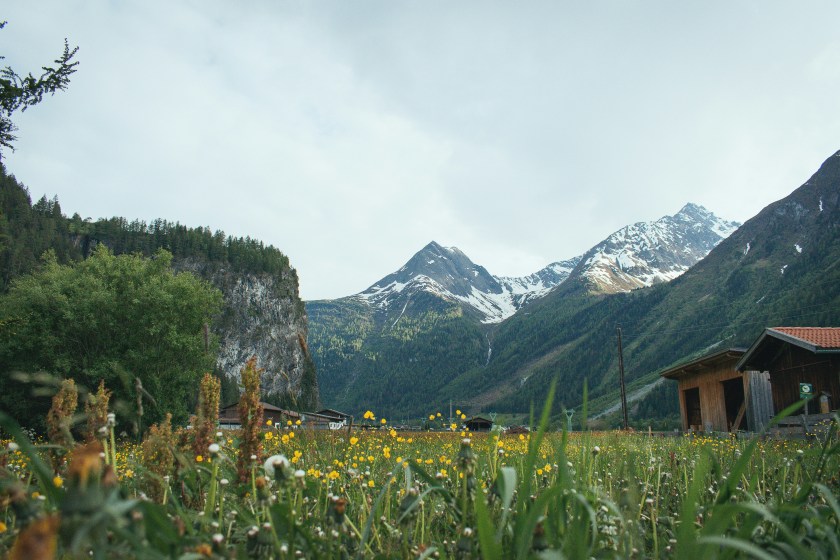
A dreamy novella about a young girl’s year in the Austrian countryside with her grandparents is haunting and evocative, an unexpected find in the “Women in Translation” section of Bards Alley.
Installment #20 in my series on the region’s independent bookshops.
Independent bookshops represent the interests, loves, and stories of their owners. There is a singularity about each one which beckons curious readers to join in to see what has piqued the interests of these men and women who, in one very real sense, have decided to open their lives to a joint exploration of the world around us.
In my year of visiting the 30 independent bookstores in the DC region, I have had discussions with owners (or their well-informed staff) on eastern European history, French culture, children’s literature, queer books, cuisine, and much more.
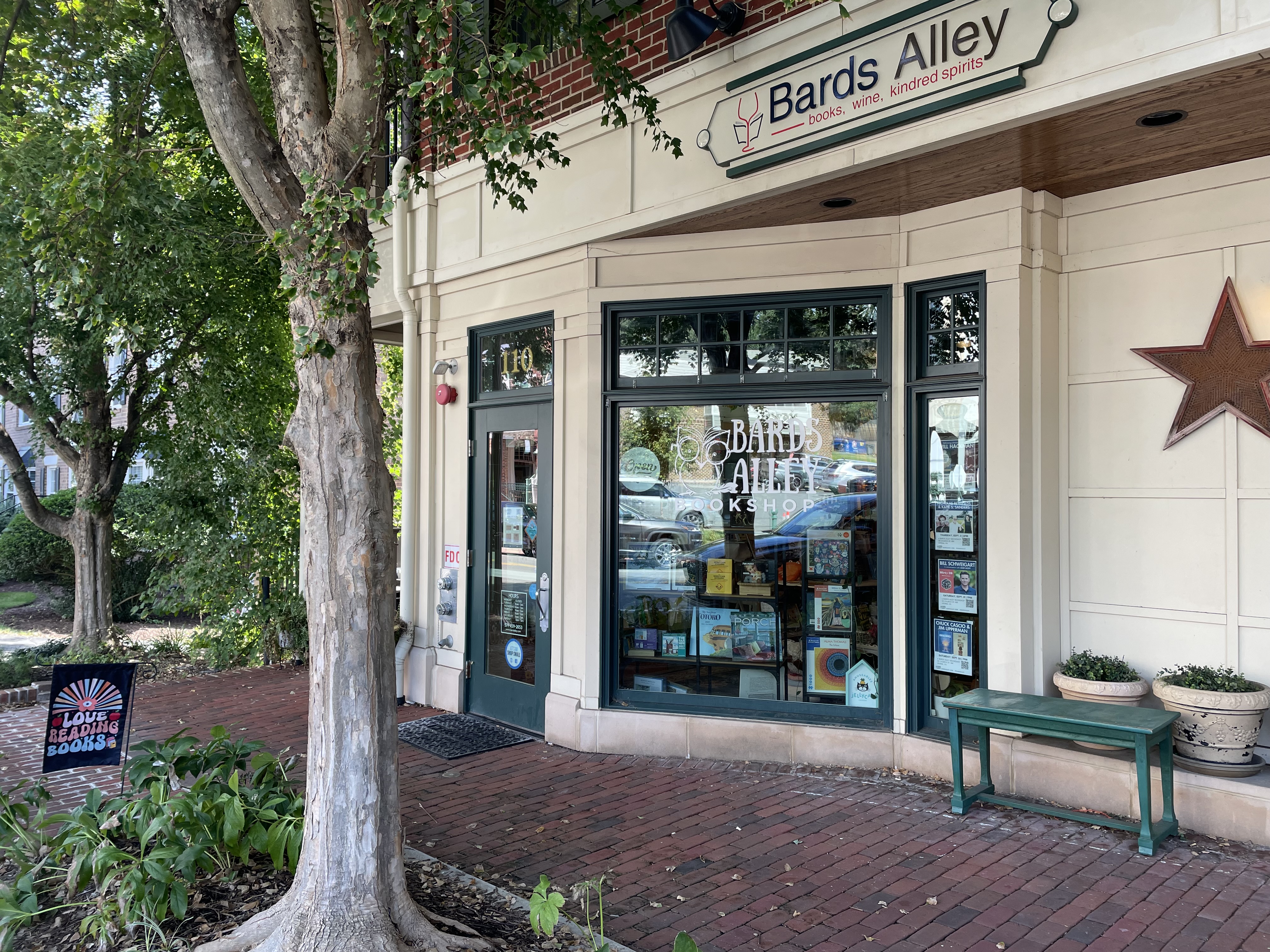
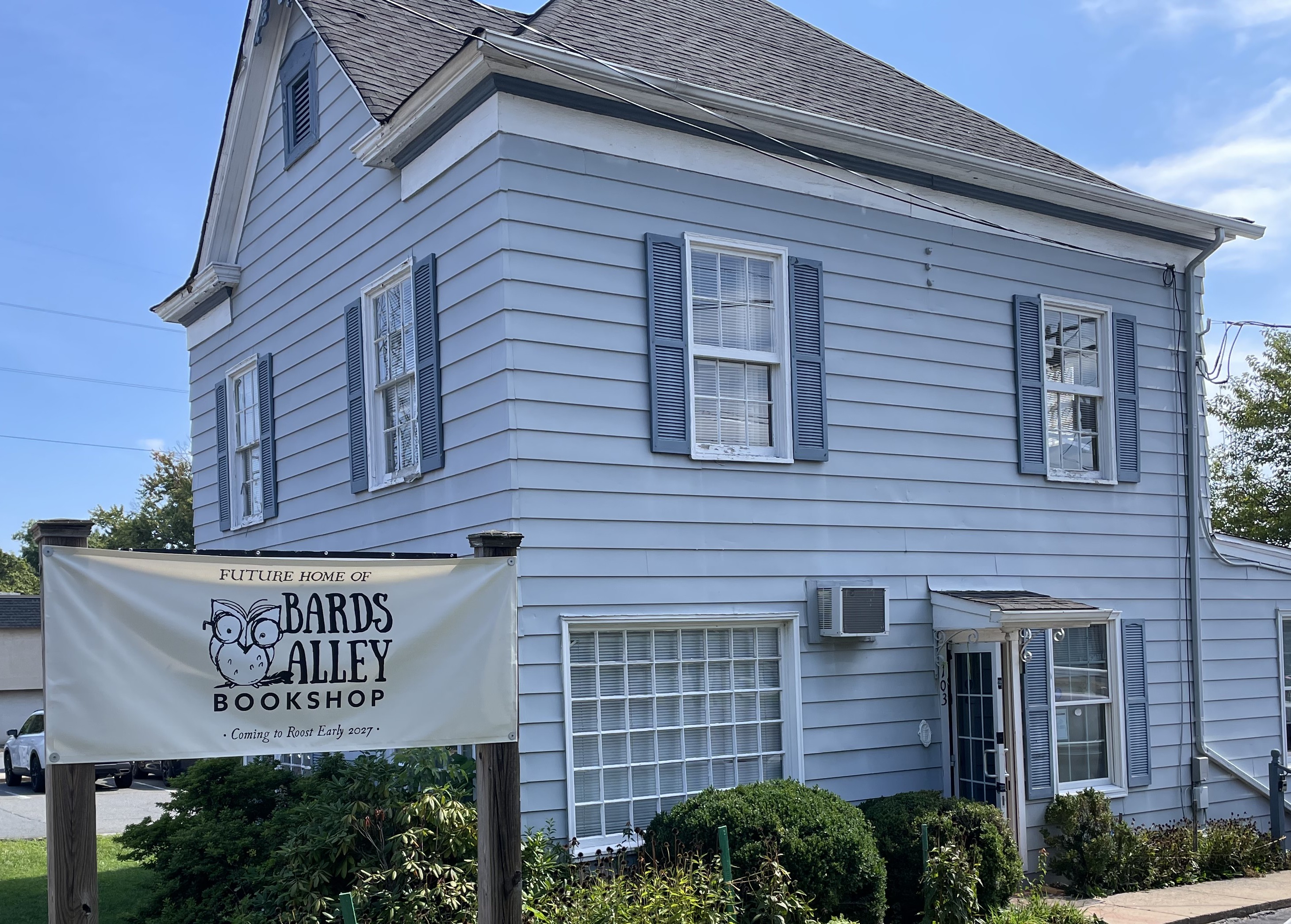
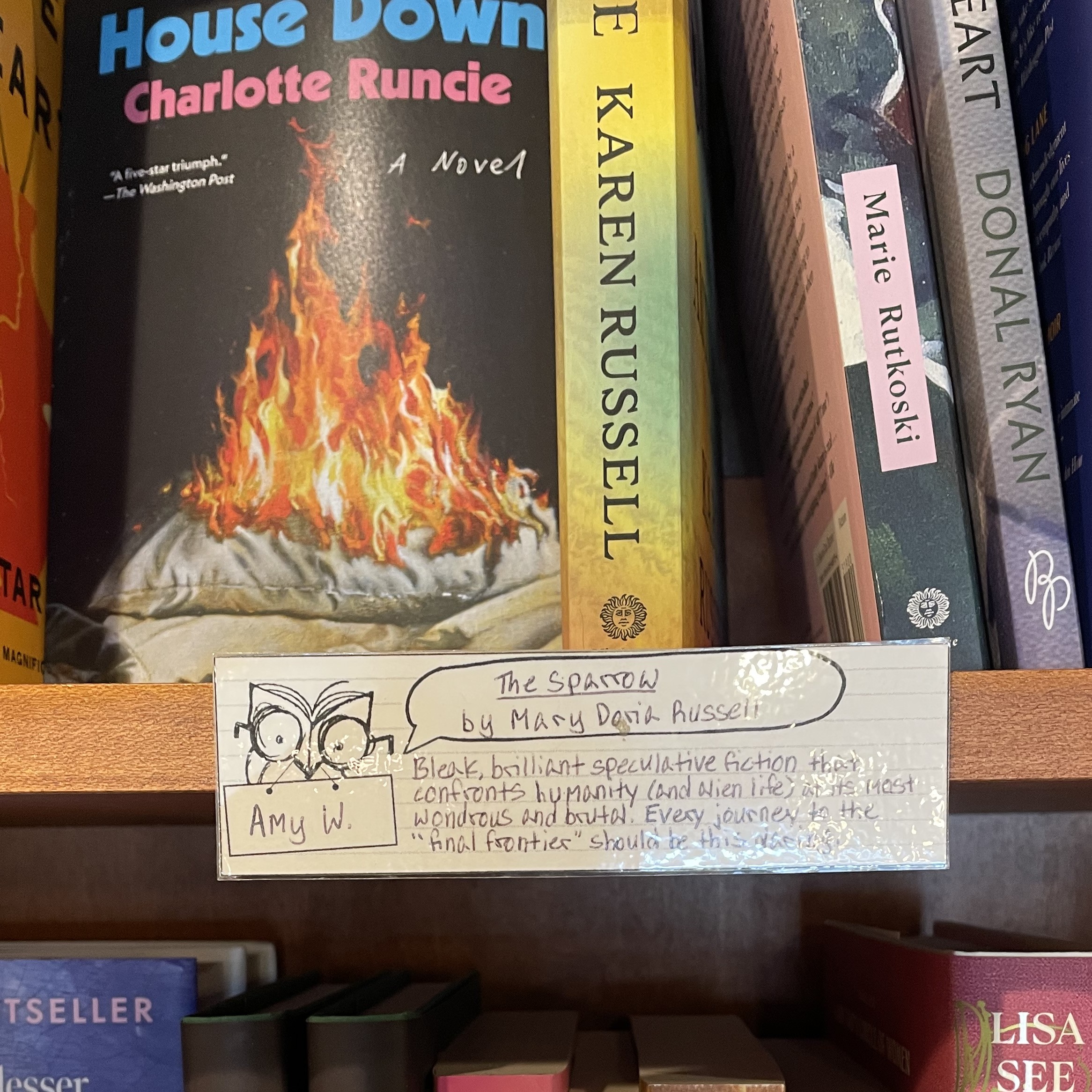
My friend and Brilliant Reader Merrill recently joined me for a delightful morning together in Bards Alley Bookshop in Vienna, Virginia. There we talked books and bookshops with owner Jennifer Morrow and operations manager/social media lead staffer Mallory. Jen founded Bards Alley in 2017 to “create a space where individuals young and old can gather to exchange ideas, receive personalized book recommendations, and discover new titles and local authors.” The unique name is Jen’s way to represent her choice to showcase classic and contemporary work in the bookstore’s inventory (think Shakespeare meets Diagon Alley).
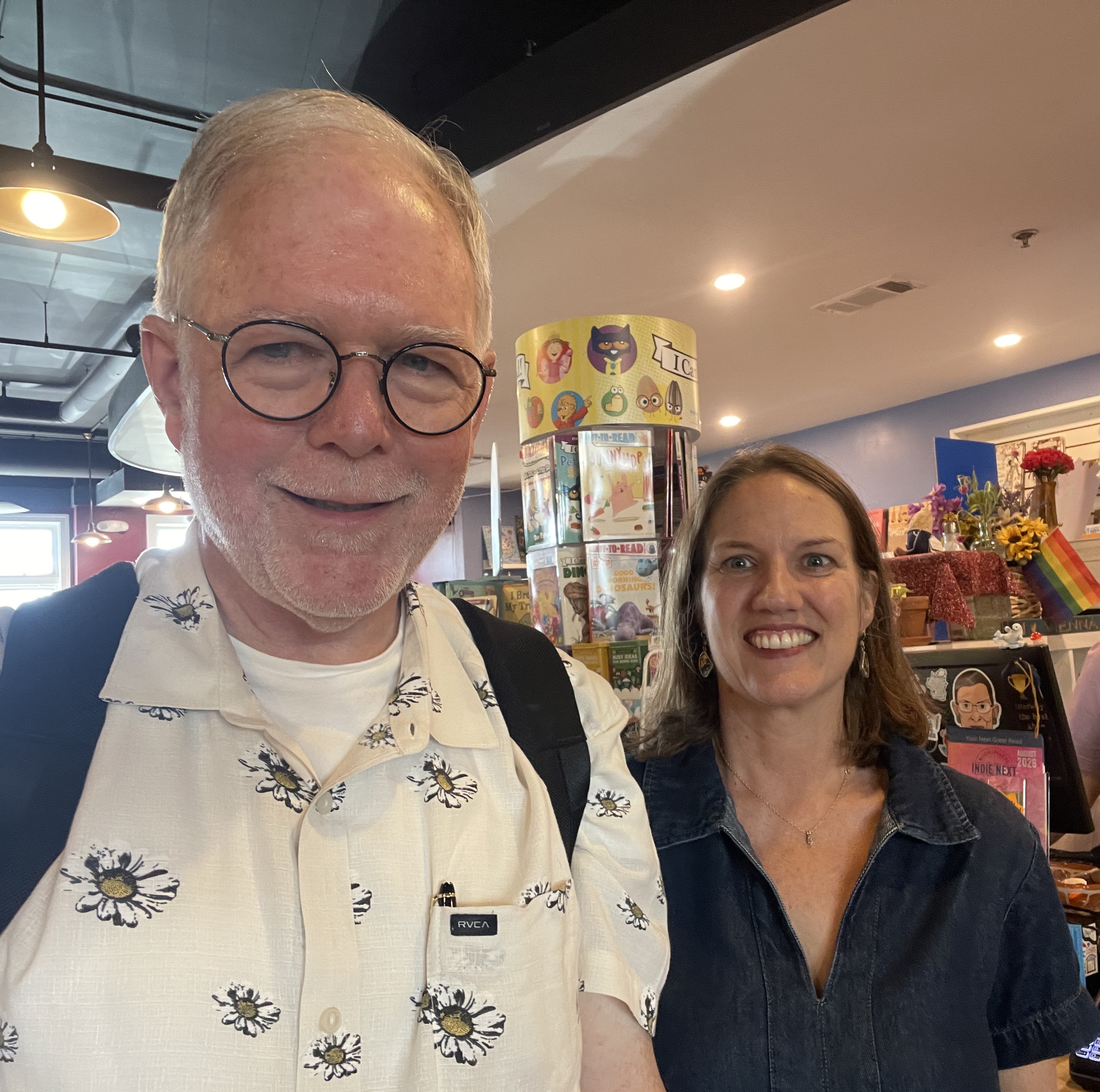
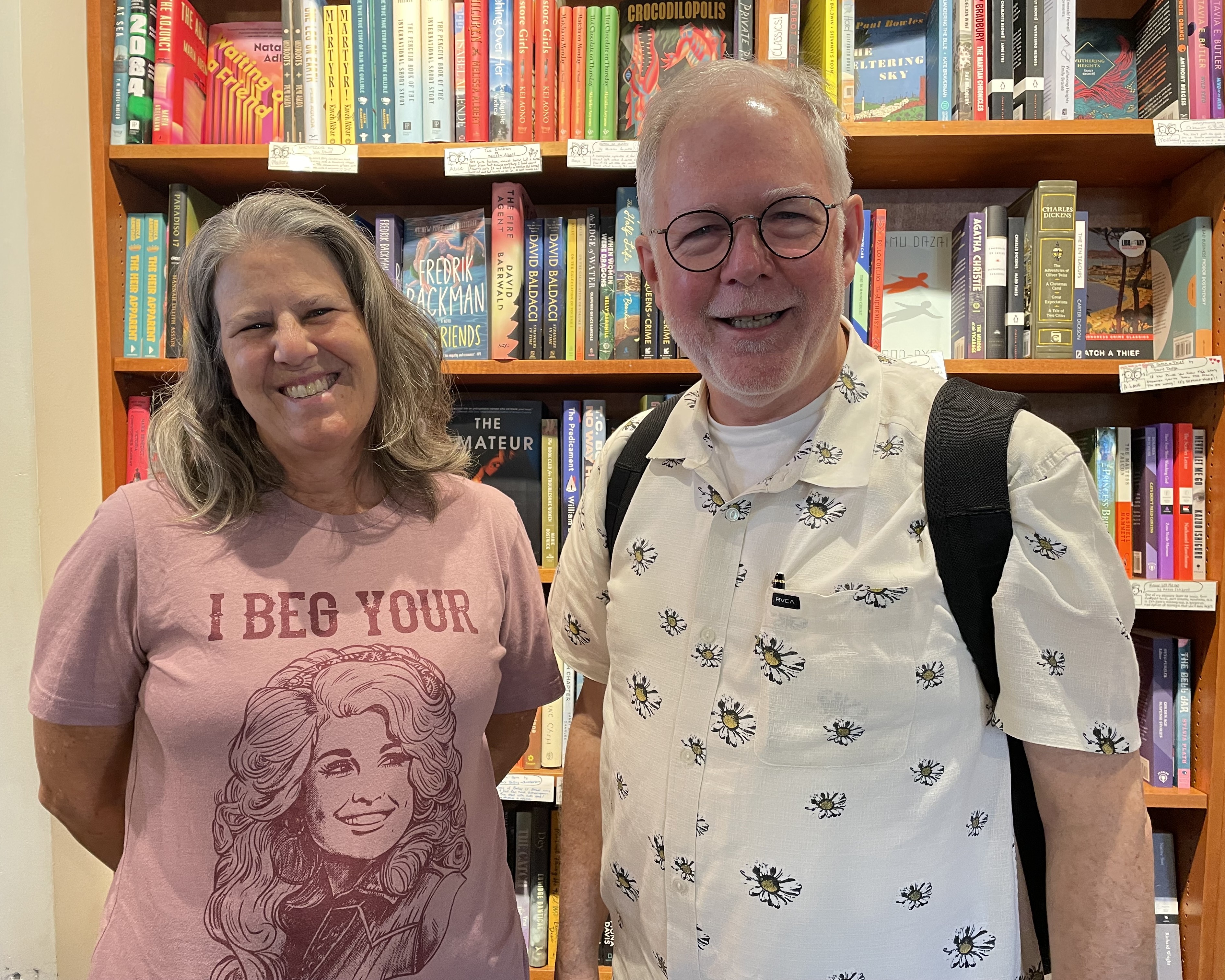
With Merrill (left) and owner Jen Morrow (right, with the amazing Dolly Parton t-shirt) at Bards Alley.
Jen has bought a nearby building for expansion of the store next year (a good sign) and spoke of her vision for Bards Alley as a place of discovery. Mallory took us on a tour of the staff recommendations, providing background on the special interests of each member of the team.
To help us out on our discovery, Jen pointed to a section of books she had curated called “Women in Translation.” These books, recently translated from foreign authors, promised to open our eyes to new perspectives and new ways of seeing the world.
Merrill and I each chose a book by an Austrian author of short stories, novels, radio plays, and children’s books and promised to exchange them with each other at a later date. When Merrill texted me a few days ago to say how much she was enjoying her choice—The Wall—I decided to jump in and read my selection so we could make the exchange while the author’s unique take on life was fresh in our minds.
Many thanks to Jen for her singular vision, and to both she and Mallory for opening our eyes to new authors, new small publishers, and new ways of seeing the world.
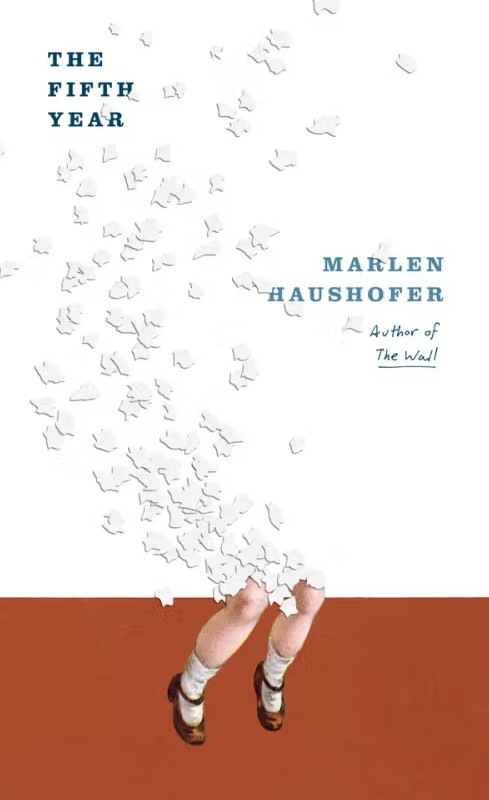
The Fifth Year (1951; translation from the German in 2026) by Marlen Haushofer is a novella that follows a single year in the life of a five-year-old girl, Marili, living in the Austrian countryside with her grandparents. We encounter Marili, her melancholy grandmother, and her calm and warm-hearted grandfather in the heart of winter. She wakes, in a small room next to her grandparents’ bedroom, to a snow-covered meadow, a thick cap of snow on the windowsill, and the sight of continued snowfall. “The child felt as if nothing had ever existed but snow and winter,” Haushofer writes, providing the reader with the first hint that the author truly understands the way life unfolds to a five-year-old. We come to find that Marili’s parents were killed in the war and that she must face the world guided only by her grandparents and her own curiosity.
There is beauty and darkness in the pastoral, country life. Some of both is provided by her grandmother’s faith. Opposite Marili’s bed hangs a big picture of the crucified Christ. She “knew that the picture, before which she prayed each evening, depicted the son of God,” but it was one of her little secrets that she always turned her back to the picture so she could pray to the old and kind God, “a distant, powerful relative of her grandfather.” She couldn’t understand the point of the “big, naked son of God” in the painting, but that was okay since she didn’t need him. Yet. According to her grandmother, she was too young to have sinned. “He hangs on the cross for all the bad things you are going to do.”
And yet the son of God haunts her dreams, upset that Marili has turned her back on him to pray. She bargains, as we so often do, by saying that when she is older and has plenty of sins, she’ll pray to him. Now all she wants to do is go back to sleep.
In scenes from each season of the year Haushofer shows us, in simple yet evocative prose, how young Marili faces both the day-to-day and eternity. It pushed me to think of how we learn as children, the fears—real and imagined—we encounter as the world first unfolds for us, and the fears we carry over into adulthood. Haushofer also describes the beauty and power of nature as seen through the eyes of a five-year-old. There is a timelessness to this book that makes it important in today’s world.
One critic has described The Fifth Year as “a window into the singularity of consciousness.” I find that an apt description of a work that is deceptively simple yet full of wisdom, wonder, sadness, danger, and joy. Just like life.
More to come . . .
DJB
Photo of Längenfeld, Austria by Jason Mavrommatis on Unsplash


Pingback: Observations from . . . September 2026 | MORE TO COME...
Pingback: Banned books photo: Wednesday | MORE TO COME...
Pingback: From the bookshelf: September 2026 | MORE TO COME...