Latest Posts

Change begins with a question

Every endeavor — from research to writing the next great novel, from problem solving with remote work colleagues to building an exploratory spacecraft to visit an asteroid belt — involves people interacting, sometimes competing, and in the best of worlds collaborating. No matter our field, connecting with and convincing others is “a big part of driving knowledge forward.”

Unfortunately, many of our myths suggest — and our systems support — exactly the opposite. We tell ourselves we are a country of heroes, of “rugged individualists.”

Those myths need to be tossed on the trash heap of history. Changing them can begin with a question.

Late in 2022 I asked LinkedIn friends and colleagues to suggest books that resonated with them. Forty suggestions quickly filled my comment feed with Terrian Barnes — a diversity, accessibility and belonging strategist; the founder of Fe-smart LLC; and a long-time friend and colleague — jumping right into the discussion with her recommendation for a beautifully constructed memoir by one of the world’s leading planetary scientists.

Lindy Elkins-Tanton is the principal investigator of the NASA mission that will send a rocket to explore the massive asteroid Psyche. Ultimately, she’s created a matrix leveraging every voice to advance human knowledge. Elkins-Tanton teaches us how to approach complex problems by asking the right questions and then actually listening in return.

It took me a year to dig this book out of my TBR pile and realize the depths of its insights. I’m so glad I did.

A Portrait of the Scientist as a Young Woman (2022) by Lindy Elkins-Tanton is a memoir and so much more. Elkins-Tanton is a highly accomplished planetary scientist who uses her own life story to “reconfigure the way science is presented and framed,” as Philip Ball suggests in an insightful review. That updated framing is “not as a triumphant march of discovery but as an intimate journey in which researchers navigate their own dilemmas, struggles and traumas at the same time as they try to expand our knowledge of the physical world.”

As with all human endeavors, there are professional and personal vulnerabilities, doubts and setbacks, and difficult rivalries. These works “are acutely human, challenging the heroic image that has dominated scientific autobiography for so long.”

It’s probably no surprise that these memoirs have come from female scientists.

Elkins-Tanton tells a story that is unvarnished, raw, sadly unsurprising in its ubiquity beyond the scientific and academic worlds, and ultimately inspiring. Despite living what outside observers might describe as an idyllic childhood, she was sexually abused as a child and received no support in response from her parents. As she grew into her love of geology and science, her obvious skills and growing prowess in the field were dismissed, even by family members and colleagues she saw as mentors. The level of sexism and misogyny could be overbearing to someone without her determination.

A significant obstacle for women in science, observes Ball, is the constant stream of microaggressions and undermining comments or actions. 

That is a ubiquitous problem, and not just in American professional culture. But in science the problem is made more acute by several factors. The idea that science is meritocratic and “value-free” can be used as a smokescreen to avoid confronting the issue; but perhaps worse, a blind eye is repeatedly turned to individuals who are perceived as high achievers or geniuses, and whose abuses are excused as eccentricity or outspokenness.

What makes the book so important is Elkins-Tanton’s ability to describe the debilitating impact of these aggressions, to showcase what we lose when we dismiss the contributions of women or even the 95% of the population who are not among the highest achievers, and to suggest different and innovative ways that she has built collaborative working groups. Her description of pulling together a multi-disciplinary team to study lava flows in Siberia, with members more senior than the leader, draws on a period in life when she left academia and worked in business consulting. This highly engaging segment finds the author discussing real-life challenges and all-too-recognizable ego battles that require thoughtful analysis to overcome.

“Picking the team in science as in dodgeball, is everything.”

View across the ancient lava flows of the Siberia Traps by Benjamin Black — one of Elkins-Tanton’s collaborators — via US Geological Service

The best, most successful CEO from my career knew how to ask questions to drive deeper analysis and change. Out of her years in business analysis and academic leadership, Elkins-Tanton is always asking her readers important questions. While in the field doing geological research in Siberia, men were expressing their displeasure at the pace of her work. She asks, “who decided that faster hammering with fewer blows” was the important metric for success?

Learning from Quakers, Elkins-Tanton began to build a set of concepts to guide team building. I recognize many of these from my CEO who knew how to build successful teams.

  • Leaders, speak often about the culture you want.
  • Invite everyone to speak . . . listen to every voice.
  • Believe everyone comes with good intentions.
  • Learn to be truly happy for others’ successes.
  • Don’t create boundaries — keep everyone on one team.
  • Bring problems and challenges to the whole team and invite people to solve them with you.
  • Treat everything as an experiment — failures are okay.

Elkins-Tanton writes of how so much we have built comes down to being part of the ego economy. Yet fame, applause, and charisma “are not qualities that necessarily align with correctness or expertise.” When making tough leadership decisions, one of the key questions she asks is which of the alternative actions will “make you proud of yourself when you look back at this problem ten years from now?” Always take the high road. Good and bad cultures exist everywhere. Building a good culture is critical to success, as it is culture that supports or destroys ethics.

This is an important book that forces the reader to think beyond science and consider all the ways we contribute, for better or worse, to the culture in our organizations. We can address complex problems if we learn to ask the right questions . . . and then actually listen to the responses.

More to come . . .

DJB

Psyche spacecraft illustration: Peter Rubin NASA/JPL-Caltech/ASU
Swift and satisfying

When a story begins with a character saying some variation of “Nothing good comes from . . .” or “Nothing ever happens in . . .” you know they’ll soon get their comeuppance. Nathaniel discovers that fact in the gospel of John when his brother suggests he come and meet Jesus of Nazareth. His laugh-out-loud response is, “Can anything good come out of Nazareth?” Three verses later he’s bowing at Jesus’s feet.

And when Scotland Yard Superintendent Richard Jury tells a worried father “Nothing ever happens in Stratford,” he’s yet to discover the first of several murders that are in the works in Shakespeare’s beloved town.

The Dirty Duck (1984) by Martha Grimes is the fourth in the 25-book series of Richard Jury mysteries written by the best-selling author. Superintendent Jury is just passing through Stratford for a “glimpse of the intriguing Lady Kennington” when he is brought into a murder investigation and a missing person report that puzzle the local police and his old friend Detective Sergeant Sam Lasko. The Dirty Duck is the name of a Stratford pub that generally teems with tourists following performances at the Royal Shakespeare Theatre. One of those tourists on this fateful night is Miss Gwendolyn Bracegirdle of Sarasota, Florida, fresh from a performance of As You Like It, who is drinking too much gin with an unnamed companion.

The companion offers to walk her back to her small English hotel (no Americanized Hilton for her!) and the frumpy Gwendolyn, who “realized long ago that she was painfully lacking in sex appeal,” is giddy when her companion leads her into a public toilet with an “Out of Order” sign on the door. When she felt that “funny, tickling sensation somewhere around her breast, she almost giggled, thinking, The silly fool’s got a feather . . .

The silly fool had a razor.

The only clue left by the murderer is a theatre program with two lines from an unknown poem printed across the cover. Over the course of the novel, Gwendolyn is just the first of a group of rich American tourists traveling with Honeysuckle Tours who end up murdered, either in Stratford or London, all slashed with a knife and all left with two more lines of the mysterious poem. Jury and his friend Melrose Plant, a British aristocrat who has given up his titles, work together to learn more about the tourists who are dying as they also scramble to become more familiar with “the bloodier side of Elizabethan verse.”

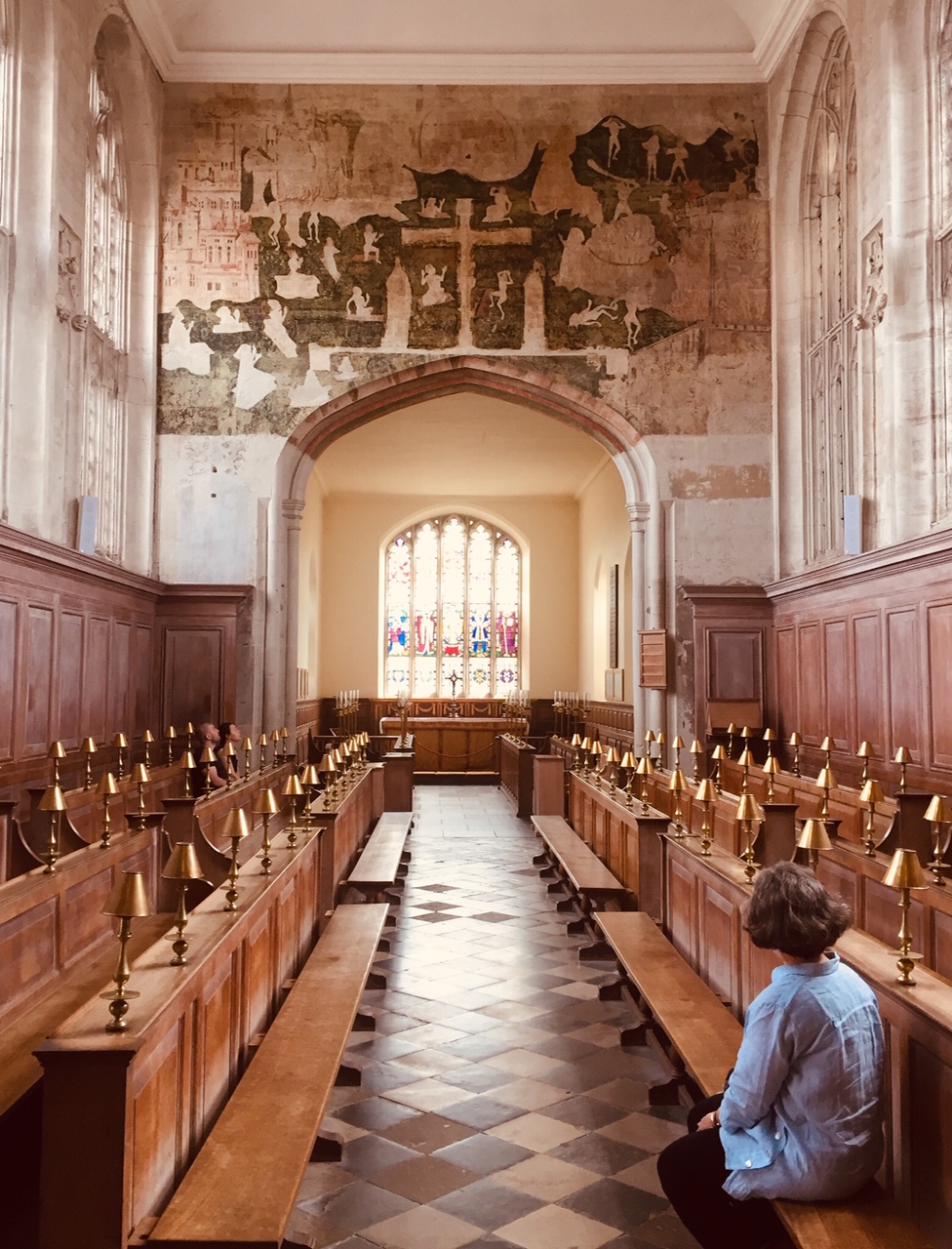
Guild Chapel, Stratford-upon-Avon

My friend Oakley, who gifted us a box of Agatha Christie novels that set off my year of reading dangerously in 2023, recently passed along The Dirty Duck suggesting that I’d enjoy Martha Grimes’ take on the English murder mystery. He was right. Despite her choice of over-the-top names (in addition to Miss Bracegirdle, two other tourists are named Amelia Blue and Honey Pot), Grimes is a good writer whose book moved swiftly towards a satisfying conclusion. Along the way the reader learns more about these two unmarried sleuths — Jury, very much a professional, and his friend Plant, the smart amateur — and a wider cast of characters. There’s “Jury’s pompous and irascible superior,” Chief Superintendent Racer, and Racer’s secretary and Jury’s ally in irritating the Chief, Fiona Clingmore. (Yet another of those names.) In one scene, Fiona was “dressed in what should have been a negligee, but was apparently a summer dress,” and though Jury knows she had recently topped forty, “she was going down fighting.”

As with any good murder mystery novel, Grimes has the reader considering almost all the main characters as prime suspects at one point or another. Yet Jury and Plant, racing against time as the murder nears the end of one stanza of the poem, eventually discover the mystery, which is unveiled in a quick but appropriate ending.

While I will not read a murder mystery each month, I suspect that when I’m looking for a quick read to change the subject and tickle the mind, I’ll go back to my box and see what else these clever writers have up their sleeves.

More to come . . .

DJB

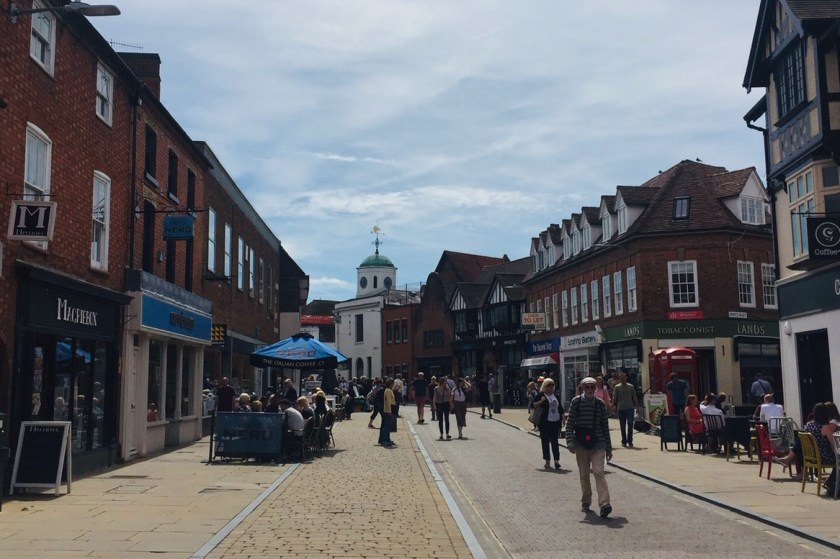
Photo of street in Stratford-Upon-Avon by DJB

I love the pithy proverb – Volume 9

My love for the short and to-the-point adage comes from my grandmother. Known to favor sayings such as “The graveyard is full of folks that thought the world couldn’t get along without them,” Grandmother Brown had a big influence on my life as well as my love for words.

Late in 2019, a series of pithy proverbs — those bursts of truth in 20 words or so — debuted on the newsletter. After six months they came together in a post entitled More to Consider. * Five years later I’m still at it. Let’s look at I love the pithy proverb — Volume 9 to see what made it to the More to Consider segment over the past six months.


Pay attention

As I get older, I have come to appreciate those who pay attention to the wonder of life. Four pithy proverbs in recent months suggest this message is beginning to get through to me.

Attention is the beginning of devotion.

Mary Oliver

Attention is the rarest and purest form of generosity.

Simone Weil

Mindfulness brings concentration. Concentration brings insight. Insight liberates you from your ignorance, your anger, your craving.

Thich Nhat Hanh

Drive slower: It’s safer, less stressful and gives you time to look around. 

Rick Juliusson

In a slightly different way, Pauli Murray speaks to our tendency to look everywhere except the place where we should be paying attention.

Elijah’s story tells us more than the image of a majestic God passing by the mountain in tempest, earthquake, and fire. It tells us that we often seek God in the wrong places.

Pauli Murray

The paradox of limitation

Oliver Burkeman’s paradox of limitation suggests that the more one tries to manage time with the goal of achieving a feeling of total control, the more stressful, empty, and frustrating life gets. But the more one confronts “the facts of finitude instead — and works with them, rather than against them — the more productive, meaningful, and joyful life becomes.”

Life is a balance between holding on and letting go.

13th century Persian poet, scholar, and Sufi mystic Rumi

It does not do to dwell on dreams and forget to live.

Albus Dumbledore

A boundary is something you set that requires nothing of the other person.

Becky Kennedy

The duty of privilege is absolute integrity.

John O’Donohue

History doesn’t repeat, but it does rhyme

I think about history a great deal in these troubled times. Historians say that history doesn’t repeat, but it does rhyme. These four quotes all seemed appropriate in tying past with present and future.

History shows us that when we come together with ferocious commitment to a shared goal we can be more powerful than institutions and governments … This is not a time to quit. It’s a time to fight.

Rebecca Solnit

If we’re going to continue to move forward as a nation we cannot allow concerns about discomfort to displace knowledge, truth or history.

Justice Ketanji Brown Jackson

A body of men holding themselves accountable to nobody ought not to be trusted by anybody.

Thomas Paine

I think of voting as a chess move, not a valentine.

Rebecca Solnit

When someone tells you who they are, believe them

Humans are forever giving people who don’t deserve it the benefit of the doubt. President U.S. Grant, writer Dorothy Sayer, and Governor J.B. Pritzker all have useful thoughts that build on Maya Angelou’s famous line about believing it when people tell you who they are.

The most confident critics are generally those who know the least about the matter.

Ulysses S. Grant

There’s nothing you can’t prove if your outlook is only sufficiently limited. 

Dorothy L. Sayer

When someone’s path through this world is marked with acts of cruelty, they have failed the first test of an advanced society.

J.B. Pritzker

Experimentation is the key to success

Experimentation is the key to not just surviving but thriving — in our lives and in our societies. Brian Klaas encourages us to experiment with everything.

Evolution is cleverer than you are.

Leslie Orgel

If everything was perfect, you would never learn, you would never grow.

Beyoncé Knowles

Magic lies in challenging what seems impossible.

Carol Moseley Braun

Never be limited by other people’s limited imaginations.

Dr. Mae Jemison

Love is our responsibility as humans. Love is hard.

My wise friend Frank Wade recently shared thoughts on the story of the Magi. He noted that the implications are wide and deep . . . “The story speaks to interfaith issues between religions. Ours with the synagogue up the street, as well as the Sunni and Shite around the world. It colors immigration issues and foreign policy, patriotism and class distinctions, law and order on one hand, respect and cooperation on the other.”

Love, in other words, is our responsibility, but love is also very hard.

What makes the temptation of power so seemingly irresistible? Maybe it is that power offers an easy substitute for the hard task of love.  

Henri J.M. Nouwen

Be a fountain, not a drain. 

Christine Clemens from “The Best Advice I Received this Year”

No blame. Be kind. Love everything.

Terrance Keenan

“Literature is a gym for your empathy muscle.”

Anthony Doerr

May you experience each day as a sacred gift woven around the heart of wonder.

John O’Donohue

The kindest person in the room is often the smartest.

J.B. Pritzker

I’ll leave you with my personal pithy proverb, which is life rule #1:

Be grateful. Be thankful. Be compassionate. Every day.

More to come…

DJB


*To capture some of my favorite sayings I created a feature on More to Come that I labeled “More to Consider.” I update these quick bursts of truth every couple of weeks. After the initial More to Consider post pulling together the first group highlighted, I brought out Volume 2: A plethora of pithy proverbs followed with Volume 3: A profusion of pithy proverbs and Volume 4: A plentitude of pithy proverbs. I finally turned to the Super Bowl system (minus the pretentious Roman numerals) with I love the pithy proverb — Volume 5Volume 6, Volume 7, and Volume 8. For the 10th volume, I’m going to highlight some personal favorites from the first nine editions.


Image from Pixabay

The old tunes

My friend George wanted to pass along a new discovery. He had recently attended a concert by the Relic Ensemble and he said, “I think there’s a newsletter post in there for MORE TO COME.” He was right.

Relic is a conductorless period chamber orchestra that connects with audiences through intimate, imaginative and dramatic representations of early music, with the goal of reaching communities in all 50 states. Relic’s innovative programming, which uses narrative “chapters” to unite a variety of repertoire into a breathtaking concert experience, has captured the hearts of new and seasoned concertgoers alike.

The members of Relic are on a mission. Formed in 2022 by alumni of the Juilliard Historical Performance Program, these lovers of early music are skilled musicians dedicated to presenting compelling and captivating live performances to communities across the country, especially those with little access to live early music. They believe in a “democratic and tolerant environment,” which leads them to make early music accessible to people from all backgrounds. They do this through free concerts, open rehearsals, and educational events for students with no prior knowledge of early music, such as the event George attended at St. Margaret’s Episcopal Church in Washington, where they journeyed through the Enchanted Forest. “From elves and nymphs to trolls and witches,” this program brought forward pleasures and curiosities from the English and French Baroque periods with music of Corelli, Purcell, Lully, and others.

An introductory video tells the group’s story.

The ensemble’s videos are limited at the moment, but here’s a beautiful performance of Alessandro Scarlatti’s Concerto No. 5 in D minor – I. Allegro performed in 2022.

Committed to sharing their passion for early music with students of all ages, Relic members have given workshops, masterclasses and side-by-side performances at numerous schools. Most recently, Relic engaged in a residency at the University of Maryland featuring side-by-side performances with music students, and master classes at Western Michigan University. Relic actively seeks community engagement opportunities, offering free children’s concerts, informal performances, and open rehearsals in every region it visits.

The Relic Ensemble is committed to visiting all 50 states to spread their love for early music. Look for them in a community near you!

More to come . . .

DJB

The necessity of winter

Two days after suggesting it is time to roll up our sleeves and get to work, I’m now going to advocate for rest, reflection, and retreat. The contradiction between these two ideas is simply part of the truth of life. Work without occasionally stepping back for renewal leads to burnout and, perhaps, even an early emotional if not physical death.

These months of winter are a good time to step back. They are also a metaphor for the idea of retreat. Winter, you see, “is not the death of the life cycle, but its crucible.”

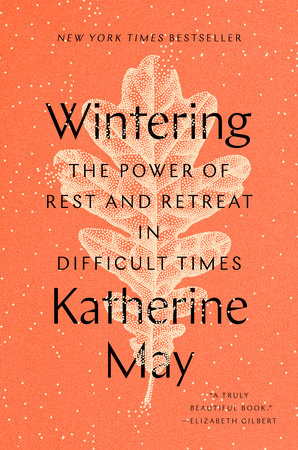
Wintering: The Power of Rest and Retreat in Difficult Times (2020) by Katherine May makes the case that the cycles of life seen in nature are the touchstones to how we should live as humans. Wintering, in this thoughtful memoir of a mindful year, is “a fallow period in life when you are cut off from the world, feeling rejected.” It’s also inevitable. Katherine May shows us how “an occasional sharp wintering” can help us heal and grow. We “must learn to invite the winter in.”

While we may never choose to winter, “we can choose how.”

May suggests that she learned about wintering early in life, as a young child with undiagnosed autism. She was “permanently out in the cold.” But it was a year in her early 40s that is the focus of this story. Her husband fell ill, her son stopped attending school, and her own medical issues led her to leave a demanding job. She was forced to winter. And as she notes, “when you start tuning into winter, you realize that we live through a thousand winters in our lives — some big, some small.”

So many of us have bought into the linear view of history and we then apply it more broadly to time and our lives. How often have you heard that young lovers are in the springtime of life and that those who are in in their 70s or 80s are living out the autumn or wintertime of their years? Yet time is not the rushed, linear path that most of us see as Americans. We think time is money, a precious and scarce commodity. For so many of us, the past is over, but the present you can seize, parcel and package and make it work for you in the immediate future. Americans talk about wasting, spending, budgeting and saving time.

But that’s not how nature works, and it isn’t how many non-Western cultures think. There people don’t attempt to control time. “Time is viewed neither as linear nor event–relationship related, but as cyclical. Each day the sun rises and sets, the seasons follow one another, the heavenly bodies revolve around us, people grow old and die, but their children reconstitute the process. Cyclical time is not a scarce commodity. There seems always to be an unlimited supply of it just around the next bend.”

When God made time, as they say in the East, she made plenty of it.

Life is full and messy. It is the fortunate ones who engage with life and grow at every stage and cycle along the way, realizing the incredible amount we learn “between our birthday and our last day” as Ursula K. Le Guin phrased it, while maintaining the seeking, trusting capacity for learning and loving that we had as a two-year-old.

When the low periods inevitably come, May suggests we stop and take time for wintering. Even if we are extraordinarily lucky in terms of health and career, we can’t avoid the winter.

Our parents would age and die; our friends would undertake minor acts of betrayal; the machinations of the world would eventually weigh against us. Somewhere along the line, we would screw up. Winter would quietly roll in.

But in wintering we learn “there is a past, a present, and a future. There is a time after the aftermath.” If we are honest with ourselves, we see that the “energies of spring arrive again and again, nurtured by the deep retreat of winter.” Life, like nature, is full of “seasons when we flourish and seasons when the leaves fall from us, revealing our bare bones. Given time, they grow again.”

It is what we do during those times when the leaves fall that helps rebuild our energies and our lives. Yes, as we age we may not have our youthful robustness, but wintering properly can help us see that we need to be “more careful with our energies and to rest a while until spring.” And I am aware that the ability to take time for rest and reflection comes from a place of privilege. But I do feel that all of us, no matter our circumstances, can find personally meaningful and important ways of wintering.

I have been moving through one of those small winters in my life, which came after a medical report prompted both a reflection and a resetting. And I’m finding that’s not only okay, but that its surprisingly freeing.

Over and over again we find that winter offers us liminal spaces to inhabit. Yet still we refuse them. The work of the cold season is to learn to welcome them.

Perhaps this time of winter in our calendars can also be a call to listen to the needs for wintering in our soul. Katherine May’s lovely book tells us that we’ll “find wisdom” in our winter. Once it’s over, it’s our responsibility to pass it on.

Each cycle is an opportunity to grow. Winter is that opportunity to reflect on what we’ve learned and apply it to our next season when the leaves reappear. It is the wise among us who acknowledge and embrace the necessity of winter.

More to come . . .

DJB

Photo by Adam Chang on Unsplash

“Tyranny, like hell, is not easily conquered”

Thomas Paine’s American Crisis, first published in the winter of 1776, begins with these famous first lines:

THESE are the times that try men’s souls. The summer soldier and the sunshine patriot will, in this crisis, shrink from the service of their country; but he that stands by it now, deserves the love and thanks of man and woman. Tyranny, like hell, is not easily conquered; yet we have this consolation with us, that the harder the conflict, the more glorious the triumph. 

We’ve been through difficult times before. But the actions of those who fought against tyranny — in the bleak winter of 1776, on the beaches at Normandy, on the streets of Birmingham, and in so many instances throughout our history — provide hope and a roadmap.

The day we celebrate the life, activism, and vision of Martin Luther King, Jr. is an appropriate time to understand our work ahead in this difficult election year.


Gratitude and joy as an act of resistance

“Your opponents would love you to believe that it’s hopeless, that you have no power, that there’s no reason to act, that you can’t win,” writes historian and activist Rebecca Solnit. However, we should consider hope, gratitude and joy as an act of resistance. “Joy is a fine initial act of insurrection” against tyranny.

Vice President Kamala Harris pointed to the fear that opponents of democracy want us to feel and then noted that this is when we need to get to work.

“[A]t this moment in history, I say: Let us not throw up our hands when it’s time to roll up our sleeves. Because we were born for a time such as this.” 


Dangers from the enemy within

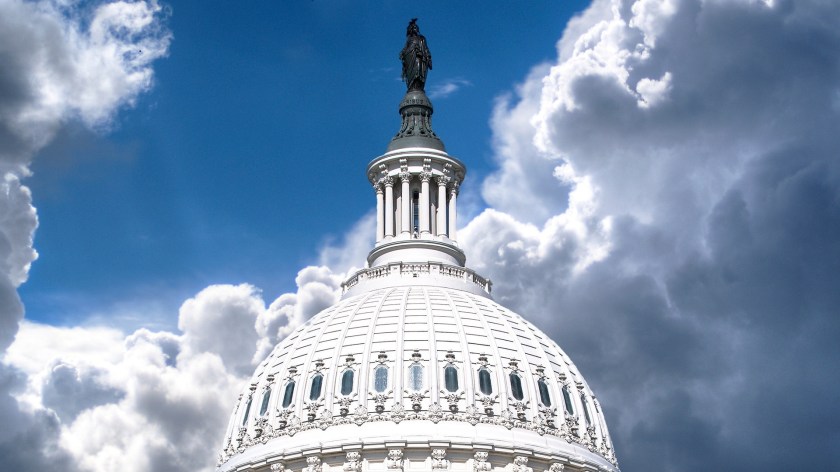
The attack on the Capitol in the early days of 2021 shocked the nation. At first, it struck many as not only completely unprecedented, but also unrepresentative of American values. But as historians and others pointed out in the weeks and months that followed, the warning signs had been present, and parallels with past events abounded.

The history site Bunk has gathered articles on January 6th around first impressions, historical antecedents, language, and memory.


Ignorance bias helps give hate a foothold

One of the biggest problems in our divided country is not stupidity but a willful disregard of others in our community and the larger world. Brian Klaas writes that this ignorance is the biggest hidden bias in politics. Only 3% of us recognize the prime minister of India (the world’s largest democracy) and only 20% can correctly identify the president of China (the leader of America’s biggest geopolitical rival). But 67% can identify Justin Bieber and 85% (!) correctly recognize The Rock. The Columbia Journalism Review‘s Warped Front Pages also covers this issue.


These politicians denied democracy on January 6th. Now they want your vote.

(Steve Brodner)

On January 6th, 147 Republicans formally supported objection to counting Joe Biden’s electoral votes. Satirical illustrator and commentator Steve Brodner has a scathing piece in the Washington Post showing this motley collection of insurrectionists “engaged in using democracy in order to attain the power to subvert it.”


Power doesn’t corrupt, it reveals

Robert Caro wrote that power doesn’t corrupt, it reveals. Unfortunately, we see the truth in his observation every day.

Former U.S. Attorney Joyce Vance noted “the hubris” in the opening lines of Trump’s request that the Supreme Court hear his appeal on the Colorado case removing him from the ballot. It is a “fundamental principle of our representative democracy embodied in the Constitution,” Trump’s lawyers write, “that the people should choose whom they please to govern them.”

Donald Trump, arguing the voters should be able to choose. Irony is dead.

The former president’s language matters. His incessant braying about Americans he deems vermin is just the latest in a lifelong pattern of Donald Trump telling us who he is.

Famously, he called for the death penalty in 1989 for five Black teens wrongly convicted of a brutal rape in Central Park, saying at the time, “Of course I hate these people . . .because maybe hate is what we need if we’re gonna get something done.” Trump refused to back down and has never apologized or admitted his mistake when DNA evidence exonerated the teens.

The cruelty is the point.

Vance also urges the courts to quit treating Trump as if he’s above the law. “How is it that our country has grown so accustomed to extending ‘favors’ no one else receives to this man who is so unworthy of special treatment?” she asks.


The death knell of the Republican Party

When asked to identify the cause of the United States Civil War, presidential candidate Nikki Haley answered with a word salad of gobbledygook. In response, Heather Cox Richardson delivered a master class about the creation, rise, ups-and-downs, and now fall of the once-great Republican Party.

The vice president of the Confederacy, Alexander Stephens of Georgia, was quite clear about the cause of the Civil War. . . . “Our new government is founded upon…the great truth, that the negro is not equal to the white man; that slavery — subordination to the superior race — is his natural and normal condition.” 

Joe Biden put it succinctly: “It was about slavery.” 

Richardson sets the record straight about what Haley’s refusal to say the word “slavery” means in the larger historical context.

. . . her answer was not simply bad history or an unwillingness to offend potential voters, as some have suggested. It was the death knell of the Republican Party.


Our neighbor’s house is on fire

Republicans’ refusal to fund Ukraine, writes Timothy Snyder, is like having our neighbor’s house on fire while we stand by and watch it burn.

Everything that the Ukrainians are doing for us can be undone this year.  Russia can win, and be encouraged to start other wars, where our participation is likely to be much more direct.  China can be encouraged, and we can find ourselves in a cataclysm over Taiwan.  International order can break down, and we can confront confusing, difficult, and painful conflicts all over the world . . .

It doesn’t have to be that way.  It’s easy to help a good neighbor . . . A bit of legislation to support Ukraine, and we all have a safer year, and safer lives.


What can we do?

(Library of Congress)

In the years since the fall of the Soviet Union “we have torn ourselves apart as politicians adhering to an extreme ideology demonized their opponents.” Push back. It is past time to recognize the great work of Joe Biden in saving our country and our democracy. Point out that with Democrats, things get better.

Like victory gardens in WWII, all of us have a role to play in fighting against this torrent of negative sentiment that MAGA is pumping into our discourse every day.

Simon Rosenberg

Let’s get to work in whatever way we can to save democracy in 2024.

More to come . . .

DJB


For my disclaimer on political posts, click here.


Image by Jorge Guillen from Pixabay

A creative life

Some artists come across as restless, but in fact are simply living out their aspirations for a creative life. Rhiannon Giddens is one such individual who “has made a singular, iconic career out of stretching her brand of folk music, with its miles-deep historical roots and contemporary sensibilities, into just about every field imaginable.”

A two-time GRAMMY Award and Pulitzer Prize-winning singer and instrumentalist, MacArthur “Genius” grant recipient, and composer of opera, ballet, and film, Giddens has centered her work around the mission of lifting up people whose contributions to American musical history have previously been overlooked or erased, and advocating for a more accurate understanding of the country’s musical origins through art.

Giddens has appeared in MORE TO COME on several occasions, beginning with her 2009 Merlefest show with the Carolina Chocolate Drops and most recently with the release of her newest album, You’re the One. The Martin Luther King, Jr. holiday weekend seems an appropriate time to catch up on the career of this artist and musical historian whose most recent ventures have taken her to exploring where American history fits within the global context.


Rhiannon Giddens and Francesco Turrisi (credit: rhiannongiddens.com)

Pollstar magazine had a recent cover story on The Nerdy Genius of Rhiannon Giddens that is wide-ranging and enlightening.

Rhiannon Giddens is a self-described nerd. She was a high school math nerd at Durham’s North Carolina School of Science and Mathematics, a music and history nerd at Oberlin College and Conservatory in Ohio, and she says, even still, she’s the nerd at the party who might just corner you to talk about “banjos and slavery.”

The article provides a bit on her history, including this background on the path-breaking Chocolate Drops.

Carolina Chocolate Drops grew out of an ensemble that included Giddens, Dom Flemons, Súle Greg Wilson and others called Sankofa Strings, which performed an amalgam of African American music including country and classic blues, early jazz and “hot music,” string band numbers, African and Caribbean songs, and spoken word pieces. Among the instruments employed by Sankofa Strings were bodhrán, brushes, washboard, bones, tambourine, banjo, banjolin and ukulele.

The trio convened at the first Black Banjo Gathering in Boone, North Carolina, where Giddens studied with African American Piedmont string master Joe Thompson and where, in 2005, Carolina Chocolate Drops, with Flemons and Justin Robinson, was born. Giddens played banjo and fiddle, wrote and sang. The group was the first Black string band to ever perform at the Grand Ole Opry.

This version of Cornbread & Butterbeans reminds us of the talent, energy, and vision of this special band of musicians.

But it is her more recent artistic endeavors that are my interest here.

Giddens was named Artistic Director of Silkroad, a nonprofit established by international cello great Yo-Yo Ma, promoting collaboration among artists and institutions, and multicultural artistic exchange, in 2020. She is the only one to hold the position other than Ma himself.

Silkroad Ensemble

Silkroad Ensemble is part of the larger Silkroad project, the mission of which is to “[create] music that engages difference, sparking radical cultural collaboration and passion-driven learning for a more hopeful and inclusive world.” The Ensemble is a loose collective of as many as 59 musicians, composers, arrangers, visual artists and storytellers from around the world.

PBS NewsHour had a 2022 report on Giddens’ appointment.

What follows are two past performances by the Ensemble, a powerful arrangement of the traditional O Death recorded live in 2023 as well as a late 2022 performance of Keep On Keepin’ On.

The Silkroad website describes the new project in these words:

After the completion of the Transcontinental Railroad, a trip from coast to coast that used to take months was shortened to just under a week, allowing for the transport of goods and ideas across the continent in ways previously inconceivable. Profit-seeking corporations and the American government financed it, but the people who actually built it and who were most affected by it are the focus of this program of music — Indigenous and African Americans as well Irish, Chinese, Japanese, and other immigrant laborers whose contributions have been largely erased from history. Silkroad’s American Railroad seeks to right these past wrongs by highlighting untold stories and amplifying unheard voices from these communities, painting a more accurate picture of the global diasporic origin of the American Empire.

This new program promises to be exciting, and I am looking forward to hearing the music and stories.


Giddens is nominated for two more Grammy awards in 2024. After the Grammy Awards presentation, she kicks off her upcoming concert tour. Thankfully, that tour will include a show at the Strathmore Music Center in Bethesda on Monday, March 18th (and I plan on attending).

We’ll end by returning to two of my favorite performances by Giddens.

For my money, she has one of the best interpretations of Wayfaring Stranger, performed with the remarkable Phil Cunningham on the accordion, as part of a BBC Northern Ireland program.

And on the Throw the Dice & Place Nice website, writer Kira Grunenberg has this to say about I’m On My Way:

[T]hough Giddens says “Don’t know where I’m going,” it’s a statement made with nothing but confidence that shakes any shred of doubt when she leaves off with the declaration, “But I know what to do.”

“I’m just so proud of her. She’s just such a brilliant, brilliant artist,” Allison Russell told Pollstar. “She is doing consistently brave and unique and necessary work out there. I’m just so grateful for her and her place in this world and, honestly, for the friendship.”

Amen!

More to come . . .

DJB


Earlier Saturday Soundtrack posts for the MLK Weekend on MORE TO COME:


Photo of Rhiannon Giddens by Wondrium courtesy of RhiannonGiddens.com

“Keeper” or “thrower”

I don’t make resolutions but I do make plans. Recently, Candice and I had a conversation on how we needed to get serious about de-cluttering our house in anticipation of whatever comes next in our third stage of life.

Receiving some of Andrew’s belongings from his former Washington apartment caused us to realize how crowded the garage has become. Recent work to help Andrew and Claire declutter their memory boxes spurred some of our renewed focus.

And yes, the fact that we have now packed almost a dozen boxes of books to donate to the Friends of the Library, and yet our bookcases look essentially untouched, speaks to the challenge before us.

After a conversation over dinner, I was reminded that a good friend co-authored a book on de-cluttering the family home, and so I ordered the e-version. Moving On: A Practical Guide to Downsizing the Family Home (2013) by Janet Hulstrand and Linda Hetzer is “a downsizing bible” which includes some of the lessons they have learned in helping others with this task we all seem to face. It immediately helped me think about what personality I exhibit in this process. Was I a thrower or a keeper?

“Throwers” relish clearing out and will empty a house quickly; “keepers” want to preserve special things as well as memories and will linger over the process. People who balance these attributes have come to the realization that the most valuable thing in a house is the life that has been lived there . . . “keepers” and “throwers” (can) work together to downsize and declutter.

I’m generally more of a “thrower” by nature, while I would identify Candice as more of a “keeper.” The two of us can, however, display both sides of our downsizing personalities.

As our discussion turned to specifics, Candice said — in the midst of much laughter — “So, David, just what are you going to do with all those bobbleheads?”

Ouch.

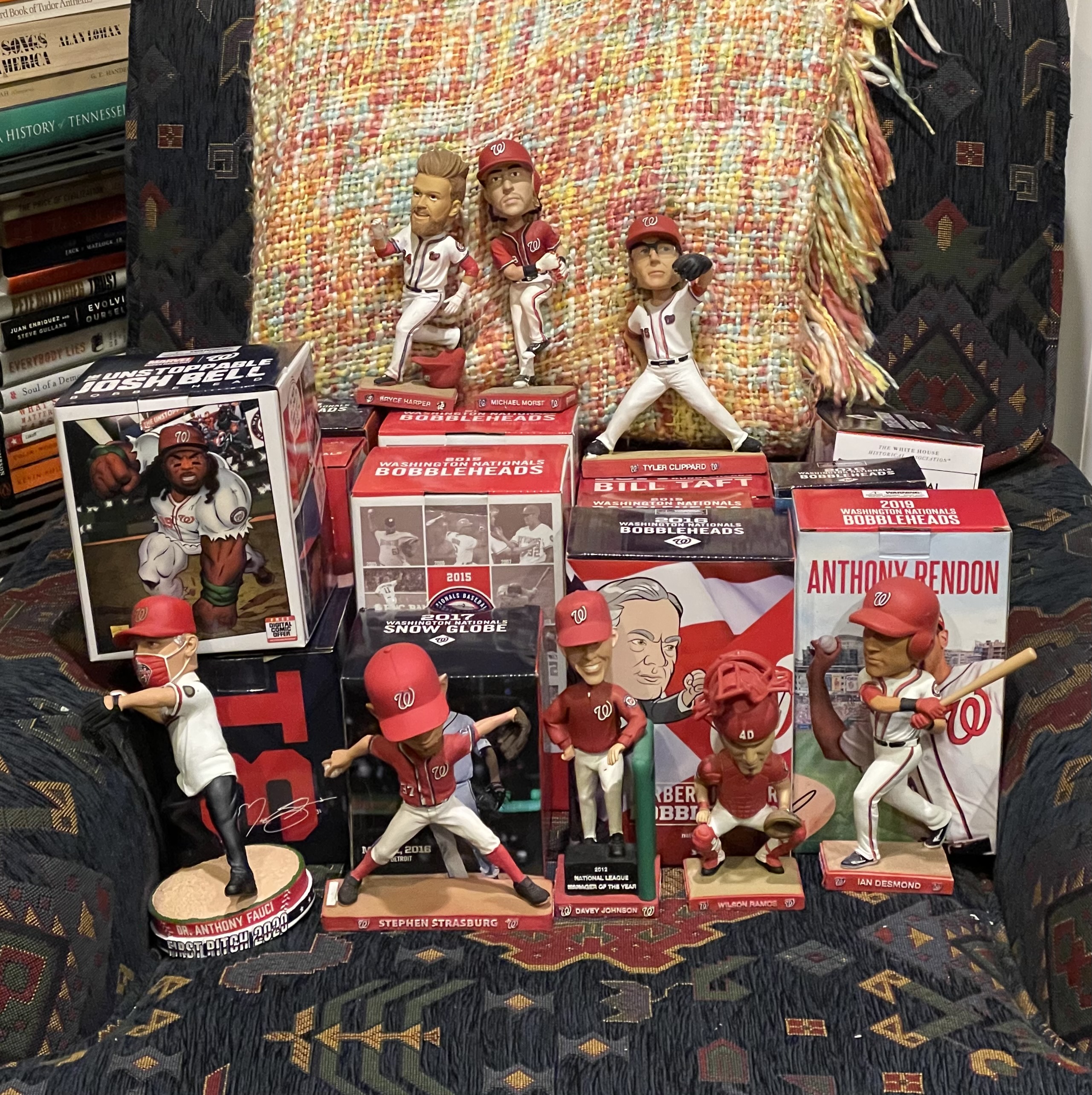
Truth be told, I didn’t know how many bobbleheads of former Washington Nationals players I had. I remembered that I had the “Dr. Anthony Fauci throws out the first pitch in 2020” bobblehead. I suspected there were a couple of duplicates, such as of the “Max Scherzer snow globe” (the snowflakes are ‘Ks” — the scoring symbol for strikeouts.) But I’d basically forgotten about Josh Bell (both as a player and as a bobblehead.)

One recent Saturday I took them all down, boxed them up (for those that had boxes), and discovered 25 in my collection. I went into my “thrower” mode, and 21 of them will soon go to the “Opportunity Shop” at St. Alban’s, where Candice assures me they will make someone very happy.

21 Nationals Bobbleheads from seasons past . . . Dave Martinez is the only one still on the team!

However, I do have a “keeper” side as well. I’m not letting go of the “Mount Rushmore Racing Presidents” bobbleheads. Hey, they are still on the team! The only player/manager still on the Nats out of the 21 other bobbleheads? Current manager (and World Series champion) Dave Martinez. Don’t get me started on what the Lerners have done to this franchise in recent years.

The “Mount Rushmore” Racing Presidents Bobbleheads . . . the only ones I’m keeping. They now sit just below the wonderful “Main Street” Lego collection, given to me upon my retirement by the National Main Street staff.

But as we become more serious I also want to be intentional. Take the two items on top of the bookcase by the front door. When I retired from the National Trust, the trustees and staff at Filoli, a Trust site where I had served on the board, presented me with a beautiful work of art carved from a fallen tree on the property. Our daughter Claire is now a member at Filoli (it is about an hour south of Alameda), and she goes 2-3 times a year to take friends and enjoy the gardens, special events, and holiday lights. I want to make sure that she gets this piece at some point, so that she can remember our shared love for that vibrant landscape.

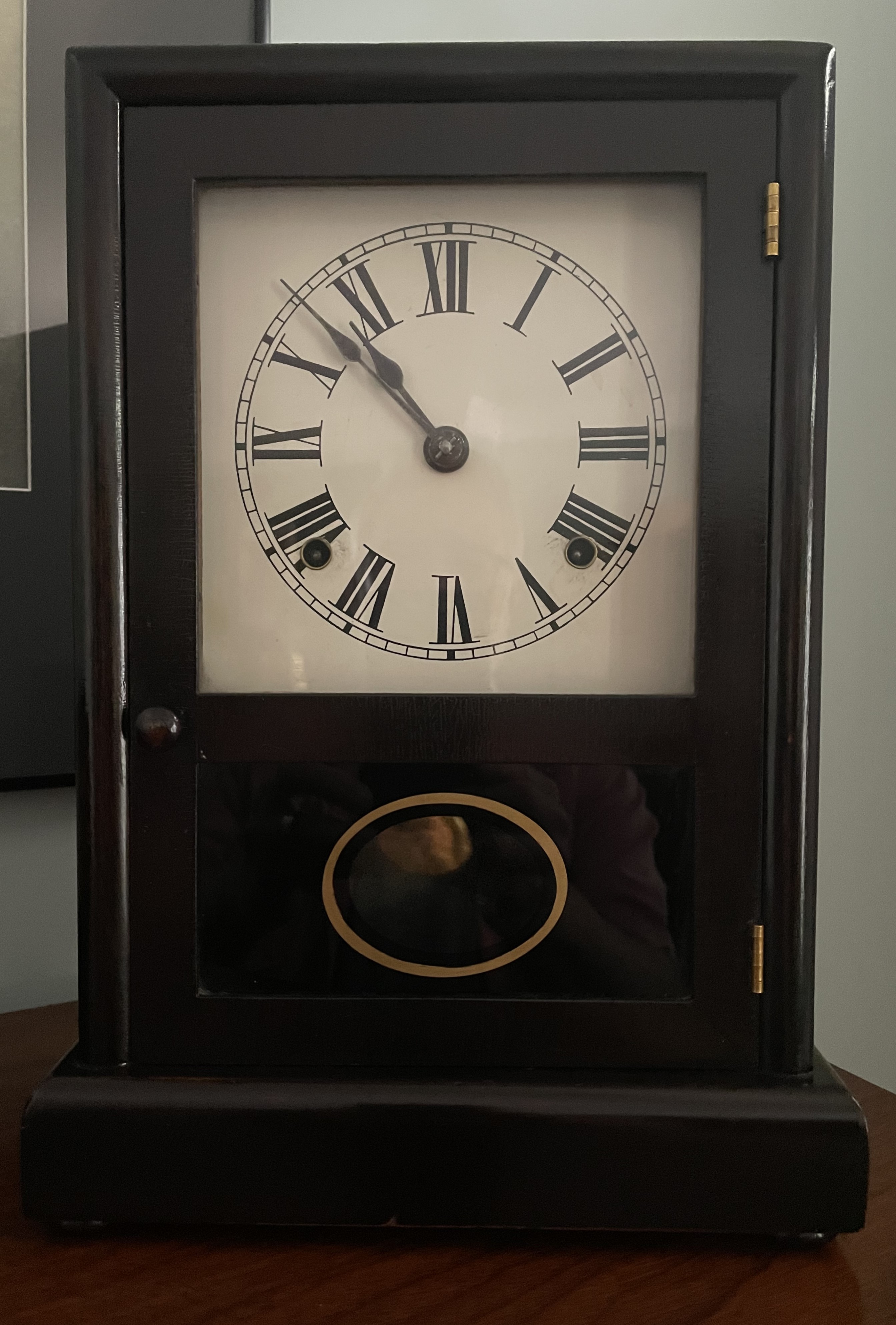
Right next to it sits a clock, that it one of my earliest memories from Grandmother Brown’s house in Franklin. It was on the mantlepiece in her front bedroom, and I still remember the chimes. Grandmother (whose maiden name was Bearden) gave it to my father (Thomas Bearden Brown) who gave it to me. Andrew has already asked if he could have it when I’m ready to pass it along, which only seems fitting since his name is Andrew Bearden Brown. We recently had it restored and the clockworks repaired. It is now ready for another 100 years.

I think about these two items — plus the chairs built by African American craftsmen in Franklin that we brought home after my father passed away because he attached a note saying, “keep them in the family” — and perhaps I am as much a “keeper” as “thrower.”

Janet and Linda ask if it’s better to be a “keeper” or a “thrower” when it comes to downsizing. Quess what? We need both types to get the job done.

(I)t takes a combination of these attributes to successfully downsize a family home. Sometimes that combination comes from various family members; it helps to be tolerant of attitudes different than your own, especially the attitudes of your spouse or your siblings, and to strive to find a balance between those who want to throw out everything and those who need to mull over the many decisions involved.

Slow but steady wins the race, as they say. That’s my new motto for our decluttering project. I’ll keep you posted, because — as I’m always saying — there’s more to come . . .

DJB


NOTE: Also on MTC:


The Weekly Reader links to the works of other writers I’ve enjoyed.

Laugh. Think. Cry.

In the words of that great Italian-American philosopher Jimmy Valvano:

“If you laugh, you think, and you cry, that’s a full day. That’s a heck of a day. You do that seven days a week, you’re going to have something special.

This is a grab bag of recent experiences that moved me to laugh, think, or cry.


Who knew a four-hour movie could be so riveting?

Candice and I recently saw the documentary Menus-Plaisirs – Les Troisgros at Silver Spring’s AFI Silver Theatre. At its most basic, this is a film where 93-year-old director Frederick Wiseman embeds himself and his team inside a French restaurant that’s held three Michelin stars for more than 50 years. But that doesn’t do it justice. This four-hour film was a remarkable work of art and storytelling in so many ways. We simply were mesmerized and in truth didn’t want it to end.

The love that goes into the film and the food can’t truly be captured in a trailer, but there are good reviews online (see here and here) to give other perspectives. The movie touched a variety of emotions and I’ve thought about it every day since first seeing it early in December. There is a poignancy in watching the father in the process of turning over the family business to his sons and daughter that unfolds slowly yet consistently over the body of the film. The meditations of Menus-Plaisirs around what matters — a devotion to craft, the beauty of nature, the love of food, and familial bonds — touched me deeply in places too little explored in everyday life.

Watch this movie if you get a chance.


Joke #1

The Gospel reading on the first Sunday after Christmas was from the famous first chapter of John. Shortly after church the following showed up in my email inbox:

Q. How do we know that God is a baseball fan?

A: ‘Cause he wrote “In the big inning . . .”

H/T to my friends Ted for the joke and George who quickly responded, “At last, all is made clear . . . “


Memories

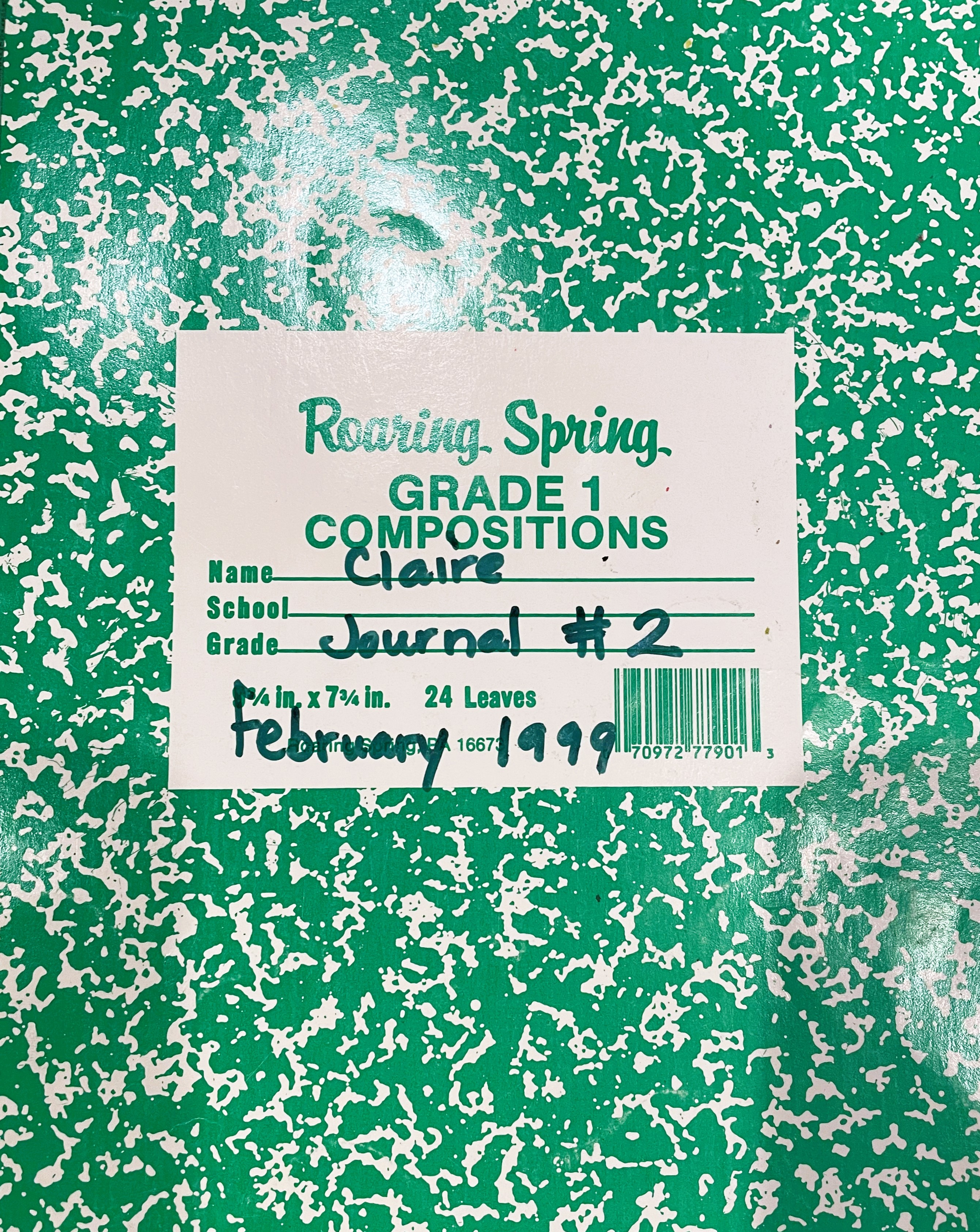
Shortly after Andrew and Claire were born we (well, mostly Candice) began putting programs, school art projects, birthday cards, photographs, and much more into a “memory box” for each one. On the recent night before Claire headed home to California, we began to weed through the now 10 memory boxes (five apiece) to see what they wanted to keep. This was our first baby steps in a much-delayed house cleansing to get ready for whatever the next stage brings.

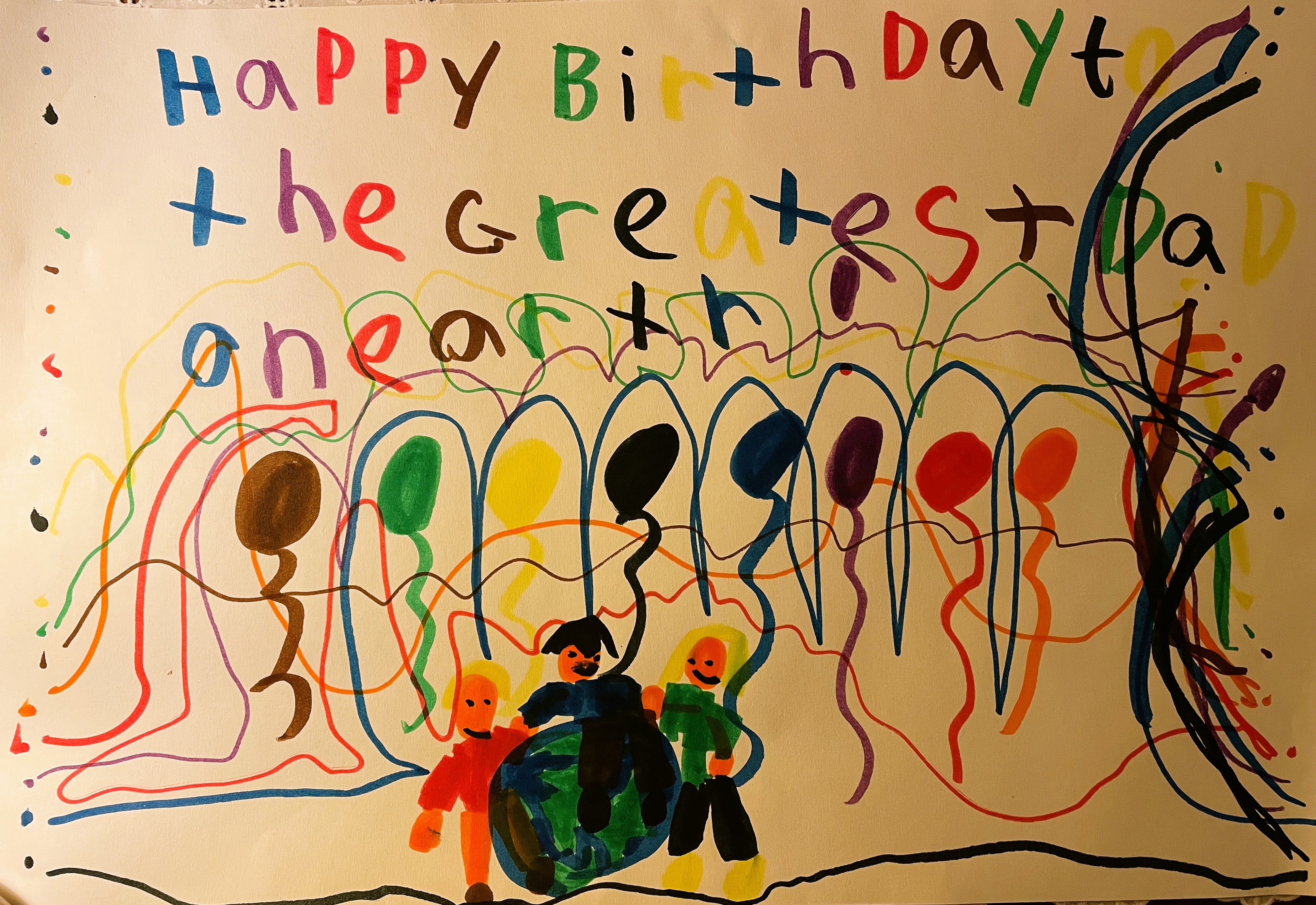
Andrew began reading from his pre-school and kindergarten “report cards” (you’ll have to ask them about which one was better at clean-up), while Claire read the stories from the journals she wrote in kindergarten and first grade. We laughed over the number of times her “what I did this weekend” entry began with “we went house-hunting.” I teared up when Claire brought out her art project: a handmade birthday “card” to the “greatest dad on earth” — complete with a drawing of me sitting on a globe.

Amidst the chatter and excitement, I sat back and thought about all the stories we were uncovering in a whole new time and space. What a beautiful experience together.


Joke #2

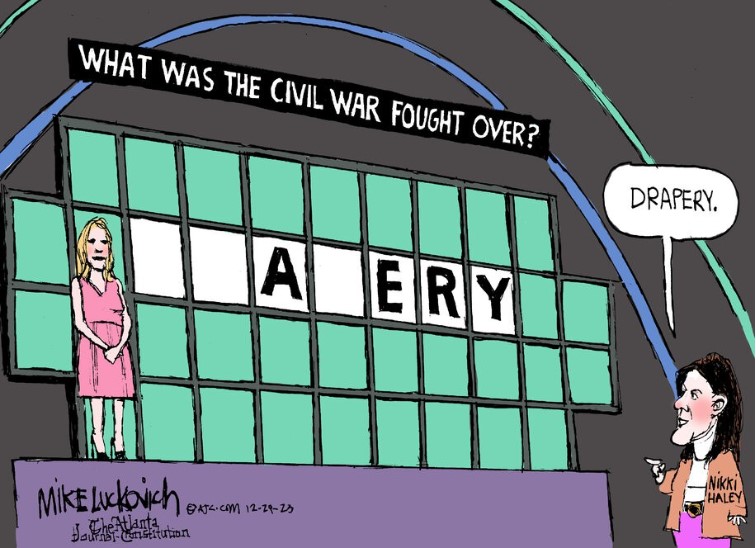
Mike Luckovich’s great take on Nikki “I don’t know ‘nothing about slavery” Haley works perfectly when one thinks of this vintage TV sketch. One online wag suggested that after this episode, Haley’s no longer measuring the drapery in the White House! (I’ll stop there.)


Speaking of good food . . .

La Piquette dining room

The Washington region has only one three-star Michelin restaurant, but it has a number of excellent establishments that have become family favorites. Over the past month, I’ve enjoyed the simple yet satisfying bistro experience at La Piquette, a masterful Feast of Seven Fishes at Iron Gate, and a delayed birthday celebration at Cranes. Each touched my emotions in different ways.

Francis Layrle, the long-time chef at the French embassy, never disappoints when in the kitchen at La Piquette. And yes, the Trout Meunière Arc-en-ciel is just sublime.

Coming from a family with strong Italian roots, Candice is always on the lookout for a good Feast of Seven Fishes experience for Christmas Eve. Claire joined us this year, when we may have just established a new family tradition.

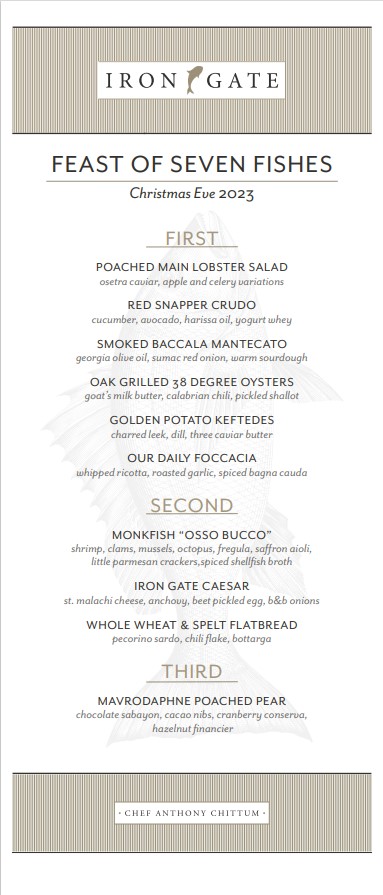
Chef Anthony Chittum, a native of Maryland’s Eastern Shore, and his team at the Iron Gate Restaurant in the Dupont Circle neighborhood created an artistic and delightful Feast of Seven Fishes with a few twists. * The offerings were both traditional and adventurous, yet they all satisfied.

Ready to enjoy a dinner at the Michelin-rated Cranes

Finally, Cranes — a Michelin-rated restaurant in DC — was the setting for our annual birthday dinner with the twins. Everyone helped choose our shared plates, which we then enjoyed over good wine, laughter, memories, and thoughtful discussions about past, present, and future.


Joke #3

We need more people to experience this epiphany.


Words of Wisdom

The New York Times had a fun piece in late December entitled The Best Advice I Received This Year. Some of my favorites included:

Nothing good is happening on your phone past 8 p.m.

Miriam Lichtenberg

Before doing something, ask yourself, “Is this something that someone who loves themselves would do?”

Cathy de la Cruz

And this gem:

We are all juggling so many balls. Differentiate between glass balls and rubber balls — and don’t be afraid to drop the rubber balls.

Kathryn Cunningham

Hope, faith, and love

I’ll leave you with this quote from Dr. Reinhold Niebuhr’s The Irony of American History as food for thought.

Nothing that is worth doing can be achieved in a lifetime; therefore we must be saved by hope. Nothing which is true or beautiful or good makes complete sense in any immediate context of history; therefore we must be saved by faith. Nothing we do, however virtuous, can be accomplished alone. Therefore we must be saved by love.


May you laugh, think, and cry every day, for the rest of your life . . . preferably over a good meal.

More to come . . .

DJB

*Menu for the Feast of Seven Fishes:


Photo: Luisa Brimble on Unsplash

Our favorite drug

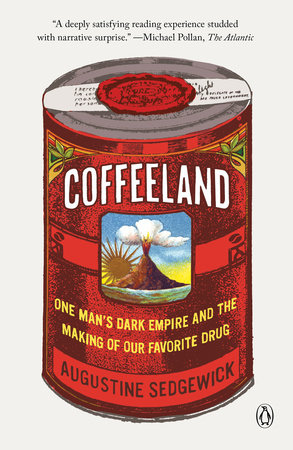
Each morning I join billions of people around the world in reaching for my favorite drug. Coffee is an indispensable part of daily life. But few of us know much about its history, much less the impacts on workers and countries that are part of that past and that are still reflected in life today.

Coffeeland: One Man’s Dark Empire and the Making of Our Favorite Drug (2020) by Augustine Sedgewick is a compelling look at the volcanic highlands of El Salvador and the story of James Hill. In 1889, the 18-year-old Hill disembarked in El Salvador to sell textiles from Manchester, England. He wound up “bringing the industrial mentality of his native city to coffee cultivation in his adopted country,” in the process turning El Salvador into perhaps the most “intensive monoculture in modern history — a place of extraordinary productivity, inequality, and violence.”

Sedgewick is a Harvard-trained historian teaching at City University in New York whose research is focused on the global history of food, work, and capitalism. As Lisbeth Cohen wrote in a New York Times review, instead of taking the traditional approach of historians and looking at coffee as a commodity, Sedgewick focuses on stories to weave a vibrant fabric that displays the impact of this particular food on real people.

His approach helps the reader consider “the actual choices made by the producers and importers and advertisers who merchandised the goods, the economic and political alliances they forged in the process and the often harsh local consequences of their actions.”

It makes for a sweeping and fascinating tale.

Sedgewick begins four hundred years ago, when coffee was a mysterious Ottoman custom and “the perfect symbol of Islam.” Now, he suggests, “coffee” is perhaps the most widespread word on the planet. He traces the route through tightly controlled markets in the Middle East to a luxury drink for Europe’s privileged classes, to its position as an unrivaled work drug. San Francisco becomes a key point of entry and marketing innovation hub for coffee from Central America while “rations to soldiers during World War II and the invention of the postwar ‘coffee break’ helped feed America’s growing habit.”

Throughout the book Sedgewick returns to Hill, his children and grandchildren, and their growth into one of the “Fourteen Families” who controlled El Salvador’s export coffee industry. Over 100 years they consume land and acquire power, leading to the loss of agricultural options for the country’s working class. As they do so, they demand more political control of the military dictatorship to protect their businesses. In 1979, on the eve of full-scale revolution in El Salvador, James Hill’s grandson Jaime Hill was “kidnapped by rebels for a ransom they hoped would help finance a revolt against wealthy planters like the Hills, who had economically and politically dominated the country for decades.”

El Salvador now has a tenuous democratic government and is no longer the monolithic coffee country it was in the 20th century. Yet the story still resonates. Sedgewick’s work — a very satisfying brew — helps the reader reconsider “what it means to be connected to faraway people and places.” In doing so, “Coffeeland tells the hidden and surprising story of one of the most valuable commodities in the history of global capitalism.”


To demonstrate the pervasiveness of coffee in our culture, I typed “songs about coffee” into the search engine. Google came up with 205 million options. A couple of fun listings among the group were 21 Songs About Coffee (Caffeinated Tracks List) and — for the more punk-inclined — Coffee Songs: The Definitive All-Time Greatest Ultimate List. From those two alone I pulled up five of my favorites. Grab a cup of fair-trade Java and have a listen.


9 To 5 by Dolly Parton

We don’t really do royalty in America, or sainthood for that matter. But the closest living example in American public life today is Dolly Parton . . . it’s not a surprise that she would be responsible for crafting the Mt. Olympus of coffee as a metaphor. It appears on the global smash hit single “9 To 5”, from the soundtrack to the 1980 film of the same name, in which Parton also stars, and it begins with the untoppable couplet . . .  “Tumble outta bed and I stumble to the kitchen / Pour myself a cup of ambition” 


Cup of Coffee by Johnny Cash

This tune was written by Ramblin’ Jack Elliott, and he puts in an appearance here to yodel. While the lyrics are about a truck driver protesting that he doesn’t want anything stronger than coffee because he has to get back on the road, Cash sounds like he’s drunk, or perhaps smoking something. This was made during Cash’s rowdy days before he sobered up, and it shows.


One More Cup of Coffee by Bob Dylan

Bob Dylan’s One More Cup of Coffee has two former lovers saying farewell for the last time.

On its surface, it seems like a simple breakup track, but the lyrics interweave fantastical imagery of a royal father and a sister who can predict the future.

He has said that the song was inspired by his experiences of celebrations with the Roma people in France in the 1970s. Country star Emmylou Harris provided the track’s sweet backup vocals. 


Black Coffee by Ella Fitzgerald

A classic blues song composed in the 1940s, Black Coffee describes a woman waiting for her lover to come back.

I walk the floor and watch the door / And in between I drink black coffee / Love’s a hand-me-down brew

Also check out Peggy Lee’s 1953 version of Black Coffee. It’s smoking!


And now for something completely different: Coffee Mug by The Descendents

Of all the songs about coffee, this 1996 track from The Descendents certainly leaves an impression — and all in less than 30 seconds. The track is a rapid-fire ode to coffee, perhaps emulating the caffeine jolt it provides. 

This last one isn’t really my cup of coffee (or tea), but if I’ve missed your favorite song about coffee, please share that in the comments.

More to come . . .

DJB

Photo by Mike Kenneally on Unsplash