Latest Posts

Ten tips for reading five books a month

The message showed up in my in-box from a long-time friend from grade school days: “How do you read so fast?!?! omg. I bow to you, sir.”

She was reacting to this recent post:

Each month I have a goal to read five books on a variety of topics and from different genres. Here are the books I read in February 2022.

I told Sara that she wasn’t the first person to ask that question. In answering her, DJB’s “Ten tips for reading five books a month” was born.

Number 1: Read things you enjoy. I happen to like histories and biographies as well as books about sports and current events, so they naturally go by quickly for me.

Number 2: Read along with others. I generally have one book going with my Third Stage men’s group (AKA the Retirees or Old Men’s club). Reading these works keeps me focused in order to be able to participate in the discussions.

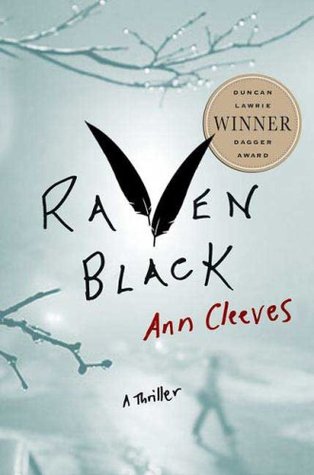
Number 3: Look for the quick reads. It helps to have one book on the monthly list that is a real page turner. I read Raven Black — the Shetland Island murder mystery — in less than a day. Couldn’t put it down once I’d started. Same thing with Natalie Goldberg’s memoir on her struggle with cancer. I read that in less than 24 hours as well.

Number 4: Read to revisit your childhood. I usually pick out one short work (in terms of page count) to get to my total of five. Since Candice has a wealth of children’s books from her days as a teacher (including many of the Newbery medal winners as well as a number of Caldecott winners), I can always grab one of those if I see I’m going to need another book to round out the month. They are always delightful and usually insightful.

Number 5: Read to challenge yourself and grow in the process. As I wrote in 2020 after the murder of George Floyd, we all benefit by listening to new voices. While we should stand up in the moment for an end to racism, white people like me really need to listen, listen, and then listen some more. We need to educate ourselves about the systemic nature of racism, the ties to implicit bias, and how we can train ourselves to be anti-racist. We can do that by reading authors such as Dr. Jennifer Eberhardt, Michelle Alexander, Michael Eric Dyson, Ta-Nehisi Coates, and Bryan Stevenson. These writers may not often be in my regular reading rotation, but I almost always find wisdom when I take the road less traveled. And I’m encouraged to dig deeper.

Number 6: Read to visit with old friends. If I’m “re-reading” a book, I don’t devour it again cover-to-cover. However, because I mark up a lot of my books I’ll go back, focus on the segments that I’ve marked, read special chapters again, and see what I may have missed the first time around. I get a great deal out of these returning friends and — since I’m making the rules here — this definitely counts among my total, although I limit these visits to one per month.

Number 7: Read books that you once avoided. Acknowledge that you can enjoy going outside your comfort zone if you are reading for pleasure as opposed to worrying about getting a good grade. I reminded Sara that I’m no scientist or mathematician. But I’ve found that now as I’m reading books on those subjects for pleasure, I’m really enjoying them and absorbing what I can.

Number 8: Read books that other readers recommend. On more than one occasion, someone will write after reading one of my blog posts about a book and say something like, “I liked that, and you may like this.” You’ll read about one such book in the coming weeks, as I’m finishing up The Hidden Life of Trees, based on a recommendation by a friend, former colleague, and fellow reader who had seen my post Entangled Life about fungi. I recently read Clint Smith’s How the Word is Passed after reading a recommendation on a blog post by another former colleague.

Number 9: Read to learn. Just because you’ve been in a field for forty years, don’t assume you know everything. Or anything. I’ve been a professional preservationist for more than four decades, but I am very much enjoying reading works that challenge my preconceptions and highlight hidden histories that deserve to be uncovered, understood, and honored. I suspect that no matter your field of interest, there is still a great deal to learn. As Ursula K. Le Guin suggests, be the kind of person who can realize the incredible amount we learn “between our birthday and our last day.” If we are flexible enough in mind and spirit to recognize “how rich we are in knowledge, and in all that lies around us yet to learn,” we can maintain the seeking, trusting capacity for learning that we had as a two-year-old.

Number 10: Read all the time. Finally, I wrote about this in a 2018 blog post. Read when it is inconvenient.

As the son and brother of librarians, reading has been a large part of my life for more than sixty years. However, when I returned from sabbatical in 2016, I made a renewed commitment to drop some of the things that had begun taking up large portions of my life (like television) and replace those timewasters with reading. (This is one reason I’m pretty clueless when it comes to pop cultural references.)  When I was asked how I found the time to read so much I would respond that I read almost any chance I get.  I read when it is convenient, and perhaps when it isn’t.

I got the idea from a 20-something blogger who wrote that we should (taking her clues from a Mastin Kipp quote): “Be willing to live as other people won’t, so you can live as other people can’t.”

I think of this most days, but mostly I feel this way about reading. Reading has shaped me, unshaped me, bothered me, and taught me. I healed because I learned to think as other people wrote.

…a book you read this weekend could change the way you think for the next five decades. It could have an irrevocable impact on your entire quality of life. There is a quote that goes something like, “I don’t remember every meal I’ve eaten or every book I’ve read, but they are all still a part of me.

The blogger’s post has, sadly, been lost to the whims of the internet. However, I still remember the title, which was adapted from writer Cheryl Strayed. It simply said, Read like a motherf**ker.

As Nike says, just do it.

More to come…

DJB

While on a bit of a blogging break, I’m taking the time to share some of my favorites from the More to Come archives (like the two posts mentioned above) and to post the occasional new piece around books I’m reading. 

Image: Sign in the Books, Inc. store in downtown Alameda, CA (the West’s oldest independent bookseller) taken by DJB as we were browsing yesterday. Yes, I bought another book!

Arrogance cloaked as humility

(T)here is a fundamental difference between the two sides of this judicial debate. The liberal devotees of a “Living Constitution” are transparent about their political agenda, but the conservative originalists are not. While the judicial doctrine of the originalists was explicitly designed as a weapon to overturn liberal precedents, its core claim is its assiduous political detachment. At least on the face of it, that claim is incompatible with the series of one-sided decisions made by the conservative majority in the twenty-first century. This was the reason why the usually understated Justice William Brennan described originalism as “arrogance cloaked as humility.”

Joseph J. Ellis in American Dialogue: The Founders and Us

Writing in her March 25, 2022, Letters from an American, historian Heather Cox Richardson looked at the Supreme Court confirmation hearings of Judge Ketanji Brown Jackson. The highly qualified Jackson endured “vicious attacks from Republicans on the Senate Judiciary Committee, who vow to reject her confirmation.” Jackson’s record, Richardson notes, is stronger than those of recent Republican nominees. Fifty-eight percent of Americans want her to be confirmed. (In contrast, only 42% of Americans wanted Justice Amy Coney Barrett confirmed.)

What rationale are Republican senators grasping for to turn down such a qualified, broadly supported nominee?

Senator Ben Sasse (R-NE) explained: “Judge Jackson has impeccable credentials and a deep knowledge of the law,” but she “refused to embrace” the judicial philosophy of originalism, which would unravel the 1973 Roe v. Wade decision protecting abortion rights, as well as most of the other civil rights protected since the 1950s.

Indeed, the hearings inspired Republicans to challenge many of the civil rights decisions that most Americans believe are settled law, that is, something so deeply woven into our legal system that it is no longer reasonably open to argument. The rights Republicans challenged this week included the right to use birth control, access abortion, marry across racial lines, and marry a same-sex partner (emphasis added).

These rights, which previous Supreme Courts said are guaranteed by our Constitution, are enormously popular. To offer an explanation of how today’s Republicans square overturning these established rights with the fact that we live in a democracy, in which “the majority should rule, so long as it does not crush a minority,” Richardson turns to a 2019 speech at the University of Notre Dame by then-attorney general William Barr. There, Barr presented a “profound rewriting” of the meaning of American democracy.

He argued that by “self-government,” the Framers did not mean the ability of people to vote for representatives of their choice. Rather, he said, they meant individual morality: the ability to govern oneself. And, since people are inherently wicked, that self-government requires the authority of a religion: Christianity.

Barr quoted the leading author of the Constitution, James Madison, to prove his argument. “In the words of Madison,” he said, “‘We have staked our future on the ability of each of us to govern ourselves…’.”

Richardson notes that this has been a popular quotation on the political and religious right since the 1950s. She also notes that Madison “never actually said the quotation on which Barr based his argument. It’s a fake version of what Madison did say in Federalist #39, in 1788, which was something entirely different.”

In his 2019 speech, Barr also expressed concern that people in the United States misunderstood the First Amendment to the Constitution, which expressly forbids the government from establishing a national religion or stopping anyone from worshiping a deity — or not — however they choose. In Barr’s hands, the First Amendment “reflects the Framers’ belief that religion was indispensable to sustaining our free system of government.” To support that argument, he cites a few lines from Madison’s 1785 pamphlet objecting to religious assessments that talk about how Madison defined religion.

In reality, that pamphlet was Madison’s passionate stand against any sort of religious establishment by the government. He explained that what was at stake was not just religion, but also representative government itself. The establishment of religion attacked a fundamental human right—an unalienable right—of conscience.

Madison warned that there was a connection between establishing a religion and destroying American democracy. We’ve seen it first-hand in the recently released texts between Trump’s chief of staff Mark Meadows and Supreme Court Justice Clarence Thomas’s wife, Ginni, in the time around the January 6th insurrection.

“This is a fight of good versus evil,” (Meadows wrote) in a text about overthrowing the will of the voters after Joe Biden had won the presidential election by more than 7 million votes and by 306 to 232 votes in the Electoral College. Referring to Jesus Christ, Meadows continued: “Evil always looks like the victor until the King of Kings triumphs. Do not grow weary in well doing. The fight continues….”

After reading Richardson’s letter, I returned to read portions of American Dialogue: The Founders and Us, the 2018 book by historian Joseph J. Ellis. I wrote about this insightful work in a 2020 post entitled An ongoing conversation with the past.

One of the final sections of Ellis’s book looks at the law. James Madison is the founder Ellis chooses to profile because of his work to shape our Constitution and how we interpret that work today. Madison’s greatest achievement was recognizing that the Constitution presented a “framework for debate” and that “argument itself became the abiding solution.” The Constitution is an inherently “‘living document’ that successive generations interpret in light of changing historical circumstances.” That understanding — supported strongly by Thomas Jefferson — provides the springboard for Ellis’s strong and sustained attack against the misconception of “originalism” as most proudly practiced by Antonin Scalia. In a scathing critique, Ellis takes apart Scalia’s one-sided opinions, and those of his conservative colleagues on the Supreme Court, as essentially a weapon to overturn liberal precedents. Ellis quotes Justice William Brennan’s description of originalism as “arrogance cloaked as humility.” Noting that at one point in time it is useful for new nations to have mythical heroes, “…over the past half century the scholarship on the founders and the blatantly political character of the Supreme Court” makes such illusions untenable. Ellis then drives home that point.

“To repeat, the American founding, most especially the drafting and ratification of the Constitution, was always a messy moment populated by mere mortals, whose chief task was to fashion a series of artful political compromises. And the Supreme Court has never floated above the American political landscape like a disembodied cloud of heavenly wisdom. It always was a political institution comprised of human beings with no special connection to the devine. Both illusions were now exposed as childish fables.”

More to come…

DJB

While on a blogging break, I’m taking the time to share some of my favorites from the More to Come archives and post the occasional new piece around books I’m reading. As part of my Weekly Reader series, this particular post features links to recent articles, blog posts, or books that grabbed my interest or tickled my fancy. I hope you find something that makes you laugh, think, or cry.

Image by succo from Pixabay

Scottish Isles and Norwegian Fjords

My first 2022 trip as the educational expert for National Trust Tours is scheduled for May to the Scottish isles and the fjords of Norway. To prepare I called a friend and former colleague who has led this tour in the past. Having traveled in parts of Scotland and Scandanavia, this was going to be my first adventure to the rarely visited Inner Hebridean, the Orkney and Shetland islands, and to Norway’s majestic fjords. Traveling “in the wake of early Viking explorers, cruising into ports accessible only by small ship” as described by the brochure, I wanted to test out a couple of ideas for my lectures and find out what I should study to prepare.

Grace Gary — my friend and one of the National Trust’s most popular study tour leaders — was full of creative ideas. But one really surprised me and piqued my interest. “A good number of the travelers will have read one or more of the Shetland Island mysteries,” she said, “or seen the series on PBS. If you don’t want to be clueless,” Grace added, in her typically straightforward (some might say devil-may-care) style, “you should know what they are talking about.”

Which is how I came to read Raven Black, the first in the Shetland Island mystery series of author Ann Cleeves earlier this month. It wasn’t until the pandemic, as I watched thrillers and mysteries on PBS to while away the hours of lockdown, that I came to appreciate the genre. But I was quickly brought into the story of lonely outcast Magnus Tait, who stays home on New Year’s Eve and becomes the prime suspect when the body of a murdered teenage girl is discovered nearby the next morning. Inspector Jimmy Perez has his doubts about how quickly the community comes together to point the finger at Magnus, and in his work to unravel the true tale we find out a great deal about the Shetland Islands and this small, isolated community. The ending was certainly a surprise and Cleeves cleverly wraps up this story by pointing to future mysteries to come.

Now I’m ready to be part of the small talk sure to take place around the Shetland Island mysteries. And thanks to conversations with friends at the National Trust for Scotland and the International National Trusts Organisation, I’ll also be ready to put my preservation experience into this international context. Let’s travel!

More to come…

DJB

For other More to Come postings about past National Trust Tours I’ve been privileged to enjoy, check out the following:

While on a blogging break, I’m taking the time to share some of my favorites from the More to Come archives and post the occasional new piece around books I’m reading. This one falls into the latter category.

Image of Bergen Norway: 999Vic999, CC BY-SA 4.0 https://creativecommons.org/licenses/by-sa/4.0, via Wikimedia Commons

March Madness returns just in time to save sports

I love March Madness, the NCAA men’s basketball championship. In the midst of baseball lockouts, pro basketball teams tanking, and — OMG —Tom Brady coming out of retirement (because of course he did) we needed some good news.

I love March Madness, but probably not for the reason you would think. Oh, I get a thrill from the buzzer beaters and the bracket busters. I am all in for switching channels between two, three, and four games during that first wild weekend to catch as much action as possible. I delight in seeing the lower seeds knocking off the blue bloods (see you, Kentucky). And yes, I am head-over-heels in love with the 15-seed St. Peter’s Peacocks (which will probably be the kiss of death this weekend).

But somewhere along the way I realized why I was enjoying the experience in a special way this year. There are no gambling ads. No annoying come-ons for sports books. No old former athletes pitching you to give up your hard-earned money. None. Nada. Zilch.

How refreshing.

As I wrote last September, awful gambling ads now dominate almost all sports broadcasts. Virtually every professional and major college sports league has decided to go all-in on betting. Before the games, during the games, during the at-bats in baseball games, while football teams are in the huddle, after the games. Bet $1 on anything and get $100 free. Seriously. How naïve can one be to spend your hard-earned money with that come-on? If you know they will give you $100 to bet for free, you can put your money down on the fact that you will lose more than you win if you play for any length of time.

Why do this? Follow the money. And the gobs of money — and the people it brings out — will affect the games in ways known and unknown. I suspect it won’t be good and will drive away long-time fans. 

But at least this year, the NCAA tournament has not been filled with gambling ads. I’m quite content to see endless versions of the commercials with AT&T’s Lily (Milana Vayntrub) interviewing replacements to fill in while she watches the tournament. (The one with Coach K is pretty good). The Progressive Bundles resort features one of the best “eww” moments ever when the teenage girl catches her parents in the love tub. I laugh every time those crabs walk over to give homage to LeBron James in his crab walking Hummer. I sing along with Queen as the drivers of the GMC Sierras don’t have to use their hands for silly things like holding on to the steering wheel. Yes, I even laugh time and again at the Chuck Kuts. What I don’t have to see is Drew Brees talking about living your “bet life” (whatever the hell that is).

Let’s go Peacocks!

More to come…

DJB

While on a blogging break, I’m taking the time to share some of my favorites from the More to Come archives. This will not end well — which is a part of the blog above, was originally posted on September 17, 2021. A related post on The dislocation of joy was originally posted on October 4, 2021.

Inequality and baseball

I almost always have a baseball-related post up on More to Come this time of year. But I’m on a bit of a blogging break, so I’ve been taking the time to share some of my favorites from the More to Come archives or — as in this instance — sharing some great posts from other writers.

Robyn Ryle writes insightful pieces on You Think Too Much from her home in the beautiful Main Street community of Madison, Indiana. Earlier this week her most recent post — Thinking about inequality and baseball — landed in my email in-box. It captured a number of thoughts I’ve been having around the owner lock-out of the players and the selling off of talent when making a few more bucks becomes more important than fielding a competitive team. I’ll pull a few quotes, but do yourself a favor and go read Robyn’s entire post.

People are willing to give up a lot in order to make sure others don’t get more. That’s what experimental economist Daniel Zizzo found in a 2001 experiment. He gave some volunteers more money and some less. He found that volunteers were willing to spend their own money if it reduced the amount of money others had.

Zizzo called it burning other people’s money…a phenomenon that isn’t economically rational, but is explained psychologically by our sense of how “deserving” we believe others to be. The study helps us understand why specific policies to reduce inequality in the United States are often so unpopular — we tend to believe everyone is less deserving than ourselves.

It might also explain what’s happening with my Reds, where owner Bob Castellini was among four owners during the recent collective bargaining agreement negotiations to vote no on what at the time was the “best and final offer” from the players. With that ‘no’ vote, Castellini and the other owners showed they were more than willing to burn their own money in the form of lost games to prevent the “undeserving” players making significant gains from what is a $10.7 billion dollar business.

At this point I could tell that Robyn was going to hit on a number of nerves. And she didn’t disappoint.

Once the players’ association and the league did reach an agreement — one that did not include many of the demands the player started with — Castellini showed just how he felt about the small gains players did achieve by commencing what in baseball we call a ‘fire sale,’ or in this case, petty revenge.

After writing a bit about the impact on her Reds, she moves into explaining how inequality works in the larger society, using baseball as an example.

The players aren’t arguing that they should make the same amount of money as the owners. They’re not socialists. They weren’t arguing for a radical overhaul of the status quo, even though that status quo is responsible for the currently skewed distribution. All they want is a slightly larger piece of a very big pie.

“But Mike Trout got a $426.5 million contract!” you might be yelling at me right now, which is true. It’s also exactly what the owners and the CEOs and the other capitalists want you to think. Sure, get mad at Mike Trout. Forget about the fact that Arte Moreno as an owner makes enough money to pay Mike Trough $426.5 million dollars along with the salary of the other 25 players on his team. To paraphrase Chris Rock, Mike Trout is rich. Arte Moreno is wealthy. There’s a big difference between the two. Either way, you need to ask yourself why you’re mad about Mike Trout or Patrick Mahomes or Steph Curry but not about the dudes (it’s always dudes) who pay them.

Then, after a few more paragraphs, she nails it for me.

The players association, on the other hand, shows us what it might take to break this mental logjam in our thinking about inequality. Their union is famous for its culture of collective thinking. In addition to wanting a more equal distribution of revenue, the players other demand is to end ‘tanking,’ the practice of deliberately depressing payroll in a way that sacrifices a team’s ability to compete. They want to play in a league in which the people in charge actually want to win games, instead of just generating revenue — another radical concept. They want to make it less possible for owners to do what Bob Castellini is currently doing to the Reds, reducing salary and giving fans a team that is almost guaranteed to finish last in their division. Exciting, yeah?

Let me put it more plainly — the players want baseball to be good. The owners just want to make money. Period. End of story.

Just go read the entire piece. And then you can leave a comment on Robyn’s blog, as I did.

And yes, I’m having a bit of trouble getting up for the 2022 season of the fire-sale Nationals. After a decade of pretty damn good baseball in the district, I hate the thought of watching AAA games again at inflated MLB prices.

More to come…

DJB

NOTE: For other pieces on More to Come about how life imitates the World Series (and baseball) check out:

As always, this Weekly Reader features links to recent articles, blog posts, or books that grabbed my interest or tickled my fancy. I hope you find something that makes you laugh, think, or cry.

Image of baseball field by Cindy Danger Jones. Image of money by S.K. Both are from Pixabay.

Choosing judgment or joy

This Saturday, priest, theologian, and author James Alison will speak at St. Alban’s parish in Washington on Choosing Judgment or Joy: Helping people of faith move from anger to love. Alison’s appearance is supported by the St. Alban’s Endowed Memorial Lecture Fund, which provides for lectures or other presentations that allow the parish and the wider community to examine the pressing issues of our time through the lens of contemporary theology. *

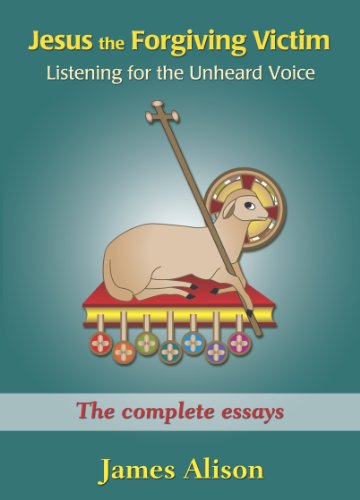
I came to know the work of James Alison when my third stage men’s book group began reading his introduction into the Christian faith for adults — Jesus the Forgiving Victim — which follows on from the insight into desire associated with the great French historian and philosopher René Girard. It is a fascinating book, unlike almost any other I’ve come across on faith, which focuses on the non-moralistic nature of Christianity. Grace, not laws or morals, is the theme that he explores through twelve insightful essays.

It was that focus that led the parish to invite Alison to speak to the nature of our polarized times, and how to move beyond judgment of those who hold different opinions, who belong to different tribes, who look different from us, and who may be trying to do us harm. Alison is well situated to discuss this topic, as he is also known for his firm but patient insistence on truthfulness in matters gay as an ordinary part of basic Christianity in the Catholic church and beyond, and for his pastoral outreach in that sphere.

I hope you’ll join us — either in person or via the live stream on St. Alban’s You Tube channel — on March 26th.

More to come…

DJB

*Full disclosure: I am a member of the Memorial Lecture Fund committee at St. Alban’s.

NOTE: I am on a writing break and have been taking the time to share some of my favorites from the More to Come archives. However, this new post is built around the deadline of an upcoming event, and the book that led us to invite James Alison to speak.

Image by Andrew Leinster from Pixabay.

The books I read in February 2022

Each month I have a goal to read five books on a variety of topics and from different genres. Here are the books I read in February 2022. If you click on the title, you’ll go to the longer post on More to Come. Enjoy!

How the Word is Passed: A Reckoning with the History of Slavery Across America (2021) is a groundbreaking book by poet and author Clint Smith that asserts that slavery is not irrelevant to our contemporary society; it created it. Smith’s well-researched work takes the reader to landmarks and monuments across America, places where guides, local citizens, and activists tell stories to those who visit. Some of the stories are true. Some are willfully false. Others take less than complete information to try and point towards truth. Smith works to understand what these places mean today, what we’ve told ourselves about them, and how that impacts the way we live. He treats old places as having value as spaces of reflection and he treasures the stories and memories of elders who are not that far removed from those who were enslaved. Memory — it has been said — is a poet, not a historian. In a book I’ll return to again and again, Smith shows why we give thanks for the poets and the stories they bring to life.

Jesus and the Disinherited (1949) by philosopher, theologian, educator, and civil rights leader Howard Thurman is best known as the book that Martin Luther King Jr. turned to for inspiration before he led the Montgomery bus boycott. In chapters on fear, deception, hate, and love, Thurman “demonstrates how the gospel may be read as a manual of resistance for the poor and disenfranchised.” Nowhere is that more evident than in the chapter on hate. Thurman notes that in the end Jesus rejected hatred “not because he lacked the vitality or the strength. It was not because he lacked the incentive. Jesus rejected hatred because he saw that hatred meant death to the mind, death to the spirit, death to communion with his Father. He affirmed life; and hatred was the great denial.” As Dr. King demonstrated, Jesus and the Disinherited can be a life-changing book.

War is a Force That Gives Us Meaning (2003) by Chris Hedges, is an important book I returned to read again as Russia was threatening the invasion of Ukraine that ultimately came later in February. I noted then that in Hedges’ words, a war in Ukraine will be a “mythic” war, where those involved will seek to imbue events with meanings they do not have. Hedges writes on the “very nature of war itself, its causes and consequences, and the physical, emotional, and moral devastation it leaves in its wake.” While he asserts that humility, love, and compassion are the only chances for the human race, war — a deadly addiction — is hard to shake. I wish he wasn’t so right. This is an important read for our times.

Why Old Places Matter: How historic places affect our identity and well-being (2018) by Thompson M. Mayes, a long-time friend and former colleague, is a series of 14 essays. Some address the more practical reasons we preserve old buildings, such as sustainability, economics, and community. But the ideas that most intrigued Tom — and that get to the heart of why these places seem to matter so much to people — were captured in the essays on memory, continuity, and identity, positioning old places in people’s lives in a much more fundamental fashion than the ways in which we often talk about the past and design our preservation laws. Tom’s book is as vital and timeless as the old places we love.

The End of the Beginning: Being the Adventures of a Small Snail (and an Even Smaller Ant) (2004) by Avi is a delightful children’s book that takes the reader through the multiple adventures — and the occasionally snappy wordplay — of Avon, a small snail, and his friend Edward, the ant. Avon loves to read about adventures. But having never been on one, he decides that he needs to go in order to be happy. Avon and Edward explore parts of their world, such as the end of the branch where Avon lives, that they had never visited before. Along the way they meet many different creatures. And they decide that even tiny adventures can broaden one’s worldview.

Enjoy reading!

More to come…

DJB

The Weekly Reader series features links to recent books and articles that grabbed my interest or tickled my fancy. 

Image of library by wal_172619 from Pixabay.

Time for a reckoning and a reimagining

While on a blogging break, I’m taking the time to share some of my favorites from the More to Come archives. Let’s stop celebrating a past that never existed. Instead, let’s understand and honor the one that did. — which is used in a portion of the following piece — was originally posted on October 5, 2020.

Our recollections need a reckoning and a reimagining. A reckoning with the history that did happen and a reimagining through recovered stories with hope for our collective future.

America has spent centuries denying the fundamental role slavery played in shaping our country. Our capitalistic economy, the way we shaped our cities and countryside, our unwieldy way of electing a president, America’s uneven system of justice, thoughts on what constitutes the public good, our constitution … so many aspects of life in America were shaped, at their core, by that history. Slavery “is not irrelevant to our contemporary society; it created it.”

That perspective comes from poet and author Clint Smith in his groundbreaking 2021 book How the Word is Passed: A Reckoning with the History of Slavery Across America. Near the end of this important work, Smith asserts that,

At some point it is no longer a question of whether we can learn this history, but whether we have the collective will to reckon with it.

Smith’s is a well-researched book told with a poet’s ear for the story. Which is as it should be. He takes the reader to landmarks and monuments all across America, places where guides, local citizens, and activists tell stories to those who visit. Some of the stories are true. Some are willfully false. Others work with less than complete information to try and point towards truth.

The reader visits Thomas Jefferson’s Monticello and Whitney Plantation — two Southern historic sites taking different approaches but, nonetheless, working toward a fuller understanding of our past. Smith, a Black man, visits Blandford Cemetery during a Sons of Confederate Veterans event, where the participants’ polite but strained conversations mask their indifferent and sometimes hostile attempts toward a full understanding of the past. He is in Galveston for the Juneteenth celebration, a story that until recently wasn’t known to many white Americans. Angola is the site of a former slave plantation turned prison, where incarcerated Black men work long hours in the fields in a system akin to slavery. The readers join Smith for a tour of Manhattan to learn about New York City’s difficult and tortured slave history.

As a historian and preservationist, I was exhilarated and challenged by How the Word is Passed. Exhilarated that a writer of Smith’s talent and background would take on public history in such a thoughtful and respectful way, while recognizing the importance in saving the places where history happened. Challenged by the realization yet again of how far we have to go just to a true examination of the past.

Jamestown, Virginia

In reading this book, I was reminded of when I first stood at Jamestown as a history-enthralled 11-year-old. The picture of the 17th century ruin of the church tower, abutted to the 1907 Memorial Church, is seared in my mind. I also remember the water lapping at the nearby shore, serving as a reminder that the people at Jamestown had the most tenuous of toeholds on this continent in those early years.

While I didn’t know it at the time, the narratives of life in early 17th century Virginia — told by the guides, the plaques that lined the walls of the 1907 church, and the books I devoured — were incomplete and sometimes egregiously false. White Christian Europeans were the focus. If they were mentioned at all, Native Americans, along with the enslaved African Americans who began arriving against their will at Jamestown in 1619, were small, dependent actors; impediments, if you will, to the greater story of the colonists and settlers and the shaping of what it meant to be an “American.”

Those Europeans were not home. They were the outsiders. Yet we are still fighting over how to interpret their presence in what would become Virginia.

Today, thanks to the scholarship of historians, works like the 1619 Project, the explorations of archaeologists, and the education efforts of groups like Preservation Virginia, the interpretations at Jamestown are more richly textured, recognizing the various layers that make up this iconic place in American history. Something worth understanding happened there in the early 17th century. There are stories worth telling and people worth remembering in part for the significance they bring to our lives today. But because history is not what happened, it is a story about what happened, we need to be thoughtful and as truthful as possible in how we craft our narratives of remembrance.

In his remarkable first work of nonfiction, Clint Smith has shown us a way forward. He visits places with hard and misunderstood histories. He listens intently to the stories of the historians and guides and asks meaningful questions that draw out conversations. He works to understand what these places mean today, what we’ve told ourselves about them, and how that impacts the way we live. He treats old places as having value to our life today, as spaces of reflection. He also values the stories and memories of elders who are not that far removed from those who were enslaved.

Memories are important because of the gaps that exist in the story of slavery. Smith quotes David Thorson at Monticello who said, “I think that history is the story of the past, using all the available facts, and that nostalgia is a fantasy about the past using no facts, and somewhere in between is memory.”

Memory is a poet, not a historian. Clint Smith is also a poet. In this book I’ll return to again and again, he shows us why we give thanks for the poets and the stories they bring to life.

More to come…

DJB

NOTE: Here are other posts on More to Come examining the need to tell the fuller story of our history:

Image: Discussion on the life of the enslaved at Belle Grove, a site of the National Trust for Historic Preservation that has worked to tell the fuller story of all those who lived, worked, and died there. Photo credit: Belle Grove.

A morning stroll through Providence

I am on a writing break and have been taking the time to share some of my favorites from the More to Come archives. However, this new post — which consists of a few words and some pictures — is of a personal nature that I wanted to share in a timely fashion.

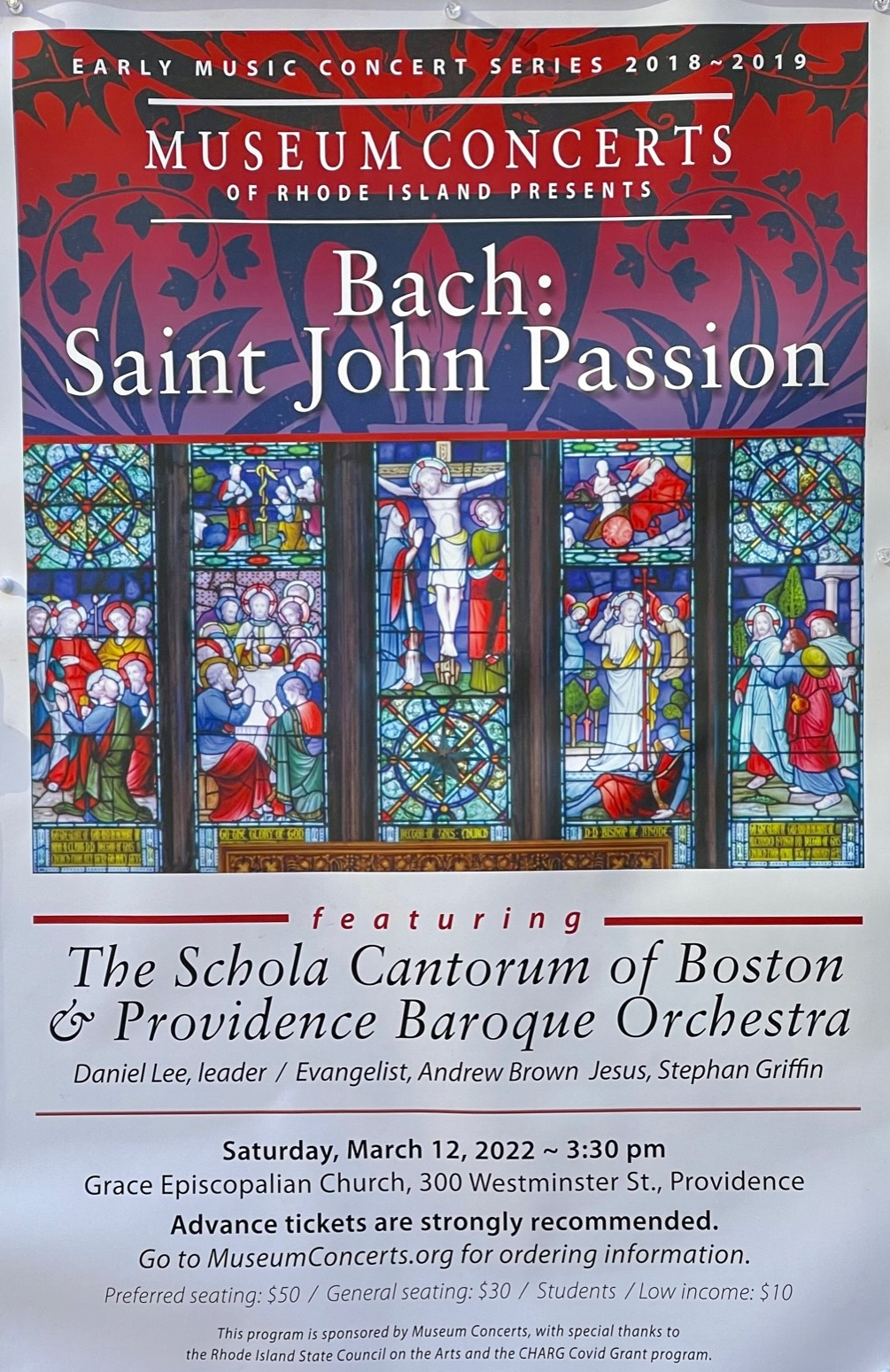
Providence, Rhode Island, is one of the country’s underappreciated gems. We arrived by train last evening in order to hear our son, Andrew Bearden Brown, sing the role of the Evangelist tomorrow afternoon in the St. John Passion with the Schola Cantorum of Boston and the Providence Baroque Orchestra. Very cool!

UPDATE: Andrew did a fantastic job and received a rousing ovation at the end of the concert!

As is my habit in the morning, I woke up early, stretched, and then took to the streets of downtown Providence. The city is very walkable — Candice and I walked from the train station to our hotel last evening — with great architecture all around. Thanks to the work of preservationists, city government, business leaders, and others, downtown has had a renaissance. On this trip I saw more early-morning dog walkers, which suggests that downtown living is growing in popularity, and some of the empty parking lots have been filled in with new infill construction. Updated with more pictures after we took a self-guided walking tour of downtown mid-day.

The historic arcade in the early morning hours before shoppers have stirred
Providence has a wealth of wonderful architecture
The historic Hotel Providence, our location for the weekend.
Grace Episcopal Church, the venue for the St. John Passion…and mere steps from our hotel
Grace Church (Episcopal) interior
Grace Church (Episcopal) rear organ
Modern addition to Grace Church (Episcopal) looking out
“The Women” mural in downtown Providence
Skylight in the Emery Majestic Theatre – now home to Trinity Rep
Detail on the Turks Head Building
The Providence Public Library – one of the gems of the city
Beneficent Church
A good reminder…
Westminster Street
Ambrose Burnside – who is better remembered for his facial hair (and giving the world the word “sideburns”) than his military exploits.

And did I mention that Providence is one of the great food cities in America? Forbes magazine once called it the country’s best food city per capita, and we agree. In our first 15 hours in town, we’ll have eaten two great meals (at North and at Ellie’s) and tonight we have reservations at one of our favorite Providence restaurants, Gracie’s.

As I said…an underappreciated gem.

More to come…

DJB

Hate is another of the hounds of hell

While on a writing break, I’m taking the time to share some of my favorites from the More to Come archives. Isolated minds. Dead hearts. — which is used in a portion of the following piece — was originally posted on November 23, 2020.

Author, philosopher, theologian, educator, and civil rights leader Howard Thurman begins the powerful chapter on hate in his seminal work Jesus and the Disinherited with a vivid image of hate relentlessly pursuing the hated, crushing down on those who have been cast off and repudiated.

Hate is another of the hounds of hell that dog the footsteps of the disinherited…

Famously known as “the text that Martin Luther King Jr. sought inspiration from in the days leading up to the Montgomery bus boycott,” Thurman’s work both shaped the civil rights movement and changed our nation’s history. It is a short, but profound read which will stay with me for a long time.

As Vincent Harding writes in the Foreword, Jesus and the Disinherited “was the centerpiece of the Black prophet-mystic’s lifelong attempt to bring the harrowing beauty of the African American experience into deep engagement with what he called ‘the religion of Jesus.'” In chapters on fear, deception, hate, and love, Thurman “demonstrates how the gospel may be read as a manual of resistance for the poor and disenfranchised.” Nowhere is that more evident than in the moving chapter on hate, where he focuses on the conspiracy of silence around the function and meaning of hatred, and how it has an especially severe impact on the disenfranchised.

Hatred often begins in situations where there is “contact without fellowship,” writes Thurman. There are no overtures of warmth and genuineness. It is easy, he asserts, “to have fellowship on your own terms,” something that any one of us who grew up in the segregated, Jim Crow South can easily see. It is unsympathetic understanding breeding ill will. Hatred becomes a source of validation for us and for our personalities.

While hatred has the ability to bring us much satisfaction, Thurman writes that Jesus knew that ultimately hatred destroys “the core of the life of the hater.” It guarantees an isolation from one’s fellow humans.

Hatred cannot be controlled once it is put in motion.

A mentor wrote about evil and hatred following the attacks of 9/11. “This past week has shown two of the ways that evil can affect human beings,” he said. “It isolates the mind and kills the heart.” Thurman saw that in the Jim Crow South. We’ve seen it not only in 9/11, but in events as recent as the horrific murder of George Floyd. We have long since reached the point in our civic lives where we can be easily overwhelmed by evil and hatred. It is all around us.

Thurman pivots from hate to love by writing that “Jesus rejected hatred.”

It was not because he lacked the vitality or the strength. It was not because he lacked the incentive. Jesus rejected hatred because he saw that hatred meant death to the mind, death to the spirit, death to communion with his Father. He affirmed life; and hatred was the great denial.

We need to nurture empathy so that we are better equipped to appreciate the challenges others face. It is difficult to remain stubborn when you bring in your heart and are empathetic to the needs of others. According to recent neuroscience, empathy is hardwired into all mammals. Our default — our authentic self — is to have the courage and strength to help others. But the forces that want to isolate our minds and kill our hearts is very strong. Those forces are working on us to suppress our authentic selves in the hope that we will only focus on our needs and our grievances. That force is pushing us to hate others.

Thurman writes that we have to move toward love in action rooted in concrete experience. “No amount of good feeling for people in general, no amount of simple desiring, is an adequate substitute.” Once we have defined our neighbor, “then the moral obligation is clear.” In the story of the Good Samaraitan, Jesus uses

… sure artistry and great power to depict what happens when a man responds directly to human need across the barriers of class, race, and condition. Every man is potentially every other man’s neighbor. Neighborliness is nonspatial; it is qualitative. A man must love his neighbor directly, clearly, permitting no barriers between.

Love your neighbor as yourself. It was no easier in Palestine 2000 years ago than it is today in a polarized America with the world reeling from an immoral war. Yet we must try.

For every man there is a necessity to establish as securely as possible the lines along which he proposes to live his life.

As Martin Luther King demonstrated, Jesus and the Disinherited can be a life-changing book.

More to come…

DJB

NOTE: Here are other posts on More to Come examining hatred and love.

Image by Gordon Johnson from Pixabay