All posts filed under: Historic Preservation

Posts about places that matter

Preservation with an International Focus

I have returned to Italy for the second time this year for a short meeting of the executive committee of the International National Trusts Organisation (INTO).  Our host for this year’s meeting is Fondo Ambiente Italiano (FAI) or the Italian National Trust, a remarkable INTO member which has saved 54 properties and protected 6 million square meters of historic landscape in Italy since 1975.  Over the past two days we have been meeting with the FAI staff at their headquarters in Milan and have toured three wonderful – and unique – FAI properties.  Along the way the 15 members of the INTO executive committee have learned more about the Italian model of preservation while we share our own experiences and shape strategy for the group for the year ahead. FAI’s headquarters in Milan is in a historic equestrian exercise rink that has been marvelously repurposed for 21st century office use.  The space, desks, and equipment are all modern and set up for strong collaboration, yet the entire new three-floor interior addition could be removed without …

Hope is grounded in memory

Last Saturday marked my 20th anniversary at the National Trust for Historic Preservation. For the past few days, I’ve been thinking about hope in the context of life’s milestones.  Not a greeting card kind of hope or optimism, but “hope that’s kind of gritty…the kind,” as described by songwriter and author Carrie Newcomer, “that gets up every morning and chooses to try to make the world just a little kinder (or better) in your own way.” The thought that “hope is grounded in memory” has influenced the work of  another writer I admire, Rebecca Solnit. In a recent interview, she notes that “We think of hope as looking forward, but…(if) you study history deeply, you realize that, to quote Patti Smith, ‘people have the power’….(P)eople have often taken on things that seemed hopeless — freeing the slaves, getting women the vote — and achieved those things.”  Knowing history gives me hope. To be fair, hope is hard.  Cynicism – where I have gone on occasion – is easy. But in thinking about 20 years of …

Andrew moving

Adventures in moving

After helping with at least the fifth move of one of his children to some new town and new apartment through the wonders of U-Haul, my father declared that he had “enjoyed his last Adventure in Moving.” U-Haul no longer uses that phrase for their tagline, but after driving two full days from Tennessee to Washington with a van of family furniture, I am channeling my dad.  No more adventures in moving for me! Andrew and I flew to Nashville on Monday, where my sister Debbie met us at the airport and deposited us at the U-Haul office to pick up our van.  Then my niece’s husband Jason and their daughter Kate joined us to help load the van.  They were a godsend (not to mention Andrew’s many contributions over the three days), and we quickly had all the pieces of my dad’s home that were moving to Maryland strapped in and ready to go. We already have a family bedroom suite from the Bearden side of our family (my grandmother’s family), but after my …

Pilgrim Inn

Pilgrim’s Inn: Our home away from home

You can tell a great deal about a lodging establishment by the quality of their Q-tips.  More on why that matters in a moment I started this post as a love letter to the Pilgrim’s Inn in Deer Isle, Maine, then I switched to describe it as a fan letter.  Either works. In busy years (and 2016 has qualified), I spend close to 3 months out of each year in someplace other than home.  It comes with the job. That experience was helpful as Candice and I looked for a place to stay in Maine for the last quarter of my sabbatical. While at the American Academy in Rome over six weeks in March and April, Candice and I had a wonderful studio apartment in a historic building where we got accustomed to being in one room together for long stretches of time.  We found that the studio apartment layout – with areas to sit and work, a table to gather around for conversation, and with windows to throw open and take in the fresh …

New Collection of Essays Looks to Preservation’s Future

(In a recent post on the National Trust’s Preservation Forum blog, I highlighted the recent publication of 50 essays with ideas for the next 50 years of preservation.  I’ve excerpted portions of that post for More to Come….  You can read the entire post here.  Full disclosure:  I was one of the contributors.) The 50th anniversary of the National Historic Preservation Act (NHPA)—the cornerstone of preservation practice in the United States—has spurred conferences, articles, and celebrations throughout 2016. One of the most lasting and influential looks to the future to emerge from this year could well be a new work from the University of Massachusetts Press, Bending the Future: 50 Ideas for the Next 50 Years of Historic Preservation in the United States. Edited by Max Page and Marla R. Miller, professors at the University of Massachusetts Amherst, Bending the Future features visions of the next five decades from some of the nation’s leading preservation professionals, historians, scholars, activists, and journalists. The editors invited “provocations,” and they certainly received a few. But what is almost universal …

Oatlands (credit DHR)

National memory and the forgotten First Emancipator

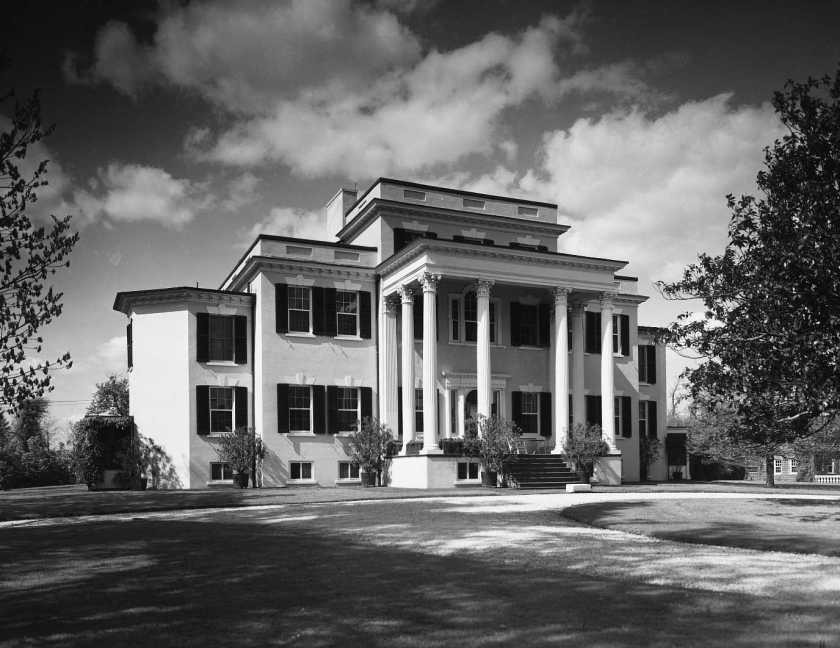
The story of Virginian Robert Carter III and the emancipation of 450 enslaved individuals shortly after the founding of the United States is one of the forgotten stories of American history.  However, in our current period of political unrest — much of it centered on racism and questions around who owns the American story — this is an appropriate time to look at how this act of emancipation, and similar acts that took place throughout the South before the Civil War, were buried and forgotten. Thankfully, Andrew Levy’s complex and largely satisfying book The First Emancipator:  Slavery, Religion, and the Quiet Revolution of Robert Carter brought this story the attention it deserves. Levy claims — powerfully and in a way that challenges our core national narrative — that Carter “did something that transcends our ability to listen to our own past.” A recent tour of the National Trust Historic Site Oatlands outside Leesburg, Virginia, with several senior staff led to a discussion of the story of slavery at the plantation.  Robert Carter III was the …

Beach Reading

Think before you speak. Read before you think

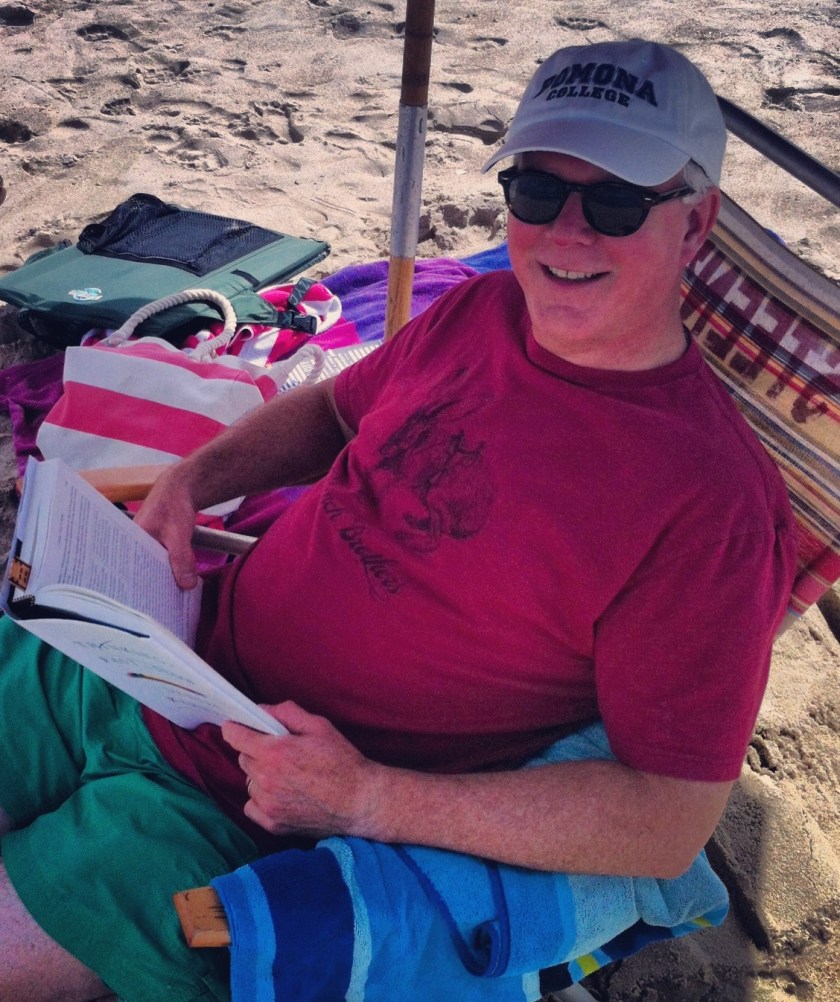
Author Fran Lebowitz once wrote, “Think before you speak.  Read before you think.” I’ve been thinking about reading recently, because I will be out of the office as I complete the final two weeks of my sabbatical and link that with some personal days off. I have the opinion that summer reading lists should be light, but that may simply be an excuse to read another baseball book.  Since this time is tied to my sabbatical, I’m going a bit more serious this August and I thought I’d share a few of the books which will be on night stand. (Regular readers can expect “mini reviews” in the coming weeks.) Bending the Future:  50 Ideas for the Next 50 Years of Historic Preservation in the United States (Edited by Max Page and Marla R. Miller) – This brand new work from the University of Massachusetts Press contains a wonderful introductory essay and then 50 short contributions from practitioners, academicians, journalists, community activists and more. I’m looking forward to digging into this work as one more …

Pabst Theatre

Historic theatres and the 21st Century community

(NOTE:  Two weeks ago, I presented the keynote address to the 40th annual meeting of the League of Historic American Theatres.  The following is an excerpt from my remarks — given from a personal perspective — about why these places mean so much to me and other Americans.) It is an honor to be here with so many individuals who work day-in and day-out to ensure that America’s historic theatres have a bright future. I think of your work — in part — as a form of storytelling, and I am so grateful for the work you do to tell the story of your special places.  Our efforts to identify and mark who we are is not only important to our history and our understanding of that history, but also to our understanding of the issues we face on a daily basis. The places we choose to preserve around the country tell us a great deal about who we are as a people.  Historic theatres are often beloved landmarks in our communities — places that …