All posts filed under: Rest in Peace

Remembrances of people – some famous, some family – who touched my life

Tom Brown

My favorite Tom Brown stories

We celebrated my father over the past four days before his burial next to my mother in Evergreen Cemetery.  Tom Brown was well-loved, and over those days we heard many stories full  of love, support, and humor. In the four-hour receiving line on Tuesday evening, the family was strategically stationed so that Joe and Carol – who live in Murfreesboro – could introduce people to my older brother Steve who lives in Sarasota.  Then Debbie and Mark, also from Murfreesboro, were at the end of the line so they could give Candice and me a heads up on who was on the way.  The grandkids (especially the older ones) then set up another receiving line near the casket. Every person from First Baptist Church (it seems) came, along with a good number of people who worship at my brother Joe’s church and my sister Carol’s church.  (These are Baptist – they are never content with just one church!)  The entire Murfreesboro Water Department, where my sister Debbie has worked for decades, came (leading me to …

R.I.P. Daddy, Tom, Granddaddy

Thomas Bearden Brown, after 90-plus years of a life exceptionally well lived, passed away earlier this morning. We will miss the laughter, wisdom, care and love of our father, father-in-law, and granddaddy more than can be expressed. Daddy learned from the best.  His father was a gregarious, loving man who never met a stranger.  His mother was gracious, thoughtful, hard-working, and fair.  Daddy had the best of those traits and if I don’t always exhibit them, it wasn’t for his lack of service as an example. Daddy believed in serving his country, and as a World War II veteran he’ll have a flag draped across his coffin next week.  A life-long New Deal Democrat, he believed in treating everyone fairly – whether they looked like you, thought like you, or held the same values as you.  He never de-humanized anyone, and when I last spoke with him less than two short weeks ago, he was lamenting the level of our political discourse.  Daddy could disagree with you, but he never disparaged you.  (Well, maybe he …

Tut Taylor

Tut Taylor, R.I.P.

This week we lost the third member of the Aereoplane Band when “The Flatpickin’ Dobro Man” Tut Taylor passed away at age 91. Taylor, along with the late Vassar Clements, Norman Blake, and Randy Scruggs made up the Aereoplane Band that helped the late John Hartford record his ground-breaking album Aereo-Plain – which I once highlighted as my favorite album of all time.  (And yes, the name of the album is spelled differently from the title cut.  Hey, it was the 70s.)  I heard Tut play with Hartford’s band (Earl Scruggs opened for Hartford, if you can believe that) about 40 years ago, and I most recently heard him at MerleFest, where he was a mainstay. Much has been written about Taylor’s unique style of playing the Dobro with a flatpick, as opposed to the finger picks used by every well-known Dobro player from Uncle Josh Graves to Jerry Douglas.  Tut Taylor was unique, and his bluesy style fit well with the fiddling of Vassar Clements and the stellar guitar work of Norman Blake.  This …

Let’s Play Two!

“It’s a beautiful day, let’s play two.” Did any words sum up the joy and optimism of sports better than the simple mantra of “Mr. Cub” – Ernie Banks – who passed away yesterday? Banks was playing in the “friendly confines of Wrigley Field” for the first major league baseball game I ever saw in person, against the eventual world-champion St. Louis Cardinals in 1963. The Cubs of my youth were awful.  Heck, the Cubs of my entire life (and several other lifetimes) have been pretty much awful. But Banks was eternally optimistic about the club’s chances.  As President Obama said when presenting Banks with the Presidential Medal of Freedom in 2013, Ernie’s cheer and optimism that the Cubs would go all the way was “… serious belief. That is something that even a White Sox fan like me can respect.” Banks was the original power-hitting shortstop and one of the first African-American stars in the major leagues. If ever there is a case to be made for asterisks in the record book, it is the …

Pete Seeger, R.I.P.

Pete Seeger, 1919 – 2014. A life well-lived and a perfect example of how a banjo and a man of his convictions can change the world. If I had a hammer I’d hammer in the morning I’d hammer in the evening all over this land I’d hammer out danger, I’d hammer out warning I’d hammer out love between my brothers and my sisters All over this land If I had a bell I’d ring it in the morning I’d ring it in the evening all over this land I’d ring our danger, I’d ring out warning I’d ring out love between my brothers and my sisters All over this land If I had a song I’d sing it in the morning I’d sing it in the evening all over this land I’d sing out danger, I’d sing out warning I’d sing out love between my sisters and my brothers All over this land When I’ve got a hammer, and I’ve got a bell And I’ve got a song to sing all over this land It’s …

R.I.P. The Earl of Baltimore and Stan the Man

Baseball lost two members of the Hall of Fame this past weekend:  Earl Weaver and Stan Musial. There’s much that could – and has – been written about these two baseball greats.  I’ve linked to Joe Posnanski’s blogs above, but I could just as easily have sent you to read Tom Boswell’s column on The Earl of Baltimore or George Vecsey on Stan the Man. I won’t go on about Weaver’s baseball genius – decades before Moneyball made his theories all the rage – or Musial’s quiet consistency – to the point where he was widely considered to be the best ballplayer of the postwar decade. No, I’m going to focus on their nicknames. Baseball has the best nicknames. Period.  In Why Is Baseball So Much Better Than Football, Boswell touches on the topic in multiple ways, but he sums it up here: Reason #85:  Baseball nicknames go on forever – because we feel we know so many player intimately.  Football monikers run out fast.  We just don’t know that many of them as people. Then …

Doc Watson, R.I.P.

Doc Watson, who passed away today at age 89, was among the most authentic, talented, and influential musicians to emerge from the 60s folk music revival. He was also the reason I play guitar, attempting to flatpick fiddle tunes or pick out a lead note or two on traditional bluegrass and country songs. Of course, I have to get in line behind tens of thousands — if not more — guitarists who would make the same claim. So read the New York Times story I’ve linked at the top of the post if you are looking for Doc’s history, background, and influence.  This is a personal post. I was in high school in the early 70s, learning to play guitar and noodling around with music by singer songwriters and their ilk.  Then one day I brought home this funny looking album — Will the Circle Be Unbroken — and my life was changed forever. Here’s how I described that moment in a More to Come… post in 2009: “In fact, I suspect that the first …

Earl Scruggs, R.I.P.

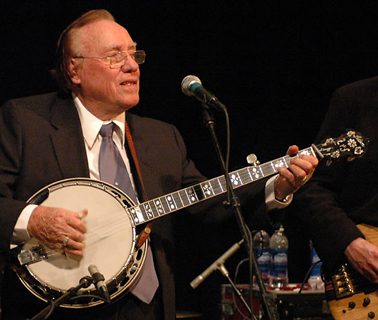
Earl. That’s the only name you had to say in bluegrass circles and everyone immediately knew the subject.  Jimmy Martin could open the seminal Will the Circle Be Unbroken album by saying “Earl never did do that,” and you knew exactly what he meant. Few people define an instrument and a musical style so completely as Earl Scruggs, who passed away today at age 88, did for bluegrass banjo.  Bill Monroe will forever be known as the Father of Bluegrass, but it wasn’t until he brought a young Earl Scruggs on the stage of the Ryman Auditorium for a Grand Ole Opry show in 1945 that the full sound of bluegrass was realized.  I’ll let Richard Smith, author of Can’t You Hear Me Calling:  The Life of Bill Monroe, pick up the story from here. “For Earl’s first night on the Opry, Monroe picked out a fast number that would show off the newcomer’s dazzling style — “White House Blues,” an old song recounting the 1901 William McKinley assassination.  It was a perfect selection.  Scruggs …

Lena Horne, RIP

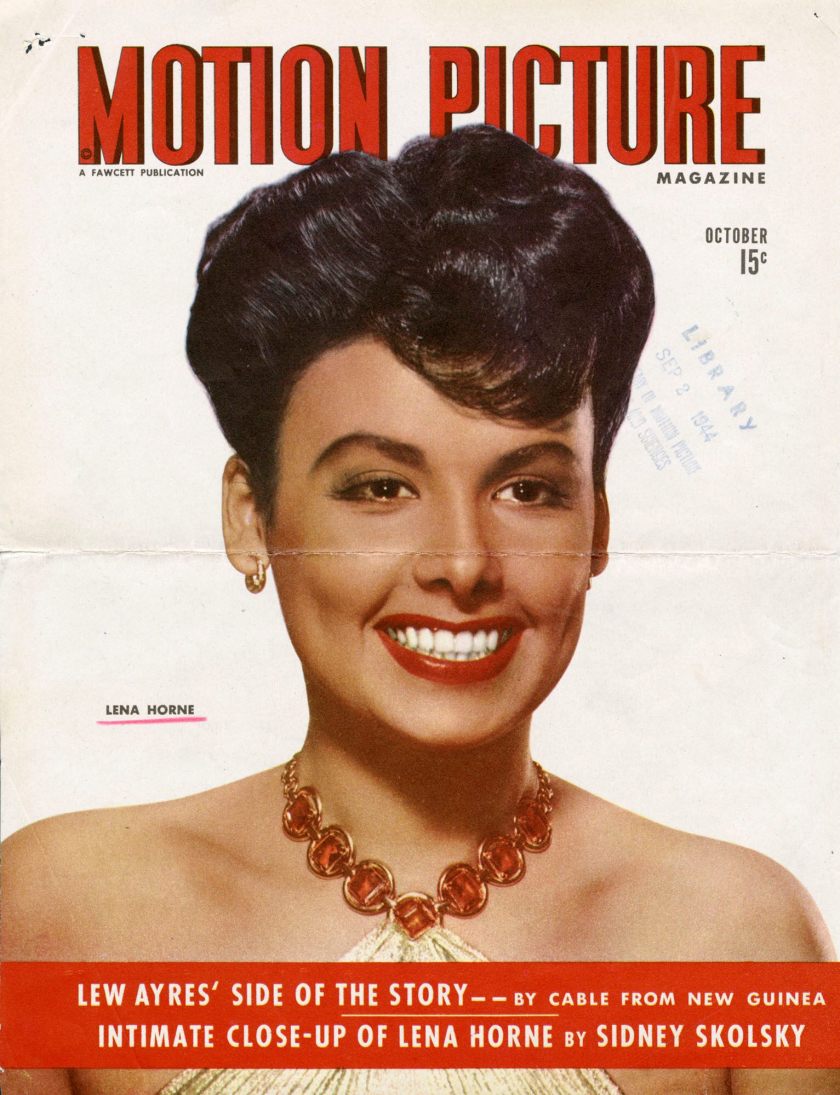
One of my father’s favorite singers, Lena Horne, passed away yesterday at age 92.  My father can’t carry a tune in a bucket and he can play only two songs on the piano – St. Louis Blues and Teddy Wilson’s Body and Soul – but my father had a great collection of 78s from the pre-war era and he knows his jazz singers.  TB was so right about Lena Horne. As the web site The Music’s Over but the Songs Live On noted, Lena Horne was a popular and influential jazz vocalist and actress who broke many color barriers over a career that spanned nearly seven decades, and her 1943 recording of “Stormy Weather” is arguably the most recognized song of its era.  Horne was not only a multi-Grammy award-winning singer, she was also an award-winning star of stage, screen and television. She was also an activist during the Civil Rights era, which is where I encountered her after the introduction by my father.  The New York Times obituary recalled the difficulties she faced as …

Good Friday 2010

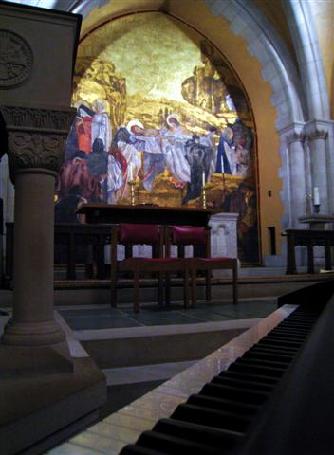
One of the treasures of Washington is the National Cathedral.  Earlier this evening Candice, Andrew, Claire and I gathered together in the Cathedral’s St. Joseph of Arimathea Chapel for the moving and beautiful Good Friday meditation. There is no more appropriate place to spend Good Friday than the vault-like chapel deep in the heart of the Cathedral named for Joseph of Arimathea, the rich man who went to Pilate and asked for the body of Jesus in order to provide a proper burial in his own new tomb.  The stone and wood space is made for the chants, solo cello, and Taize music of this service.  The sounds have a special resonance that envelops the soul. Cathedral Musical Director Michael McCarthy has structured a beautifully meditative service for this evening, beginning with Gita Ladd playing the groaning Sonata for Cello solo, Op. 28 by Eugene Ysaye.   The plainsong chant of Psalm 40 by the gentlemen of the Cathedral Singers begins in the traditional fashion, yet two-thirds of the way through McCarthy underpins the plainsong with …