All posts tagged: Historic Preservation

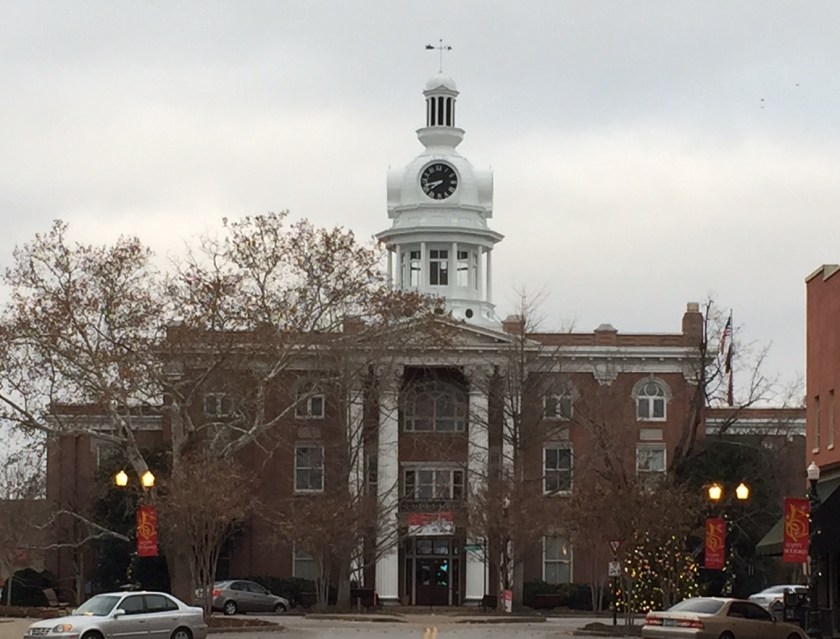
Rutherford County Courthouse

Places and perspectives

Are you afraid? It was an era when those protesting for civil rights had moved from nonviolent techniques to more confrontational stances, and the nightly news carried stories and photos of clashes in cities across the country between the police and protesters. The tribal nature of our communities was coming into focus for everyone to see. While we lived on Main Street, our neighborhood was mixed both economically and racially. And here I was, playing pickup basketball on a local court, when a player on the opposing team asked me that question. He wanted me to acknowledge that I was the only person scuffling around on the asphalt, shooting at hoops with torn nets and battered backboards, who was not African American. The question insinuated that I should feel out of place and uncomfortable and was followed by another: Don’t you feel scared? Playing on the local courts as a young teenager with whatever group of neighborhood kids came along was just what I did. “No,” I replied. I knew most of these guys, and …

COVID-19 Claims the Life of the Last Surviving Monuments Woman

Motoko Fujishiro Huthwaite had — by any account — an amazing life. Born in Boston on August 24, 1927 to Japanese citizens, her father was a prominent dentist and professor at Harvard. As noted on the Monuments Men Foundation website: “The family was befriended by Langdon Warner, the legendary scholar of Asian art and future Monuments Man in Japan following the end of World War II. The Fujishiro household became the center of the Japanese community in Cambridge, Massachusetts. Japanese students, professors, and scholars from the many universities surrounding Boston would flock to parties expertly hosted by Motoko’s mother.” She and her mother and brother were forced to relocate to Japan following the attack on Pearl Harbor, however, while her father was arrested for espionage and put into an internment camp. He later returned to Tokyo a broken man. Motoko survived the war and became one of 27 women who worked for the Arts and Monuments Commission — popularly known as the Monuments Men. After the war, she reinstated her United States citizenship, lived in …

Belonging

During this pandemic, many of us are feeling vulnerable. Some may be wondering if or where we belong in a world that has dramatically changed. Brené Brown says that our belonging to each other can’t be lost, but it can be forgotten. She came to understand the simple yet profound answer to the question of the difference between fitting in and belonging out of a conversation with a group of middle school students. “Fitting in is when you want to be a part of something” they explained. “Belonging is when others want you.” With my background, Brené Brown’s thoughts on vulnerability and belonging led me to think about history, storytelling, and our use of selective memory to keep others out of our narrative, to ensure they don’t belong. If we confront our feelings during this pandemic, we may come to realize the ways that we have made others feel vulnerable in the past, perhaps by omitting or erasing their stories as if they don’t belong. History isn’t what happened. It is a story about what happened. …

Saving the past has a past

It is surprising that a field that has focused so much on the preservation of history has an unfortunate blind spot to its own history. Historic preservation is one of the longest-lasting examples of community development, land use reform, and public history in the United States. The stories of the past efforts of our fellow citizens to ensure that parts of our history are with us today and tomorrow are varied and fascinating. Yet many, both inside and outside preservation, tell themselves a simplistic and usually inaccurate story of how we came to value parts of our past in a country that too often only values the new and what’s over the horizon. The recently released second edition of Giving Preservation a History, edited by Randall Mason and Max Page, is a strong attempt to reverse our trend at historical amnesia in the preservation field. Through seven essays retained from the first edition, six new essays prepared for the 2020 book, and two concluding chapters to wrap both works together, the editors have endeavored to put forward …

Uplifting Preservation

There are times when the personal takes on global implications. Last week was one of those times. It began when I discovered that a former National Trust colleague, Raina Regan, has begun a fascinating self-help project for preservationists. Here is Raina’s description of this work: “One of my goals for 2019 was to be more intentional with my free time, which resulted in a rekindled love of reading. I was really drawn to self-help books, and according to my count, I’ve read two dozen of them in 2019. As I read each one, I considered how they would apply to me and my work in historic preservation. At some point, I decided I wanted to take what I’ve learned and share it more broadly with the world—and Uplifting Preservation was born.“ Uplifting Preservation is a once-a-month newsletter on the Tiny Letter platform where Raina shares her perspective on a specific book, such as Brené Brown’s Daring Greatly: How the Courage to Be Vulnerable Transforms the Way We Live, Love, Parent, and Lead, and its relevant concepts …

Fall in downtown Silver Spring

Beauty and design

Former Charleston, South Carolina, mayor Joe Riley has spoken eloquently about beauty and civic design. In an Architect magazine article on the occasion of the mayor’s retirement after 40 years in office, author Wayne Curtis quoted Riley as saying,  “Often architecture is thought elitist, that you’ve got to be schooled or have a special interest. But not long after I was elected, I’d see visitors in town. They looked like they were retired blue-collar workers, and you’d see them admiring buildings.” Riley ends with one of his core beliefs. “Beauty has no economic litmus test. It’s a basic human need and instinct.” I’ve been thinking of Joe Riley’s belief in the ability of beauty and good civic design to uplift our communities* as I have walked through our downtown in recent weeks. There is a great deal of construction activity underway in Silver Spring, but I am hard-pressed to find too many examples of fine urban design. One challenge is that much of the future of downtown Silver Spring was turned over to a development …