
Servant leadership
“The first responsibility of a leader is to define reality. The last is to say thank you. In between, the leader is a servant.”
“The first responsibility of a leader is to define reality. The last is to say thank you. In between, the leader is a servant.”

It is surprising that a field that has focused so much on the preservation of history has an unfortunate blind spot to its own history. Historic preservation is one of the longest-lasting examples of community development, land use reform, and public history in the United States. The stories of the past efforts of our fellow citizens to ensure that parts of our history are with us today and tomorrow are varied and fascinating. Yet many, both inside and outside preservation, tell themselves a simplistic and usually inaccurate story of how we came to value parts of our past in a country that too often only values the new and what’s over the horizon. The recently released second edition of Giving Preservation a History, edited by Randall Mason and Max Page, is a strong attempt to reverse our trend at historical amnesia in the preservation field. Through seven essays retained from the first edition, six new essays prepared for the 2020 book, and two concluding chapters to wrap both works together, the editors have endeavored to put forward …

There are times when the personal takes on global implications. Last week was one of those times. It began when I discovered that a former National Trust colleague, Raina Regan, has begun a fascinating self-help project for preservationists. Here is Raina’s description of this work: “One of my goals for 2019 was to be more intentional with my free time, which resulted in a rekindled love of reading. I was really drawn to self-help books, and according to my count, I’ve read two dozen of them in 2019. As I read each one, I considered how they would apply to me and my work in historic preservation. At some point, I decided I wanted to take what I’ve learned and share it more broadly with the world—and Uplifting Preservation was born.“ Uplifting Preservation is a once-a-month newsletter on the Tiny Letter platform where Raina shares her perspective on a specific book, such as Brené Brown’s Daring Greatly: How the Courage to Be Vulnerable Transforms the Way We Live, Love, Parent, and Lead, and its relevant concepts …
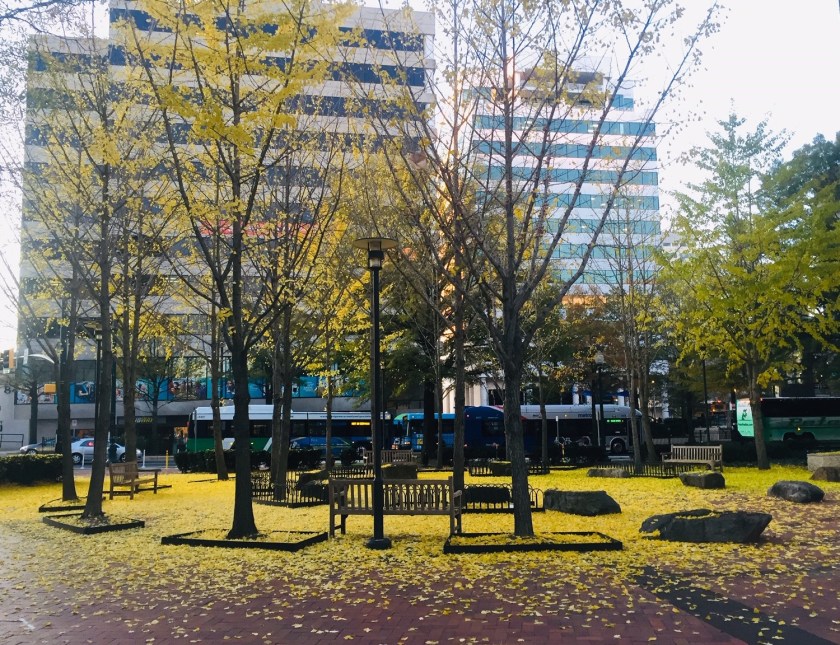
Former Charleston, South Carolina, mayor Joe Riley has spoken eloquently about beauty and civic design. In an Architect magazine article on the occasion of the mayor’s retirement after 40 years in office, author Wayne Curtis quoted Riley as saying, “Often architecture is thought elitist, that you’ve got to be schooled or have a special interest. But not long after I was elected, I’d see visitors in town. They looked like they were retired blue-collar workers, and you’d see them admiring buildings.” Riley ends with one of his core beliefs. “Beauty has no economic litmus test. It’s a basic human need and instinct.” I’ve been thinking of Joe Riley’s belief in the ability of beauty and good civic design to uplift our communities* as I have walked through our downtown in recent weeks. There is a great deal of construction activity underway in Silver Spring, but I am hard-pressed to find too many examples of fine urban design. One challenge is that much of the future of downtown Silver Spring was turned over to a development …

(Note: Slightly revised versions of this appreciation ran in the National Trust’s Forum newsletter, on LinkedIn, and on social media pages for Preservation Virginia and other preservation organization.) Former Virginia Governor Gerald L. Baliles, who passed away on October 29th at age 79, has been appropriately recognized as a quiet but effective leader. His “boldly cautious” style was credited for gains in increasing the number of women and minorities in statewide leadership positions, as well as for increased support for transportation and the environment. But the Jerry Baliles I remember was also one of the most effective advocates for historic preservation at a time when development pressures in Virginia were pushing forward at the expense of its past. His leadership led to much needed changes at the state level that played an important role in all that has happened to save the best of Virginia’s past in the almost three decades since the end of his term as governor in 1990. During his campaign for governor, Jerry met with representatives of the state’s preservation community. …

A dear friend passed away. She lived with a sense of individual wonder, the power of hope, and the vivid but questing belief in a future for the globe.

“Connection to place is very important to me, and I learned that by walking the streets of Franklin and Murfreesboro, where I grew up. History was all around me . . . and I’ve always wanted to do something about connecting the past to today.” When PreserveCast host Nick Redding began our recent conversation on the award-winning Preservation Maryland podcast with a question about my path to preservation, my thoughts went to my childhood home, grandmother, and a favorite downtown theatre. That podcast, looking at my work at the National Trust for Historic Preservation and more, can now be found on the PreserveCast website. In a thirty minute interview, Nick and I explore not only how I became a preservationist, but also the various jobs that led to my serving as the Chief Preservation Officer at the National Trust from 2010 until I stepped down from the position at the end of March 2019. “Somebody said that ‘Chief Preservation Officer’ is one of the great titles in the preservation field. Its not as good as …

Leaders don’t create followers, they create more leaders.
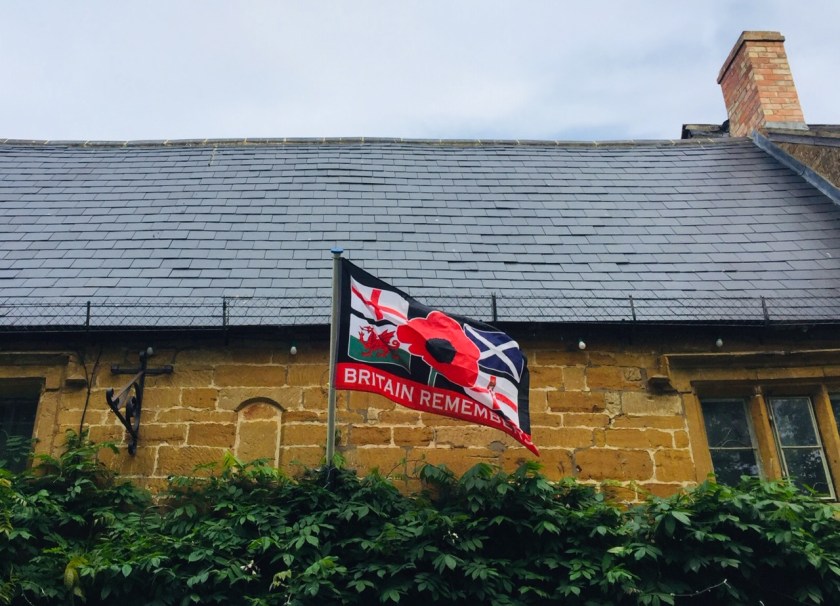
Seventy-five years ago today, almost 160,000 troops from the United Kingdom, Canada, and the United States — including smaller contingents from Australia, Belgium, Czechoslovakia, Denmark, France, Greece, the Netherlands, New Zealand, Norway and Poland — invaded Nazi-occupied Europe on the beaches of Normandy. Over the next three months of fighting, 209,000 Allied troops would die before the Nazis were pushed back across the Seine. June 6, 1944 — D-Day — should never be forgotten. It was a time when the countries of the world came together to combat bigotry, racism, and hatred. Many men and women made the ultimate sacrifice in that fight. To be in Britain for the 75th anniversary is a reminder of our better natures. We began to see the remembrances of the anniversary as we stepped off the bus in the small Cotswald village of Chipping Campden last week. There, in the center of this beautiful High Street, was a small World War I memorial covered with poppies, the now almost-universal symbol of remembrance for those killed in war. This week, …

Eight days before the revered architect I.M. Pei passed away at 102 years of age, I had the opportunity to visit one of his last—and more remote—commissions: the Miho Museum in Japan. Standing amidst the Shiga mountains in a protected nature preserve, Pei’s Miho Museum, which opened in 1997, fits in well with the other modern yet very accessible works of this master who left an indelible mark on the world before his passing on May 16th of this year. Pulitzer Prize-winning architectural historian and author Paul Goldberger wrote a lovely obituary for Pei in the New York Times, capturing the architect’s expansive work and spirit. When thinking of Pei, my mind naturally turns to the beautiful East Building of the National Gallery of Art in Washington, D.C., a museum I’ve visited many times. One feature that always brings a smile to my face wasn’t exactly designed by Pei. Etched into the stone is a listing of all those who made the East Building possible—politicians, National Gallery leadership, architects, and more. At one point the beautiful …

