All posts tagged: Historic Preservation

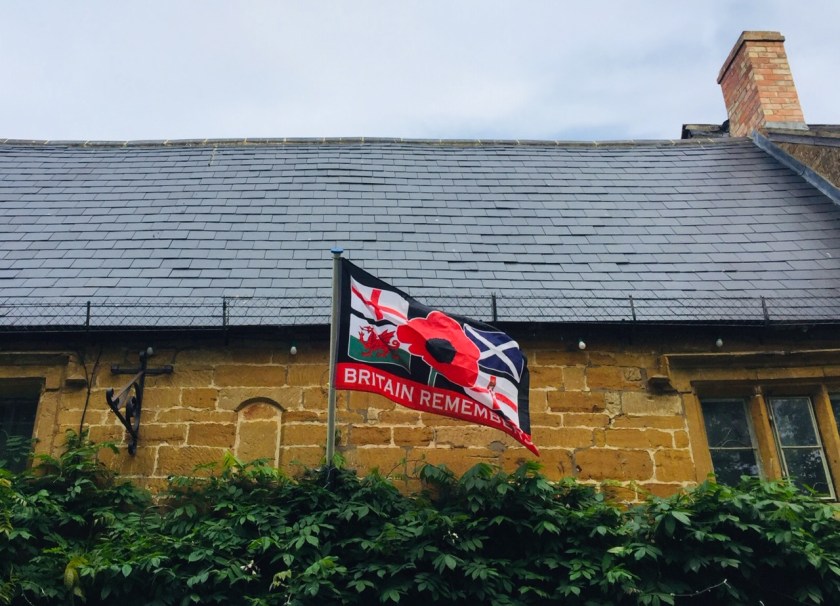
Britain remembers flag

Remembering D-Day

Seventy-five years ago today, almost 160,000 troops from the United Kingdom, Canada, and the United States — including smaller contingents from Australia, Belgium, Czechoslovakia, Denmark, France, Greece, the Netherlands, New Zealand, Norway and Poland — invaded Nazi-occupied Europe on the beaches of Normandy.  Over the next three months of fighting, 209,000 Allied troops would die before the Nazis were pushed back across the Seine. June 6, 1944 — D-Day — should never be forgotten. It was a time when the countries of the world came together to combat bigotry, racism, and hatred.  Many men and women made the ultimate sacrifice in that fight. To be in Britain for the 75th anniversary is a reminder of our better natures.  We began to see the remembrances of the anniversary as we stepped off the bus in the small Cotswald village of Chipping Campden last week.  There, in the center of this beautiful High Street, was a small World War I memorial covered with poppies, the now almost-universal symbol of remembrance for those killed in war. This week, …

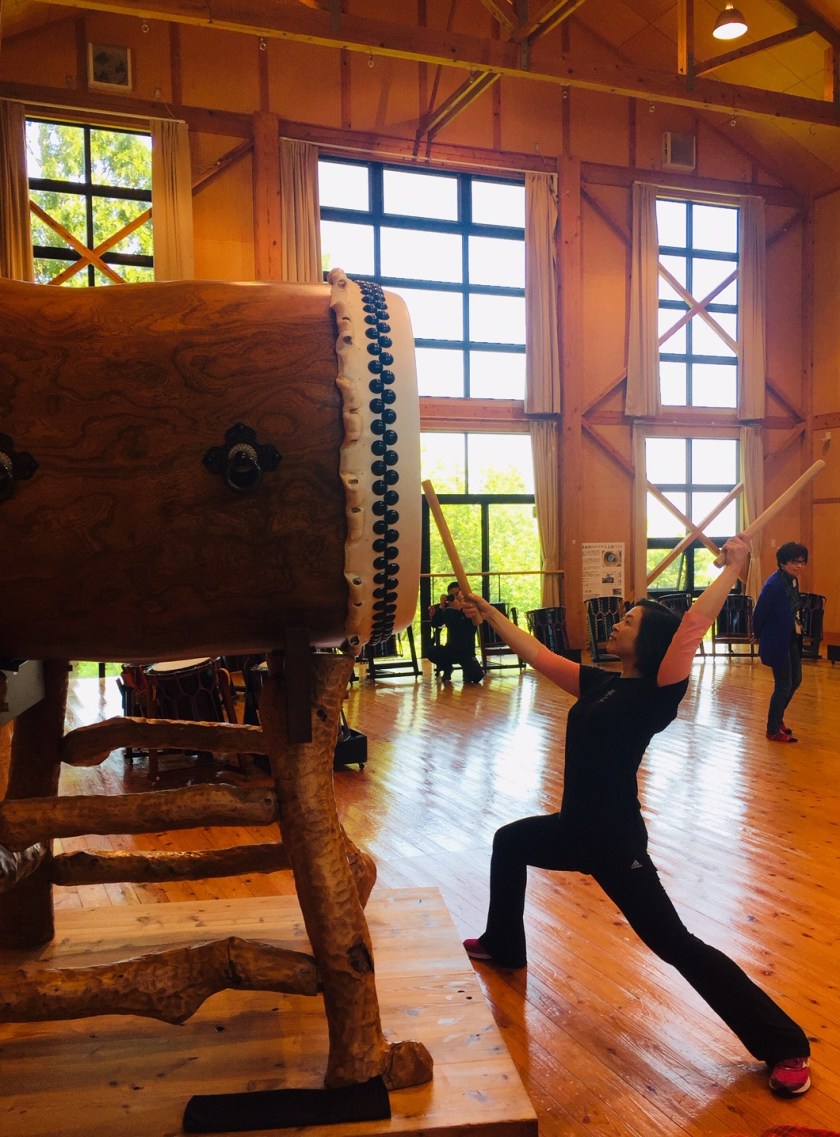
Miho Museum entrance

I.M. Pei, Rest in Peace

Eight days before the revered architect I.M. Pei passed away at 102 years of age, I had the opportunity to visit one of his last—and more remote—commissions:  the Miho Museum in Japan. Standing amidst the Shiga mountains in a protected nature preserve, Pei’s Miho Museum, which opened in 1997, fits in well with the other modern yet very accessible works of this master who left an indelible mark on the world before his passing on May 16th of this year. Pulitzer Prize-winning architectural historian and author Paul Goldberger wrote a lovely obituary for Pei in the New York Times, capturing  the architect’s expansive work and spirit.  When thinking of Pei, my mind naturally turns to the beautiful East Building of the National Gallery of Art in Washington, D.C., a museum I’ve visited many times.  One feature that always brings a smile to my face wasn’t exactly designed by Pei.  Etched into the stone is a listing of all those who made the East Building possible—politicians, National Gallery leadership, architects, and more.  At one point the beautiful …

Hiroshima 1945 / 2019

Pearl Harbor. Normandy Beach. Hiroshima. Names, places, memories, and lessons we should never forget. Last week I was moved beyond words by time spent at the Hiroshima Peace Memorial Garden and Museum in Japan. In fundamental ways the experience mirrored my reactions during visits in recent years to Pearl Harbor and Normandy Beach. The world at the time of those earlier visits seemed more stable than it does in 2019. Just a few years ago we didn’t have out-of-control individuals in positions of immense power in the United States; individuals threatening to use nuclear weapons against other nations and people just because the capability exists. Instead, we had leaders who sought, at least at some fundamental levels, to try and unite us as a people and as a world. There seemed to be adults in charge who had the memories to understand the horror to humankind of nuclear war. As John Hersey, the author of the landmark 1946 piece on Hiroshima in The New Yorker, once wrote: What has kept the world safe from the …

Ants

Move in traffic with good sense and prudence

Who knew that Pope Francis was an urbanist? I’m not a Catholic and only occasionally follow news out of the Vatican, but I was taken by reports that Pope Francis had commented on driving habits during his most recent New Year’s Eve homily. As reported in the press, Francis — who is also the Bishop of Rome — included the following in his remarks: “’I feel gratitude in my soul, thinking about the people who live with open hearts in the city,’ Francis said.  As examples of that spirit, the pope began with a for-instance that will echo the frustrations of many a Roman resident – ‘those people,’ he said, ‘who move in traffic with good sense and prudence.’ By consensus, the poor state of maintenance on Rome’s roads, the lack of accessible public parking, and the city’s paralyzing traffic, are among the top complaints from locals…. The pope then went on to cite other examples of heroism from the silent majority.  He praised ‘those who respect public places, and report things that aren’t right; …

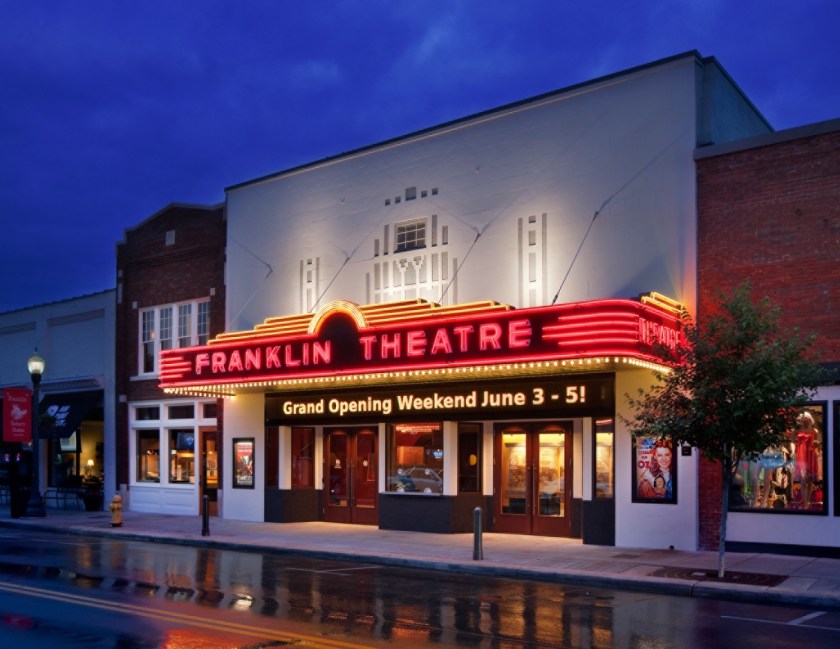
Restored Franklin Theatre

Legacy and promise

NOTE: This post first appeared on the Preservation Leadership Forum blog.  It is adapted from remarks I made at the February 23, 2019, National Trust for Historic Preservation Board of Trustees meeting, my last Board meeting after more than two decades with the National Trust. Over the past 22 years, I made it a practice to regularly reflect on both the legacy and the promise of the National Trust for Historic Preservation. We were founded by Congressional Charter after America’s leaders had seen the destruction that war could inflict not only on people but also on a nation’s culture and heritage. Our founding chairman, David Finley, was one of the famous Monuments Men who risked their lives to save the cultural patrimony of Europe during World War II. Bill Murtagh, an early predecessor of mine in senior management, went on to a distinguished career in preservation as the first Keeper of the National Register of Historic Places, establishing the tool to tell America’s story. Clearly, we stand on the shoulders of giants. The National Trust …

Change is the Only Constant

March is one of my favorite times of the year.  The longest month—February—is past. Winter is nearing an end here in DC. Baseball players have reported to spring training camps. Hope springs eternal. Speaking of baseball, I have my own spring training ritual every year. Up first is a viewing of Bull Durham—the best baseball movie ever—followed by reading a new baseball book.  Together the two get me in the mood for the season.  I can report checking off both of those training regimens this year well before Opening Day. I actually read two baseball books recently, although one may not count because it is entitled The Is Not Baseball Book.  You have to love a book which begins with a first chapter of “Sports Is Not a Metaphor.  It’s a Symbol.”  Afterwards it jumps into all matter of things, including pataphysical management systems leading to “self-learning” teams.  That’s for another time. It is the second book, Smart Baseball:  The Story Behind the Old Stats that are Ruining the Game, The New Ones that are …

The Deep Rhythms of Life

If you are a hammer, then everything looks like a nail. I try and remember that old adage when I consider things I read or hear.  Given my career, training and perspective, I often see historical overtones, even—perhaps—when they don’t exist.  So with that grain of salt, I’ll note that over the course of a recent weekend, I took part in three conversations that all struck me as narratives somehow important and related. The first was not really a conversation. But it felt as if I was on the listening end of one as I went on a Friday night to hear Lucinda Williams and the Drive By Truckers in concert.  Both were great, but it was the music and between-songs patter of Lucinda Williams—her stories, if you will—that made me think about the way in which we can break out of our pasts and stand out from what is expected. Williams has been writing and performing emotionally devastating lyrics for four decades. But she also takes courageous stands against racism, sexism, and hate in …