All posts tagged: Monday Musings

Congressman John Buchanan

Have the courage to change your mind

By the time I first met John Buchanan, he had finished his eight terms in the U.S. Congress as a Republican representing Birmingham, Alabama. This third generation Baptist minister was long past the time when he was targeted for defeat in 1980 by the Moral Majority.  He was even past his term as the founding chairman of the liberal lobbying group People for the American Way.  When I met John and his wife Betty in the 1990s, they were the loving and selfless grandparents to a granddaughter who was in a youth group with our twins.  However, their intellect, courage, sense of public service, and generous spirit were still very much in evidence in everything they touched. Betty died in 2011, and I was thinking about our connections and their lives after I heard the news of John’s passing on March 5th at the age of 89.  John had the courage to change his mind, even at the cost of his political future.  First elected in the Republican wave of 1964, following the passage of …

A Wrinkle in Time

I am still every age that I have been

It was a big week in our household, as we acquired a new hip and celebrated a birthday.*  As a small child, you may have received a new puppy on your special day.  Others years may bring clothes for college or gifts for the new apartment. Later, you might rejoice with a new child or a special trip abroad. On occasion one might celebrate a birthday with a broken shoulder.  Now that we’re in the new hip stage (for a second time), I’m comforted by this thought of the author Madeleine L’Engle: “I am still every age that I have been. Because I was once a child, I am always a child. Because I was once a searching adolescent, given to moods and ecstasies, these are still part of me, and always will be… This does not mean that I ought to be trapped or enclosed in any of these ages…the delayed adolescent, the childish adult, but that they are in me to be drawn on; to forget is a form of suicide… Far too …

Writer's Block

Writing, briefly. Writing well.

I am a frustrated writer.  Not the kind who needs to work on The Great American Novel (or TGAN)*.  If I wanted to write fiction — great or otherwise — there are plenty of models to follow, such as Flannery O’Connor’s habit of three-hours of writing first thing every morning, or advice to be found in places like Annie Dillard’s eloquent The Writing Life  and Cheryl Strayed’s direct and somewhat salty response (be forewarned) to a young aspiring writer.  No, I want to be able to write essays, blog posts, magazine articles, reports, letters, and speeches that pull people in, make them care about the topic at hand, show a bit of my personality, and only say what needs to be said and nothing more. If you have similar aspirations, you may not want to take advice about writing from a computer programmer, but let me suggest that Paul Graham — a programmer, writer, and investor who helped co-found Y-Combinator, a new type of startup investment firm — should be the exception. In a tiny …

Passions

Passion is one universal key to what moves the world forward, yet our passions are the part of us that doesn’t require approval from others.  In fact, the search for prestige through work often gets in the way of our passion.  As Y-Combinator founder Paul Graham notes, “Prestige is like a powerful magnet that warps even your beliefs about what you enjoy. It causes you to work not on what you like, but what you’d like to like.”  I think of passion as that which takes you out of your daily life, that lets you feel closest to your truest self.  Graham describes it as “what doesn’t seem like work to you?” even if it is your life’s work. These insights led me to consider what we could learn about each other if we truly understood the passions that let us feel closest to our truest self. Passions may be simple things. I can wander around the desks in our part of the office and make guesses about the passions of my colleagues.  Sports cut across …

February

“Response-able”

I admit to being one who feels that February is the longest month of the year.  When that feeling begins to take hold, I remember that I can fight back. Respond.  Be proactive.  Habit #1 in Stephen Covey’s best-seller about the seven habits of highly effective people is to be proactive.  It is about taking responsibility for your life. “You can’t keep blaming everything on your parents or grandparents. Proactive people recognize that they are “response-able.” They don’t blame genetics, circumstances, conditions, or conditioning for their behavior. They know they choose their behavior. Reactive people, on the other hand, are often affected by their physical environment. They find external sources to blame for their behavior. If the weather is good, they feel good. If it isn’t, it affects their attitude and performance, and they blame the weather. All of these external forces act as stimuli that we respond to. Between the stimulus and the response is your greatest power — you have the freedom to choose your response.” (emphasis added) Yesterday’s weather in the DC …

Beach Reading

Read when it is inconvenient

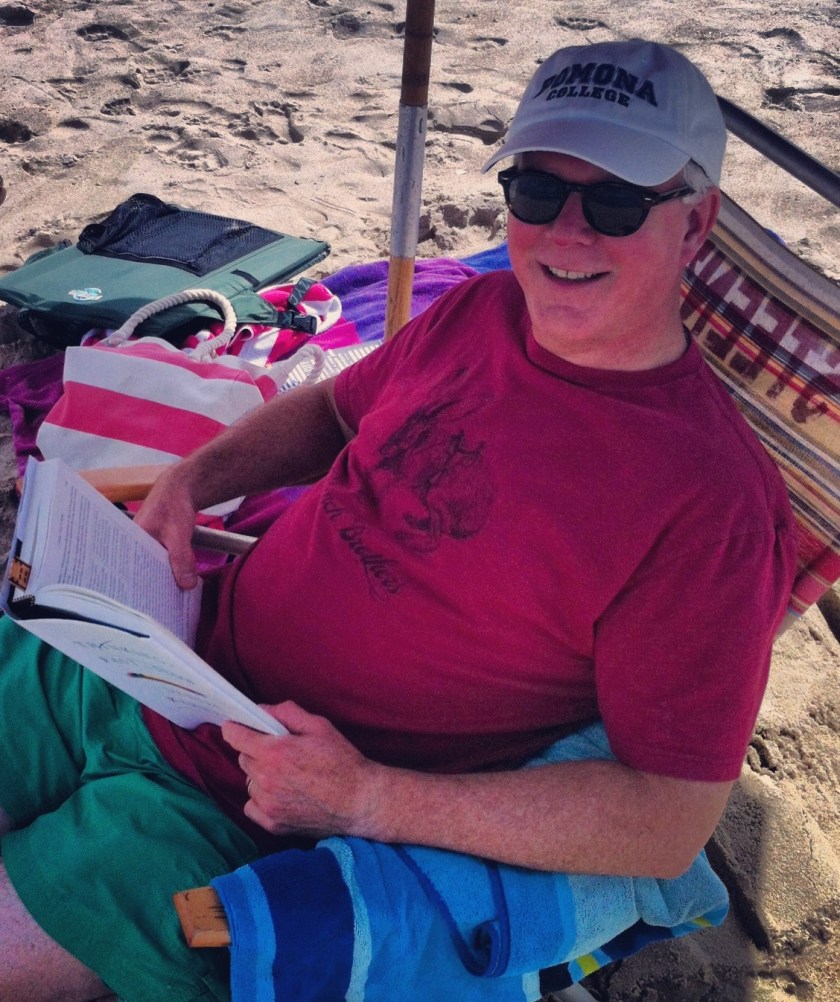
For the past week I’ve been carting around the new Ron Chernow biography of Ulysses Grant.  Chernow (the Pulitzer Prize-winning biographer of George Washington and Alexander Hamilton) and Grant were companions on my cross-country trip last week and they will be companions on my Metro ride for at least another week or two.  (Did I mention that it was 900+ pages?) As the son and brother of librarians, reading has been a large part of my life for more than sixty years.  However, when I returned from sabbatical in 2016 I made a renewed commitment to drop some of the things that had begun taking up large portions of my life (like television) and replace those time-wasters with reading.  (This is one reason I’m pretty clueless when it comes to pop cultural references.)  The most frequent question I get about these Monday blog posts is “how do you find time to read so much.”  Well, I read almost any chance I get.  I read when it is convenient, and perhaps when it isn’t. I recently …

Running Dog Guitar Ought-3

Practicing

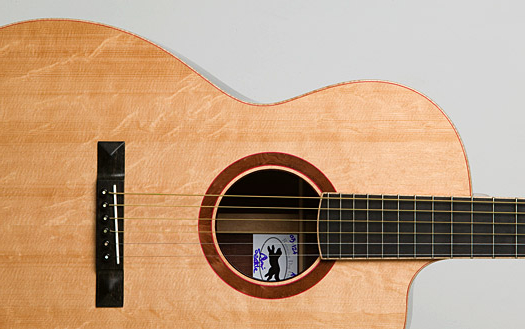
Over the holidays I returned to a book I first read some ten years ago.  Glenn Kurtz’s Practicing:  A Musician’s Return to Music is, in its simplest form, a memoir of a young child prodigy on the classical guitar who attends the prestigious New England Conservatory of Music and then quits playing in his early 20s when he realizes he won’t be the next Segovia.  Fifteen years and a career change later, Kurtz returns to the guitar and finds, in the process, a richer love for music. But like all good memoirs, Practicing is so much more than a simple life’s story. Kurtz has been practicing since he was eight years old, but it isn’t until he returns after his hiatus that he begins to understand all the richness of the various aspects of preparing for performance, or life. “Practicing is training; practicing is meditation and therapy. But before any of these, practicing is a story you tell yourself, a bildungsroman, a tale of education and self-realization. For the fingers as for the mind, practicing …

Responding to Anger

Our recent national conversations too often seem soaked in anger. I don’t know anyone who hasn’t become angry.  It is a trait we all seem to share.  What differs is how we respond to anger:  our own and others. Over the winter holiday, our family visited the National Museum of African American History and Culture.  Last Friday, our divisional management team toured the Mere Distinction of Colour exhibit at the National Trust Historic Site Montpelier.  Both cultural institutions showcased the many ways a people oppressed have responded to anger held against them by others as well as that held inside themselves. While at Montpelier, I picked up Michael Eric Dyson’s book Tears We Cannot Stop, a powerful call for recognition and redemption which brims with this Baptist preacher’s righteous anger. In her collection of essays No Time to Spare:  Thinking About What Matters, Ursula K. Le Guin has a two-part piece on anger. The first half looks at public anger, while the second focuses on our private anger.  I thought of the first in the …

I’m Afraid Every Day…and I Jump Anyway

A friend sent out a recent Tedx Pasadena Talk by a friend of hers entitled Making the Jump:  The Year of No Fear.  The speaker, Grace Killelea, begins with a very funny story of how — at age 52 and weighing 247 pounds — she decided to go skydiving to begin a “Year of No Fear.”  In spite of the fact that she was a Senior VP for a Fortune 50 company, she had decided she needed to undertake a personal “Year of No Fear” because she was “afraid she would always feel afraid.”  Research shows that she is not alone. Killelea goes on to ask, “What would a jump look like for you?”  Based on the comments to the video, fears range from personal relationships, to job and work satisfaction, to the current political climate.  Killelea’s point is that we all have our fears.  Facing our fears “doesn’t have to be big and bold, like jumping out of a plane.”  What’s important is that you “identify (your jump), and then decide what’s keeping you …

Resolutions

Several years ago I stopped making New Years’ resolutions.  A recent New York Times article on making and keeping resolutions noted that one-third of our resolutions don’t make it to the end of January, while another Times article suggested that only 10% of resolutions are fully met by year’s end.  I’m proud to say I’ve kept my particular resolution since 2014! What I did in 2014 was to set seven rules for how I wanted to live for the next third of my life, and I recently added an eighth.  Because they are part of my computer wallpaper, I look at them every day.  The one that generates the most comment is the last one, which is basically “Don’t be a grumpy old man.”  That may be a hard one for setting metrics (laughs per day?) but I basically know when I’m following this rule or when my crotchety index is on the rise. Many of us make resolutions or set rules for our lives, counting on our willpower to reinforce good habits or to …