Perspective
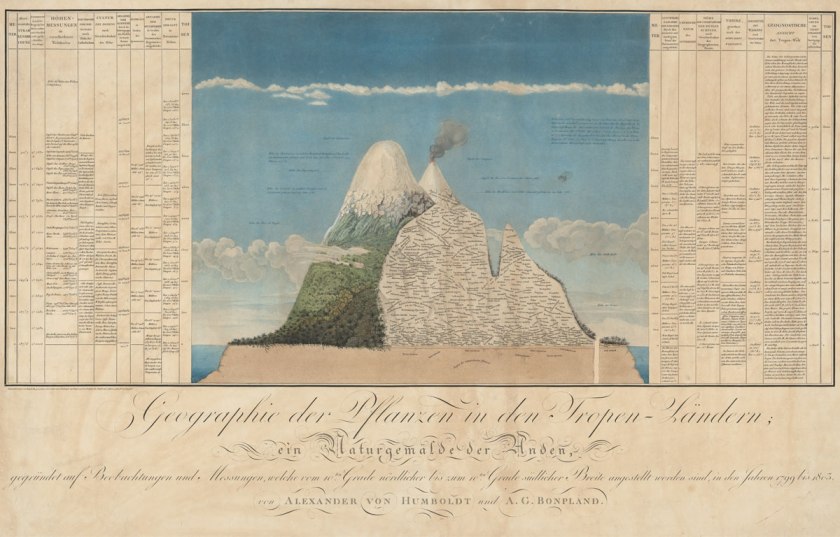
Alexander von Humboldt’s perspective was radically different than his scientific contemporaries of the late 18th and early 19th century because he conceived of nature as a complex and interconnected global force.
Kris Kristofferson knew that there are kindnesses and civility all around us, if we’ll look for them.
Kurt Vonnegut has called him America’s greatest satirist, while others suggest he was born of Mark Twain and H.L. Mencken. Lewis Lapham—editor emeritus of Harper’s Magazine, founding editor of Lapham’s Quarterly, and the object of those accolades—is a writer of great eloquence and “lethal wit.” I was delighted to see that some of the best of Lapham’s essays from the past twenty-five years have now been collected into a new work, Age of Folly: America Abandons Its Democracy. This is both a wonderful and important book. Lapham surveys the past twenty-five years to make the case that America’s imperial impulses have shaken our democratic principles. You can agree or disagree with his premise, but his arguments are lucid, thoughtful, and often challenging. In the very first essay, from 1990, Lapham states his case succinctly and directly. “If the American system of government at present seems so patently at odds with its constitutional hopes and purposes, it is not because the practice of democracy no longer serves the interests of the presiding oligarchy (which it never …
This is the time of year when we turn our thoughts to Thanksgiving. I was taught from a very young age that it was very important to be thankful, as I often heard my grandmother admonish us to “always say ‘please’ and ‘thank you.’” I won’t get into the “you’re welcome” vs. “no problem” debate, but you can probably guess, given my age, where I land on that topic! Some suggest we too often say “thank you” by rote. I find that to be true in my experience and began to wonder if we mistake other thoughts and emotions as thankfulness. Fortunately, I came across a blog post that helped me sort through at least some of these thoughts. The author, a Benedictine monk who holds retreats for groups from a variety of religious and non-religious traditions., makes the case that at least some of what we think of as thankfulness is actually gratefulness. He suggests it is important to understand the difference and then describes the two in this fashion: “Remember a night when …
This week at the National Trust, we are preparing to host the 2017 PastForward national preservation conference in Chicago. Long-time colleagues and new friends who care about the past and the places that bring that past into the present will gather from all across the country. I suspect that we’ll share thoughts that challenge the conventional wisdom, offer support for a broader understanding of the American story, and come away with a new appreciation for the work that takes place by preservationists and by those who don’t (yet) identify as preservationists. Why do these people gathering this week in Chicago care about the past? And what’s with that name, PastForward? In a recent conversation that included Pulitzer Prize-winning historian Annette Gordon-Reed, (The Hemingses of Monticello: An American Family), journalist and author Krista Tippett summed up the answer to those questions with her opening line: “In life, in families, we shine a light on the past to live more abundantly now.” I think that’s a great summation of why so many of us will gather this …
Progressive Insurance has been running a series of very funny ads about how we turn into our parents after buying our first home. The setting is a group therapy session, and each member has one or more Dad-isms to share with the group. I don’t know if my favorite is “Who left the door open, are we trying to air condition the whole neighborhood?” or the woman who holds up a hideous baseball cap and says, “This hat was free. What am I supposed to do, not wear it?” Both are things my father said (multiple times) in the past, and I suspect that both have come out of my mouth as well. This intro is to give you fair warning: in this post I may sound (a little) like a parent. New York Times reporter Adam Bryant recently wrapped up almost a decade of columns from the Corner Office, where he interviewed CEOs of all types, skills, and personalities. While most of us won’t have the opportunity to be the CEO, there are lessons …
Last week I had the privilege of launching the National Trust’s National Treasure campaign for Clayborn Temple, a landmark in the history of the Civil Rights movement. It was here where Memphis sanitation workers gathered in 1968 and decided to go on strike, marching with their “I Am a Man” signs that became a potent symbol for all that is at stake in the fight for equal justice. Clayborn Temple was where the leadership of The Rev. Dr. Martin Luther King, Jr. transformed the strike from a local labor dispute into a national issue, effectively tying the sanitation workers’ cause with the national issues of economic justice and racism. It was to Memphis and Clayborn Temple that Dr. King was returning when he was struck down by an assassin’s bullet. To be in that sacred space with more than 150 Memphis residents, young African American poets and musicians, revered spiritual leaders who walked with the sanitation workers, preservationists of all ages, and current members of the workers’ union was an honor and a reminder of …
I recently finished David Sax’s new book The Revenge of Analog: Real Things and Why They Matter. Appropriately, I bought my hard-back copy in that most analog of places—Portland, Oregon’s Powell’s City of Books—the nation’s largest independent bookstore. Sax, a business journalist from Canada, posits that “while digital technology has certainly made life easier, the analog technologies of old can make life more rich and substantial.” He argues that in today’s digital world, analog is making a surprising comeback. What are those analog technologies? Notebooks and paper. Vinyl records. Film. Board games. (Vintage Game Night at the Woodrow Wilson House, anyone?) He also looks at the comeback of analog “ideas” in areas such as printing, retailing, and education. Some of Sax’s examples strike me as first-world games of the highly educated. However, as I thought about the tactile nature of the pages as I read, I realized that he had an important point about the impact of real things in our lives. About two years ago I stopped purchasing e-books and have returned to buying …
Each of us can help others catch an enthusiastic attitude about the things we love.
Who knew, but apparently we are living in a golden age of sycophancy. Flattery. Brown-nosing. By whatever name it goes by, we’re talking about sucking up. Over a 40-year career, I’ve had a number of bosses. On the exceptional-to-bad continuum, I’ve seen both ends, and a lot in between. But I’ve been fortunate in that only one regularly sought out flattery from those who worked in the organization. Most good managers and senior executives see through obsequious behavior. Colleagues see someone excessively playing up to a manager and roll their eyes (if they are charitable) or share their thoughts with others around the water cooler (if they are less than charitable). There’s a better way: learn how to manage up. As I have suggested to my team at work, building a strong, professional relationship with your manager has nothing to do with sycophancy. It has everything to do with doing your job and being the type of valued colleague who understands and supports a wider vision beyond one functional area or program. Communication that assumes …