
Five books at a minimum. Every month. A variety of topics from different genres. Here is the list from August 2026.

So You Want to Own Greenland? Lessons from the Vikings to Trump (2025) by Elizabeth Buchanan is an easy-to-read overview of Greenland’s history and current state of play in international affairs. Beginning with its discovery by Erik the Red and his Viking band around 982 CE and the migration from North America of the Inuit population around 1200, Greenland has been disputed space. When a Danish-Norwegian missionary arrived in 1721 the descendants of Erik the Red had mysteriously vanished. From the auspicious beginning of a lost colony of Vikings we are taken through various upheavals: the Napoleonic Wars, two previous U.S. attempts to buy Greenland, the gradual breaking free of Greenland from its Danish colonial chains, the important role of the island in both world wars, and more. Buchanan wants us to understand that Greenland has a long and complicated history, which is important in today’s context of a changing international power balance, fears of China’s rise, and growing global resource insecurity.
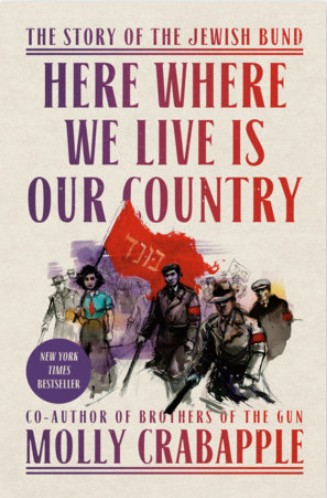
Here Where We Live Is Our Country: The Story of the Jewish Bund (2026) by Molly Crabapple is history and memoir with an anti-Zionist point of view. Crabapple (née Jennifer Caban), a New York born and based award-winning illustrator, comes across a watercolor—Itka the Bundist, Breaking Windows—that was among a group of “memory paintings” by her great-grandfather Sam Rothbort. He created these works in the aftermath of the Holocaust with the hope of resurrecting the vanished world of his shtetl childhood in the Russian Empire’s Pale of Settlement. The watercolor was the great-granddaughter’s introduction to the Jewish Bund and it led her on a years-long search to discover more about this major secular, socialist movement devoted to class struggle that began in the late 19th century. Calling upon deep historical research and sources, Crabapple goes into great detail on how the Bund broke with the Bolsheviks, fought the Zionists, and tried to resist the fascists. Each of these efforts is important, but in this politically influenced work Crabapple returns on numerous occasions to focus on the Bund’s fight with the Zionists.
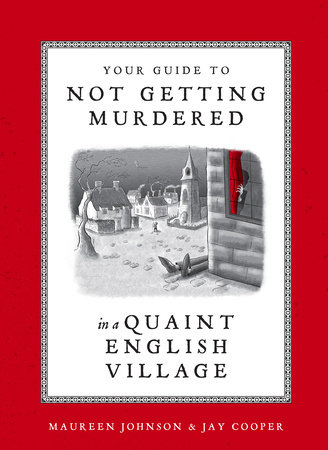
Your Guide to Not Getting Murdered in a Quaint English Village (2021) by Maureen Johnson and Jay Cooper is a tongue-in-cheek send-up of the classic English murder mystery where the most dangerous place to visit is the narrow old lanes, the manor house, and the church in a small rural village. The authors begin with a “note to the gentle reader” that makes every attempt to keep you from booking that dream vacation. However, knowing that you will probably go ahead and pursue that trip, they are prepared—with witty writing and Gorey-esque drawings—to point out all the horrors you will face. A weekend “roaming narrow old lanes, touring the faded glories of a country manor, and quaffing pints in the pub” sounds very charming. That is, unless you have the misfortune of finding yourself in an English Murder Village.
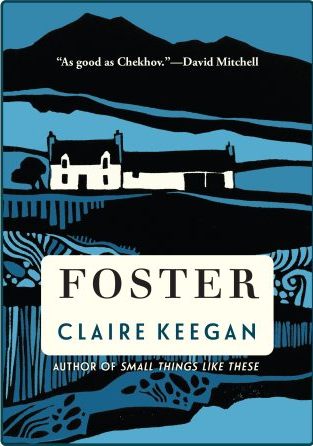
Foster (2010, 2022) by Claire Keegan is a perfect introduction for, and complement to, her more recent works. Set in rural Ireland it tells the story of a young girl who is taken by her father to live with relatives on a nearby farm while her mother is having a baby. She has no idea when, or if, she will return to her own home. The girl’s family is overwhelmed while the relatives, Mr. and Mrs. Kinsella, are affectionate and clearly intent on providing loving care to a person whose day-to-day existence has been rough and chaotic. The Kinsellas provide a foundation for the young girl to grow and blossom. Yet their secrets, as well as those of her parents, are hidden but not far from the surface. Foster is a heartbreaking story of childhood, loss, and how “painful unaccustomed love and tenderness can be, because they accentuate what’s been lacking.” It breaks one’s heart, but then also offers up hope out of the loss.
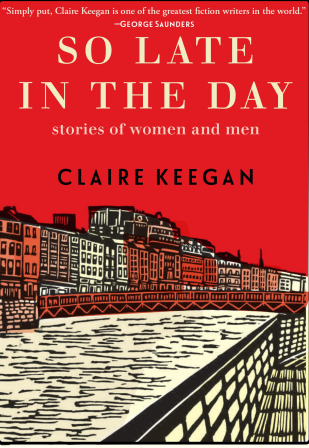
So Late in the Day: Stories of Women and Men (2023) by Claire Keegan features three recently expanded works that explore gender dynamics through the lens of love, betrayal, lack of generosity, lust, and the weight of expectations. Keegan is a brilliant writer who brings simplicity and power together in a way that calls you to return to re-read passages and stories to unlock their mystery and savor her observations. These are not simple and easy works of romance. Conflict is at the heart of each story and it is clear where the author places much of the blame. Keegan’s book resonates as a very thoughtful and challenging work with depths of emotion that one might not expect with such clear, simple writing. And as a member of the gender that shoulders the brunt of the criticism in her writing, I can see much, unfortunately, that rings true.

The Cloak and Dagger Club (2026) by Jackie McMahon introduces us to the smart, up-and-coming detective heroine Lucy Hubbard. Her first mystery has been published to strong sales and glowing reviews and she finds herself swept up in the literary world of 1930 Britain’s best-known detective novelist, Horace Hazelmoor, president of The Cloak and Dagger Club and a bombastic bully. She attends her first meeting of these writers of murder mysteries and is dazzled by the assembled talent. However, when her former fiancé Frank Murray joins them she is slightly unnerved and works to keep their former relationship secret. Horace gets drunk, starts an argument, and a fight ensues. Carried to his room to sleep it off, he is found dead two days later, stabbed in the back. Frank, who was threatening to overtake Horace as Britain’s favorite crime writer, is the prime suspect. Lucy has convinced herself that she no longer has feelings for her childhood friend turned former lover, but she knows that he could never have killed Horace and they begin their own side investigation to find the real murderer. McMahon’s winning debut novel features intriguing characters, a cleverly devised puzzle, light romance, and sharp, easy to digest writing.
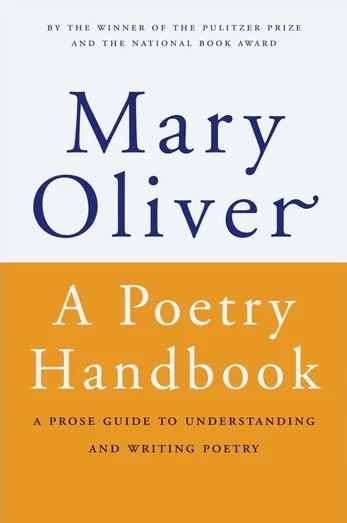
A Poetry Handbook: A Prose Guide to Understanding and Writing Poetry (1994) by Mary Oliver was written with writers in mind, but it is also a welcoming space for readers of poetry to gain insights into the “thoughtful machinery” of the poem. Oliver asks her readers to be mindful about each part of the process of creating “a type of love affair between something like the heart (that courageous but also shy factory of emotion) and the learned skills of the conscious mind.” To write well and memorably, she reminds us, “it is entirely necessary to read widely and deeply. Good poems are the best teachers.” Throughout this slim but rich volume Oliver draws on the works of other poets—Walt Whitman (one of her favorites), Robert Frost, Ezra Pound, Emily Dickinson, William Carlos Williams, and more—to help us see how to read, write, and understand poetry.
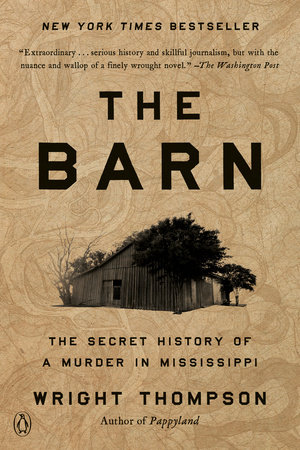
The Barn: The Secret History of a Murder in Mississippi (2024) by Wright Thompson is a shocking, deep, historical, and yet fresh account of one of the most consequential murders of the twentieth century. When young Emmett Till was abducted, tortured, and killed in Mississippi in 1955 for allegedly whistling at a white woman, the nation began to awaken to the pervasive racism of the South. It gave powerful fuel to the civil rights movement. The local cover-up of what really happened began almost immediately, however, and continues to this day. Thompson, a native of the Delta born in 1976, didn’t learn about Till’s murder and its place in the nation’s history until he left the state to go to college. He has returned to live in his homeland and—through this very personal yet universal work—to seek to understand the centuries of economic history, exploitation, and lies that brought young Emmett Till and as many as eight white residents of the Delta to a barn owned by one of the killers for a night of horrific torture and murder.
WHAT’S ON THE NIGHTSTAND FOR SEPTEMBER (Subject to change at the whims of the reader)

- Martyr! (2024) by Kaveh Akbar
- The Midnight Special: The Secret Prison History of American Music (2026) by Colin Asher
- The Universal Baseball Association, Inc., J. Henry Waugh, Prop. (1968) by Robert Coover
- The Soul of America: The Battle for our Better Angels (2018) by Jon Meacham
- Ukraine: A Nation on the Borderland (2018) by Karl Schlögel
Keep reading!
More to come . . .
DJB
NOTE: Click to see the books I read in July of 2026 and to see the books I read in 2025.
Open book image by Getty Images via Unsplash


Pingback: Observations from . . . September 2026 | MORE TO COME...
Pingback: From the bookshelf: September 2026 | MORE TO COME...