
Kindness
I am very grateful for the many kindnesses shown to me over the years. Looking forward, I encourage you to be kind to one another.
I am very grateful for the many kindnesses shown to me over the years. Looking forward, I encourage you to be kind to one another.
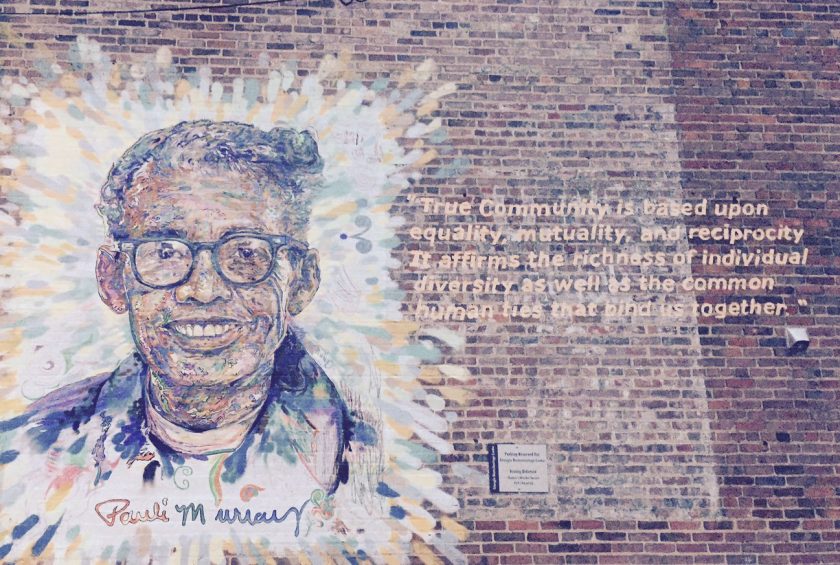
I’ve been thinking recently about “where I’m from” and its impact on my life and work.

Why do we often wait until an individual or team completes a major project to offer thanks? Last week’s PastForward 2018 national preservation conference in San Francisco certainly falls in the successful major project category in my work, and I do want to thank our core team of Susan, Farin, Rhonda, Colleen, Alison, Nicky, Lizzy, Diana, Michelle, Reagan, Sandi and Priya. They helped lead us through an inspiring week. I’ve often thought we shouldn’t wait for a holiday such as the one we are celebrating this week in the U.S. or only at the end of a project like PastForward to recognize others. A few years ago I became intentional about saying “thank you” to someone every day. It is one of the smartest things I ever did as I get so much more out of life since I began that practice. If for no other reason, it reminds me how much I depend on the kindness of others. I believe there is a distinction between gratefulness and thankfulness. If we are fully aware, fully …
(NOTE: My appreciation of the life and legacy of William J. Murtagh was first published on the Preservation Forum Blog on November 2, 2018.) Bill Murtagh, who passed away on October 28 at age 95, was among the most visible and effective preservation leaders in the middle of the 20th century, when the movement was expanding its focus from historic sites, museums, and teaching to the emphasis on people and community that we recognize today. To those of us who came to preservation in the 1970s and ’80s, Bill was seemingly in the middle of everything. He served two stints at the National Trust for Historic Preservation, first as President Richard Howland’s assistant in 1958, later returning for several years as vice president for Preservation Services. He was a member of the committee that outlined the principles at the core of the 1966 National Historic Preservation Act. He was a key figure in the establishment and growth of preservation education programs from Columbia University to the University of Hawai‘i. His “Keeping Time: The History and …
NOTE: My op-ed for the National Trust for Historic Preservation on the future of Music Row ran in today’s Nashville Tennessean. You can see the original here. Balance. Harmony. Character. These are essential elements of any great song or musical composition. They are also essential to any great neighborhood. Unfortunately for Nashville, the Music Row neighborhood is out of balance right now. In the last five years alone, 43 historic buildings that housed music related businesses – the lifeblood of Music Row – have been demolished. Only one single threatened building – the venerable RCA Studio A – has been saved from demolition. And that “save” was achieved not by public policy or by city initiative, but solely through the efforts of private citizens intent on preserving irreplaceable heritage. Forty-three to one is not balance. High-rise residential condominiums in a neighborhood of small-scale business is not harmony. Demolishing five more historic buildings in the heart of Music Row is not the way to protect neighborhood character. It is definitely not the way to celebrate the unique and extraordinary cultural heritage that …

For several years I’ve regularly traveled for work to Monterey, California, a small coastal city some two hours south of San Francisco. So when we went looking for a west coast destination for this year’s family vacation, I suggested we check out the Monterey Peninsula. Now that we’ve wrapped up a week-long visit to Pacific Grove—next-door neighbor to the city of Monterey—we’re just coming to realize how much we’ve seen and explored in this new (to us) part of the world. Let’s begin with the coastline, the attraction to visitors for thousands of years. I awoke every day shortly after 6 a.m. and went for walks of as much as two hours along the well-used (and well-loved) Monterey Bay Coastal Trail. Pacific Grove’s portion of this 18-mile trail, which follows the path of the old Southern Pacific Railroad train tracks, hews close to the water and rock-strewn coastline, while Monterey’s comes inland a bit to incorporate Cannery Row, the Monterey Bay Aquarium, and Fisherman’s Wharf. My walk often began before sunrise and was shrouded in …
This is my season for strategic planning. Last week I spent a full day with our colleagues at the National Trust Historic Site Filoli for their strategic planning retreat. As you read this, I’m on a plane for another retreat with 20 team members designed to scale up one of our most important organizational initiatives. When I return, I have a half-day financial planning retreat set for early August. That’s a lot of planning! There are some who say that strategic plans are useless. They generally throw around the phrase “no plan survives contact with the enemy,” which is a popular adaptation of a phrase uttered by Helmuth Karl Bernhard Graf von Moltke, also known as Moltke the Elder. He was a German Field Marshal who lived between 1800 and 1891 and is credited with creating a new approach to directing armies in the field. This entailed developing a series of options rather than simply a single plan. Note that he didn’t stop planning. He simply recognized that in changing environments, you need options and …
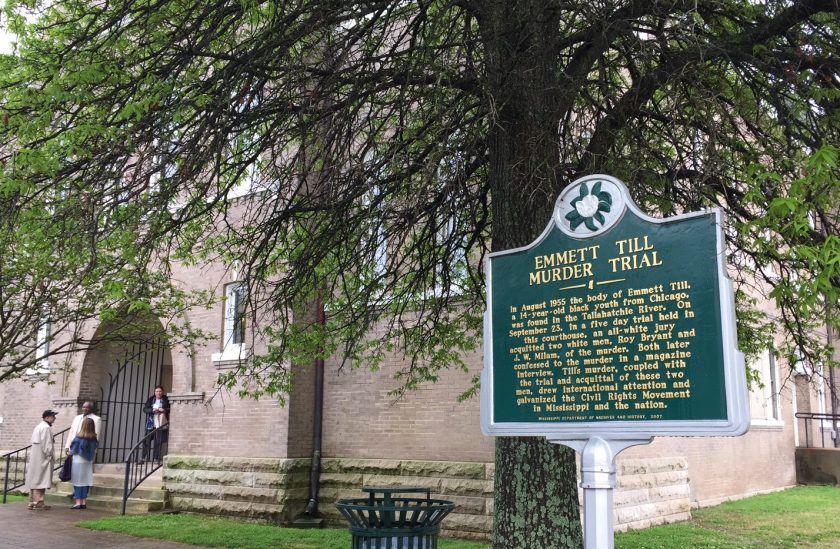
A trip through Mississippi, where Bill Ferris quoted a relative who said “he was raised on cornbread and recollections.”

How often do we give advice when simply presence and acknowledgement is required?
Our recent national conversations too often seem soaked in anger. I don’t know anyone who hasn’t become angry. It is a trait we all seem to share. What differs is how we respond to anger: our own and others. Over the winter holiday, our family visited the National Museum of African American History and Culture. Last Friday, our divisional management team toured the Mere Distinction of Colour exhibit at the National Trust Historic Site Montpelier. Both cultural institutions showcased the many ways a people oppressed have responded to anger held against them by others as well as that held inside themselves. While at Montpelier, I picked up Michael Eric Dyson’s book Tears We Cannot Stop, a powerful call for recognition and redemption which brims with this Baptist preacher’s righteous anger. In her collection of essays No Time to Spare: Thinking About What Matters, Ursula K. Le Guin has a two-part piece on anger. The first half looks at public anger, while the second focuses on our private anger. I thought of the first in the …
 MORE TO COME...