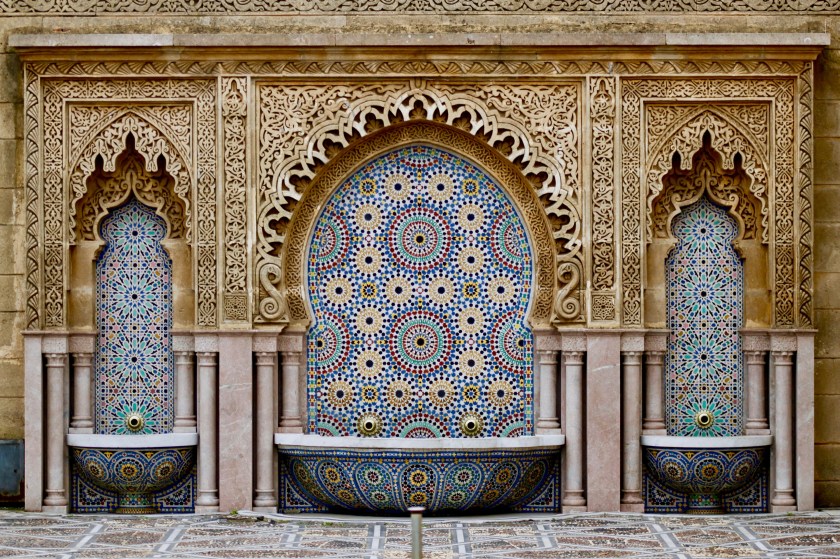
Part 2 of remembrances of a recent week spent in this fascinating North African nation while traveling with National Trust Tours.
After several days in Marrakech earlier this month, our tour group boarded a bus heading north. Driving from Marrakech through rolling countryside, farmlands, and mountains into Casablanca, one can see how the shape of the country has changed over the centuries: from shepherds watching their flocks to a mix of historic and new irrigation systems to bustling city streets teeming with construction. That change continues.
CASABLANCA AND THE HASSAN II MOSQUE
Over and over again we heard from our national guides that the French colonials built “slums” which are being razed for parks and new housing. Not all French colonial building, however, deserves such dismissive treatment.
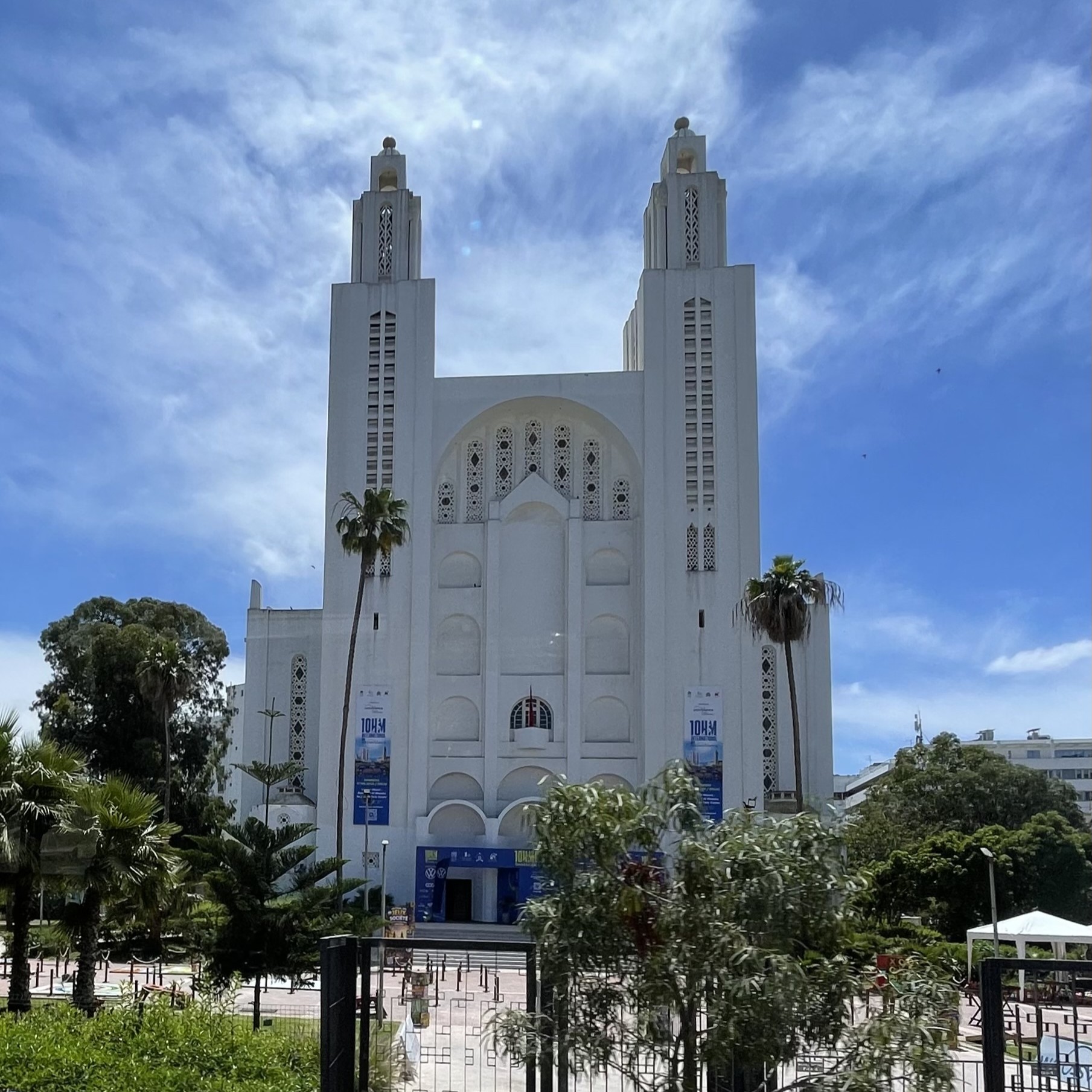
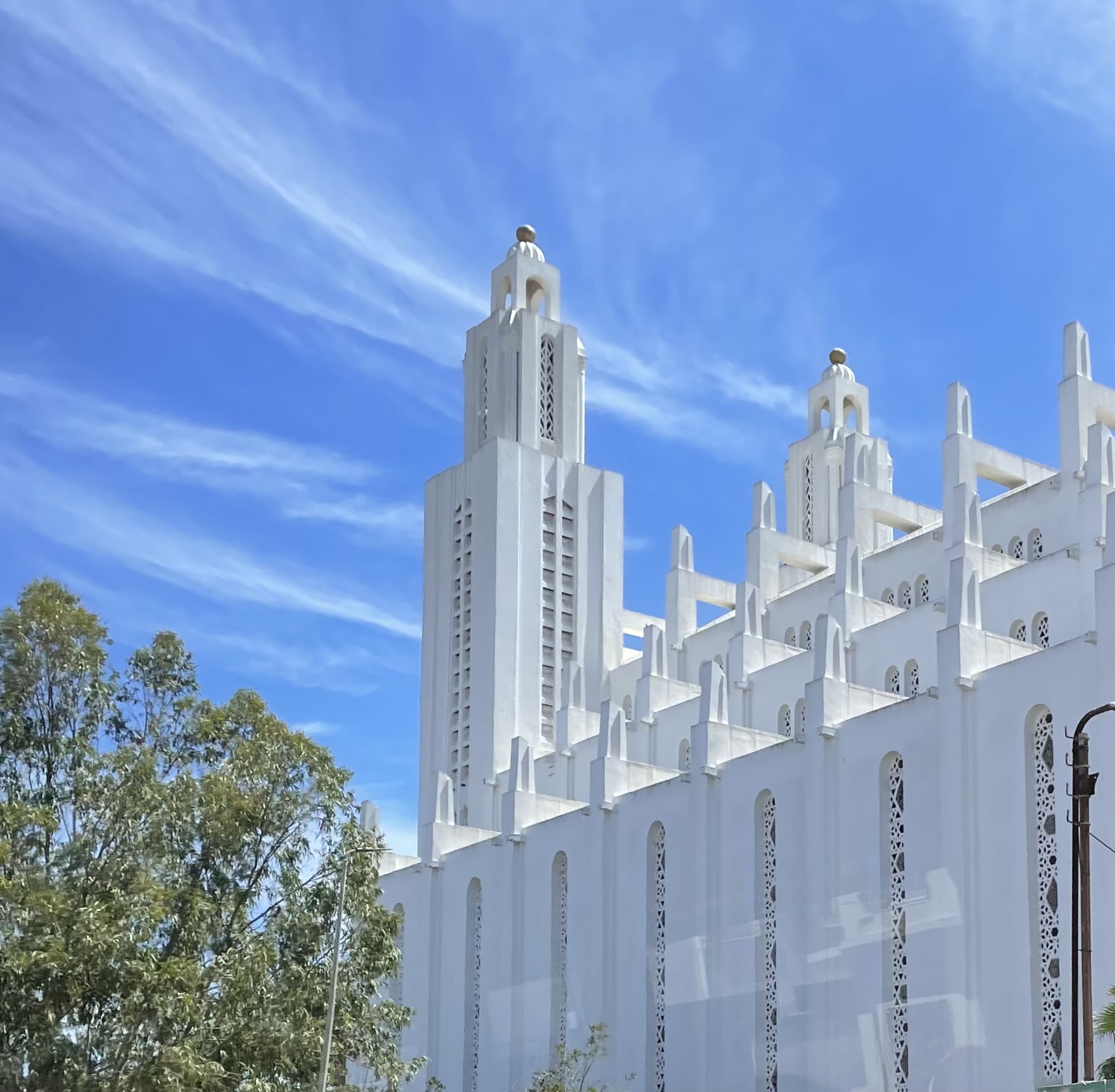
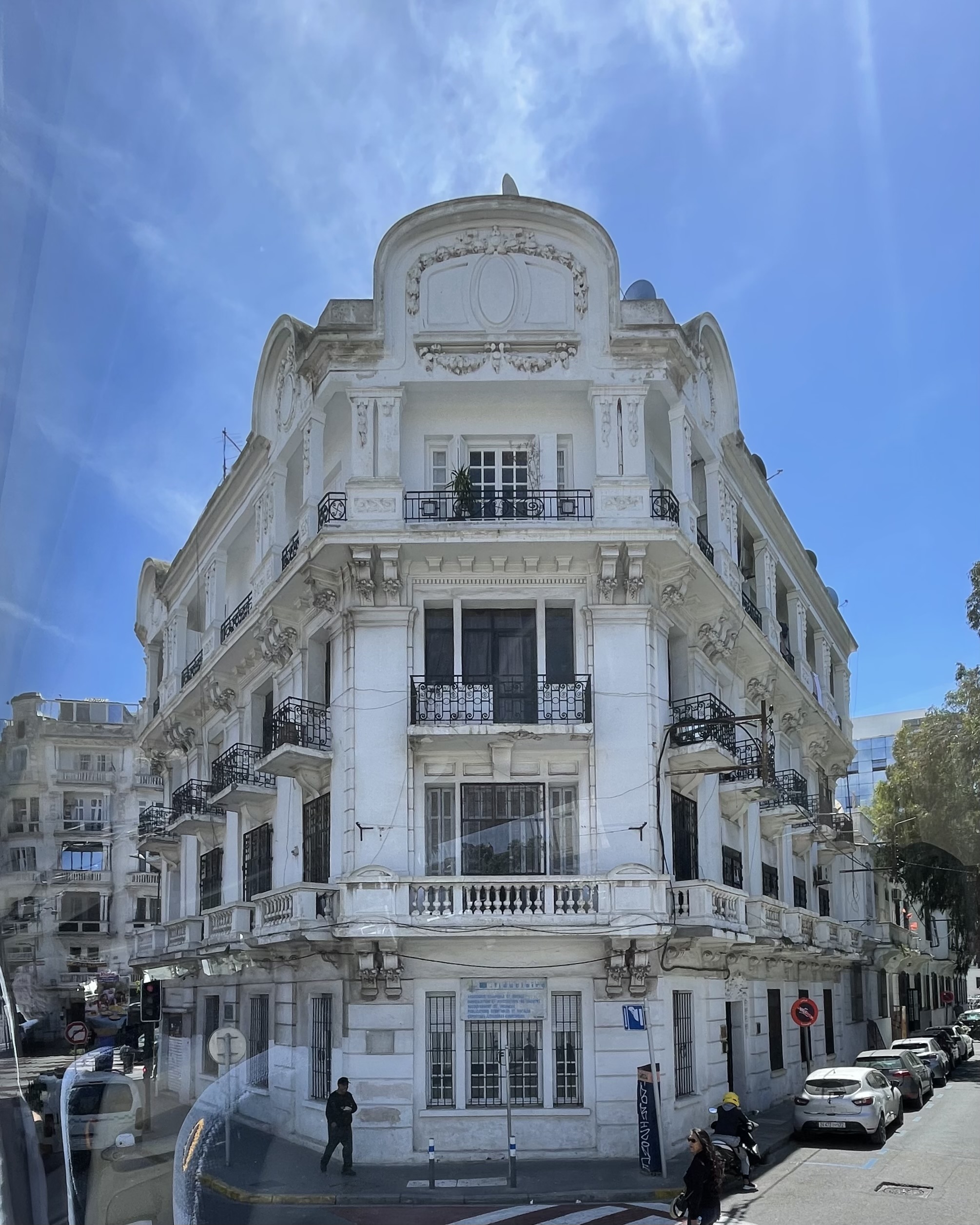
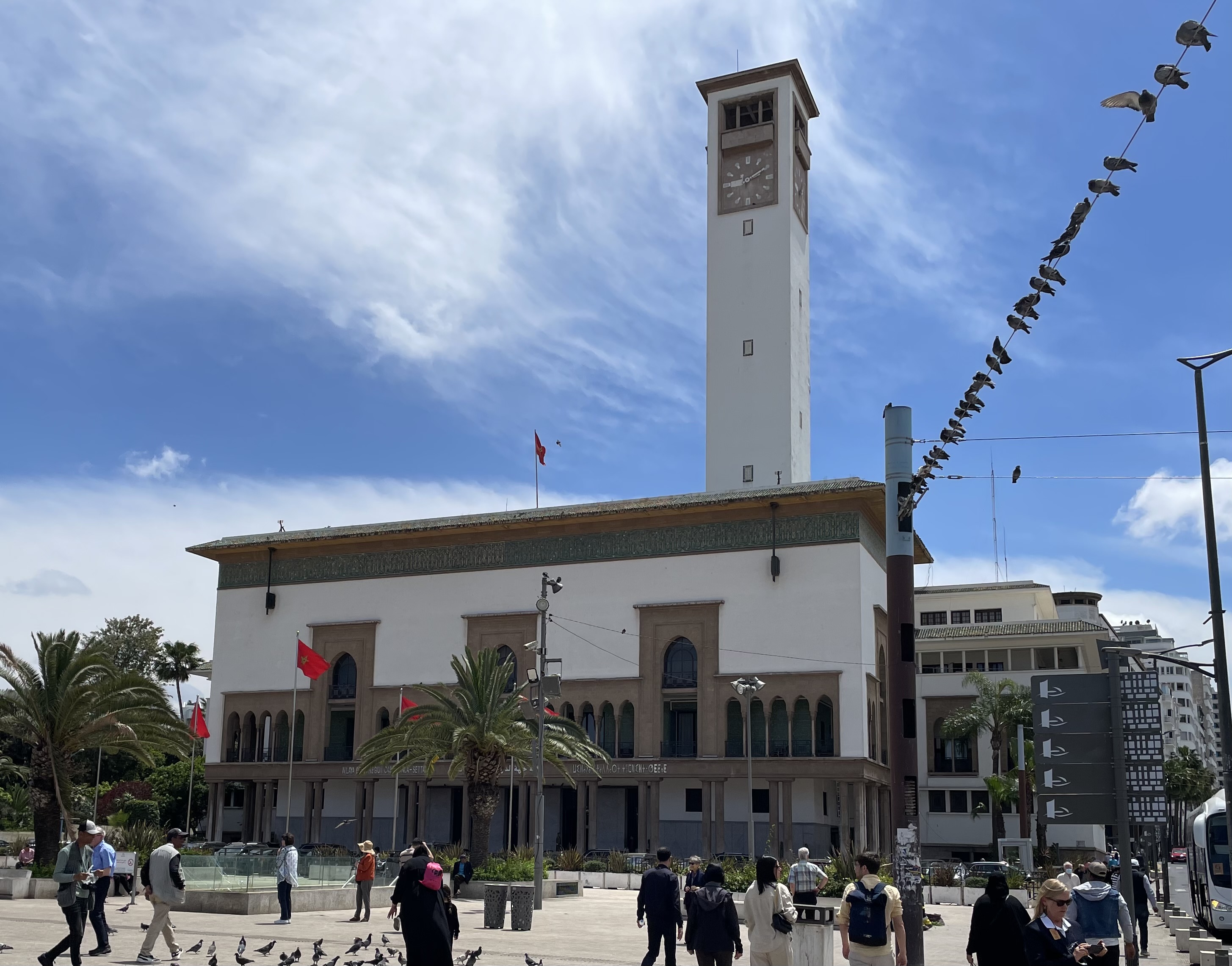
The former Cathedral Church of the Sacred Heart in Casablanca (Cathédrale Sacré-Cœur), for instance, is a stunning Art Deco landmark built in the 1930s by French architect Paul Tournon. The church—which was never truly a cathedral—ceased religious operations after Moroccan independence in 1956 and now serves as a deconsecrated cultural center. There are also other fine examples of French colonial architecture remaining in the city.
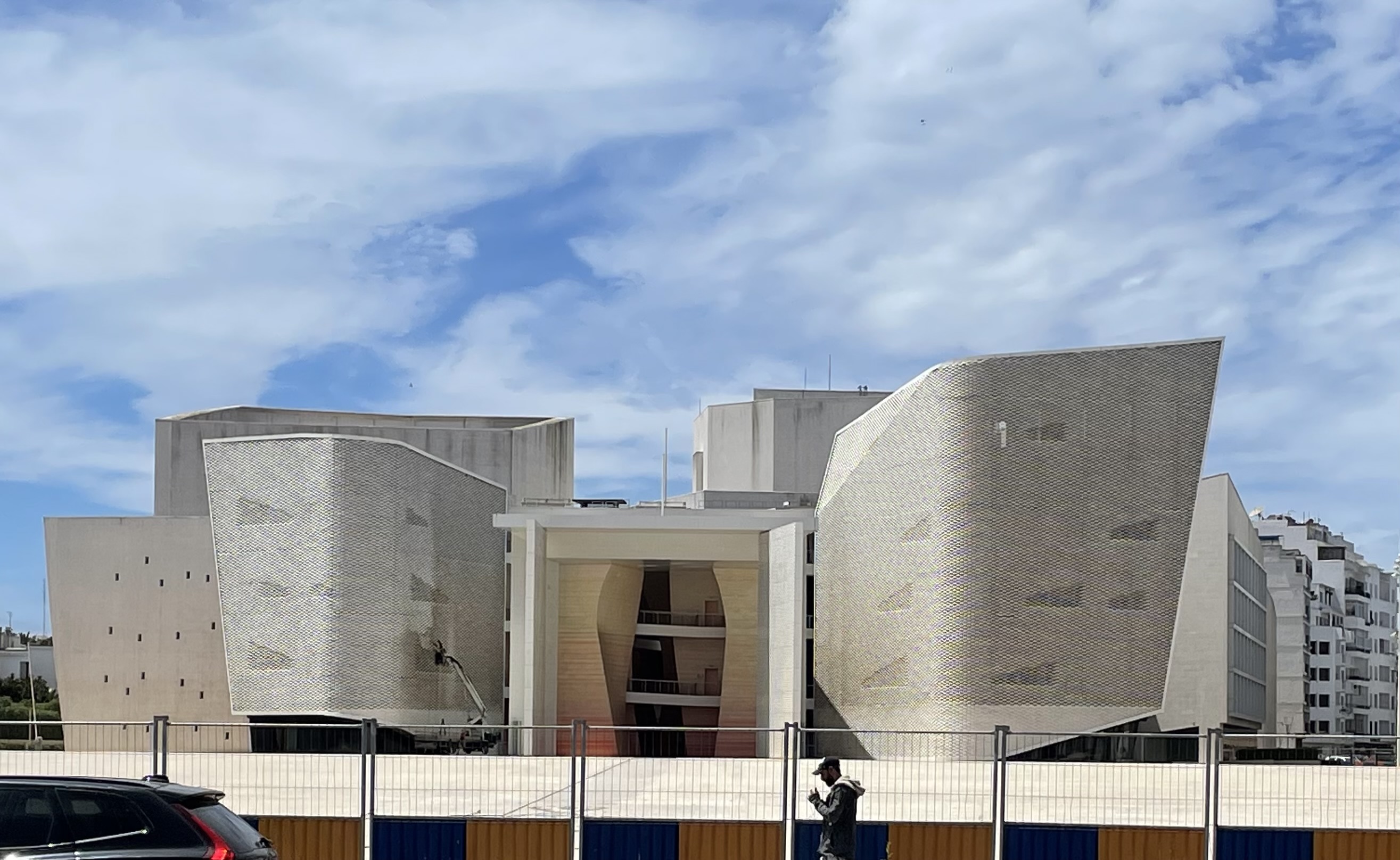
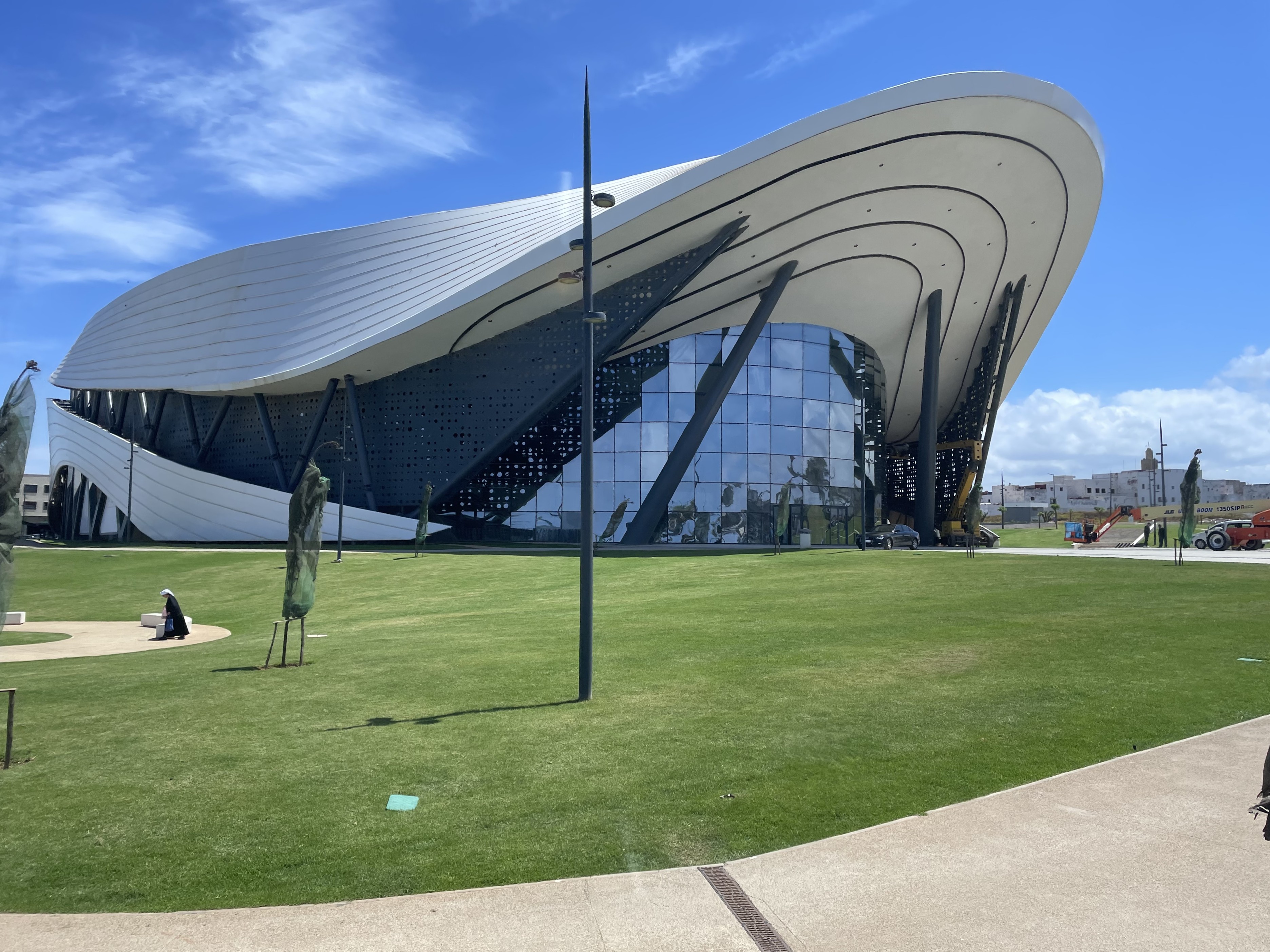
Preparation for the 2030 World Cup is also leading the country to pick up the pace of new development. There were excellent examples of modern architecture everywhere, including Casablanca’s new Grand Theatre, which sits in the middle of the city’s historic district on Mohammed V Square. It features a striking contemporary design by French architect Christian de Portzamparc that blends modern performance spaces with the layout of a traditional Moroccan medina.
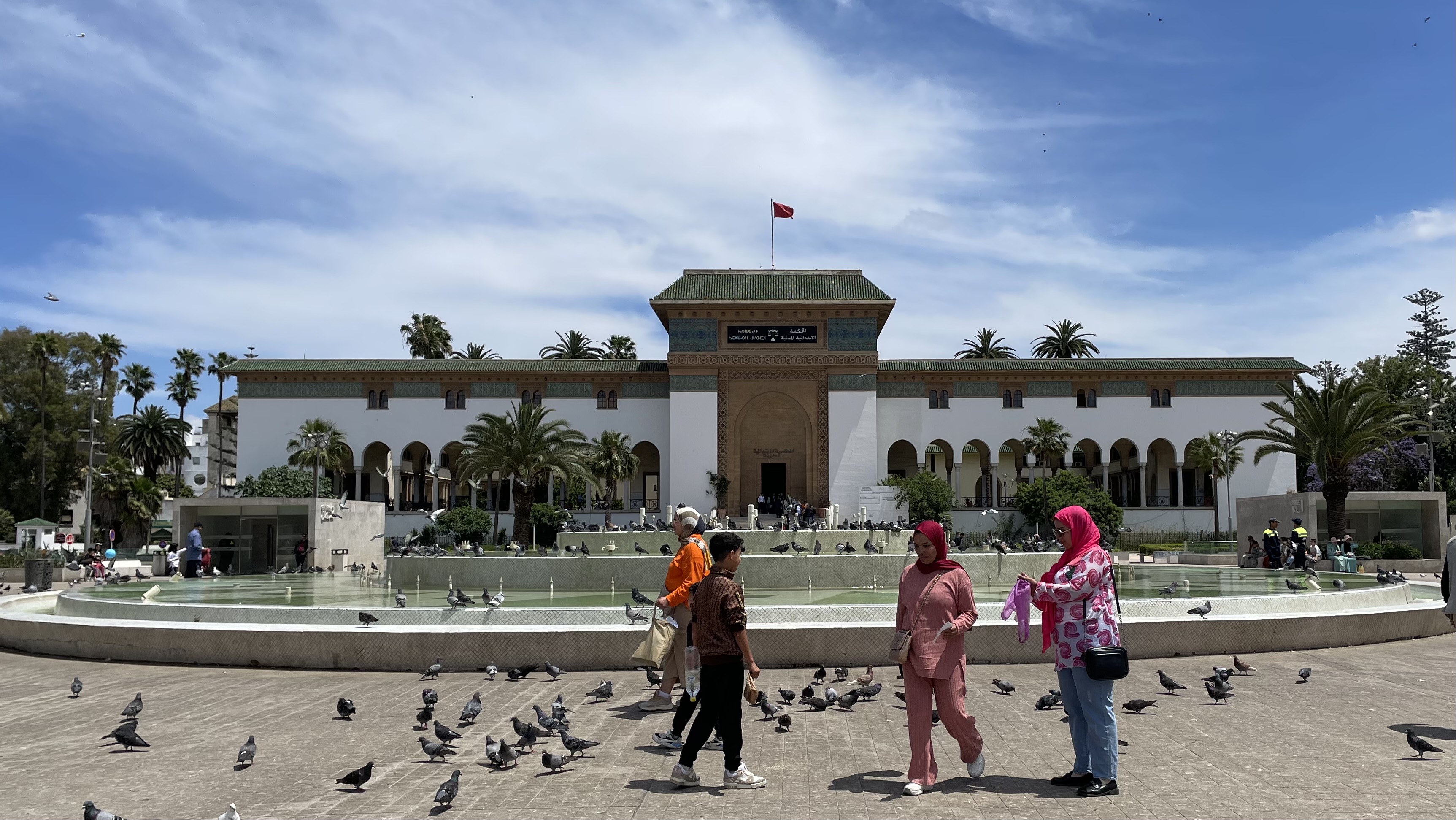
We were told multiple times that Morocco was the first foreign nation to recognize the independence of the United States, an event that occurred in 1777. Now in the 21st century, Morocco—as a moderate and forward-looking Islamic country with periods of religious toleration in its past and a long-term friendship with the U.S.—is seen by many as a source of stability in an increasingly unstable world.
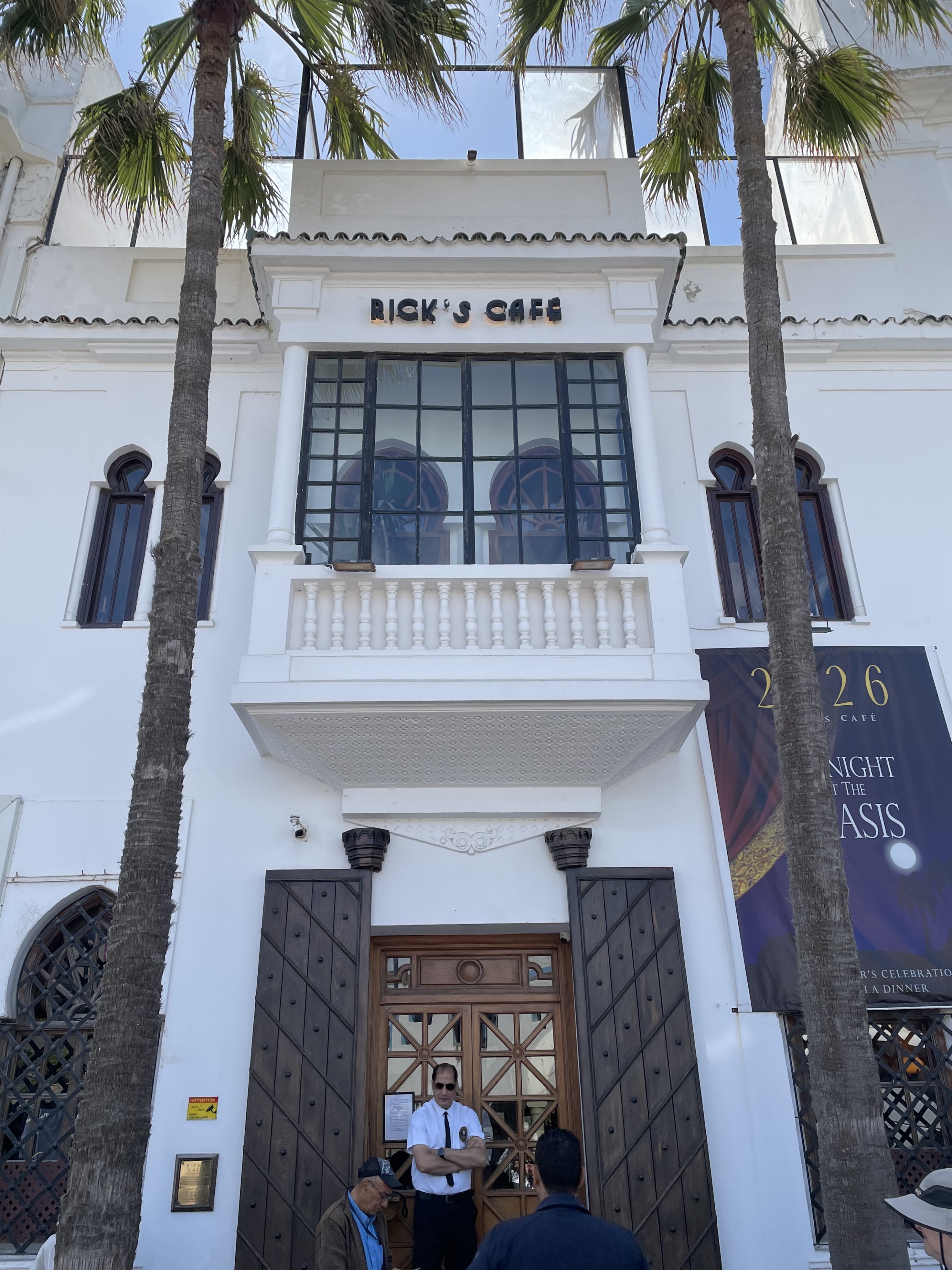
After eating lunch in Rick’s Cafe, a facsimile—if that’s the right word—of the city’s mythical gin-joint . . .
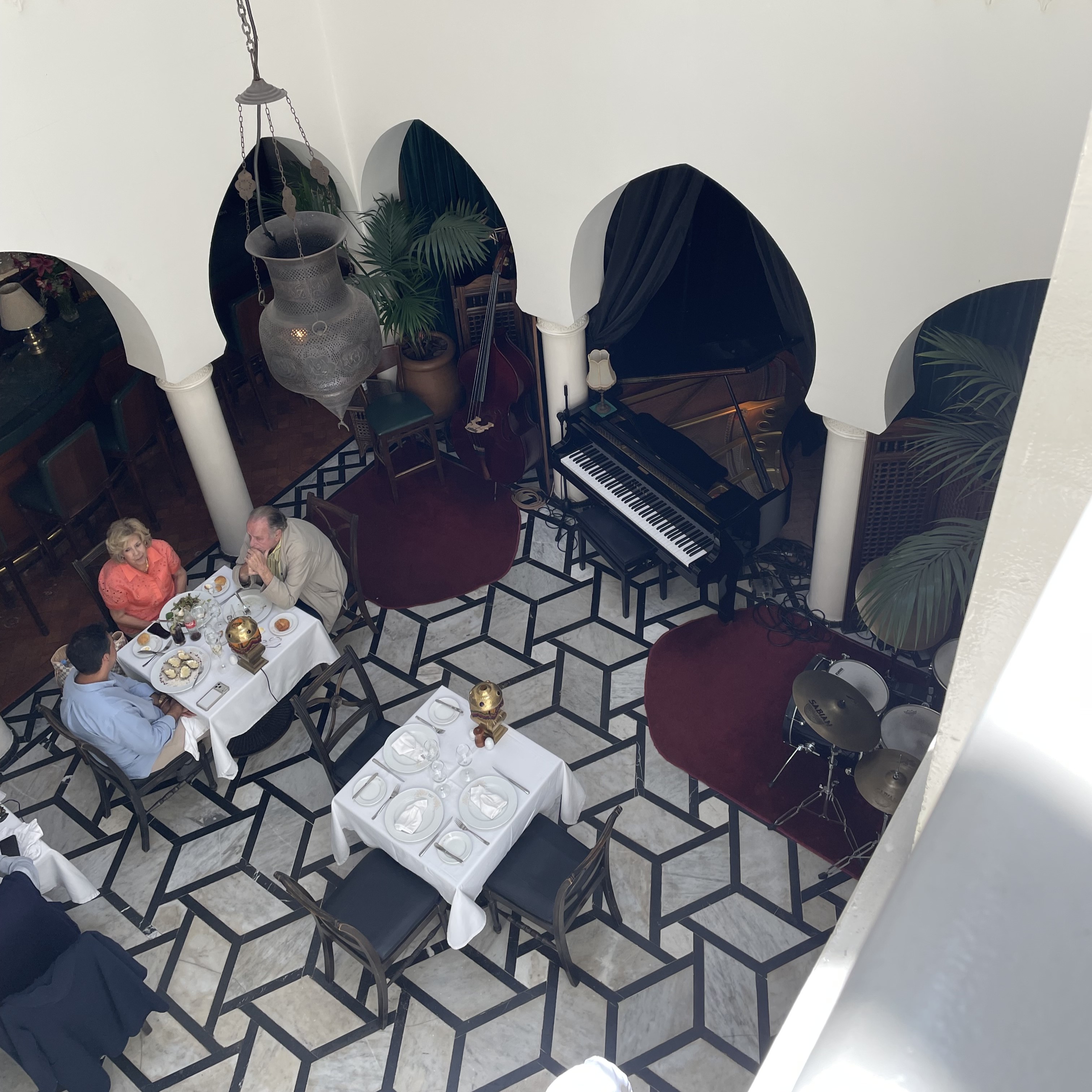
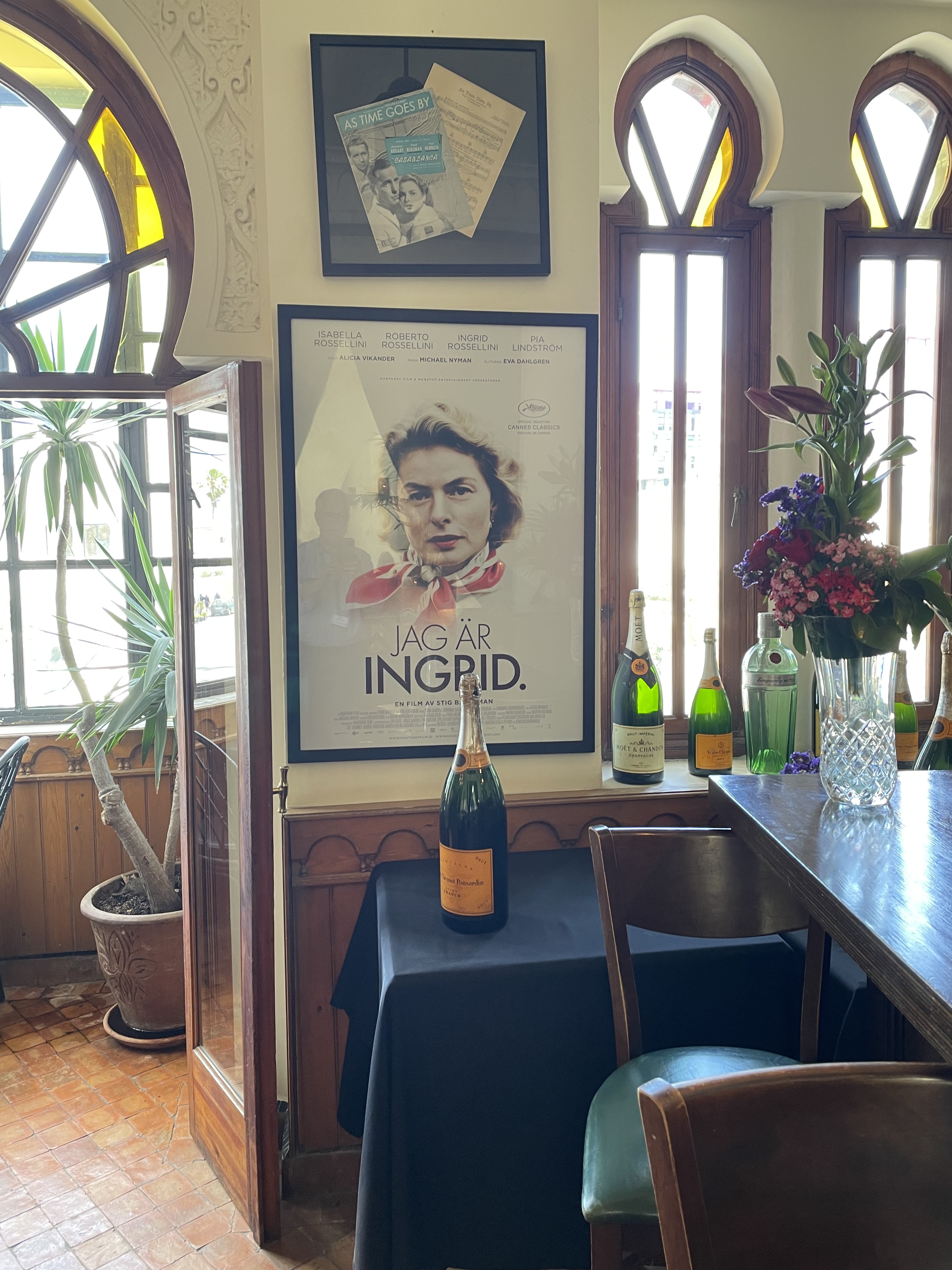
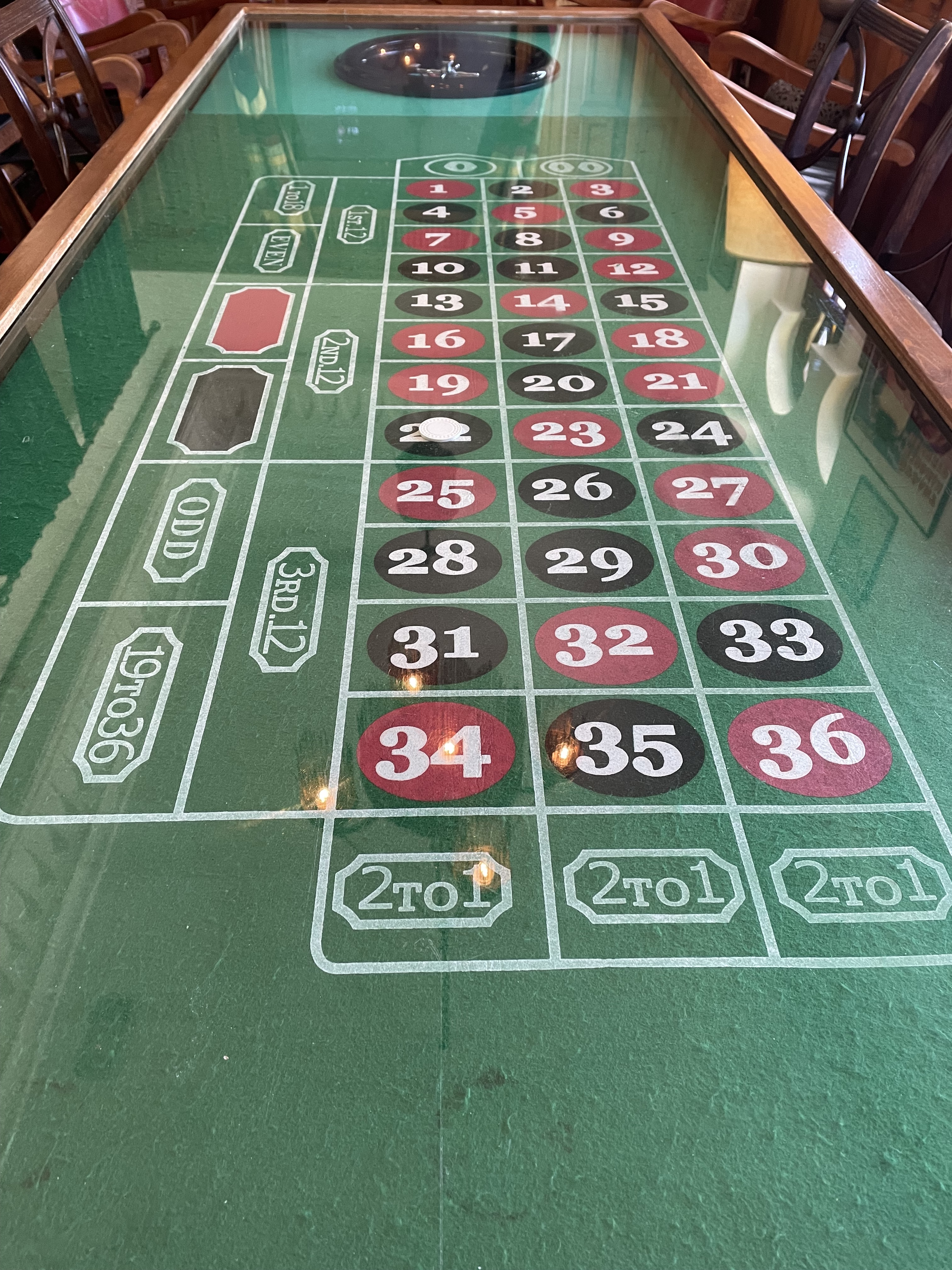
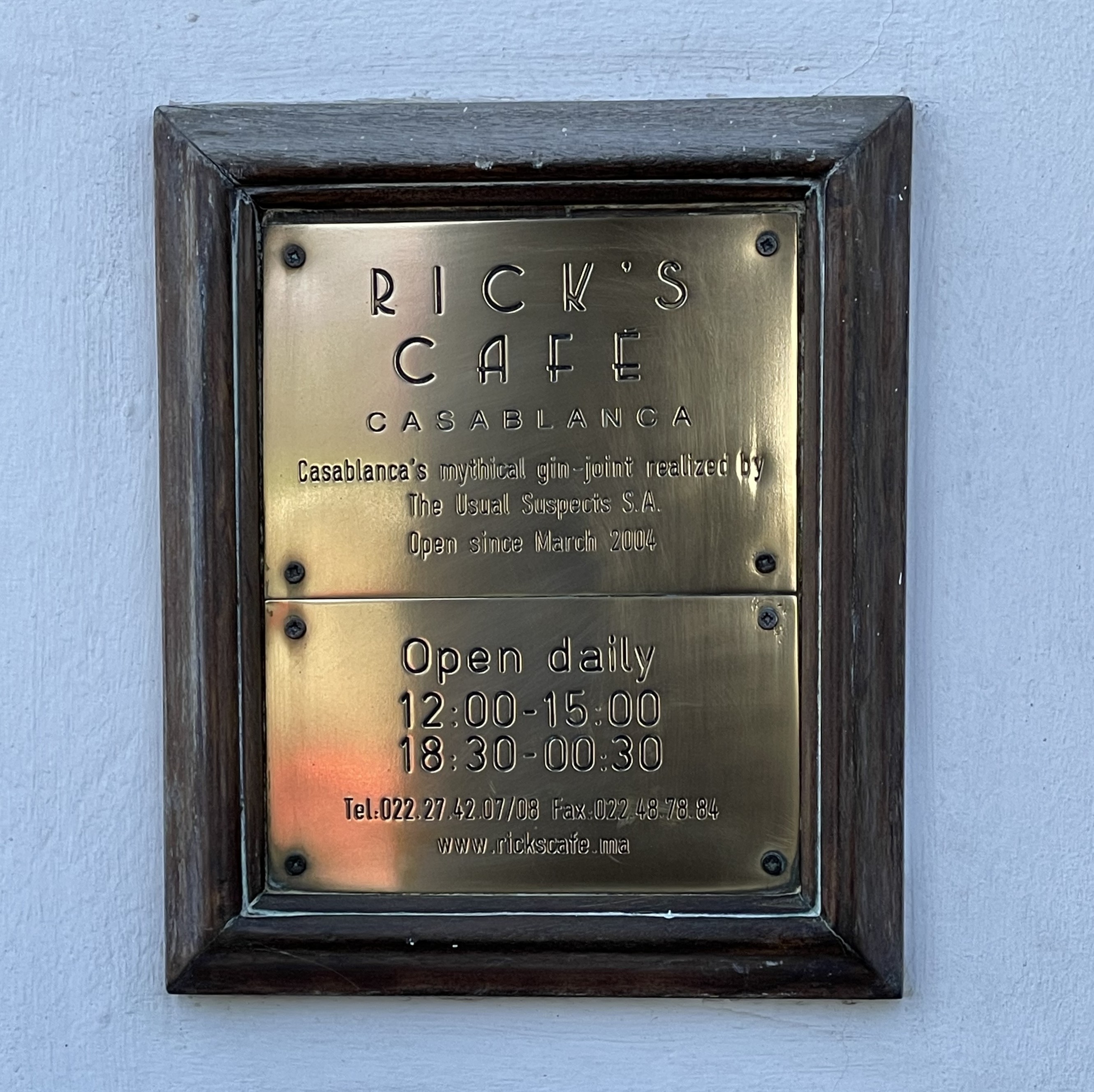
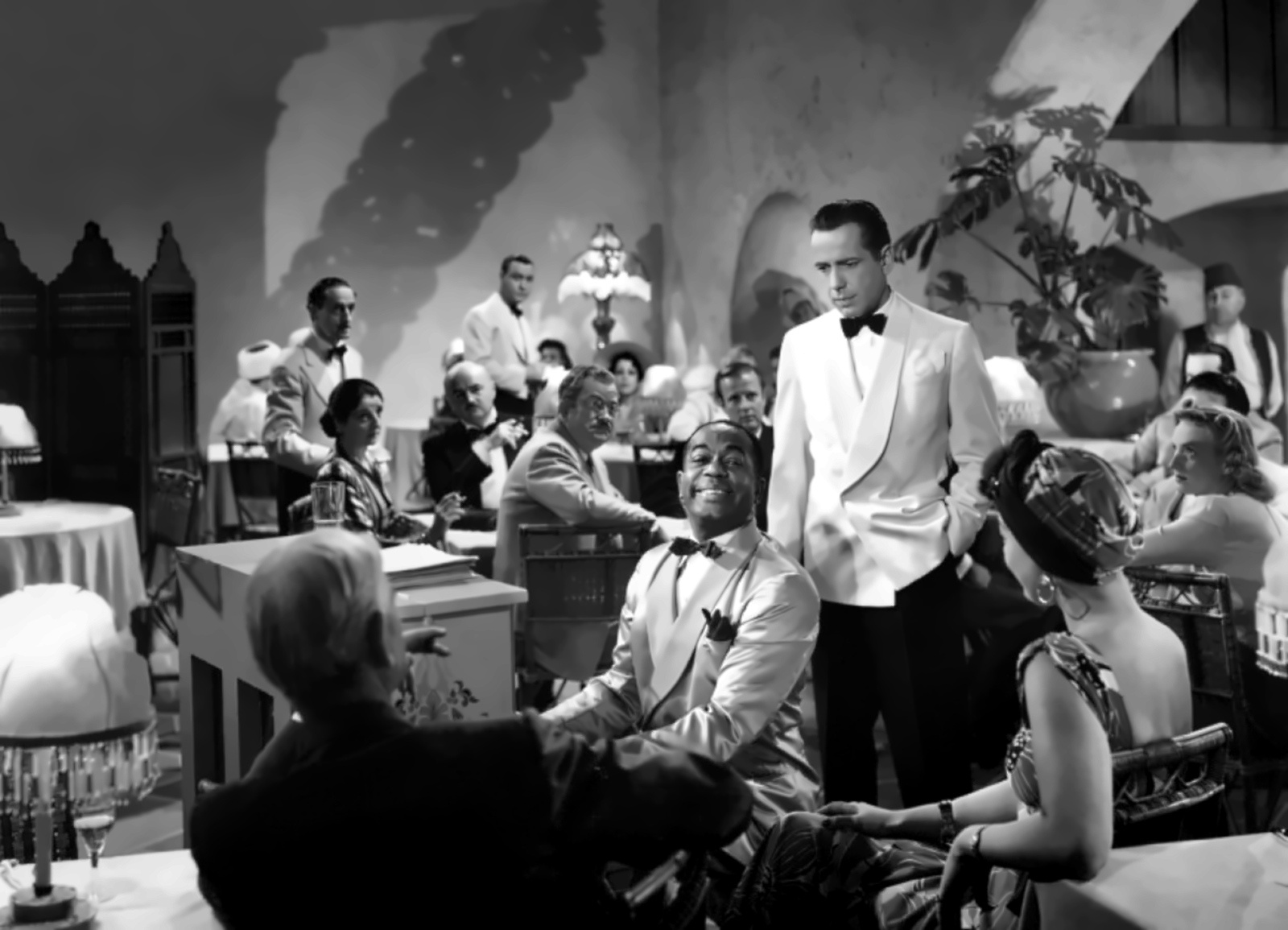
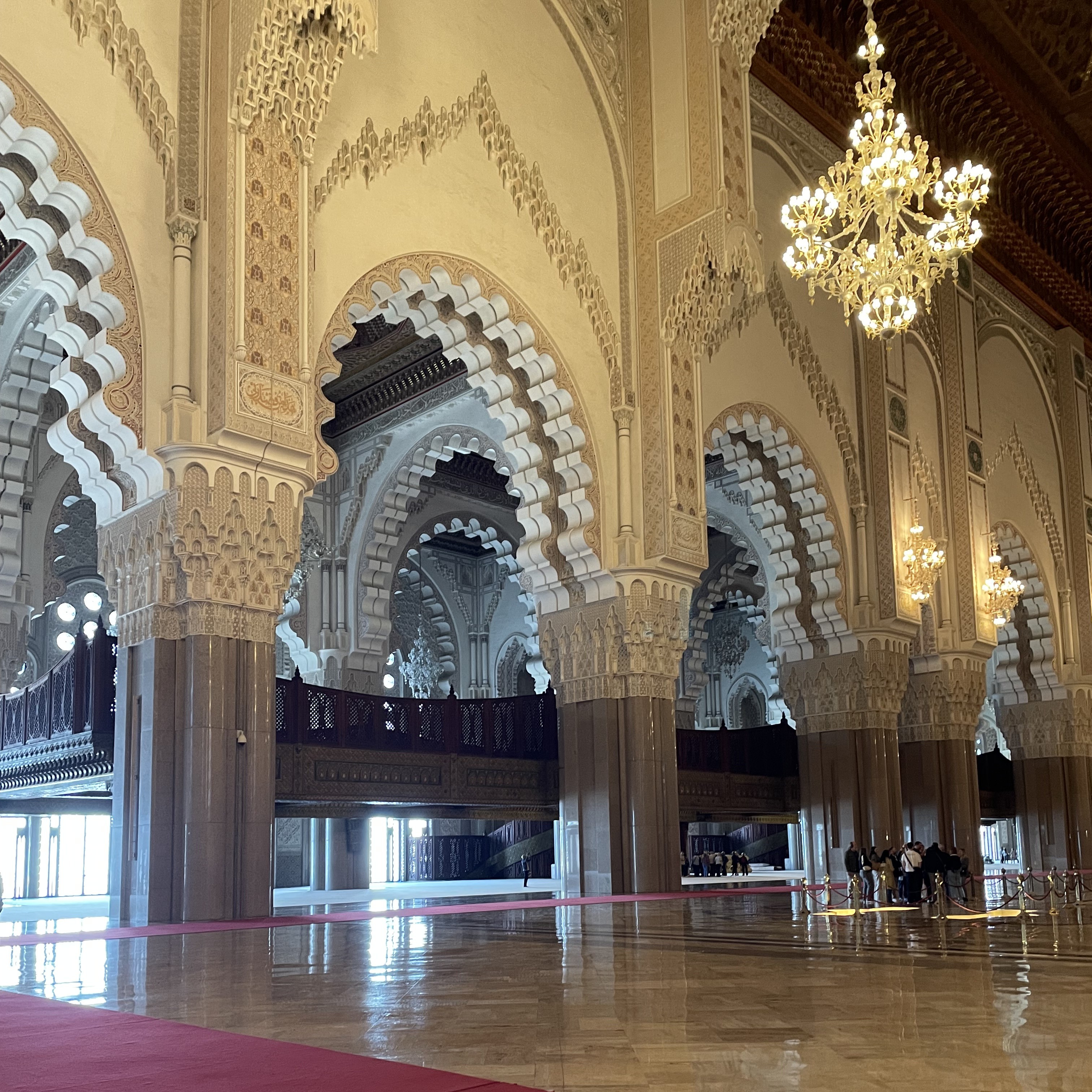
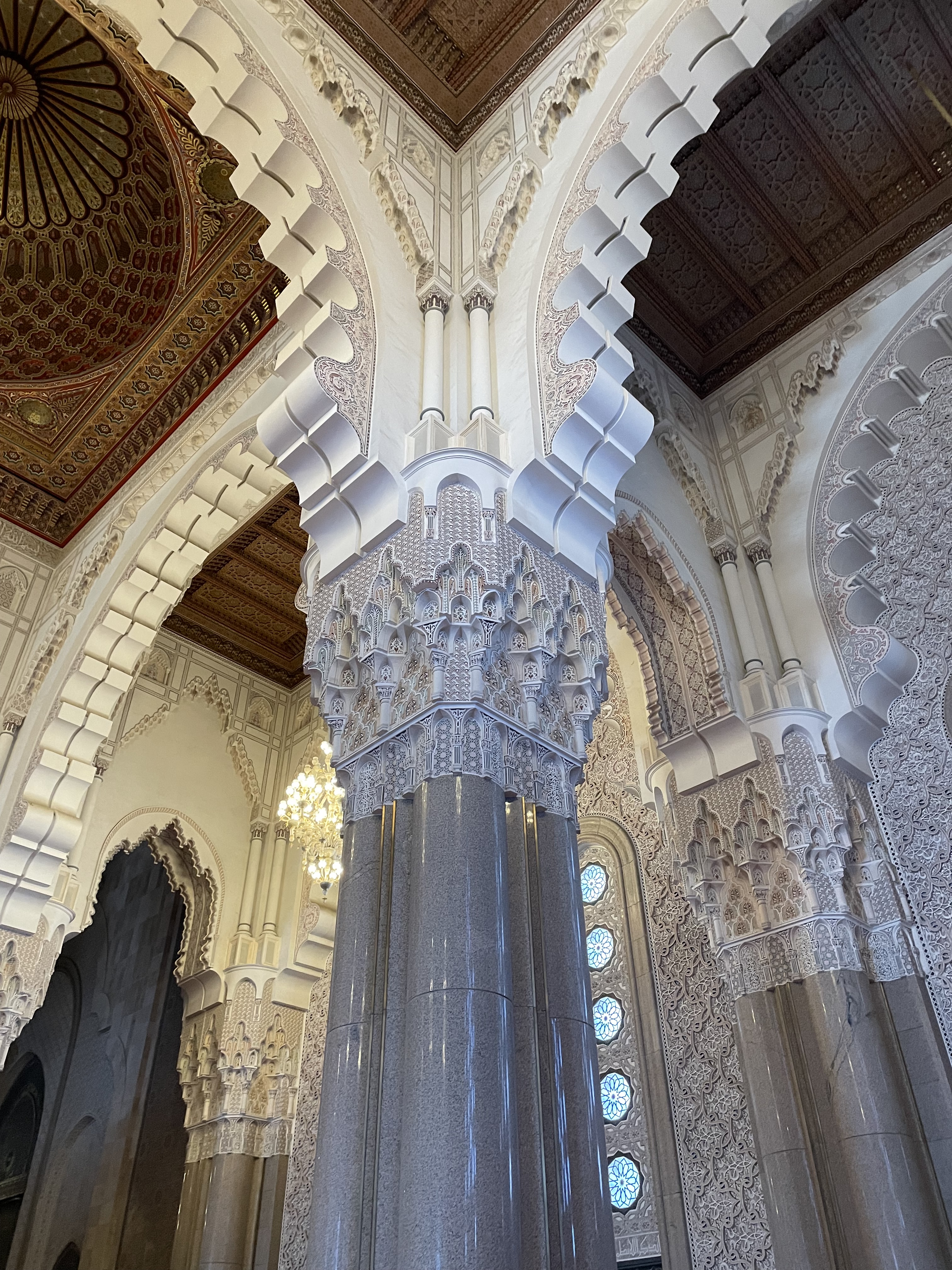
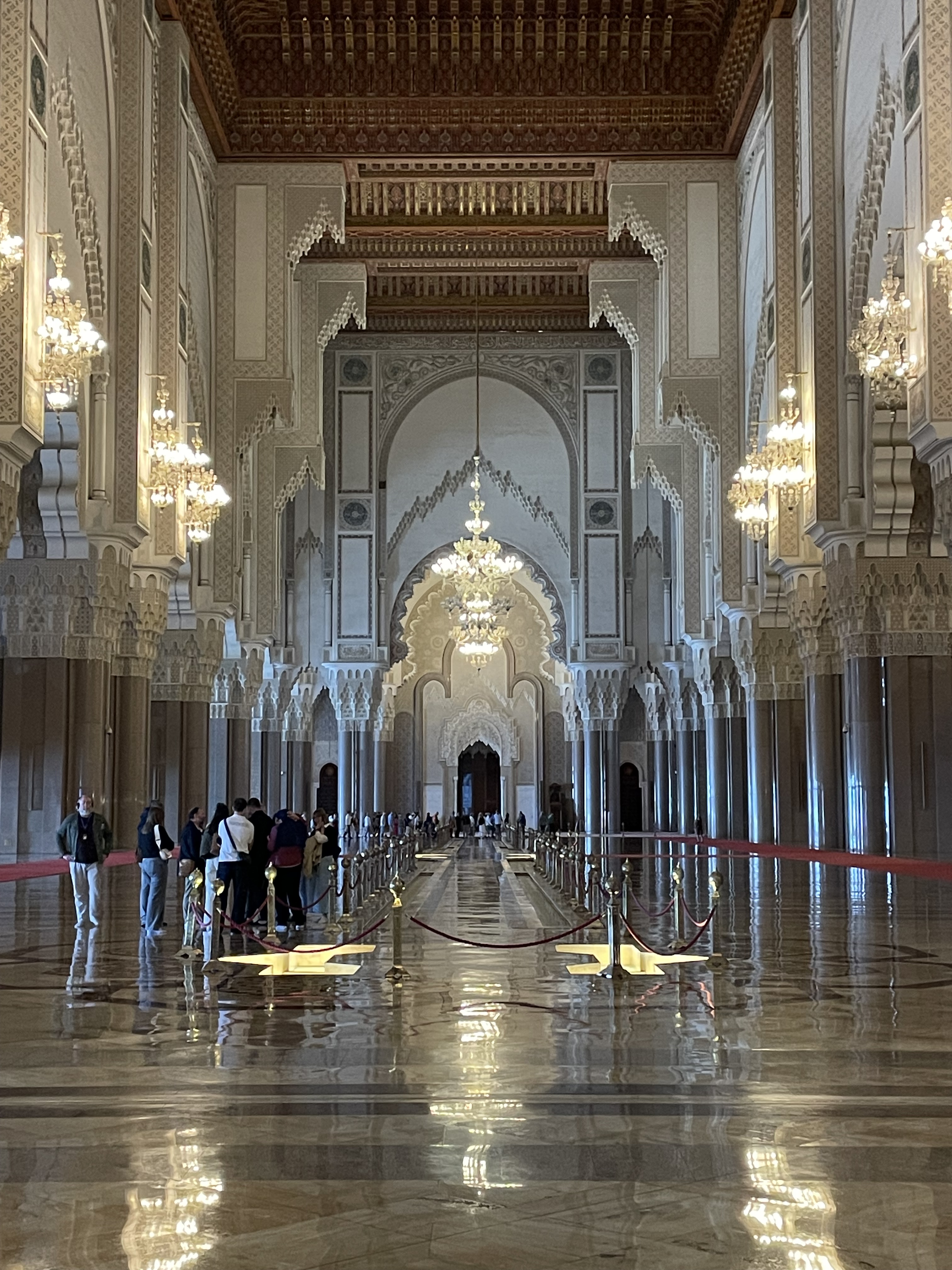
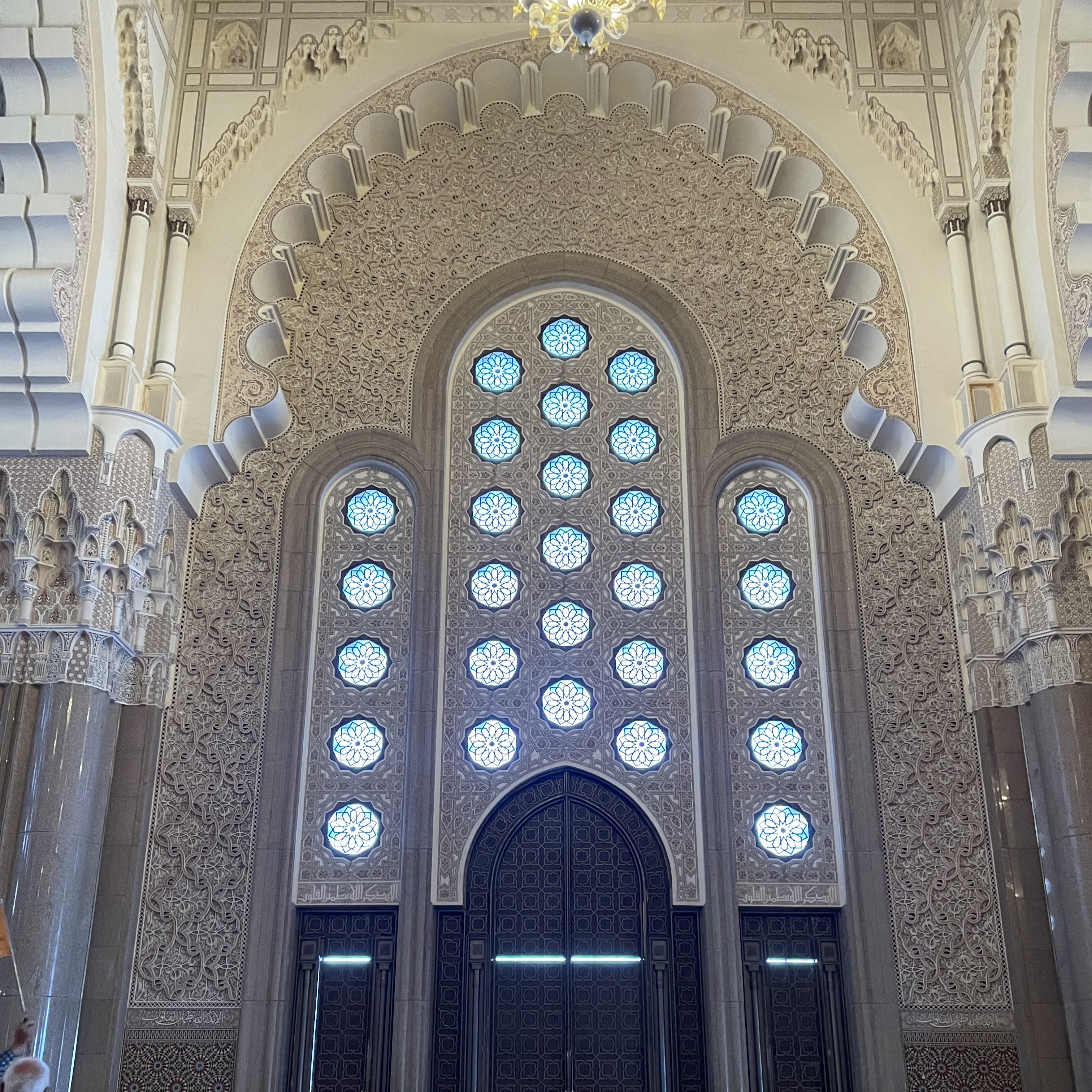
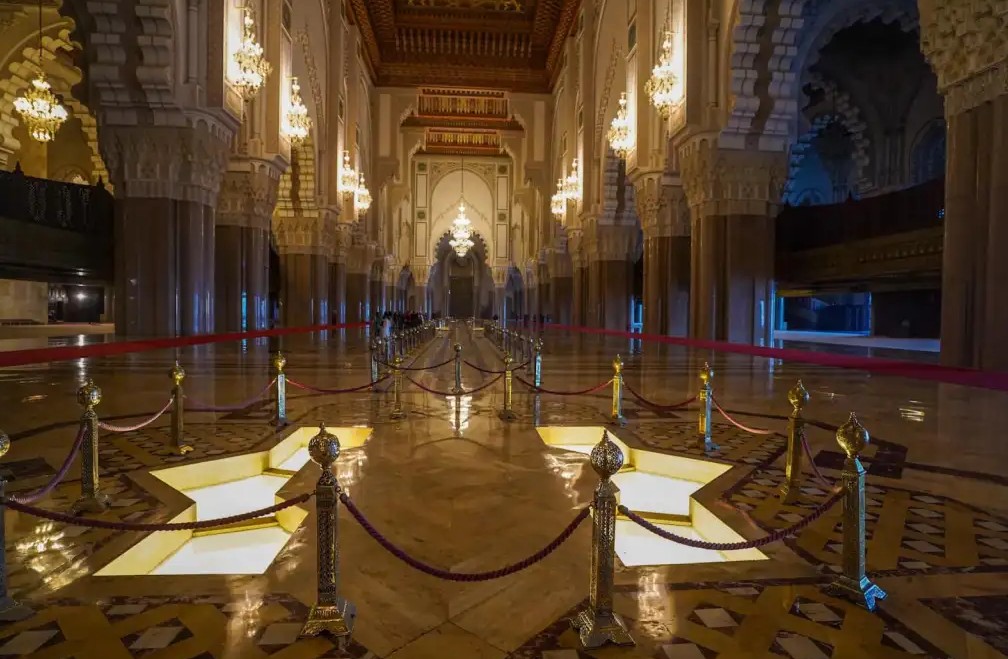
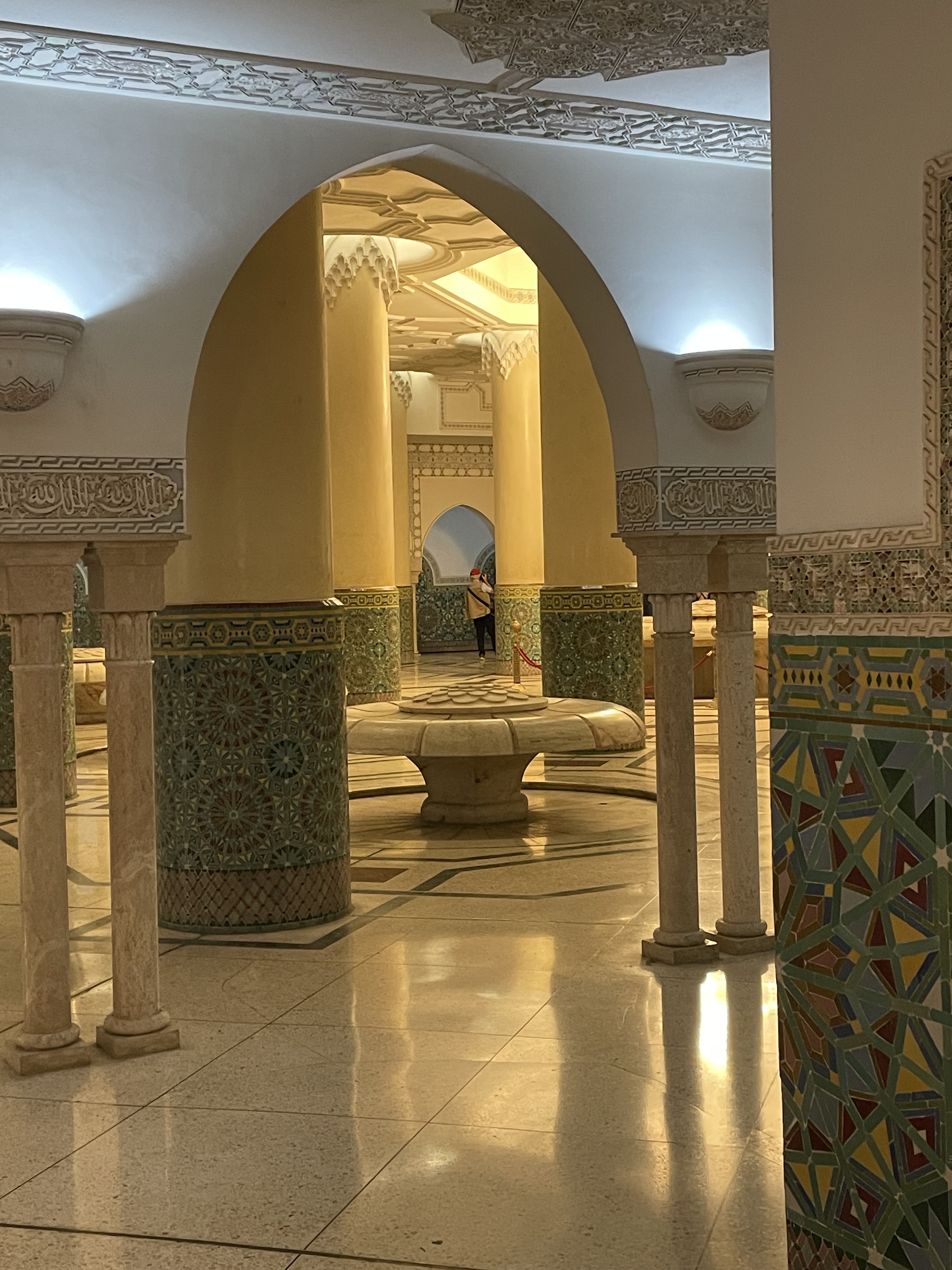
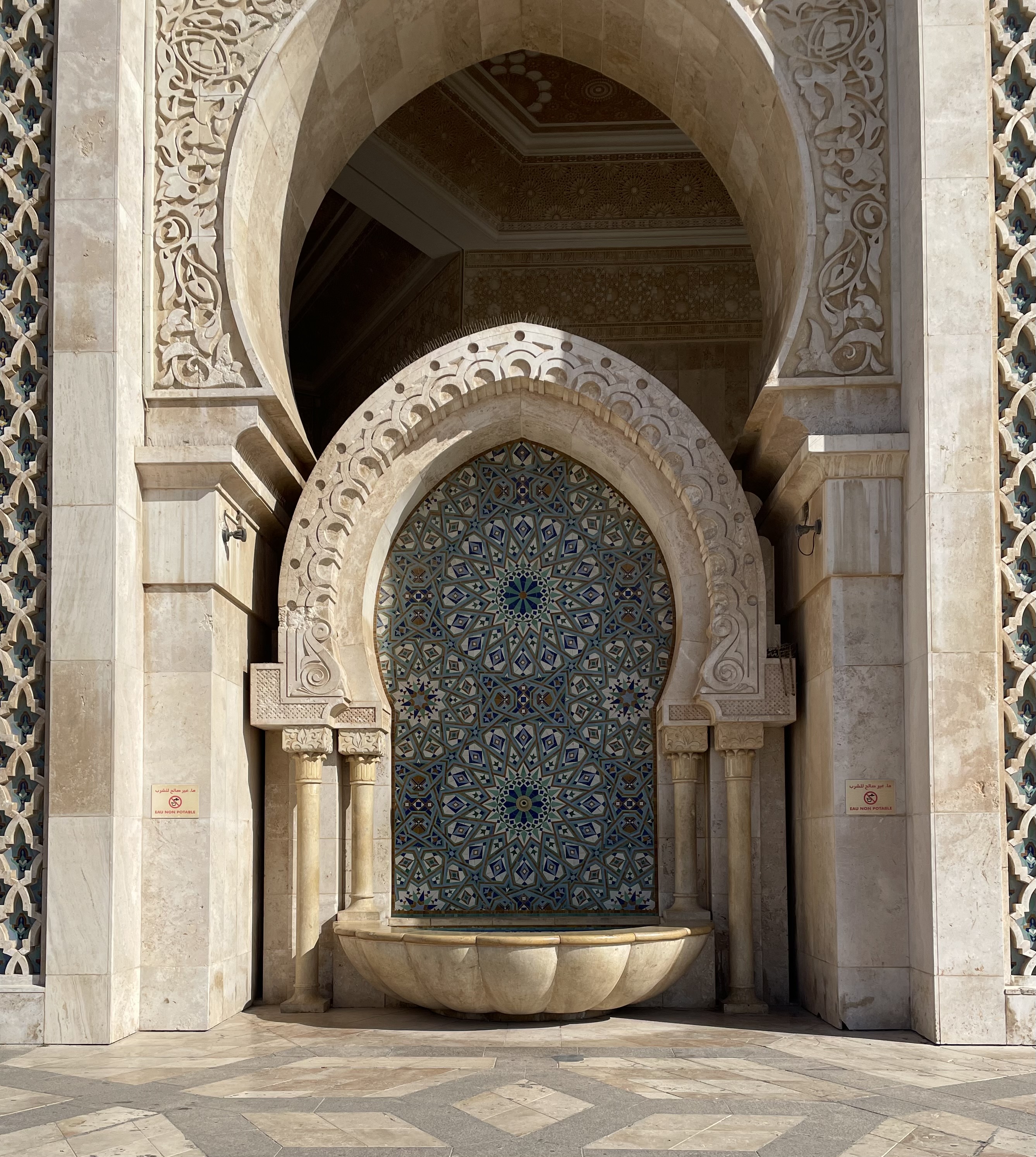
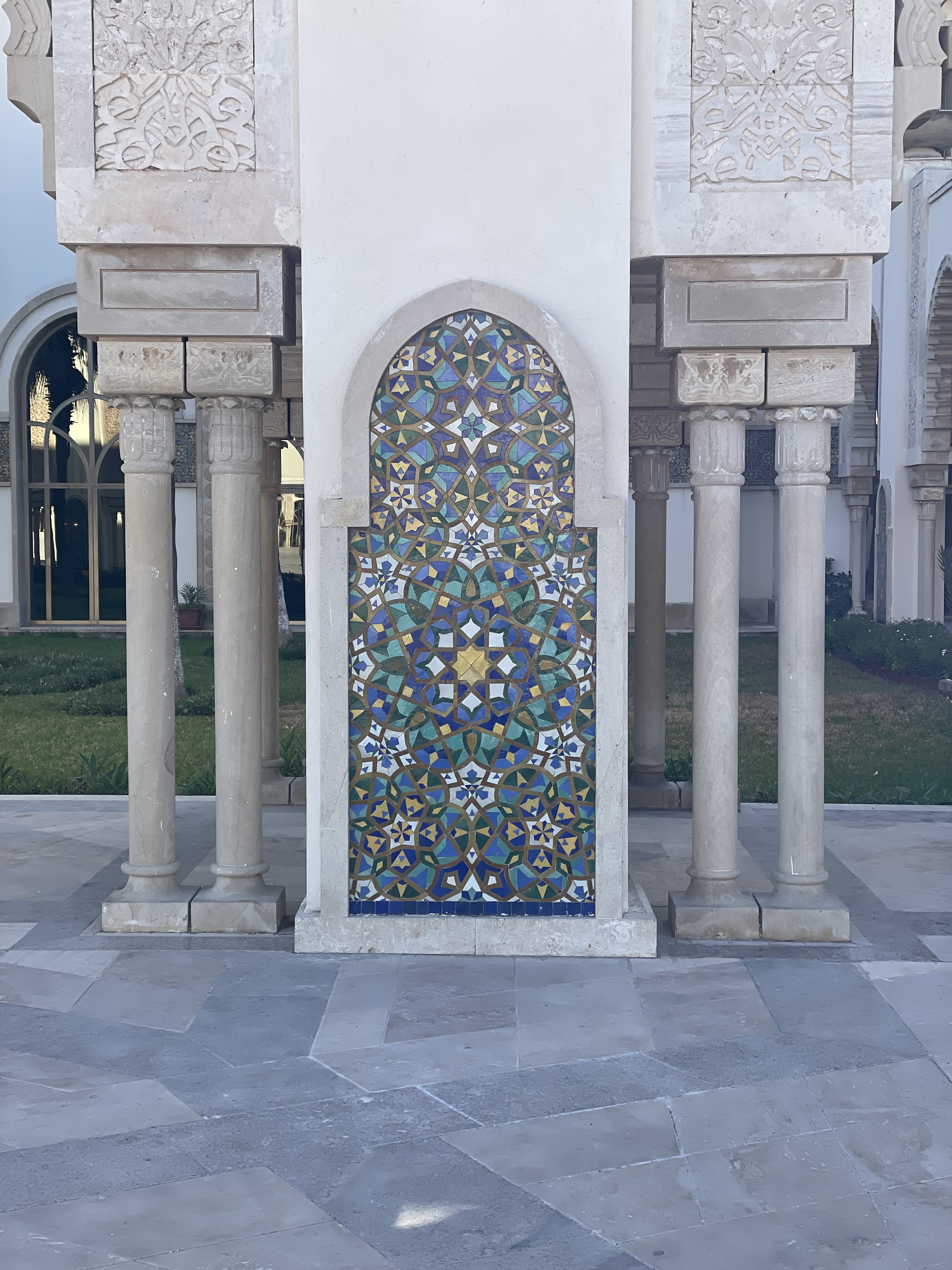
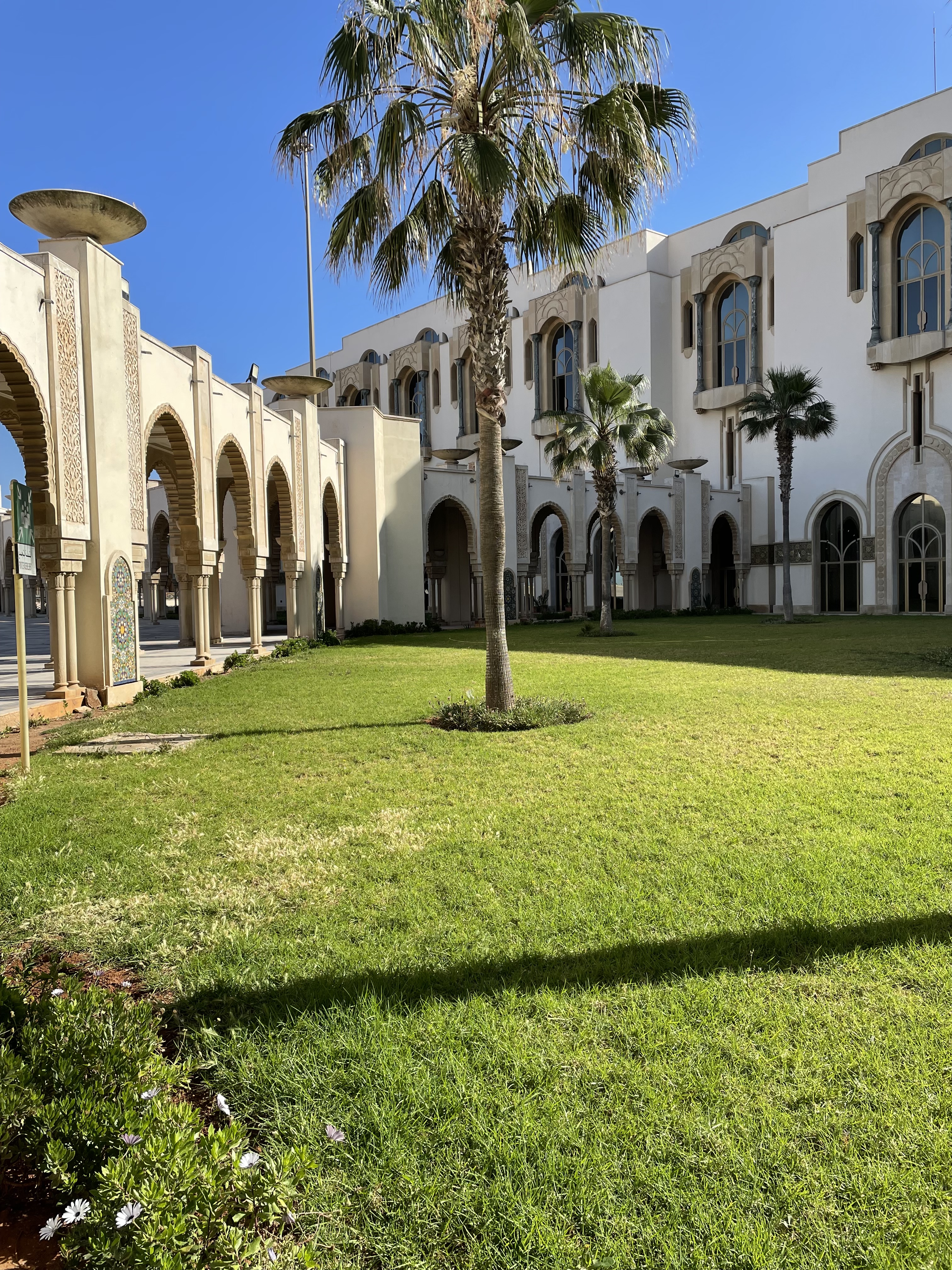
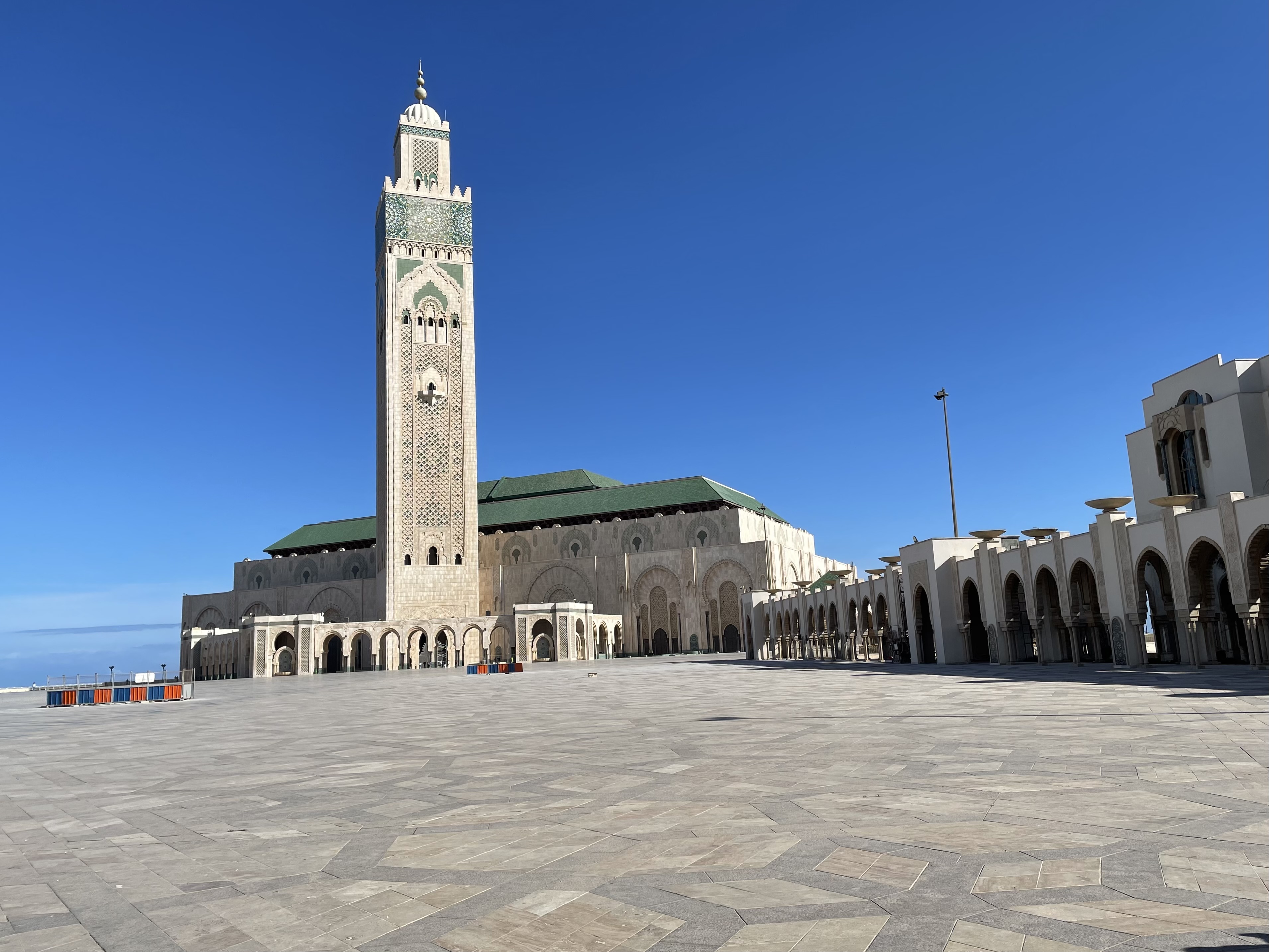
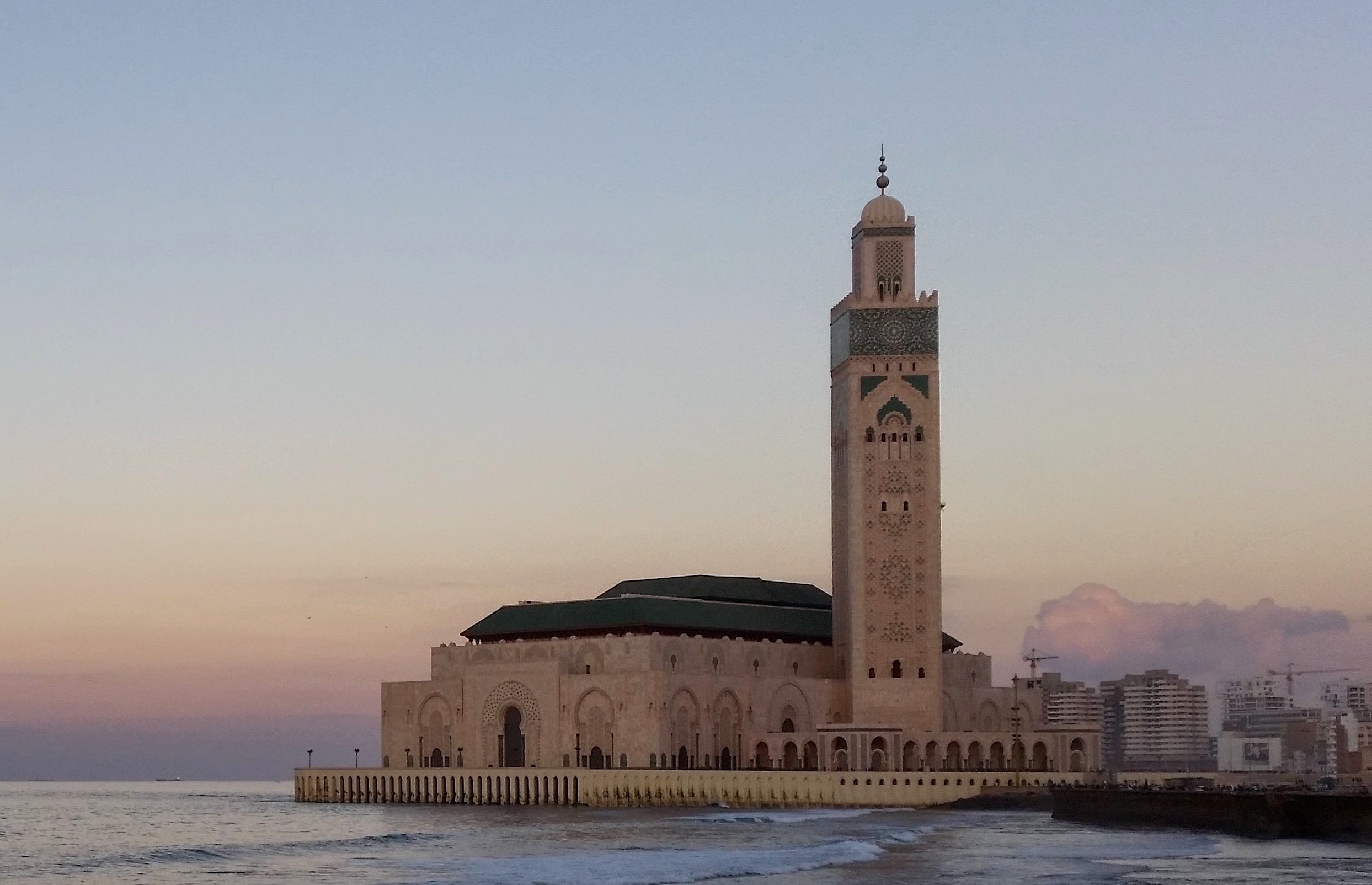
. . . the main feature on our tour in Casablanca was the impressive Mosque of Hassan II, with its soaring minaret.
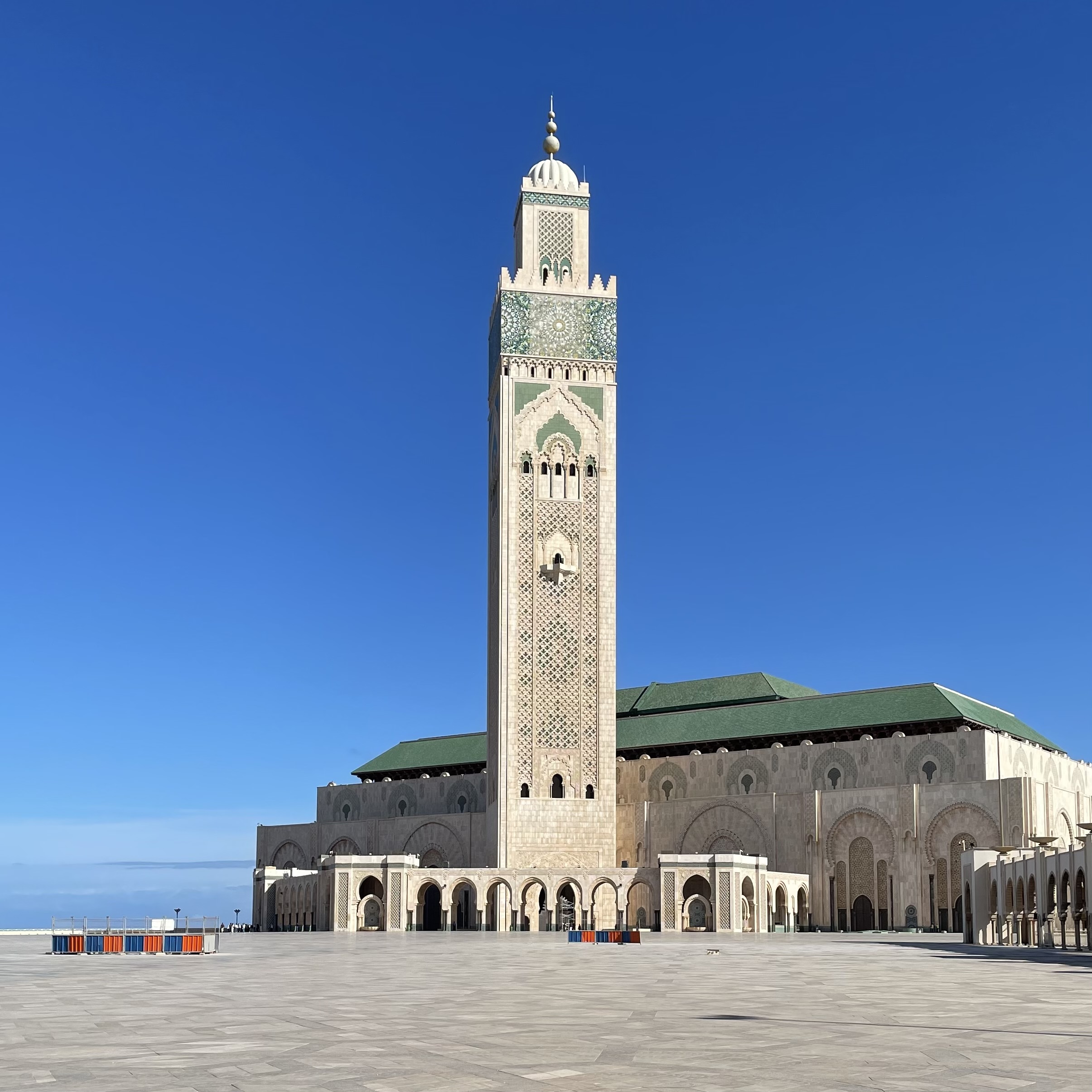
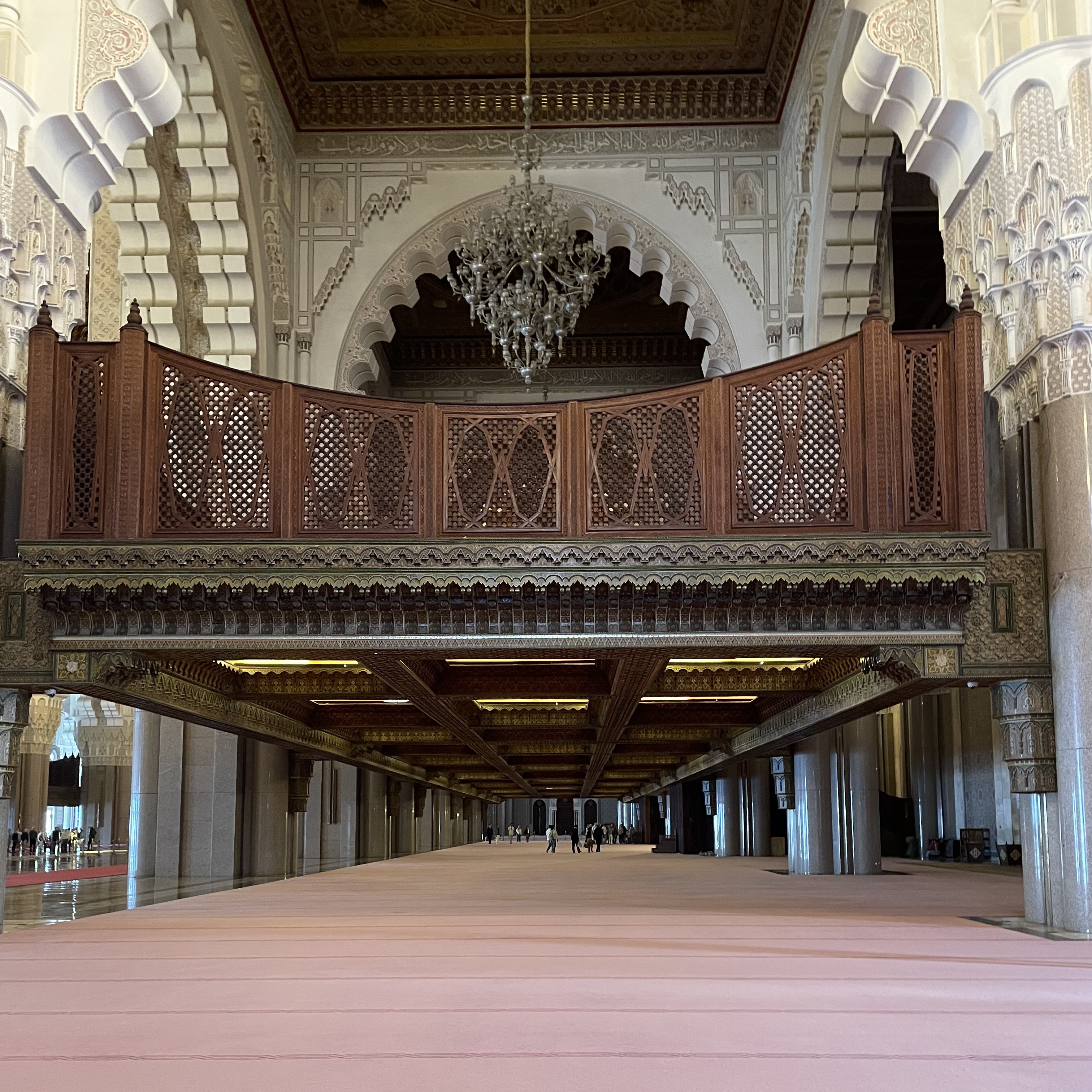
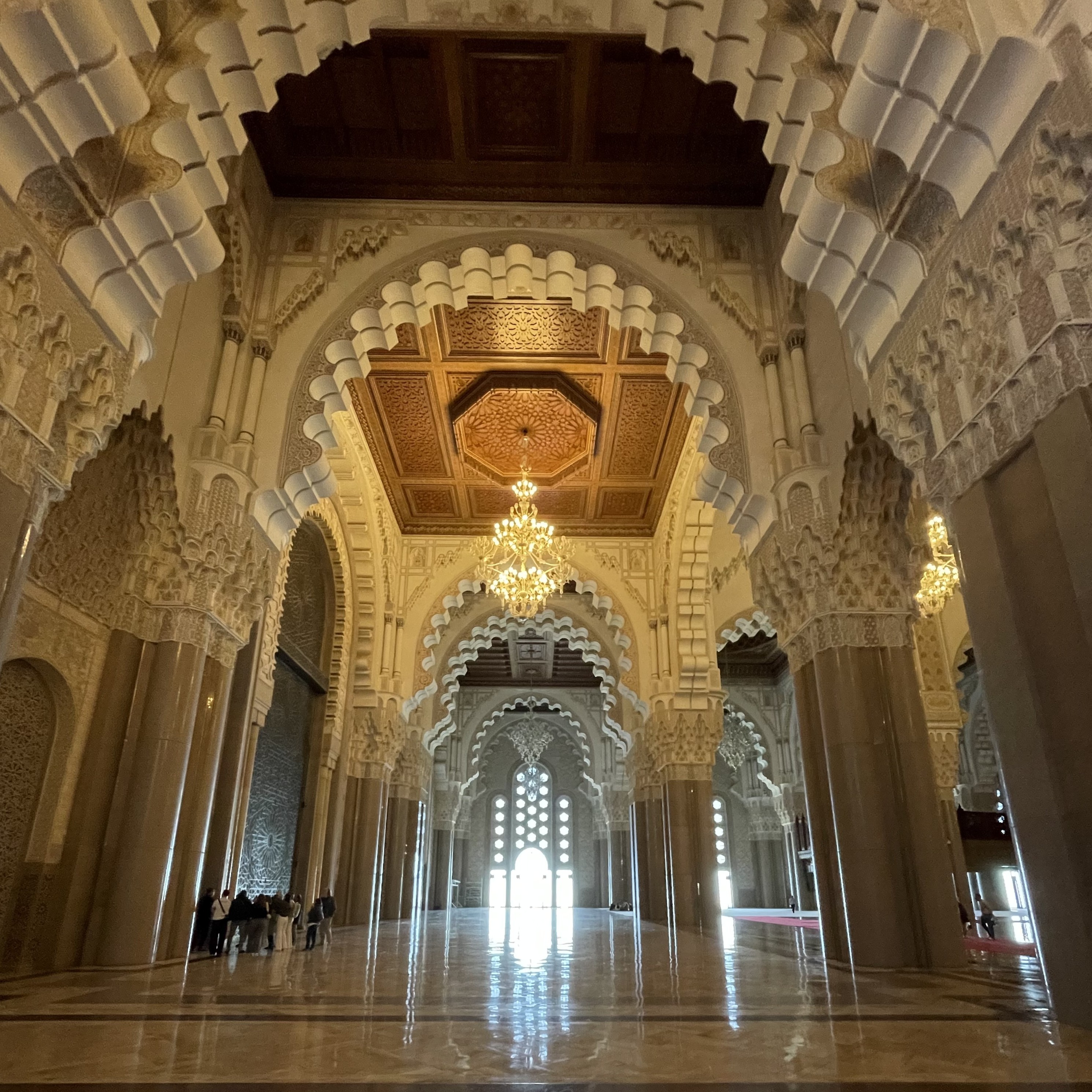
Overlooking the Atlantic, this is the only mosque in Morocco where non-Muslims are invited to visit. In 1980, during his birthday celebrations, King Hassan II announced that he wanted to build a landmark monument. Designed by the Moroccan-based French architect Michel Pinseau, work began in 1986 with many of the 10,000 craftsmen coming from across the country. It was completed in 1993 and is a remarkable landmark not only for the city but for the continent.
RABAT
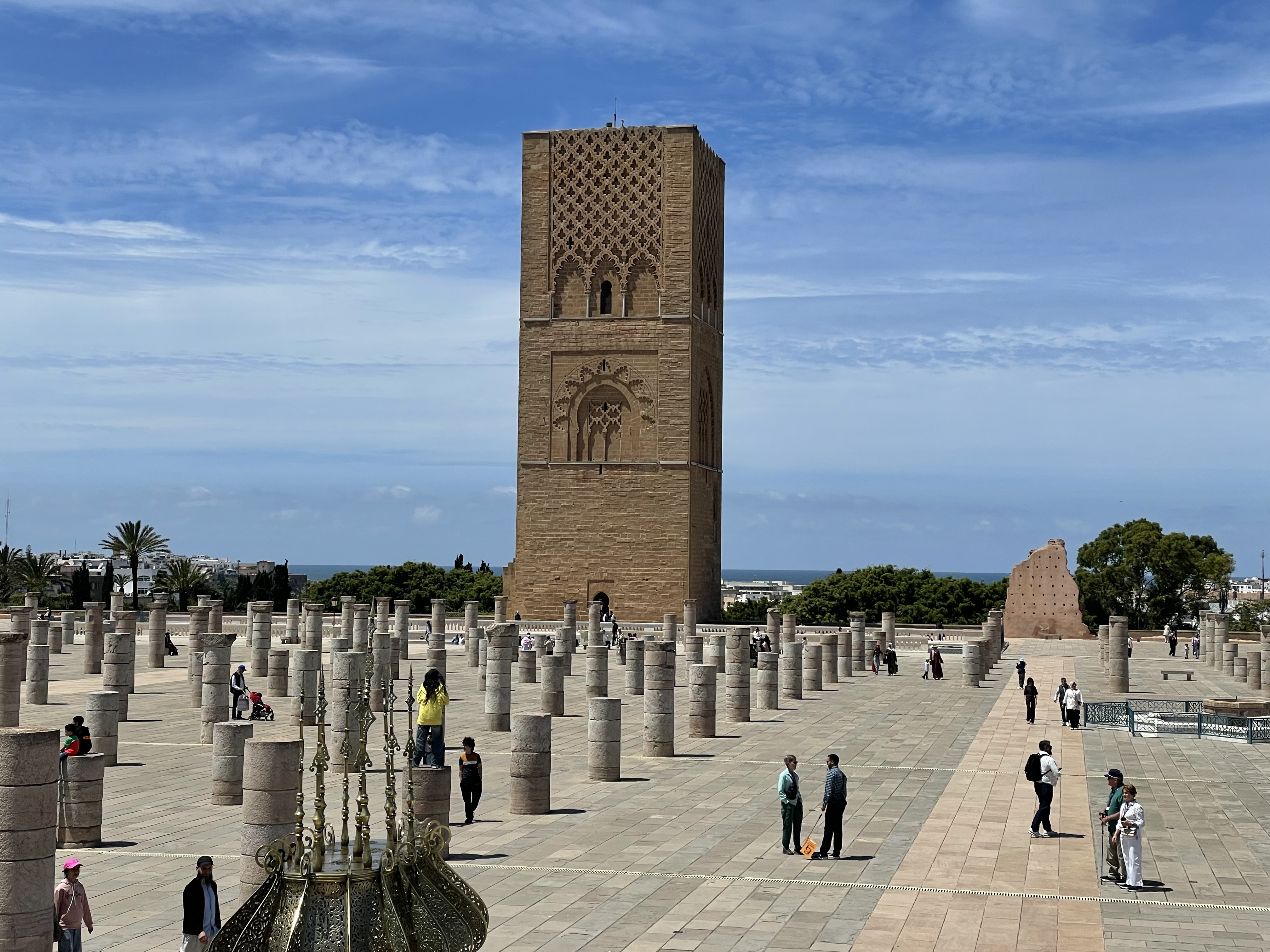
Rabat is the modern capital city of Morocco that is also undergoing a transformation in anticipation of the World Cup festivities. We toured the city by bus and spent time visiting the Hassan Tower and the famous Mausoleum of Mohammed V.
King Mohammed V ruled from 1927 to 1961 and is celebrated for protecting Morocco’s Jewish population of roughly 250,000 from the anti-Semitic laws and deportations of the Nazi-collaborationist Vichy French regime during World War II. When the Vichy government took control of North Africa in 1940, it pressured Morocco to enforce discriminatory race laws modeled on the Nuremberg Laws. Mohammed V fiercely resisted these measures, famously declaring that there were no Jews in Morocco, only Moroccan subjects, and that he would not associate himself with laws that treated them differently.
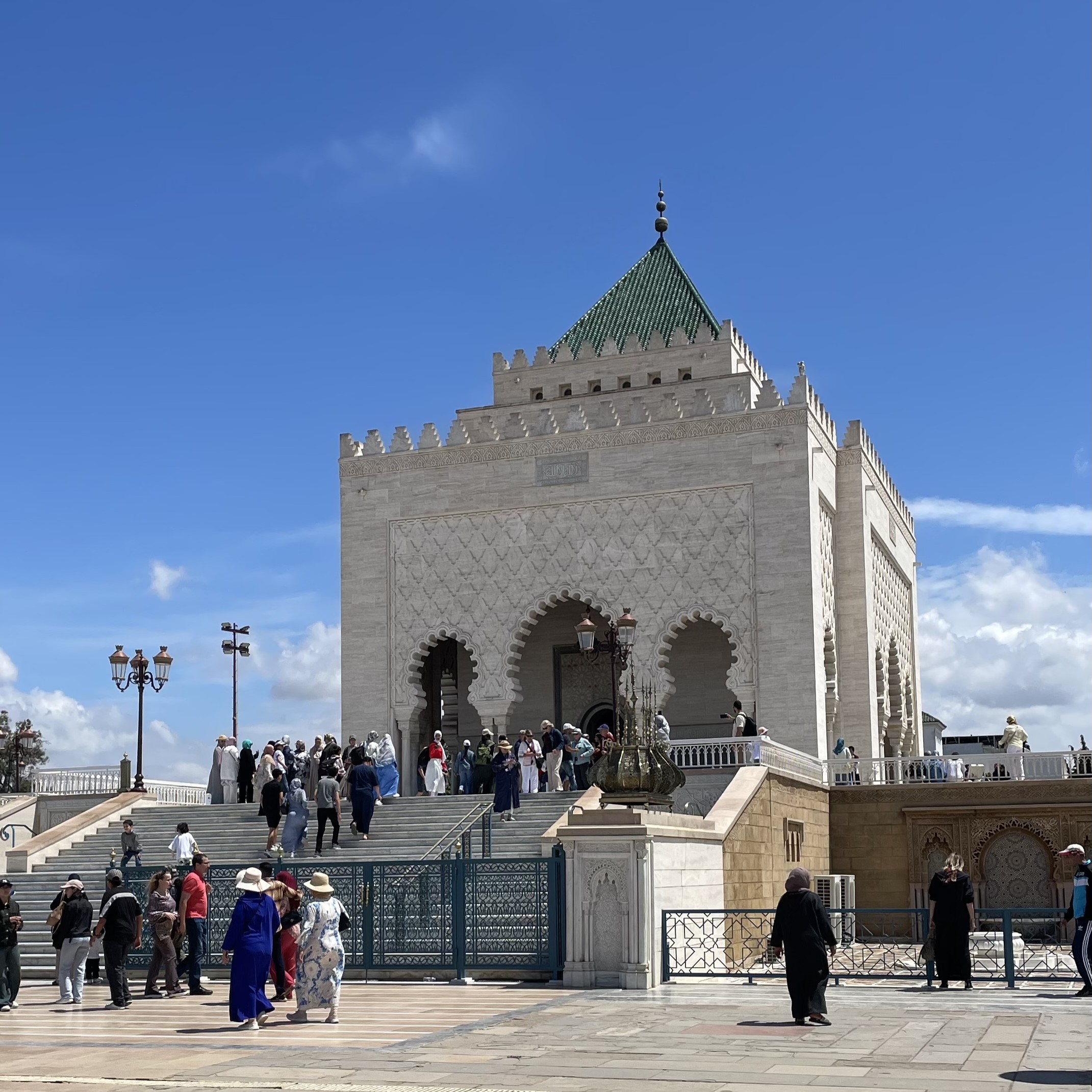
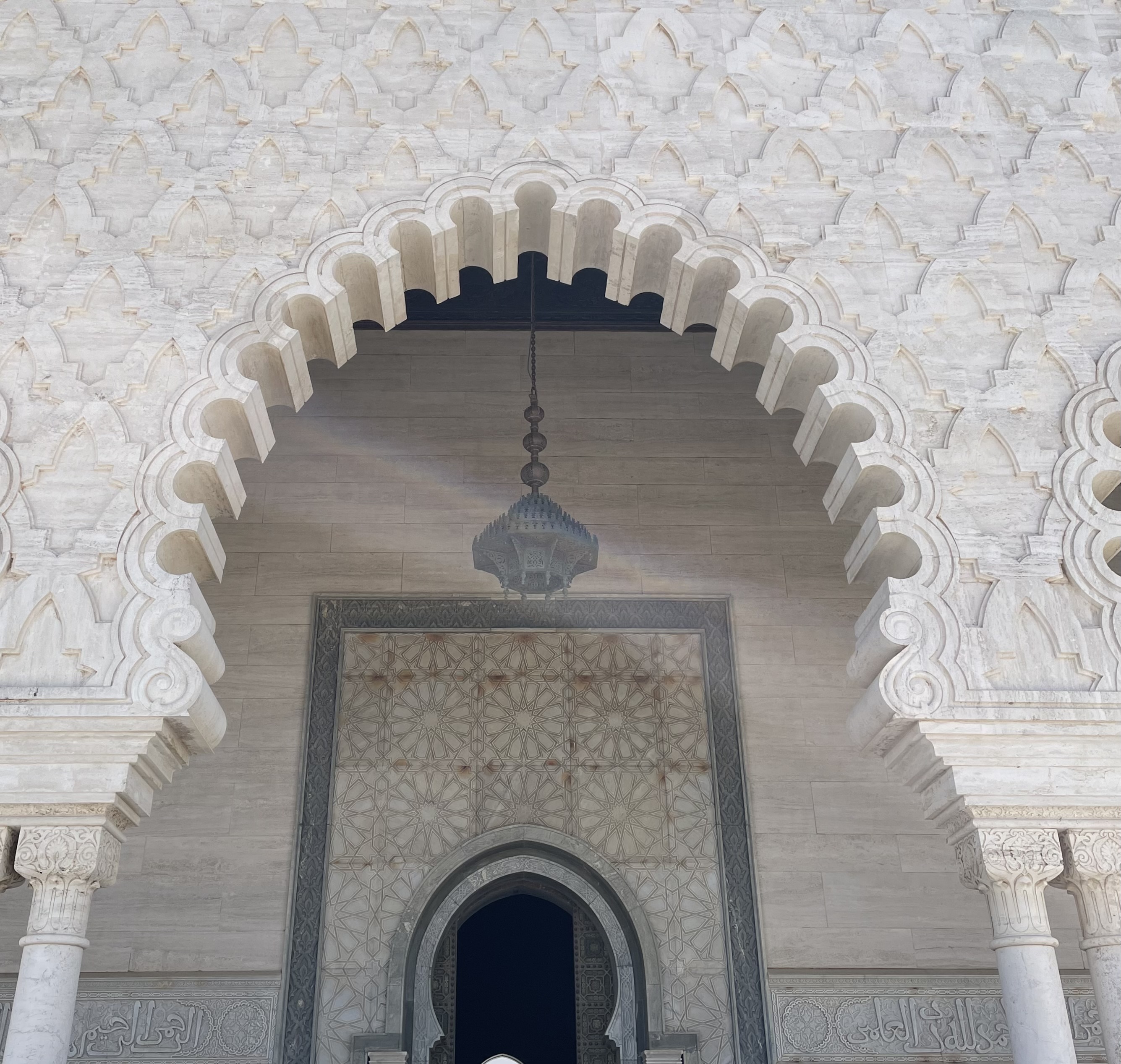
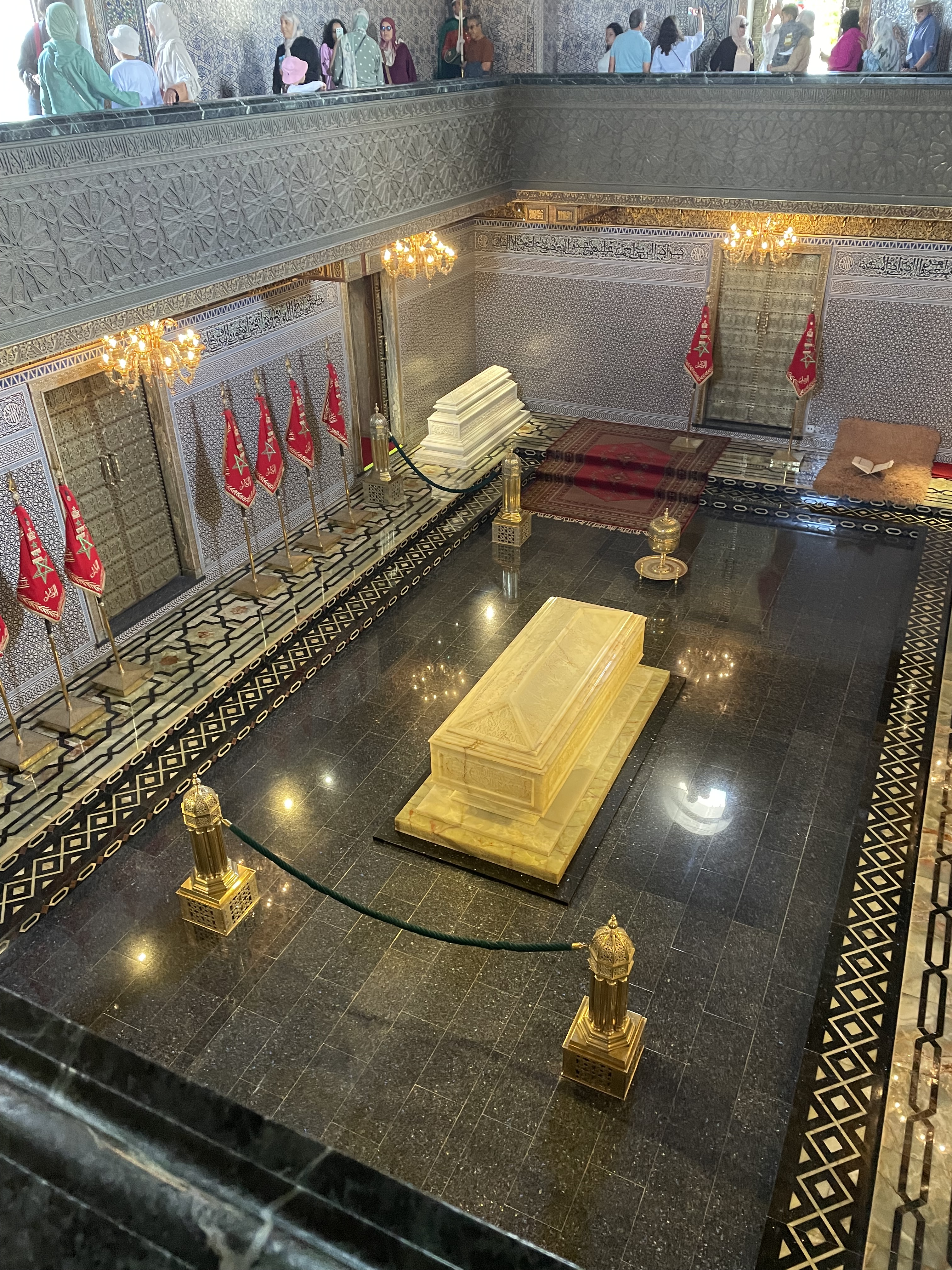
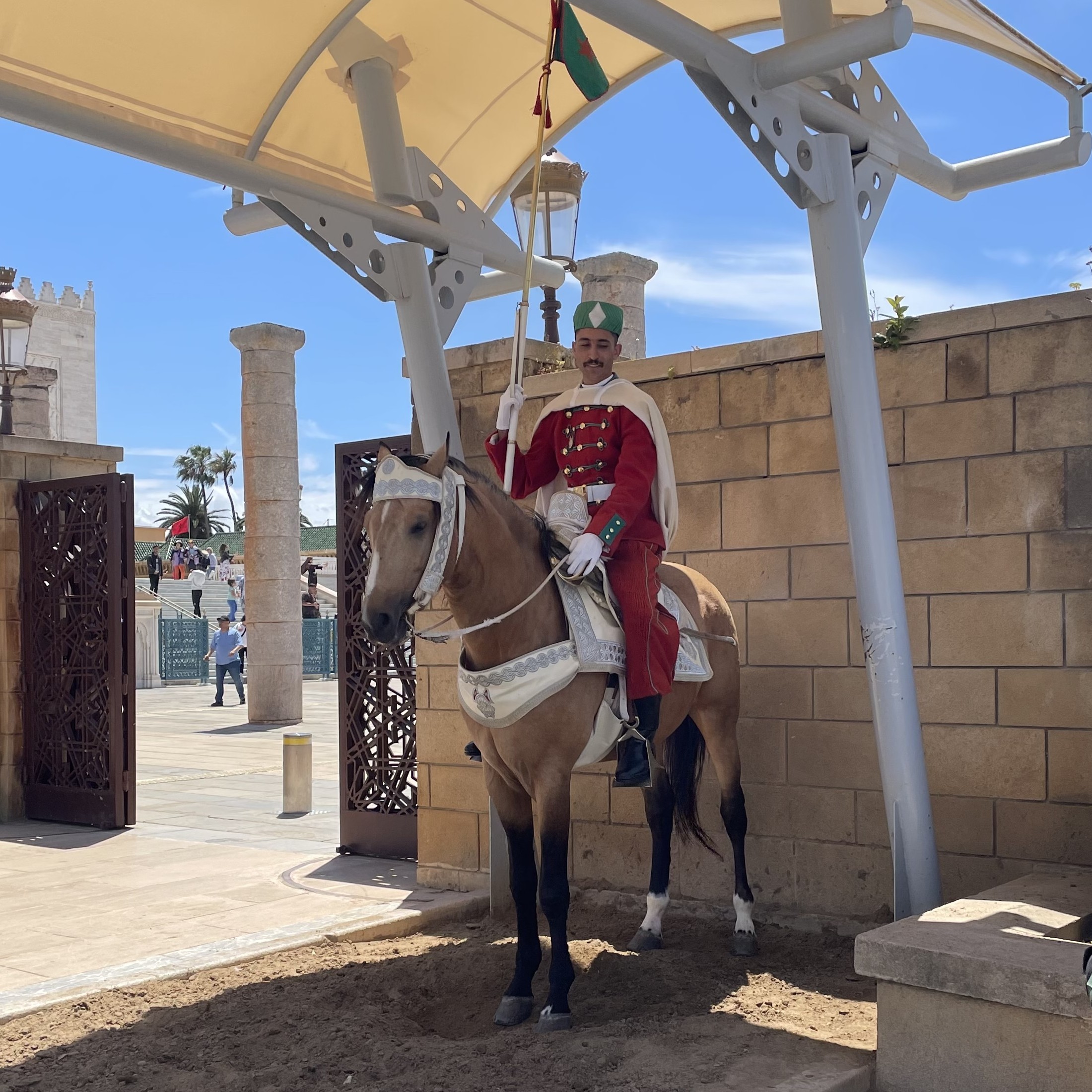
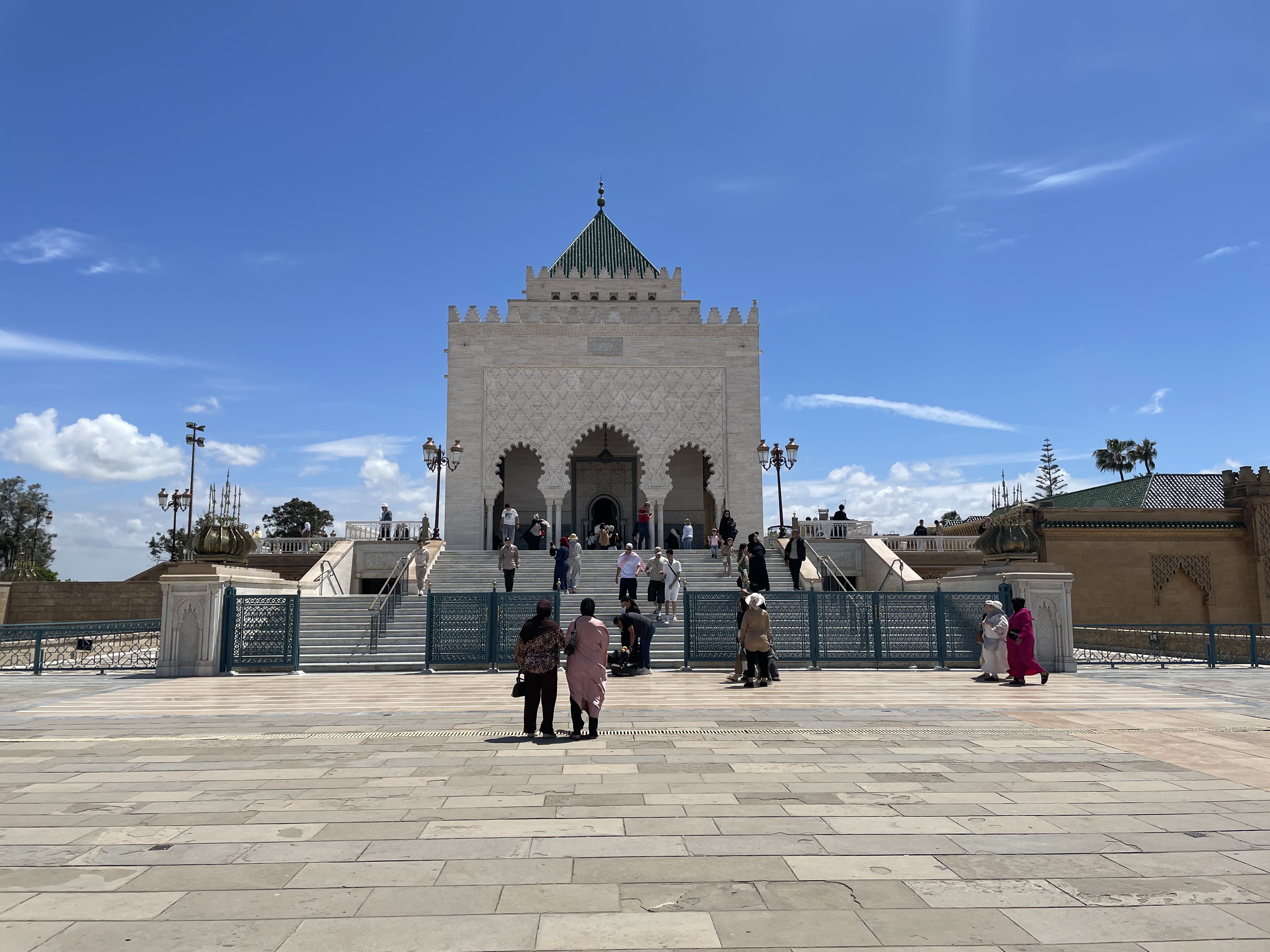
It is clear today that Mohammed V is venerated by the Moroccan Jewish diaspora. When he passed away in 1961, thousands of Jews attended mourning ceremonies and the country remains a powerful symbol of Muslim-Jewish-Christian coexistence. We saw synagogues and Christian churches alongside mosques in every city we visited.
Rabat has another reason for celebration. Since 2021, UNESCO has designated one city each year the World Book Capital, highlighting World Heritage Site cities dedicated to fostering literacy, lifelong learning, copyright protection and freedom of expression. In 2026 that city is Rabat, which is quite the book-lover’s haven. The city houses 54 publishing houses and a growing number of bookstores. It also hosts the third-largest international book and publishing fair in Africa. Rabat has also been credited with empowering local women and youth through reading and fighting illiteracy, especially among underserved communities, stances which deserve celebration and support.
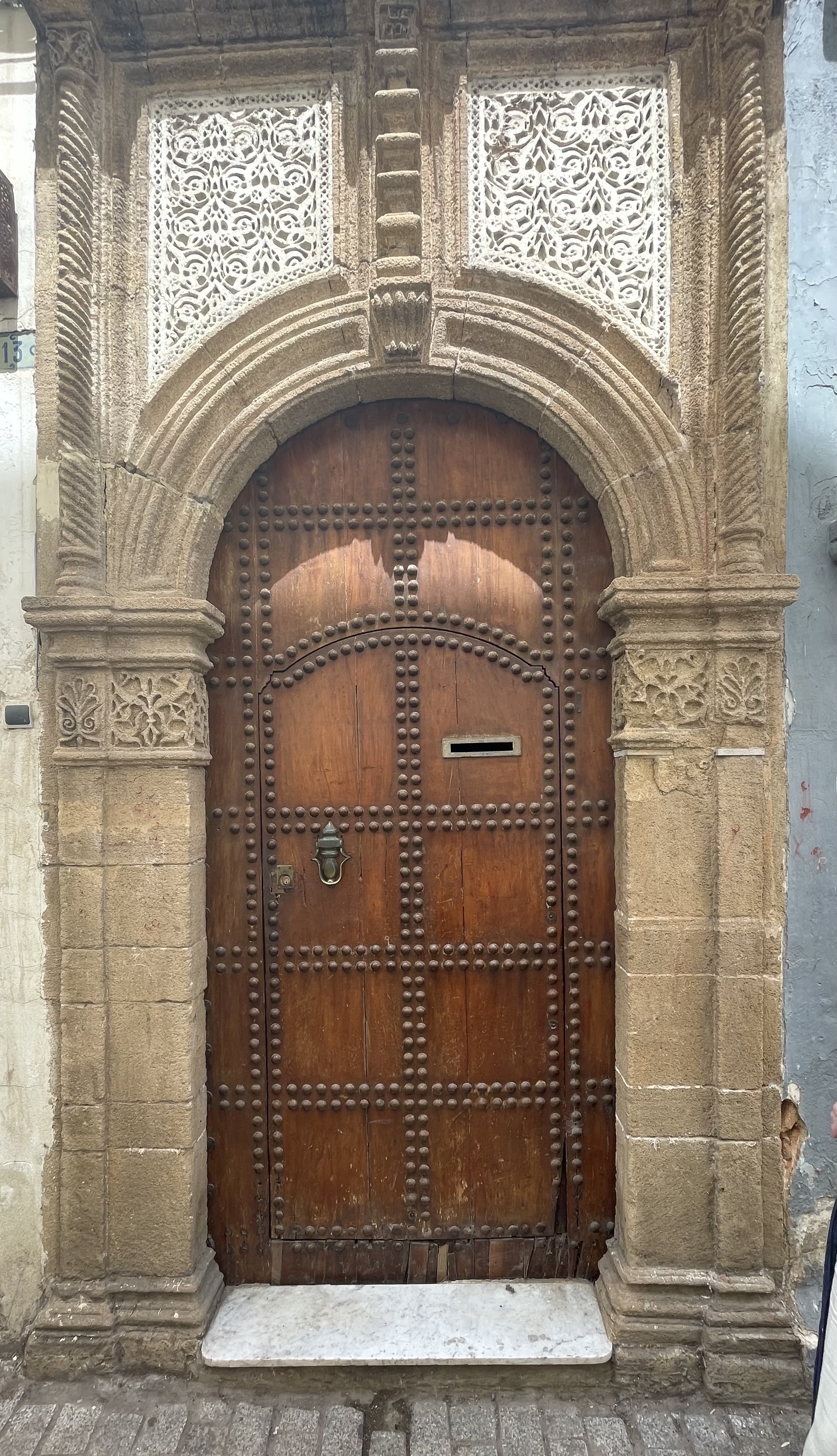
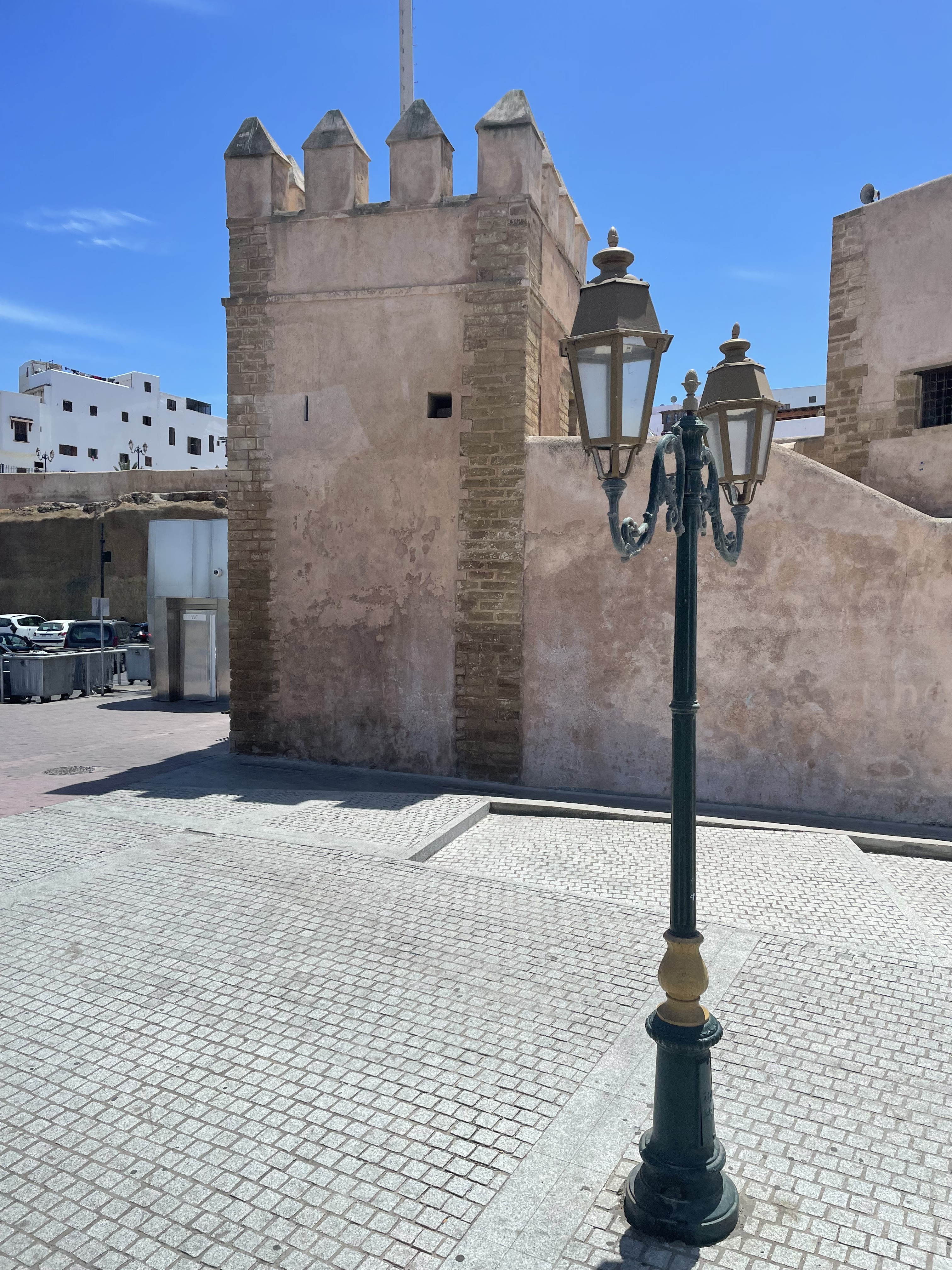
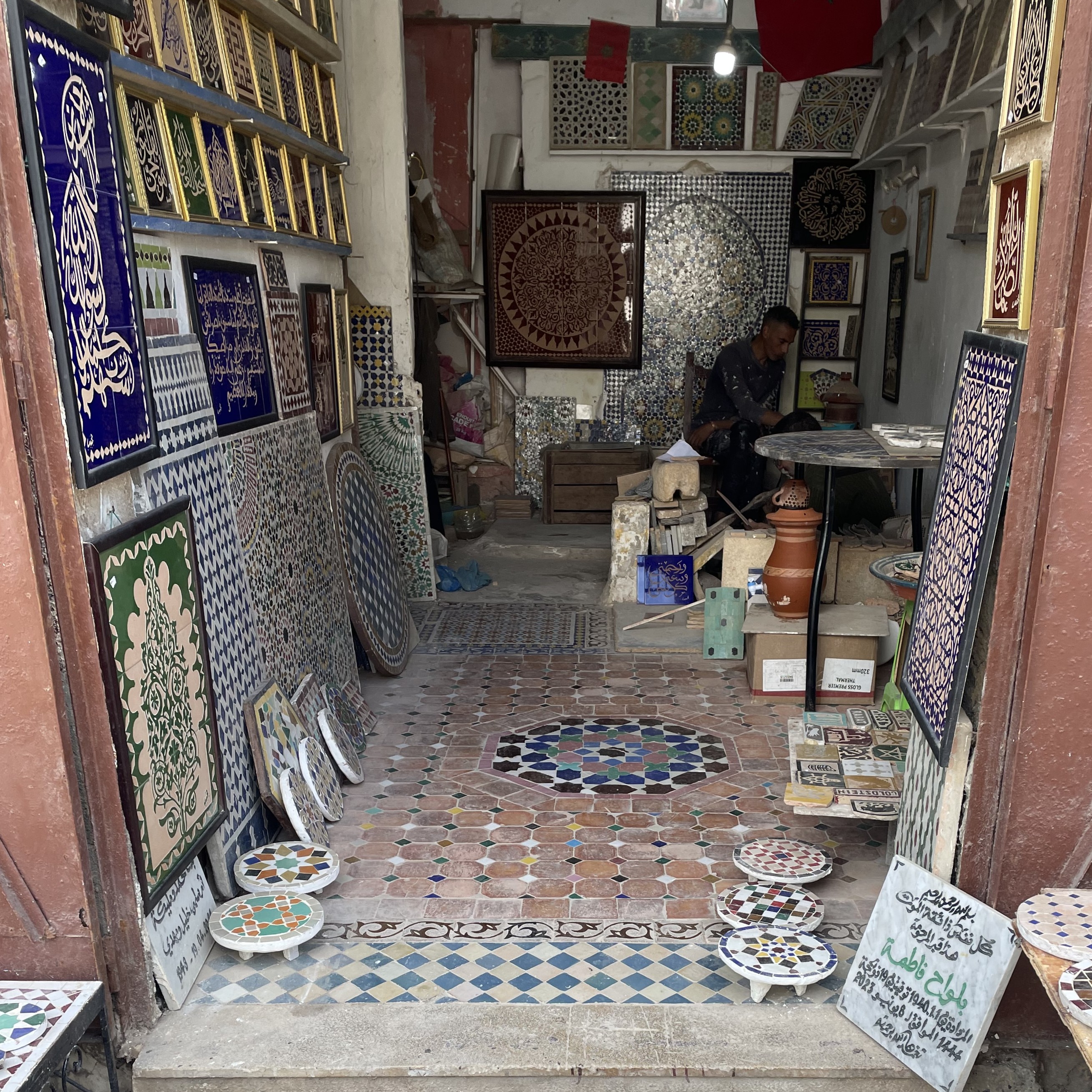
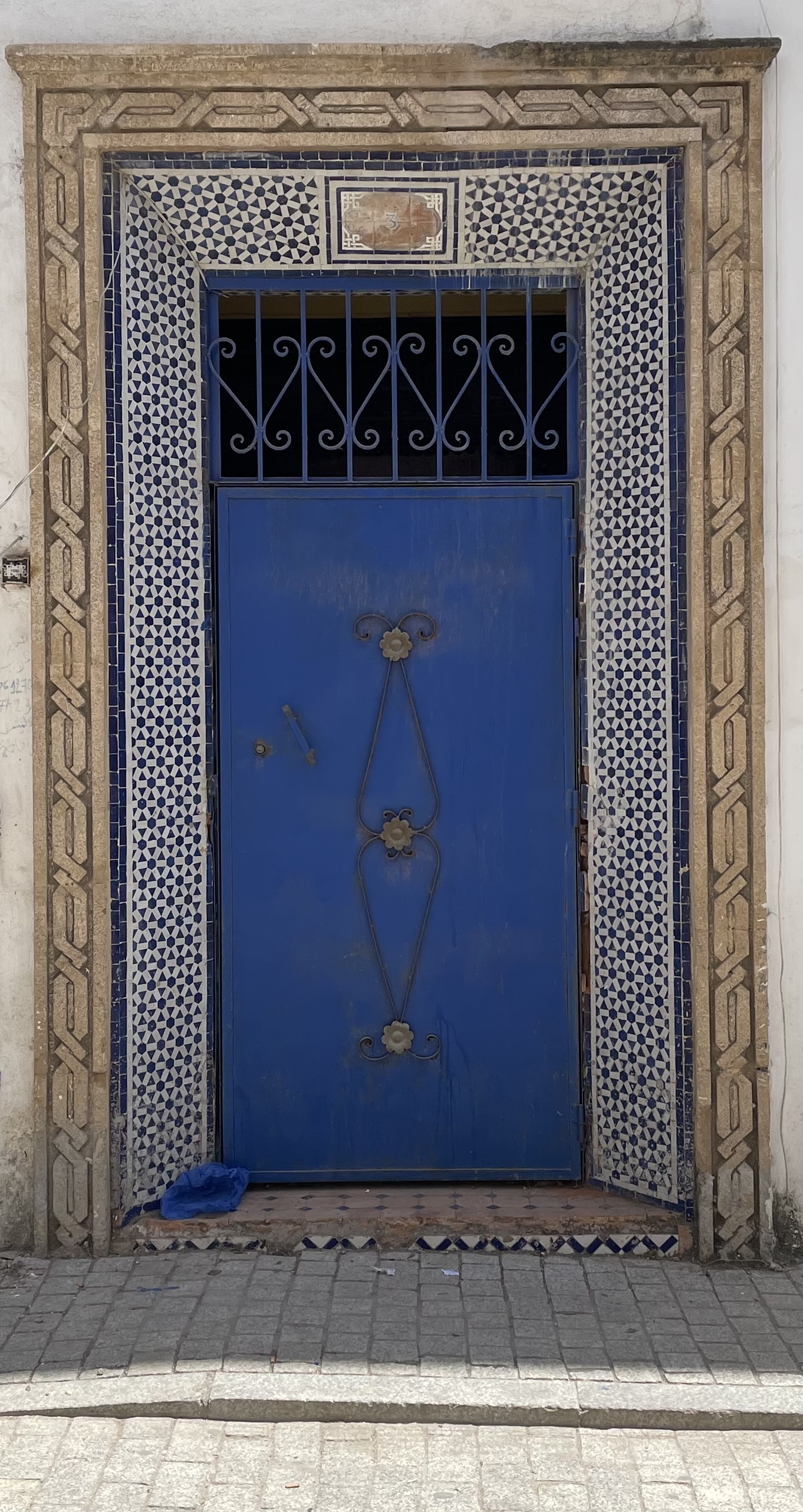
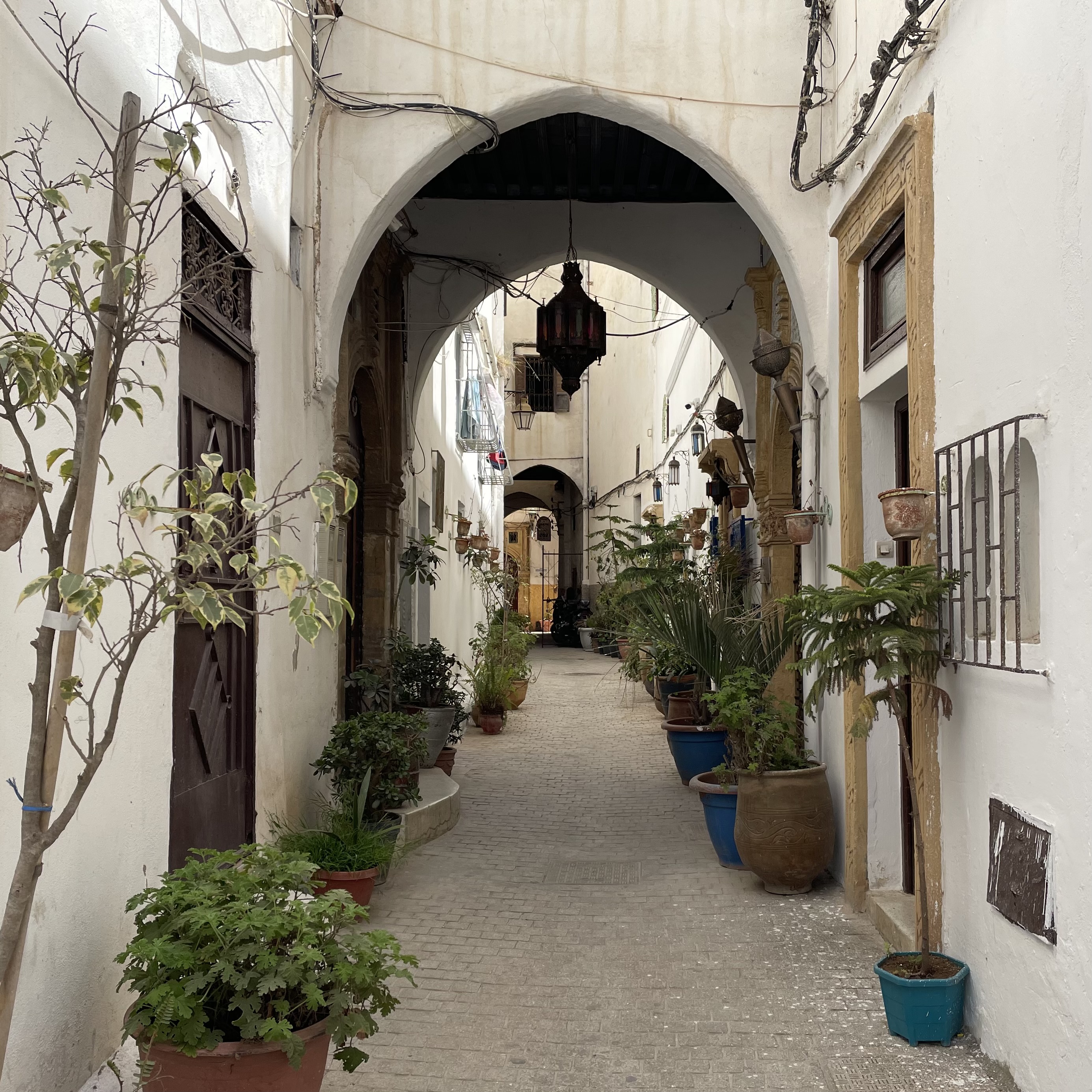
As we saw when we toured the city, Morocco’s capital is a bustling mix of old and new, much like the country itself.
TANGIER
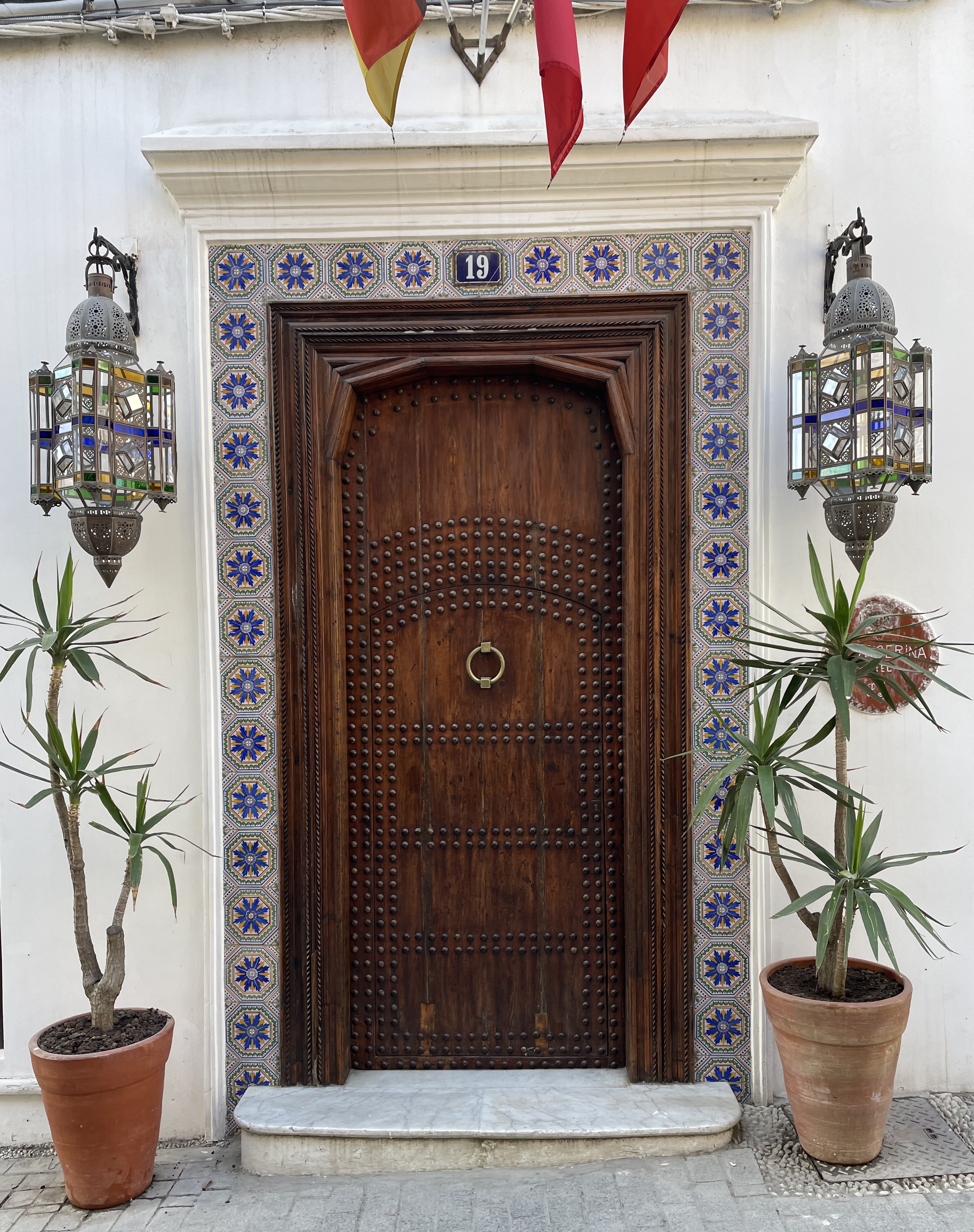
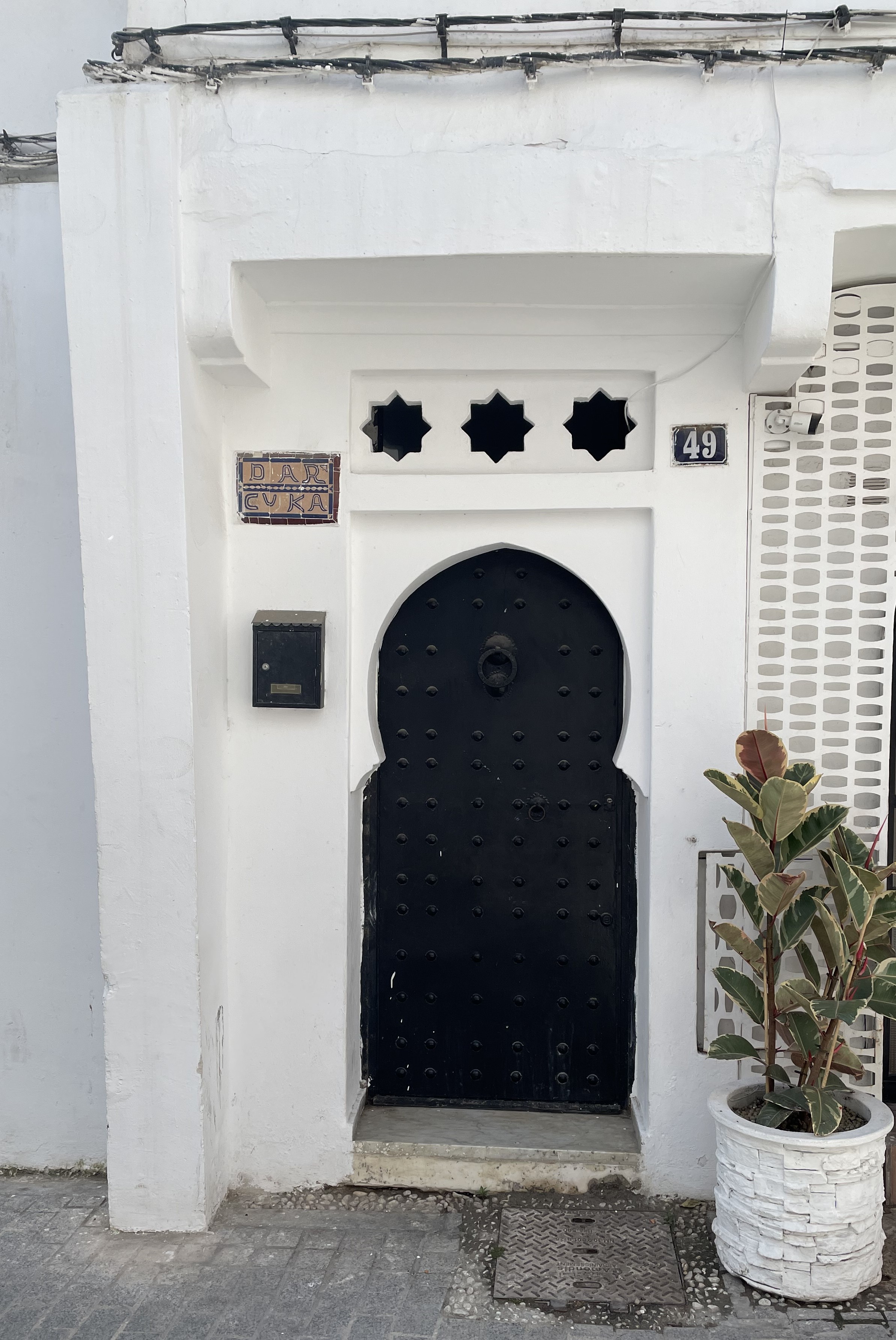
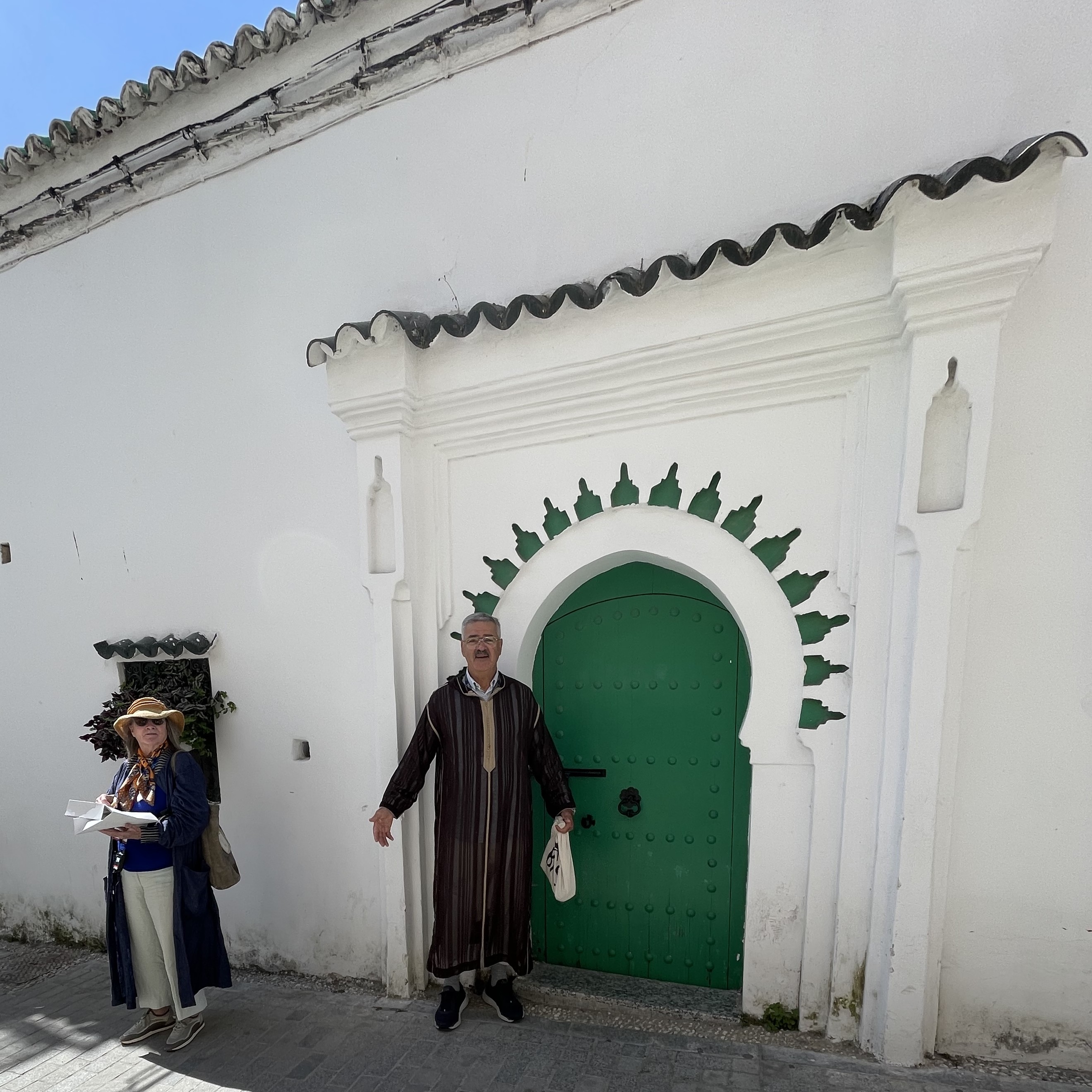
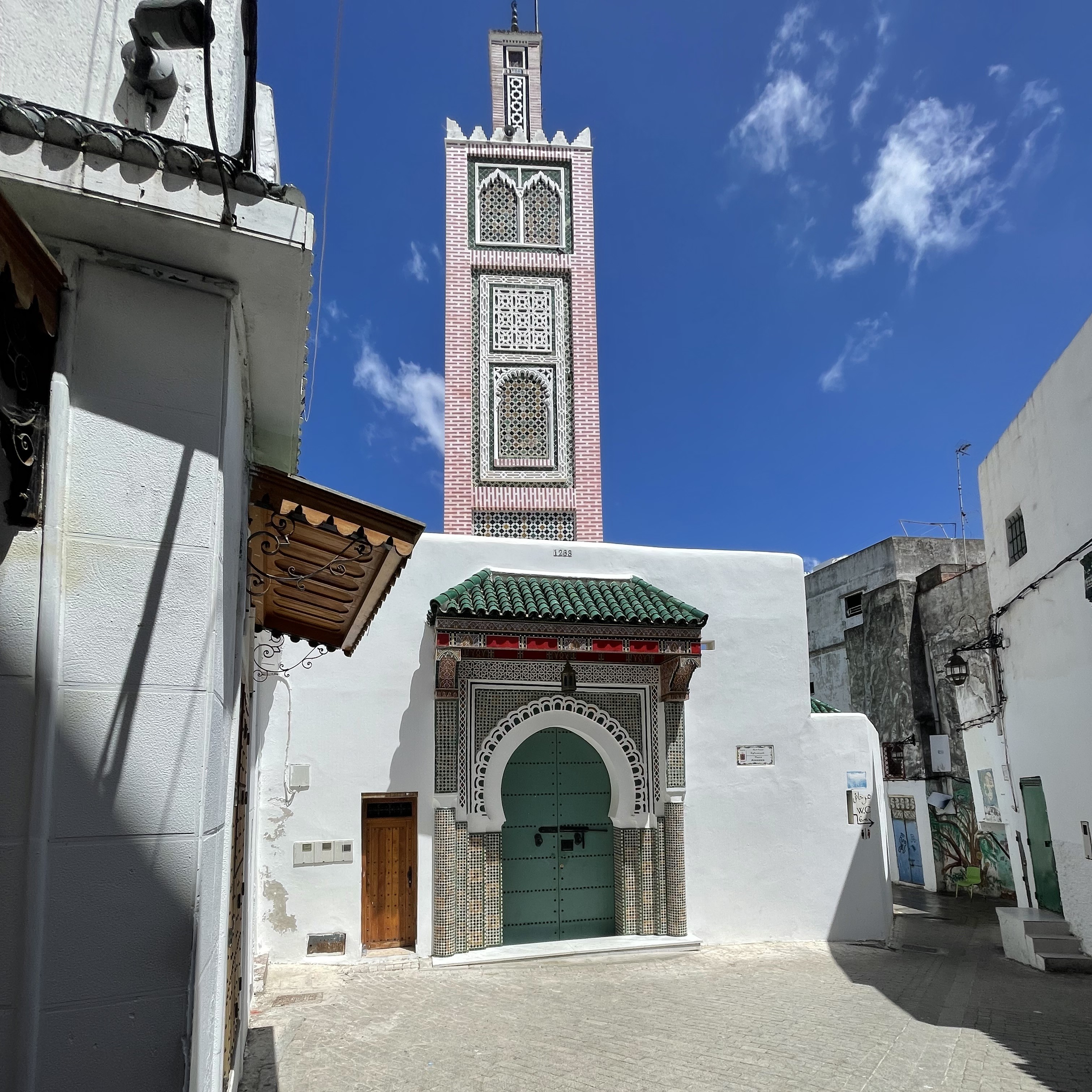
We ended our visit to Morocco in the beautiful Northern African city of Tangier, the traditional port for African/European connection at the Strait of Gibraltar. In its old medina, shops, residences, and parks this African city has a distinctive, European feel.
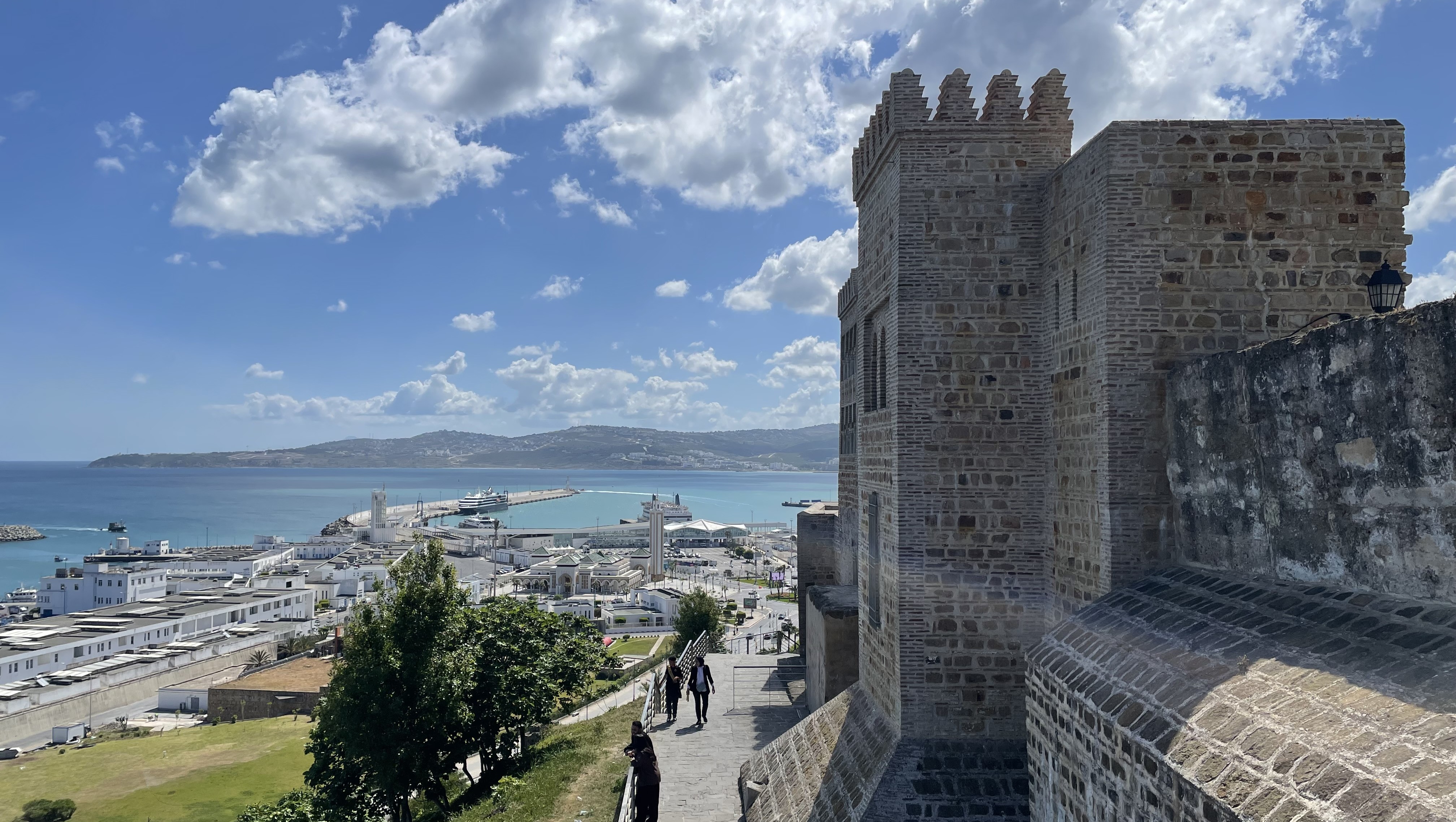
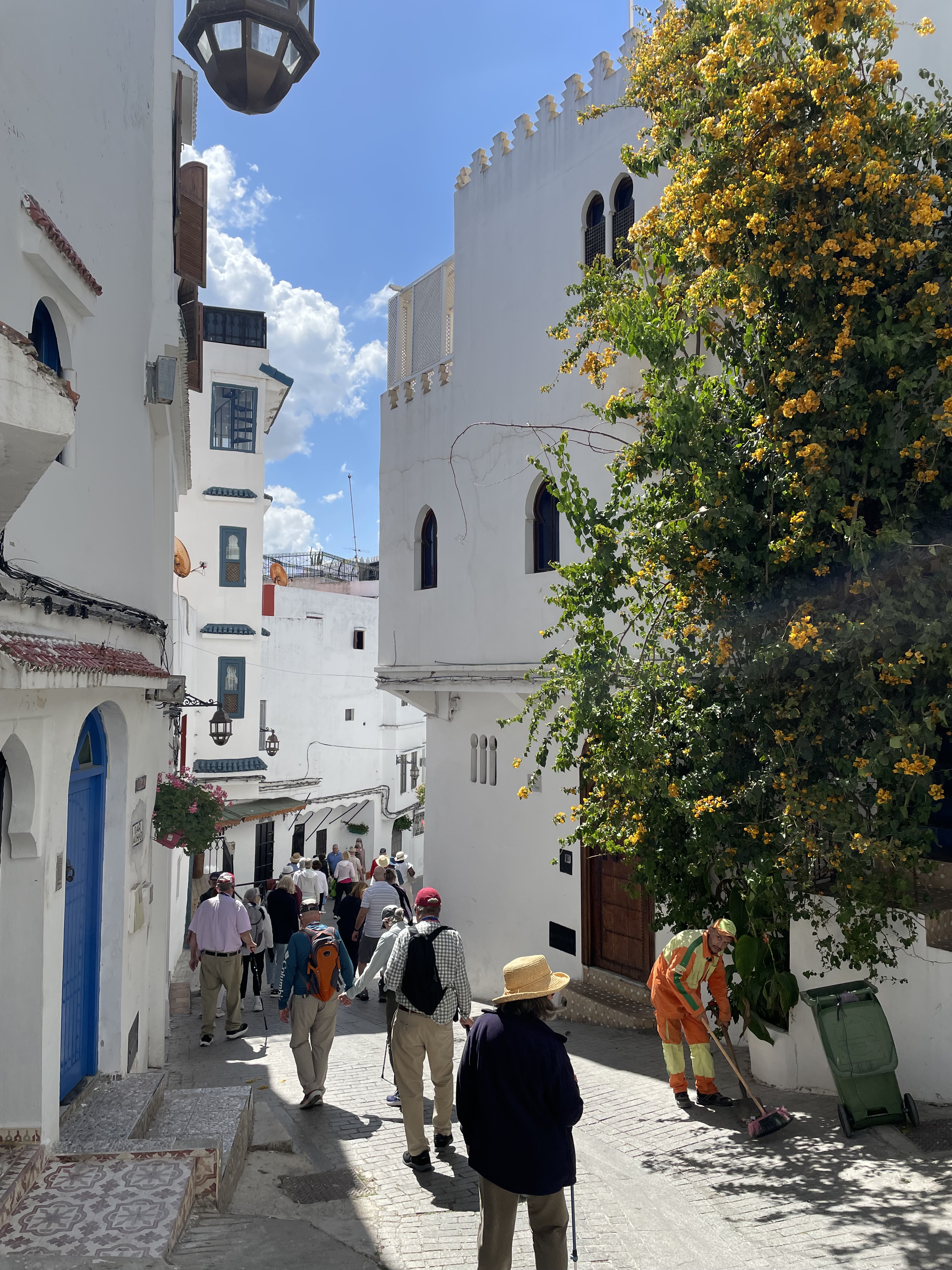
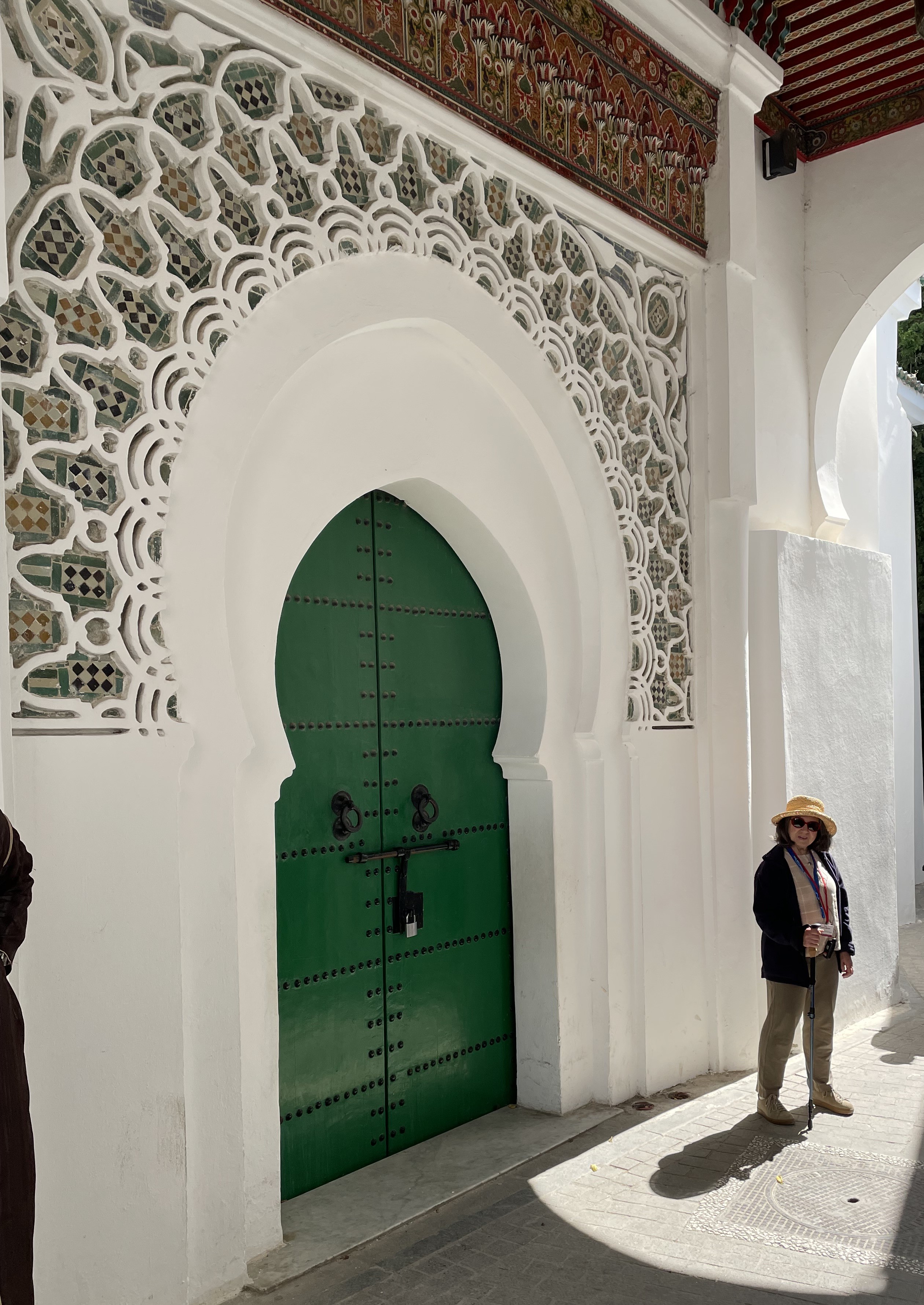
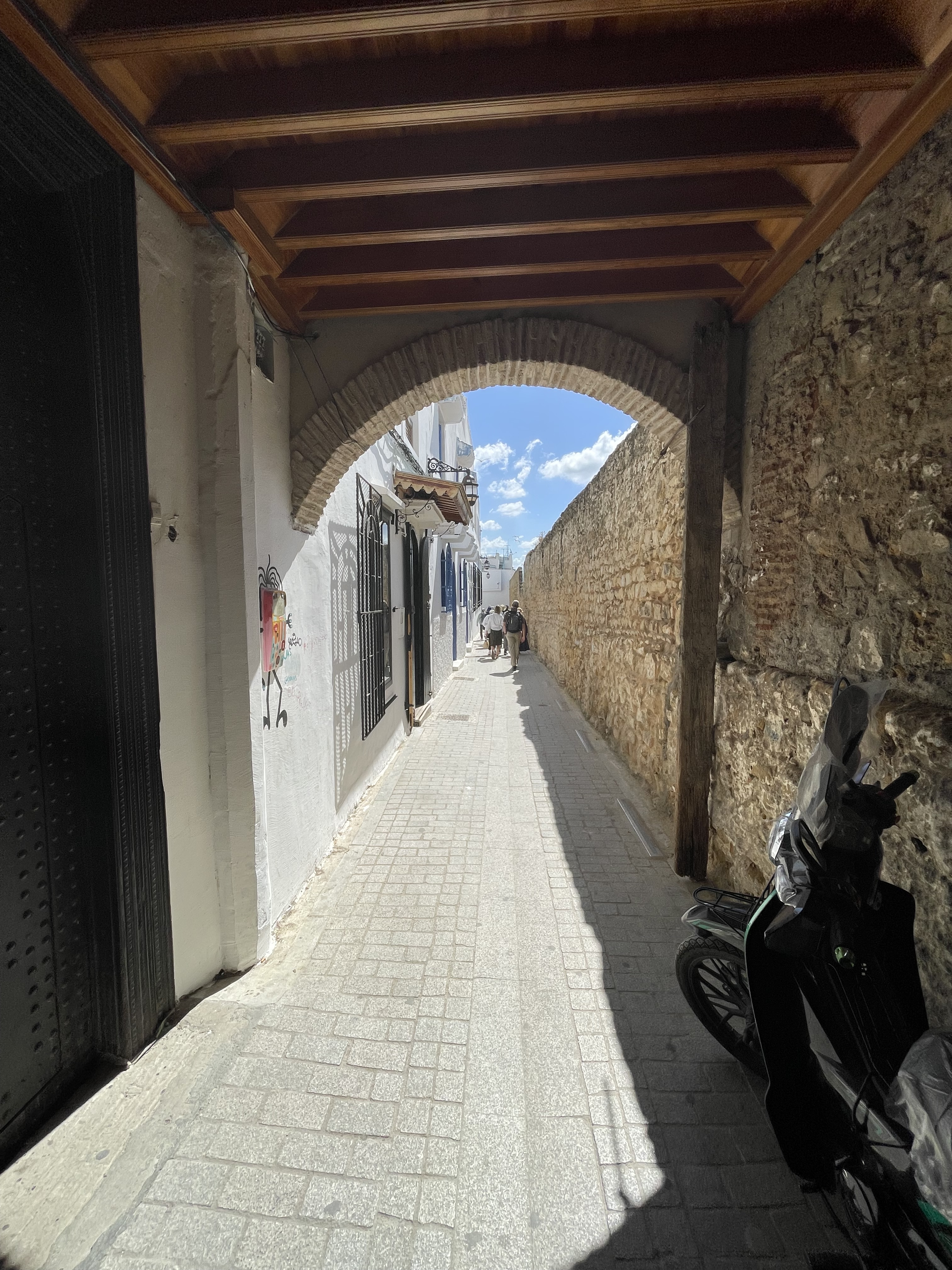
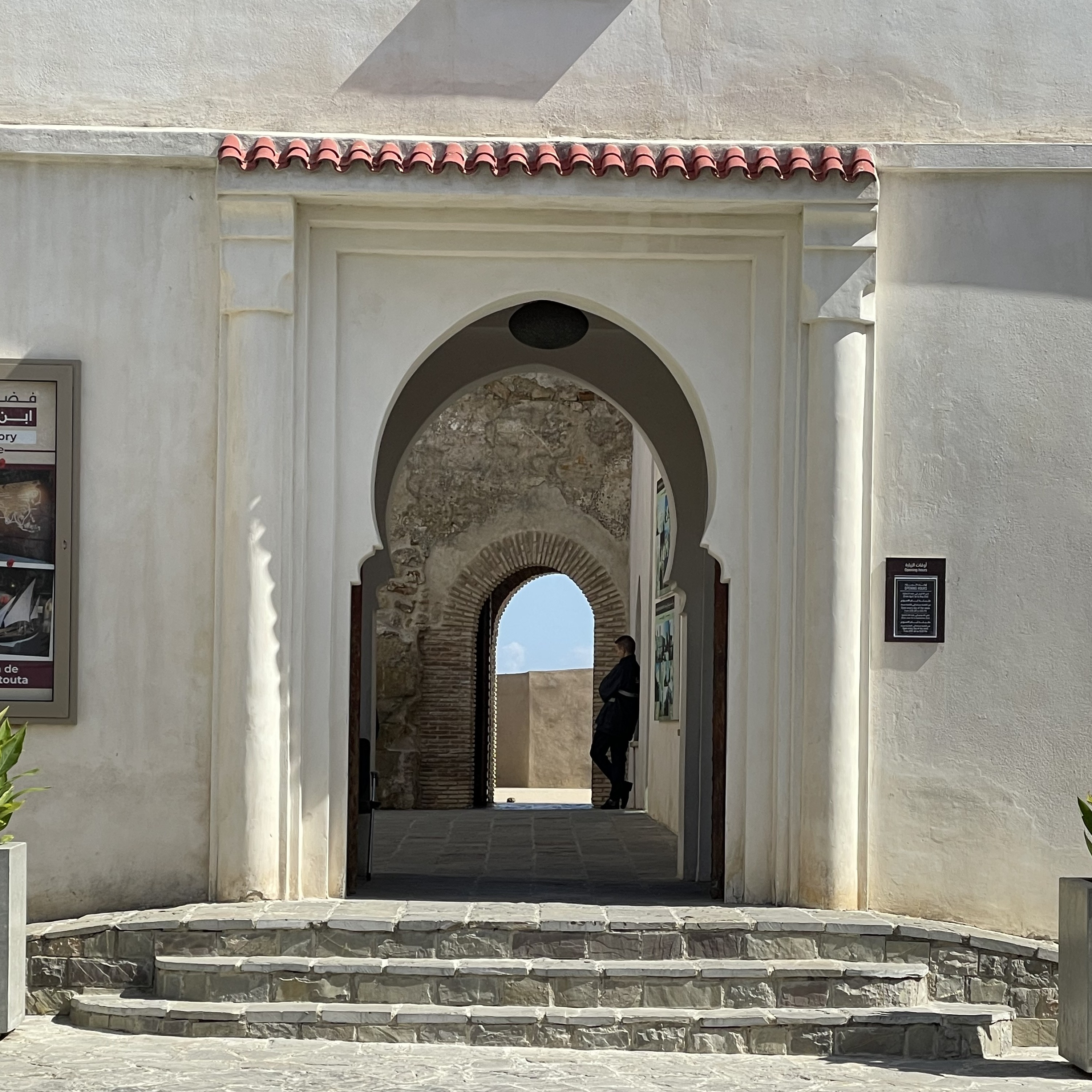
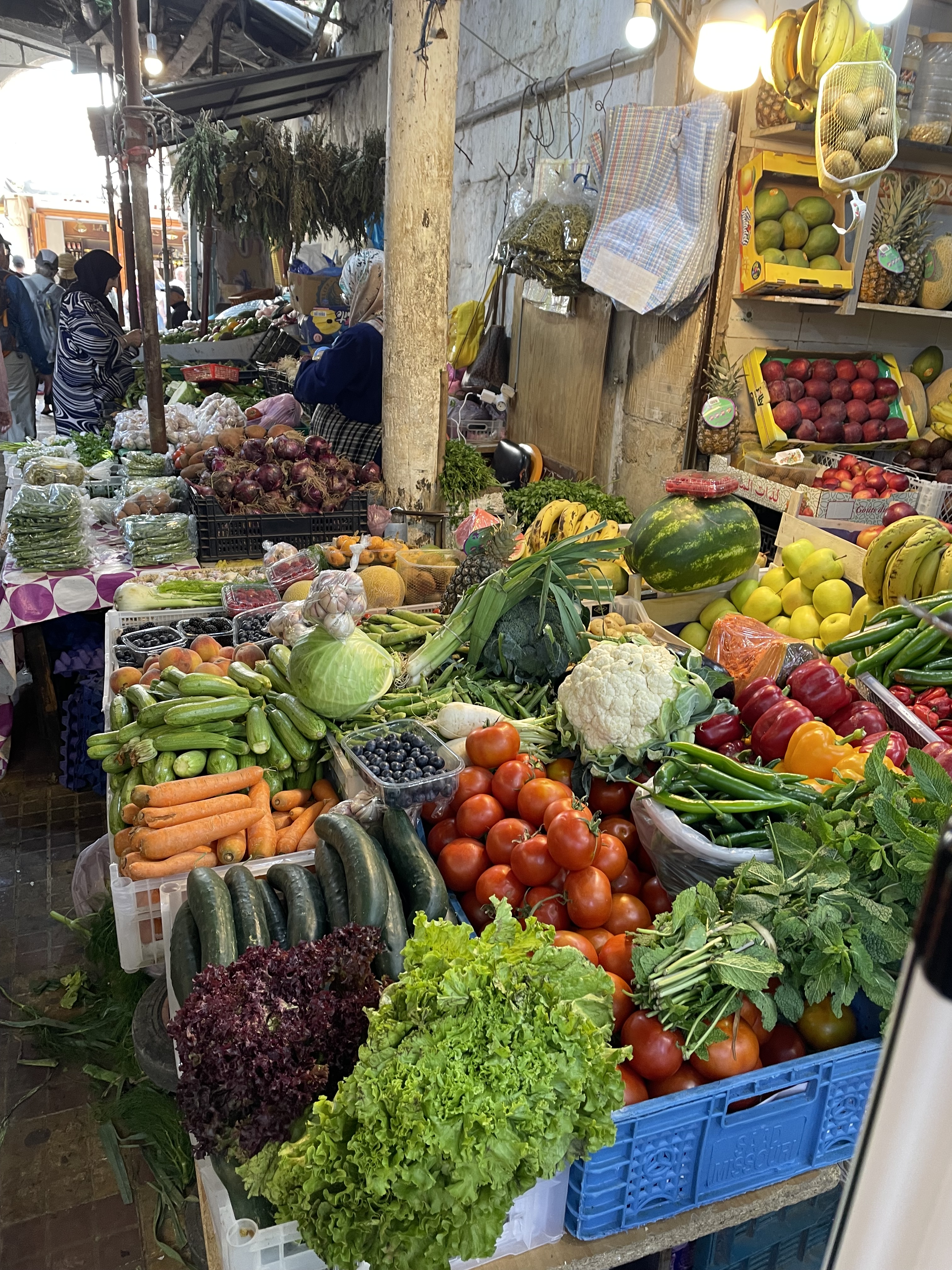
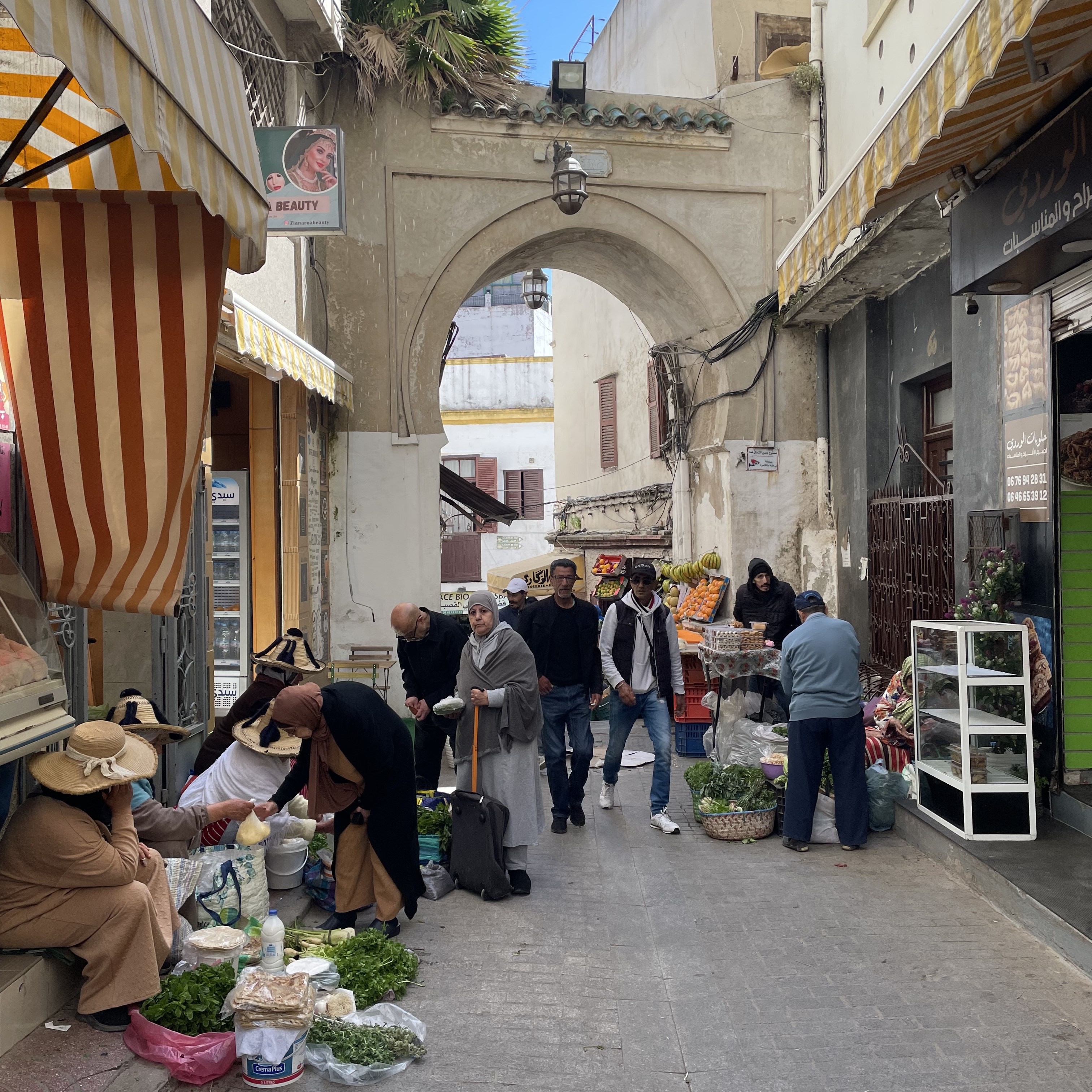
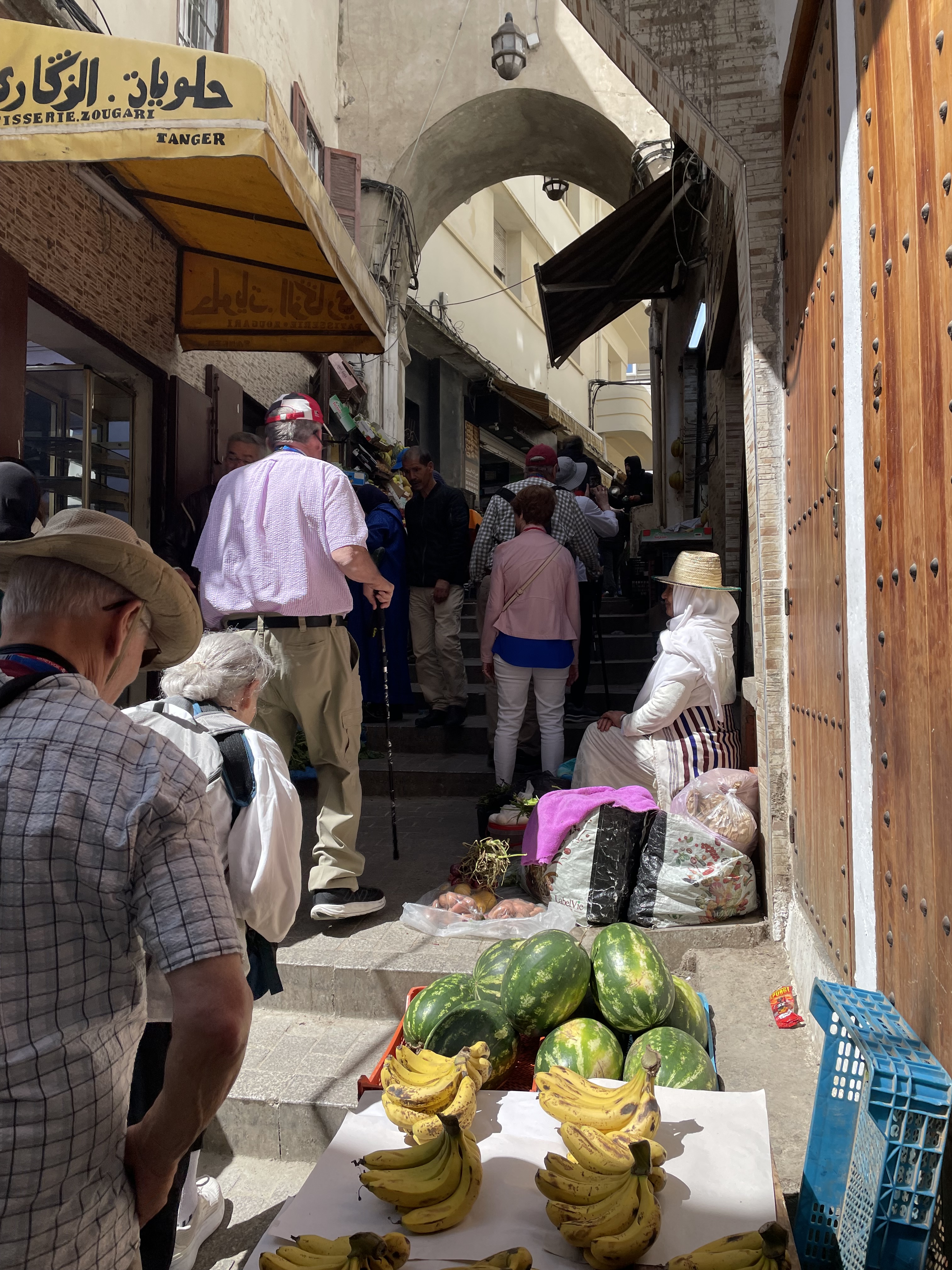
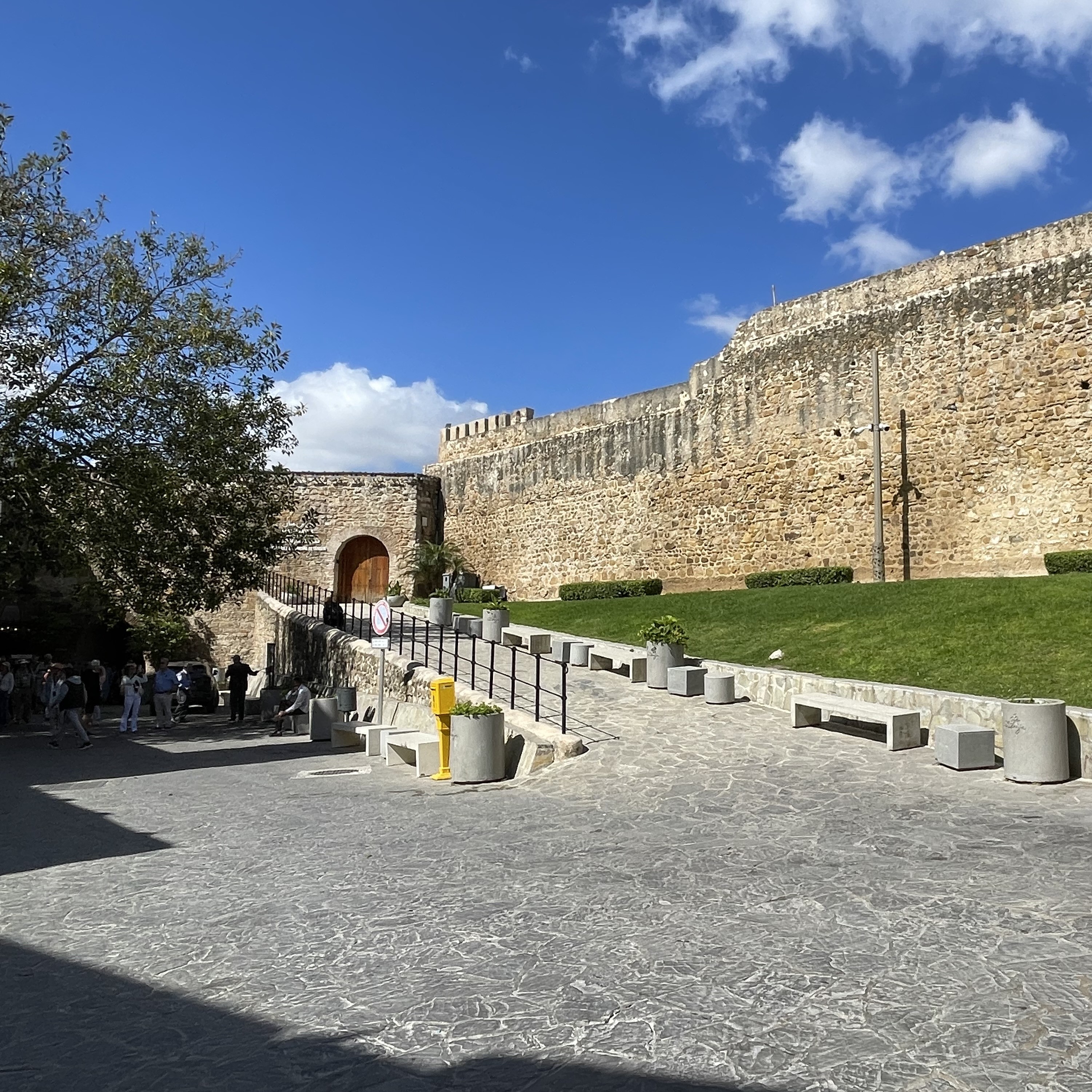
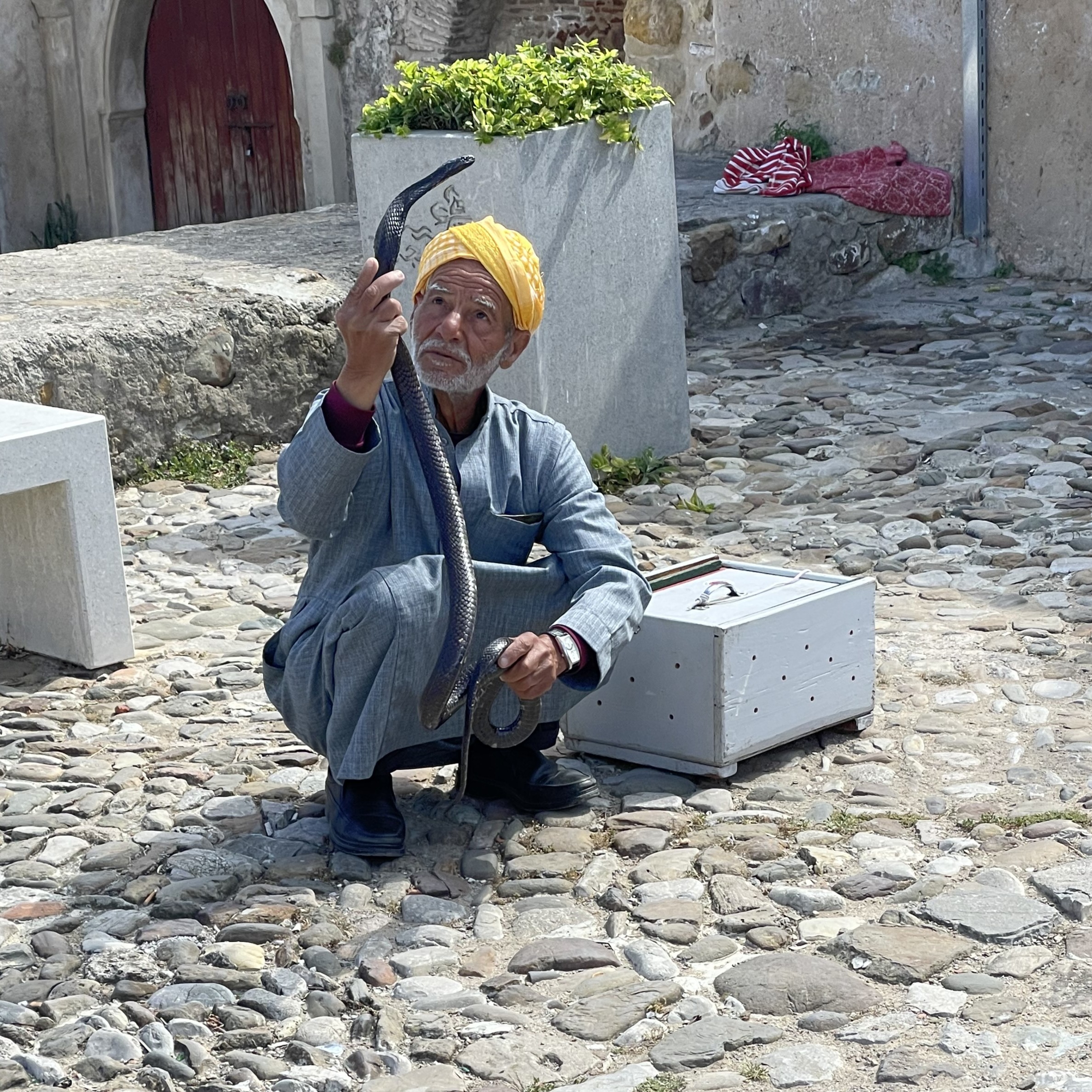
However, there were also many elements to remind one that you were still in Morocco, a Muslim nation in Africa.
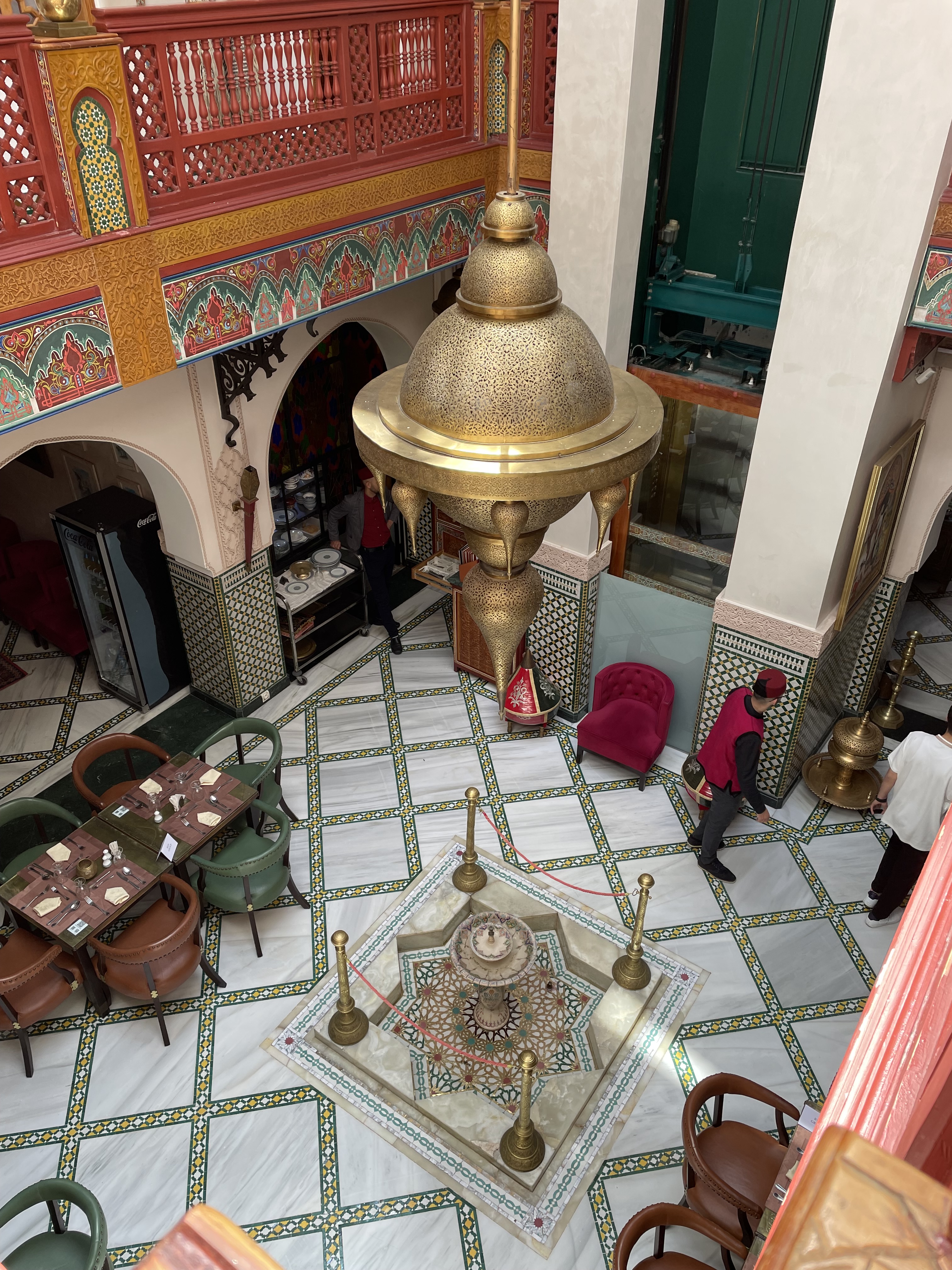
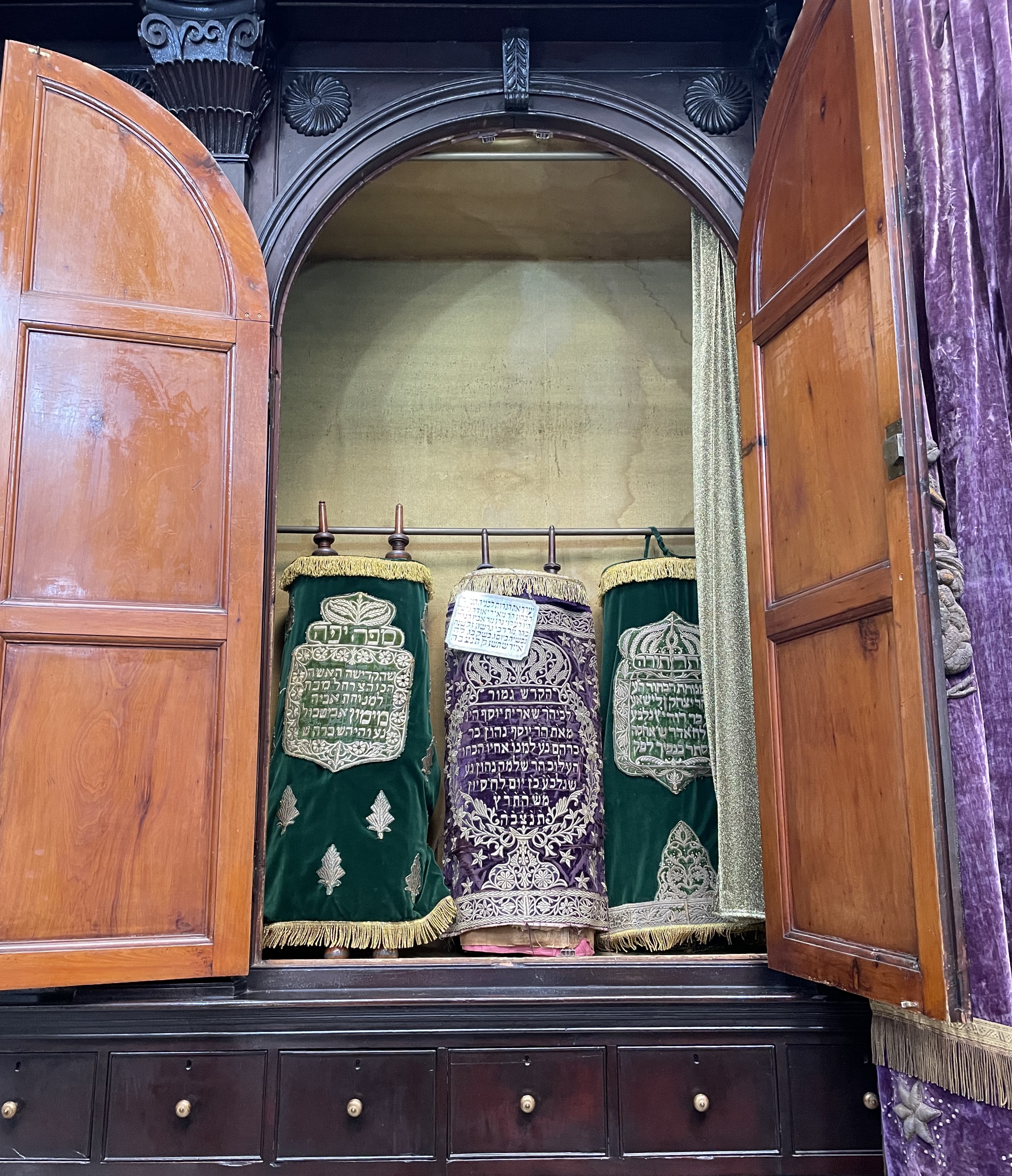
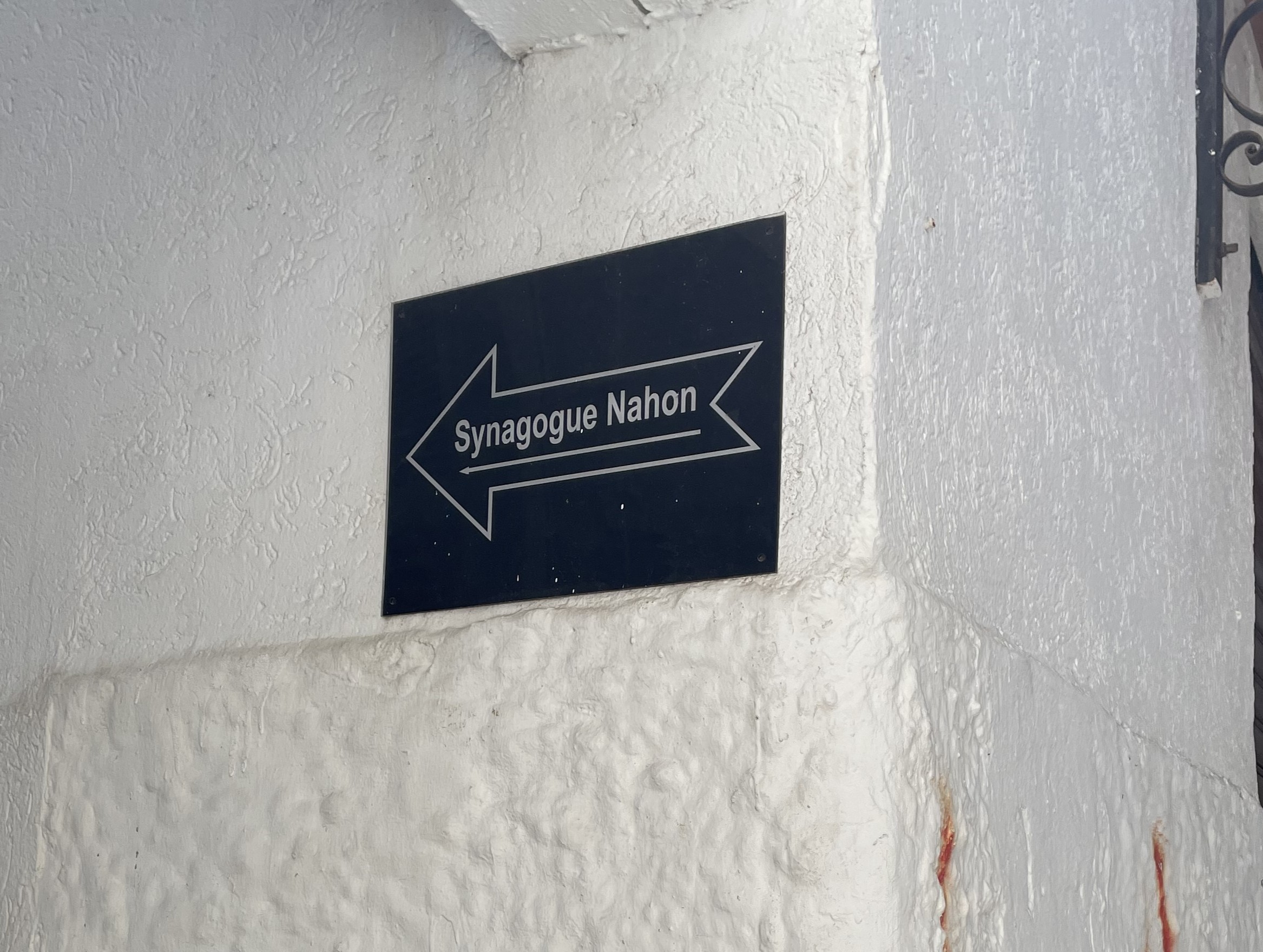
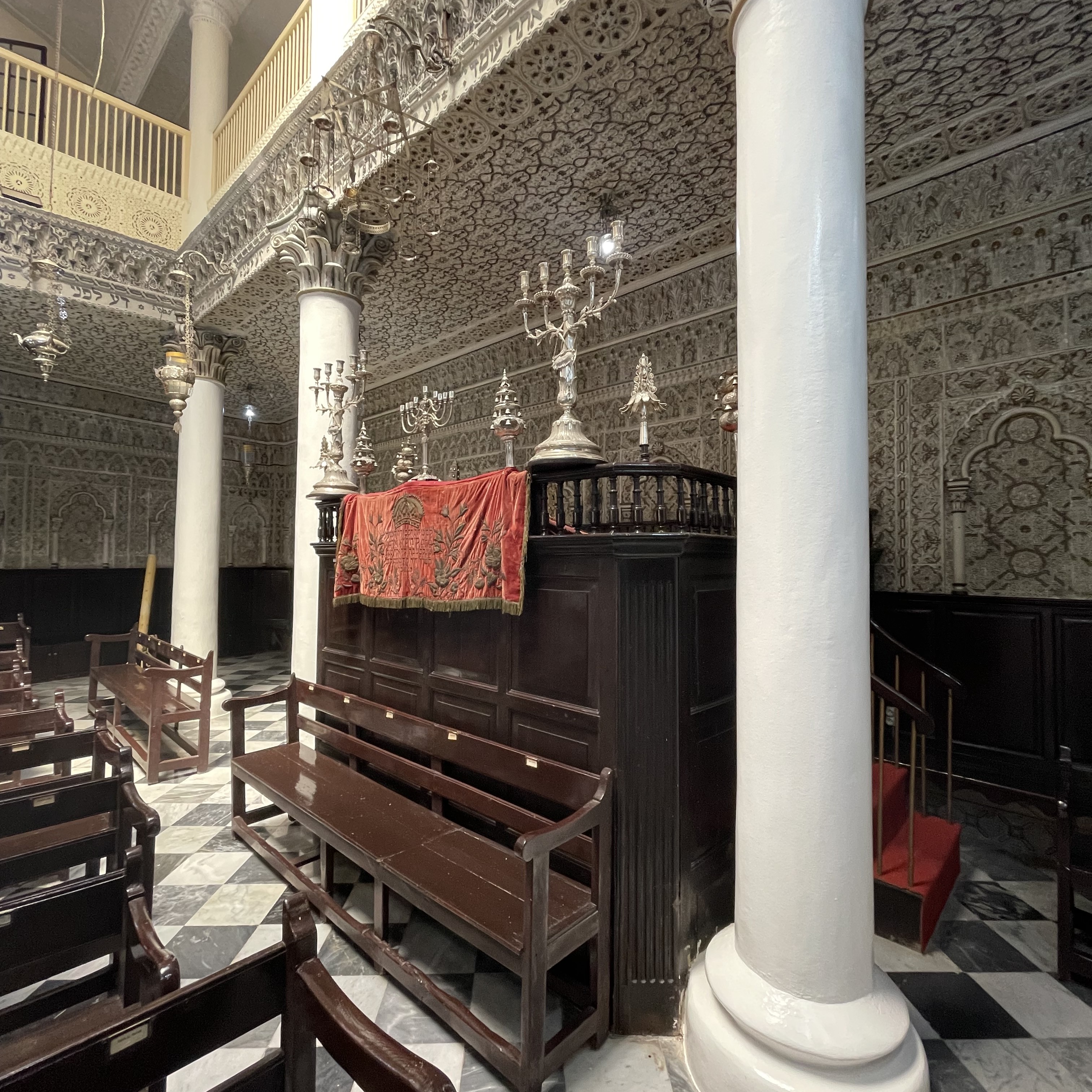
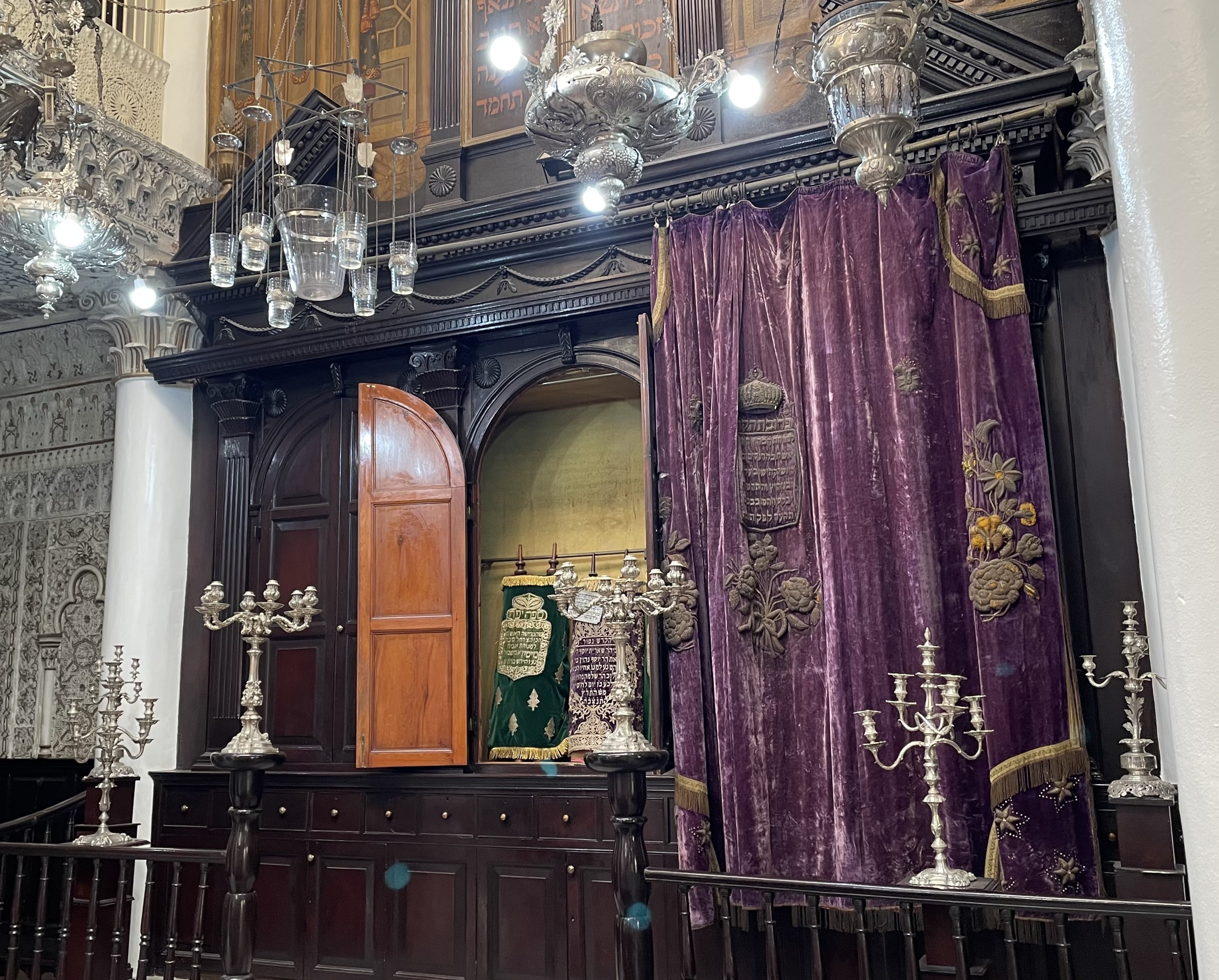
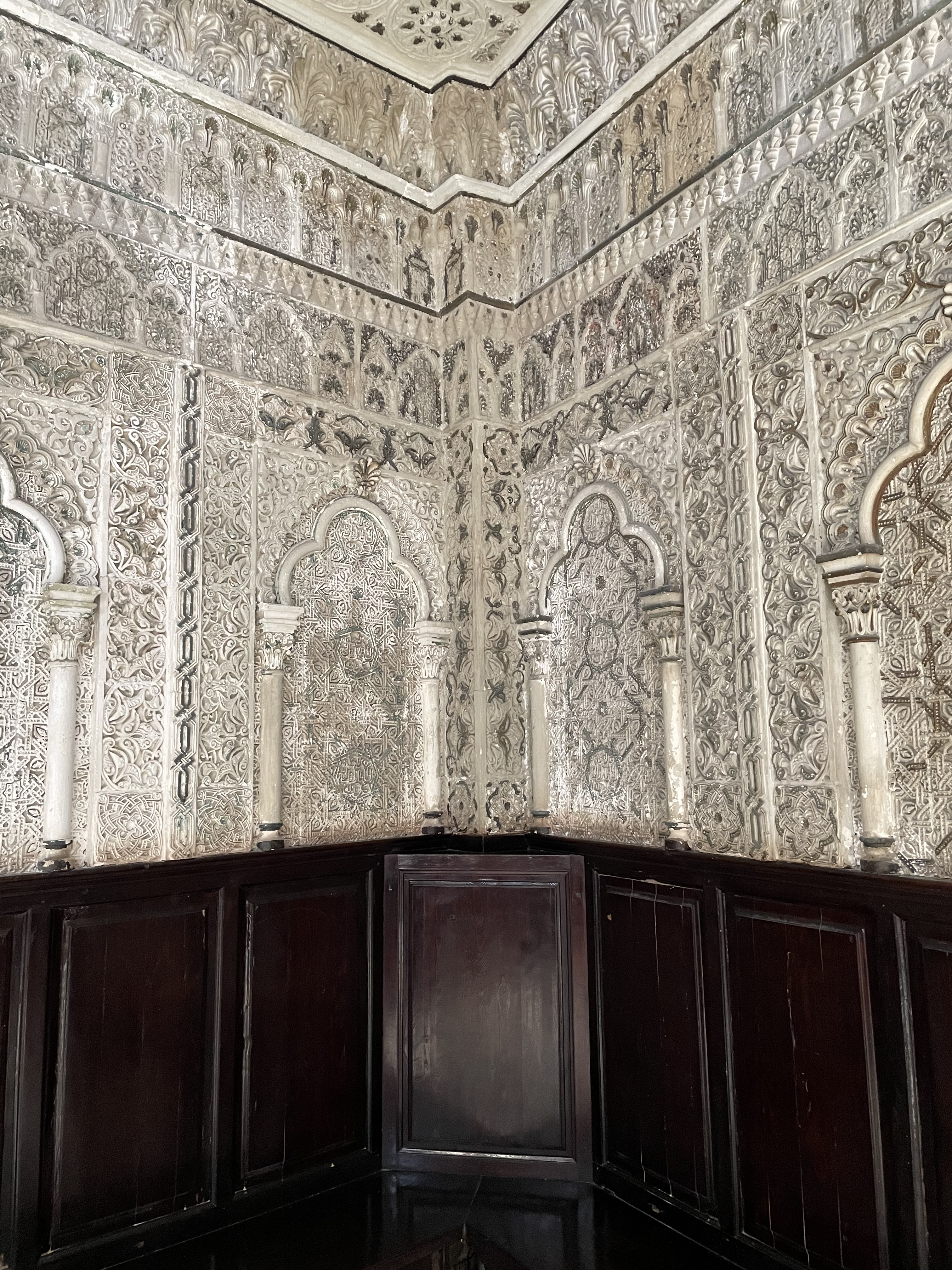
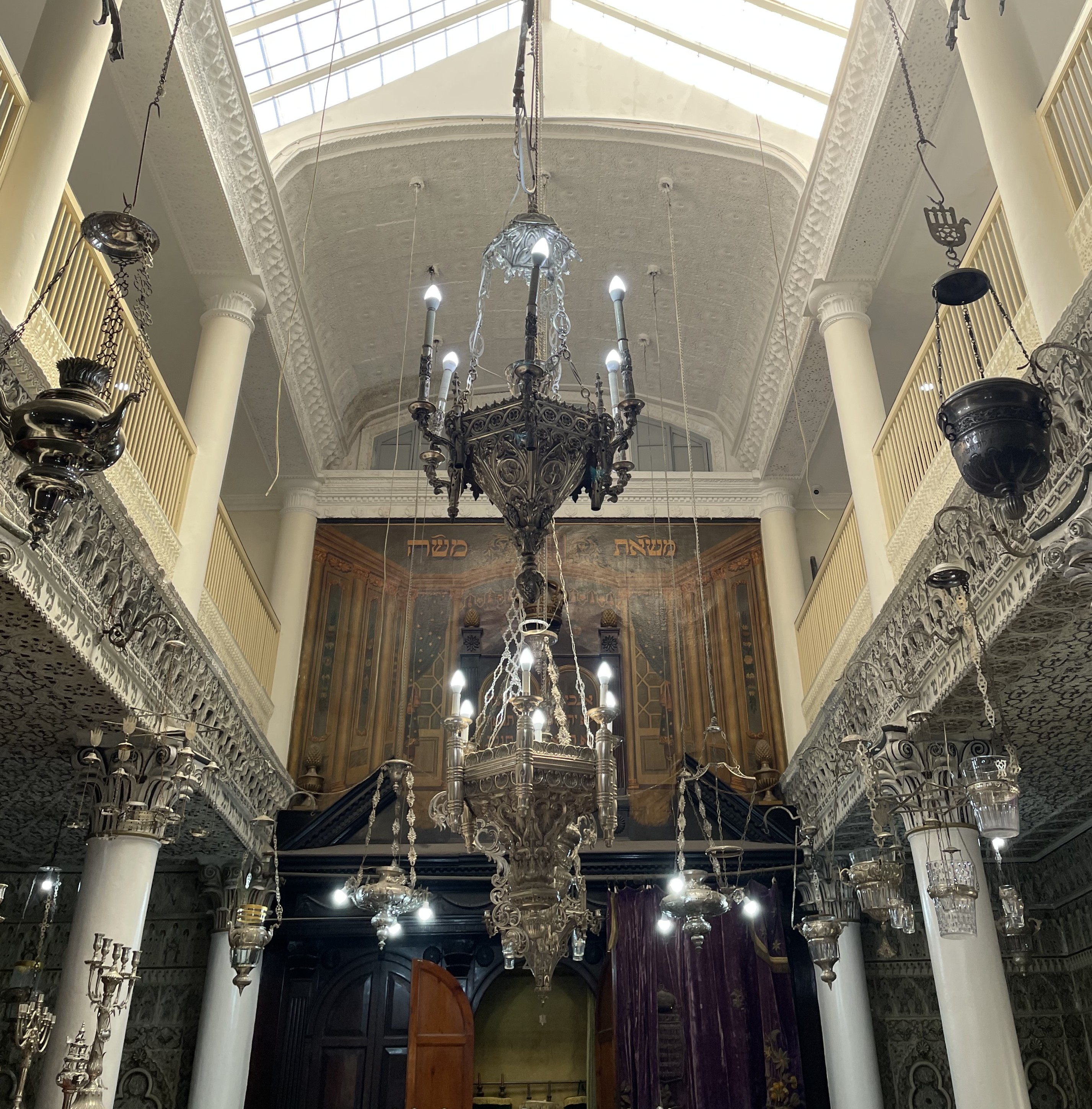
Synagogue Nahon was an unexpected treasure in Tangier. Here’s the description from ArchNet:
“Located on a dead end street off the rue des Synagogues in the Beni Idir quarter of the Tangier medina, this synagogue was constructed in the 19th century by Moïse Nahon, a prominent educator and scholar from an influential Jewish family in Tangier. The synagogue ceased activity in the second half to the 20th century, and subsequently fell into disrepair until its restoration in 1994 [with financial assistance from the Moroccan government]. It now functions as a museum.
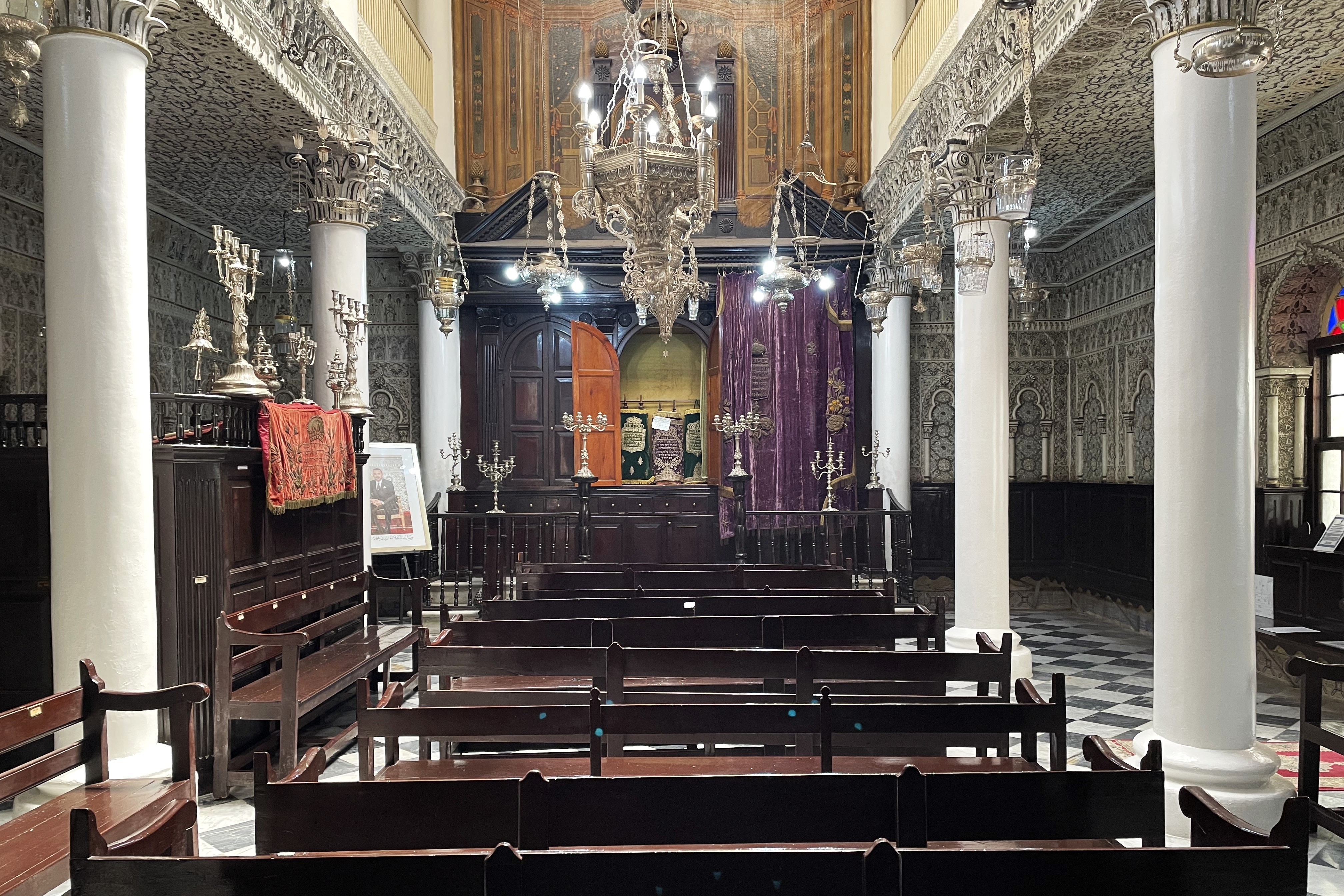
The prayer room of the synagogue is accessible via a small courtyard at the end of the entrance corridor. The interior is elaborately decorated in an Andalusian style. Carved stucco walls are decorated with a repeating motif featuring ornamental embedded columns, trilobe arches, and arabesques with floral and geometric motifs. Perhaps most remarkable is the Arabic calligraphy repeated in three medallions vertically aligned below the superior lobe. Under this elaborate decoration, the lower portion of the wall is lined with rectangular, carved wood panels. The center of the prayer hall opens to a ceiling that is also elaborately decorated, with a large skylight in the center. The wooden ark and panels above it are decorated with Hebrew calligraphy. The carved wood lectern is on the southern side of the prayer area.”
Our enthusiastic local guides told of the many Europeans who had bought residences in the city or came over for extended holidays. With views of the Atlantic Ocean and the Mediterranean Sea, it is easy to see why.
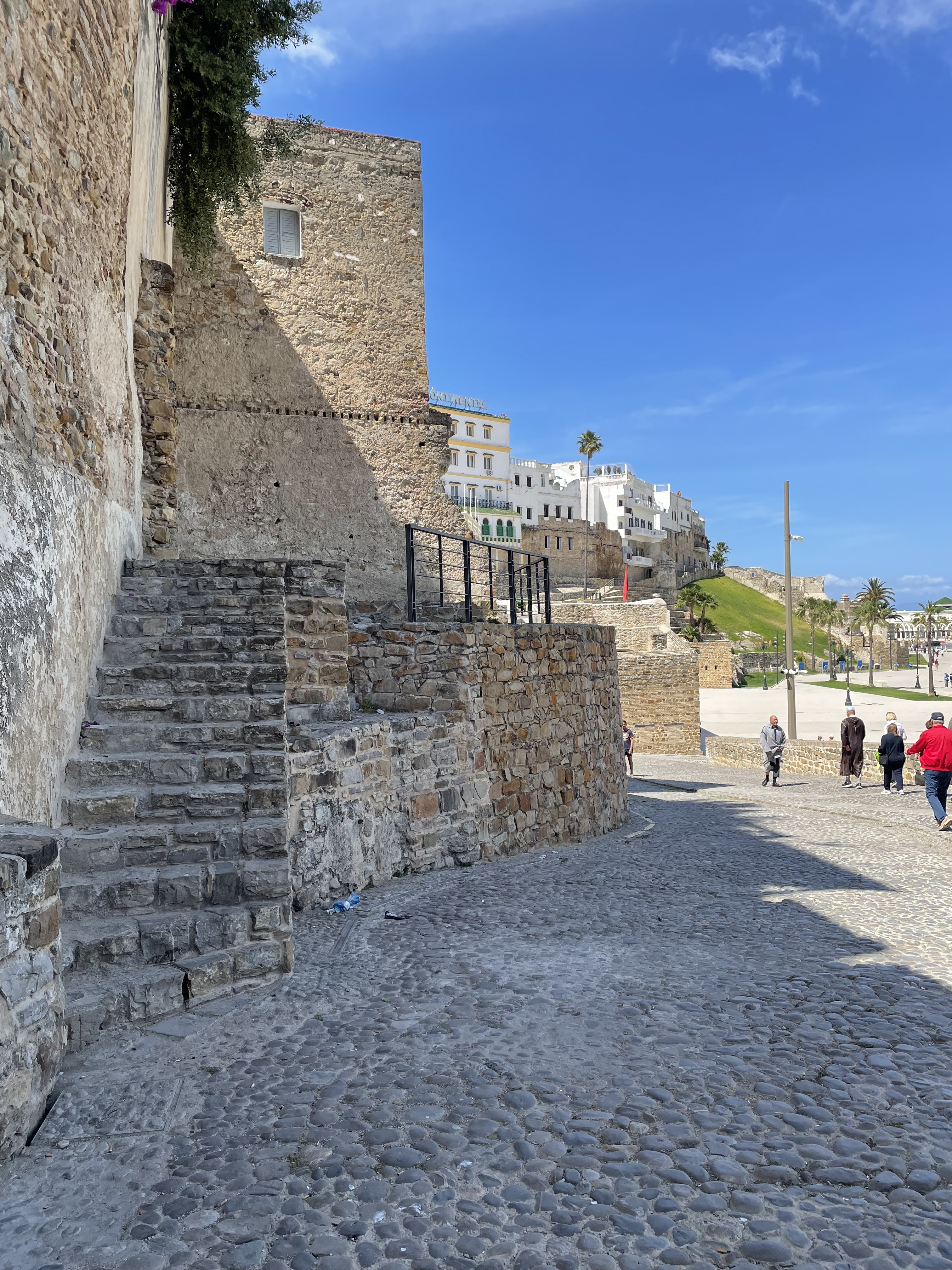
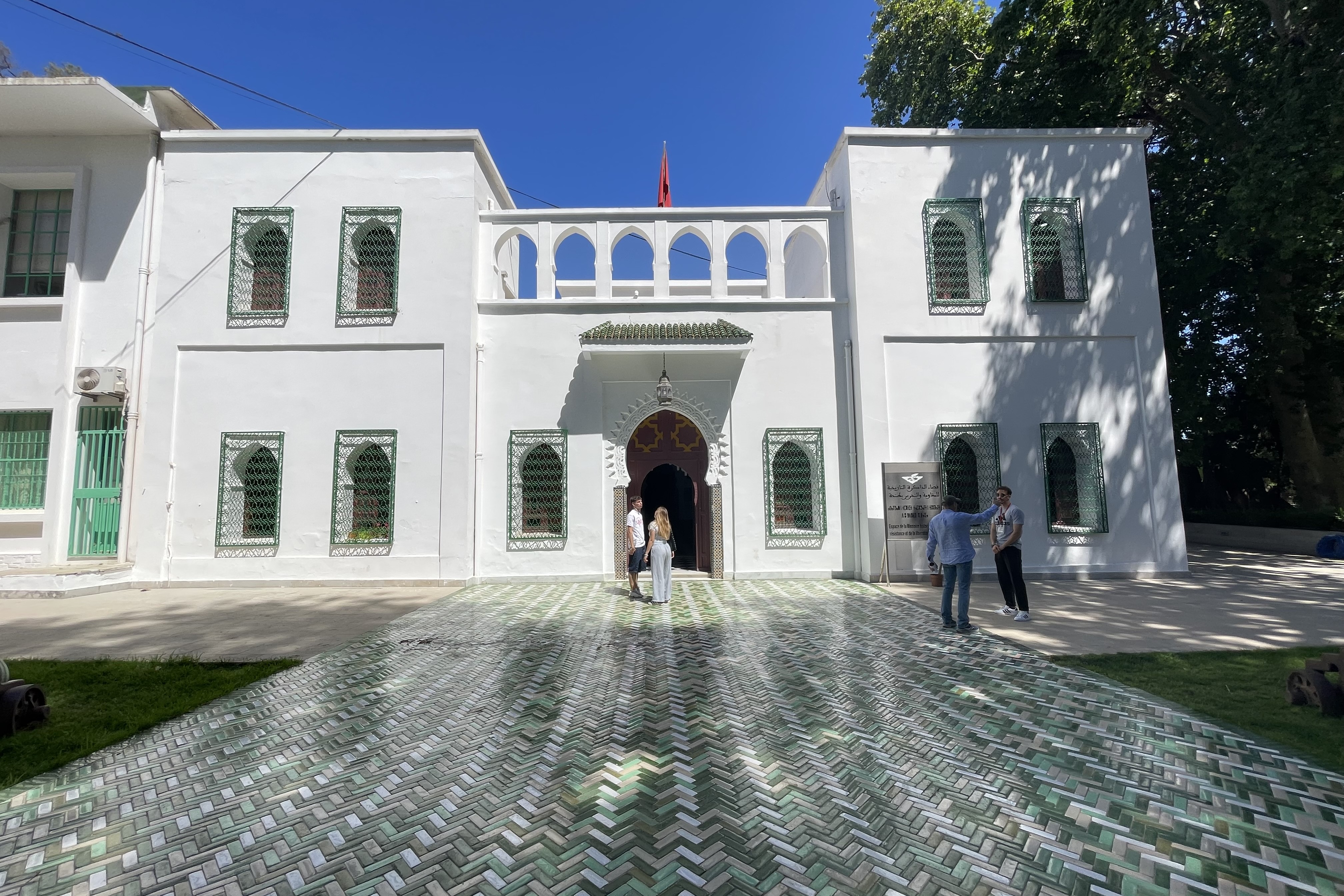
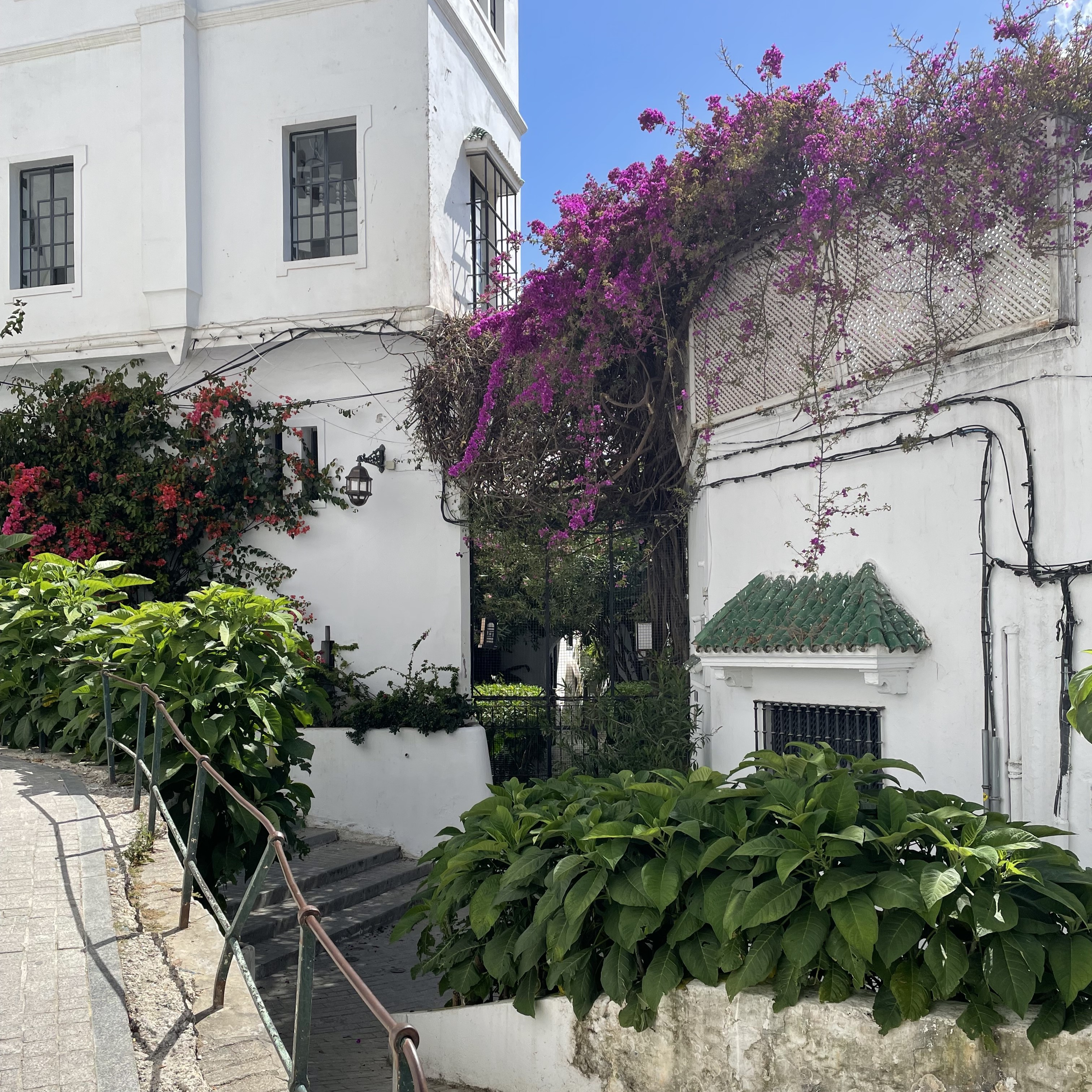
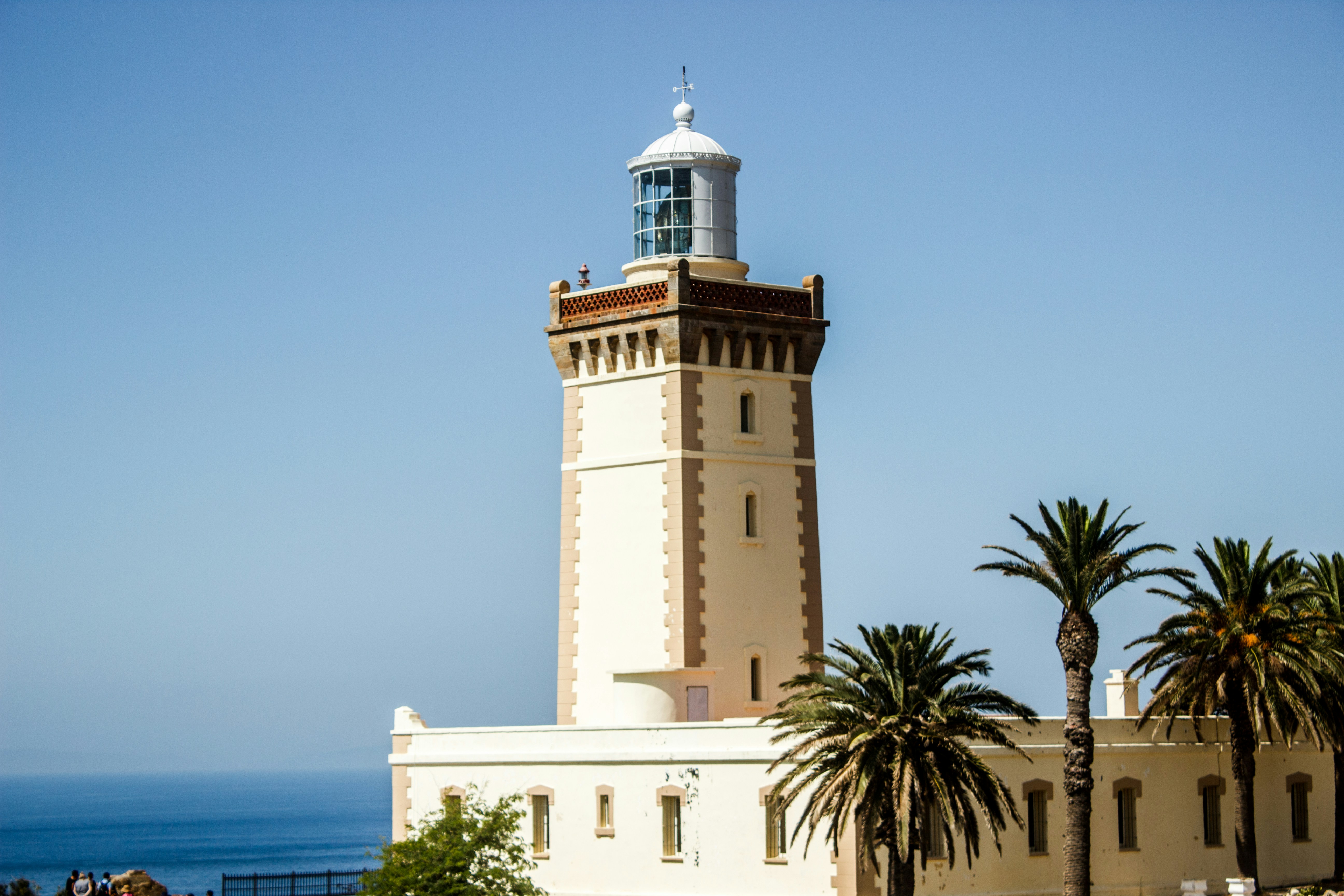
Tangier is also a photographer’s delight. I’m told that it has great appeal for shoppers, and—truth be told—we did buy one of our few souvenirs from the trip during a delightful day in Tangier.
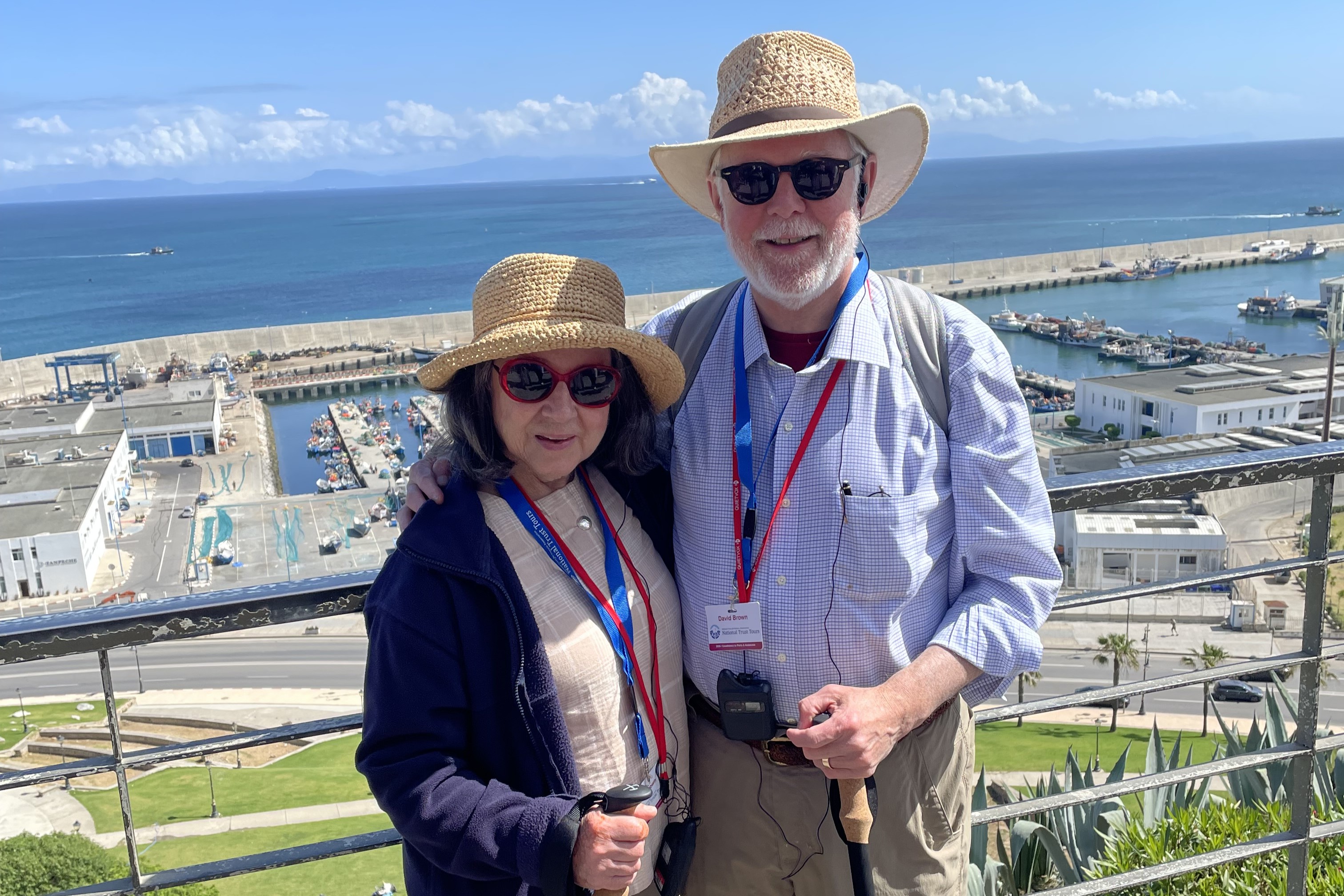
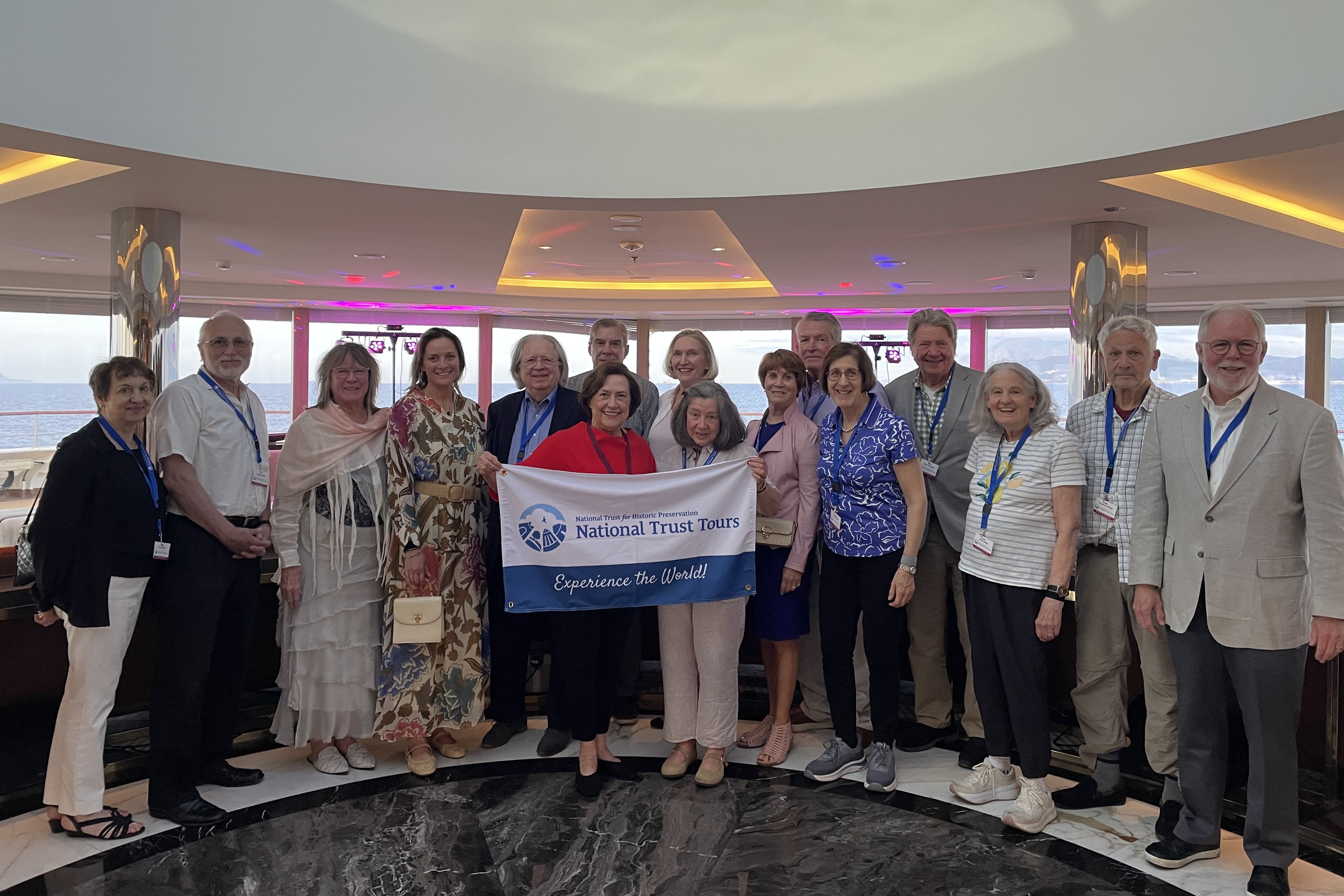
In a final post in this series, we’ll revisit our trip to Seville, Gibraltar, and Portugal.
More to come . . .
DJB
NOTE: To see Part 1, click here. To see my earlier post on The Alhambra, click here.
Photo from Rabat at top of post by Niklas on Unsplash. Unless otherwise credited, all other photos by DJB.


You live a charmed life David! I’m sure I’ll never get on this trip – seems other-worldly.
Kathy, I never thought I’d travel this much. I didn’t even get on an airplane until I was in college. Just keep looking for opportunities. They will come. And thanks, as always, for reading and for your kind words. All the best, DJB
Pingback: Observations from . . . May 2026 | MORE TO COME...
Pingback: Exploring intercultural dialogues where Europe and Africa meet | MORE TO COME...
Pingback: A tale of hope and struggle | MORE TO COME...