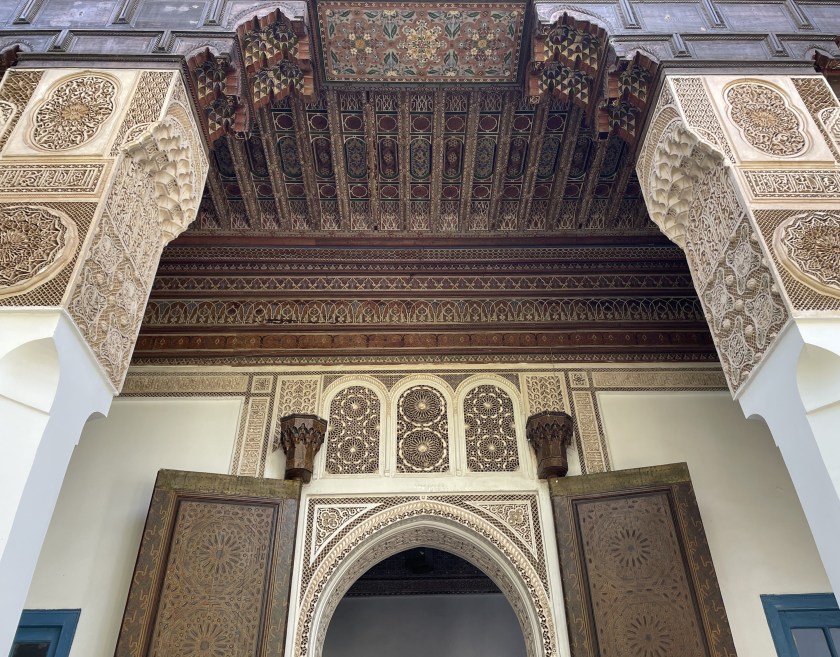
Part 1 of remembrances of a recent week spent in this fascinating North African nation while traveling with National Trust Tours.
In late April we boarded a plane to begin our most recent journey with National Trust Tours, this one a two-week trip to visit four countries and two continents. We opened with a week in Morocco, a fascinating, captivating, and altogether welcoming part of the world distinguished by its Berber, Arabian and European cultural influences. I focus today on a few highlights from our explorations around Marrakech. In Part 2 I’ll look at the other Moroccan cities we toured before I move on with posts about the European countries we visited over the last half of our journey.
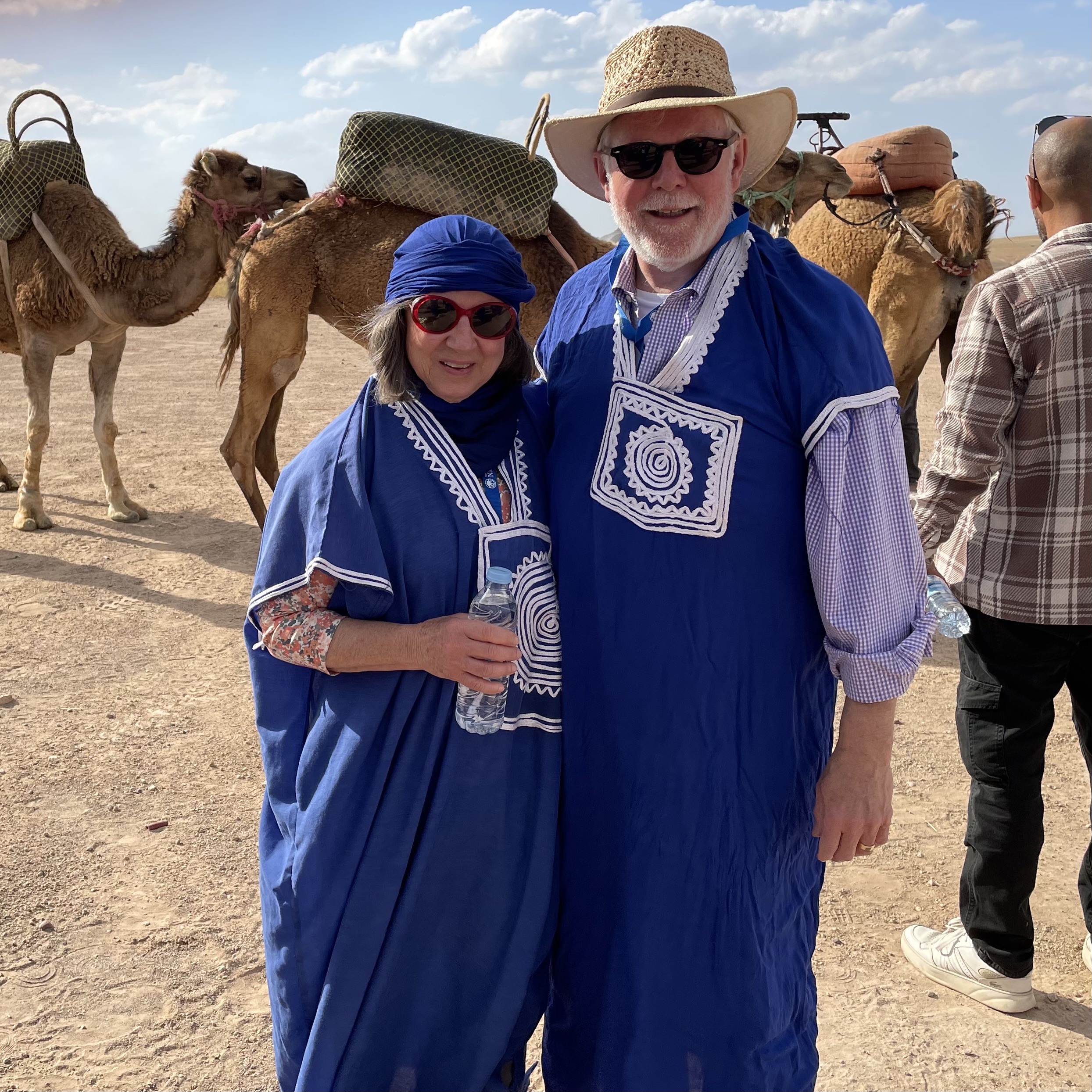
And no, while we did begin in Marrakech we did not take the train or camels to that bustling, historic city.
MARRAKECH
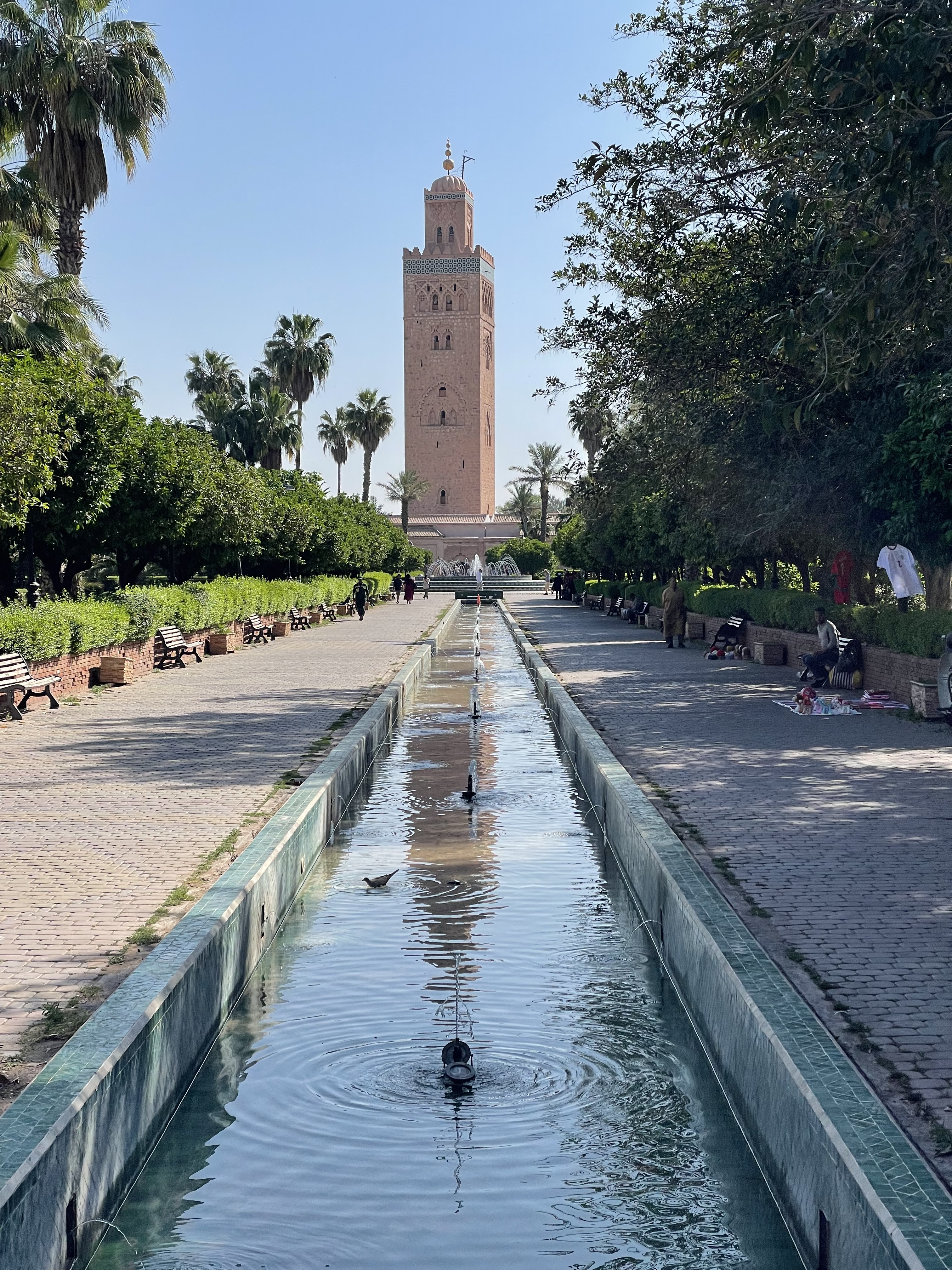
The Medina of Marrakech is what draws most visitors to the city. Founded in 1070-72, this UNESCO World Heritage Site remained a political, economic and cultural center for centuries afterwards. As a result, its influence was felt throughout the western Muslim world, from North Africa to Andalusia.
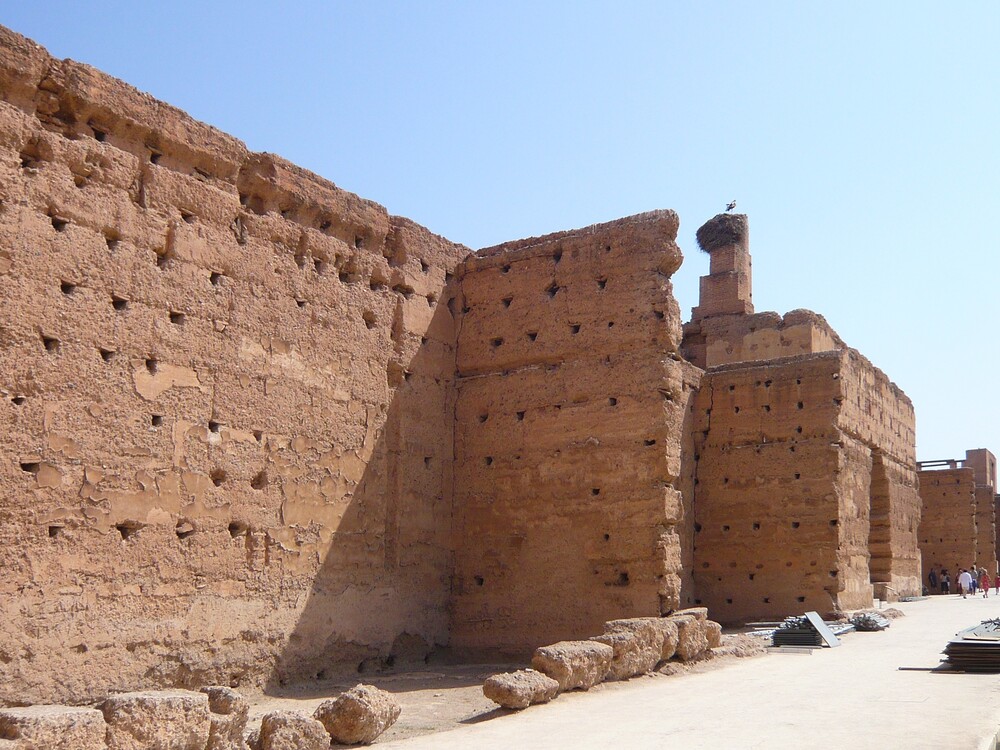
It is tempting to look at the impressive architectural monuments, some dating from the founding period, and focus on their design, grandeur, and history. The Bandiâ Palace . . .
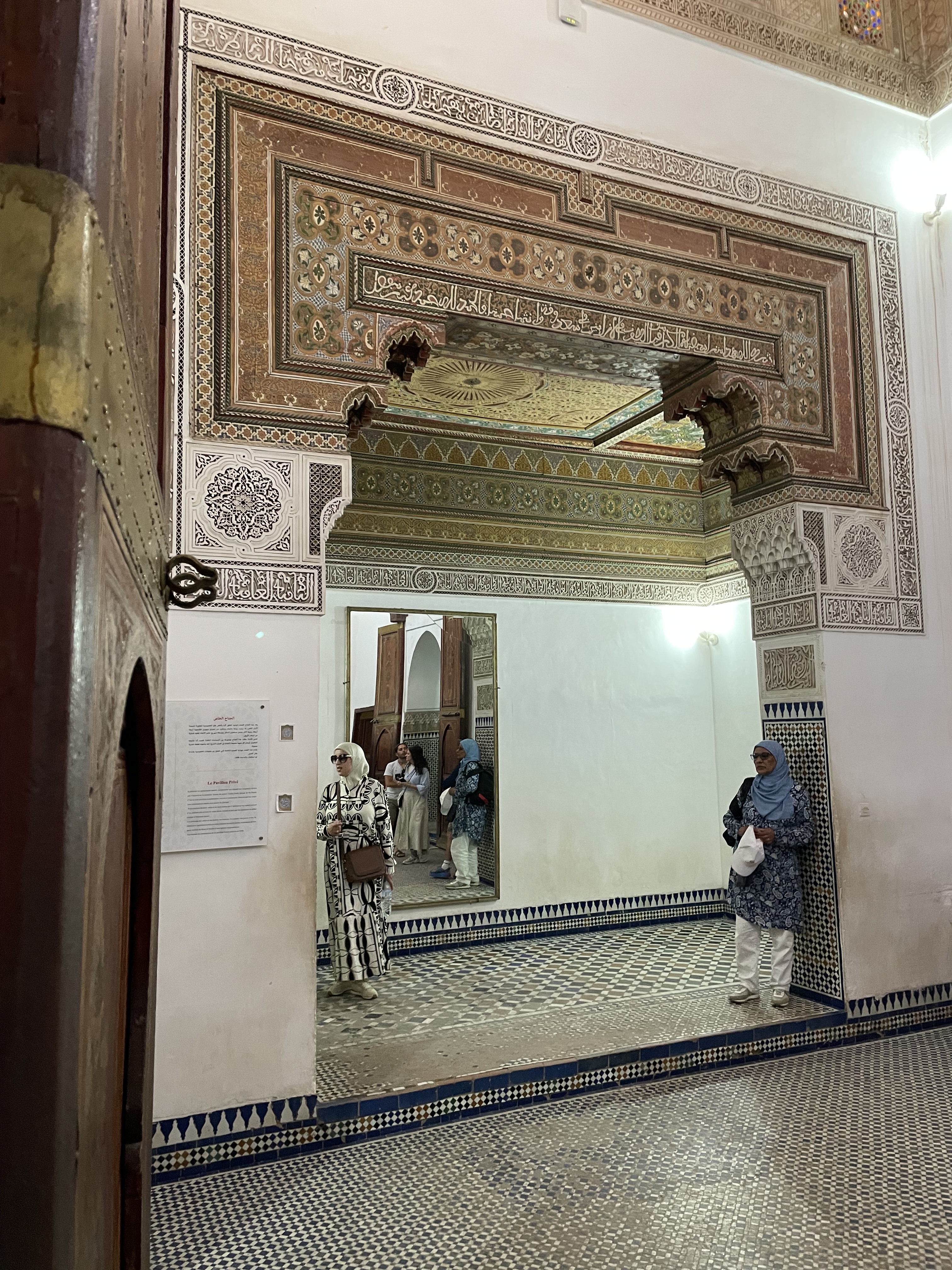
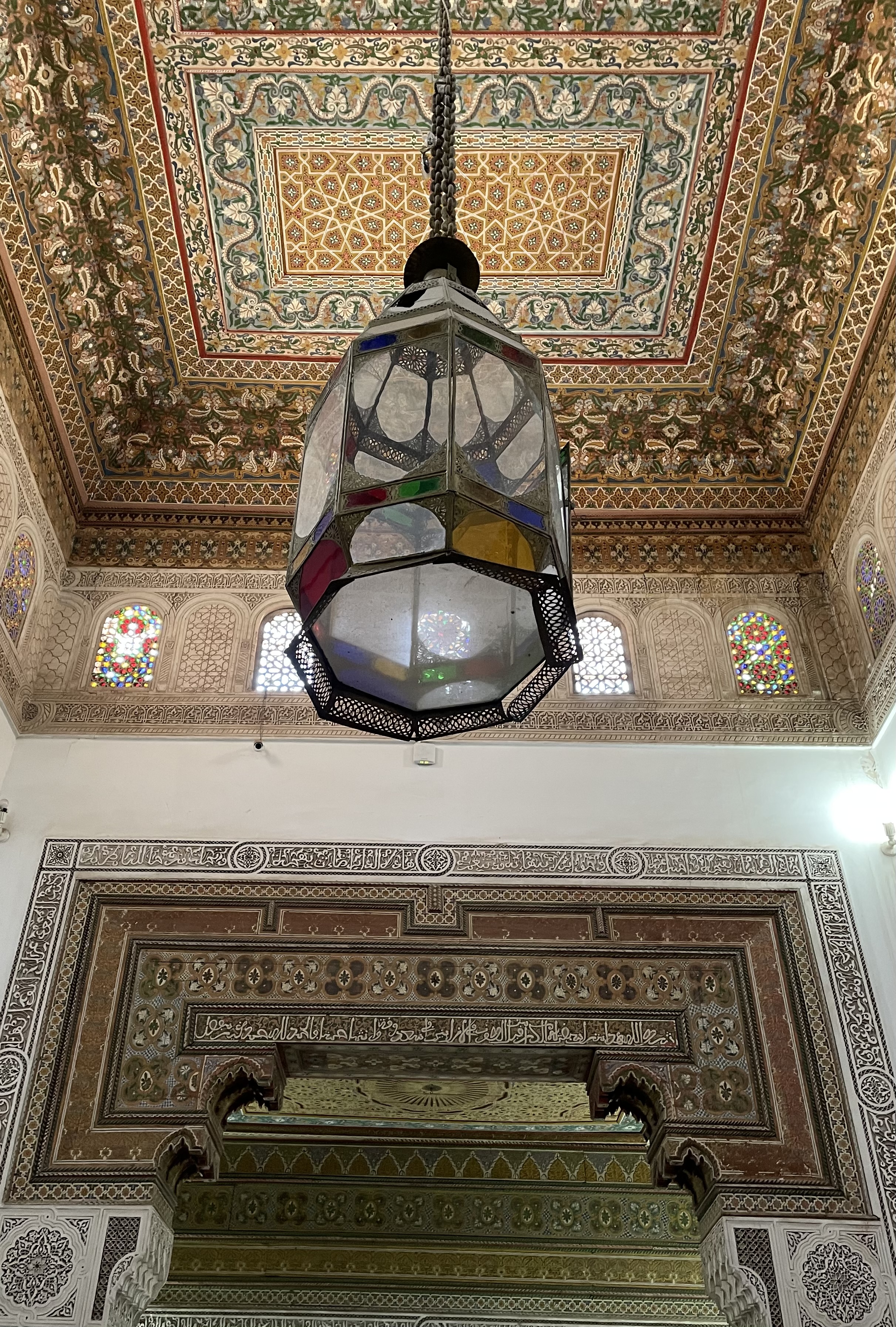
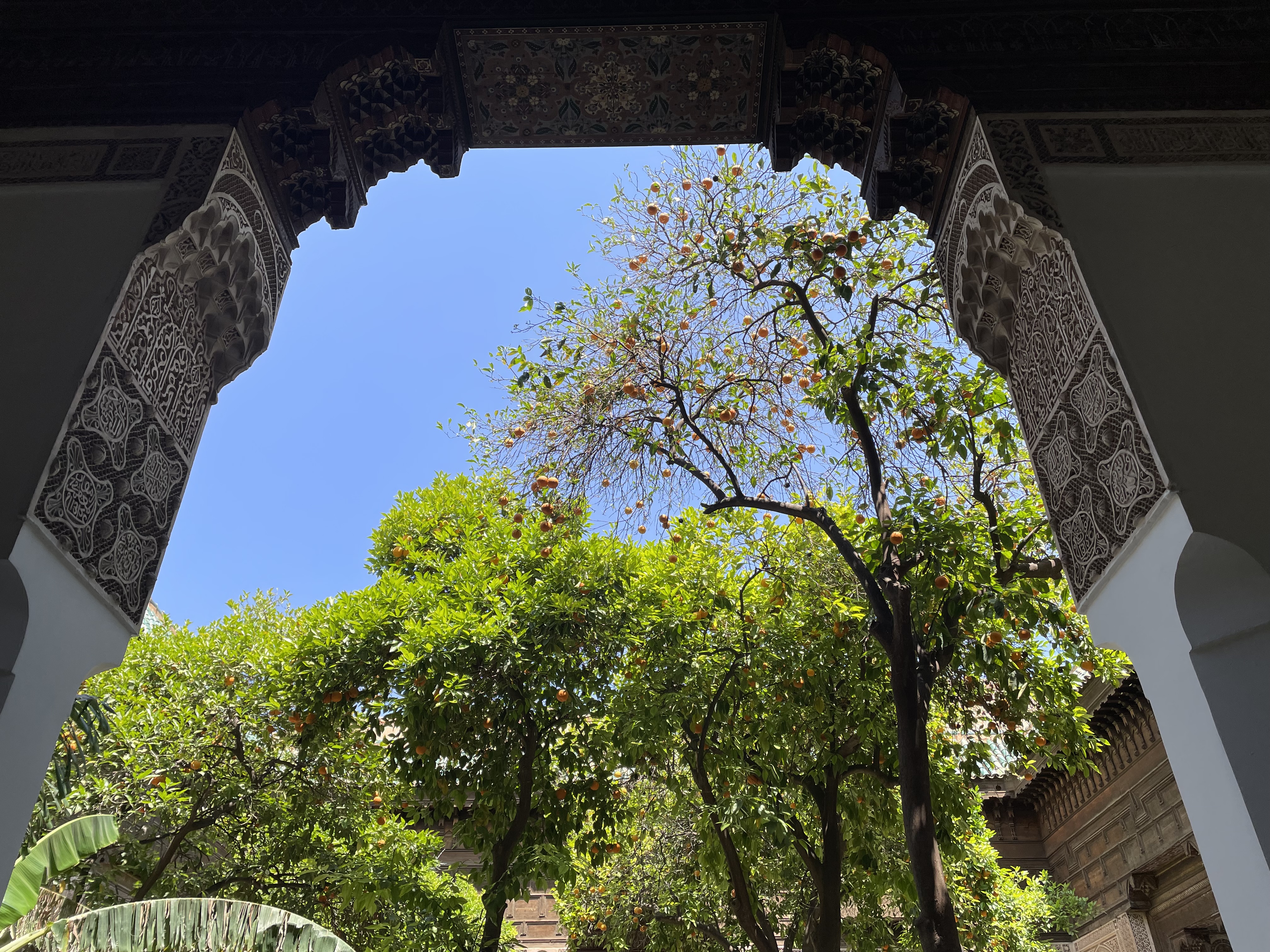
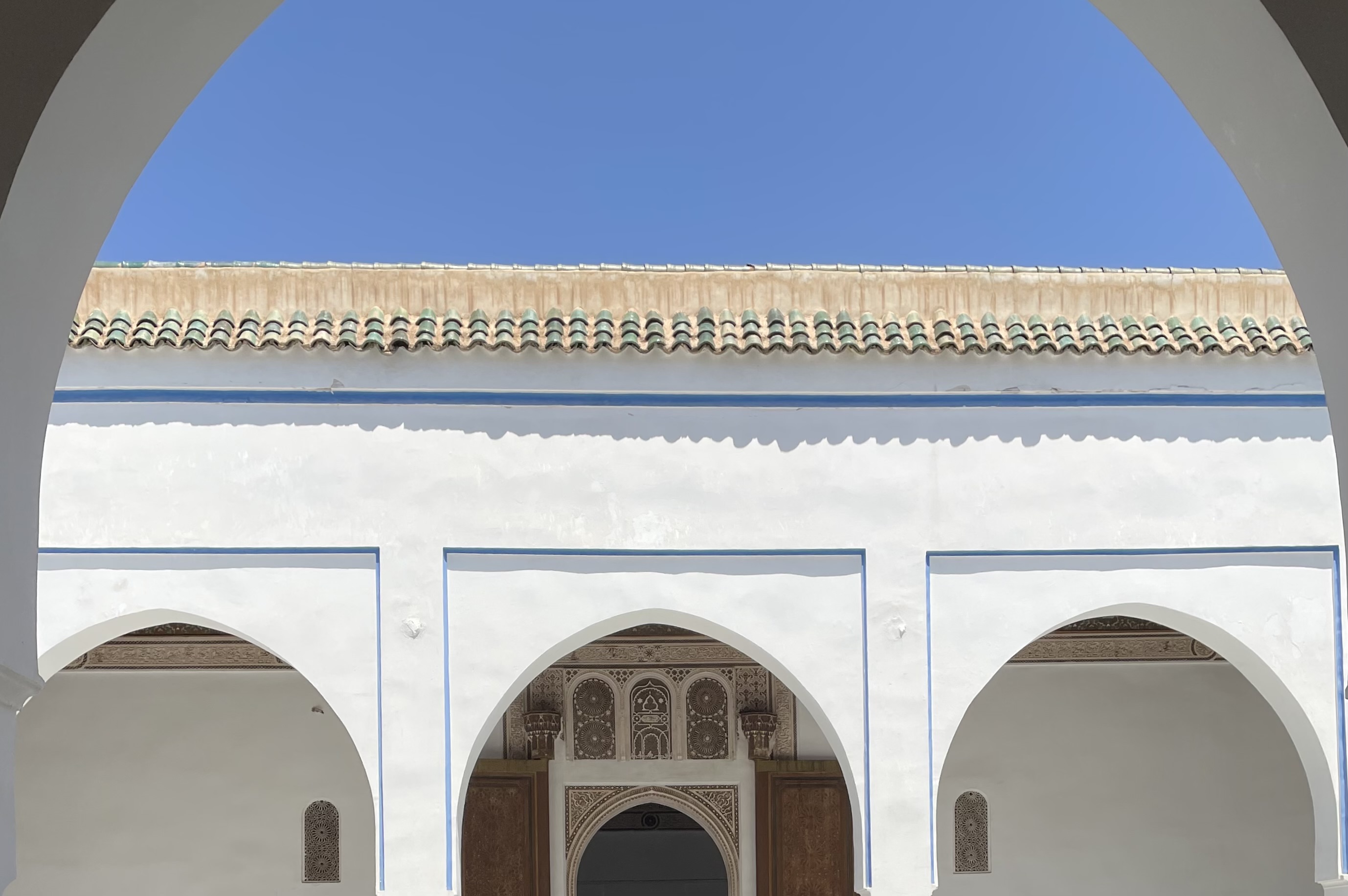
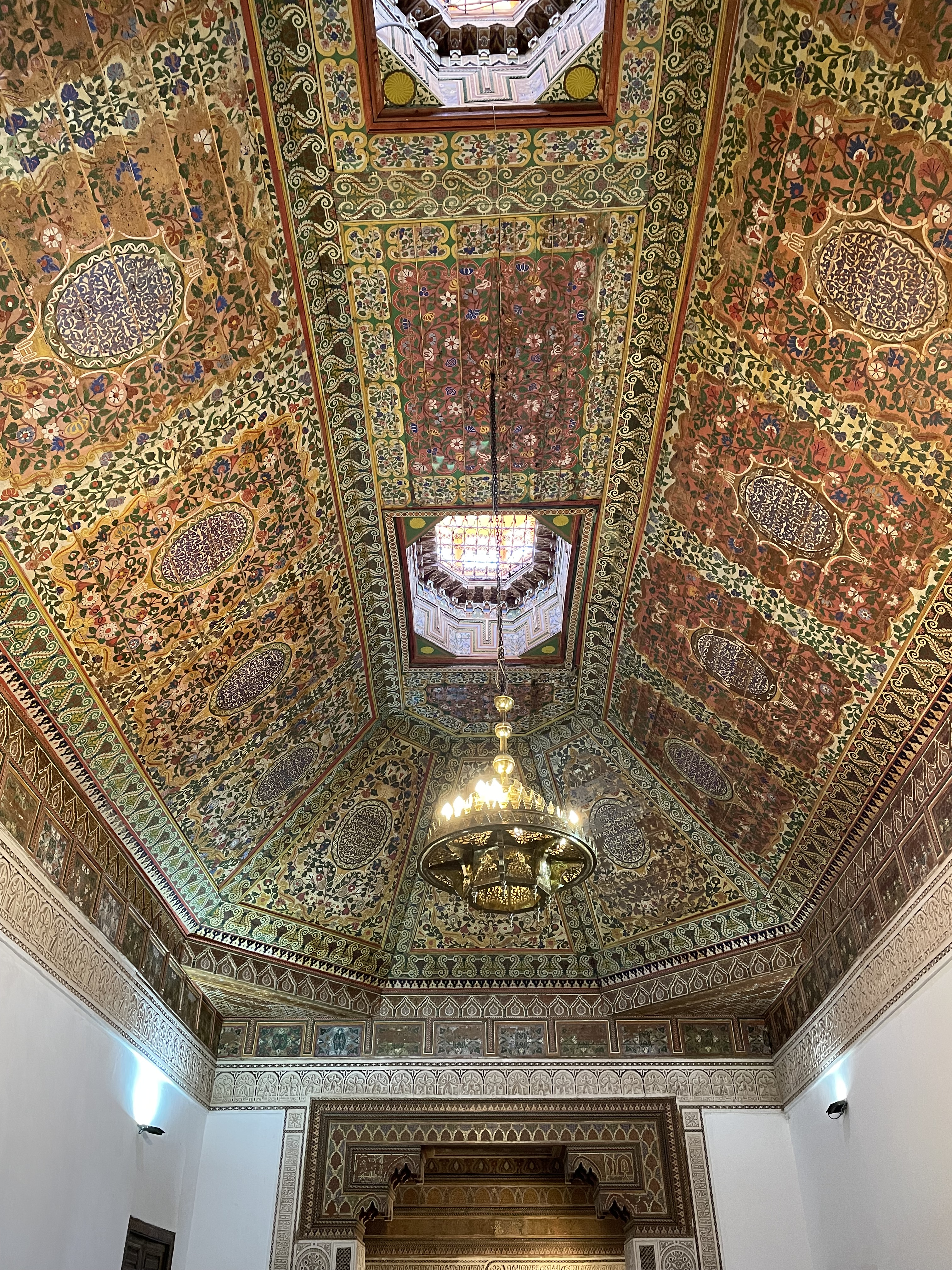
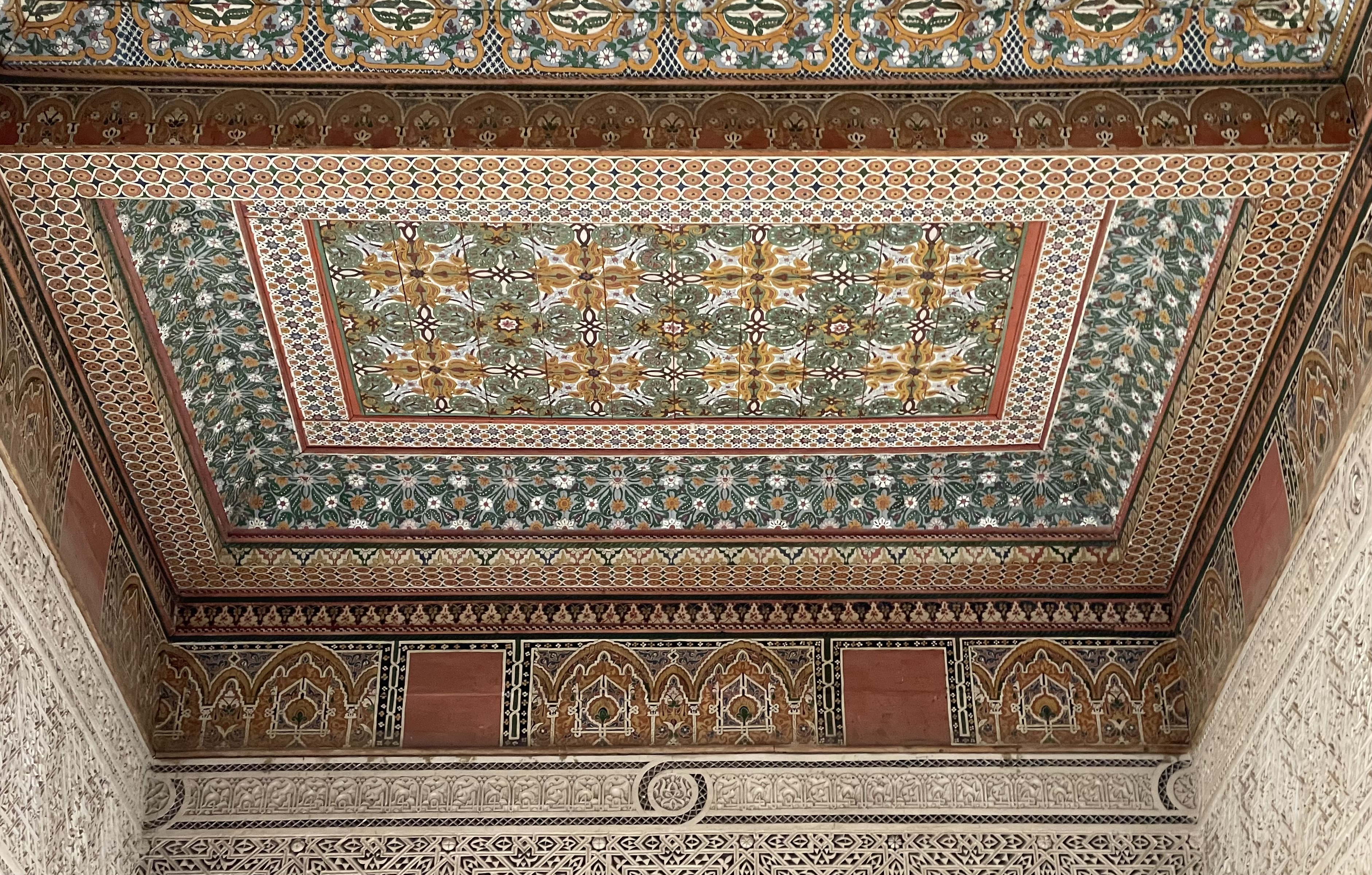
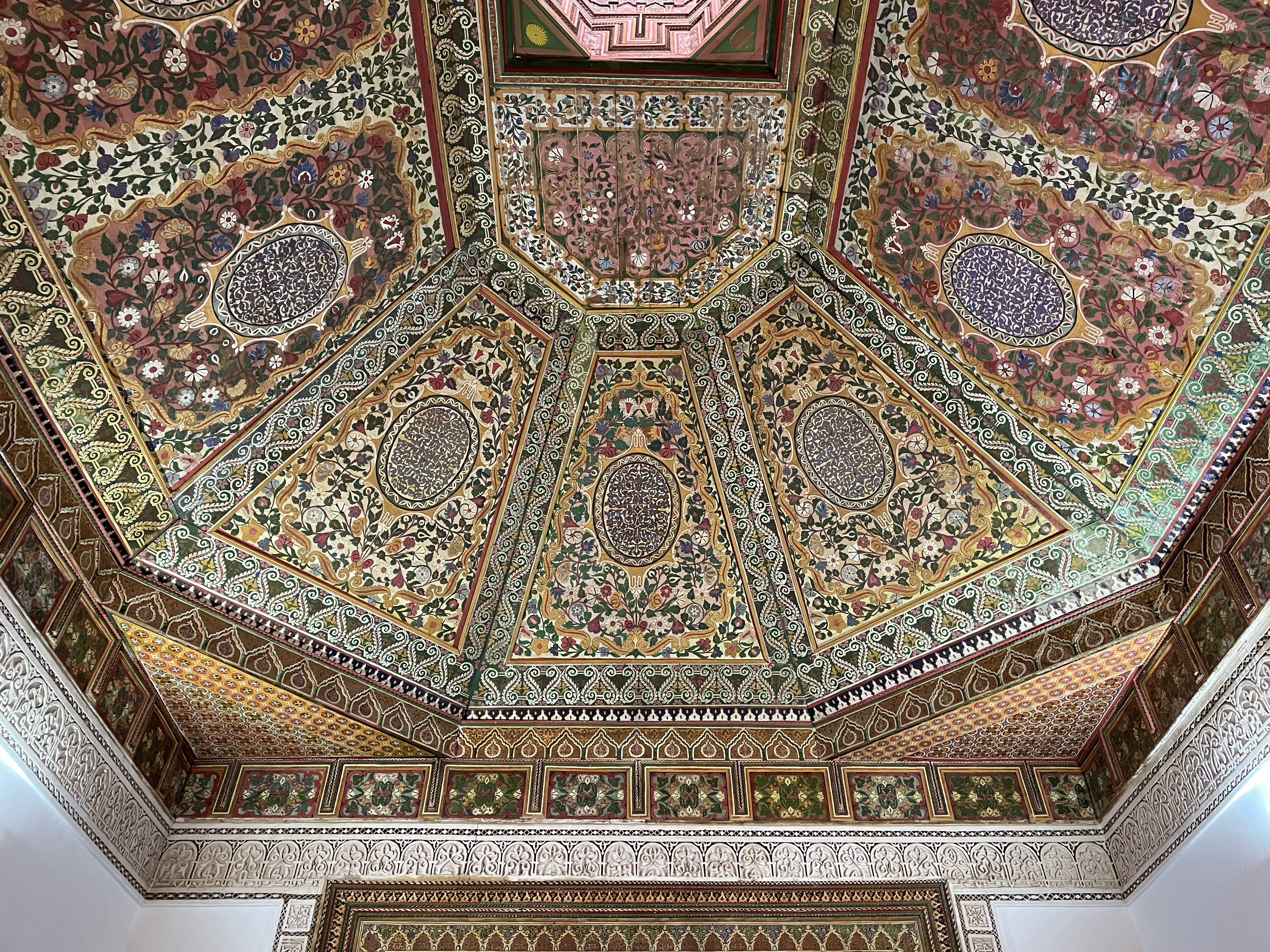
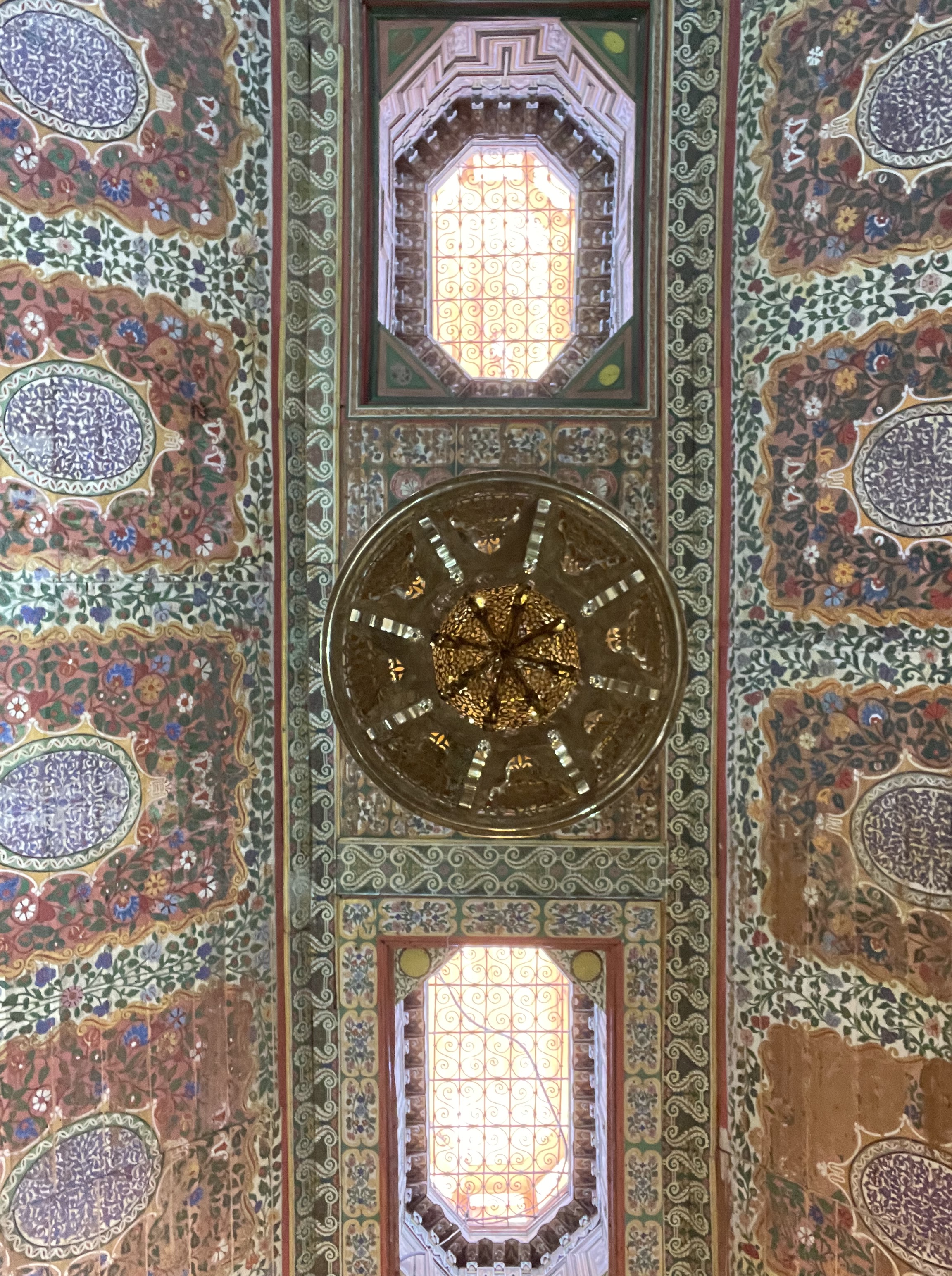
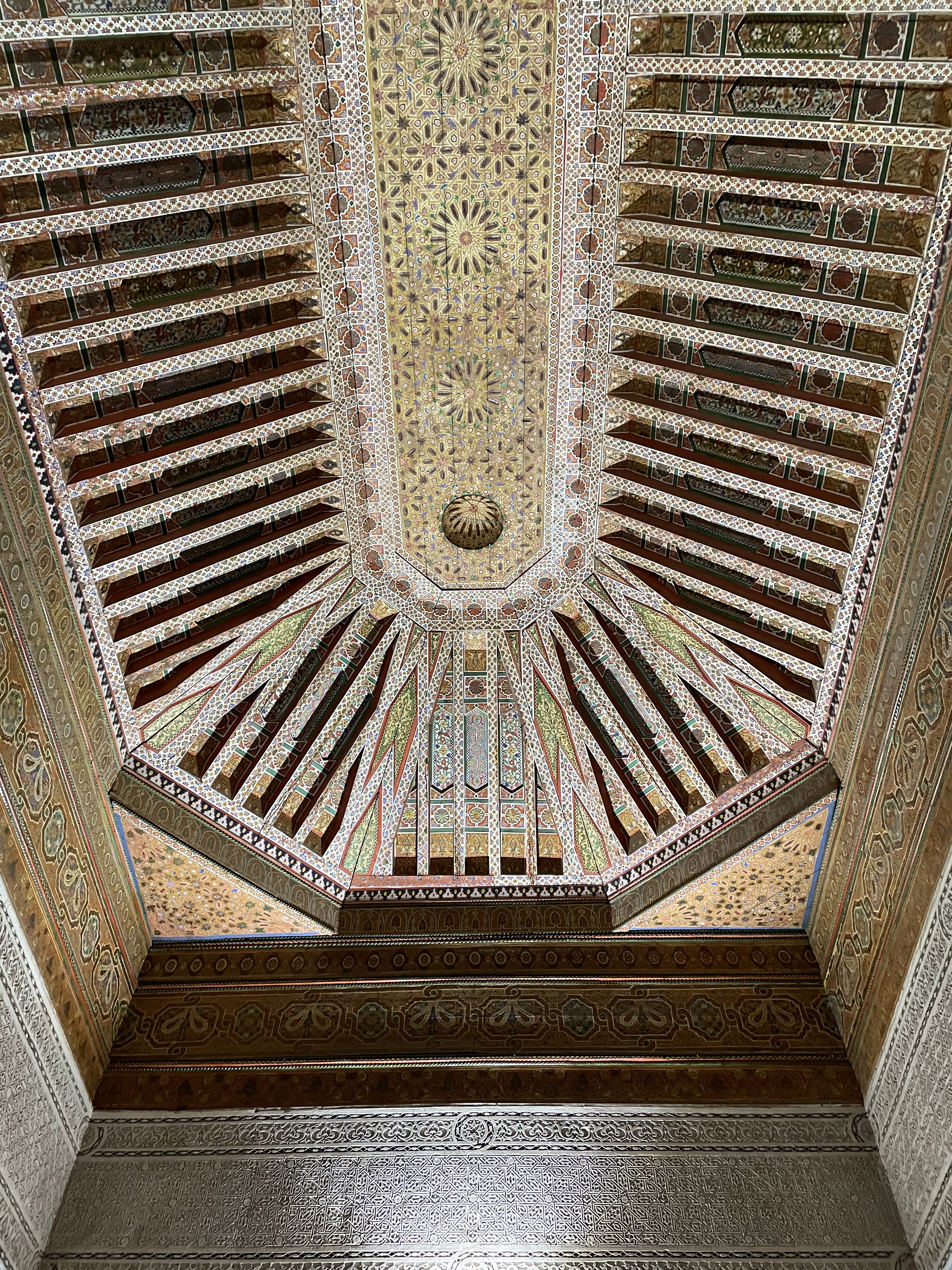
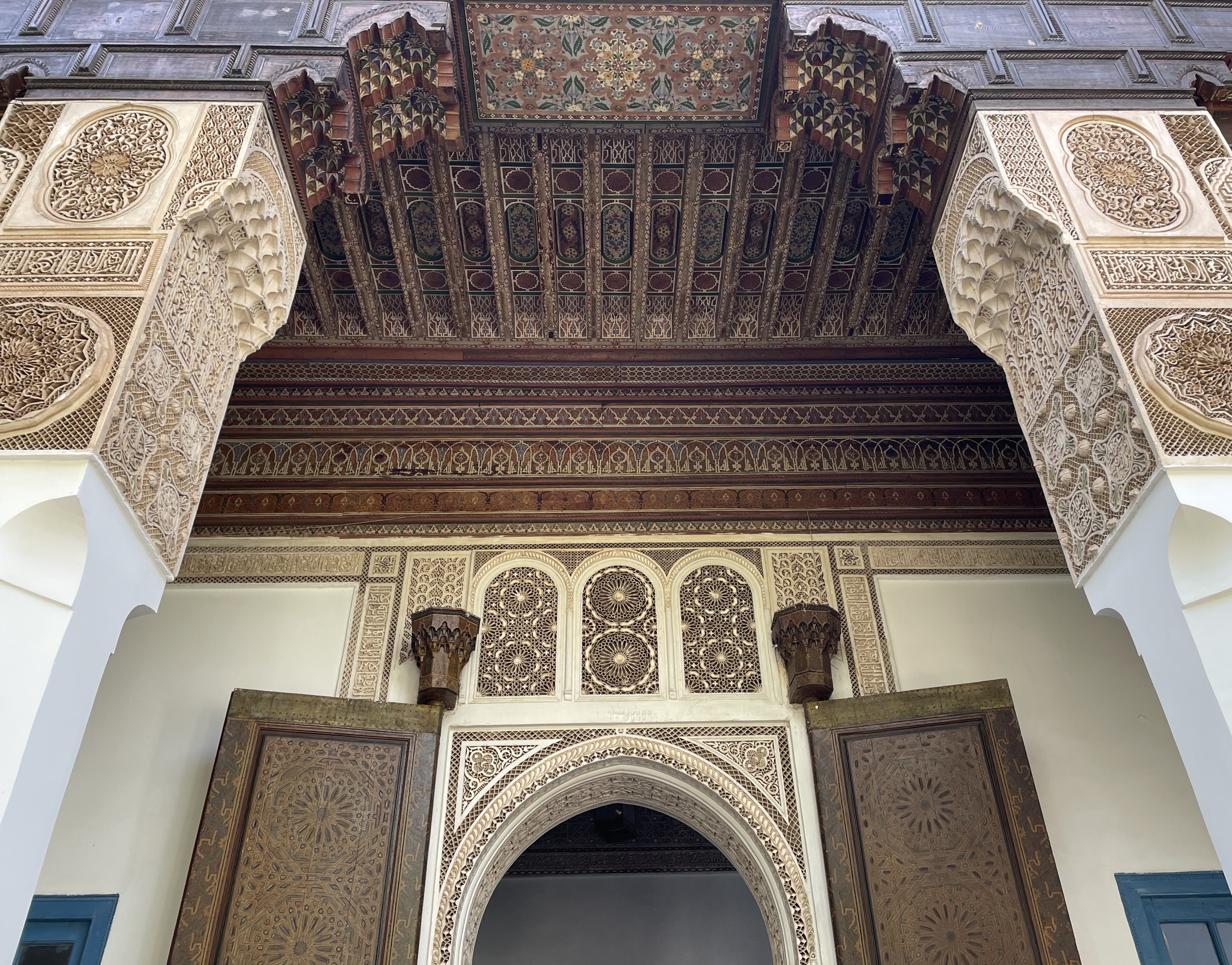
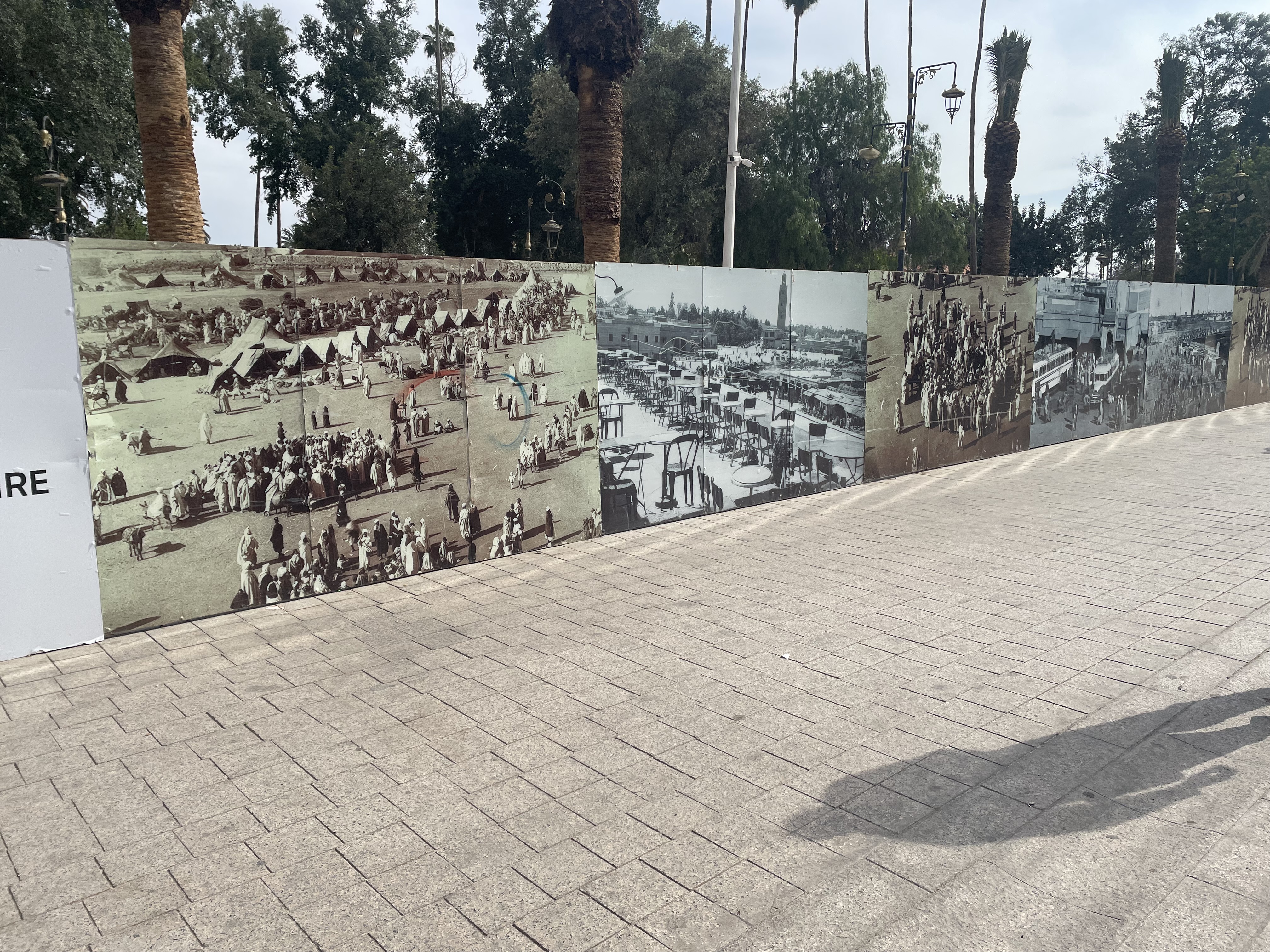
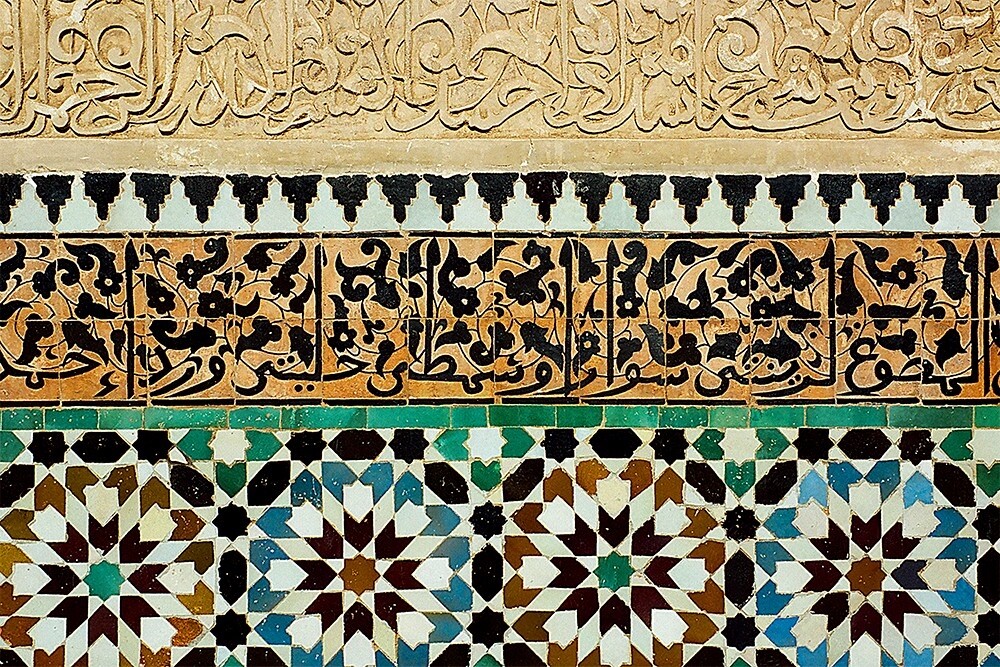
. . . the Ben Youssef Madrasa, the Saadian Tombs, several great residences and “what some describe as an open-air theatre”—the Jamaâ El Fna square—are tempting in an of themselves.
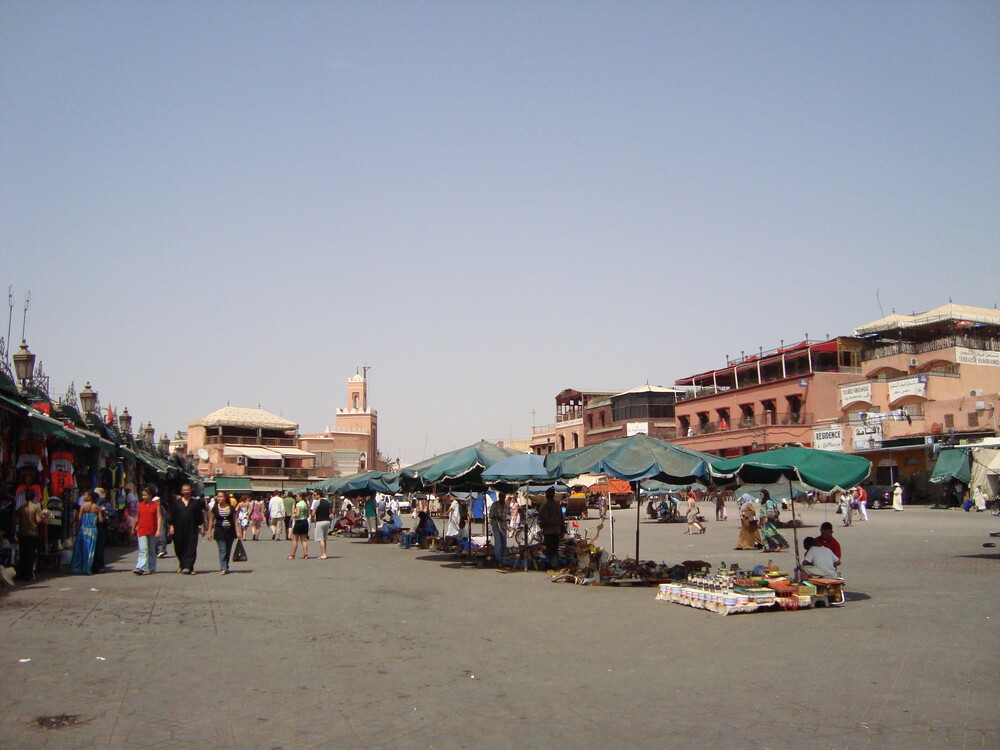
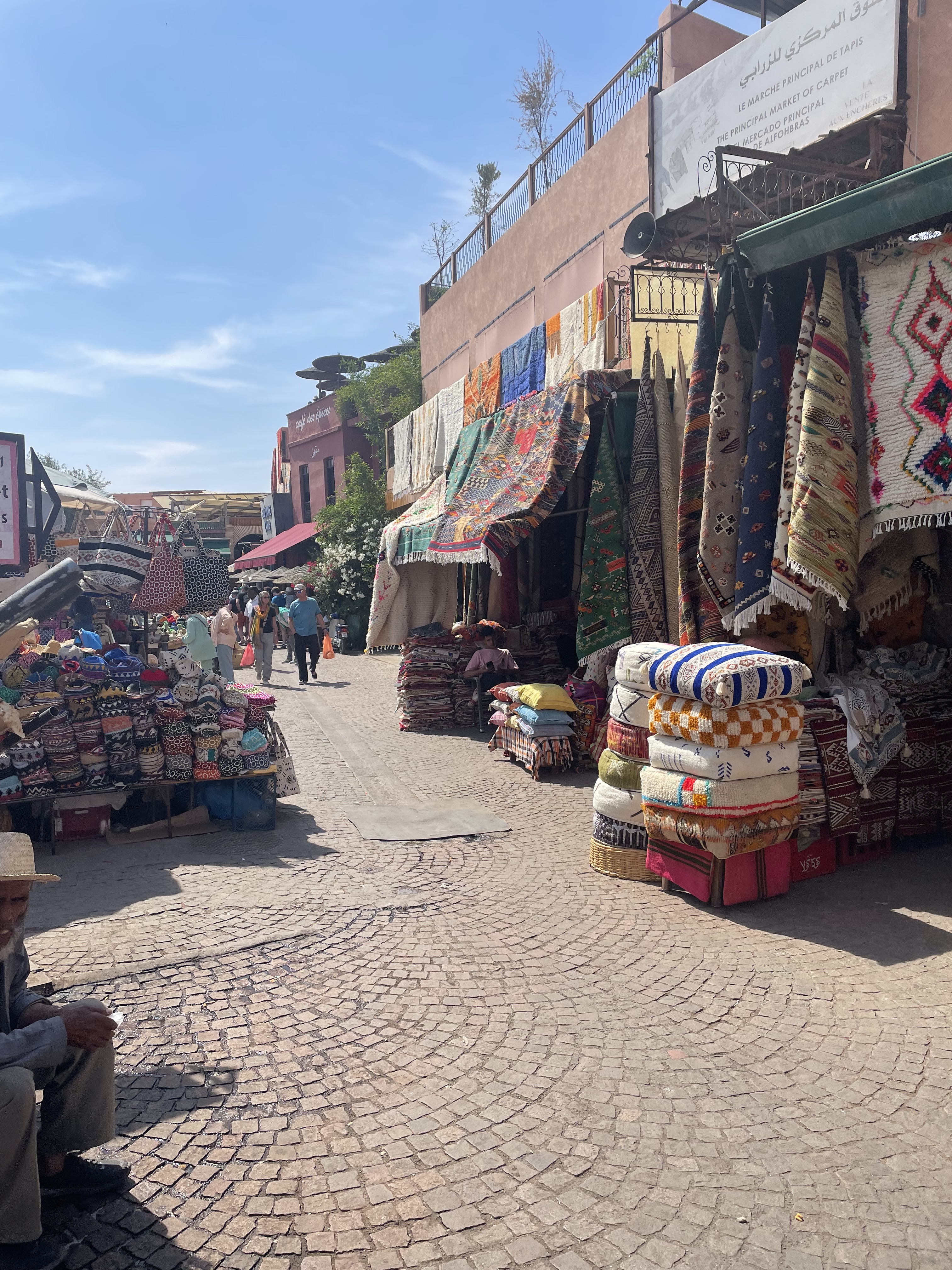
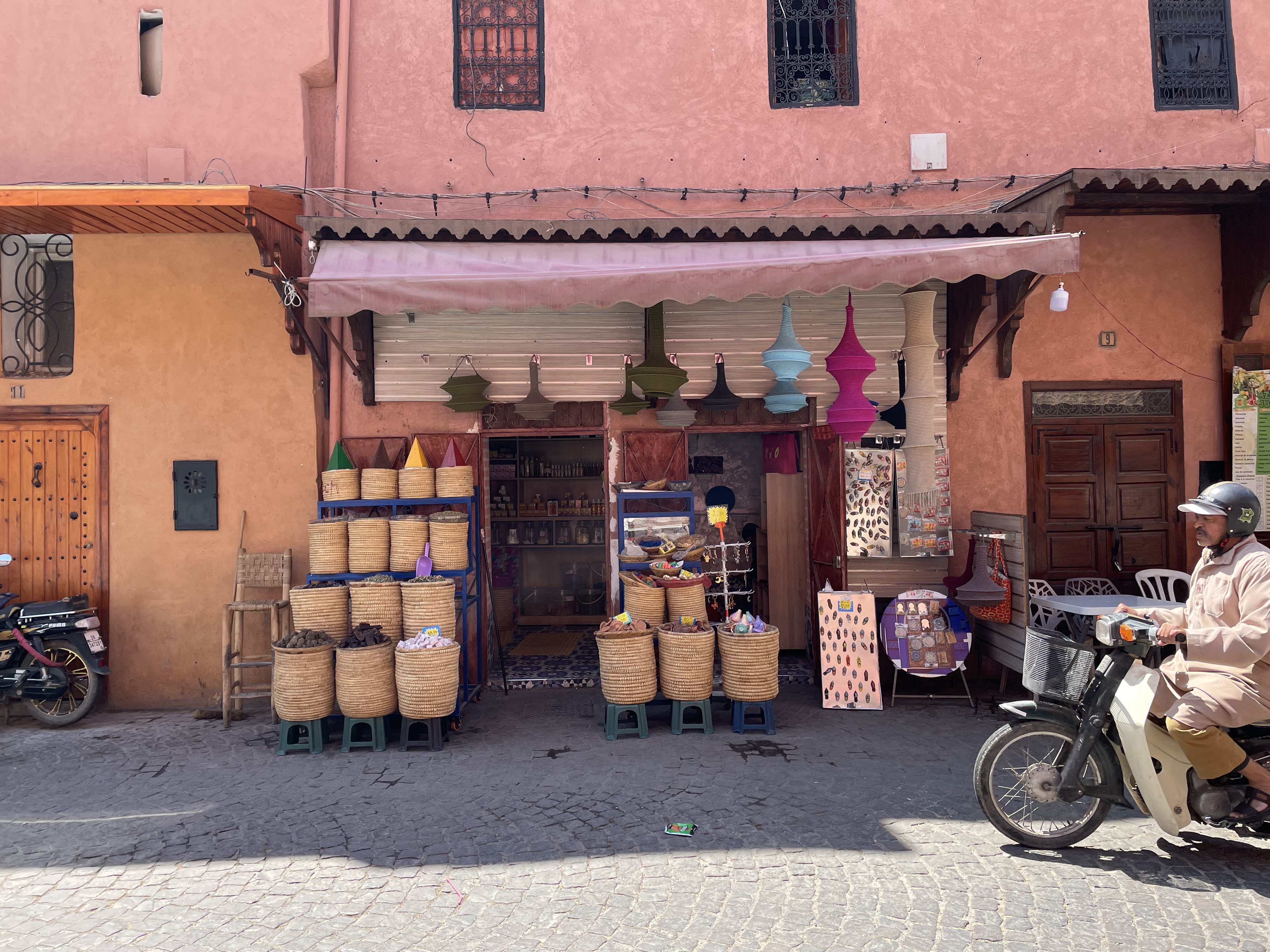
But the important thing to remember in terms of why we care about Marrakech is that the sum is even greater than these impressive parts.
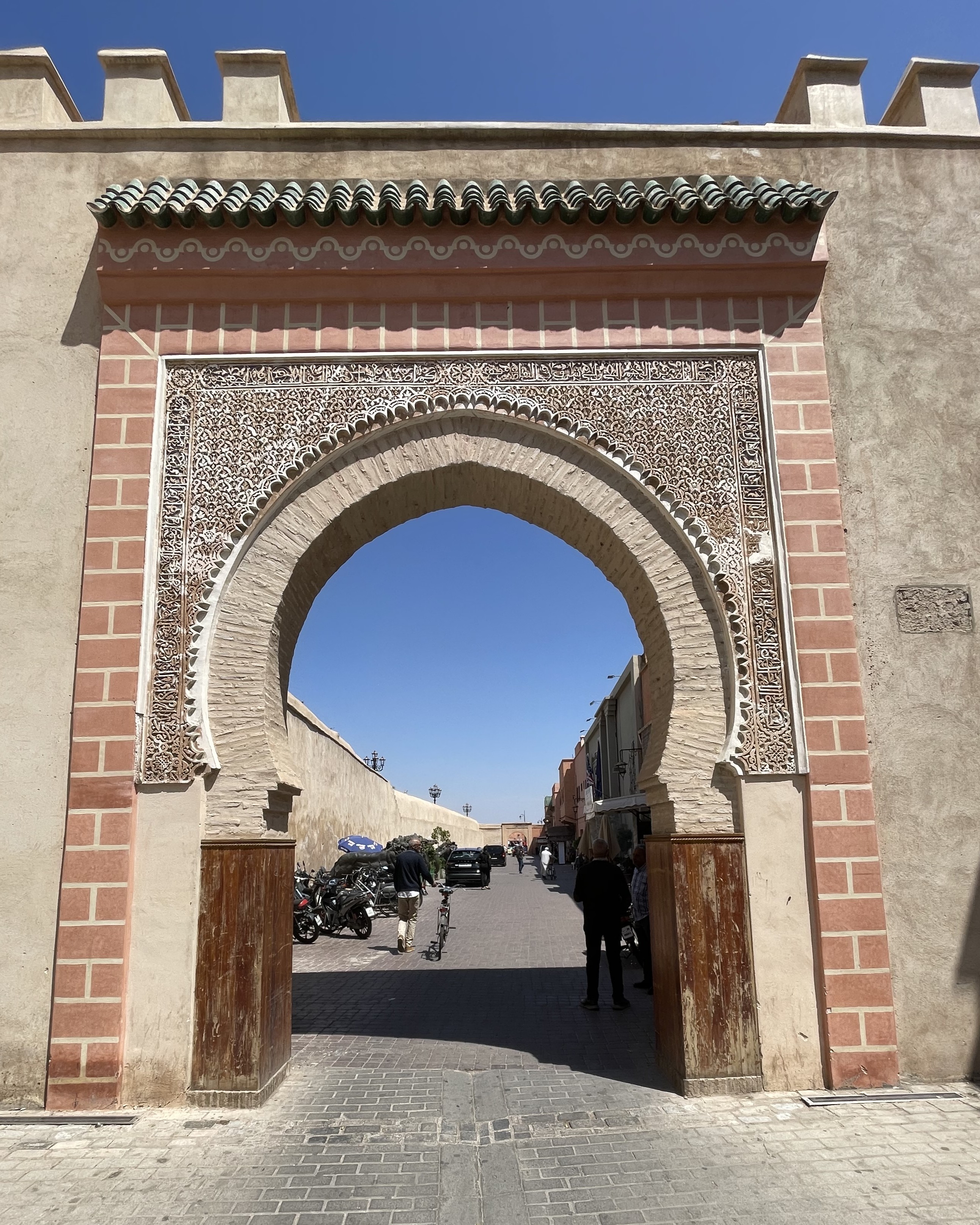
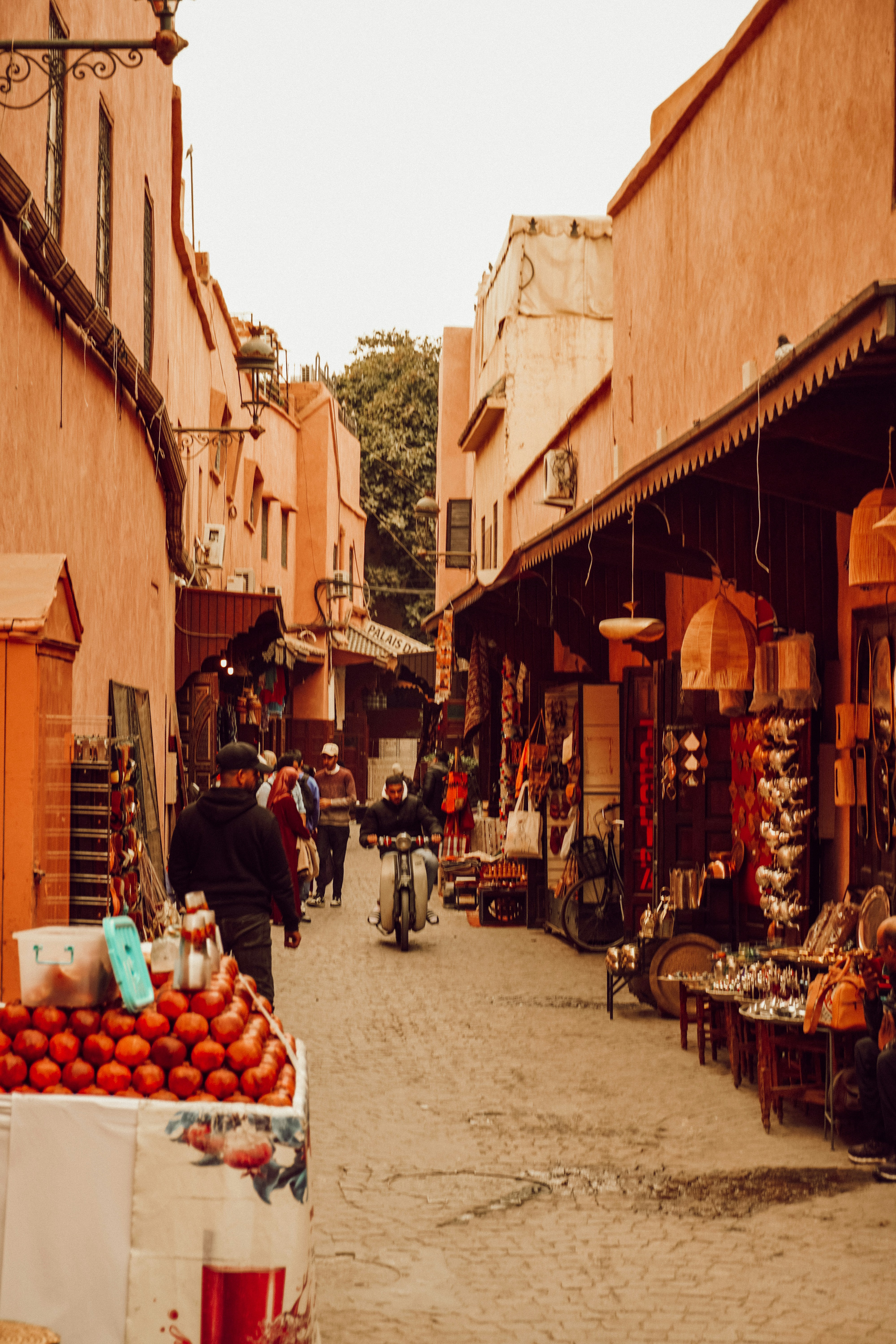
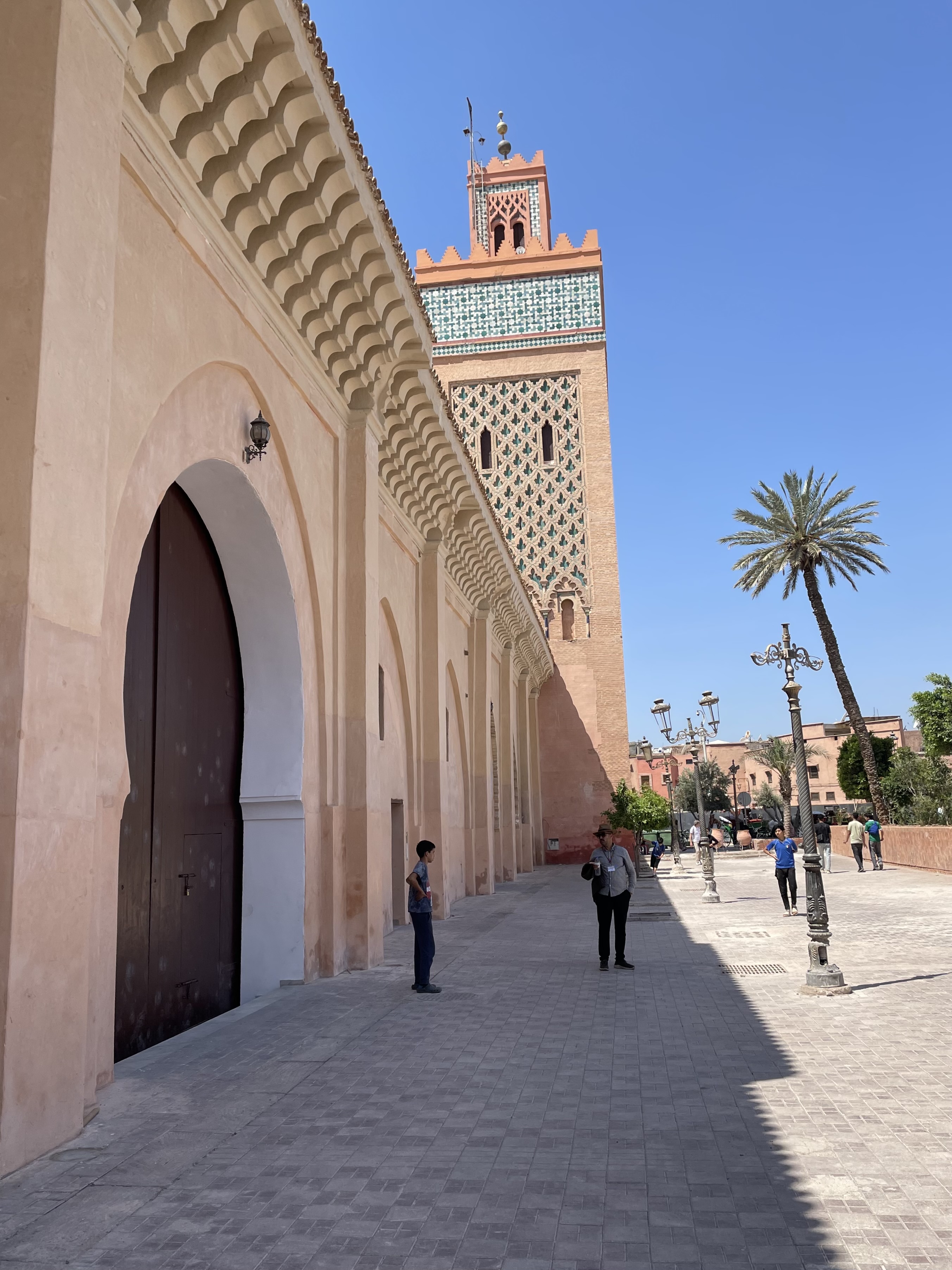
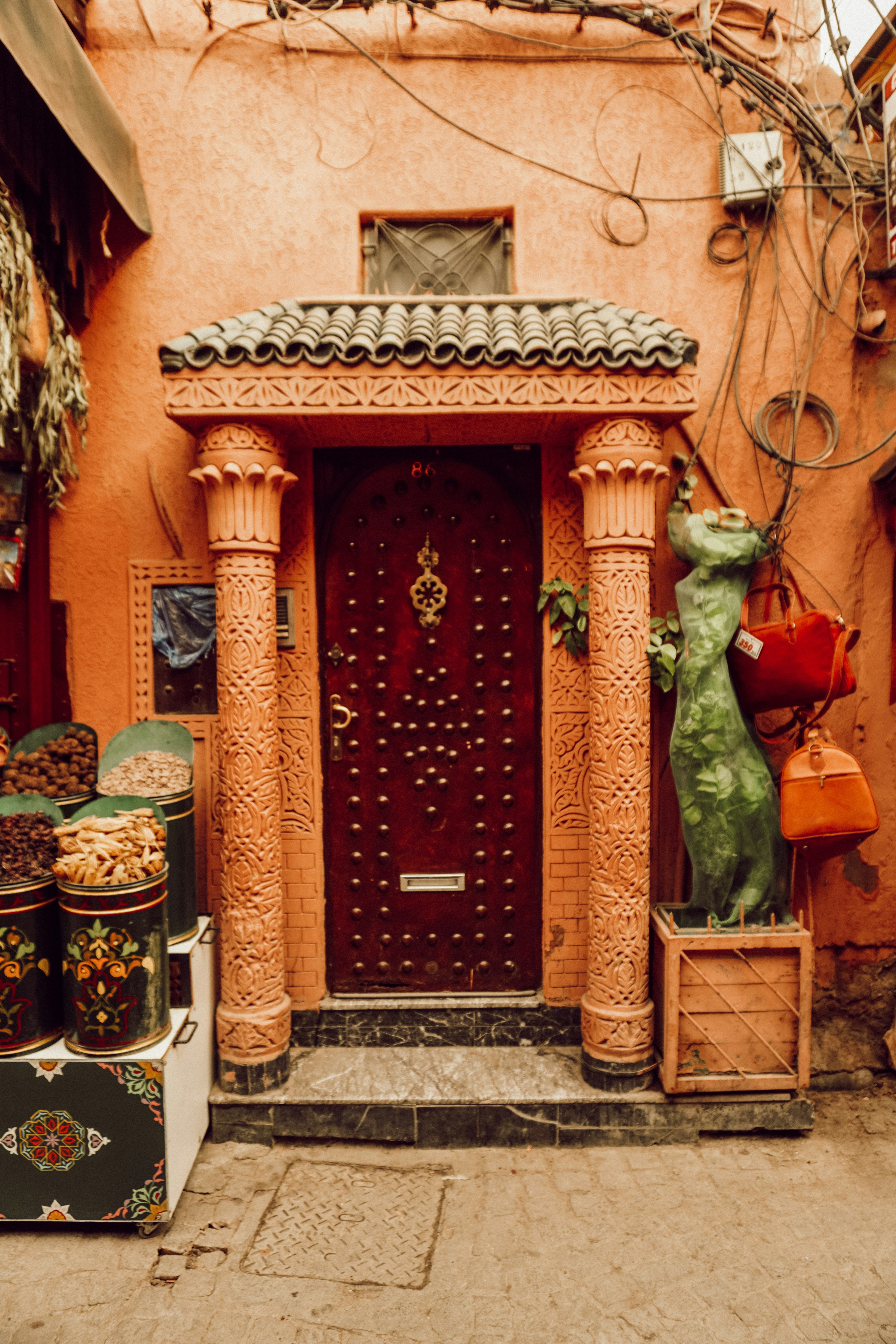
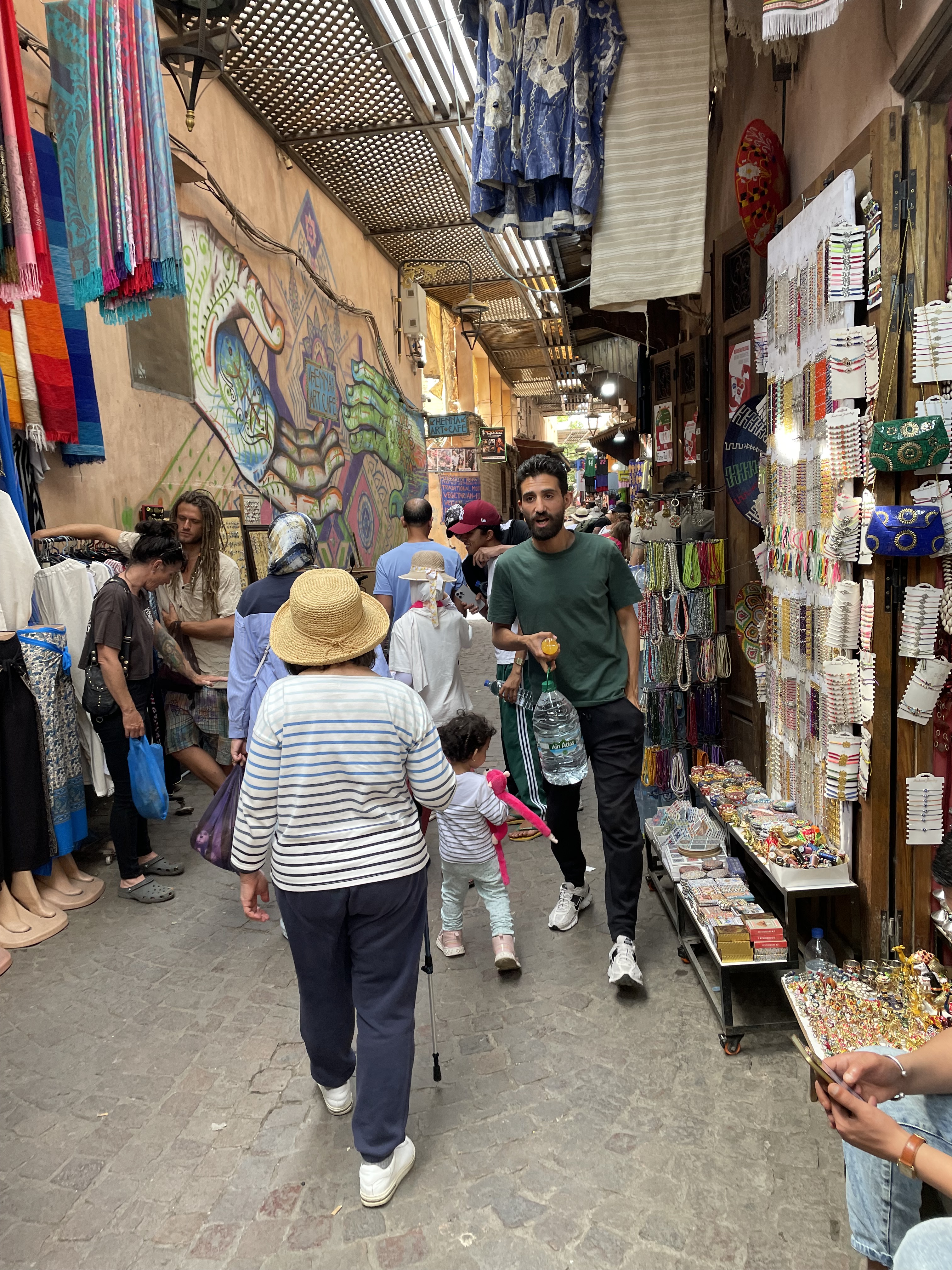
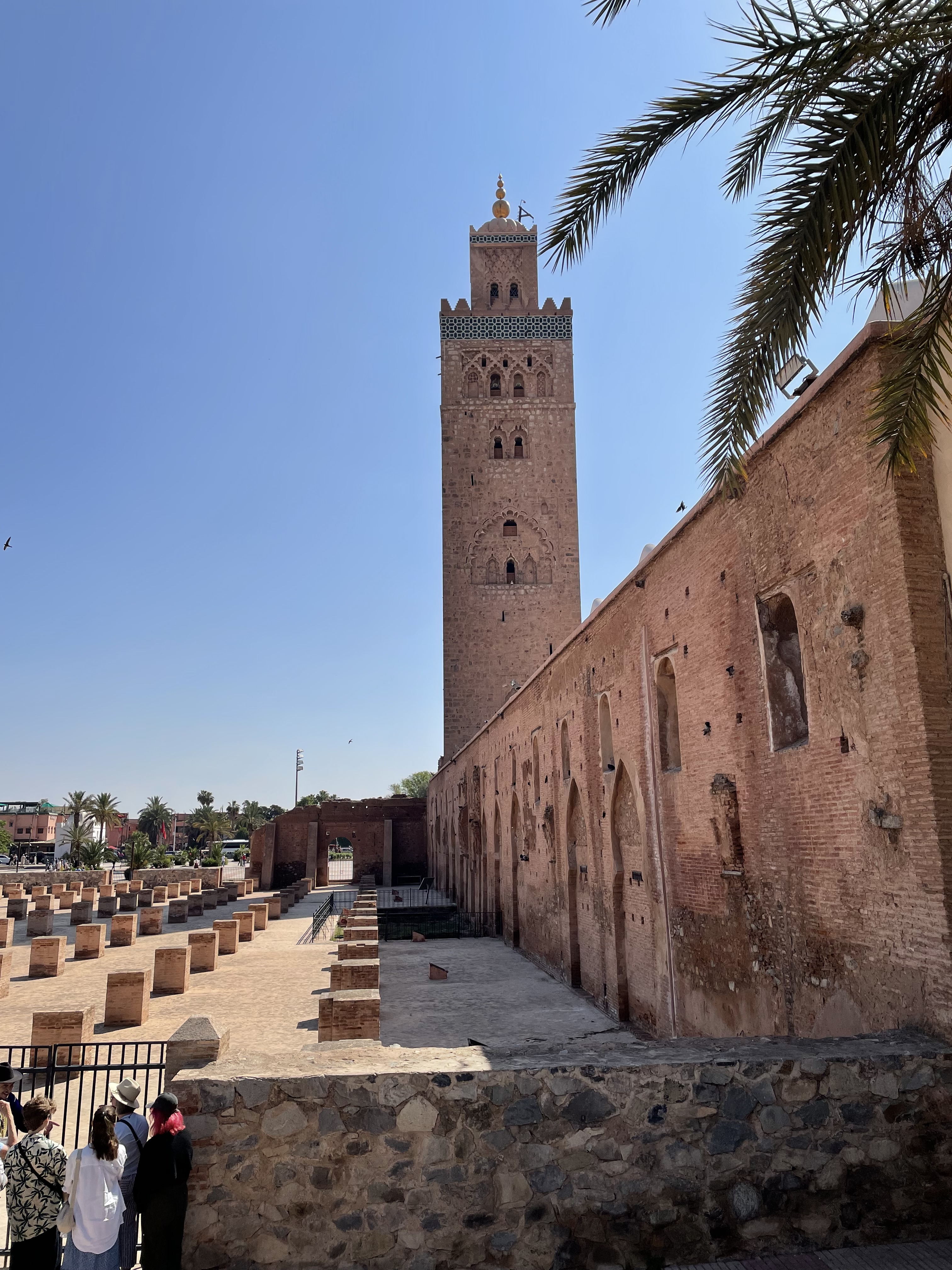
From a historic, architectural, and cultural perspective Marrakesh “is a completed example of a major Islamic capital of the western Mediterranean, and these types of complete historic landscapes are increasingly rare.” Threats to the city’s integrity are certainly there. “The enclosure of the Medina―the ancient habitat which is vulnerable due to factors such as demographic change―represents an outstanding example of a living historic town with its tangle of lanes, its houses, souks, fondouks, artisanal activities and traditional trades.”
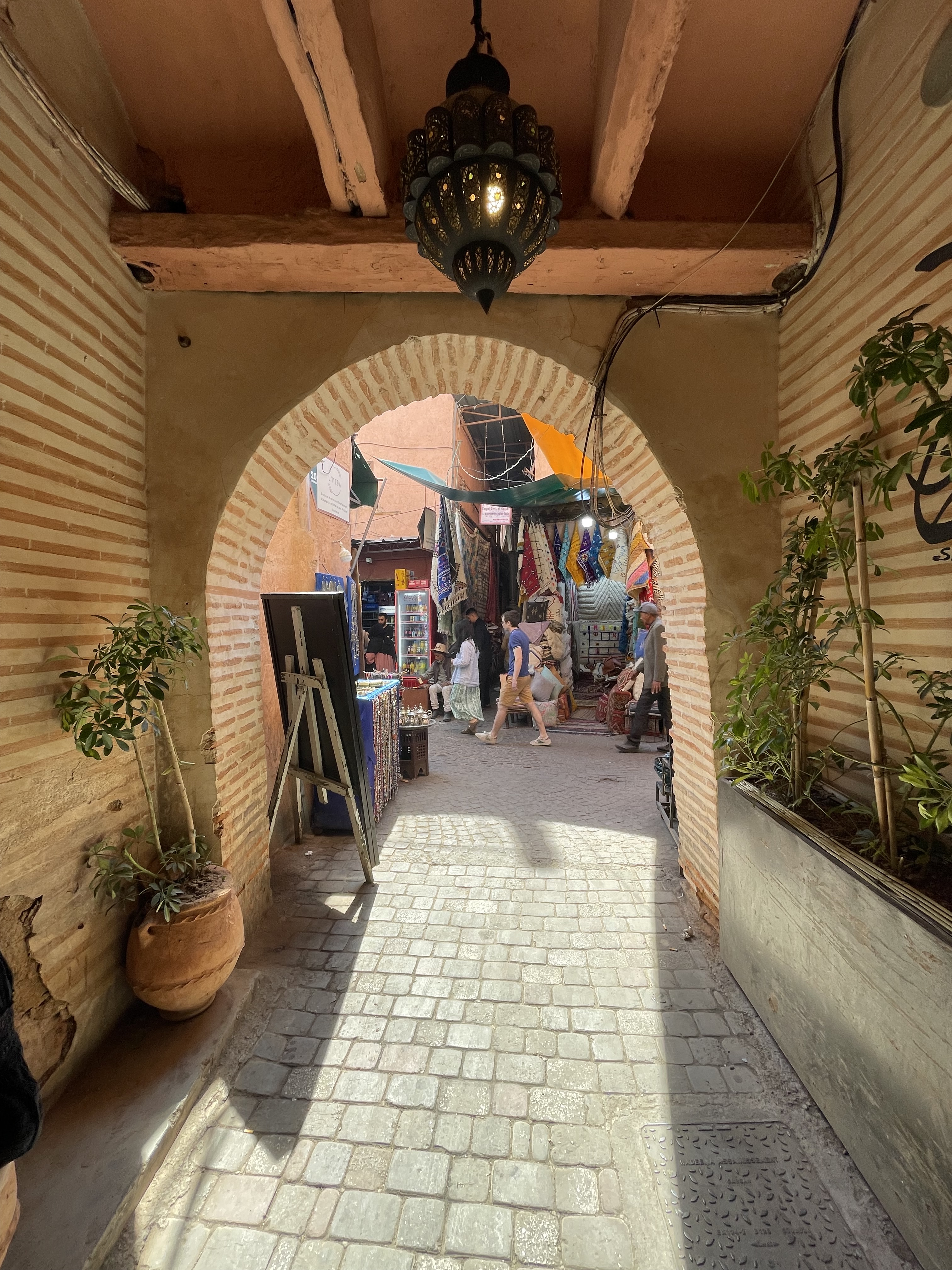
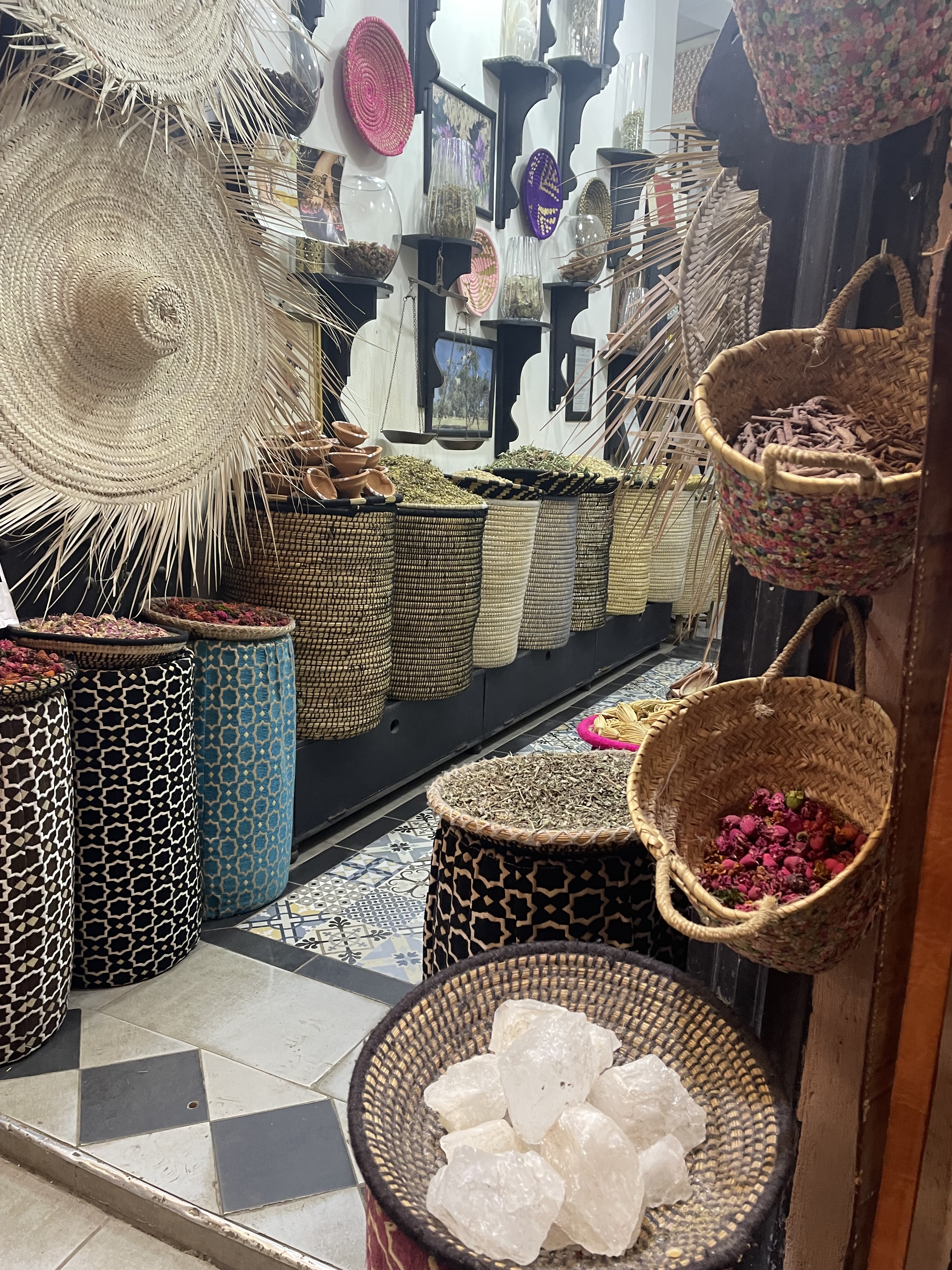
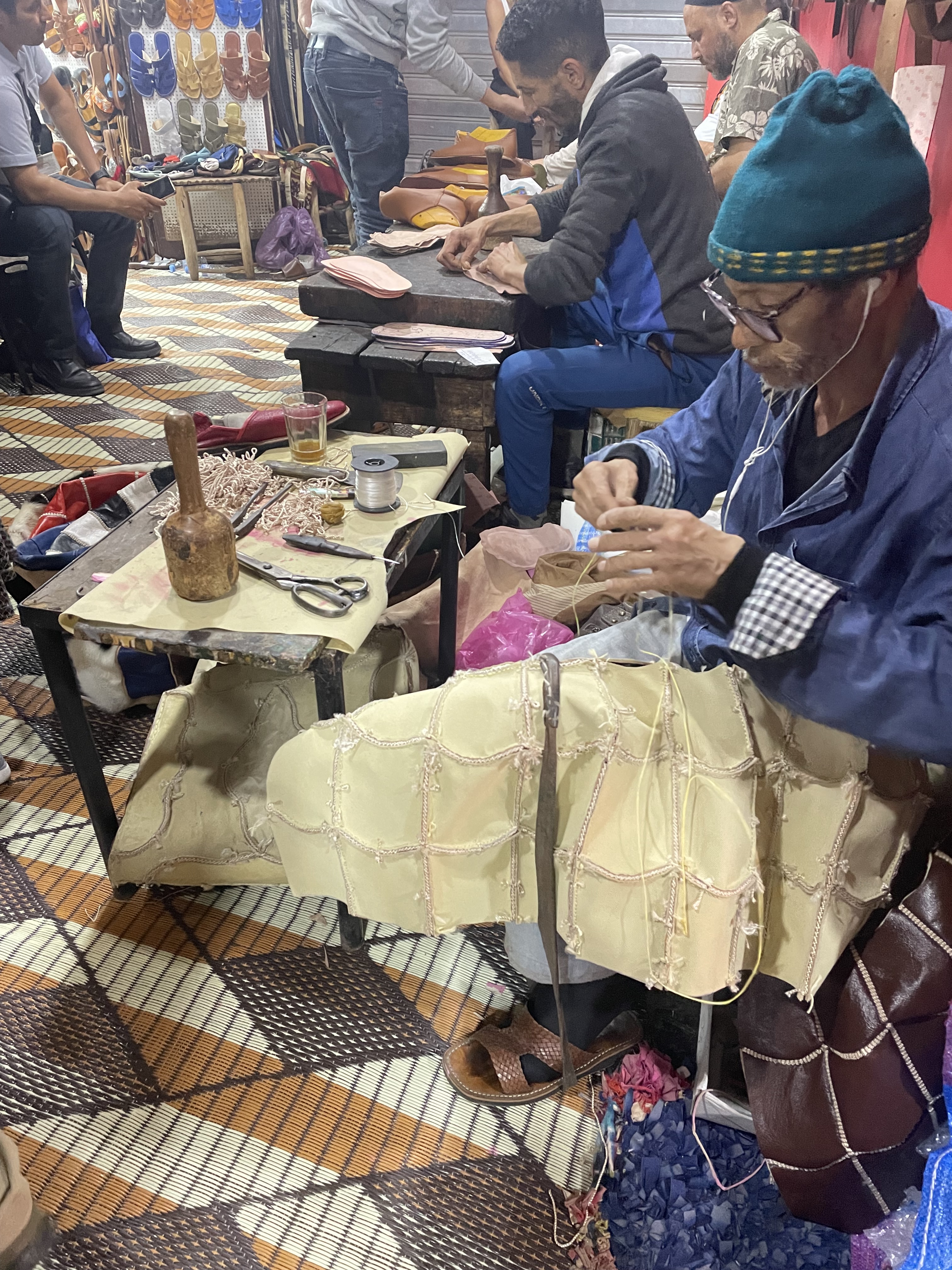
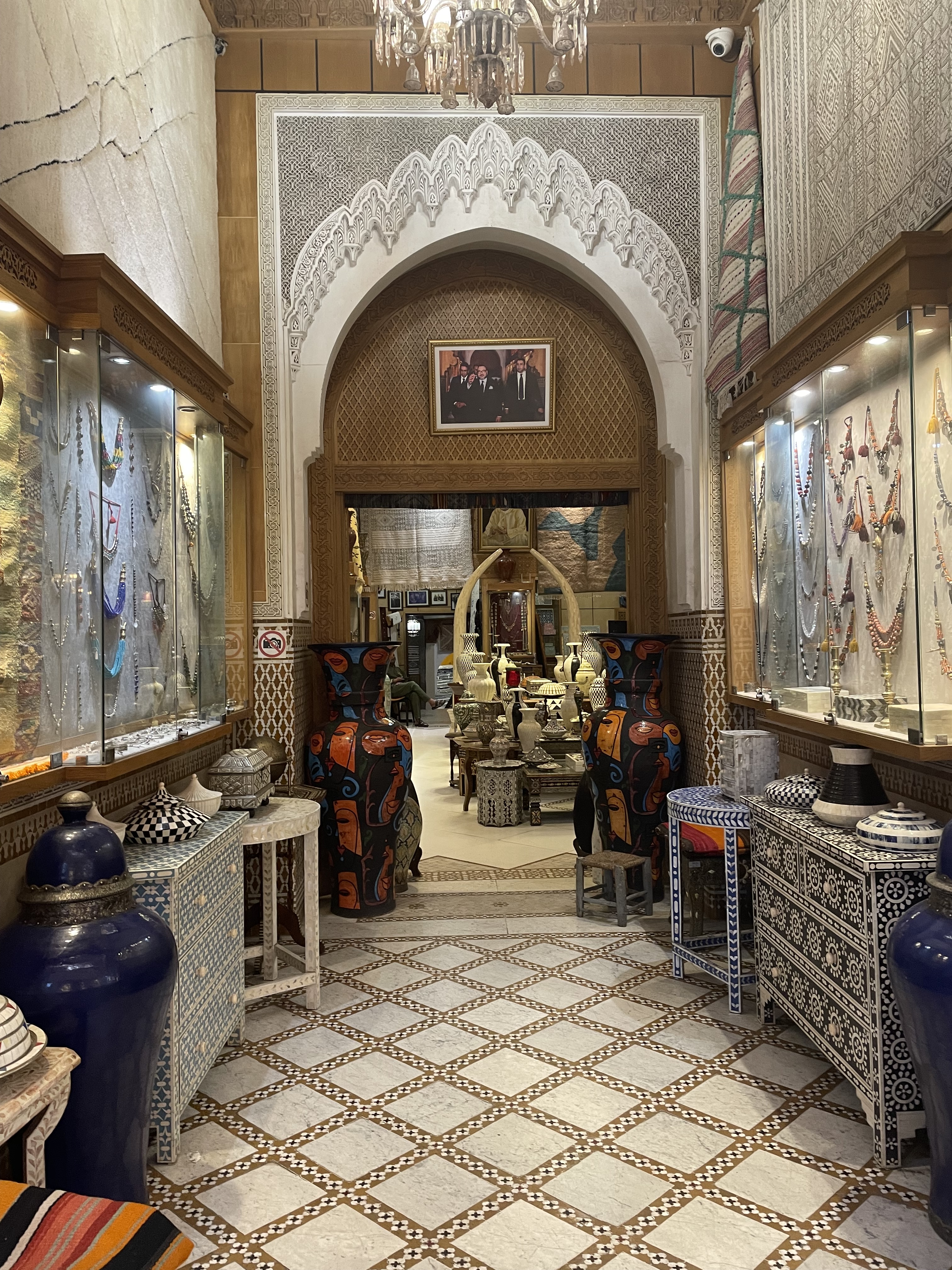
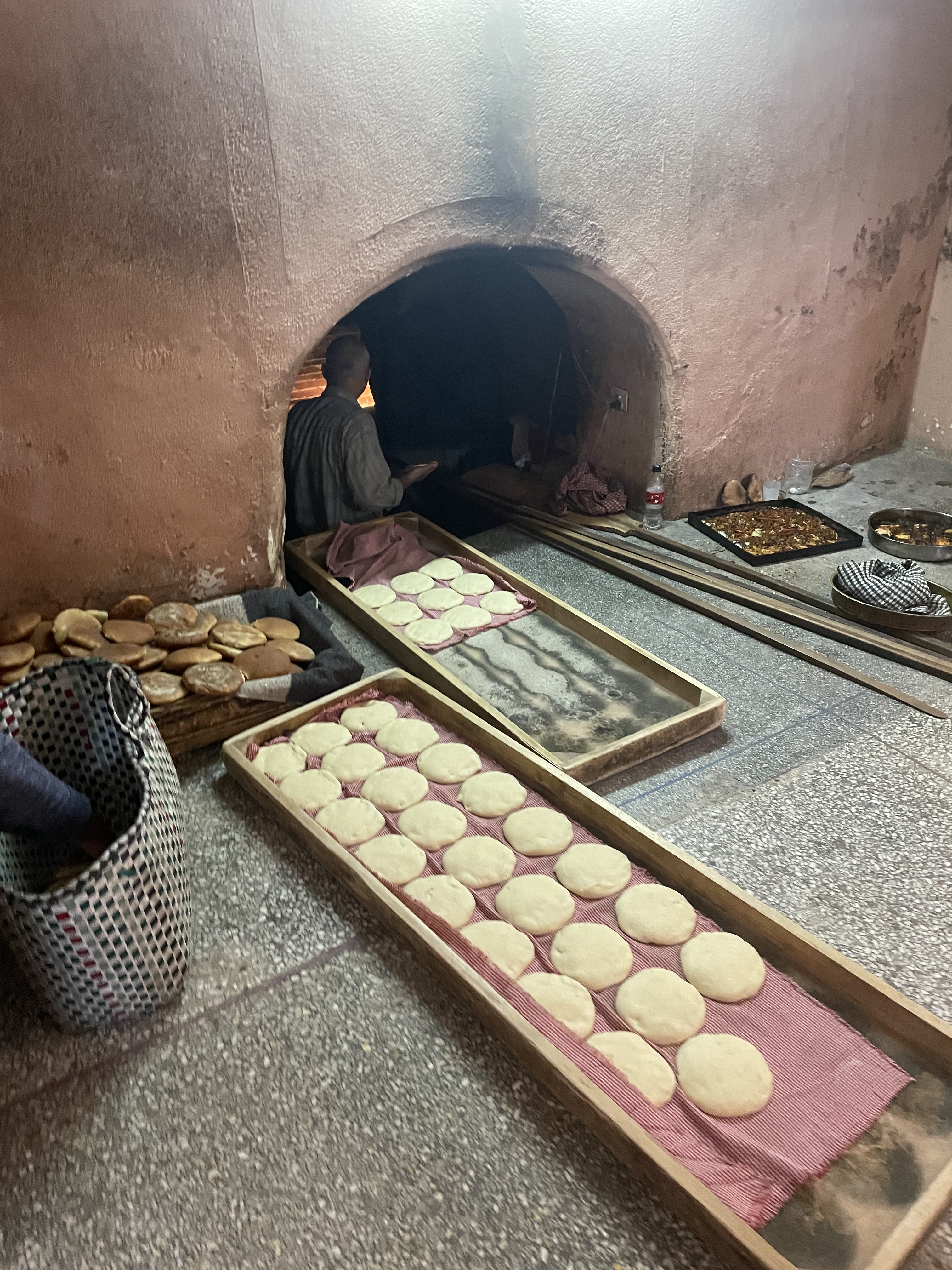
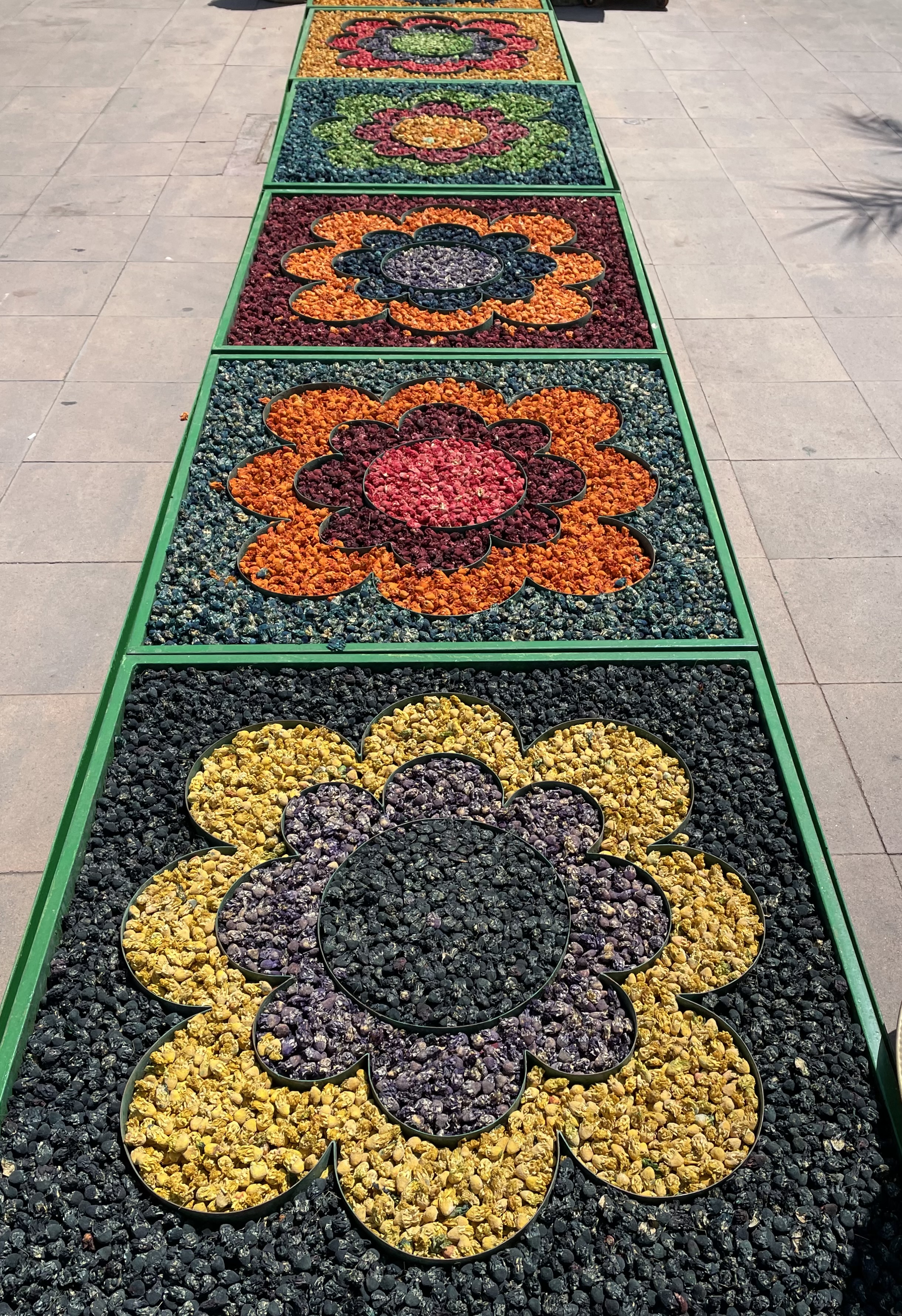
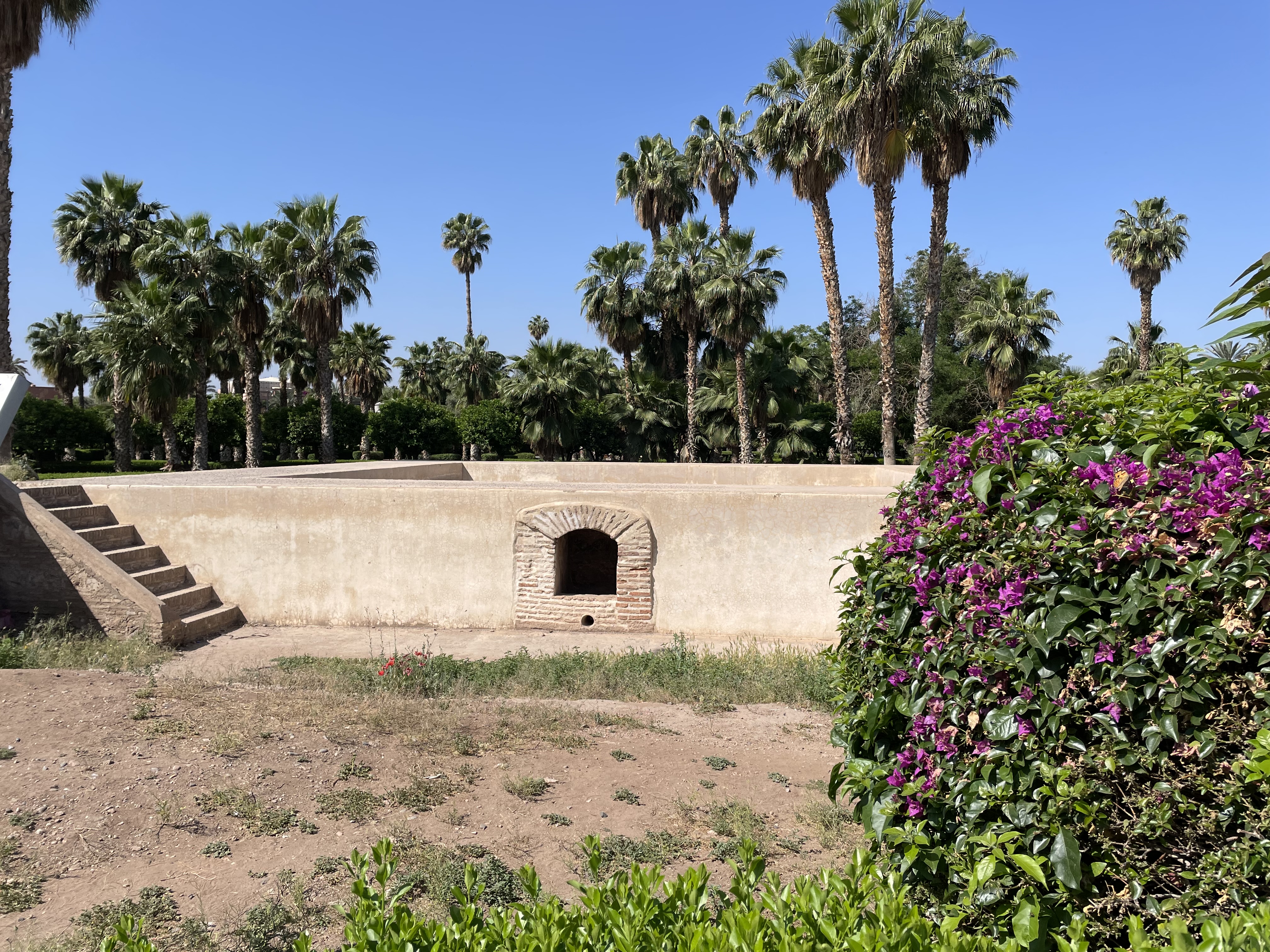
Given the proximity to the desert, Marrakech, as well as the entire country, was greener and filled with more flowering plants than I expected. Irrigation systems, such as the ancient one shown below, bring water down from the mountains to help sustain the city and a vast agricultural system in the countryside.
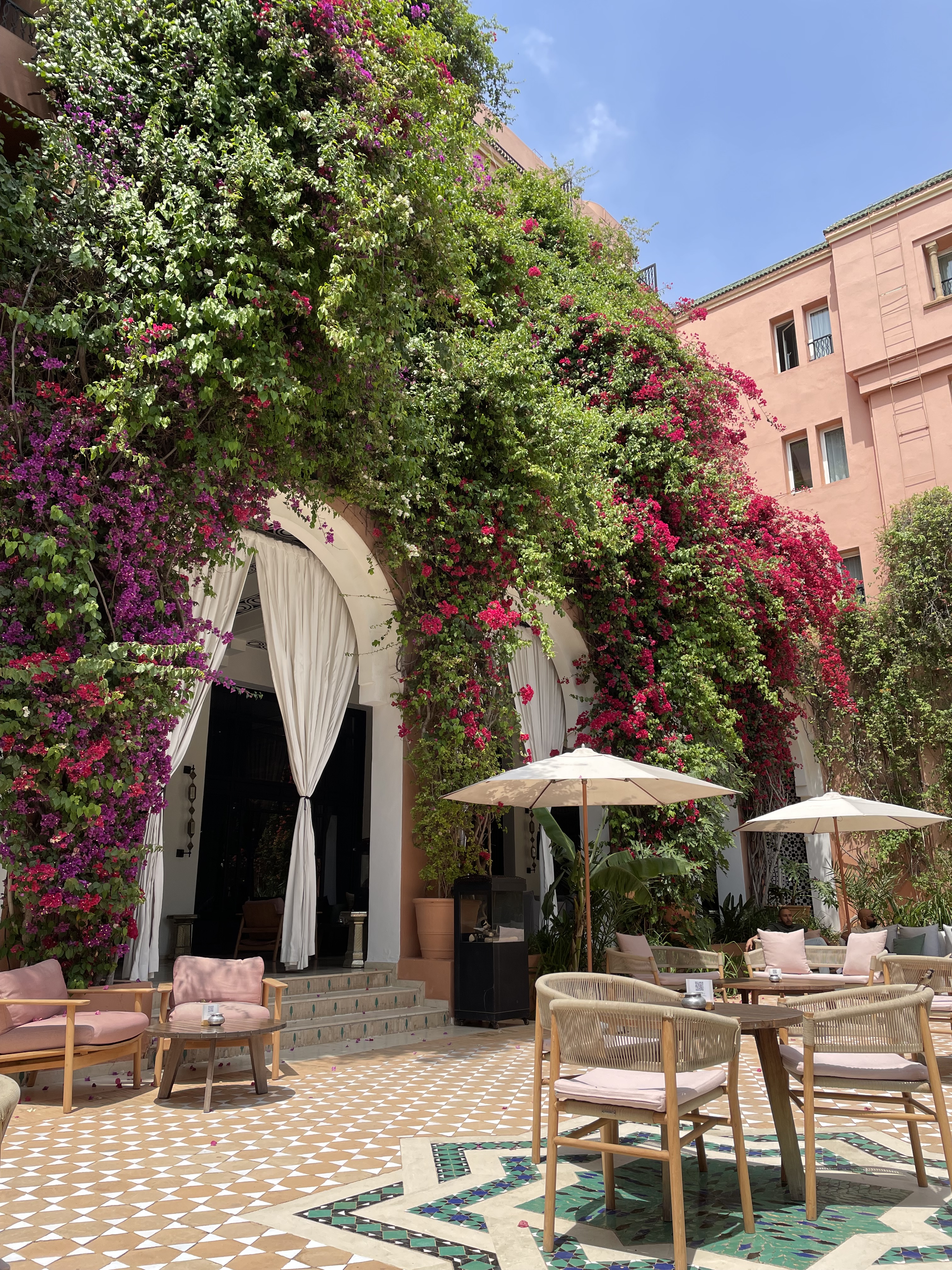
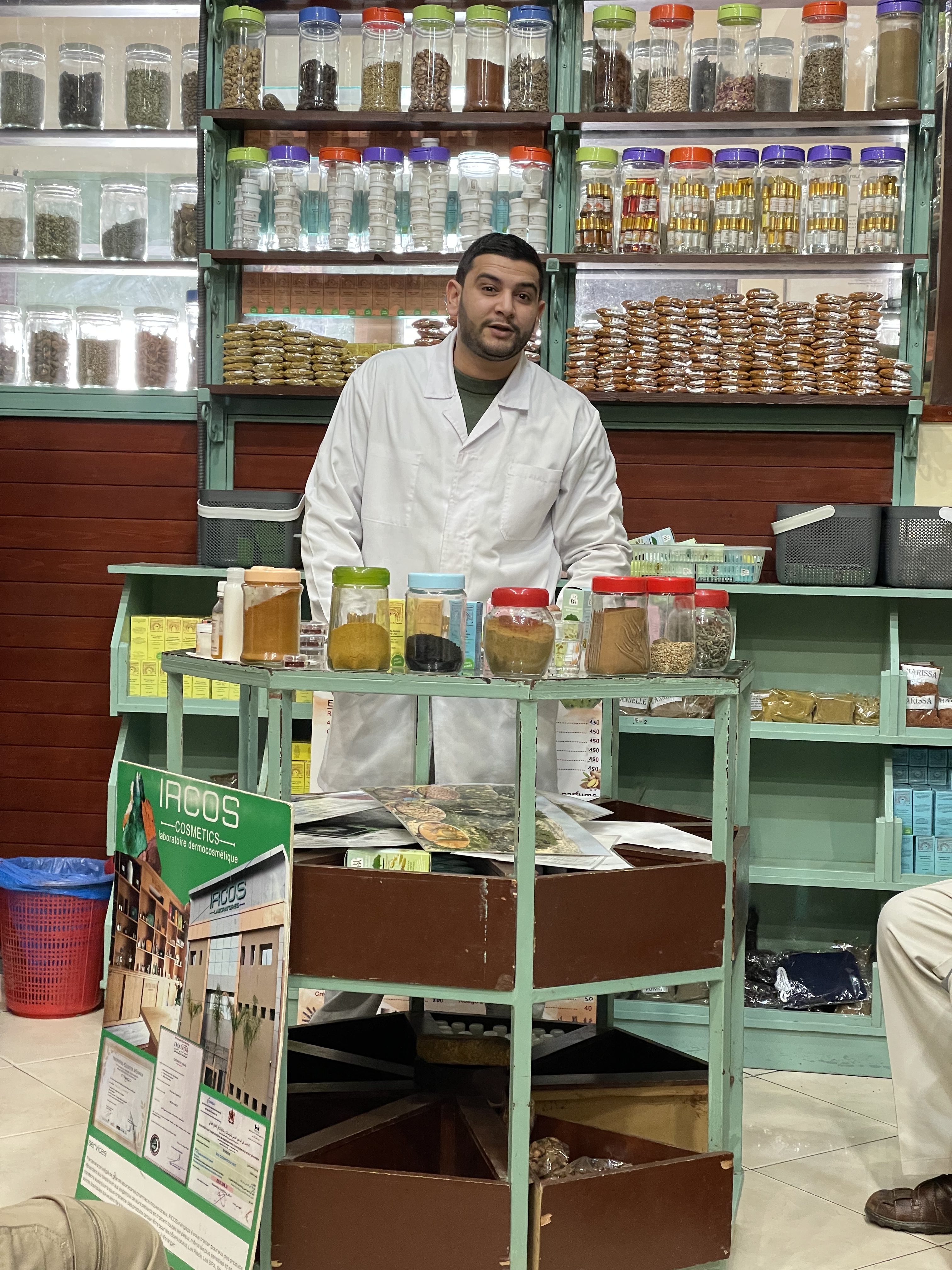
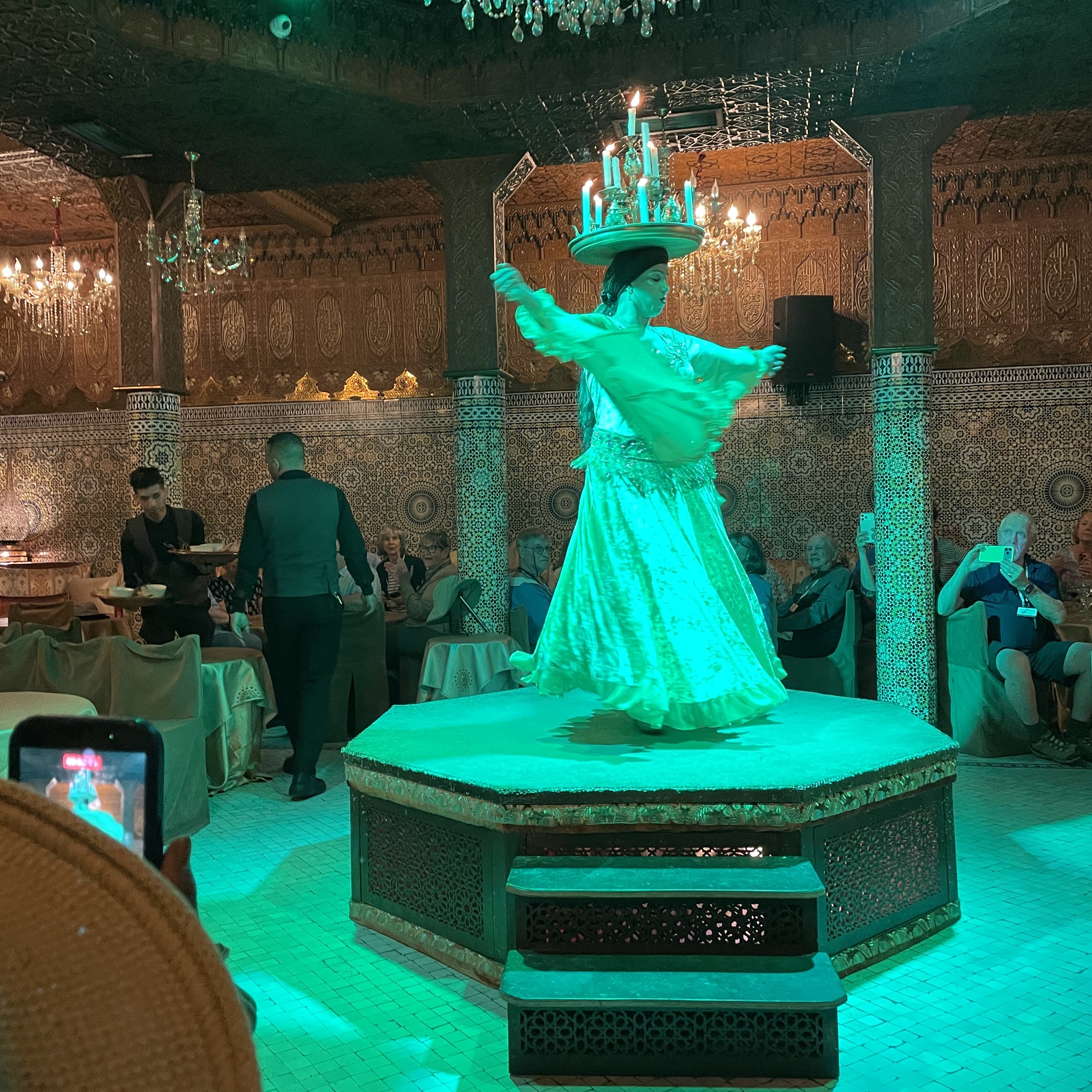
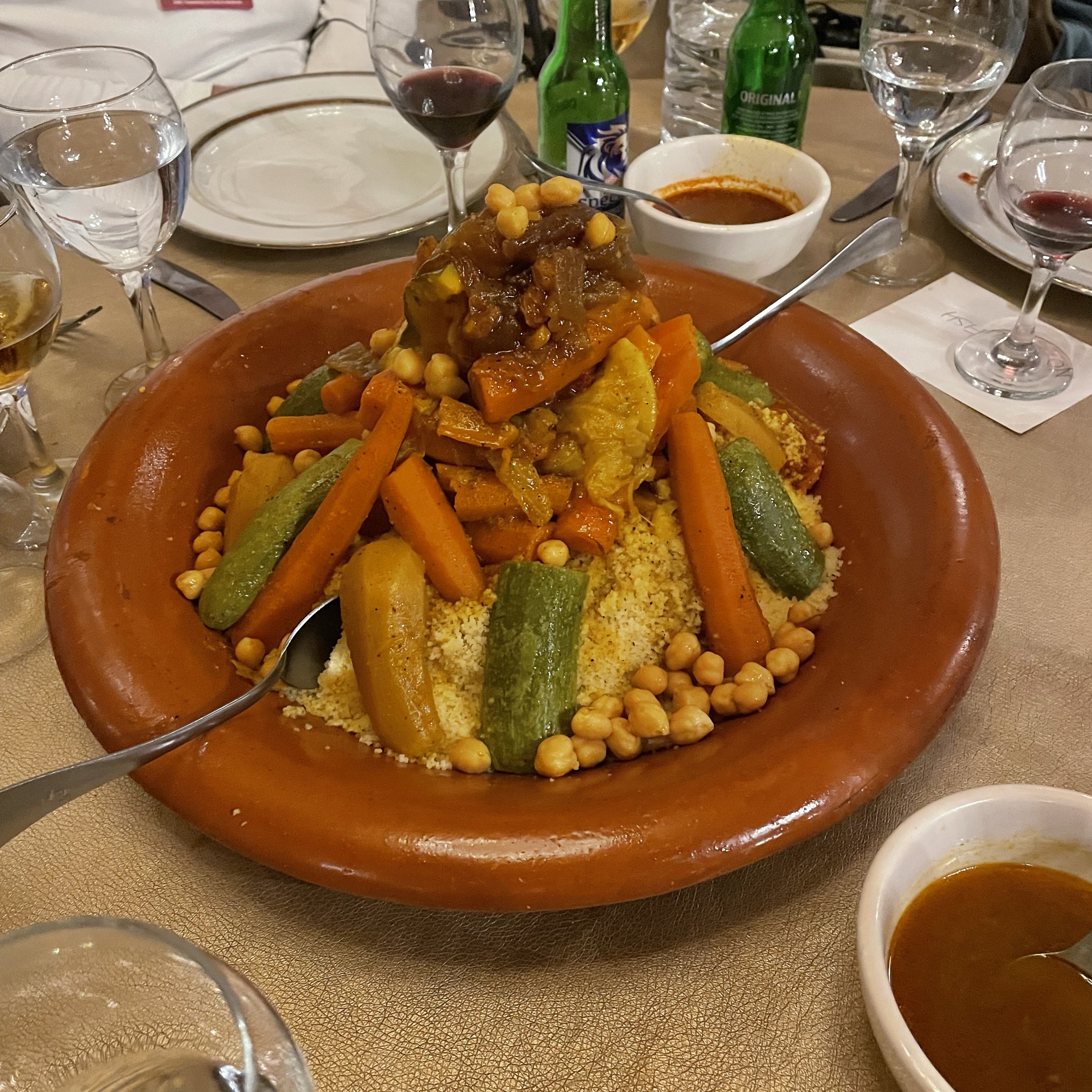
We enjoyed a day of exploring the medina and it’s centuries-long cultural mix: from belly dancers to traditional meals to modern models captured in the shooting of a perfume ad. Fascinating.
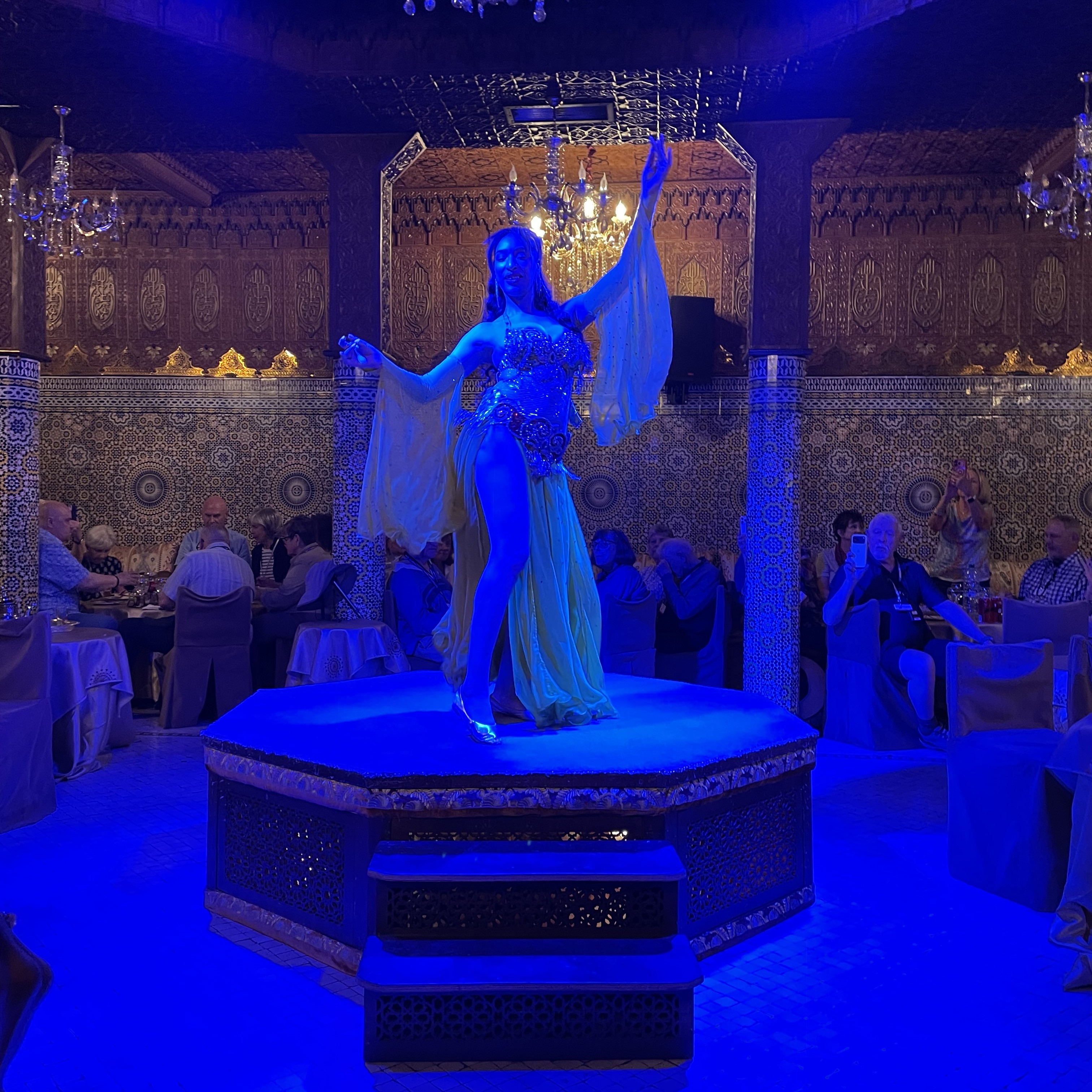
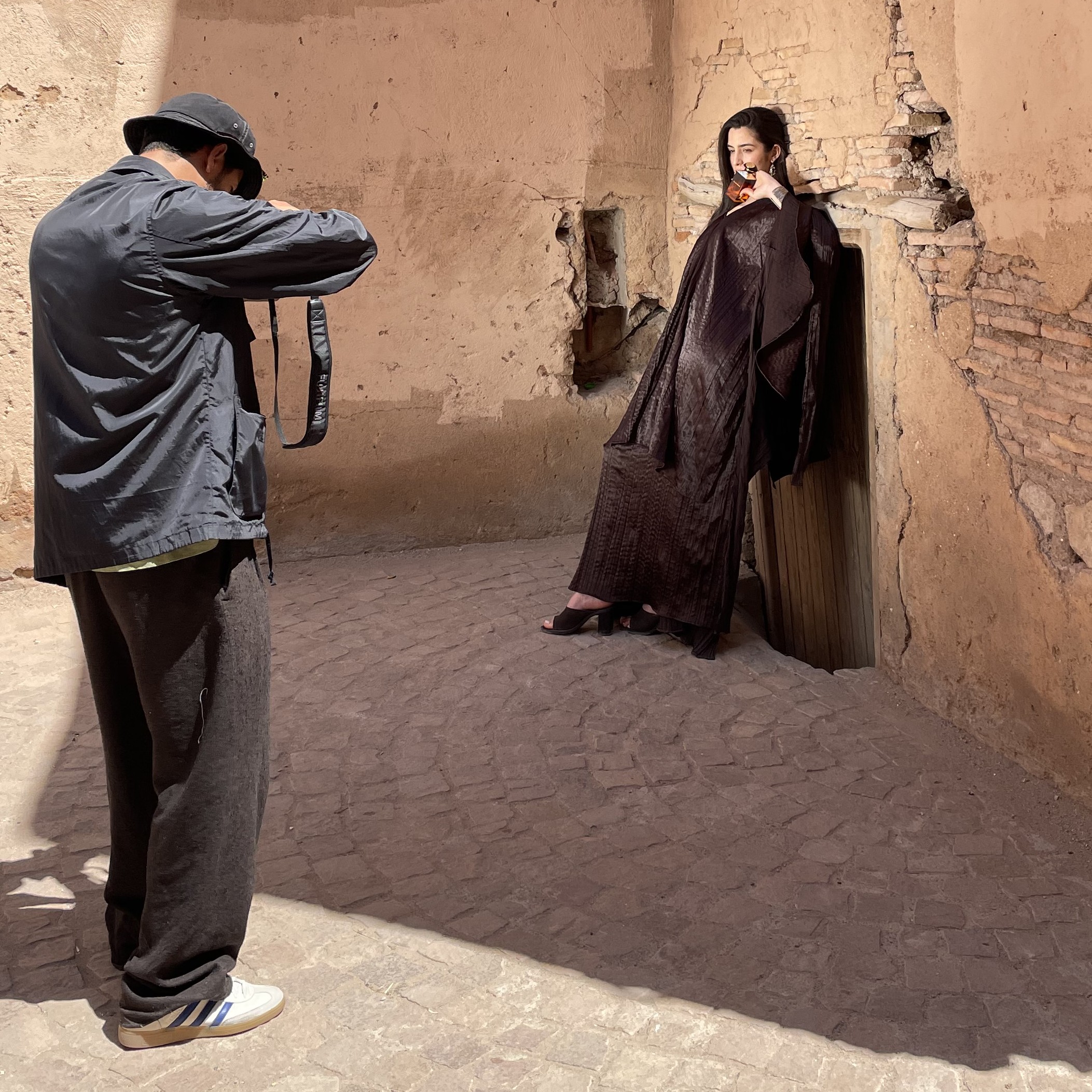
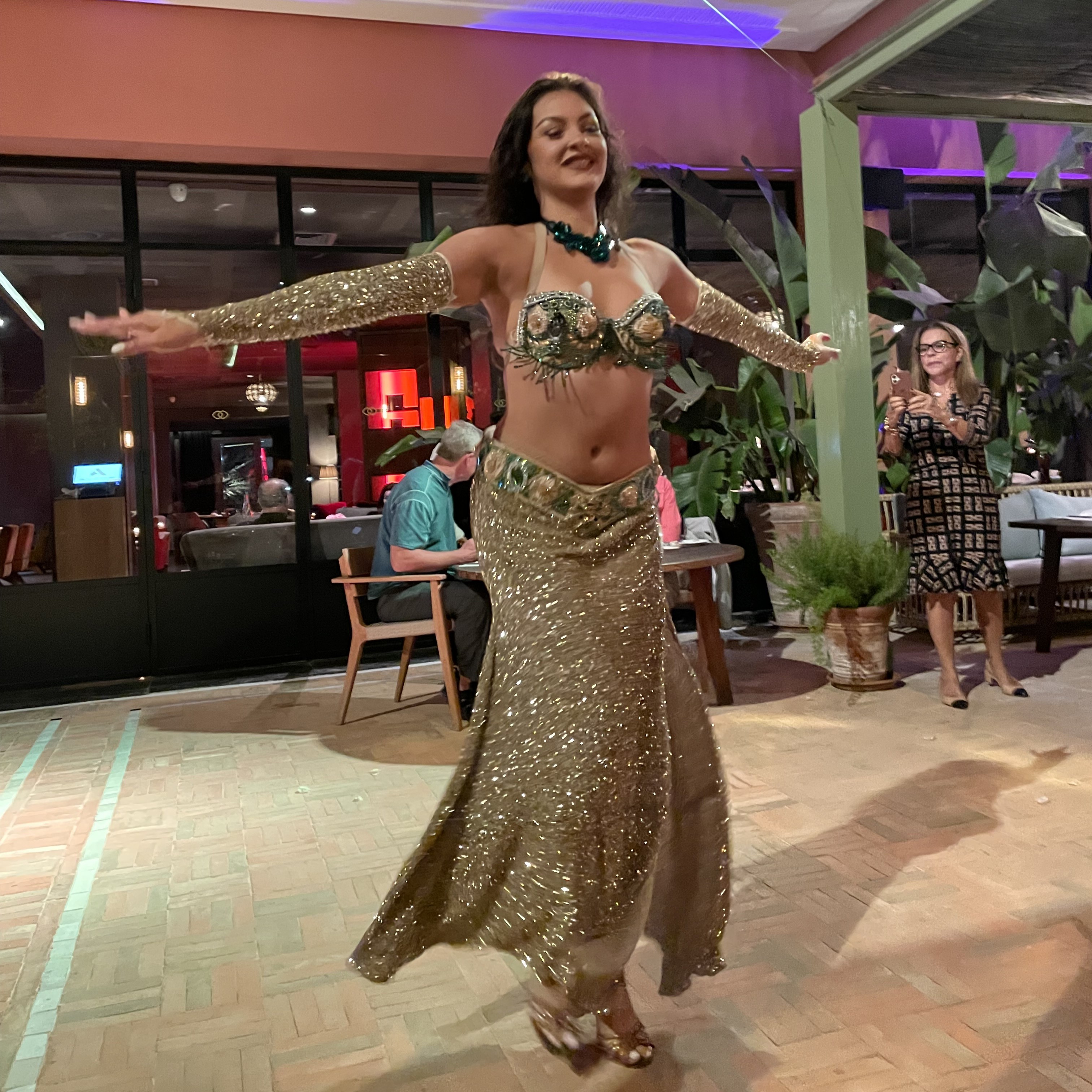
And yes that ear worm—which may be common for people of a certain age—was definitely in my head throughout the day.
AGAFAY DESERT
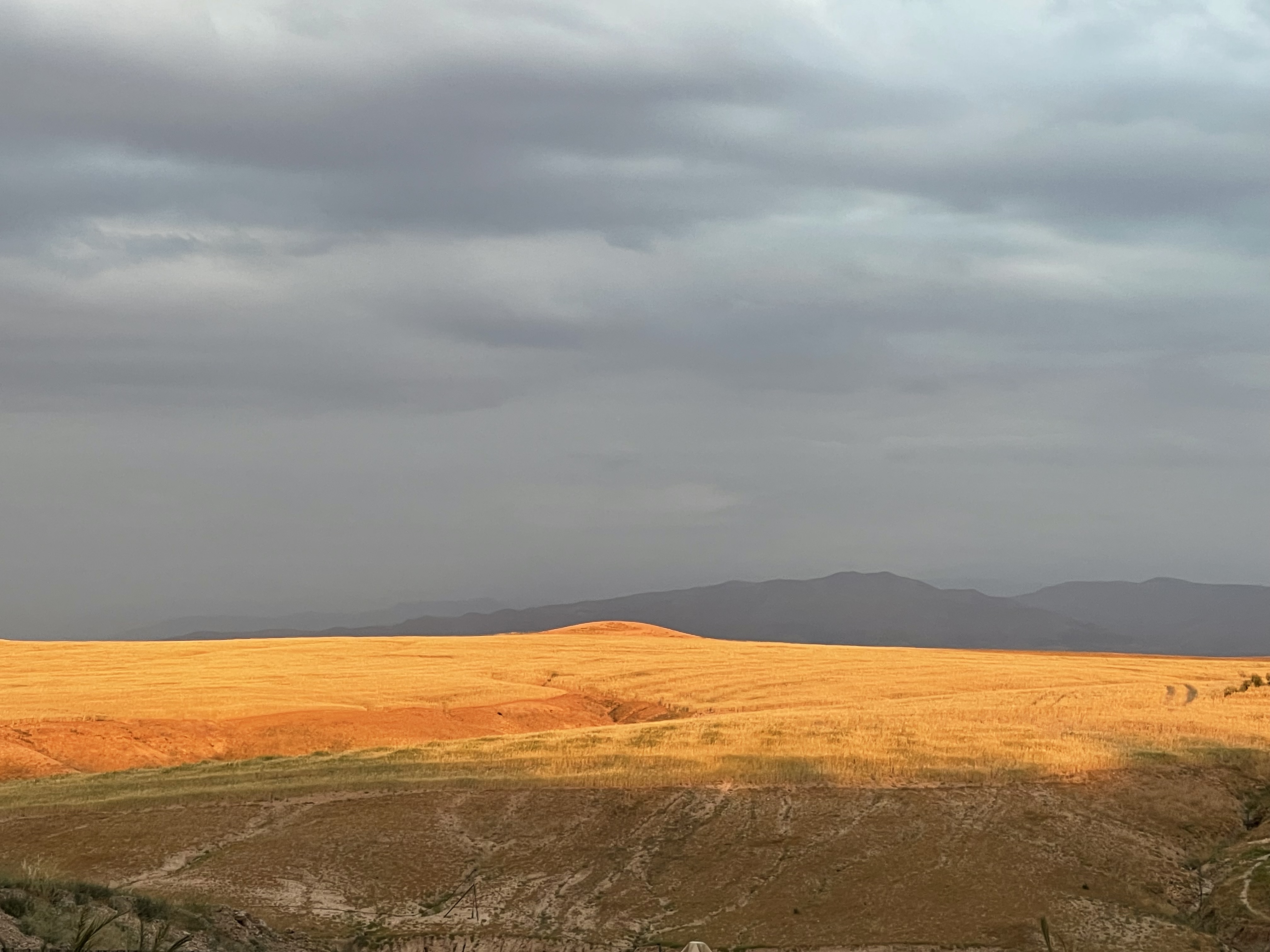
For our last evening in Marrakech we drove into the nearby Agafay Desert, where we enjoyed camel rides, Henna artists, and a traditional dinner at a tented camp. I didn’t know that camel rides were on my bucket list, but I added it and checked it off in the same day. Just delightful!
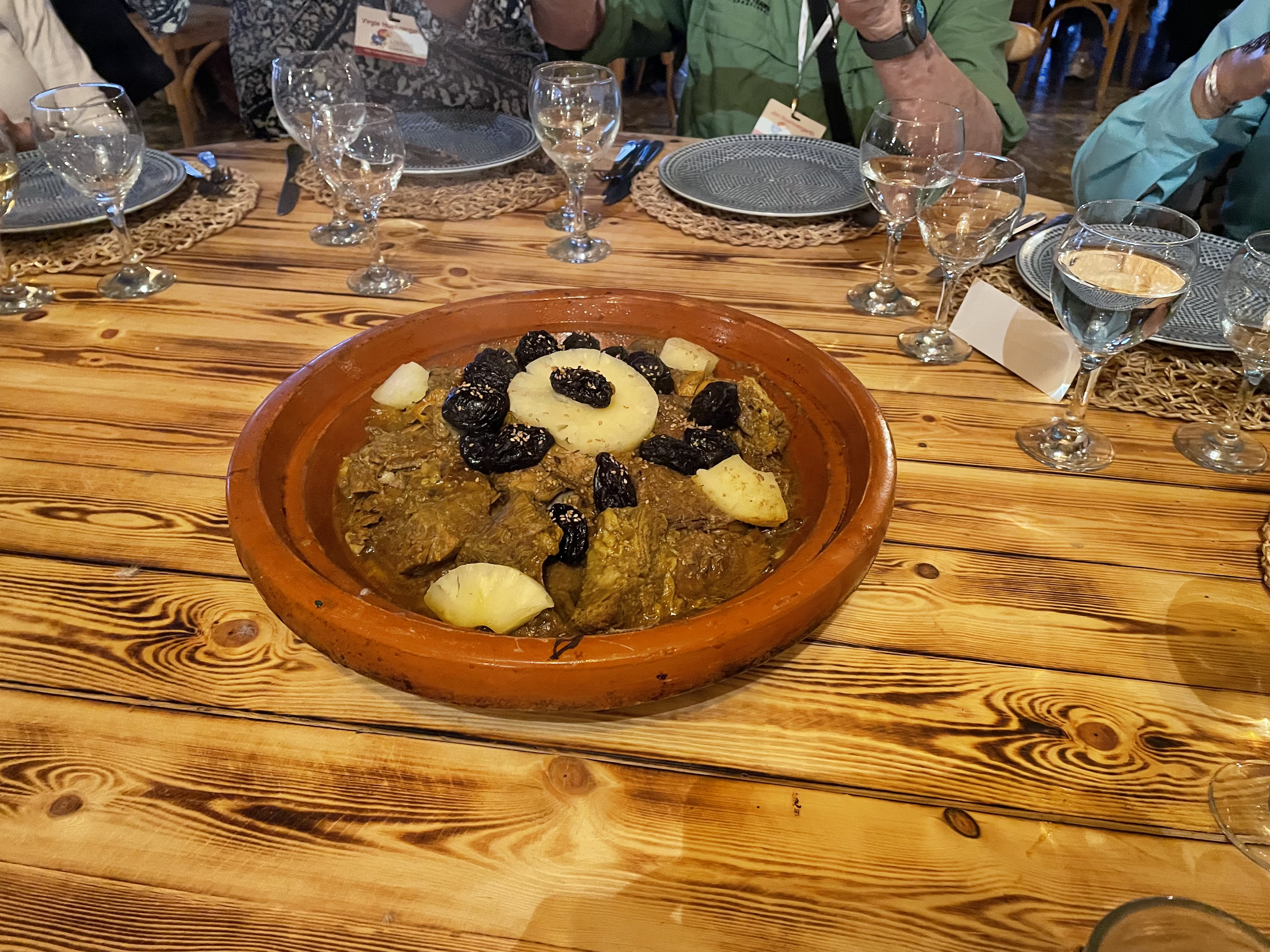
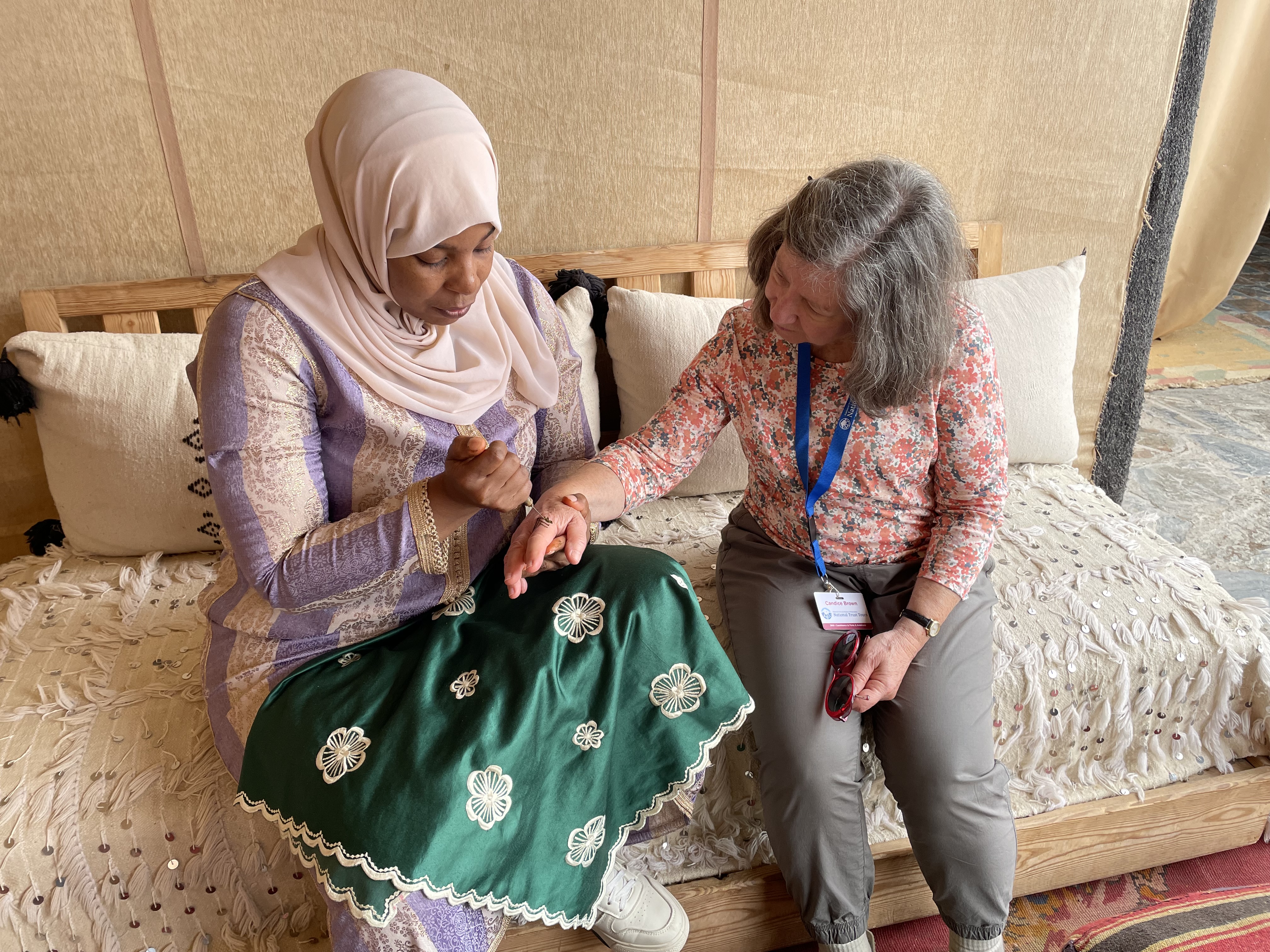
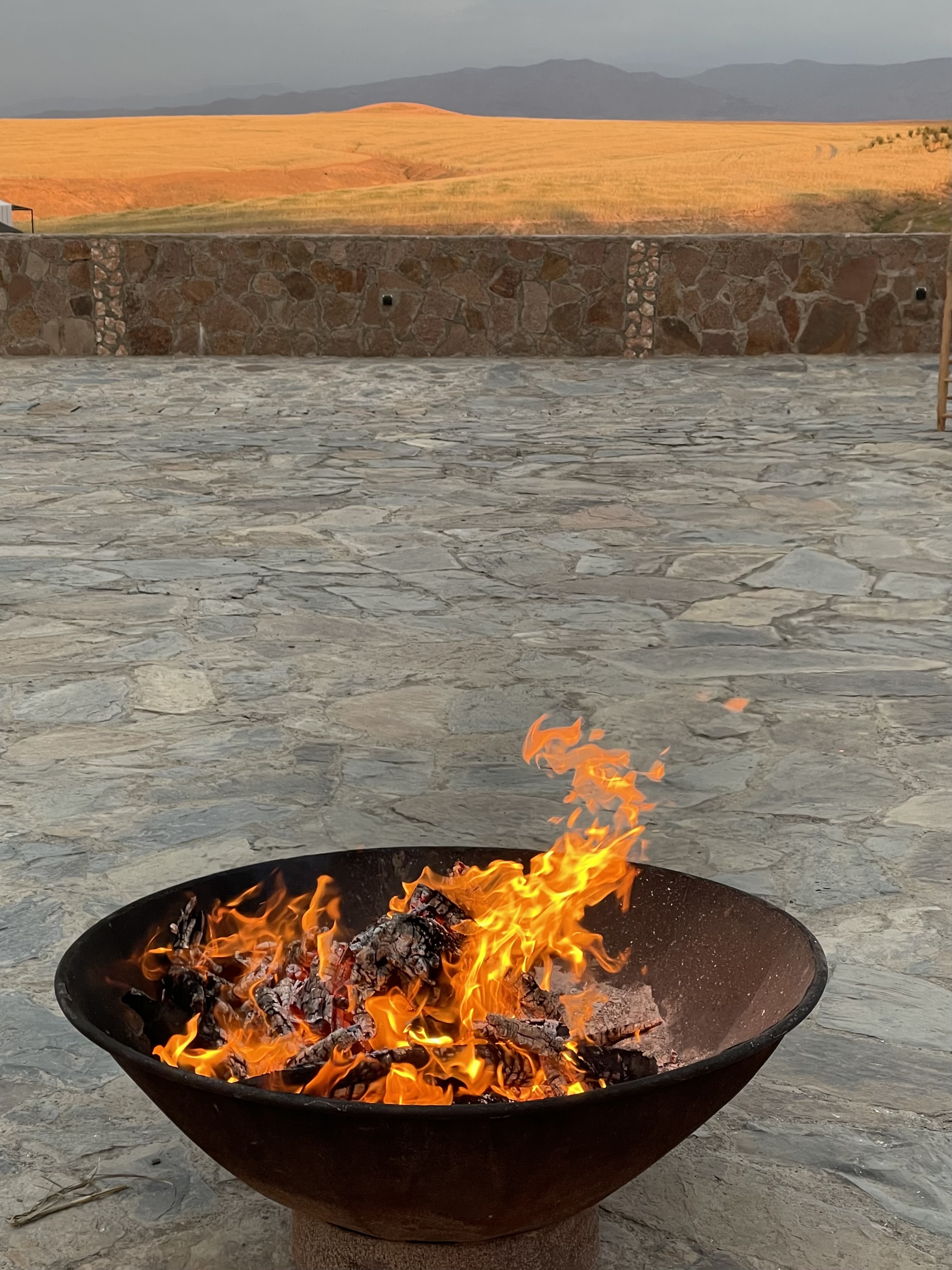
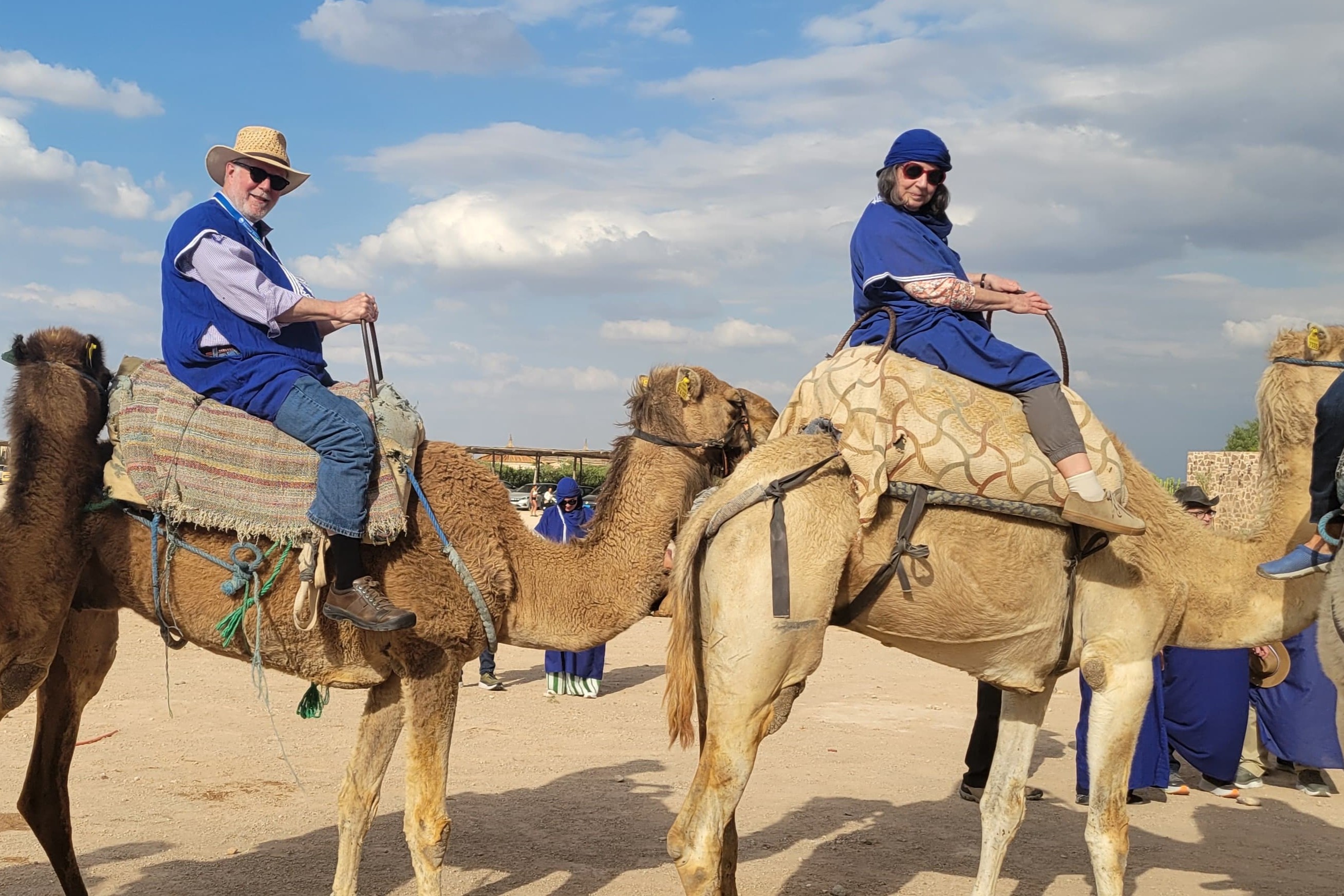
Morocco—as showcased in this post and the next to come—was a real treat that opened eyes, expanded our knowledge of history, and showcased a welcoming spirit that can be celebrated in this day and age.
More to come . . .
DJB
All photos by DJB except of the camels (credit Sheri Korth) and a couple of doorways and paths from Unsplash.


Sent from my iPad
Jane, the comment didn’t come through. Hope you can send it again. All the best, David
Thanks for the memories.
Pingback: Medinas, mosques, masterpieces . . . Morocco (Part 2) | MORE TO COME...
Pingback: Observations from . . . May 2026 | MORE TO COME...
Pingback: Exploring intercultural dialogues where Europe and Africa meet | MORE TO COME...