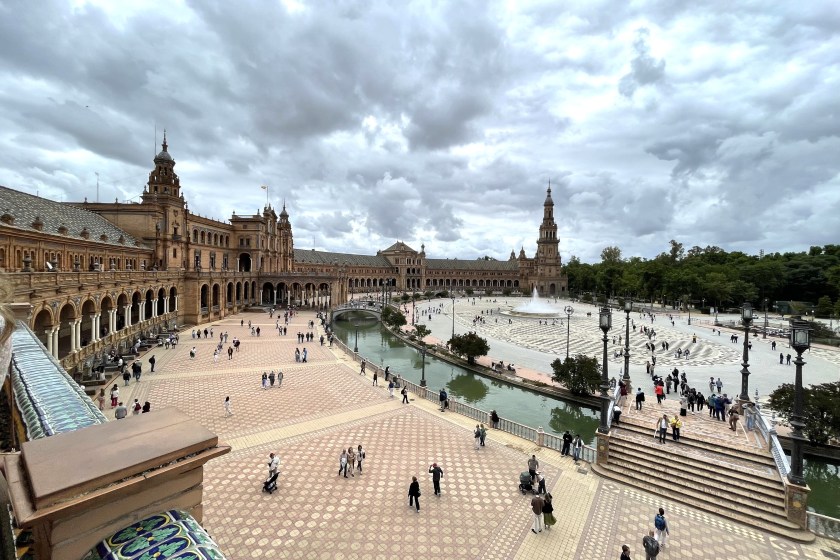
A final post from our recent tour of Morocco, Portugal, and Andalusia.
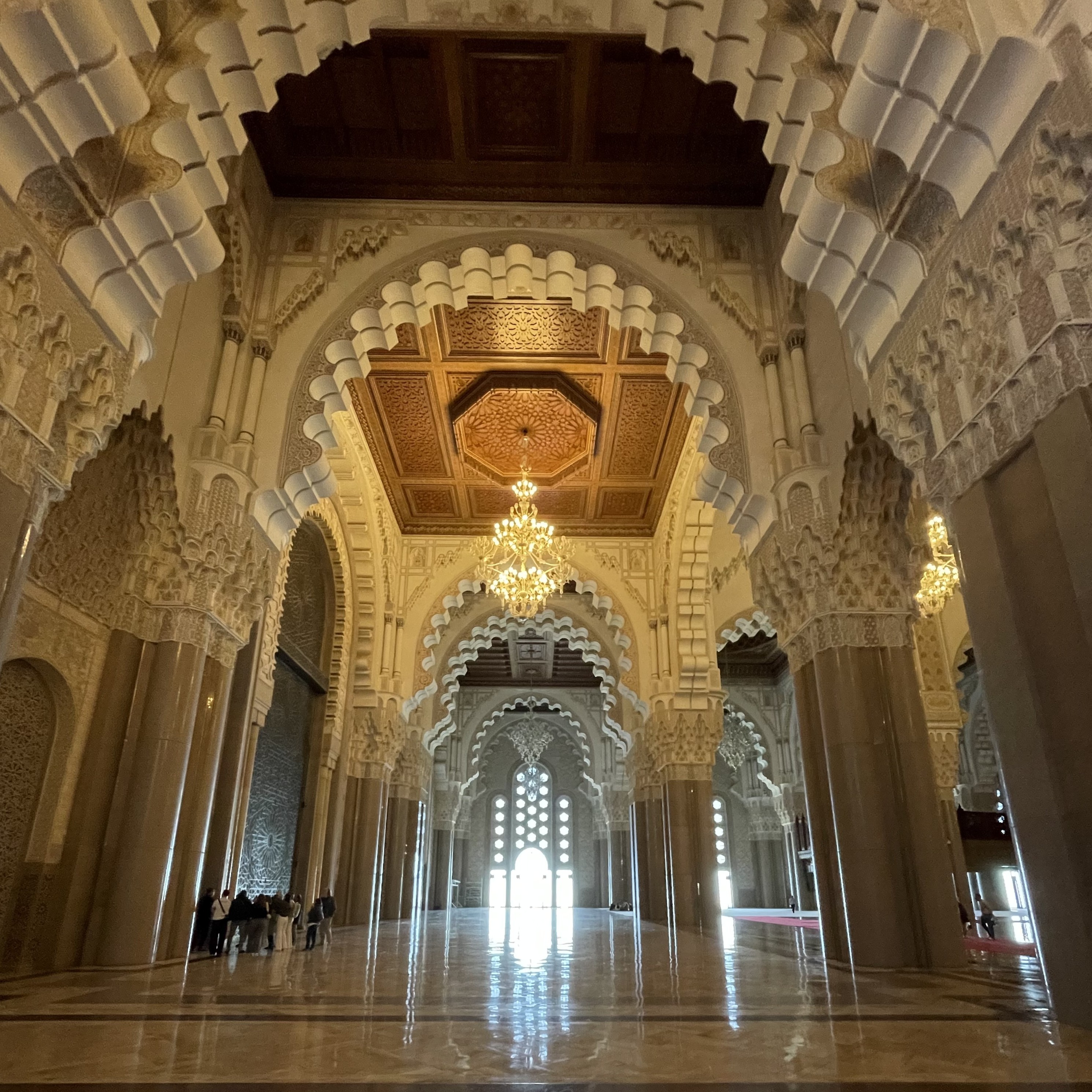
In late April we boarded a plane to begin our most recent journey with National Trust Tours, this one a two-week trip to visit four countries and two continents. We opened with a week in Morocco, a fascinating, captivating, and altogether welcoming part of the world distinguished by its Berber, Arabian and European cultural influences. In two earlier posts I focused first on highlights from our explorations around Marrakech and then turned to the other Moroccan cities we toured.
- Medinas, mosques, masterpieces . . . Morocco (Part 1)
- Medinas, mosques, masterpieces . . . Morocco (Part 2)
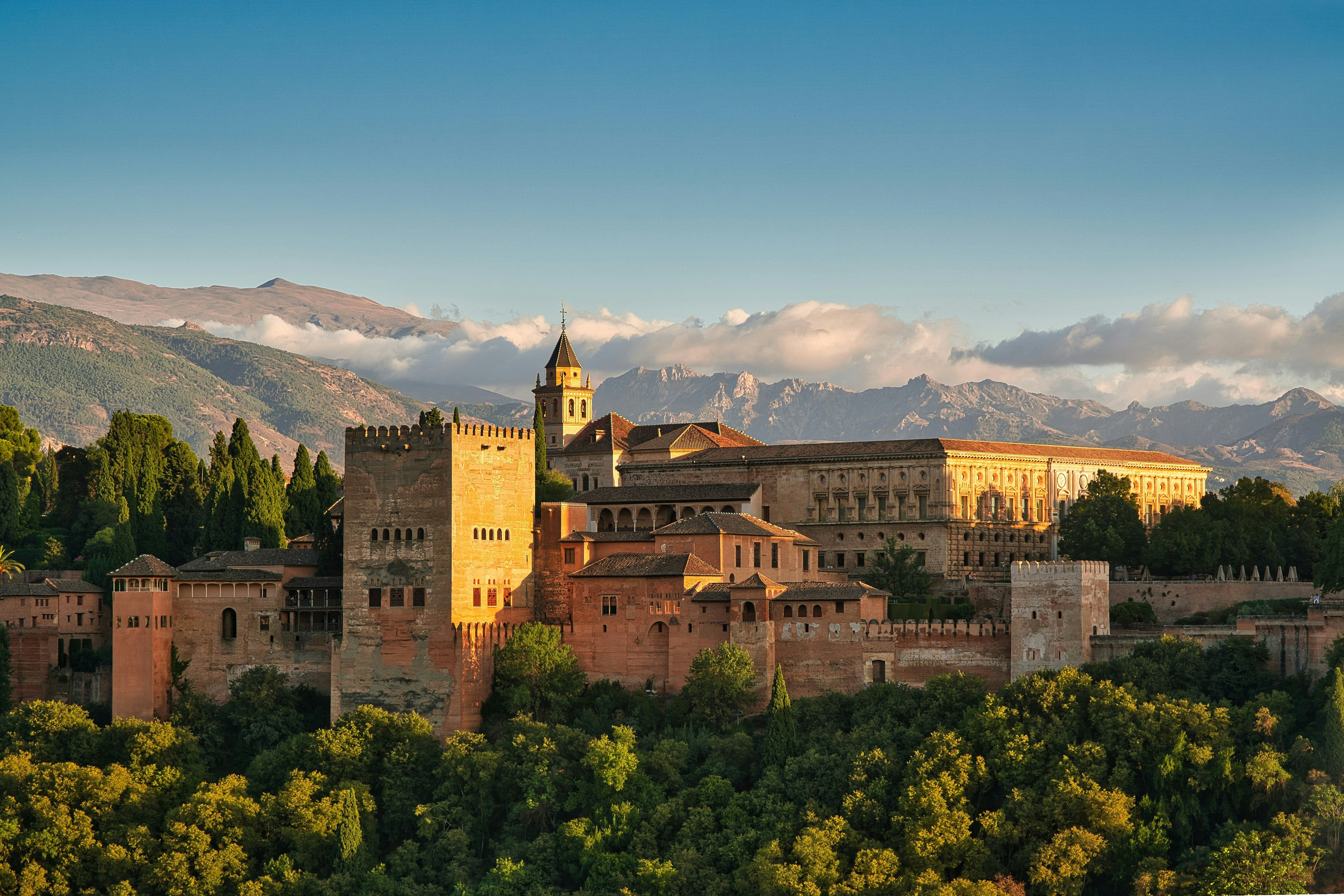
I also wrote about one of the world’s great heritage treasures, The Alhambra in Granada, Spain, showing how it unveils overlapping lives and histories which breathe life into an intercultural dialogue.
In this final installment from the trip, I will move through our time in Gibraltar, Seville, and Lagos, highlighting the history, architecture, and landscape of this part of the world where Africa meets Europe.
GIBRALTAR
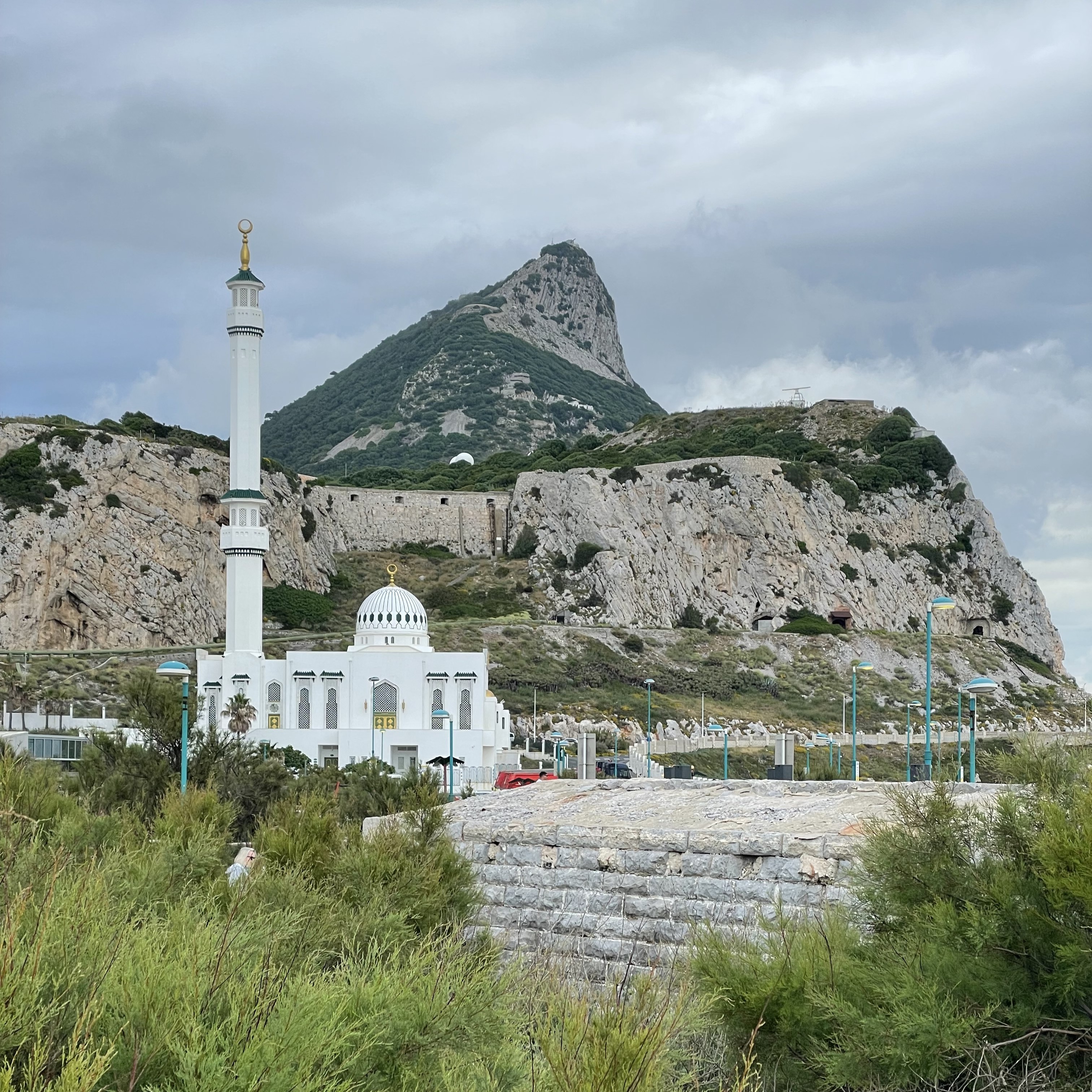
We spent a morning in Gibraltar, that small but strategic piece of rock on the southern tip of Europe where the Atlantic Ocean joins the Mediterranean Sea. Tina Fey famously spoofed former Alaska governor Sarah Palin with the line, “I can see Russia from my house,” but in Gibraltar one sees the reality of two continents and three countries in such close proximity. You can, actually, see Morocco from Gibraltar. Quite easily, in fact.
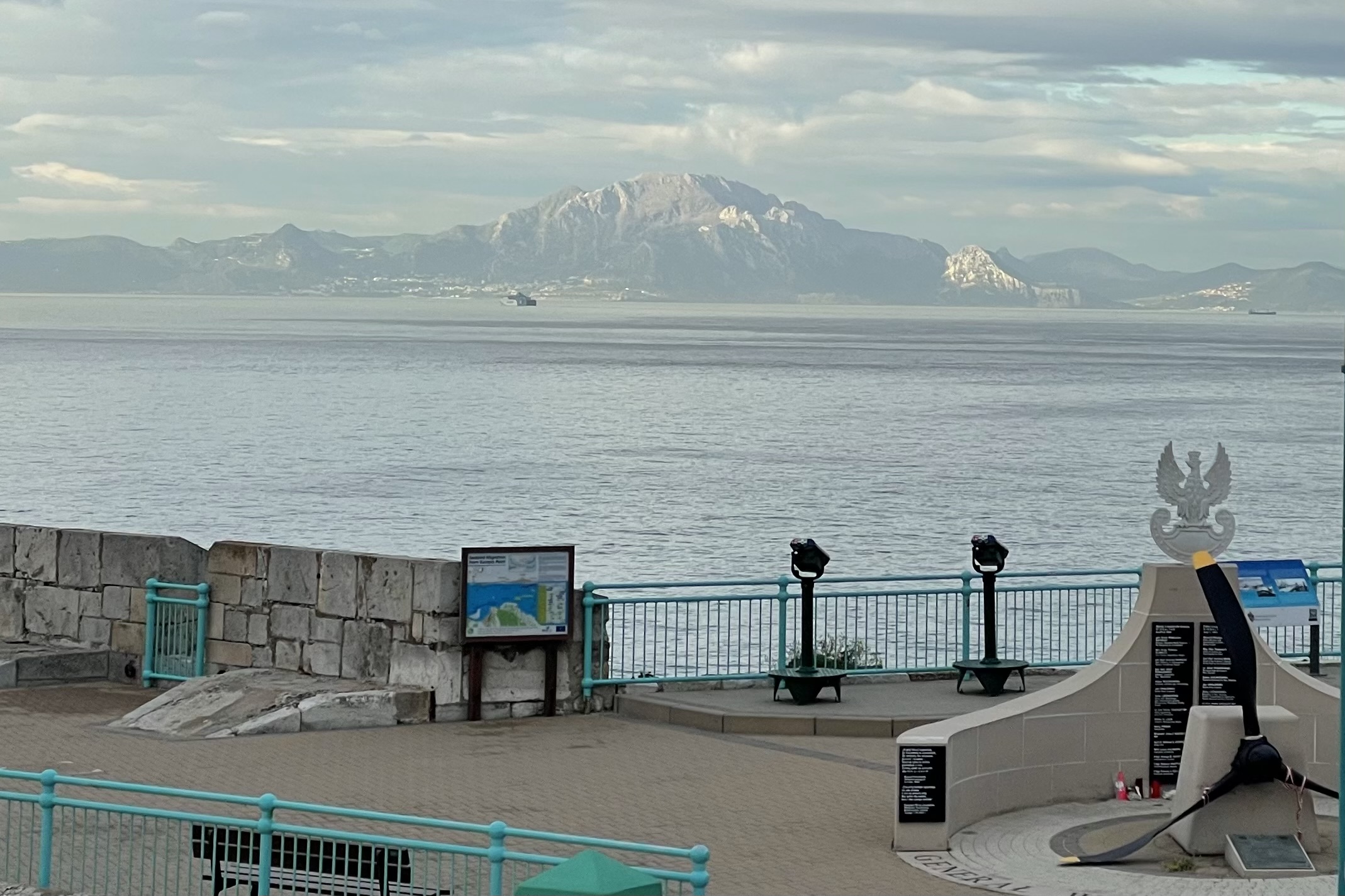
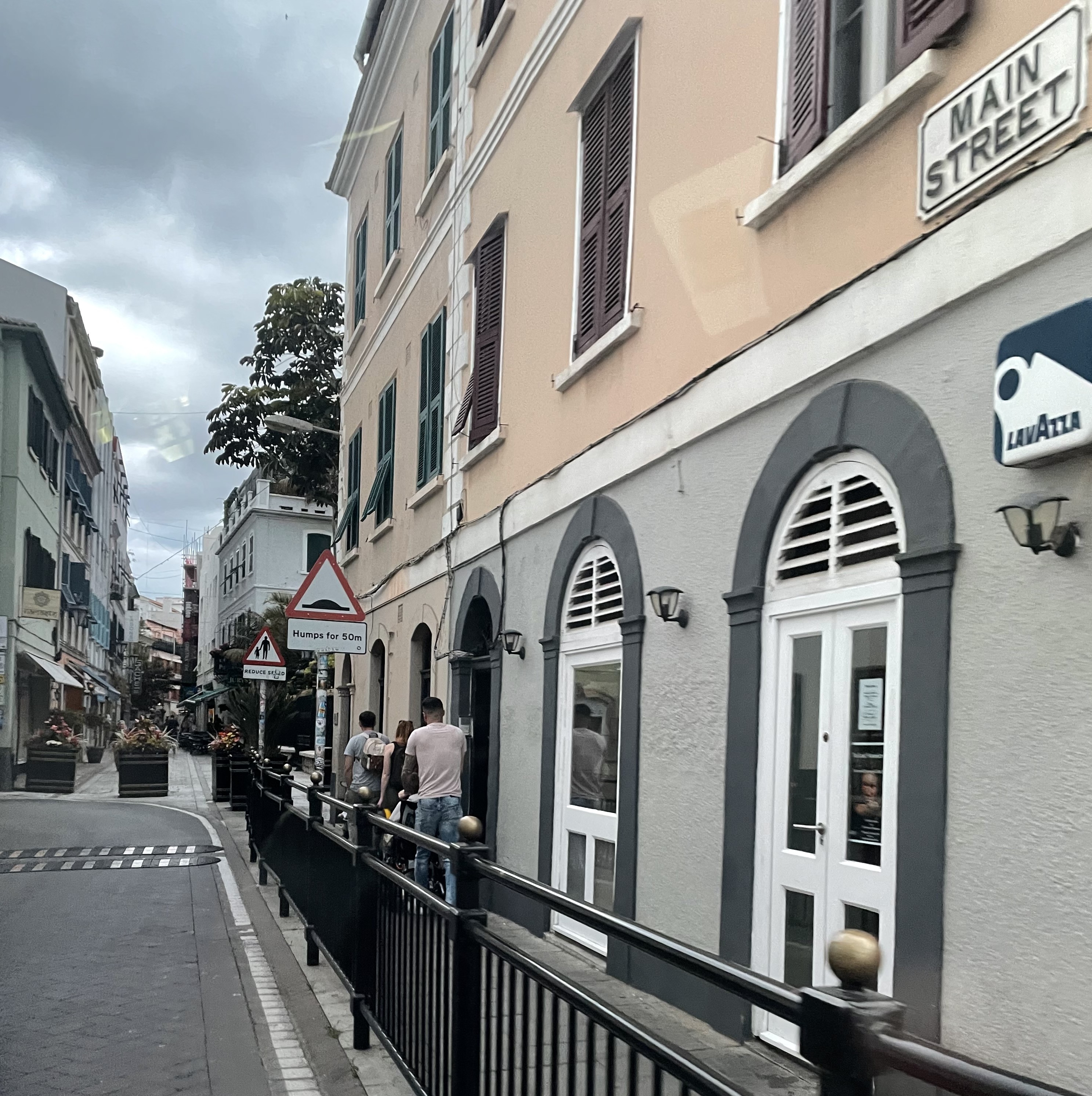
Gibraltar is part of the United Kingdom. There is some juxtaposition of cultures here, such as with the mosque on the African side of the territory, but the feeling one gets when driving through the small, densely populated city is that there’s bound to be a fish and chips shop just around the corner. It was a bit jarring after ten days immersed in Moroccan and Spanish culture.
Monkeys and The Rock
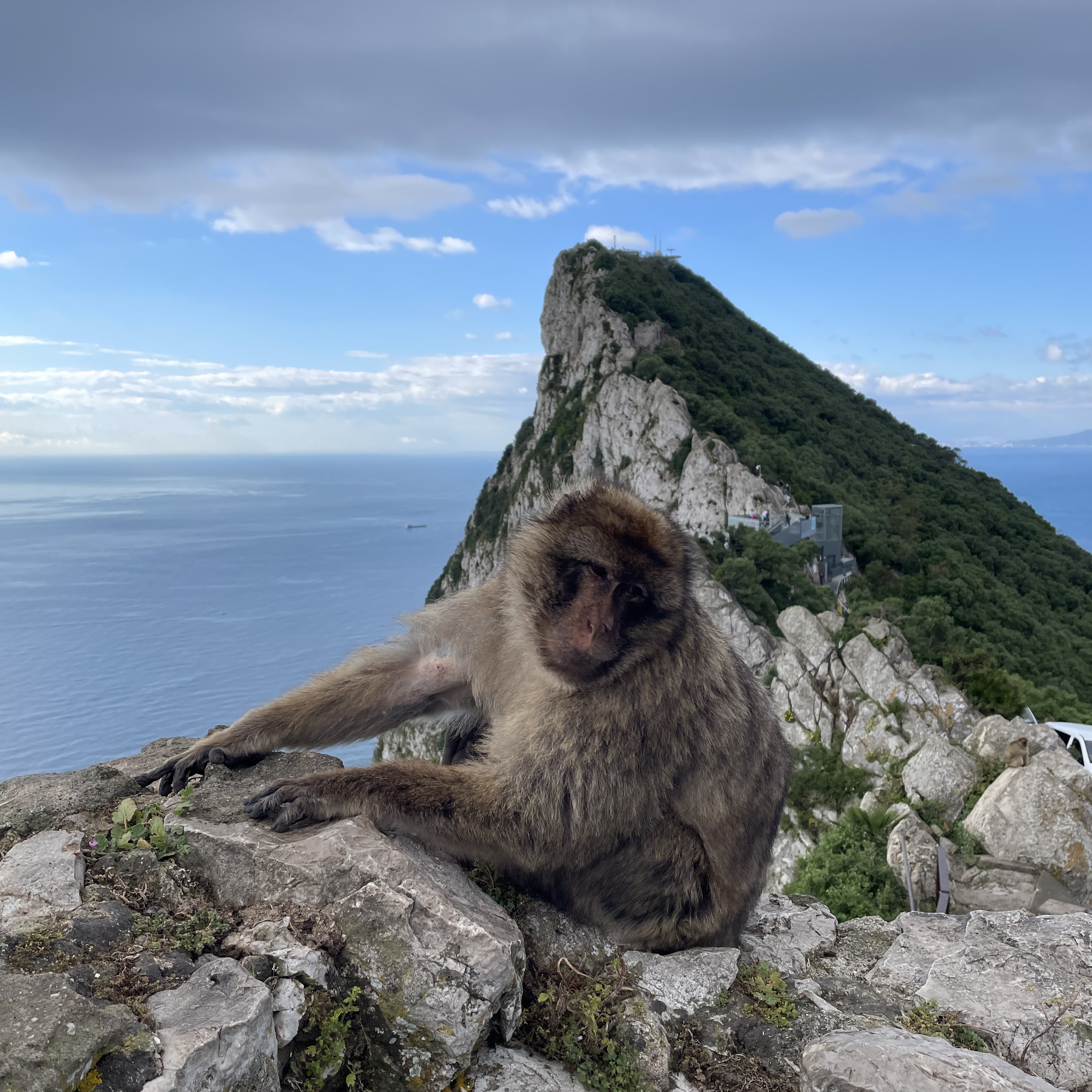
Most tours of Gibraltar focus on two things: Monkeys and The Rock.
The Wikipedia entry for the Barbary monkeys is as good as any:
“Originally from the Atlas Mountains and the Rif of Morocco, the Barbary macaque population in Gibraltar is the only wild monkey population on the European continent. Although most Barbary monkey populations in the African continent (specifically Algeria, Tunisia and Morocco) are experiencing decline due to hunting and deforestation, the Gibraltar population is increasing. As of 2020, some 300 animals in five troops occupy the Upper Rock area of the Gibraltar Nature Reserve, though they make occasional forays into the town.”
Our guides made sure we saw them up close and personal!
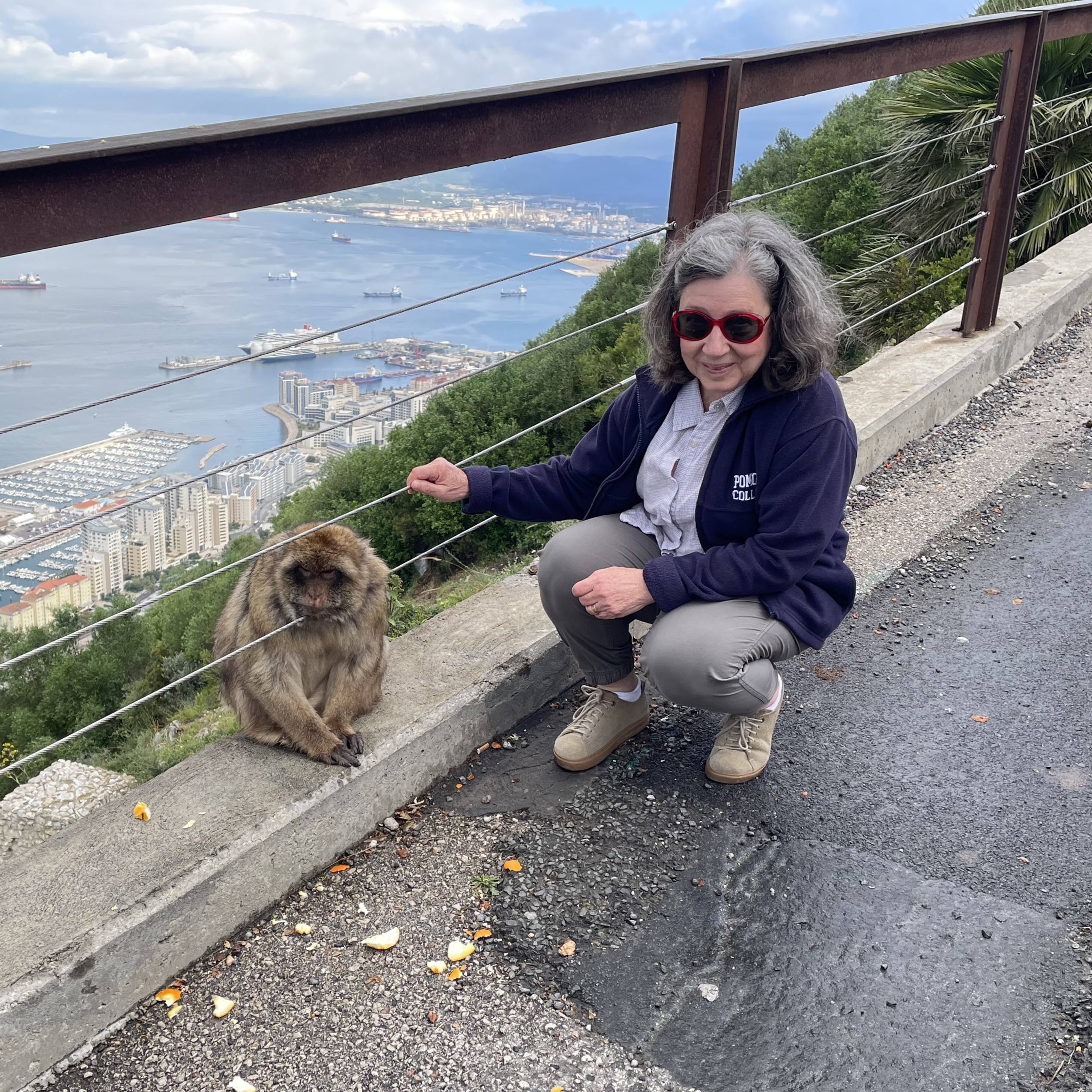
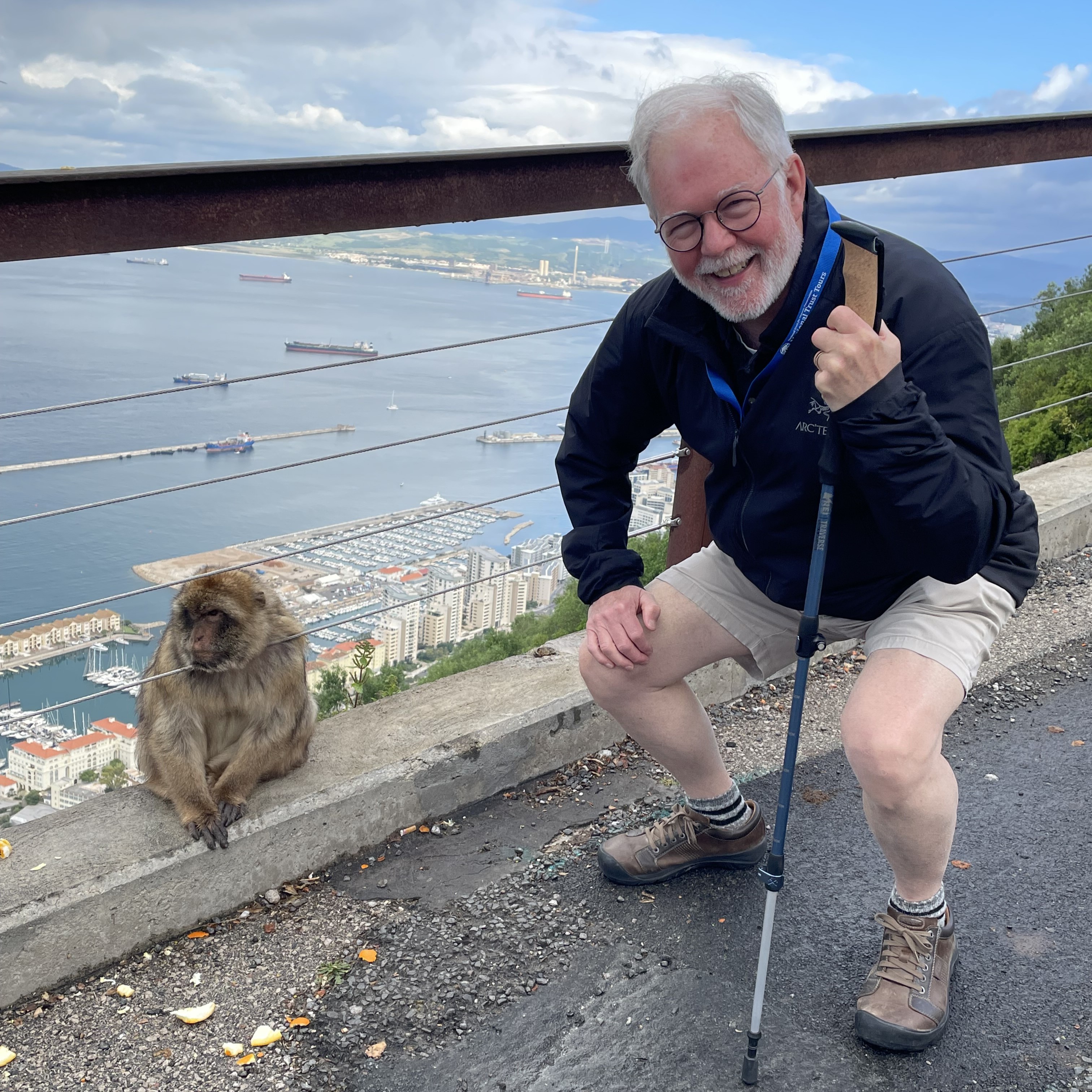
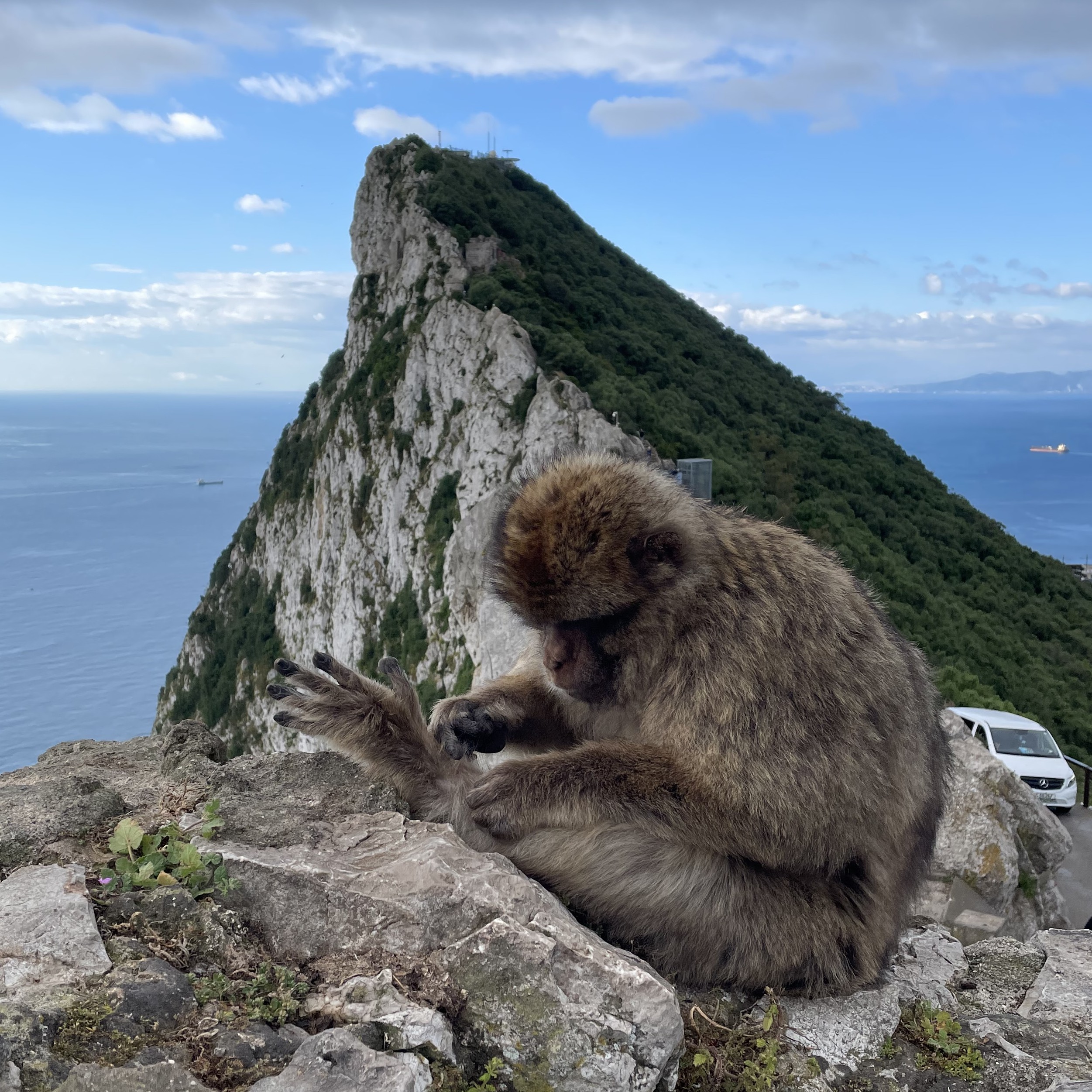
These wild animals are clearly comfortable with people. I captured one Barbary macaque who looked as if they were focused on their morning hygiene when I climbed the observation deck to get a better look at the top of the rock.
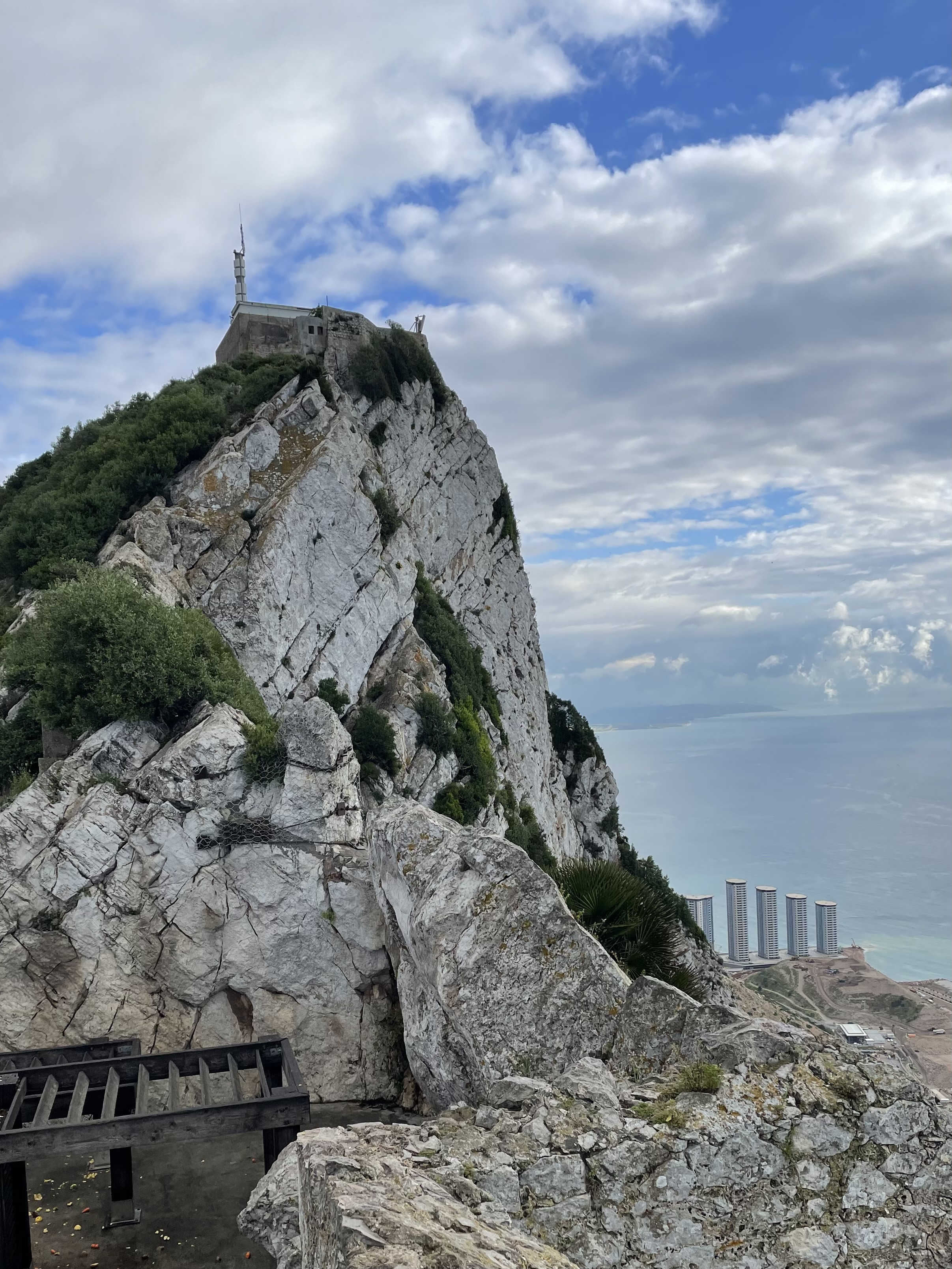
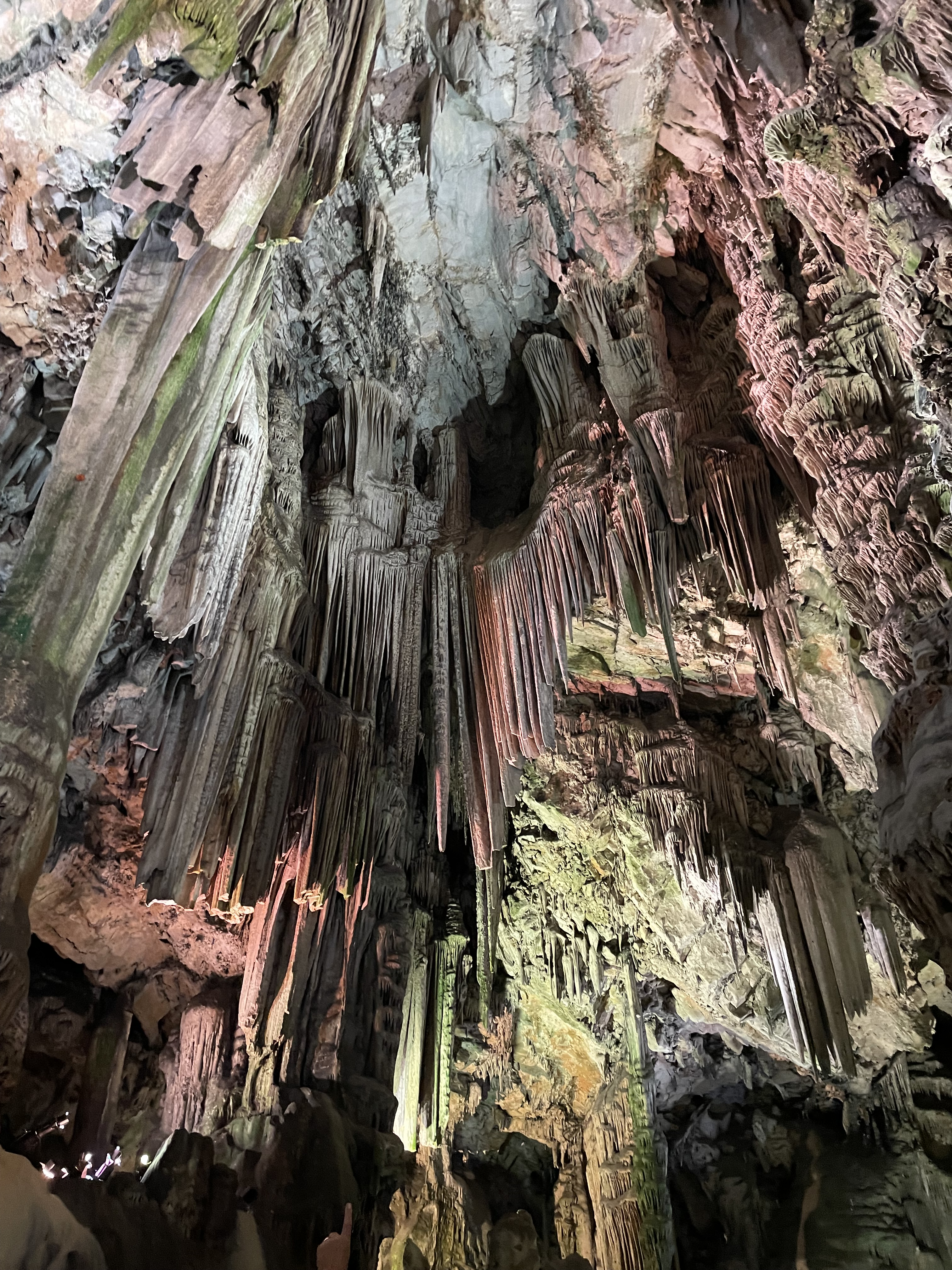
The Rock of Gibraltar, as one might expect, dominates this British territory. It is easy to see the strategic importance as well as the beauty—exemplified by St. Michael’s cave and the extensive nature reserve—of this small piece of land jutting out into the oceans.
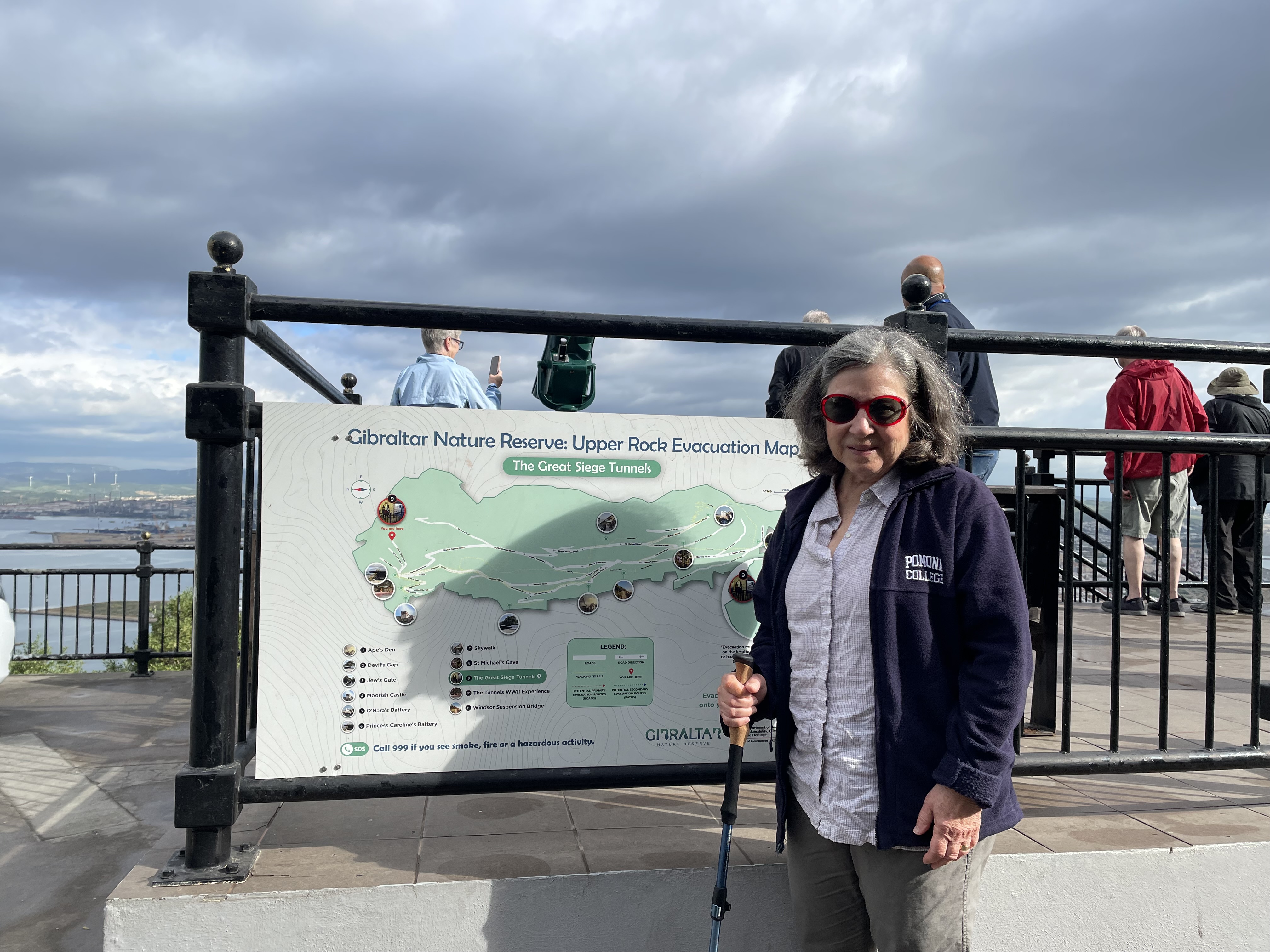
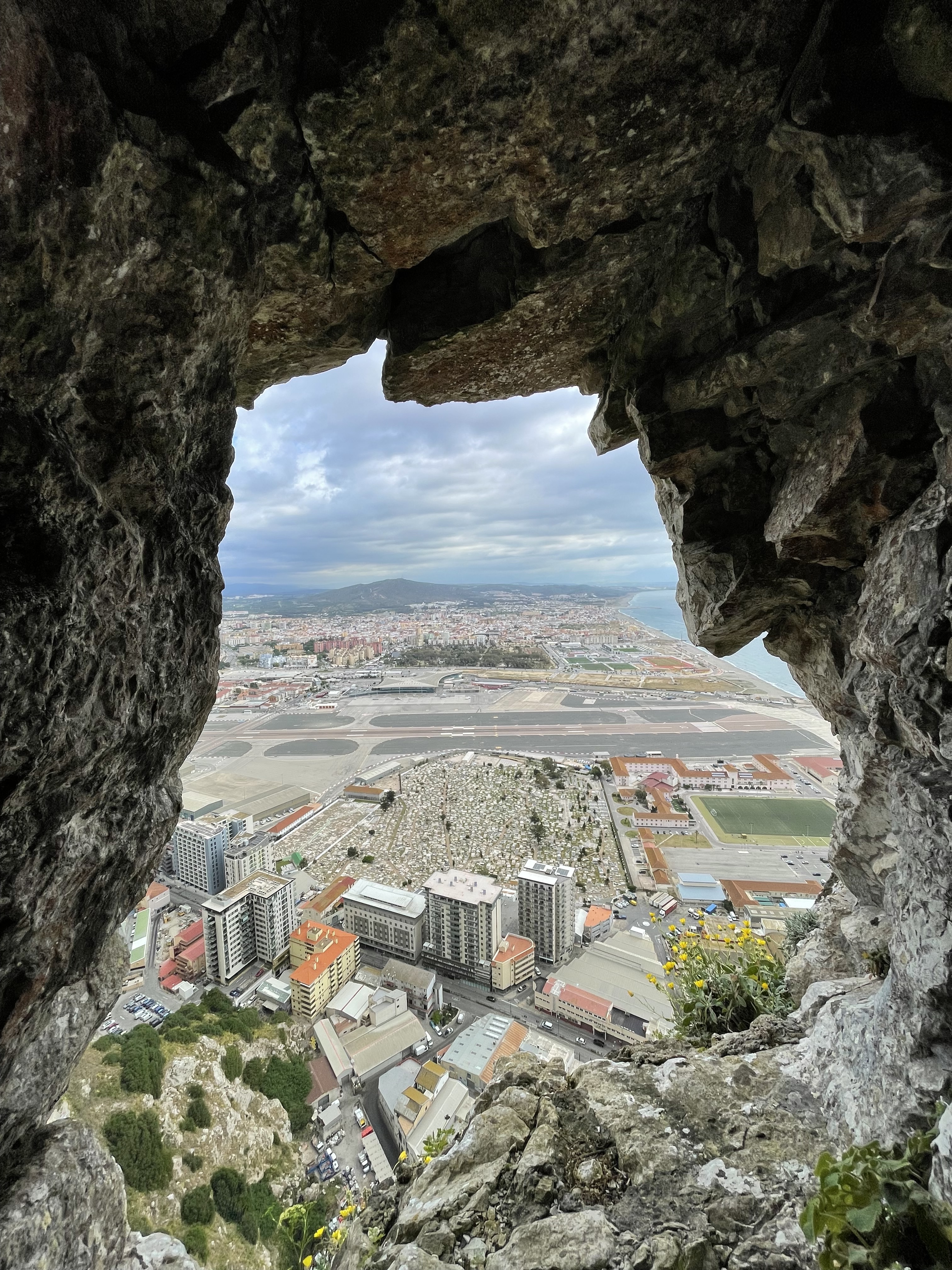
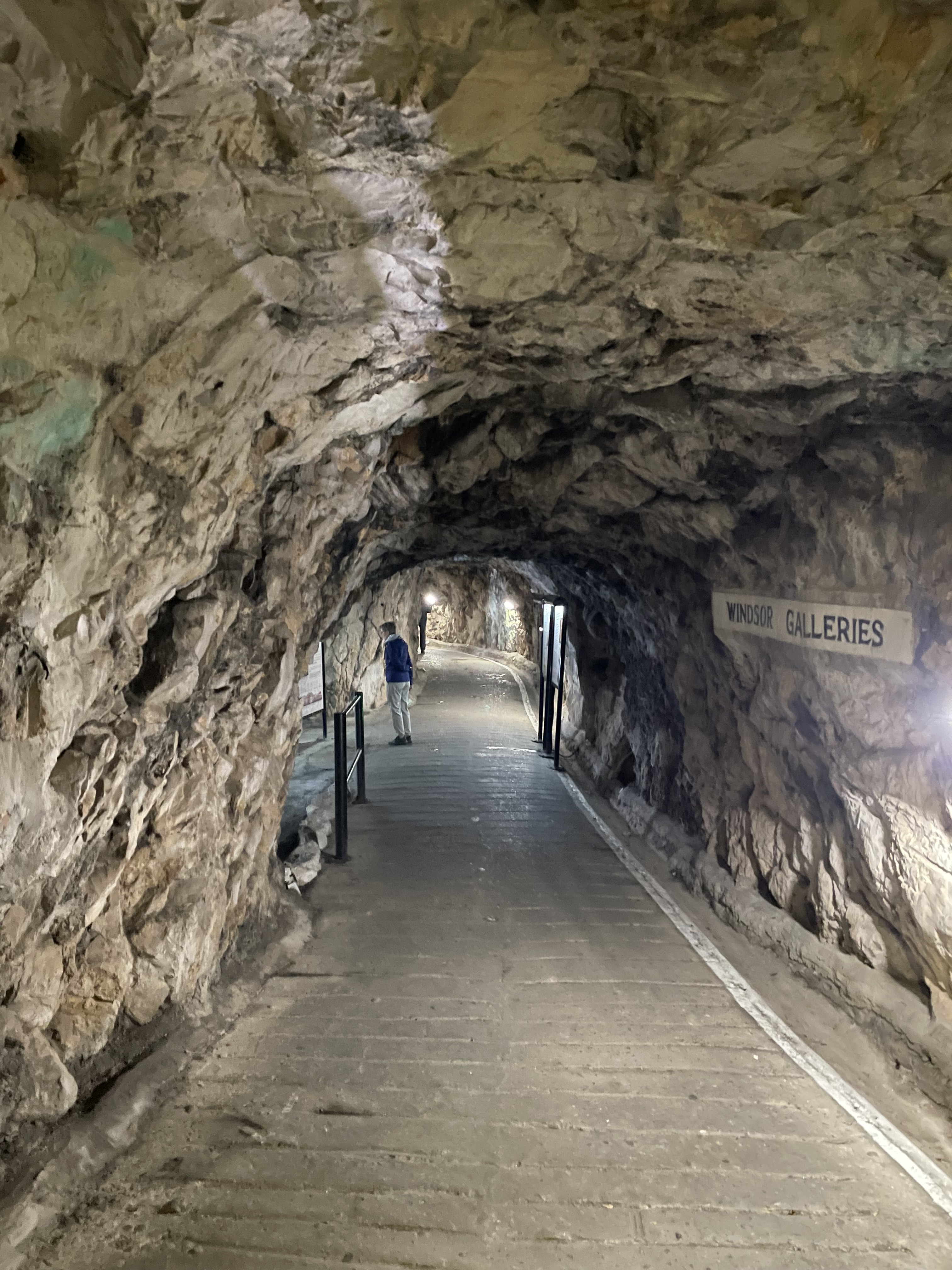
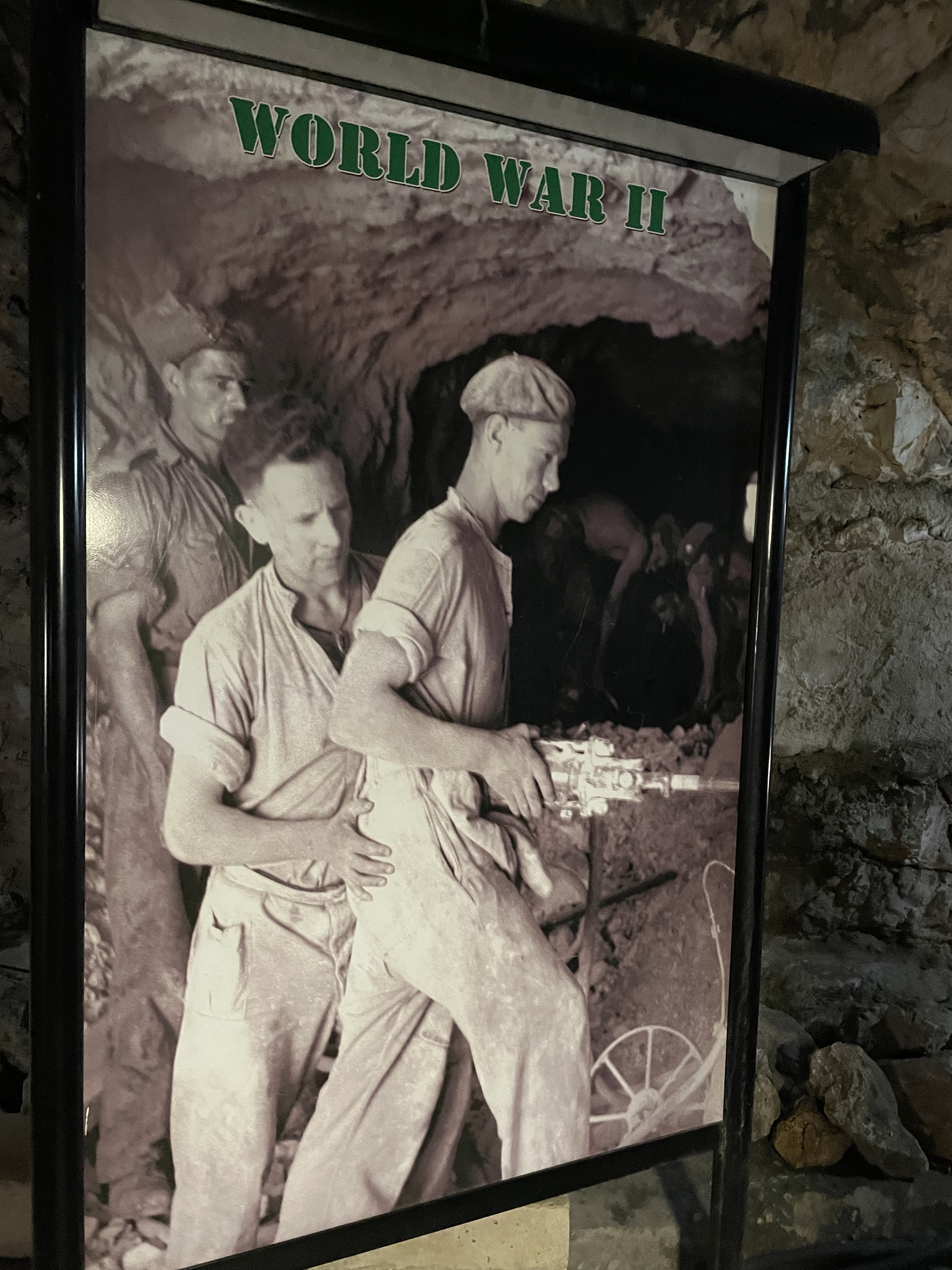
The defensive tunnels of Gibraltar, built primarily by the British over 200 years, were the other main attraction. As Wikipedia notes, within a land area of only 2.6 square miles Gibraltar has around 34 miles of tunnels, nearly twice the length of its entire road network. The first tunnels, excavated in the late 18th century, served as communication passages between artillery positions. More tunnels were constructed in the 19th century to accommodate stores and reservoirs to deliver the water supply of Gibraltar.
“The 20th century saw by far the greatest extent of tunnelling when the Rock was turned into a huge underground fortress capable of accommodating 16,000 men along with all the supplies, ammunition and equipment needed to withstand a prolonged siege.”
SEVILLE
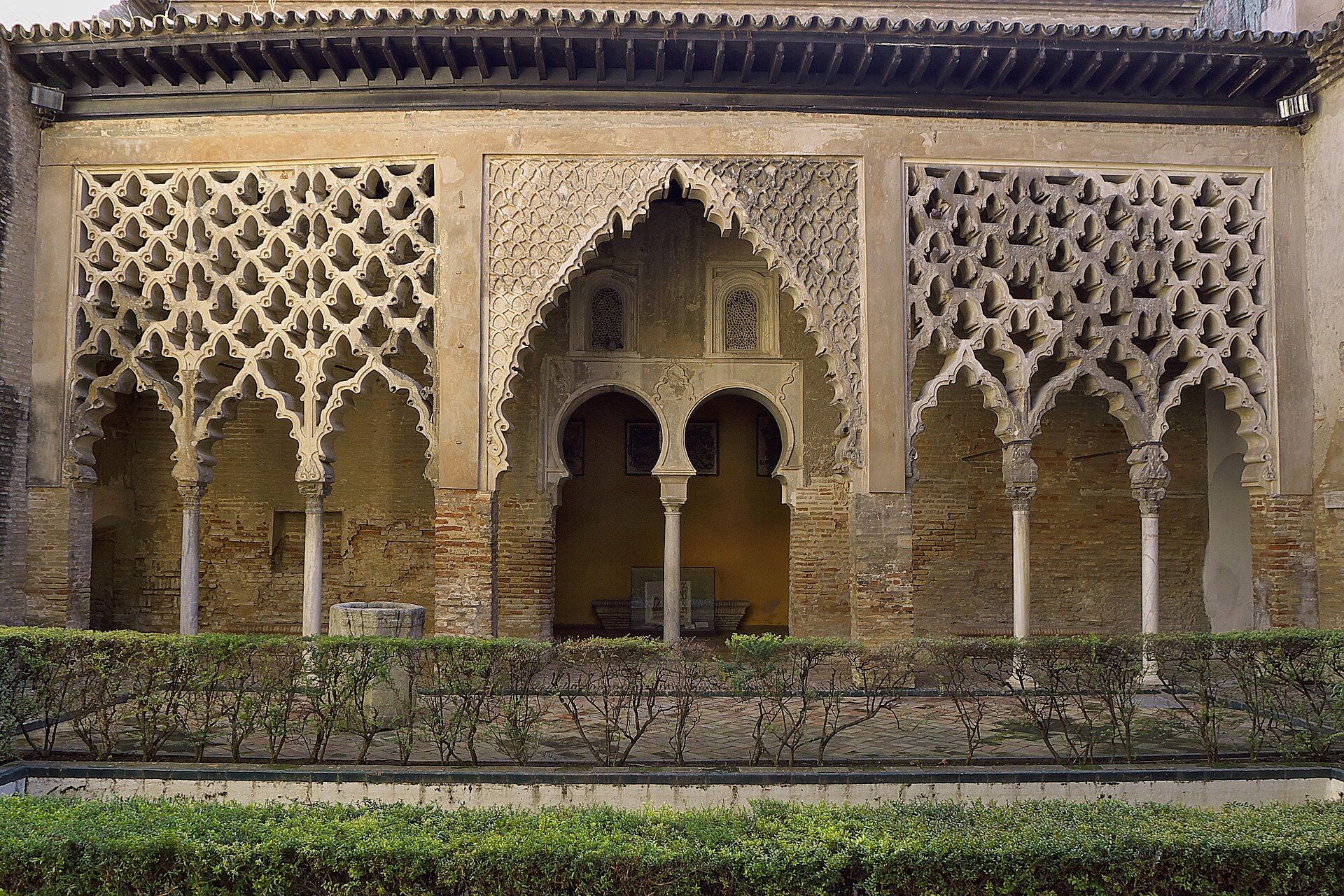
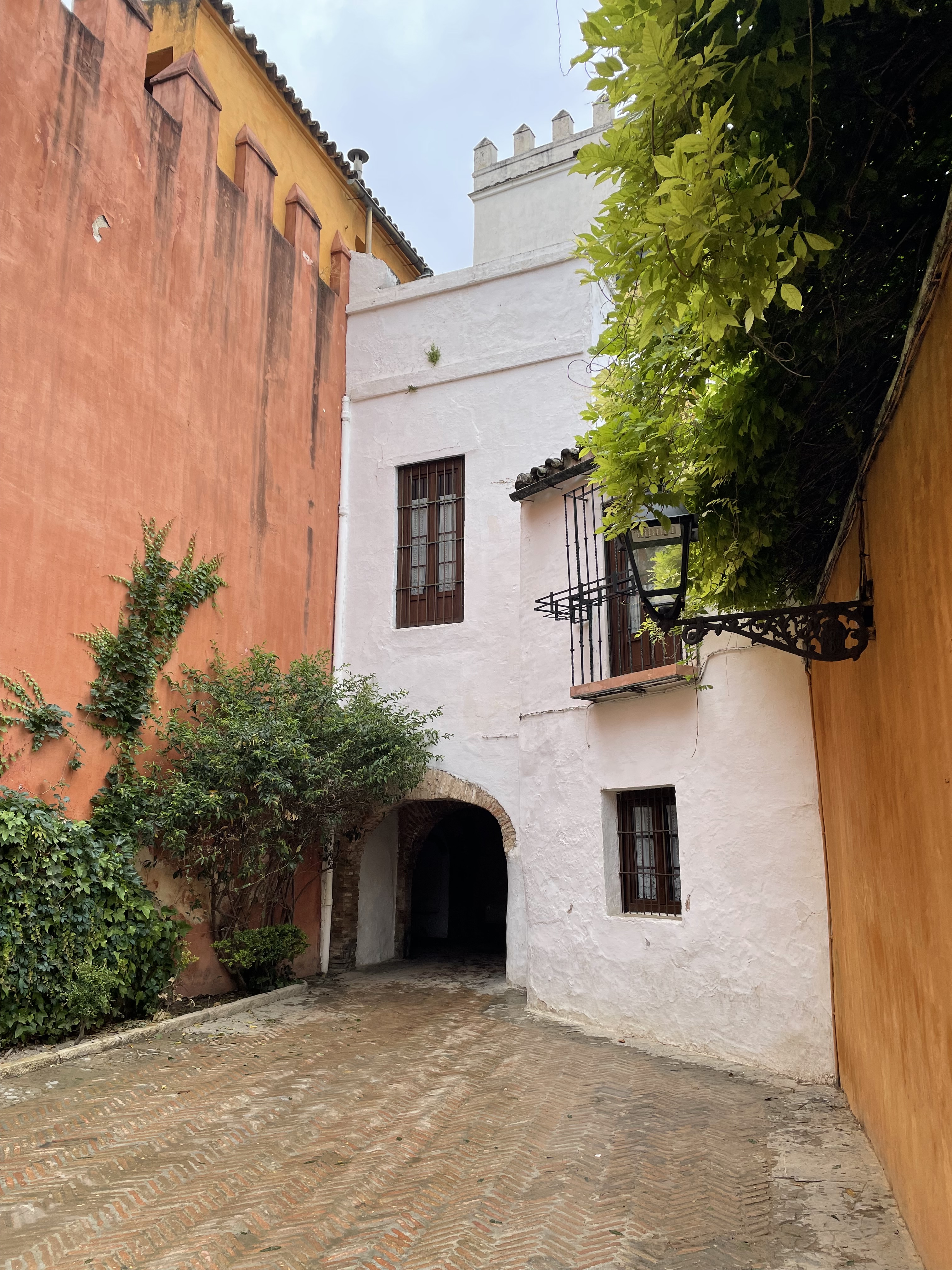
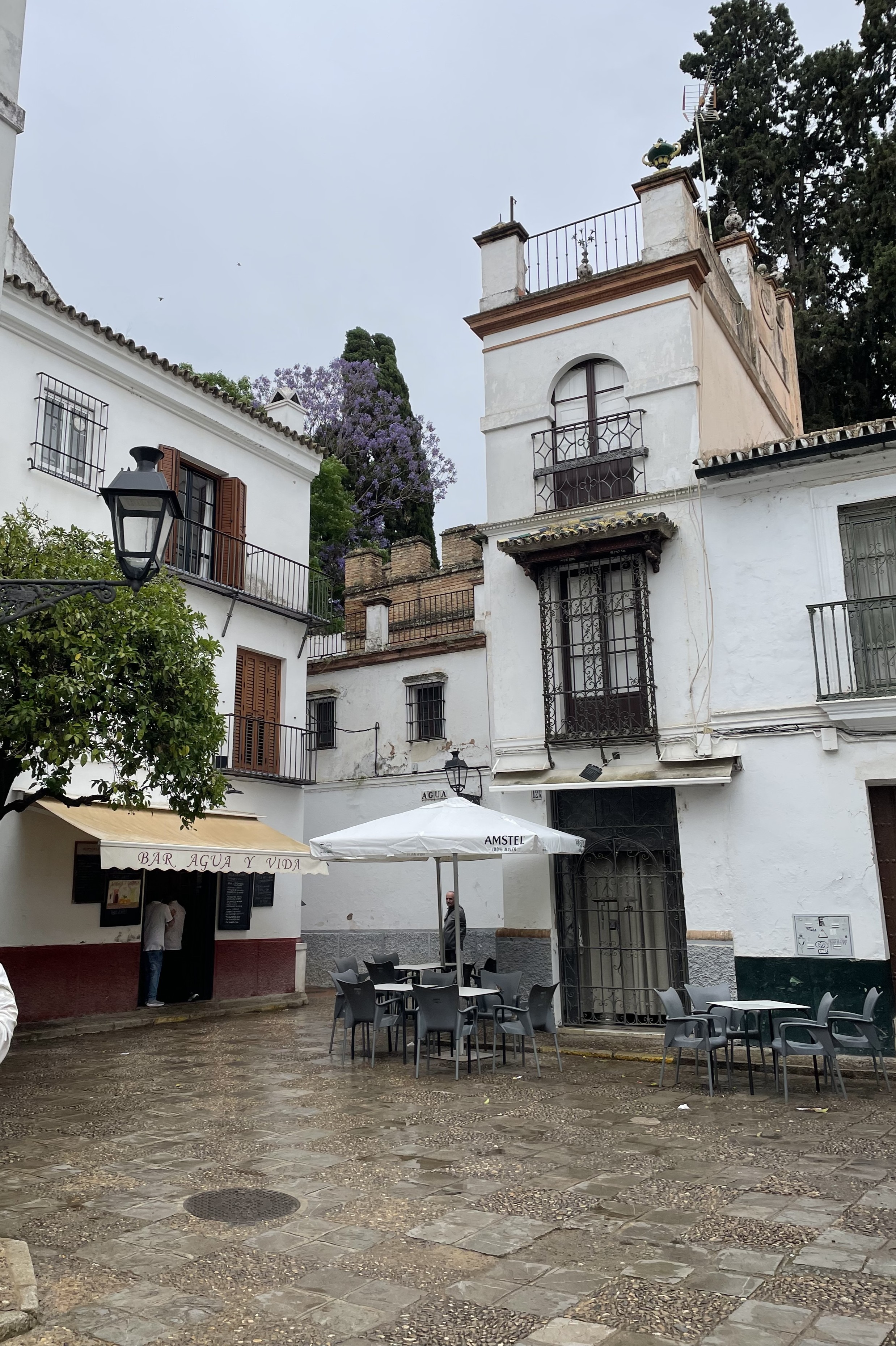
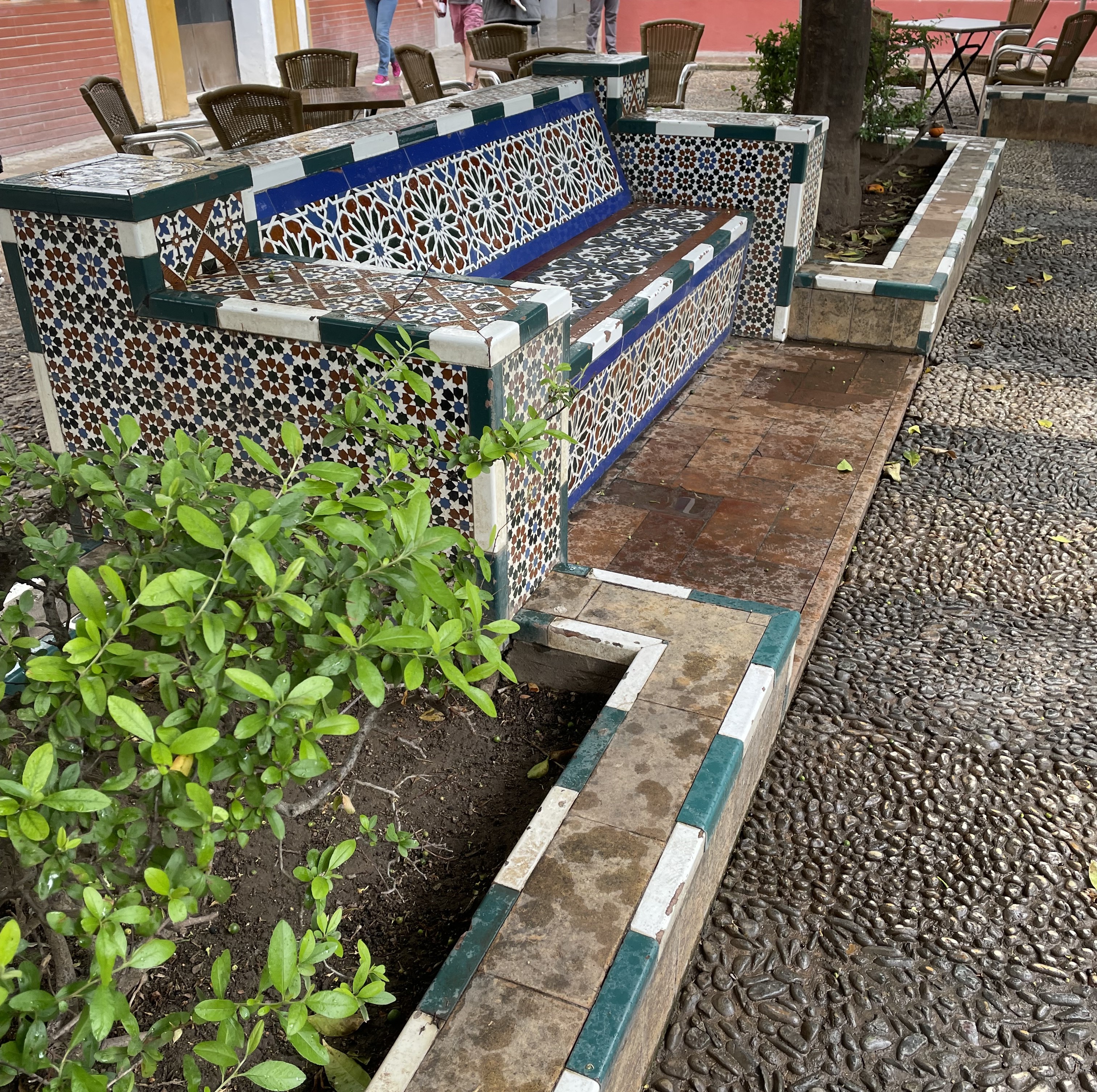
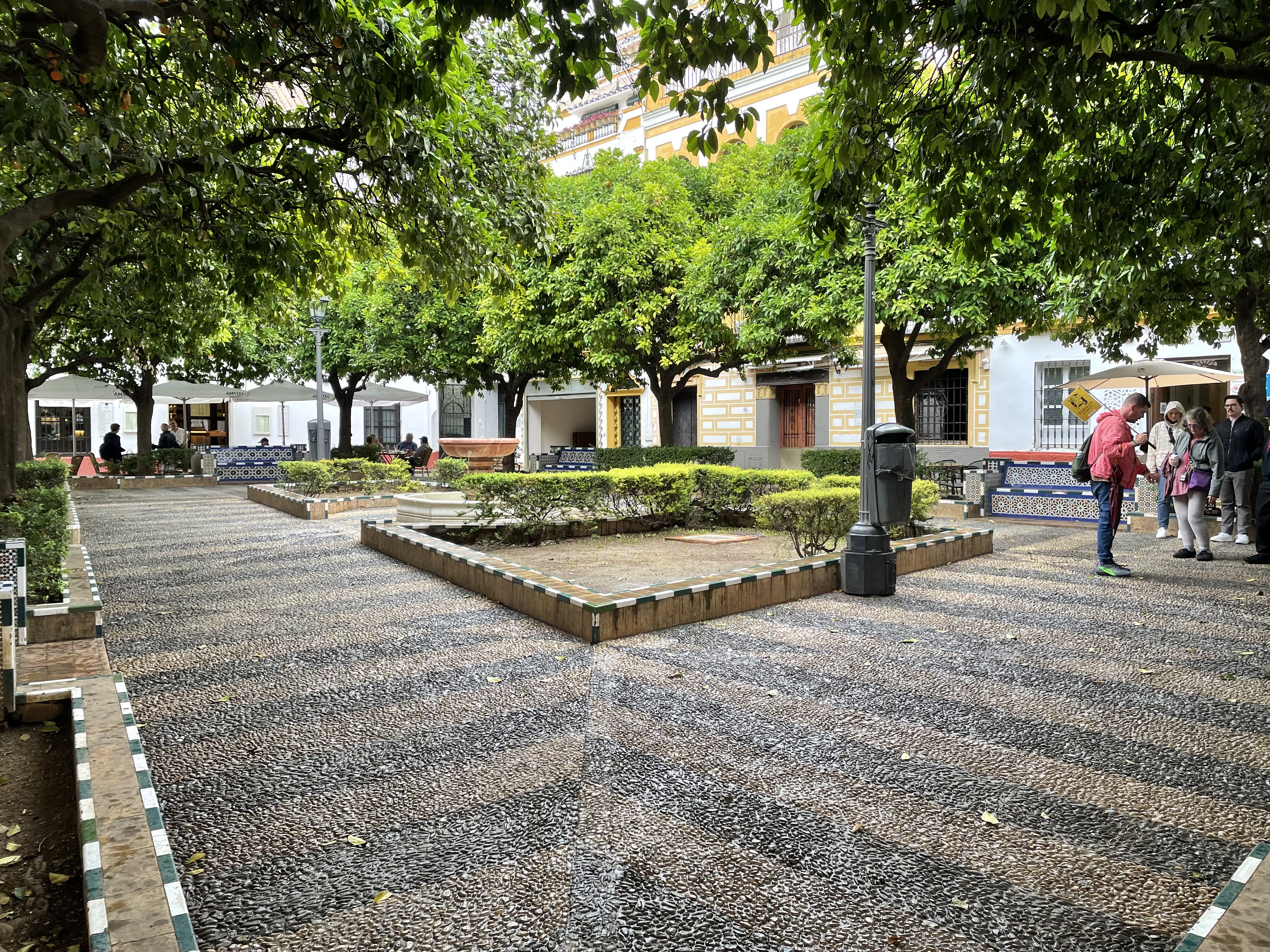
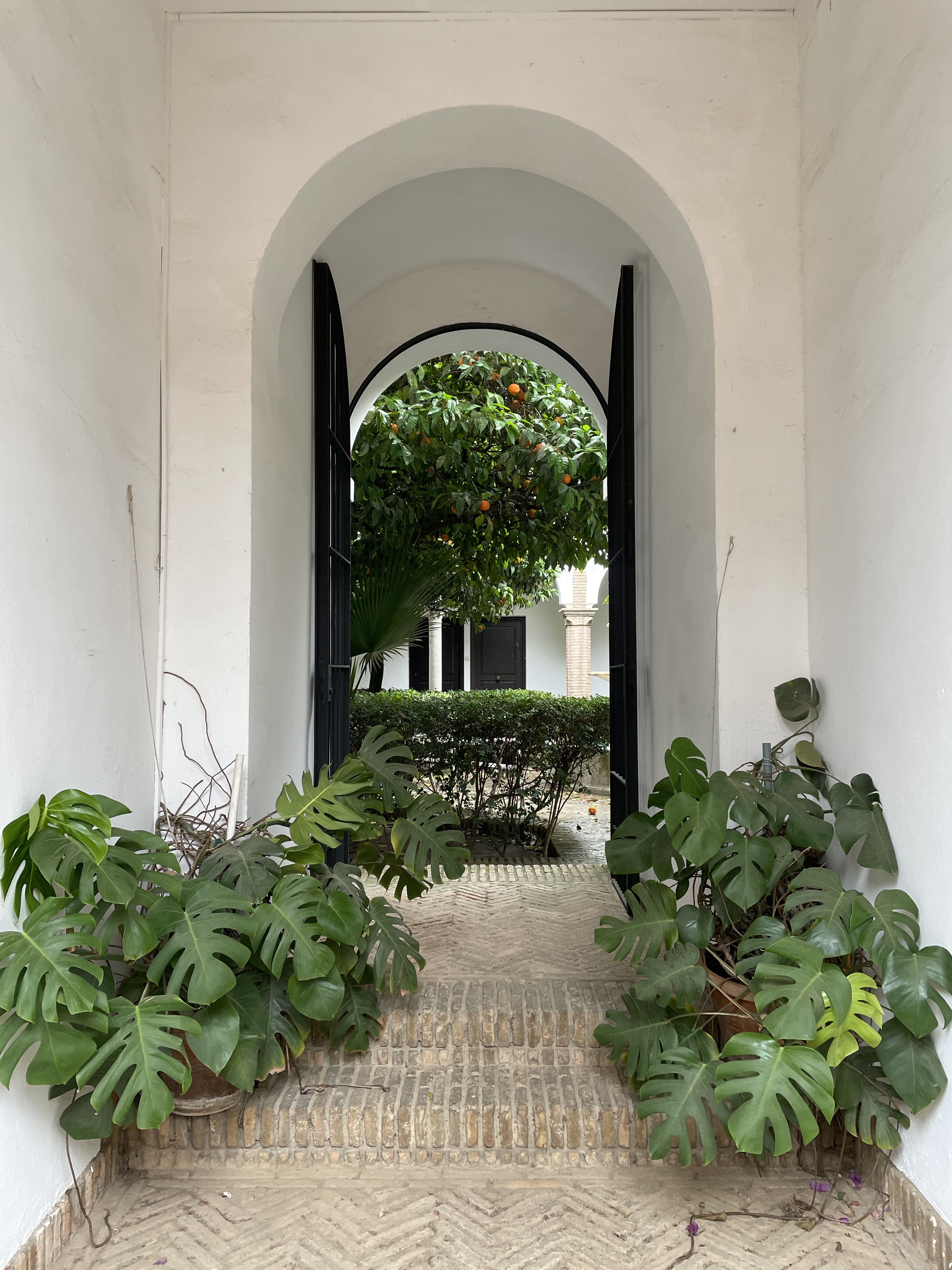
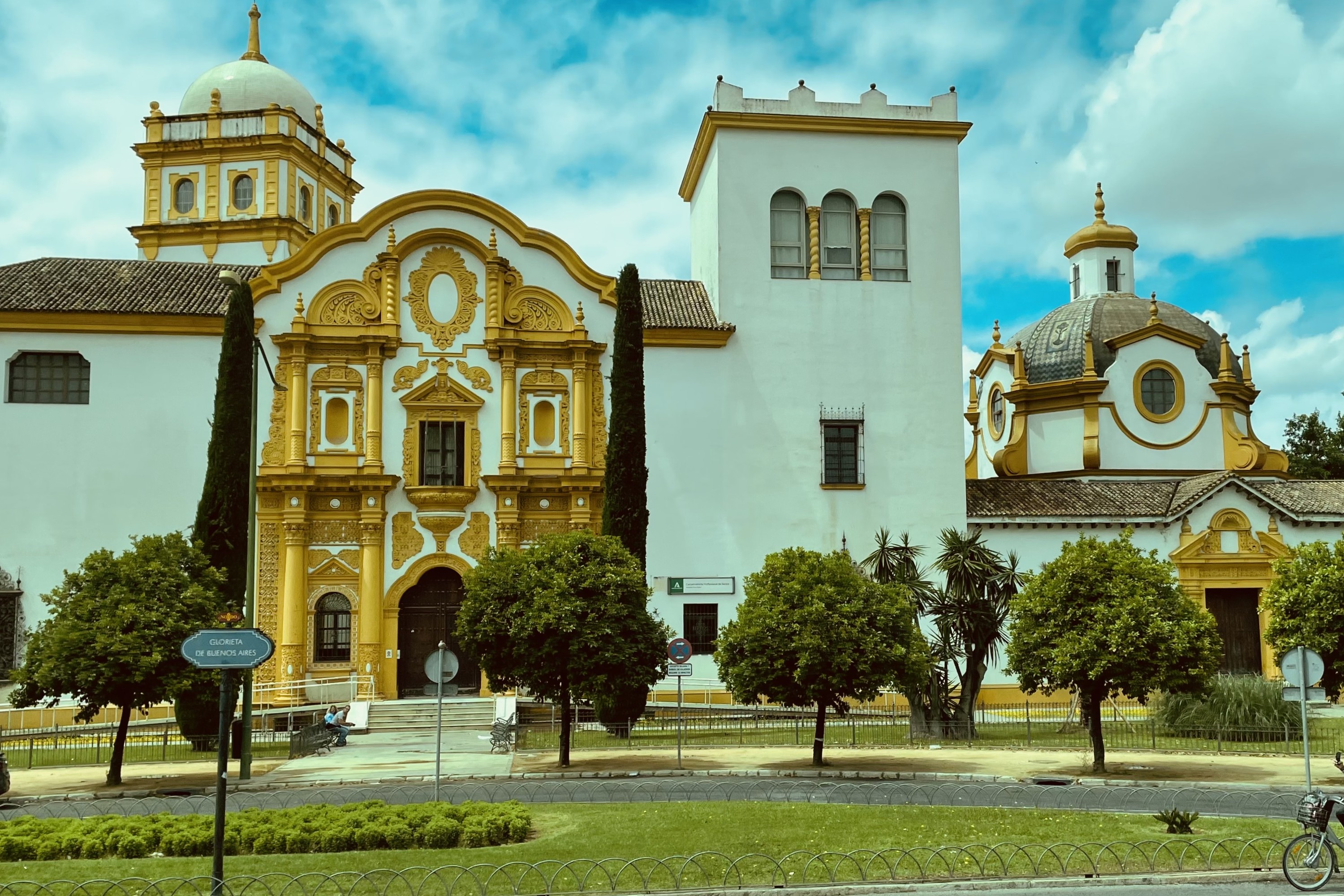
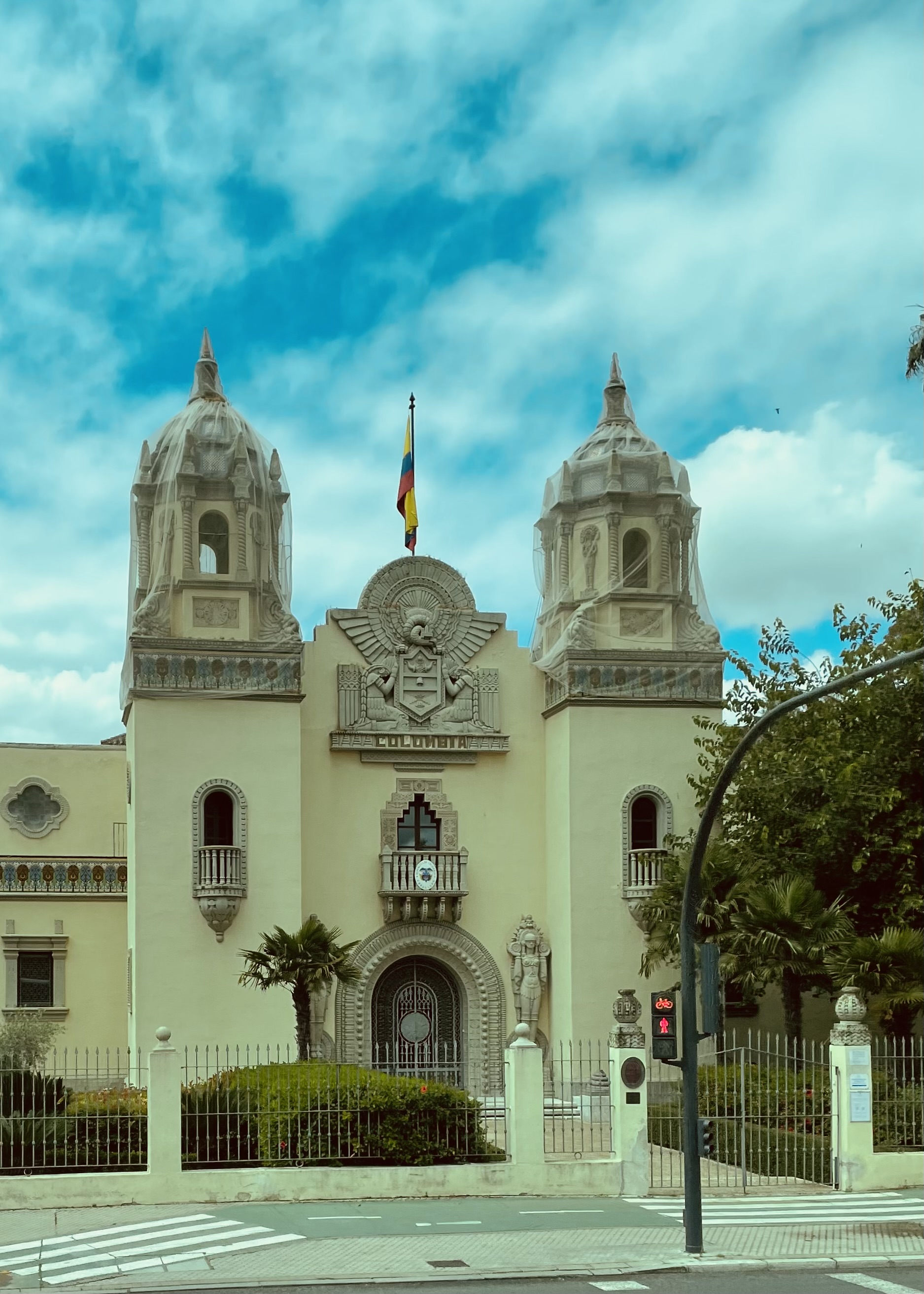
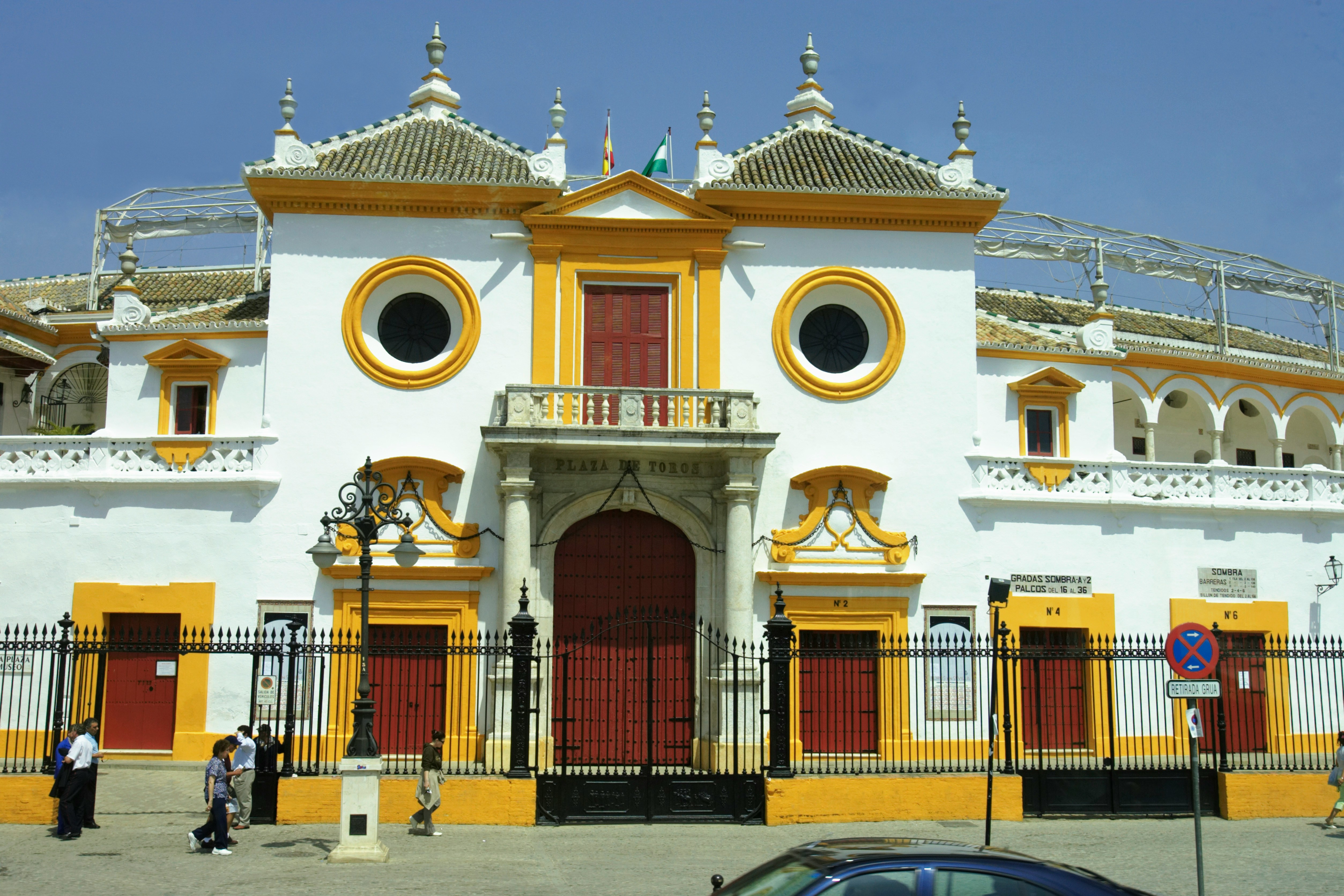
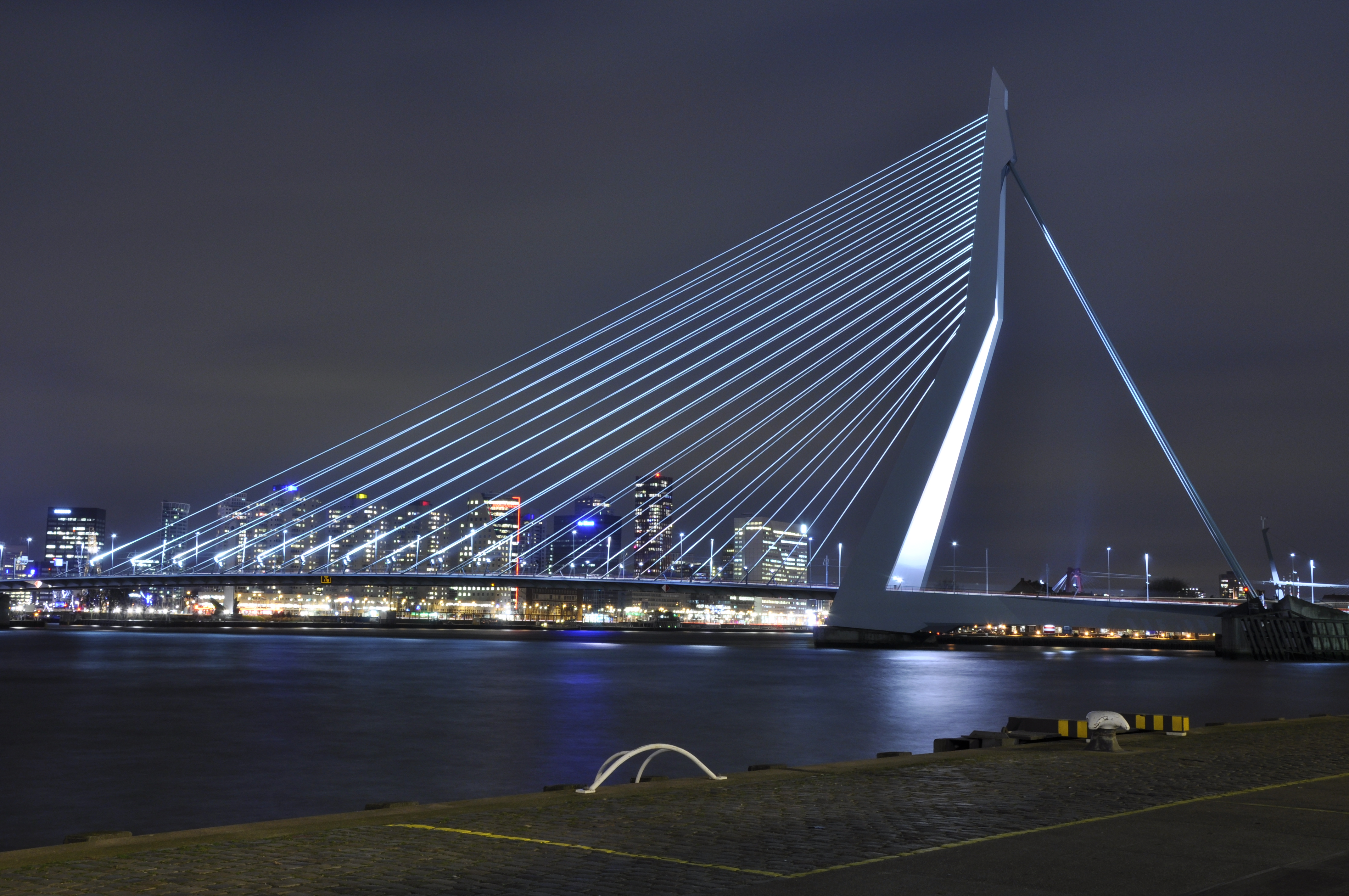
Seville, our next stop, is known for the beauty of its architecture, both historic and modern, including works such as Santiago Calatrava’s well-known Alamillo Bridge, designed for the 1992 World Expo. When leaving the port to enter Seville, one is immediately captivated by the breadth and depth of the city’s built heritage.
Plaza de España
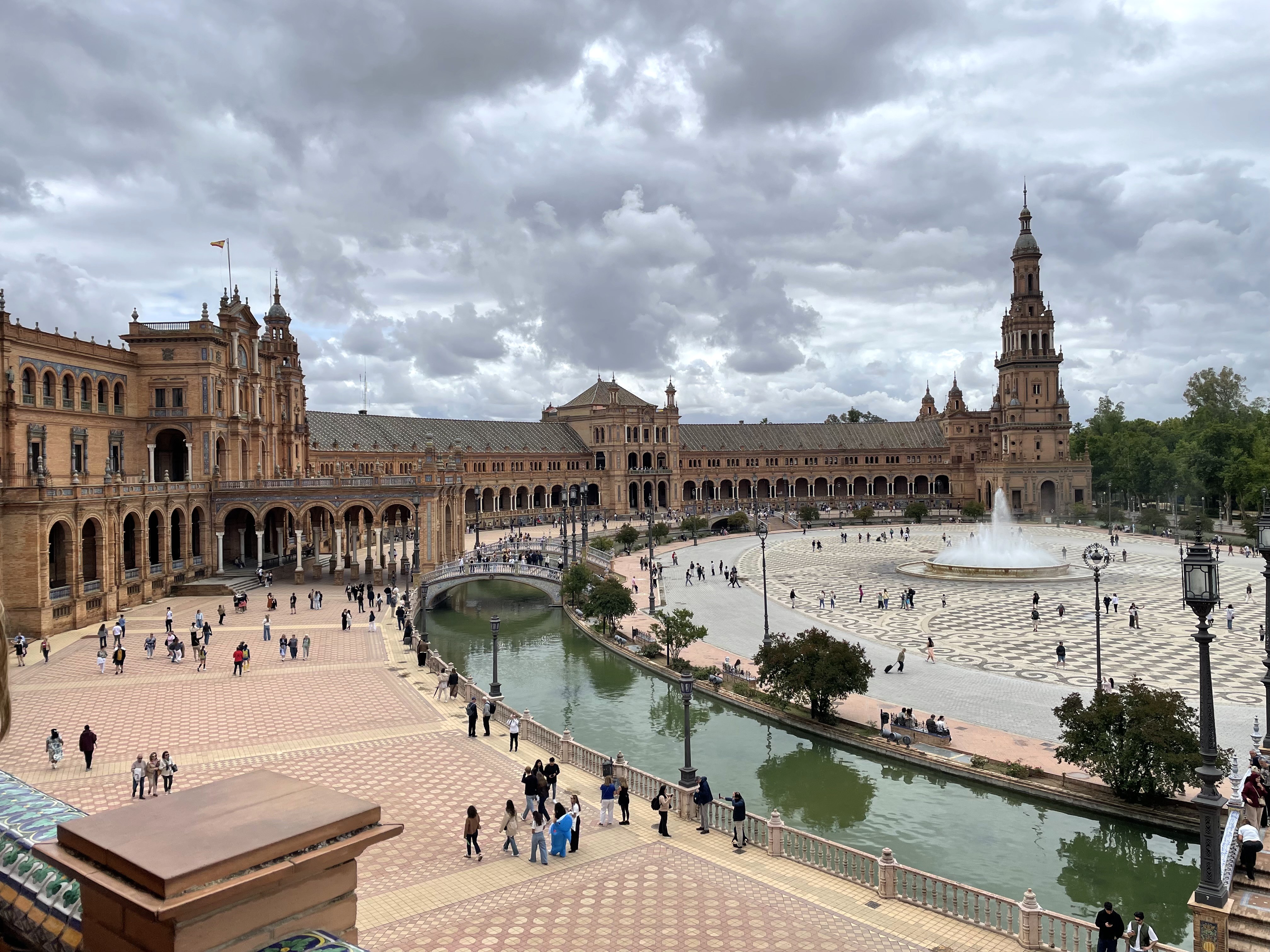
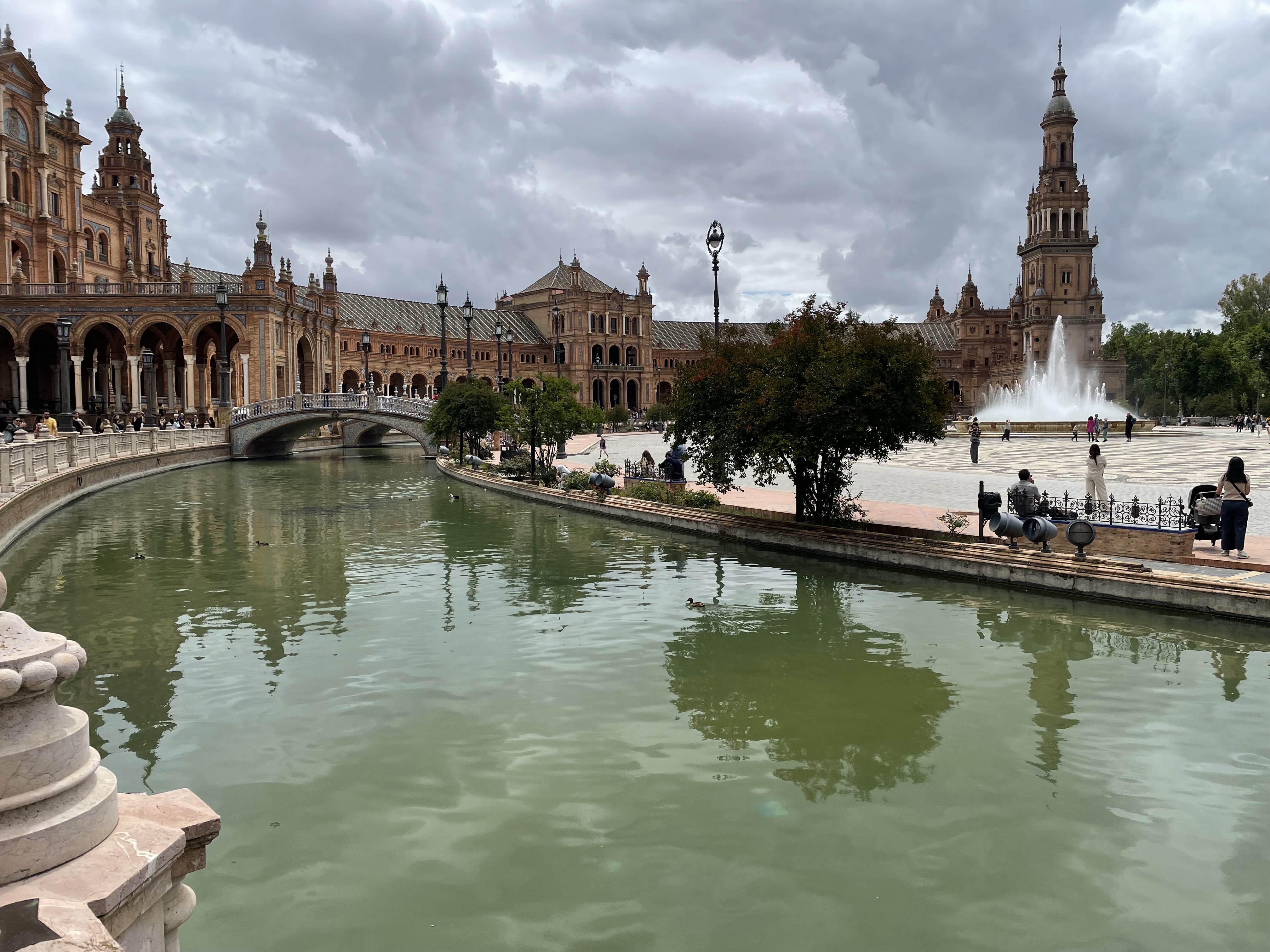
Our tour group visited the remarkable Plaza de España, located in the Maria Luisa Park.
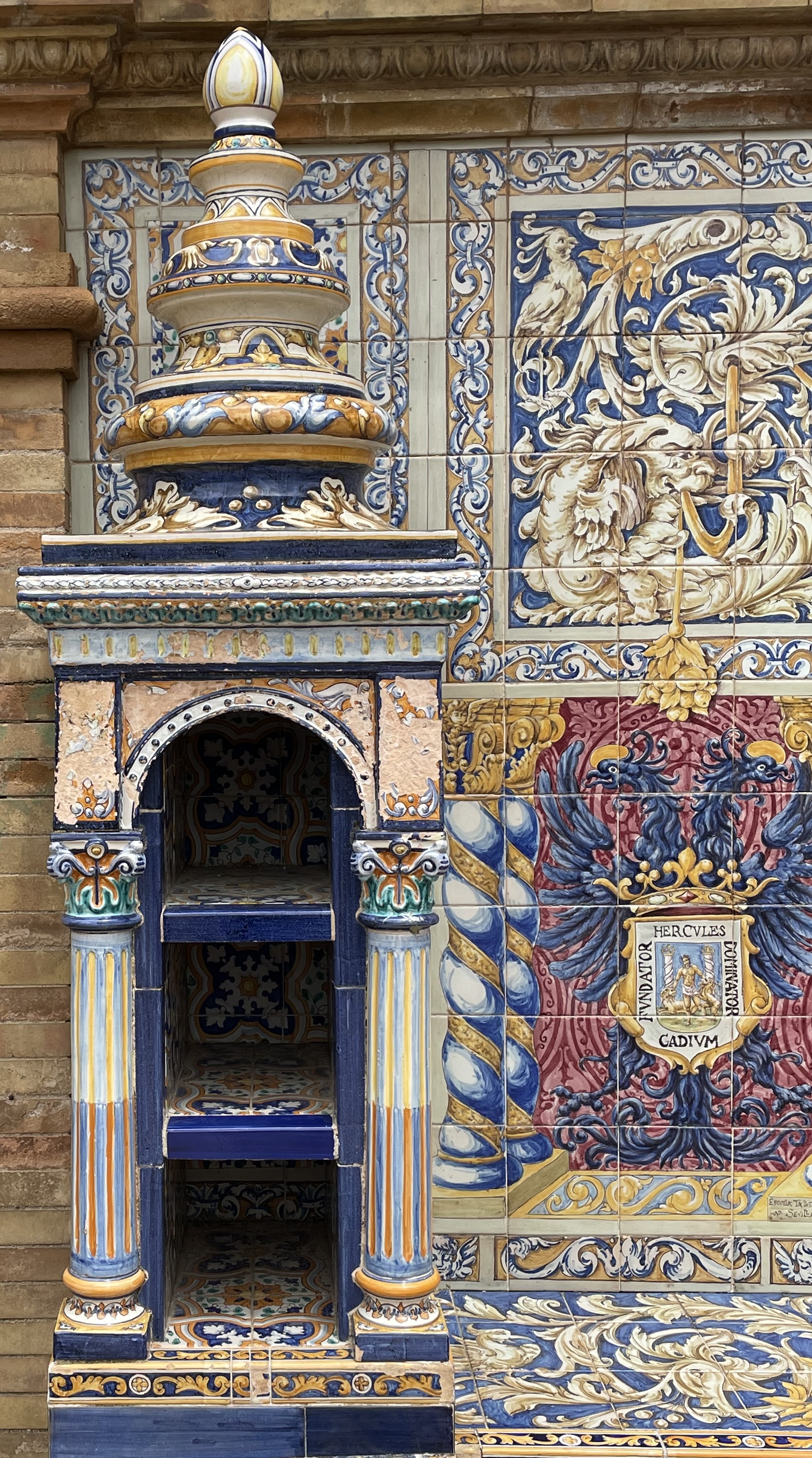
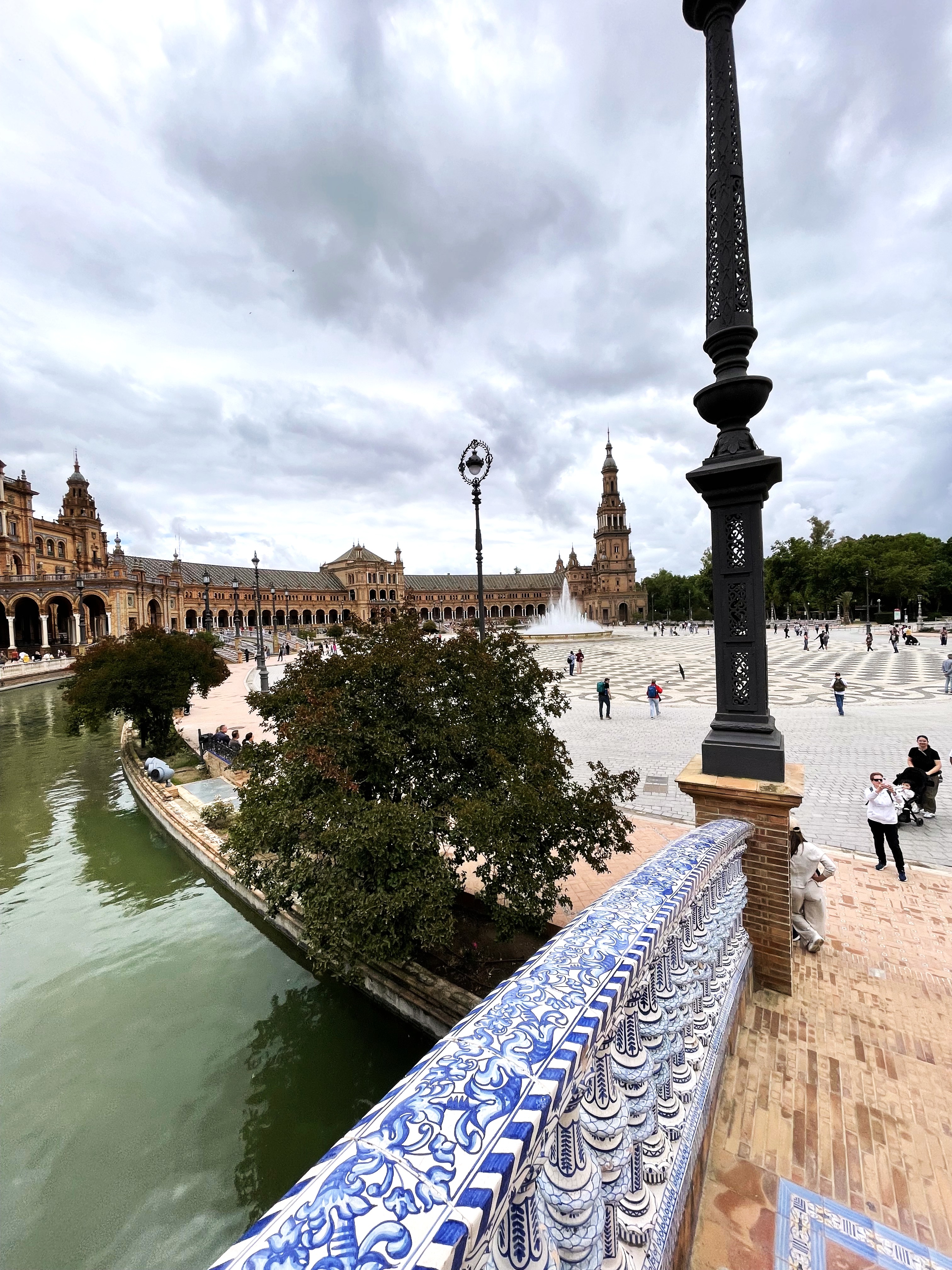
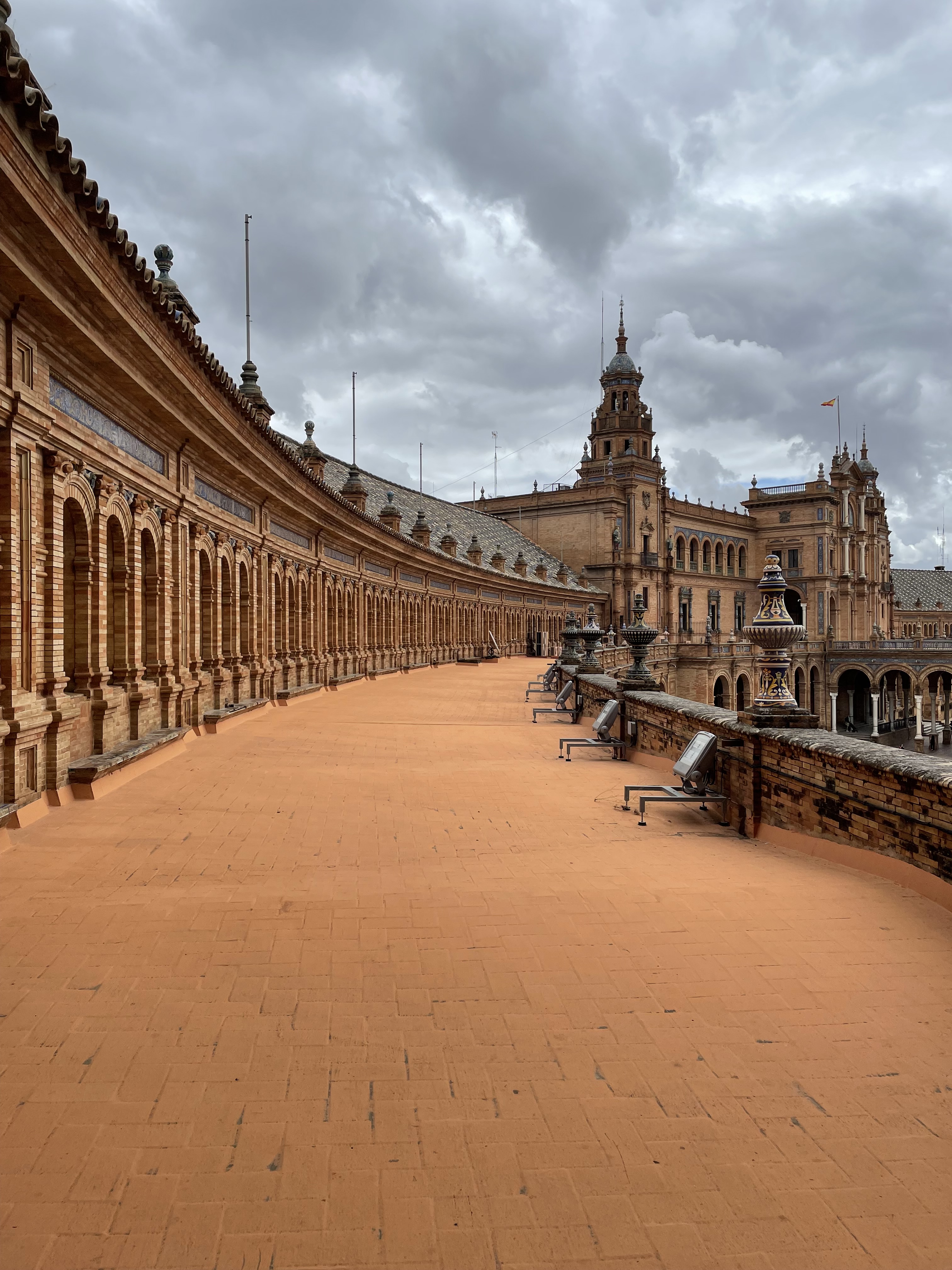
The plaza was built in 1928 for the Ibero-American Exposition of 1929 and mixes elements of the Baroque Revival, Renaissance Revival, and Moorish Revival styles of Spanish architecture in what is a landmark example of Regionalism Architecture. It was teeming with people drawn to the architecture, water, wide plaza, and beautiful details.
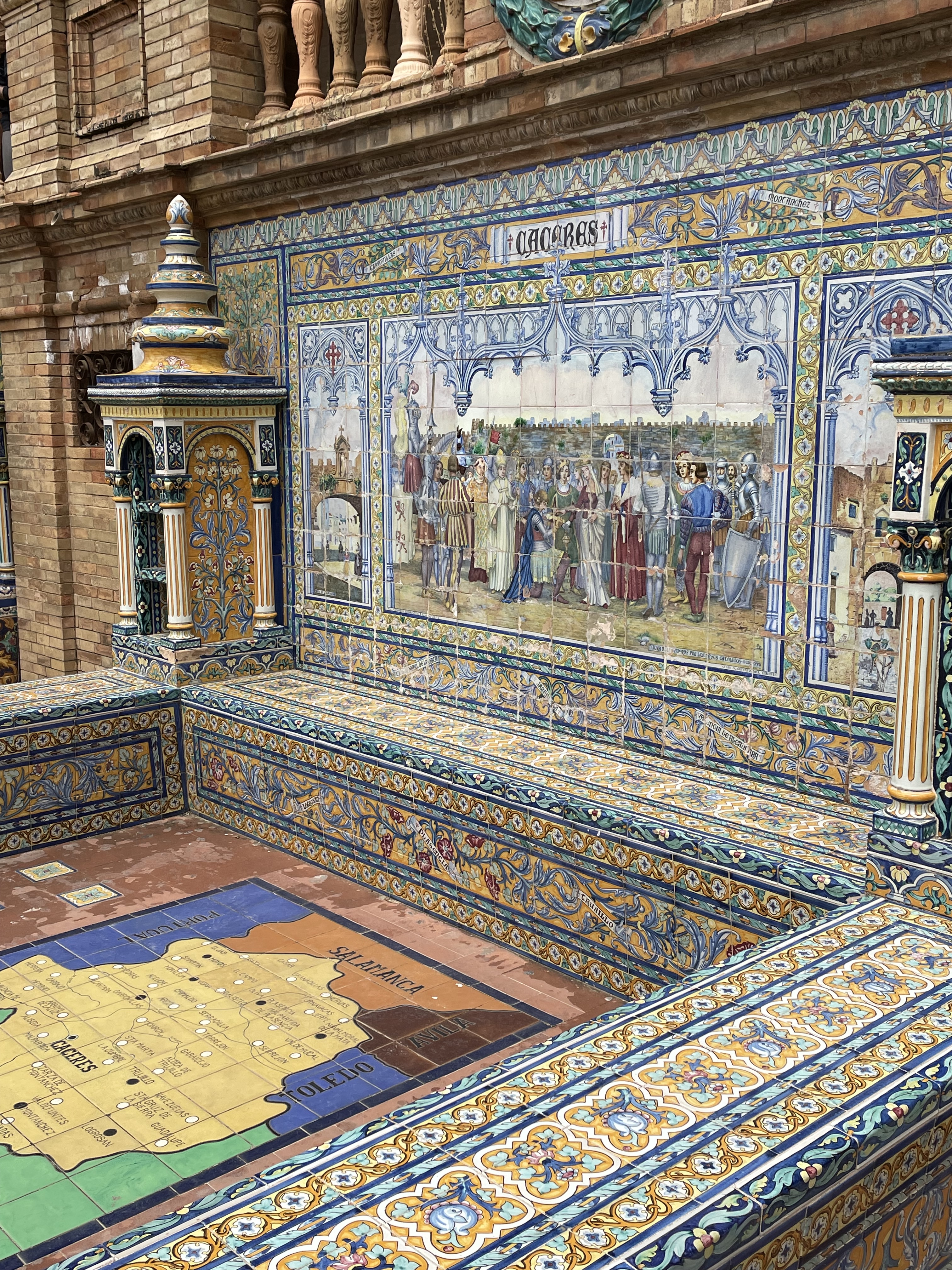
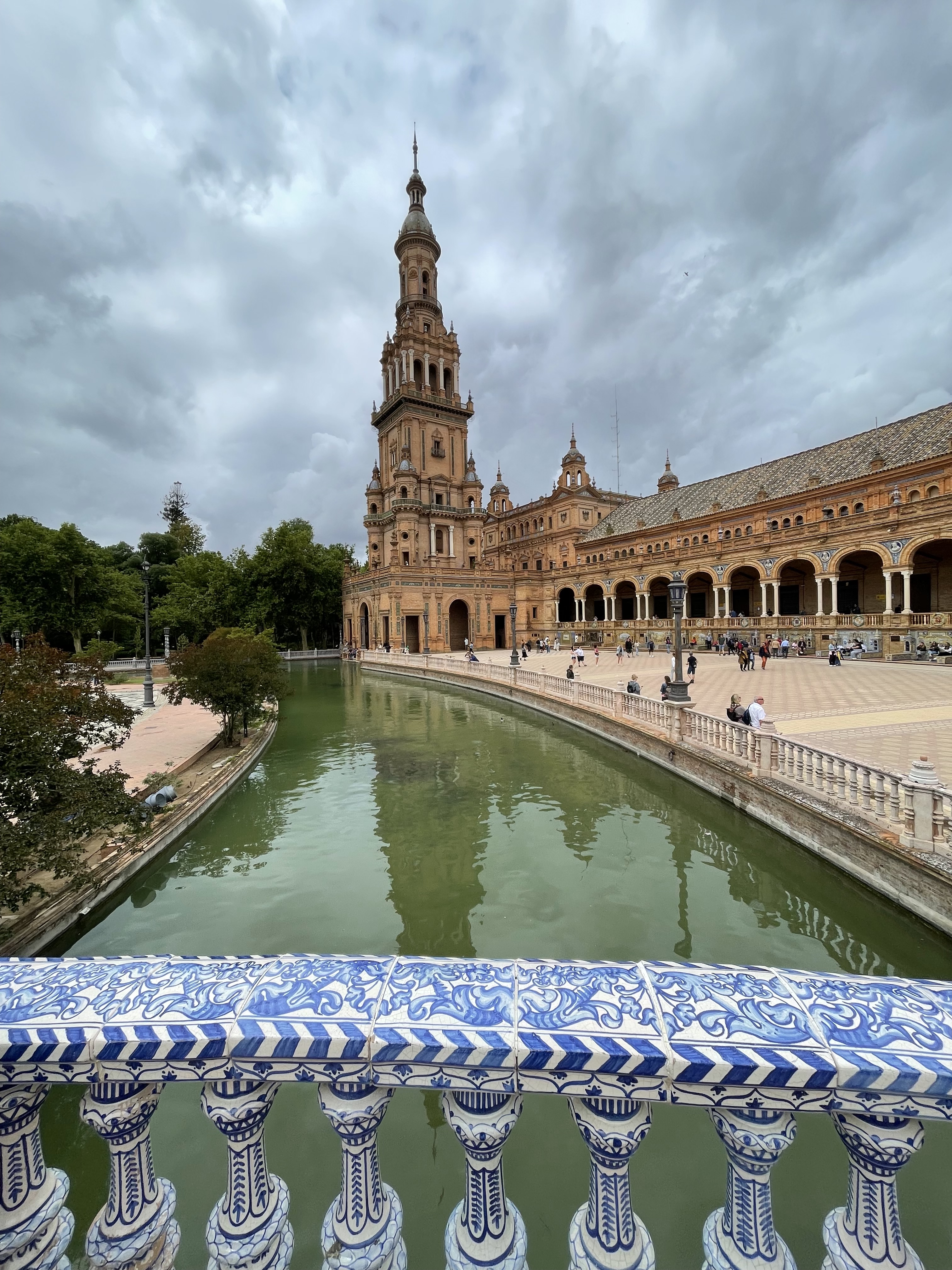
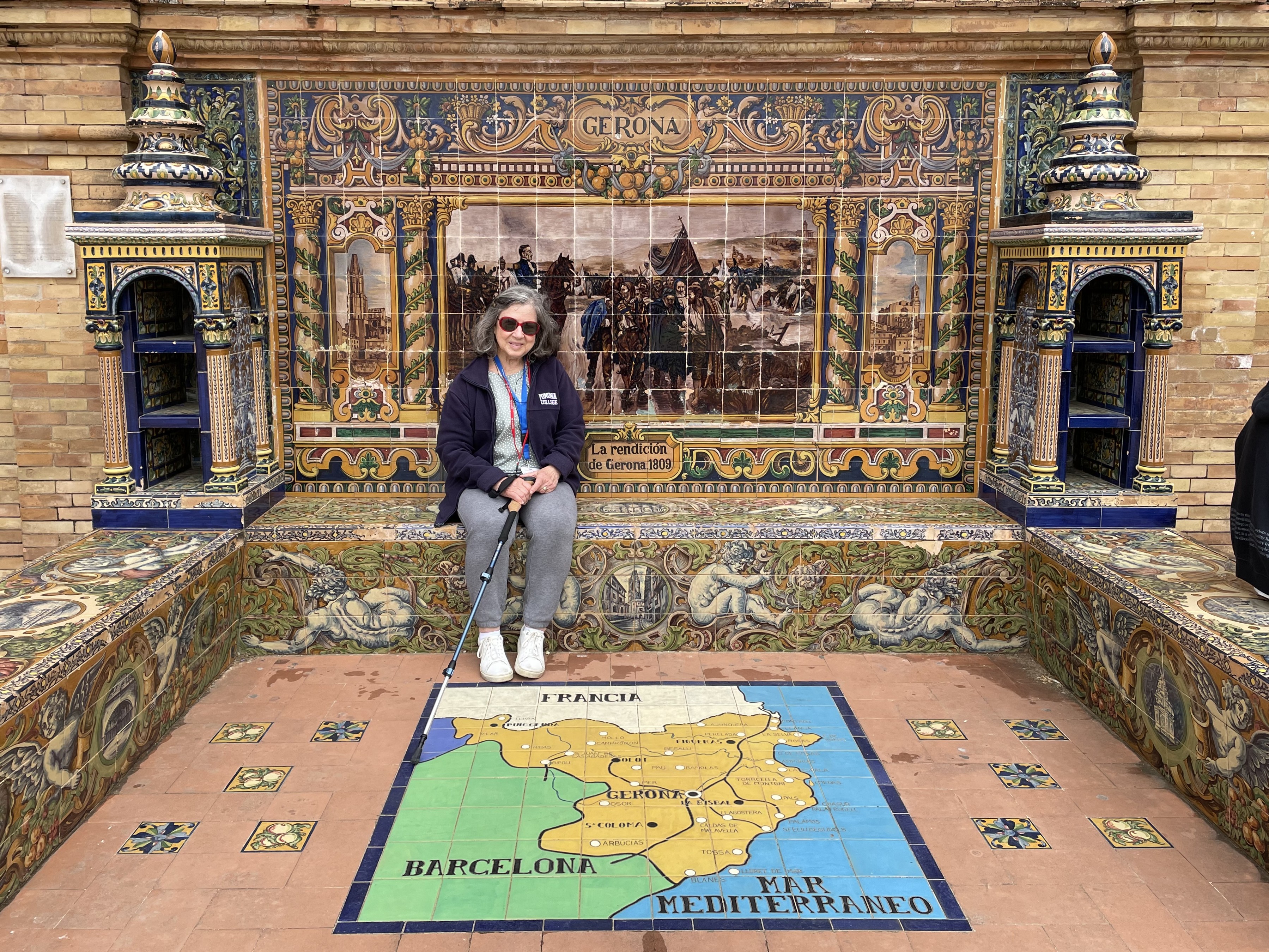
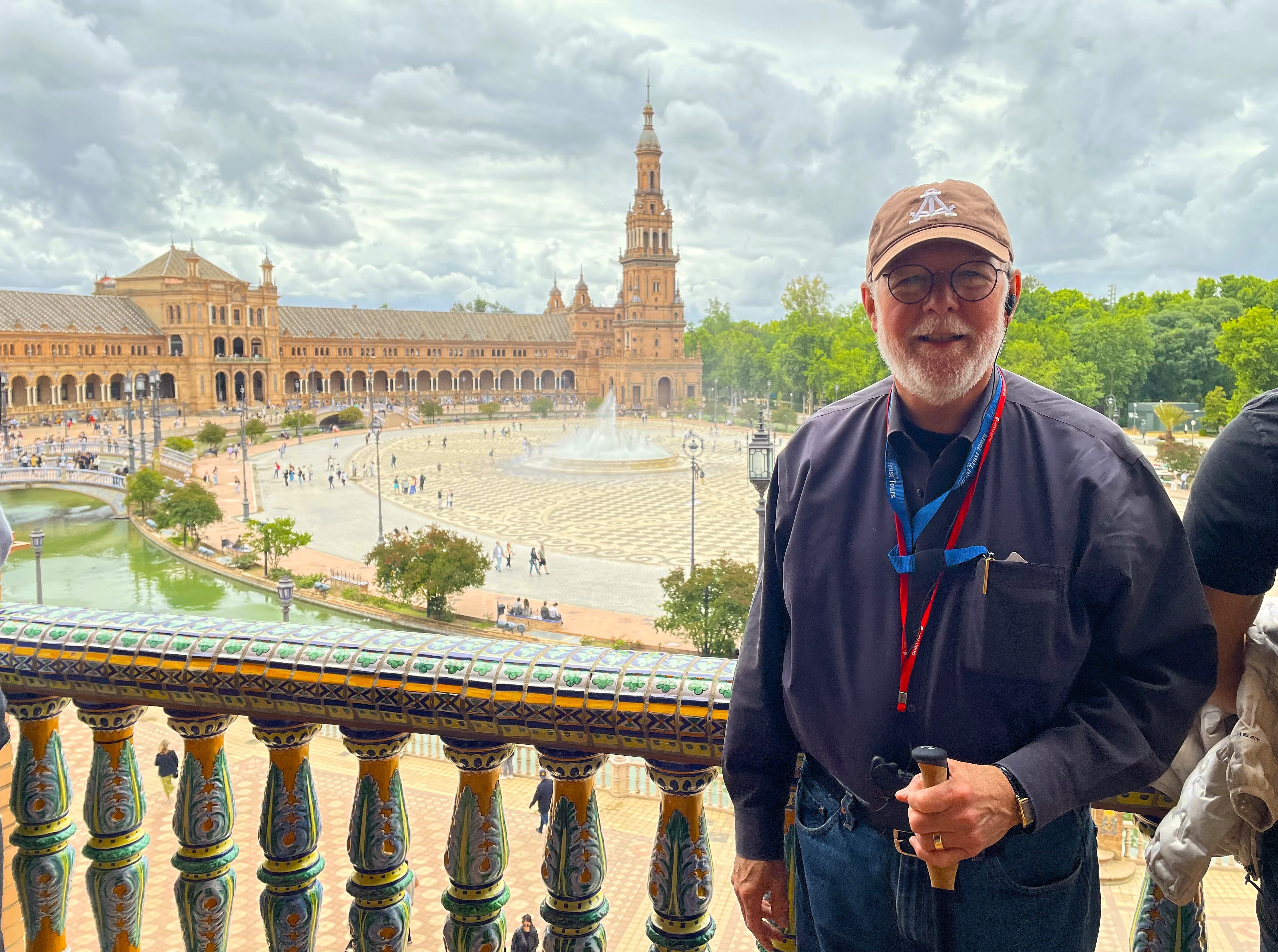
There are three historic buildings in Seville on the World Heritage List―the Alcázar or palace, the Archives of the Indies, and the Cathedral―which together form a remarkable monumental complex in the heart of the city. They perfectly epitomize the Spanish “Golden Age”, incorporating vestiges of Islamic culture, centuries of ecclesiastical power, royal sovereignty and the trading power that Spain acquired through its colonies in the New World.
Alcázar
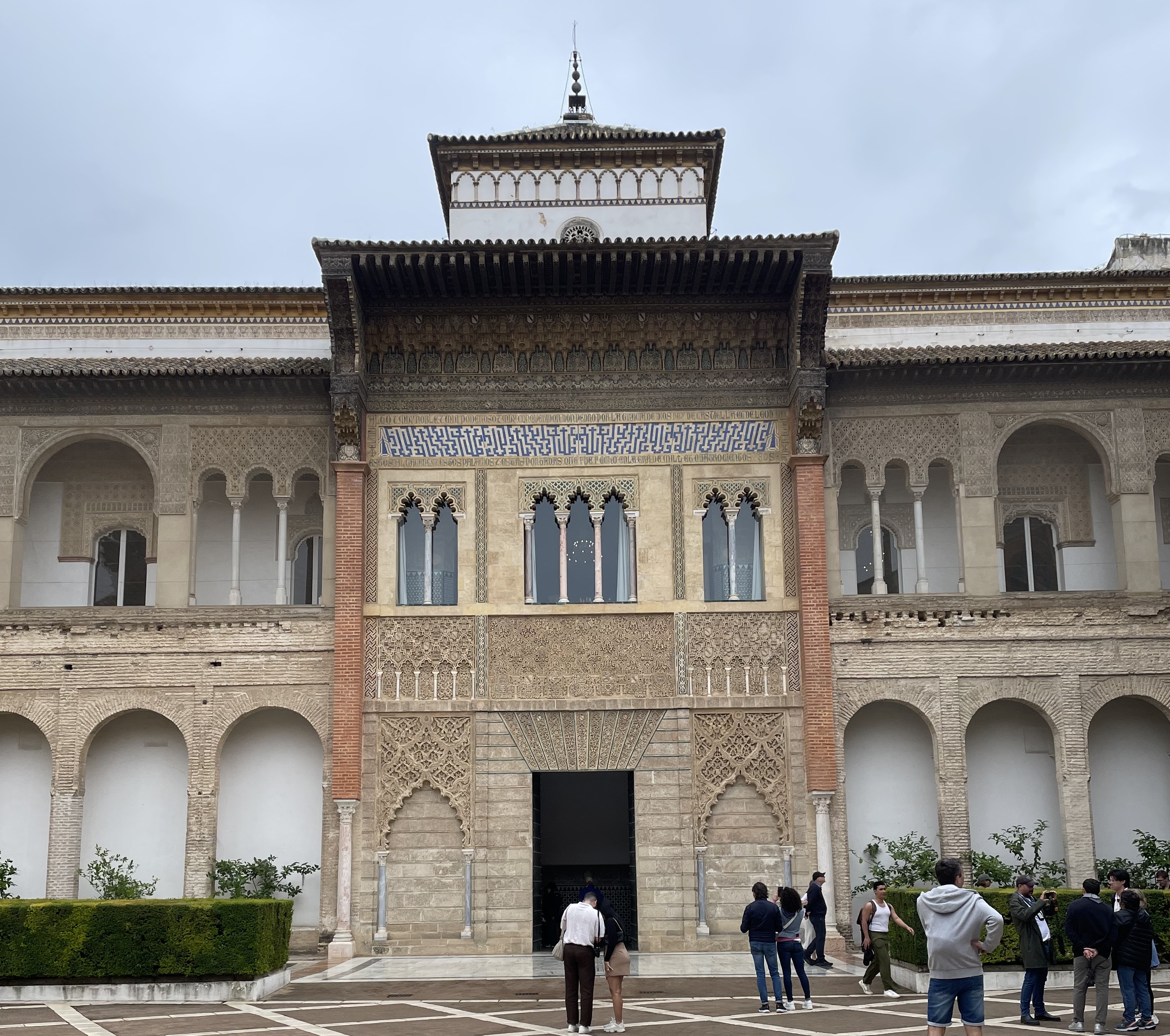
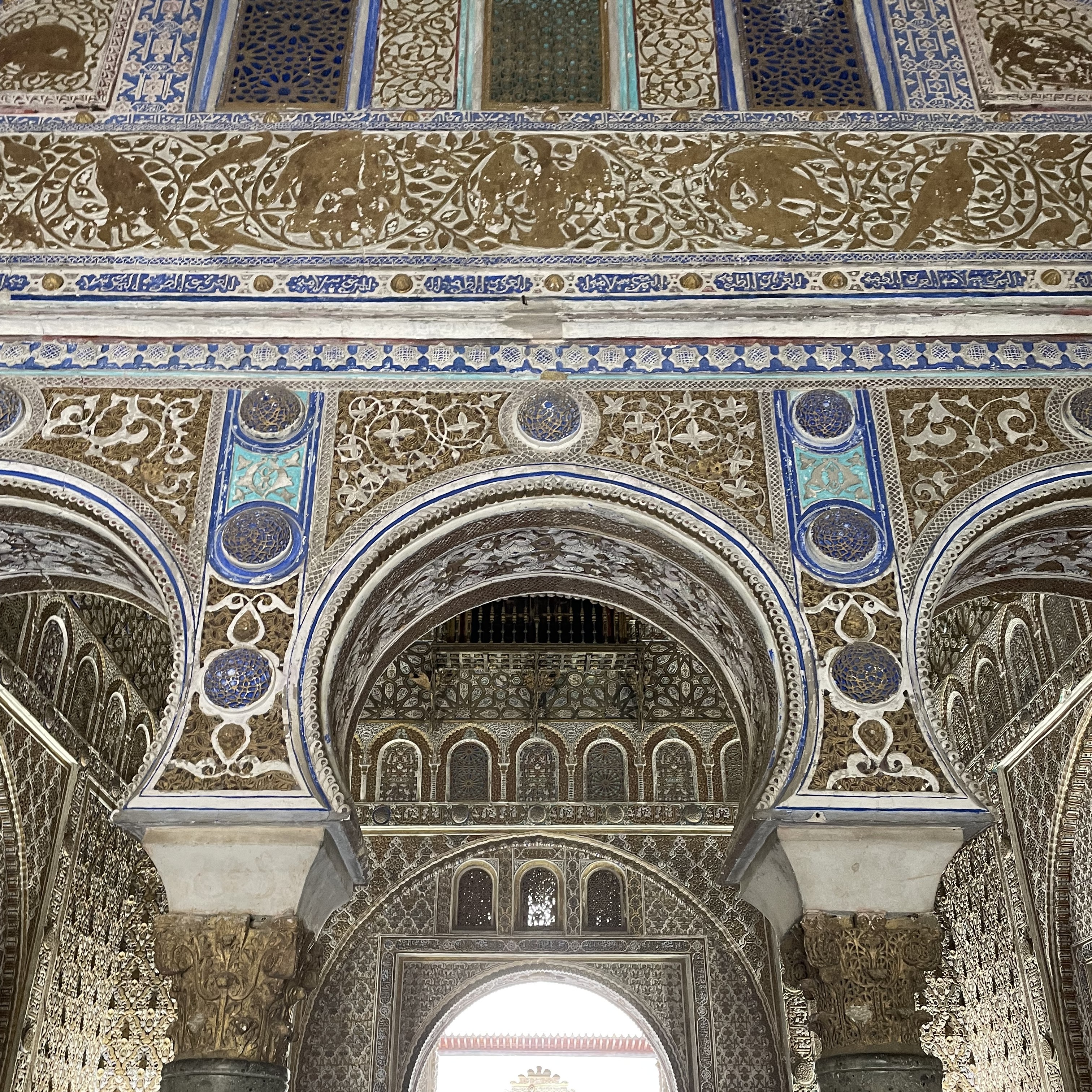
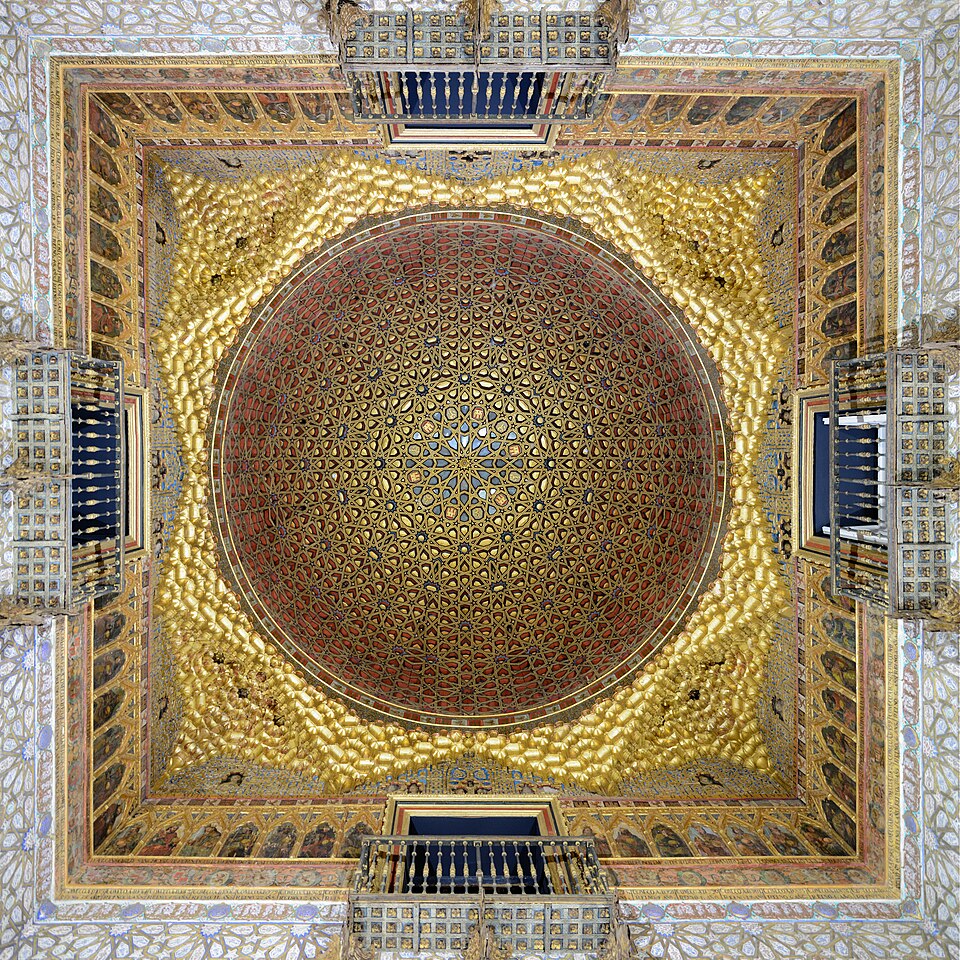
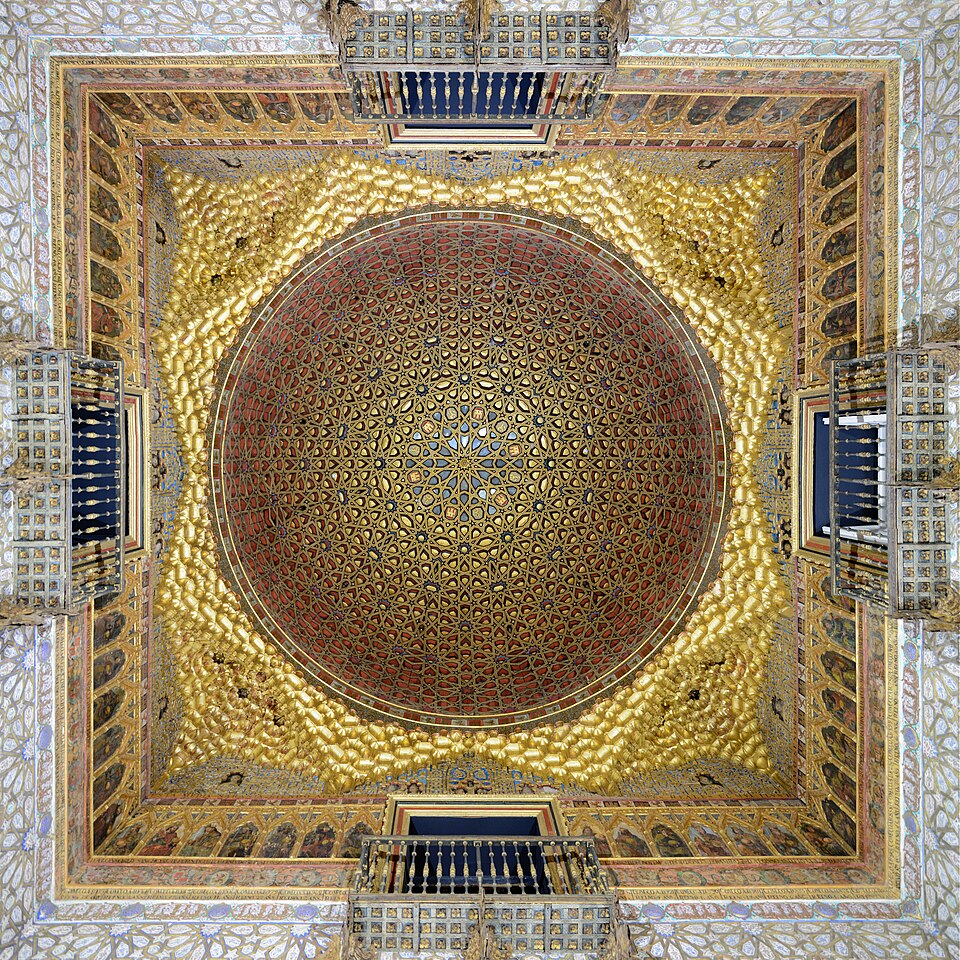
The original nucleus of the Alcázar was constructed in the 10th century as the palace of the Moslem governor and is used even today as the Spanish royal family’s residence in this city, thereby retaining the same purpose for which it was originally intended: as a residence of monarchs and heads of state.
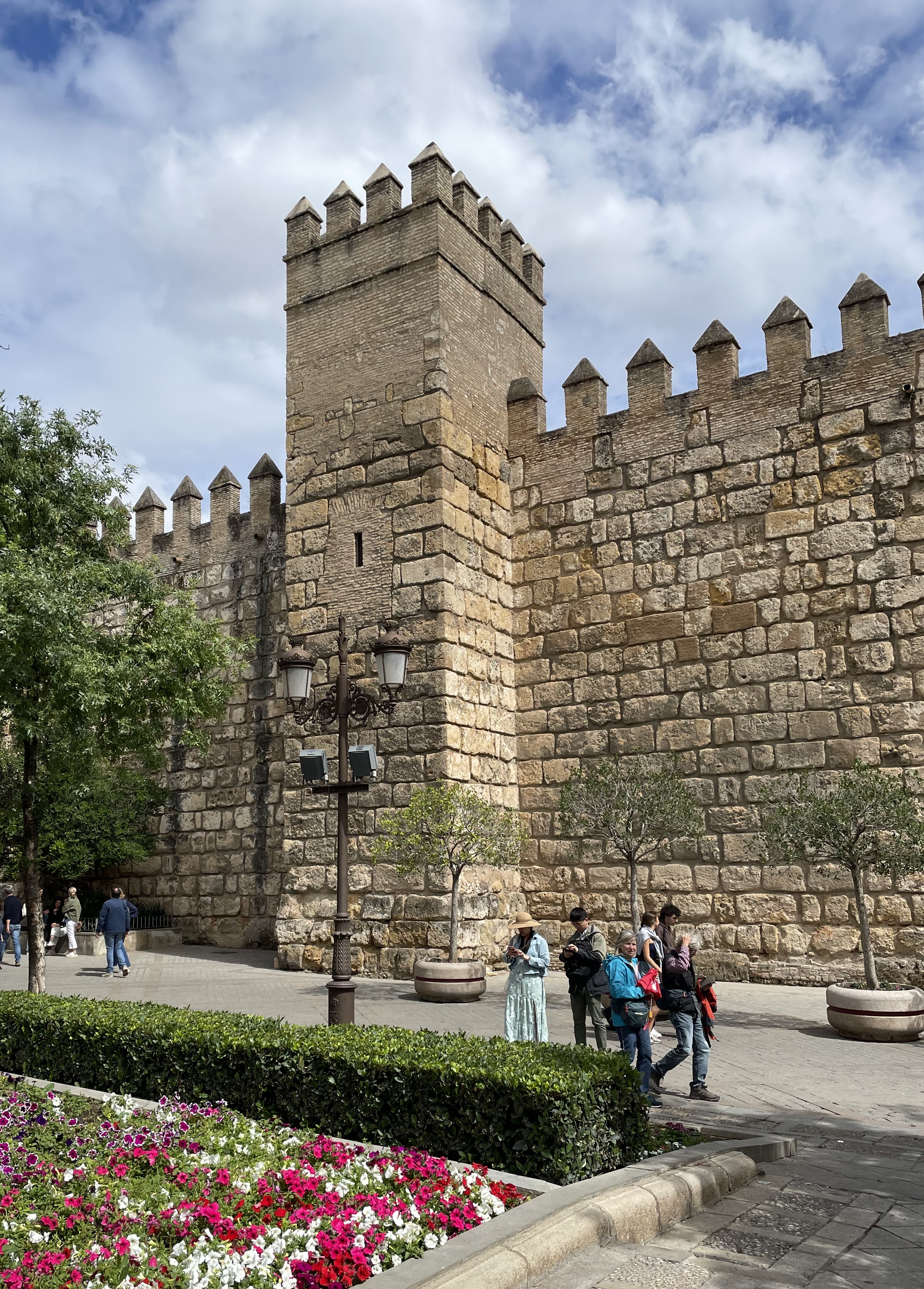
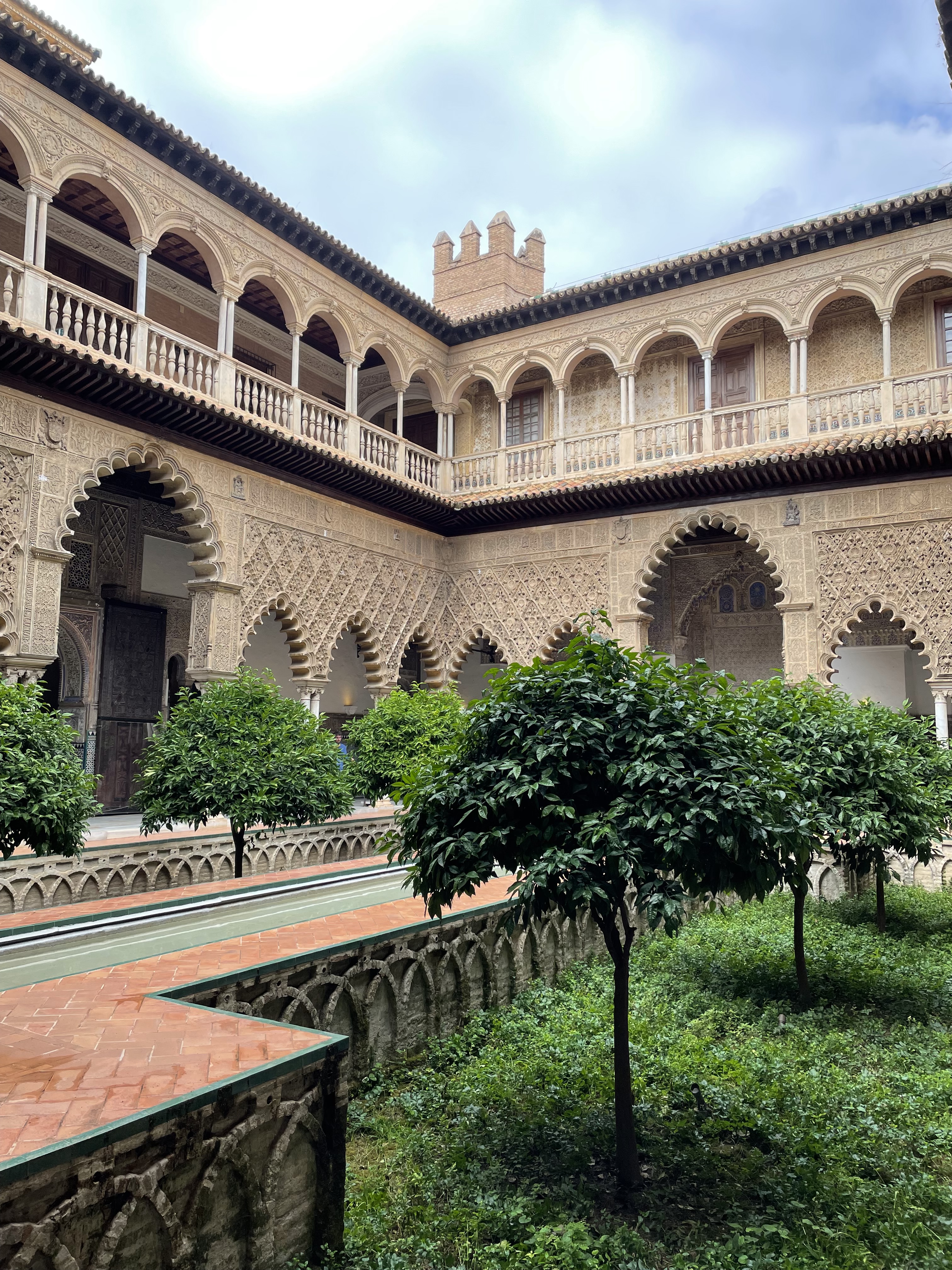
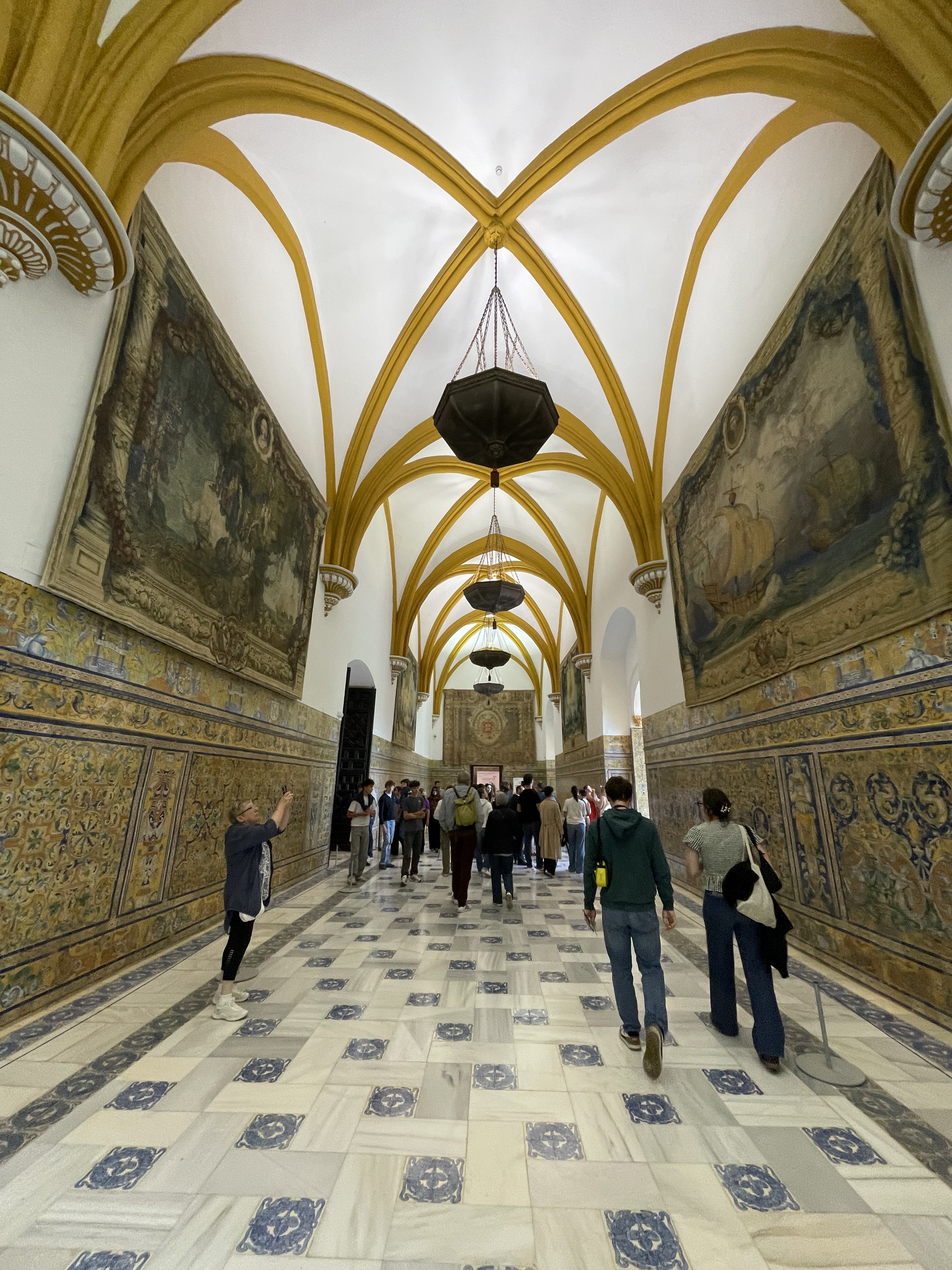
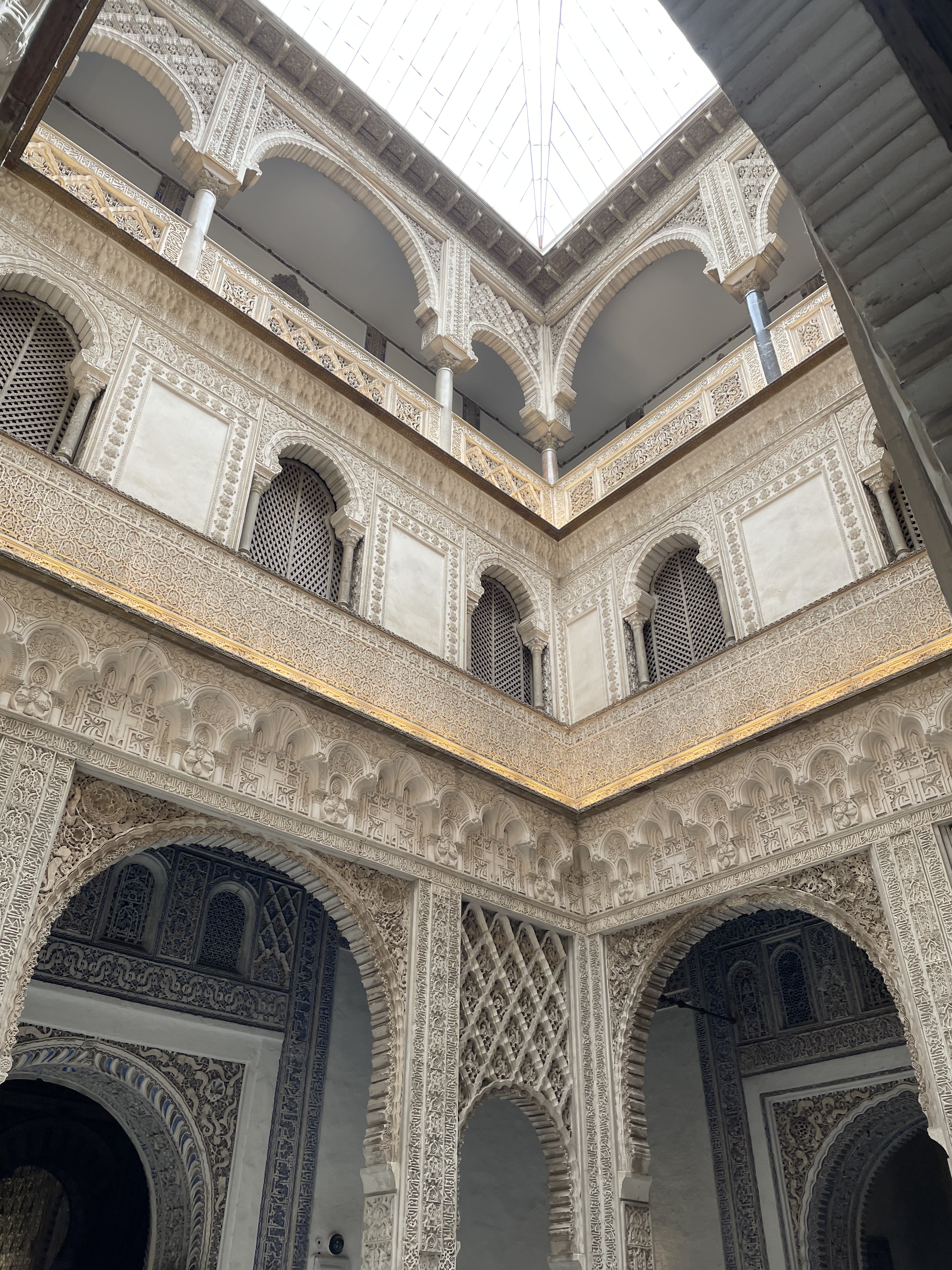
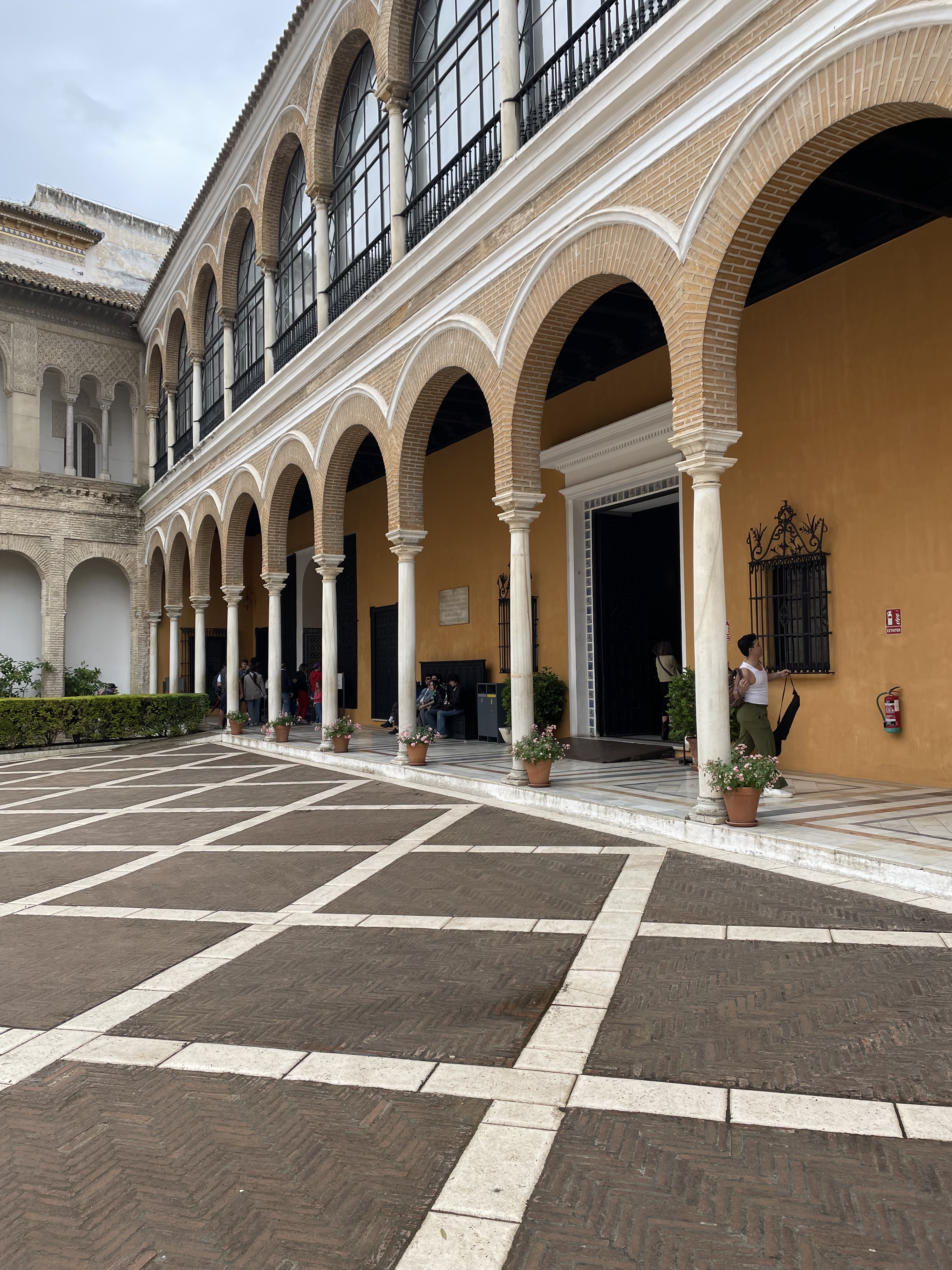
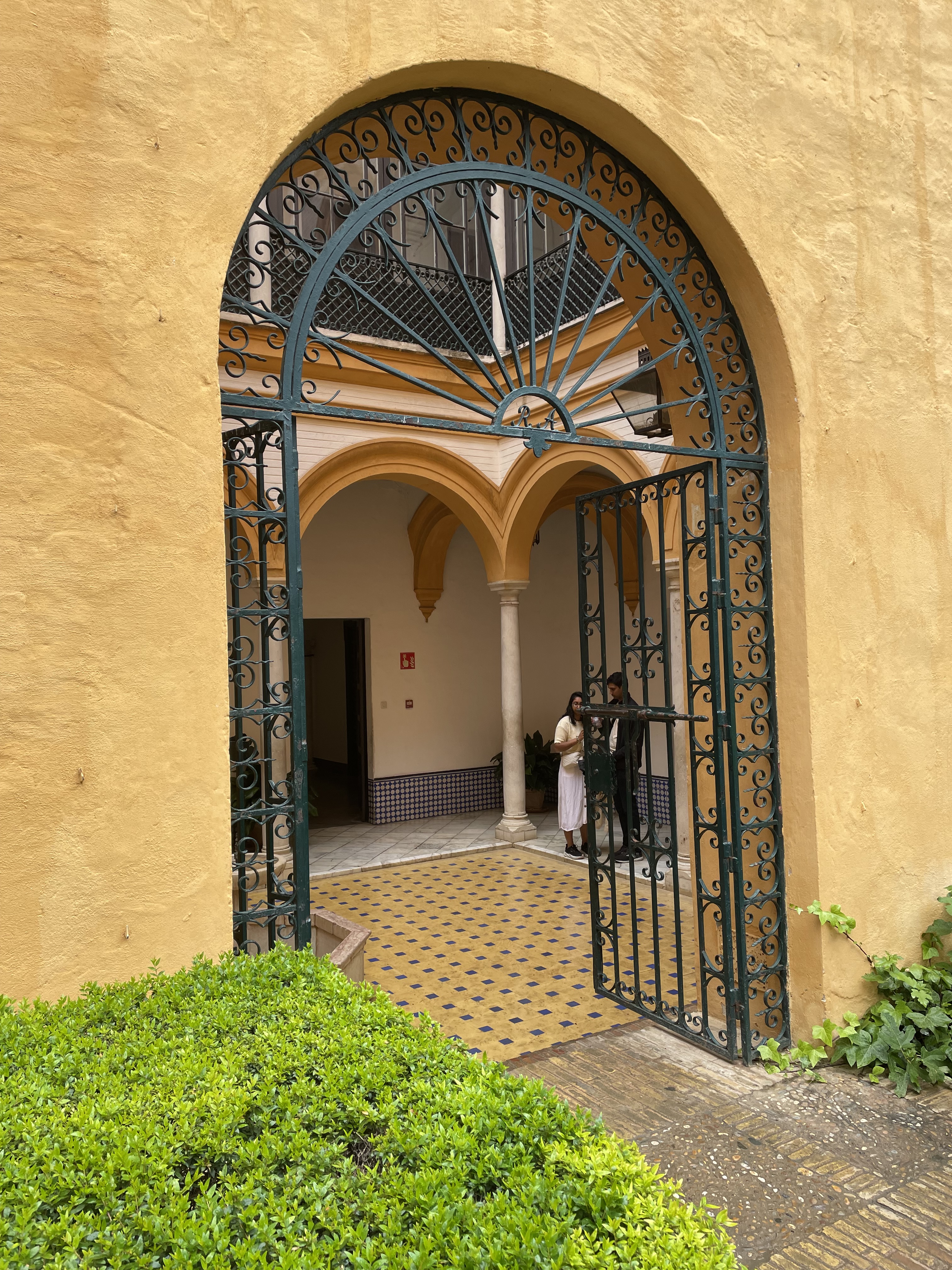
Built and rebuilt from the early Middle Ages right up to our times, the Alcázar embraces a rare compendium of cultures where areas of the original Almohad palace coexist with the later Spanish cultures. Here one sees every style from the Renaissance to the Neoclassical.
Archives of the Indies
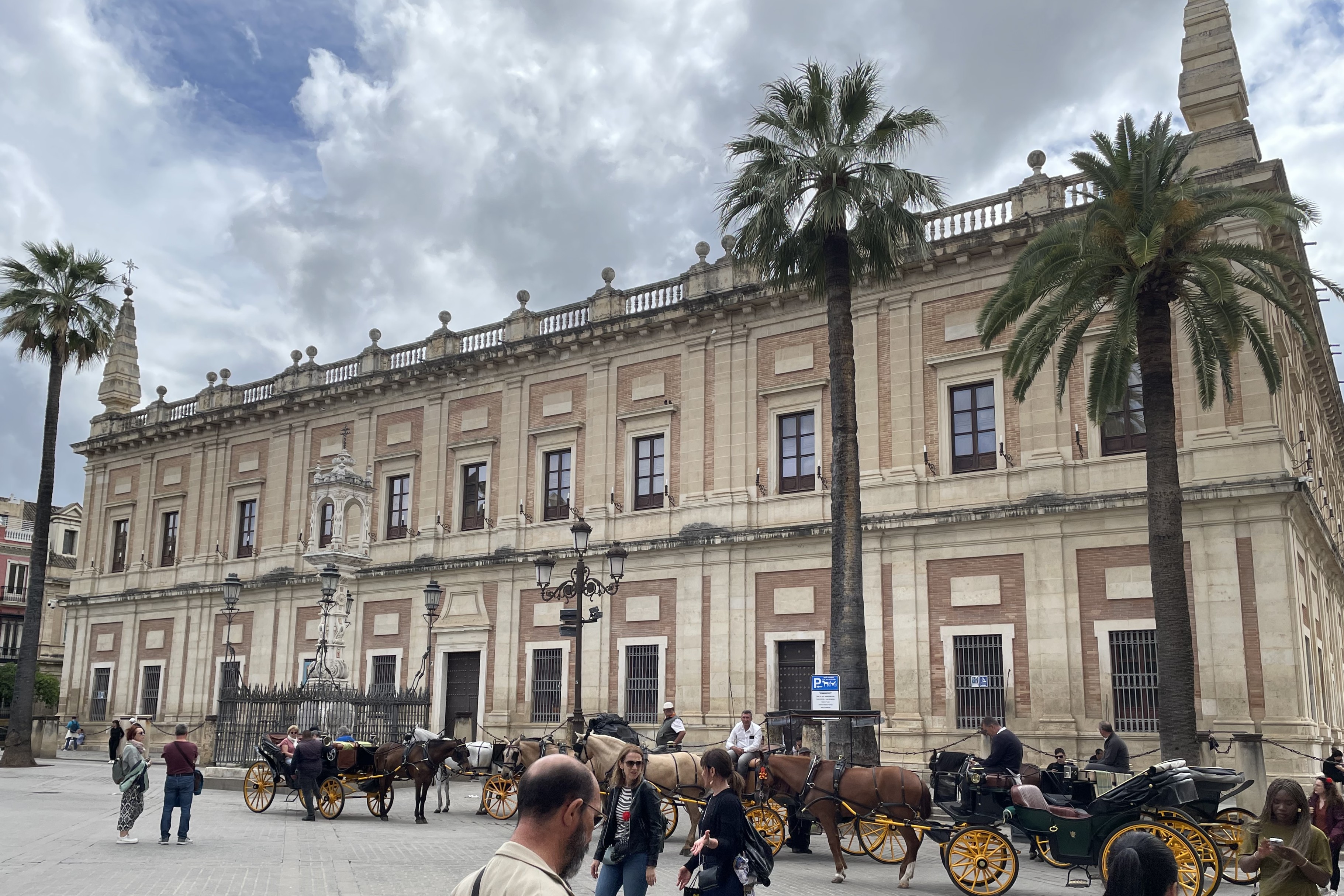
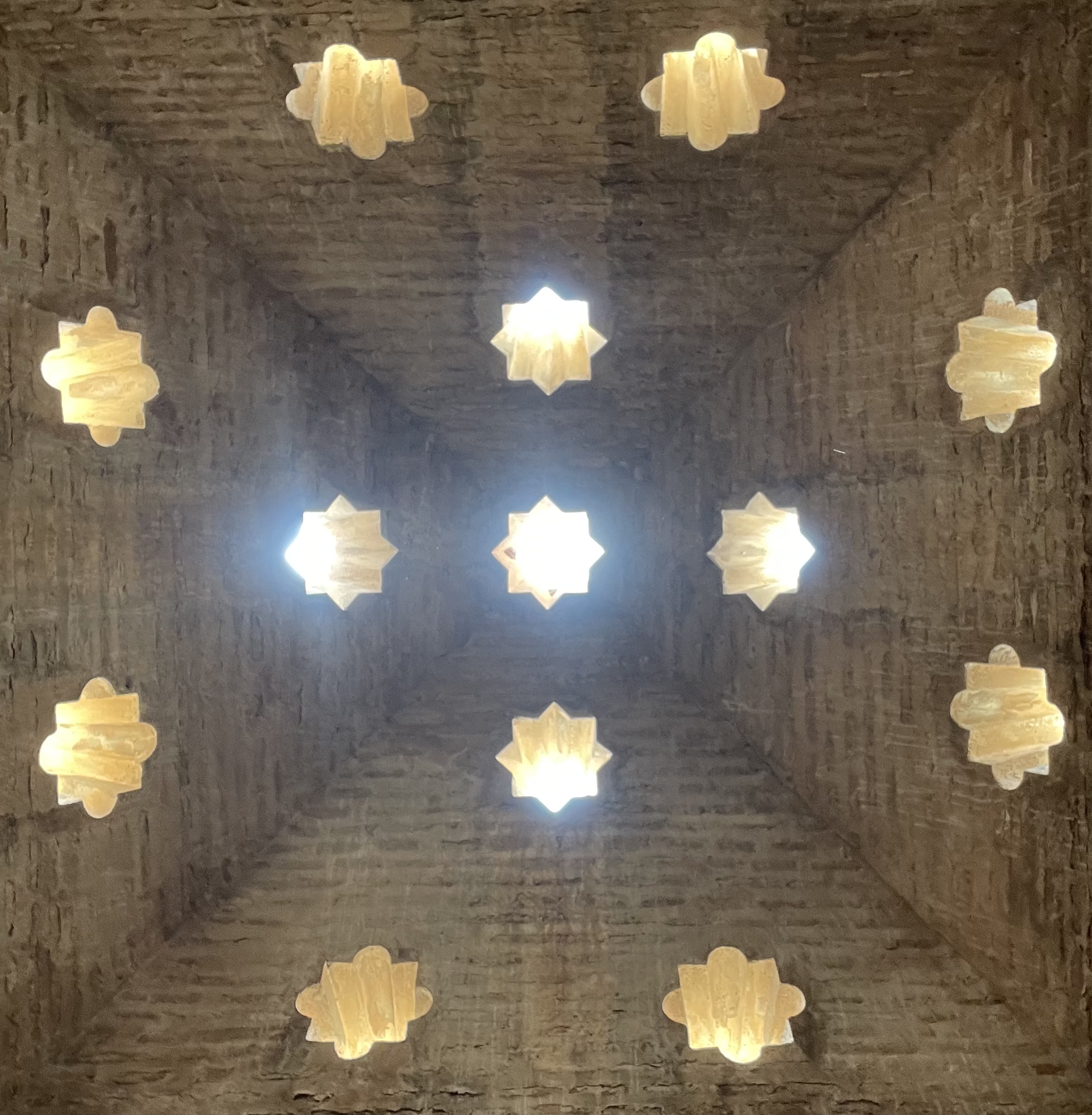
The Archives of the Indies building was constructed in 1585 to house the Consulate of the merchants of Seville. It became an archives in 1785, and since then it has become home to the greatest collection of documentation concerning the Spanish explorations and relations with the New World.
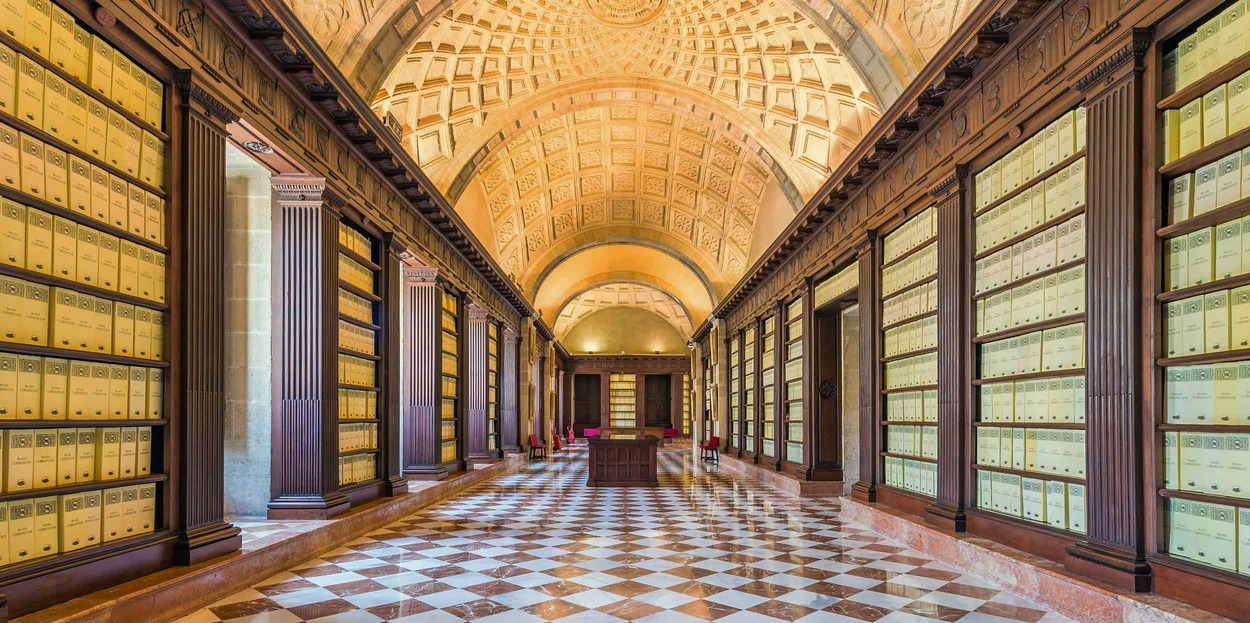
Seville owes its importance during the 16th and 17th centuries to its designation as the capital of the Spanish trading monopoly with Latin America. It was the “Gateway to the Indies” and the only trading port with the Indies from 1503 until 1718. The Archives building—symbolizing the link between the Old and New Worlds—is “one of the clearest examples of Spanish Renaissance architecture and was an enormous influence on Baroque Andalusian architecture and on Spanish neoclassicism.”
Cathedral of Seville
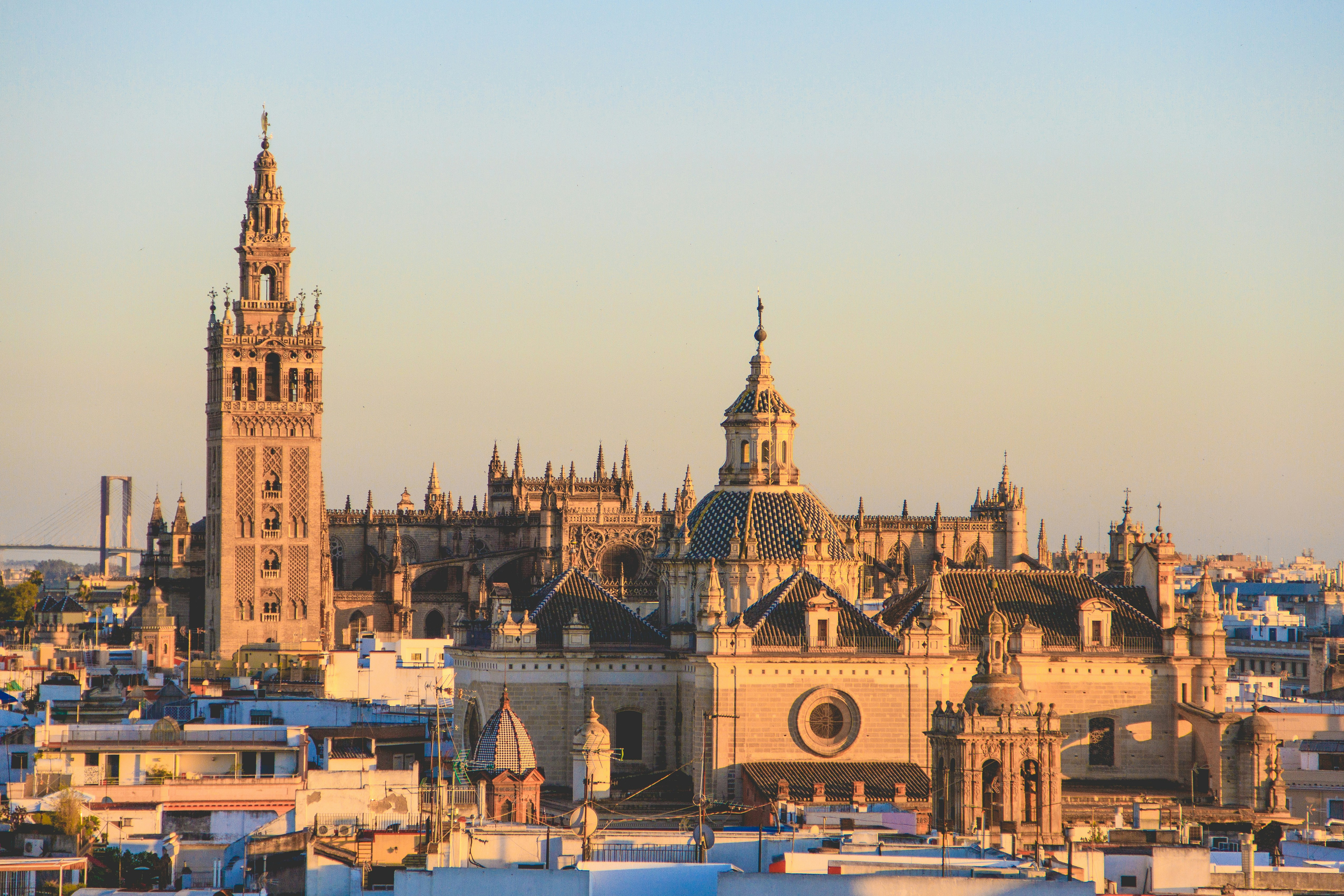
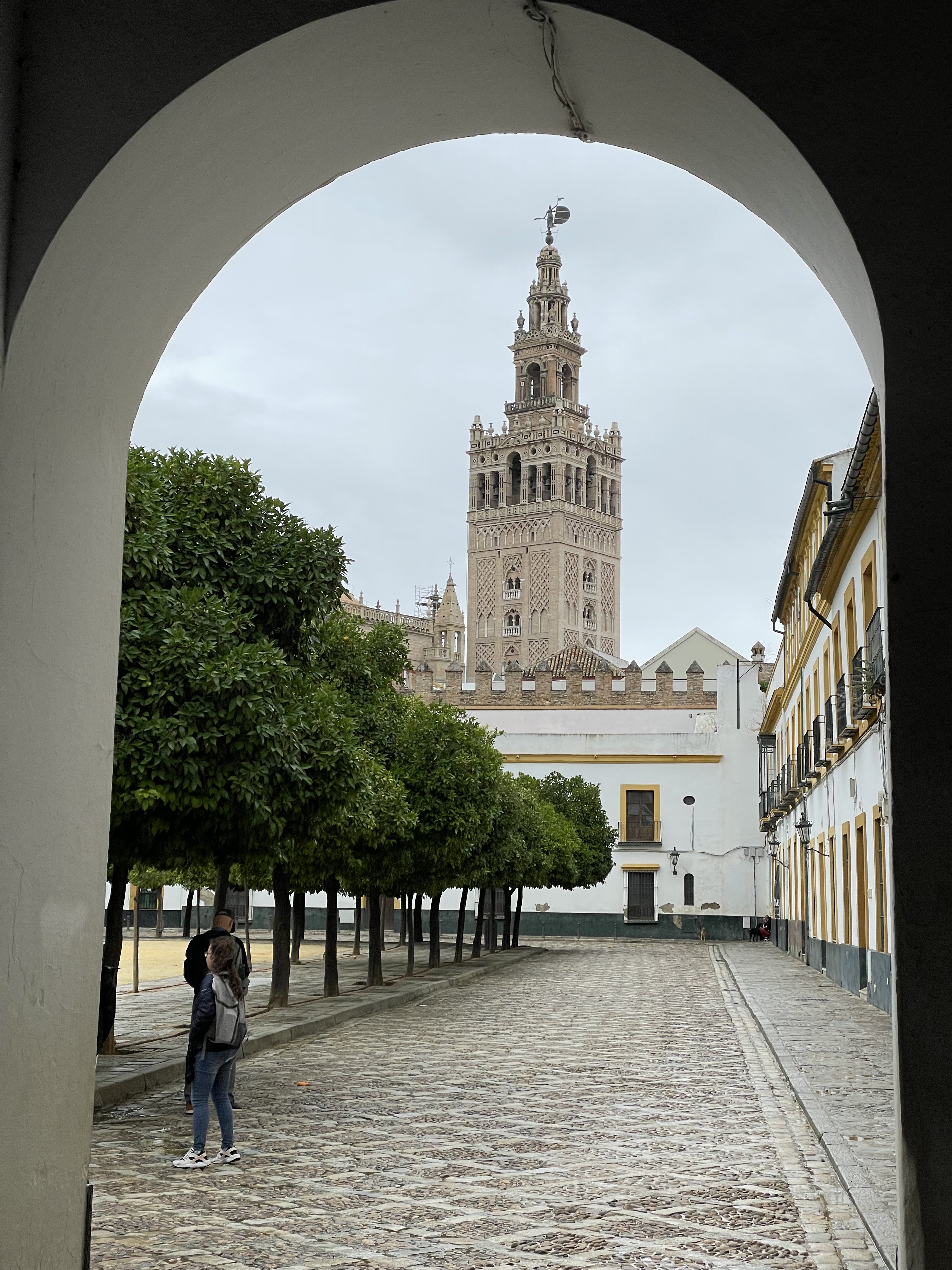
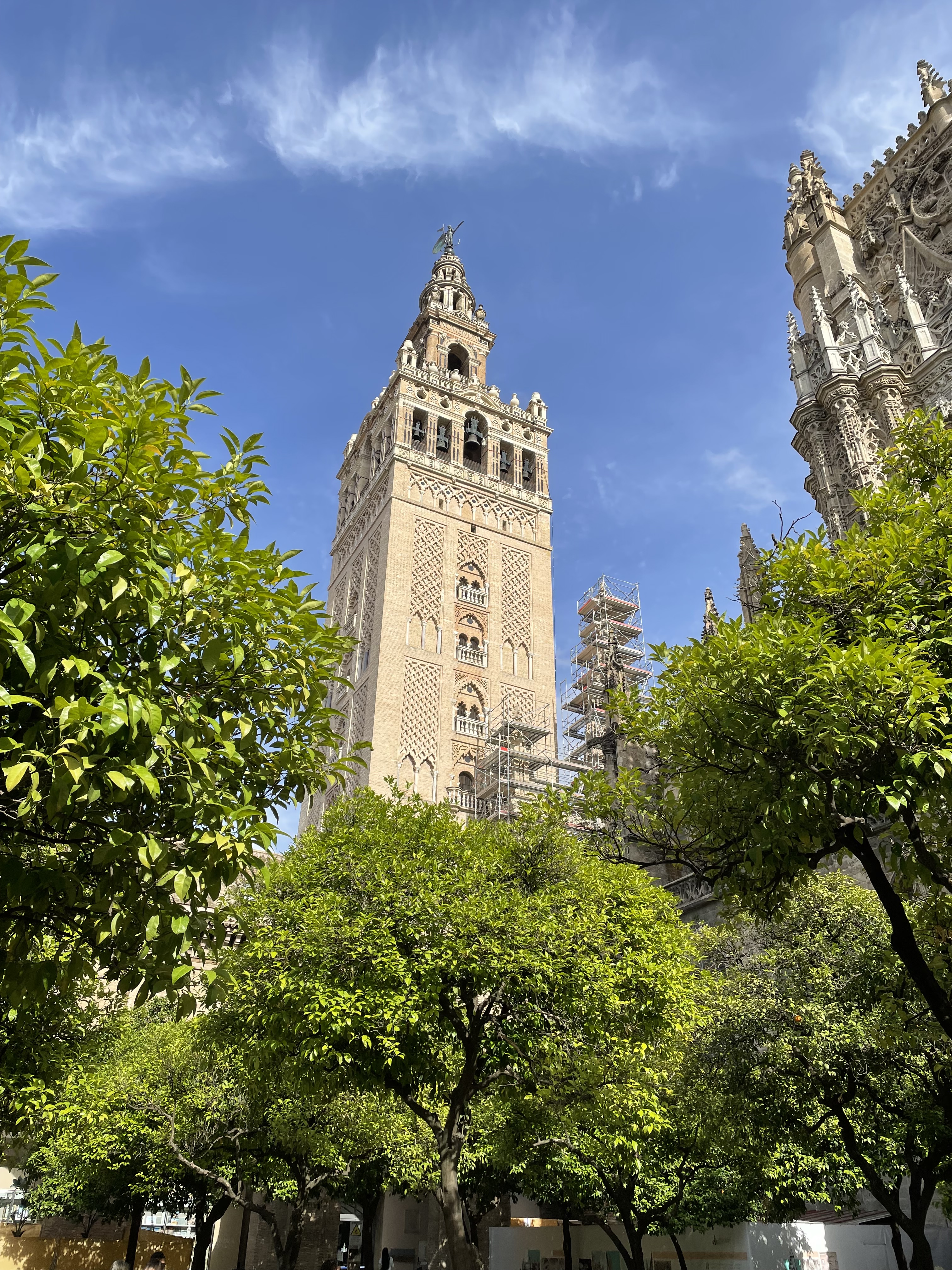
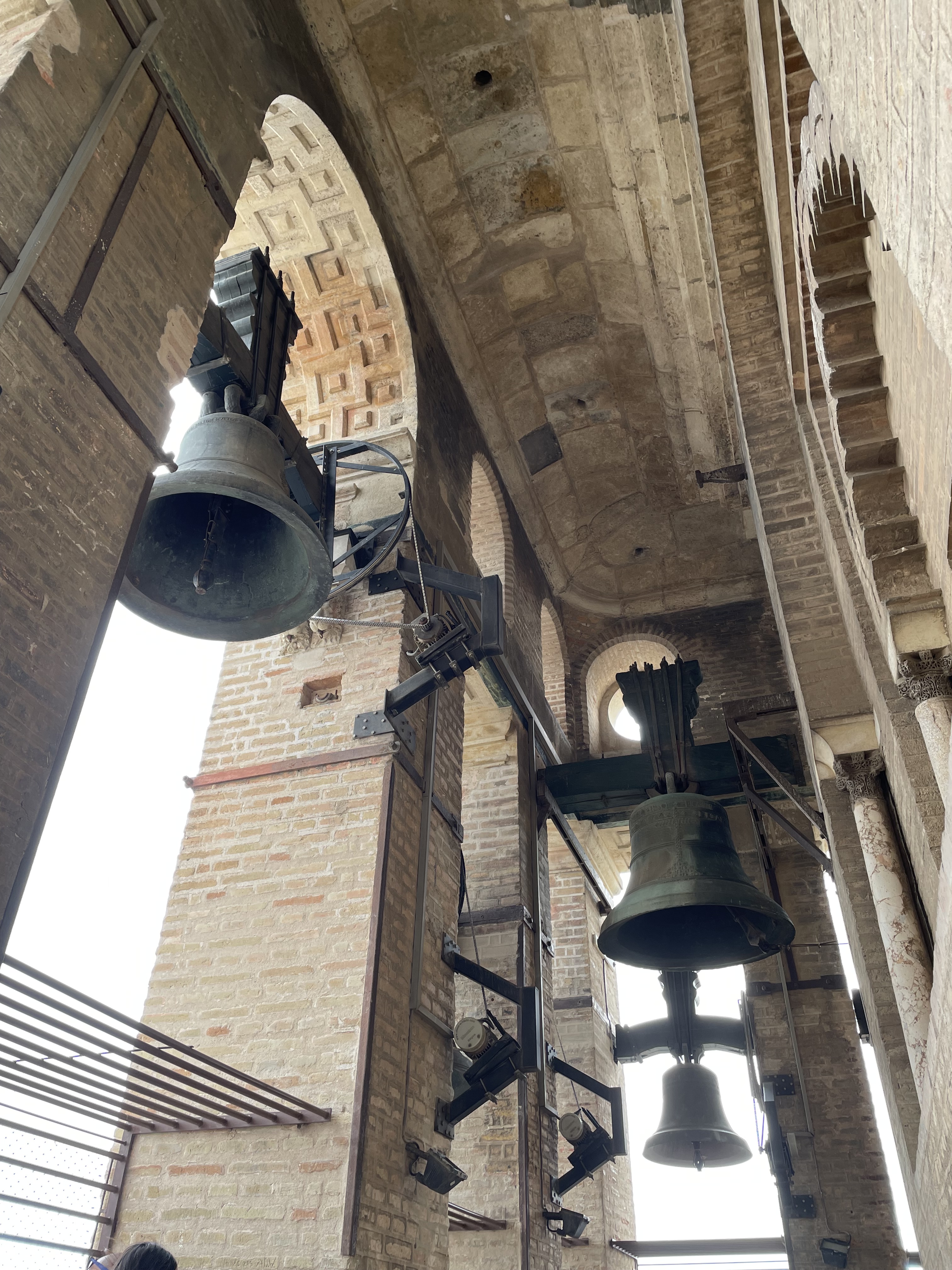
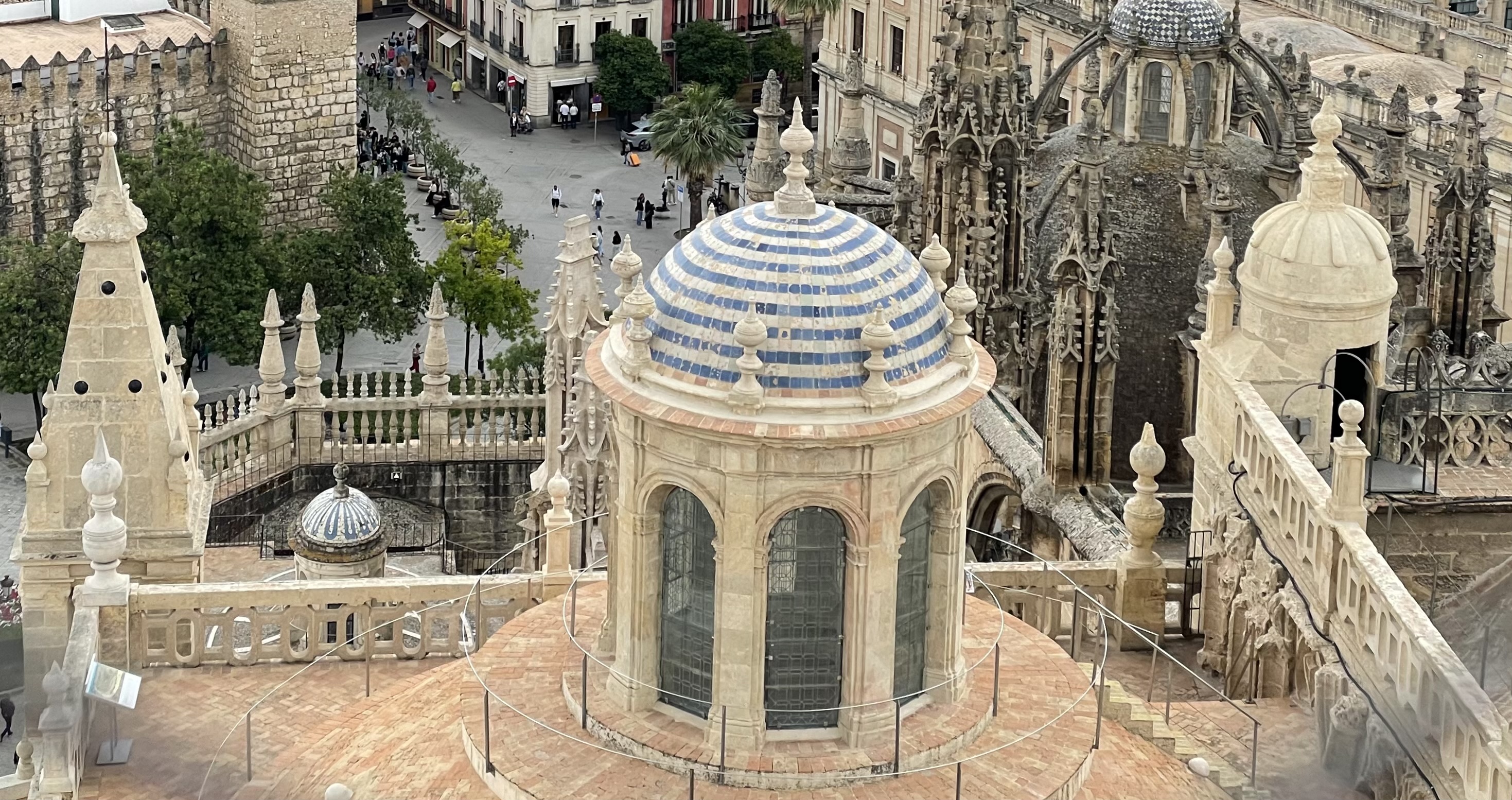
The Cathedral, built in Gothic and Renaissance style, covers seven centuries of history. With its five naves it is the largest Gothic building in Europe; its bell tower was the former minaret of a mosque; and its “chapter house” is the first known example of the use of the elliptical floor plan in the western world.
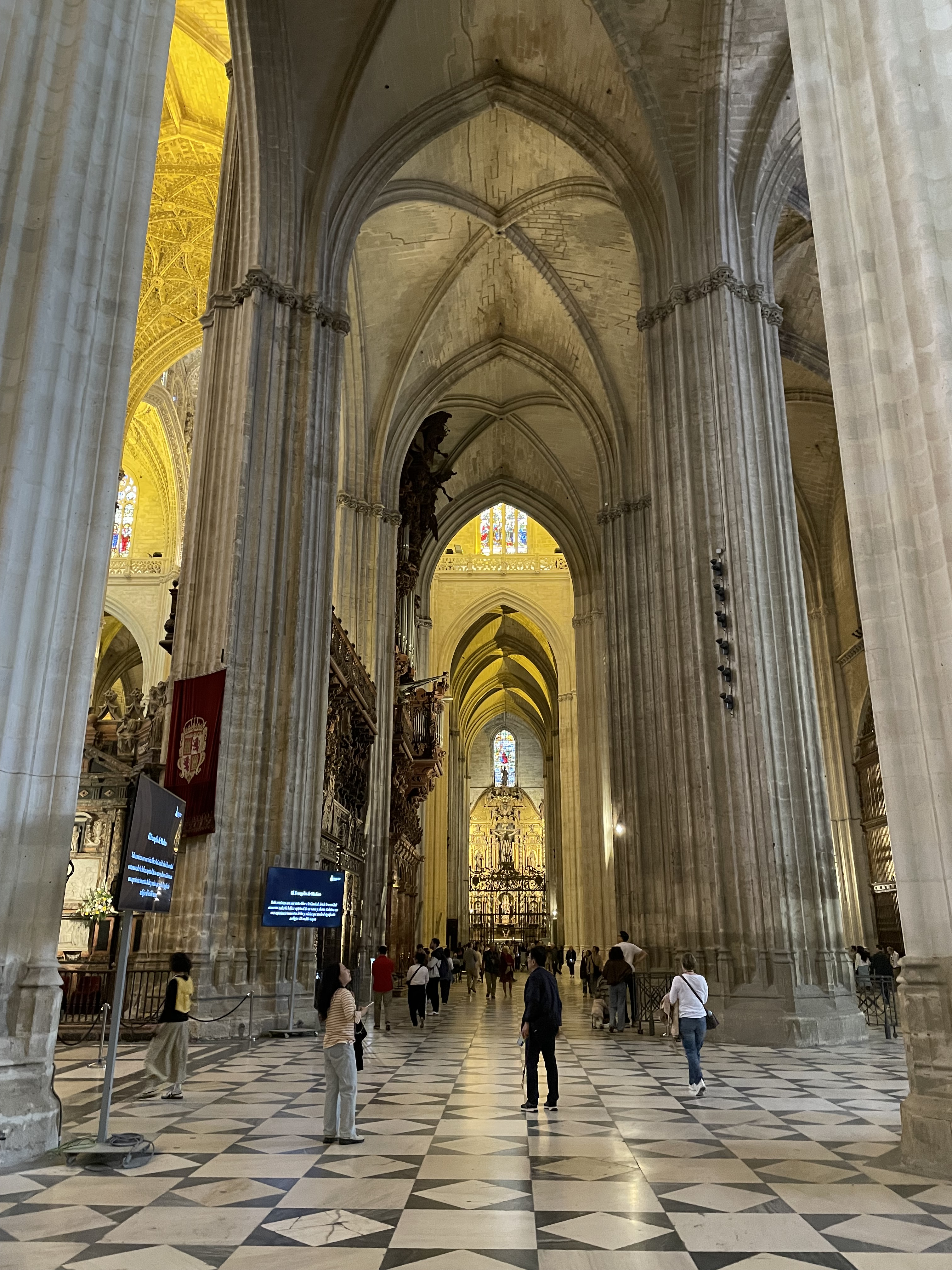
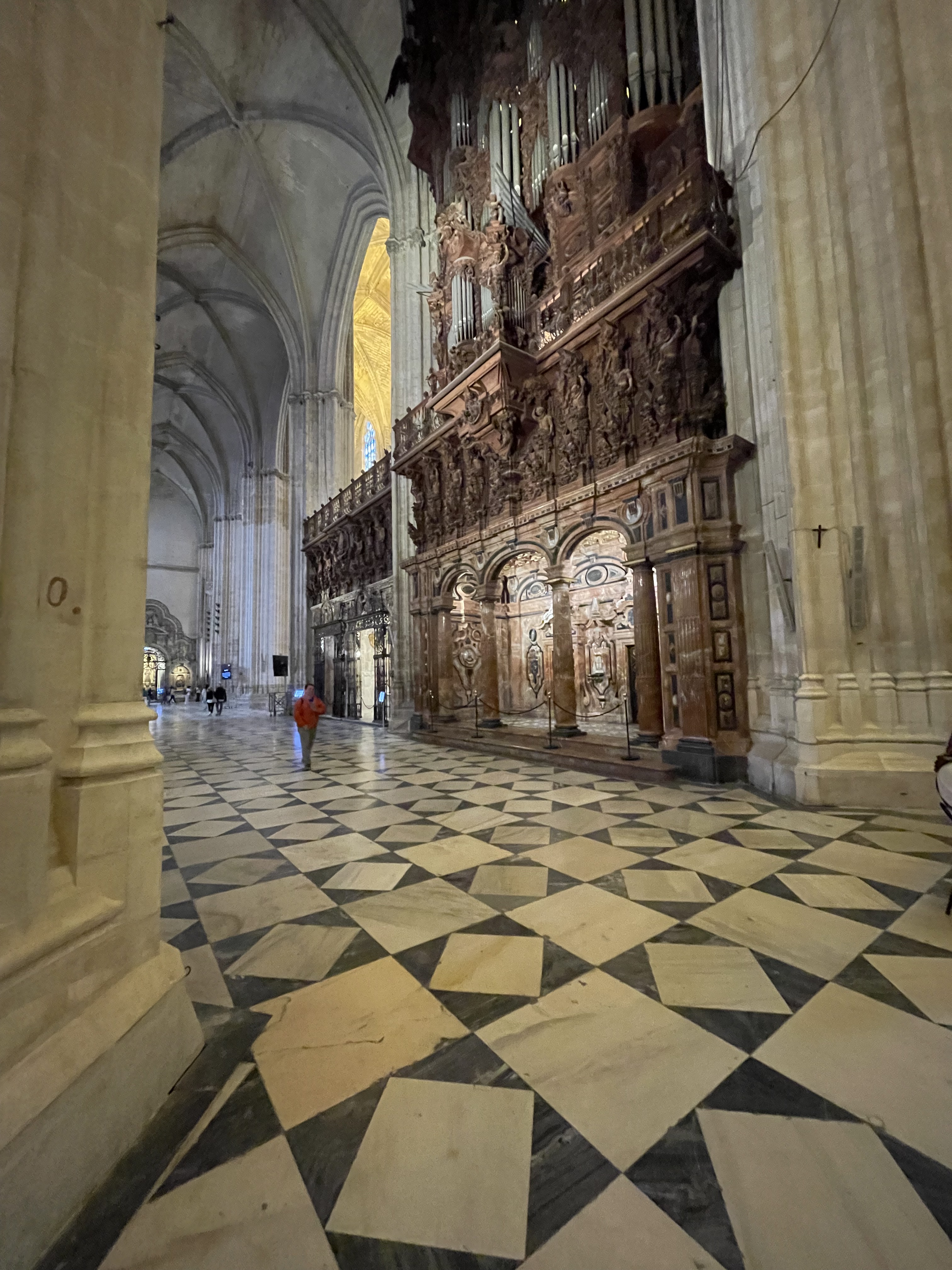
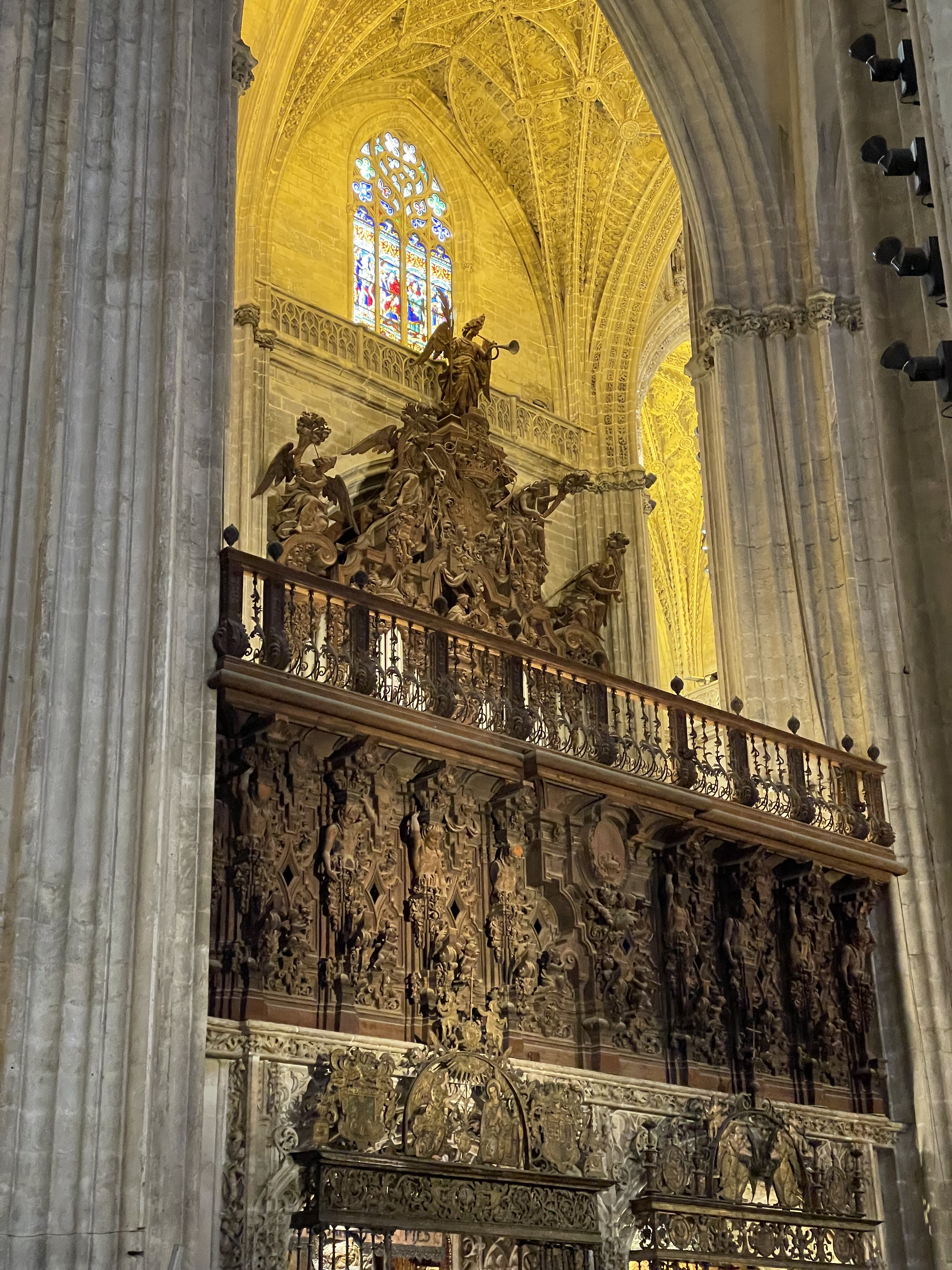
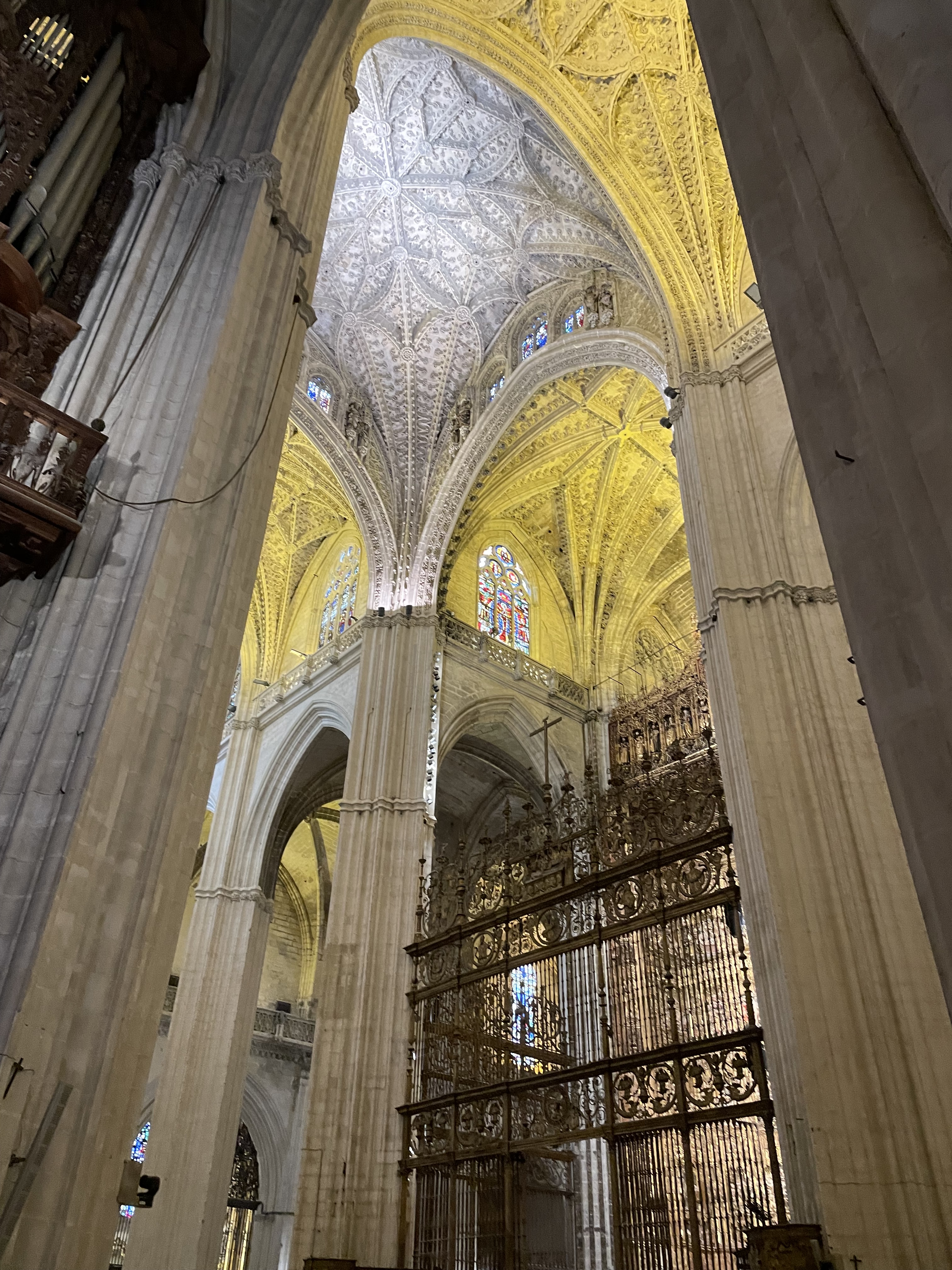
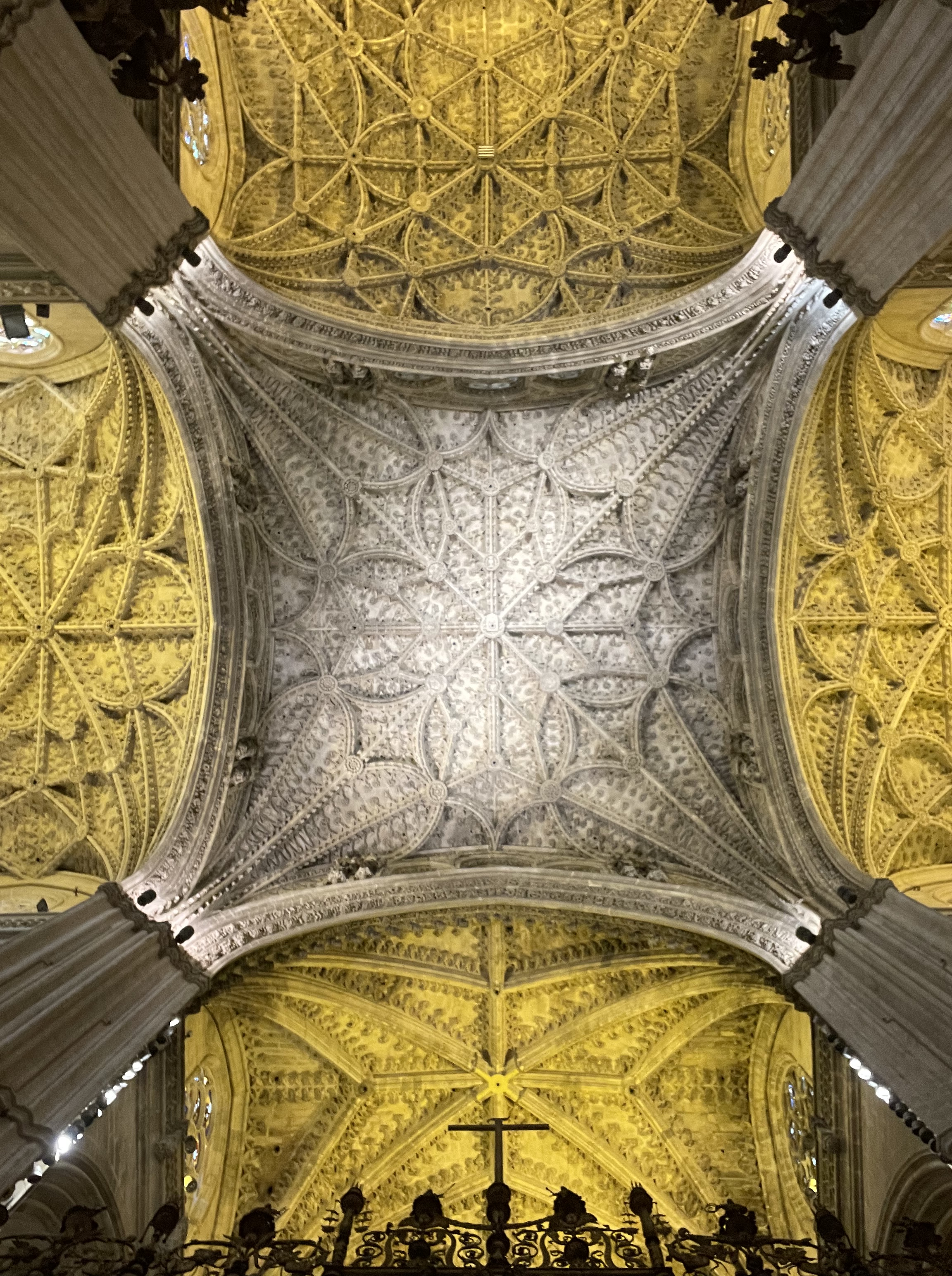
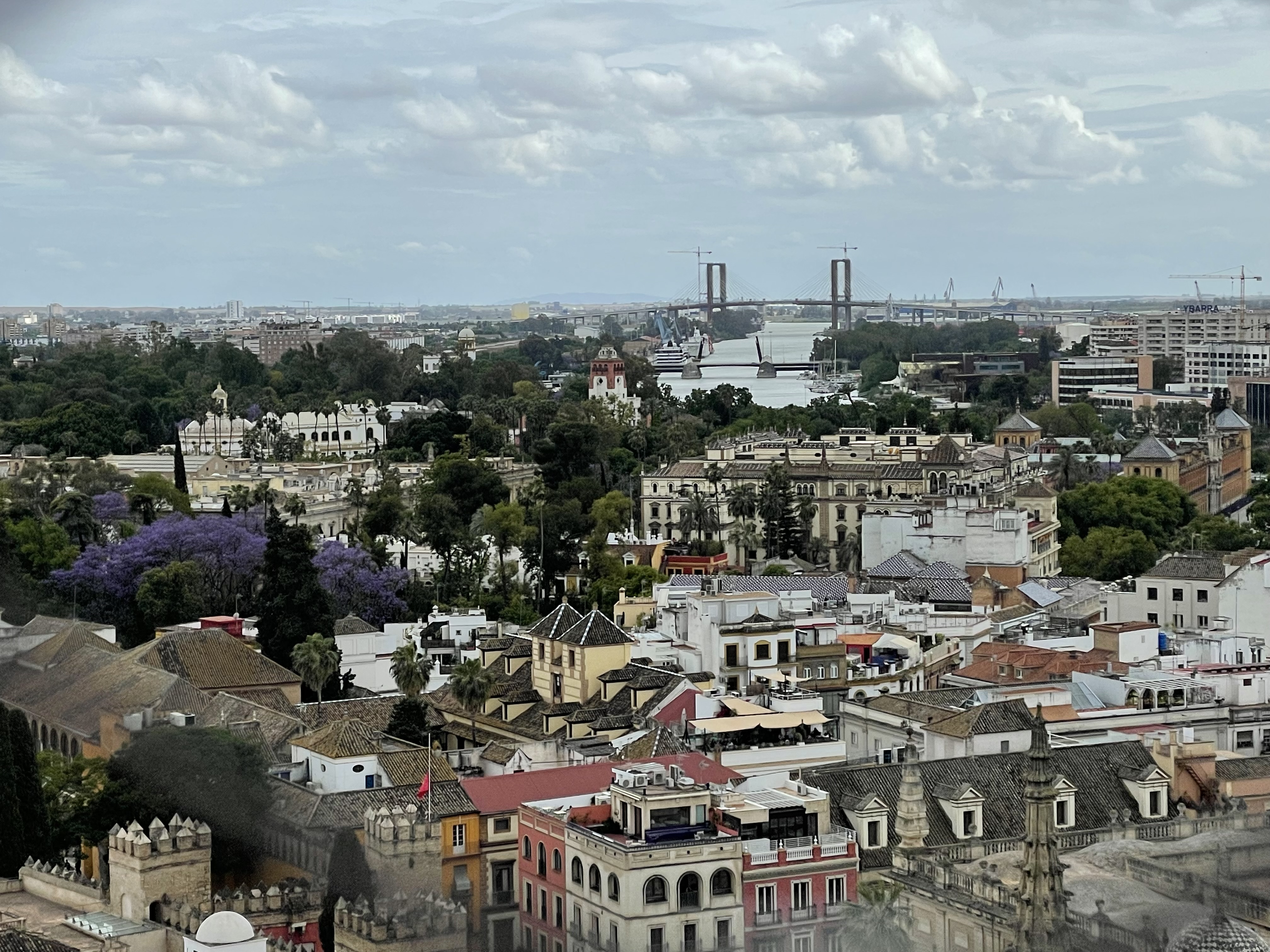
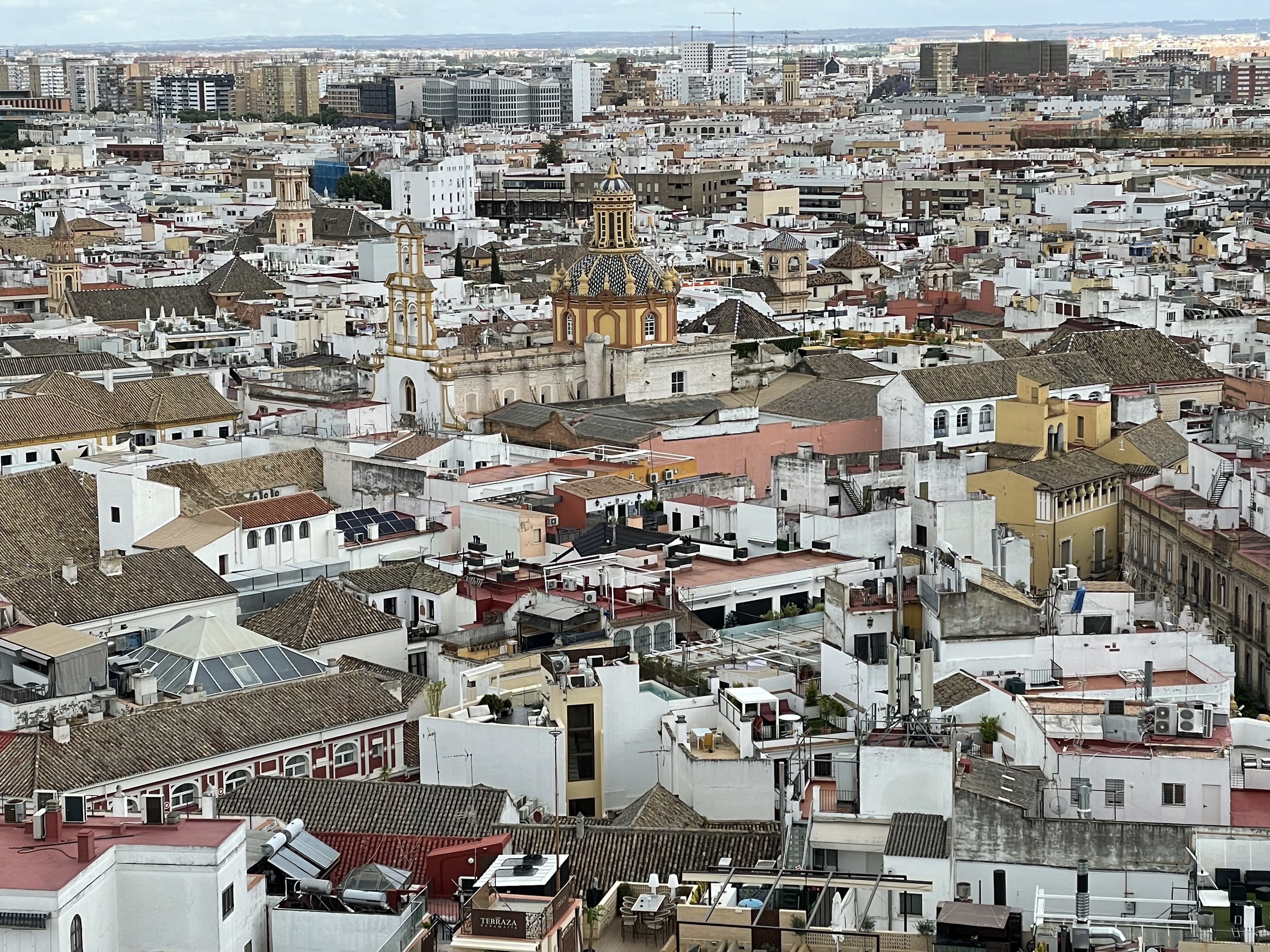
In that bell tower we see a history with the cathedral that reflects the disputed territories of the region and mirrors that seen in many colonies. Founded in 1403, the Cathedral was built on the site of a former mosque, known as a masterpiece of Moorish architecture. I accessed the top of the tower by a series of some 37 ramps. Once there, one has stunning views of the entire city.
Lagos
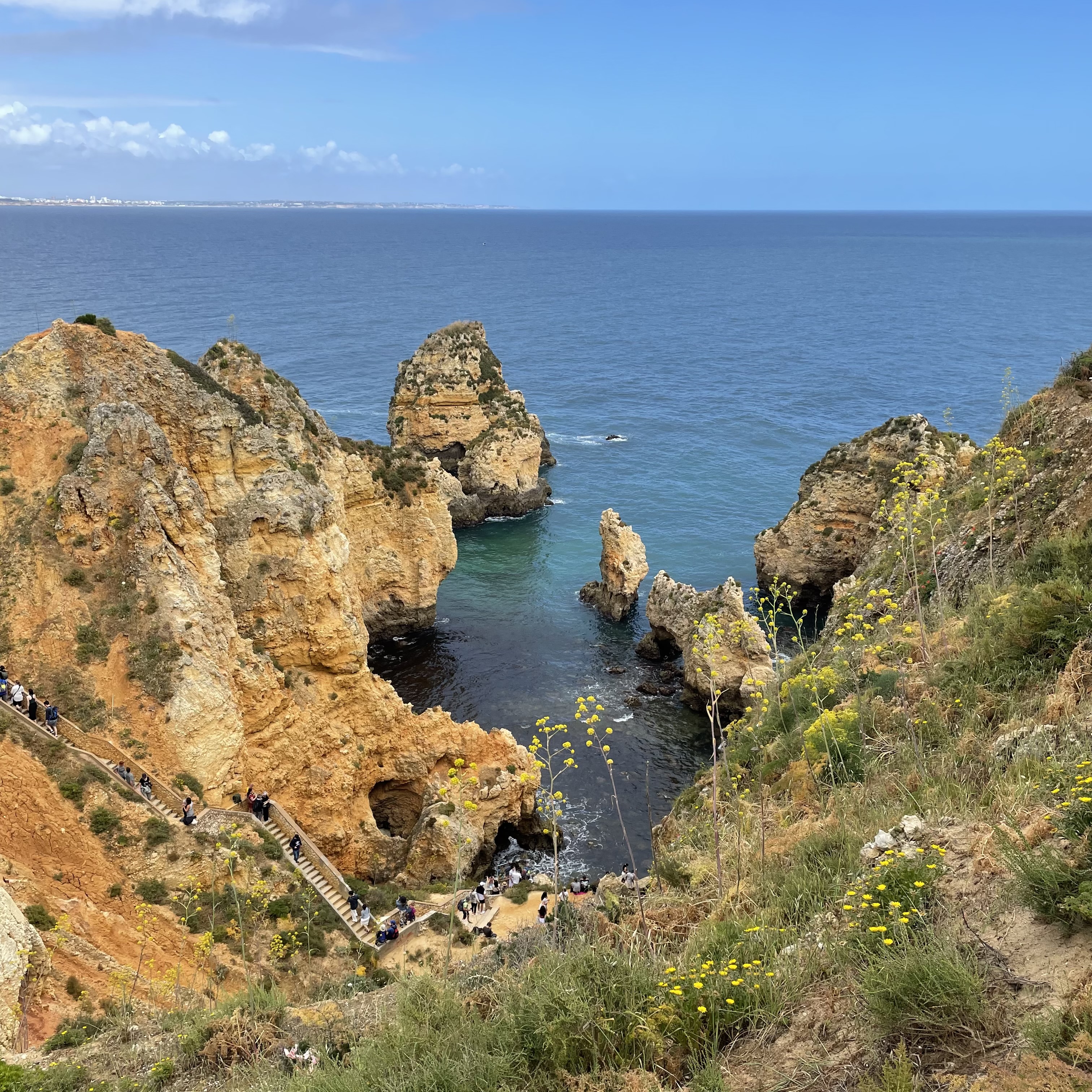
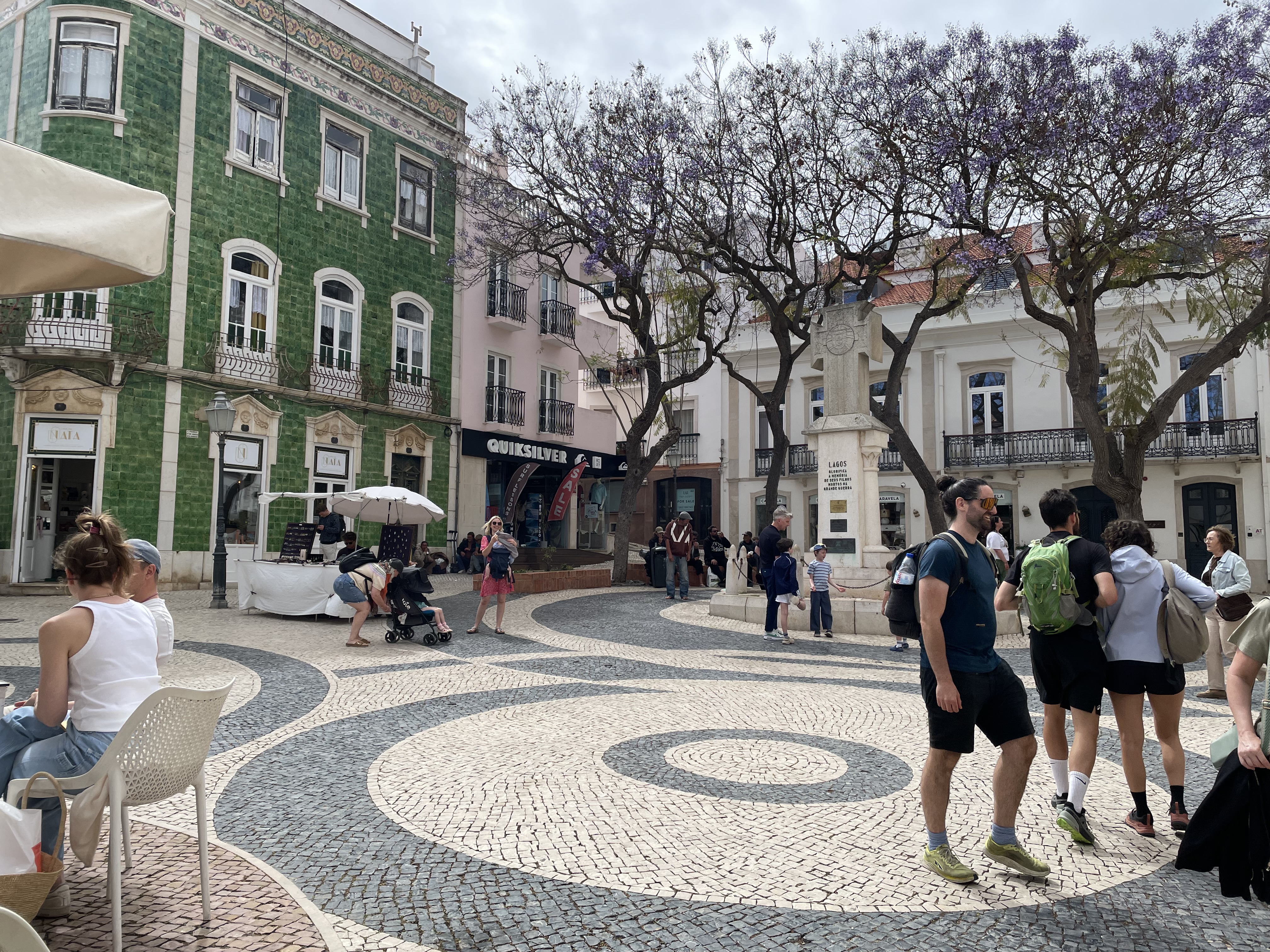
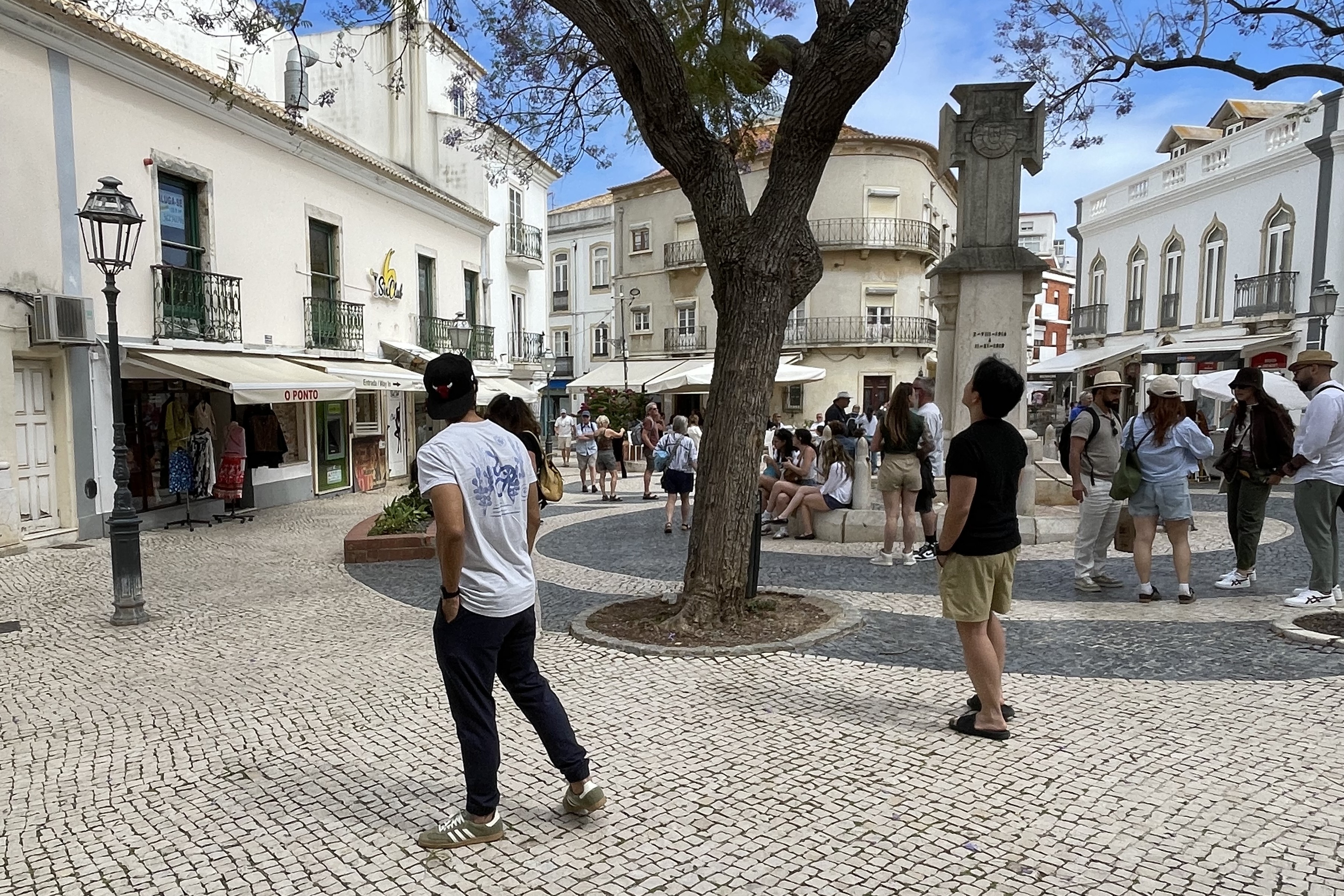
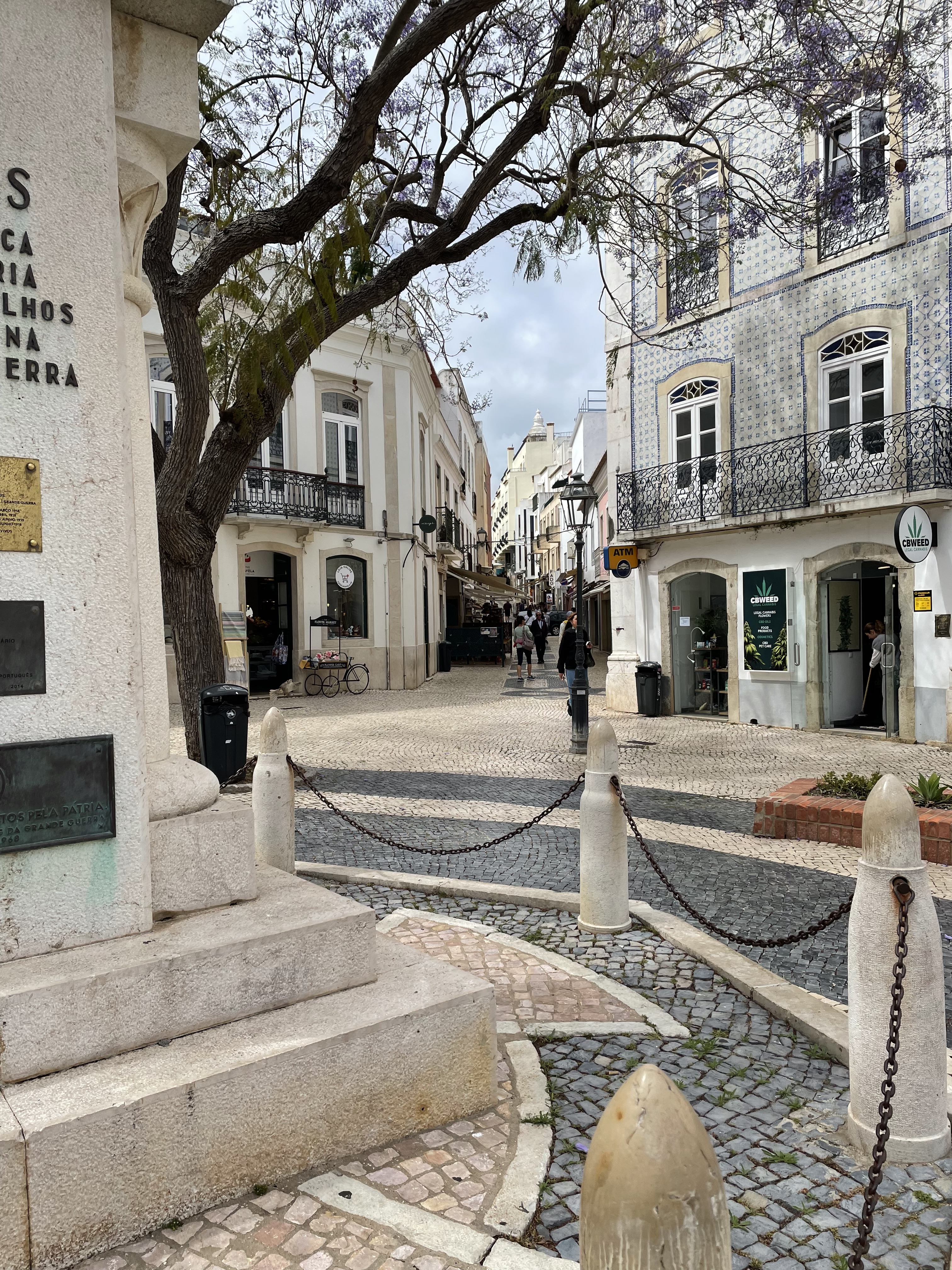
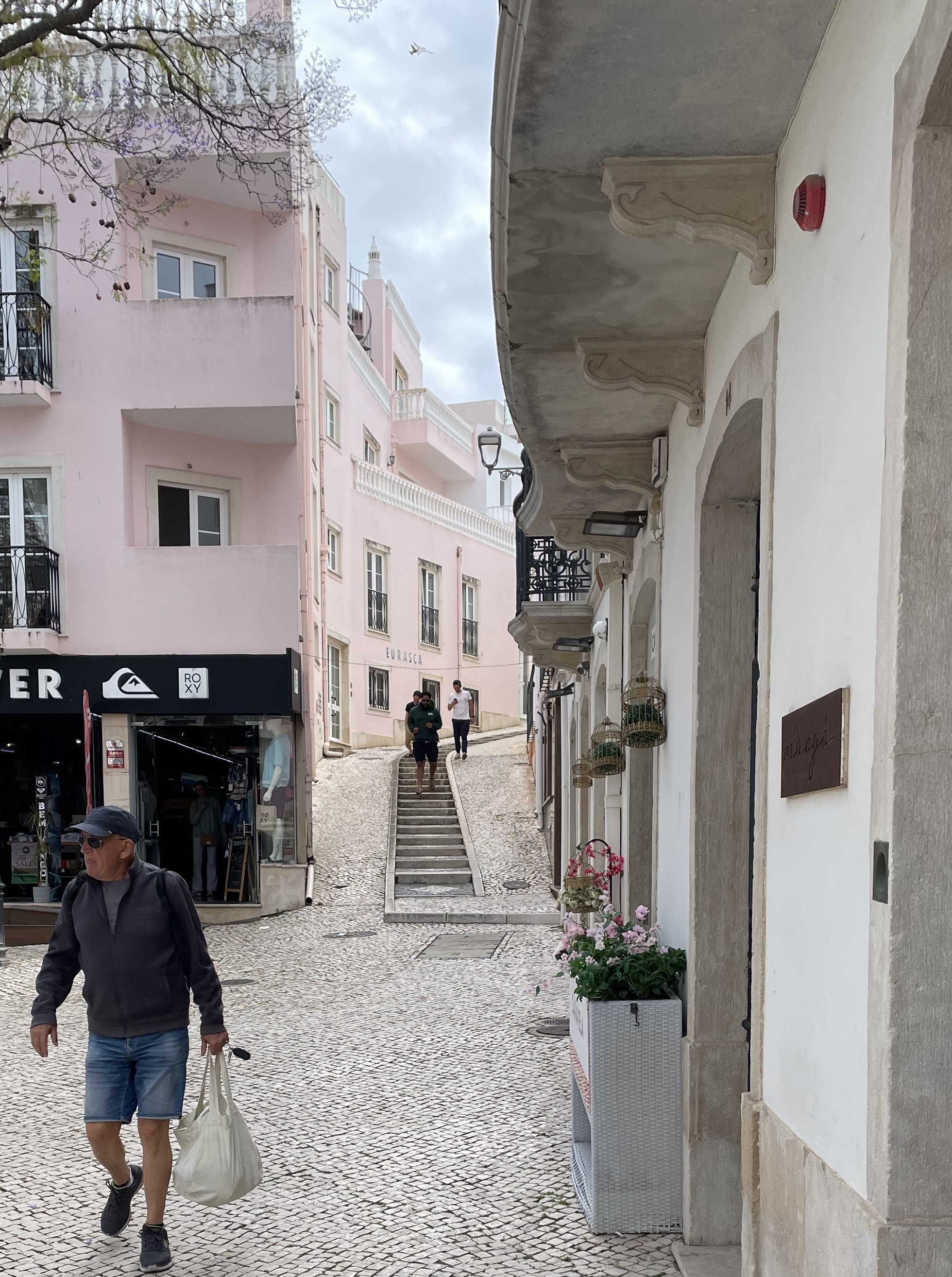
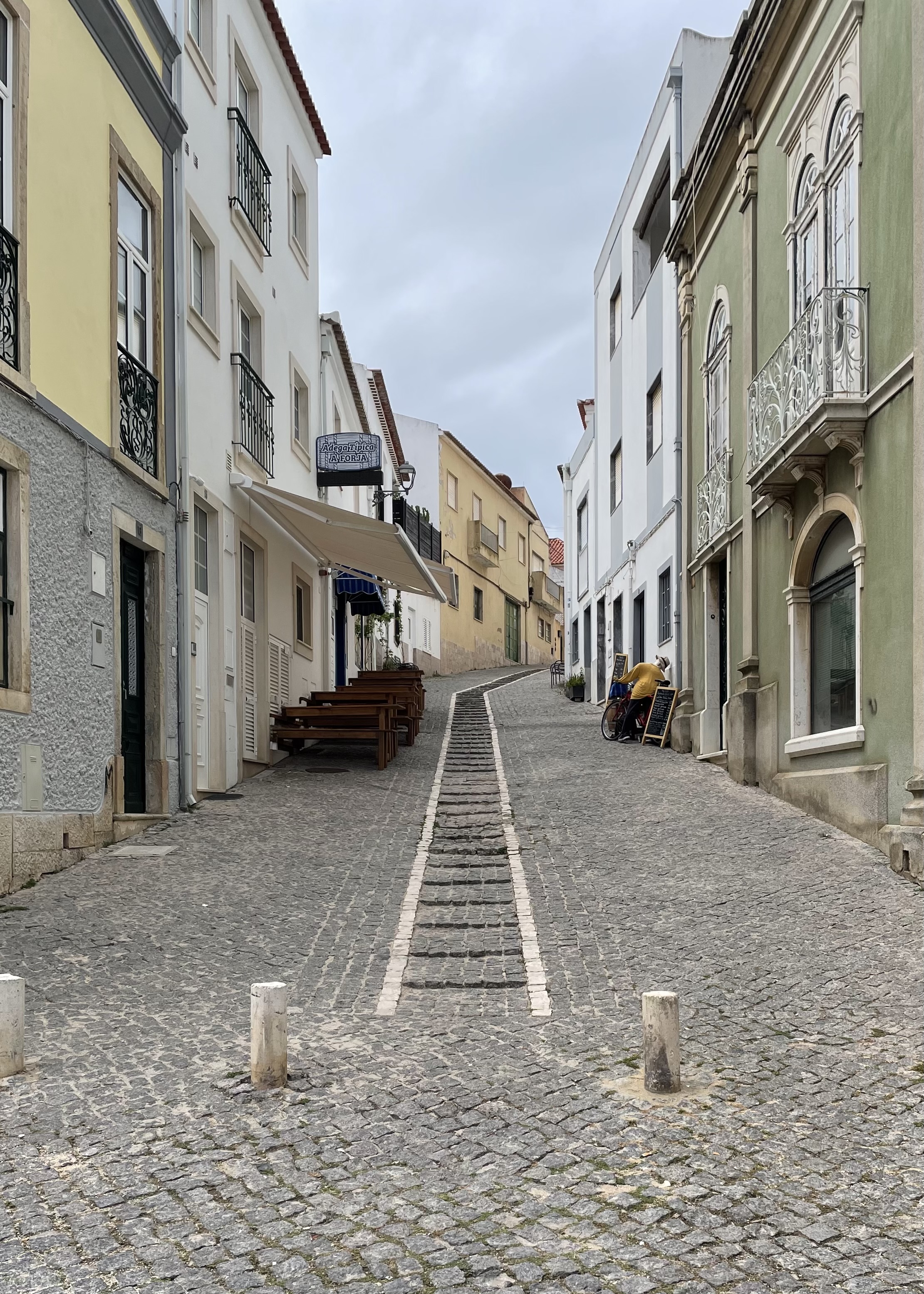
Our final day of travel included a stop in the Atlantic seaside town of Lagos in southern Portugal. Lagos is one of the most visited cities in the Algarve and Portugal, due to the tourist-friendly beaches, bars and restaurants. The attractions and the tourists were very much in evidence. Lagos, as Wikipedia reminds us, “is also a historic center of the Portuguese Age of Discovery, frequent home of Henry the Navigator, historical shipyard and, at one time, center of the European slave trade.”
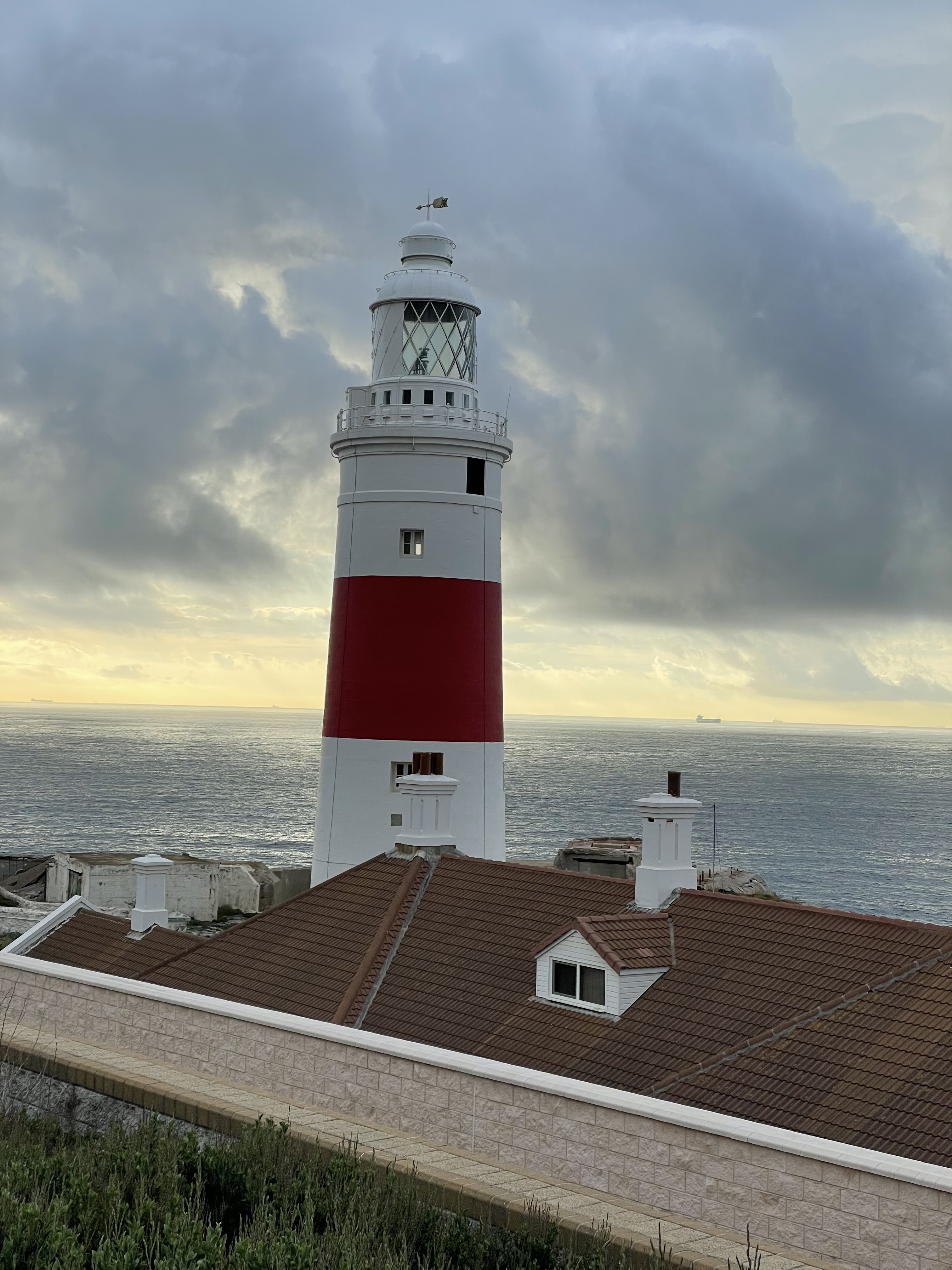
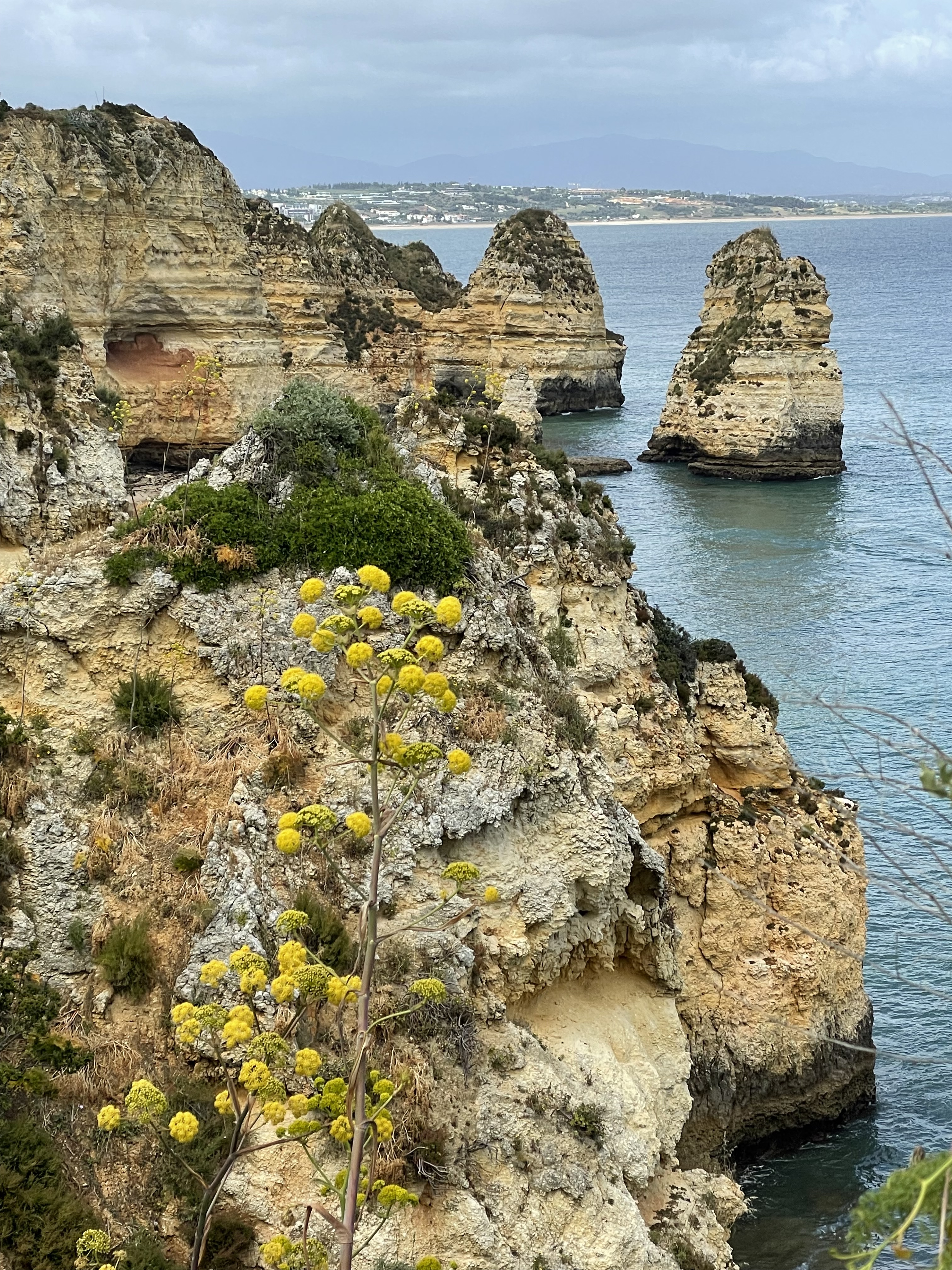
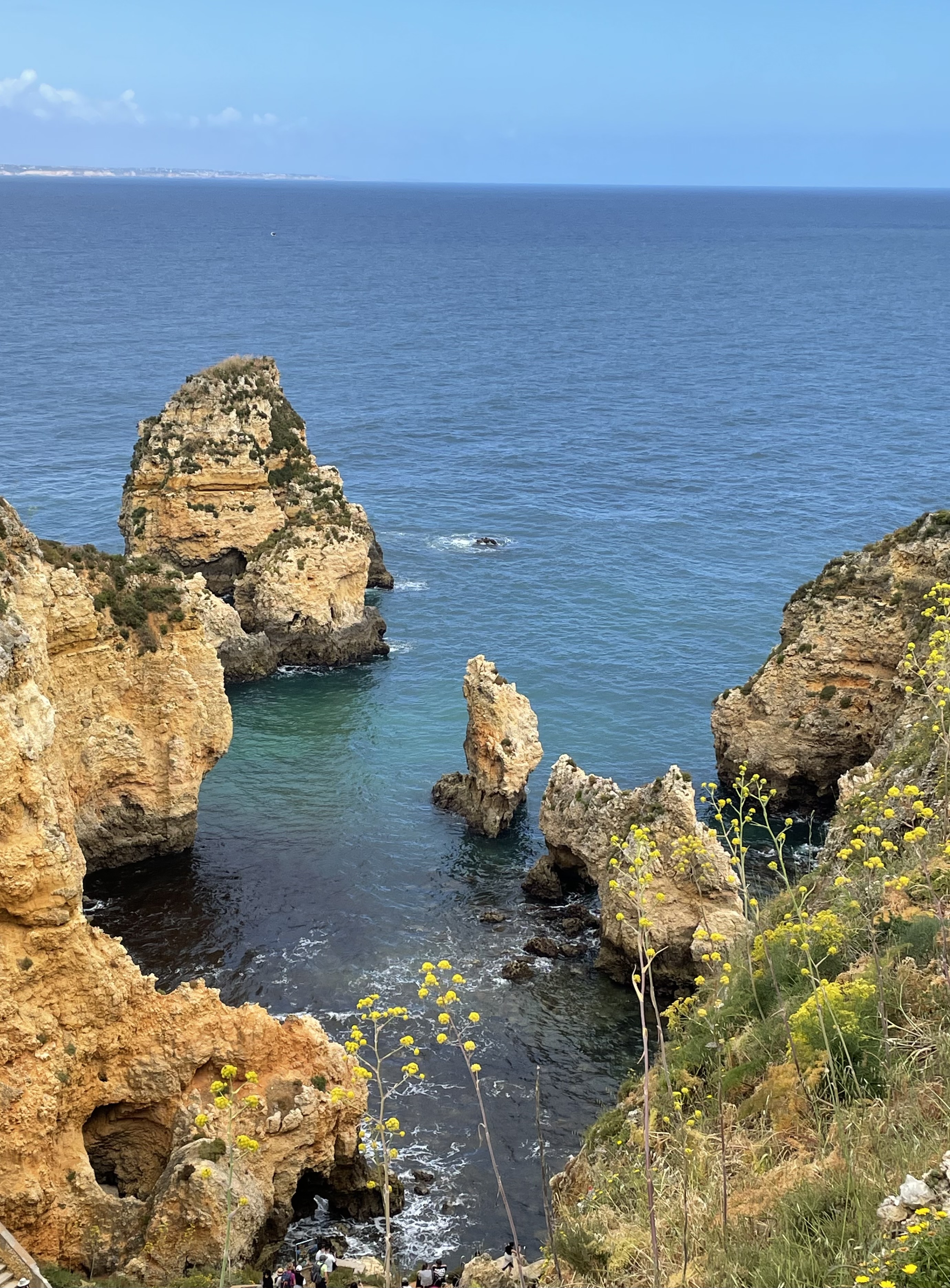
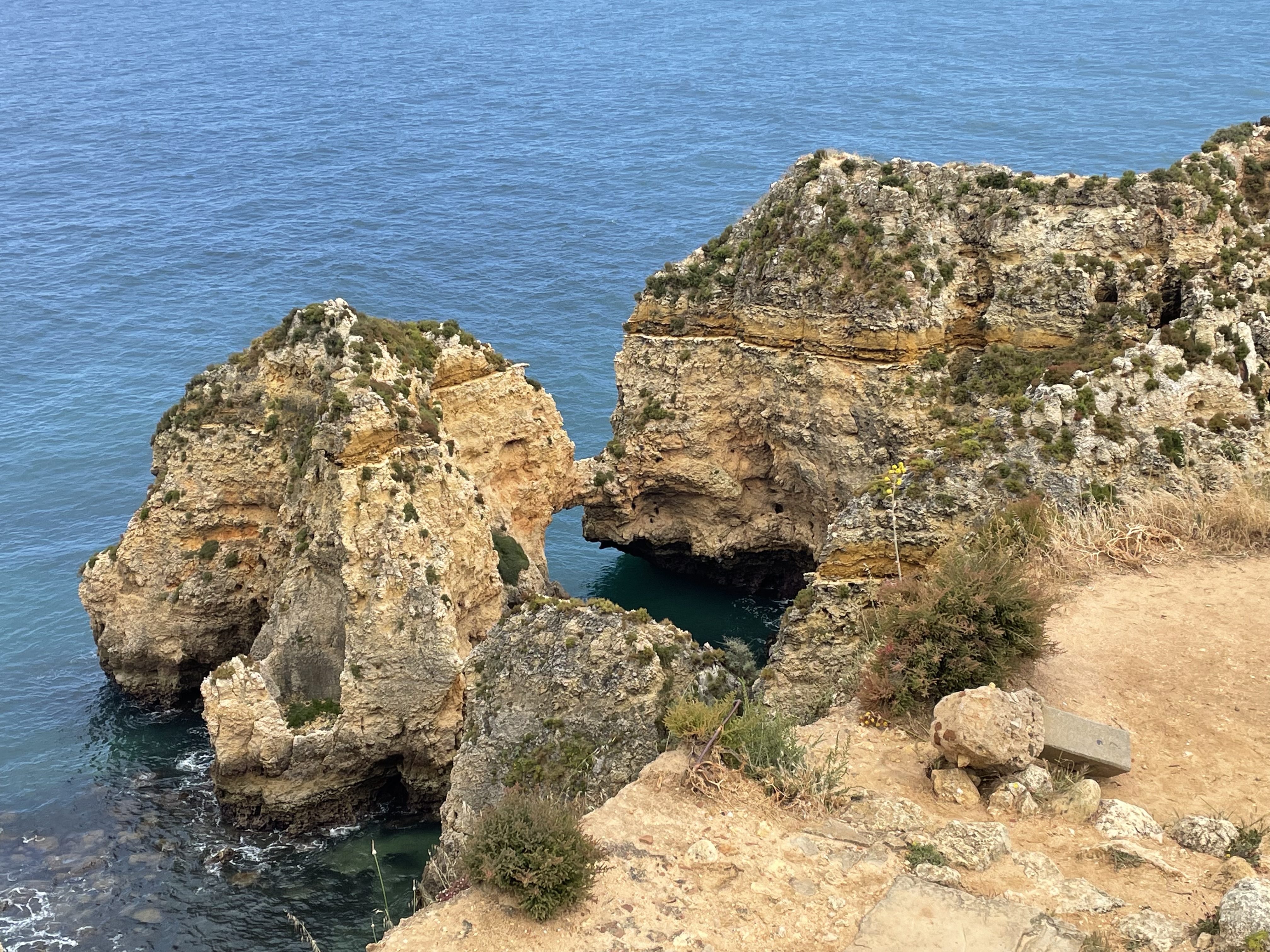
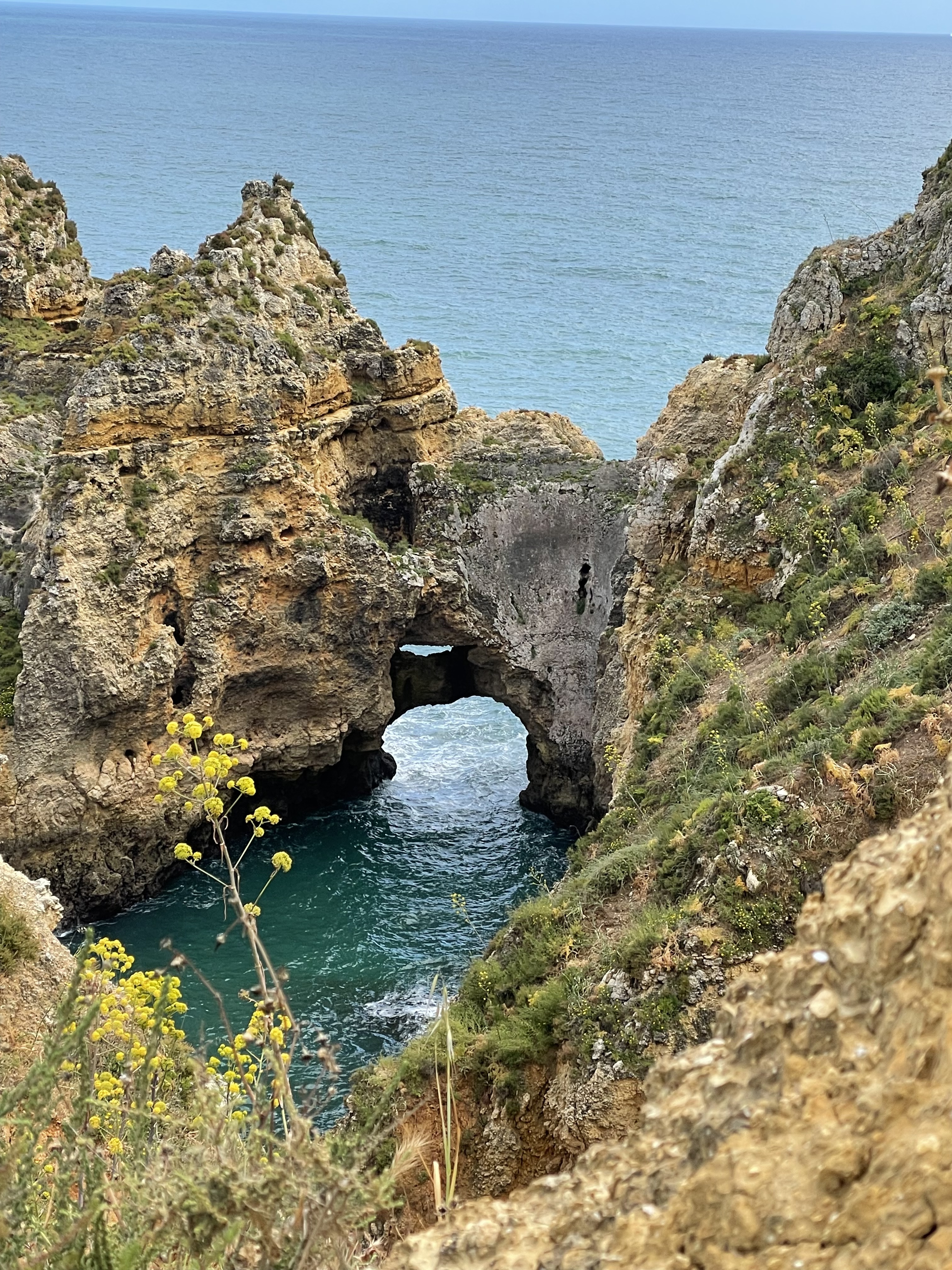
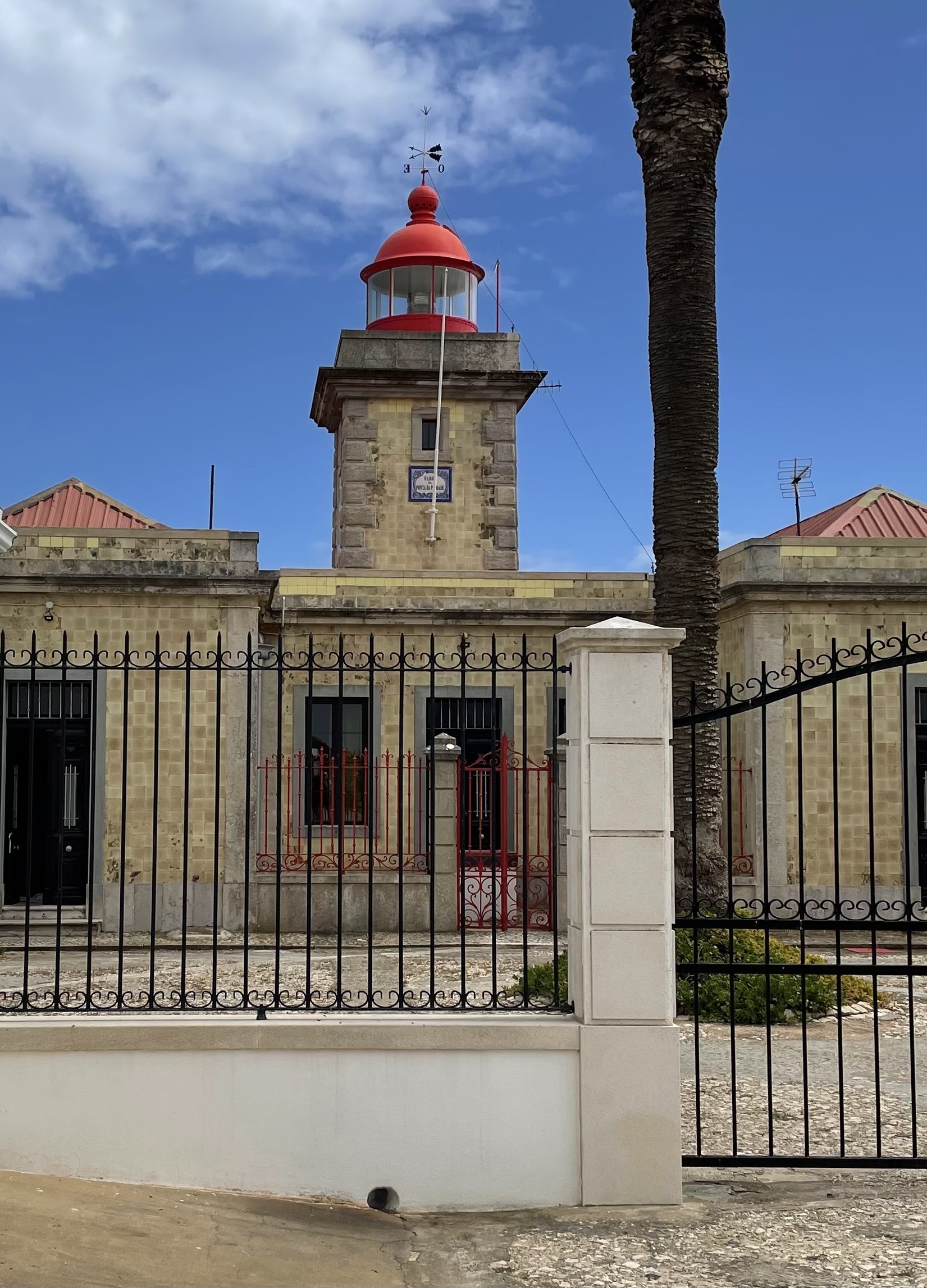
We spent most of our visit at Ponta da Piedade (Portuguese for “point of mercy”), a headland with a group of rock formations along the coastline. There one sees beautiful yellow-golden cliff-like rocks, stations of the cross for the faithful, and an early twentieth-century lighthouse.
WHAT’S ON THE HORIZON
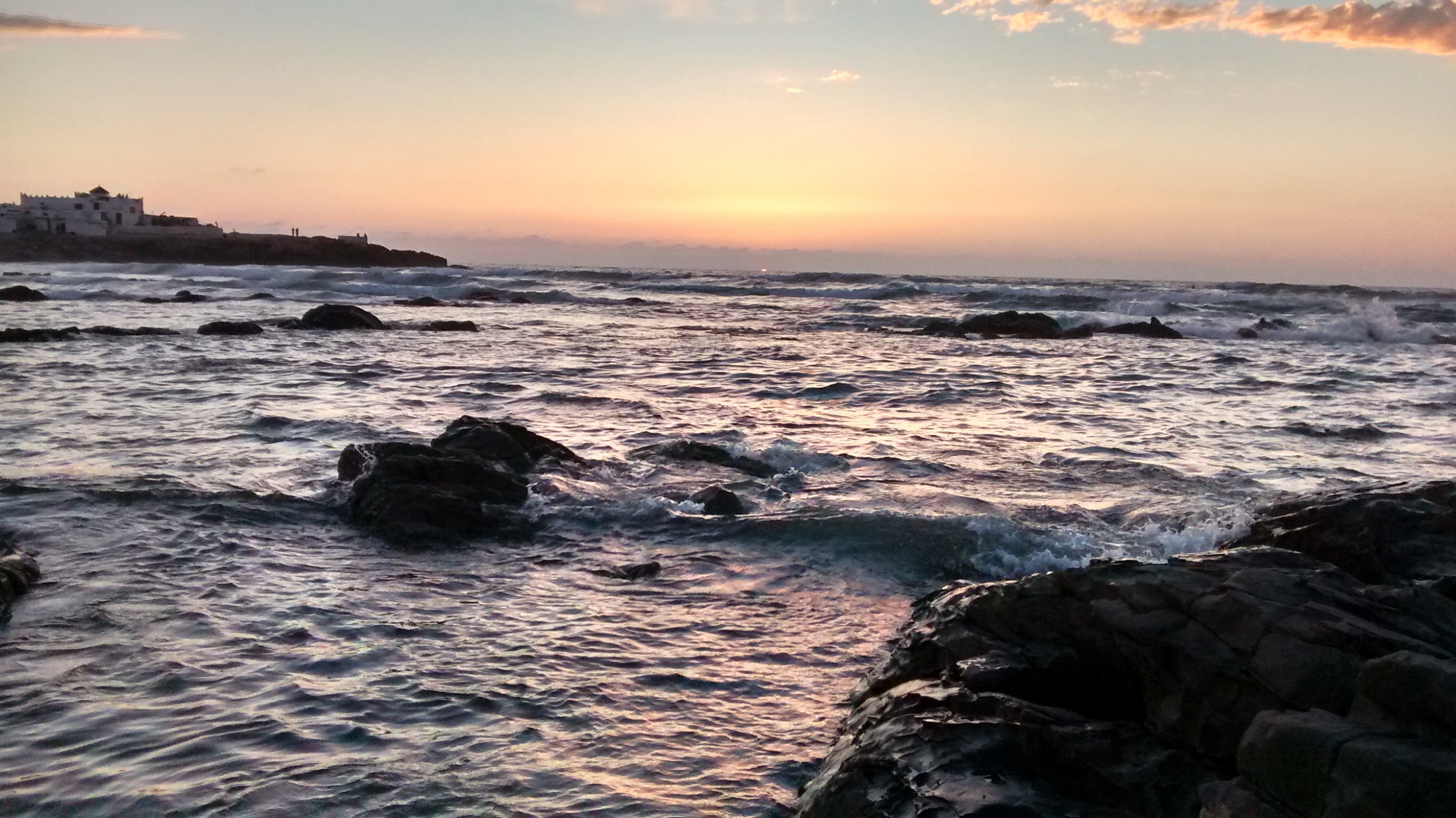
As you can see, these life-enriching trips to special places around the globe open our eyes, minds, and hearts. Among our travelers, tour directors, local guides, and residents one meets the most interesting people, some of whom become life-long friends. I’m scheduled to lecture on three upcoming trips with National Trust Tours over the next few months . . .
- Village Life – Italian Lakes (October 17-25, 2026)
- Vietnam & Cambodia-Cruising the Mekong River (March 1-14, 2027)
- Adriatic and the Dalmatian Coast (September 4-12, 2027)
. . . and we’d love to see you on one of these trips, or on a future National Trust Tour!
More to come . . .
DJB
Photo of Calatrava Alamillo Bridge, ceiling in Alcazar, and interior shots of the Archives from Wikimedia. Picture of Plaza de España at the top of the post and all other photos except where noted by DJB.


Amazing!
Thanks for reading, Kathy!
Pingback: Observations from . . . June 2026 | MORE TO COME...