
Laila Lalami’s debut novel takes us into the hopes and fears of modern Morocco with subtlety and grace.
Installment #8 in my series on the region’s independent bookshops.
Our recent trip to Morocco led me to want to know more than could be seen through the eyes of well-trained guides. I mentioned my interest and a friend recommended a novel by a Moroccan-American writer that was a finalist for the Pulitzer prize in 2014. When I stopped in a bookstore as part of my 2026 quest to visit all 29 DC-area independent bookshops the helpful clerk said that particular book was sold out but . . . they happened to have the author’s first work as well as her most recent. Would I be interested?
Of course! Which is how I came to read this compelling work of fiction that introduced the world to a talented voice who writes about her home country “without the expatriate’s self-indulgent and often condescending nostalgia,” as Pankaj Mishra noted in The New York Review of Books.
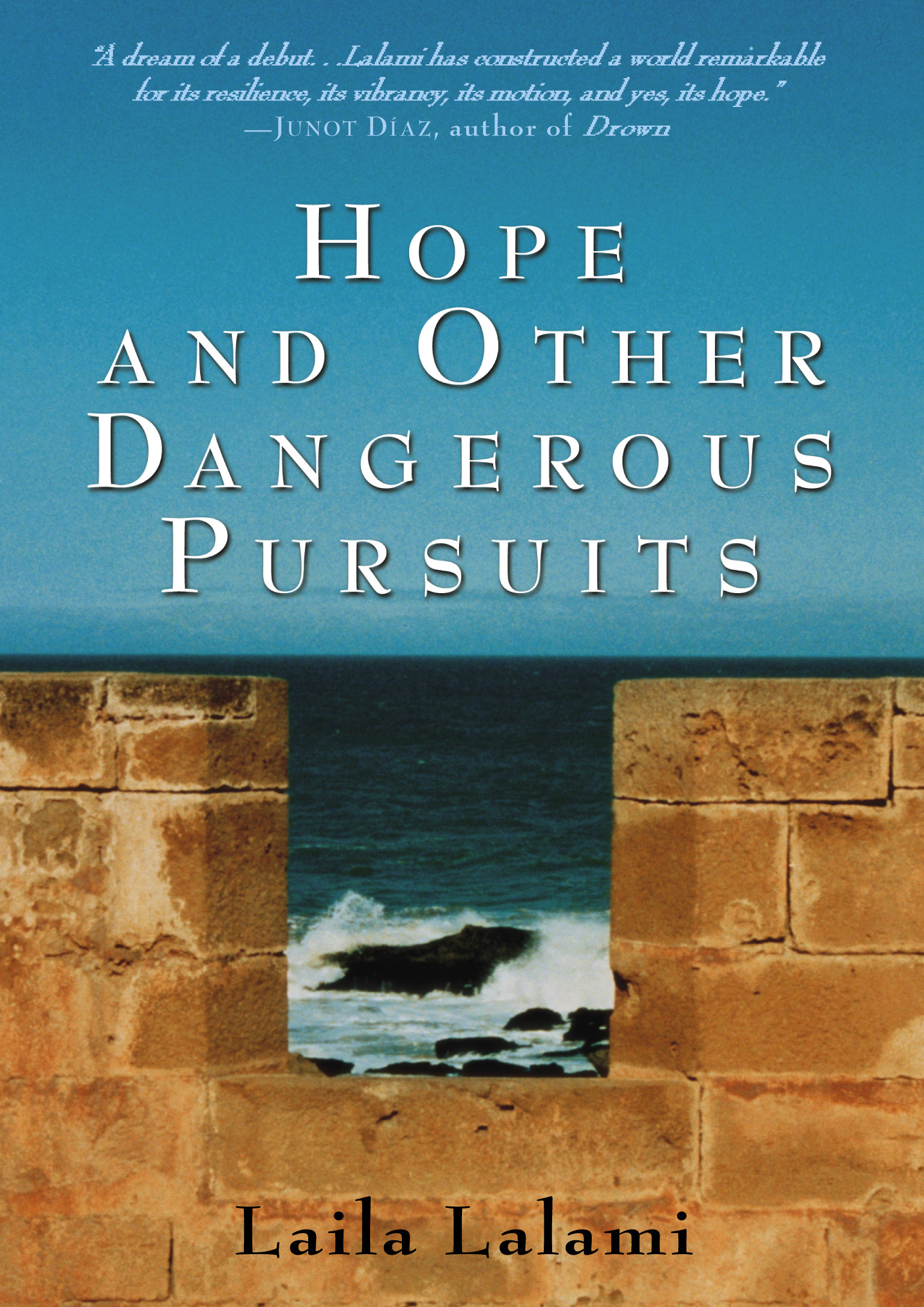
Hope and Other Dangerous Pursuits (2005) by Laila Lalami is a story of dreams, determination, displacement, heartbreak, and perseverance. It captivates the reader and leads us to care about these four characters who find themselves on a small, inflatable boat headed for Spain. With spare prose, sharp insight, and a sympathetic gaze, Lalami begins with the harrowing crossing of the Mediterranean by illegal migrants after paying large sums of money they really couldn’t afford. Crowded into the boat, they are taken only to where they could swim to shore before being deposited in the rough waters to fend for themselves. Some are met by Spanish Coast Guards. Others slip away. Lalami then returns to the time before the trip, to help us see what would drive them to such desperate measures. The book’s second half picks up their journey after they reach the Spanish coast.
There is a vibrancy in Lalami’s storytelling. And a sympathetic ear.
The author describes how she read article after article in 2001 about arrests of illegal immigrants by the coast guards on either side of the Mediterranean.
“[T]here was even a slang term in Moroccan Arabic for these migrants—harragas, meaning ‘those who burn.’ Whether they were burning their papers, their lives, or their futures, I couldn’t tell.”
As she researched the subject, Lalami turned to fiction to help her understand their motivations.
“I had been writing fiction for many years, and I thought that the answers to my questions might lie in creating a story about a group of harragas. I set the action on a lifeboat, at sea, in the middle of the night. The characters grew over the course of several months. There was Murad, an unemployed young man who feels emasculated by his sister’s ability to provide for the family; Faten, a fanatically religious girl on the run from the law; Halima, a mother who takes her children with her on the boat; and Aziz, a mechanic who leaves his wife behind to try and find a job.”
In setting the context for their perilous journey, and then in showing us how their subsequent lives differed from their dreams, Lalami has provided us with a thoughtful, timely, and empathetic look into people—not very different from you and me except for the circumstances of their birth—who dared to hope. These characters have stayed with me even after I finished the book. And Lalami’s novel has me eager to read the other works she has completed since her debut.

I bought the book at Bol; a worker-owned cafe, bookstore, and event space in the Brookland neighborhood of Washington DC. After a short ride down from Silver Spring on the Metro, I walked into the store on a busy Friday afternoon. The staff was setting up for an event but they stopped to help me when I explained my bookstore quest and asked for assistance.
“The word Bol means speak in Urdu and Hindi. Bol Cafe will set itself apart from other bookstore cafes by adopting the worker-owned cooperative business model and is based on the ideals of racial justice and economic democracy. We aim to serve as a model for creating wealth in the community by becoming a destination for DC residents who are interested in social justice, engaging conversations, reading groups, and stimulating talks in a relaxing atmosphere.”
The shop is small but inviting, and it features a table in the middle for group discussions. The Coop’s booklist is diverse and comes with the promise that you will find at least one title that you have never seen before. A quick scan shows books from or about Iran, Bolivia, Venezuela, Palestine, Black Women, Native Americans and much more.
One of the DC region’s newest bookshop, Bol fills an important niche, reminding us to expand beyond what we think we know to hear other voices and perspectives.
More to come . . .
DJB
Photo by Luca Calderone on Unsplash


A good friend who has worked with Moroccans but never traveled there (it is on her bucket list) sent me the following note, which I wanted to capture here:
The Bol team sent an appreciative email:
Pingback: Observations from . . . July 2026 | MORE TO COME...
Pingback: From the bookshelf: July 2026 | MORE TO COME...
Pingback: Exploring DC’s independent bookshops: A Labor Day update | MORE TO COME...