
In the latest installment in my Author Q&A series, I talk with Wright Thompson—author of the national bestseller and award-winning book “The Barn: The Secret History of a Murder in Mississippi”—about deep history and inherited sin, heroes, William Faulkner and Charley Patton and Muddy Waters, the effects of the erasure of history, and more.
The martyrs of the modern Civil Rights movement were living, breathing individuals, each going about their ordinary, extraordinary lives until that life was snatched away from them in an act of violence.
Most are anonymous. They are the African American men, women, and children of the Jim Crow era who were raped, whipped, lynched, burned, murdered, and thrown in the river never to be found again.
Others became martyrs knowing they were walking into dangerous territory and continuing nonetheless. Today, August 14th, is the feast day of one of those who knowingly stepped forward to stop oppression: Jonathan Myrick Daniels. An Episcopal seminarian and civil rights activist, Daniels was killed in August of 1965 by a shotgun blast fired by Tom Coleman, a highway worker and part-time deputy sheriff, in Hayneville, Alabama. When he was murdered, Daniels was in the act of shielding 17-year-old Ruby Sales from Coleman’s racist attack.
Ten years earlier, on a hot August Delta day in 1955, fourteen year old Emmett Till of Chicago became an unintentional martyr. Till was abducted, tortured, and murdered while visiting relatives in Mississippi. His mother’s insistence on a public funeral and open casket, so others could see how the murderers had beaten and mutilated her son, focused attention on America’s racism and violent caste system as few events up to that time had done.
Two years ago, a native son of the Delta revisited Till’s murder, producing a searing, powerful work—an incredible piece of writing, reporting, and reflection—that reminds us of what is at stake in the current attempt to erase difficult histories from the national narrative.
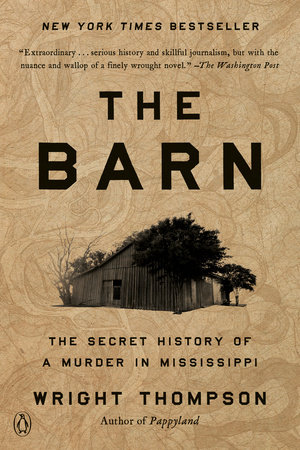
The Barn: The Secret History of a Murder in Mississippi (2024) by Wright Thompson is a shocking, deep, historical, and yet fresh account of one of the most consequential murders of the twentieth century. When young Emmett Till was abducted, tortured, and killed in Mississippi in 1955 for allegedly whistling at a white woman, the nation began to awaken to the pervasive racism of the South. It gave powerful fuel to the civil rights movement. The local cover-up of what really happened began almost immediately, however, and continues to this day. Thompson, a native of the Delta born in 1976, didn’t learn about Till’s murder and its place in the nation’s history until he left the state to go to college. He has returned to live in his homeland and—through this very personal yet universal work—to seek to understand the centuries of economic history, exploitation, and lies that brought young Emmett Till and as many as eight white residents of the Delta to a barn owned by one of the killers for a night of horrific torture and murder. A misleading confession created confusion about where the long night of terror took place and who was involved.
In a riveting account Thompson weaves together the tapestry that in his mind is the defining idea of the Delta: “one of overlap, of echo”—from the graves of the bluesmen to the famous Highway 61, where Bob Dylan sang about God wanting his killing done. A long section entitled Destinies provides deep background on how a barn came to be located in a former cypress swamp. He writes about the lies of the “Lost Cause.” Thompson also recognizes those who have been important in different ways to the work to get the narrative right, educate the public about Till’s murder and its aftermath, and to memorialize the places where it happened so that people can confront the realities of 1955 and pursue reconciliation and repair. People like Till’s cousin Wheeler Parker who rode on the train with Emmett to Mississippi. The Sturdivant family, who once owned the land where the barn was located and who donated the river site where Till’s body was found for use as a park. And a small but dedicated group at the Emmett Till Interpretive Center founded by the groundbreaking Black politician Jerome Little and now led by Executive Director Patrick Weems. Thompson also returns time and again to uphold the determined mothers, who refused to let the state limit their children.
After a 2018 trip to the Delta I wrote that the most meaningful and moving part of the trip was the 90 minutes we spent at the courthouse in Sumner, where the Emmett Till murder trial took place. Steps have been taken to recognize and apologize for the miscarriage of justice, and the courthouse has been restored to its 1955 appearance so that this historic site can tell the story of Emmett Till in order to move people forward.
Thompson’s work is another critical piece in that never-ending work, moving our understanding of Till’s murder and its ongoing impact forward in innumerable ways. Named Time’s #1 Nonfiction Book of the Year, The Barn was also cited as a Best Book of the Year by The Washington Post, Slate, Vanity Fair, Buzzfeed, Smithsonian, BookPage, KCUR, Kirkus, and the Boston Globe.
I was pleased when Wright—whose day job is as a writer for ESPN—agreed to chat with me about the book for MORE TO COME. We began by discussing how he went from writing about bourbon to taking on the horrors and repercussions of the Till murder, and worked our way through to the ongoing challenges we face as a nation from our long history of violence and racial injustice.
DJB: Wright, the murder of Emmett Till would not be the obvious choice for your next book after completing Pappyland, the beautiful and warm reflection on how Julian Van Winkle III saved the bourbon business his grandfather had founded. What about the horrific events surrounding Till’s murder―which happened 71 years ago this month and helped ignite the modern Civil Rights movement―compelled you as a writer and a native of the Mississippi Delta to take up this piece of history in “The Barn”?

WT: I think all books must be the almost accidental byproduct of an obsession, and in that way, there is very little difference between Pappyland and The Barn, at least in terms of what pulled me into the story. With Pappyland I wanted to really explore the idea of inheritance, and I’d argue that inheritance is also a central, driving theme of The Barn, perhaps the most important thing. What do we inherit? What do we pass down?
There are two other related things that come to mind in this context.
One, I have always been aware that all of my journalism was me learning the tools, both technically and metaphysically, to really understand my own home, and to try and shade in some of the contours of that home to other people. The Barn felt, in that regard, like both the end of a long project and the start of a new one, like the first inning of a game, to steal a metaphor from my day job.
But hovering above all that—I spoke to Marvel Parker yesterday, and am serving on the Wheeler Parker Foundation board—was the deep love I developed for Emmett Till’s family, not as symbols of this country’s worst, or even as beacons of its best, but as people, as fellow human beings, men and women of towering faith whose relationship to God actually fundamentally changed my own. I love them, and in many ways, I feel like the book was the tax I paid to get to meet them, to know them, to have them be part of my life.
A large portion of the book is devoted to a section entitled Destinies. In there you explore history that goes back hundreds of years and circles the globe. Why is that backstory so important to understanding Emmett Till’s murder and its continuing place in the American story?
The best histories to me are all deep histories, rooted in a kind of Gabriel Garcia Marquez long view of the mystic qualities of inherited sin and what lingers in the dirt as psychic atoms even after the history has been turned to simulacra and simulation, to steal a title. The dirt carries our true story if we care to excavate. I think the Mississippi Delta is one of those places where the membrane between the past and present, and therefore between the past and future, is so thin you can see through it, except in the places where it’s so thin it almost doesn’t exist at all. Those places are the ones where we can cut through the noise and really see ourselves, not just our past but our future, too.
The first draft of The Barn was 287,000 words. It ran at, I believe, 107,000. I cut almost two full books and much of it was out of “Destinies.” I think in many ways I won’t ever have the chops to fully land the portrait of the place in the way I sense it and feel it in a place beyond language, but “Destinies” was my best attempt. And the cornerstone in the argument I’m making about the murder of Emmett Till, and about my homeland, and where we all go from here.
Your description of the web of families in the Delta who, through intermarriage and inbreeding, are all related is one key to understanding how Emmett Till’s murderers are exonerated even though their identities were known and some even confessed. So too is the central role of politicians who would spend 200 years telling one group of Americans born into decline who to blame. Who are the heroes in this story, both at the time of the murder and in today’s world?
The heroes are the Parkers. The heroes are the Sturdivants. The heroes are Patrick Weems, and Jerome Little, and everyone who is living with the weight of the past and not being crushed by it. The heroes are the enemies of tribalism and the congregants of civilization.
The book is named “The Barn,” and yet until recently the role of this isolated agricultural building in Till’s torture and murder was virtually unknown. Why was the barn erased from history, and why is it central to the story you work to bring forward in this book?
The barn was erased because it was a relic of an economic world, and a global commodity chain, that extracted its profit margins from Mississippi from 1818 to 1923, and when it died and moved on, it took history with it, so that it was as if a people were born, suddenly awake, into a deep existential conflict with their neighbors, a caste system upheld by violence, in which the people on both sides of that violence were trapped by unnamed forces that nobody in their lives could accurately understand much less explain—with the exception of a few Mississippians like William Faulkner and Charley Patton and Muddy Waters, who understood it all perfectly, and tried to communicate that understanding—and all these people, bound to each other in the attempt to stay separate, had been cut off from the holy tools and knowledge required to fix their culture, their civilization. The Barn holds answers to questions that we have been taught never to ask, because once that thread is pulled …
It is now almost two years since The Barn was published. It has received extensive and well-deserved praise, including selection as TIME’s #1 Non-Fiction Book of the Year in 2024. The year before President Joe Biden signed legislation establishing the Emmett Till and Mamie Till-Mobley National Monument, covering three historic sites in Mississippi and Chicago.
Yet here we are, in August of 2026, and 400 masked white supremacists rode public transportation before marching through the nation’s capital with Confederate flags on the 250th anniversary of the creation of the United States. The administration released a report on that same day which attacked the Smithsonian Museum of American History for “ideological capture” of the “nation’s heritage.” Wright, are we as a nation condemned to repeat the mistakes of the past? Is the past, in the words of another famous Mississippi writer, even past? How do you want your contribution to the story of what really happened in a barn in the Mississippi Delta in 1955 to be remembered today and in the future?
We are already repeating the mistakes of the past. The sins of the past. The wages of erasure is reenactment. It is 1955 again. And we will never escape the gravitational pull of 1955 if we do not expose the blood in the dirt to the air.
I am grateful to Wright for his work and for taking the time to have this conversation. In the immortal words of James Weldon Johnson, we can never forget the tears and the blood spilled over the years if we are ever to escape the gravitational pull of our racist past.
“We have come over a way that with tears has been watered
We have come, treading our path through the blood of the slaughtered“
More to come . . .
DJB
Note: I acquired my copy of The Barn at People’s Books, profiled in Installment #2 of my 2026 series on DC’s independent bookshops.
Photo of Emmett Till at Christmas 1954 via Wikimedia; photos of the barn and the bulletproof sign at Graball Landing, near where Till’s body was recovered, via the Emmett Till Interpretation Center; picture of the Tallahatchie County Courthouse in Sumner, site of the Emmett Till murder trial, by DJB


Fascinating and heartbreaking. The older I get, the younger Emmett seems. He was only a child. His mother was incredibly brave.
Anna Scotti
Thank you, Anna. Yes it is a heartbreaking story. And when you see the pictures from the funeral, you realize how incredibly brave, as you so well describe her, that his mother was to make that decision.
DJB
Pingback: Observations from . . . August 2026 | MORE TO COME...
Pingback: From the bookshelf: August 2026 | MORE TO COME...