
Elizabeth Buchanan’s look at why despots over the centuries have tried—and failed—to own Greenland was an unexpected discovery found amidst the treasure trove that is Capitol Hill Books.
Installment #16 in my series on the region’s independent bookshops.
You have to love a bookstore that advises potential customers with this come on:
“We have many, many more books in the store than are listed on our website. To get a real taste of everything we have to offer, we recommend that you come in for a visit. We have fiction books in the Fiction Room, mystery books in the Mystery Room, foreign language books in the bathroom, cookbooks in the kitchen on the kitchen sink, business books in the Business Closet, and a Weird Section for those who like witches, dreams, and things that go bump in the night. We also have books on history, philosophy, travel, Washington DC, theology, psychology, politics (of course), art and more.”
I can attest that Capitol Hill Books does have books in the bathroom. And everywhere else it can find empty space to add a shelf.
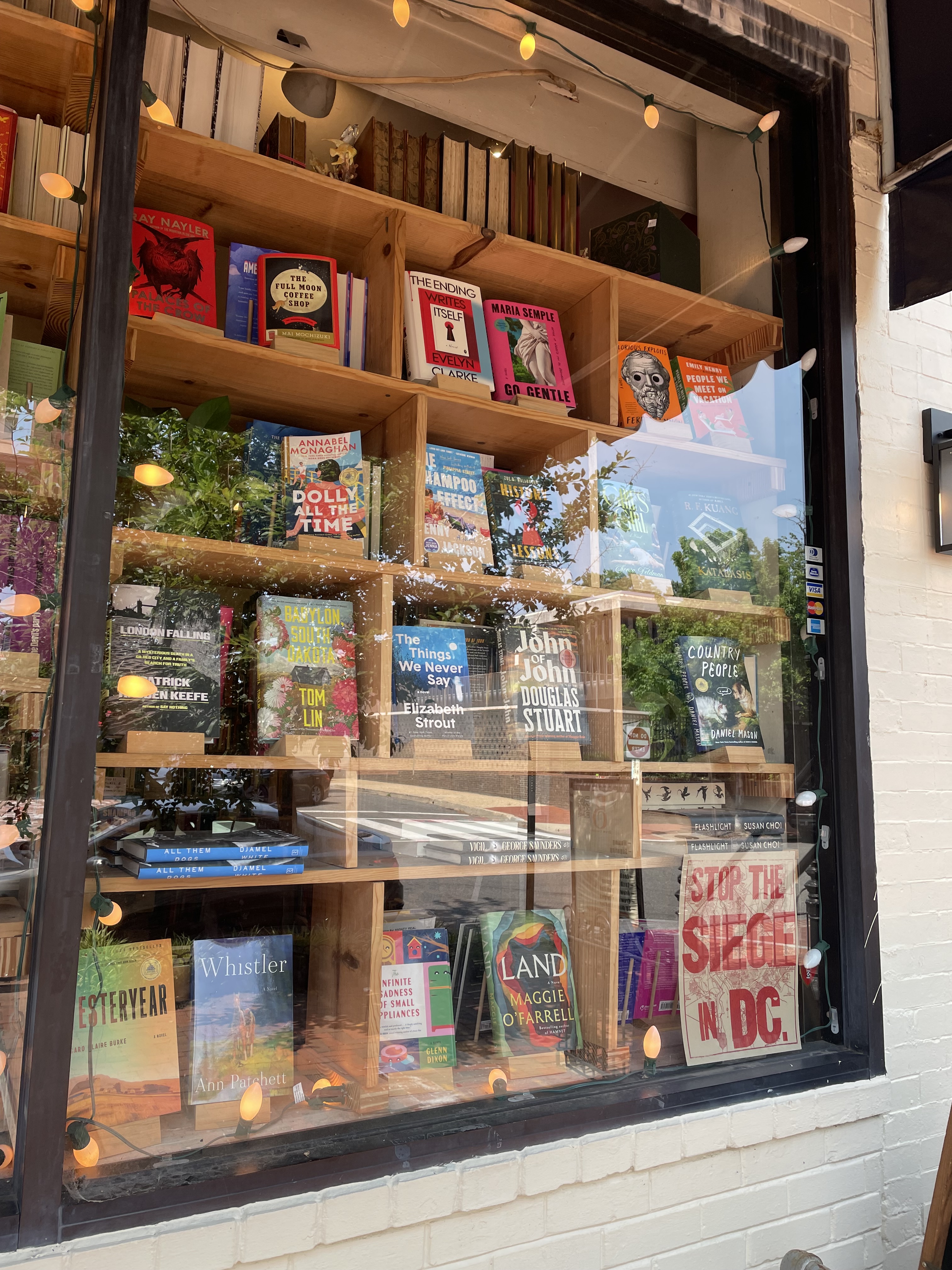

My friend and Brilliant Reader Bob Witten joined me on a warm July day to visit this shop in the heart of the Capitol Hill neighborhood. Founded in 1991, it is located just steps from Eastern Market, the Capitol, the Library of Congress, and the Supreme Court. I told the young and friendly staffer at the front desk of my bucket list journey to visit all 30 DC-area independent bookshops and she was quick to offer assistance, pointing me in the right direction so we could work our way through the maze of shelves and stacks of books. When I needed a step ladder to reach the Elizabeth George mysteries they quickly found one to suit my needs.

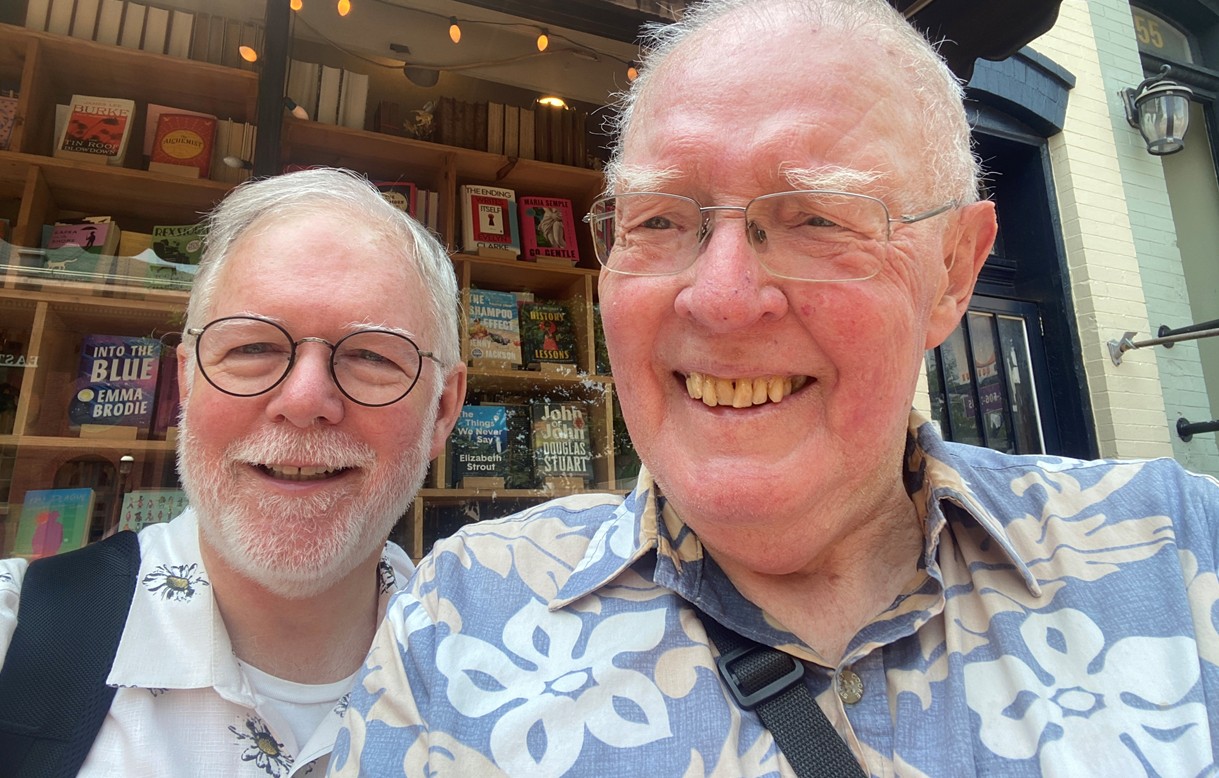
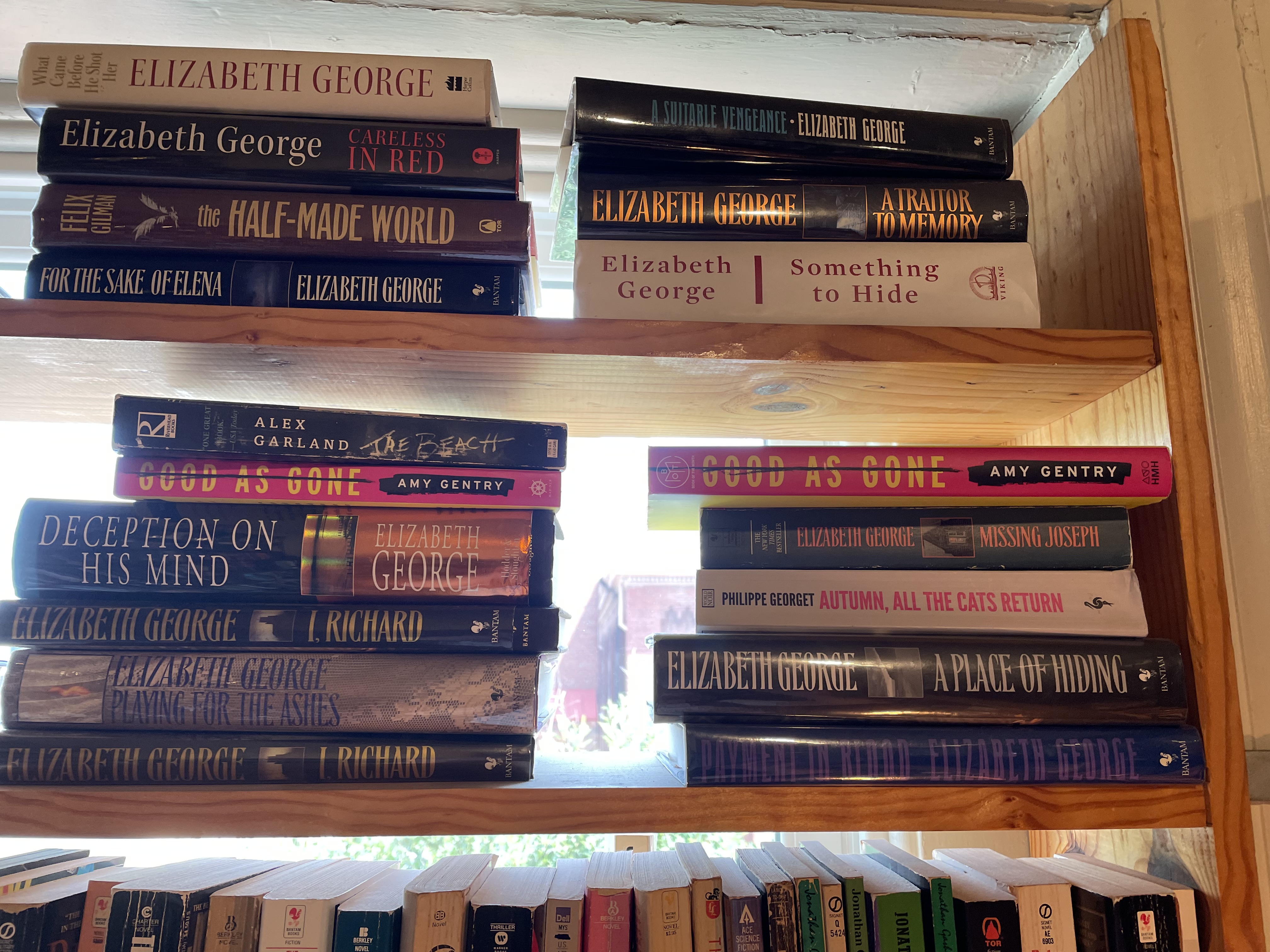
Suffice it to say that one could easily spend the better part of a day looking through the collection of used books, first editions, collectables, and the occasional new release in Capitol Hill Books. Bob and I didn’t stay that long, but in the time we were there I did discover a cleverly written new work by a polar geopolitics expert (who even knew they existed!). This timely analysis provided an “indispensable guide to Greenland” and how it could become the next global flashpoint. The title alone had me reaching for my wallet.
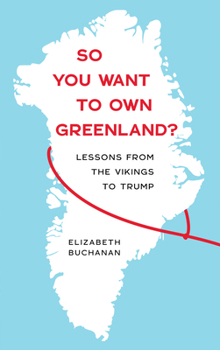
So You Want to Own Greenland? Lessons from the Vikings to Trump (2025) by Elizabeth Buchanan is an easy-to-read overview of Greenland’s history and current state of play in both reality and in Donald Trump’s mind. (Those two things often differ.) Beginning with its discovery by Erik the Red and his Viking band around 982 CE and the migration from North America of the Inuit population around 1200, Greenland has been disputed space. The Vikings were meat eaters who tended to settle in one place while the Inuits were a nomadic people dependent on the fish and the sea. When the Danish-Norwegian missionary Hans Egede arrived in 1721 hoping to find a Viking welcome, the descendants of Erik the Red had mysteriously vanished. Not to be deterred, Egede set about sharing the Lutheran faith with the Inuit. “And share the Word he did,” writes Buchanan, as “today over 90 percent of Greenlanders [identify themselves as Inuit and] belong to the Lutheran Church.” All 57,000 of them.
From the auspicious beginning of a lost colony of Vikings we are taken through the upheavals of the Napoleonic Wars, hostilities between Sweden and Denmark, the first U.S. arrival in 1867 when Secretary of State William Seward tried to buy Greenland after his successful purchase of Alaska, the gradual breaking free of Greenland from its Danish colonial chains, the important role of the island in both world wars, President Harry Truman’s offer to buy Greenland for the U.S. (there’s a pattern here), Cold War disputes, and more. Suffice it to say that the world’s largest island has had an intriguing and disputed history from its discovery to the present day.
Buchanan is writing for a general audience, no doubt timing this work to the renewed interest arising from Trump’s obsession with obtaining Greenland for the United States. She writes in a breezy style that is mostly enjoyable, sometimes inducing a chuckle and other times going a bit too far with the attempts at humor. Here’s an early example:
“Now, picture Ed Sheeran‘s head with a lush siren-red full beard, atop André the Giant‘s body. Meet Erik the Red. What we know of Erik the Red is like much of the Viking fables, or sagas, written hundreds of years after the fact. So, details are often sketchy. Vikings were known for their pillaging, warring, and general raiding or plundering social activities.”
Her take on Erik’s demise is similar in style.
“According to most historical accounts, things remained peachy for our Viking friends for quite some time.
Not so much for Erik. Erik the Red died in about AD 1003, from something unbefitting a man of his stature or reputation—he simply fell off a horse. Or caught a virus from new Viking settlers. Both stories feature in the history books.”
No matter one’s opinion of her writing style, Buchanan has produced a work that gives the general reader who wants to stay current on global affairs a good overview of this strategic flashpoint. She notes precedents that could be helpful in today’s world, such as the fact that the U.S. has bought islands from Denmark in the past. In 1917 Denmark sold the Americans what was then the Danish West Indies. We now know them as the U.S. Virgin Islands. Buchanan finds it strange that contemporary U.S. strategic discussions don’t consider the considerable implications of the Viking legacy in Greenland. And she firmly believes any country seriously considering Greenland’s future needs to not only have a Plan A, but also a Plan B and plans C to Z as well. As we know, that type of strategic analysis is not, ahem, the strong point of the current administration.
Buchanan wants her reader to understand that Greenland has a long and complicated history in international affairs, which is important in today’s context of a changing international power balance, fears of China’s rise, and growing global resource insecurity. She sees the Trump administration’s approach, with brazen soundbites to “annex” Greenland by force, as undermining the policy efforts to strengthen ties between the U.S. and Greenland. “A colossal own goal,” she writes, “for future historians to argue about later.”
Buchanan’s work ends with four possible scenarios. She admits that the strategic interests of the U.S. are plainly threatened and Washington has the opportunity and perhaps leverage “to secure itself by strengthening Greenland.” Whether the real estate mindset of the current administration can move beyond “owning” Greenland is clearly part of the calculations about, and future of, this important if often overlooked part of the world.
More to come . . .
DJB


Pingback: Observations from . . . August 2026 | MORE TO COME...
Pingback: Exploring DC’s independent bookshops: A Labor Day update | MORE TO COME...
Pingback: A remarkable debut | MORE TO COME...
Pingback: From the bookshelf: August 2026 | MORE TO COME...