
The reality of a course-altering election and the challenges to reclaiming democracy continue to bounce around my brain a full week after the voters spoke.
The breadth and depth of the repudiation of the corruption and cynical nature of the Trump administration, today’s Republican party, the right-wing Supreme Court, and their corporate cheerleaders and enablers continues to unfold. Several aspects of what just happened particularly struck me in the immediate aftermath:
- We have our metaphors backwards. They are the resistance. We are the mighty river breaking the dam.
- Hatred of data centers and all they represent is deep and wide.
- In the fight against authoritarian brutality, two of the most important weapons are kindness and decency.
- Some of the world’s most corrupt people lost . . . and many didn’t see it coming.
- While not perfect, apparently a majority of Americans—even a large majority—prefer diversity.
Let’s take a brief look at each one.
WE ARE THE MIGHTY RIVER, BREAKING FREE

Historian, writer, activist Rebecca Solnit began a recent essay in her newsletter with the following:
“It was a landslide, an earthquake, a tsunami, a watershed, an extinction-level event, they said of the colossal shift in the nation’s destiny as the result of Tuesday’s epic election. They’re all good metaphors drawn from nature. I want to propose one more: it was a dam breaking, the dam that held back the will of the people, the people of the world’s most diverse country, the people who believed in their own rights and equality and in the rights and equality of others. In 2018, the prison abolitionist writer Michelle Alexander wrote an essay that made a huge impact on me, not least for its deft reversal of a metaphor. We are not the resistance, she said, they are. We are not the dam holding something back, they are. We are the mighty river and we will break free.”
Solnit wrapped up that essay by noting that
“We’ll be seeing good policies and the repeal of bad policies for years to come as a result of this election, have more voices countering the hate and disinformation from the right, see new ambition to face with creativity and compassion the climate crisis and other threats. And in a sense it will never be the same country again, so I could’ve said indefinitely…..“
THE REJECTION OF DATA CENTERS WAS OVERWHELMING
On a recent morning walk through my neighborhood I saw a car with a bumper sticker that spoke to the moment. It read:

“Public libraries are the only data centers I support”
Those nine words spoke volumes (no pun intended).
They reflect the public revolt against a tech industry that wants to steal our environmental resources as well as our intellectual property for personal gain. They show support for public services—libraries—that were built by our tax dollars for the benefit of the common good yet are increasingly being privatized and stripped for parts by corporations and their billionaire owners. They speak out against corrupt back room deals between politicians on the take and greedy corporations. They reflect concern that AI is being developed without guardrails and regulation in a way that could destroy jobs, communities, and lives.
So much said in just a few words.
As The Guardian led off a recent piece, “There were three big losers in Tuesday’s midterm elections in the US: Donald Trump, Elon Musk and datacenters.”
“Datacenters, the facilities full of semiconductor chips that power artificial intelligence and a host of other online products, were on the ballot in elections in at least 40 jurisdictions across 10 states. Voters responded with a strong rebuke of the giant buildings, which have become a symbol of the tech industry and AI.”
In total, voters overwhelmingly supported forty-four ballot measures halting and/or restricting data centers in their community. Only one, in a North Dakota town of fewer than 1,000 people, was rejected.
Voters made it loud and clear that they are tired of politicians who prioritize the very rich over the needs of the people.
DON’T MESS WITH MINNESOTA
It seems that every news outlet and pundit has a set of takeaways from the election.

I liked the ones from Brian Klaas of the Garden of Forking Paths newsletter entitled Six lessons from the blue tsunami. After making the point that “a lot of the victory comes down to a tried-and-true strategy for taking down authoritarian populists: focus on the corruption” . . . and that thankfully, this administration has engaged in cartoonish levels of corruption on which to focus, his second takeaway hit on what I suspect was one of the big tipping points: when the authoritarian experiment of Donald Trump and the Republican party began to fall apart.
“Donald Trump picked the wrong state to mess with. Never invade the home of a communitarian winter people with fascist thugs unless you’re ready to get beaten by the gritty determination of neighborliness.
When I was there in January, I saw a community transformed in defense of fellow human beings who simply lived next door. Grandparents were driving around blowing whistles at masked-up government thugs; single parents who knew their white kids would be safe took time out from their busy schedules to deliver groceries to parents who were trapped in their own homes, living in fear that their own children would be abducted.
In the fight against authoritarian brutality, two of the most potent weapons proved to be kindness and decency.”
THE COMEUPPANCE CAUCUS
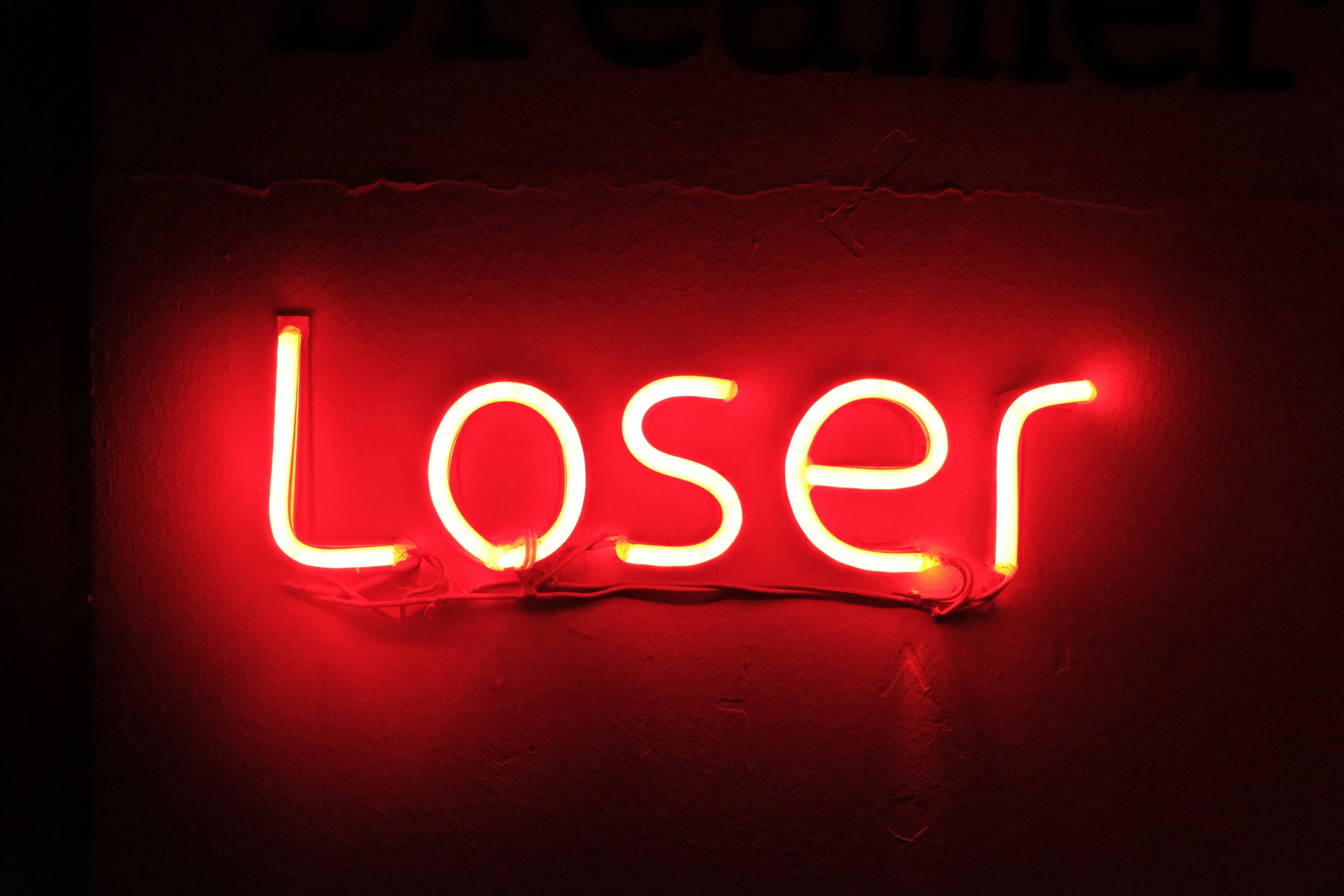
As the rule of law was being dismantled by Republicans in the administration, the Supreme Court, Congress, and at the state and local level, a lot (and I mean A LOT) of politicians and political actors jumped on the grifting gravy train. November 3rd was a stinging rebuke to their grabs for power, our money, and our democracy.
The midterms most deserving losers by Tom Schaller at Public Notice highlights some of the most “epic, overdue, even karmic-level defeats.” All eight categories in Schaller’s piece are worth your time (and yes, he includes Elon, Lauren Boebert, and Vivek Ramaswamy), but a couple of my favorites include:
The Gerrymanderers
“Much of the post-election attention this week has focused on House Republican defeats in the mid-decade redistricted states of Texas and Florida, especially in Latino-heavy districts. Governors Greg Abbott and Ron DeSantis deserve the lickings they took Tuesday night.
But North Carolina merits special attention as the Republican Party’s ‘dummymandering doomsday’ state.”
Every. Single. Texas. Republican.
“Lone Star Republicans got slaughtered Tuesday. They lost every statewide contest, starting with James Talarico’s 12-point drubbing of Paxton in the US Senate race and Gina Hinojosa’s 7-point defeat of Abbott to win the governorship. Democrats also swept all six other statewide offices, captured all four state Supreme Court seats, and flipped the state House majority from red to blue.
Those major races obscure a small but important county-level result. In suburban Tarrant County outside Dallas, Republican judge Tim O’Hare sought reelection. Despite public objections from the local NAACP, O’Hare and the Republican-controlled county commission shut down 92 county polling locations weeks before the election, including 21 located in precincts that not coincidentally contained at least 75 percent non-white voters.
Tarrant voters stripped wannabe vote suppressor O’Hare of his robe. In a fitting irony, they replaced him with an African American woman, Alisa Simmons, who beat O’Hare by 13 points. Case dismissed.”
APPARENTLY AMERICANS LIKE DIVERSITY
Peterr, a Lutheran pastor, posted A Christian, a Muslim, and a Jew Enter the Senate on the Empty Wheel website. He notes that the title “sounds like the cheesy opening to a joke,” but after election night, “it’s also a serious cry of joy.”
“I’ve been struck by the changes in the way religion was part of the midterm campaigns—specifically, how religious language became part of the discourse on the Democratic side. What really made this all jump out was the impact of the last week of the campaign with James Talarico, Abdul El-Sayed, and Jon Ossoff all winning, with religion a significant part of their campaign approaches.”
They come from different faith traditions, but what they share is the difference illustrated in this illustration.

I’ve written a great deal about religious freedom and religious liberty in the past, so I don’t need to delve deeper. But my key takeaway on so many fronts—from the religious diversity; to the election of so many people of color and indigenous Americans across the country; to the gains of LGBTQ+ candidates and more, is that Americans as a whole don’t fear diversity the way that right wing Republicans want to imagine we do. Looking at the class of newly elected Representatives and Senators going to “freshman orientation” at the U.S. Capitol this week, I’d say this group looks a lot like America.

And we also have a generational change which is refreshing. Rob Sand, the Governor-elect of Iowa, was once a model. His social media team posted this note and picture below.

One of the comments underneath this post read:
“Republicans ran ‘attack ads’ that started with ‘Rob Sand was a European model!’
My 24 year old daughter was like ‘is that supposed to hurt him?’”
Much of the authoritarian overreach by the Republican party—and especially the fight against diversity—was made possible by the worst chief justice of all time.
“The nation has faced, many times, a conservative Court aligned with bigotry and big business. But the nation has not previously faced a conservative Court aligned with helping the president become a king. The Roberts Court will go down in history as an exceptional Court, though probably not quite in the way John Roberts expects.”
One only has to listen to the victory speeches from Senators-elect Adam Hamilton and James Talarico, Senator Jon Ossoff, Georgia Governor-elect Keisha Lance Bottoms, and Iowa Governor-elect Rob Sand to know that we have experienced one ending and are in the midst of a new beginning.

In the book The Beginning Comes After the End: Notes on World of Change, referenced by Rebecca Solnit in the essay I quote at the top, she writes,
“The beginning comes after the end. A chrysalis is the beginning of a butterfly, but in that chrysalis is no elegant transition. The caterpillar falls apart—it turns to goo, and something profoundly different reconstitutes from it, guided by the hitherto dormant imaginal cells. In that slurry, the dissolving caterpillar’s immune system perceives the imaginal cells as alien and attacks them. But they survive, multiply, and set in motion the instructions to become a butterfly. A many-legged crawler becomes a six-legged winged creature, an animal that devours leaves becomes one that sips nectar from flowers . . . A butterfly is the end of a caterpillar. The beginning—the next era—comes after the end of the last one, and in between comes a lot of falling apart.”
The right has been fighting tooth and nail against the change of equality and interconnectedness. Often we don’t see that the beginning has come until the end pops up and strikes us in the face. But even as we celebrate, remember:
Nothing is perfect. Nothing is finished. Nothing lasts forever.
Work hard for justice and democracy as the fight never ends.
More to come . . .
DJB
Public library photo by Chris Robert on Unsplash

